Synthetic Gene Circuits Enable Systems-Level Biosensor
Trigger Discovery at the Host-Microbe Interface
Alexander D. Naydich,a,bShannon N. Nangle,a,bJohannes J. Bues,a*Disha Trivedi,aNabeel Nissar,a*Mara C. Inniss,a* Matthew J. Niederhuber,a*Jeffrey C. Way,bPamela A. Silver,a,b David T. Riglara,b*
aDepartment of Systems Biology, Harvard Medical School, Boston, Massachusetts, USA
bWyss Institute for Biologically Inspired Engineering, Boston, Massachusetts, USA
ABSTRACT Engineering synthetic circuits into intestinal bacteria to sense, record, and respond toin vivosignals is a promising new approach for the diagnosis, treat-ment, and prevention of disease. However, because the design of disease-responsive circuits is limited by a relatively small pool of known biosensors, there is a need for expanding the capacity of engineered bacteria to sense and respond to the host en-vironment. Here, we apply a robust genetic memory circuit in Escherichia coli to identify new bacterial biosensor triggers responding in the healthy and diseased mammalian gut, which may be used to construct diagnostic or therapeutic circuits. We developed a pipeline for rapid systems-level library construction and screening, using next-generation sequencing and computational analysis, which demonstrates remarkably reliable identification of responsive biosensor triggers from pooled librar-ies. By testing libraries of potential triggers— each consisting of a promoter and ri-bosome binding site (RBS)—and using RBS variation to augment the range of trig-ger sensitivity, we identify and validate trigtrig-gers that selectively activate our synthetic memory circuit during transit through the gut. We further identify biosensor triggers with increased response in the inflamed gut through comparative screening of one of our libraries in healthy mice and those with intestinal inflammation. Our results demonstrate the power of systems-level screening for the identification of novel bio-sensor triggers in the gut and provide a platform for disease-specific screening that is capable of contributing to both the understanding and clinical management of in-testinal illness.
IMPORTANCE The gut is a largely obscure and inaccessible environment. The use of live, engineered probiotics to detect and respond to disease signals in vivo repre-sents a new frontier in the management of gut diseases. Engineered probiotics have also shown promise as a novel mechanism for drug delivery. However, the design and construction of effective strains that respond to thein vivo environment is hin-dered by our limited understanding of bacterial behavior in the gut. Our work ex-pands the pool of environmentally responsive synthetic circuits for the healthy and diseased gut, providing insight into host-microbe interactions and enabling future development of increasingly complex biosensors. This method also provides a framework for rapid prototyping of engineered systems and for application across bacterial strains and disease models, representing a practical step toward the con-struction of clinically useful synthetic tools.
KEYWORDS synthetic biology, biosensors
R
ecent advances in our understanding of both the human microbiota and biological engineering techniques have created myriad possibilities for the development of synthetic microbes forin vivoclinical applications (1, 2). Because of their proximity to the host and their ability to influence many aspects of human health, intestinal bacteriaCitationNaydich AD, Nangle SN, Bues JJ, Trivedi D, Nissar N, Inniss MC, Niederhuber MJ, Way JC, Silver PA, Riglar DT. 2019. Synthetic gene circuits enable systems-level biosensor trigger discovery at the host-microbe interface. mSystems 4:e00125-19.https://doi.org/10
.1128/mSystems.00125-19.
EditorThomas J. Sharpton, Oregon State University
Copyright© 2019 Naydich et al. This is an open-access article distributed under the terms of theCreative Commons Attribution 4.0
International license.
Address correspondence to Pamela A. Silver, [email protected], or David T. Riglar, [email protected].
*Present address: Johannes J. Bues, Ecole polytechnique fédérale de Lausanne, Lausanne, Switzerland; Nabeel Nissar, Littleton, Massachusetts, USA; Mara C. Inniss, Obsidian Therapeutics, Cambridge, Massachusetts, USA; Matthew J. Niederhuber, UNC Chapel Hill, Chapel Hill, North Carolina, USA; David T. Riglar, Imperial College London, London, United Kingdom.
Received21 February 2019 Accepted18 May 2019 Published
Synthetic Biology
11 June 2019
on September 8, 2020 by guest
http://msystems.asm.org/
are a promising chassis for the deployment of synthetic biological circuits. Such circuits can enable the construction of diagnostic strains that record biological and environ-mental factors in the intestine, which can be analyzed after transit through the gut to provide a noninvasive survey of an obscure environment. Also compelling is the potential for in vivo production of biological therapies. A range of studies have engineered bacteria to serve as potential treatments for inflammation, metabolic diseases, cancer, and infection by producing therapeutic proteinsin vivoor stimulating immune responses (1, 2).
The majority of studies developing engineered gut bacteria have focused on the expression of therapeutic proteins, either constitutively or by induction with exoge-nously supplied compounds. However, specific environment- and disease-responsive functions—which could minimize both the metabolic burden of engineered systems on the bacteria and off-target effects on the patient— offer exciting prospects for clinical applications. To this end, recentin vivoapproaches have developed sensors responding to inflammation (3, 4), intestinal bleeding (5), and pathogen quorum-sensing systems (6, 7). However, the construction of disease-responsive circuits in bacteria has been hindered by the limited number of characterized bacterial systems that can be reliably used as sensors.
Mining the genomes of native gut bacteria is a promising approach for discovering new sensors that respond under conditions of interest, such as in the healthy or diseased gut. To date, these efforts have largely relied on transcriptome sequencing and proteomics of fecal samples. However, to obtain an instantaneous snapshot of bacterial behavior inside the gut using these techniques, invasive sampling is required (i.e., colonoscopy and biopsy). Furthermore, transient or low-abundance signals may not be detected, and any responsive genetic elements identified with these techniques may not function predictably when used in synthetic circuits. Approaches such as in vivoexpression technology (IVET) and recombinase-based IVET (RIVET) have been used to track in vivo-expressed genes noninvasively, primarily focusing on pathogenicity mechanisms in infectious strains (8–11). However, these approaches detect only con-stitutive expression (for IVET) and may have high false-positive rates. Nevertheless, these technologies show the potential for systems-level approaches to interrogate the behavior of the microbiota.
We have previously developed an approach for noninvasive measurement of bac-terial responses in the gut, based on a robust synthetic memory circuit, which records environmental stimuli via a transcriptional trigger (3, 12). When activated, the trigger turns on a memory switch, which can retain the memory-on state for over a week in the gut (12). After the bacteria pass through the host, their memory state can be deter-mined via reporter gene expression, enabling noninvasive readout of transient signals within the gut. The circuit can maintain functional and genetic stability during 6 months’ colonization of the mouse gut, demonstrating its suitability for longitudinal studies and its potential to support the development of stable, engineered biosensor strains forin vivodeployment (3).
Here, we adapt this memory circuit for parallel, high-throughput screening of hundreds of potential triggers. We apply this method to identify new biosensor triggers responding specifically to thein vivogut environment. Through comparison between healthy mice and those suffering from inflammation, we also identify triggers that respond differentially during disease. Together, these results provide a platform forin vivononinvasive biosensor trigger discovery and longitudinal testing.
(This article was submitted to an online preprint archive [13].)
RESULTS
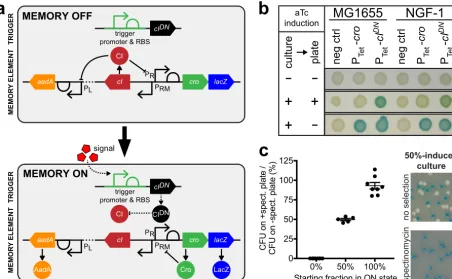
Bacterial memory as a biosensor trigger screening tool.To enable screening of new potential biosensor triggers in parallel, we modified our previously developed Escherichia colimemory circuit, which is based on thephage lysis-lysogeny switch (see Fig. S1A in the supplemental material) (12). This modified circuit is referred to as the high-throughput memory system (HTMS) (Fig. 1a). Both the original memory circuit
on September 8, 2020 by guest
http://msystems.asm.org/
and the HTMS consist of a trigger— based on a transcriptional promoter activated in the presence of a certain stimulus—and a bistable memory switch. The memory-on and memory-off states of the switch correspond to the mutually repressive proteins Cro and CI, which are under the control of the PRand PRMpromoters, respectively. In addition,
a-galactosidase (LacZ) reporter is produced in the memory-on state.
One key modification in the HTMS is the triggering of memory using a dominant-negative mutant of the cI gene (cIDN), instead of the cro gene used in the original circuit’s trigger. In the original circuit, the continued presence of a stimulus can lead to the production of high levels of Cro from the trigger, which can repress both the PRand
PRM promoters and prevent switching to the memory-on state while the stimulus is
present. In contrast, the trigger used in the HTMS produces CIDN monomers upon
induction, which have an N55K mutation in their DNA-binding region (14). These CIDN
monomers dimerize with wild-type (WT) CI monomers expressed in the memory-off state to create heterodimers that are deficient in DNA binding. This leads to derepres-sion of PRand transition to the memory-on state, even during continued induction of
the trigger. As with the CI used in the memory switch, CIDN carries a mutation to
prevent RecA-mediated cleavage (ind-) (15).
Use of CIDN in the trigger ensures that there is no delay of switching to the
memory-on state in the case of high, or constant, activation of the trigger promoter. To test this, a Ptettrigger drivingcIDNorcrowas integrated intoE. coliK-12 MG1655 and
NGF-1 strains containing a memory switch.E. coliNGF-1 is a strain originally isolated from the murine gut, which has proven to be an efficient and persistent colonizer and a reliable platform for the deployment of engineered circuits (3, 12, 16). When grown in the presence of a high concentration (100 ng/ml) of anhydrotetracycline (aTc) inducer,cIDN-triggered strains showed switching to the memory-on state, while
cro-MG1655
NGF-1
neg ctrl
P
Tet
-cro
P
Tet
-cI
DN
neg ctrl
P
Tet
-cro
P
Tet
-cI
DN
-+
+
-+
-culture
plate
aTc induction
no selection
50%-induced culture
+spectinomycin
cIDN
cro lacZ cI
aadA
trigger promoter & RBS
signal
TRIGGER
MEMOR
Y
ELEMENT
CIDN CI
Cro
AadA LacZ
PR PRM PL
MEMORY ON
cIDN
cro lacZ cI
aadA
trigger promoter & RBS
TRIGGER
MEMOR
Y
ELEMENT
CI
PR PRM PL
MEMORY OFF
a b
c
0% 50% 100%
0 25 50 75 100 125
Starting fraction in ON state
CFU on +spect. plate
/
CFU on -spect. plate (%)
FIG 1 Design of a high-throughput memory system (HTMS). (a) HTMS circuit design in memory-off and memory-on states. (b) Comparison of
memory switch induction withcroandcIDNtriggers illustrates differences in induction dynamics. Control and memory strains with Ptettriggers
(PAS132, PAS133, PAS807, and PAS808) were grown in liquid media and then spotted on indicator plates, each with or without aTc induction (100 ng/ml). (c) Selection of memory-on HTMS with spectinomycin. Memory-off, memory-on, and 50-50 mixed cultures of PAS810 were plated on indicator plates with or without spectinomycin (inset photo). Graph shows comparison of CFU counts between⫹spectinomycin and
–spectino-mycin plates. Error bars represent the SE of eight biological replicates (for 0 and 100%) and five biological replicates (for 50%).
on September 8, 2020 by guest
http://msystems.asm.org/
triggered strains switched only after a subsequent period of growth in the absence of aTc (Fig. 1b).
The original memory circuit expresses alacZreporter gene for screening on indi-cator plates (12). To analyze pooled libraries containing many strains with varied trigger promoters, the HTMS also expresses a spectinomycin-selectable resistance gene (aadA) in the memory-on state.
This antibiotic-selectable memory maintains response characteristics similar to the original memory switch. To test this, a Ptet trigger driving cIDN was integrated into
strains containing lacZ (original) or aadA⫹lacZ (HTMS) memory switches, creating PAS809 and PAS810, respectively (see Table 1 for strain list). Strains were induced by aTc (0 to 100 ng/ml) and the response quantified by plating cultures on indicator plates containing X-Gal (5-bromo-4-chloro-3-indolyl--D-galactopyranoside), which turns blue in the presence of LacZ, indicating a memory-on state (Fig. S1B). Both strains responded similarly to aTc (original memory 50% effective concentration [EC50], 4.1 to 4.6 ng/ml,
95% confidence interval [CI]; HTMS EC50, 4.0 to 4.3 ng/ml, 95% CI), confirming the
circuit’s modularity to additional reporters in the memory-on state.
The HTMS allows faithful selection of memory-on colonies with spectinomycin treatment. Plating of fully memory-off, fully memory-on, and 50-50 mixed cultures of PAS810 on indicator plates with and without spectinomycin further demonstrated that all spectinomycin-selected colonies were also LacZ positive (Fig. 1c). Spectinomycin did not yield false-positive results by inducing memory switching (fully memory-off, 0%⫾ 0% standard error [SE],n⫽8), nor excessive false-negative results through inhibition of memory-on bacterial growth (fully memory-on, 93.0% ⫾ 4.2% SE, n⫽8; 50-50 mix, 49.7%⫾1.5% SE,n⫽5) (Fig. 1c). Together, these results demonstrate the ability of the HTMS to measure biosensor trigger response and allow selection for downstream pooled analyses.
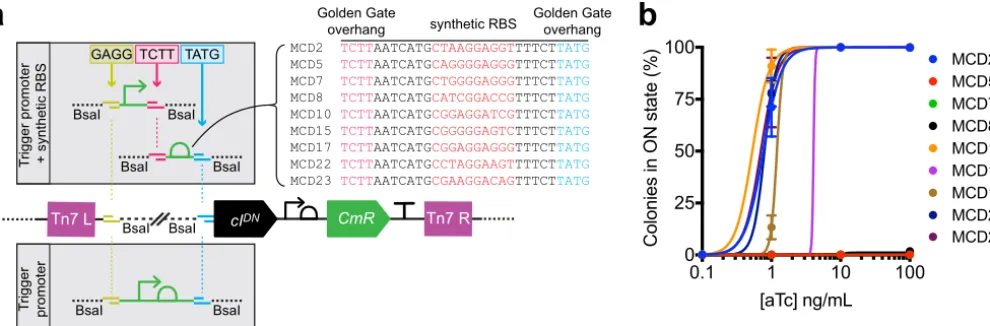
Biosensor trigger library construction. To build biosensor trigger libraries for genomic integration, we adapted a Tn7transposon genome insertion plasmid (17) for rapid Golden Gate assembly (18) of bacterial promoters upstream of thecIDN trigger and insertion into the genome of memory bacteria (Fig. 2a and S2). The modularity of this cloning strategy allows for adjustment of trigger sensitivity through incorporation of ribosomal binding site (RBS) variants, which vary the translation rate of mRNA transcripts (Fig. 2a). To test this concept, triggers consisting of a Ptetpromoter
com-bined with nine synthetic RBS sequences—previously demonstrated to vary widely in their translation strength (19) (Fig. 2a)—were constructed and inserted into the ge-nome of HTMS bacteria, and the HTMS response to varying concentrations of aTc (0 to 100 ng/ml) was characterized (Fig. 2b). The RBS variants differed in their extent of memory induction at 0.1 to 10 ng/ml aTc (EC50 ranging from 0.5 to 4.1 ng/ml for responsive strains), illustrating our ability to tune trigger sensitivity.
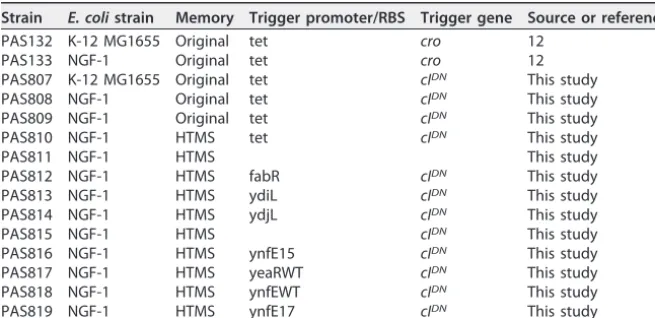
TABLE 1Key memory strains used in this study
Strain E. colistrain Memory Trigger promoter/RBS Trigger gene Source or reference
PAS132 K-12 MG1655 Original tet cro 12
PAS133 NGF-1 Original tet cro 12
PAS807 K-12 MG1655 Original tet cIDN This study PAS808 NGF-1 Original tet cIDN This study PAS809 NGF-1 Original tet cIDN This study PAS810 NGF-1 HTMS tet cIDN This study
PAS811 NGF-1 HTMS This study
PAS812 NGF-1 HTMS fabR cIDN This study PAS813 NGF-1 HTMS ydiL cIDN This study PAS814 NGF-1 HTMS ydjL cIDN This study
PAS815 NGF-1 HTMS cIDN This study
PAS816 NGF-1 HTMS ynfE15 cIDN This study PAS817 NGF-1 HTMS yeaRWT cIDN This study PAS818 NGF-1 HTMS ynfEWT cIDN This study PAS819 NGF-1 HTMS ynfE17 cIDN This study
on September 8, 2020 by guest
http://msystems.asm.org/
We explored two approaches for generating biosensor trigger libraries: (i) a com-prehensive collection of trigger promoters that would enable screening a wide range of a bacterium’s transcriptional responses (MG1655 library) and (ii) a curated collection of promoters with sensitivity variants aimed at detecting inflammation (Nissle 1917 library). Both libraries were assembled into an HTMS-containing E. coli NGF-1 strain (PAS811). The comprehensive library was sourced from a previously published collec-tion of 1,600 unique promoters selected from across the genome ofE. coliK-12 MG1655 (20). Promoters and their wild-type RBSs were amplified by PCR from this collection, assembled into our transposon plasmid, and integrated as triggers into the genome of PAS811, creating a genome-wide library. However, because our method specifically detects off-to-on sensor transitions, the genome-wide library was further subsampled by pooling 500 colonies that were LacZ negative under routine in vitro culture to produce a comprehensive, “off-in vitro” library. This subsampling maximized sequenc-ing depth for HTMS trigger candidates. Sequencsequenc-ing confirmed the presence of 155 unique strains in this final comprehensive library.
Our second library was constructed with a subset of promoters sourced from the human probioticE. coliNissle 1917, which are involved in anaerobic respiration of sulfur or nitrogen oxides or nitrate, produced by the gut epithelium during inflammation (21, 22). For each promoter, triggers with the wild-type RBS, as well as with five different synthetic RBSs (MCD5, MCD10, MCD15, MCD17, and MCD23) (19), were included to tune sensitivity. Throughout this study, strains from this library are referred to by an abbreviation consisting of the first gene of the operon from which their trigger is derived and the number of the synthetic RBS used. For instance, “ynfE15” denotes the trigger consisting of theynfEFGH promoter with MCD15. Sequencing confirmed that the assembled library contained 61 unique strains of 66 total designed constructs.
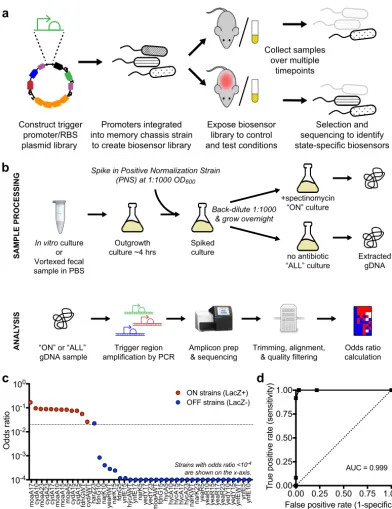
Pipeline for biosensor trigger library screening.To screen for biosensor trigger response, HTMS libraries are exposed to a condition of interest (Fig. 3a), and put through a processing, sequencing and analysis pipeline (Fig. 3b). After exposure, HTMS bacteria are recovered and cultured. The initial culture is split into two and back-diluted, and one of the two new cultures is subjected to spectinomycin selection. After selection, the trigger regions of both cultures are sequenced and analyzed to produce an odds ratio for each trigger promoter in the library, corresponding to that trigger’s memory state. To calculate odds ratios, the results are normalized to a positive normalization strain (PAS812) (Fig. 3b). PAS812 is an HTMS strain containing a trigger promoter from theE. coli fabRgene, which was observed to be consistently memory-on underin vitroculture conditions.
T
rigger
promoter
T
rigger promoter + synthetic RBS
BsaI BsaI
BsaI BsaI
BsaI BsaI
BsaI BsaI
MCD2 TCTTAATCATGCTAAGGAGGTTTTCTTATG MCD5 TCTTAATCATGCAGGGGAGGGTTTCTTATG MCD7 TCTTAATCATGCTGGGGAGGGTTTCTTATG MCD8 TCTTAATCATGCATCGGACCGTTTCTTATG MCD10 TCTTAATCATGCGGAGGATCGTTTCTTATG MCD15 TCTTAATCATGCGGGGGAGTCTTTCTTATG MCD17 TCTTAATCATGCGGAGGAGGGTTTCTTATG MCD22 TCTTAATCATGCCTAGGAAGTTTTCTTATG MCD23 TCTTAATCATGCGAAGGACAGTTTCTTATG GAGG TCTT TATG
Golden Gate
overhang synthetic RBS
Golden Gate overhang
Tn7 L cIDN CmR Tn7 R
a b
0.1 1 10 100 0
25 50 75 100
[aTc] ng/mL
Colonies in ON state (%)
MCD2
MCD7
MCD10 MCD15 MCD17 MCD22 MCD23 MCD8 MCD5
FIG 2 Tuning of trigger sensitivity is achieved through modular incorporation of RBS variants. (a) Strategy for insertion of trigger promoter and RBS variants
(19) by Golden Gate assembly (18) into a Tn7transposon plasmid containing thecIDNgene (Fig. S2). (b) Response curves for RBS variants of a Ptet-cIDNtrigger
in the HTMS chassis strain PAS811 induced with various concentrations of aTc. Memory response was assessed by plating of bacteria on indicator plates after induction with aTc in liquid culture. Error bars represent the SE of three biological replicates.
on September 8, 2020 by guest
http://msystems.asm.org/
Library screening faithfully reports biosensor trigger response. To test our library screening pipeline, the Nissle 1917 library was cultured aerobically in liquid media and analyzed to obtain odds ratios as described above. Concurrently, individual strains from this library were grown on indicator plates to assess each strain’sin vitro memory state directly. Both tests showed strong agreement, with strains that were LacZ
Promoters integrated into memory chassis strain
to create biosensor library
Expose biosensor library to control and test conditions
Collect samples over multiple
timepoints
Selection and sequencing to identify state-specific biosensors Construct trigger
promoter/RBS plasmid library
In vitro culture or Vortexed fecal sample in PBS
“ON” or “ALL” gDNA sample
Trigger region amplification by PCR
Amplicon prep & sequencing
Trimming, alignment, & quality filtering
Odds ratio calculation Outgrowth
culture ~4 hrs
Spike in Positive Normalization Strain (PNS) at 1:1000 OD600
Back-dilute 1:1000 & grow overnight
Spiked culture
+spectinomycin “ON” culture
no antibiotic “ALL” culture
Extracted gDNA
SAMPLE PROCESSING
ANAL
YSIS
b
d
c
a
moaA17 cydA10 moaA23 cydA23 cydA17 moaA10 moaA15 moaA5 cydA15 cydA15 fdnGWT cydA
WT
narZ23 fdnG10 narK10 yeaR
WT
narK15 fdnG5 ynfE15 hycA
WT
ynfE17 narK5 yedY17 yedY23
moaA
WT
fdnG15 hycA5 hycA10 hycA15 hycA17 hycA23 narKWT narK23 yeaR5 yeaR10 yeaR15 yeaR17 yeaR23 yedY10 yedY15 ynfEWT ynfE5 ynfE10
10-4
10-3 10-2
10-1 100
Trigger promoter/RBS
Odds ratio
ON strains (LacZ+) OFF strains (LacZ-)
Strains with odds ratio <10-4
are shown on the x-axis.
0.00 0.25 0.50 0.75 1.00 0.00
0.25 0.50 0.75 1.00
False positive rate (1-specificity)
T
rue positive rate (sensitivity)
AUC = 0.999
FIG 3 Biosensor trigger library screening and analysis. (a) Libraries were constructed as plasmids, integrated into the genome
at single copy, and screened as a pool for differential response to growth in control and test environments. (b) Postexposure library sample processing, selection for memory-on strains, sequencing, and analysis. The consistently memory-on positive normalization strain (PAS812) is spiked in prior to spectinomycin selection and used for the calculation of odds ratios. (c) Calculated odds ratio fromin vitropooled growth in LB medium versus memory state assessed by plating individual library strains on LB agar indicator plates. A total of 44 strains subsampled from the Nissle 1917 library were tested. The on-off odds ratio cutoff used in the subsequentin vivoscreens (0.02) is indicated by the dotted line. (d) Receiver operating characteristic curve for various odds ratio cutoffs as an indicator of memory state.
on September 8, 2020 by guest
http://msystems.asm.org/
positive also displaying higher odds ratios (Fig. 3c). Receiver operating characteristic analysis confirmed efficient distinction between memory-on and memory-off states, with an odds ratio of approximately 0.02 delimiting the boundary (Fig. 3d). This confirmed our sequencing method as a reliable indicator of biosensor memory state. Differential biosensor trigger response in the healthy mouse gut.To screen for biosensor trigger response to growth within the murine gut, the MG1655 library was administered to specific-pathogen-free (SPF) mice by oral gavage (⬃107 bacteria/
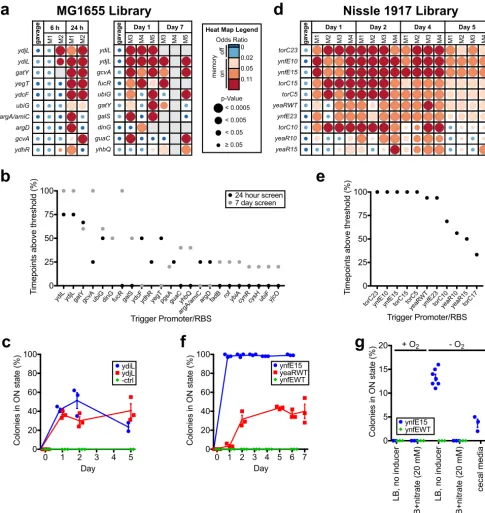
mouse), and fecal samples were collected over 1 (n⫽2) or 7 (n⫽3) days. High library diversity was maintained in both experiments (92 and 82% of strains identified in gavage samples present at the experiment endpoint, respectively; Data Sets S1 and S2). Analysis of HTMS strains recovered from gavage suspension and fecal samples identi-fied 23 unique strains that responded specifically to growth within the gut (gavage: odds ratio⬍0.02; fecal samples:ⱖ1 time point with an odds ratioⱖ0.02, andP⬍0.05) (Fig. 4a and b; Data Sets S1 and S2). Five strains (containingydiL,ydjL,gatY,gcvA, and ubiGtriggers) were detected in the memory-on state in at least four of five mice. The two most consistent responders (ydjL andydiL triggers) were selected for follow-up testing.
To validate the response of theydiLandydjLtriggers during gut transit, memory bacteria containing these triggers (ydiL, PAS813;ydjL, PAS814) or a promoterlesscIDN gene (negative control, PAS815) were administered to SPF mice as monocultures. Fecal samples were collected and analyzed over the subsequent 5 days. Culture on indicator plates demonstrated an absence of memory activation in all three strains prior to gavage. However, when recovered from fecal samples, PAS813 and PAS814 colonies were consistently memory-on, confirming activation during gut transit (at day 2, PAS813: 51%⫾8% SE; PAS814: 30%⫾4% SE; negative control: 0%⫾0% SE;n⫽3) (Fig. 4c).
The Nissle 1917 library was also screened to discover promoters responding in the healthy mouse gut. Testing of the Nissle 1917 library over 5 days following gavage (⬃107 bacteria/mouse) identified 11 strains that specifically responded to in vivo
growth (Data Set S3). Ten of these, derived from three unique promoters (ynfEFGH, torCAD, andyeaR-yoaGoperons) registered a memory-on state in the majority of time points and all mice tested (n⫽4) (Fig. 4d and e). Promoter response was similar during parallel analysis in the inflamed mouse gut (n⫽4; see below and Fig. 5 for experimen-tal details), further validating these results (Fig. S3 and Data Set S3).
RBS variation to adjust trigger sensitivity affectsin vivosensing capacity. Variation in sensor response based on trigger RBS was most notably observed with theynfEFGH promoter: WT, MCD5 and MCD17 RBSs showed no response throughout the screening experiment, whereas MCD10, MCD15, and MCD23 registered as memory-on in 100%, 100 and 94% of time points, respectively (Data Set S3, “–DSS” columns). To validate these findings, ynfE15 (PAS816), yeaRWT (PAS817), and ynfEWT (PAS818, used here as a negative control) strains were administered to SPF mice as monocultures, with memory state determined by culture on indicator plates (at day 2, ynfE15: 99%⫾1% SE; yeaRWT: 31%⫾4% SE; ynfEWT: 0%⫾0% SE;n⫽3) (Fig. 4f). Of note, changing the ynfEtrigger RBS from WT to MCD15 increased memory-on rate in the gut from 0% to nearly 100%.
Together, these results demonstrate the ability for HTMS analysis to rapidly identify biosensor triggers in vivo and the power of varying trigger sensitivity to tune the strength of biosensor strain response.
In vitroinduction ofin vivo-responding biosensor strains.The Nissle 1917 library includes some promoters with previously characterized induction conditions. We tested induction ofynfEFGHpromoter trigger memory strains, which derive from an operon known to respond to low nitrate (through repression by phosphorylated NarL) and anaerobic (through FNR activation) conditions (23). When grown anaerobically in rich media, PAS816 (ynfE15) produced a memory response (13.3%⫾0.7% SE,n⫽7). With added nitrate (20 mM) or under aerobic conditions, PAS816 produced no response
on September 8, 2020 by guest
http://msystems.asm.org/
0 5 10 15 20
Colonies in ON state (%)
LB, no inducer
LB+nitrate (20 mM)
LB, no inducer
LB+nitrate (20 mM)
cecal media
ynfEWT
+ O2 - O2
ynfE15 torC23 ynfE10 ynfE15 torC15 torC5 yeaRWT ynfE23 torC10 yeaR10 yeaR15 M3
gavage M1 M2 M4 Day 1 Day 2
M3
M1 M2 M4 Day 4
M3
M1 M2 M4 Day 5
M3
M1 M2 M4 Heat Map Legend
p-Value gavage M1 M2 M1 M2
6 h 24 h
ydjL ydiL gatY yegT ydcF ubiG argA/amiC argD gcvA ydhR
b e
d
a
g
c f
MG1655 Library
Nissle 1917 Library
0 1 2 3 4 5
0 20 40 60 80 100 Day
Colonies in ON state (%)
ydiL ydjL -ctrl
0 1 2 3 4 5 6 7
0 20 40 60 80 100 Day
Colonies in ON state (%)
ynfE15 yeaRWT ynfEWT
M5 M5
Day 7
gavage M3 M4 M3 M4 Day 1 ydiL ydjL gcvA fucR ubiG gatY galS dinG guaC yhbQ
ydiL ydjL gatYgcvAubiGdinGfucR galSydcFydhRyegTpgsAguaCyhbQ argA/amiC
argDfadB rofybiAcynRcysH ubiF yjcO
0 25 50 75 100 Trigger Promoter/RBS T im
epoints above threshold (%
)
24 hour screen 7 day screen
torC23ynfE10ynfE15torC15torC 5 yeaR
WT
ynfE23torC10yeaR10yeaR15torC17
0 25 50 75 100 Trigger Promoter/RBS T im
epoints above threshold (%
)
FIG 4 Library screening and individual sensor testing identifies biosensor triggers responding in thein vivogut environment. (a) Screen of MG1655 library
in BALB/c mice over 1 day (left,n⫽2) and over 7 days (right,n⫽3). Odds ratio heat maps of the top 10 hits are shown, sorted by percentage of positive time points (odds ratioⱖ0.02 andP⬍0.05) over the course of the experiment. Blank spaces on heat maps represent insufficient sequencing coverage. See Data Sets S1 and S2 for full results. (b) Percentage of positive time points (odds ratioⱖ0.02 andP⬍0.05) for all positive hits from two MG1655 library screens (top 10 shown in panel a). (c) Response of individual strains from MG1655 library in healthy mice. HTMS strains containing triggers ydiL (PAS813), ydjL (PAS814), and an empty trigger (PAS815) were administered as monocultures to BALB/c mice (n⫽3). Memory response was assessed by plating of HTMS bacteria recovered from fecal samples on indicator plates. Error bars represent the SE. (d) Screen of Nissle 1917 library in C57BL/6J mice (n⫽4) over 5 days. An odds ratio heat map of the top 10 hits is shown, sorted by the percentage of positive time points (odds ratioⱖ0.02 andP⬍0.05) over the course of the experiment. Blank spaces on the heat map represent insufficient sequencing coverage. See Data Set S3 for full results. (e) Percentage of positive time points (odds ratioⱖ0.02 andP⬍0.05) for all hits from Nissle 1917 library screen in healthy mice (top 10 shown in panel d). (f) Response of individual strains from Nissle 1917 library in healthy mice. HTMS strains containing the ynfE trigger with MCD15 (PAS816), the yeaR trigger with its WT RBS (PAS817), and the ynfE trigger with its WT RBS (PAS818) were administered as monocultures to C57BL/6J mice (n⫽3). The memory response was assessed by plating of HTMS bacteria recovered from fecal samples on indicator plates. Error bars represent the SE. (g) Response of the ynfE15 trigger (PAS816) and ynfEWT trigger (PAS818) strains toin vitrogrowth in rich media with or without 20 mM nitrate, with or without oxygen, and in the presence of mouse cecum fluid medium (ynfE15 strain only). Memory response was assessed by plating on indicator plates after growth in liquid culture. Error bars represent the SE. (n⫽7 for ynfE15 strain in –O2, LB, no inducer condition;n⫽3 for all other conditions.)
on September 8, 2020 by guest
http://msystems.asm.org/
(–O2/⫹nitrate: 0% ⫾0% SE;⫹O2/⫹nitrate: 0% ⫾0% SE;⫹O2: 0%⫾ 0% SE;n⫽3)
(Fig. 4g), consistent with previous literature reports ofynfEFGHpromoter behavior (23). In addition, no response was observed from PAS818 (ynfEWT) in any of these conditions (all conditions: 0%⫾0% SE,n⫽3) (Fig. 4g), suggesting that it is less sensitive than PAS816 (ynfE15), which is consistent with ourin vivoresults. ynfE15 was also shown to respond toin vitrogrowth in cecal contents (3.7%⫾0.9% SE,n⫽3) (Fig. 4g).
Identification of disease-specific biosensor triggers.To look for sensors respond-ing differentially to disease, we compared the response of the Nissle 1917 library in healthy mice (n⫽4; as previously displayed in Fig. 4d and e and Data Set S3) to a
M3
Day 2 Day 4 Day 5
gavage M1 M2 M4 M1 M2 M3 M4 M1 M2 M3 M4 M1 M2 M3 M4
Day 1
M7
Day 2 Day 4 Day 5
gavage M5 M6 M8 M5 M6 M7 M8 M5 M6 M7 M8 M5 M6 M7 M8
Day 1
ynfE17
yeaR23
DSS-treated
control
torC17
torC10
hycAWT
ynfE23
ynfE17
yeaR23
torC17
torC10
hycAWT
ynfE23
Heat Map Legend
p-Value
a
b
c
ynfE17yeaR23 torC17 torC10hycA WT
ynfE23 0
25 50 75 100
Trigger Promoter/RBS
Dif
ference in timepoints above
threshold (DSS - control) (%
)
0 1 2 3 4 5 6 7
0 10 20 30 40 50
Day
Colonies in ON state (%)
control +DSS
FIG 5 Library screening and individual sensor testing identifies biosensor triggers with increased response during
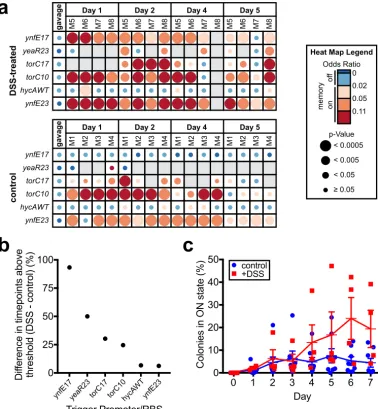
inflammation. (a) Screen of Nissle 1917 library in DSS-treated C57BL/6J mice (n⫽4) over 5 days and comparison to results of previous screen in healthy C57BL/6J mice (n⫽4, control group; also see Fig. 4d and e). To identify sensors responding more strongly to the inflamed state, the fraction of time points registering memory-on (odds ratioⱖ0.02 andP⬍0.05) in the control group was subtracted from the fraction in the DSS-treated group for each strain in the library, and strains were sorted according to the greatest difference between the two groups. An odds ratio heat map of the six strains registering a positive difference between the two groups is shown. Blank spaces on the heat map represent insufficient sequencing coverage. See Data Set S3 for full results. (b) Differences in percentage of positive time points (odds ratioⱖ 0.02 andP⬍0.05) between DSS-treated and control group mice for strains showing a positive difference between the two groups (heat map shown in panel a). (c) Response of HTMS strain containing the ynfE trigger with MCD17 (PAS819) in DSS-treated mice (n⫽4) and healthy mice (n⫽8). Memory response was assessed by plating of HTMS bacteria recovered from fecal samples on indicator plates. Error bars represent the SE.
on September 8, 2020 by guest
http://msystems.asm.org/
murine intestinal inflammation model (Fig. 5a and b, Fig. S4, and Data Set S3). After library gavage, SPF mice were provided water containing 4% (wt/vol) dextran sulfate sodium (DSS)ad libitumfor 5 days, and HTMS analysis was performed on fecal samples throughout. Weight loss (Fig. S4A), colon length reduction at endpoint (Fig. S4B), and increasedE. coliCFU counts (Fig. S4C) were all consistent with increasing inflammation throughout the experiment. Six strains registered memory-on at more time points in the DSS-treated group than in the control group (Fig. 5a and b). In particular, the ynfE17 trigger strain (PAS819) responded specifically in DSS-treated mice (control: no response; DSS-treated: 93% of time points with an odds ratioⱖ0.02 andP⬍0.05) (Fig. 5a and b; Data Set S3).
To validate ynfE17 (PAS819) response to inflammation, the strain was administered to SPF mice as a monoculture, after which a subset of the mice was provided water containing 4% DSS. Fecal samples were cultured for memory bacteria on indicator plates for 7 days after gavage. As above, body weights (Fig. S4D), post-dissection colon lengths (Fig. S4E) and CFU counts of HTMS bacteria (Fig. S4F) reflected increased inflammation in DSS-treated mice. Confirming the screen results, ynfE17 showed increased response in DSS-treated mice compared to untreated controls, with the greatest difference between groups at days 6 and 7 (at day 6,⫹DSS: 24%⫾9% SE, n ⫽4; control: 5%⫾ 2% SE,n⫽8) (Fig. 5c). The strong response of PAS819 in the absence of DSS in one of the control group mice indicates thatin vivoconditions other than DSS treatment can activate the ynfE17 trigger.In vitroanaerobic growth both in rich media and in cecal contents did not induce ynfE17 (rich media: 0⫾0% SE,n⫽7; cecal contents: 0⫾0% SE,n⫽3), in contrast to ynfE15 (Fig. 4g), suggesting a lower nitrate threshold for ynfE17 activation and that individual bacteria experience low nitrate conditions within the inflamed mouse gut.
DISCUSSION
Here, we have expanded the use of a robust genetic memory circuit to assess the in vivoresponses of multiple bacterial sensors in parallel. The original memory circuit (12) was altered to allow off-to-on transitions in the presence of constant induction and to enable selection of memory-on strains from pooled libraries using spectinomycin. We developed a screening, sequencing, and analysis pipeline to efficiently identifyin vivo-responding trigger-RBS combinations. Tests conducted with both comprehensive and curated libraries containing hundreds of sensors demonstrated that our method is an effective, noninvasive way to identify new biosensor triggers responding in the gut. We identified and validated biosensor triggers responding to growth in the healthy mouse gut and preferentially in inflamed conditions. Together, these results demon-strate the power of tuning trigger sensitivity to physiological responses and for the HTMS to assess unique features of the mammalian gut environmentin vivo.
One advantage of our method is its ability to discover sensors that could not be rationally designed based on existing knowledge, presenting an opportunity to apply the rapidly increasing but largely uncharacterized genetic diversity identified through microbiome sequencing. For instance, the two validated healthy-gut sensors from our E. coli MG1655 library (PAS813 and PAS814) are derived from operons with largely uncharacterized function and regulation. PAS814 is triggered by the promoter of the ydjLKJIHGoperon, which putatively includes a kinase, a transporter protein, two dehy-drogenases, an aldolase and an aldo-keto reductase. Only the activity of the aldo-keto reductase, YdjG, has been confirmed through reduction of methylglyoxal (24, 25). Interestingly, a previous analysis ofE. coliprotein expression in germfree mice showed that YdjG was expressed 3.5-fold higher in the cecum thanin vitro(26). Another gene which has been studied in this operon,ydjK, may play a role in osmotolerance, showing a 50% increased growth rate in high-salt media when overexpressed inE. coli(27). It is not known whether methylglyoxal or osmotic stress can directly trigger transcription of the ydjLKJIHG operon. However, methylglyoxal occurs in many foods and is also produced by intestinal bacteria (28); it can also inhibit bacterial growth, suggesting a possible motivation for expression ofydjLKJIHGin the gut.
on September 8, 2020 by guest
http://msystems.asm.org/
Promoters derived from three unique Nissle 1917 operons (ynfEFGH,torCAD, and yeaR-yoaG) showed memory response in the healthy mouse gut (Fig. 4d and e). The ynfEFGH operon encodes a DMSO reductase which has also been shown to reduce selenate (29, 30). It is activated by FNR under anaerobic conditions and repressed by phosphorylated NarL in the presence of nitrate (23), which was further confirmed by ourin vitrotests with PAS816 (Fig. 4g).
Tuning of trigger sensitivity (e.g., by RBS modulation) is important for generating responses to physiological conditions of interest and for successful application in synthetic engineered circuits. As we observed, RBS tuning can be used to increase the response of the ynfE promoter to as high as 100% in healthy mice (PAS816; Fig. 4f), and to adjust the response to distinguish the inflamed gut state (PAS819; Fig. 5c). Impor-tantly, the sensors we identify can be used directly in downstream applications with the memory circuit. This provides an engineering advantage over any responsive genetic elements identified through analysis in their native context, for which incorporation into synthetic circuits would routinely require additional optimization.
Inflammation leads to an increase in nitric oxide produced by the host, which generates nitrate in the intestine (31). However, because the ynfE promoter is activated by a decrease in nitrate, our results suggest that DSS-induced inflammation may lead to lower levels of free nitrate available toE. coliNGF-1, possibly due to increased local competition for nitrate via respiration by NGF-1 and otherEnterobacteriaceae. This idea is supported by our observation of increasingly higher NGF-1 bacterial loads in fecal samples of DSS-treated mice (Fig. S4C and F), suggesting a bloom of E. coli—and potentially other Enterobacteriaceae capable of nitrate respiration— correlated with increasing duration of DSS treatment. This is consistent with previous descriptions ofE. coli experiencing a growth advantage due to anaerobic respiration of host-derived nitrate (31). Thus, we hypothesize that PAS819 responds in DSS-treated mice specifi-cally through sensing inflammation-induced changes in its own microenvironment.
The HTMS enables both the recording of transient signals and the amplification of low-abundance signals through antibiotic selection. These features serve as a useful complement to other techniques, such as meta-transcriptomic or -proteomic studies which capture an instantaneous snapshot of total RNA or protein content. Screening of broad libraries increases the chances of discovery of new, uncharacterized sensors. Combining comprehensive libraries with RBS tuning would further increase the chances of identifying triggers specific to conditions of interest. Our use of theE. coli NGF-1 strain as a chassis allows reliable colonization of the mouse gut without requiring antibiotic maintenance, leading to retention of high bacterial loads and high library complexity in fecal samples even after long periods in the gut.
For clinical applications, an expanded arsenal of characterized sensors presents opportunities to construct more complex disease-responsive circuits. For instance, the combination of multiple redundant sensors would increase response accuracy and specificity under variablein vivoconditions, while complementary sensors may allow “fingerprinting” of different disease states. An exciting possibility is the use of more complex logic and signal processing within a single engineered strain, which may sense multiple inputs and produce anti-inflammatory, antimicrobial, or other therapeutic proteins only when a precise set of conditions is satisfied (2). Sensors responding differentially based on localization within the intestine may create opportunities for more targeted drug delivery or for the construction of new safety and containment mechanisms—another important consideration in the deployment of engineered or-ganisms.
The potential to engineer synthetic circuits into commensal gut bacteria is a promising new approach to the management of intestinal disease. Synthetic biology is just beginning to tap into the evolutionary breadth of capabilities found in natural systems, and our method represents a practical means for expanding the toolkit of useful sensors forin vivoapplication.
on September 8, 2020 by guest
http://msystems.asm.org/
MATERIALS AND METHODS
Media and culture conditions.Unless otherwise mentioned, bacterial cultures were grown at 37°C
in LB broth or agar (10 g/liter NaCl, 5 g/liter yeast extract, 10 g/liter tryptone). Mixed liquid cultures (i.e., libraries) were grown in LBPS, which contains Peptone Special (Sigma) instead of tryptone. To quantify memory response on indicator plates, agar was supplemented with 60g/ml X-Gal.
High-throughput memory system construction.The spectinomycin resistance gene,aadA, was
added downstream of the PLpromoter in the original memory switch (12) by overlap extension PCR and genomically integrated byRed recombineering (32) intoE. coliTB10 (33) betweenmhpRandlacZ, driving endogenouslacZas a memory-on reporter. From TB10, transfer into streptomycin-resistantE. coli NGF-1 was done by P1virtransduction.
Biosensor strain and library construction.All triggers were cloned into pDR07 (Fig. S2), a Tn7
transposon insertion plasmid derived from pGRG36 (17). BsaI sites directly upstream of cIDNallow
modular insertion of promoter–RBS sequences via Golden Gate assembly (18) (Fig. 2a). Assembled trigger plasmids were electroporated into PAS811. After recovery (90 min, 30°C in SOC medium) transformants were selected overnight (30°C in LB-ampicillin [100g/ml]). Cultures were then back-diluted 1:100 into LB-chloramphenicol (25g/ml) plus 0.1% arabinose to induce transposase genes. After⬎6 h at 30°C, temperature-sensitive pDR07 plasmids were cured from integrants by 1:100 back-dilution into LB-chloramphenicol and⬎6 h growth at 42°C. This cure step was repeated a second time. Plasmid loss was confirmed by restreaking on LB-ampicillin agar.
For individual strains, post-cure cultures were plated on LB-chloramphenicol agar and attTn7 integrations confirmed by PCR and Sanger sequencing. For pooled libraries, library composition was confirmed by Illumina MiSeq sequencing of pooled PCRs of trigger regions.
Assessment of memory state by LacZ assay.Cultures or fecal supernatants containing memory
bacteria were plated on agar plates containing streptomycin (200g/ml), chloramphenicol (34g/ml), and X-Gal (60g/ml). The percentages of memory-on colonies were assessed by counting blue (on) and white (off) colonies.
In vitroinduction.Overnight liquid cultures were back-diluted 1:100 into fresh media containing inducer, followed by 4 h growth and plating on X-Gal agar. For induction in cecal contents, contents of ceca from three female SPF C57BL/6J mice and suspended at 10% (wt/vol) in phosphate-buffered saline (PBS). Suspensions were vortexed 90 s and centrifuged for 3 min at 4,300 relative centrifugal force (rcf). The supernatant was recovered, supplemented with 200g/ml streptomycin and used for growth of HTMS bacteria.
For anaerobic inductions, prereduced anaerobic medium was used, and growth occurred in an anaerobic chamber (Coy Laboratory Products) under 7% H2, 20% CO2, and 73% N2.
In vivoinduction of strains and libraries.The Harvard Medical School Animal Care and Use Committee approved all animal protocols. Experiments were conducted in female 7- to 14-week-old BALB/c mice (Charles River; MG1655 library) or C57BL/6J mice (Jackson; Nissle 1917 library). Before experiments, all mice were confirmed to be free of native streptomycin- and chloramphenicol-resistant flora. Food and water were removed⬃4 h before each gavage; water was replaced immediately, and food was replaced⬍2 h after gavage.
One day prior to bacterial gavage, mice were provided streptomycin (20 mg in PBS) by oral gavage. The next day, overnight cultures of memory strains or libraries were washed once and then diluted 10-fold in PBS and administered by gavage (100l;⬃107bacteria/mouse).
Gavage suspension and fecal samples were plated to track bacterial load and, for individual strains, to assess memory state. Libraries were processed according to the postexposure processing protocol below. To plate fecal bacteria, samples were suspended at 100 mg/ml in PBS, vortexed 5 min, and centrifuged 20 min at 4 rcf to obtain fecal supernatant.
For inflammation experiments, water containing 4% DSS (36,000 to 50,000 molecular weight; MP Biomedicals, catalog no. 160110) was substituted 2 h after bacteria administration. Mice were dissected at the end of the experiment to measure colon length.
Postexposure library processing.Fecal supernatant or in vitro culture was diluted 1:100 into
LBPS-chloramphenicol (25g/ml) to achieve⬃106CFU/ml. Concurrently, an overnight culture of the positive normalization strain, PAS812 was back-diluted 1:100 into LBPS-chloramphenicol. Cultures were grown 4 h or until an optical density at 600 nm (OD600) of⬃1 was achieved. The PAS812 OD600was adjusted to match the library culture then diluted 1:1,000 into the library culture. The resulting mix was back-diluted 1:1,000 into 50 ml of LBPS-chloramphenicol and immediately split into two 25-ml volumes. Spectinomycin (50g/ml) was added to one culture, and both were grown overnight before centrifu-gation to collect bacterial pellets, which were stored at – 80°C.
Library sequencing and odds ratio calculation.Genomic DNA was extracted from frozen cell
pellets using a Qiagen DNeasy Blood & Tissue kit. Using genomic DNA as a template, trigger regions from HTMS libraries were amplified by PCR and sheared with a Covaris M220 ultrasonicator to 200- to 600-bp fragments. Sheared products were prepared using a New England Biolabs NEBNext Ultra II Prep kit and sequenced by Illumina MiSeq.
Raw reads were trimmed using Trimmomatic 0.36 (34) and aligned to a reference file (Data Sets S4 and S5 for MG1655 and Nissle 1917 libraries, respectively) using BWA mem 0.7.8 (35). The number of uniquely mapped reads for each trigger was counted.
The odds ratio is expressed as (Tx-spect/PNSspect)/(Tx/PNS), whereTxandTx-spectare the numbers of mapped reads for a particular trigger in the untreated and spectinomycin-treated cultures, respectively, and PNS and PNSspectare the numbers of mapped reads for the positive normalization strain (PAS812) in the untreated and spectinomycin-treated cultures, respectively. Triggers with⬍5 reads in the gavage
on September 8, 2020 by guest
http://msystems.asm.org/
suspension were discarded, unless they registered⬎20 reads at any subsequent time point. For each pair of untreated and spectinomycin-treated cultures (from a single fecal sample), odds ratios were calculated for each trigger withⱖ5 reads in the untreated culture. The statistical significance was assessed with a one-tailed Fisher exact test (H0, odds ratio⫽0.02;Ha, odds ratio⬎0.02). The odds ratio calculation compares each trigger only with itself (between spectinomycin-treated and untreated cultures), normal-izing any sequencing length bias between triggers. It also normalizes to the positive normalization strain (PAS812) in each sample, negating read depth disparities between samples.
Data availability.Raw sequence data from library screening experiments have been deposited at
the NCBI Sequence Read Archive as BioProject IDPRJNA542391. Other data and resources are available from the corresponding authors upon request.
SUPPLEMENTAL MATERIAL
Supplemental material for this article may be found at https://doi.org/10.1128/ mSystems.00125-19.
FIG S1, EPS file, 0.3 MB. FIG S2, EPS file, 0.2 MB. FIG S3, EPS file, 0.3 MB. FIG S4, EPS file, 0.3 MB. DATA SET S1, XLSX file, 0.1 MB. DATA SET S2, XLSX file, 0.1 MB. DATA SET S3, XLSX file, 0.1 MB. DATA SET S4, TXT file, 0.8 MB. DATA SET S5, TXT file, 0.02 MB.
ACKNOWLEDGMENTS
We thank Bryan Hsu, Andrew Verdegaal and Joseph Paulson for helpful discussions. A.D.N. was supported by the National Science Foundation Graduate Research Fellowship (DGE1144152 and DGE1745303). S.N.N. was supported by the Ruth L. Kirschstein Individual Postdoctoral NRSA F32 (F32 DK112640-03). D.T.R. was supported by the Human Frontier Science Program Long-Term Fellowship and the NHMRC/RG Menzies Early Career Fellowship from the Menzies Foundation through the Australian National Health and Medical Research Council. This study was also supported by a Pilot Grant from the Center for Microbiome Informatics and Therapeutics at MIT, the Defense Advanced Research Projects Agency (HR001115C0094), Harvard Medical School Inno-vation Grants in the Basic and Social Sciences, and the Wyss Institute for Biologically Inspired Engineering.
A.D.N., D.T.R., J.J.B, S.N.N., J.C.W., and P.A.S. designed experiments. A.D.N., S.N.N., J.J.B., and D.T.R. constructed libraries. A.D.N., S.N.N., D.T.R, D.T., N.N., M.J.N., and M.C.I. performed in vitrocharacterization. A.D.N. and D.T.R. performed mouse experiments. A.D.N., J.J.B., and D.T.R. performed and analyzed library sequencing. A.D.N., D.T.R., and P.A.S. wrote the manuscript.
REFERENCES
1. Ozdemir T, Fedorec AJH, Danino T, Barnes CP. 2018. Synthetic biology and engineered live biotherapeutics: toward increasing system complex-ity. Cell Syst 7:5–16.https://doi.org/10.1016/j.cels.2018.06.008. 2. Riglar DT, Silver PA. 2018. Engineering bacteria for diagnostic and
ther-apeutic applications. Nat Rev Microbiol 16:214.https://doi.org/10.1038/ nrmicro.2017.172.
3. Riglar DT, Giessen TW, Baym M, Kerns SJ, Niederhuber MJ, Bronson RT, Kotula JW, Gerber GK, Way JC, Silver PA. 2017. Engineered bacteria can function in the mammalian gut long-term as live diagnostics of inflam-mation. Nat Biotechnol 35:653– 658.https://doi.org/10.1038/nbt.3879. 4. Daeffler KN, Galley JD, Sheth RU, Ortiz-Velez LC, Bibb CO, Shroyer NF,
Britton RA, Tabor JJ. 2017. Engineering bacterial thiosulfate and tetra-thionate sensors for detecting gut inflammation. Mol Syst Biol 13:923. https://doi.org/10.15252/msb.20167416.
5. Mimee M, Nadeau P, Hayward A, Carim S, Flanagan S, Jerger L, Collins J, McDonnell S, Swartwout R, Citorik RJ, Bulovic´ V, Langer R, Traverso G, Chandrakasan AP, Lu TK. 2018. An ingestible bacterial-electronic system to monitor gastrointestinal health. Science 360:915–918.https://doi.org/ 10.1126/science.aas9315.
6. Hwang IY, Koh E, Wong A, March JC, Bentley WE, Lee YS, Chang MW. 2017. Engineered probioticEscherichia colican eliminate and prevent Pseudomonas aeruginosagut infection in animal models. Nat Commun 8:15028.https://doi.org/10.1038/ncomms15028.
7. Mao N, Cubillos-Ruiz A, Cameron DE, Collins JJ. 2018. Probiotic strains detect and suppress cholera in mice. Sci Transl Med 10:eaao2586. https://doi.org/10.1126/scitranslmed.aao2586.
8. Mahan MJ, Slauch JM, Mekalanos JJ. 1993. Selection of bacterial viru-lence genes that are specifically induced in host tissues. Science 259:686. https://doi.org/10.1126/science.8430319.
9. Camilli A, Mekalanos JJ. 1995. Use of recombinase gene fusions to identifyVibrio choleraegenes induced during infection. Mol Microbiol 18:671– 683.https://doi.org/10.1111/j.1365-2958.1995.mmi_18040671.x. 10. Khan MA, Isaacson RE. 2002. Identification ofEscherichia coligenes that are specifically expressed in a murine model of septicemic infection. Infect Immun 70:3404 –3412.https://doi.org/10.1128/IAI.70.7.3404-3412 .2002.
11. Rediers H, Rainey PB, Vanderleyden J, Mot RD. 2005. Unraveling the secret lives of bacteria: use ofin vivoexpression technology and
on September 8, 2020 by guest
http://msystems.asm.org/
ential fluorescence induction promoter traps as tools for exploring niche-specific gene expression. Microbiol Mol Biol Rev 69:217–261. https://doi.org/10.1128/MMBR.69.2.217-261.2005.
12. Kotula JW, Kerns SJ, Shaket LA, Siraj L, Collins JJ, Way JC, Silver PA. 2014. Programmable bacteria detect and record an environmental signal in the mammalian gut. Proc Natl Acad Sci U S A 111:4838 – 4843.https:// doi.org/10.1073/pnas.1321321111.
13. Naydich AD, Nangle SN, Bues JJ, Trivedi D, Nissar N, Inniss MC, Nieder-huber MJ, Way JC, Silver PA, Riglar DT. 2019. Synthetic gene circuits enable systems-level biosensor discovery at the host-microbe interface. bioRxivhttps://doi.org/10.1101/557934.
14. Noman N, Inniss M, Iba H, Way JC. 2016. Pulse detecting genetic circuit: a new design approach. PLoS One 11:e0167162.https://doi.org/10.1371/ journal.pone.0167162.
15. Gimble FS, Sauer RT. 1985. Mutations in bacteriophage lambda repressor that prevent RecA-mediated cleavage. J Bacteriol 162:147.
16. Ziesack M, Karrenbelt MAP, Bues J, Schaefer E, Silver P, Way J. 2018. Escherichia coliNGF-1, a genetically tractable, efficiently colonizing mu-rine gut isolate. Microbiol Resour Announc 7:e01416-18.https://doi.org/ 10.1128/MRA.01416-18.
17. McKenzie GJ, Craig NL. 2006. Fast, easy, and efficient: site-specific inser-tion of transgenes into enterobacterial chromosomes using Tn7without need for selection of the insertion event. BMC Microbiol 6:39.https:// doi.org/10.1186/1471-2180-6-39.
18. Engler C, Kandzia R, Marillonnet S. 2008. A one-pot, one-step, precision cloning method with high-throughput capability. PLoS One 3:e3647. https://doi.org/10.1371/journal.pone.0003647.
19. Mutalik VK, Guimaraes JC, Cambray G, Lam C, Christoffersen MJ, Mai Q-A, Tran AB, Paull M, Keasling JD, Arkin AP, Endy D. 2013. Precise and reliable gene expression via standard transcription and translation initiation elements. Nat Methods 10:354 –360.https://doi.org/10.1038/nmeth .2404.
20. Zaslaver A, Bren A, Ronen M, Itzkovitz S, Kikoin I, Shavit S, Liebermeister W, Surette MG, Alon U. 2006. A comprehensive library of fluorescent transcriptional reporters forEscherichia coli. Nat Methods 3:623– 628. https://doi.org/10.1038/nmeth895.
21. Hughes ER, Winter MG, Duerkop BA, Spiga L, Furtado de Carvalho T, Zhu W, Gillis CC, Büttner L, Smoot MP, Behrendt CL, Cherry S, Santos RL, Hooper LV, Winter SE. 2017. Microbial respiration and formate oxidation as metabolic signatures of inflammation-associated dysbiosis. Cell Host Microbe 21:208 –219.https://doi.org/10.1016/j.chom.2017.01.005. 22. Winter SE, Lopez CA, Bäumler AJ. 2013. The dynamics of gut-associated
microbial communities during inflammation. EMBO Rep 14:319 –327. https://doi.org/10.1038/embor.2013.27.
23. Xu M, Busby SJW, Browning DF. 2009. Activation and repression at the
Escherichia coli ynfEFGHIoperon promoter. J Bacteriol 191:3172–3176. https://doi.org/10.1128/JB.00040-09.
24. Di Luccio E, Elling RA, Wilson DK. 2006. Identification of a novel NADH-specific aldo-keto reductase using sequence and structural homologies. Biochem J 400:105–114.https://doi.org/10.1042/BJ20060660.
25. Jain R, Yan Y. 2011. Dehydratase mediated 1-propanol production in metabolically engineeredEscherichia coli. Microb Cell Fact 10:97.https:// doi.org/10.1186/1475-2859-10-97.
26. Vogel-Scheel J, Alpert C, Engst W, Loh G, Blaut M. 2010. Requirement of purine and pyrimidine synthesis for colonization of the mouse intestine byEscherichia coli. Appl Environ Microbiol 76:5181–5187.https://doi.org/ 10.1128/AEM.00242-10.
27. Winkler JD, Garcia C, Olson M, Callaway E, Kao KC. 2014. Evolved osmotolerant Escherichia coli mutants frequently exhibit defective N-acetylglucosamine catabolism and point mutations in cell shape-regulating protein MreB. Appl Environ Microbiol 80:3729 –3740.https:// doi.org/10.1128/AEM.00499-14.
28. Zhang S, Jiao T, Chen Y, Gao N, Zhang L, Jiang M. 2014. Methylglyoxal induces systemic symptoms of irritable bowel syndrome. PLoS One 9:e105307.https://doi.org/10.1371/journal.pone.0105307.
29. Jones SA, Gibson T, Maltby RC, Chowdhury FZ, Stewart V, Cohen PS, Conway T. 2011. Anaerobic respiration of Escherichia coli in the mouse intestine. Infect Immun 79:4218 – 4226. https://doi.org/10 .1128/IAI.05395-11.
30. Guymer D, Maillard J, Sargent F. 2009. A genetic analysis of in vivo selenate reduction bySalmonella entericaserovar Typhimurium LT2 and Escherichia coli K12. Arch Microbiol 191:519 –528. https://doi.org/10 .1007/s00203-009-0478-7.
31. Winter SE, Winter MG, Xavier MN, Thiennimitr P, Poon V, Keestra AM, Laughlin RC, Gomez G, Wu J, Lawhon SD, Popova IE, Parikh SJ, Adams LG, Tsolis RM, Stewart VJ, Bäumler AJ. 2013. Host-derived nitrate boosts growth ofEscherichia coliin the inflamed gut. Science 339:708 –711. https://doi.org/10.1126/science.1232467.
32. Datsenko KA, Wanner BL. 2000. One-step inactivation of chromosomal genes inEscherichia coliK-12 using PCR products. Proc Natl Acad Sci U S A 97:6640 – 6645.https://doi.org/10.1073/pnas.120163297. 33. Johnson JE, Lackner LL, Hale CA, de Boer P. 2004. ZipA is required for
targeting of DMinC/DicB, but not DMinC/MinD, complexes to septal ring assemblies inEscherichia coli. J Bacteriol 186:2418 –2429.https://doi.org/ 10.1128/jb.186.8.2418-2429.2004.
34. Bolger AM, Lohse M, Usadel B. 2014. Trimmomatic: a flexible trimmer for Illumina sequence data. Bioinformatics 30:2114 –2120.https://doi.org/10 .1093/bioinformatics/btu170.
35. Li H. 2013. Aligning sequence reads, clone sequences and assembly contigs with BWA-MEM. arXiv:13033997v2 [q-bio.GN]https://arxiv.org/ abs/1303.3997.