FORMULATION DEVELOPMENT AND IN VITRO EVALUATION OF CAPTOPRIL
ORAL FILMS
Ch. Krishnaveni*, Ch. Saibabu and P. Sreenivasaprasana
Department of Pharmaceutics, M.L. College Pharmacy, Singarayakonda A.P- 101.
Article Received on 16/05/2019 Article Revised on 06/06/2019 Article Accepted on 27/06/2019
INTRODUCTION
Fast dissolving drug delivery is rapidly gaining interest in the field of formulation technology. These systems either dissolve or disintegrate within a minute, on contact little quantity of water or by chewing. This delivery system consists of a thin film, which is simply placed on the patient’s tongue or mucosal tissue, instantly wet by saliva; the film rapidly dissolves. Then it rapidly disintegrates and dissolves to release the medication for oral mucosal absorption.[1,2] They undergo disintegration in the salivary fluids of the oral cavity, where they release the active ingredient. The major portion of the active ingredient is swallowed orally along the saliva and absorption takes place in the gastrointestinal tract subsequently making them particularly suitable for pediatrics and geriatric patients. The fast dissolving films (FDF) were introduced in 1970’s as an alternative to the
conventional tablet and capsule which require
swallowing of the dosage form. These dosage forms offer specific advantages including accurate dosing, ease of transport, handling, acceptable taste, rapid onset of action and patient compliance.[3] The transmucosal
deliveries of metformin, dexamethasone and
levocetrizine hydrochloride have proved their enhanced bioavailability over the conventional formulations.[4-6] Solvent casting was proved to be reliable technique for the manufacturing of FDFs. The film strips prepared by this method undergo instantaneous disintegration upon placing in buccal/oral cavity. The plasticizers present in FDF formulation, reduce the glass transition temperature
and thereby enabling desired film qualities.[6] Captopril, an antihypertensive and being a BCS Class III moiety, it is soluble only in alcohols. Pharmacologically Captropril is an angiotensin II receptor antagonist with has high affinity towards the type I (AT1) angiotensin receptor.[7,8]
Hence, it requires rapid absorption and high
bioavailability in patient point of view. VAL is absorbed over 4 hours, and its bioavailability is only about 20 to 25%. Fed conditions delay the absorption of Captropril.[9] In chronic hypertensive patients, blood pressure often shoot up and it require rapid reduction with medication. VAL is effective antihypertensive without many side effects of angiotensin II receptor antagonists and offers the possibility of frequent dosing to deal with hypertension. In order to enhance the solubility of captopril and subsequently dissolution and absorption, this research work is undertaken. Solid dispersions of Captropril with some natural polymers such as hupu gum, guar gum (GG) and xanthan gum were prepared. The polymers were selected as carriers since their natural abundance and biocompatibility. Solid dispersions were prepared by kneading technique at different drug: carrier weight ratios and were evaluated.[10] The optimized formulation of solid dispersions, Captropril: GG at 1:4 weight ratio was selected and used for further study. The optimized solid dispersion was used in preparation of Captropril films by solvent casting method, which offers superiority over other practicing methods. The casted films were
ISSN 2455-3301
WJPMR
AND MEDICAL RESEARCH
www.wjpmr.com*Corresponding Author: Ch. Krishnaveni
Department of Pharmaceutics, M.L. College Pharmacy, Singarayakonda A.P- 101.
ABSTRACT
Captopril films were prepared by solvent casting method using different grades of HPMC (E5, E50 and K4M). Sixteen formulations (FV1-FV16) of captopril films were prepared and evaluated for their physical characteristics such as thickness, tensile strength, elongation, weight variation, folding endurance, drug content uniformity and surface pH and gave satisfactory results. The compatibility of the drug in the formulation was confirmed by FTIR and DSC studies. The formulations were subjected to disintegration, in vitro drug release .Formulation F2,F8,F14 was found to be best formulations which contain 3.5 % Crospovide contain polymer shows excellent film forming characteristics such as disintegration time of 52 sec and percentage drug release 95.95% within 10 minutes. The optimized film formulation (FV5) showed excellent stability over 45 days when stored at 40°C/60% relative humidity. The pharmacodynamic study of captopril FDF in SHR proved the better therapeutic efficacy.
evaluated and in vivo therapeutic efficacy was assessed by comparing with that of conventional formulation.
MATERIALS AND METHODS
Captopril was procured from M/s. A-Z Pharmaceuticals Pvt. Ltd., Chennai as gift sample. HPMC (E-5, E50 and K4M) were purchased from M/s. Hi media. Pvt. Ltd., Mumbai. Guar gum, citric acid anhydrous and propylene glycol was purchased from M/s. S.D. Fine Chem. Ltd., Mumbai. All other chemicals used were of analytical grade.
Solid dispersions
Solid dispersions of Captropril with guar gum in the weight ratio of 1:4 were prepared using kneading technique. The appropriate weighed amounts of Captropril and GG were moistened with methanol to get homogenous slurry. Methanol was removed by vacuum evaporation. The resulting mass was transferred to vacuum desiccator and dried to constant weight. The dried product was pulverized and sifted through sieve # 100. The samples prior to be used for the study were stored in the desiccator.
Preparation of fast dissolving films
Accurately weighed quantities of film forming polymers such as HPMC of various grades, plasticizers, sweetener, salivary stimulating agent and flavoring agent were
dissolved in distilled water and resulting dispersion was stirred for 90 min at 70°C.[11,12] The resulting product was kept for drying for 24 hrs. The dispersion was casted onto the glass mould and allowed to dry under vacuum. The mould in size of 5×5 cm2 and the mould capacity of 16 mL was used to obtain a thin flexible rapid dissolving film. In initial attempts placebo films were prepared by omitting VAL. Later, the optimized VAL: GG solid dispersion (1:4 ratio) with equivalent weight 40 mg of VAL was added to the formulation (Table 1) to obtain FDF of VAL. After sufficient drying, film was cut into 2×2 cm2 square strips. The prepared square thin film strips were stored in a desiccator for further studies. different strategic locations. Thickness test was to ascertain uniformity in the thickness of the prepared film, as thickness is proportional to the accuracy of dose in the strip.[1] Ten film strips were randomly selected and their average weight of film strip was found out. Individual films were weighed and compared with the average weight for the deviation.[11- 13] The surface pH of thin film strips was determined in order to find out the possible side effects. The film strip was placed in a petri dish and was moistened with 0.5 mL of distilled water and kept 1hr to equilibrate. The pH of the equilibrated film strip was measured with glass membrane electrode in contact with surface of the film strip.[15-17] The procedure was repeated in triplicate.
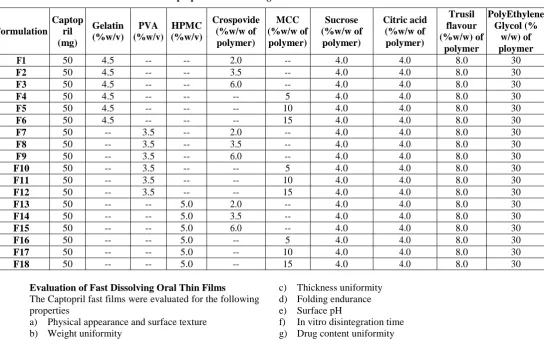
Table 3: Formulation details of Captopril Fast dissolving Oral thin films.
Formulation Captop
ril (mg)
Gelatin (%w/v)
PVA (%w/v)
HPMC (%w/v)
Crospovide (%w/w of polymer)
MCC (%w/w of polymer)
Sucrose (%w/w of
polymer)
Citric acid (%w/w of polymer)
Trusil flavour (%w/w) of
polymer
PolyEthylene Glycol (%
w/w) of ploymer
F1 50 4.5 -- -- 2.0 -- 4.0 4.0 8.0 30
F2 50 4.5 -- -- 3.5 -- 4.0 4.0 8.0 30
F3 50 4.5 -- -- 6.0 -- 4.0 4.0 8.0 30
F4 50 4.5 -- -- -- 5 4.0 4.0 8.0 30
F5 50 4.5 -- -- -- 10 4.0 4.0 8.0 30
F6 50 4.5 -- -- -- 15 4.0 4.0 8.0 30
F7 50 -- 3.5 -- 2.0 -- 4.0 4.0 8.0 30
F8 50 -- 3.5 -- 3.5 -- 4.0 4.0 8.0 30
F9 50 -- 3.5 -- 6.0 -- 4.0 4.0 8.0 30
F10 50 -- 3.5 -- -- 5 4.0 4.0 8.0 30
F11 50 -- 3.5 -- -- 10 4.0 4.0 8.0 30
F12 50 -- 3.5 -- -- 15 4.0 4.0 8.0 30
F13 50 -- -- 5.0 2.0 -- 4.0 4.0 8.0 30
F14 50 -- -- 5.0 3.5 -- 4.0 4.0 8.0 30
F15 50 -- -- 5.0 6.0 -- 4.0 4.0 8.0 30
F16 50 -- -- 5.0 -- 5 4.0 4.0 8.0 30
F17 50 -- -- 5.0 -- 10 4.0 4.0 8.0 30
F18 50 -- -- 5.0 -- 15 4.0 4.0 8.0 30
Evaluation of Fast Dissolving Oral Thin Films
The Captopril fast films were evaluated for the following properties
a) Physical appearance and surface texture b) Weight uniformity
c) Thickness uniformity d) Folding endurance e) Surface pH
h) In vitro drug release
a) Physical appearance and surface texture of patch: 80
This parameter was checked simply with visual inspection of films and evaluation of texture by feel or touch.
b) Weight uniformity of films: 80
Three films of the size 10mm diameter were weighed individually using digitalbalance and the average weights were calculated.
c) Thickness of films: 80
Thickness of the films was measured using screw gauge with a least count of 0.01mm at different spots of the films. The thickness was measured at three different spots of the films and average was taken.
d) Folding endurance of films: 80
The flexibility of films can be measured quantitatively in terms of what is known as folding endurance. Folding endurance of the films was determined by repeatedly folding a small strip of the films (approximately 2x2 cm) at the same place till it broke. The number of times films could be folded at the same place, without breaking gives the value of folding endurance.
e) Surface pH of films: 80
Surface pH was determined by the films were allowed in contact with 1ml of distilled water. The surface pH was noted by bringing a combined glass electrode or pH paper near the surface of films and allowing equilibrate for 1 min.
f) In vitro disintegration time of films: 35
Disintegration test was performed in the USP disintegration time testing apparatus. 0.5% SLS solution used as medium. The films were places in the tubes of the container and disintegration time was recorded.
g) Drug content uniformity study of films: 80
The films were tested for drug content uniformity by UV-Spectrophotometric method. Films of 2 cm diameter were cut from three different places from the casted films. Each patch was placed in 100 ml volumetric flask and dissolved in 0.5 % SLS solution and 0.2 ml is taken and diluted with water up to 10 ml. The absorbance of the solution was measured at 205 nm using UV/visible spectrophotometer (Shimadzu UV-1700). The percentage drug content was determined using the standard graph and the same procedure was repeated for three films.
h) In vitro Dissolution Study: 34
In vitro dissolution of Captopril mouth dissolving films was studied in USP XXIV dissolution test apparatus 900ml 0.5% SLS solution was used as dissolution medium. The stirrer was adjusted to rotate at 50rpm. The temperature of dissolution medium was maintained at 37±0.5ºC throughout the experiment. One film was used in each test. Samples of dissolution medium (5ml) were withdrawn means of syringe fitted with pre-filter at
known intervals of time and analyzed for drug release by measuring the absorbance at 205nm. The volume withdrawn at each time interval was replaced with fresh quantity of dissolution medium. Cumulative percent Captopril released was calculated and p lo tte d against time.i) Data Analysis (Curve fitting analysis): 81,82
To analyze the mechanism of the drug release rate kinetics of the dosage form, the data obtained were plotted as:
1) Cumulative percentage drug released Vs time (In-Vitro drug release plots)
2) Log cumulative percentage drug remaining Vs Time (First order plots)
• Zero order release rate kinetics:
To study the zero–order release kinetics the release rate data are fitted to the following equation.
F= K.t
Where ‘F’ is the fraction of drug release, ‘K’ is the release rate constant and ‘t’ is the release time.When the data is plotted as cumulative percent drug release versus time, if the plot is linear then the data obeys zero-order release kinetics, with a slope equal to K0 .
• First Order Kinetics: Log C = log Co Kt 2.303
Where; C = Amount of drug remained at time‘t’ Co = Initial amount of drug
K = First order rate constant (hr-1)
RESULTS AND DISCUSSION
Ftir of Pure Drug
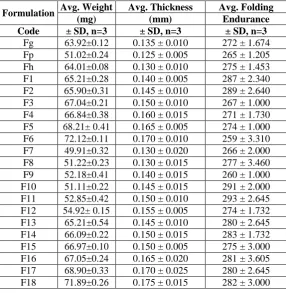
Table 1: Evaluation Of Fast Dissolving Oral Thin Films Formulations.
Formulation Avg. Weight Avg. Thickness Avg. Folding
(mg) (mm) Endurance
Code ± SD, n=3 ± SD, n=3 ± SD, n=3
Fg 63.92±0.12 0.135 ± 0.010 272 ± 1.674
Fp 51.02±0.24 0.125 ± 0.005 265 ± 1.205
Fh 64.01±0.08 0.130 ± 0.010 275 ± 1.453
F1 65.21±0.28 0.140 ± 0.005 287 ± 2.340
F2 65.90±0.31 0.145 ± 0.010 289 ± 2.640
F3 67.04±0.21 0.150 ± 0.010 267 ± 1.000
F4 66.84±0.38 0.160 ± 0.015 271 ± 1.730
F5 68.21± 0.41 0.165 ± 0.005 274 ± 1.000
F6 72.12±0.11 0.170 ± 0.010 259 ± 3.310
F7 49.91±0.32 0.130 ± 0.020 266 ± 2.000
F8 51.22±0.23 0.130 ± 0.015 277 ± 3.460
F9 52.18±0.41 0.140 ± 0.015 260 ± 1.000
F10 51.11±0.22 0.145 ± 0.015 291 ± 2.000
F11 52.85±0.42 0.150 ± 0.010 293 ± 2.645
F12 54.92± 0.15 0.155 ± 0.005 274 ± 1.732
F13 65.21±0.54 0.145 ± 0.010 280 ± 2.645
F14 66.09±0.22 0.150 ± 0.015 283 ± 1.732
F15 66.97±0.10 0.150 ± 0.005 275 ± 3.000
F16 67.05±0.24 0.165 ± 0.020 281 ± 3.605
F17 68.90±0.33 0.170 ± 0.025 280 ± 2.645
Physical appearance and surface texture of films
These parameters were checked simply with visual infection of films and by feel or touch. The observation suggests that the films are having smooth surface and they are elegant enough to see.
Weight uniformity of films
The weight of prepared films was determined using digital balance and the average weight of all films was given in Table 1.
The weight of films measured without the disintegrating agents with 4% Gelatin, 3% PVA and 4% HPMC were about 63.92 + 0.12, 51.02 + 0.24 and 64.01 + 0.08 mg respectively The films prepared from 4% Gelatin with different concentrations of crospovidone as 2 %, 4% and 6% were weighed about 65.21 ± 0.28, 65.90 ± 0.31 and 67.04 ± 0.21 mg respectively. And with 5%, 10% and 15% MCC were weighed about 66.84 ± 0.38, 68.21 ± 0.41 and 72.12 ± 0.11 mg respectively. The films prepared from 3% PVA with different concentrations of crospovidone as 2 %, 4% and 6% were weighed about 49.91 ± 0.32, 51.22 ± 0.23, and 52.18 ± 0.41 mg and with 5%, 10% and 15% of MCC were weighed about 52.11 ± 0.22, 52.85 ± 0.42 and 54.92 ± 0.15 mg respectively. The films prepared from 4% HPMC with different concentrations of crospovidone as 2 %, 4% and 6% were weighed about 65.21 ± 0.54, 66.09 ± 0.22, and 66.97 ± 0.10, mg respectively. And with 5%, 10% and 15% of MCC were weighed about 67.05 ± 0.24, 68.90 ± 0.33, and 71.89 ± 0.26 mg respectivel In all the cases the calculated standard deviation values are very low which suggest that the prepared films were uniform in weight
Thickness of films
The thickness of films measured without the disintegrating agents with 4% Gelatin, 3% PVA and 4%HPMC were about 0.135 + 0.010, 0.125 + 0.005 and 0.130 + 0.010 mm respectively. The thickness of films prepared with Gelatin the concentration 4% with 2%, 4% and 6% crospovidone were about 0.140 ± 0.005, 0.145 ± 0.010 and 0.150 ± 0.010 mm respectively and with 5%, 10% and 15% of MCC were about 0.160 ± 0.015, 0.165 ± 0.005 and0.170 ± 0.010 mm respectively. The thickness of films prepared with PVA the concentration 3%with 2%, 3.5 % and 6% of crospovidone were about 0.130 ± 0.020, 0.130 ± 0.015 and 0.140 ±0.015 mm respectively and with 5%, 10% and 15% of MCC were about 0.145 ± 0.015, 0.150 ±0.010 and 0.155 ± 0.005 mm respectively. The thickness of films prepared with HPMC the concentration 4% with 2%, 4%, and 6% crospovidone were about 0.145 ± 0.010, 0.150 ± 0.015 and 0.150 ± 0.005 mm respectively and with 5%, 10% and 15% of MCC were about 0.165 ± 0.020, 0.170 ± 0.025 and 0.175 ± 0.015 mm respectively.
Folding endurance of films
The folding endurance of films prepared without the disintegrating agents with 4% Gelatin, 3% PVA and 4%HPMC were about 272 + 1.674, 265 + 1.205 and 275
+1.453 respectively. Gelatin the concentration of 4% with 2%, 4% and 6% of crospovidone were about287 ± 2.340, 289 ± 2.640 and 267 ± 1.000 respectively and with 5%, 10% and 15% of MCC were about 271 ± 1.730, 274 ± 1.000 and 259 ± 3.310 respectively. The folding endurance of films prepared with PVA the concentration 3% with 2%, 4 % and 6% crospovidone were about266 ± 2.000, 277 ± 3.460 and 260 ± 1.000 respectively and with 5%,10% and 15% of MCC were about 291 ± 2.000, 293 ± 2.645 and 274 ± 1.732 respectively. The folding endurance of films prepared with HPMC the concentration 4% with 2%, 4% and 6% crospovidone were about280 ± 2.645, 283 ± 1.732 and 275 ± 3.000 respectively and with 5%, 10% and 15% of MCC were about 281 ± 3.605, 280 ± 2.645 and 282 ± 3.0
Surface pH of films
Surface pH was determined by the films were allowed in contact with 1ml of distilled water. The surface pH was noted by bringing a combined glass electrode or pH Paper near the surface of films and allowing equilibrate for 1 min and the average Surface pH of all films was given in Table 6.The surface pH of the films prepared without the disintegrants from 4% Gelatin, 3% PVA and 4% HPMC were about 6.67 + 0.154, 6.89 + 0.122 and 6.65 + 0.111 respectively. The films prepared from gelatin in concentration of 4% with 2%, 4% and 6% of crospovidone were about 6.76 ± 0.153, 6.00 ± 0.100 and 6.46 ± 0.115 and with 5%, 10% and 15% of MCC were about 6.23 ± 0.152, 6.66 ± 0.152 and 6.06 ± 0.153 respectively. The surface pH of the films PVA in concentration 3%, with 2%, 4%and 6% of crospovidone were about 6.83 ± 0.057, 6.06 ± 0.152 and 6.33 ± 0.152 and with 5%, 10% and 15% of MCC were about 6.76 ± 0.152, 6.80 ± 0.100 and 6.30 ± 0.173 respectively. The surface pH of the films HPMC in concentration 4% with 2%, 4% and 6% of crospovidone were about 6.63 ± 0.152, 6.13 ± 0.152, and 6.30 ± 0.100 respectively and with 5%, 10% and 15% of MCC were about 6.53 ± 0.321, 6.56 ± 0.057, and 6.46 ± 0.057 respectively.
Considering the fact that acidic or alkaline pH may cause irritation to the oral mucosa and influence the degree of hydration of polymer, the surface pH of the fast films was determined to optimize drug permeation. Attempts were made to keep the surface pH as close to salivary pH as possible, by the proper selection of the polymer for developing the fast films. The surface pH of all the films was within the range of salivary pH. No significant difference was found in surface pH of different films.The standard deviation values calculated for all the films are very low which conclude that the surface pH of all the films was uniform and within the range.
In vitro disintegration time of films
quality control test or at development stage. Pharmacopoeial disintegrating test apparatus may be used for this study. Typical disintegration time for films is 5– 30 s 18. The average disintegration time of different formulation was shown in Table.6.
The in vitro disintegration time of the films prepared without the disintegrants with 4% Gelatin, 3% PVA and 4% HPMC were about 72.21 + 0.205, 70.43 + 0.165 and 73.54 + 0.112 respectively. The in vitro disintegration time of the films prepared with 4% Gelatin with 2%, 4% and 6% crospovidone were about, 14.33 ± 0.171, 9.10 ± 0.435, and 11.50 ± 0.591 sec. respectively and with 5%, 10% and 15% MCC were about 18.76 ± 0.151, 12.86 ± 0.151 and 14.10 ± 0.479 sec. respectively. The in vitro disintegration time of the films prepared with PVA in the concentration of 3% with 2%, 4% and 6% Crospovidone were about 12.00 ± 0.100, 7.23 ± 0.151 and 11.93 ± 0.057 sec. respectively and with 5%, 10% and 15% of MCC were about 15.41 0.076, 10.26 ± 0.115 and 12.02 ± 0.152 sec. respectively. The in vitro disintegration time
of the films prepared with HPMC in the concentration of 4% with 2%, 4% and 6% Crospovidone were about 14.05 ± 0.056, 10.60 ± 0.035 and 11.09 ± 0.105 sec. respectively and with 5%, 10% and 15% of MCC were about 20.75 ± 0.025, 13.25 ± 0.110 and 15.92 ± 0.102 sec. respectively. In all the cases the calculated standard deviation values are different which suggest that, the prepared films shows different in vitro disintegration time.
Drug content uniformity of films
Captopril fast films prepared with various polymers were subjected to the uniform dispersion of drug throughout the film. average drug content was calculated, the results were shown in Table 6. The drug was dispersed in the range of 95.00 ± 1.056 to 98.86 ± 1.175%. Suggesting that drug was uniformly dispersed throughout all films. The SD value calculated for such formulation is very less which suggest that the results are reproducible and accuracy in the method used to prepare the films.
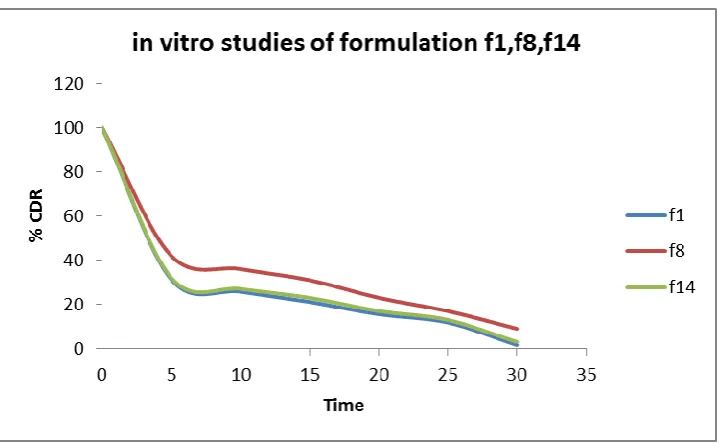
Table 2: In vitro drug release profile of Captopril from F2 formulation.
Time (hrs) Abs* Conc. (µg/ml) CDR (mg) CDR (%) Log % CDR Cumulative % drug remained
log % Drug remained
0 0 0 0 0 0 100 2
5 0.074 3.8144 3.4329 68.6597 1.8367 31.3402 1.4961
10 0.08 4.1237 3.7113 74.2268 1.8705 25.7731 1.4111
15 0.085 4.3814 3.9432 78.8659 1.8968 21.1340 1.3249
20 0.091 4.6907 4.2216 84.4329 1.9265 15.5670 1.1922
25 0.095 4.8969 4.407 88.1443 1.9451 11.8556 1.0739
30 0.106 5.4639 4.918 98.3505 1.9927 1.6494 0.2173
*mean±SD, n=3
Table 3: In vitro drug release profile of Captopril from F8 formulation.
Time
(hrs) Abs*
Conc. (µg/ml)
CDR
(mg) CDR (%)
Log % CDR
Cumulative % drug remained
log %Drug remained
0 0 0 0 0 0 100 2
5 0.078 4.0206 3.6185 72.3711 1.8595 27.6288 1.4413
10 0.084 4.3299 3.8969 77.9381 1.8917 22.0618 1.343
15 0.089 4.5876 4.1288 82.5773 1.9168 17.4226 1.2411
20 0.096 4.9484 4.4536 89.0721 1.9497 10.9278 1.0385
25 0.099 5.1030 4.593 91.8556 1.9631 8.1443 0.9108
30 0.107 5.5154 4.964 99.2783 1.9968 0.7216 -0.1416
*mean±SD, n=3
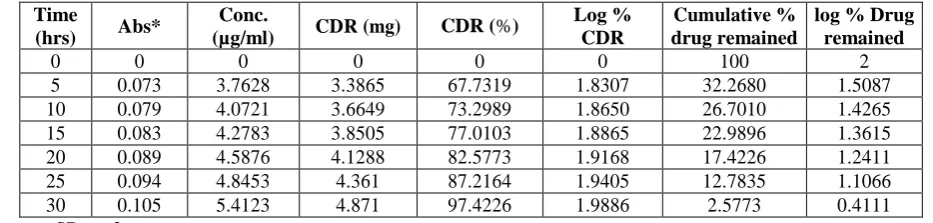
Table 4: In vitro drug release profile of Captopril from F14 formulation.
Time
(hrs) Abs*
Conc.
(µg/ml) CDR (mg) CDR (%)
Log % CDR
Cumulative % drug remained
log % Drug remained
0 0 0 0 0 0 100 2
5 0.073 3.7628 3.3865 67.7319 1.8307 32.2680 1.5087
10 0.079 4.0721 3.6649 73.2989 1.8650 26.7010 1.4265
15 0.083 4.2783 3.8505 77.0103 1.8865 22.9896 1.3615
20 0.089 4.5876 4.1288 82.5773 1.9168 17.4226 1.2411
25 0.094 4.8453 4.361 87.2164 1.9405 12.7835 1.1066
30 0.105 5.4123 4.871 97.4226 1.9886 2.5773 0.4111
Stability studies
The selected formulations was evaluated for stability studies which was stored at 400C at 75% RH tested for 3 month and were analyzed for their physical parameters, In vitro dispersion time and drug content at 1 month interval. The residual drug contents of formulations were found to be within the permissible limits and the results were shown in the Table No. 32, 33 and 34 which was estimated by seeing drug content uniformity.
Table 5: Stability data of F2 formulation.
Time in months
Formulation F2 stored at 400c/ 75% RH Physical
appearance
In vitro Dispersion time
% Drug content
1 +++ 9.22 98.12
2 +++ 10.1 97.62
3 ++ 10.45 97.15
Table 33: Stability data of F8 formulation.
DISCUSSION
Captopril were prepared by solvent casting method using superdisintegrants such as, crospovidone and MCC. Captopril is soluble in water but its bioavailability is limited. The dispersion time of films were reduced by superdisintegrants like crospovidone and MCC. From the
findings obtained, it can be concluded that:- FT-IR studies revealed that there is no chemical interaction between Captopril and excipients used in the study.The DSC thermograms of Captopril with other excepitents doesnot show profound shift in peaks which indicates compatibility. The prepared film containing Captopril was clear and colourless. The scanning electron photo micrograph of the film at 1000 X magnification showed smooth surface with somelittle pores and without any scratches or transverse striations Formulated films gives satisfactorily result for various physico-chemical evaluation of films like physical appearance, and surface texture, weight uniformity, thickness uniformity, Folding endurance Surface pH, Drug content uniformity, In vitro Disintegration time, In vitro drug release The low values of standard deviation for average weight and drug content weight and drug content uniformity within the batches prepared. Based on in vitro dispersion time, formulation F2 , F8 and F14 that is with 4% Crospovidone were approximately 7-10 s and the formulation F5, F11 and F17 that is with 10% MCC were approximately 10-14 s which it was found to be promising dispersion time. It was observed from the results that, CP formulations showed maximum dissolution rate about 99.27% of drug release in 30 min. Whereas MCC showed dissolution rate about 97.42% of drug release in Short-term stability studies of promising formulation indicated that there is no significant change in drug content and in vitro dispersion time. Fast dissolving films of Captopril can be
prepared by Solvent casting method using
superdisintegrants. Crospovidone was found. At 3.5 % w/w of crospovidone with 3% PVA concentration level dispersion time of 7.23±0.151 sec highest release of more than 99.27% drug in 30 min.
CONCLUSION
In the present study Fast dissolving drug delivery system of 3.5 % of Captopril were successfully developed in the form of Fast dissolving oral thin films which offers a suitable and practical approach in serving desired
Time in months
Formulation F8 stored at 400c/ 75% RH Physical
appearance
In vitro Dispersion time
% Drug content
1 +++ 7.35 98.60
2 +++ 7.98 98.20
3 ++ 8.45 97.85
Time in months
Formulation F14 stored at 400c/ 75% RH Physical
appearance
In vitro Dispersion time
% Drug content
1 +++ 10.76 97.40
2 +++ 10.94 96.67
objective of faster disintegration and dissolution characteristics with increase bioavailability. Fast dissolving films of Captopril were prepared by using Crospovidone and Microcrystalline cellulose as super-disintegrants
REFERENCES
1. Dixit R, Puthli S. Oral strip technology: Overview and future potential. J. Control Release, 2009; 139: 94-107.
2. Arya A, Chandra A, Sharma V, Pathak K. Fast
dissolving oral films: An Innovative Drug Delivery system and Dosage form. Int. J. Chem. Tech. Res., 2010; 2: 576-83.
3. Mashru C, Sutariya V, Sankali M, Parikh P.
Development and evaluation of fast-dissolving film of salbutamol sulphate. Drug Dev. Ind. Pharm, 2005; 31: 25-34.
4. Nishimura M, Matsuurab K, Tsukioka T, Yamashita
H, Inagaki N, Sugiy a T, Itoh Y. In vitro and in vivo
characteristics of prochlorperazine oral
disintegrating film. International Journal of
Pharmaceutics, 2009 Oct 15; 398: 98–102.
5. Shimoda H, Taniguchi K, Nishimura M, Matsuura
K, Tsukikoka T, Yamashita H, Hirano K, Yamamoto M, Kinosada Y, Itoh Y. Preparation of a
fast dissolving oral thin film containing
dexamethasone: A possible application to antiemesis during cancer chemotherapy. European Journal of Pharmaceutics and Biopharmaceutics, 2009 Aug 31. 6. Slowson M, Slowson, S. What to do when patients
cannot swallow their medications. Pharm Times, 1985; 51: 90-96.
7. Doheny K. You really expect me to swallow those horse pills? Am Druggist, 1993; 208: 34-35.
8. Tora-Tora Gorahowski. Principles of Anatomy and Physiology, 7th Edition edited by Gerad J. Tora-Tora and Sandro Reynolds Gorahowski, published Harpet Collins College Publishers, 1992; 770-4.
9. Ross and Wilson. Anatomy and Physiology in
Health and Illness, 9th Edition edited By Anne Waugh and Allison Goraw published by Churchill Livingstone Edinburgh, 2001; 289-93.
10. www.ondrugdelivery.com.
11. Vondrak B, Barnhart S. Dissolvable Films for
Flexible Product Format in Drug Delivery, Pharmaceutical Technology Supplement, April 2008.
12. Frey P. Film Strips and Pharmaceuticals, Pharma. Mfg. & Packag. Sourcer, winter, 2006; 92-93.
13. Zhang H, Zhang J, Streisand J.B. Oral mucosal drug
delivery: clinical pharmaco- kinetics and therapeutic applications, Clin. Pharmacokinet, 2002; 41(9): 661-680.
14. Barnhart SD, Sloboda MS. The Future of
Dissolvable Films. Drug Delivery Technol, 2007; 7(8): 34-37.
15. Meathrel B, Moritz C. Dissolvable Films and Their Potential in IVDs. IVD Technol, 2007; 13(9): 53-58.
16. Mishra R, Amin A. Quick API Delivery.
Pharmaceutical Technology Europe, 1-5.
17. Coppens KA, Hall MJ, Mitchell SA, Read MD.