Patient Experience Journal
Patient Experience Journal
Volume 1
Issue 1 Inaugural Issue
Article 13
2014
Patient care experiences and perceptions of the patient-provider
Patient care experiences and perceptions of the patient-provider
relationship: A mixed method study
relationship: A mixed method study
Jennifer Tabler MS
Department of Sociology, University of Utah, [email protected]
Debra L. Scammon MS, PhD
David Eccles School of Business, University of Utah, [email protected]
Jaewhan Kim PhD
Department of Family and Preventive Medicine, University of Utah, [email protected]
Timothy Farrell MD
Department of Family and Preventive Medicine, Division of Geriatrics, School of Medicine, University of Utah; VA SLC Geriatric Research, Education, and Clinical Center, Utah, [email protected]
Andrada Tomoaia-Cotisel MPH, MHA
Department of Family and Preventive Medicine, University of Utah; London School of Hygiene and Tropical Medicine, London, UK, [email protected]
See next page for additional authors
Follow this and additional works at: https://pxjournal.org/journal
Part of the Health and Medical Administration Commons, Health Policy Commons, Health Services Administration Commons, and the Health Services Research Commons
Recommended Citation
Recommended Citation
Tabler, Jennifer MS; Scammon, Debra L. MS, PhD; Kim, Jaewhan PhD; Farrell, Timothy MD; Tomoaia-Cotisel, Andrada MPH, MHA; and Magill, Michael K. MD (2014) "Patient care experiences and perceptions of the patient-provider relationship: A mixed method study," Patient Experience Journal: Vol. 1 : Iss. 1 , Article 13.
DOI: 10.35680/2372-0247.1012
Available at: https://pxjournal.org/journal/vol1/iss1/13
mixed method study
mixed method study
Authors
Authors
Jennifer Tabler MS; Debra L. Scammon MS, PhD; Jaewhan Kim PhD; Timothy Farrell MD; Andrada Tomoaia-Cotisel MPH, MHA; and Michael K. Magill MD
Patient Experience Journal
Volume 1, Issue 1 - April 2014, pp. 75
Patient Experience Journal, Volume 1, Issue 1 - April 2014 © The Author(s), 2014. Published in association with The Beryl Downloaded from www.pxjournal.org
Physician Impact on Patient Experience
Patient care experiences and perceptions of the
relationship: A mixed method study
Jennifer Tabler, MS, Department of Sociology
Debra L. Scammon, MS, PhD,David Eccles School of Business
Jaewhan Kim, PhD, Department of Family and Preventive Medicin
Timothy Farrell, MD, Department of Family and Preventive Medicine VA SLC Geriatric Research, Education, and Clinical Center, Utah
Andrada Tomoaia-Cotisel, MPH, MHA,
Hygiene and Tropical Medicine, London, UK
Michael K. Magill, MD, Division of Geriatrics, School of Medicine
Abstract
Improving interpersonal continuity of care
provider (PCP) over time—is often considered a goal of primary care. Continuity of care is frequently
of longitudinal continuity, or the proportion of encounters with one practitioner, overlooking aspects of the patient provider relationship that are key to interpersonal continuity of care. Further, few studies explore patients’ perspectives regarding which care experiences enhance or detract from the patient
group interviews, a patient experience CAHP
experiences at 10 primary care clinics influenced their perceptions of their relationship with their PCPs. Focus group interviews with 63 participants indicated that patients’ experience
perceptions of the patient-provider relationship. The relationship between patient experience and interpersonal continuity was empirically assessed using survey responses and medical records (n=645). W
that their provider knows them as a person as a measure of interpersonal continuity. Logistic regression results indicated that being seen within 15 minutes, receiving visit reminders, effective provider communication, and sati
positively influenced patient perceptions of the patient
shaped their perceptions of the patient-provider relationship independent of their satisfaction with care. The mixed methods design adds depth to our understanding of patients’ care experiences, and illustrates that these experiences are critical for understanding the patient-provider relationship. Future research on interpersonal continuity should take patient experiences into account.
Keywords
Patient Experience, Interpersonal Continuity
Satisfaction, Mixed Methods, Patient Centered Medical Home
Continuity of care has been associated with decreased hospitalizations and emergency department visits, and improved health and utilization of preventive services especially among patients with chronic conditions Continuity of care has been variously defined, but most often is conceptualized as a pattern of visits with a concentration with a single provider.5 Patients who see the same practitioner over time, and who develop a personal relationship with their provider, express higher satisfaction with care.6,7 Because continuity of care is beneficial for the health and satisfaction of patients, facilitating and
improving continuity is generally viewed as important.
As primary care practices transform towards a model of patient-centered medical homes, a number of changes to clinic processes and procedures may be introduced. There
April 2014, pp. 75-87
April 2014
© The Author(s), 2014. Published in association with The Beryl Institute and Patient Experience Institute
Patient care experiences and perceptions of the patient-provider
mixed method study
Department of Sociology, University of Utah
David Eccles School of Business, University of Utah Department of Family and Preventive Medicine, University of Utah
Department of Family and Preventive Medicine, Division of Geriatrics, School of Medicine VA SLC Geriatric Research, Education, and Clinical Center, Utah
Cotisel, MPH, MHA, Department of Family and Preventive Medicine, University of Utah;
Division of Geriatrics, School of Medicine, University of Utah
Improving interpersonal continuity of care—the personal relationship forged between a patient and their primary care is often considered a goal of primary care. Continuity of care is frequently
of longitudinal continuity, or the proportion of encounters with one practitioner, overlooking aspects of the patient are key to interpersonal continuity of care. Further, few studies explore patients’ perspectives regarding which care experiences enhance or detract from the patient-provider relationship. This study, using focus group interviews, a patient experience CAHPS-PCMH survey, and electronic medical records, explored how patients’ experiences at 10 primary care clinics influenced their perceptions of their relationship with their PCPs. Focus group interviews with 63 participants indicated that patients’ experiences in the clinics, such as wait-times, influenced their
provider relationship. The relationship between patient experience and interpersonal continuity was empirically assessed using survey responses and medical records (n=645). We used patients’ perceptions that their provider knows them as a person as a measure of interpersonal continuity. Logistic regression results indicated that being seen within 15 minutes, receiving visit reminders, effective provider communication, and sati
positively influenced patient perceptions of the patient-provider relationship. Furthermore, patients’ care experiences provider relationship independent of their satisfaction with care. The mixed esign adds depth to our understanding of patients’ care experiences, and illustrates that these experiences are
provider relationship. Future research on interpersonal continuity should take
Patient Experience, Interpersonal Continuity of Care, Patient-Provider Relationship, Communication, Satisfaction, Mixed Methods, Patient Centered Medical Home
Continuity of care has been associated with decreased hospitalizations and emergency department visits, and
zation of preventive services1-3, especially among patients with chronic conditions.4 Continuity of care has been variously defined, but most often is conceptualized as a pattern of visits with a
Patients who see the same practitioner over time, and who develop a personal relationship with their provider, express higher satisfaction
Because continuity of care is beneficial for the health and satisfaction of patients, facilitating and
is generally viewed as important.
As primary care practices transform towards a model of centered medical homes, a number of changes to clinic processes and procedures may be introduced. There
has been little research on the impact of various interventions or changes in health care delivery on continuity of care. Specifically, research is needed that identifies potential relationships between patient
experiences within clinics and patient perceptions of their relationship with their provider. Chan
practice redesign are often evaluated by assessing patient satisfaction with care, not by assessing patients’
experiences with care. In addition, most research focuses on how satisfaction relates to longitudinal continuity, not the quality of the patient-provider relationship, an important aspect of interpersonal continuity of care Furthermore, very few empirical studies of continuity of care integrate mixed methods in a convergent study design to develop a more comprehensive analysis of patients’ perspectives and experiences. Qualitative and quantitative
75
provider
of Geriatrics, School of Medicine, University of Utah;
; London School of
the personal relationship forged between a patient and their primary care is often considered a goal of primary care. Continuity of care is frequently assessed in terms of longitudinal continuity, or the proportion of encounters with one practitioner, overlooking aspects of the
patient-are key to interpersonal continuity of cpatient-are. Further, few studies explore patients’ perspectives provider relationship. This study, using focus PCMH survey, and electronic medical records, explored how patients’ experiences at 10 primary care clinics influenced their perceptions of their relationship with their PCPs. Focus group
times, influenced their provider relationship. The relationship between patient experience and interpersonal
e used patients’ perceptions that their provider knows them as a person as a measure of interpersonal continuity. Logistic regression results indicated that being seen within 15 minutes, receiving visit reminders, effective provider communication, and satisfaction,
provider relationship. Furthermore, patients’ care experiences provider relationship independent of their satisfaction with care. The mixed esign adds depth to our understanding of patients’ care experiences, and illustrates that these experiences are
provider relationship. Future research on interpersonal continuity should take
Provider Relationship, Communication, Patient
has been little research on the impact of various erventions or changes in health care delivery on continuity of care. Specifically, research is needed that identifies potential relationships between patient
experiences within clinics and patient perceptions of their relationship with their provider. Changes implemented in practice redesign are often evaluated by assessing patient satisfaction with care, not by assessing patients’
experiences with care. In addition, most research focuses on how satisfaction relates to longitudinal continuity, not
research, merged through analysis, can produce more complete understanding to guide redesign of health care practices.10-12
We use both qualitative data from focus group interviews and quantitative survey and medical records data to explore how patients’ care experiences influence their perceptions of interpersonal continuity of care.
Specifically, we explore the relationship between patients’ experiences with clinic characteristics (e.g. wait times), provider communication, satisfaction with care, and patients’ perceptions of their interpersonal relationship with their PCP.
Continuity of Care
Assessments of how or if healthcare redesign has influenced continuity of care are contingent on how continuity is conceptualized.9, 13 Continuity of care, at its core, describes the personal relationship between a patient and his or her primary care provider developed over time.13-15 Although the theoretical concept of continuity is personal and tied directly to the experiences of the individuals in the relationship, many studies employ “objective” measures of continuity that overlook patients’ perspectives and experiences. In a systematic review of continuity of care, Saultz15 found that most measurements of continuity relate to visit patterns and concentration rather than the interpersonal nature of the care relationship.
The aspect of continuity of care that focuses on the extent to which patients receive services at the same site of care by the same provider is referred to as longitudinal continuity.15,16 There are many different indices of longitudinal continuity, with heated debates surrounding how to best measure continuous contact between patient and provider17. Longitudinal continuity aptly describes the extent to which a patient is visiting the same provider over time, a key element of continuity, but fails to capture the quality of the interpersonal relationship, and more importantly, the perspective of the patient and his or her actual experiences.
In contrast, interpersonal continuity is often understood as the long-term personalrelationship forged between a patient and his or her PCP15. Interpersonal continuity emphasizes the trust and bond developed between patients and providers.15 Interpersonal continuity is therefore directly related to the experiences and perspective of both patients and their providers, and emphasizes the
development of a personal patient-professional relationship.9 Interpersonal continuity is a theoretically relevant conceptualization of continuity to this study in particular, given that we explore factors shaping the quality of the patient-provider relationship from the perspectives and experiences of the patients.
It is difficult, however, to operationalize and measure interpersonal continuity. The bond forged between patients and providers through time is multifaceted, and thus direct measurement is challenging15. To assess interpersonal continuity most studies measure longitudinal continuity and then make inferences about the
interpersonal bond between patient and provider.15 The trust developed between patients and providers is often suggested as an important element of the patient-provider relationship.13, 15, 16, 18 We suggest that trust is an outcome of continuity and develops through the process of contact between patient and provider over time. We propose an alternative to measuring patient-provider trust and assess patients’ perceptions of how well their provider knows them as a person. As an outcome of interpersonal continuity of care, we believe that this is a useful proxy measure of interpersonal continuity; the consistency and quality of the patient-provider relationship over time shapes the likelihood that a provider may get to know the patient on a personal level. In this study, we treat patients’ perceptions of the patient-provider relationship as indicative of level of interpersonal continuity of care they have developed with their provider
Determinants of Interpersonal Continuity and
Patient Perceptions of the Patient-Provider
Relationship
The patient-provider relationship rates second only to family relationships in level of importance to patients19. Relationships are built through effective communication and interaction. Information exchange, responding to emotions, managing uncertainty, and fostering trusting relationships are critical facets of successful interpersonal communication between patients and providers.20, 21 Especially important to effective communication is that patients feel they are understood, that their concerns are heard, and that there is mutual understanding between patient and provider of the patient’s life situation. High quality patient-provider communication is correlated with longitudinal continuity of care8, 16, and thus likely
influences patients’ interpersonal relationships with their providers.
Patient care experiences and perceptions, Tabler et al.
Patient Experience Journal, Volume 1, Issue 1 - April 2014 77
reduction in the likelihood that a patient will come back for an additional appointment.26 Although these situational factors do influence longitudinal continuity, whether and how such clinic experiences influence interpersonal continuity of care specifically has not been studied. To our knowledge, how patients’ experiences shape their
perceptions of their providers’ knowledge of them personally, has never been examined.
Research also suggests that patient satisfaction is correlated with interpersonal continuity of care, and this relationship is bi-directional.7, 27 Patients who are satisfied with their care are more likely to consistently see—and develop a relationship with—their primary care provider, and seeing the same provider over time is associated with satisfaction with both the provider and the health care organization more broadly.6, 27 Additionally, many aspects of a healthcare visit shape satisfaction; in particular, patients’ experiences with wait times and time spent with provider are correlated with patient satisfaction.28 Staff helpfulness as well as provider communication are also correlated with patient satisfaction.29-31 However, it is unknown whether patients’ care experiences have independent influences on patient perceptions of the quality of the patient-provider relationship, or if
satisfaction fully explains this relationship. For this reason, known factors that shape patient satisfaction with care should be considered when exploring the relationship between patients’ care experiences and interpersonal continuity. We explore how patient experiences known to shape satisfaction may influence interpersonal continuity when satisfaction is taken into consideration concurrently. Research on the relationship between patient experiences, satisfaction with care, and perceptions of the personal relationship with their provider may provide insights for primary care clinics as they redesign processes of care.
The Current Study
This study uses both qualitative focus group interview and quantitative survey and electronic medical record (EMR) data to explore the relationship between patients’ clinic experiences, patients’ satisfaction, and patients’ perspectives on the quality of the patient-provider
relationship. The use of mixed methods provides a unique, and more robust depiction of individual perspectives and experiences10, and thus adds depth to the analysis of patient experiences in the clinical setting.12, 32
The study is set in the University of Utah’s 10 Community Clinics (UUCC) in Utah. Since 2003 these clinics have transformed to their version of a patient-centered medical home (PCMH) called Care by Design™ (CBD) based on three principles: appropriate access, care teams, and planned care. Detailed descriptions of the setting and transformation of these 10 clinics into team-based, advanced medical homes can be found elsewhere.33-35 The
PCMH is an ideal setting for this study given the emphasis this model of primary care places on improving patient experiences with care.36
Methods
Data
Qualitative data
Our qualitative analysis relies on the transcripts often focus groups designed to assess patients’ perceptions of the changes implemented within the UUCC as they transformed to the CBD model. In total, our focus groups included 63 patients; they were conducted in the summer of 2010. Patients were recruited based upon having had multiple visits to UUCC over 1+ years. Focus groups ranged in size from 3 to 12 participants, and were held once at each of the 10 UUCCs. One session was
conducted in Spanish to accommodate patients for whom English is not their first language, and was held at the UUCC with the largest Hispanic population. Sessions were conducted by trained facilitators and lasted approximately 1½ hours. The facilitator or a research assistant took notes on a flip chart using the notes as a confirmation check with participants. The sessions were audio recorded and an observer/research team member took additional notes. The audio recordings were professionally transcribed. A native Spanish speaker fluent in English translated the Spanish transcription into English. In total 225 pages of transcript were generated. Transcriptions were hand coded thematically and by core content.37, 38 The focus-group protocol included questions about a broad range of changes occurring in the clinics, including the use of care teams and the implementation of the EMR. Patients were asked about what changes they had noticed, how the changes had influenced their relationship with their primary care provider, their sense of coordination and integration of care with the new model of care, and their experiences in the clinics more broadly.
Quantitative Data
We performed quantitative analyses using data from two sources, a survey and the EMRs. Our questionnaire, which includes measures of patient experiences over the past 12 months, was constructed using a subset of items included in the Consumer Assessment of Healthcare Providers and Systems-Patient Centered Medical Home (CAHPS-PCMH) survey.39 Our custom survey included items related specifically to the core principles of CBD and assessed experiences with care in several domains, including access to care, care coordination, continuity of care, and information about care and appointments. It also included an overall measure of satisfaction with care.39
PCMH instrument is intended to assess patient
experiences over time rather than their experience during a single visit. Thus, to be eligible to participate in our survey, patients must have had at least one visit to one of the UUCCs in the past 12 months. A randomly generated list of 4300 patients with a diagnosis of one or more chronic conditions (e.g. heart failure, diabetes mellitus, coronary artery disease) or a visit to UUCC for preventive care and at least one visit to one of the UUCCs in the past 12 months was sent to the vendor. In the second step, the vendor contacted patients by mail. Mailed packets included a cover letter explaining the purpose of the study,
instructions for completing the survey, and the survey itself. In the third step, when surveys were returned, the vendor entered responses into a data file submitted to UUCC. A total of 851 surveys (18.9%) were returned within three months of mailing in July 2011. Respondents were similar to those included in the mail sample; for example, approximately 33% of those sent a survey were male, compared to 33.4% of those who returned a survey.
Additional data on patients were drawn directly from the patients’ medical records. Specifically, we included utilization of services and number of comorbid conditions in our analyses.
Measures (Quantitative Analysis)
Dependent variable: Perceived Patient-Provider Relationship
To assess the perceived patient-provider relationship, we used a measure of perception of providers’ knowledge of the patient. Patients were asked, “how well does your provider know you as a person,” with responses recorded on a six-point Likert scale. We created a dichotomous variable to compare those responding very poor, poor, and fair with those responding good, very good, and excellent.
Independent variables: Patient experiences
For all questions, patients were asked to consider their experiences during the past 12 months. Patients were asked how often they were seen within 15 minutes of appointment (Seen within 15 minutes). Those who responded never or sometimes are compared to those who responded usually or always. Patients were also asked whether they receive reminders between visits (Get reminders). For this dichotomous variable we compare those who answered yes, they receive reminders between visits, to those who said no.
In addition, patients were asked how often their provider spends enough time with them during their visit (Spends enough time), and how often clerical staff was helpful (Clerks helpful). Responses were recorded on 4-point scales. Due to the distribution of responses to these questions, with many individuals responding positively, those who responded in the “top box” (always) are compared to those who responded usually, sometimes, and never.
Provider communication is captured with patient experiences from five questions. Each question is in a five-point scale format. Respondents were asked how often their provider “explains things in easy to understand terms,” “listens carefully to you,” “answers questions to your satisfaction,” “understands what was important to you,” and “respects what you had to say.” Using the sum of responses to all five questions, we formed a scale to represent provider communication. Scores ranged from 5 to 20, with higher scores representing more positive experiences with provider communication. The scale was found to have high internal consistency (α>0.91).
Patients were asked to rate their satisfaction with the overall care from their provider (Satisfaction) on a 5-point Likert type scale. The distribution of responses to this variable was positively skewed. Thus we compare those who responded in the “top box” (excellent) to those who responded very good, good, fair, and poor.
Additional covariates: Socio-demographics Continuity of care often varies by socio-demographic characteristics. For example, racial and ethnic minority groups are less likely to identify a regular site of care, and have lower longitudinal continuity with the same
provider.40 However, it is unclear how socio-demographic characteristics may shape interpersonal continuity, and patients’ perspectives of the patient-provider relationship specifically. For this reason, we controlled for a variety of socio-demographic characteristics. Genderis based on self-report, comparing males to females. Elderly is a
dichotomous variable comparing those ages 65 and older to those ages 64 and younger. Race/ethnicity is constructed as a dichotomous variable comparing Non-Hispanic Whites to all other racial/ethnic groups (i.e., Hispanics or non-Whites). Household income is a categorical variable, 1= “<25,000”, 2= “25,001-50,000”, 3= “50,001-100,000”, 4 = “100,001+.” Education is measured by highest degree earned with 5 possible responses ranging from “did not graduate high school” to “more than a 4 year degree.”
Healthcare utilization and health status
Patients were asked whether they see a provider outside the UUCC network (outside provider). We compared those who have seen an outside provider to those who have not. Patients’ self-reported overall health is measured on a 5-point Likert scale, with higher values indicating better health. The number of visits (in 2011) to UUCCs for each respondent and chronic conditions (those with one or more chronic conditions=1those with no chronic conditions=0) was determined from the EMR.
Analytic Plan
Patient care experiences and perceptions, Tabler et al.
Patient Experience Journal, Volume 1, Issue 1 - April 2014 79
foundation from which we explored the relationship between patient experiences and their perceptions of how well their provider knows them personally. We then tested the relationship between patients’ clinic visit experiences and perceived patient-provider relationship using binary logistic regression.
Results
Qualitative Analysis
The focus group protocol included questions pertaining to a broad range of patient experiences with care at the CCs. For this analysis, we focused on excerpts from the transcripts of focus group sessions in which patients discussed their perspectives on the patient-provider relationship. Two key themes emerged with regard to clinic practices that shape patients’ relationships with their providers. First, patients noted that short visits are disruptive to the patient provider relationship. Second, experiencing long wait times negatively shaped patients’ perceptions of the quality of their relationship with their PCP.
Patients viewed short appointments as detrimental to equitable treatment and the patient-provider relationship. Having sufficient time with their provider signifies to the patient that their provider cares about them and facilitates the development of a personal relationship. In the following excerpt, a patient discusses the relationship between length of appointment and the patient-provider relationship:
“In the University Clinic, I notice that providers they spend more time with you like they talk to you. …in other clinics you spend more time waiting for the doctor, the time that you are with them, you are waiting for like 30-45 minutes and then they see you in 5 minutes, you notice that in they are in a hurry and that is something at the University is different because I notice that they care…they make it like they know you and they care for you and that is something that you
appreciate because you notice that, okay you are not a dollar for them, you are a patient and that is something that I think everybody likes because you don’t want to be I’m here and he is getting money for my insurance, but he doesn’t know who I am. That’s something that I think every
person like to be that, you are my doctor, you need to know what is my problem and I think that you care for me and that is something that I notice that is different in the University Clinic, I notice that the time that the provider spends with me is longer than other providers in other places”
-Patient at Clinic #1
Short appointments indicated to this patient that the provider is more interested in making money than in getting to know them or taking care of them. This detracts from the patient provider relationship as patients associate time spent with their provider with both the quality of the patient-provider relationship and the quality of care they are receiving. According to patients, the more time their physician spends with them, the better the physician understands their personal and health related issues, which in turn gives them the sense that their provider cares about them personally.
Although it is sometimes presumed that patients (especially those who are busy) value getting through appointments quickly, many patients experienced short appointments negatively, expressing concerns regarding the amount of contact they have with their provider. In the following excerpt, a patient expresses concerns and the inferences she makes about providers:
“My PA would come in and literally our appointments could have been 15 minutes, I think that they, a lot [are] 15 minutes, maybe, and now they come in and boom, boom, boom and they are in the next room, there is no interaction with us, I just think they are over booked and over worked here.”
-Patient at Clinic #3
At another clinic, a patient mentions that he wants a provider to really get to know him, expressing that a doctor who “doesn’t know me from Adam” won’t provide optimal care. Patients drew inferences that the operational features of the clinic, such as over booking, cause short appointments; which affects how well the provider can get to know them. Patients expressed that there needs to be sufficient interaction with their provider for effective communication between patient and provider to occur. Figure 1: Analytic pathway
Integration of qualitative and quantitative analyses Quantitative
analysis of CAHPS-PCMH survey and EMR results Qualitative analysis
of patient focus group interviews
Inductive
Analysis
Deductive
Analysis
The observation that some patients value short
appointments may be a reflection that they prefer shorter wait times. Indeed, patients viewed long wait times as detrimental to the patient-provider relationship. According to patients, long wait times impede the quality of the time they have with the physician. In the following excerpt, a patient expresses the sense that patients should be treated equitably:
“I had to wait in the waiting room for about a half an hour and another hour in the doctor’s room, so it is very variable, I think it depends on the clinic, on the doctor, how busy they are, but what I think is that everybody is busy in this world and so I think everybody has to take into consideration that we are all human beings, it doesn’t matter your race, your ethnicity, we need to be treated equally, if it is a half an hour for you, it is half an hour for her and if they are running behind what happens sometimes… then they see the next patient.”
-Patient at Clinic #10
According to the patient, the frustration of wait times is compounded by procedures used by the clinics to “catch up” when a provider is running behind schedule—rushing appointments. At a different UUCC (Clinic #3), another patient stated, “What would be nice is to not have them double book them every 15 minutes.” Patients infer that both long waits and short appointments result from over scheduling. Patients are not only sensitive to short
appointments and long wait times, but they also view them as interrelated processes that shape their relationship with their provider.
Some patients who value immediate access, however, were aware that double booking may be implemented in order to ensure the availability of same day appointments. In the following excerpt a patient discusses the tension between wait times and scheduling flexibility:
“Typical visits is that sometimes I have to wait, but I don’t mind because I get the same amount of attention and time as the people before me got and in particular it is Dr. B, he double books and he has to and I don’t mind because that is how we all get in as quickly as we do and we are not waiting two weeks…they have actually started telling us, Dr. B double books so please
understand, it is better to know up front that that is his policy, he will not turn a patient away, that is exactly what they say, he will not turn a patient away and that is a good thing and so to me it is worth waiting.”
-Patient at Clinic #6
Patients perceived a tension between quality interactions with their primary care physician, which requires time, and the clinic procedures implemented in order to provide same day appointments and/or to enhance provider productivity (such as overbooking). Many patients were sensitive to fairness within the clinics in terms of the time and attention that they get from their provider. Based on the focus group interviews, it was clear that patients’ experiences with wait times and length of appointments shape their perceptions of their relationship with their primary care provider.
We turn now to a quantitative examination of the impact of patient care experiences on patients’ perceptions of the patient-provider relationship. The quantitative examination builds on the qualitative analysis by including patient experiences with both wait times and time spent with provider as potential factors that may shape patients’ perceptions of their relationship with their provider.
Quantitative Analysis
Although the total sample of patients from the UUCCs who responded to the survey was n=851, 206 respondents had missing responses on key variables, resulting in a final sample of 645 respondents. The original and analytic samples did not vary significantly by socio-demographic or other key characteristics (e.g. gender, age, race/ethnicity, overall health etc.) indicating that missing values appear to be random. Of the 645 patients, 34.11% were male, 87.75% of respondents were non-Hispanic whites, 48.22% were 65 or older, and 33% had one or more chronic conditions ( Table 1).
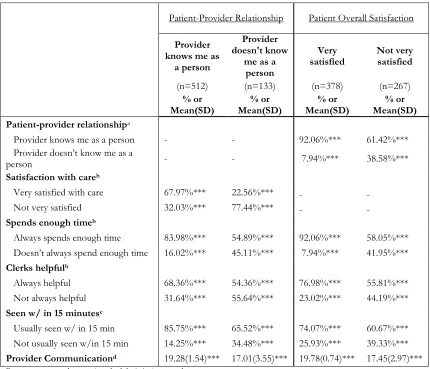
Table 2 presents the unadjusted empirical relationship between patients’ perceptions of how well their provider knows them as a person and patients’ care experiences (columns 2 and 3). It also presents the relationship between patient satisfaction with overall care and patients’ care experiences (columns 4 and 5).
Table 2 columns 2 and 3 illustrate that the perceived patient-provider relationship is positively related to the theoretically relevant variables—respondents who stated that their provider knows them as a person were more likely to state that they were very satisfied with care, that their provider spends enough time with them, that the clerical staff were helpful, that they are usually seen within 15 minutes of their appointment, and they have higher provider communication scores (p<0.001 for all). The data presented in Table 2 columns 2 and 3 preview an answer to a central question of the paper, showing that perceived patient-provider relationship is shaped by patients’ care experiences.
Patient care experiences and perceptions, Tabler et al.
Patient Experience Journal, Volume 1, Issue 1 - April 2014 81
perceptions of their relationship with their provider (that is, interpersonal continuity)—including key patient experiences—are also correlated with patient satisfaction with overall care from their provider. Patients who report
that they are very satisfied are more likely to also have said that their provider knows them as a person, that their provider always spends enough time with them, that the clerks are always helpful, that they are usually seen within 15 minutes of their appointment, and they report higher scores on elements of provider communication (p<0.001). The data presented in Table 2 indicate that patients’ care experiences are related to their perceived relationship with their provider; these same experiences are related to their satisfaction with overall care.
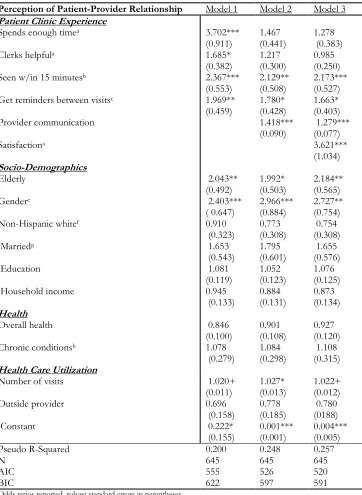
Logistic regression on the full analytic sample was employed to examine the relationship between covariates and perceived patient-provider relationship. Table 3 summarizes binary logistic regression results, and reports the log odds of a patient saying his/her provider is knowledgeable of them as a person. We report robust standard errors in parentheses; robust standard errors are employed to reduce bias and provide a more conservative estimation of errors.41
In Table 3, Model 1 illustrates the relationship between key patient experiences and patients’ perceived interpersonal relationship with their provider while controlling for socio-demographic characteristics, health, and healthcare utilization, but before considering provider communication and patient satisfaction (model 2 and model 3 respectively). Model 1 indicates that positive patient experiences significantly increase the log odds of the patient saying their provider knows them as a person. Age and gender also influence the log odds of the patient stating that their provider knows them as a person; males have 1.40 higher log odds compared to females, and the elderly have 1.04 higher log odds compared to the non elderly (p<0.001 and p<0.01 respectively).
Model 2 adds patients’ experiences with provider communication to the variable set from model 1. In this model the difference between those who state that their provider always spends enough time with them and those who do not is no longer significant. In addition,
helpfulness of clerical staff is no longer found to be significant once provider communication is taken into consideration. All other variables from model 1 remained significant.
Model 3 adds patient satisfaction with overall care from their provider to the variable set from model 2. Those who are very satisfied with overall care have 3.62 higher log odds of reporting that their provider knows them as a person compared to those who are not satisfied (p<0.001). Model 3 indicates that, even when controlling for
satisfaction, patient experiences—being seen within 15 minutes, getting reminders between visits, and provider communication—have an independent effect on patient’s log odds of stating a provider knows him or her as a person (p<0.001, p<0.05, p<0.001 respectively). Table 1. Descriptive statistics of analytic sample
Total Sample (n=645) % or Mean (SD)
Dependent Variable
Patient-provider relationshipa
Provider knows me as a person 79.38%
Provider doesn’t know me as a person 20.62%
Patient Experience
Spends enough timeb
Always spends enough time 77.98%
Doesn’t always spend enough time 22.02%
Clerks helpfulb
Always helpful 63.41%
Not always helpful 36.59%
Seen w/ in 15 minutesc
Usually seen w/ in 15 min 68.53%
Not usually seen w/in 15 min 31.47%
Provider communicationd 18.81 (2.30)
Socio-Demographics
Elderly
65 or older 48.22%
64 or younger 51.78%
Gender
Male 34.11%
Female 65.89%
Race/ethnicity
Non-Hispanic white 87.75%
Hispanic or other 12.25%
Marital status
Married 55.81%
Not married 44.19%
Education 3.19 (1.27)
Household income 2.2 (1.04)
Health
Overall healthe 2.80 (1.00)
Chronic conditions
Yes (one or more) 33.33%
No 66.67%
Health Care Utilization
Number of visits 15.67 (13.77)
Seen by provider outside of clinic
Yes 39.22%
No 60.78%
aCompares those who responded excellent, very good, good to those who responded fair, poor, and very poor.
bCompares” top box” responses to the combined lower response categories. cCompares those who responded usually and always, to those who responded sometimes and never.
dScore based on sum of responses to 5 items rated on 5-point Likert scales.
The model fit statistics, AIC and BIC statistics, decrease across models, indicating that goodness of fit improves with the addition of the explanatory variables: provider communication and patient satisfaction. The pseudo r-squared increases from models 1 to 3, which illustrates that provider communication and satisfaction account for variation in patients’ perceptions of how well their provider knows them personally.
Discussion
Improving continuity of care, a key objective in many primary care redesign efforts, requires comprehensive knowledge of those factors that impact patients’ perceptions of continuity. Our mixed methods study design enabled us to gain a deeper understanding of the relationship between patients’ experiences with clinic visits and their perceptions of their interpersonal relationship with their provider. By merging qualitative data from our Table 2. Comparisons between perception of the patient-provider relationship and patient overall
satisfaction on theoretically relevant variables.
Patient-Provider Relationship Patient Overall Satisfaction
Provider knows me as
a person
Provider doesn't know
me as a person
Very satisfied
Not very satisfied
(n=512) (n=133) (n=378) (n=267)
% or Mean(SD)
% or Mean(SD)
% or Mean(SD)
% or Mean(SD) Patient-provider relationshipa
Provider knows me as a person - - 92.06%*** 61.42%*** Provider doesn’t know me as a
person - - 7.94%*** 38.58%***
Satisfaction with careb
Very satisfied with care 67.97%*** 22.56%*** - - Not very satisfied 32.03%*** 77.44%*** - - Spends enough timeb
Always spends enough time 83.98%*** 54.89%*** 92.06%*** 58.05%*** Doesn’t always spend enough time 16.02%*** 45.11%*** 7.94%*** 41.95%*** Clerks helpfulb
Always helpful 68.36%*** 54.36%*** 76.98%*** 55.81%*** Not always helpful 31.64%*** 55.64%*** 23.02%*** 44.19%*** Seen w/ in 15 minutesc
Usually seen w/ in 15 min 85.75%*** 65.52%*** 74.07%*** 60.67%*** Not usually seen w/in 15 min 14.25%*** 34.48%*** 25.93%*** 39.33%*** Provider Communicationd 19.28(1.54)*** 17.01(3.55)*** 19.78(0.74)*** 17.45(2.97)***
Percentage rates and means (standard deviation) reported.
Mean differences for continuous variables were assessed with independent sample two-tailed t-tests, while percent differences were tested using chi-squared tests.
Columns 2 & 3 stratify respondents by their rating of the patient-provider relationship, and present the unadjusted empirical relationships of patient-provider relationship and key covariates.
Columns 4 & 5 stratify respondents by their overall satisfaction with the provider and present the unadjusted empirical relationships between satisfaction and key covariates.
aCompares those who responded excellent, very good, good to those who responded fair, poor, and very poor. bCompares “top box” responses to the combined lower response categories.
cCompares those who responded usually and always, to those who responded sometimes and never. + p<0.10 *p<0.05 **p<0.01 ***p<0.001
Patient care experiences and perceptions, Tabler et al.
Patient Experience Journal, Volume 1, Issue 1 - April 2014 83
Table 3. Logistic regression results reporting log odds of saying provider is knowledgeable of patient as a person (interpersonal continuity)
Perception of Patient-Provider Relationship Model 1 Model 2 Model 3
Patient Clinic Experience
Spends enough timea 3.702***
(0.911)
1.467 (0.441)
1.278 (0.383)
Clerks helpfula 1.685*
(0.382)
1.217 (0.300)
0.985 (0.250)
Seen w/in 15 minutesb 2.367***
(0.553)
2.129** (0.508)
2.173*** (0.527) Get reminders between visitsc 1.969**
(0.459)
1.780* (0.428)
1.663* (0.403)
Provider communication 1.418***
(0.090)
1.279*** (0.077)
Satisfactiona 3.621***
(1.034)
Socio-Demographics
Elderly 2.043**
(0.492)
1.992* (0.503)
2.184** (0.565)
Gendere 2.403***
( 0.647)
2.966*** (0.884)
2.727** (0.754)
Non-Hispanic whitef 0.910
(0.323)
0.773 (0.308)
0.754 (0.308)
Marriedg 1.653
(0.543)
1.795 (0.601)
1.655 (0.576)
Education 1.081
(0.119)
1.052 (0.123)
1.076 (0.125)
Household income 0.945
(0.133)
0.884 (0.131)
0.873 (0.134)
Health
Overall health 0.846
(0.100)
0.901 (0.108)
0.927 (0.120)
Chronic conditionsh 1.078
(0.279)
1.084 (0.298)
1.108 (0.315)
Health Care Utilization
Number of visits 1.020+
(0.011)
1.027* (0.013)
1.022+ (0.012)
Outside provider 0.696
(0.158)
0.778 (0.185)
0.780 (0188)
Constant 0.222*
(0.155)
0.001*** (0.001)
0.004*** (0.005)
Pseudo R-Squared 0.200 0.248 0.257
N 645 645 645
AIC 555 526 520
BIC 622 597 591
Odds ratios reported, robust standard errors in parentheses
aCompares top box responses to the combined lower response categories (reference group).
bCompares those who responded usually and always, to those who responded sometimes and never (reference group).
cReference group is those who do not receive reminders dReference group is individuals under 65
eReference group is female
fRefrerence group is non-White or Hispanic gReference group is non-married
focus group interviews with quantitative data from a custom CAHPS-PCMH survey and from patients’ health records, we were able to isolate important relationships between patient experiences with clinic processes, overall satisfaction with care from their provider, and patients’ sense of their interpersonal relationships with their providers. Furthermore, this study makes an important contribution to the interpersonal continuity of care literature, by using an innovative measure of interpersonal continuity that focuses on patient perceptions of how well their provider knows them personally. Our study expands upon the work of Saultz15 who noted that measurements of interpersonal intimacy between patients and their PCPs were missing from the interpersonal continuity of care literature.
Our qualitative analysis illustrated the meanings patients take away from their experiences with the operational features of clinics, such as long wait times and short appointments, and the associations they make to the quality of the patient-provider relationship. Patients drew inferences that over-booking and double scheduling cause short appointments and long wait times, and that these features in turn affect the quality of the relationship with their provider. Patients emphasized fairness and respect in the clinical setting. Long wait times and short
appointments may negatively influence patients’
perceptions of the quality of the interpersonal relationship with their provider because the disrespect they sense from such practices figures into their assessment of the quality of the patient-provider relationship. Future studies should explore how features often considered outside the patient-provider relationship influence interpersonal continuity of care.
With insights gained through our qualitative analysis, we developed and tested a model to predict patients’ beliefs regarding how well their provider knows them as a person. That model confirmed the importance of clinic operations characteristics including visit length, wait times, and reminders to patients’ perceptions. These variables relate to patients’ perceptions of how well their provider knows them as a person when we controlled for a variety of individual patient characteristics. Interestingly, wait time and reminders remained important when we added provider communication to our model. However, time spent with the provider was fully explained by provider communication suggesting that the quality of the time spent with the provider may be more important than the actual time the provider interacts with the patient during a visit.
Our quantitative analysis also illustrated a few
unanticipated relationships; the elderly and males appear to have higher likelihoods of stating that they have a personal relationship with their provider. For the elderly, this may be because they are more likely to have an identified
primary care provider. For males, this may relate to the fact that most providers are men. Future studies should explore why men and the elderly are more likely to identify a positive patient-provider relationship, and whether this relationship holds with other measures of interpersonal continuity.
Merging the findings from our qualitative and quantitative analyses demonstrated the importance of using a mixed method design to study complex relationships within patient experiences. Spending enough time with a provider, for example, was not found to be significant once we accounted for provider communication in our predictive model. Yet our qualitative analysis underscored the importance to patients of length of appointment in shaping the patient-provider relationship. Considering our quantitative and qualitative results concurrently, we can postulate that a potential link between time spent with provider and perceptions of the patient-provider
relationship is quality of provider communication. Quality provider communication is dependent upon having sufficient time to fully explain health issues and answer patient questions. Therefore, spending enough time with their provider may be indirectly correlated with positive perceptions of the patient-provider interpersonal relationship because it facilitates quality communication. The use of both qualitative and quantitative data provided a unique insight into the relationship between patients’ care experiences and the patient-provider relationship in this study. The results from our mixed methods study illustrate that future research should explore the
relationship between patient experiences regarding length of appointment and provider communication in particular.
As noted, a strong patient-provider relationship is considered an essential component of successful primary care. A trusting relationship is enhanced through effective communication between provider and patient. An important finding from our analyses is that provider communication had a positive impact on patients’ perceptions of how well their provider knows them personally, independent of overall satisfaction. This highlights the importance of provider communication skills—in listening to patients, answering their questions, providing clear explanations for care plans, and involving patients in decision-making about their care. Primary care clinics attempting to improve the patient-provider relationship, should work toward facilitating effective provider communication, perhaps through education on and practice with behaviors known to engender trust and patient involvement in decision-making.
Our findings highlight the possibility that changes
Patient care experiences and perceptions, Tabler et al.
Patient Experience Journal, Volume 1, Issue 1 - April 2014 85
intended goal of reminders sent to patients by UUCC staff was improved patient adherence to preventive and/or chronic care recommendations. Our data suggest that patients may perceive reminders as an indication that their provider cares about them personally, and thus that reminders have a positive impact on the patient-provider relationship. There appears to be an unanticipated, beneficial effect of sending reminders to patients between visits.
Conversely, unintended negative consequences on the patient-provider relationship may result from primary care redesign. As primary care clinics transform towards PCMHs, improvements in access are a key focus. Clinics may implement efficiency and cueing strategies to enhance access. Efficiency may be achieved by shifting tasks to members of the care team other than the provider (MAs completing templated health surveys or delivering patient education), handling some aspects of planned care as non-visit tasks (outreach to patients on disease registries), and by reducing the length of a patient visit (thus increasing provider productivity). Wait times once a patient arrives at the clinic reflect a variety of operational decisions,
including flexibility to accommodate drop-ins and ensuring same-day appointment availability. Although each of these changes may positively impact clinic efficiency, our findings suggest that reducing the length of visits and allowing wait times to exceed 15 minutes may have unintended negative consequences with regard to an essential element of primary care, that is, interpersonal continuity of care.
Limitations
Although we conducted focus group interviews in each of our 10 clinics in order to facilitate participation by patients who visit different clinics in our network, some of our sessions included only a limited number of patients and thus may not provide a comprehensive picture of patients’ experiences across our clinics. The UUCCs vary in the ways in which they have implemented various aspects of our CBD model, particularly same day appointments and provider productivity protocols. This variation likely impacts patients’ experiences. Further, because we focused on themes from our qualitative data that centered on the patient-provider relationship other theoretically potentially relevant perspectives of patients may have been
overlooked.
In addition, the parameters for inclusion in the patient focus groups were slightly different than those used to generate the survey sample. Because the focus group protocol required participants to have been a patient at the UUCCs for 1+ years, while those who responded to surveys were only required to have had at least 1 visit to the UUCCs in 2011, participants in the focus groups may have received care at the UUCCs for a longer duration of
time than those who responded to the CAHPS-PCMH survey. Patients participating in our focus groups may have higher longitudinal continuity with UUCC and perhaps with an individual provider. Thus, we might expect that participants in our focus groups would put more emphasis on the quality of their relationship with their provider. We did not measure longitudinal continuity for either our focus group or survey participants. Future research could explore the connection between longitudinal continuity measured by visit patterns and the patient-provider relationship.
Parameter differences may also have resulted in differences in the makeup of focus groups compared to the survey population based on age, gender, and health status. Unfortunately, we have limited demographic information on the patient focus group participants to accurately assess these differences. Our survey sample is unique in comparison to the general adult patient population; 48.22% of the sample is 65 or older, and 33.33% have 1+ chronic conditions. This may limit the generalizability of our findings. Our older patient population, many of whom have chronic conditions, may have different preferences and visit experiences than would a younger, healthier population.
The qualitative data help us draw inferences about the causal ordering with regard to the relationship between patients’ care experiences and their perceptions of the patient-provider relationship, but the quantitative analysis is cross-sectional. Because patients’ care experiences and perceptions of the patient-provider relationship were measured simultaneously, caution in inferring causality is recommended. As noted previously, satisfaction and interpersonal continuity have a bi-directional relationship, and it is unclear whether this may apply to patient experiences as well; patients may reflect positively on care experiences if they have a strong interpersonal bond with their provider. Future studies could take a longitudinal approach to address issues of causal ordering, and explore how the patient-provider relationship may influence patient care experiences. Better understanding of the causal direction will help inform management and practitioners who are attempting to improve the patient-provider relationship and patients’ care experiences.
Novel ways of measuring interpersonal continuity should be pursued.
Conclusions
Patient centered medical home models of care delivery put the spotlight on patients. As primary care practices transform towards a PCMH model, assessing patients’ experiences with care is increasingly important. Our study illustrates the importance of using mixed methods to explore and assess patients’ experiences, as nuances revealed through qualitative data can inform quantitative analyses and vice versa. In addition, our study proposes that understanding the quality of the patient-provider relationship from the patient’s perspective provides valuable insight into interpersonal continuity. As primary care practices move into team-based care, clinics should be sensitive to the possibility that efforts to increase provider productivity and clinic efficiency may reduce the amount of time the provider spends with his/her patient. Our data suggest that visit length influences the opportunity for effective communication between provider and patient and that provider communication underpins patients’ perceptions of interpersonal continuity. Patients recognize that immediate circumstances may impact wait times and the time they spend with their provider, but they are sensitive to fairness with regard to how patients are treated during a clinic visit. When patients feel valued they are likely to be more understanding of clinic practices that accommodate real-time demands. It is important to recognize that patients make inferences about how much they are valued by their provider based on the experiences they have during a clinic visit. For primary care practices to truly deliver patient-centered care in which the interpersonal relationship between patients and providers is a primary goal, greater attention should be paid to patient care experiences, especially those that are related to operational features and strategies of the clinic.
Acknowledgements
We appreciate assistance by Tatiana Allen in coordinating the focus groups and in translating the Spanish language transcript. We are grateful for the participation of University of Utah Community Clinics patients in the focus group discussions and in the CAHPS-PCMH survey.
Funding
This project was supported by grant numbers
R18HS019136 and R18HS020106 from the Agency for Healthcare Research and Quality (MKM). The content is solely the responsibility of the authors and does not necessarily represent the official views of the Agency for Healthcare Research and Quality.
Institutional Review Board
This study was approved by University of Utah IRB.
References
1. Cabana MD, Jee SH. Does continuity of care improve patient outcomes. J Fam Pract.
2004;53(12):974-980.
2. Menec VH, Sirski M, Attawar D. Does continuity of care matter in a universally insured
population? Health Serv Res. 2005;40(2):389-400. 3. Saultz JW, Lochner J. Interpersonal continuity of
care and care outcomes: a critical review. Ann Fam Med. 2005;3(2):159-166.
4. Pandhi N, Saultz JW. Patients’ perceptions of interpersonal continuity of care. J Am Board Fam Med. 2006;19(4):390-397.
5. Turner D, Tarrant C, Windridge K, Bryan S, Boulton M, Freeman G, Baker R. Do patients value continuity of care in general practice? An investigation using stated preference discrete choice experiments. J Health Serv Res Policy.
2007;12(3):132-137.
6. Fan VS, Burman M, McDonell MB, Fihn SD. Continuity of care and other determinants of patient satisfaction with primary care. J Gen Intern Med. 2005;20(3):226-233.
7. Saultz JW, Albedaiwi W. Interpersonal continuity of care and patient satisfaction: a critical review.
Ann Fam Med. 2004;2(5):445-451. 8. Katz DA, McCoy K, Sarrazin MV. Does
Improved Continuity of Primary Care Affect Clinician–Patient Communication in VA? J Gen Intern Med. 2013:1-7.
9. Salisbury C, Sampson F, Ridd M, Montgomery AA. How should continuity of care in primary health care be assessed? Br J Gen Pract.
2009;59(561):e134.
10. Curry LA, Nembhard IM, Bradley EH. Qualitative and mixed methods provide unique contributions to outcomes research. Circulation.
2009;119(10):1442-1452.
11. Johnson RB, Onwuegbuzie AJ. Mixed methods research: A research paradigm whose time has come. Educ Res. 2004;33(7):14-26.
12. Scammon DL, Tomoaia‐Cotisel A, Day RL, Day J, Kim J, Waitzman NJ, Farrell TW, Magill MK. Connecting the Dots and Merging Meaning: Using Mixed Methods to Study Primary Care Delivery Transformation. Health Serv Res. 2013. 13. Haggerty JL, Reid RJ, Freeman GK, Starfield
BH, Adair CE, McKendry R. Continuity of care: a multidisciplinary review.BMJ. 2003;327(7425). 14. Freeman GK, Olesen F, Hjortdahl P. Continuity
Patient care experiences and perceptions, Tabler et al.
Patient Experience Journal, Volume 1, Issue 1 - April 2014 87
15. Saultz JW. Defining and measuring interpersonal continuity of care. Ann Fam Med. 2003;1(3):134-143.
16. Baker R, Mainous Iii AG, Gray DP, Love MM. Exploration of the relationship between continuity, trust in regular doctors and patient satisfaction with consultations with family doctors. Scand J of Prim Health Care. 2003;21(1):27-32.
17. Jee SH, Cabana MD. Indices for continuity of care: a systematic review of the literature. Med Care Res Rev. 2006;63(2):158-188.
18. Mainous AG, Baker R, Love MM, Gray DP, Gill JM. Continuity of care and trust in one’s physician: evidence from primary care in the United States and the United Kingdom. Fam Med.
2001;33(1):22-27.
19. Erdem SA, Harrison-Walker LJ. The role of the Internet in physician–patient relationships: The issue of trust. Business Horizons. 2006;49(5):387-393.
20. Mead N, Bower P. Patient-centredness: a conceptual framework and review of the empirical literature. Soc Sci Med. 2000;51(7):1087-1110.
21. Arora NK, Street RL, Epstein RM, Butow PN. Facilitating patient-centered cancer
communication: A road map. Patient Educ Couns.
2009;77(3):319-321.
22. Banks NJ, Palmer RH. Clinical reminders in ambulatory care. HMO Pract. 1990;4(4):131. 23. Murray M, Berwick DM. Advanced access.
JAMA. 2003;289(8):1035-1040.
24. Murray M, Bodenheimer T, Rittenhouse D, Grumbach K. Improving timely access to primary care. JAMA. 2003;289(8):1042-1046. 25. Murray MM, Tantau C. Same-day appointments:
exploding the access paradigm. Fam Pract Manag.
2000;7(8):45-45.
26. Forrest CB, Starfield B. Entry into primary care and continuity: the effects of access. Am J Pub Health. 1998;88(9):1330-1336.
27. Adler R, Vasiliadis A, Bickell N. The relationship between continuity and patient satisfaction: a systematic review. Fam Pract. 2010;27(2):171-178. 28. Anderson RT, Camacho FT, Balkrishnan R.
Willing to wait?: The influence of patient wait time on satisfaction with primary care. BMC Health Serv Res. 2007;7(1):31.
29. Naidu A. Factors affecting patient satisfaction and healthcare quality. Int J Health Care Qual Assur. 2009;22(4):366-381.
30. Wanzer MB, Booth-Butterfield M, Gruber K. Perceptions of health care providers'
communication: relationships between patient-centered communication and satisfaction. Health Comm. 2004;16(3):363-384.
31. Sun BC, Adams J, Orav EJ, Rucker DW, Brennan TA, Burstin HR. Determinants of patient satisfaction and willingness to return with emergency care. Ann Emer Med. 2000;35(5):426-434.
32. Fetters MD, Curry LA, Creswell JW. Achieving Integration in Mixed Methods Designs— Principles and Practices. Health Serv Res.
2013;48(6pt2):2134-2156.
33. Day J, Scammon DL, Kim J, Sheets-Mervis A, Day R, Tomoaia-Cotisel A, Waitzman NJ, Magill MK. Quality, Satisfaction, and Financial
Efficiency Associated With Elements of Primary Care Practice Transformation: Preliminary Findings. Ann Fam Med. 2013;11(Suppl 1):S50-S59.
34. Egger MJ, Day J, Scammon DL, Li Y, Wilson A, Magill MK. Correlation of the Care by Design™ Primary Care Practice Redesign Model and the Principles of the Patient-Centered Medical Home. J Am Board Fam Med. 2012;25(2):216-223. 35. Magill MK, Lloyd RL, Palmer D, Terry SA.
Successful turnaround of a university-owned, community-based, multidisciplinary practice network. Ann Fam Med. 2006;4(suppl 1):S12-S18. 36. Reid RJ, Fishman PA, Yu O, Ross TR, Tufano
JT, Soman MP, Larson EB. Patient-centered medical home demonstration: a prospective, quasi-experimental, before and after evaluation.
Am J Manag Care. 2009;15(9):e71-e87. 37. Silverman D. A very short, fairly interesting and
reasonably cheap book about qualitative research: Sage; 2007.
38. Pope C, Ziebland S, Mays N. Analysing qualitative data. BMJ. 2000;320(7227):114-116. 39. AHRQ. Patient-Centered Medical Home.
https://cahps.ahrq.gov/Surveys-Guidance/CG/PCMH/index.html. Accessed 11/29, 2013.
40. Doescher MP, Saver BG, Fiscella K, Franks P. Racial/ethnic inequities in continuity and site of care: location, location, location. Health Serv Res.
2001;36(6 Pt 2):78-89.