0095-1137/07/$08.00⫹0 doi:10.1128/JCM.01747-06
Copyright © 2007, American Society for Microbiology. All Rights Reserved.
Differences in Clinical and Molecular Characteristics of Skin and Soft
Tissue Methicillin-Resistant
Staphylococcus aureus
Isolates between
Two Hospitals in Northern California
䌤
Debika Bhattacharya,
1† Heather Carleton,
2Chiaojung J. Tsai,
1‡
Ellen Jo Baron,
1and Franc¸oise Perdreau-Remington
2*
Stanford University, Stanford, California,1and University of California—San Francisco, San Francisco, California2
Received 23 August 2006/Returned for modification 5 October 2006/Accepted 26 March 2007
Community-onset methicillin-resistant Staphylococcus aureus (CO-MRSA) skin and soft tissue infections (SSTI) are associated with SCCmecIV and Panton-Valentine leukocidin (PVL) genes. CO-MRSA epidemio-logic studies suggest that genotypic variation exists within one geographic region. We compared MRSA genotypes and demographic and clinical characteristics of patients with CO-MRSA SSTI between two regional medical centers. We also examined factors associated with SCCmecIV and PVL carriage. A total of 279 MRSA SSTI isolates from 2000 to 2002 at San Francisco General Hospital (SFGH) and Stanford University Hospital (SUH) were genotyped by pulsed-field gel electrophoresis and PCR for SCCmec and PVL genes. Medical records were reviewed for clinical characteristics. Ninety-three percent and 69% of MRSA SSTI were caused by CO-MRSA at SFGH and SUH, respectively. Patients with CO-MRSA SSTI at SFGH were more likely to be nonwhite, younger, homeless, and have no previous exposure to health care (P < 0.01). SFGH CO-MRSA strains were more likely to carry SCCmectype IV and PVL genes (90% and 55%, respectively) than SUH strains (29% and 16%, respectively). In multivariate analyses, nonwhite ethnicity was associated with both SCCmec
type IV and PVL carriage (odds ratio [OR] of 2.65 and 95% confidence interval [CI] of 1.19 to 5.95 and OR of 1.94 and 95% CI of 1.03 to 3.65, respectively). ST8:USA300:IV became the dominant clone at SFGH, but not at SUH, by 2002. Despite geographic proximity, CO-MRSA SSTI exhibited differing SCCmec types, PVL carriage, and clonal dynamics. CO-MRSA SSTI at SUH were more likely to represent feral isolates of nosocomial origin. Clinicians should assess for nosocomial and community risk factors, realizing that different populations with CO-MRSA SSTI may require separate antimicrobial strategies.
Although traditionally considered to be a nosocomial patho-gen (35), methicillin-resistantStaphylococcus aureus(MRSA) is now recognized as a community-based infection that can originate in the community (16, 18). In general, community-onset MRSA (CO-MRSA) strains are associated with skin and soft tissue infections (SSTI), carriage of staphylococcal cassette chromosome (SCCmec) type IV, and the presence of Panton-Valentine leukocidin (PVL) genes (12, 16–18, 21, 33). CO-MRSA are also generally susceptible to non--lactam antibi-otics (except erythromycin) (12, 17, 18, 33), although SCCmec
IV strains carrying additional resistance markers have recently been reported (3).
Recently, the spread of MRSA in the community has been documented in multiple settings, including jails, sports teams (19, 29), and in the pediatric population (18). CO-MRSA are thought to derive either from the transfer of nosocomial strains from health care settings into the community (32) or from the
de novo acquisition of themecAgene complex by previously susceptible strains (27).
Studies that examine the molecular epidemiology of CO-MRSA from a single location or homogenous population may fail to detect variations in MRSA clonal and epidemiologic characteristics. In heterogeneous populations, the origins of CO-MRSA have not been well described.
The purpose of this study was to compare the clonal dynam-ics, patient demographdynam-ics, and clinical characteristics of CO-MRSA SSTI from two institutions within the same region in northern California. We used a definition of CO-MRSA which excludes clinical risk factors, as proposed by Carleton et al. and Francis et al. (3, 14), in order to investigate the contribution of health care utilization to the epidemiologic trends of CO-MRSA SSTI disease. We also examined factors associated with the presence of SCCmectype IV and PVL genes.
We conducted a retrospective analysis of MRSA SSTI at two regional medical centers in northern California from 2000 to 2002.
(This study was presented in part in an oral presentation at the 42nd Annual Meeting of the Infectious Diseases Society of America, Boston, MA, October 2004.)
MATERIALS AND METHODS
Setting.San Francisco General Hospital (SFGH) and Stanford University Hospital (SUH) are tertiary care centers with affiliated clinics and long-term care centers separated by 30 miles in northern California. The medical centers differ in their physical locations and primary inpatients’ insurance status: Stanford
* Corresponding author. Mailing address: Dept. of Medicine, Divi-sion of Infectious Diseases, University of California—San Francisco, San Francisco General Hospital, 1001 Potrero Ave., UCSF 1372, Bldg. 30, Room 330, San Francisco, CA 94110. Phone: (415) 206-5438. Fax: (415) 648-8425. E-mail: [email protected].
† Present address: Dept. of Medicine, University of California, Los Angeles, CA.
‡ Present address: Dept. of Medicine, Vanderbilt University, Nash-ville, TN.
䌤Published ahead of print on 4 April 2007.
1798
on May 16, 2020 by guest
http://jcm.asm.org/
University Medical Center is located in a suburban area and the majority of inpatients have private insurance, whereas SFGH is in urban San Francisco and most inpatients are either uninsured or have state-sponsored insurance.
During the time period of January 2000 to December 2002, 1,870 MRSA isolates (599 from SUH and 1,271 from SFGH) were identified from soft tissue specimens submitted to clinical laboratories because of suspected infection. Each isolate was from a unique patient. A statistical table was used to randomly select 300 isolates (50 SSTI isolates per year from each institution), and 279 isolates were available for final typing: 145 from SFGH (48 in 2000, 48 in 2001, and 49 in 2002) and 134 from SUH (43 in 2000, 46 in 2001, and 45 in 2002). MRSA isolates from SFGH patients included those from SFGH and its clinics, Jail Health Services, a long-term care facility, and satellite outpatient clinics. Isolates from SUH originated from patients at SUH and its satellite clinics. Samples marked “nares,” “nostril,” or “nasal swab” were not included, in order to exclude screening or potential colonization isolates. Twenty-one isolates were excluded because records were unavailable, samples were not soft tissue isolates, or iso-lates were not MRSA.
Computerized and paper records were reviewed for patient demographics (gender, age, and ethnicity) and utilization of health care, such as prior hospital admission and/or prior outpatient visits within the last year. Medical records were also reviewed for past medical history (cardiac, pulmonary, renal, infectious diseases, gastroenterological, psychiatric, injection drug use, HIV status, and endocarditis) and socioeconomic factors (history of homelessness and incarcer-ation). A standardized instrument was used to abstract information from the medical record, and data abstraction was performed by a single infectious dis-eases physician (D. Bhattacharya).
Definitions.A CO-MRSA isolate was defined as an MRSA-positive culture from a clinical specimen obtained from an outpatient or within 72 h of hospi-talization.
Antimicrobial susceptibilities. All cultures and antimicrobial susceptibility testing were performed by the clinical microbiology laboratories at SFGH and SUH. All samples were stored at⫺70°C prior to culture. MIC determinations were performed for oxacillin, ciprofloxacin, tetracycline, gentamicin, erythromy-cin, trimethoprim-sulfamethoxazole, rifampin, clindamyerythromy-cin, and vancomycin by using a Microscan Walkaway instrument (Dade International, West Sacramento, CA) according to Clinical Laboratory and Standards Institute (CLSI) methods (25). Methicillin resistance was determined based on the growth on oxacillin-screening agar (Mueller-Hinton with 6% NaCl and 6g/ml oxacillin), and the MICs for oxacillin were determined by using a MicroScan Walkaway instrument. In addition, at SFGH, methicillin-resistant strains were also characterized by the presence of themecAgene (28). Multidrug resistance was defined as resistance to three or more non--lactam antibiotics.
Molecular typing.Pulsed-field gel electrophoresis (PFGE) with SmaI (7) and multilocus sequence typing were used to characterize the 279S. aureusisolates. A PFGE group consisted of isolates with differences of no more than six bands from all other isolates in the group (34). The PFGE nomenclature used was in accordance with that of McDougal et al. (22). Multilocus sequence typing was performed for representative isolates from each PFGE-defined genotype, as described by Enright et al. (10). In order to provide a simplified, uniform nomenclature for describing MRSA, strains are designated by sequence type, PFGE genotype, and SCCmectype (e.g., ST8:USA300:IV).
SCCmectypes I-IV were identified by using a multiplex PCR-based technique described elsewhere (28). Unique SCCmectype patterns not consistent with those previously described were further characterized to determineccrandmec
gene complexes (27). PVL genes were detected by coamplification oflukS-PV
andlukF-PVgenes as described by Lina et al. (21).
Statistical methods.Data were analyzed using SAS statistical software (ver-sion 9.1, SAS Institute Inc., Cary, NC). We compared various characteristics of patients from SFGH to those of patients from SUH by using Fisher’s exact 2
test. In addition, we compared the characteristics of patients infected with SCCmectype IV to those without SCCmectype IV by using both univariate and multivariate unconditional logistic regressions. In the multivariate model, odds ratios (ORs) and 95% confidence intervals (CIs) were obtained after simulta-neously adjusting for age, sex, race/ethnicity, year, location, homelessness, and prior exposure to health care. The same analyses were used to compare the characteristics of patients infected with strains carrying PVL genes to patients infected with strains without PVL genes.
RESULTS
Patient characteristics and health care utilization.A total of 279 patients with MRSA SSTI were analyzed from 2000 to
2002. Of SSTI MRSA isolates, 135/145 (93.1%) at SFGH and 92/134 (68.7%) at SUH met the definition of CO-MRSA. Pa-tients with CO-MRSA SSTI at SFGH were more likely to be male (79%), younger than 60 (94%), nonwhite (60%), and homeless (53%) when compared to those at SUH (allP ⬍
0.0001) (see Table 1).
Patients with CO-MRSA SSTI at SFGH were more likely to have had histories of SSTI (50%), injection drug use (36%), and HIV (35%) (all P⬍ 0.0001), while SUH patients were more likely to have had cardiac disease (50%) (P⫽ 0.0006) and malignancies (26%) (P⬍0.0001). There was no difference between the institutions with regard to previous MRSA disease (20% at SFGH versus 19% at SUH).
Hospitalizations, outpatient visits, and surgery within the last year were all more common at SUH, at 75%, 95%, and 66%, respectively. More patients with CO-MRSA SSTI at SUH had a history of exposure to health care; only 1.1% had no prior health care exposure, compared to 13% of patients with CO-MRSA SSTI at SFGH (P⬍0.01).
[image:2.585.300.541.87.368.2]Antimicrobial susceptibilities.SUH CO-MRSA were more likely to be multidrug resistant than those at SFGH, at 25% compared to 3% with P⬍ 0.0001. See Table 2. Fluoroquin-olone resistance was more prevalent among SFGH ST8: USA300:IV strains, at 69% versus 20% withP⫽0.06, and was inversely associated with PVL carriage (OR, 0.22; 95% CI, 0.12 to 0.39).
TABLE 1. Demographic and clinical characteristics of CO-MRSA patients
Characteristic
No. (%) of patients at:
Pvalue SFGH
(n⫽135)
SUH (n⫽92)
Male 106 (78.5) 52 (56.5) ⬍0.0001
Age⬍60 yr 127 (94.1) 52 (56.5) ⬍0.0001 Race/ethnicitya
White 54 (40.0) 59 (64.1) 0.0004
African-American 50 (37.0) 13 (14.1) 0.0003
Hispanic 19 (14.1) 6 (6.5) 0.08
Asian 7 (5.2) 12 (13.0) 0.30
Homeless 71 (52.6) 2 (2.2) ⬍0.0001
Indwelling vascular catheter within the last year
14 (10.4) 24 (26.1) 0.002
Hospitalization within the last year
73 (54.1) 69 (75.0) 0.0016
Surgery within the last year 38 (28.1) 61 (66.3) ⬍0.0001 History of long-term health
care
11 (8.1) 19 (20.7) 0.002
No previous health care exposure
18 (13.3) 1 (1.1) 0.01
SSTI 67 (49.6) 8 (8.7) ⬍0.0001
Noninfectious dermatosisb 15 (11.1) 8 (8.7) 0.56
Cardiac disease 37 (27.4) 46 (50.0) 0.0006 Renal disease 11 (8.1) 11 (12.0) 0.34 Pulmonary disease 25 (18.5) 22 (23.9) 0.33
Malignancy 8 (5.9) 24 (26.1) ⬍0.0001
Injection drug use 48 (35.6) 2 (2.2) ⬍0.0001
HIV 47 (34.8) 5 (5.4) ⬍0.0001
Diabetes mellitus 21 (15.6) 15 (16.3) 0.98
aPacific Islanders, Native Americans, and those of other or unknown ethnicity
represented an additional 1.4%, 0.4%, 1.8%, and 0.7% of the population, re-spectively.
bFor example, eczema and psoriasis.
on May 16, 2020 by guest
http://jcm.asm.org/
Genotypic characterization. Eight distinct MRSA clonal types were identified; seven clones were shared between the institutions. A clonal type was defined by sequence type:CDC pulsed field type (PFT) nomenclature:SCCmectype (e.g., ST5: USA100:II) (22). At SUH, the majority of strains carried SCCmec type II and were PVL negative; ST5:USA100:II (63%) and ST36:USA200:II (16%) were the most prevalent clones. In contrast, at SFGH, the most prevalent clones carried the SCCmecIV element and were identified as ST30:USA1100:
IV (32.3%), ST59:USA1000:IV (20%), and ST8:USA300:IV (19.5%).
All isolates were collected over a 3-year period, allowing the assessment of temporal trends in clonal distributions (Fig. 1). A total of 277/279 (99%) of CO-MRSA clones belonged to seven shared genotypes. At SFGH, ST8:USA300:IV replaced ST30:USA1100:IV as the dominant clone by 2002, represent-ing 49% of all MRSA SSTI isolates (Ptrend⬍0.0001). De-spite the introduction of ST8:USA300:IV into the SUH pop-ulation in 2001, the ST5:USA100:II clone remained the most prevalent clone at SUH, representing 65%, 70%, and 62% of all isolates in 2000, 2001, and 2002, respectively. In contrast to SFGH, at SUH, ST8:USA300:IV represented only 11% of MRSA SSTI strains by 2002.
SCCmec type, PVL genes, and patient characteristics.
SCCmecIV and PVL gene carriage were more prevalent in the SFGH CO-MRSA isolates, at 122/135 (90%) versus 27/92 (29%) (P⬍0.0001) and 74/135 (55%) versus 15/92 (16%) (P⬍
0.0001), respectively, while CO-MRSA isolates containing the SCCmec II gene were more prevalent at SUH (71% versus 10%,P⬍0.0001).
Patients with SCCmecII isolates were more likely to have a history of hospitalization within the last year (82% versus 52%,
P⬍0.0001), surgery within the last year (78% versus 28%,P⬍
0.0001), a history of long-term care residence (28% versus 6%,
P ⬍ 0.0001), and a history of indwelling vascular catheters within the last year (34% versus 12%,P⬍0.0001). In patients with no previous health care exposure, 18/20 (90%) had MRSA strains that carried the SCCmecIV determinant (P⫽
0.03).
[image:3.585.43.283.88.216.2]Histories of dialysis, cardiac disease, and malignancy were TABLE 2. Antibiotic susceptibilities and molecular characterization
of MRSA skin and soft tissue infections
Clonal typea No. of
strainsb
% with PVL
% Resistant to:c
GEN FQ CLI ERY SXT TET
ST30:USA1100:IV 53 89 0 8 8 20 2 7
ST8:USA500:IV 22 5 9 36 14 76 18 11
ST8:USA300:IV 34 100 0 62 9 91 0 24
ST59:USA1000:IV 32 9 3 6 10 88 0 0
ST59d:II 1 0 0 0 0 100 0 NAe
ST36:USA200:II 24 0 54 92 100 100 0 0
ST5:USA100:II 91 0 21 93 88 94 3 0
ST5:USA800:IV 11 9 9 18 18 36 0 0
ST1:USA400:IV 7 71 0 0 0 50 0 0
ST72:USA700:IV 2 0 0 0 0 0 0 0
aA clonal type was defined as sequence type:CDC pulsed-field type (PFT)
nomenclature: SCCmectype Ce.g., ST5:USA 1100:II).
bOne SCCmecI isolate and one untypeable isolate were excluded. cGEN, gentamicin; FQ, fluoroquinolone; CLI, clindamycin; ERY,
erythromy-cin; SXT, trimethoprim-sulfamethoxazole; TET, tetracycline.
dST59 SCCmectype II is not characterized by a particular United States
PFGE type.
eNA, not applicable.
FIG. 1. Strain distribution of major CO-MRSA SSTI isolates from SUH and from SFGH. The bar graph represents the differences in clonal distributions in CO-MRSA SSTI between institutions from 2000 to 2002. The major CO-MRSA genotypes comprising 92% of all isolates are represented.
on May 16, 2020 by guest
http://jcm.asm.org/
[image:3.585.92.490.437.693.2]all more prevalent in patients with SCCmecII-carrying isolates (7% versus 3%,P⬍0.0001; 54% versus 27%,P⬍0.0001; and 24% versus 9%,P⫽0.008, respectively).
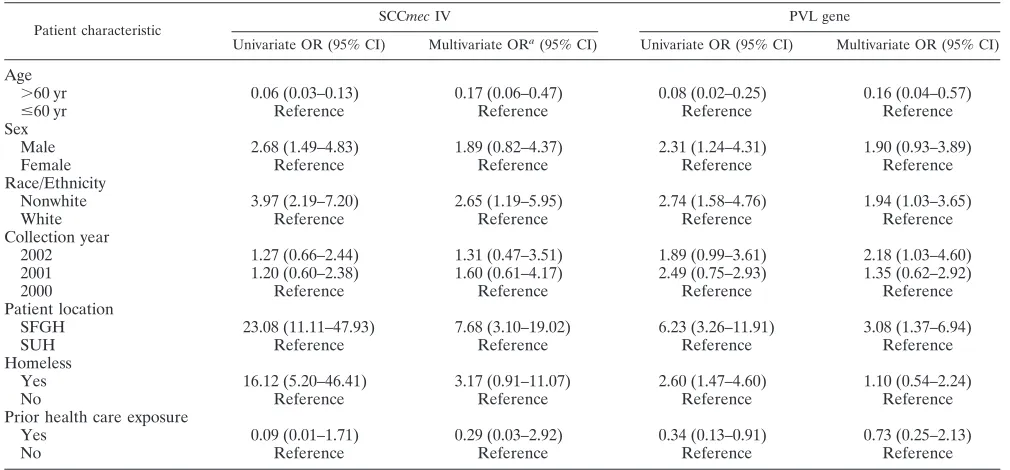
Table 3 shows the univariate and multivariate ORs of SCCmec
IV and PVL gene carriage. In both the univariate and the multivariate analyses, individuals over the age of 60 were less likely to have SCCmectype IV (multivariate OR, 0.17; 95% CI, 0.06 to 0.47) and PVL gene carriage (multivariate OR, 0.16; 95% CI, 0.04 to 0.57) when compared with those younger than 60 years. Being nonwhite was positively associated with both SCCmectype IV (multivariate OR, 2.65; 95% CI, 1.19 to 5.95) and PVL gene carriage (multivariate OR, 1.94; 95% CI, 1.03 to 3.65). Male sex and homelessness were positively associated with SCCmectype IV and PVL gene carriage in the univariate analyses, but the associations were nonsignificant in the mul-tivariate analyses. The collection year and prior health care exposure were not significantly associated with either SCCmec
type IV or PVL gene carriage.
Exclusion of nosocomial risk factors. After excluding pa-tients with nosocomial risk factors for MRSA (i.e., recent hos-pitalization, surgery, indwelling catheters, etc) as defined else-where (24), the overall prevalence of MRSA SSTI without traditional health care-associated risk factors was 22.6%. At SFGH, 37.9% (55/145) of isolates met this definition, while at SUH, only 6% (8/134) of isolates fulfilled these criteria (P⬍
0.0001). The most prevalent clone overall was ST30:USA1100: IV, representing 31.7%, followed by ST8:USA300: IV (30%) and ST8:USA500:IV (12.7%).
DISCUSSION
This retrospective analysis describes regional differences in CO-MRSA SSTI genotypic and clinical characteristics within a circumscribed MRSA clonal population. Despite geographic
proximity and shared clonality, the prevalence of CO-MRSA SSTI varied widely between institutions—64% at SUH com-pared to 94% at SFGH. When comparing the two institutions while excluding patients with nosocomial MRSA risk factors, this difference was more pronounced at SFGH—38% versus 6%. These institutional differences in community MRSA in-fections are higher than those reported between surveillance sites in Atlanta and Baltimore (15) and consistent with a Min-nesota study reporting lower community MRSA rates in sub-urban hospitals (24).
In excluding clinical risk factors and defining CO-MRSA isolates by time or location of isolation, as described by Francis et al. and Carleton et al. (3, 14), (i.e., within 72 h of hospital-ization or in an outpatient setting), this study highlights the epidemiologic trends of CO-MRSA and supports both theories of CO-MRSA origins (8, 27, 32). While the preponderance of SCCmec I and PVL-carrying CO-MRSA isolates in patients without traditional MRSA risk factors supports the well-estab-lished theory that CO-MRSA arises de novo in the community (8, 27), the predominance of SCCmec II and PVL-negative strains in CO-MRSA SSTI isolates at SUH supports the theory that MRSA dissemination from health care settings also con-tributes to CO-MRSA disease (32).
[image:4.585.41.546.80.315.2]Consistent with theories of distinct CO-MRSA reservoirs, genotypic and clonal replacement characteristics were not shared by CO-MRSA SSTI between regional institutions and these differences were attributable to different patient popula-tions. Although nearly all MRSA genotypes were shared, the clonal dynamics differed at each institution; while ST8: USA300:IV became the predominant CO-MRSA clone among SSTI at SFGH, ST5:USA100:II remained the predominant CO-MRSA strain at SUH. Consistent with other studies that report increasing antimicrobial resistance among ST8: USA300:IV clones (3), our study also demonstrates that clonal TABLE 3. Factors associated with SCCmecIV type and PVL carriage
Patient characteristic
SCCmecIV PVL gene
Univariate OR (95% CI) Multivariate ORa(95% CI) Univariate OR (95% CI) Multivariate OR (95% CI)
Age
⬎60 yr 0.06 (0.03–0.13) 0.17 (0.06–0.47) 0.08 (0.02–0.25) 0.16 (0.04–0.57)
ⱕ60 yr Reference Reference Reference Reference
Sex
Male 2.68 (1.49–4.83) 1.89 (0.82–4.37) 2.31 (1.24–4.31) 1.90 (0.93–3.89)
Female Reference Reference Reference Reference
Race/Ethnicity
Nonwhite 3.97 (2.19–7.20) 2.65 (1.19–5.95) 2.74 (1.58–4.76) 1.94 (1.03–3.65)
White Reference Reference Reference Reference
Collection year
2002 1.27 (0.66–2.44) 1.31 (0.47–3.51) 1.89 (0.99–3.61) 2.18 (1.03–4.60)
2001 1.20 (0.60–2.38) 1.60 (0.61–4.17) 2.49 (0.75–2.93) 1.35 (0.62–2.92)
2000 Reference Reference Reference Reference
Patient location
SFGH 23.08 (11.11–47.93) 7.68 (3.10–19.02) 6.23 (3.26–11.91) 3.08 (1.37–6.94)
SUH Reference Reference Reference Reference
Homeless
Yes 16.12 (5.20–46.41) 3.17 (0.91–11.07) 2.60 (1.47–4.60) 1.10 (0.54–2.24)
No Reference Reference Reference Reference
Prior health care exposure
Yes 0.09 (0.01–1.71) 0.29 (0.03–2.92) 0.34 (0.13–0.91) 0.73 (0.25–2.13)
No Reference Reference Reference Reference
a
The multivariate OR was simultaneously adjusted for age, sex, race/ethnicity, year, location, homelessness, and prior health care exposure.
on May 16, 2020 by guest
http://jcm.asm.org/
resistance varies between institutions; ST8:USA300:IV was more likely to be fluoroquinolone resistant at SFGH.
The predominantly SCCmec IV MRSA strains at SFGH have been previously identified with CO-MRSA disease in San Francisco (3) and elsewhere. Consistent with the findings of other authors, community MRSA infections at SFGH were associated with younger age and nonwhite ethnicity (5, 1, 15, 17). Our study extends these findings to demonstrate that these characteristics are also risk factors for SCCmecIV and PVL carriage. Factors common to these populations and staphylo-coccal disease, such as crowding and poor access to sanitation facilities (13, 20), likely contribute to the spread of CO-MRSA within these communities.
ST59:USA1000:IV, ST8:USA300:IV, and ST30:USA1100:IV have all been reported in nasal MRSA carriage studies in homeless youths and adults as well as injection drug-using communities (30), suggesting a community reservoir for these MRSA genotypes. ST8:USA300:IV, in particular, has been implicated in community-associated MRSA SSTI outbreaks in incarcerated individuals, athletes, and children. Virulence fac-tors acquired fromStaphylococcus epidermidismay contribute to this clone’s ability to evade host immune mechanisms (9).
In contrast, traditional nosocomial clones were more prev-alent at SUH, where the population was more likely to have health care-associated risk factors, including histories of chronic illnesses. ST36:USA200:II corresponds to a common clone in United Kingdom hospitals, while ST5:USA100:II be-longs to the ST5 clonal complex, a hospital MRSA clonal type frequently referred to as the “New York/Japan” clone (11).
It should be noted, however, that health care exposure alone may not predict CO-MRSA SSTI genotype; of patients with SCCmecIV isolates, over half had histories of hospitalization and two-thirds had histories of outpatient visits within the last year. The introduction of community MRSA strains into nos-ocomial settings has been described in San Francisco, Austra-lia, and New York (3, 26, 31). Most recently, the MW2 (ST:1) community MRSA strain was reported as the cause of a nos-ocomial MRSA SSTI outbreak in the maternity and neonatal wards of a New York hospital (2). Indeed, with the crossover of MRSA from community to hospital, the origin of CO-MRSA may become less relevant than its genotypic character-ization.
The population dynamics of CO-MRSA strains also reflected the differences in institutional populations. ST8:USA300:IV, as-sociated with numerous community MRSA outbreaks (6, 19, 23), exhibited rapid dissemination at both institutions but pre-dominated at SFGH, representing half of all 2002 MRSA SSTI isolates. The fact that ST8:USA300:IV has become the pre-dominant CO-MRSA SSTI clone at a neighboring medical center, equidistant from SFGH and SUH but with patient demographics similar to those of SFGH (4), supports the no-tion that CO-MRSA clonal disseminano-tion is more likely re-lated to population characteristics than geographic factors. In our own settings, recent 2005 data indicate that 20/96 (21%) of MRSA isolates collected for surveillance purposes at SUH are now ST8:USA300:IV, representing an increase of 10% from 2002. At SFGH, MRSA now represents 64% (1,187/1,868) of allS. aureusisolates in 2005, 82% of which are ST8:USA300: IV. Although the community MRSA strain ST8:USA300:IV is increasing at SUH, its current overall prevalence is
substan-tially lower than that found in the urban SFGH setting, a more recent illustration of population risk factors defining epidemi-ologic trends.
The limitations inherent in this study are its retrospective nature and subsequent possible selection bias; only severe SSTI may have been selected for culture. However, this selec-tion would only underrepresent the true burden of community MRSA disease. Additionally, the distinction between coloni-zation and infection is a challenge in both prospective and retrospective bacterial epidemiologic studies. To decrease this likelihood, samples that were labeled nares, nostril, or nasal swab were excluded. Finally, the association of nonwhite eth-nicity with SCCmecIV and PVL carriage could be explained by the theory of colinearity. Factors such as lower socioeconomic status, injection drug use, and homelessness have all been described as risk factors for community-acquired MRSA. These factors, in turn, may be associated with nonwhite eth-nicity.
In summary, CO-MRSA SSTIs differ in their prevalences, clonalities, and antibiotic resistance patterns between geo-graphically proximate institutions. CO-MRSA SSTIs are de-rived from two distinct population reservoirs of MRSA dis-ease, one resulting from the formation of SCCmecIV in the community and another from the feral dissemination of noso-comial clones. Future research should focus on the local sur-veillance of MRSA SSTIs and strategies with which to prevent CO-MRSA dissemination.
ACKNOWLEDGMENTS
Financial support was received from Stanford University (grant NIH T32AI 052073 to D.B.) and Pfizer Corp. (to F.P.-R.).
F.P.-R. is a consultant for Pfizer Corp.
REFERENCES
1.Baggett, H. C., T. W. Hennessy, R. Leman, C. Hamlin, D. Bruden, A. Reasonover, P. Martinez, and J. C. Butler.2003. An outbreak of community-onset methicillin-resistant Staphylococcus aureus skin infections in south-western Alaska. Infect. Control Hosp. Epidemiol.24:397–402.
2.Bratu, S., A. Eramo, R. Kopec, E. Coughlin, M. Ghitan, R. Yost, E. K. Chapnick, D. Landman, and J. Quale.2005. Community-associated methi-cillin-resistant Staphylococcus aureus in hospital nursery and maternity units. Emerg. Infect. Dis.11:808–813.
3.Carleton, H. A., B. A. Diep, E. D. Charlebois, G. F. Sensabaugh, and F. Perdreau-Remington.2004. Community-adapted methicillin-resistant Staph-ylococcus aureus (MRSA): population dynamics of an expanding community reservoir of MRSA. J. Infect. Dis.190:1730–1738.
4.Carleton, H. A., D. Bhattacharya, A. Shori, D. Israelski, and F. Perdreau-Remington. 2004. Abstr. 44th Intersci. Conf. Antimicrob. Agents Che-mother., abstr. C2-1503.
5.Centers for Disease Control and Prevention.2004. Community-associated methicillin resistant Staphylococcus aureus infections in Pacific Islanders— Hawaii, 2001–2003. Morb. Mortal. Wkly. Rep.53:767–770.
6.Centers for Disease Control and Prevention. 2001. Methicillin-resistant Staphylococcus aureus skin or soft tissue infections in a state prison—Mis-sissippi, 2000. Morb. Mortal. Wkly. Rep.50:919–922.
7.Charlebois, E. D., D. R. Bangsberg, N. J. Moss, M. R. Moore, A. R. Moss, H. F. Chambers, and F. Perdreau-Remington.2002. Population-based com-munity prevalence of methicillin-resistant Staphylococcus aureus in the ur-ban poor of San Francisco. Clin. Infect. Dis.34:425–433.
8.Daum, R. S., T. Ito, K. Hiramatsu, F. Hussain, K. Mongkolrattanothai, M. Jamklang, and S. Boyle-Vavra.2002. A novel methicillin-resistance cassette in community-acquired methicillin-resistant Staphylococcus aureus isolates of diverse genetic backgrounds. J. Infect. Dis.186:1344–1347.
9.Diep, B. A., S. R. Gill, R. F. Chang, T. H. Phan, J. H. Chen, M. G. Davidson, F. Lin, J. Lin, H. A. Carleton, E. F. Mongodin, G. F. Sensabaugh, and F. Perdreau-Remington.2006. Complete genome sequence of USA300, an epidemic clone of community-acquired methicillin-resistant Staphylococcus aureus. Lancet367:731–739.
10.Enright, M. C., N. P. Day, C. E. Davies, S. J. Peacock, and B. G. Spratt.2000. Multilocus sequence typing for characterization of methicillin-resistant and
on May 16, 2020 by guest
http://jcm.asm.org/
methicillin-susceptible clones ofStaphylococcus aureus. J. Clin. Microbiol.
38:1008–1015.
11.Enright, M. C., D. A. Robinson, G. Randle, E. J. Feil, H. Grundmann, and B. G. Spratt.2002. The evolutionary history of methicillin-resistant Staphy-lococcus aureus (MRSA). Proc. Natl. Acad. Sci. USA99:7687–7692. 12.Fergie, J. E., and K. Purcell.2001. Community-acquired methicillin-resistant
Staphylococcus aureus infections in south Texas children. Pediatr. Infect. Dis. J.20:860–863.
13.Fleisch, F., R. Zbinden, C. Vanoli, and C. Ruef.2001. Epidemic spread of a single clone of methicillin-resistant Staphylococcus aureus among injection drug users in Zurich, Switzerland. Clin. Infect. Dis.32:581–586.
14.Francis, J. S., M. C. Doherty, U. Lopatin, C. P. Johnston, G. Sinha, T. Ross, M. Cai, N. N. Hansel, T. Perl, J. R. Ticehurst, K. Carroll, D. L. Thomas, E. Nuermberger, and J. G. Bartlett.2005. Severe community-onset pneumonia in healthy adults caused by methicillin-resistant Staphylococcus aureus car-rying the Panton-Valentine leukocidin genes. Clin. Infect. Dis.40:100–107. 15.Fridkin, S. K., J. C. Hageman, M. Morrison, L. T. Sanza, K. Como-Sabetti, J. A. Jernigan, K. Harriman, L. H. Harrison, R. Lynfield, and M. M. Farley.
2005. Methicillin-resistant Staphylococcus aureus disease in three commu-nities. N. Engl. J. Med.352:1436–1444.
16.Gorak, E. J., S. M. Yamada, and J. D. Brown.1999. Community-acquired methicillin-resistant Staphylococcus aureus in hospitalized adults and chil-dren without known risk factors. Clin. Infect. Dis.29:797–800.
17.Groom, A. V., D. H. Wolsey, T. S. Naimi, K. Smith, S. Johnson, D. Boxrud, K. A. Moore, and J. E. Cheek.2001. Community-acquired methicillin-resis-tant Staphylococcus aureus in a rural American Indian community. JAMA
286:1201–1205.
18.Herold, B. C., L. C. Immergluck, M. C. Maranan, D. S. Lauderdale, R. E. Gaskin, S. Boyle-Vavra, C. D. Leitch, and R. S. Daum.1998. Community-acquired methicillin-resistant Staphylococcus aureus in children with no identified predisposing risk. JAMA279:593–598.
19.Kazakova, S. V., J. C. Hageman, M. Matava, A. Srinivasan, L. Phelan, B. Garfinkel, T. Boo, S. McAllister, J. Anderson, B. Jensen, D. Dodson, D. Lonsway, L. K. McDougal, M. Arduino, V. J. Fraser, G. Killgore, F. C. Tenover, S. Cody, and D. B. Jernigan.2005. A clone of methicillin-resistant Staphylococcus aureus among professional football players. N. Engl. J. Med.
352:468–475.
20.Kipke, M. D., J. B. Unger, R. F. Palmer, and R. Edgington.1996. Drug use, needle sharing, and HIV risk among injection drug-using street youth. Subst. Use Misuse31:1167–1187.
21.Lina, G., Y. Piemont, F. Godail-Gamot, M. Bes, M. O. Peter, V. Gauduchon, F. Vandenesch, and J. Etienne.1999. Involvement of Panton-Valentine leu-kocidin-producing Staphylococcus aureus in primary skin infections and pneumonia. Clin. Infect. Dis.29:1128–1132.
22.McDougal, L. K., C. D. Steward, G. E. Killgore, J. M. Chaitram, S. K. McAllister, and F. C. Tenover.2003. Pulsed-field gel electrophoresis typing of oxacillin-resistantStaphylococcus aureusisolates from the United States: establishing a national database. J. Clin. Microbiol.41:5113–5120. 23.Mishaan, A. M., E. O. Mason, Jr., G. Martinez-Aguilar, W. Hammerman,
J. J. Propst, J. R. Lupski, P. Stankiewicz, S. L. Kaplan, and K. Hulten.2005. Emergence of a predominant clone of community-acquired Staphylococcus aureus among children in Houston, Texas. Pediatr. Infect. Dis. J.24:201–206. 24.Naimi, T. S., K. H. LeDell, D. J. Boxrud, A. V. Groom, C. D. Steward, S. K. Johnson, J. M. Besser, C. O’Boyle, R. N. Danila, J. E. Cheek, M. T. Oster-holm, K. A. Moore, and K. E. Smith.2001. Epidemiology and clonality of community-acquired methicillin-resistant Staphylococcus aureus in Minne-sota, 1996–1998. Clin. Infect. Dis.33:990–996.
25.NCCLS.2000. Document M7-A5. Methods for dilution antimicrobial sus-ceptibility test for bacteria that grow aerobically. Approved standard, 5th ed. NCCLS, Wayne, PA.
26.O’Brien, F. G., J. W. Pearman, M. Gracey, T. V. Riley, and W. B. Grubb.
1999. Community strain of methicillin-resistantStaphylococcus aureus in-volved in a hospital outbreak. J. Clin. Microbiol.37:2858–2862.
27.Okuma, K., K. Iwakawa, J. D. Turnidge, W. B. Grubb, J. M. Bell, F. G. O’Brien, G. W. Coombs, J. W. Pearman, F. C. Tenover, M. Kapi, C. Tien-sasitorn, T. Ito, and K. Hiramatsu.2002. Dissemination of new methicillin-resistantStaphylococcus aureusclones in the community. J. Clin. Microbiol.
40:4289–4294.
28.Oliveira, D. C., and H. de Lencastre.2002. Multiplex PCR strategy for rapid identification of structural types and variants of themec element in methi-cillin-resistantStaphylococcus aureus. Antimicrob. Agents Chemother.46:
2155–2161.
29.Pan, E. S., B. A. Diep, H. A. Carleton, E. D. Charlebois, G. F. Sensabaugh, B. L. Haller, and F. Perdreau-Remington.2003. Increasing prevalence of methicillin-resistant Staphylococcus aureus infection in California jails. Clin. Infect. Dis.37:1384–1388.
30.Pan, E. S., B. A. Diep, E. D. Charlebois, C. Auerswald, H. A. Carleton, G. F. Sensabaugh, and F. Perdreau-Remington.2005. Population dynamics of nasal strains of methicillin-resistant Staphylococcus aureus—and their rela-tion to community-associated disease activity. J. Infect. Dis.192:811–818. 31.Saiman, L., M. O’Keefe, P. L. Graham III, F. Wu, B. Said-Salim, B.
Kreiswirth, A. LaSala, P. M. Schlievert, and P. Della-Latta.2003. Hospital transmission of community-acquired methicillin-resistant Staphylococcus au-reus among postpartum women. Clin. Infect. Dis.37:1313–1319. 32.Salgado, C. D., B. M. Farr, and D. P. Calfee.2003. Community-acquired
methicillin-resistant Staphylococcus aureus: a meta-analysis of prevalence and risk factors. Clin. Infect. Dis.36:131–139.
33.Sattler, C. A., E. O. Mason, Jr., and S. L. Kaplan.2002. Prospective parison of risk factors and demographic and clinical characteristics of com-munity-acquired, methicillin-resistant versus methicillin-susceptible Staphy-lococcus aureus infection in children. Pediatr. Infect. Dis. J.21:910–917. 34.Tenover, F. C., R. D. Arbeit, R. V. Goering, P. A. Mickelsen, B. E. Murray,
D. H. Persing, and B. Swaminathan.1995. Interpreting chromosomal DNA restriction patterns produced by pulsed-field gel electrophoresis: criteria for bacterial strain typing. J. Clin. Microbiol.33:2233–2239.
35.Thompson, R. L., I. Cabezudo, and R. P. Wenzel.1982. Epidemiology of nosocomial infections caused by methicillin-resistant Staphylococcus aureus. Ann. Intern. Med.97:309–317.