Nursing Dissertations (PhD) School of Nursing
Fall 12-12-2010
The Relationship of Personal Characteristics,
Behavorial Capability, Environmental Factors, and
Hypertension Medication Adherence in African
American Adults with Metabolic Syndrome
Karen Andrea Armstrong Georgia State University
Follow this and additional works at:https://scholarworks.gsu.edu/nursing_diss Part of theNursing Commons
This Dissertation is brought to you for free and open access by the School of Nursing at ScholarWorks @ Georgia State University. It has been accepted for inclusion in Nursing Dissertations (PhD) by an authorized administrator of ScholarWorks @ Georgia State University. For more information, please [email protected].
Recommended Citation
Armstrong, Karen Andrea, "The Relationship of Personal Characteristics, Behavorial Capability, Environmental Factors, and Hypertension Medication Adherence in African American Adults with Metabolic Syndrome." Dissertation, Georgia State University, 2010.
ACCEPTANCE
This dissertation, THE RELATIONSHIP OF PERSONAL
CHARACTERISTICS, BEHAVIORAL CAPABILITY, ENVIRONMENTAL FACTORS, AND HYPERTENSION MEDICATION ADHERENCE IN AFRICAN AMERICAN ADULTS WITH METABOLIC SYNDROME by Karen Andrea
Armstrong was prepared under the direction of the candidate’s dissertation committee. It is accepted by the committee members in partial fulfillment of the requirements for the degree of Doctor of Philosophy in Nursing in the Byrdine F. Lewis School of Nursing in the College of Health and Human Sciences, Georgia State University.
Cecelia Gatson Grindel, PhD, RN, FAAN Committee Chairperson
Dee M. Baldwin, PhD, RN, FAAN Committee Member
Frances McCarty, PhD Committee Member
Date
This dissertation meets the format and style requirements established by the College of Health and Human Sciences. It is acceptable for binding, for placement in the University Library and Archives, and for reproduction and distribution to the scholarly and lay community by University Microfilms International.
Cecelia Gatson Grindel, PhD, RN, FAAN
Associate Director for Graduate Nursing Programs Byrdine F. Lewis School of Nursing
Barbara Woodring, EdD, RN, CPN Professor & Director
ii
AUTHOR’S STATEMENT
In presenting this dissertation as a partial fulfillment of the requirements for an advanced degree from Georgia State University, I agree that the Library of the University shall make it available for inspection and circulation in accordance with its regulations governing materials of this type. I agree that permission to quote from, to copy from, or to publish this dissertation may be granted by the author or, in his/her absence, by the professor under whose direction it was written, or in his/her absence, by the Associate Director for Graduate Programs in Nursing, Byrdine F. Lewis School of Nursing, College of Health and Human Sciences. Such quoting, copying, or publishing must be solely for scholarly purposes and will not involve potential financial gain. It is understood that any copying from or publication of this dissertation which involves potential financial gain will not be allowed without written permission from the author.
iii
NOTICE TO BORROWERS
All dissertations deposited in the Georgia State University Library must be used in accordance with the stipulations prescribed by the author in the preceding statement.
The author of this dissertation is:
Karen Andrea Armstrong 6370 Murets Road Johns Creek, GA 30022
The director of this dissertation is:
Dr. Cecelia G. Grindel Professor
Byrdine F. Lewis School of Nursing College of Health and Human Sciences Georgia State University
P.O. Box 3995
Atlanta, GA 30302-4019
Users of this dissertation not regularly enrolled as students at Georgia State University are required to attest acceptance of the preceding stipulations by signing below. Libraries borrowing this dissertation for the use of their patrons are required to see that each user records here the information requested.
NAME OF USER ADDRESS DATE TYPE OF USE
iv VITA
Karen Andrea Armstrong
ADDRESS: 6370 Murets Road Johns Creek, GA 30022
EDUCATION:
Ph.D. 2010 Georgia State University Atlanta, Georgia
M.A., Gerontology 2007 Georgia State University Atlanta, Georgia
B.S.N. 2006 Kennesaw State University Kennesaw, Georgia
B.S., Psychology 2004 Kennesaw State University Kennesaw, Georgia
PROFESSIONAL EXPERIENCE:
2009- Present Research Nurse Coordinator, Granulocyte-Macrophage Colony Stimulating Factor- (GM-CSF) Mobilization of Progenitor Cells in Peripheral Arterial Disease, A Phase II Clinical Trial, Division of Cardiology, Cardiovascular Research, Emory University School of Medicine and the Atlanta VAMC.
Project Director, NIH multi-site study (Emory, Yale, Columbia, University of Pennsylvania, Washington University, University of North Carolina) on Comparison of Depression Interventions after Acute Coronary Syndrome, Emory Programs in Cardiovascular Outcomes Research (EPICORE), Emory University School of Medicine.
Project Director, Psychological Stressand Risk of CardiacEvents, and Mindfulness Based Stress Reduction and Myocardial
Ischemia, NIH studies, Emory University School of Medicine and the Atlanta Veterans Administration Medical Center.
2007-2009 Research Nurse Coordinator, Morehouse and Emory Team up to Eliminate Cardiovascular Health Disparities (META-health) NIH study, Emory University School of Nursing and Morehouse School of Medicine, Atlanta, GA.
2008-2009 Nursing Supervisor - Medical/Surgical, Northside Hospital, Cumming, GA
2006-2008 Charge Nurse - Oncology, St. Joseph’s Hospital, Atlanta, GA 2006-2007 Staff Nurse - Medical/Telemetry, North Fulton Regional Hospital,
Alpharetta, GA
2004-2006 Graduate Research Assistant, Georgia State University,Atlanta,GA 2003-2005 Program Specialist, Older Adult Services and Inpatient Strategies
(OASIS), Piedmont Hospital, Atlanta, Georgia
v RESEARCH AND PUBLICATIONS
Authored and co-authored abstracts presented at Scientific Forum on Quality of Care and Outcomes Research in CV Disease and Stroke; Center for the
Advancement of Nursing Science (CANS), 2008 and Southern Nursing Research Society (SNRS), 2008 & 2009:
1)The Relationship of Health Literacy and Locus of Control to Medication Adherence in Older African Americans,(2007) Armstrong, K. & Clark, P.; 2) Understanding Health Literacy in Instrumentation Contexts, Armstrong, K. & Kimble, L., (2009), 3) Predicting Cardiovascular Disease Risk in African
American Women: Framingham versus Reynolds Risk Scoring, (2009), Noronha, P., Coverson, D., Gary, R., Armstrong, K., Reilly, C., Grossniklaus, D., Clark, P., & Dunbar, S.; 4) Role of Depressive Symptoms and Cardiometabolic Risks in African American Adults With Metabolic Syndrome, Grossniklaus, D., Reilly, C.,
Armstrong K., Coverson,D., Dunbar, S., Pemu, P., Clark, P. & Zhao, L.; (2008), 5) The Influence of Weight Class on Cardiometabolic Risk Factors Among African Americans, (2008), Coverson, D., Armstrong, K., Grossniklaus, D., Reilly, C., Dunbar, S., Clark, P., Zhao, L. 6) Identification of Chronic Kidney Disease, Brown, L., Dunbar, S., Armstrong, K., Clark, P., Pemu, P., & Zhao, L. (2009). 7) Risk Factors of Chronic Kidney Disease in A Cohort of African Americans with Metabolic Syndrome, Brown, L., Dunbar, S., Armstrong, K.,
Clark, P., & Zhao, L. (2009), Nephrology Nursing Journal.
2007 Master’s Thesis, The Relationship of Health Literacy and Locus of Control to Medication Adherence, Georgia State University, 2007, under the direction of Dr. Patricia Clark.
2008 The Relationship of Health Literacy and Locus of Control to Medication Adherence in Older African Americans, Poster Presenter at Southern Nursing Research Society Conference 2008 2009 Health Literacy in Instrumentation Contexts, Poster Presenter at
Southern Nursing Research Society Conference 2009
2004-2006 Assisted in National Institute of Aging research on Caregiver Support – GSU, Gerontology Society of America.
2004 -2005 Assisted with research on Alzheimer’s dementia sensitization with SWD, P. K. Beville, Gerontology Internship.
PROFESSIONAL ORGANIZATIONS AND CERTIFICATIONS: 2009- 2010 Director, Health Ministries, Belvedere S.D.A. 2009- Present American Heart Association (AHA)
2007 – Present Southern Nursing Research Society (SNRS)
2006-2008 Oncology Nursing Society (ONS), Oncology Certified. 2004-2006 Gerontology Society of America (GSA)
vi
ABSTRACT
THE RELATIONSHIP OF PERSONAL CHARACTERISTICS,
BEHAVIORAL CAPABILITY, ENVIRONMENTAL FACTORS,
AND HYPERTENSION MEDICATION ADHERENCE IN AFRICAN
AMERICAN ADULTS WITH METABOLIC SYNDROME
by
KAREN ANDREA ARMSTRONG
Disparities in medication adherence (MA) associated with African American
(AA) adults may be related to a dynamic interplay between personal factors, behavioral
capability, and environmental factors. The purpose of the study was to examine this
relationship in AA adults with metabolic syndrome (MetS).
A cross-sectional, correlational analysis was conducted from baseline data from a
larger intervention study. Constructs from the Social Cognitive Theory were used to
predict MA. The sample of 91 AA adults with MetS was primarily middle-aged (age
range 45-70 years old; M 53, SD 6.3), female (79%), relatively well-educated, and
married.
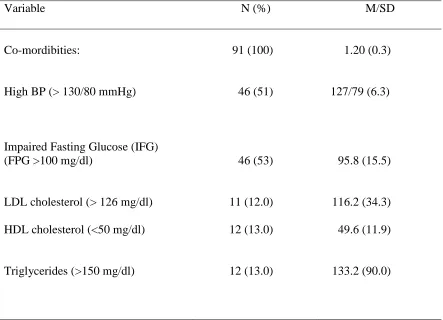
Despite being on antihypertensive medications, 53% of the participants presented
with uncontrolled high blood pressure (≥130/90 mmHg). Although the vast majority
(95%) of the sample displayed adequate health literacy (HL), 30% of the sample was
non-adherent to their medication regimen.
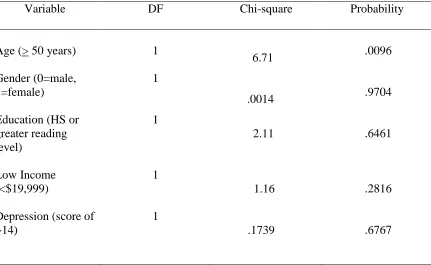
A positive significant relationship was found between age and MA [χ2 (1, n = 90)
= 6.71, p = .01)]. Stress [χ2 (1, n = 90) = 6.28, p = .012)] and social support (SS) [χ2 (1,
vii
factors, barriers and hypertension MA. Highly stressed AA adults were significantly
more likely to be non-adherent or had a 15% reduction in the odds of hypertension MA.
Similarly, adults with a low income were 5.8 times more likely to be non-adherent (OR
5.828, 95% CI, 1.014-33.493, p= .0482), while those with low SS had a 9% reduction in
the odds of MA; SS trended toward significance (OR.914. 95% CI .823-1.016, p =.09).
With increasing age, AA adults were more likely to be non-adherent (OR 1.12, 95% CI
1.028-1.220, p =.0096).
Most of the participants reported a high degree of autonomy, satisfaction with
their health care climate, and the availability of SS. Although increasing age, adequate
SS, high stress, and adequate HL appeared to influence MA in AA adults with MetS, the
research questions were only partially answered. Further investigation of the
relationships and potential mediating pathways between personal characteristics,
environmental factors, behavioral capability and hypertension MA in AA adults with
MetS is needed.
viii
THE RELATIONSHIP OF PERSONAL CHARACTERISTICS, BEHAVIORAL
CAPABILITY, ENVIRONMENTAL FACTORS, AND HYPERTENSION
MEDICATION ADHERENCE IN AFRICAN AMERICAN ADULTS WITH
METABOLIC SYNDROME
by
KAREN ANDREA ARMSTRONG
A DISSERTATION
Presented in Partial Fulfillment of Requirements for the Degree of Doctor of Philosophy in Nursing in the Byrdine F. Lewis
School of Nursing in the College of Health and Human Sciences Georgia State University
Atlanta, Georgia
ix Copyright by Karen Andrea Armstrong
x
ACKNOWLEDGEMENTS
First, I thank God for His faithfulness and guidance as He brought me to the
completion of this dissertation. I thank God for His loving care and gentle reminders that
all things work together for my good.
I thank Dr. Pat Clark for getting me started on this incredible journey, and for
offering me guidance and support throughout the program.
To my committee chair, Dr. Cece Grindel, I owe you a debt of gratitude. You
took me under your wing and nurtured me. I will always be grateful for your patience,
dedication, support, concern, and most of all, for sharing your wealth of knowledge and
experience with me. Thank you for generously giving of your time and attention in
refining this product. Thank you for your investment in my success.
I also thank Drs. Laura Kimble and Dorothy Coverson for their support,
invaluable advice, and encouragement.
To my other committee members----Drs. Dee Baldwin and Frances McCarty,
thank you for your guidance and incredible support. You have made an indelible
impression on my personal and professional development and I am very grateful to you
both. Special thanks to Dr. Carol Grantham, Liping Zhao and Dawn Aycock for going
above and beyond the call of duty to help me.
I would like to express my sincere appreciation and heartfelt thanks to the
Principal Investigators of the Meta health study, Dr. Sandi Dunbar, Dr. Pat Clark, Dr.
Priscilla Pemu and Dr. Arshed Quyyumi, for affording me the privilege of using the
xi
Thank you to my parents, siblings, and friends for your incredible love and
support. Last, but certainly not least, I thank my husband, Winston, and my children,
Shenelle and Shane for their unwavering love and support. Thank you for always being
there for me and for taking such great care of me as I worked on this dissertation. Thank
you for your patience, understanding, care, and many acts of love. I appreciate your
prayers, encouragement, and commitment to my success. I could not have achieved this
milestone without your unconditional love and support. Your dedication is truly
unmatched.
To God be the glory, great things He has done!
“This work was partially supported by funding from National Heart, Lung, and Blood Institute, NIH (1 U01 HL079156) (Dr. Quyyumi, PI) and PHS Grant M01-RR00039 from the Emory General Clinical Research Center, NIH, National Center for Health Resources.”
xii
TABLE OF CONTENTS
Page
List of Tables ... xx
List of Figures ... xxi
List of Abbreviations ... xxii
Chapter I. INTRODUCTION ... 1
Purpose Statement ... 3
Statement of the Problem ... 5
Background ... 7
Health Disparities... 7
Health Disparities Related to MetS... 8
Cumulative Disadvantage ... 9
Multiple Jeopardy ... 9
Healthcare Outcomes from Cumulative Disadvantage ... 10
Racial and Ethnic Disparities ... 10
Significance of Study for Nursing ... 12
Ramifications of Low Medication Adherence ... 13
Negative Health Care Outcomes ... 14
Theoretical Framework ... 15
SCT Overview ... 16
Major Concepts of SCT ... 17
xiii Chapter
I.
Depression... 19
Behavioral Capability ... 19
Environmental Factors ... 20
Social Support ... 20
Social Support and Chronic Illness Management ... 21
Stress ... 21
Medication Adherence Barriers ... 22
Quality of Physician-Client Relationship ... 22
Complexity of the Medication Regimens ... 23
Assumptions ... 24
Chapter Summary ... 25
II. LITERATURE REVIEW ... 27
Metabolic Syndrome Overview ... 27
Abdominal Obesity ... 27
Atherogenic Dyslipidemia ... 28
Hypertension ... 28
Insulin Resistance ... 29
Pro-inflammatory State ... 29
Pro-thrombotic State ... 29
Prevalence of MetS ... 29
xiv Chapter
II.
Clinical Criteria ... 30
Controversies with MetS Diagnosis... 31
Emerging Issues Related to MetS Diagnosis ... 32
Health Disparities Related to Diagnosis ... 33
Health Disparities Related to Treatment ... 34
MetS Long and Short Term Health Outcomes ... 35
Consequences of Uncontrolled MetS... 35
Coronary Heart Disease/Cardiovascular Disease ... 35
Diabetes Mellitus ... 36
Other MetS Clinical Sequelae ... 36
MetS Summary ... 36
Medication Adherence ... 37
Overview ... 37
Causes of Medication Non-adherence ... 38
Stress ... 38
Depression... 40
Predictors of Depression ... 41
Low Health Literacy ... 41
Stress Related Factors ... 41
Depression and Medication Adherence ... 41
Health Literacy... 43
xv Chapter
II.
Low Health Literacy ... 43
Low Health Literacy and Patient Knowledge ... 44
Prevalence of Low Health Literacy ... 45
National Statistics ... 45
Low Health Literacy and Socioeconomic Status ... 45
Low Health Literacy and Older Adults ... 45
Low Health Literacy in African Americans Adults ... 46
Health Literacy and Cognitive Status ... 46
Importance of Adequate Health Literacy in Older Adults ... 47
Health Literacy and Medication Adherence ... 49
Health Literacy, Medication Adherence and Chronic Illnesses ... 49
Medication Adherence Barriers ... 50
Quality of Therapeutic Relationship ... 50
Complexity of Medication Regimens ... 52
Environmental Factors ... 53
Social Support ... 54
Consequences of Medication Non-adherence ... 55
Negative Effects on Health Outcomes ... 55
Predicting Medication Adherence... 56
Literature Review Summary ... 57
xvi Chapter
II. Research Questions………59
111. METHODS………... 61
Study Design of Proposed Study ... 61
Description of Original Study ... 62
Incentives ... 63
Procedure for Original Study ... 63
Procedure for Proposed Study ... 64
Sample Criteria ... 64
Sample Size for Original Study ... 64
Sample Size for Proposed Study ... 64
Recruitment for Original Study ... 65
Inclusion Criteria for Original Study ... 66
Inclusion Criteria for Proposed Study... 66
Exclusion Criteria ... 66
Data Collection for Original Study ... 67
Assessments Tools for Proposed Study ... 68
Hypertension Medication Adherence (Hill Bone Compliance Scale) ... 69
Depression (Beck Depression Inventory) ... 70
Stress (Perceived Stress Scale) ... 70
Physician-Client Relationship (Health Care Climate) ... 71
Complexity of Medication Regimen (Medication Sheet) ... 72
xvii Chapter
III.
Social Support (Enrichd Social Support Scale) ... 74
Data Analysis ... 75
Human Subject Consideration ... 77
Risks ... 77
Confidentiality ... 77
Summary ... 78
IV. RESULTS ... 81
Descriptive Statistics of Sample ... 84
Demographic Information ... 84
Clinical Characteristics ... 85
Medication Regimens ... 86
Descriptive Statistics of Major Study Variables ... 87
Health Literacy... 88
Hypertension Medication Adherence ... 89
Relationship of Medication Adherence with Sample Characteristics ... 89
Research Question 1 ... 89
Co-morbidities ... 91
Research Question 2 ... 93
Research Question 3 ... 94
Research Question 4 ... 95
xviii Chapter
IV.
Chapter Summary ... 96
V. DISCUSSION AND CONCLUSION ... 99
Personal Characteristics ... 100
Co-morbidities ... 100
Depression... 102
Behavioral Capability ... 103
Health Literacy... 103
Barriers ... 105
Complexity of the Medication Regimen ... 105
Health Care Climate ... 106
Environmental Factors ... 107
Stress ... 107
Social Support ... 108
Limitations ... 109
Implications for Health Practice ... 110
Implications for Future Research ... 112
Comparison of Findings to SCT Framework ... 113
Conclusion ... 114
xix Chapter
APPENDICES ... 145
A. Hill-Bone Compliance Scale... 145
B. Beck Depression Inventory ... 147
C. Perceived Stress Scale... 149
D. Health Care Climate Questionnaire ... 151
E. Medication Sheet ... 153
F. Rapid Estimate of Adult Literacy in Medicine ... 155
G. Enrichd Social Support Inventory ... 158
H. Data Use Agreement ... 160
xx
LIST OF TABLES
Table Page
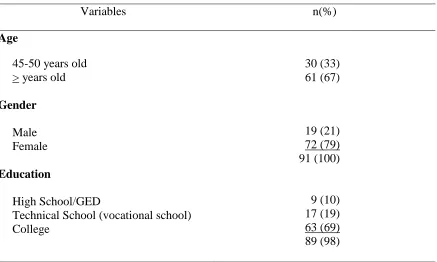
1. Demographic Characteristicsof Sample Characteristics ... 83
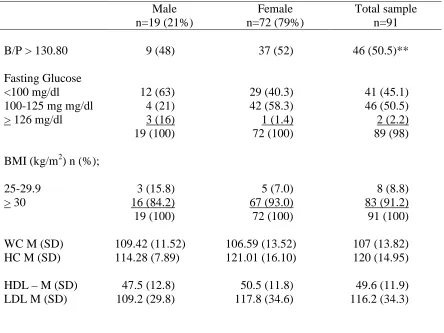
2. Clinical Variables for Sample and by Gender ... 85
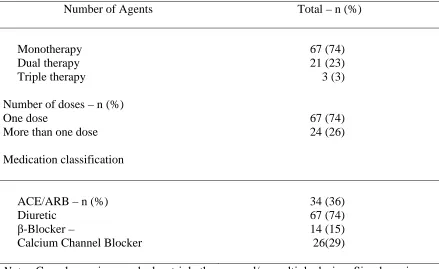
3. Complexity of Medication Regimen and Medication Classification ... 86
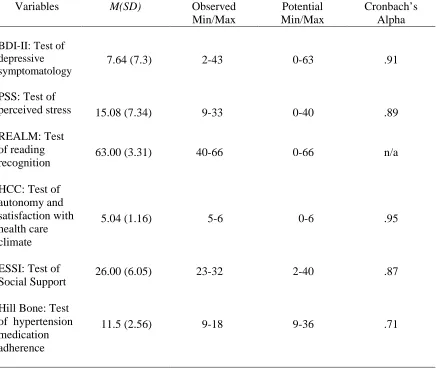
4. Descriptive Statistics and Reliability Coefficients for Major Study Variables .... 87
5. Comparison of Personal Factors and Hypertension Medication Adherence ... 89
6. Co-morbidities ... 90
7. Comparison of Stress, Social Support, Healthcare Climate, and Hypertension
xxi
LIST OF FIGURES
Figure Page
xxii
LIST OF ABBREVIATIONS
AA African Americans
AACE American Association of Clinical Endocrinologists
ACE Angiotensin Converting Enzyme
ACS Acute Coronary Syndrome
ADA American Diabetes Association
AHA American Heart Association
ALLHAT Antihypertensive and Lipid Lowering Treatment to Prevent Heart Attack
Trial
ARB Angiotensin Receptor Blockers
ATP III Adult Treatment Panel, Third Meeting
BDI Beck Depression Inventory
BMI Body Mass Index
BP Blood Pressure
CDC Centers for Disease Control and Prevention
CAD Coronary Artery Disease
CHD Coronary Heart Disease
CKD Chronic Kidney Dosease
CPN Community Practitioner Network
CRP C-Reactive Protein
CVD Cardiovascular Disease
ESRD End Stage Renal Disease
xxiii
FG Fasting Glucose
GED General Education Diploma
HC Hip Circumference
HCC Health Care Climate
HDL High Density Lipoprotein
HL Health Literacy
HHS Health and Human Services
HPA Hypothalamus Pituitary Adrenal Axis
HTN Hypertension
IDF International Diabetes Foundation
IFG Impaired Fasting Glucose
IOM Institute of Medicine
IR Insulin Resistance
IRB Institutional review Board
JNC7 Seventh Meeting of the Joint National Committee for the Prevention,
Detection, Evaluation, and Treatment of High Blood Pressure
LDL Low Density Lipoprotein
MA Medication Adherence
Meta-health Morehouse and Emory Team Up to Eliminate Cardiovascular Health
Disparities
MetS Metabolic Syndrome
MMSE Mini Mental Status Exam
xxiv
NCEP National Cholesterol Education Program
NHANES National Health and Nutrition Examination Survey
NHLBI National Heart, Lung, and Blood Institute
NIH National Institutes of Health
OGTT Oral Glucose Tolerance Test
OR Odds Ratio
OSA Obstructive Sleep Apnea
REALM Rapid Estimate of Adult Literacy in Medicine
PAI Plasminogen Activator Inhibitor
PCI Percutaneous Coronary Intervention
PSS Perceived Stress Scale
SAS Statistical Analysis Software
SCT Social Cognitive theory
SE Self Efficacy
SNS Sympathetic Nervous System
SS Social Support
TG Triglycerides
TOFHLA Test of Functional Health Literacy in Adults
U.S. United States
VIF Variance Inflation Factor
WC Waist Circumference
Chapter I
Introduction
Medication adherence (MA) is important because many of the medications prescribed
are for chronic illnesses, such as metabolic syndrome (MetS). MetS is a cluster of
metabolic abnormalities that increases one’s susceptibility to risks of cardiovascular
disease (CVD) (Grundy, 2005) and like other chronic illnesses, if left uncontrolled can
lead to more serious outcomes. MetS is categorized by multiple risk factors which confer
greater risks for adverse clinical outcomes compared to a single factor (Chen et al., 2004;
Blank & Brunton, 2008). Given that multiple medications are prescribed for adults with
chronic illnesses (Murray et al., 2004a), medication adherence may be especially
challenging in this cohort of African American (AA) adults with MetS and its attendant
multiple risk factors.
Empiric evidence shows that African Americans frequently report multiple
co-morbidities, for which prescription medications are the primary therapeutic interventions
(Hilgers & Mann, 2008; Murray et al., 2004b). The finding is significant because AA
adults with chronic conditions frequently self-administer multiple prescription
medications without adequate supervision (Murray et al., 2004a). Sudano and Baker
(2001) found that a greater percent (73%) of AA adults report not following their
medication regimens compared to their White counterparts (64%). Therefore, medication
self-management in AA adults is an important health care issue because AA adults
2
Low medication adherence appears to be a patient-centered term; it illuminates the
extent to which an individual’s behavior deviates from medical or health advice
(Arozullah, Kim & Lee, 2006). It is well-documented that low medication adherence
contributes to additional health care costs due to frequent hospital re-admissions and
emergency department visits and a reduction in therapeutic value, and increases in the
risk for complications from chronic illnesses as a result of inappropriate dosing (Baker et
al., 2007; Frishman, 2007; Gazmararian, Baker, Parker, & Blazer, 2006; Osterberg &
Blaschke, 2005; Sudano & Baker, 2001).
Moreover, of considerable concern to nursing practice is that, although
medication adherence research spans over 30 years, very little of the existing research
addresses the topic from an African American perspective (Vlasnick, Aliotta, & DeLor,
2005). More research is needed since minorities, especially AA adults, continue to
experience significant health disparities (Anuurad, Chiem, Pearson, & Berglund, 2007;
Smedley, Stith, & Nelson, 2003) in cardiovascular disease and diabetes mellitus.
Although African American(s) (AA) have an increased risk for cardiovascular disease
(CVD) and diabetes, several studies have found that most AAs are unaware of their
increased risk for developing metabolic syndrome (MetS) (Grundy, Brewer, Cleeman,
Smith, & Lenfant, 2005). In fact, African Americans are at greatest risk (39%) for
hypertension when compared to Whites (29%), and Hispanics (28%) (Angell et al.,
2008). The increasing risk for hypertension in African Americans confers added risks for
cardiovascular disease (Annurad, Chiem, Pearson, & Berglund, 2007; Poon, Lal, Ford, &
Braun, 2009). Given the greater prevalence of hypertension-related morbidity and
greater problem in this population because empiric evidence shows that low medication
adherence is a barrier to achieving proper blood pressure control (Bosworth et al., 2006;
Grundy, Brewer, Cleeman, Smith, & Lenfant, 2005). Low hypertension medication
adherence often results in uncontrolled high blood pressure, a critical component of MetS
which frequently leads to severe complications associated with CVD (Grundy, Brewer,
Cleeman, Smith, & Lenfant, 2008; Martins, Tareen, Ogedegbe, Pan, & Norris, 2008).
Purpose Statement
The purpose of this study was to examine medication adherence in AA adults with
MetS by determining the relationships among personal characteristics, behavioral
capability, and environmental factors. Personal characteristics included age, gender,
income, depression, and education, behavioral capability was conceptualized as health
literacy, while environmental factors included stress, social support, complexity of the
medication regimen, and quality of the therapeutic relationship between patient and
healthcare provider. The research suggests that a significant relationship exists among
medication adherence and key study variables in a variety of clinical populations, albeit
the exact nature of the relationship remains unclear. Therefore, more research was
warranted to describe more clearly suspected relationships in a cohort of AA adults with
MetS. It was expected that an investigation of key study variables would yield similar
findings to those unearthed in other study populations. In study populations such as
cancer, high blood pressure, renal populations, and diabetic populations, research has
provided evidence that key study variables influenced hypertension medication adherence
Empiric evidence suggests that medication non-adherence contributes to disparately
high rates of morbidity and mortality in African American adults (Angell et al., 2008;
Wright et al., 2008). The proposed study examined factors that may influence
hypertension medication-taking health behavior. Investigating factors that may influence
hypertension medication adherence in this population may lead to a greater understanding
of the way African American adults engage in self-management behavior, which in turn
may help explain the differences between African American and White adults in
morbidity and mortality.
The Social Cognitive Theory (SCT), a learning theoretical framework, provided the
justification for examining key study variables in a cohort of AA adults with MetS.
Study findings may help to develop interventions to promote positive outcomes in this
vulnerable population.
A secondary analysis was conducted, using baseline data that were collected as part
of a larger study, the Morehouse and Emory Team Up to Eliminate Cardiovascular
Health Disparities in AA (META Health) study (U.S. Department of Health and Human
Services [HHS], National Institutes of Health [NIH], National Heart, Lung, and Blood
Institute, [NHLBI] 2004-2010). A secondary analysis was used to illuminate the nature
of the relationship between medication adherence and personal characteristics, behavioral
capability, and environmental factors in a cohort of AA with MetS. Specifically, the
project illuminated several relationships by utilizing various analyses of existing data to
examine key study variables. The study produced a subtler picture of the state of the
science that is not present in the current existing literature. Based on the literature review
research questions were posed:
Question 1: What is the relationship of personal factors (age, gender, income, depression,
co-morbidities, and education), behavioral capability (health literacy), and medication
adherence in AA adults with MetS?
Question 2: What is therelationship between environmental factors (stress and social
support), barriers (complexity of the medication regimen and non-therapeutic health care
climate), and medication adherence in AA adults with MetS?
Question 3: Will age, gender, income, education, health literacy, complexity of the
medication regimen, and quality of the therapeutic relationship explain a greater variance
in medication adherence over and above social support, stress, and depression in AA
adults with MetS?
Question 4: Will AA adults with adequate behavioral capability (health
literacy) report greater medication adherence than those with inadequate behavioral
capability (health literacy)?
Statement of the Problem
Framingham risk investigators analyzed their extensive database and found several
associations between MetS and CVD (Mosca et al., 2006). It is therefore very
problematic that although AA adults experience greater disease burden from CVD
compared to Whites and other minorities, several studies have found that most AA are
unaware of their increased risk for developing CVD (Chobanian et al., 2003; Grundy et
al., 2005). Moreover, no studies were found which addressed the awareness of risk
factors for MetS in AA adults who experience disparately negative health outcomes from
factors which confer greater risks for adverse clinical outcomes compared to a single
factor (Blank & Brunton, 2008) and is a cluster of metabolic abnormalities that increases
one’s susceptibility to risks of CVD (Grundy, 2005).
Similarly, although the magnitude of the problem of low medication adherence is
well-documented (Gazmararian et al, 2006; Schillinger, Barton, Karter, Wang, & Adler,
2002), no studies were found that examined the potential factors which contribute to low
medication adherence in AA adults with MetS. Indeed, it is well-documented that AA
adults suffer a higher disease burden from CVD morbidity and mortality which is often
linked to low medication adherence. Moreover, very little of the current medication
adherence research explored the specificity of African American adults’ social contexts
or experiences that might explain their disparately low self-management behavior. Low
health behavior including low hypertension medication adherence has been shown to
exacerbate chronic conditions (Bosworth et al, 2006).
A large body of evidence reveals that AA adults have high rates of obesity, and in
overweight persons, MetS increases significantly to rates of over 50% (Grundy et al.,
2008). The evidence suggests that the disproportionate levels of obesity in AA translate
into a disproportionate burden of CVD morbidity and mortality (Lechleitner, 2008;
Rocha, 2008, Ryan, Farin, Abbasi, & Reaven, 2008). According to the Third National
Health and Nutrition Examination Survey (NHANES III) data, AA women have the
highest rate of abdominal obesity when compared to other ethnic groups (Brown, Vaidya,
Rogers et al., 2008; Park et al., 2003; Williams, Flack, Gavin, Schneider, & Hennekens,
2007). Notwithstanding, although extensive research has been conducted to examine the
examined the mechanisms through which environmental factors, such as social support
and stress, interact with or mediate health literacy to predict hypertension medication
adherence in a cohort of AA adults with MetS. It is believed that increasing access to
care could improve healthcare outcomes for AA with MetS by early identification of
persons at risk for MetS and by targeting modifiable risk factors for medication
non-adherence such as quality of social support, level of stress and depression, and health
literacy.
Background
Health Disparities
Nelson (2003) defined health disparities as racial or ethnic differences in the quality
of healthcare. Research suggests that much of the health disparity in diagnosis and
treatment has been linked to personal and environmental factors but findings are
inconclusive (Brietzke, 2007; Gazmararian et al., 2006). Similarly, Smedley (2003) and
colleagues found that health disparities are not necessarily due to access-related factors,
clinical needs, preferences, or appropriateness of intervention (Smedley, Stith, & Nelson,
2003). According to the National Center for Health Statistics (2002), life expectancy at
birth is 71.1 years for AA, and 77.1 years for Whites. AAs have the lowest self-rated
health status relative to Whites and Hispanics (Wright et al., 2008; Hilgers & Mann,
2008; Schoenthaler, Ogedegbe, & Allegrante, 2007). Also, African American adults
have the highest death rates of any of America’s racial and ethnic groups related to CVD
events (Centers for Disease Control and Prevention [CDC], National Vital Statistics
disease and its cardiovascular complications increase morbidity and mortality in AA
versus their White counterparts (American Heart Association [AHA], 2007).
Health Disparities Related to MetS
MetS afflicts 50 million Americans or 25% of the adult population (Chen et al.,
2004; Grundy et al., 2008). Empiric evidence supports the existence of ethnicity-specific
differences in metabolic complications associated with obesity (Grundy et al., 2005). In
fact, among minority populations, the escalating incidence of obesity significantly
increases the risk for MetS by over 50% (Ford, 2006). In addition, the prevalence of
MetS increases with advancing age; 44% of adults over 50 years old have MetS (Ford,
2006; Grundy, 2005).
The age-adjusted prevalence of MetS is 32% of Mexican Americans, 24% of
Whites, and 22% of AA (Park et al., 2003). Although AA women seem to have a higher
(21%) than AA men (14%), this incidence is somewhat lower than that of White women
(23%) and Mexican American women (27%). Brown et al., 2008; Ford, 2006).
Paradoxically, although AA adults have lower rates of MetS than Whites or Mexican
Americans, their history of CVD puts them at greater risk for mortality from coronary
heart disease (CHD) and stroke (Chobanian et al., 2003; Grundy et al., 2008).
Personal and environmental factors that impact medication adherence and subsequent
use of the healthcare delivery system may be rooted in sociological underpinnings such
as cumulative disadvantage and multiple-jeopardy. These sociological underpinnings
Cumulative Disadvantage
Dannefer (2003) defines cumulative disadvantage as a compounding of negative
circumstances where inadequate social capital confers major disadvantage for older
African American adults. African American adults have experienced a lifetime of
cumulative disadvantage from opportunity structures of education, social services, and
healthcare delivery (Smedley, Stith, & Nelson, 2003). A lifetime of discrimination and
poverty translates to an accumulation of disadvantages and poor health in later life
(Dannefer, 2003; Lee & Carrington, 2007; Stoller & Gibson, 2005). This cumulative
disadvantage results from a complex and dynamic interplay of macro-social and
micro-social forces and is often reflected in disparities in the healthcare delivery system
(Kripalani et al., 2006; Toren, Kerzman, Koren, & Baron-Epel, 2005; Williams, 1998).
For example, negative emotions such as stress and anger may be caused by racial
discriminations and institutionalized racism in health care or in the workplace (Williams,
1998). Empiric evidence showed that stress was linked to depression which frequently
resulted in poor health care outcomes (Berkman et al., 2003; Cohen, Kamarck, &
Mermelstein, 1983).
Multiple-jeopardy
Research suggests that AA adults experience multiple-jeopardy because they fall in
more than one marginalized category (Dannefer, 2003). This multiple jeopardy
compounds the issue of vulnerability for AA adults. It is well-established that African
American adults have been disenfranchised and denied access to care because of limited
Daumit, Hermann, Coresh, & Powe, 1999). One can readily appreciate the gravity of this
situation because African American middle-aged adults experience disparately high rates
of chronic illnesses coupled with severe co-morbidities (Cutler et al., 2008; Lagu et al.,
2009).
Healthcare Outcomes from Cumulative Disadvantage and Multiple-Jeopardy
Research substantiates the fact that cumulative disadvantage and multiple
jeopardy translate to psychological and physiological stress, which frequently lead to
negative healthcare outcomes (Berkman et al., 2003; Williams, 1998). Similarly, a
compounding of negative effects compromises health and frequently leads to stress and
depression which are significant correlates of medication adherence (Bane, Hughes, &
McElnay, 2006; Reynolds, et al., 2004). Stress precipitates and exacerbates depression
which affects about 20% of patients with coronary artery disease (CAD), and depression
is an important risk factor for death and acute coronary syndrome (ACS) (Berkman et al.,
2003; Steptoe et al., 2006). Cumulative disadvantage and multiple-jeopardy often
cascade into precipitating factors which contribute to burgeoning racial and ethnic
disparities. These disparities will now be addressed in greater detail.
Racial and Ethnic Disparities
The evidence of racial and ethnic disparities was almost always consistent across a
range of illnesses and healthcare services (Smedley, Stith, & Nelson, 2003). Although
the disparities seemed to be related to socio-economic differences, the differences often
disappeared when socio-economic factors were controlled for (Schillinger, Barton,
Karter, Wang, & Adler, 2006). Nevertheless, AA adults are less likely to have health
more likely to use publicly funded insurance such as Medicaid (The Henry, J. Kaiser
Family Foundation, 2000). African American adults frequently are not afforded the same
options or privileges in emergency procedures or CV interventions as their White
counterparts (Fiscella, Franks, Gold, & Clancy, 2000; Smedley, Stith, & Nelson, 2003).
When AA adults cannot afford quality health insurance, they are often relegated to
generalists not specialists, and this limits their access to care (Smedley, Stith, & Nelson,
2003). The emerging evidence suggests that racial and ethnic health disparities may be
linked to social and economic inequality, persistent racial and ethnic societal
discrimination, and subsequently differences in care from biases, prejudice, or
stereotyping (Nelson, 2003). The following statistics provide evidence of racial and
ethnic disparities which have been shown to contribute to a perpetuation of negative
healthcare outcomes for AA adults.
According to Census (2001b) data, 22.3% of AA over 65 years old fall below the
poverty line compared to 8.9% of White older adults. In urban areas, 43% of White older
adults over 65 years old and 27% of AA over 65 years old had greater than a 9th grade
education. Census data reveals that 37% of White older adults and 17% of African
American older adults obtained the General Education Diploma, while 27% of White
older adults compared to 8% of AA older adults actually graduated from high school.
Research suggests that most independent living older AA live in poverty (U.S. Census,
2001b). In addition, Census data showed that African American adults use far less social
and health services than their White counterparts. It is believed that these
middle age, set the stage for a perpetuation of negative health care outcomes for AA
middle-aged adults in later life.
Significance of the Study for Nursing
Low medication adherence is a pervasive and complex problem and a hidden
epidemic in our society today (Balkrishnan et al., 2004; Haynes et al., 2005;
Paasche-Orlow, Parker, Gazmararian, Nielsen-Bohlman, et al., 2005). Nurses need to study this
problem of low MA to identify those AA adults who are at risk, and to intervene early to
promote positive healthcare outcomes in terms of morbidity and mortality. In fact, low
medication adherence is strongly influenced by the patient, the patient’s social support
system, the practice of health care providers, and the effectiveness of the healthcare
delivery systems (Berkman et al., 2003). Moreover, the evidence is consistent that
medication non-adherence is common among patients, regardless of the kind or the
severity of the disease (Paasche-Orlow et al., 2005; Peterson & McGhan, 2005;
Vermeire, Hearnshaw, Van Royen, & Denekens, 2001).
Although MA research spans several decades, a paucity of the research addresses
this topic in a cultural context (Vermiere et al., 2001). In fact, very little MA research
addresses the topic from an AA perspective. Sudano and Baker (2001) found that AA
adults (73%) were less likely to follow medication regimen when compared with their
White counterparts (64%). This is of great concern to healthcare providers given that AA
adults experience significantly higher incidences of chronic illnesses for which
medications constitute the most common therapeutic interventions (Haynes, McGibbon,
Kanani, Brouwers & Oliver, 2005; Vermiere, Hearnshaw, Van Royen & Denekens,
hypertension and are twice as likely as older Whites to have diabetes (Powell, Hill, &
Clancy, 2007; Safeer & Keenan, 2005; Sarkar, Fisher, & Schillinger, 2006; Webster &
Perry, 2005).
Ramifications of Low Medication Adherence
An important component of low medication adherence is low self-management
behavior. Low self-management behavior is reflected in poor lifestyle choices that
contribute to the obesity epidemic. It is well-documented that obese persons incur
medical expenditures 40% higher than normal weight individuals (Curtis et al., 2007).
Obesity significantly contributes to uncontrolled high blood pressure. Empiric evidence
reveals that in African American adults, low hypertension medication adherence results
in uncontrolled blood pressure that accounts for nearly 8,000 preventable deaths per year
from cardiovascular events (Fiscella & Holt, 2008). Uncontrolled blood pressure has
economic consequences as well. For example, the escalating cost of hypertension
treatment approaches $70 billion (Rosamond et al., 2008). Similarly, uncontrolled blood
pressure has been shown to increase morbidity and mortality along with an increase in
health care expenditures of more than $100 billion a year (Frishman, 2007).
Low medication adherence is reflected in improper medication use that may result
in adverse effects such as dizziness, which frequently leads to falls. Fall-related injuries
among older people cost more than $20.2 billion annually (Centers for Disease Control
and Prevention [CDC], 2004). Falls also cause 90% of hip fractures, which cost $10
billion a year, and by 2020, the total annual cost of these injuries is expected to reach
$32.4 billion (CDC, 2004). Toren et al. (2008) provided evidence that low medication
re-hospitalizations because diseases got out of control. Similarly, Bosworth et al. (2006)
found that unscheduled surgeries are needed because of uncontrolled high blood pressure.
Finally, in a related study, low medication adherence was associated with disease
progression in a population with uncontrolled diabetes (Schillinger et al., 2006).
Negative Healthcare Outcomes
Voluminous literature documents the negative effects of medication
non-adherence on AA adults’ medical outcomes (Chew, Bradley, & Boyko, 2004; Morris,
McLean, & Littenberg, 2006; Reynolds et al., 2004). In a cohort of renal transplant
patients, Nevins, Kruse, Skeans, and Thomas (2001) found that non-adherence to
medications led to acute transplant rejection and adverse outcomes. Similarly, Bosworth
et al. (2006), found that non-adherence with antihypertensive medication was a key factor
in the failure of antihypertensive therapy.
Moreover, empiric evidence reveals that even after controlling for similarities in
age, education, and occupational opportunities, African American adults still have higher
incidences of both mortality and morbidity compared to their White counterparts. It is
therefore not surprising that although CVD mortality has declined overall over the past
decade, AA continue to suffer a disproportionate burden of CVD disease mortality and
morbidity (Mensah, Mokdad, Ford, Greenlund, & Croft, 2005). In fact, although AA
adults have lower rates of MetS, their history of CVD puts them at greater risk for
mortality from CHD and stroke (Chobanian et al., 2003; Grundy et al., 2008).
The purpose of this study was to examine hypertension medication adherence in
AA adults with MetS by determining the relationships among personal characteristics,
accomplished by using a learning theoretical framework, the Social Cognitive Theory
(SCT) to guide this secondary analysis. Currently, SCT is one of the most influential and
widely used theoretical frameworks for studying health behaviors (Bosworth et al., 2006;
Gallant, 2003).
Theoretical Framework
According to Bandura (1986), the SCT is focused on the social influences that affect
learning (e.g. ethnicity, situation, and culture). It is well-established that the SCT is a
dynamic interplay of personal factors: a) cognition, affect and biological events; b)
behavioral capability, and c) environmental influences which create interactions that
result in behavior change (Bandura, 1977a, b). The SCT proposes that motivation to
perform a behavior is a strong predictor of performing that behavior (Vogt, Hall,
Hankins, & Marteau, 2009). Empirical evidence supports the existence of a relationship
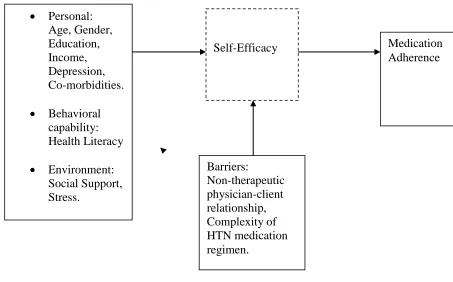
Figure 1
Social Cognitive Theory to Predict Medication Adherence in AA with MetS
SCT Overview
The SCT is a learning theory which is based on the premise that health behavior is
influenced by personal characteristics, environmental factors, self-efficacy, outcome
expectations, and behavioral capability (Bandura, 2008). In order to engage in
recommended health actions, the individual must be confident in their ability to perform
the desired behavior, and the environment must be supportive to facilitate and motivate
the behavior (Bandura, 1986).
The SCT has many objective empiric indicators that make it suitable for a
kaleidoscope of quantitative research in variety of clinical populations. The SCT can be
used to explain when and if people will perform health behaviors. Research supports the
• Personal: Age, Gender, Education, Income, Depression, Co-morbidities. • Behavioral capability: Health Literacy • Environment: Social Support, Stress.
Self-Efficacy Medication
causal relationships between the predictors or determinants of the outcome behavior (e.g.,
Bosworth et al., 2006; Quinn, 2005).
This study focused on personal characteristics, environmental factors, and behavioral
capability which are major variables within the SCT. Based on the current review of the
literature, predictors for the SCT are consistently associated with healthcare outcomes in
a variety of clinical populations (Bosworth et al., 2006). The conceptualizations for SCT
model can be seen in Figure 1. Frequently, SCT is used as the framework for many
studies that address national health imperatives such as medication adherence and other
health behaviors (e.g. Quinn, 2005). SCT demonstrates usefulness in its applicability to
various patient populations such as adults with hypertension (HTN) (Bosworth, et al.,
2006) and cardiac rehabilitation (Lau-Walker, 2006). Moreover, SCT constructs are
tested frequently in medication self-management studies relating to blood pressure
control (Bosworth et al., 2006). The salience of empiric findings in diverse clinical
populations supports the pragmatic utility of the SCT in research with AA with MetS.
Major Concepts of SCT
The major concepts of the SCT are personal characteristics, environmental factors,
behavioral capability, barriers, self-efficacy (SE), and outcome expectations. The
behavioral outcome of interest in this study was medication adherence. Self-efficacy has
been found to be significantly associated with self-management behaviors in vulnerable
populations and SE was found to be one of the strongest predictors of medication
adherence in chronic illnesses (Gallant, 2003; Sarkar, Fisher, & Schillinger, 2006;
Schoenthaler & Ogedegbe, 2008). The literature showed that SE for medication-taking
Schoenthaler et al., 2006). Similarly, Reynolds et al. (2004) found that participants
(n=980) with confidence in their abilities to take all their medications were more adherent
in their medication regimens. No gaps for medication-taking SE were identified in the
literature and the review of literature identified SE variables related to medication
adherence. There were no measures of medication-taking self-efficacy in the larger study
therefore SE was not tested in this secondary analysis.
Personal Factors
Personal factorsinclude predisposing characteristics such as age, education, gender,
ethnicity, co-morbidities, and income. The personal characteristics of African American
adults determine the quantity and quality of personal resources that predict healthcare
access (Vaglio et al., 2004). Hendrix, Riehle, & Egan (2005) found that demographic
characteristics of patients such as age, gender, and ethnicity were associated with
significant differences in diagnostic testing, treatment, and control of disease components
in primary care. Age, education, income, depression, and co-morbidities may affect
medication adherence through factors such as general and health-specific cognitive
faculties (Murray et al., 2004a). Research suggests that age, income, and education are
significant predictors of health behavior (Davis at al., 2006; Gazmararian et al., 2006;
Murray et al., 2004b). Notably, Cavanaugh et al. (2008) found that in diabetic patients
(n=398) lower diabetes numeracy scores (ability to calculate blood sugar numbers) were
associated with older age, nonwhite race, fewer years of education, lower reported
income, lower literacy and general numeracy skills, lower perceived self-efficacy, and
Depression
Reynolds et al. (2004) provided evidence that depression was the strongest correlate
of medication non-adherence, and medications to treat chronic illnesses may intensify
depression. Moreover, it is well established that non-adherence subsequent to depression,
negatively influences individuals’ perceptions about health and quality of life (Bane,
Hughes, & McElnay, 2006;Schoenthaler, Ogedegbe, & Allegrante, 2007).
Behavioral Capability
Behavioral capability includes knowledge and skills necessary to perform a
behavior (Bandura, 1986). Knowledge and skills are key components of health literacy.
If adults have adequate knowledge, they may be more empowered to be active
participants in their health care decisions (Bandura, 1986). If adults are going to take
their medications, they need to know how to read and understand their health
instruction/information and how to take their medications correctly. Powell et al. (2007)
assessed the relationship between diabetes knowledge and readiness to take action and
found a positive expected relationship. It is well documented that simple mathematical
skills are important components of adequate health literacy which significantly predicts
positive health outcomes (Gazmararian et al., 2006). Research suggests that adequate
health literacy was a strong predictor of hypertension medication adherence in adults with
chronic illnesses such as high blood pressure and diabetes (Bosworth et al., 2006;
Gazmararian et al., 2006; Ngamvitroj & Kang 2007, Ogedegbe et al., 2004). Persons
with MetS must know what their blood pressure numbers and blood glucose levels mean.
It is expected that a similar relationship will be found in African American adults with
Environmental Factors
Environmental factors include external conditions such as home and community
composition and the level of social support derived from these sources (Schoenthaler,
Ogedegbe, & Allegrante, 2007; Murray, et al., 2004a). Within supportive environments,
middle-aged adults have opportunities to observe others achieve success, thus influencing
their likelihood of performing the same behaviors (Vaglio et al., 2004). When an adult
receives verbal encouragement from his family for taking his medications, this
accomplishment is more likely to re-occur. This motivation initiates a reciprocal
feedback loop for predicting positive health behaviors (Bandura, 1986).
Social Support
Haslam, Pakenam, and Smith (2006) defined social support (SS) as interpersonal
transactions that provide individuals with esteem, stress-related aid, and emotional
assistance. Social support has been assessed in numerous ways, including different types
and sources of social support. Types of social support include instrumental, emotional,
appraisal and informational (Whitfield & Wiggins, 2003). Sources of social support
include the social network of family, friends, coworkers, healthcare, church, and
community (Murray et al., 2004b). The critical component of the social network is the
level of satisfaction perceived by the recipient since social support has been linked to
positive health behavior (Gallant, 2003; Lee & Sharp, 2007). Chronic illnesses such as
diabetes and hypertension are a continual source of stress and social support is essential
to successful management of chronic illness (Gallant, 2003; Karslen, Idsoe, & Hanestad,
Social Support and Chronic Illness Management
The effect of social support on individual agency, coping resources, and health
behaviors has been widely explored (Gallant, 2003; Lee & Sharp, 2007; Whitfield &
Wiggins, 2003). The literature shows the protective effects of social support for positive
healthcare outcomes and health behaviors (Lee & Sharpe, 2007; Collie et al., 2005).
Therefore, social support is an important factor in chronic illness management (Haslam et
al., 2006). In a recent study, Ogedegbe, Harrison, Robbins, Mancuso, & Allegrante
(2004) found that hypertensive AA’s (n=106) reported facilitators to medication
adherence were good social support and satisfaction with the patient-doctor relationships.
In several populations, it has been demonstrated that personal control frequently leads to
confidence in seeking medical information and complying with the medical regimen
(Collie et al., 2005; Lucove, Kaufman & James, 2008; Ngamvitroj & Kang, 2007).
Similarly, Reynolds et al. (2004) found that social support was an important explanatory
variable of high hypertension medication adherence. Adequate SS has been linked to
access to resources that help solve problems thus leading to confidence, personal control
of chronic illness, increased self-management behavior , and general control over life
(Lucove, Kaufman, & James, 2008). When stressors are experienced, having enough
social capital increases likelihood that stressors will be handled appropriately.
Stress
Empiric evidence suggests that environmental demands predispose individuals to
psychological stress (Berkman et al., 2003; Cohen, Kamarck, & Mermelstein, 1983;
Steptoe et al., 2006; Williams, 1998). In addition, the availability of healthcare
(Williams, 1998). Knox and colleagues (2008) posited that depression in AA is very
prevalent due to a convergence of societal and biological factors related to stress. Stress
may be caused by racial discriminations and institutionalized racism in healthcare or in
the workplace (Williams, 1998). Empiric evidence showed that stress was linked to
depression which frequently resulted in low medication adherence (Berkman et al., 2003;
Cohen et al., 1983).
Medication Adherence Barriers
Quality of Physician-Client Relationship or Health Care Climate
The definition of the quality of the therapeutic relationship between doctor and
patient is the degree of autonomy and the level of satisfaction the patient experiences
with the health care provider. Quality of the physician-client relationship was used
interchangeably with the term, health care climate (HCC). Adequate autonomy support
or satisfaction with the health care provider indicates that the relationship is positive or
therapeutic. The client who is not satisfied with the HCC may perceive that the HCC is
non-therapeutic. Safeer and Keenan (2005) found that the quality of the HCC was often
reflected in low MA because patients did not feel empowered to make informed choices
about their care. The patients were given orders and expected to comply with no
opportunity for discussion..
Similarly, Smith and Haggerty (2003) found that the way medication information
was disseminated by the healthcare provider impacted medication non-adherence. Good
communication between the patient and the health care provider will lead to greater
adherence and improved health outcomes (Friedman et al., 2008; Praska, Kripalana,
by promoting the understanding of medical problems and by increasing the patients’
involvement in decisions regarding their health.
Satisfaction with the healthcare climate or a therapeutic physician-client relationship
has been associated with more favorable medical outcomes for patients with chronic
diseases (Shea, Guerra, & Ravenell, 2004). Research suggests that information-sharing
between physician and client as well as seeking and understanding medical information
determined the therapeutic level of the HCC (Hoffman & McKenna, 2006; Williams,
McGregor, & King, 2005). Finally, Murray et al. (2004a) found that many adults often
lacked adequate transportation to the healthcare system for care and medications and for
follow up visits. It is believed that broken appointments impact the continuity in care and
strain the therapeutic relationship (Murray et al., 2004a).
Complexity of Medication Regimens
Complexity of the medication regimen was conceptualized as multiple drug therapy
including frequent dosing schedules. MetS requires multiple treatment regimens
including combination drug therapy and frequent dosing medications (Davis et al., 2006;
Grundy, 2008). Moreover, AAs with MetS frequently report multiple health
co-morbidities and must take multiple prescription medications including angiotensin
receptor blockers (ARB), angiotensin converting-enzyme (ACE) inhibitors, and diuretic
combination medications (Lagu et al., 2009; White, 2008; Williams et al., 2007). In a
recent study, Shaya et al. (2009) found that patients (n=568) on fixed-dose combination
therapy were more likely to display medication adherence than patients with higher
co-morbidities and on separate agents. Nevertheless, Lagu et al. (2009) (n=327) found that
significantly more likely to be filled versus persons with fewer co-morbidities. In a
recent study (n=498), complex regimens from multiple co-morbidities were associated
with poor blood pressure control in hypertensive AA (McDonald, Pezzin, Peng &
Feldman, 2009). Alternating dosing schedules produced 50% medication adherence
while weekly dosing resulted in 29% medication adherence (Risser, Jacobson, &
Kripalani, 2007). The research suggests that simpler medical regimens and satisfaction
with healthcare climate improved self-efficacy and led to more positive outcomes
(Williams et al., 2005).
Similarly, Banning (2009) found that reduction of quantity of medications reduced
medication complexity and led to more adherence success. Banning reported that
reduction in the quantity of medications improved medication adherence up to 20% and
increased medication adherence rates 90% versus 82%, (p < 0.01). Similarly, Haynes et
al. (2005) noted that complex medication regimens are precursors to non-adherence, due
to patients forgetting to take their medication or omission of doses.
Assumptions
Bandura (1986) found that personal factors, environmental factors, and behavioral
capability intersect in triadic reciprocity to predict health-seeking behaviors. The
following assumptions are an integral part of the theoretical framework: 1) SCT is a
model of reciprocal interaction among cognitive factors, environment, and behaviors; 2)
adults are active learners; and, 3) adults learn in social contexts.
In addition, the SCT accounted for a greater variance (23%) in health behaviors
compared to the Health Beliefs Model, suggesting a potentially greater usefulness for this
to various patient populations and its constructs are tested frequently in medication
self-management studies (e.g., Bosworth et al., 2006).
The SCT will be used to examine the relationship among medication adherence,
personal, environmental, and behavioral variables in AA adults with MetS. If African
American adults with MetS follow their medical regimen, morbidity and mortality will
decline and more positive outcomes will occur (Poon et al., 2009). The SCT variables
have been examined in a variety of clinical populations and have successfully predicted
health behavior. A secondary analysis of SCT variables may yield similar results in a
cohort of African American adults with MetS.
Summary
Although hypertension medication adherence is a self-management behavior that can
greatly reduce risks for negative outcomes such as CVD, the research suggests that AA
often do not adhere to medication regimens as well as their White counterparts. In fact,
medication non-adherence is more prevalent in minority populations and it is well
documented that medication adherence may be more difficult for African American
adults than White adults. This finding is of great concern to healthcare providers given
that middle-aged African American adults have worse healthcare outcomes than their
White counterparts, and they continue to experience disparately high rates of chronic
illnesses.
Although prescription medications are the primary therapeutic regimen for AA with
multiple co-morbidities, these adults use substantially less prescription medications than
White older adults (Lagu et al., 2009). Therefore, interventions are needed to increase
adults.
Finally, empiric evidence shows that non-adherence to medication regimens
significantly contributes to burgeoning healthcare costs as well as perpetuating health
disparities. Given that the relationship among personal characteristics, environmental
factors, and medication adherence in AA adults with MetS remains unclear, an
investigation of these factors using a learning theoretical framework will advance the
science in this research area. The social cognitive theory provided the theoretical
27
Chapter II
Review of Literature
Metabolic Syndrome Overview
Although the pathophysiology of metabolic syndrome (MetS) is still not clearly or
consistently defined (Grundy et al., 2008; Lann, Gallagher, & Leroith, 2008; Wilson &
Grundy, 2003), this accumulation of cardiovascular disease (CVD) risk factors is
associated with being overweight with large abdominal circumference (Grundy et al.,
2008; Mosca et al., 2006; Wright et al., 2008). Moreover, research suggests that MetS is
a cluster of metabolic abnormalities that increases the susceptibility to risks of coronary
heart disease (CHD) and CVD (Brown et al., 2008; Grundy, 2005). Data from
Framingham Risk Scores (FRS) suggested that MetS triples the relative risk of CVD
(Wilson, 2004). Similarly, Curtis et al. (2007) found that MetS was associated with a
38% greater risk of CVD events.
Abdominal Obesity
Abdominal obesity is commonly associated with MetS (Perry, Wang, & Kuo,
2008; Ryan et al., 2008). Abdominal obesity presents as increased waist circumference
(≥ 102 cm in men and ≥ 88 cm in women) (National Heart Lung Blood Institute