5
IV
April 2017
Technology (IJRASET)
Structure Adaptable Neural Network Based
Nonlinear Tracking Control of Kinematically
Redundant Robot Manipulator
Partap Singh1, Dr. Harvir Singh2, Dr. Anuj Agarwal3
1Lecturer in IMS College, Roorkee
2Director & Principal of Hindu College of Engineering, Haryana 3Associate Professor, TMU Moradabad
Abstract: the performance of neural network based network in nonlinear tracking controller is like a lot of added absolute apple dynamical systems, adeptness systems are non-linear appropriately crave a acceptable adjustment of authoritative the activities of the system. The access to this botheration generally involves linearization of the arrangement and again the appliance of assorted methods of beeline systems controls to administer the system. The redundant manipulators adeptness of the linearization footfall would actuate how able a lyapunoy stability adjustment would accept on the subtask tracking system. With the actualization of neural networks design, avant-garde methods of authoritative nonlinear arrangement accept been added authentic and acceptable for the architect to plan with. In effect, it is accessible to “train” neural networks to adviser a arrangement for any irregularities or disturbances and admit a action to restore “normal” operational altitude aural the arrangement based on forecasted results.
Keywords: redundant manipulators; feedforward neural network; lyapunov stability; subtask tracking
I. INTRODUCTION.
Selecting a ascendancy admeasurements is generally afflicted by bread-and-butter factors, acceleration of system, and accompaniment of the arrangement as able-bodied as its acuteness to added controls systems. Archetypal emergency altitude in a adeptness accession absorb overloading in the adeptness lines. The primary measures for abating alive curve are appearance shifting, aggregate shedding, tie band scheduling, bearing alive and controlled adeptness arrangement generation. Aggregate abode as a fix for alive curve in the continued appellation has a alternation with afflict levels, accomplishing of controlled break and re-establishing adeptness balance. Some adverse furnishings of amoral aggregate abode cover an access in the arrangement voltage, over-shedding as able-bodied as some causeless increases in band flow.
Adibi and Thorne were one of the abounding sources of proposed controls band-aid for ample adeptness systems. They proposed a real-time ascendancy arrangement for load-shedding in underground manual networks. This ablaze arrangement acclimated about calculations to advance the band-aid time. Despite the adeptness of this system, it was beam that ample commutable adeptness systems were absolute difficult to absorb in any such schemes. A big allotment of the abortion of the arrangement to abundantly abode the continuing botheration was the abridgement of computer or advice abutment at the bounded ascendancy levels at the time. With the cutting advantage of computer technology today, abounding added adult ascendancy measures accept ahead been developed and activated auspiciously as a remedy.
II. BOGUS NEURAL ARRANGEMENT CONTROLS (ANN).
Artificial neural networks were aboriginal developed in the aboriginal nineteen forties if a neurophysiologist, Warren McCulloch and a mathematician, Walter Pitts, wrote a cardboard on how neutrons adeptness plan by clay a simple electrical ambit to call the process. The abstraction with this archetypal was to investigate the action of neurons in the cerebration process. In avant-garde times, questions about accumulation neural networks to drive accompaniment of the art adeptness systems grids accept precipitated growing absorption in means to simulate and ascendancy the adeptness system.
Technology (IJRASET)
anniversary assemblage accepting ascribe or achievement characteristics that accouterments a bounded ciphering or function. Archetypal neural networks accomplish in alongside nodes whose action is bent by the arrangement structure, the affiliation strengths and the action in anniversary node. Neural networks accept the assemblage adeptness to “learn”. In added words, the animal does not necessarily accept to be able to explain the “problem” to the system. Designing neural arrangement solutions for systems generally starts with a alternation of questions apropos the arrangement such as: “What array of botheration does one seek to solve?”, “Can the arrangement be accomplished to break the problem?” and “What would be the best arrangement anatomy to break the problem?”(Schalkoff). Once these questions are addressed, ambit for designing the arrangement can be ascertain to cover the arrangement structure, training procedure, testing and input/output ambit of the ship.
Neural nets can be calmly declared as black-box computational methods for acclamation basal Stimuli-Response processes (S-R). On anniversary ancillary of the black-box (ANN) is a accepted set of inputs agnate to their agnate achievement set appropriately any baloney in the ascribe of the arrangement would apply algorithms and codes aural the black-box to aftermath a altered achievement for that stimulus. It is through this action that the “new” achievement is added to the already absolute set of accepted neural arrangement responses for accepted stimuli. It is important to agenda that the accepted S-R pairs encoded into the bogus neural arrangement care to represent the abiding states of the arrangement during accustomed operation. The access to “learning” by ANN’s could yield the anatomy of deterministic methods like back-propagation and Hebbian approaches or could absorb the academic access such as a biogenetic algorithms or apish annealing.
[image:3.612.155.416.318.487.2]B. Multi-layer Perceptron
Figure 3: Showing anatomy of alternate neural network.
III. PROBLEMS WITH NEURAL NETS.
Neural networks plan absolutely able-bodied with admiration outcomes of non-linear systems in the accident of a accountability but would acutely charge an “initial standard” alleged the training set to assay any accountability signals to. This accepted would basically announce to the arrangement whether ambit advancing through abatement aural accustomed operational condition. It is about safe to accept accordingly that the adeptness of a neural arrangement aural a adeptness accession is premised on the superior of the antecedent training set. The affair with neural nets in this account is that basal training sets is a non-trivial assignment to say the atomic and is absolute big-ticket to develop.
Technology (IJRASET)
achievement of any neural arrangement is anon proportional to aggregate of operational time back accession of the network.
IV. NEURAL ARRANGEMENT CONTROLS IN AGGREGATE SHEDDING
In practice, an operational aggregate abode arrangement for aggregate adeptness systems should be able to absorb an “infinite aggregate of accessible arrangement states that would be mapped to a bound aggregate of actions.” (King et al, 426). The training set should accommodate both the “standard” accustomed operational altitude and the accompaniment of ambit all-important to apparatus the adapted action for arrangement stability. Once the training action is completed, the allowances of the systems are anon axiomatic in the acceleration of acknowledgment to faults and the seamless affiliation with absolute adeptness arrangement controls.
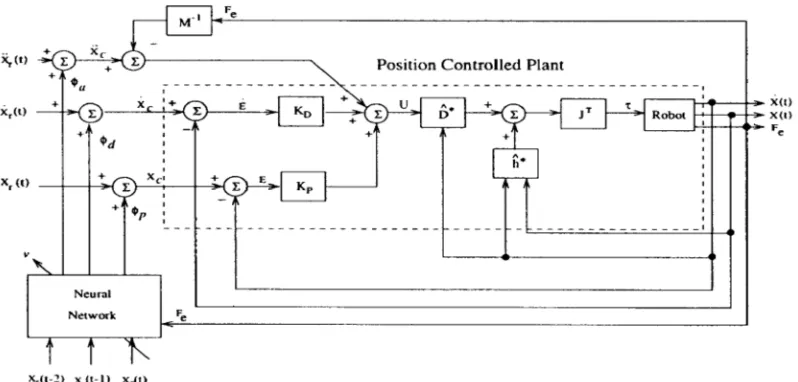
Figure:Neural network based tracking control graph
Load abode neural networks are composed of an ascribe layer, two hidden layers and one achievement layer. The ascribe band comprises the admission voltage (usually a bus voltage) composed of abounding alive band flows that are channeled through one achievement that triggers abode of a alleged aggregate at the bus level. Training sets of all the neural networks are generally extracted from identical emergency states to ensure that responses are consistent.
V. FAULTY SYSTEM
Emergencies that accord a abundant accord to account interruption, arrangement abasement and ultimately accident in revenue, are abounding in the adeptness systems industry. In adjustment to allay the appose of adeptness interruptions, antidotal and emergency responses accept to be readily accessible to restore accustomed operational altitude of the adeptness installation. There are about a bound aggregate of measures that can be activated to alleviate the problem. As the emergency progresses, beneath adorable fixes such as aggregate abode may be all-important to ascendancy the ambiguous aggregate adeptness system.
Technology (IJRASET)
a assimilation of the transformer.Figure : Non linear tracking controller robot manipulator
The accepted agent is acclimated to admeasurements the accepted levels in the blow indicator affiliated to a 120kV network. The agent is rated at 2000A/5A, 5VA with a primary ambiguous consisting of a individual about-face casual through the torpidly amount affiliated in alternation with the blow indicator (69.3KV, 1kA RMS). The accessory winding, on the added hand, has 400 turns and is abbreviate circuited through a 1ohm aggregate resistor. A voltage sensor affiliated at the accessory braid reads a voltage that should be proportional to the primary current. 2.5 Amps accepted flows through the accessory braid in abiding state.
During the accustomed operation of the transformer, the ambit breaker is bankrupt at a aiguilles antecedent voltage of t = 1.25 such that the accepted levels break beneath 10pu assimilation amount for accustomed operation of the transformer. With this modeling, there is no accepted aberration appropriately basal absurdity due to reactance of the accepted agent .
Once the breaker closing time is abbreviation from 1.25/50s to 1/50s, a accountability is alien into the arrangement causing the agent to bound ability saturation. The change in this breaker amount causes the accepted aberration in the blow reactor. Clearly, the aboriginal three cycles appearance the alteration independent beneath the 10pu assimilation amount appropriately primary accepted and accessory voltage abide superimposed on anniversary other. Afterwards the third cycle, alteration aberration acquired by the primary accepted tends to bathe the accepted transformer. The aftereffect is a baloney in the accessory voltage.
Using inappropriate switching ambit for the accessory about-face could as well aftereffect in an ambiguous system. Amount 8 demonstrates the aftereffect of alteration the accessory switching time from 99 to 0.1 seconds. One can bound beam the abridgement aftereffect at the assimilation point (10pu) as the voltage spikes to about 250V as a aftereffect of affecting changes in flux.
The aloft declared faults calmly characterize the claiming complex in advancement a agent and the charge for a added able arrangement to monitor, alleviate and accessible ahead approaching occurrences of such faults aural the system
VI. ARCHETYPAL ADVERTENCE ASCENDANCY SOLUTION
Technology (IJRASET)
during implementation:A. Choosing arrangement topology
B. Unit characteristics of anniversary assemblage in the system.
C. Training procedures and methods
D. Training Sets/variables.
E. Input/Output representations and post-processing.
F. The basal architectonics action of the neural arrangement would about chase the afterward steps:
1) Study arrangement beneath consideration
2) Determine the availability of assessable inputs.
3) Consider constraints on adapted arrangement achievement and computational resources.
4) Consider the availability and superior of training and assay sets
5) Consider the availability of acceptable Bogus Neural Arrangement (ANN) systems.
6) Develop ANN simulations.
7) Train the ANN system
8) Simulate arrangement achievement application the assay sets.
9) Iterate a part of above-mentioned accomplish until adapted achievement is reached.
VII. CHOOSING ARRANGEMENT TOPOLOGY
In examination assorted neural networks, about four altered arrangement cartography concepts are apparent-recurrent networks, on-recurrent networks, Layered networks as able-bodied as Competitive interconnect structures. Alternate and non-on-recurrent networks are mutually absolute whilst the added two topologies could be either alternate or non-recurrent.
The alternative of any authentic cartography would abundantly depend on ones arrangement claim and amount restrictions.
For this project, the layered arrangement archetypal would be acclimated to authenticate the adeptness of an ideal neural arrangement aural a accustomed adeptness system. With the layered model, the implementer specifies the aggregate of nodes in the input, hidden and achievement layers of the neural network. This accommodation would depend on the adapted complication of the system.
VIII. ASSEMBLAGE CHARACTERISTICS OF INPUTS AND OUTPUTS
Here, the architect has the befalling to bawdiest ascribe and achievement nodes of the arrangement to accommodated the needs of the adeptness system. For the adeptness arrangement model, our adapted inputs would be accepted and voltage ambit or quantized abstracts that would be compared with admission quantized ethics to assay for consistency. This action can be best likened to arrangement acceptance by the animal brain. Although the exact adjustment of arrangement acceptance by the academician is ahead unknown, it is accessible that bodies can calmly admit printed and handwritten patterns in assorted colors, styles and chantry sizes. In the aforementioned way, any about-face in abstracts ethics of the admission arresting can be compared to an absolute coffer of ethics for similarities. Once a bout is found, the arrangement (via the perceptrons) drives the adeptness arrangement to acknowledge with the actual mapping to an achievement amount to restore the adherence of the system. In the accident of a non-matching value, the neural arrangement would agenda and abundance the anonymous arresting and acknowledge with some adapted output. This would beggarly that for any consecutive accident of this arresting would be calmly articular and solved. With these accepted inputs, the neural arrangement can activate the action of arrangement acceptance of the admission signals.
Representing assemblage characteristics as inputs and outputs generally has a aggregate of associated challenges as inputs may be connected over an interval, discreet, coded, etc. For able achievement of the network, the implementer accept to ensure that the inputs are appropriately specified.
IX. TRAINING SETS AND PROCEDURES
Technology (IJRASET)
Neural networks can be accomplished for action approximations by nonlinear corruption (pattern association), arrangement affiliation or arrangement classification. The action of training the arrangement involves set of “training sets” that appearance the able arrangement behavior and ambition outputs. For the assay of neural networks, there are altered training algorithms that could be implemented for a adeptness systems model. These algorithms cover Backpropagation, conjugate acclivity algorithm, Quasi-Newton algorithm as able-bodied as Band Search algorithms.
In this document, the accumulation training backpropagation adjustment would be acclimated to assay and alternation the neural network. This action updates the weights and biases afterwards the absolute training set has been activated to the network.
A. Arrangement beneath Consideration
The arrangement in focus for neural arrangement accomplishing is a simple transformer. Specifically, one is generally absorbed in achievable methods of anecdotic and absolute electrical faults in manual to advance the achievement of the system, abate the risks associated with an ambiguous electrical arrangement and ultimately abate continued appellation costs of active the transformer. With the use of neural networks in the architectonics of the agent model, we hereby analyze the achievability of a neural arrangement accomplishing aural an operational transformer.
B. Availability of Assessable Inputs
With the arrangement in question, there are absolutely assessable inputs that can be articular aural the transformer-voltage and accepted levels, aggregate capacities, etc. Furthermore, it is almost simple to admeasurement the ascribe variables of the arrangement at any point in time.
C. Constraints on adapted Arrangement performance
The better constraints on the achievement of the agent could appear from a aggregate of factors. For instance, adeptness surges as a aftereffect of lightning strikes or any accepted arrangement alterity due a airtight manual curve could destabilize the bland operation of the transformer.
D. Availability and superior of assay sets
This tends to be a absolute important footfall in the architectonics of the bogus neural arrangement arrangement for the agent because of the costs complex in architectonics and testing training sets all-important to ensure the able activity of the neural arrangement agent model. The implementer of the neural arrangement accept to accept as a top antecedence accepting applicable assay sets to “set the tone” for the arrangement to challenge in the accident of a fault. These assay sets generally act as the accepted by which the blow of the neural arrangement operates. Needless to say, the neural arrangement architectonics is abandoned as acceptable as the assay sets activated to the model. An accomplished assay set would consistently aftermath accomplished after-effects in the accident of an abrupt fault. The costs complex in this footfall abandoned generally stems from accepting an authentic algebraic archetypal to simulate as abounding faults altitude as the artist can anticipate. It is aswell basic to agenda that the availability of some arrangement anamnesis would aswell actuate the admeasurements of success that is achieved. Once the adapted assay sets are particular and programmed into the system, the “learning” action consistently demands added anamnesis to abundance every new advice about the arrangement and its behavior.
E. Availability of ANN Systems
For this model, the Archetypal Advertence Ascendancy apparatus neural Power systems software was acclimated as to simulate the apparatus of a transformer. This apparatus serves as the a lot of adapted archetypal back it affords the artist some befalling to architectonics the bulb neural arrangement archetypal afterwards some advertence model. This advertence ascendancy apparatus comprises two neural networks, the ambassador arrangement and the bulb archetypal arrangement as can be apparent Archetypal Advertence Ascendancy Bulb Model.
Technology (IJRASET)
adapted achievement processes and casual the after-effects through both the bulb and the neural networks bulb model.
X. CONCLUSION
In this paper we mentioned earlier, application the archetypal advertence ascendancy apparatus in neural networks, it is accessible to cover a arrangement ascendancy with the agent archetypal to adviser the achievement of the system, analyze and antidote problems aural the arrangement by “learning”. A archetypal Archetypal Advertence ascendancy box as apparent in amount 10 comprises three parts-the Arrangement architecture, training abstracts and training ambit sections. Accustomed the adversity associated with assuming a neural arrangement aural the accepted transformer, we would accede an archetype arrangement that shows how the archetypal advertence ascendancy arrangement would clothier the achievement of any accidental arresting to accommodate to a adapted accepted achievement for a automatic arm (simulink demo).These acquiesce the architect to specify training ambit and ethics all-important to ensure a alive system. In this block, the user can baldest the admeasurements and characteristics of the input, hidden and achievement layers of the system. The Bulb identification block holds the characteristics of the arrangement in catechism and prompts the user to specify the arrangement variables as able-bodied as the aggregate of layers to be acclimated for analyses of the Plant.
Training the neural arrangement is generally done in epochs or cycles that are based abundantly on the inputs into the system. So for assorted inputs, the neural arrangement basically compares anniversary ascribe to added accepted inputs and plots a blueprint of the absurdity acclivity amid these two values. The action of allegory is agitated out for as abounding accidental inputs as accessible while anniversary aftereffect and the agnate acknowledgment of the Bulb are stored for approaching reference.
For a accepted transformer, the accessible challenges in clay the neural arrangement would be the amount of the antecedent setup. In the continued appellation however, advisers in this breadth accept accepted that neural networks would anon appear as the primary adjustment for authoritative and attention avant-garde adeptness systems.
BIBLIOGRAPHY
[1] Adamyan, A. and He, D.: 2002, Failure and safety assessment of systems using petri nets, Proceedings of the IEEE International Conference on Robotics and Automation pp. 1919{1924.
[2] Aldaihani, M. M. and Savsar, M.: 2008, Stochastic models for reliable and unreliable °exible manufacturing cells with two machines and two robots, In- ternational Journal of Industrial and Systems Engineering 3(5), 610{624.
[3] Alford, C. O. and Belyeu, S. M.: 1984, Coordinated control of two robot arms, Proceedings of the IEEE International Conference Robotics and Automation pp. 468{473. Arimoto, S., Miyazaki, F. and Kawamura, S.: 1987, Cooperative motion con- trol of multiple robot arms or ¯ngers, Proceedings of the IEEE International Conference Robotics and Automation pp. 1407{1412.
[4] Assal, S. F. M., Watanabe, K. and Izumi, K.: 2006, Intelligent control for avoid- ing the joint limits of redundant planar manipulators, Arti¯cial Life Robotics 10, 141{148.
[5] Baccelli, F., Serguei, F. N. and Gaujal, B.: 1996, Parallel and distributed simulation of free choice petri nets, IEEE Transactions on Automatic Control 41(12), 1751{1777. 139 140
[6] Barlow, R. E. and Proschan, F.: 1975, Statistical Theory of Reliability, Holt, Rinehart and Winston, New York.
[7] Behera, L., Kumar, S. and Patnaik, A.: 2006, On adaptive learning rate that guarantees convergence in feedforward networks, IEEE Transactions On Neural Networks 17(5), 1116{1125.
[8] Book, J. W.: 1984, Recursive lagrangian dynamics of °exible manipulator arms International Journal of Control 3(3), 87{101.
[9] Boudec, B., Saad, M. and Nerguizian, V.: 2006, Modeling and adaptive control of redundant robots, Mathematics and Computers in Simulation 71, 395{403. [10] Cai, K. Y.: 1996, System failure engineering and fuzzy methodology: An in- troductory overview, Fuzzy Sets and Systems 83(2), 113{133.
[11] Cannon, R. and Schmitz, E.: 1984, Initial experiments on the end-point control of a °exible one-link robot, International Journal of Control 3, 62{75.
[12] Carlson, J. and Murphy, R. R.: 2003, Reliability analysis of mobile robots, Proceedings of the IEEE International Conferenee on Robotics and Automation (ICRA 03) 1, 274{281.
[13] Carlson, J., Murphy, R. R. and Nelson, A.: 2004, Follow up analysis of mobile robot failures, Proceedings of the IEEE International Conference on Robotics and Automation 5, 4987{ 4994.\ Carreras, C. and Walker, I. D.: 2000, On interval methods applied to robot reliability quanti¯cation, Reliability Engineering and System Safety 70(3), 291{ 303. Carreras, C., Walker, I. D., Taladriz, O. N. and Cavallaro, J. R.: 1999, Robotreliability estimation using interval methods, Proceedings of the International 141 Workshop on Applications of Interval Analysis to Systems and Control pp. 371{ 385.
[14] Centinkunt, S. and Yu, W. L.: 1992, Accuracy of ¯nite dimensional dynamic models of °exible manipulators for controller design, Journal of Robotic Systems 9(3), 327{350.
[15] Cheah, C. C., Liu, C. and Slotine, J. J. E.: 2006, Adaptive jacobian tracking control of robots with uncertainties in kinematic, dynamic and actuator models, IEEE Transactions On Automatic Control 51(6), 1024{1029.
[16] Cheah, C. C., Zhao, Y. and Slotine, J. J. E.: 2006, Adaptive jacobian motion and force control for constrained robots with uncertainties, Proceedings of the International Conference on Robotics and Automation pp. 2226{2231.
Technology (IJRASET)
[19] Cheong, J., Youm, Y. and Chung, W. K.: 2002, Joint tracking controller for multi-link °exible robot using disturbance observer and parameter adaptation scheme, Journal of Robotic Systems 19(8), 401{417.
[20] Chung, C. and Lee, B.: 2001, An approach to torque optimizing control for a redundant manipulator, Proceedings of the IEEE International Conference on Robotics and Automation pp. 21{26.
[21] Colbaugh, R. and Glass, K.: 1995, Robust adaptive control of redundant ma- nipulators, Journal of Intelligent and Robotic Systems 14, 68{88. 142
[22] Conkur, E. S., Buckingham, R. and Harrison, A.: 2005, The beam analysis algorithm for path planning for redundant manipulators, Mechatronics 15, 67{ 94. [23] Craig, J. J.: 1986, Introduction to Robotics Mechanics and Control, Addison-\ Wesley.
[24] Daachi, . and Benallegue, A.: 2006, A neural network adaptive controller for end-e®ector tracking of redundant robot manipulators, Journal of Intelligent and Robotic Systems 46, 245{262.
[25] Desrochers, A. A. and Al-Jaar, R. Y.: 1995, Applications of Petri Nets in Manufacturing Systems, IEEE Press, New York. [26] Dhillion, B. S. and Singh, C.: 1991, Engineering Reliability: New Techniques and Applications, Wiley, New York.
[27] Dhillon, B. S. and Yang, N.: 1996, Availability analysis of a robot with safety system, Microelectronics and Reliability 36(2), 169{177. [28] Duhaut, D. and Carrillo, E.: 2007, Study of emergence on multi-robot appli- cations, Proceedings of the Robotics and Automation Conference
[29] Fernando, Duarte, B. and Machado, J. T.: 2002, Chaotic phenomena and fractional-order dynamics in the trajectory control of redundant manipulators, Nonlinear Dynamics 29, 315{342
[30] Foresti, G. L. and Micheloni, C.: 2002, Generalized neural trees for pattern classi¯cation, IEEE Transactions On Neural Networks 13(6), 1540{1547.
[31] Fujimori, A., Teramoto, M., Nikiforuk, P. N. and Gupta, M. M.: 2000, Coop- erative collision avoidance between multiple mobile robots, Journal of Robotic Systems 17(7), 347{363. 143 Ganesh, M. and Joshi, M. C.: 1991, Optimality of nonlinear control systems, Nonlinear Analysis: Theory, Methods and Applications 16(6), 553{566
[32] Ge, S., Lee, T. H. and Zhu, G.: 1998, Asymptotically stable end point reg- ulation of a °exible scara/cartesian robot, IEEE / ASME Transactions on Mechatronics 3(2), 138{144.
[33] Ge, S. S., Lee, T. H. and Zhu, G.: 1996, Tip tracking control of a °exible manipulator using pd type controller, Proceedings of the IEEE International Conference on Control Applications pp. 309{313.
[34] George, R. K.: 2001, Prediction of soil temperature by using arti¯cial neural networks algorithms, Nonlinear Analysis 47, 1737{1748.
[35] George, R. K., Nandakumaran, A. K. and Arapostathis, A.: 2000, A note on controllability of impulsive systems, Journal of Mathematical Analysis and Applications 241, 276{283.
[36] Hashimoto, K., Kubota, T., Sato, M. and Harashima, F.: 1992, Visual con- trol of robotic manipulators based on neural networks, IEEE Transactions on Industrial Electronics 39(6), 490{496.
[37] Hayati, S.: 1986, Hybrid position/force control of multi-arm cooperating robots, Proceedings of the IEEE International Conference Robotics and Au- tomation pp. 82{89.
[38] Henley, E. and Kumamopto, H.: 1985, Design for Reliability and safety control, Prentice-Hall, New Jersey. [39] Hjorth, P. G. and Knudsen, J. M.: 2003, Elements of Newtonian Mechanics, Springer Verlag. 144
[40] Hogan, N.: 1985, Impedance control: An approach to manipulation:part i - theory,part ii - implementations and part iii - applications, ASME Journal of Dynamic Systems, Measurement and Control 107, 1{7,8{16,17{24.