2019 International Conference on Computational Modeling, Simulation and Optimization (CMSO 2019) ISBN: 978-1-60595-659-6
Simulation Research on the Command Mode of the Anti-Surface of
Warship Formation
Rui GUO
*, Bu-yun WANG and Wei JIANG
Dalian Naval Academy Dalian Liaoning China *Corresponding author
Keywords: Warship formation, Anti-surface, Command mode, Agent-based simulation.
Abstract. The optimal command mode is foundation for making full use of information as the “multiplier of strength”. The agent-based simulation was adopted to investigate how to choose the command mode according to different condition. At first three different kinds of command mode and their influence on the anti-surface was discussed briefly. And then the model based on agent was presented. The effect of communication among agent on the information was simulated. At last a typical simulation example was used to explore influence on the command mode of the different air-defense capability and the different status of communication. it was a new method to adapt the command construction and employ the most effectiveness of anti-surface of vessel formation.
Introduction
During the anti-ship operations of warship formation, different command modes determine the information transmission path, and then affect the decision-making results and the anti-ship effectiveness. How to determine the best command mode and make full use of the maximum effectiveness of formation according to different combat conditions is an urgent problem faced by commanders. For this problem, most of the existing researches are qualitative analysis and lack of corresponding quantitative analysis. Some of them emphasize the hybrid of centralized and autonomous command mode, but there is no specific analysis and conclusion on the combination extent of the two modes and under what operational conditions.
The anti-ship operation of surface warship formation is a typical complex adaptive system [1]. At present the agent-based simulation method has become an effective even the only way to study this kind of system. Compared with the traditional methods, the agent-based simulation is more suitable which is mainly manifested as follows: first, the perception and reasoning ability can describe the characteristics of information domain and cognitive domain during the operation; second, the communication between agents present an effective means for exploring the command structure; third, the cooperation among agents is beneficial to studying the cooperative operation rules in the anti-ship operation of surface warship formation.
In this paper the agent simulation method is used to study the command mode of the anti-surface of warship formation. The corresponding model is built and the large sample simulation method was used to study the influence of anti-aircraft capability, communication reliability and other factors on the command mode, which provides a means to find the optimal command mode.
Command Mode and Its Influence on Anti-ship Operation
Command Mode
comprehensively investigate the battlefield situation and coordinate the operations of each single warship which was profitable for make full use of the overall combat capability of the formation. However, in this mode, the information transmission path is long, the delay is large and the accuracy is low, which lead that the formation is easy to lose the initiative and flexibility of operations.
On the contrary, in the autonomous command mode, the transmission path of the information is short, the delay is small and the accuracy is high. Each warship can quickly turn the information superiority into the decision superiority and then establish the firepower superiority. At the same time, the initiative and flexibility of the operation are stronger and the ability to grasp the opportunity is higher than these in the centralized command mode. However, the disadvantage of this mode is that it is difficult to coordinate the whole actions because each warship makes decision independently according to the local information of the battlefield, and so it is difficult for making full use of the overall combat capability of the formation.
The third mode is the centralized/autonomous hybrid mode. It means that some warships in the formation receive information and order from command center and the other make decision independently. Assuming that N1 is the number of warships under formation command and N2 is the
number of warships under autonomous decision-making command, we can define the parameter "concentration" Kto represent the degree of concentration/autonomy mixing:
2 1
1
N N
N K
When K0 the mode is the autonomous mode and it is the centralized mode whenK1.
Influence of Command Mode on Anti-ship Operation
The command mode determines the transmission path of information and thus affects the quality of information. The influence of command mode on anti-ship operation is reflected by the influence on the quality of target information [2].
(1) The target information quality directly determines the target capture probability and hit probability of anti-ship missile. The higher accuracy of target information quality and the smaller time delay, the greater probability of capturing and hitting the target.
(2) The fine information quality makes the operation strategy more reasonable. For example when the information quality is high, the radar start-up distance can be appropriately reduced to debase the effect of enemy interference, so as to improve the successful penetration probability of missile.
(3) The improvement of information quality will increase the decision-making space of commanders which is conducive to making better decisions. Higher information quality makes it easier for commanders to make more reasonable operation plan.
The Anti-ship Combat Simulation Model Based on Multi-agent
Types of Simulation Entities and Their Relationships
Three types entity are mainly considered in the model [3].
(1) Agent entity refers to the combat unit with decision-making and cognitive ability. Formation command center and single warship command center can be abstracted as agent entities.
(2) Equipment entity refers to the combat unit that does not have decision-making ability. For example, detection satellite, radar based shore and anti-ship missile.
(3) Environmental entity refers to the operational environmental factors that affect the actions of Agent entities and equipment entities, including islands and reefs, etc.
Among the simulation entities, there are the following relationships:
(2) Agent and Agent: There are command, cooperation and other relationships among the friend agents. There are detection and fire attacking relationships with enemy agents.
(3) Equipment and environment entity: Environment entity mainly affects the performance of equipment entity. For example, the environment affects the effective detection distance and probability of the radar based shore and the target acquisition probability of the anti-ship missile.
Agent Model
In the simulation, each agent has four basic behaviors: observation, communication, maneuver and attack. Agent gets the battlefield situation through the perception module and the communication module, including the position and the state of the other agents. And then the information was transmitted to the decision module, which makes decisions by integrating the battlefield situation, its own state and the combat target. In this paper, utility theory is used to realize agent decision.
Suppose that at timeT, the number of agents perceived by the agent through the perception module is M, the number of agents perceived by the communication module isN(excluding agents within their own perception range); the set of behaviors available for agent selection is A
a1,a2,aiaI
.The utility function is defined as follows:
N n n M m mi f a f a
a Q 1 i 2 1 i 1
Among them Q ai represents the utility brought by the behavior. 1
0,1 , 2
0,1 respectively represent the importance of self detection information and communication information and1 2 1
. fm
ai represents the influence of the m-th agent when the agent takes action ai and
aifn represents the influence of the n-th agent when the agent takes action ai. Finally, the agent will choose the behavior that maximizes the utility function.
Communication Model
Communication between agents is not only an important behavior of agents, but also an important means for agents to obtain more battlefield information. At present, most agent simulation systems have established corresponding communication models, but they often do not consider the influence of communication reliability and other factors on information transmission. As mentioned above, the command mode determines the information transmission path and the final target information quality which affects the operation effectiveness of the formation anti-ship. Therefore, the impact of communication reliability on information transmission must be considered when using agent simulation to explore the command mode.
Take the communication between agent A and B as an example. It is assumed that the reliability of communication between A and B isAB 0,1. if the accuracy of an information unit at agent A isqA, the
accuracy will be reduced to qB qAABwhen it reaches agent B through transmission. It means the
communication reliability is the best the communication and communication has no impact on the accuracy of information whenAB 1. In oppose, whenAB0 the communication reliability is the worse and it can be considered that there is no communication relationship between agent A and B.
At the same time, the communication relationship between agents also obeys this law. For example, if the accuracy of the information captured by the radar isq, afterNtimes of transmission, the accuracy of the information when it reaches the anti-ship missile entity is:
1 1 ) 1 )( ( N i i i q q 0,1 ) 1 )( (i i
Simulation Research and Result
Simulation Operation Process
In the initial the red and blue agents are randomly generated in the specified area. The blue agents search for the red target by itself and carry out missiles to attack red agents near the maximum distance of the missile. The red side searches and attacks the blue target with the help of satellite, radar based shore, the aircraft and other detection means. Both sides are striving to damage the enemy target with the greatest value.
When the red satellite, radar based shore and other equipment entities capture the target, they send the information to the corresponding agent according to different command modes. the agent makes the attack plan combing with its current state and the specific target information.
When the red missiles is launched out or the blue agents are all annihilated, one time simulation is over, and the sum value of the damaged blue is recorded as the effectiveness evaluation index.In the process of simulation, whether the formation command center agent or each warship agent, the goal of making decision is to damage the enemy warship with the largest sum of value.
At the same time there are some cooperation rules among the agents using the autonomous decision-making mode: for the red agent R, if the target warship to be attacked has been assigned anti-ship missiles by other friendly warships and the number exceeds a threshold T, R will not assign missiles to the target warship. Generally, the value of T is different according to the target value.
Simulation Parameter Setting
(1) There are 8 warships in the red fire attack formation and 8 anti-ship missiles available for each warship. The hit probability of missile is 0.7. Assuming that the number, type, range and accuracy of the anti-ship missiles carried by each warship are same;
(2) There are 8 blue enemy target warships with a target value v of 5, 3, 3, 1, 1, 1, 1, 1, 1, and 1 respectively. The defense success probability of the missile to the anti-ship missile is equal and isPe.
(3) For different value target, the value setting is also different. For goals of v = 5, T= 8; For goals of v = 3, T= 6; For goals of v= 1, T= 4;
(4) In the simulation, the K equals 0, 0.25, 0.5, 0.75 and 1 respectively, corresponding to 5 different command modes. Each command mode runs 1000 times.
(5) In order to explore the best command mode under different anti-aircraft capability of enemy warships and different reliability of network communication, the values Peof 0.1, 0.2 and 0.3 are
respectively in the simulation, while the reliability of each link in the communication is the same, and equals 0.95, 0.85 and 0.75 respectively.
Simulation Results Discussing
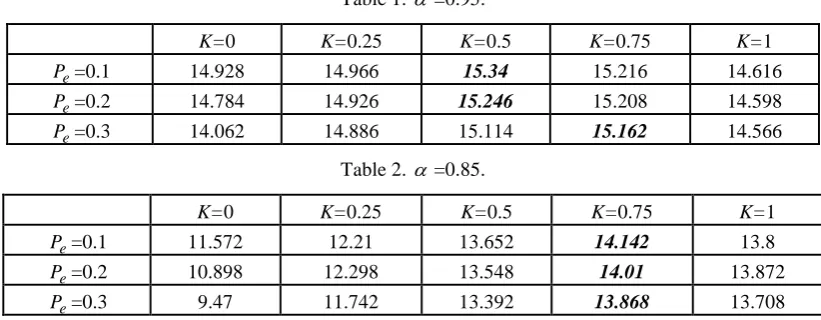
[image:4.595.91.502.614.774.2]The simulation results are as follows:
Table 1. =0.95.
K=0 K=0.25 K=0.5 K=0.75 K=1
e
P =0.1 14.928 14.966 15.34 15.216 14.616
e
P =0.2 14.784 14.926 15.246 15.208 14.598
e
P =0.3 14.062 14.886 15.114 15.162 14.566 Table 2. =0.85.
K=0 K=0.25 K=0.5 K=0.75 K=1
e
P =0.1 11.572 12.21 13.652 14.142 13.8
e
P =0.2 10.898 12.298 13.548 14.01 13.872
e
Table 3. =0.75.
K=0 K=0.25 K=0.5 K=0.75 K=1
e
P =0.1 6.734 9.008 10.506 11.478 12.106
e
P =0.2 5.288 8.696 10.358 11.46 11.774
e
P =0.3 4.782 8.426 10.154 11.138 11.846
From table 1, it can be seen that on condition that =0.95 (high communication reliability) and
e
P =0.1 or 0.2, the combat effect is worst when K=1 and the bestwhen K=0.5. It shows that it is more
conducive to achieve the combat purpose to adopt appropriate autonomous command mode when the communication reliability is good and the enemy's air defense ability is weak. The reason is the autonomous command has strong initiative and flexibility so that the red agents can grasp the grasp the opportunity. Although the overall coordination may not be as centralized as it is, due to the weakness of the air defense capability of the enemy, it just covers up the deficiency of autonomous command. With the increasing of Pe (Pe= 0.3), the defect of autonomous command mode begins to appear and it is necessary to increase the "concentration" to improve the overall combat effect of the formation, so the effect is the best when K= 0.75.
As can be seen from table 2, when = 0.85 (the communication reliability is general), compared with= 0.95, the communication between autonomous decision-making warships is not smooth and the cooperative operation effect decrease sharply. It is necessary to reduce the number of autonomous warships to improve the communication efficiency so as to improve the cooperative operation effect. At this time, the effect of the centralized / autonomous hybrid mode is the best when k = 0.75 no matter what the air defense capability of the enemy warship is.
It can be seen from table 3 that when= 0.75 (the communication reliability low) the coordination between autonomous warships is difficult to realize. At this time, it is not necessary to discuss the air defense capability of enemy warships the centralized command mode is the best.
Simulation Remarks
Based on the above analysis, the following conclusions can be drawn: when the communication reliability in the surface warship formation is well and the air defense capability of the enemy warship is weak, the centralized/autonomous hybrid command mode is the best (K0.5); such command mode can give full play to the advantages of strong initiative and flexibility in decision-making. And with the gradual enhancement of the air defense capability of the enemy, the concentration of the mixed command mode also needs to be increased. At this time, we should pay more attention to the overall operation of the formation so as to achieve saturated attack on the target, reduce the success probability of the air defense of the enemy target, and improve the effectiveness of the formation anti-ship operation [4].
When the communication reliability of surface warship formation is poor, no matter what the air defense capability of the enemy warship is, the centralized command is the best way. This is because there is cooperation among warships in the process of autonomous decision-making which needs to occupy more communication resources. In this case, the autonomous command mode is not conducive to the operation of each warship. The complete centralization mode can minimize the unnecessary information exchange among the warships and make full use of the overall role of the formation.
Conclusion
the relationship among single warship, build the corresponding network model and then optimize of formation combat network through the adaptability of agent so as to realize the optimization of the whole formation system structure.
Reference
[1] Guo Rui, Zhao Xiao-zhe. Complexity, Behavior Patterns, and Decision Making of Modern Sea Battle. Journal of System Simulation.2008.12. pp. 3074-3076.
[2] Ren Yiguang. Research on Methodology for Analyzing the Impact of Information Quality on the Operational Effects of Anti-Ship Missiles. National University of Defense Technology. 2007.
[3] Zhang Guo-ning, Shen Shou-lin, Zhu Jiang. Research on Complex Network Multi-Agent Modeling and Simulation of Joint Combat. Computer Simulation.2010.03. pp. 16-22