S T U D Y P R O T O C O L
Open Access
Pregabalin versus placebo in targeting
pro-nociceptive mechanisms to prevent chronic
pain after whiplash injury in at-risk
individuals
–
a feasibility study for a
randomised controlled trial
J. Nikles
1, G. Keijzers
2,3,4, G. Mitchell
5, S. Schug
6, R. Ware
7, S. A. McLean
8, L. Connelly
1,9,10, S. Gibson
11,
S. F. Farrell
1,7and M. Sterling
1,7*Abstract
Background:Whiplash-associated disorders (WAD) are an enormous and costly burden to Australian society. Up to 50% of people who experience a whiplash injury will never fully recover. Whiplash is resistant to treatment and no early management approach has yet been shown to prevent chronic pain. The early presence of central
sensitization is associated with poor recovery. Pregabalin’s effects on central sensitization indicate the potential to prevent or modulate these processes after whiplash injury and to improve health outcomes, but this has not been investigated. This paper describes the protocol for a feasibility study for a randomised controlled trial of pregabalin plus evidence-based advice compared to placebo plus evidence-based advice for individuals with acute whiplash injury who are at risk of poor recovery.
Methods:This double blind, placebo-controlled randomised feasibility study will examine the feasibility and potential effectiveness of pregabalin and based advice (intervention) compared to placebo and evidence-based advice (control) for individuals with acute whiplash injury at risk of poor recovery. Thirty participants (15 per group) aged 18–65 years with Grade II WAD, within 48 hours of injury and currently experiencing at least moderate pain (NRS:≥5/10) will be recruited from Emergency Departments of public hospitals in Queensland, Australia. Pregabalin will be commenced at 75 mg bd and titrated up to 300 mg bd as tolerated for 4 weeks followed by 1 week of weaning.
Results:The feasibility of trial procedures will be tested, as well as the potential effect of the intervention on the outcomes. The primary outcome of neck pain intensity at 3 months from randomisation will be compared between the treatment groups using standard analysis of variance techniques.
Discussion:Feasibility and potential effectiveness data will inform an appropriately powered full trial, which if successful, will provide an effective and cost-effective intervention for a costly and treatment resistant condition. It will also have implications for the early management of other traumatic conditions beyond whiplash.
(Continued on next page)
* Correspondence:[email protected] 1
Recover Injury Research Centre, NHMRC Centre of Research Excellence in Recovery Following Road Traffic Injuries, The University of Queensland, Herston, Australia
7Menzies Health Institute Queensland, Griffith University, Brisbane, Australia
Full list of author information is available at the end of the article
(Continued from previous page)
Trial registration:Clinical Trials Primary Registry: Australian and New Zealand Clinical Trials Registry. Clinical Trial Registration Number: ACTRN12617000059369.
Date of Registration: 11/01/2017.
Primary Trial Sponsor: The University of Queensland, Brisbane QLD 4072 Australia.
Keywords:Whiplash-associated disorders, Pregabalin, Randomised controlled trial, Feasibility study, Motor vehicle crash,
Background
In the majority of Western countries, whiplash is the most frequent injury resulting from a motor vehicle crash (MVC) [1]. MVCs result in 50 million injuries worldwide and nearly four million emergency depart-ment (ED) consultations in the US per year [2]. In Australia, non-hospitalised minor injuries such as whip-lash comprise about 72% of all survivable MVC injuries [3], with total annual costs of over $950 million [3]. The cumulative incidence of whiplash injuries resulting from MVCs has increased to over 300/100,000 people in North America and Western Europe since 1990 [4].
Up to 50% of people with whiplash injury will never fully recover [5] and up to 30% will remain moderately to severely disabled [5]. Most recovery, if it occurs, takes place in the first 2–3 months, after which time recovery plateaus [6, 7]. This indicates that early treatment will be crucial for better recovery; yet, existing early treatment approaches are inadequate. Although current clinical guidelines recommend exercise and maintaining activity for acute whiplash [8], several systematic reviews con-clude that exercise/activity-based interventions provide only small effects [9–11]. Early multidisciplinary man-agement (mainly physiotherapy and psychology) is also no more effective than usual care [12]. Behavioural inter-ventions, such as education and advice, also demonstrate only small effects [10]. The effectiveness of medication in the early treatment of whiplash has been flagged as an urgent research need for several years [13], including at the International Summit on Whiplash Injury in 2011 [14]. Our analysis of data from the multi-year Bettering the Evaluation and Care of Health (BEACH) study of General Practitioner (GP) activity in Australia found that medications are prescribed for most whiplash cases [15], yet a recent review found no studies to support the ef-fectiveness of any medication for whiplash-associated disorders (WAD) [16].
The most consistent predictor of poor recovery is higher initial levels of pain [17]. The early presence of pro-nociceptive mechanisms (widespread hyperalgesia, allodynia and spinal cord hyperexcitability (via nocicep-tive withdrawal reflexes) that does not accommodate within a few weeks) are also associated with poor recov-ery [18]. Some studies indicate that patients with these pro-nociceptive features do not respond as favourably to
physical rehabilitation as those without these features [19]. Addressing initial pro-nociceptive mechanisms in the early acute post injury stage may improve long-term outcomes for this patient group.
Pregabalin is an obvious medication choice for this purpose. It acts to reduce central sensitization and, if shown to be effective, would alleviate concerns about prescription opioids by reducing the incidence of chronic pain, and therefore the need for long-term opi-oid use. The use of opiopi-oids in this patient group is a concern; indeed, the misuse of prescription opioids in the US and Canada has been described as a public health crisis, with evidence that a similar problem is developing in Australia [20]. Our research has shown that 39% of prescribed medications for WAD in general practice were opioids [15], with US data showing that early provision of opioids in the hospital ED for MVC injury patients is associated with continued use 6 weeks later [21]. Both findings highlight a potential risk for opioid misuse in this patient group.
27]. Recent systematic reviews concluded that use of pregabalin yields reductions in chronic postsurgical pain, is more effective in surgical models associated with pro-nociceptive mechanisms [28], and shows promise in pre-venting the transition from acute to chronic pain [29, 30]. Notably, pregabalin has positive effects on anxiety [31], indicating the potential to ameliorate symptoms of stress and arousal common after whiplash injury [32].
While surgery differs from the pain due to musculo-skeletal injury in many ways, the pro-nociceptive mecha-nisms involved remain the same. Yet, despite this commonality, no studies have investigated effects of pregabalin following injury or trauma. Given the promis-ing results in surgical populations, there is sufficient evi-dence to support the hypothesis that pregabalin used in acute whiplash injury may prevent or modulate pro-nociceptive mechanisms and improve health outcomes for this treatment-resistant condition. In light of this, we propose to test the feasibility of conducting a clinical trial of pregabalin for individuals with acute whiplash in-jury at risk of developing chronic pain.
Initially, we will conduct a feasibility study to hone eli-gibility criteria, test recruitment strategies, and develop a model for recruitment for the subsequent full scale trial, which is endorsed by the Australian and New Zealand Musculoskeletal Clinical Trials Network.
Specific objectives
1. To evaluate feasibility by estimating expected rates of:
i. Recruitment (number of patients approached, number consenting to participate, and number eligible to be randomised)
ii. Missing data and participant attrition
2. To test recruitment strategies and develop a model for recruitment to a full trial
3. To identify relevant factors that could create barriers to subsequent study completion, and develop strategies to overcome these
4. To assess the potential effectiveness of pregabalin in reducing pain for patients with acute WAD at risk of poor recovery to determine the adequate sample size for a definitive full-scale effectiveness randomised controlled trial (RCT)
5. To obtain feedback from ED clinicians, local General Practitioners (GPs), trial GPs and patients on their experience with the trial and areas for improvement to inform a full-scale trial
The study will not attempt to provide evidence of clin-ical effectiveness for pregabalin in people with acute WAD. This is in accordance with the recommendations from the National Institute of Healthcare Research
(NIHR) guidelines [33] and the Consolidated Standards of Reporting Trials (CONSORT) for the development of pilot and feasibility studies [34].
Methods/design Design overview
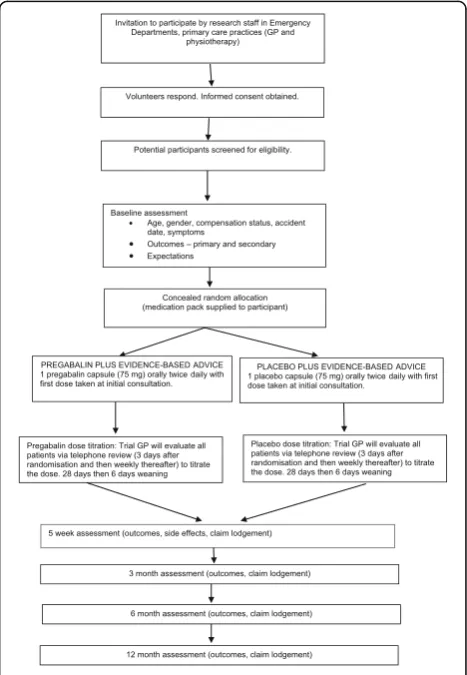
This is a double-blind, randomised, controlled feasibility study, with 30 voluntary participants (15 per group) with acute whiplash (symptoms < 48 hours) randomly allo-cated to receive either pregabalin and evidence-based advice, or placebo and evidence-based advice in a 1:1 ra-tio, for 4 weeks followed by 6 days of weaning. Out-comes will be measured at baseline, 5 weeks, and 3, 6 and 12 months post-randomisation. Study flow is illus-trated in Fig. 1.
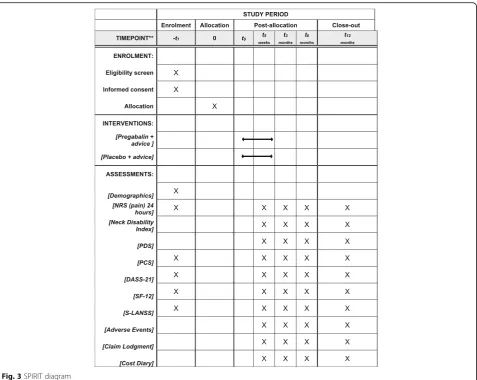
The protocol is reported according to the Standard Protocol Items: recommendations for randomized con-trolled trials (Fig. 3 SPIRIT diagram and Additional file 1: SPIRIT checklist).
[image:3.595.305.539.380.718.2]Setting
Public hospitals in Queensland, Australia (Gold Coast University Hospital (GCUH) and Ipswich Hospital), and nearby General Practice clinics.
Participants Inclusion criteria
Individuals with Grade II WAD and within 48 hours of injury
Currently experiencing at least moderate pain (visual analogue scale:≥5/10)
Aged 18–65 years
Proficient in written and spoken English
Exclusion criteria
Known or suspected serious spinal pathology (e.g. metastatic disease of spine)
Confirmed fracture or dislocation at time of injury (WAD IV)
WAD III (neurological compromise, e.g. decreased reflexes, muscle power)
Previous whiplash injury or neck pain condition requiring treatment
Patients using gabapentin/pregabalin Patients with known peripheral neuropathy Known hypersensitivity to pregabalin use (hives,
blisters, rash, dyspnea and wheezing) History of renal insufficiency
Women who are pregnant or breastfeeding History of psychiatric illness or substance abuse Patient Health Questionnaire (PHQ-2) of 3 or more
[35]
Inability to speak and write in English
Recruitment and procedure
Recruitment will be from EDs of public hospitals in Queensland, Australia. Research staff will regularly check the Emergency Department Information System (EDIS) and identify any potentially eligible patients. They will liaise with an ED doctor to ensure the patient’s his-tory and screening results are clear for study commence-ment. Eligible participants who present at ED when research staff are present will complete informed con-sent documentation after discussion with the ED doctor, fill out baseline measures, including expectations of re-covery, and then be randomly allocated to pregabalin plus based advice or placebo plus evidence-based advice.
If participants present at times when no research staff are in attendance, they will be asked by an ED doctor or nurse to provide written consent for the research team to contact them as soon as is practicable. If, when
contacted, these patients agree to be involved in the trial, they will be screened at a local GP clinic, provide in-formed consent after discussion with the GP, and then be randomised and provided with the first medication dose.
After discharge from ED, the trial GP will evaluate all patients via telephone review (3 days after randomisation and then weekly thereafter) to titrate the dose based on the patient’s tolerance and any adverse effects, and to promote retention. Participants will be offered an op-tional GP visit during the active intervention phase. Par-ticipants will also be able to contact the trial GP if they have questions regarding the medication dose or any side effects.
Strategies for reaching target sample size include employing casual staff to monitor EDIS for as much of the 24 hour day as possible, using a permission to con-tact process for patients arriving in ED when there are no research staff, regularly reminding ED nurses and cli-nicians about the trial, and maintaining a high profile of the trial in the ED.
Randomisation
Participants will be randomly allocated to either treat-ment group. The randomisation codes will be generated by the study statistician using computer-generated ran-dom numbers. The statistician will provide a ranran-domisa- randomisa-tion list in variable block sizes of 4–6 for the whole trial to the study dispensing pharmacy, unavailable to those who enrol participants. To balance potential con-founders and to conceal allocation, there will be separate randomisation schedules for each site. The randomisa-tion schedule, containing patient initials, date of birth and randomisation code, will be kept in a sealed enve-lope in a locked filing cabinet in the pharmacy, and will be accessible after hours in case unblinding is needed.
Study medication will be prepared according to the ran-domisation schedule by a pharmacist not involved with data collection, then sealed in an opaque medication kit and stored in a locked drug room in the ED or at the Gen-eral Practice. Allocation will occur immediately following baseline assessment. The doctor or nurse (blinded) will se-lect the next kit in the box, record the participant’s ran-domisation number and provide the sealed medication kit to the participant (blinded). This will randomise them to one of two groups–pregabalin or placebo– and ensure concealed allocation and blinding of research staff, trial GPs, participants, care providers, outcome assessors and data analysts. Participants will be considered to have en-tered the study when the kit is opened.
Study interventions
evidence-based advice only. All patients will receive a self-help re-source to aid recovery (evidence-based advice), which describes the most effective interventions currently available (reassurance and an active physical regime in-cluding exercises) [36], ensuring no patient is without any treatment.
Evidence-based advice
On randomisation, an evidence-based advice booklet
Whiplash Injury Recovery: A Self Help Guide (2ndedition) [36], based on recommendations of the current Austra-lian Guidelines for Whiplash Management, will be given to all patients. It provides information about whiplash, assurance about prognosis, advice to stay active and sume working, information on correct posture and re-suming functional daily activities and an exercise program proven to reduce neck pain.
Pregabalin or placebo
Pregabalin and placebo identical in size, appearance, smell, taste and weight (Avicel®) will be encapsulated by a compounding pharmacy to ensure blinding of research staff, participants, ED staff and trial GPs.
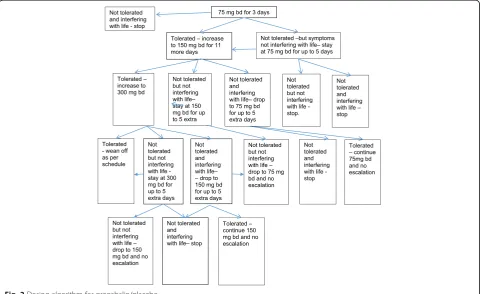
Dose titration Patients will receive one pregabalin cap-sule (75 mg) or one placebo capcap-sule orally twice daily starting immediately on randomisation. Figure 2
delineates the dose escalation/reduction/modification regimen, which is standard clinical practice, and has also been used in previous pregabalin trials [37, 38].
Rationale for duration of treatment There are no firm guidelines on treatment duration. Surgical studies have used pregabalin for 10 days to 2 weeks post-operatively [30]. For chronic neuropathic pain, 2–4 weeks of treat-ment is recommended [39]. In a recent trial, patients with sciatica were treated for up to 8 weeks [25]. To avoid missing benefit we will give 28 days of treatment before weaning.
Concomitant medications
Participants will be asked not to seek other treatments and where possible not to change current medications, and GPs will be asked within reason to refrain from re-ferring or suggesting additional or alternative treatments. All participants will maintain diaries in which they will record information about other treatments and medica-tion taken. During the trial, GP’s calls to patients, all medications and doses will be recorded, including pre-scription and over-the-counter medications and natural health products, to be included in the analysis. At the end of 5 weeks, participants will be permitted to seek further treatment (e.g. additional medication,
[image:5.595.58.542.428.722.2]physiotherapy, etc.) if required, information about which will be recorded in cost diaries during follow-up.
Breakthrough medication
Participants who experience high levels of continuing or worsening pain will be able to return for review by the trial GP. If there is debilitating continuing and worsen-ing pain or continuworsen-ing high levels of pain that have not improved after 7 days of treatment, despite following the trial regimen, rescue medication (Paracetamol 1000 mg qid prn or oxycodone 5 mg prn if paracetamol is not sufficient) will be provided by the trial GP. These medi-cations are consistent with current clinical practice guidelines for WAD management [8]. Ancillary and post-trial care will be provided by the patient’s GP.
Adherence to study medication
Adherence will be assessed by (1) daily self-recorded medication intake, (2) counts of returned tablets follow-ing treatment completion and (3) the trial GP will ask about adherence during telephone-based reviews starting at 3 days post randomisation. Adherence will be encour-aged during weekly phone calls to participants. There will be full accountability for all drugs given to patients.
Study outcome measures
Primary outcome
1. Average neck pain intensity over the last 24 hours at 3 months post randomisation measured using the Numeric Pain Rating Scale (NRS) [40] of 0–10. Secondary outcomes: feasibility
1. Proportion of screened patients eligible 2. Proportion of eligible patients enrolled 3. Enrolment rate (i.e. number of enrolments per
month per site) 4. Protocol compliance
5. Logistic model for recruitment to a full trial, including staffing requirements, and strategies to overcome any barriers identified, for example, recruiting through GP practices using the
‘permission to contact’system for patients who have presented to ED, if recruitment is easier than through EDs directly
6. Feedback from ED clinicians, local GPs, trial GPs and patients on their experience with the trial and areas for improvement, to inform a full scale trial Secondary outcomes: clinical
1. Neck pain intensity (NRS 24 hours) at 5-week and 6- and 12-month follow-ups post randomisation 2. Neck Disability Index (NDI) [41] at 5 weeks, 3, 6
and 12 months to measure disability
3. Pain Catastrophising Scale (PCS) [42] at 5 weeks, 3, 6 and 12 months to measure pain catastrophising
4. Post-traumatic Stress Diagnostic Scale (PDS) symptom score [43] at 5 weeks, 3, 6 and 12 months to measure post-traumatic stress symptoms
5. Depression, Anxiety and Stress Scale (DASS) [44] at 5 weeks, 3, 6 and 12 months
6. Generic measure of health status scores (SF-12) [45] at 5 weeks, 3, 6 and 12 months
7. Proportion of patients who lodge a compensation claim at 5 weeks, 3, 6 and 12 months
8. Number of doses of breakthrough medication taken measured at 5 weeks, 3, 6 and 12 months
9. Number of adverse events compared between treatment groups
10.S-LANSS [46] during follow-up from baseline, com-pared between treatment groups
Outcome measures have established reliability and val-idity, are recommended by the International Whiplash Summit [14] and the Bone and Joint Decade Neck Pain Task Force [47], and follow IMMPACT recommenda-tions for design of clinical trials for chronic pain preven-tion [48].
The Recommendations for Interventional Trials (SPIRIT) figure demonstrates the timing of the interven-tions and outcomes (Fig. 3).
Sample size
Since this is a feasibility study, a sample size calculation was not performed. We will aim for 30 participants (15 in each arm) as this will be a large enough sample to in-form about the practicalities of delivering the interven-tion in the ED, recruitment, uptake and attriinterven-tion. The results of this study will inform any necessary post-trial modifications or remodelling prior to implementation of a larger scale multisite RCT.
Loss to follow-up
This feasibility study aims to assess attrition rates for a fu-ture large RCT. In order to reduce attrition, we will aim to foster trusting relationships via weekly telephone calls to help participants feel engaged in the study. This will also improve adherence to intervention protocols. If partici-pants discontinue or deviate from intervention protocols, we will attempt to collect at least the primary outcome.
Unblinding
The Principal Investigator will be able to unblind indi-vidual cases if any of the following criteria are met:
1. Emergency unblinding–to make a clinical treatment decision or when an unexpected serious adverse event occurs
3. At the conclusion of the study to determine the potential effect of intervention
If a medically qualified investigator requires identifica-tion of the trial medicaidentifica-tion composiidentifica-tion, they must quote the randomisation code, participant initials and date of birth to the Principal Investigator, who will con-tact the pharmacy and quote the randomisation code and trial title. The pharmacy will unblind for the specific participant only. The medically qualified investigator will talk to and unblind the participant.
Data management
This trial will be conducted in accordance with ICH Guide-lines for Good Clinical Research Practice [49] and relevant local ethical regulations. Study data will be collected and managed using a regulatory approved electronic data cap-ture system (REDCap) hosted at UQ [50], on the UQ server. REDCap is a secure, web-based application designed to sup-port data capture for research studies, that will house all clinical and safety data. It will provide (1) an intuitive
interface for validated data entry; (2) audit trails for tracking data manipulation and export procedures; (3) automated ex-port procedures for seamless data downloads to common statistical packages; and (4) procedures for importing data from external sources.
Data from follow-up questionnaires will be entered by pa-tients via email links to the REDCap database, and the remaining data by the research team. Data quality will be assured through range checks for data values. Integrity of trial data will be monitored by regularly scrutinising data for omissions and errors. In order to protect confidentiality before, during and after the trial, personal information about potential and enrolled participants will remain secure in a locked research office at GCUH or Ipswich Hospital. Study data will be retained, securely password protected, for a minimum of 15 years from completion. Details of data management procedures can be found in the protocol.
Data analyses
Because of participant numbers and the aims of the study, we will report descriptive analyses. Recruitment
[image:7.595.61.539.86.466.2]rate (number of patients approached, number consent-ing to participate and number eligible to be randomised) will be reported, as will frequencies and proportions of missing data and participant attrition, both during inter-vention and follow-up periods.
A model for recruitment to the main trial will be de-scribed, including the success of various recruitment strat-egies, for example, is recruitment easier though EDs or through GP practices using the‘permission to contact’ sys-tem? It will also include how the ED and general practice sites worked together, how to maximise research staffing efficiency in terms of rostering, etc. Relevant factors that could create barriers to subsequent study completion will be described, and strategies to overcome these discussed.
Statistical analysis
Trends in the data will be analysed by our biostatistician blinded to group allocation using intention-to-treat. We will analyse the effect of treatment separately for each outcome using mixed-effects models with random inter-cepts for individuals to account for correlation of re-peated measures within participants. Treatment group will be included as a fixed effect. We will obtain esti-mates of the effect of the intervention and 95% confi-dence intervals by constructing linear contrasts to compare the adjusted mean change (continuous ables) or difference in proportions (dichotomous vari-ables) in outcome from baseline to each time point between the pregabalin plus evidence-based advice and placebo plus evidence-based advice groups. Missing data will be examined for patterns of missingness.
Secondary outcomes
Because of participant numbers, we will present descrip-tive analyses of the secondary outcomes.
Cost related data and analyses
Cost diaries, a reliable and valid tool for determining costs in cost-effectiveness research [51], will be collected at each follow-up assessment. In this study we will test the feasibility of using these diaries.
Direct costs (e.g. general practitioner, physiotherapy, chiropractor, pharmaceutical services) will be calculated using market prices estimated from Medicare Benefits Schedule, worker’s compensation scheme payment schedules and Pharmaceutical Benefits Scheme. Direct healthcare costs (e.g. consumer co-payments) and non-healthcare costs not captured by insurer payments, will be identified. Examples include other professional care, transportation costs and time spent by family members or volunteers providing care.
Indirect costs include lost economic productivity due to the injury. A shadow wage rate will be used to identify opportunity costs of time spent away from work,
calculated using income and employment data collected at baseline. Utility weights will be generated using par-ticipants’ SF-12 responses, translated to SF-6D utilities [52] using a new Australian algorithm [53]. The resulting cost-effectiveness measure will be cost per QALY saved.
N-way sensitivity analyses will model second-order un-certainty (e.g. magnitudes of probabilities, treatment ef-fects) where appropriate.
Monitoring
Collecting, assessing, reporting and managing adverse events
The most common side effects of pregabalin are dizzi-ness and sedation; the dose will be titrated as tolerated. Leg oedema can also develop and may require discon-tinuation. More severe side-effects are rare.
Information about solicited and spontaneously re-ported adverse events will be sought from all partici-pants during telephone reviews by the trial GP. If a participant reports an adverse event, the trial GP will de-termine appropriate action, which may include dose al-teration or withdrawal. If a serious adverse event (SAE) is identified, the trial GP will forward this information immediately to the Principal Investigator and Data Safety Monitoring Board. All SAEs, suspected adverse reactions and serious unexpected suspected adverse re-actions will be recorded immediately in the source docu-ments, and on the adverse event case report form. Each event will be followed until resolution, stabilisation or until it has been determined that the study treatment is not causal. SAEs still ongoing at the end of the study will be followed up to determine final outcome. Any SAE oc-curring after the study considered to be possibly related to study treatment will be recorded and reported imme-diately. Compensation to those who suffer harm from trial participation will be provided by the trial sponsor.
Withdrawals
Participants will be withdrawn if they develop any exclu-sion criteria or if they choose to do so, without prejudice to current or future management. The follow-up schedule will continue unchanged for all randomised participants unless a participant chooses to withdraw from follow-ups. If participants cannot complete follow-up outcome mea-sures online or on paper, or are lost-to-follow-up and/or are non-compliant with dosing, we will employ phone calls, home visits and/or communication with their GP. Patients who withdraw during dosing will be made aware of the need for weaning from study medication.
Dissemination
Discussion
Chronic pain and disability following whiplash injuries is an enormous health and economic burden for Australia and other industrialised countries. Current treatments offer only modest benefit. This feasibility study will as-sess the feasibility and potential effectiveness of an in-novative early intervention delivered to ‘high-risk’ individuals in EDs. Feasibility and potential effectiveness data will inform a full trial, which if successful, will pro-vide an effective and cost-effective intervention with im-mediate clinical applicability for a costly and treatment resistant condition. It will also have implications for early management of other traumatic conditions.
The protocol was developed for an‘at risk’population by a team including a physiotherapist, pain specialist, ED clinician researcher, GP, clinical psychologist and biostatistician.
The primary effectiveness measure is neck pain inten-sity at 3 months from randomisation for this feasibility study. Measuring this at 3, 6 and 12 months will allow assessment of any sustained effect on outcomes. In the feasibility trial described here, the study will not be pow-ered to assess these potential effects, but will allow ne-cessary post-trial modifications that will maximise effectiveness of the trial to be implemented prior to the rollout of a larger scale multisite RCT.
Strengths
This study has been designed and is being conducted in accordance with the principles of the Declaration of Helsinki (1996), Good Clinical Practice and all applicable regulatory requirements. This will increase validity, par-ticipant safety and scientific integrity as well as reduce bias. The Trial Steering Committee, which includes key study investigators, will ensure that study quality is maintained throughout.
Limitations
Recruiting through EDs means that our cohort of pa-tients will not be entirely representative of the entire population of whiplash patients. However, by recruiting participants through EDs, we will be most likely to enrol participants with greater pain and distress and therefore at higher risk of poor recovery–the very group we aim to target. Data from our current trials [54] would sup-port this, where patients with acute injury recruited from ED reported average higher pain levels (6.2 ± 1.5) compared to those recruited from primary care and ad-vertisement (4.5 ± 1.0). In addition, we aim to reduce central sensitization beginning in the early aftermath of injury, and ED recruitment allows us to recruit patients within hours of MVC.
Trial status
Protocol version 8 is dated July 2017. Recruitment began on 20 January 2017 and is ongoing. Important protocol modifications (e.g. changes to eligibility criteria, out-comes, analyses) will be communicated to relevant parties (e.g. investigators, Human Research Ethics Committees, trial participants, trial registries, journals, regulators) as needed.
Additional file
Additional file 1:SPIRIT checklist. (DOC 120 kb)
Abbreviations
AE:adverse event; DASS: Depression, Anxiety and Stress Scale; ED: emergency department; EDIS: emergency department information systems; GCUH: Gold Coast University Hospital; GP: general practice; MVC: motor vehicle crash; NDI: Neck Disability Index; PCS: Pain Catastrophising Scale; PDS: Post-traumatic Stress Diagnostic Scale; SAE: serious adverse event; S-LANSS: Self-report–Leeds Assessment of Neuropathic Symptoms and Signs Pain Scale; WAD: whiplash-associated disorders
Acknowledgements
We would like to thank Subaat Khan, Diluka De Silva, Chris Heenan, Jasmine Wadham, Jo Sterling, and Annick Maujean for their contributions to the study.
Funding
The trial is funded by NHMRC CRE in Road Traffic Injury Recovery, Menzies Health Institute Queensland, Griffith University and the Emergency Medicine Foundation, Queensland. The sponsor and external funding bodies had no role in the design of the study and will have no role in the collection, management, analysis and interpretation of data; preparation of the manuscript; or the decision to submit the report for publication.
Availability of data and materials Not applicable.
Composition, roles and responsibilities
Coordinating centre–Recover Injury Research Centre, The University of Queensland
Steering committee–MS, JN, GK, SF, GM
Endpoint adjudication committee (Data Safety Monitoring Board)–Paul Gray, David Taylor, James McGree
Data management team–MS, JN
Authors’contributions
MS: Designed the protocol; coordinating principal investigator; contributed expertise in physiotherapy and whiplash injury, drafted and critically revised manuscript. SM: Input to design of study; contributed emergency medicine research expertise. SS: Input to design of study; expertise in anaesthesiology and pain specialist. GM: Input to design of study; contributed expertise in general practice and primary care research. SG: Input to design of study in relation to expertise in psychological measures. LC: Health economics design and analysis; expertise in health economics. JN: Setup of study; drafted and revised the manuscript. GK: Input to design of study; contributed emergency medicine research expertise. SF: Setup of study and recruitment. RW: Input to statistical aspects of design of study; expert in biostatistics. All authors contributed to and approved the final manuscript.
Ethics approval and consent to participate
will be obtained by doctors (ED clinicians or GPs) from potential trial participants prior to inclusion in the study. Prior to obtaining consent, doctors will inform potential participants of the purposes, methods, possible risks and benefits of participating in the study. https://www.anzctr.org.au/ Trial/Registration/TrialReview.aspx?id=372070.
Consent for publication Not applicable.
Competing interests
The authors declare that they have no competing interests.
Publisher’s Note
Springer Nature remains neutral with regard to jurisdictional claims in published maps and institutional affiliations.
Author details
1Recover Injury Research Centre, NHMRC Centre of Research Excellence in
Recovery Following Road Traffic Injuries, The University of Queensland, Herston, Australia.2Department of Emergency Medicine, Gold Coast Hospital and Health Service, Gold Coast, Queensland, Australia.3School of Medicine,
Bond University, Gold Coast, QLD, Australia.4School of Medicine, Griffith
University, Gold Coast, QLD, Australia.5Faculty of Medicine, The University of
Queensland, Herston, Australia.6School of Medicine and Pharmacology, The University of Western Australia, Perth, Australia.7Menzies Health Institute
Queensland, Griffith University, Brisbane, Australia.8Institute for Trauma
Recovery, Department of Anesthesiology, University of North Carolina School of Medicine, Chapel Hill, USA.9Centre for the Business and Economics of Health, University of Queensland, Brisbane, Australia.10Dipartimento di
Sociologia e Diritto dell’Economia, University of Bologna, Bologna, Italy.
11Caulfield Pain Management and Research Centre, Melbourne, Australia.
Received: 24 October 2017 Accepted: 3 January 2018
References
1. Berglund A, Alfredsson L, Jensen I, Bodin L, Nygren A. Occupant- and crash-related factors associated with risk of whiplash injury. Ann Epidemiol. 2003; 13:66–72.
2. Niska R, Bhuiya F, Xu J. National Hospital Ambulatory Medical Care Survey: 2007 emergency department summary. Natl Health Stat Report. 2010;26:1–31. 3. Connelly LB, Supangan R. The economic costs of road traffic crashes:
Australia, states and territories. Accid Anal Prev. 2006;38:1087–93. 4. Holm LW, Carroll LJ, Cassidy JD, et al. The burden and determinants of neck
pain in Whiplash associated disorders after traffic collisions, results of the Bone and Joint Decade 2000–2010 Task Force on Neck pain and its Associated Disorders. Spine. 2008;33(4 Suppl):S52–9.
5. Carroll L, et al. Course and prognostic factors for neck pain in WAD. Spine. 2008;33:583–92.
6. Sterling M, Hendrikz J, Kenardy J. Compensation claim lodgement and health outcome developmental trajectories following whiplash injury: A prospective study. Pain. 2010;150(1):22–8.
7. Casey PP, Feyer AM, Cameron ID. Course of recovery for whiplash associated disorders in a compensation setting. Injury. 2015;46(11):2118–29. 8. State Insurance Regulatory Authority: Guidelines for the management of
acute whiplash-associated disorders–for health professionals, third edition. Sydney: 2014.
9. Southerst D, Nordin MC, Cote P, et al. Is exercise effective for the management of neck pain and associated disorders or whiplash-associated disorders? A systematic review by the Ontario Protocol for Traffic Injury Management (OPTIMa) Collaboration. Spine J. 2016;16(12):1503–23. 10. Wiangkham T, Duda J, Haque S, Madi M, Rushton A. The effectiveness of
conservative management for acute whiplash associated disorder (WAD) II: a systematic review and meta-analysis of randomised controlled trials. PLoS One. 2015;10(7):e0133415.
11. Teasell R, McClure J, Walton D, et al. A research synthesis of therapeutic interventions for whiplash-associated disorder (WAD): part 2 - interventions for acute WAD. Pain Res Manage. 2010;15(5):295–304.
12. Jull G, Kenardy J, Hendrikz J, Cohen M, Sterling M. Management of acute whiplash: A randomized controlled trial of multidisciplinary stratified treatments. Pain. 2013;154:1798–806.
13. Jull G, et al. Towards optimal early management after whiplash injury to lessen the rate of transition to chronicity. Spine. 2011;36:s275–87. 14. Sterling M, Carroll LJ, Kasch H, Kamper SJ, Stemper B. Prognosis after
whiplash injury: where to from here? Discussion paper 4. Spine (Phila Pa 1976). 2011;36(25 Suppl):S330–4.
15. Nikles J, Yelland M, Bayram C, Miller G, Sterling M. Management of whiplash associated disorders in Australian general practice. BMC Musculoskelet Disord. 2017;18(1):551.
16. Curatolo M. Pharmacological and interventional management of pain after whiplash injury. J Orthop Sports Phys Ther. 2016;46(10):845–50.
17. Walton D, Carroll L, Kasch H, et al. An overview of systematic reviews on prognostic factors in neck pain: Results from the International Collaboration on Neck Pain (ICON) project. Open Orthop J. 2013;7:494–505.
18. Sterling M. Differential development of sensory hypersensitivity and a measure of spinal cord hyperexcitability following whiplash injury. Pain. 2010;150:501–6.
19. Jull G, Sterling M, Kenardy J, Beller E. Does the presence of sensory hypersensitivity influence outcomes of physical rehabilitation for chronic whiplash? - A preliminary RCT. Pain. 2007;129(2):28–34.
20. Dobbin M. Pharmaceutical drug misuse in Australia. Aust Prescr. 2014;37(3):79–81. 21. Beaudoin FL, Gutman R, Merchant RC, et al. Persistent pain after motor
vehicle collision: comparative effectiveness of opioids vs nonsteroidal anti-inflammatory drugs prescribed from the emergency department-a propensity matched analysis. Pain. 2017;158(2):289–95.
22. Harris R, Napadow V, Huggins J, et al. Pregabalin rectifies aberrant brain chemistry, connectivity and functional response in chronic pain patients. Anesthesiology. 2013;119(6):1453–64.
23. Moore R, Staube S, Wiffen P, Derry S, McQuay H. Pregabalin for acute and chronic pain in adults. Cochrane Database Syst Rev. 2009;3:CD007076. 24. Mathieson S, Maher C, McLachlan A, et al. Trial of pregabalin for acute and
chronic sciatica. N Engl J Med. 2017;376:1111–20.
25. Buvanendran A, et al. Perioperative oral pregablin reduces chronic pain after total knee arthroplasty: a prospective randomized controlled trial. Anesth Analg. 2010;110(1):199–207.
26. Burke S, Shorten G. Perioperative pregabalin improves pain and functional outcomes 3 months after lumbar discectomy. Anesth Analg. 2010;110:1180–5.
27. Khurana G, et al. Postoperative pain and long term functional outcome following administration of gabapentin and pregabalin in patients undergoing spinal surgery. Spine. 2014;39(6):E363–8. https://doi.org/10.1097/ BRS.0000000000000185.
28. Eipe N, et al. Perioperative use of pregabalin for acute pain-a systematic review and meta-analysis. Pain. 2015;156:1284–300.
29. Clarke H, et al. The prevention of chronic postsurgical pain using gabapentin and pregabalin: a combined systematic review and meta-analysis. Anesth Analg. 2012;115(2):428–42. https://doi.org/10.1213/ANE. 0b013e318249d36e.
30. Mishriky BM, et al. Impact of pregabalin on acute and persistent postoperative pain: a systematic review and meta-analysis. Br J Anaesth. 2015;114:10–31.
31. Feltner D, et al. Efficacy of pregabalin in generalized social anxiety disorder. Int Clin Psychopharmacol. 2011;26:213–20.
32. Sterling M, Hendrikz J, Kenardy J. Similar factors predict disability and PTSD trajectories following whiplash injury. Pain 2011;152(6):1272–8.
33. National Institutes of Health Research. NIHR Research for Patient Benefit (RfPB) Programme Guidance on Applying for Feasibility Studies. 2017. https://www.nihr.ac.uk/funding-and-support/documents/funding-for-research-studies/research-programmes/RfPB/Guidance%20Documents/ Guidance_on_feasibility_studies.pdf. Accessed August 2017.
34. Eldridge S, Chan C, Campbell M, Bond C, Hopewell S, Thabane L, Lancaster G, on behalf of the PAFS consensus group. CONSORT 2010 statement: extension to randomised pilot and feasibility trials. BMJ. 2016;355:i5239. https://doi.org/10.1136/bmj.i5239.
35. Kroenke K, Spitzer RL, Williams JB. The Patient Health Questionnaire-2: validity of a two-item depression screener. Med Care. 2003;41(11):1284–92. 36. Jull G, Sterling M. Whiplash Injury Recovery: A Self Help Guide. The University of Queensland. 2015. https://maic.qld.gov.au/wp-content/uploads/2016/02/ Whiplash-Injury-Recovery-booklet-2015.pdf. Accessed August 2017. 37. Gray P, et al. Pregabalin in severe burn injury pain. Pain. 2011;152:1279–88. 38. Siddall P, et al. Pregabalin in central neuropathic pain associated with spinal
39. Toth C. Pregabalin: latest safety evidence and clinical implications for the management of neuropathic pain. Ther Adv Drug Safety. 2014;5:38–56. 40. Williamson A, et al. Pain: a review of three commonly used pain rating
scales. J Clin Nurs. 2005;14:798–804.
41. Vernon H, Mior S. The Neck Disability Index: a study of reliability and validity. J Manipulative Physiol Ther. 1991;14:409–15.
42. Sullivan M, Bishop S, Pivik J. The pain catastrophizing scale: development and validation. Psychol Assess. 1995;7:524–32.
43. Foa E. Posttraumatic Stress Diagnostic Scale: Manual. Minneapolis: NCS Pearson; 1995.
44. Lovibond S, Lovibond P. Manual for the Depression Anxiety Stress Scales. 2nd ed. Sydney: Psychology Foundation; 1995.
45. Ware JE, Kosinski M, Keller SD. A 12-item Short-Form Health Survey: construction of scales and preliminary tests of reliability and validity. Med Care. 1996;34:220–33.
46. Bennett MI, Smith BH, Torrance N, Potter J. The S-LANSS score for identifying pain of predominantly neuropathic origin: validation for use in clinical and postal research. J Pain. 2005;6(3):149–58.
47. Haldeman S, Carroll L, Cassidy D, Schubert J, Nygren A. The Bone and Joint Decade 2000–2010. Task Force on Neck Pain and Its Associated Disorders. Eur Spine J. 2008;17 Suppl 1:5–7.
48. Gewandter JS, et al. Research design considerations for chronic pain prevention clinical trials: IMMPACT recommendations. Pain. 2015;156:1184–97. 49. Note for Guidance on Good Clinical Practice (CPMP/GCP/135/95) and Note for Guidance on Good Clinical Practice (CPMP/GCP/135/95) annotated with Therapeutic Goods Administration (TGA) comments (DSEB, July 2000). https://www.tga.gov.au/sites/default/files/ich13595an.pdf.
50. Harris P, Taylor R, Thielke R, Payne J, Gonzalez N, Conde J. Research electronic data capture (REDCap) - A metadata-driven methodology and workflow process for providing translational research informatics support. J Biomed Inform. 2009;42(2):377–81.
51. Goossens M, Rutten-van Mölken M, Vlaeyen J, van der Linden S. The cost diary: a method to measure direct and indirect costs in cost-effectiveness research. J Clin Epidemiol. 2000;53(7):688–95.
52. Brazier J, et al. The estimation of a preference-based measure of health from the SF-36. J Health Econ. 2002;21(2):271–92.
53. Norman R, et al. Valuing SF-6D health states using a discrete choice experiment. Med Decis Mak. 2014;34(6):773–86.
54. Ritchie C, Kenardy J, Smeets R, Sterling M. StressModEx–Physiotherapist-led Stress Inoculation Training integrated with exercise for acute whiplash injury. J Physiother. 2015;61:157.
55. Chan A-W, Tetzlaff JM, Altman DG, Laupacis A, Gøtzsche PC, Krleža-JerićK, Hróbjartsson A, Mann H, Dickersin K, Berlin J, Doré C, Parulekar W, Summerskill W, Groves T, Schulz K, Sox H, Rockhold FW, Rennie D, Moher D. SPIRIT 2013 Statement: Defining standard protocol items for clinical trials. Ann Intern Med. 2013;158:200–7.
• We accept pre-submission inquiries
• Our selector tool helps you to find the most relevant journal
• We provide round the clock customer support
• Convenient online submission
• Thorough peer review
• Inclusion in PubMed and all major indexing services
• Maximum visibility for your research Submit your manuscript at
www.biomedcentral.com/submit