458
THE ROLE OF INFORMATION TECHNOLOGY TO IMPROVE
LECTURER PERFORMANCE
MARISA KARSEN, SISWONO, WIDIANTY
Bina Nusantara University, Department of Information Systems, Jakarta – 11480, Indonesia
E-mail: [email protected], [email protected], [email protected]
ABSTRACT
Information technology (IT) has important roles in education industry, especially to improve teaching and learning process. The existence of internet as an information provider has opened the horizon about the growth of IT. Nowadays, students already know about the latest technology and how to use it, but the problem is some of lecturers still don’t update about technology, especially to improve teaching and learning process, such as multimedia, animation, etc. By using IT, lecturer can perform in better way to delivery materials to the students. This paper discusses several tools of IT that have been used and haven’t use by lecturers in class and to interact with students outside class. This study conducted by interview and survey to several lecturers at some private universities in Jakarta to know about IT implementation in universities and come up with the alternatives of IT tools and training to improve lecturers performance that can help the learning process as well as the overall faculty performance. If lecturers understand how to use IT tools optimally, they and can create new trend as technological advances in education industry. The conclusion is that information technology has huge impact to improve lecturer performance in delivering
materials to the students that can improve the quality of the students.
Keywords: Information Technology, Universities, Lecturer Performance
1. INTRODUCTION
Education industry is one of important industries in communities. Education industry has important roles to improve human resources quality. To perform better teaching and learning process, we need to use IT as tools for teacher and lecturers in delivering materials to the students. According to Ostewalder and Pigneur, Information System is defined as the combination of technology (the “what”), people (the “Who”), and process (the “How”) that an organization uses to produce and manage information [1]. Pearson and Saunders, IT is all forms of technology used to create, store, exchange, and use information [2]. IT can display visualization and graphic, thus can facilitate communication among education components in effective and efficient. [3]
Lecturer is professional educator and researcher who have main responsibility to transform, develop, and disseminate IT through education, research, and community services. Lecturer has important roles in adopt and implement IT because lecturers are the key of teaching and learning process. Lecturers have to be creative and innovative in delivering materials to the students,
so teaching and learning process will become more interesting for the students. The quality of teaching and learning process is ultimately determined by the quality of lecturers and students, because students’ knowledge will used as tools to improve scientific attitude of students [4].
459 must be achieved by someone) and (b) competence (how does one achieve it). The Lecturer’s performance standards also include the aspect of using a variety of media to learn, to clarify, and generate student interest in learning [5]. Also Innovation and creativity is the one of performance dimensions for a university lecturer’s job
Innovation [6]., so university should make several
trainings for lecturers, especially in IT to improve lecturer’s performance After trainings, we hope lecturer can use variation of media on teaching and learning process.
Maharsi defined several factors that can be constraints for lecturer performance as : (1) lack of financial compensation; (2) improper performance grading; (3) distrust lecturer on university leader; (4) unmotivated lecturer;(5) improper lecturer recruitment, selection, and placement; (6) lack of lecturer understanding about stakeholders’ request; (7) unclear lecturer performance standard; (8) inaccuracy in quality standard execution; (9) ineffective teamwork among lecturers; (10) ineffective management between major and university’s foundation; (11) lecturer resistance of change; (12) ineffective communication and information dissemination; (13) activities planning not related with university needs; (14) lack of lecturer training. Maharsi also did research about lecturers’ performance in three government polytechnics in Semarang, Bandung, and Jakarta and came up with not good and good criteria of performance [7].
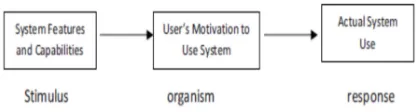
Improving productivity in university is for lecturers and students. IT has big impact to improve lecturer performance in delivering materials to the students, because IT can make the materials became more interesting to learn. To success implement IT in university, lecturers should want to learn and use new IT to support teaching and learning process. According to Chuttur [8], there is user acceptance technology principle, as shown in Figure 1.
Figure 1 : User Acceptance of Technology Principle
User acceptance is the desire of a group of users to use IT that design to help their job. Lack of user
acceptance can make information system
implementation fail. So, user acceptance must be considers as one of the main factors to determine success or fail of information system project [9].
Nowadays, IT trend in university is e-learning and innovation from e-learning itself, but some universities still facing problems to implement e-learning, such as IT infrastructure, faculty,
technology implementation satisfaction, and
graduates competency. For universities that already implement e-learning also facing problems in
delivering materials, effectively, and user
acceptance to use e-learning itself. In this case, technology acceptance model (TAM) is important for lecturers and students [10]. There are also several IT tools that commonly used by lecturers for teaching such as presentation slide, internet, video, and animation. Thus email and mobile application also use to connect lecturers and students outside classroom. If lecturers can use various IT to support teaching and learning process, it can improve lecturers’ performance to produce high quality of students that can improve graduate competency.
The benefits of this paper are: (1) Provide empirical evidence regarding the use of information technology in teaching and learning process of the current faculty; (2) Provide inputs to the university in the preparation of a strategic implementation plan information technology, particularly with respect to improved performance of Lecturers. The research in this paper is limited to only a few private universities in Jakarta as a representative Universities in big city, while universities in remote areas are not included in the scope of this paper.
2. RESEARCH METHOD
[image:2.595.80.289.607.663.2]460
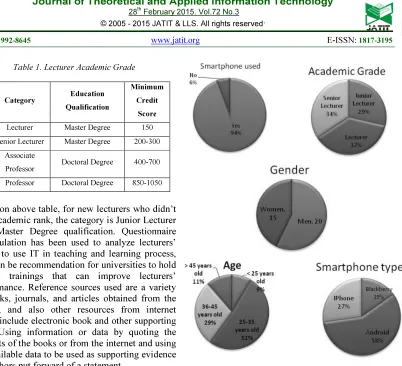
Table 1. Lecturer Academic Grade
Based on above table, for new lecturers who didn’t have academic rank, the category is Junior Lecturer with Master Degree qualification. Questionnaire recapitulation has been used to analyze lecturers’ ability to use IT in teaching and learning process, thus can be recommendation for universities to hold several trainings that can improve lecturers’ performance. Reference sources used are a variety of books, journals, and articles obtained from the library, and also other resources from internet which include electronic book and other supporting sites. Using information or data by quoting the contents of the books or from the internet and using the available data to be used as supporting evidence the authors put forward of a statement.
3. RESULTS AND ANALYSIS
Based on the previous research about
performance measurement dimensions for lecturer at selected universities which concern on performance dimensions of the lecturer’s job and come up with performance dimensions design [6], this research is quite different because we focus on IT training recommendation for lecturers to improve lecturer’s performance in teaching and learning process.
From the questionnaire recapitulation, 89% lecturers already use IT to interact with students, but only 29% that used social media and video for teaching. In this case, 60% lecturers still didn’t familiar in using social media and video for teaching. Here is the detail of questionnaire recapitulation.
Figure 2: Respondents Profile
Most of lecturers are middle-age lecturers, which are 25-35 years old, while most of the academic grades are Lecturers and 94% already used Smartphone. Based on this data, we can assume
that the middle-age lecturers mostly are
Smartphone users that using android as their Smartphone (58%). Next, we want to know about the lecturers experience in using IT on teaching and learning process:
No. Category Education
Qualification
Minimum
Credit
Score
1 Lecturer Master Degree 150
2 Senior Lecturer Master Degree 200-300
3 Associate
Professor Doctoral Degree 400-700
461
[image:4.595.82.291.111.372.2]
Figure 3: Lecturer Experience in Using IT
From Figure 3, 94 % lecturers already used in-focus and computer on teaching process, and 69 % of them already used Microsoft Power Point (with animations and Hyperlink) and internet (social media and video) In this case, there are 30% lecturers still need IT training to improve their skills to use IT on teaching process. Next we will analyze the technology that already used by the lecturers to interact with students:
[image:4.595.349.435.259.342.2]
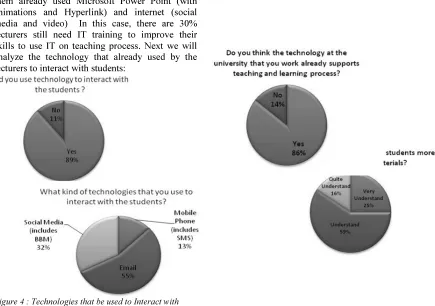
Figure 4 : Technologies that be used to Interact with Students
From Figure 4, 89% lecturers already used technology to interact with students, and 55% of them used email to interact with students. In this case, we should focus on social media socialization for lecturers that can make communication between
lecturers and students became faster. Next we will analyze lecturers experience in using internet.
Figure 5: Lecturers profile in using Internet
[image:4.595.94.529.426.732.2]462
Figure 6 : IT Implementation in Universities
From figure 6, 86% lecturers stated that IT implementation in Universities already support teaching and learning process, but only 25% lecturers stated that IT can make students very understand about materials. So, there is still opportunity to improve lecturers’ ability in using IT for teaching and learning process that can make all
students very understand about materials. Next, we will analyze IT recommendation for teaching and learning process.
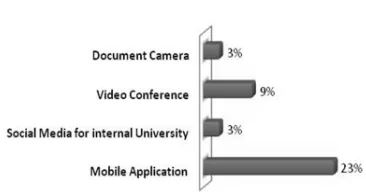
Figure 7: IT Recommendations for Universities
From figure 7, 23% lecturers give recommendation to use Mobile application between lecturer and students. The need for communication outside classroom is important to make students more understand about the materials.
Majority of universities in Jakarta already have online learning to connect lecturers and students, but not implemented whole IT application to support that online learning. Based on questionnaire recapitulation and interview result, there are several IT applications that must be used to improve
lecturer performance, as: (1) Mobile Application.
This application makes online interaction between lecturer and students and should be completed with live chat and online notification which can be used by the students to contact lecturer anytime and anywhere. Of course this application is more effective than conventional ways, like SMS and call because with mobile application, student can access discussion forum easily that can be saw by other
students; (2) Video Conference. This application
can be used for online learning that can make students and lecturer do live interaction like in the classroom, and interact with another lecturers for
parallel class; (3) Document Camera. This
technology can make students detail understand about lecturer’s explanation, especially for course which need detail visualization (how to make building construction, laboratory experiment, until medical purpose). This technology can make classroom situation became interactive and not boring for the students.
To implement new technology for teaching and learning process, we already identify lecturers’
technology skills in the questionnaire. To improve lecturers’ ability to use IT application for teaching and learning process, universities should focus on multimedia, animation, social media and video training for lecturers that can make teaching and learning process became more interesting.
4. CONCLUSIONS
In this paper, we analyze profile and lecturers’ ability to use IT on teaching and learning process. Most of lecturers already familiar to use simple IT to support teaching and learning process, such as slide presentation and internet. In this case, universities need to implement latest IT such as
mobile application, video conference, and
document camera to support teaching and learning process, also improve lecturers’ ability to use video, animation, and social media to make teaching and learning process became more interesting for students that can improve students’ competency and lecturers’ performance. The improvement of
students’ competency can be impact for
463 discussion, it appears that the use of information technology in the learning process is confined to the use of power point with a simple animation and hyperlinks as well as the use of the internet. New technologies are emerging such as social
collaboration, mobile application and web
conferencing has not been used up to improve lecturers’ performance in the classroom.
Based on this paper, IT implementation in universities should make it step by step and make
sure all lecturers know about new IT
implementation to support teaching and learning
process. Universities should held specific and continuous training to make sure all lecturers understand how to use new IT to improve lecturers’
performance, thus can improve graduate
competency. Because of our respondent in this paper only consist of lecturers from a few private universities in Jakarta, so this paper is still to be developed by doing research to the lecturers from other private universities in Jakarta and also outside Jakarta that can make the result more complete.
REFERENCES:
[1] Osterwalder, A., & Pigneur, Y. (2010).
Business Model Generation. New Jersey: John
Wiley & Sons.
[2]
Pearson, Keri E. and Saunders, Carol S.
(2009). Strategic Management Information
Systems. Florida : John Willey & Sons, Inc,
2009.
[3] Ramaswati Purnawan, L. (2011). Sikap dan
Persepsi Dosen di Universitas Udayana terhadap Penggunaan Teknologi Informasi
dalam Proses Pembelajaran. The Excellence
Research UNIVERSITAS UDAYANA 2011 ,
141.
[4] Mulyono, B. d. (2012). Manajemen Strategik
Peningkatan Kinerja Dosen Perguruan Tinggi
Agama Islam. ejournal UIN Malang .
[5] Anggraeni, R. D. (2013). Increasing Lecturer
Competence as the Quality Assurance of Lecturer Performance
[6] Molefe, Gabedi N. (2010), South Africa : SA Journal of Human Resource Management,
Performance measurement dimensions for
lecturers at selected,Vol. 8.
[7]
Maharsi, P. (2011, Agustus). Upaya
Peningkatan Kinerja Dosen di Indonesia.
Pengembangan Humaniora Vol. 11 No. 2 .
[8] Chuttur, M. Y. (2008). Overview of the
Technology Acceptance Model : Origins,
Developments, and Futre Directions. Working
Paper of Information Systems , 1.
[9] Sari, R. A. (2008). Model-Model User
Acceptance. Jakarta : Universitas Indonesia .
[10] Park, S. Y. (2009). An Analysis of the
Technology Acceptance Model in
Understanding University. Educational