31
Iranian Journal of Chemical Engineering Vol. 9, No. 3 (Summer), 2012, IAChE
Methane Combustion and CO Oxidation on Ag-Doped
LaMn
0.8Cu
0.2O
3±δMixed Oxides Prepared by Pechini
and Sol–Gel Methods
M. Abdolrahmani, M. Parvari∗, M. Habibpoor
School of Chemical Engineering, Iran University of Science and Technology, Tehran, Iran.
Abstract
Lanthanum in the A-site of LaMn0.8Cu0.2O3±δ perovskite was partially substituted by
silver. La1–xAgxMn0.8Cu0.2O3 samples (x=0, 0.1, 0.2, 0.3) were prepared by the two
Pechini and sol–gel methods and their catalytic activity was evaluated for CH4
combustion and CO oxidation reactions. FT-IR analysis of different samples before calcination confirmed the formation of different complexes between the elements. Calcined samples were characterized using XRD, TPR, BET, SEM and XRF techniques. XRD results revealed that the Pechini method led to perovskite structures with higher purity and that segregation of Ag in samples prepared by the sol–gel method was higher. SEM images and EDS results for samples before and after catalytic tests showed that the Pechini samples had a lower particle size and better distribution of the elements. The catalytic results indicate that the oxidation activity increased with the amount of Ag in the oxide, but the stability of the structure decreased.
Keywords: Perovskite, Pechini Method, Sol–Gel Method, Oxidation Catalyst
∗ Corresponding author: [email protected]
1. Introduction
The catalytic combustion process has been developed over a variety of catalytic systems to pursue suitable catalysts with high thermal stability and activity [1]. Perovskite-type oxides of the general formula ABO3 are
well-known catalysts for the catalytic combustion of methane and catalytic oxidation of CO [2]. Tailoring of their catalytic properties and thermal stability by partial substitution of A and/or B sites [3, 4, 5] can yield perovskites that are over-stoichiometric or deficient in oxygen under well-defined conditions [6].
Many metallic elements are stable in the perovskite structure provided that the A and B ions have dimensions (rA>0.90 Å, rB>0.51
Å) consistent with the limits of the so-called tolerance factor t (0.8<t<1.0) defined by Goldschmidt as t= (rA+rO)/√2 (rB+rO), where
rA, rB, and rO are the ionic radii for A, B, and
32 Iranian Journal of Chemical Engineering, Vol. 9, No. 3
structure is obtained [9]. Up to now, almost all known perovskite compounds have t values in the range of 0.75–1.00. However, it seems that t = 0.75–1.00 is not a sufficient condition for the formation of the perovskite structure, as indicated later, for some systems whose t are even within the most favorable range (0.8–0.9), no perovskite structure is stable[10].
It has been reported that perovskites of the structural formula LaBO3 with B=Mn, Co or
Ni are particularly suitable for total VOC oxidation [11, 12, 13]. The lanthanide ions at A sites are generally catalytically inactive, whereas the activity of unsubstituted ABO3 is
mainly determined by component B of transition metals [3]. Partial substitution of ions in positions A and/or B for A′ and B′ produces crystal lattice defects or creates O2– vacancies in the lattice, thus enhancing the catalytic properties of such catalysts [2]. Studies on the effect of lanthanum substitution by divalent elements such as Sr, Ce and Ca [14, 15, 16, 17] and monovalent elements such as Na and K [18, 19, 20, 21] have been widely reported during the last decade. Also, the substitution of La in LaMnO3 by Ba, Pb was reported to enhance
the catalytic activity in full oxidation reaction of CO and hydrocarbons [22].
Perovskite-type manganese oxides are widely used as catalysts in environmental reactions such as the conversion of carbon monoxide and hydrocarbons [5]. High activity for the combustion of hydrocarbons is characteristic of catalysts in which the metal in position A has been substituted with silver, such as La0.7Ag0.3Fe0.5Co0.5O3, La0.7Ag0.3FeO3 [14]
and La0.7Ag0.3MnO3, which exhibited higher
activity for methane combustion than
La0.7Sr0.3MnO3 [16]. Partial substitution of
lanthanum with palladium or silver in LaCoO3 perovskite enhanced the activity for
methane combustion [23]. E. Gulari et al [24] demonstrated that composite silver cobalt oxide is a good CO oxidation catalyst. Song et al. [16] reported that La0.7Ag0.3MnO3
would be a good candidate for cleaning and combustion of exhaust gases at low temperature.
Since the catalytic properties of materials are strongly dependent on the preparation procedure, it is essential to investigate the structure of perovskites prepared by the different methods. Perovskites can be synthesized by several methods. The methods, including thermal treatment at T >1000°C, are not suitable for catalytic applications since the high temperature leads to a material with low surface area [25]. Low-temperature synthesis routes such as co-precipitation [26] and flash combustion [27, 28] yield a relatively high surface area. Therefore, other methods for preparing perovskite-type oxides with higher BET surface area need to be identified [29].
LaMn1–xCuxO3 perovskites have been
considered as catalysts for methane combustion and CO oxidation [30, 31, 32, 33]. Our previous work was focused on Mn substitution by copper in LaMnO3 structure,
and optimizing the Cu content in it. The results showed that partial substitution of copper had a positive effect on promoting reduction behavior of Mn which is, consequently, the reason for its promoted activity. It was observed that the optimized Cu to Mn ratio is 1 to 4 [38]. Therefore, from our previous study, LaMn0.8Cu0.2O3±δ is
Iranian Journal of Chemical Engineering, Vol.9, No. 3 33
comparison. In the present study, the effects of La substitution by Ag in LaMn0.8Cu0.2O3±δ
and its preparation method on catalyst morphology and activity in methane combustion and CO oxidation is investigated. Samples were prepared by the Pechini and sol–gel methods. The Pechini method involves the formation of a rigid polymer network between citric acid and ethylene glycol, which leads to a material with high degree of molecular homogeneity, as well as finer powders, thus presenting a higher surface area; essential property for catalyst reaction according to Fourier-transform infrared (FT-IR) spectroscopy, X-ray diffraction (XRD), X-ray fluorescence (XRF), scanning electron microscopy (SEM), energy-dispersive spectroscopy (EDS) and Bruner Emmet Teller (BET) analyses. For the purpose of comparison a sol-gel route using a chelating agent (like citric acid) is considered a useful technique because it presents the advantages of allowing low temperature and short periods of calcinations.
2. Experimental procedure 2-1. Preparation
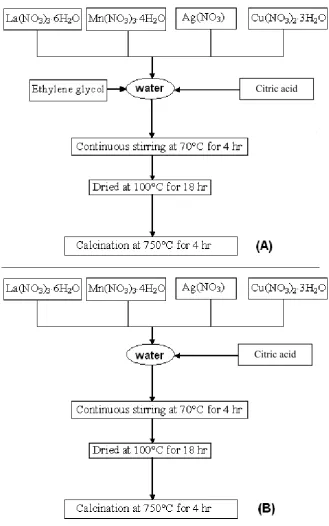
Two methods, shown in Fig. 1(A, B), have been used to investigate the effect of preparation method on properties of La1–
xAgxMn0.8Cu0.2O3±δ (x=0, 0.1, 0.2, 0.3) mixed oxides. La1–xAgxMn0.8Cu0.2O3±δ perovskite
oxides were prepared using La(NO3)3⋅6H2O
(Merck), Ag(NO3) (Merck), Mn(NO3)3⋅4H2O
(Merck), Cu(NO3)2⋅3H2O (Merck), citric
acid, ethylene glycol according to the Pechini and sol–gel methods.
2-2. Pechini method
Nitrate salts were mixed in appropriate
proportions and dissolved in deionized water. Citric acid was added to the nitrate solution at a citrate/metal molar ratio of 2:1. Then ethylene glycol (mass ratio of 40:60 to citric acid) [34] was added. The solution was heated at 70 °C with stirring. After water evaporation and polyesterification reaction between citric acid and ethylene glycol, the resin-like substance that formed was dried at 110 °C overnight and calcined at 750 °C for 4 h. The powders obtained were denoted P0 (x=0), P1 (x=0.1), P2 (x=0.2), and P3 (x=0.3).
2-3. Sol–gel method
The nitrates of La, Na and Cu were used as starting materials for obtaining an aqueous solution of La3+, Ag+ ,Mn4+/3+and Cu2+ with appropriate stoichiometry. The same amount of citric acid as for the Pechini method was added and the resulting solution was heated by constant stirring at temperatures of 70 °C. After water evaporation, the clear solution gradually turned to a milky sol and finally transformed into a gel. The gel was dried at 110 °C overnight and calcined at 750 °C for 4 h. The powders obtained were denoted S0 (x=0), S1 (x=0.1), S2 (x=0.2), and S3 (x=0.3).
It should be noted that S0 and P0 refer to LaMn0.8Cu0.2O3±δ and the results are from
our previous work [38].
2-4. Characterization and activity tests
Powder XRD patterns of the calcined perovskites before and after reactions were measured using a Philips PW-1800 diffractometer with Cu Kα radiation
34 Iranian Journal of Chemical Engineering, Vol. 9, No. 3
determine the crystalline phases and lattice parameters. Scanning was carried out over the 2θ range 5–90° with a step size of 0.03° and a count time of 2 s per step. Phase
identification was carried out by comparison with Joint Committee on Powder Diffraction Standards (JCPDS) database cards.
Figure 1. Schematic illustration of the preparation of La1-xAgxMn0.8Cu0.2O3±δpowders by (A) Pechini method, (B) sol-gel method
Iranian Journal of Chemical Engineering, Vol.9, No. 3 35
FT-IR spectra were recorded on a Shimadzu 8400s FT-IR instrument. The dried samples were dissolved in n-hexane then cooled to –10 °C. The crystals obtained were mixed at 3 wt.% with KBr and analyzed by FT-IR. Catalyst compositions (by weight) were determined by XRF spectroscopy using a Thermo Scientific ARL ADVANT’X series instrument. The specific surface area of samples was measured by the BET isotherm technique for nitrogen adsorption on a BELCAT-A system operated in single-point mode. Temperature-programmed reduction (TPR) studies were performed on a BELCAT-A system equipped with a thermal conductivity detector (TCD) using calcined catalyst samples of approximately 100 mg. The samples were initially flushed with argon at a flow rate of 50 cm3/min as the temperature was increased at 10 °C/min to 200 °C and then held for 60 min to remove water. The reducing gas (10% H2 in argon)
was introduced at a flow rate of 50 cm3/min and the temperature was increased from room temperature to 1100 °C at 10 °C/min and then held for 70 min. The amount of hydrogen consumed was determined by TCD.
The morphology of calcined catalysts was examined by SEM using a VEGA II XMU electron microscope (TSCAN) operated in back-scattered and secondary electron detector modes to determine the morphology of the surface structures. The elemental analysis of the crystalline phases was determined by EDS coupled to the SEM.
Catalytic activity tests for methane combustion and CO oxidation were performed in a fixed-bed microreactor (I.D. 6.6 mm). Tests were carried out by feeding a
mixture of 2 vol.% CH4 and 10 vol.% O2 in
N2 for methane combustion and 2 vol.% CO
and 20 vol.% O2 in N2 for CO oxidation at 50
cm3/min while the temperature was increased from 200 to 700 °C. A 0.2-g sample of catalyst was used for each test. Brooks (5850E) mass-flow controllers equipped with in-line filters and check valves were used to regulate the gas flows. The fixed-bed stainless steel reactor was placed in a cylindrical ceramic oven and was fed up flow. Analysis of the products and the feed components was performed by on-line gas chromatography using a Thermo Finnegan KAV00109 chromatograph with a TCD detector, helium as carrier gas, and a 5A 60/80 mesh molecular sieve.
3. Results and discussion 3-1. FT-IR spectroscopy
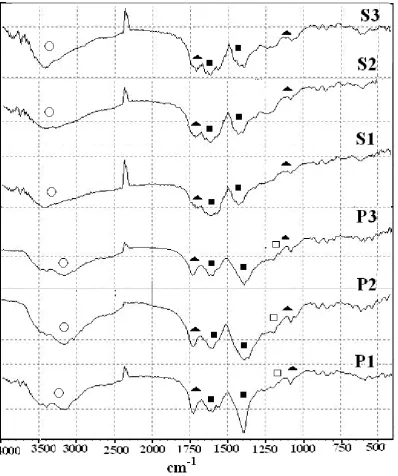
FT-IR spectra of La1–xAgxMn0.8Cu0.2O3±δ
36 Iranian Journal of Chemical Engineering, Vol. 9, No. 3
network, a band related to C–O stretching was detected at approximately 1180 cm–1(□), confirming the polymerization process [36, 37]. The FT-IR results thus confirm that complex formation between citric acid and
metallic ions occurred in the sol–gel route and that polyesterification of ethylene glycol and citric acid and complexation with metallic ions occurred in the Pechini method.
Iranian Journal of Chemical Engineering, Vol.9, No. 3 37 3-2. XRD results
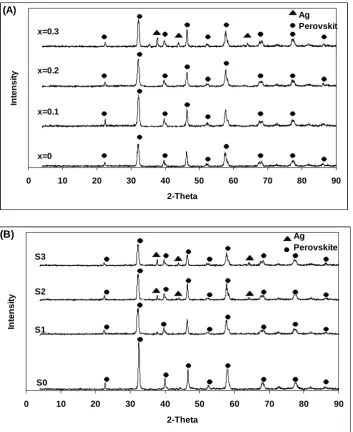
XRD measurements were performed to determine the crystalline structure of the calcined samples. XRD patterns of the perovskite oxides before and after catalytic tests are shown in Fig. 2A–B. For Pechini samples, only a single perovskite phase (JCPDS -33-0713) was detected for x=0, 0.1 and 0.2, but for x=0.3 metallic silver was detected in addition to the perovskite phase (Fig. 2A). The XRD patterns of the samples prepared by the sol–gel method are presented in Fig. 2B. Only a perovskite structure was detected for x=0 and 0.1, but both metallic Ag and a perovskite phase were detected for x=0.2 and 0.3. Comparison of the tolerance factor, t, for different samples prepared by the two methods reveals that, because of the smaller ionic radius of silver than lanthanum, t values deviated from 1, with increasing Ag substitution (x>0.2). This effect means that the perovskite structure becomes unstable for x>0.2, whereas for samples with x≤0.2 t is closer to 1 and the crystal structure is closer to cubic. Comparison of the XRD results
indicates that the Pechini route leads to purer perovskite phases and that the sol–gel method leads to the formation of higher amounts of metallic Ag.
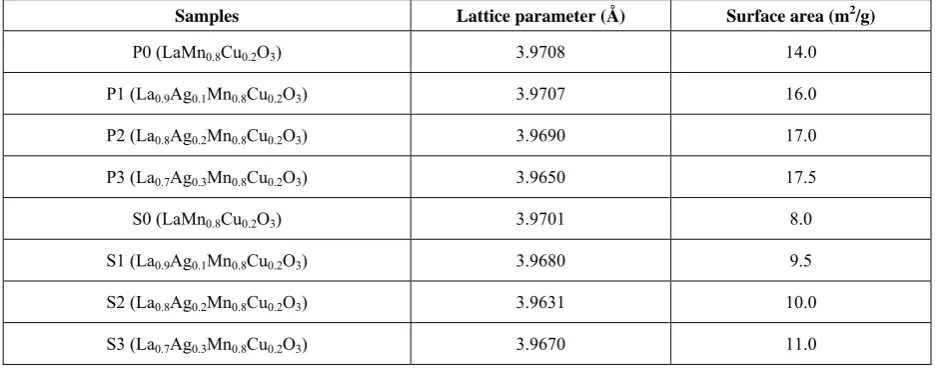
The lattice parameter calculated for all samples is shown in Table 1. For Pechini samples the lattice parameter decreased with increasing Ag, but no correlation was observed for sol–gel samples because this method yields greater separation of Ag from the perovskite structure and there is no estimate for silver introduction into a defined structure. Lower Ag segregation in Pechini samples is due to the usage of ethylene glycol, which leads to the formation of a rigid polymer network that suppresses the mobility of metal–citric acid complexes, which minimizes the segregation of metal particles during calcination.
The BET surface area was higher for Pechini samples than for sol–gel samples (Table 1). In both methods, the surface area of the samples increased with the Ag content, indicating that Ag can be helpful in increasing the surface area.
Table 1. Lattice parameter and surface area of perovskite- type oxides ( In the table, P stands for samples prepared
by Pechini method and S for samples prepared by sol-gel method and the general structure of samples is La1–xAgxMn0.8Cu0.2O3).
Samples Lattice parameter (Å) Surface area (m2/g)
P0 (LaMn0.8Cu0.2O3) 3.9708 14.0
P1 (La0.9Ag0.1Mn0.8Cu0.2O3) 3.9707 16.0
P2 (La0.8Ag0.2Mn0.8Cu0.2O3) 3.9690 17.0
P3 (La0.7Ag0.3Mn0.8Cu0.2O3) 3.9650 17.5
S0 (LaMn0.8Cu0.2O3) 3.9701 8.0
S1 (La0.9Ag0.1Mn0.8Cu0.2O3) 3.9680 9.5
S2 (La0.8Ag0.2Mn0.8Cu0.2O3) 3.9631 10.0
38 Iranian Journal of Chemical Engineering, Vol. 9, No. 3 3-3. XRF, EDS and SEM results
The sample morphology was investigated by SEM before and after catalytic tests. Micrographs of samples S2 and P2 are shown in Fig. 3. The images reveal that the particle size of the sample prepared by the Pechini method was <200 nm, whereas particles of different sizes (up to 800 nm) were observed for the sol–gel sample. This confirms that the Pechini route leads to smaller particles than the sol–gel method. Fig. 3(c, d) shows micrographs of the same samples used in methane combustion reactions. The particle size of S2 was greater after the catalytic test due to sintering at higher temperatures during the reaction. After exposure to high temperature the particle size of P2 was in the range 50–300 nm, whereas particles in the order of micrometer were observed for S2. SEM images of other samples (data not shown) also reveal that the particle size of Pechini samples was less sensitive to high temperatures, and these samples showed more resistance to high temperatures. SEM investigations after activity tests thus demonstrate that Pechini samples were less
agglomerated and retained a fine crystal size, whereas the corresponding sol–gel samples exhibited a greater particle size.
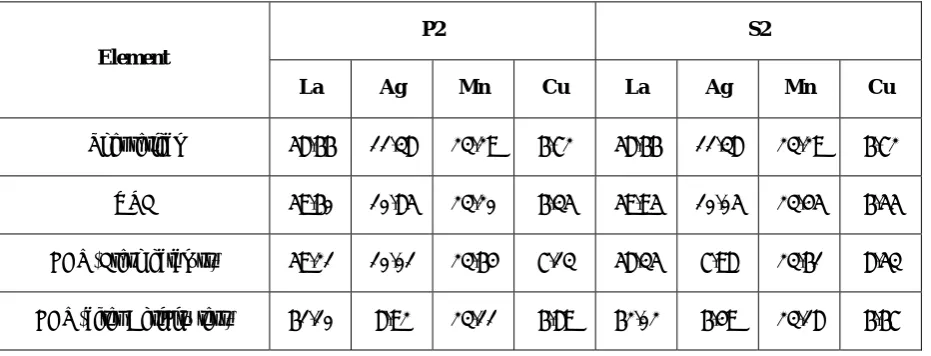
Sample homogeneity was investigated by EDS at different sample points before and after catalytic tests. The weight percent of different elements was determined by XRF. As an example, XRF and EDS results for samples S2 and P2 are presented in Table 2. For P2 the weight percent of different elements was similar at different points, indicating a uniform distribution of elements. The results are also close to the theoretical values. However, different values of Ag wt.% were obtained at three points for S2, which differ from the theoretical value. The reason is that at x=0.2 for sol–gel samples, only some of the Ag entered the perovskite structure and the remainder forms a metallic phase, as revealed by XRD. The XRF results also correspond to theoretical values.
Comparison of EDS results after catalytic tests also indicates that the distribution of different elements was more uniform and closer to the theoretical values for P2 than for S2.
Table 2. EDS average values and XRF data of P2 and S2 samples before and after activity test S2 P2 Cu Mn Ag La Cu Mn Ag La Element 6.72 23.29 11.38 58.66 6.72 23.29 11.38 58.66 Theoretical 6.55 23.45 10.05 59.95 6.35 23.20 10.85 59.60 XRF 8.53 23.61 7.98 58.35 7.13 23.64 10.01 59.21
EDS (Fresh catalyst)
6.67 23.18 6.49 62.02 6.89 23.11 8.92 61.10
Iranian Journal of Chemical Engineering, Vol.9, No. 3 39
0 10 20 30 40 50 60 70 80 90
2-Theta
In
te
n
s
ity
x=0.3
x=0.2
x=0.1
Ag Perovskit
x=0 (A)
0 10 20 30 40 50 60 70 80 90
2-Theta
In
te
n
s
it
y S2
S1
S0
Ag Perovskite S3
(B)
Figure 3. XRD patterns of La1-xAgxMn0.8Cu0.2O3±δperovskitecalcined at 750°C for 4 hours; prepared by (A) Pechini method before and (B) sol gel method
3-4. TPR
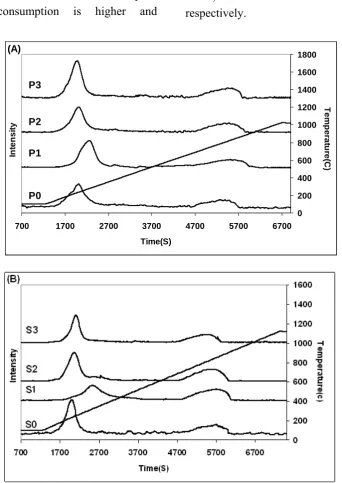
Fig. 4 shows TPR profiles of La1–xAgxMn0.8Cu0.2O3±δ (x=0, 0.1, 0.2, 0.3) catalysts prepared by the Pechini and sol–gel methods. Two main peaks were detected in all cases; one at temperatures ranging from 200 to 300 °С and the other at temperatures between 800–900°С. XRD results of the samples after TPR, confirm the presence of metallic Cu, metallic Ag, MnO and La2O3.
40 Iranian Journal of Chemical Engineering, Vol. 9, No. 3
temperature (280 °С for P1 and 300 °С for S1). Higher Ag substitution at x=0.2 decreased the stability of the structure, so P2 and S2 samples were reduced at lower temperatures than for P1 and S1. At x=0.3 the reduction temperature of the Pechini sample further decreased. However, for
sample S3 there was little difference in reduction temperature compared to S2. According to the XRD results for S3, only some of the Ag enters the perovskite structure, similar to S2, and the rest is metallic Ag on the surface.
Figure 4. SEM images of (a) fresh P2 sample; (b) fresh S2 sample ;( c) P2 sample after activity test; (d) S2 sample
Iranian Journal of Chemical Engineering, Vol.9, No. 3 41
Comparison of the TPR results revealed that the Pechini samples were reduced at a lower temperature and had higher hydrogen consumption than the sol–gel samples. Hydrogen consumption for the samples was 3.25, 3.54, 3.88 and 3.92 mmol/g for P0–P3 and 2.83, 3.1, 3.64 and 3.78 mmol/g for S0– S3, respectively. Since most of the Ag enters the perovskite structure in Pechini samples, hydrogen consumption is higher and
reduction can occur at a lower temperature. According to the hydrogen consumption for these samples, the correct formula and Mn4+/Mn3+ ratio can be calculated. Thus, the formula for mixed oxides prepared by the Pechini method is La1–xAgyMn3+0.4Mn+40.4
Cu0.2O3±δ. These results indicate that as the
amount of silver increased from x=0 to x=0.3, δ decreased from 3.1 to 2.8, respectively.
0 200 400 600 800 1000 1200 1400 1600 1800
700 1700 2700 3700 4700 5700 6700
Time(S)
In
te
n
s
it
y
P0 P1 P2 P3
T
e
m
p
e
rat
u
re(
C
)
(A)
42 Iranian Journal of Chemical Engineering, Vol. 9, No. 3 3-5. Activity tests
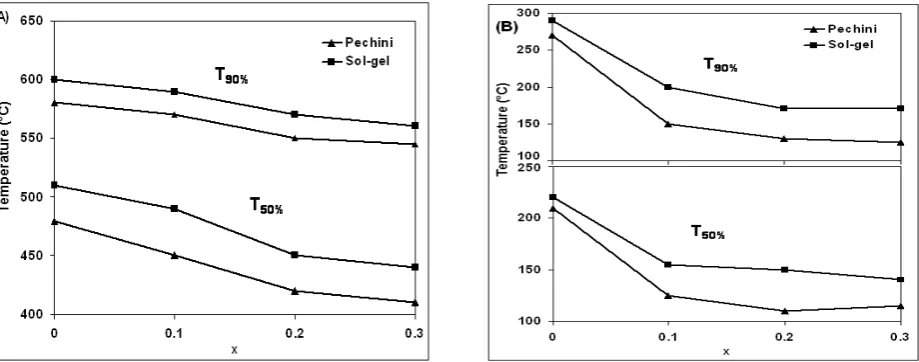
Catalytic activity test results of the samples in methane combustion and CO oxidation are shown in Fig. 6 (A, B) and Fig.7 (A, B), respectively. As can be seen, the samples without Ag prepared by both methods had lower activities in comparison with the samples containing Ag. By increasing the Ag content of the samples the catalytic activity is improved, because by increasing the Ag content, trivalent La is substituted by silver (1+) and this difference in the valences of the elements leads to the deficiency of the perovskite structure which is the reason for better reduction and higher activities of the
samples containing higher amounts of Ag. At x=0.2 and 0.3 the catalytic activity of the samples were similar. The samples prepared by the Pechini method were more active than the samples prepared by the sol-gel method. T50% and T90% of the samples in methane
combustion and CO oxidation reaction, are shown in Fig 8(A, B). The reason for the higher activity of the Pechini samples is their smaller particle sizes and higher surface areas. Also, according to XRD results in the Pechini method most of the silver enters the perovskite structure which leads to higher deficiency of the perovskite structure and higher activity.
Figure 6. Methane conversion of Pechini (P0, P1, P2, P3) and Sol-gel (S0, S1, S2, S3) samples
Figure 7. Activities of Pechini (P0, P1, P2, P3) and Sol-gel (S0, S1, S2, S3) samples for CO oxidation at different
reaction temperatures
Methane conversion (%)
Iranian Journal of Chemical Engineering, Vol.9, No. 3 43 Figure 8. T50% and T90% of Pechini (P0, P1, P2, P3) and Sol-gel (S0, S1, S2, S3) samples in (A): methane
combustion and (B) : CO oxidation reaction
The CO oxidation results indicate that Ag addition to LaMn0.8Cu0.2O3±δ greatly
improved the catalytic activity. The CO total conversion temperature of sample P2 was approximately 200 °С lower than that of P0. Comparison of results of the Ag-containing samples revealed that P2 and S2 had the highest activity among the Pechini and sol– gel samples, respectively, in agreement with the TPR results. Similar to observations for methane conversion, Pechini samples were more active than the sol–gel samples for CO oxidation.
3-6. XRD results after activity testing
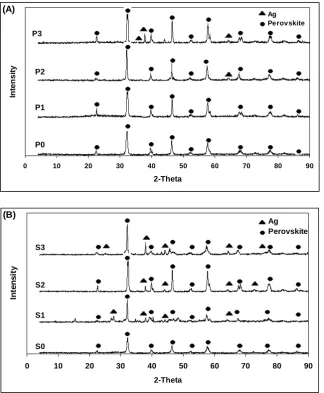
The XRD results of the samples after methane combustion activity tests is shown in Fig. 9A,B. These results were compared with the XRD patterns of the samples before catalytic tests, in order to investigate changes in structure. After activity tests, Pechini samples with Ag substitution of <20% had approximately the same XRD spectra as
before, and for x=0 (no silver substitution) the spectra before and after the tests were exactly the same for samples prepared by both methods. Peaks for the sol–gel samples indicate the presence of silver in metallic form besides the perovskite phase. For sol– gel samples, peaks related to non-perovskite phases increased with the Ag content, indicating that silver migrated from the perovskite structure after exposure to reaction conditions and a metallic phase was formed. Comparison of XRD results for the Pechini and sol–gel samples revealed lower Ag segregation during catalytic tests for the former; the initial structure was maintained and therefore the Pechini samples were more stable. Due to the lower temperatures necessary for complete CO oxidation on La1–xAgxMn0.8Cu0.2O3±δ oxides and their
44 Iranian Journal of Chemical Engineering, Vol. 9, No. 3
0 10 20 30 40 50 60 70 80 90
2-Theta
In
te
n
s
it
y
Ag Perovskite
(A)
P3
P2
P1
P0
0 10 20 30 40 50 60 70 80 90
2-Theta
In
te
n
s
it
y
Ag Perovskite
(B)
S3
S2
S1
S0
Figure 9. XRD patterns of La1-xAgxMn0.8Cu0.2O3±δperovskite prepared by (A) Pechini method and (B) sol gel method after methane combustion activity test
4. Conclusions
La1–xAgxMn0.8Cu0.2O3±δ (x=0, 0.1, 0.2, 0.3) perovskites were prepared by two different methods, the Pechini and sol–gel methods. XRD results for calcined samples showed that more silver entered the structure in the Pechini samples than in the sol–gel samples. Samples prepared by the Pechini method had higher surface area and lower particle size than those prepared by the sol–gel method. The Pechini samples exhibited a uniform distribution of elements at different points
Iranian Journal of Chemical Engineering, Vol.9, No. 3 45
Comparison of XRD results for the oxides before and after catalytic tests revealed that Ag reduced at higher temperatures could not return to the bulk after catalysis test in sol– gel samples, and therefore Ag remained in the metallic phase on the perovskite. However, in Pechini samples only a small proportion of the silver remained on the surface and most of it returned to the bulk, thus conferring higher stability to these samples. In terms of activity and XRD results, La0.8Ag0.2Mn0.8Cu0.2O3±δ prepared by
both methods was the most active and stable sample.
References
[1] Choudhary, T. V., Banerjee, S. and Choudhary, V. R., "Catalysts for combustion of methane and lower alkanes", Appl. Catal. A., 234, 1, (2002).
[2] Piotrowska, A.M. and Landmesser, H., "Noble metal-doped perovskites for the oxidation of organic air pollutants", Catalysis Today, 137, 355, (2008).
[3] Levasseur, B. and Kaliaguine, S., "Effect of the rare earth in the perovskite-type mixed oxides" , Journal of Solid State Chemistry, 181, 2953, (2008).
[4] Cimino, S., Lisi, L., Rossi, S.D., Faticanti, M. and Porta, P., "Methane combustion and CO oxidation on LaAl1−xMnxO3 perovskite-type oxide
solid solutions", Applied Catalysis B: Environmental.,43 , 397, (2003).
[5] Ifrah, S., Kaddouri, A., Gelin, P. and Leonard, D., "Conventional hydro-thermal process versus microwave-assisted hydrothermal synthesis of La1_xAgxMnO3 perovskites used in
methane combustion"., C. R. Chimie., 10 , 1216, (2007).
[6] Feng, L.M., Jiang, L.Q., Zhu., Liu, H.B., Zhou, X. and Li, C.H., "Formability of ABO3 cubic
pero-vskites", J. Phys. Chem . Solids, 69, 967, (2008).
[7] Porta, P., Rossi, S.D., Faticanti, M. and Minelli, G., "Perovskite-Type Oxides". Journal of Solid State Chemistry.,146, 291, (1999).
[8] Ullmann, H. and Trofimenko, N., "Estimation of effective ionic radii in highly defective perovskite-type oxides from experimental data", J .Alloys. Compounds, 316, 153, (2001).
[9] Kattack,, C. P. and Wang, F.F.Y., Handbook of the physics and chemistry of rare Earths, K. A. Gschneider, L. Enging Eds., North Holland Publ., Amsterdam, p.525, (1979).
[10] Li, C., Kwan Soh, K. Ch. and Wu, P., "Formability of ABO3 perovskites", J.
Alloys . Compounds,40, 372, (2004). [11] Spinicci, R., Delmastro, A., Ronchetti,
S. and Tofanari, A., "Catalytic behaviour of stoichiometric and non-stoichiometric LaMnO3 perovskite
towards methane combustion", Materials Chemistry and Physics.,78, 393, (2003).
[12] Kharton, V. V., Viskupa, A. A., Naumovicha, E. N. and Tikhonovicha, V.N., "Oxygen permeability of LaFe1−xNixO3−δ solid solutions".
Materials Research Bulletin., 34, 1311, (1999).
[13] Cui, H., Zayat, M. and Levy, D., "Epoxide assisted sol–gel synthesis of perovskite-type LaMxFe1_xO3
46 Iranian Journal of Chemical Engineering, Vol. 9, No. 3
[14] Choudhary, V.R., Uphade, B.S. and Pataskar, S.G., "Low temperature complete combustion of methane over Ag-doped LaFeO3 and LaFe0.5Co0.5O3
perovskite oxide catalysts". Fuel.,78,919, (1999).
[15] Pi, L., Hervieu, M., Maignan, A., Martin, C. and Raveau, B., "Structural and magnetic phase diagram and room temperature CMR effect of La1-xAgxMnO3". Solid State
Communications. 126, 229, (2003). [16] Song, K., Cui, H., Kim, S. and Kang,
S., "Catalytic combustion of CH4 and
CO on La1-xMxMnO3 perovskites".
Catalysis Today.,47, 155, (1999).
[17] Forni, L. and Rossetti, I., "Catalytic combustion of hydrocarbons over perovskites". Applied Catalysis B: Environmental., 38, 29, (2002).
[18] Singh, RN., Shivakumara, C.,
Vasanthacharya, N.Y., Subramanian, S. and Hegde, M.S., "Synthesis, structure, and properties of Sodium or Potassium-doped Lanthanum orthomanganites from NaCl or KCl flux". J. solid state chemistry.,137, 19, (1998).
[19] Ghigna, P., Carollo, A., Malavasi, L. and Subias, G., "Local structure and electronic properties of the rhombohedral and orthorhombic colossally magnetoresistive manga-nites La1-xNaxMnO3 by Mn−K edge
EXAFS and XANES". Journal Phys. Chem. B, 109, 4365, (2005).
[20] Malavasi, L., Mozzati, M.C., Tullio, E., Tealdi, C. and Flor, G., "Redox behavior of Ru-doped La1−xNaxMnO3+d
manga-nites". physical review.,71, 174435, (2005).
[21] Fabbrini, L., Kryukov ,A., Cappelli, S.,
Chiarello, G.L., Rossetti, I., Oliva, C. and Forni, L., "Sr1–xAgxTiO3±δ (x=0,
0.1) perovskite-structured catalysts for the flameless combustion of methane". Journal of Catalysis., 232, 247, (2005). [22] Steenwinkel, Y. Zh., Beckers, J. and
Bliek, A., "Surface properties and catalytic performance in CO oxidation of cerium substituted lanthanum– manganese oxides". Applied Catalysis A: General., 23, 79, (2002).
[23] Kucharczyk, B. and Tylus, W., "Effect of Pd or Ag additive on the activity and stability of monolithic LaCoO3
perovskites for catalytic combustion of methane". Catalysis Today., 90, 121, (2004).
[24] Gularia, E., Gueldue, C., Srivannavit, S. and Osuwan, S., "Co oxidation by silver cobalt composite oxide". Applied Catalysis A: General., 182, 147, (1999). [25] Kirchnerova, J. and Klvana, D.,
"Synthesis and characterization of perovskite catalysts". Solid State Ionics., 12, 307, (1999).
[26] Liu, Zh., Hao, J., Fu, L. and Zhu, T., "Study of Ag/La0.6Ce0.4CoO3 catalysts
for direct decomposition and reduction of nitrogen oxides with propene in the presence of oxygen", Applied Catalysis B: Environmental., 44, 355, (2003). [27] Tian, Zh.Q., Yu, H.T. and Wang,
Zh.L., "Combustion synthesis and characterization of nano crystalline LaAlO3 powders". Materials Chemistry
and Physics., 106, 126, (2007).
Iranian Journal of Chemical Engineering, Vol.9, No. 3 47
[29] Kakihana, M., Arima, M., Yoshimura, M., Ikeda, N. and Sugitani, Y., " Synthesis of high surface area LaMnO by a polymerizable complex method". J. Alloys and Compounds., 283, 102, (1999).
[30] Tabata, K., Hirano, Y. and Suzuki, E., "XPS studies on the oxygen species of LaMn1-xCuxO3". Applied Catalysis A:
General., 170, 245, (1998).
[31] Zhang, R., Villanueva, A., Alamdari, H. and Kaliaguine, S., "Reduction of NO by CO over nanoscale LaCo1−xCuxO3
and LaMn1−xCuxO3 perovskites". J.
Molecular Catalysis A: Chemical., 258, 22, (2006).
[32] Lisi, L., Bagnasco, G., Ciambelli, P., Rossi, S. and Porta, P., "Perovskite-type oxides". J. Solid State Chemistry., 146, 176, (1999).
[33] Zhang, R., Villanueva, A., Alamdari, H. and Kaliaguine., S., "SCR of NO by propene over nanoscale LaMn1_xCuxO3
perovskites". Applied Catalysis A: General., 307, 85, (2006).
[34] Melo, D. M. A., Borges, F. M. M., Ambrosio, R.C. and Pimentel, P. M., "XAFS characterization of La1_xSrxMnO3±d catalysts prepared by
Pechini method". Chemical Physics., 322, 477, ( 2006).
[35] Yang, W.D., Chang, Y.H. and Huang, Sh. H., "Influence of molar ratio of citric acid to metal ions on preparation of La0.67Sr0.33MnO3 materials via
polymerizable complex process". J. European Ceramic Society., 25, 3611, (2005).
[36] Worayingyong, A., Kangvansura, P., Ausadasuk, S. and Praserthdam, P., "The effect of preparation: Pechini and Schiff base methods, on adsorbed oxygen of LaCoO3 perovskite oxidation
catalysts". Colloids and Surfaces A: Physicochem. Eng. Aspects., 315, 217, (2008).
[37] Wang, S., Zhang, Y. A., Zhang, Z. and Qian, Y., "Ethanothermal reduction to MoO2 microspheres via modified Pechini method", J. crystal Growth., 293, 209, (2006).
[38] Abdolrahmani, M., Parvari, M. and Habibpoor, M., "Effect of Copper substitution and preparation methods on the LaMnO3±d structure and catalysis of