Management and Research
Available online at: www.ijstmr.comSketch-Based and Content Based Image
Retrieval
Ankita Gaikwad Dept. of Computer
SVIT, College Of Engg.,Chincholi, Nashik.
Aarti Landge Dept. of Computer
SVIT, College Of Engg. Chincholi, Nashik.
Dipali Gite Dept. of Computer
SVIT, College Of Engg.,Chincholi, Nashik.
Suvarna Benake Dept. of Computer
SVIT, College of Engg., Chincholi, Nashik.
Abstract: Sketch-Based Image Retrieval:
The appearance gap between sketches and photo-realistic images is a fundamental challenge in sketch based image retrieval (SBIR) systems. The existence of noisy edges on photo-realistic images is a key factor in the enlargement of the appearance gap and significantly degrades retrieval performance. To bridge the gap, we propose a framework consisting of a new line segment-based descriptor named histogram of line relationship (HLR) and a new noise impact reduction algorithm known as object boundary selection. HLR treats sketches and extracted edges of photo-realistic images as a series of piece-wise line segments and captures the relationship between them. Based on the HLR, the object boundary selection algorithm aims to reduce the impact of noisy edges by selecting the shaping edges that best correspond to the object boundaries. Multiple hypotheses are generated for descriptors by hypothetical edge selection. The selection algorithm is formulated to find the best combination of hypotheses to maximize the retrieval score; a fast method is also proposed. To reduce the distraction of false matches in the scoring process, two constraints on spatial and coherent aspects are introduced. We tested the HLR descriptor and the proposed framework on public datasets and a new image dataset of three million images, which we recently collected for SBIR evaluation purposes. We compared the proposed HLR with state-of-the-art descriptors (SHoG, GF-HOG). The experimental results show that our HLR descriptor outperforms them. Combined with the object boundary selection algorithm, our framework significantly improves SBIR performance.
Content-Based Image Retrieval:
Due to increase in large image database, the storage of such data is expensive, so that the image compression techniques come into picture. Content-based image indexing and retrieval has been an important research area, in which indexing and retrieval is performed on the basis of the contents of the images. The contents are like color, shape or texture of that image. Trying to retrieve similar images from the compressed image database is a tedious job. So introduce a technique which index and retrieve the images from such database. This paper implement a halftone based Ordered-Dither Block truncation Coding (ODBTC) technique to compress an image. The benefit of low complexity, ODBTC generate an image content descriptor for content based image retrieval (CBIR). In the encoding step, we compress an image block into corresponding quantizers and bitmap image. Two image features namely color co-occurrence feature (CCF) and bit pattern features (BPF) are used to index an encoded image by involving the visual codebook, and this features are generated directly from the encoded data streams without performing the decoding. An efficient approach to retrieve similar images from compressed database using hierarchical clustering algorithm is proposed. Hierarchical clustering algorithm is bottom-up approach to compute similar images with improved efficiency. So this scheme is not only provide image compression, because of its simplicity, but also simple and effective descriptor to index images in CBIR system.
Keywords: Energy Content based image retrieval, Halftoning-Based BTC, Feature Extraction, Hierarchical Clustering Algorithm, similarity Computation, Large-scale sketch retrieval, line segment-based descriptor.
I. INTRODUCTION A.Sketch Based Image Retrival:
Long before the invention of writing systems, people drew and sketched to communicate with each other, and the oldest-known forms of writing were primarily logo-graphic in nature. Generally, a sketch depicts the rough shape of an object and provides a conceptual representation to facilitate communication. We can easily recognize objects from other people’s sketches, and this form of expression is arguably the most universal communication tool for people who speak different languages. Compared with keywords, a sketch is generally more natural and more informative, breaking down the language barrier. Sketch-based image retrieval (SBIR) can therefore be a very valuable information search tool, supplementary to keywords-based search. The benefits of SBIR are becoming obvious with the proliferation of touch-screen devices such as smart phones and tablets. Although sketch is a good way to express people’s thoughts, there is a large gap in the appearance of user sketches and photorealistic images (referred to hereafter as the appearance gap). When people sketch, they usually focus on the main structure of an object and only draw the semantic contour boundary. In contrast, photo-realistic images contain the color, texture and detailed shape of an object, which makes it very difficult to directly match a sketch and the corresponding photo-realistic image. An intuitive way to achieve this is to apply edge extraction to a photo-realistic image prior to matching. After edge extraction has been applied, the photo-realistic image is represented by strong edges, which makes both types of image comparable. sketches/extracted edges should be treated as a set of lines, and the descriptors should be able to capture line-level features. This is because line-based descriptors give us the flexibility to achieve edge selection or removal by setting the corresponding parts of the feature vector to a certain value, which is critical for boundary selection. However, most existing descriptors for SBIR, whether derived from classic descriptors, such a SHoG [5] and GF-HOG [6], or specifically designed for SBIR, such as APAI [2] and Structure Tensor [7], treat sketches/extracted edges as a set of points. They were designed to capture the pixel-level features from image patches.
Fig. 1. Image preprocessing. For each photo-realistic image, strong edges are extracted by applying Canny edge detector, and the extracted edges are then approximated into a set of line segments.
B.Content Based Image Retrival:
compressed format for reducing the storage space requirement. In this situation, the feature extractor essentially produces an image feature for the CBIR from compressed data stream without performing the decompression process. The Block Truncation Coding (BTC) is an image compression strategy which requires basic procedure on both encoding and decoding stages.
II. LITERATURE SURVEY
The main aspect of image retrieval system is to offer an efficient way to access, browse, and find similar images in the real-time applications. Various methods have been proposed in the literature for sketch-based and content based Retrieval. Since the core of SBIR is shape matching, many classic descriptors which are widely used in matching (recognition) tasks can be adopted in SBIR with minor adjustments. A substantial amount of research attempts have been committed in addressing the Content Based Image Retrieval (CBIR) problem [5].
Since the core of SBIR is shape matching, many classic descriptors which are widely used in matching (recognition) tasks can be adopted in SBIR with minor adjustments. Of these descriptors, HOG-based descriptors attract much attention ([5], [8], [6], [1], [9]). Eitz et al. [2] performed random sampling on images and then proposed the SHoG descriptor to describe each sampling point. Only the gradient value near the most dominant edge line is retained in SHoG. SHoG is adopted in [8] to perform sketch recognition. Hu and Collomosse [3] introduced dense gradient field on which they computed a multi-scale HOG feature (GF-HOG). GF-HOG is also utilized to describe regions which are generated by hierarchical image segmentation in [10]. Apart from general descriptors, many new descriptors specifically designed for SBIR were introduced. Rather than describing shapes through descriptors, several works performed shape matching directly.Most previous works treated sketches and extracted edges asa set of points, which neglected the essence of shape and lostany flexibility in noise impact reduction. Therefore, in this paper we consider sketches and extracted edges from a new angle,i.e., treating them as a set of line segments. We focus on better shape description and noise impact reduction. To the best of our knowledge, our work is the first method that aims to reduce the impact of noisy edges in the SBIR system. there are significant differences between their method and ours.
(1) The motivation is different. Our method focuses on alleviating the impact of noisy edges, while their method focuses on improving the performance under affine transform.
(2) The descriptor designis different. Our descriptor HLR captures the relationships between one line segment and all its neighboring line segments, while their descriptor only captures the relationship between two connected or spatially close line segments, with the result that key information might be overlooked.
(3) The matching strategy is different. We formulate matching as finding the best combination of hypotheses, while they formulate matching as finding the almost-contiguous matches between chains.
(4) The approximation approach is different. We generate overlapping line segments, which share the classic concept of “soft-assignment” in CBIR to decrease the approximation error. While non-overlapped line segments are generated in ,there is a possibility that two very similar curves might be approximated entirely differently.
A .Modified Three Level Block Truncation Coding or Image Compression .
A new scheme is implemented in this paper to achieve the low bit rate BTC called modified three level BTC improve a coding efficiency of in terms of compression ratio. This technique is completely same as AMBTC but difference is only in decoding stage. Technique divides the pixel into non overlapping blocks, preserving the higher and lower mean of the block. Compression of image is more of this technique as it has higher compression factor than conventional BTC. And it also require less space because provide low bit rate compared to other.
B.Improved Block Truncation Coding Based on the Void-and-Cluster Dithering Approach :
An improved BTC algorithm such as ODBTC implement here, to provide better image quality, the void-and-cluster halftoning is combined with the BTC. Another feature of the ODBTC is the dither array Look Up Table (LUT), substitute the fixed average threshold in BTC, and the extreme pixel values in a block are adopted to substitute the high mean and low mean which significantly reduces the complexity compared to the BTC.
C. Local tetra patterns:
D.LBP-Based Edge-Texture Features for Object Recognition:
Various feature representation such as scale-invariant feature transform (SIFT), local binary pattern (LBP), local ternary pattern (LTP), robust LBP (RLBP) are used for texture classification and face detection. But these techniques have limitation that they do not differentiate between a weak contrast local pattern and a similar strong one. Also discards the contrast information. Therefore, two set of novel edge-texture feature, discriminative robust LBP (DRLBP) and discriminative robust LTP (DRLTP) implemented here. DRLBP and DRLTP reduce the intensity problem of object and background. In addition, they maintain contrast information of image patterns also contain edge and texture information which is desirable for object recognition.
III. PROPOSED SYSTEM
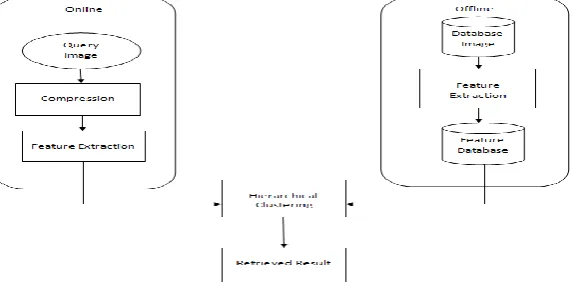
Fig 2: Sketch-based image retrieval System
Sketch-based image retrieval System:
Sketch-based image retrieval System Still even if the compute of research in sketch-based image retrieval increases, there is no widely old SBIR scheme. Our aim is to enlarge a content-based associative investigate engine, which records are accessible for anybody looking back to unguided sketch. The client has a diagram area, where he preserves all outline and instant, which are predictable to take place in the given place and with a given size. The retrieval results are grouped by color for superior clearness. Our mainly vital task is to overpass the information gap between the drawing and the image, which is assist by own preprocessing alteration process. In our organization the iteration of the consumption process is probable, by the existing outcome looking again, thus increasing the precision. The system building blocks include a preprocessing subsystem, which remove the troubles caused by the multiplicity of metaphors. Using the attribute vector generating subsystem our image can be represented by numbers considering a given property. The database management subsystem provides an interface between the database and the agenda. Bottom on the feature vectors and the model image the retrieval subsystem provides the response list for the user using the displaying subsystem (GUI). The global structure of the system is shown in Fig. 1. Early sketch based image retrieval systems were typically driven by queries comprising blobs of color or predefined texture . Later systems explored shape descriptors and spectral descriptors such as wavelets . New approach introduced a grid based approach to shape retrieval, dividing the image into regular grids and locate photos using sketched depiction of object shape. Descriptors from each cell were concatenated to form a global image feature. However this offers limited invariance to changes in position, scale or orientation. A depiction invariant descriptor which encapsulates local spatial structure in the sketch and facilitates efficient codebook based retrieval was proposed by Hu et al. [3]. This descriptor is able to mitigate the lack of spatial information within a BoVW representation by capturing structure from surrounding regions using a multiscale HoG descriptor computed over a gradient field interpolated from the orientations of strong Canny edges (GF-HOG). Eitz et al. [2] later computed HoG over Canny edges (SHOG) for BoVW though did not interpolate orientations from edges.
Content Based Image Retrieval (CBIR):
Content Based Image Retrieval(CBIR) (CBIR) is a technique that used to view image features like (color, shape, texture) to find a query image in a large size of the database. The retrieval images process, including, low level (content based features) and high level (semantic based features). The difficulties of CBIR lie in reducing the differences of contents based feature and the semantic based features. This problem in giving efficient retrieval images guide the researchers to use (CBIR) system ,to take global color and texture features to reach, the better retrieval, where others used local color and texture features[8].A new type of CBIR approach is presented in [9], in which the spatial pyramid and order less bag-of features image representation were employed for recognizing the scene categories of images from a huge database. This method offers a promising result and outperforms the former existing methods in terms of the natural scene classification. The method in [10] presented the holistic representation of spatial envelop with a very low dimensionality for representing the scene image. This approach presented an outstanding result in the scene categorization. The method in [11] proposed a new approach for image classification with the receptive field design and the concept of over-completeness methodology to achieve a preferable result. As reported in [11], this method achieved the best classification performance with much lower feature dimensionality compared to that of the former schemes in image classification task. Tandon et al. developed a CBIR system called FISH- Fast Image Search in Huge Databases which learns the relevance of image features based on user feedback.
A. Agglomerative clustering algorithm:
Agglomerative hierarchical clustering is a case of hierarchical clustering techniques. The technique works as repeatedly clustering the documents from top or bottom. The tree formed by this technique can be investigated at various levels. The technique work as follows:
i. Start by assigning each image to a cluster, so that if we have N images, we have N clusters. Each cluster initially contains just one image.
ii. Let the distances (similarities) between the clusters the same as the distances (similarities) between the images they contain.
iii. Find the closest (most similar) pair of clusters and merge them into a single cluster, this process is repeated for each image in database.
iv. Compute distances (similarities) between the new cluster and each of the old clusters. v. Repeat steps iii and iv until all images are clustered up to a specified threshold.
CONCLUSION AND FUTURE WORK
We propose the spatial constraint and coherent constraint to filter the false matches. The experimental results validate the effectiveness of our framework. Although our method achieves significant performance improvement in SBIR, Demands of multimedia applications are increasing over the Internet, the importance of image retrieval and image mining has increased. The ordered dither block truncation coding encode data stream is used to construct the image features, i.e. Bit Pattern features and Color Co-occurrence. The proposed method can contribute the best average precision rate compared to other former schemes in the literature. As a result, the proposed scheme can be considered competitive candidate in color image retrieval application. We pay attention solely to the area where the two clusters come closest to each other by applying hierarchical clustering algorithm to featured database. Agglomerative clustering with halftone based ODBTC will again increase the accuracy and efficiency of retrieved images. In future, this work can be extended using relevance feedback. The idea of relevance feedback is to involve the user in the retrieval process so as to improve the final result set.
REFERENCES
[1] A. Chalechale, G. Naghdy, and A. Mertins, “Sketch-based image matching using angular partitioning,” IEEE Trans. Syst., Man, Cybern. A, Syst., Humans, vol. 35, no. 1, pp. 28–41, Jan. 2005.
[2] M. Eitz, K. Hildebrand, T. Boubekeur, and M. Alexa, “Sketch-based image retrieval: Benchmark and bag-of-features descriptors,” IEEE Trans. Vis. Comput. Graph., vol. 17, no. 11, pp. 1624–1636, Nov. 2011.
[3] R. Hu and J. Collomosse, “A performance evaluation of gradient field hog descriptor for sketch based image retrieval,” Comput. Vis. Image Understand., vol. 117, no. 7, pp. 790–806, 2013.
[4] M. Eitz, K. Hildebrand, T. Boubekeur, and M. Alexa, “A descriptor for large scale image retrieval based on sketched feature lines,” in Proc. 6th Eurograph. Symp. Sketch-Based Interfaces Modeling, 2009, pp. 29–36.
[5] C. Ma, X. Yang, C. Zhang, X. Ruan, M.-H. Yang, and O. Coporation, “Sketch retrieval via dense stroke features,” in Proc. Brit. Mach. Vis. Conf., 2013, vol. 2, pp. 65.1–65.11.
[6] J. Yao, M. Li, Z. Li, L. Zhang, and W.-Y. Ma, “Natural image retrieval with sketches,” in Proc. IEEE Int. Conf. Multimedia Expo, Jul. 2005, pp. 1198–1201.
[7] Y. Cao, C. Wang, L. Zhang, and L. Zhang, “Edgel index for large-scale sketch-based image search,” in Proc. IEEE Conf. Comput. Vis. Pattern Recogn., Jun. 2011, pp. 761–768.
[8] Y. Cao, H. Wang, C. Wang, Z. Li, L. Zhang, and L. Zhang, “Mindfinder: Interactive sketch-based image search on millions of images,” in Proc. Int. Conf. Multimedia, 2010, pp. 1605–1608.
[10] S. Parui and A. Mittal, “Similarity-invariant sketch-based image retrieval in large databases,” in Proc. 13th Eur. Conf. Comput. Vis. Conf. Comput. Vis., 2014, vol. 8694, pp. 398–414. [1] D. Anil, K. V. Karthik, and K. Sudhir Kumar, “A Modified Three Level Block Truncation Coding or Image
Compression”, proc. IEEE Int’lconf. Pattern Analysis and Intelligent Robotics, pp. 28-29, June 2011.
[11] Jing-Ming Guo and Ming-Feng Wu, “Improved Block Truncation Coding Based on the Void-and-Cluster Dithering Approach”, IEEE Transactions on Image Processing, Vol. 18, No. 1, January 2009.
[12] S. Murala, R. P. Maheshwari, and R. Balasubramanian “Local tetra patterns: A new feature descriptor for content-based image retrieval”, IEEE
Trans. Image Process., vol. 21, no. 5, pp. 2874–2886, May 2012.
[13] A. Satpathy, X. Jiang, and H.-L. Eng, “LBP-Based Edge-Texture Features for Object Recognition” ,IEEE Trans. Image Process., vol. 23, no. 5, pp. 1953–1964, May 2014.
[14] C.-H. Lin, R.-T. Chen, and Y.-K. Chan, “A smart content-based image retrieval system based on color and texture feature,” Image Vis. Comput.,
vol. 27, no. 6, pp. 658–665, May 2009.
[15] Jing Ming Guo and Heri Prasetyo, “Content-Based Image Retrieval Using Features Extracted From Halftoning-Based Block Truncation Coding” IEEE Transactions On Image Processing, Vol. 24, No. 3, March 2015.
[16] E. J. Delp, O. R. Mitchell, "Image Compression using Block Truncation Coding", IEEE Trans. On Communications, Vol. 27, pp.1335-1342, September 1979.
[17] M. D. Lema, and O. R. Mitchell, "Absolute Moment Block Truncation Coding and its Application to Color Images", IEEE Trans. On Communications, Vol. 32, pp. 1148-1157, 1984.
[9] Wen-Jan CHEN, Shen-Chuan TAI, "A Genetic Algorithm Approach to Multilevel Block Truncation Coding", IEICE Trans. Fundamentals, Vol. E82-A, No. 8, August 1999.
[18] Riyaz Ahmad Dar, “A Review of Block Truncation Coding Using Digital Halftoning,” International Journal of Innovative Research in Computer and Communication Engineering, Vol. 2, Issue 8, August 2014.
[19] J. M. Guo, “Improved block truncation coding using modified error diffusion,” Electronics Letters, vol. 44, no. 7, pp. 462-464, Mar. 2008. [20] Guo and Liu, “Improved Block Truncation Coding using Optimized Dot Diffusion,” IEEE Trans. Image Processing (To be published in a
forthcoming issue of IEEE).
[21] X. Tan and B. Triggs, “Enhanced local texture feature sets for face recognition under difficult lighting conditions,” IEEE Trans. Image Process., vol. 19, no. 6, pp. 1635–1650, Jun. 2010.
[22] Shivkanya jadhav and N. G. Bhojne, “Customized Halftoning-Based Block Truncation Coding for Content-Based Image Retrieval”, International Conference on Innovations in information, Embedded and Communication Systems (ICIIECS), 2016.