CO-CREATION WITH OPEN GOVERNMENT DATA:
A Constructivist Approach Using a Multiple Case Studies Strategy from an Information Systems Perspective
A thesis submitted for the degree of
Doctor in Philosophy
By
Mashael Mahmoud Khayyat
to
The School of Computer Science and Statistics
Trinity College Dublin
Supervisors
Dr. Frank Bannister
Dr. Aideen Keaney
ii
Declaration
I certify that all work in this dissertation is entirely my own work, except where otherwise acknowledged, and it is entirely original and has not been submitted to any other purpose. I declare that this research is in compliance with the ethical research requirements of the School of Computer Science and Statistics.
I also declare that this thesis has not been submitted as an exercise for a degree at this or any other university.
I agree to deposit this thesis in the University’s open access institutional repository or allow the Library to do so on my behalf, subject to Irish Copyright Legislation and Trinity College Library conditions of use and acknowledgement.
Signature of Candidate: ____________ Name: Mashael Khayyat
iii
Summary
Open Government Data (OGD) initiatives are spreading worldwide. One use of OGD is the co-creation of applications and web services. Both OGD and co-creation concepts can be viewed from different perspectives as there are multiple definitions for both in circulation. The core concept of OGD is making data available for public use, while for co-creation the core concept is the cooperation in the provision of a product or service; whether that cooperation is between a business and its customers, a local authority and its citizens, or a combination of several parties. In essence, the customer/citizen changes from being a passive recipient of a product/service to becoming an active participant in its creation, design and delivery. In this research, co-creation refers to joint activities by interested parties in creating value (that can be a service, a product, or even an idea) using OGD. This research investigates one specific manifestation of co-creation, i.e. the co-creation process between Local Authorities (LAs) as providers of OGD and other parties who are interested in using these data. This research was carried out in four Irish LAs within the greater Dublin area and explores views from international experts, civil communities, academic experts, developers, and voluntary organisations as well as a number of government agencies.
iv
This research addresses two questions. First, how and to what extent are different communities making use of OGD in Dublin? Second, how effective are OGD in facilitating co-creation? To answer these two questions this research uses Activity Theory (AT), which is first further developed and then used as a theoretical framework. Classic AT includes six aspects: subject, tools, object, rules, community and division of labour. In this research, AT is extended by adding four more aspects: motivations, barriers, level of awareness, and effectiveness. This modified AT model is then used to create the interview questions and to facilitate the analysis phase by categorising the interview transcripts on themes based on the extended AT constructs.
A constructivist approach is adopted to rationalise the construction of meaning obtained/conveyed from the social context of the interviews and participant observations conducted in this research. The research takes an interpretative philosophical perspective through the usage of multiple qualitative methods (website analysis, semi-structured interviews and participant observation) for the data collection phase. The data are analysed using a thematic analysis technique with the assistance of NVivo software.
v
Dedication
To King Abdullah Bin Abdulaziz al-Saud, To my uncle, Suliman Khayyat, To my close friend, Lubna Ghaznawi,
vi
Acknowledgements
Special thanks to special people who helped me to complete this degree:
My parents, Mahmoud and Khairiah, to whom I am grateful forever, and to my special brother, Majed, for all of their support and love.
My husband, Raafat, who left his work in Saudi Arabia and came here to Dublin to help me complete my educational journey.
My daughters, Lammar and Reem who took on responsibility and gained independence in many aspects to provide me with the best atmosphere to progress.
My supervisors: Dr. Frank Bannister and Dr. Aideen Keaney who taught me how to think critically and assisted me in accomplishing all stages of my research.
I would like to thank the participants from the Dublin Local Authorities and all other participants. Without their contributions, my research could not have been accomplished. I also thank the Ministry of Higher Education in Saudi Arabia and King Abdul Aziz University for awarding me a scholarship to continue my study abroad, and I promise to serve my nation by proficiently assisting the next generation.
Finally, this acknowledgement will be incomplete without thanking all the people who supported me in making this work a success, and researchers who made their work accessible to motivate me and others.
vii
Abstract
In recent years, many governments have begun to realise the benefits of publishing government data for citizens to access and use. The use of Open Government Data (OGD) has been spreading globally as governments make more of their data available in electronically-accessible formats for the public to use and share. One use of such data is for the co-creation of applications and web services.
The aim of this research is to establish what facilitates co-creation activities when using OGD. Co-creation is here defined as the joint activities undertaken by interested parties to create value (that can be a service, a product, or even an idea) using OGD. In order to take a holistic view of this emerging area of OGD, this study is broadly based on many aspects of publishing and using OGD.
This is a multi-dimensional study covering ten constructs of the extended Activity Theory (AT) as a theoretical framework. Multiple case studies are used to investigate the existence of co-creation using OGD in the city of Dublin. This research adopts constructivist and interpretive philosophical assumptions. It is carried out in two stages. The first stage involves exploring the state of the main two OGD websites in Dublin local authorities (LAs): Dublinked and Fingal Open Data. The second examines in detail OGD activities and projects that have been undertaken by various Dublin communities and LAs. The examination has been achieved by conducting participant observation and semi-structured interviews. This research explores different views about how co-creation can be facilitated using OGD. Views are explored from LAs, international experts, civil communities, academic experts, developers, and voluntary organisations as well as a number of government agencies.
viii
Abbreviations
OD: Open Data
OGD: Open Government Data
AT: Activity Theory
LAs: Local Authorities
CoCos: County Councils
IS: Information Systems
OKFI: Open Knowledge Foundation International
OKFN: Open Knowledge Foundation Network
FOI: Freedom of Information
PSI: Public Sector Information
ix
Research Outputs
Papers published in journals:
Khayyat, M. & Bannister, F. (2015). ‘Open data licensing: More than meets the eye’.
Information Polity, 20, 231-252. Papers presented at conferences:
Khayyat, M. & Bannister, F. (2014). ‘Open Data Licensing: More than meets the eye’. Paper presented at the EGPA conference, 10-12 September, Speyer. Germany.
Khayyat, M. & Bannister, F. (2015). ‘Exploratory Multiple Case Studies to Understand the Phenomena of OGD and co-creation in Ireland’. EGPA conference, 26-28 August, Toulouse, France.
Khayyat, M. (2016). ‘A proposed model for the fourth generation of Activity Theory to be applied on the Smart City Research’. AIS Pre-ICIS Workshop on “IoT & Smart City Challenges and Applications” – ISCA 2016. Retrieved from http://iot-
smartcities.lero.ie/wp-content/uploads/2016/12/A-proposed-model-for-the-fourth-generation-of-Activity-Theory-1.pdf
Wall, P., Khayyat, M., Lewis, D. & Hederman, L. (2016). ‘Combining Critical Realism, the Morphogenetic Approach and Activity Theory: A Proposed Framework for the Study of Mobile Health (mHealth) in Sierra Leone’. Paper presented at the International Association for Critical Realism (IACR) conference. Postgraduate Teaching Centre, Cardiff Business School.
Posters presented:
Khayyat, M. (2015). ‘Boost your Open Data with Co-Creation’. Retrieved from http://www.slideshare.net/dublinked/mashael-poster
x Submitted:
Khayyat, M. & Bannister, F. (2017). ‘Exploratory Multiple Case Studies to Understand the Phenomena of OGD and Co-Creation in Ireland’. Information Polity.
xi
Table of Contents:
Declaration ... ii
Summary ... iii
Dedication ... v
Acknowledgements ... vi
Abstract ... vii
Abbreviations ... viii
Research Outputs ... ix
Chapter 1 ... 1
1. Introduction and Background ... 1
1.1 Introduction ... 1
1.2 Research background ... 1
1.3 Research problem ... 8
1.4 Research questions ... 8
1.5 Research context of OGD and co-creation ... 9
1.6 Theoretical framework and methods ... 10
1.7 Research objectives and significance ... 11
1.8 Thesis Structure ... 11
1.9 Conclusion ... 12
Chapter 2 ... 14
2. Literature Review ... 14
2.1 Introduction ... 14
2.2 Open Data (OD) ... 20
2.3 Open Government Data (OGD)... 36
2.4 OD and OGD barriers, issues and challenges ... 44
2.5 Co-creation ... 57
2.6Conclusion ... 69
Chapter 3 ... 71
3. Theoretical Framework ... 71
3.1 Introduction ... 71
3.2 Theories in IS research ... 71
xii
3.4 The augmented AT ... 80
3.5 Conclusion ... 86
Chapter 4 ... 87
4. Methodology and Data Analysis ... 87
4.1 Introduction ... 87
4.2 Research philosophy ... 88
4.3 Data Collection Instruments ... 91
4.4 Research strategy ... 102
4.5 Data analysis: thematic analysis ... 105
4.6 Research ethics ... 108
4.7 Research rigour and trustworthiness ... 108
4.8 Conclusion ... 110
Chapter 5 ... 111
5. Findings ... 111
5.1 Introduction and background ... 111
5.2 The participants... 113
5.3 People’s Activities ... 117
5.4 Co-creation... 145
5.5 OGD Effectiveness ... 152
5.6 Summary ... 159
Chapter 6 ... 160
6. Discussion ... 160
6.1 Introduction ... 160
6.2 Supporting co-creation with OGD ... 170
6.3 Answering the research questions ... 177
6.4 Summary ... 180
Chapter 7 ... 181
7. Conclusion ... 181
7.1 Introduction ... 181
7.2 The research contributions ... 181
7.3 Implications for practice ... 183
7.4 Research Limitations ... 185
7.5 Future Research ... 185
xiii
References ... 188
Appendices ... 201
Appendix A: Website Analysis ... 201
Appendix B: Interview Protocol ... 205
Appendix D: The Use of Nvivo to Analyse Data ... 209
xiv
List of Figures:
Figure 1.1 Map of Greater Dublin Area ... 4
Figure 1.2 The research context. ... 10
Figure 2.1 Chapter two structure. ... 14
Figure 2.2 OD types ... 28
Figure 2.3 The top ten most viewed datasets from Dublinked ... 30
Figure 2.4 Approaches to OD research ... 31
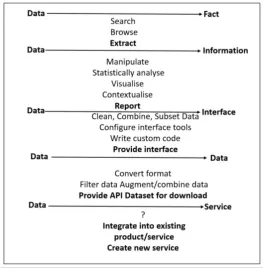
Figure 2.5 Processes of OGD use ... 43
Figure 2.6 Fishbone diagram of OD barriers ... 46
Figure 2.7 Coordination challenges in the OD process ... 54
Figure 2.8 A comparison between received and co-creation views ... 60
Figure 2.9 Types of co-creation ... 62
Figure 2.10 Some OD cases ... 65
Figure 2.11 Theoretical model for co-creating IT value ... 68
Figure 3.1 First-generation activity theory’s (Vygotskian) model of action ... 74
Figure 3.2 Basic structure of activity ... 74
Figure 3.3 Second-generation activity theory’s model of an activity system ... 75
Figure 3.4 Third-generation AT’s model of two interacting activity systems ... 76
Figure 3.5 Example of using AT with adding the ‘motivation’ aspect ... 81
Figure 3.6 The augmented AT Model ... 83
xv
Figure 4.2 Underlying philosophical assumption ... 89
Figure 4.3 Units of analysis for OGD websites ... 92
Figure 5.1 The three main categories in this research ... 111
Figure 5.2 Data cloud of this research ... 112
Figure 5.3 The overall findings of people’s activities ... 118
Figure 5.4 Dublinked datasets example ... 140
Figure 5.5 Restrictions on the dataset ... 141
Figure 5.6 Principle collaborators in Dublinked ... 142
Figure 6.1 Open data from both Government and citizens ... 171
Figure 6.2 Model of support structures and activities for promoting co-creation. ... 172
List of Tables:
Table 1.1 Some Irish OGD portals ... 5Table 2.1 Research scope regarding the meaning of data ... 16
Table 2.2 Transparency and openness initiatives ... 18
Table 2.3 OD Dimensions ... 26
Table 2.4 Dublin OD Types ... 29
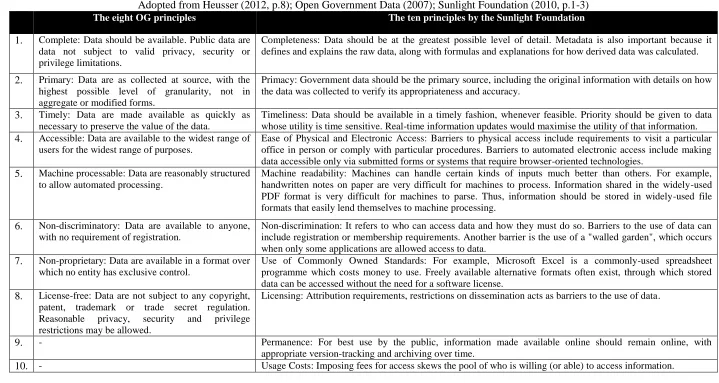
Table 2.5 OGD Principles ... 39
Table 2.6 Overview of benefits of OGD ... 42
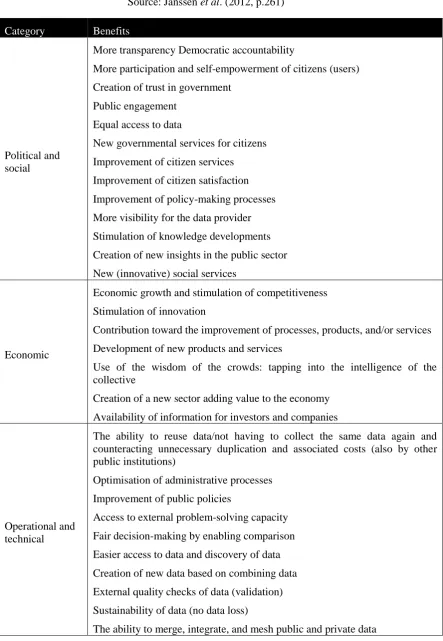
Table 2.7 OD Barriers ... 47
xvi
Table 2.9 Good and Bad OD ... 50
Table 2.10 The coordination barriers and suggested solution approaches ... 55
Table 2.11 Risk analysis to overcome barriers to OD ... 56
Table 2.12 Types of co-creation ... 63
Table 3.1 Types of theory borrowing in IS research ... 72
Table 4.1 Philosophical Assumptions ... 89
Table 4.2 Participant observations ... 95
Table 4.3 Visits and conferences ... 97
Table 4.4 The Eight-Step-Model ... 101
Table 4.5 Research Strategies ... 103
Table 4.6 Types of questions for different research methods ... 104
Table 4.7 Six stages of analysis ... 107
Table 5.1 LAs participants ... 113
Table 5.2 Community participants ... 114
Table 5.3 International consultants ... 115
Table 5.4 Academics experts ... 116
Table 5.5 Organisations ... 117
Table 5.6 In-case and cross-case analysis for Theme 1 People’s Activities ... 119
1
Chapter 1
1.
INTRODUCTION AND BACKGROUND
1.1 Introduction
This chapter serves as the background for this research. It gives an overview of open data (OD), including open government data (OGD) and the co-creation of ideas, applications and web services using OGD by multiple parties. These parties include data providers, corporate bodies/companies, public organisations, academics, local community groups and individuals. The concept of co-creation is not new (see chapter 2). What is new is the engagement of new groups and players in co-creation processes. Developments in ICT have made possible the involvement of a whole range of players who, heretofore, would have not been in a position to engage in this activity. One of the best-known examples of co-creation is Fixmystreet.com, an application which enables citizens to take pictures of local problems (such as broken street lights or loose paving stones) and post them on a web site. By this means, the local authority can be made aware of such problems and can notify the public via the same website when they are fixed. With the growth of open government data, the number of possibilities for this and other innovative applications has expanded rapidly and, as was found in this research, the co-creation movement in Dublin is thriving. This chapter provides information about Dublin and its four local authorities (LAs) since they are the four case studies in this research. The research gaps in the co-creation and OGD fields are then presented. Next, it discusses the research problems and questions. Finally, it displays context, theoretical framework, objectives and significance of the study, and the thesis structure of this research.
1.2 Research background
2
generated from surveillance cameras, Internet-based transactions and smart devices boosted the amount of data available in the digital universe to 2.8 ZB1. These statistics reveal, with more recent research, a lower amount of data being produced (Lee et al., 2014). However, while there is a disagreement about the actual number, there is a consensus that the rate of data being produced and the amount of data being stored over the last decade are reaching unprecedented levels.
Data are collected in various ways. Lee et al. (2014, p.18) state that governments collect data, for example, from sensors, environmental data, purchase transaction records, public-transport passenger data, hospital attendance figures, school exam results, health and safety indicators, employment levels and cellular phone GPS signals. One obvious question that emerges is what is the purpose of such data produced from these different sources?
In 2011, a movement towards open government partnership took place when eight governments2 began endorsing an open government declaration that encouraged the transparency and sharing of data with citizens. Open Government (OG) is a broad term, widely used with various interpretations. One of the benefits of OG is:
“establish[ing] a modern cooperation among politicians, public administration, industry and private citizens by enabling more transparency, democracy, participation and collaboration” (Bauer & Kaltenböck, 2011, p.9).
In this interpretation, Bauer and Kaltenböck (2011) mention the notion of modernity as a characteristic of OG. Their interpretation implies that emergent OG should endorse new ways of collaboration and participation between the government and the public. Kučera et al. (2012) claim that one of the most important enablers of OG is to provide free access to data and give freedom to use and reuse such data. This is because being open means, amongst other things, lowering if not removing any barrier that hinders the widest possible reuse of data by the public. Lee et al. (2014, p.18) state that governments produce vast
1 The zettabyte (ZB) is a multiple of the unit byte for digital information. ZB is 1021 Bytes.
2 The eight governments are those of the UK, USA, Brazil, Indonesia, Mexico, Norway, Philippines and
3
amounts of data, some of which are available to the public, and this can be called open government data, while the widely-used term ‘open data’ (OD) refers to data beyond just governmental agencies. Thus, the concept of OD is broader than just government data because the government is just one source of OD.
According to the United Nations (2013), the concept of OD refers to “information and data that should be made available for everyone to access, reuse, and redistribute with no restrictions” (p.6). Government agencies generate a massive amount of information and
data. If this information and data are made available following the principles of OD, then it can be referred to as ‘Open Government Data’ (OGD).
Definitions on OD and OGD vary. However, there are common threads and definitions. These are discussed in detail in Chapter Two.
1.2.2 Dublin
Cities worldwide are generating large volumes of data and facing a variety of challenges in managing infrastructure and providing resources and better services. Dublin, like many other cities, generates large volumes of data as a result of the interactions of its citizens with the city environment (buying/scanning travel tickets, general purchases, mobile phone use)3. Some of these data are generated by the LAs and public agencies and some by private companies delivering services in the city (transport, refuse, and retail); others are generated by residents and visitors. Some LAs, such as those in Dublin, publish the data online to facilitate data accessibility.
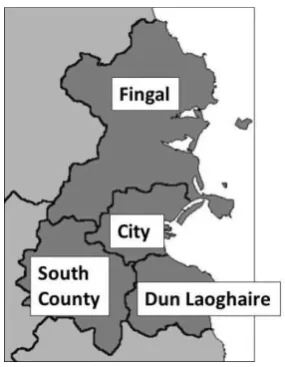
Dublin is the capital city of Ireland. Approximately 1.3 million people live in the greater Dublin area. Administratively, Dublin is divided into four LA areas: Dublin City Council (DCC), which is responsible for the city core; South Dublin County Council (SDCC), covering the south-west; Dublin Fingal County Council (Fingal CoCo), which covers the north side of the city; and Dún Laoghaire-Rathdown County Council (DLR CoCo), covering the south-east. Both Dublin South and Fingal include rural and farming areas. Figure 1.1 shows the four local authority areas on the map of Dublin.
3
4
Figure 1.1 Map of Greater Dublin Area
5
Table 1.1 Some Irish OGD portals
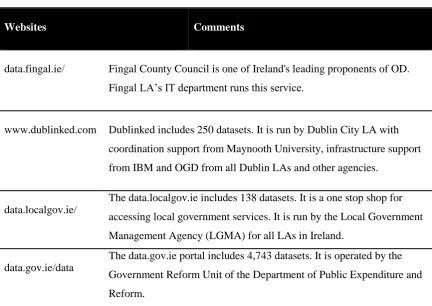
Websites Comments
data.fingal.ie/ Fingal County Council is one of Ireland's leading proponents of OD. Fingal LA’s IT department runs this service.
www.dublinked.com Dublinked includes 250 datasets. It is run by Dublin City LA with coordination support from Maynooth University, infrastructure support from IBM and OGD from all Dublin LAs and other agencies.
data.localgov.ie/
The data.localgov.ie includes 138 datasets. It is a one stop shop for accessing local government services. It is run by the Local Government Management Agency (LGMA) for all LAs in Ireland.
data.gov.ie/data
The data.gov.ie portal includes 4,743 datasets. It is operated by the Government Reform Unit of the Department of Public Expenditure and Reform.
As shown in Table 1.1, there are portals for OGD at the city level and national level. This research covers only the city level (in this case Dublin).
Traditionally, local governments in Ireland have been quite adventurous in their use of information and communications technology (ICT). As far back as 1975, the Irish LAs set up a shared services operation, the Local Government Computer Services Board (Irish Statute Book 1975)4, something that was in many respects well ahead of its time. In the spirit of this tradition of innovation, the Dublin LAs have been taking a leading national role in both the creation of OGD initiatives and the promotion of co-creation. In this research, co-creation refers to joint activities by interested parties in creating value (that can be a service, a product, or even an idea) using OGD. The team of Dublinked (2011) expresses their vision as follows:
“Our vision for Dublin is for a smart open city; open access to public data, open to new technology, open to new ways of working and new collaborations. Smart
4
6
Dublin is a collaboration framework for Dublin that enables the co-creation of solutions to priority city region challenges.”5
This statement clearly shows that the Dublinked team attempts to foster the co-creation process. Above all, the vision of smart Dublin is to adopt a framework to enable co-creation solutions to the city’s problems. However, as soon became evident in this research, there is as yet no available and suitable co-creation model for them to act upon. It is worth noting that, according to the Global Open Data Index 20156, when it comes to the availability of OGD, the Irish national government has lagged behind (Ireland is ranked 31st), and at the time of writing this dissertation, it continues to lag behind many other OECD countries7. At the same time, the initiatives of local government communities in the city, notably those of technology specialists and developers, have become increasingly interested in exploiting local data to generate new information services, mobile applications, and web-based applications. A typical example of a co-creation initiative is a Dublin version of the well-known application fixmystreet called fixyourstreet.ie. This website enables citizens to view, report local problems, and share them with their LA, as well as pressurise those authorities to fix such problems and generally make improvements in their neighbourhood. Another example of co-creation is the website for tracking planning applications called Mypp.ie. A commercial company developed this application, which uses OGD to show details of planning applications on an interactive map covering most of Ireland. There are many other applications now available; others are still in the process of design. However, as highlighted in the Independent (2016), Ireland is facing big issues such as geopolitical tensions and debt. Consequently, the country is facing economic uncertainty, according to the Central Bank's latest Macro-Financial Review. In this scenario, one can wonder how the local government in Ireland can work on OGD – something that requires more resources. If the work is voluntary and carried out on an ad hoc basis it could be at risk of collapsing. A framework for collaboration between many parties is needed to help all interested parties in their co-creation process using OGD.
5 http://dublinked.ie/about-us/
6 http://index.okfn.org/place/
7
7
1.2.3 OGD in different countries
While there are many concerns in relation to OGD such as licensing and privacy, in recent times many countries have encouraged the movement towards the opening up and publishing of non-personal data to the public because they acknowledged the benefits of such a movement (Oh, 2013). Lakomaa and Kallberg (2013) state that the first countries and states within a federal framework to open up data for citizens were North America, the UK, and Oceania8. They claim that there are:
“differences between the Anglo-Saxon common law countries such as USA, UK, Australia and New Zealand, compared to civil law and centralised government countries, such as Denmark, France, and Sweden, when it comes to the degree of access to government sector public information” (p.559).
According to Lakomaa and Kallberg (2013), Anglo-Saxon countries are more open than others. This is quite surprising because historically Sweden was the first country to implement FOI.
According to dataportals.org, there are 520 portals for OGD around the world. Machado and De Oliveira (2011) list some OGD initiatives around the world, such as:
USA Portal (http://www.data.gov/) UK Portal (http://data.gov.uk/) Australian Portal (http://data.gov.au/) New Zealand Portal (https://data.govt.nz/).
Some examples of OGD in the Middle East include: Saudi Arabian Portal (http://www.data.gov.sa/en/) Bahrain Portal (http://www.data.gov.bh/)
8
8
United Arab Emirates Portal (http://www.government.ae/web/guest/uae-data) Oman Portal (http://www.data.gov.om/).
This shows that although the OGD field faces many challenges, many countries can see the potential of having OGD for the benefits of both governments and citizens.
1.3 Research problem
According to some scholars, OGD initiatives are spread worldwide (Davies et al., 2013). Yet, a deeper understanding of the potential and practice of OGD is needed in order to efficiently manage OGD. Moreover, in OD and OGD research, many studies tend to focus on datasets and data architectures (Hausenblas & Karnstedt, 2010; Umbrich, 2012; Larkou
et al., 2013) rather than the impact and use of the data. Fitzpatrick (2012) states that although there is a myriad of active initiatives using OGD found around the world, most are still at the initial stages. Most studies of co-creation focus on the commercial aspects, i.e. between customers and companies (Kohler et al., 2011; Chen et al., 2012; Grönroos & Voima, 2013; Vernette & Hamdi-Kidar, 2013). A review of the literature shows that there have been no studies to date examining the impact of OGD on the phenomenon of co-creation, although a number of studies have discussed the link between the two (Maier-Rabler & Huber, 2012; Jetzek et al., 2014). The impact of OGD on co-creation communities in Dublin is not yet well understood as OGD is still in its infancy. Durugbo and Pawar (2014) state that “co-creation as a research area is still at an early stage, and there is a need to formalise the co-creation process” (p.4374). There are, therefore, gaps in
current research and this creates opportunities for scholars in both fields. From this early stage of co-creation within the context of OGD, the research questions set out in the following section emerge.
1.4 Research questions
The main research questions posed by this study are:
How and to what extent are different communities in Dublin making use of OGD? How effective are OGD in facilitating co-creation?
9
What are the co-creation communities that are interested in using OGD?
What are the objectives and motivations for communities or individuals in deriving value and engaging with OGD?
What rules govern the use of OGD?
Are there any challenges/issues/obstacles/barriers to publishing or using OGD? What tools are being adopted to utilise OGD?
What is the structure of the co-creation team (the division of labour)? What is the level of awareness about using OGD for co-creation? What is the community/environmental impact on OGD activities?
By exploring these aspects, the aims of this research are to contribute to the understanding of the phenomena of both OGD and co-creation, and to facilitate the co-creation process among multiple parties.
1.5 Research context of OGD and co-creation
The participant observation component of this research included attending many meetings at which various parties (LAs employees, developers, corporates employees and academics) were working together in order to share ideas and apply them to create phone applications and web services. The participants at these meetings were de facto engaging in co-creation even if not all of them were aware of this term. In all cases use of OGD underlay the applications being developed though this was often supplemented with data from other sources.
10
Figure 1.2 The research context.
The co-creation concept is presented in Figure 1.2 where both OGD publishers (the four Dublin LAs) and interested communities are working together to create ideas, applications, and services using OGD.
1.6 Theoretical framework and methods
The theoretical framework used in this research is Activity Theory (AT) because this theory’s model includes six particularly relevant aspects of the phenomena to be investigated in order to answer the research questions. AT is discussed and developed. The development of the AT model is described in Chapter Three. AT within this research is used as a lens for designing interview questions, data analysis and structuring the data findings.
To answer the research questions, both primary and secondary data sources have been explored, including an extensive literature review, browsing OGD portals, participant observations, and semi-structured interviews. The literature review was conducted using a wide range of publication databases (including, inter alia, Science Direct, JSTOR, MISQ, the ACM digital library, Springer Link, the IEEE Xplore digital library, and Google Scholar) to identify academic and scholarly publications on OD, OGD, and co-creation. This exploratory study was carried out, adopting a constructivist approach for the construction of meaning obtained/conveyed from the interviews and participant observations. This research takes an interpretative philosophical perspective through the uses of multiple qualitative methods. It employs multiple case studies as the primary research strategy. The data is collected firstly by examining two portals of OGD:
OGD portals:
Dublinked Fingal open data
• 4 LAs
• International experts • Civil communities • Academic experts • Developers • Voluntary
organisations • Government
agencies
11
Dublinked and Fingal OD. Second, semi-structured interviews with 48 participants and 11 participant observations were undertaken. Formal ethical approval from the university was obtained before the data collection phase. The data analysis has been completed using the thematic analysis technique employing NVivo software.
1.7 Research objectives and significance
The overall aim of this research is to gain an in-depth understanding of the current status of OGD in Ireland and how that can impact the involvement of urban communities in co-creating public goods using OGD. This includes investigating the processes whereby different communities exploit and make use of OGD, including the factors that facilitate or hinder such activities. This can help in conceptualising and developing a wider understanding about co-creation between government and interested citizens who are presented as co-creation communities in this research. Based on the findings, this research contributes the following outcomes to the field of knowledge:
Advancing knowledge and understanding of two emergent phenomena, namely, OGD and co-creation;
Enriching and evolving AT;
Facilitating collaboration among OGD stakeholders by providing the co-creation model.
1.8 Thesis structure
This dissertation is comprised of seven chapters. The contents of each are as follows: Chapter One provides a review on the background of the research, introduces key
concepts, and describes the research problem and questions. The chapter presents the research theoretical framework, together with the objectives and significance of the research. Finally, it outlines the roadmap for the whole thesis.
12
already been published in a co-authored, peer reviewed journal article. This applies to all the following sections with some amendments 2.2.2, 2.2.3, 2.2.7, 2.3.4 and 2.5.6. Chapter Three offers the theoretical framework. It discusses all generations of AT.
The chapter proposes the augmented AT which is used as the theoretical model for this research.
Chapter Four describes the research methodology. It underpins the philosophical stance, research design, and the methodology chosen to address the research questions. The chapter also presents how the data collection and analysis process were conducted. Chapter Five provides the research findings in categories supported with direct quotes
and figures.
Chapter Six analyses the findings, compares them with the literature, and presents the co-creation model. Again, some sections have been co-authored with Frank Bannister. This material is drawn from an article that, at the time of writing, is under revision for a peer reviewed journal.
Chapter Seven presents the contributions, implications for practice, and limitations of this research. It also puts forward suggestions for future research. Finally, the concluding remarks of the whole study are presented.
1.9 Conclusion
13
14
Chapter 2
2.
LITERATURE REVIEW
2.1 Introduction
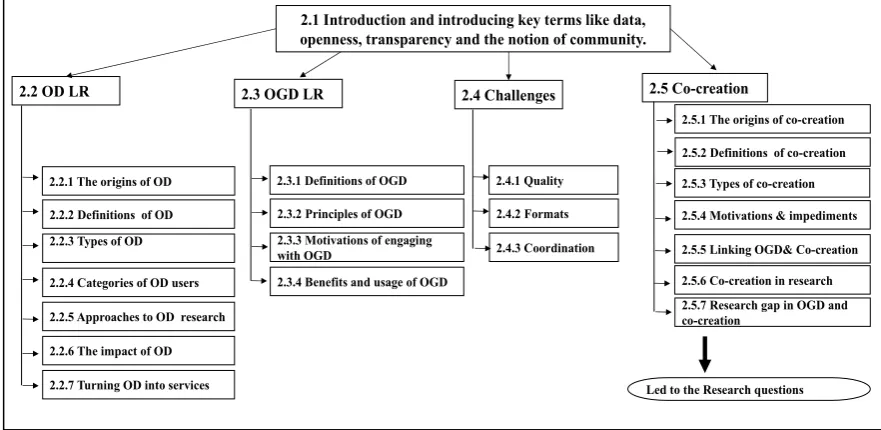
[image:30.595.56.497.381.596.2]This chapter begins with a discussion of the background and definitions of some key terms and concepts. Key terms used include data, openness, transparency, and the notion of community. OGD and co-creation have been used in this research as key concepts. The literature review (LR) is divided into four main sections. The first, 2.2, discusses the OD literature. Section 2.3 explores the literature on OGD while section 2.4 outlines the barriers and challenges faced when implementing OGD. Finally, Section 2.5 examines the concept of co-creation. At the end of this chapter, the gaps identified in the literature lead to the research question. Figure 2.1 illustrates the chapter’s structure.
Figure 2.1 Chapter two structure.
2.1.1 Data, openness, and transparency
This section explains a number of concepts that are important in this research. Some are more straightforward to define and/or describe than others. Data, to start with, may refer to spreadsheets packed with numbers as stated by Cooper (2014), but also includes online
2.1 Introduction and introducing key terms like data, openness, transparency and the notion of community.
2.2 OD LR
Led to the Research questions 2.3 OGD LR
2.2.1 The origins of OD
2.2.2 Definitions of OD 2.2.3 Types of OD
2.2.4 Categories of OD users
2.2.5 Approaches to OD research
2.2.6 The impact of OD
2.2.7 Turning OD into services
2.3.1 Definitions of OGD
2.3.2 Principles of OGD 2.3.3 Motivations of engaging with OGD
2.3.4 Benefits and usage of OGD
2.4 Challenges
2.4.1 Quality
2.4.2 Formats
2.4.3 Coordination
2.5 Co-creation
2.5.1 The origins of co-creation
2.5.2 Definitions of co-creation
2.5.4 Motivations & impediments
2.5.5 Linking OGD& Co-creation
2.5.6 Co-creation in research 2.5.7 Research gap in OGD and co-creation
15
product reviews, the results of procedures in medical files, or the detailed data that accompany all online activity (known as metadata). He also highlights the value of providing data freely to any interested party and considers it to be a ‘philosophy’ called open data (OD) where big data and OD are differentiated.
16
Table 2.1 Research scope regarding the meaning of data
Source: Davies (2012b)
Data Definitions Potential implications
Big Data Data that requires ‘massive’ computing power to process.
Companies and researchers can ‘data mine’ vast data resources to identify trends and patterns in big data.
Raw Data Primary data, as collected or measured directly from the source, or data in a form that allows it to be manipulated, sorted, filtered and remixed.
Access to raw data can allow journalists, researchers, and the public to ‘fact check’ official analysis.
Real-time Data
Data measured and made accessible with minimal delay. Often accessed over the web through APIs (Application Programming Interfaces).
Data can support the development of ‘early warning systems’ (e.g. Google Flu
Trends). ‘Smart systems’ and ‘smart cities’ can be configured to respond to real-time data and to adapt to the changing
circumstances. Open
Data
Datasets that are made accessible in non-proprietary formats under licenses permit unrestricted reuse. If a government is providing the datasets, it can be called OGD.
Third parties can innovate with OD; generating social and economic benefits.
Linked Data
Datasets are published in the RDF
(Resource Description Framework) format. Linked Data is a method of publishing structured data so that it can be interlinked and become more useful through semantic queries.
[image:32.595.52.512.101.502.2]A ‘web of linked data’ emerges; supporting ‘smart applications’ that can follow the links between datasets. This provides the foundations for the Semantic Web.
Table 2.1 shows different meanings regarding the term ’data’ depending on what adjective is used with it.
Other terms like openness and transparency may look similar, yet have subtle (and sometimes not so subtle) differences. To understand these terms, there is a need to take a brief look at how authors define them. Some authors incorrectly use the term ‘openness’ and ‘transparency’ interchangeably. One definition of openness refers to the unrestricted access to knowledge and information as well as cooperative management and decision-making without any restriction from a central authority (Peters, 2010). Peters considers transparency and freedom to be characteristics of openness.
17
“All official documents shall be public, unless specifically otherwise provided in this Act or another Act ... [and] the right of access to official documents is included as a fundamental right in the new Constitution Act of 1999” (Mäenpää, 2006, p.61).
Mäenpää describes this Act as fundamental since it forms one of the most significant guarantees of openness and transparency of public administration. Furthermore, Bertot et al. (2010) do not consider openness as an isolated entity such as OD portals; rather, they assume that openness transpires/occurs through government actions and e-government. Heald (2006) argues that unfortunately, in this era, ‘transparency’ might have replaced ‘openness’, though the two words carry distinct meanings. The critical difference between the two terms is that openness implies a willingness to engage, discuss, listen, and cooperate whereas transparency merely means visibility. Openness includes transparency, as Peters says, but is a much wider concept.
18
Table 2.2 Transparency and openness initiatives
Adapted from (Bertot et al., 2010)
Country Transparency and openness initiatives
India The Indian government posted rural property records online, which greatly increased the speed at which the records are accessed and updated. At the same time, these online records help in diminishing opportunities for local officials to accept bribes, an activity that had previously been widespread.
Philippines The Philippines Department of Budget and Management started an e-procurement system for government agencies in order to prevent price fixing and at the same time promote public accountability.
Chile
ChileCompra is an e-procurement system that has been used to allow government officials and citizens to compare the costs of bids and services purchased by the government.
USA Websites have been created in the United States to allow access to government data to enable the public to monitor government spending with the aim of faster identification and the elimination of wasteful projects. For example, websites of general funds (www.usaspending.gov), expenditure (www.recovery.gov), and information technology funds (www.IT.usaspending.gov) sites.
Table 2.2 shows that there is a movement towards promoting transparency and openness worldwide. Many of the transparency and openness initiatives focus on the importance of reducing government corruption.
19
Finally, Narayanan (2015) connects openness with the concept of co-creation, stating that the common strategy that must come when creating smart and digital cities is a culture of openness, of shared resources, and co-creation. He argues that the two concepts of openness and co-creation complement each other because, without openness, it is impossible for co-creation to exist in any meaningful sense. In other words, openness is a pre-requisite for co-creation within the context of OGD. The co-creation concept is covered in more detail in section 2.4.
2.1.2 The notion of community
The term ‘community’ is attached to many other terms such as a community of practice (CoP), an online community, smart community, and co-creation community (Holmes & Meyerhoff, 1999; Garrison, 2007; Li et al., 2011; Ind & Coates, 2013). Communities have been defined in various ways based on different goals and contexts. Donald (2013) believes that finding an appropriate definition of community is not a straightforward task and refers to Hillery (1955) who identified 94 definitions of community within social science literature (as cited in Donald (2013)). Hillery inferred that one common denominator of all the definitions is their reference to people. Donald states that the term community originates from the Latin ‘communitatem’ which refers to “the quality of fellowship or feelings between people” (Ewalt et al., 2001, cited in (Donald, 2013, p.23)). Kamp (2009) endorses that the term community originates from the Latin ‘communitas’, meaning “a group of interacting people in the same environment” (p.1). While, both Ewalt
et al. (2001) and Kamp (2009) indicate that the origin of the term community is Latin, Donald uses ‘communitatem’ while Kamp uses ‘communitas’. Both definitions refer to communities as basically consisting of groups of people.
20
human beings. He posits that Toynbee’s description of society is a useful and suitable definition for community. Borgmann (2004) notes that a community should be small enough for everyone to know each other (though this would rule out many groups who consider themselves to be communities). Martin (2014) refers to the OGD community, in particular, as actors who engage in OGD activities in a cross-sector network. It is clear that various authors differ on the definition of community, but there is general agreement that the term community is commonly used to describe a group of people with common interests. For the purpose of this research, an OGD community can be defined as a group of either publishers or users who are interested in working with OGD.
The OD concept is discussed in the following section. Note that OD and OGD have been mentioned interchangeably by different authors at times. In this dissertation, they are regarded as distinct, with OGD being a subset of a much wider OD universe.
2.2 Open Data (OD)
In the nineteenth century, an English doctor named John Snow, while utilising available data, discovered the relationship between drinking polluted water and cholera. This was achieved by analysing the locations of wells and the data relating to cholera deaths. This led to an improvement in the general health of the population (Dietrich et al., 2012). As a result of his work, completed in 1854, London’s sewage systems were built. This is an early example of utilising available public data to create significant and beneficial societal change. The following section looks at the origins of the concept of OD.
2.2.1 Origins of OD
21
Sweden’s FOI act was the first in the world and the only one until 1809. Later, many countries adopted the FOI Act model for access to government documents (Mustonen, 2006). Mustonen defines FOI as a human right reflecting government information that can help citizens, such as providing information about the location of schools to every person without discrimination. Thus, citizens have the right to know and have access to official documents in order, inter alia, to make governments accountable. As of September 2012, at least 95 countries worldwide had established laws allowing public access to government-held information (Right To Info, 2012).
In Ireland, the FOI Act 1997 led to considerable changes in the relationship between the citizen, public bodies and government departments (Office Of The Information Commissioner, 2008). There were some restrictions on the information that could be made public and the Amendment Act in 2003 introduced fees for requesting information. The enactment of this type of law was only the starting point for FOI and eventually led to the OD concept in Ireland.
In 2000, the Charter of Fundamental Rights of the European Union was established. It includes both freedom of expression and the right of access to documents. The first regulation on access to documents was then adopted in the EU in 2001 (Luhtanen, 2006). Subsequently, the emergence of both Open Government (OG) and e-Government played an important role in the compilation and dissemination of OGD (Fitzpatrick, 2012). In 2009, the term OD became more widely used after President Barack Obama issued a memorandum on transparency and open government in the USA (Ginsberg, 2011).
According to Kimpton (2013, p.1), Barack Obama made an extraordinary move when he officially made open and machine readable data the default setting for the government. Europe has had its own initiatives regarding OD. In 2010, data.gov.uk was launched in the United Kingdom (UK) (Lee, 2012; Davies, 2013). The Guardian (newspaper) website, at
22
Kassen (2013) claims that the term OD first became popular in the academic and political fields “as a movement aimed at development of open scientific communities by ensuring a
free access to academic data published in special digital depositories” (p.508). As noted above, in the political field, OD gained popularity with the launch of OD for open government projects such as data.gov in the USA. Kassen depicts the OD phenomenon as part of the e-government concept that may embrace accountability such as governmental blog platforms and participation. OD as a concept may seem straightforward, but is surrounded by several issues and challenges. Common topics of debate, and sometimes controversy, include the impact/use of OD, barriers to its release, licensing and formats (Larsson, 2013; Khayyat & Bannister, 2015).
Having presented a brief history of OD and introduced some basic terminology, the next section presents and discusses some definitions and implications of OD.
2.2.2 Definitions of OD9
“Open data is the public library of the 21st century”10 is a motto of this study. Many researchers have studied the phenomenon of publishing OD. For example, some researchers describe OD as a movement (Maruyama et al., 2013; Oh, 2013) while others consider it to be an initiative (Ginsberg, 2011; Ubaldi, 2013; Foulonneau et al., 2014) or link it to innovation (European Commission, 2011; Chan, 2013; Lakomaa & Kallberg, 2013).
While the focus of this research is on OGD, it is useful, however, at this stage to explore briefly the wider concept of open data (OD).
According to the Open Knowledge Foundation International (OKFI, 2012) OD is “… data
that can be freely used, reused and redistributed by anyone - subject only, at most, to the requirement to attribute and share-alike” (p.6).
9 Much of this section has been published in a peer reviewed journal in an article co-authored with Frank
Bannister (Khayyat and Bannister 2015).
10
23
This definition appears to be incomplete, at least when it comes to the “subject only” phrase. It is not difficult to think of other desirable requirements that might be demanded of OD other than attribution and share-alike. Thus, the OKFI definition seems unsatisfactory. Another definition is provided by the European Commission (2015) which defines OD simply as something which “… refers to the idea that certain data should be
freely available for use and re-use” (p.1). By confining itself to OD as an idea, the
Commission avoids some of the pitfalls that crop up when a more specific definition is proposed, but in so doing, it comes up with a definition so generic that in practical terms is of limited value. Similarly, the United Nations (2013) defines OD as information and data that ought to be made available for everyone to access, to reuse, and to redistribute with no restrictions.
According to the ODI (Open Data Institute, 2012):“Open data is information that is available for anyone to use, for any purpose, at no cost”(p.1). While the ODI states clearly that OD ought to be cost-free, publishing data costs time and money and some reasonable charge could be involved in its provision. This would not make it less open. Making all data cost-free may not be practical or acceptable to governments. On the other hand, the ODI states that OD should have a licence that declares it is OD because the data cannot be reused without some kind of guarantee to protect both source and user. The Department for Education in the UK, for example, provides data on the performance of schools in England as OD. The data are available under the Open Government Licence that requires users to acknowledge that the source of the data as being the Department for Education (Open Data Institute, 2012).
Kassen (2013) defines OD on the assumption that the government is the data provider, by stating that: “Open data is a concept that governmental data should be available to anyone
with a possibility of redistribution in any form without any copyright restrictions”(p.508). Rosada (2013) refers to OD as:
“the idea that certain data should be freely available to everyone to use and republish as they wish, without restrictions from copyright, patents or other mechanisms of control” (p.3).
24
licensing. The evidence suggests that some authors who talk about there being no restrictions on licensing may not have considered this as an issue. In fact, all the above-mentioned definitions neither considered the licensing nor the format of data. Kassen and Rosada’s definitions of OD are compatible with the definition of the United Nations, that such data should be accessible without any restrictions or limitations. However, the meaning of ‘freely available’ is not explained. Does it mean that data must be available online in an open standard format or is a hard-copy version sufficient to meet this criterion? In addition, most definitions ignore the timeliness of the data.
Cooper (2014) claims that there are two core components of OD that are publicly available and relatively simple to operate. First, data are made publicly available by being licensed in a way that allows for reuse. Second, data need to be relatively easy to use by being accessible and digitised for free or at low-cost in different usable formats such as .csv (a comma separated values) and .xls (eXceL Spreadsheet). Cooper (2014) comments that “if two heads are better than one, how much better are dozens, hundreds, or even thousands of minds digging through data, looking for valuable correlations and insights?” (p.4). Cooper argues that providing free or low-cost data in usable formats can bring great potential.
Alonso (2012) notes that OD means different things to different people and those views are not always known, understood or shared outside of the OD community. There is no consensus about what ‘open’ exactly means when it comes to data. Cole (2012) points out that there are degrees of openness. For example, data may not be readily available and accessible when specifically requested (the data could be incomplete). Data in their original formats may require specific expertise or resources in order to be accessed fully or considered as OD. Furthermore, even when data are open, there are often limitations which diminish the potential benefits. Sources such as the Open Knowledge Foundation (OKFI, 2012) and Dietrich et al. (2012, p.6) are more specific about the requirements for OD and content as follows:
25
Reuse and Redistribution: the data must be provided under terms that permit reuse and redistribution including the intermixing with other datasets.
The data must be machine-readable.
Universal Participation: everyone must be able to use, reuse and redistribute – there should be no discrimination against fields of endeavour or against persons or groups.
For example, ‘non-commercial’ restrictions that would prevent commercial use, or restrictions of use for certain purposes (i.e. only in education), are not allowed” (p.6).11 OD ought to be open for everyone to use as long as there is no confusion concerning its understanding. The following section sets out some OD principles.
The definition of OD could be confused by what Davies (2012) defines as raw data. He asserts that raw data are primary data in a form that allows datasets to be easily manipulated, sorted, filtered and remixed. Being more pragmatic, open data are expected to have some qualities and characteristics such as:
having appropriate formats for different users;
being accessible so data can be accessed without the need for a software license; non-proprietary (ownership);
complete;
archived (permanent);
having version tracking/be traceable;
having easy and clear licensing that seeks to empower the ability for users to use the data and allow them to make modifications as long as they are not misleading others; may require republishing of the resulting work under a different version and
acknowledging the source;
being updated when needed/on time (releasing and updating the real-time data);
11
26
being free or at minimum production cost, preferably downloading via the Internet.
[image:42.595.56.499.246.564.2]Meijer et al. (2014) propose four access dimensions for OD (see Table 2.3). They emphasise that OD can be open in some dimensions and to certain degrees. For example, government organisations could make some unavailable data obtainable at limited cost, which generates more openness than previously. However, they claim that such data are still far away from complete openness.
Table 2.3 OD Dimensions
Source: Meijer et al. (2014, p.9)
Access
dimension Description
Technical access
Can everybody access the government data or is access restricted?
Are the data available in a machine-readable format so that they can easily be used in applications?
Legal access
Is everybody allowed to use the data for their own purposes or are there restrictions to use?
Are citizens, stakeholders, and companies allowed to process and (re) publish the data?
Economic access Are the data available at no cost or do people have to pay to access it? Are citizens, stakeholders and companies allowed to make a profit out of OD?
Political access Is access limited to politically desirable issues or does it entail all issues?
Meijer et al.’s OD dimensions can assist citizens to investigate their level of access in different contexts. In order for data to be considered as OD, there should not be any restrictions such as technical or political constraints.
27
ensure. Such data can be recycled and reused as required. The following sections provide some information and background about different aspects that can increase our understanding of OD beyond its definitions.
2.2.3 Types of OD
The above discussion of open data implies that these definitions often depend upon the type of data and its potential uses. The OKFN (2015) proposes a list of OD types as follows:
Geodata: geographic locations that are stored in a format that can be used with a geographic information system (GIS) (Arcgis Resources, 2012);
Cultural: cultural works and artefact data such as titles and authors in collections held by galleries, libraries, archives and museums;
Science: data from public scientific research;
Finance: for example, government or local government expenditure and revenue; Statistics: a wide variety of data including demographic and economic statistics; Weather: historic and forecasts;
Environment: pollution levels, pollen counts, and so on;
Transport: bus timetables, routes, on-time statistics and traffic conditions.
28
Figure 2.2 OD types
Source: (OKFI, 2015)
29
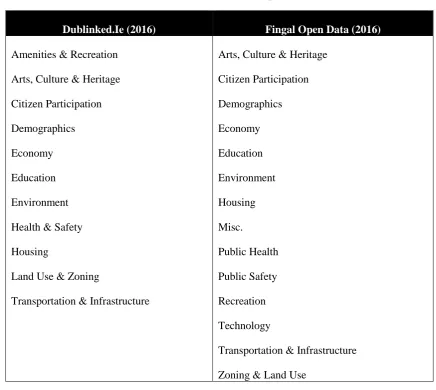
Table 2.4 Dublin OD Types
Dublinked.Ie (2016) Fingal Open Data (2016)
Amenities & Recreation Arts, Culture & Heritage Citizen Participation Demographics Economy Education Environment Health & Safety Housing
Land Use & Zoning
Transportation & Infrastructure
Arts, Culture & Heritage Citizen Participation Demographics Economy Education Environment Housing Misc.
Public Health Public Safety Recreation Technology
Transportation & Infrastructure Zoning & Land Use
30
Figure 2.3 The top ten most viewed datasets from Dublinked
Source: Published by Dublinked (2014)
Figure 2.3 shows that parking meters in Dublin City is the most viewed dataset. The parking meters dataset includes useful data for Dublin citizens or visitors such as parking locations, number of spaces per street (PD-Pay and Display D-Disc Parking), tariff (cost per hour), and nearest location of pay and display.
2.2.4 Categories of OD users
OD users can be classified into different categories based on their technical level of knowledge or profession. Oh (2013) groups OD users into three categories as follows: Casual users: Users who prefer human readable formats since they prefer more
user-friendly and easy to understand formats with the minimum effort of manipulating and processing.
Semi-technical users: Users who have some level of technical knowledge or work in a field that requires it, such as journalism. This type of user can undertake some manual manipulations and analysis using applications such as Excel.
Technical users: Users who prefer data in raw/machine-readable formats in order to carry out sophisticated statistical analyses. Some users may prefer data in specific formats, such as Word.
31
and government users. In addition, the same users may belong to more than one category, for example, a particular user may be considered both as a casual user and a technical one.
2.2.5 Approaches to OD research
OD has gained a lot of attention in the political and research areas. (Davies & Perini, 2016) suggest three broad categories of OD research. These are: OD readiness assessments; OD implementation studies; and OD impact studies (see Figure 2.4). However, this is far from a complete list. Other forms of OD research include open datasets assessment, OD evaluation studies and OD comparison studies. This research fits under OD impact, as it is only concerned about the impact of OGD on co-creation.
Figure 2.4 Approaches to OD research
Source: (Davies & Perini, 2016, p.9)
According to (Davies & Perini, 2016), readiness studies must have an existing notion of what an OD initiative would consist and decide which factors are important in making an OD initiative a success. Readiness studies seek to assess whether the conditions within a country, a city, or a sector might be appropriate for an OD initiative to be effective and may seek to find what efforts or investments would be needed to get ready for an OD initiative.
32
Janssen, 2013). These studies have defined what ‘good’ OD looks like, which datasets are important, and how implementation should be measured. Implementation research is used as a general term for research that focuses on the question of what is happening and is sometimes contrasted with impact studies which are concerned with the impact of what is happening. Generally, impact studies focus on whether OD has brought one of the specific benefits suggested by OD proponents, such as democratic empowerment (Davies, 2010) or economic growth (Borzacchiello & Craglia, 2012).
More interestingly, “impact studies ask whether open data has led to change” (Lee, 2014,
p.7; Davies & Perini, 2016). Davies and Perini (2016) suggest that future studies of OD impacts might take one of two paths, either measuring the impacts at a macro-level or seeking to understand the processes through which OD is used in particular circumstances at a micro-level. The first path seeks statistical correlations between measures of OD implementation and variables that capture some anticipated impact of OD: for example, attempting to measure the relationship between levels of OD publication and economic growth. With regard to the second path, Davies and Perini (2016) suggest that:
“… at present the most important area for focus is on understanding the process of open data use, the impacts this can have, and the factors that affect when positive and negative impacts emerge from open data” (p.10).
They claim that researchers should clarify the type of impact, i.e. whether the research examines the impact of a particular dataset, that of an OD initiative, or of OD in a sector. This research examines the impact of two OGD websites (Dublinked and Fingal OD) on co-creation.
2.2.6 Methods for exploring the impact of OD
According to Tilley et al. (2012), many methods can be used to explore the impact of OD such as: “[N]arratives, cases, best practices, surveys, metrics, indexes, indicators, pilot projects” (p.6). Some reports suggest that further development in this area will demand a
33
created services and disregard the quality of such created services, even though the number in itself will not reflect the success of the OD movement. In contrast, Meijer et al. (2014) have a complex perspective on studying the impact of OD, suggesting that it can be studied as a series of complex societal interactions. The authors highlight the importance of understanding OD impact by acknowledging the complexity of societal dynamics and considering a variety of values and desirables. They claim that the impact of OD should be understood as an emerging ‘series of reactions’ of a variety of societal factors to OD and
cannot be studied as a linear development (p.3). Meijer et al. (2014) believe that the complex and multi-value approach for policy-makers means that they should shift their focus from working on ‘grand open data designs’ to facilitating smart, local, pluralistic
approaches to OD (p.1). They challenge existing impact assessments of OD in the public sector for three reasons:
“(1) the exclusive focus on economic effects of open data and not on other desirables such as a clean environment, good education, equitable healthcare, etc.; (2) the assumed linear relation between open data and impacts that ignores the dynamics of the interactions between the various stakeholders that may result in unpredictable and unforeseeable outcomes; (3) the homogeneous perspective on open data in the public sector that fails to acknowledge the variation of open data incentives, practices and consequences between countries and business sectors”
(p.1).
As a result, they suggest an alternative way to study the impact of OD instead of ‘naive impact assessments’ as they describe them. Meijer et al. (2014) have developed an approach that embraces the complexity of societal dynamics and takes a variety of values into account. Their alternative ‘model’ to study the societal dynamics of OD is explained as follows:
34
The authors lay stress on using rounds of interactions to study the impact of OD. This research thesis has applied this approach of attending meetings (which can be considered to be rounds) to seek an understanding of the impact of OGD on co-creation, and discover what factors enable co-creation using OGD.
2.2.7 Turning OD into services
Several researchers have addressed the topic of turning OD into services. For example, Jetzek et al. (2013b) assert that OGD cannot be sufficient in itself for value generation unless some of its barriers are overcome in order to enable the mechanism