ACADEMIC ANXIETY AND ITS EFFECTS ON ACADEMIC PERFORMANCE
Shangal Mirawdali,
University of Wolverhampton, Faculty of Science and Engineering, United
ARTICLE INFO ABSTRACT
Academic anxiety is a well
of anxiety are unable to perform at the best of their ability. The purpose of this study was to determine the extent of academic anxiety and it
have effects on academic performance. This was a cross pre-validated tools was used to determine the extent of aca
high and low academic performance. A sample of 132 pharmacy undergraduates from stages 3 and 4 enrolled at the University of Wolverhampton, participated in this project. Academic performance was signif
with factors such as test anxiety, academic competence and time management skills. A high proportion of the study population indicated low academic performance due to perceived course load and amount of study material assigned for each e
and academic performance and stressors. This study also demonstrated that demographic variables, such as family history of anxiety and different stages may have p
revealed the high level of academic anxiety among the MPharm undergraduates study sample and identified some influential sources which need to be addressed to improve students’ experience. It i
strategies to facilitate students coping strategies and skills with academic life in order to improve future performance.
Copyright © 2018, Shangal Mirawdali et al. This is unrestricted use, distribution, and reproduction in any medium,
INTRODUCTION
Anxiety is the most prevalent mental health disorder (33.7%) and is a growing worldwide concern, with considerable impact
upon cognitive function (Vytal et al., 2013; Bandelow, 2015).
Statistics show that 74% of university students suffer from
anxiety (Aronin et al., 2018), which negatively impacts their
learning through influences on working memory, leading to poor academic achievement (Hashempour, 2014). Given this, studying the effects of academic anxiety on mental performance appears crucial to academic achievement. Spielberger defined anxiety as "a subjective feeling of tension, apprehension, nervousness, and worry associated with arousal
of the autonomic nervous system" (Vitasari et al.
physical and psychological state, portrayed by physical, emotional and cognitive changes which can occur in either presence or absence of psychological stress (Afolayan 2013). Although an optimal level of anxiety is considered a motivation for high achievement (Singh, 2015), a high level can threaten individuals' mental and physical health and have negative effects on their social, occupational, and academic
performance (Dordi Nejad et al., 2011). Students with
excessive anxiety may experience genuine problems during their academic study.
ISSN: 0975-833X
Article History:
Received 24th March, 2018 Received in revised form 07th April, 2018 Accepted 20th May, 2018 Published online 28th June, 2018
Citation: Shangal Mirawdali, Hana Morrissey and Patrick Ball Journal of Current Research, 10, (06), 70017-70026.
Key words:
Test Anxiety, Academic Competence, Test Competence, Time Management, Study Strategies, Social Sources, Family sources, Coping Strategies, Stressors.
*Corresponding author:
RESEARCH ARTICLE
ACADEMIC ANXIETY AND ITS EFFECTS ON ACADEMIC PERFORMANCE
Shangal Mirawdali,
*Hana Morrissey and Patrick Ball
University of Wolverhampton, Faculty of Science and Engineering, United
ABSTRACT
Academic anxiety is a well-established, significant predictor of academic performance. Students with high levels of anxiety are unable to perform at the best of their ability. The purpose of this study was to determine the extent of academic anxiety and its effects on academic performance and explore if social and family sources of anxiety have effects on academic performance. This was a cross-sectional study design utilising questionnaire based on validated tools was used to determine the extent of academic anxiety and evaluate its effect on students with high and low academic performance. A sample of 132 pharmacy undergraduates from stages 3 and 4 enrolled at the University of Wolverhampton, participated in this project. Academic performance was signif
with factors such as test anxiety, academic competence and time management skills. A high proportion of the study population indicated low academic performance due to perceived course load and amount of study material assigned for each examination. A positive relationship was observed between social and family sources of anxiety and academic performance and stressors. This study also demonstrated that demographic variables, such as family history of anxiety and different stages may have positive or negative effect on academic performance. This study revealed the high level of academic anxiety among the MPharm undergraduates study sample and identified some influential sources which need to be addressed to improve students’ experience. It i
strategies to facilitate students coping strategies and skills with academic life in order to improve future performance.
is an open access article distributed under the Creative Commons medium, provided the original work is properly cited.
Anxiety is the most prevalent mental health disorder (33.7%) worldwide concern, with considerable impact 2013; Bandelow, 2015). Statistics show that 74% of university students suffer from 2018), which negatively impacts their on working memory, leading to poor academic achievement (Hashempour, 2014). Given this, studying the effects of academic anxiety on mental performance appears crucial to academic achievement. Spielberger defined anxiety as "a subjective feeling of tension, apprehension, nervousness, and worry associated with arousal
et al., 2010). It is a
physical and psychological state, portrayed by physical, emotional and cognitive changes which can occur in either
bsence of psychological stress (Afolayan et al.,
2013). Although an optimal level of anxiety is considered a motivation for high achievement (Singh, 2015), a high level can threaten individuals' mental and physical health and have social, occupational, and academic 2011). Students with excessive anxiety may experience genuine problems during
They may experience sudden disabilities associated with anxiety during tests, exami
/assessments. Researchers discovered that anxious students have difficulty avoiding distractions and require more time to transfer their attention between tasks; this negatively affected learning, reading, writing and memorizi
Numerous studies have concluded that anxiety can affect an individuals' ability to receive, process and retrieve information which has a negative impact on learning via influences on working memory, leading to poor mental performance and
underachievement (Hashempour,
undergraduate education is a
4-encounter several stressors such as academic overload, lack of leisure time and emotional pressure to maintain good grades, similar to medical students (Landow, 2006). Regardless of this, little is known about the impact of the education process on pharmacy undergraduates when compared to the rich literature about medical students (Landow, 2006). A systematic review of four studies that investigated d
and burnout) among medical, dental, pharmacy and nursing students, found that pharmacy students were the most
distressed (Dyrbye et al., 2006).
found between test anxiety and psychological distress a between test anxiety and demotivation, however, these results
International Journal of Current Research
Vol. 10, Issue, 06, pp.70017-70026, June, 2018
Shangal Mirawdali, Hana Morrissey and Patrick Ball, 2018. “Academic anxiety and its effects on academic performance Available online at http://www.journalcra.com
z
ACADEMIC ANXIETY AND ITS EFFECTS ON ACADEMIC PERFORMANCE
Hana Morrissey and Patrick Ball
University of Wolverhampton, Faculty of Science and Engineering, United Kingdom
established, significant predictor of academic performance. Students with high levels of anxiety are unable to perform at the best of their ability. The purpose of this study was to determine the extent s effects on academic performance and explore if social and family sources of anxiety sectional study design utilising questionnaire based on demic anxiety and evaluate its effect on students with high and low academic performance. A sample of 132 pharmacy undergraduates from stages 3 and 4 enrolled at the University of Wolverhampton, participated in this project. Academic performance was significantly associated with factors such as test anxiety, academic competence and time management skills. A high proportion of the study population indicated low academic performance due to perceived course load and amount of study material xamination. A positive relationship was observed between social and family sources of anxiety and academic performance and stressors. This study also demonstrated that demographic variables, such as family ositive or negative effect on academic performance. This study revealed the high level of academic anxiety among the MPharm undergraduates study sample and identified some influential sources which need to be addressed to improve students’ experience. It is important to develop strategies to facilitate students coping strategies and skills with academic life in order to improve future
Commons Attribution License, which permits
They may experience sudden disabilities associated with anxiety during tests, examinations or oral presentations /assessments. Researchers discovered that anxious students have difficulty avoiding distractions and require more time to transfer their attention between tasks; this negatively affected learning, reading, writing and memorizing (Landow, 2006). Numerous studies have concluded that anxiety can affect an individuals' ability to receive, process and retrieve information which has a negative impact on learning via influences on working memory, leading to poor mental performance and
(Hashempour, 2014). Pharmacy
-year programme where students encounter several stressors such as academic overload, lack of leisure time and emotional pressure to maintain good grades, nts (Landow, 2006). Regardless of this, little is known about the impact of the education process on pharmacy undergraduates when compared to the rich literature about medical students (Landow, 2006). A systematic review of four studies that investigated distress (depression, anxiety, and burnout) among medical, dental, pharmacy and nursing students, found that pharmacy students were the most 2006). A positive correlation was found between test anxiety and psychological distress and also between test anxiety and demotivation, however, these results
INTERNATIONAL JOURNAL OF CURRENT RESEARCH
cannot be generalized among all pharmacy undergraduates as the participants included in this study were first year pharmacy students, but from Malaysia, not the UK and data were solely
based on self-reported information (Rajiah et al., 2014). A
cross -sectional study design utilising questionnaires was used to evaluate the effects of certain factors on academic performance in PharmD students and showed that 69.3% of the respondents experienced anxiety during examinations despite optimal preparation. Additionally, students in their didactic years experienced higher levels of anxiety compared to students in their experiential year. Reasons for this may include: fewer examinations and more experience in tests for
students in their experiential year (Sansgiry et al., 2006). A
cross-sectional study which measured pharmacy students’ anxiety towards research concluded that academic support significantly reduced anxiety and improved academic performance through helping the students to develop “higher self-expectations and a greater sense of self-perceived control of academic outcomes for future academic success”
(Maharajan et al., 2017). Rajiah and Saravanan, recommended
the use of psychological services, relaxation therapy and systematic desensitisation to reduce test anxiety among pharmacy students as their use proved effective during the study (Rajiah, 2014). Sansgiry, Bhosle, and Sail state that various stress management programs can improve academic
performance by reducing stress-induced anxiety (Sansgiry et
al., 2006).
Conceptual Framework
Indicator of Academic Performance (Test-Competence):
Although, Grade Point Average (GPA) is a widely used
indicator of academic performance (Lobb et al., 2006; Kuncel
et al., 2017; Kuncel et al., 2005), some researchers question its
validity and utility as a sole measure of academic competence (Allen, 2005). Numerous studies have used the Pharmacy College Admission Test (PCAT) scores and first year grades as predictors of academic performance in the remaining years of
pharmacy school (Lobb et al., 2006; Kuncel et al., 2005).
However, various studies have focused on non-grade factors that could influence academic performance, such as test anxiety, academic competence, test competence, time management and study strategies and reported that test competence was the single most important factor that could significantly discriminate among high and low achievers and
distinguish students’ academic performance (Sansgiry et al.,
2006; Lobb et al., 2006; Ubaka et al., 2015; Talib, 2012). Talib
and Sansgiry (2012) also highlighted test competence as one of the determinants of academic performance that discriminates between low and high GPA achievers. Hence, in this study test competence was selected as the primary indicator of academic performance (Talib, 2012).
Anxiety and academic performance/achievement: Afolayan
et al. conducted a descriptive survey to determine the
relationship between anxiety and academic performance among nursing students in Nigeria (6). Psychological disturbances, physiological imbalance and behavioural abnormalities, were a highly prevalent problem in students
during examinations, negatively affecting students’
examination performance and outcome. Additionally, the results suggested a possible difference between genders in
academic performance (p = 0.543) but it was not statistically
significant (Afolayan et al., 2013). Similarly, Vitasari et al.
measured anxiety using State Strait Anxiety Inventory (STAI)
and GPAs to measure academic performance (Vitasari et al.,
2010). The authors reported a relationship between high anxiety levels and low academic performance. However, the study was insufficiently powered to detect significance. In 2012, a study designed to identify the impact of anxiety on academic achievement, in 97 students selected by stratified sampling, showed that anxiety negatively impacts academic achievement in both male and female students; however, the impact of anxiety was more significant in female students
compared to males (Nadeem et al., 2018). A systematic review
conducted by Hashempour and Mehrad (2014), concluded that academic anxiety negatively affects success as anxious students are self-preoccupied, not focusing on their learning process, had shorter memory span and poor emotional intelligence (Hashempour, 2014).
Test anxiety and other constructs: The use of the modified
Test Anxiety Inventory in this study was informed by 3 main
cross-sectional studies (Talib, 2012; Sansgiry et al., 2006;
Ubaka, 2015). Sarason demonstrated that Cognitive Test Anxiety Scale and Reactions to Tests provide high internal
consistency and predictive validity of examination
performance (Sarason, 1984). A modified version of the 20-item Study Management and Academic Results Test (SMART) was adopted in this study. The readability coefficients of its scales were in the range of 0.67-0.81. The SMART tool consists of 4 constructs: academic competence, test competence, time management and strategic studying, each of which is measured on a 5-point Likert scale, ranging from “strongly disagree” to “strongly agree”. The modified version of SMART used in this study, only consisted of 3 constructs forming 14 items. The 5-point Likert scale used ranged from “not at all typical of me” to “very much typical of me”
(Sansgiry et al., 2006).
Sources of anxiety: In this study, social and family sources of
academic anxiety were investigated. The modified version of the study instrument used by Shahrouri was adopted (24). Identifying the cause of academic anxiety is very useful to developing effective coping strategies, Shahrouri’s results revealed the five major sources of academic anxiety. Studying in a foreign language was the second most significant source of anxiety among undergraduates, followed by fear of students with foreign language not being able to express themselves in a foreign language when delivering presentations. Parental expectations (feeling that “efforts will not match parenteral expectations to achieve outstanding grades”) was ranked fifth. Renk, a psychologist at the University of Central Florida, stated that “many parents and students have different perceptions of what the parents‟ expectations really are; students are often trying to meet goals that are far tougher than the ideals that their parents have in mind’’ (Shahrouri, 2016).
Coping strategies: Samson-Akpan investigated the most
common coping strategies adopted by stressed Nursing students. A modified version of the study instrument was used, combined with items to determine mental health-related stigma
in pharmacy students (Samson-Akpan et al., 2017). The study
revealed that most of the respondents 69 (44.8%) seek social support and 51 (33.1%) respondents received professional counselling. Avoidance was among the most commonly used coping strategies with a mean value of 17.70 (SD= 3.90). Other strategies such as smoking, using medications and drinking alcohol were also used. It has been established that mental illness stigma exists among undergraduates and acts as
a barrier in seeking support (Eisenberg et al., 2009; Morrissey
et al., 2017; Chow et al., 2018; Patten et al., 2012). A
randomised controlled trial evaluated the effectiveness of contact-based education for reducing mental illness-related stigma in pharmacy students; the results showed a significant reduction in stigma (mean change 4.3 vs. 1.5, t=2.1, p=0.04)
(Patten et al., 2012).
Stressors: Pharmacy students undergo rigorous training and
face a variety of evaluative situations, the MPharm undergraduates at the University of Wolverhampton (UoW) are no exception. Various evaluative assessments and potentially stressful sessions within the MPharm curriculum at UoW were investigated. Team-based learning (TBL) is an active-learning method commonly used in medical education programs where students, complete their learning individually before class, then in class as a team apply their knowledge to
solve case-based problems, usually workplace based (Allen et
al., 2013). This method is adopted at UoW as class-room
based, not workplace-based. Allen confirmed that “compared with traditional lectures, TBL is perceived to enhance student engagement, improve students’ preparation for class, and
promote achievement of course outcomes” (Allen et al., 2013).
Ofstad and Brunner conducted a review on the fundamentals of TBL in pharmacy education (Ofstad, 2013). They concluded that workplace based TBL, not class-room based TBL, is a learning strategy which can foster lifelong learning skills and develop communication and team-working skills necessary for a student’s success as a practitioner. Brand and Schoonheim-Klein used a survey study design to measure the levels of anxiety, self-perception of preparation and expectation for success induced by an objective structured clinical examination (OSCE), a written examination and a preclinical preparation test among dental students (Brand, 2009). Results revealed that the OSCE was the most anxiety-provoking assessment method, students prepared for it more than the other examinations and the expectation to succeed was higher for the OSCE compared to the other assessment methods. Therefore, OSCE and similar style assessments such as oral presentations or case discussions are significant stressor and a source of academic anxiety.
Aim: This study aimed to investigate the extent of academic
anxiety and its effects on academic performance and, inform on any relationship between social and family sources of anxiety as stressor that may cause academic anxiety and affect academic performance among 3rd and 4th year pharmacy undergraduates, at the University of Wolverhampton. Furthermore, the study aimed to examine the effect of demographic variables such as gender, age and ethnicity on academic anxiety.
Ethical Approval: Participation in the study was voluntary.
The research received ethical approval on 1st November 2017
by the UoW ethics committee. Anonymity was maintained throughout this study.
Demographics: Similar toUbaka, Sansgiry and Ukwe, and
Sansgiry, Bhosle, and Sail, this study collected demographic data such as stage of pharmacy education, gender, age, ethnicity, relationship status, employment status and family history.
Sampling procedure: A non-probabilistic pragmatic sample
was used.
All MPharm students in stage 3 and 4 were invited to participate, however a minimum sample size was calculated using the Raosoft™ software. The calculation was based on total population of 160 students in both academic years, 107 respondents were the estimated requirement to determine prevalence.
Procedure: In this study, data collection took place during two
separate workshops one for each of the two cohorts. Completion of the questionnaire required approximately 30 minutes.
Study tool and design: This study was a descriptive in nature
and utilised a cross-sectional survey. A questionnaire was developed based on tools validated in other studies. The survey questions were adapted from the cross-sectional survey designs utilised by Sansgiry, Bhosle and Sail, and Shahrouri. The modified questionnaire consisted of 58 items, divided into nine
categories; test anxiety, academic competence, test
competence, time management, study strategies, social sources, family sources, coping strategies and stressors. Excepting the stressors category, all items were rated using a 5-point Likert-type scale where 1-not at all typical of me, 2-not very typical of me, 3-somewhat typical of me, 4-typical of me and 5-very much typical of me. Likert scales have demonstrated high internal consistency with previous
instrument items used in similar studies (Ubaka et al., 2015).
Stressors specific to the MPharm curriculum at UoW were included. Stressors were rated using a 10-point scale where the most stressful was 1 and the least stressful was 10 (Appendix 1). The test competence category was the primary indicator of academic performance (dependant variable). The survey instrument also included questions to obtain demographic variables such as stage of pharmacy, age, gender, ethnicity, employment and relationship statuses and any family history of anxiety.
Validity and readability of the study tool: The survey was
based on validated tools; however, as it was modified, re-validation would be appropriate but owing to budget and time constraints on this project it was not possible. The readability, ambiguity and time required to complete was assessed by the project supervisor and the UoW ethics committee members. Readability was assessed by conducting a pilot study of 4 students, 2 from each year group.
Data analysis and analytical tool: Microsoft™ Excel™ was
used to analyse the data after creating one master sheet. The study objectives were evaluated by calculating mean and standard deviation. No additional statistical analysis was conducted.
Expected benefit to pharmacy practice: Theresults from this
pilot research will inform MPharm provider institutions with the pharmacy students’ need for effective and efficient university counselling services regarding stress management programs which could assist in improving academic
achievement (Sansgiry et al., 2006; Ubaka et al., 2015).
Helping students to manage and avoid anxiety should improve outcomes and reduce support requirements.
RESULTS
Altogether 147 pharmacy undergraduates were approached. In total 132 students participated, which exceeded the estimated required sample size. There were no exclusion criteria, all
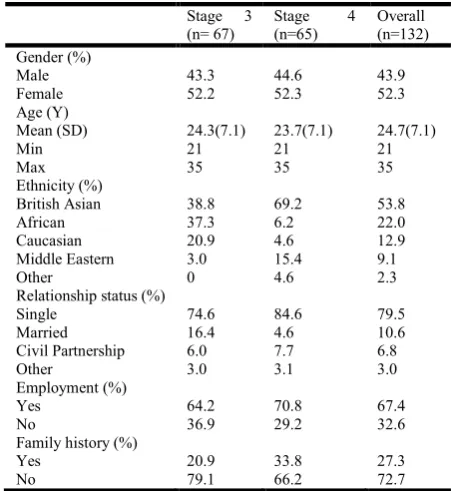
students were invited to participate (Table 1). From 147 approached; 67 third year and 65 fourth year pharmacy students completed the survey. Of the participants, 52% (N=69) were females, which is representative
cohorts’ population. The participants’ age ranged from 21 to 35 years (mean 22years, SD=0.71), 80% were single, 10 % were married and 67% were concurrently employed. Over half (54%) of the respondents were British Asians making it the most dominant ethnic group. Other ethnic groups included Africans (16%), white Caucasians (13%) and Middle Eastern (9%). Additionally, 27% (N=35) of participants had a family history of anxiety.
[image:4.595.308.554.48.181.2]The overall self-reported responses for all categories are shown in figures 1-9, respectively. The mean anxiety score was 3.0 (SD= 1.4), 37% of students experienced some level of an during examinations. Of the respondents, 31% were fairly anxious during examinations despite feeling sufficiently prepared. Some students (30%) reported feeling overwhelmed and stressed before exams and 19.7% of students experienced an increase in heart rate during an exam. However, a very small proportion of students indicated that they experience other physical symptoms such as perspiration (6.8%) and stomach upset (13.6%) during exams (Figure 1).
Figure 1. The pharmacy students’ responses to test anxiety items (where ‘I’ stands for item and R stands for response)
Although, over half of the students (59.1%) specified that they make every effort to understand the course material taught at the pharmacy school, 19% indicated great difficulty in managing the course load. Conversely, 15.2% of the respondents indicated that they can manage the course load and 6.8% felt able to comprehend the material easily. However, 34.8% of respondents struggled to prepare for examinations and 40.9% indicated that they had difficulty in managing the study material for an examination. Additionally, 31% of students found it difficult to combine their study and leisure times.
Further, 25% of respondents had difficulty studying regu and 19.7% indicated that they ended up “cramming” for examinations, with 17.4% of the students indicated that they started preparing well in advance for an examination. Few students (6.8%) could organise their study and leisure time easily. The mean (SD) study strategies score was 3.3 (SD= 1.2), indicating that some students employed study strategies. Most students (33.3%) reported that they summarised course material while studying and tested their knowledge before exams by means of mock examinations (22.7%). Very few students (13.6%) planned well in advance (Figure 2).
70020 Shangal Mirawdali
students were invited to participate (Table 1). From 147 approached; 67 third year and 65 fourth year pharmacy students completed the survey. Of the participants, 52% (N=69) were females, which is representative of the two cohorts’ population. The participants’ age ranged from 21 to 35 years (mean 22years, SD=0.71), 80% were single, 10 % were married and 67% were concurrently employed. Over half (54%) of the respondents were British Asians making it the nant ethnic group. Other ethnic groups included Africans (16%), white Caucasians (13%) and Middle Eastern (9%). Additionally, 27% (N=35) of participants had a family
reported responses for all categories are shown 9, respectively. The mean anxiety score was 3.0 (SD= 1.4), 37% of students experienced some level of anxiety during examinations. Of the respondents, 31% were fairly anxious during examinations despite feeling sufficiently prepared. Some students (30%) reported feeling overwhelmed and stressed before exams and 19.7% of students experienced art rate during an exam. However, a very small proportion of students indicated that they experience other physical symptoms such as perspiration (6.8%) and stomach upset (13.6%) during exams (Figure 1).
The pharmacy students’ responses to test anxiety items item and R stands for response)
Although, over half of the students (59.1%) specified that they make every effort to understand the course material taught at 19% indicated great difficulty in managing the course load. Conversely, 15.2% of the respondents indicated that they can manage the course load and 6.8% felt able to comprehend the material easily. However, 34.8% of respondents struggled to prepare for aminations and 40.9% indicated that they had difficulty in managing the study material for an examination. Additionally, 31% of students found it difficult to combine their study and
[image:4.595.312.556.316.449.2]Further, 25% of respondents had difficulty studying regularly and 19.7% indicated that they ended up “cramming” for examinations, with 17.4% of the students indicated that they started preparing well in advance for an examination. Few students (6.8%) could organise their study and leisure time (SD) study strategies score was 3.3 (SD= 1.2), indicating that some students employed study strategies. Most students (33.3%) reported that they summarised course material while studying and tested their knowledge before (22.7%). Very few students (13.6%) planned well in advance (Figure 2).
Figure 2. The pharmacy students’ responses to questionnaire to determine strategic study habits (where ‘I’ stands for
stands for response)
The mean (SD) social sources score was 2.7 (SD= 1.4). Certain students indicated some level of anxiety when delivering presentations such as an increase in heart rate (25%) and lack of confidence (23.5%). However, the majority of students (56.8%) were able to communicate with lectures and peers without any language barriers (Figure 3).
Figure 3. The pharmacy students’ responses to questionnaire to determine social sources of academic anxiety (where ‘I’ stands for
item and R stands for response)
The mean (SD) family sources score was 2.6 (SD= 1.4). The most frequently reported family sources of anxiety were thoughts of disappointing parents with academic performance (22%) and family issues (15.9%). Most of the respondents indicated that their academic p
by insufficient income (42.4%) or childhood experiences (40.2%), (Figure 4).
Figure 4. The pharmacy students’ responses to questionnaire to determine family sources of academic anxiety (where ‘I’ stands
for item and R sta
The mean (SD) for coping strategies score was 2.1 (SD=1.4), indicating that very few students utilise coping strategies to ease their academic anxiety.
Mirawdali et al.Academic anxiety and its effects on academic performance
The pharmacy students’ responses to questionnaire to determine strategic study habits (where ‘I’ stands for item and R
stands for response)
The mean (SD) social sources score was 2.7 (SD= 1.4). Certain students indicated some level of anxiety when delivering presentations such as an increase in heart rate (25%) and lack of confidence (23.5%). However, the majority of students to communicate with lectures and peers without any language barriers (Figure 3).
The pharmacy students’ responses to questionnaire to determine social sources of academic anxiety (where ‘I’ stands for
item and R stands for response)
an (SD) family sources score was 2.6 (SD= 1.4). The most frequently reported family sources of anxiety were thoughts of disappointing parents with academic performance (22%) and family issues (15.9%). Most of the respondents indicated that their academic performance was not influenced by insufficient income (42.4%) or childhood experiences
The pharmacy students’ responses to questionnaire to determine family sources of academic anxiety (where ‘I’ stands
item and R stands for response)
The mean (SD) for coping strategies score was 2.1 (SD=1.4), indicating that very few students utilise coping strategies to
[image:4.595.38.284.344.480.2] [image:4.595.306.542.596.713.2]The most commonly employed coping strategies were breathing exercises (22%) and social support (20.5%). Whereas smoking cigarettes (3.0%) and seeking counselling (4.5%), were the least commonly employed coping strategies (Figure 5).
Figure 5. The pharmacy students’ responses to questionnaire to determine commonly adopted coping strategies for academic anxiety (where ‘I’ stands for item and R stands for response).
The mean (SD) stressors score was 4.8 (SD= 2.9), indicating that most of the respondents were affected by the stressors faced during the MPharm course. The highest rated stressor was the OSCE (42.4%), followed by the OSSA (26.5%). Conversely, the lowest rated stressor was tutorials (30.3%), followed by workshops (15.9%), (Figure 6). Stressor were coded as; R1: team-based learning (TBL), R2: case learning (CBL), R3: Workshops, R4: Oral presentation without slides, R5: PowerPoint presentations, R6: OSSA, R7: OSCE, R8: Assignments, R9: Practical classes and R10: Tutorials.
Figure 6. The pharmacy students’ responses to questionnaire to determine the most and least stressful academic stressors, rated 1
10 (where ‘I’ stands for item).
Test competence vs. social and family sources:
of social and family sources of anxiety and stressors on the ‘test competence’ category (i.e. academic performance) were analysed. The respondents, who indicated that they lacked confidence and experienced an increase in heart ra
delivering presentations (12.9%), also specified that they couldn’t manage their study material for an exam. However, 7.6% of students who could communicate without language barriers also indicated that they could easily manage study material for an exam. Only 14.4% of the respondents showed poor academic performance due to the crowdedness of their home and 12.9% of the students showed that family issues make them anxious and this affects their academic performance. Most students’ academic performan
affected by their family’s insufficient income (17.4%), making it the least influential family source of anxiety on academic performance.
70021 International Journal of
The most commonly employed coping strategies were breathing exercises (22%) and social support (20.5%). Whereas smoking cigarettes (3.0%) and seeking counselling only employed coping strategies
The pharmacy students’ responses to questionnaire to determine commonly adopted coping strategies for academic anxiety (where ‘I’ stands for item and R stands for response).
stressors score was 4.8 (SD= 2.9), indicating that most of the respondents were affected by the stressors faced during the MPharm course. The highest rated stressor was the OSCE (42.4%), followed by the OSSA (26.5%). as tutorials (30.3%), followed by workshops (15.9%), (Figure 6). Stressor were based learning (TBL), R2: case-based learning (CBL), R3: Workshops, R4: Oral presentation without slides, R5: PowerPoint presentations, R6: OSSA, R7: OSCE,
: Assignments, R9: Practical classes and R10: Tutorials.
The pharmacy students’ responses to questionnaire to determine the most and least stressful academic stressors, rated
1-10 (where ‘I’ stands for item).
amily sources: The effects
of social and family sources of anxiety and stressors on the ‘test competence’ category (i.e. academic performance) were analysed. The respondents, who indicated that they lacked confidence and experienced an increase in heart rate when delivering presentations (12.9%), also specified that they couldn’t manage their study material for an exam. However, 7.6% of students who could communicate without language barriers also indicated that they could easily manage study n exam. Only 14.4% of the respondents showed poor academic performance due to the crowdedness of their home and 12.9% of the students showed that family issues make them anxious and this affects their academic performance. Most students’ academic performance was not affected by their family’s insufficient income (17.4%), making it the least influential family source of anxiety on academic
Stressors vs. family sources and social sources:
45.5% and 37.9% of students, who rated OSCEs as
stressful evaluative assessment, also indicated that their heart rate increases when delivering presentations and the thought of disappointing their parents with their academic performance makes them anxious, respectively.
Test competence and demographics:
[image:5.595.36.263.425.559.2]respondents who indicated that they couldn’t manage their study material for an examination were females and 18.9% of the students who indicated that they could cope with examination tension were males. A small proportion of (1.5%) indicated that they found it straightforward to prepare for examinations and a further 6.1% specified that they could easily manage study material for an examination. Out of all participants, 31.1% who were between 21 to 25 years indicated poor academic performance. However, a small proportion of students in the age group of 31 to 35 years of age indicated poor academic performance as they were unable to manage study material for an examination. Twenty two percent of the students, who were British Asians, specified that they couldn’t manage study material for an examination. However, fewer students of African (5.3%) and British Asian (6.1%) descents indicated high academic performance and achievement (Figure 7).
Figure 7 The Pharmacy students’ responses to the test competence items based on their ethnic groups (where ‘I’ stands
for item).
Family history and test competence:
32.6% of students who showed poor academic performance had no family history of anxiety. Wh
who attained a family history of anxiety reported to just being able to cope with examination tension.
Test competence and stages:
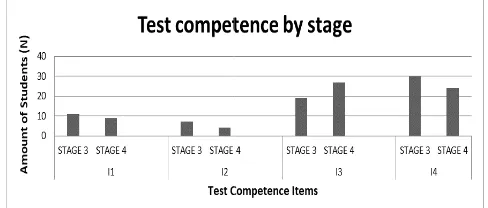
and 18.2% of the respondents in stage 3 and 4 indicated low academic performance, respectively. Whereas, 8.3% and 6.8% of the students from stage 3 and 4 showed high academic performance, respectively (Figure 8).
Figure 8. The Pharmacy students’ responses to the test competence items based on stage enrolled (where ‘I’ stands for
item).
International Journal of Current Research, Vol. 10, Issue, 06, pp.70017-70026, June, 2018
Stressors vs. family sources and social sources: There was
45.5% and 37.9% of students, who rated OSCEs as the most stressful evaluative assessment, also indicated that their heart rate increases when delivering presentations and the thought of disappointing their parents with their academic performance makes them anxious, respectively.
emographics: Only 23.5% of the
respondents who indicated that they couldn’t manage their study material for an examination were females and 18.9% of the students who indicated that they could cope with examination tension were males. A small proportion of males (1.5%) indicated that they found it straightforward to prepare for examinations and a further 6.1% specified that they could easily manage study material for an examination. Out of all participants, 31.1% who were between 21 to 25 years indicated r academic performance. However, a small proportion of students in the age group of 31 to 35 years of age indicated poor academic performance as they were unable to manage study material for an examination. Twenty two percent of the ish Asians, specified that they couldn’t manage study material for an examination. However, fewer students of African (5.3%) and British Asian (6.1%) descents indicated high academic performance and achievement (Figure
students’ responses to the test competence items based on their ethnic groups (where ‘I’ stands
for item).
Family history and test competence: The study found that
32.6% of students who showed poor academic performance had no family history of anxiety. Whereas, 12.9% of students who attained a family history of anxiety reported to just being able to cope with examination tension.
Test competence and stages: The results showed that, 22.7%
and 18.2% of the respondents in stage 3 and 4 indicated low academic performance, respectively. Whereas, 8.3% and 6.8% of the students from stage 3 and 4 showed high academic performance, respectively (Figure 8).
The Pharmacy students’ responses to the test competence items based on stage enrolled (where ‘I’ stands for
item).
[image:5.595.313.557.659.763.2]Table 1. Demographic characteristics
Stage 3 (n= 67)
Stage 4 (n=65)
Overall (n=132) Gender (%)
Male Female
43.3 52.2
44.6 52.3
43.9 52.3 Age (Y)
Mean (SD) Min Max
24.3(7.1) 21 35
23.7(7.1) 21 35
24.7(7.1) 21 35 Ethnicity (%)
British Asian African Caucasian Middle Eastern Other
38.8 37.3 20.9 3.0 0
69.2 6.2 4.6 15.4 4.6
53.8 22.0 12.9 9.1 2.3 Relationship status (%)
Single Married Civil Partnership Other
74.6 16.4 6.0 3.0
84.6 4.6 7.7 3.1
79.5 10.6 6.8 3.0 Employment (%)
Yes No
64.2 36.9
70.8 29.2
67.4 32.6 Family history (%)
Yes No
20.9 79.1
33.8 66.2
27.3 72.7
DISCUSSION
This study examined the effect of academic anxiety on academic performance, among third and fourth years pharmacy students at the UoW. The project explored factors such as test anxiety, academic competence, test competence, time management and strategic study techniques to determine the level of academic anxiety among MPharm students in their two final years It also aimed to explore any major social and family sources of academic anxiety and commonly adopted coping strategies. Additionally, it aimed to inform the highest and lowest rated academic stressors, plus their effects on academic performance. Furthermore, the effects of external to the university factors such as social and family sources of anxiety, demographics (e.g., gender, age and race), family history of anxiety and different stages of pharmacy were also explored. In this study, the test competence category was used as a primary indicator of academic performance as Sansgiry, Bhosle and Sail confirmed to be the single most important factor that can help in distinguishing between students’ actual academic performance to that compromised by their anxiety
(Sansgiry et al., 2006). Thus, students who have difficulty in
managing the study material before examinations had lower grades, irrespective of other protective factors, such as good academic knowledge in class. The findings from this study could inform future academic curricula and classroom teaching methods in pharmacy schools.
The mean test anxiety score reported by the students participating in this study, were relatively higher than that reported in previous literature (12, 19-20). A lower proportion of students reported levels of anxiety during exams even when they well prepared, compared to the levels reported by Sansgiry, Bhosle and Sail. However, similar to Sansgiry, the majority of the participants reported no physical symptoms. Fourth year students had a higher mean test anxiety score compared to the third-year students, which may be due to the various course changes and multiple concurrent assessments which had occurred this academic year. In year 4, the TBL approach to teaching, which students have experienced during
the previous 3 years, discontinued and students had to adapt to a traditional lecture and workshop type teaching strategy. This adjustment caused many students anxiety. Stage 4 students must also complete a research project, which carries the greatest weighing towards their grades, causing an additional
stress and anxiety. Maharajan et al. states that “research
anxiety acts as a carrier filter” which prevents new graduates entering research related jobs. Students’ research anxiety not only affects their ability to master research concepts, but some undergraduates even develop a “phobia’ towards research
(Maharajan et al., 2017). Another explanation for the higher
level of anxiety experienced among fourth year students may be the OSCE. Brand and Schoonheim-Klein reported that the OSCE was the most anxiety-provoking assessment method in dental education. The OSCE was the highest rated stressor among the pharmacy students and it has also being indicated as the most stressful assessment among medical, radiology and nursing students (Brand, 2009). Among the participants in this study, most (59.1%) made every effort to understand the course material being taught in the pharmacy school and some (19%) indicated great difficulty in managing the academic course load in the pharmacy curriculum. Considering the variables that determine students’ academic competence, these findings show that the students may not be enjoying their classes, whether it is because of the classes not being
interesting or too stressful is unknown (Sansgiry et al., 2006;
Kleijn et al., 1994). A higher proportion of students reported
difficulty in managing the study material for an examination
compared with that reported in the literature (Sansgiry et al.,
2006; Ubaka et al., 2015; Talib, 2012). This may be explained
by the amount of material the students had to undertake as self-directed with limited academic staff input or that the material assigned for examinations is large and not manageable. The students reported that they could not cope due to immense and complex study material. In this study, there was a significant and positive correlation between academic competence and academic performance, a trend reported by other researchers
(Sansgiry et al., 2006; Ubaka et al., 2015; Talib, 2012), this
highlights that students’ perception of course material and study material for examinations are paramount in enhancing academic performance. These findings emphasise the recommendations by Sansgiry, Bhosle and Sail, which suggests that faculty members should evaluate the amount of study material for examinations and avoid excessive material for each exam. Additionally, exams should test concepts rather than depend on memorisation, enabling students to improve test competence and gain knowledge throughout the
curriculum (Sansgiry et al., 2014). When comparing the
academic performance between third and fourth year students, third year students indicated a lower academic performance compared to fourth year students. This may be due to reasons such as course entry level, or cohort ability to develop learning skills as the course delivery methodology did not change. These findings were comparable to Sansgiry, Bhosle and Sail. When considering the participants demographic characteristics and academic performance, this study presented some interesting findings. There were more females (23.5% than males (18.9%) reported inability to manage study material. Several studies have noted that females are more prone to anxiety which affects their ability to perform at an optimum
level (Singh, 2015; Nadeem et al., 2018; Syokwaa et al.,
2014). This may be explained by the results of a study conducted by Ghazvini and Khajehpour, which suggests that differences exist in the cognitive-motivational functioning of males and females in an academic environment, as females
have a more adaptive approach to learning (Ghazvini, 2011). When analysing academic performance based on age group there was no significant difference. There were no rooms to balance gender, age or ethnicity in the sample due to the high diversty of the cohort. These findings are similar to that
reported by Imlach et al. and Ebenuwa-Okoh who suggesting
that age does not impede academic achievement and that discrete cognitive skills and engagement in cognitively stimulating activities promotes academic success in older
students (Ebenuwa-Okoh, 2017; Haq et al., 2005). When
comparing academic performance between ethnic groups, British Asians had the lowest academic performance, however this result was insignificant when taking the overall study population into account. These finding were incompatible to
that reported by Haq et al., who suggested that medical
students of Asian origin, of both genders, educated in the UK with English as their first language, continue to perform at a lower level in OSCEs and written assessments compared to
their white European peers (Imlach et al., 2017). Most students
participating in this study did not report having family history of anxiety. However, the students who reported family history of anxiety also reported that they are able to cope with examination tension.In this study, the effects of social and family sources of anxiety on academic performance were analysed. There appeared to be a positive correlation between social anxiety and academic performance, as students who experienced symptoms of social anxiety indicated low academic performance. This relationship has been noted in
previous studies (Vitasari et al., 2010; Dobson, 2012). Okazaki
stated that culture, ethnicity, emotional distress and self-construal are influential variables associated with social anxiety (Okazaki, 1997). Foreign language is the one of most significant barriers and influential factors to academic performance and achievement among international students. Additionally, it is also a major source of social anxiety as being part of social activities, team working and delivering presentations are difficult for these students (Shahrouri, 2016; Diaz-Gilbert, 2014). Diaz-Gilbert studied the knowledge of pharmacy students with first or best language is not English and reported that the “students demonstrated significant misunderstanding of essential and commonly used health and pharmacy-related vocabulary” (Eze, 2015). Some students participating in this study indicated that home crowdedness affects their academic performance, this is comparable to that reported by Harb and El-Shaarawi, as it was reported as one of the most significant factors to negatively affect academic performance (Eze, 2015). Similar to that reported by Ebenuwa-Okoh, the students indicated that having a low socioeconomic status is the most non-influential factor on academic performance (Ebenuwa-Okoh, 2017).
This may be due to financial support from student finance, which mitigates the financial burden of higher education on low-income families. In the present study, most students found it difficult to combine their study and leisure time and some were unable to study regularly, so ended up “scanning materials” for examinations. This could be attributed to their perceived course load, stress associated with examination or that most of the participants were con-currently working. Students’ inability and lack of skills in time management has
been reported in numerous previous studies (Sansgiry et al.,
2006; Ubaka, 2015). The pharmacy education program requires high level of reflective reasoning and critical thinking, making effective and optimum time management crucial for
academic success (Ubaka et al., 2015).
When there is inadequate time left for studying, Gloe recommends that students get involved in group discussions and exchange ideas while memorising key points to improve performance in exams (Gloe, 1999). Time management is significantly associated with academic performance, therefore better time management leads to enhanced academic performance, a significant correlation consistent with previous
studies (Sansgiry et al., 2016; Syokwaa et al., 2014). For
students who regularly study for an average of 8-9 hours daily may experience fatigue and exertion, leading to lower academic performance during exams. Therefore, regular breaks
are necessary to enhance overall performance (Sansgiry et al.,
2006). The impediment to MPharm students’ time management skills emphasises the significance of re-assessing
the amount of study material for an exam (Sansgiry et al.,
2006). Furthermore, students with weak time management skills could be identified and provided with counselling and support before it affects their academic performance. The mean score for study strategies was consistent with that reported by Sansgiry, Bhosle and Sail and Talib and Sansgiry, but lower than that reported by Ubaka, Sansgiry and Ukwe. Some students indicated that they utilised study strategies and techniques to improve academic performance throughout the curriculum and during exams. Undergraduates develop their own study habits and techniques based on their learning style and the technique that works best for them, as they progress through the pharmacy curriculum. Due to the excessive course load of self-directed study, attendance for TBL and comprehensive assessments throughout a pharmacy education programme.
It is essential that students adopt an effective study strategy to
ensure academic success (Sansgiry et al., 2016). To improve
academic achievement, faculty members could provide workshops on study strategies and facilitate the academically weak students to effectively and appropriately apply their course material and develop exam techniques. The mean scores for social and family sources of anxiety were lower and non-significant among the participants of this study compared to that reported in the literature (Shahrouri, 2016). However, a small proportion of students indicated levels of social anxiety such as when delivering presentations and family sources of anxiety such as disappointing parents with academic performance. These findings were consistent with the results reported by Shahrouri, as the study ranked social and parental
expectations as the 3rd and 4th major sources of academic
anxiety. Therapy and counselling sessions may improve confidence levels and students’ perceptions of parental expectations, improving anxiety and academic performance. Few students participating in this study adopted coping strategies to ease their academic anxiety, for the students that did, breathing exercises and social support were the most commonly utilised strategies, consistent with previous studies
(Samson-Akpan et al., 2017). Samson-Akpan et al. advises
that students should seek counselling from their academic advisers and if professional support is required, the faculty should arrange appropriate arrangements for consultations with professional counsellors to reduce academic stress and anxiety.
As established by previous studies (Eisenberg et al., 2009),
mental illness stigma acts as an important barrier to help seeking for mental health, therefore universities should provide one to one support for students with anxiety, to advise on coping strategies to improve their mental health and provide support in managing their overall studies.
The undergraduates participating in this study indicated that the OSCE and OSSA are the highest rated academic stressors. From the findings from this study, it was indicated that the students perceive oral exams as being more stressful than assignments and written examinations. These results were comparable to that reported by Brand and Schoonheim-Klein. One of the reasons for these results is explained by Saidi, who reveals that foreign language speaking anxiety negatively impacts oral performance and subsequently overall academic performance, as these students lack communication skills (46). Various studies such as Longyhore and Zhang and Rabatsky have established that OSCEs are associated with a great deal of stress which negatively impacts academic performance; therefore, stress management programs are essential (Saidi,
2015; Zhang et al., 2015).
Furthermore, focusing on interventions that could be implemented beyond instructions could reduce OSCE associated anxiety and improve students’ success in OSCEs (Longyhore, 2017). When analysing the effects of social and family sources of anxiety on stressors, a positive correlation was observed. Students who experienced social and family anxiety also rated the OSCE as the most stressful assessment. This emphasises the results reported by Okazaki, suggesting that culture and construal variables can influence self-esteem and confidence which prevents optimum performance during oral examinations (Okazaki, 1997). Based on the findings of this study, it is suggested that faculty members should assess the course load and study material assigned for each test to improve academic and test competence and subsequently academic performance. As suggested by Talib and Sansgiry, review /discussion or workshop sessions should be held to ensure students can appropriately and effectively apply course content to examination questions, before an examination. It is important that faculty members address any factors that affect academic performance and provide the required support and attention to the students which are greatly affected by academic anxiety, to improve academic success.
Seminar, confidence building, and counselling sessions can be held to obtain understanding of these variables that’s affect
academic performance (Ubaka et al., 2015). As part of this
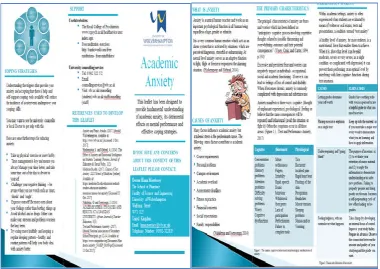
research, informational 3-fold leaflets about academic anxiety were distributed, feedback was retained from the students and 87% (N=115) found the information very useful, suggesting that awareness of one’s anxiety disorder can help them understand and cope with their condition much more effectively (Figure 9). This resource also provided contact details for the universities counselling service, enabling easy access for support.
Limitations: The study was conducted at one University
(UoW), therefore differences in students’ demographic characteristics and location may affect the results when applied to other universities. The third and fourth years’ students are
exposed to different academic stressors (workload,
assessments and tasks); hence this affects the responses in this specific item. Although anonymity was retained throughout the study, reducing response bias such as social desirability bias, the self-reported nature of data collection may still limit the results to a certain extent. To prevent these limitations, future studies should use administrative student records from several universities in the UK, which also ensures a larger sample size, all of which further validate these results.
Conclusion
[image:8.595.105.486.49.318.2]The study investigated the extent of academic anxiety and its impact on academic performance in Master of Pharmacy Undergraduates. It can be concluded that test anxiety, academic competence, time management and strategic studying are all factors significantly affect academic performance. Effective university counselling services involving trained mental health professionals with stress management programs could also increase academic success. With regards to academic stressors, oral assessment such as the OSCE and OSSA were the highest rated stressors, suggesting that students require support in communication skills and
Figure 9. study leaflet
ability to quickly and effectively adapt to stressful clinical situations, in preparation for their future carrier as health care professionals. Universities can arrange social events or seminars which address confidence, esteem and other self-construal variables, to reduce social anxiety and improve performance during presentations.
This study is unique to previous studies in the literature as it considers various factors that could affect academic performance which has not being focused on by other researchers. The results of this study demonstrated a positive correlation between social and family sources of anxiety and academic performance. The same trend was observed when evaluating the relationship between social and family sources of anxiety and academic stressors. This suggests that addressing these sources not only reduces anxiety towards specific assessments or evaluative situations but also enhances academic performance and lead to academic success; this could be a focus for faculty members and curriculum leaders. Furthermore, the findings of this study also confirmed difference in academic performance regarding different genders, students who attain a family history of anxiety and students who are at higher and more academically demanding educational levels. The insignificance of age and race to academic performance was also confirmed, indicating students of all ages and origins have equal academic ability. Ultimately, academic anxiety is a common issue faced by many students during the MPharm course, especially during examinations, which negatively impacts students’ academic performance and outcomes in exams. The need for students to maintain an optimal state of mind during examinations should be emphasised to improve academic achievement.
Acknowledgments: To all pharmacy students who took part of
this study, thank you and I greatly appreciate spending some of your valuable time in completing my survey.
Funding: self-funded
Author Contributions: first author and second author
conceived and designed the study; first author performed the experiments; first author analysed the data; first author and second author wrote the paper and author three reviewed drafts, assisted in the interpretation of the results, wrote sections of the paper and edited the final paper."
Conflicts of Interest: The authors declare no conflict of
interest.
REFERENCES
Afolayan, J., Donald, B., Onasoga, O., A., A. and A., A. 2013. Relationship between anxiety and academic performance of nursing students, Niger Delta University, Bayelsa State,
Nigeria. Advances in Applied Science Research, 4(5),
pp.25-33.
Allen, J. 2005. Grades as Valid Measures of Academic
Achievement of Classroom Learning. The Clearing House:
A Journal of Educational Strategies, Issues and Ideas,
78(5), pp.218-223.
Allen, R., Copeland, J., Franks, A., Karimi, R., McCollum, M., Riese, D. and Lin, A. 2013. Team-Based Learning in US
Colleges and Schools of Pharmacy. American Journal of
Pharmaceutical Education, 77(6), p.1-8.
Aronin, S., Smith, M., Aronin, S. and Smith, M. 2018. YouGov
| One in four students suffer from mental health problems.
(online) YouGov: What the world thinks. Available at: https://yougov.co.uk/news/2016/08/09/quarter-britains-students-are-afflicted-mental-hea/ (Accessed 19 Mar. 2018).
Bandelow B, Michaelis S. 2015. Epidemiology of anxiety disorders in the 21st century. Dialogues in Clinical Neuroscience.17(3):327-335.
Brand, H. and Schoonheim-Klein, M. 2009. Is the OSCE more stressful? Examination anxiety and its consequences in different assessment methods in dental education.
European Journal of Dental Education, 13(3), pp.147-153.
Chow, C., Morrissey, H., Ball, P.A. Pharmacy Students' Preparedness to Communicate with Mental Health
Disorders Patients. The Journal of Nervous and Mental
Disease 2018, ISSN 0022-3018 DOI//:10.1097/
NMD.0000000000000784.
Diaz-Gilbert, M. 2004. Vocabulary Knowledge of Pharmacy Students Whose First or Best Language Is Not English.
American Journal of Pharmaceutical Education, 68(4),
p.91.
Dobson, C. 2012. Effects of academic anxiety on the performance of students with and without learning disablities and how students can cope with anxiety at school. Undergraduate. Northern Michigan University. DordiNejad, F., Hakimi, H., Ashouri, M., Dehghani, M.,
Zeinali, Z., Daghighi, M. and Bahrami, N. 2011. WCES-2011 On the relationship between test anxiety and
academic performance. Procedia Social and Behavioral
Sciences, 15, pp.3774–3778.
Dyrbye, L., Thomas, M. and Shanafelt, T. 2006. Systematic Review of Depression, Anxiety, and Other Indicators of Psychological Distress Among U.S. and Canadian Medical
Students. Academic Medicine, 81(4), pp.354-373.
Ebenuwa-Okoh, E. 2017. Influence of Age, Financial Status,
and Gender on Academic Performance among
Undergraduates. Journal of Psychology, 1(2), pp.99-103.
Eisenberg, D., Downs, M., Golberstein, E. and Zivin, K. 2009. Stigma and Help Seeking for Mental Health Among
College Students. Medical Care Research and Review,
66(5), pp.522-541.
Eze, S. and Inegbedion, H. 2015. Key factors influencing academic performance of international students’ in UK
universities: a preliminary investigation. British Journal of
Education, 3(5), pp.55 - 68.
Ghazvini, S. and Khajehpour, M. 2011. Gender differences in factors affecting academic performance of high school
students. Procedia - Social and Behavioral Sciences, 15,
pp.1040-1045.
Gloe, D. 1999. Study habits and test-taking tips. Dermatology
Nursing, 11(6), pp.439-43.
Haq, I., Higham, J., Morris, R. and Dacre, J. (2005). Effect of ethnicity and gender on performance in undergraduate
medical examinations. Medical Education, 39(11),
pp.1126-1128.
Harb, N. and El-Shaarawi, A. 2006. Factors A ecting
Students’ Performance. MPRA Paper 13621, pp.3-17.
Hashempour, S. and Mehrad, A. 2014. The Effect of Anxiety and Emotional Intelligence on Students’ Learning Process.
Journal of Education & Social Policy, 1(2), pp.115-119.
Imlach, A., Ward, D., Stuart, K., Summers, M., Valenzuela, M., King, A., Saunders, N., Summers, J., Srikanth, V., Robinson, A. and Vickers, J. 2017. Age is no barrier:
predictors of academic success in older learners. npj
Science of Learning, 2(1).