Developing thinking with four and five
year old pupils: the impact of a
cognitive acceleration programme
through early science skill
development
By
Andrea Gallagher B.Ed. Hons
A thesis submitted to Dublin City University
for the Degree of
MASTER OF SCIENCE
This work was carried out under joint supervision of:
Dr. Thomas Mc Cloughlin, Education Department, St. Patricks College
&
Dr. Odilla Finlayson, School of Chemical Sciences, Dublin City University
Abstract
This thesis examines the extent to which a specific learning intervention programme, based on specific early science skill development may increase development in thinking in a particular early childhood sample.
The background literature has focused on Piaget’s and Vygotsky’s theories of cognitive development as they relate to the intervention programme and the age group of the participants in this research study. The review discusses the need to teach thinking and the relevant literature on the intervention programme is critically reviewed.
This research study, undertaken in and adapted for an Irish primary school, involved a sample of forty four participants aged between four and six years old. An intervention group of twenty pupils participated in the learning intervention Lets Think!-Early Years programme – based on the theory of cognitive acceleration. The learning intervention programme consisted of fifteen lessons based on the early science skills of classification, seriation and causality. The remainder of the group were the non-intervention group.
All participants underwent three pre and post intervention tests and completed a pupil questionnaire. Local teachers completed a teacher questionnaire on questions relating to the research question and this combined with the researcher’s observations recorded in a reflective journal provided the data to be analysed. A comparative analysis of responses obtained from the above tests, questionnaires and reflective journal, suggest that pupils from the intervention group displayed a greater improvement in their thinking ability in comparison to the non-intervention group, with the factors of gender and age of the pupils having a significant effect.
This finding indicates that a cognitive intervention programme through science may have a significant immediate and positive effect on the rate of the early year’s pupil’s cognitive development.
Declaration
I hereby certify that this material which I now submit for assessment on the programme of study leading to the award of Degree of Master of Science is entirely my own work and has not been taken from the work of others save and to the extent that such work has been cited and acknowledged within the text of my work.
Signed: _____________________ ID NO:______________________ Andrea Gallagher, B.Ed.
Acknowledgements
I wish to take this opportunity to acknowledge my debt of gratitude to everyone who assisted me in the preparation of this thesis.
I wish to extend my sincere thanks to my supervisors Dr Thomas Mc Cloughlin and Dr. Odilla Finlayson for their assistance during this research undertaking.
I wish to acknowledge the importance of my junior infant/senior infant class group of pupils (2005- 2006) who furnished the data for my research study and the co-operation of their parents. I warmly thank these twenty early childhood pupils, without whose help this research study would not have been possible. I also wish to thank the junior infant/senior infant non-intervention class group and their teacher for their co-operation. The unceasing support from the Principal, Board of Management and staff of my school during the entire research process was appreciated as well.
I am grateful to Angelo Collins, Ph.D. (Executive Director, Knowles Science Teaching Foundation) for her interest and help at the beginning of this research study. I wish also to express my gratitude to Anne Robertson, Lecturer at the Institute of Education, University of London and author of the Let’s Think! Early Years programme for sharing her expertise to help me in my research pursuits. I wish to acknowledge the help that Lorrainne Mc Cormack from DCU gave in carrying out the Residual Gain Score analysis.
Finally I wish to thank my mother, Rose, the rest of my family and my boyfriend Paul, for their invaluable support and encouragement to me during the undertaking of this thesis.
List of Tables and Figures
Tables
Table 3.1 Piagetian Developmental Levels Page 61
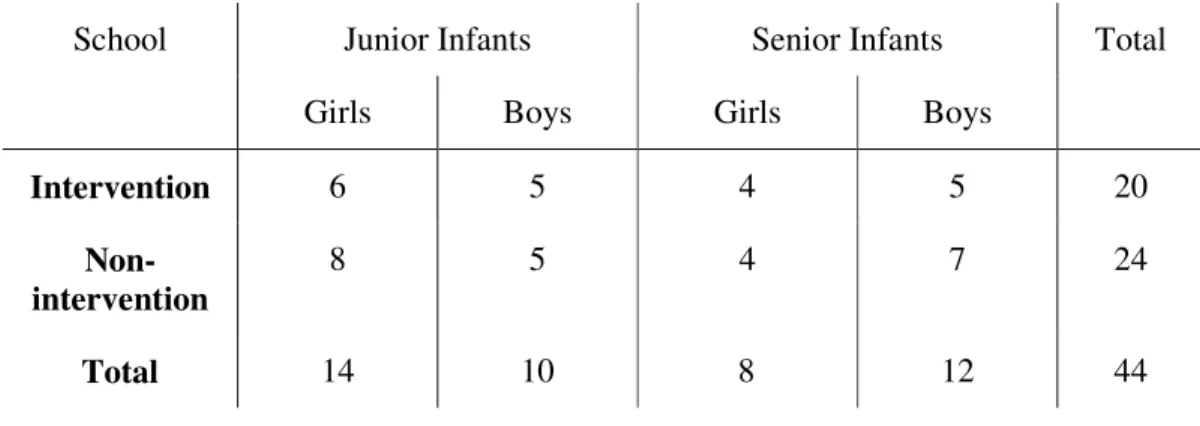
Table 4.1 The Research Sample: number of participants Page 74
Table 4.2 Question Format for Test 3 Page 82
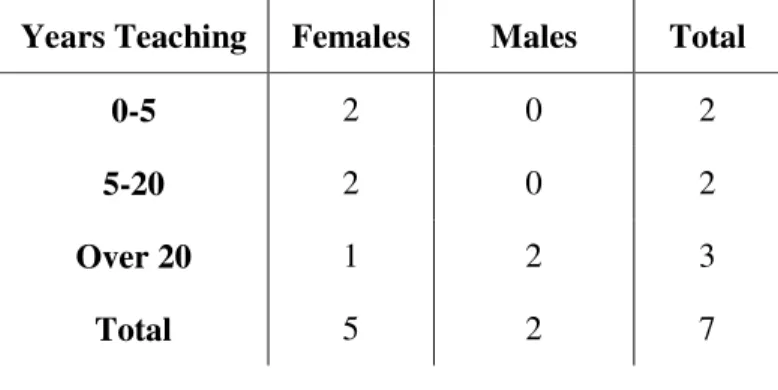
Table 4.3 The Teacher Questionnaire: Research Sample Page 87
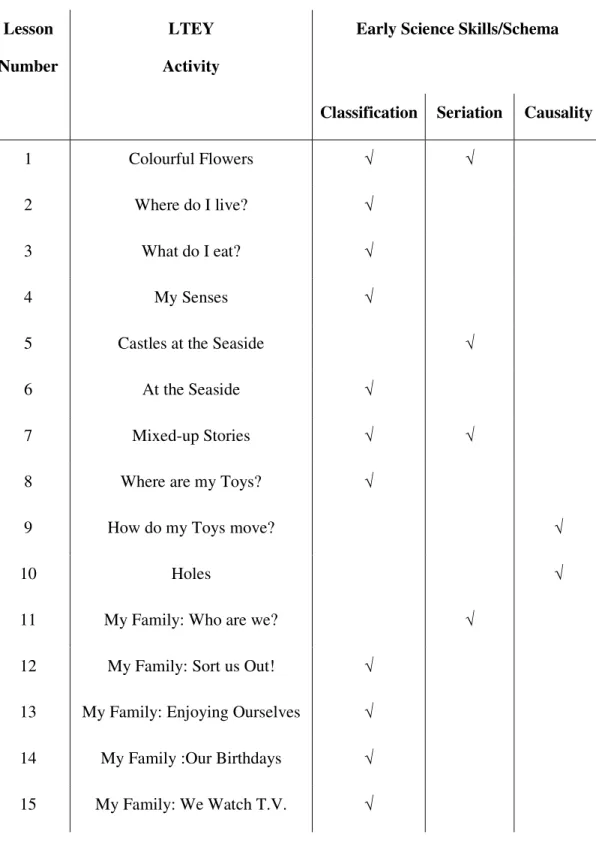
Table 4.4 List of lessons and corresponding scientific schema to be developed
Page 92
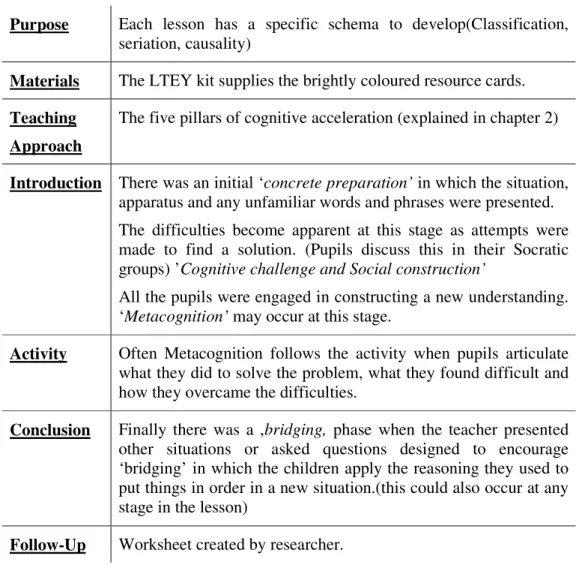
Table 4.5 General plan of a lesson from learning intervention Page 93
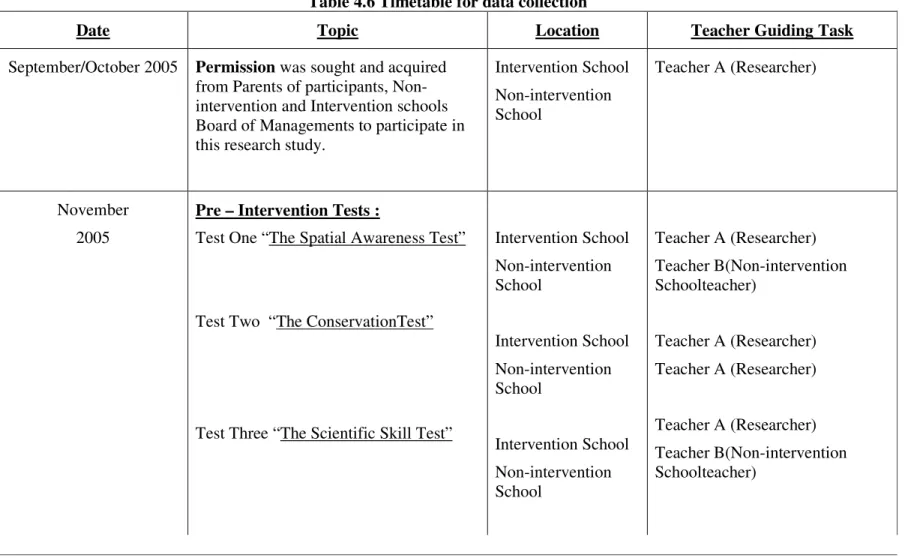
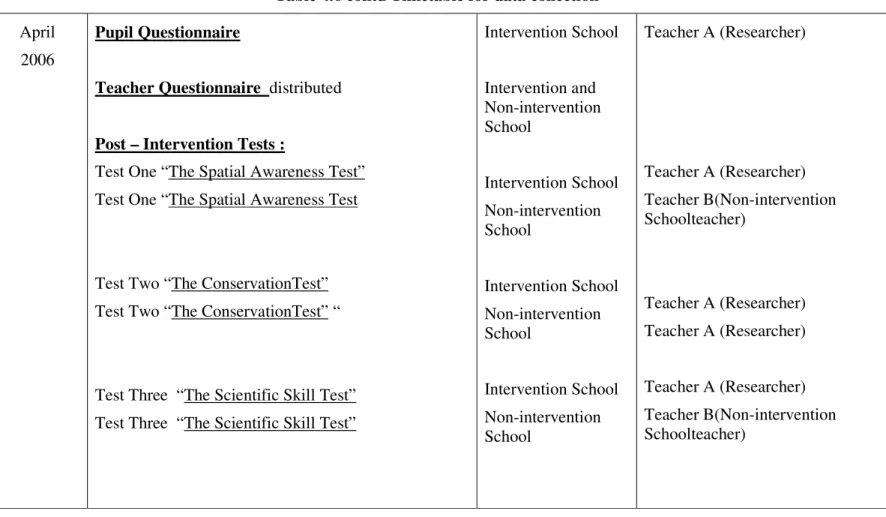
Table 4.6 Timetable for data collection Page 102
Table 5.1 Piagetian Developmental Levels Page 110
Table 5.2 Pre-test Cognitive Levels – Non-Intervention School Page 111
Table 5.3 Pre-test Cognitive Levels – Intervention School Page 111
Table 5.4 Difference between Pre and Post scores for intervention and non-intervention groups in “Test 1”
Page 114
Table 5.5 RGS data for “Test 1” for the intervention and non-intervention groups
Page 116
Table 5.6 Difference between Junior and Senior infant classes Pre and Post scores in “Test 1”
Page 117
Table 5.7 Difference between Pre and Post scores for intervention and non-intervention groups in “Test 2”
Page 118
Table 5.8 RGS data for “Test 2” for the intervention and non-intervention groups
Page 119
Table 5.9 Difference between Junior and Senior infant classes Pre and Post scores in “Test 2”
Page 120
Table 5.10 Difference between Pre and Post scores for intervention and non-intervention groups in “Test 3”
Page 121
Table 5.11 RGS data for “Test 3” for the intervention and non-intervention groups
Table 5.12 Difference between Junior and Senior infant classes Pre and Post scores in “Test 3”
Page 124
Table 5.13 Pre and Post test means for science skills / schema for intervention and non-intervention groups
Page 125
Table 5.14 List of questions in the pupil questionnaire. Page 129
Table 5.15 The % responses for each category in questions 7-8 Page 130 Table 5.16 Levels of importance of developing pupils thinking in
the classroom, as expressed by teachers
Page 139
Table 5.17 Teachers suggestions for suitable class level for developing thinking programme to be introduced
Page 143
Figures
Figure (i) Presentation of “Thinking through Science”
certificates
Page viii
Figure 4.1 Equipment used for pre-test 1 Page 76
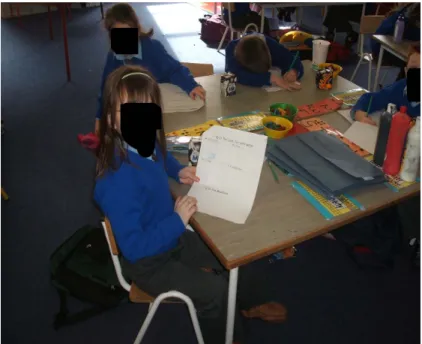
Figure 4.2 Intervention group undergoing post test 1 Page 78
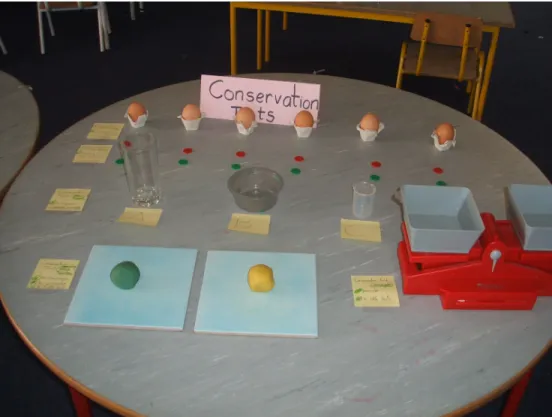
Figure 4.3 Layout of equipment for pre-test 2 Page 79
Figure 4.4 Explaining post test 2 Page 79
Figure 4.5 Intervention group undergoing pre test 3 Page 83
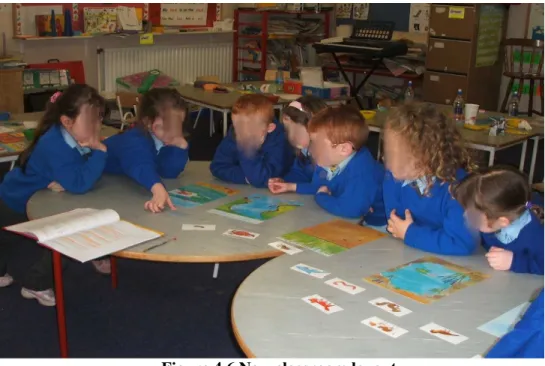
Figure 4.6 New classroom layout Page 95
Figure 4.7 So-Called Socratic Model of grouping Page 97
Figure 5.1 Graphical description of initial Piagetian Cognitive level of Junior and Senior Infants
Page 109
Figure 5.2 Pre and Post test Piagetian Levels for Non-intervention School Pupils in “Test 1”
Page 112
Figure 5.3 Pre and Post test Piagetian Levels for Intervention School Pupils in “Test 2”
Page 113
Figure 5.4 Percent of positive responses for questions 1– 6, 9–12 Page 130 Figure 5.5 Teachers views on what constitutes pupils thinking
skills
Figure 5.6 Children were better thinkers in the past than at present-teachers opinions
Page 137
Figure 5.7 The curricular areas in which teachers believe children need to use their “thinking skills” most
Page 139
Figure 5.8 Pictorial cards from the LTEY programme Page 151
Ethical Considerations
Ethical codes of practice were observed throughout this research undertaking. The requirement of obtaining informed consent from the parents/guardians of potential participants in both the intervention and non-intervention schools, prior to the commencement of the research was the first ethical issue observed in this study.
Consent forms were included in the explanatory letter, which were sent to each pupil in the class. An earlier letter was also sent to both schools’ Boards of Management requesting permission to carry out research in the school. Copies of these letters of permission have been included in Appendix F. Parents/guardians gave a very positive response (100%) to their children’s participation in this research study.
It was also considered important to ensure that the young participants did not feel intimidated by the research process. All data collection procedures were explained to participants before any data was collected and the series of intervention lessons were referred to as the “Put on Your Thinking Cap” Science Club, which concluded with a presentation of certificates created by the researcher to pupils involved, see Figure (i). An example of the certificate created is included in Appendix B.
Table of Contents
Abstract Page i
Declaration Page ii
Acknowledgements Page iii
List of tables and figures Page iv
Ethical Considerations Page vii
Table of Contents Page ix
Chapter 1. Introduction to the study
1.1 Aims and Objectives of the Research Study
Page 1
1.2 The Structure of the Thesis Page 2
Chapter 2. Teaching thinking –An historical overview
2.1 Introduction Page 5
2.2 Rationale: Making the case for teaching thinking
Page 5
2.2.1 The practice of thinking: what does it mean?
Page 5
2.2.2 How children’s thinking processes develop
Page 6
2.2.3 How teaching for thinking actually develops pupils thinking ability – The pedagogy of cognitive acceleration.
Page 10
2.2.4 The need to teach thinking - Why teach thinking?
Page 27
2.3 Teaching thinking in primary schools through early science skill development
2.3.1 Different programmes of teaching thinking
Page 41
2.3.2 Why develop thinking through early science skills?
Page 43
2.4 Teaching thinking in early childhood education
Page 45
2.4.1 The appropriate age to teach thinking skills
Page 45
2.4.2 Why teach thinking in early childhood education? - making the case for teaching thinking in early childhood education
Page 48
2.4.3 The links between the human
development of the early child and the development of their thinking ability
Page 50
2.5 Guidelines for selecting a model for instruction of thinking skills
Page 52
2.6 Conclusion to Chapter 2 Page 56
Chapter 3. An Intervention to teach thinking based on
the C.A.S.E teaching methodology
3.1 Introduction Page 58
3.2 The theoretical foundations behind the “Lets Think- Early Years” CASE model for teaching thinking
Page 59
3.3 Research evidence of the benefits of the CASE teaching methodology
Page 68
3.4 Conclusion to Chapter 3 Page 71
Chapter 4. Research Methodology
4.1 Introduction Page 72
4.2.1 Research settings and subjects Page 73 4.3 Data Collection Techniques Page 75
4.3.1 Quantitative Data Page 76
4.3.2 Qualitative Data Page 83
4.4 The Learning Intervention Phase Page 91 4.4.1 Adaptation of learning intervention
programme to the Irish Curriculum
Page 93
4.5 Timetable for Data Collection Page 101
4.6 Data Analysis Page 104
4.7 Possible Limitations of the Study Page 105
4.8 Conclusion to Chapter 4 Page 106
Chapter 5. Results and Discussion
5.1 Introduction Page 108
5.2 Results of the Pre-intervention and Post-intervention testing
Page 108
5.2.1 Results and analysis of Test 1: “Spatial Awareness Test”
Page 109
5.2.2 Results and analysis of Test 2: “Conservation Test”
Page 118
5.2.3 Results and analysis of Test 3: “Scientific Skills Test”
Page 121
5.2.4 Discussion of test findings Page 125
5.3 Evaluation : Pupil Questionnaire Page 128
5.3.1 Attitudes to science as a lesson Page 130
5.3.2 Attitudes to the teaching methodology Page 132 5.4 Evaluation : Teacher Questionnaire Page 133
5.4.1 Teachers’ understanding of what constitutes pupils thinking processes in
the classroom
5.4.2 Teachers’ views of pupil thinking, past and present
Page 135
5.4.3 Teachers’ perceptions of subjects that require pupils to use their thinking skills most
Page 138
5.4.4 Teachers’ views of the importance of developing pupils thinking in the classroom
Page 139
5.4.5 Teachers’ opinions and suggestions on the procedure of developing pupils thinking skills in the classroom
Page 140
5.5 Evaluation: Researcher’s Reflective Journal
Page 144
5.6 Critical Reflection of the Interventionist Programme
Page 151
5.7 Conclusion to Chapter 5 Page 155
Chapter 6. Conclusions and Recommendations
6.1 Links between these researchfindings and the research literature
Page 159
6.2 The implications of the findings of this study
Page 166
6.3 Recommendations Page 168
6.4 Limitations Page 171
6.5 Further Research Page 172
Appendices
Appendix A :
TestsAppendix B :
Pupils’ QuestionnaireAppendix C :
Teachers’ Questionnaire.Appendix D :
Researchers Reflective JournalAppendix E :
WorksheetsChapter 1. Introduction to the study
“If thinking is the most fundamental human skill, what are we doing about it?”
(De Bono, 2002) This chapter will begin with a statement of the research question and associated aims before outlining the structure of the thesis as a whole.
1.1
Aims and Objectives of the Research Study
The research question for this thesis is: ‘Can the “Let’s Think! Early Years” (LTEY) programme increase the Piagetian levels of Irish children?’ In order to answer this question, it was necessary to administer instruments to determine the Piagetian levels of a sample of children in an Irish classroom, conduct a science intervention based on the LTEY programme, and determine the Piagetian levels again. Thus a quasi-experimental study was done based around a ‘pre-test – intervention – post-test’ structure. Furthermore, a non-intervention group who have not experienced the intervention were compared to the intervention group who did. I hypothesise that the levels will increase more and/or significantly in the intervention group.
The general non-specific aims of this research project are:
To adapt the LTEY programme to an Irish primary classroom context. If it is found that the LTEY programme does indeed raise Paigetian levels, then it is an important tool in improving the general education of the children in school. However, the cultural / social contexts of where the programme was developed and the point of implementation are different. Thus, the programme needs to be adapted.
To promote the thinking ability of four and five year olds through the medium of developing early science skills. The LTEY programme addresses specific thinking skills or ‘schemata’. It is anticipated that the programme, by addressing specific schemata, will show an improved efficacy in working with those specific schemata.
1.2
The Structure of the Thesis
Chapter One introduces the research question. It sets out the main aims of the study. This chapter also includes an outline of the structure of the research study.
Chapter Two critically reviews literature and previous research into the subject of developing thinking in early years through science. The history, development of and rationale for teaching thinking as part of the present Irish Curriculum is described. The issue of early childhood being an appropriate age to teach thinking skills is also focused on. This chapter also looks at guidelines for selecting a model of instruction of thinking.
Chapter Three focuses on the theoretical foundations behind the selected LTEY intervention model and the practicality of it in the early years classroom.
Chapter Four reviews the research methodology and the rationale for choosing a classroom based semi-quantitative approach to achieve the aims of this research. It describes the particular data collection techniques used during the research process including the conduction of three pupils’ tests both before and after intervention, the use of pupil and teacher questionnaires and the researcher’s reflective journal. The reasons for choosing these methodologies and the methods of analysis are explained. Chapter Four provides an overview of the learning
intervention programme and highlights the methods of evaluating the effects of the LTEY programme. The adaptation of this programme to the Irish Curriculum is also examined. The timetable of data collection is outlined and research issues relating to possible limitations of the study are also addressed. As this study involved individuals, due consideration was given to ethical issues. These have been already highlighted and outlined on page (vii).
In Chapter Five the findings of the study are presented. The data gathered from the pre-intervention and post-intervention testing is categorised and presented in accordance with whether the pupil was a member of the intervention or non-intervention school and displays gender and class details. This segregation of categorised responses into two distinct groups (intervention/non-intervention) was considered necessary if the research question was to be addressed. Post-intervention tests were conducted using the same test materials, protocols and procedures as had been used in the pre-intervention tests. The results of the categorised responses are presented in both graphic and descriptive forms. A critical reflection of the intervention programme is also presented. The final part of the chapter analyses the findings of the Researcher’s Reflective Journal (RRJ). Pupils’ and teachers’ attitudes to teaching thinking are analysed and the advantages and disadvantages of the approach, from their viewpoint are described
The final chapter of the thesis, Chapter Six, examines the link between the research findings and the research question placing the findings in the context of the theories relating to developing thinking through science in early years. The significance of the study for the individual researcher, the school situation, and for the educational community in general is examined. This chapter concludes with
recommendations for teachers, schools, policy and further research and limitations of the study are outlined.
This chapter has laid out the rationale for this study featuring the research question, an hypothesis and the aims for this study and an outline of the structure of the research study was provided.
Chapter 2. Teaching thinking-An historical overview
“The ability to communicate through speech and the ability to move beyond thehere-and-now through thinking are among the most striking achievements of childhood.”
(Das Gupta & Richardson: 1995: vii).
2.1 Introduction
Chapter Two discusses the need to teach thinking and to validate the claim that teaching thinking is a valid and primary aim of education, particularly in the Irish Curriculum. It examines how basic thinking develops and how ‘teaching for thinking’ might enhance pupils thinking ability by studying some appropriate scientific theories of cognitive instruction. This section also discusses the use of basic science skills as a medium through which we can develop thinking in children. It considers what the appropriate age could be to begin formal instruction in thinking while also making the case for its development in the early year’s classroom. The literature review concludes with a look at general guidelines for selecting a model for instruction of thinking leading onto the creation of more specific guidelines for an instruction programme which will achieve the prime aims of this research study.
2.2 Rationale: Making the Case for Teaching Thinking
This section looks at research discussing what the practice of thinking actually is.
2.2.1 The practice of thinking: what does it mean?
“Thinking is something that we do when we try to solve problems; it involves processing the information that we have available to us – either from the external world or from within our own memories. Thinking allows us to take things we know or observe and turn them into new ways of understanding.”
The above is the understanding by Adey et al. (2001:2) of the meaning of the
actual practice of thinking. De Bono (1976) meanwhile distinguishes thinking from knowledge and intelligence. He defines it as “achieving a desired mental state or result.” He points out that ‘thinking skills’ encompass “knowing what to
do, when and how to do it, what tools to use and the consequences.”
There is little agreement among psychologists on what constitutes thinking and no one has developed a compelling taxonomy of thinking skills for use in educational programs according to Suhour (1984). Without a doubt, writers describe and classify thinking skills in different ways. Fisher (1990) for example, describes three aspects of skill in thinking: critical thinking, creative thinking and problem solving. In the advancement of these three aspects, he gives special importance to the development of skills like sequencing, classifying, asking the right questions, analysing questions, predicting, rearranging and decision making.
2.2.2 How children’s thinking processes develop
Children’s thinking processes develop at different rates; some children are better than others at the information-processing activity refered to as “thinking” and can process complex information more quickly, Adey et al. (2001:2). They continue to point out that some children “seem more fluent in their use of language; others have a better spatial sense” highlighting that there are clear
differences in performance even at an early age. Thinking and Learning:
According to the Collins English Dictionary the term Cognition “is the mental act or process by which knowledge is acquired, including perception, intuition, and reasoning”. The LTEY programme (2006:4) defines it as “the
process of acquiring knowledge and the ability to make sense of a situation.”
Therefore cognitive development is the enhancement of this process. From literature on Cognitive Psychology, it is clear that we have to understand children’s conceptual development if we are to help them to learn and that includes understanding how thinking can help children learn.
An important goal of the Irish Primary Curriculum is “to enable children to learn how to learn” (NCCA,1999: Introduction:7) and according to Adey et al.
(2001:9) “Children who think better, learn better”. Therefore, the curriculum is demanding that we learn how to think better. Adey et al.’s findings come from both the theoretical foundations of and the experience from work with older children in the original CASE project for 10 to 14 year olds. This experience shows that “gains in cognitive development lead to gains in academic achievement” and children “are better able to derive meaning from the
mainstream curriculum in all subject areas,” pointing out that enhanced thinking
ability transfers to other subject areas allowing for a deeper understanding of all subjects.
Mc Guinness (1993:305) has identified three conceptions of thinking and learning that are directing research and practice in teaching thinking skills. An understanding of these conceptions can help educators teach thinking skills, as they form the foundations of many programmes to teach thinking skills. They are:
1) Thinking as Information Processing.
The concept of thinking as ‘information processing’ suggests that as we think we are retrieving information from either our long- term memory system or short – term (working memory) system. Input or information from the environment is stored momentarily in the sensory registers where it is assigned meaning. This is
known as the process of recognition or perception. From here, recognised information continues to the short-term memory. As human’s short-term memory can only hold about seven items of information at a time, information enters the long term memory for permanent storage. Wakefield (1996:405) points out that many neurobiologists maintain that the long-term memory may be limitless but access to the information may be difficult.
The role of metacognition is important in understanding how we think, how we process information received. Metacognition can be described as knowledge about one’s own cognition or an awareness of one’s own thought processes. Metacognititve skills are monitoring skills which are activated during learning and instruction and enable us to check out answers, or check to see if we have relevant knowledge encoded in our memory, which could be retrieved to aid answering questions or in problem-solving (Gage & Berliner:1992:310). Bloom (1956) in his taxonomy of cognitive goals, values the quality of metacognition, namely the ability to be aware and critical of one’s own thought, as a ‘higher-order’ thinking skill. According to Mc Guinness (1993:311) “increasingly, the
emphasis is on talking about thinking in social contexts - in pairs or groups -
rather than solitary learners reflecting on their own thinking.” The learning
intervention programme “LTEY” in use in this research study embraces this group work and encourages metacognition as one of its five pillars of cognitive acceleration or to develop thinking in children. Robertson (2006:8) believes that if young children learn to capture their thoughts as they occur, this helps them to be aware that they have ideas. She highlights that the experience of having to think hard in the activities in this intervention programme, provides an excellent opportunity for children to begin reflecting on their own thinking processes.
By developing a child’s way of thinking this way, McGuinness (1993:307) maintains it will develop general thinking skills that can be transferred beyond the context in which they were acquired. From the author’s point of view, thinking skills can be transferred. He also states that traditionally information-processing approaches have been the major influence guiding research and practice activities to teach thinking skills.
2) Thinking as Making Judgements.
The concept of thinking as ‘making judgements’ signifies that this is more about thinking philosophically and expressing these thoughts, through the medium of dialogue. McGuinness (1993:310) links this way of thinking to the term ‘Critical Thinking’. Halpern (1997:4) regards critical thinking as the “use of those cognitive skills or strategies that increase the probability of a desired outcome. It
is used to describe thinking that is purposeful, reasoned and goal-directed.”
McGuinness (1993:310) maintains that “Critical thinking is as much an attitude of mind and a disposition to respond as it is a deployment of successful information
processing strategies.” Paul (1987:140) advises teaching critical thinking so that
children explain, understand and evaluate their own misconceptions, and thus allowing children to discover and challenge their own self-centred tendencies. Obviously this is a level of thinking too advanced for the egocentric early year’s child in this study to achieve; however the building blocks can be laid for future deeper development, through encouraged self-reflection of their work and discussion in the early year classroom.
3) Thinking as Sense Making.
The concept of thinking as ‘sense making’ indicates that thinking comes about in the struggle to make sense of a question; it is in the struggle to make sense that learners construct their own knowledge and therefore think! This ‘sense-making’ can arise from some sort of action as in interaction with material, peers and teacher. According to Bruner (1974) the thinking and learning comes about because it is necessary to “go beyond the information given” (Cited in McGuinness: 1993:310). Posner at al. (1982) suggest that students must feel
dissatisfied with their current conceptions before they can change them. This approach to developing thinking is based on the constructivist principles outlined later in this chapter. Driver (1989) and Adey (1992) have put this approach to developing thinking into practice successfully. This concept of thinking requires teachers to become more of a ‘mediator’ guiding the children with open-ended questions, interrogation and confrontation.
In summary, these three views of thinking and learning are directing current research into creating programmes to enhance thinking skills. Although appearing very deep to be suitable for an early years child, in this particular research study, the learning intervention programme in use to develop thinking in that age group, the LTEY programme, does in fact embrace elements of all the above views at a level they can understand as we will discover in Chapter 3.
2.2.3 How teaching for thinking actually develops pupils thinking ability – The pedagogy of cognitive acceleration
Having considered the way in which children’s thinking abilities develop now it would be useful to focus on how these abilities might best be nurtured or
accelerated. This process of moving children towards higher levels of thinking through participating in carefully designed activities is described by the “Lets Think through Science” (2003:4) creators as ‘Cognitive Acceleration’. Adey, Robertson and Venville (2001:3) recognised that “pupils thinking abilities develop with age and experience and…occurs naturally during the course of children’s
maturation, as they interact with the physical and social world around them.”
They stress that we as educators have little control over the physical maturation process but have an immense control over the child’s environment, indicating that the creation of a stimulating environment for the development of thinking abilities is the key to cognitive acceleration.
Scientific theories of Cognitive Development
Throughout the twentieth century, burgeoning attempts to create scientific theories of cognitive instruction led to the growth of a number of individual and often contrasting concepts of instruction. Mc Guinness (1993:309) highlighted that the work of constructivist theorists such as Piaget and the Gestalt psychologists stressed the organised nature of knowledge and the role of mental constructions and inventions in acquiring knowledge and developing thinking. Interest in developing a cognitive basis that promotes thinking in learning and instruction was also expressed by theories of associative connectivism and behaviourism such as those of Thorndike in the 1920’s and Skinner in the 1950’s. As was appropriately summarised by Mc Guinness (1999) from the findings of the review into thinking skills by the UK Department of Education, most attempts to teach thinking are based on some formal examination of the nature of thinking,
but what they are all trying to accomplish, irrespective of their specific theoretical foundations, is to develop the person’s thinking to a qualitatively higher level.
In view of the fact that an element of early childhood development is the major focus of this research study and that the participants of this sample are aged between four and six and a half years old, it was considered necessary to review a number of theories of developmental processes relating to this age group. The theories of Piaget and Vygotsky were considered most appropriate for this sample, particularly as they were the theories that the LTEY learning intervention programme, in use in this study, were based on. In this way, the link between how children’s thinking processes develop and how this can be accelerated by introducing a programme for teaching thinking will become clearer.
The next section of the literature review will outline some of the learning theories put forward by Piaget and Vygotsky. It is widely recognized that there are considerable differences in some of Piaget and Vygotsky’s learning theories, for example the role of the instructor in the learning process (Das Gupta and Richardson: 1995:13-15). The aim of this research is not to compare but to present significant elements of the learning theories put forward by both educational psychologists who are deemed to have relevance and application to the development of thinking and science in early childhood learning.
Piaget’s Theories Contribution to the development of thinking in Early Childhood Development.
Jean Piaget’s (1896-1980) work provides a rich resource for understanding cognitive development. Most of Piaget’s studies focused on the same three factors as this research study deals with, those of the development of thinking in children,
the early years child and science education. He was one of the first to put forward vehemently, with extensive supporting proof, that children’s knowledge and thinking is different in kind from that of an adult, evolving and changing over the years (Bliss: 1993: 20). However St. Paul had made this assumption centuries before Piaget, evident from this eloquent quote from the epistle; “when I was a child, I spoke as a child, I understood as a child, I thought as a child: but when I
became a man, I put away childish things” (1 Corinthians 13: 10-12). Piaget used
his own devised research approach known as the clinical method to acquire data which gave him evidence of the above. In this approach, Piaget talked informally to children in an effort to establish their current levels of knowledge and thinking ability. “He usually devised some interesting activity or task for the child to do as the focus of the conversation but above all he listened to and valued what the
children said” (Bliss: 1993:39). Driver (1989:481) further pointed out Piaget’s
belief that children’s thinking is often significantly different from the views of adults and certainly those of their science teacher. This is important for teachers to note when attempting to develop pupils thinking in the classroom.
Piaget also put forward the notion that intellectual development is not merely a matter of learning more things, but of growing into different ways of
thinking ‘schemata’ about the observed world. The LTEY intervention
programme in use in this research study, provides activities to help children to develop these general ‘ways of thinking’, which are basically reasoning patterns (schemata) identified by Piaget as general ways of thinking that can be applied in many different situations e.g. “the schema of Classification describes a general cognitive ability to put into groups objects that have some characteristic in
Piaget is noted for his opinion that children’s thinking develops through distinct stages acquired from detailed analysis of children of different ages. Furth (1974:26) declares that Piaget’s ‘stage’ or ‘periods’ as he called them “refers to differences in the structure of thinking”. Piaget perceived cognitive growth or
learning to think, as a gradual but continual process that he believed progressed over a series of developmental1 stages. Beard (1980:57-75) states: “each stage allows the child to handle problems logically that are progressively more difficult.
One can only graduate to the next stage along by having mastered the previous
one” (Cohen: 1983:30). Piaget would have categorised most of the participants
involved in this study as belonging to the intuitive sub-stage of his pre-operational stage of development, which extends from 4-7 years, with the view to encourage their development at their own pace, into the stage of concrete operations.
Children at the pre-operational stage of development, as the term suggests have yet to acquire fully logical (operational) thinking (Wadsworth: 1989:59-73). According to Adey et al. (2003:4) the child with pre-operational thinking is not yet able to use simple mental operations reliably e.g. he/she may agree that two rows of beads have the same number, as one bead has been put in one row and a corresponding bead in the other row, but when we push the bead in one row close together and spread those in the other row further apart, she will now claim that there are more beads in the longer row. This may appear rather simple, but for a child of perhaps four years old who is not yet using concrete operations, the
1
Piaget conceptualised cognitive development as an accumulative process that can be divided into four broad stages:
a) The stage of Sensor-Motor Intelligence (0-2 years). b) The stage of Pre-Operational Thought (2-7 years). c) The stage of Concrete Operations (7-11 years). d) The stage of Formal Operations (11-15 years).
According to Piaget each child must pass through the stages of cognitive development in the same order. A child cannot move intellectually from the pre-operational stage to the stage of formal operations without passing through the stage of concrete operations
concrete world can look an unexpectedly dodgy place. Piaget used the term ‘concrete operations’ to describe mental operations involving the world of material things. The ability to classify a pile of objects into sets of different colours and different shapes requires mental operations, which children usually acquire between the ages of four and six. Before this they are pre-operational and are far more likely to use a set of coloured shapes to make patterns and pictures than to classify them (Robertson:2006:3). Adey et al. (2003:4) state that Concrete operations skills are acquired over many years; those who are able to perform
concrete operations successfully will confidently handle situations that require three or four independent pieces of information to be held in the working memory or active ‘processing’ space of the mind. Some psychologists claim that children in the pre-operational stage can only handle two items of information at once. However, as Robertson (2006:3) asserts, this capacity increases with age and experience and Piaget encourages us to increase this experience to maximise the development of children’s thinking into the early stage of concrete operations, from around five years old. Piaget resolutely believed that only pupils, who had reached the stage of formal operations in their cognitive development, had the ability to evaluate scientific hypotheses or solve scientific problems (Brown et al; 1997:13).
However Piaget was criticised. Some critics including Cohen (1983) felt that Piaget’s method was too clinical and experimental, “even his own children seem curiously to come to life only as experimental creatures” (1983:82). Piaget’s
particular focus on the development of thinking and perception connected to problem solving caused Cohen (1983:83) to further criticize that “to read Piaget is sometimes to be left feeling that all a child does is to think and think about
problems”. However it is widely agreed by researchers that Piaget’s theory of
stage development has proven valuable in some aspects of education, particularly providing educators with general pointers of what level of thinking children of a similar age are able for, and providing a new way for educators to think about teaching and learning (Bliss:1995:141).
Many educators have used it as a tool for providing guidelines in various curriculum development projects, particularly in science, for example the Science
Curriculum Improvement Study, and School Council Science 5-13
(Bliss:1993:32). Many recent science educational series also have their basis on Piaget’s stage theories, including the UK’s Nuffield Science (1993) Star Science (1993) and the CASE Project publications, the LTEY which is being used in this particular research study. The recent Irish Primary Curriculum’s (1999) division of the early science syllabus into two categories – Junior / Senior infants and First / Second Classes can also be linked to Piaget’s intuitive sub-phase of pre-operations and his stage of early concrete pre-operations respectively. It must also be pointed out that Piaget’s concepts have encouraged a large international trend in the conduction of research into children’s understanding in science since the 1970’s, as is well reviewed by Driver and Erickson (1983:37-60) although little research is evident concerning early science skill development. He has also inspired much research into the development of the early child by his focus on the progress of their thinking, although Cohen (1983:83) again protests that “one is struck by the fact that he managed on the basis of a narrow theory of the
development of thinking, to convince psychologists that he had a general theory of
child development”. However despite Piaget’s theory being criticised in recent
Piaget’s vast experience in both areas and the fact that the learning intervention programme used in this particular research programme is based on his stages, it was deemed necessary to review the stages of cognitive development of participants in the immediate study from a Piagetian perspective.
Piaget and Vygotsky: Different views regarding children’s development of ‘ways’ of thinking.
Piaget’s Views
How do children progress from one ‘Piaget’ stage to another and hence develop their thinking ability? Piaget views three processes as crucial according to Siegler: assimilation, accommodation and equilibration. “Assimilation refers to the way in
which people transform incoming information so that it fits within their existing
way of thinking” (1991:21-23). Or to put it simpler, Piaget challenged that when a
learner encounters new learning, he/she tries to assimilate the new learning experience into what he/she already knows (assimilation).
Wadsworth (1996:14) identified Piaget as having a fourth concept in developing thinking, that of schemata.2. Now with each new experience, the
structures which he/she has already built up (schemata) will have to be adapted to accept that new experience, for, as each new experience is fitted into the old, the existing thought structures will be slightly altered (accommodation). Siegler describes accommodation as “referring to the ways in which people adapt their ways of thinking to new experiences” (1991:21-23), but points out that
assimilation is never present without accommodation and vice versa.
Driver (1983:147) asserts that Piaget stated throughout his work, that as children learn about their environment they become better adapted to it. He referred to this process as equilibration, identified by Siegler as “the overall
interaction between existing ways of thinking and new experience…is the keystone
of developmental change within Piaget’s system” (1991:21-23). Piaget proposed
that equilibration was the internal mechanism that regulates the processes of assimilation and accommodation, thereby allowing new experiences to be successfully incorporated into existing schemata (Wadsworth:1996:20).
Piaget, according to Siegler, also claimed that equilibration takes place in three phases.
First, children are satisfied with their mode of thought and therefore are in a state of equilibrium. Then they become aware of shortcomings in their existing thinking and are dissatisfied. This constitutes a state of disequilibrium. Finally, they adopt a more sophisticated mode of thought that eliminates the shortcomings of the old one. That is they reach a more stable equilibrium. (1991:23)
These three phases especially help us to understand how we as educators can accelerate the development of children’s thinking. Equilibration allows external experience to be integrated into internal structures i.e. schemata; however “when disequilibrium occurs, it motivates the child to seek equilibrium (to further
assimilate or accommodate)” (Wadsworth: 1996:19). Therefore clearly
disequilibrium activates the process of thinking in the child. In order to accelerate the development of children’s thinking, Wadsworth recommends that a part of the constructivist teacher’s job is to recognise what provides disequilibrium or curiosity for children and how to use that in a valid way while another part is to create disequilibrium where there is none (1996:150). Amazingly a key to
promoting the thinking ability of four and five year olds may be in the teacher recognising and encouraging disequilibrium.
The learning intervention programme “LTEY” in use in this research study encourages disequilibrium as one of its five pillars of cognitive acceleration or to develop thinking in children, under the title of ‘Cognitive Challenge’. It is a method of questioning children to help lead them into productive ‘cognitive conflict’ and to produce disequilibrium. The notion of Cognitive Conflict comes from Piaget and as defined by Wadsworth “is created when one’s expectations and predictions, based on one’s current reasoning, are not confirmed. It is
disequilibrium” (1996:151). Piaget suggested that experiences that are puzzling
to a child, and which cannot be easily explained using existing schemata, can stimulate the development of more powerful schemata, also known as reasoning patterns or Piaget’s ‘ways’ of thinking. Robertson (2006:4) takes from this the implication that if we continually make our demands on children easier and easier, we are actually doing them a disservice. Instead “we should be devising challenging activities for them, and then helping them to meet these challenges”
in order to maximise the development of children’s thinking.
This intervention programme also creates disequilibrium as advised by Piaget by having all its lesson topics of significant interest/curiosity to the mind of a four year old like ‘My Family’. This in turn, stimulates conversation as children attempt to communicate their point of view to their peers (social interaction) provoking more disequilibrium and as a result deeper thinking. It is a vicious but productive circle in the development of a child’s thinking. This ‘Social Construction’ is another one of LTEY’s five pillars of cognitive acceleration that we will refer to later in this section.
This theory of equilibration, plainly proposes that the desire to acquire new knowledge comes from within the individual as opposed to coming from external factors (Bliss: 1993:28) and that “all knowledge is constructed by the individual” (Wadsworth: 1996:21). Piaget can therefore be seen as “one of the
early proponents of constructivism3, seeing children as constructing their own
knowledge through their own activity” (Bliss: 1995:147). Piaget was an advocate
of creating a ‘thinking’ environment, a learning environment appropriately structured to encourage the constructive activity of the learner.
When the child is acting in the environment, moving in space, manipulating objects, searching with eyes and ears, or thinking, he or she is taking in the raw ingredients to be assimilated and accommodated.
These actions result in the development of schemata
(Wadsworth:1989:20).
In the present study, most of the lessons of learning intervention were structured so that the participant’s ability to think was developed further by the use of concrete materials and ensure that the participants were actively involved in the learning processes. Piaget stressed that mental and physical actions in the environment are necessary for learning and the development of thinking, in that they provide the learner with specific knowledge about the world in which they live. He resolutely insisted, though, according to Bliss that it was the individual’s interpretation of the experience that leads to learning and human development (1993:28/29).
Vygotsky’s Views
Vygotsky disagreed with Piaget regarding children’s development of thinking,
3
in that he believed that although children develop some concepts on their own, through everyday experience, they would not develop sophisticated cognitive competencies without instruction and collaboration. He stated that “Interactions with adults and peers, as well as instruction are essential for cognitive
development” (Das Gupta and Richardson:1995:13). Meadows concurred with
this belief and added that “the child as an individual does not have the resources necessary for the higher level of cognitive functioning but the teaching adult
does” (1993:238). Vygotsky believed that the child had a ‘zone of proximal
development’4 (ZPD) that was attainable only with the help and support of an
adult or more skilled person (Das Gupta and Richardson:1995:13). Wadsworth describes Vygotsky’s ZPD theory as “with modelling knowledge by others and social interaction students can learn things they could not learn on their own”
(1989:11).
Wood et al (1976:89-100) used the term ‘scaffolding’ to describe the
adult support through which the child can increase current thinking ability to higher levels of competency. This complied with Vygotsky’s advised method of instruction for development of thinking. Vygotsky therefore viewed the role of adult instruction as an important, almost essential, aspect of human development and more specifically the development of thinking in children. Meadows’ summary of this is that “the developing thinker does not have to create cognition out of an unpeopled vacuum, but may adopt and eventually internalise some of the
cognitive content and processes provided by others” (1993:239).
4
‘Internalisation’ is a core concept in Vygotsky theory in the development of thinking, achieved through social interaction. It’s a process that shapes personal thought; he states that “the very mechanism underlying higher mental functions is a copy from social interaction; all higher mental functions are internalised social
relationships” (1988:64). To quote Meadows “internalisation is part of the
construction of consciousness through human social interaction” (1993:240). This
quote indicates that children will accelerate their ability to think by the teacher ‘scaffolding’ the learning task so the child can “internalise external knowledge and convert it into a tool for conscious control” (Bruner: 1985:25) i.e. lead them
to a higher level of cognitive functioning or mature their thinking abilities. Wadsworth describes it in more basic terms:
When external knowledge, existing in the culture, is internalized (or constructed) by children, intellectual skills and functions are provoked to develop. Thus learning leads development (1989:11).
Vygotsky’s recognition of the role of social interaction as a developmental force in thinking is central to his theory. Cognitive abilities, including thinking, “are formed and built up in part by social phenomena…created through interaction with the social environment” (Meadows: 1993: 236). Developments in
cognitive psychology, like Vygotsky’s recognition of the role of social interaction as a developmental force, have encouraged new ways of examining instruction that combine analysis of learners’ mental processes with analysis of interactions designed to assist these processes. As referred to before, the learning intervention programme LTEY in use in this research study encourages social interaction as one of its five pillars of cognitive acceleration or to develop thinking in children, under the title of ‘social construction’. The LTEY programme’s author Robertson describes ‘scaffolding’ or ‘modelling’ learning as of vital importance in
maximising children’s thinking at such an important stage of development (early years):
Initially the teacher demonstrates aspects of the learning process for the children - by questioning, speculating, pondering ideas. Soon the children begin to do this more and more for one another. The teacher may use questions such as, I’m wondering what you were thinking when you did that? What would happen if…? Children quickly begin to use similar types of questions to encourage their peers to express their views and soon become open to the views of others” (2006:4)
This ‘scaffolding’ of learning may be seen as a particular requirement at early childhood level where the processes of thinking are just beginning to be enhanced. In this research study the teacher provided most of the ‘scaffolding’ necessary in the programme of intervention to enable the intervention group to become competent, at a developmentally appropriate level in their thinking and in early science skills.
Piaget and Vygotsky: working together in the acceleration of children’s thinking. Vygotsky’s theory of human development may be seen to correspond in some respects with Piaget’s stage theory. Both educational psychologists agreed that human development is made up of both continuous and discontinuous stages and that transitions in development are the result of changes in the organisation of mental structures (Das Gupta and Richardson:1995:14). Both Piaget and Vygotsky see children as active participants in their own thinking development, but Vygotsky puts more stress on the important role of social interaction as the ‘motor’ of developing thinking, “it mediates the child’s constructions” (Wadsworth:1989:12). For Piaget, interaction with peers, adults, criticism and discussion, is a source of necessary disequilibrium which contributes to the development of a child’s thinking. Regarding the specific role of instruction in the
development of a child’s thinking ability, Piaget believed that the influence of instruction was not an important factor although the teacher is required as a mentor. However Vygotsky believed instruction was fundamental to reach the highest levels of thinking, the teacher’s role is to model or explain knowledge and the child then constructs their own. He argued that “purely abstract levels of
thinking are only prevalent in technologically advanced societies which
emphasise formal instruction” (Das Gupta and Richardson:1995:14).
Vygotsky’s theory also contrasts with Piaget’s in terms of the relations between language and the development of thought. For Vygotsky “acquisition of language from the social environment results in improved thinking and
reasoning” (Wadsworth: 1989:11). However, Piaget saw language as facilitative
but not necessary to develop to a higher level of thinking; in his opinion action is more important.
Wadsworth points out that, in terms of using the theories of Piaget and Vygotsky as the basis of a programme to promote the thinking ability of the early year’s child, despite important differences, their similarities are more striking and in many ways their work converges.
In summary, this section of the literature review concentrated exclusively on the links between human development and the development of thinking. It attempted to illustrate the relevance of aspects of Piaget’s and Vygotsky’s human development theories to this particular research study. It is acknowledged that several other factors including language, emotional and physiological factors also exert influence on the development of children’s thinking. It is accepted that several other educational psychologists also contributed alternative cognitive
development theories. However, the theories of Piaget and Vygotsky were reviewed because they most aptly described the developmental processes of the participants in this study and, as referred to earlier, particularly as they were the theories that the LTEY learning intervention programme, in use in this study, were based on.
Piaget, as has already been noted was one of the first educators to put forward the theory of constructivism5. In this immediate study, the non-intervention group that was not exposed to the learning intervention can perhaps be seen, to advocate Piaget’s notion of the individual construction of knowledge /thinking.
The learning intervention programme of this present study can be seen as a strategy advocating Vygotsky’s notion of assisting the participants of the intervention group along their zone of proximal development in developing thinking in early science skills.
Other Scientific Theories in the development of thinking in Early Childhood Development.
The challenge for the neo-Piagetian psychologists has been to define the real source of cognitive development in order to help develop the best programme of instruction to develop thinking in the early child. Wakefield (1996:158) remarks that recently, these psychologists have focused on working memory, which can be described as a memory structure that corresponds to consciousness and increases in capacity throughout childhood. Robertson (2006:3) who created the LTEY programme, defines working memory “ as part of our mental system
that processes information as it comes in, making sense of it before it is used or
stored…Working memory has a limited capacity and can only handle a few pieces
of information at a time.”. Neo-Piagetian psychologists such as Case (1991) assert
that younger children cannot solve problems that older children can due to developmental limitations in the capacity of the working memory (Cited in Wakefield 1996:186). Some psychologists claim that children in the ‘pre-operational’ stage can only handle two items of information at once in working memory. However this capacity increases with age and experience. Concrete operations require a working memory capacity that can handle three or four independent pieces of information (Robertson: 2006:3). According to Wakefield (1996:186), neo-Piagetians including Case, can accept many of Piaget’s fundamental concepts regarding stage like limitations on complexity of thought, while focusing on memory structure, as opposed to logic, as the source of these limitations. This is also useful in explaining differences in thinking ability between different children and devising activities designed to stimulate the development of thinking.
Wakefield highlights the role of the environment in helping to distinguish novice from expert thinkers, re – emphasising the learning that comes from experience (1996:292). Fisher, Dewey and many others stress that the development of thinking skills requires the ethos of a ‘community of enquiry’ in the classroom. Fisher (1998:25) advises that this is where the teacher takes on a non-didactic role, as facilitator, mediator and participant in discussion; there is support, someone to listen, praise and advise; there is structure, in terms of lesson plans; there is order, a disciplined and anxiety free environment, where pupils feel happy when challenged and in which there is time to reflect, review and revise
opinions. As educators, it is our responsibility to create such a classroom atmosphere in order to enhance children’s thinking abilities.
2.2.4 The need to teach thinking - Why teach thinking?
The need to teach thinking is not a recent one. Educationalists have requested renewed interest in thinking and problem solving for years. As far back as 1967, Raths et al. (1967) criticised the lack of emphasis on thinking in the schools. They noted that “memorization, drill, homework, the three Rs (and the) quiet classroom” were rewarded while… “inquiry, reflection (and) the
consideration of alternatives (were) frowned upon” (Cited in Carr: 1988:69-73).
There are numerous developments that have contributed to the present day awareness that teaching thinking is vital for the benefit of society in general and is an undeniable prime aim of education. These developments include:
a). A realisation of the changes in society;
b). A re-evaluation of the main educational concerns for life in the twenty first century;
c). The assumption that thinking skills will develop automatically through subject activities;
d). Changing views of intelligence. Each of these will now be discussed.
a). A Changing Society
There is a growing awareness that society has changed and part of the need to teach thinking has arisen from this change. Society has always experienced changes since the early days of humanity, becoming more complex with cultural,
social, economic and political changes. Man has always had to re-evaluate and design new approaches to best deal with these changes and for the general benefit of society. Ornstein (1980) affirmed this by suggesting that the changes in modern society have propelled the pressing need to teach thinking skills:
Solutions to the significant problems facing modern society demand a widespread, qualitative improvement in thinking and understanding. In view of the increasing pressures imposed on our society…we need a break-through in the quality of thinking employed both by decision-makers at all levels of society and by each of us in our daily affairs.(Ornstein, 1980)
In the twenty-first century this view is also applicable to our way of life, which looks for a new range of cognitive skills involving all aspects of intelligence to meet the demands of the changing context. Nisbet (1993: 283) agrees with this view and argues that “the changing social and economic demands of our modern way of life oblige our educational systems to aim at broader competencies than
the traditional basics.” DeBono (2001) emphasises the need for thinking in a
society, which has become increasingly complex, “the quality of our future is going to depend entirely on the quality of our thinking”. Halpern (1997:1) concurs
with this view stating that the need to teach thinking skills is imperative for life in the twenty-first century as we now have the ability to destroy all life on earth. Therefore decisions we make as individuals and as a society, regarding the economy, conservation of natural resources and the use of nuclear weapons will impact on future generations. The pressing necessity on the education system to improve pupils thinking for the benefit of society is clearly highlighted further by Adey et al. (2001a:2) who state that:
“Society in the twenty-first century makes higher demands of its workforce than ever before. Tasks that used to require thoughtless labour, or repetitive work on an assembly line, are now carried out by machines rather than people. Human beings are being used to perform the functions
complex computer-guided systems…The obvious implication for the education system is that we must maximise every child’s chance of becoming a good thinker.”
Nickerson (1987:32) is in complete agreement asserting that “we are now smart enough to destroy ourselves as a species and, unless we learn to be better thinkers
in a broad sense we may well do so.” Therefore there is clearly a pressing need to
teach thinking skills to better prepare us for the changes of life in the twenty-first century.
b). A re-evaluation of the main educational concerns for life in the twenty first century
Teaching thinking is a valid and primary aim of education
Adey et al. (2001a:9) assert from their experience in practical classroom
research on this topic that “a powerful approach to raising academic standards in schools is …to spend time developing general thinking ability: this continues to
influence all learning situations for many years afterwards.” They refer to the
findings of the original CASE6 project for 10 to 14 year olds to verify this, which after recording immediate cognitive gains in some students while using this developing thinking programme, further discovered that three years after, those same students achieved “significantly higher grades than students who had not – not only in science, but also in mathematics and English” (2001:6).
Whitehead (1932) in his “Aims of Education” expressed the view that “in the conditions of modern life, the rule is absolute, the race that does not value
6