International Journal of Pharmaceutical Research & Allied Sciences, 2018, 7(4):67-76
Research Article
ISSN : 2277-3657
CODEN(USA) : IJPRPM
Effect of Self-Management Support Program on Improving Diabetic Foot Care
Behaviors
Fatma Mohamed Abdelhamid
1, Nadia Mohamed Taha
1, Elham Hamad Mohamed
1,
Mohamed N. EL-Khashab
21Medical Surgical Nursing Department, Faculty of Nursing, Zagazig University, Zagazig, Egypt 2Hepatology and Gastroenterology Department, Faculty of Medicine, Zagazig University, Zagazig, Egypt
ABSTRACT
Background: Diabetic Foot Care Behaviors (DFCB) are the essential constituents of diabetic foot difficulties avoidance. The aim of this study was to evaluate the efficiency of self-management maintenance programs on refining diabetic foot care behaviors in patients with diabetes mellitus at Zagazig University Hospital. A quasi experimental study design was used in this research. The purposive sample included 70 patients with a diabetic foot. The patients were allocated randomly to either the control (n = 35) or the study (n = 35) group using the matched criteria of the foot ulcer history and foot problems. Two tools were used for the collection of data, the patient assessment Questionnaire and the Diabetic Foot Care Behaviors Questionnaire. Results: The study findings revealed that sixty (60.0%) of the patients in the observed and control groups were males and more than 40 years of age with Mean±SD (52.7±8.8 and 53.5±7.8 respectively), there was a statistically significant relationship between the patients’ knowledge and practice, where more than three quarters (89.6%) of the patients had unsatisfactory knowledge and inadequate practice. All of the patients in the study group gained the adequate practice related to the foot-care after the intervention. While more than half of the patients (60.0%) in the control group who had no intervention, had the inadequate practice related to the foot-care with p value (<0.001*). Conclusion: The self-management support program showed improvements in patients' knowledge which reflected the improvements in their practice and diabetic foot care behaviors in the post phase. Also, there was a positive correlation between the foot care score and the knowledge score as well as the practice score. It was recommended that, the doctors in the diabetic clinics should be encouraged to educate their patients, motivate them to do the monthly diabetic clinic visiting, and increase their awareness on the diabetic foot through using media, and continue follow up for the patients who are suffering from the diabetic foot, and increase the distribution of free handbooks that are specific for the diabetes in the public places in order to raise the patients’ awareness and prevent the diabetic foot and its complications. Counseling clinics and trained nursing team should be accessible at the diabetic foot outpatient clinics and diabetic clinics.
Keywords: Diabetic Foot Care Behaviors, Self-Reported Practice, Self-Management
INTRODUCTION
decreasing danger of any harm which could cause ulcer formation [2]. The occurrence of diabetes is growing; consistent with the epidemiological studies proceeded during the past decade, the total quantity of persons with diabetes has been expected to rise from 171 million in 2000 to 366 million in 2030 [3]. On a global scale, the prevalence of diabetes has continued to increase steadily, reaching 8.8% among the adults of 20–79 years old in 2015 [4]. One of the severe difficulties of diabetes is diabetic foot ulceration that led to a high morbidity and mortality, that poses a heavy load on the individuals and society. Additionally, the humble foot care manners has been known to increase the hazards of ulcerations, amputations, and mortality [3].
Significance of the study:
The risk of developing a foot ulcer in a patient with diabetes is about 25%, and it has been thought that every 30 seconds, a lower limb is lost someplace in the world as a result of diabetes. Foot ulcers are a noteworthy obstacle of diabetes mellitus, that frequently proceed to limb loss, and remain as a difficult clinical problem to treat. Since, the active long-term treatment of DFU is challenging, expensive and time-consuming, and since ulcers frequently reoccur even after healing, their prevention is very important. It is, therefore, essential to develop SM support programs to encourage the diabetic patients to improve their DFCB.
Aim of the study:
The aim of this study was to:
Evaluate the effectiveness of a self-management support program on improving diabetic foot care behaviors in patients with diabetes mellitus at Zagazig University Hospital.
Research Hypothesis:
This study was based on confirming the following hypotheses:
The diabetic foot care behaviors in the studied patients after the self-management support program will be improved more compared to the control group.
SUBJECTS AND METHODS
Research design:
A quasi experimental research design was utilized to conduct the study.
Setting:
The present study was conducted in the diabetic outpatient clinic and diabetic foot outpatient clinic at Zagazig University Hospitals, three days per week.
Subjects:
The sample was consisted of 70 patients with diabetic foot. The subjects were randomly assigned to either the control (n = 35) or the experimental (n = 35) group using the matched criteria of foot ulcer history and foot problems. And, the following criteria were fulfilled:
Inclusion criteria:
The subjects included in the study were aged between 18 and 65 years old. They were able to contact by telephone.
They agreed to participate in the study.
Exclusion Criteria:
The subjects were excluded from the study if they developed severe complications including severe diabetic retinopathy, severe vision or hearing problems or other disabilities and joint problems, or otherwise were unable to perform foot care, independently.
Tools for the data collection:
Two tools were used for the data collection:
• Tool I- The patients’ assessment questionnaire: - (Appendix I): this tool was developed by the researcher, which was composed of three parts, and included three parts:
Part I: included the following: demographic characteristics of patients: it consisted of 6 closed ended questions include age, sex, level of education, job related to health, smoking, marital status and follow up (regular, irregular).
Part III: included information related to the feet problems and the education of the diabetic patients, consisting of 10 questions about feet symptoms such as (tingling, spasm, decreased sensation), feet signs such as (ulcers, bleeding, callosity), and whether they received training in foot care or want to be educate on feet care.
The Scoring system:
This patient assessment tool consisted of open ended questions, and closed ended questions scored through yes=1 no=0, and the range, mean, median and standard deviation were calculated.
• Tool II: The Questionnaire of Diabetic Foot Care Behaviors:
This tool was used to measure the outcomes of the study related to the diabetic foot care behaviors (pre and post-test). The questionnaire was used to measure the DFCB of the studied patients. This questionnaire was a modified version of the Nottingham Assessment of Functional Foot-care questionnaire (NAFF) [5], and was translated to Arabic language which was the patients’ language. This tool consisted of 29 items. It included the following (foot care, types of suitable shoes, types of socks, avoiding waking bare foot).
Scoring system:
In this questionnaire, the items which were reported to be done correctly were scored “1”, and the items not done correctly, were scored “0”. In each section, the scores of the items were added-up, and the obtained total was divided by the number of the items, to calculate the mean score for the part. These scores were changed into percent scores. The practice was thought to be adequate if the percent score was 60% or more, and inadequate if it was less than 60%.
Content validity and Reliability
During this phase, the researcher prepared the data collection tools in their preliminary form. They were then presented to a panel of three experts for assessing face and content validation. These included two lecturers in Medical Surgical Nursing, and one professor from the Faculty of Medicine, Zagazig University, who revised the tools for clarity, relevance, comprehensiveness, understanding, and ease for implementation, and according to their opinions, minor modifications were applied.
Reliability
The reliability test was done for foot care scale by using Cronbach’s Alpha test, which was 0.891. This showed that the reliability coefficients were in the high values.
Field work:
Field work of this study was executed in 10 months from the beginning of June 2017 to the end of March, 2018. The period of data collection was divided into the following:
The researcher started by introducing herself to the patient, the aim of the study and the component of the tools were explained to the patients at the beginning of the data collection, they were assured that the information collected would be treated confidentially, and that it would be used only for the purpose of the study (oral consent was taken from the patients).
The researcher visited the diabetic out-patient clinic two days per week during morning shift 9: AM to 12:MD. The patient filled the written questionnaire in the presence of the researcher, or it was filled by the researcher to the illiterate patients, the time needed for completing the patients’ assessment tool, the questionnaire sheet on the patients’ knowledge and foot care scale (pre-posttest) was about 45 minutes for each patient. The patients were interviewed in the outpatient clinic weekly at the time of follow up, which was followed by telephone to set the goal and action plan.
RESULTS
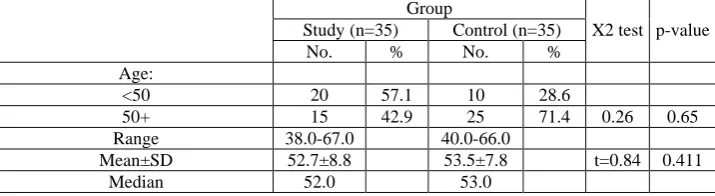
Table 1. Demographic characteristics of diabetic patients in the study and control groups
Group
X2 test p-value
Study (n=35) Control (n=35)
No. % No. %
Age:
<50 20 57.1 10 28.6
50+ 15 42.9 25 71.4 0.26 0.65
Range 38.0-67.0 40.0-66.0
Mean±SD 52.7±8.8 53.5±7.8 t=0.84 0.411
Gender:
Male 18 51.4 21 60.0
Female 17 48.6 14 40.0 0.52 0.47
Education:
Illiterate 10 28.6 12 34.3
Basic/intermediate 22 62.9 16 45.7 -- --
University 3 8.6 7 20.0
Job related to health:
No 34 97.1 35 100.0
Yes 1 2.9 0 0.0 Fisher 1.00
Marital status:
Married 27 77.1 33 94.3
Unmarried (single/divorced/widow) 8 22.9 2 5.7 4.20 0.04*
Smoking:
No 30 85.7 22 62.9
Yes 5 14.3 13 37.1 0.97 0.32
(*) Statistically significant at p<0.05 (--) Test result not valid
Table 1 illustrates the demographic features of the diabetic patients in the investigated and control groups. More than half (51.4 & 60.0%) of the patients in the observed and control groups were males, and more than 40 years of age with the mean ±SD of (52.7±8.8 and 53.5±7.8, respectively). The highest percentages of the investigated and control group (77.1% and 94.3% respectively) were unmarried. Regarding the educational level, 62.9% of the patients in the study group had basic education, and 45.7% of the patients (control group) had basic education. 62.9% of the observed patients, & 45.7% of the control had basic or intermediate education. Almost, all of the patients (study and control groups) 97.1% &100.0%; respectively had job not related to the health. 85.7% & 62.9%; respectively in the study and control groups were non-smokers.
Table 2. Feet problems and related education among the diabetic patients in the study and control groups
Group
X2test p-value
Study (n=35) Control (n=35)
No. % No. %
Feet symptoms:
Tingling 35 100.0 35 100.0 0.0 1.00
Spasm 35 100.0 34 97.1 Fisher 1.00
Decreased sensation 21 60.0 17 48.6 0.92 0.34
Total No. of symptoms:
Range 2-3 2-3
Mean±SD 2.6±0.5 2.5±0.5 t=1.41 0.23
Median 3.0 2.0
Feet signs:
Ulcers 7 20.0 2 5.7 Fisher 0.15
Bleeding/secretions 6 17.1 7 20.0 0.09 0.76
Callosity 15 42.9 16 45.7 0.06 0.81
Total No. of signs:
Range 0-2 0-3
Mean±SD 0.6±0.8 1.0±0.8 t=3.35 0.07
Median 0.0 1.0
Had training in foot care 0 0.0 0 0.0 0.00 1.00
Read about foot care 1 2.9 4 11.4 Fisher 0.36
Read about proper footwear 1 2.9 4 11.4 Fisher 0.36
Total No. of media:
Range 0-2 0-2
Mean±SD 0.1±0.3 0.2±0.6 t=1.91 0.17
Median 0.0 0.0
Want education about foot care 35 100.0 35 100.0 0.00 1.00
(*) Statistically significant at p<0.05
observed and control had training in foot care. All the patients (observed and control) wanted to be educated on foot care. There were no Arithmetic significant changes of feet symptoms and signs in the study and control groups.
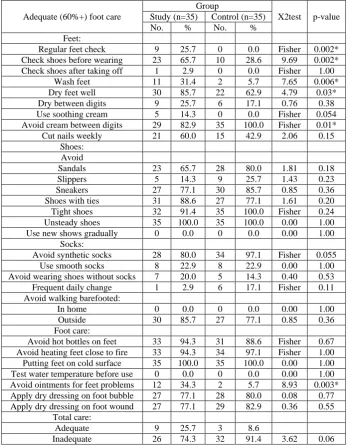
Table 3. Practices related to foot-care among diabetic patients in the study and control groups before the intervention
Adequate (60%+) foot care
Group
X2test p-value Study (n=35) Control (n=35)
No. % No. %
Feet:
Regular feet check 9 25.7 0 0.0 Fisher 0.002*
Check shoes before wearing 23 65.7 10 28.6 9.69 0.002*
Check shoes after taking off 1 2.9 0 0.0 Fisher 1.00
Wash feet 11 31.4 2 5.7 7.65 0.006*
Dry feet well 30 85.7 22 62.9 4.79 0.03*
Dry between digits 9 25.7 6 17.1 0.76 0.38
Use soothing cream 5 14.3 0 0.0 Fisher 0.054
Avoid cream between digits 29 82.9 35 100.0 Fisher 0.01*
Cut nails weekly 21 60.0 15 42.9 2.06 0.15
Shoes: Avoid
Sandals 23 65.7 28 80.0 1.81 0.18
Slippers 5 14.3 9 25.7 1.43 0.23
Sneakers 27 77.1 30 85.7 0.85 0.36
Shoes with ties 31 88.6 27 77.1 1.61 0.20
Tight shoes 32 91.4 35 100.0 Fisher 0.24
Unsteady shoes 35 100.0 35 100.0 0.00 1.00
Use new shows gradually 0 0.0 0 0.0 0.00 1.00
Socks:
Avoid synthetic socks 28 80.0 34 97.1 Fisher 0.055
Use smooth socks 8 22.9 8 22.9 0.00 1.00
Avoid wearing shoes without socks 7 20.0 5 14.3 0.40 0.53
Frequent daily change 1 2.9 6 17.1 Fisher 0.11
Avoid walking barefooted:
In home 0 0.0 0 0.0 0.00 1.00
Outside 30 85.7 27 77.1 0.85 0.36
Foot care:
Avoid hot bottles on feet 33 94.3 31 88.6 Fisher 0.67
Avoid heating feet close to fire 33 94.3 34 97.1 Fisher 1.00
Putting feet on cold surface 35 100.0 35 100.0 0.00 1.00
Test water temperature before use 0 0.0 0 0.0 0.00 1.00
Avoid ointments for feet problems 12 34.3 2 5.7 8.93 0.003*
Apply dry dressing on foot bubble 27 77.1 28 80.0 0.08 0.77
Apply dry dressing on foot wound 27 77.1 29 82.9 0.36 0.55
Total care:
Adequate 9 25.7 3 8.6
Inadequate 26 74.3 32 91.4 3.62 0.06
(*) Statistically significant at p<0.05
Table 3 shows that that there was no statistically noteworthy variance between the observed and the control groups before the intervention regarding the practices related to foot-care among the diabetic patients in the study and control groups. About three quarters (74.3%) of the patients in the investigated group had insufficient practices correlated to the care, and (91.4%) of the patients in the control group had inadequate practices related to foot-care.
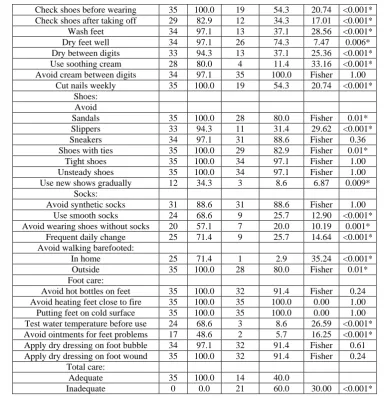
Table 4. Practices related to foot-care among the diabetic patients in the study and control groups after the intervention
Adequate (60%+) foot care
Group
X2test p-value
Study (n=35) Control (n=35)
No. % No. %
Feet:
Check shoes before wearing 35 100.0 19 54.3 20.74 <0.001*
Check shoes after taking off 29 82.9 12 34.3 17.01 <0.001*
Wash feet 34 97.1 13 37.1 28.56 <0.001*
Dry feet well 34 97.1 26 74.3 7.47 0.006*
Dry between digits 33 94.3 13 37.1 25.36 <0.001*
Use soothing cream 28 80.0 4 11.4 33.16 <0.001*
Avoid cream between digits 34 97.1 35 100.0 Fisher 1.00
Cut nails weekly 35 100.0 19 54.3 20.74 <0.001*
Shoes: Avoid
Sandals 35 100.0 28 80.0 Fisher 0.01*
Slippers 33 94.3 11 31.4 29.62 <0.001*
Sneakers 34 97.1 31 88.6 Fisher 0.36
Shoes with ties 35 100.0 29 82.9 Fisher 0.01*
Tight shoes 35 100.0 34 97.1 Fisher 1.00
Unsteady shoes 35 100.0 34 97.1 Fisher 1.00
Use new shows gradually 12 34.3 3 8.6 6.87 0.009*
Socks:
Avoid synthetic socks 31 88.6 31 88.6 Fisher 1.00
Use smooth socks 24 68.6 9 25.7 12.90 <0.001*
Avoid wearing shoes without socks 20 57.1 7 20.0 10.19 0.001*
Frequent daily change 25 71.4 9 25.7 14.64 <0.001*
Avoid walking barefooted:
In home 25 71.4 1 2.9 35.24 <0.001*
Outside 35 100.0 28 80.0 Fisher 0.01*
Foot care:
Avoid hot bottles on feet 35 100.0 32 91.4 Fisher 0.24
Avoid heating feet close to fire 35 100.0 35 100.0 0.00 1.00
Putting feet on cold surface 35 100.0 35 100.0 0.00 1.00
Test water temperature before use 24 68.6 3 8.6 26.59 <0.001*
Avoid ointments for feet problems 17 48.6 2 5.7 16.25 <0.001*
Apply dry dressing on foot bubble 34 97.1 32 91.4 Fisher 0.61
Apply dry dressing on foot wound 35 100.0 32 91.4 Fisher 0.24
Total care:
Adequate 35 100.0 14 40.0
Inadequate 0 0.0 21 60.0 30.00 <0.001*
Table 4 illustrates that there was the arithmetical weighty variation between the observed and the control groups (after the intervention) regarding the practices connected to the foot-care. All the patients in the investigated group had satisfactory practices related to the foot-care after the intervention. While more than half of the patients (60.0%) in the control had insufficient practices associated to the foot-care with p value (<0.001*). All the patients in the study group had steady feet check, while (17.1%) of the patients in the control group had no intervention. All the patients in the investigated group checked their shoes before wearing after the intervention, while (54.3%) of the patients in the control group who had no intervention checked their shoes before wearing. Regarding checking the shoes after taking off, (82.9%) of the patients in the observed group did that after the intervention, while (34.3%) of the patients in the control group did that. Regarding the shoes, there was a statistical significant difference between the study group and the control group. (94.3%) of the patients in the study group avoided slippers, while (31.4%) of patients in the control group did that with the p value (<0.001*). Regarding the socks, there was a statistically important change between the observed group and the control one, more than two thirds (68.6%) of patients (study group) used smooth socks, while (25.7%) of the patients (control group) used smooth socks with p value (<0.001*). Regarding avoiding walking barefooted at home, there was a numerical noteworthy variation between the study and control as about three quarters (71.4%) of the patients in the study group avoided that, while (2.9% of patients) in the control group did that p value (<0.001*).
Table 5. The relations between the patients’ practice and foot care (total pre + post of the sample) N=140
Foot care
X2test p-value
Adequate Inadequate
No. % No. %
Total foot care:
Inadequate 17 25.4 50 74.6 17.31 <0.001*
(*) Statistically significant at p<0.05
Table 5 illustrates that there was a significant change between the patients’ practice and foot care as (74.6%) of the patients who had inadequate practice had inadequate foot care.
Table 6. The correlation between the patients’ scores of knowledge, practice, and foot care and their characteristics
Characteristics Spearman's rank correlation coefficient
Knowledge Practice Foot care
Age -.154 -.273** -.178*
Education .084 .381** .039
Duration of DM .105 .079 .217*
RBS -.145 .057 -.024
No. of symptoms .133 -.096 -.033
No. of signs -.129 -.176* -.289**
Training/reading .115 .352** .119
(*) significant at p<0.05 (**) significant at p<0.01
Table 6 illustrates that there was a negative correlation coefficient between the patient age, practice and foot care (r=-.273** & r=-.178* respectively). There was a positive correlation coefficient between the patients’ education and practice (r=.381**). There was a positive correlation coefficient between the duration of DM and foot care (r=.217*). There was a negative correlation coefficient between the number of signs, the practice score, and the foot care score (r=-.176*&r=-.289** respectively). There was a positive correlation coefficient between training/reading about the foot care and practice (r=.352**).
Table7. Best fitting multiple linear regression model for the foot care score
Unstandardized Coefficients Standardized
Coefficients t-test p-value
95% Confidence Interval for B
B Std. Error Lower Upper
Constant 34.67 2.14 16.206 <0.001 30.44 38.90
Intervention 11.99 1.66 0.50 7.238 <0.001 8.71 15.27
Study group 9.71 1.30 0.41 7.488 <0.001 7.14 12.27
Knowledge score 0.87 0.30 0.20 2.873 0.005 0.27 1.47
r-square=0.61 Model ANOVA: F=72.45, p<0.001
The variables were entered, and the age, gender, education, job, DM duration, RBS, FU were excluded.
Table 7 represents the model for the foot care score indicating that the significant positive predictors of this score were the intervention, study group and knowledge score r-square=0.61 F=72.45, p<0.001, and they were not related to the age, gender, education, job, DM duration, RBS, FU as indicated by the standardized coefficient.
DISCUSSION
study patients were females. This result was due to the men with diabetes were at enlarged hazard of foot ulcers or amputation compared with the women with diabetes.
The current study revealed that the mean age of patients in the observed group and the control group was (52 & 53 years; respectively). This finding was in agreement with [9] who was studied the diabetic foot management and stated that the mean age of the patients presented with diabetic foot in the study was 57 years. This result was because of the reason that the diabetic foot complications are uncommon in patients < 40 years of age. They rise with age >40 years, and happen most frequently in those aged 50 years and older. However, the interval and the control of diabetes have been greater predictors of diabetic foot problems than the chronological age [10].
The results presented that over two fifth of the patients involved in the study group and the control group had basic education. The findings were consistent with [11], who studied the factors affecting healing the diabetic foot ulcer in Ain-shams University, and found that about 50% of the patients in the study were secondary educated, and also the findings were in agreement with [12] who studied the surgical management of the diabetic foot ulcers, in a Tanzanian university teaching hospital, and found that most of the studied sample had either primary or no formal education. The result of the current study might be because of the low level of education leading to certain factors, such as barefoot walking, low socio-economic position and late presentation of patients to hospitals or clinics. Concerning the duration of being diabetic, the present study showed that, the duration of being diabetic indicated that about three quarters of them have been diabetic for ≥ 10 years with the mean 13 years in the studied group. This result agreed with the result of [11] who found that > 50% of the patients in her study were ranged between [11-17], and it was in accordance with [13] who studied the agreement of the diabetic patients to different therapeutic regimens in Zagazig University who reported that about one half of the patients had diabetes for more than five years, and this finding might be due to the chronicity of the disease. Glucose levels have been vital signs of the individuals with diabetes. It is essential to consistently maintain blood sugar levels within a usual range to avoid short and long term complications. The current study revealed that the blood glucose level was 140 mg\ dl for more than half of patients in the study group and the control group. This finding disagreed with [14] who studied the correlations between the affecting factors and healing rate in the diabetic foot ulcers, and found that more than half
of the sample in the study had blood glucose level of ≥200 mg\dl.
Concerning diabetes treatment, the present study showed that the majority of the patients in the study group and control group were treated with insulin injection. This finding was consistent with [11] who found that the majority of the patients in the study were treated with insulin injection, and it was also in agreement with [13] who reported that more than half of the diabetic patients depended on insulin to control their blood glucose levels. The results showed that all of the patients in the study and control group had had feet symptoms (Tingling & spasm). This finding was consistent with [15], who studied the diabetic foot awareness among the diabetic patients in Saudi Arabia, and found that around 170 participants (33%) suffered from numbness and tightness. All the patients (in the study and control groups) want to be educated on foot care. This result might be due to the presence of factors donating to the recurrence of diabetic foot (e.g. lack of knowledge connected to the avoidance of diabetic foot, improper self-care, etc). Concerning the practices associated to the foot-care among the diabetic patients (study and control groups) prior the intervention score, the study revealed that about three quarters of the patients in the observed group and the control group had poor foot care in the pretest. This result went in the same line with [16] who found that less than half of the sample had poor foot care practice. The result of this research might be due to the lack of knowledge on foot care. But, after educational intervention there was a highly significant difference detected between the control and studied groups in the post test (P = <0.001).
Appropriate footwear should support feet and protect them against mechanical traumas and distribute pressure points. They should not have stitching and they should be in a good condition. Shoes should not be too loose or too tight, because both are more likely to make friction and create blisters, and they should ideally be bought in the afternoon, when the feet tend to have edema [17]. Regarding shoes, there was a numerical significant variation between the study and the control groups, most of the patients in the observed group avoided slippers while less than one third of the patients in the control group did that with p value (<0.001*).
control groups, as more than three quarters of patients in the study group while (2.9%) of patients in the control group did that with p value (<0.001*). This result went in the same line with [17] who stated that while 87.5% did not walk barefoot, which is a positive issue, more than 96% did not know about shoes specifically for diabetics. Almost all of the patients reported having dry skin on their feet.
CONCLUSION
According to the findings of the study, it can be concluded that, the self-management support program showed an improvement in patients' knowledge which reflected an improvement in their practice and diabetic foot care behaviors in the post phase. In addition, there was a positive relationship between knowledge score and practice score. Also, there was a positive relation between foot care score and knowledge score and practice score, so diabetic clinics have been an important source of information about the diabetic foot and its complications. Hence, there is a necessity to reorient and prompt health workers in educating diabetics about self-care. The teaching sessions and health programs to educate and motivate the diabetic patients may promote health, and minimize long term diabetic foot related complications.
Recommendations
Based on the results of the present study the following recommendations have been suggested:
A poster about diabetic foot, and guidelines for diabetic foot care should be available to each patient present in the diabetic foot outpatient clinic. Counseling clinics and trained nursing team should be available at diabetic foot outpatient clinics and diabetic clinics. Counseling clinics and trained nursing team should be available at diabetic foot outpatient clinics. A patient‑friendly educational intervention coupled with regular physician reinforcement is needed to reduce the gap in the knowledge of foot care among the diabetics and decrease the risk of DFUs and amputations. Training courses about diabetic foot care and handouts about the suitable shoes should be available to the diabetic foot patients.
REFERENCES
1. Nongmaithem M, Bawa AS, Pithwa AK, Bhatia SK, Singh G, Gooptu S. 2016: A study of risk factors and foot care behavior among diabetics. J Family Med Prim Care;5: 399-403.
2. Edo EA, Edo GO, Uzeani IU. 2013: Risk factors, ulcer grade and management outcome of diabetic foot ulcers in a tropical tertiary care hospital. Niger Med J; 54: 59‑63.
3. Bartolo P, Mizzi S, Formosa C (2013) An evaluation of foot care behaviour in individuals with type 2 diabetes living in Malta. Journal of Diabetes Nursing 17: 72–77
4. International Diabetes Federation. IDF Diabetes Atlas, 7th ed. Watermael- Boitsfort, Belgium: International Diabetes Federation, 2015. Pp. 50–120.
5. Lincoln, N.B., W.J. Jeffcoate, P. Ince, M. Smith and K.A. Radford, 2007. Validation of a new measure of protective foot care behaviour: The Nottingham Assessment of Functional Footcare (NAFF). Pract. Diabet. Int., 4: 207-211. DOI: 10.1002/pdi.1099
6. Al-Busaidi IS, Coppell KJ, Abdulhadi N. 2016: Care of Patients with Diabetic Foot Disease in Oman. Sultan Qaboos University Med J, August 2016, Vol. 16, Iss. 3, pp. e270–276, Epub. 19 Aug 16
7. Mohsen M.M and Shehata A. E: Foot Self Care: Knowledge, Practice And Barriers Among Diabetic Patients. Published paper in Zagazig Nursing Journal, Faculty of Nursing, Menofia University; 2014.
8. Mohamed, S., A. (2008): Factors contributing to diabetic patients foot ulcers and concepts of prevention as perceived by medical and surgical nurses. The New Egyptian Journal of Medicine, 38(3), 192
9. Bohtera, F., M., M.: Our experience in diabetic foot management. The New Egyptian Journal of Medicine, 2011; 44(1), 49.
10. Abdelhamid, F. M (2015): Factors affecting wound healing and needs among patients with diabetic foot ulcer. master thesis. Faculty of Nursing. Zagazig University.
11. Soliman, A M.: Factors Affecting Healing of Diabetic Foot Ulcer. Faculty of nursing. Ain shams university. Master thesis, 2012; P:24.
hospital experience BMC Research Notes 24 September 2011 Available athttp://www.biomedcentral.com/1756-0500/4/365 accessed on 22 Mach 2015.
13. Abd- ElrazakB. G: Compliance of diabetic patients toward different therapeutic regimen, Unpublished Master Thesis, Faculty of Nursing , Zagazig University; 2009.
14. Kaewloet, N.: The correlations between affecting factors and healing rate in diabetic foot ulcers. Retrived From: http://mulinet 10.li.mahidol.ac.th14737289.pdf, 2008; Accessed on 3July 2010.
15. Mesale Algshanen, Mohammed Almuhanna, Ahmed Almuhanna, Faisal Alghobaish. 2017: Diabetic Foot Awareness among Diabetic Patients in Saudi Arabia. The Egyptian Journal of Hospital Medicine (July 2017) Vol.68 (2), Page 1289-1290.
16. Desalu O., Salawu F., Jimoh A., Adekoya O., Bausari O. &Olokoba A (2011): Diabetic foot care: Self reported knowledge and practice among patients attending three tertiary hospitals in Nigeria. Chana medical journal; 45(2):60-5.