Cloud computing for disaster response
management stemming from terrorism in
Iraq
AlDahash, HF, AlShammari, S, Kulatunga, U and Hardman, MD
Title Cloud computing for disaster response management stemming from terrorism in Iraq
Authors AlDahash, HF, AlShammari, S, Kulatunga, U and Hardman, MD
Type Conference or Workshop Item
URL This version is available at: http://usir.salford.ac.uk/43854/
Published Date 2017
USIR is a digital collection of the research output of the University of Salford. Where copyright permits, full text material held in the repository is made freely available online and can be read, downloaded and copied for noncommercial private study or research purposes. Please check the manuscript for any further copyright restrictions.
295
ID 143
CLOUD COMPUTING FOR DISASTER RESPONSE MANAGEMENT
STEMMING FROM TERRORISM IN IRAQ
H. Al-Dahash1, S. Al-Shammari2, U. Kulatunga1 and M Hardman3
1 School of the Built Environment, University of Salford, Salford M5 4WT, UK
2 Computer Engineering Department, College of Engineering, Al-Nahrain University, Baghdad, P. O. Box
47077, Iraq
3 Salford Languages, University of Salford, Salford M5 4WT, UK
Email: [email protected]
Abstract: Effective response to disasters requires assessing information prior to, during, and after potentially catastrophic events, as well as initiating activities that will lessen their impact upon society. The post-war transitions in Iraq have affected the institutional capacities of the state to respond in an efficient manner. Although the draft National Disaster Risk Reduction Law acknowledges the importance of information and knowledge management, it fails to provide a framework for establishing a dedicated information system. Due to the importance of an effective and efficient disaster management information system, this should be linked to local authorities, local early warning systems, and the media, to ensure effective use of disaster risk information for public awareness. The fact that disaster management data is often complex, large, and from different organisations, this requires a fast, scalable and accessible system to manage the complexity of the collected data. As cloud computing is considered a technology for providing synchronous, on-line information management with accessibility of data regardless of the storage resources’ location, this paper highlights the advantages of using cloud computing in managing information and communication in disaster response management, with particular reference to terrorism in the context of Iraq. The paper contributes to the existing knowledge on disaster response management, a field of study that is still largely under explored in the context of the Middle East, and in the context of terrorism more specifically, by reviewing its literature, through a systematic review methodology. This paper will focus, therefore, on the use of cloud computing as a solution to information sharing and communication, during the immediate response to a terrorist attack, due to the advantages of cloud computing in this context, in terms of data availability, reliability, IT and cost reduction.
Keywords: Cloud Computing, Communication, Disaster Response Management, Information System, Terrorism.
1. INTRODUCTION
296
ever-present challenge to public emergency services (Meissner, Luckenbach, Risse, Kirste, & Kirchner, 2002).
Terrorist attacks often occur without warning, in order to have the most serious impact on lives and property, therefore, there is no time for long negotiations or prearrangements for different stakeholders, such as public and non-profit organisations. Since these organisations might have little experience in disaster response management activities, under extreme circumstances, different problems can emerge from a fragmented performance, including a lack of coordination, inadequate information exchange, and lack of trust (Comfort, 2007; Nolte & Boenigk, 2013). Appropriate communication decisions within the response stage could, therefore, effectively improve the disaster response by limiting or reducing the impact of the attack. Ultimately, this could save lives and property (Hale et al., 2005).
Achieving coordinated action among several stakeholders depends fundamentally on their access to timely, valid information and their ability to conduct immediate information searches (Comfort, 2002). Pathirage, Amaratunga, and Haigh (2007) asserted that the integration and coordination of resources during the exchange of critical disaster information and knowledge can influence stakeholders’ actions, thus enhancing the effectiveness of the response.
The UNISDR and UNOCHA (2008) explained that assistance during a disaster is provided from a wide range of potential stakeholders, such as the military, NGOs, utility companies and private sector entities, and skilful coordination among them is critical to avoid confusion and to facilitate an effective response. The Emergency Operations Centre, for instance, is essential to ensure a clear central focal point and location for coordination. In Iraq, Humayun and Al-Abyadh (2014) identified that there are a number of stakeholders involved during disaster response, namely, the General Directorate of Civil Defence, the Health Department, NGOs, and the Iraqi Red Crescent Society, but at the same time, there is no national platform to organise the efforts of multiple institutions at all tiers of government. Although the draft National Disaster Risk Reduction Law acknowledges the importance of information and knowledge management, it fails to provide a framework for establishing a dedicated information system (Humayun & Al-Abyadh, 2014).
297
Cloud computing is considered the best information technology for managing the complex and dynamic nature of disaster environments (Habiba & Akhter, 2013). Establishing such communication structures prior to the attack can save valuable time and ensure that key government agencies and other stakeholders are empowered to coordinate the disaster response in an effective manner (GSMA, 2012).
This paper aims to highlight the importance of cloud computing in managing information and communication in disaster response management, with particular reference to terrorism in the Iraqi context. Moreover, cloud computing infrastructure could significantly increase the efficiency and effectiveness of disaster response management, by facilitating the sharing of appropriate information and communication between different agencies participating in the response to terrorist incidents. This would provide the opportunity to have an integrated response management information system, this system would therefore link the different agencies together. The use of cloud computing would help to expedite the sharing of information in the crucial minutes following an attack, and hence the overall management response time. However, it is a requirement that the data from different agencies is kept up-to-date and available on time to the authorised agencies at the point of need. As a result, this would provide integration of early warning systems with public alerts, and also enable a timely evacuation of the victims through such a disaster response information system, for the different cities in Iraq.
The new technology era and the tendency to use cloud technology in managing different aspects of life has highlighted a need for a solution to bridge the gap in the current disaster response system.
2. BACKGROUND
2.1 Disaster Response Management in Iraq
298
Responses to catastrophic incidents rely on the assets and manpower of the central and provincial government and with support from non-governmental agencies and international donors (Goodyear, 2009). Most of the limited disaster response capacity of the Government of Iraq lies in the General Directorate of Civil Defence of the Ministry of Interior and the General Directorate of Public Health and Primary Health Care. In order to respond to disasters, ad-hoc support to the Government of Iraq is provided by the International Committee of the Red Cross, the United Nations, and national/international non-governmental agencies (Goodyear, 2009).
An alarming increase in the frequency of terrorism occurrences has been seen in recent decades. For instance, terrorist attacks in Baghdad have significantly increased since mid-August 2009, following the withdrawal of the Multi-National Forces-Iraq troops (Goodyear, 2009). Violence in Iraq has also become normalised, ranging from the Iraqi and US military assaults and sectarian militias, the threat of suicide bombings, to violent street crime (Wong, al-Saiedi, & Silva, 2005). According to the Statistic Department (2016), more than 270,000 terrorist incidents took place in Iraq between 2009 and mid-2016. Iraq has experienced considerable internal conflict, causing the well-being of the population to be damaged, with the internal displacement of over 2 million people (Goodyear, 2009). To lessen the threat of violence and terrorism, at the Central Government level, several institutions have been created to respond to disaster incidents. These are coordinated and led by the National Operations Centre, (NOC), which was established to present the Office of the Prime Minister with information pertaining to risk levels regarding acts of terrorism (Goodyear, 2009). The Crisis Action Cell, which was formed in November 2006, was a group made up of the National Security Advisor, Ministers of Defence and Interior and the Prime Minister’s Chief of Staff. This was a national-level crisis management team tasked by the National Security Council and the Prime Minister, with the authority to lead and manage all the line Ministries. However, the Crisis Action Cell does not seem to still be in effect (Goodyear, 2009).
At the provincial or regional level, in 2006, the Prime Minister and the Governors established the Governorate Emergency Cells (GECs) as new structures. GECs were established in nine of the 18 governorates in Iraq: Missan, Kerbala, Wassit, ThiQar, Erbil, Sulaymaniah, Dahuk, and Babylon. Each GEC, chaired by the Governor of the region, operates a response function with members of the local branches of line ministries addressing local crises in accordance with their respective aptitudes and resources. Goodyear (2009) points out that some of the GECs have begun to develop their own emergency preparedness strategies to respond to localized crises.
299
2.2 Cloud Computing
The term ‘cloud computing’ refers to providing services by supplying IT resources (such as storage, computing, and networking) on the internet (Sarna, 2010). Cloud services and resources are used in a pay as you go way, so that cloud users can use the service without the need to install the cloud applications on their machines (Vaquero, Rodero-Merino, Caceres, & Lindner, 2008). This introduces many advantages to cloud users, in terms of reducing the infrastructure resource cost and improving the process of developing these applications, which is achieved by saving the need for IT maintenance, which is managed by the cloud providers. The use of the cloud provides an elasticity feature through extending the used resources in the providers’ servers, the cloud user is not responsible for managing the resources for data storage. Cloud computing is based on the virtualization technique, which insulates the cloud software from the underlying hardware resources. This isolation ensures the availability of data in case of infrastructure destruction (Rittinghouse & Ransome, 2016).
Three main services are defined in cloud computing; these services are: Infrastructure as a Service (IaaS): which represents the computing and storage resources used in the cloud; Platform as a Service (PaaS), which is used by the application providers to develop their applications; and Software as a Service (SaaS), which introduces the cloud applications used by the users through a web browser without the need to install these services (Mell & Grance, 2011).
3. LITERATURE REVIEW
The importance of sharing knowledge and ensuring availability and reliability of disaster information was discussed by (Pathirage et al., 2007). The authors highlighted the need to share knowledge in disaster management (natural and manmade), and mentioned that disaster knowledge and practitioners are still in the individual domain and that coordination is required among the different groups. This could help in preparedness and mitigate the effect of disaster, in addition to providing better warnings.
A study presented by Alazawi, Altowaijri, Mehmood, and Abdljabar (2011), suggested the use of cloud computing for developing a vehicular disaster emergency response system, focusing on the transportation system using Vehicular Ad hoc Network (VANET). This was considered by gathering the data from different sources and providing it to the people in vehicles and other actors in the system. Although the study considered Al-Ramadi city in Iraq, the research was dedicated to the transportation system only, overlooking managing the data among the different government’s response management agencies.
The study presented by Hitachi (Ogasawara, Tanimoto, Imaichi, & Yoshimoto, 2014) proposed a solution for disaster response and prevention based on the information collected from ‘Social Network Services’ (SNS) such as Twitter and blogs, sensors and field reports. However, the authors discussed the importance of including the SNS data in decision making, but they mentioned the possibility of including false reports and rumours. In contrast, the proposed solution in this paper would take data from authorised agencies and this would ensure the reliability of the collected data.
300
discussed the main principles of cloud computing and the need for considering it in a disaster response management system. The authors mentioned the advantage of cloud computing in reducing the cost of recovering the data after the disaster, as an internet connection is enough to connect to the cloud servers. This study has been extended by Velev and Zlateva (2012) to discuss the importance and feasibility of considering the cloud as a solution in emergency systems of disaster management, and highlighted the need for a backup system to manage the disaster information. The author argued the need for a platform to facilitate the information sharing and collaboration among the central and local governments, organizations and companies.
The use of cloud computing for managing natural disasters was first introduced by Habiba and Akhter (2013). The authors argued that cloud computing is the best solution for managing disaster situations because of its capabilities of managing the significant amount of complex disaster data. They proposed a management system using web Amazon (web services). Again, this research was solely focused on natural disaster management and overlooked the effect of manmade disasters.
Zong, Li, Yang, He, and Velev (2016) proposed using cloud computing for managing natural disasters in China. Although the authors discussed natural disasters, in doing so they overlooked discussing manmade disaster and, particularly, terrorism. They also discussed the fact that the telephones are overloaded in disaster periods, where the use of the cloud could help to improve the disaster emergency management by providing real-time data. They concluded that cloud computing is considered a mature solution for disaster management.
The study presented by Zou (2017) discussed the use of cloud computing to manage the data collected from the various sensors for disaster monitoring. The authors mentioned the need for a fast and automatic solution for disaster management, and proposed the collection of data from various spatial sensors before extracting the required data using cloud computing.
4. GAPS AND CHALLENGES 4.1 Information
301
timely delivery of high volumes of accurate data is required by disaster responders to make correct decisions. Accordingly, Ogasawara et al. (2014) stress that, in the case of large, wide-area disasters, gaps in available information probably lead to the problem of delayed decision making. Such an information vacuum in the immediate aftermath of a disaster can cause fatal delays in decisions for the most urgent lifesaving response activities. Sinclair et al. (2012) added another challenge to this context, which is a lack of awareness of the existence of information about decision making or lack of understanding of its relevance to disaster management from some disaster managers. Therefore, according to Goodyear (2009) due to the importance of efficient disaster risk management information systems, such systems should be effectively linked to local authorities, local early warning systems, and the media to ensure effective use of disaster risk information for public awareness and education, among others. In Iraq, although the draft National Disaster Risk Reduction Law acknowledges the importance of information and knowledge management, it fails to provide a framework for establishing a dedicated information system (Humayun & Al-Abyadh, 2014).
Further, because the complex, dynamic and unpredictable nature of the environment in which many groups of professionals need to collaborate, sharing and coordinating information is very difficult for such groups, and due to collective decision-making, actions are negatively influenced by poor information sharing and coordination during inter-agency disaster response. Therefore, a lack of coordination might lead to a number of possible failures, for example, counter-productive ordering of sequential relief processes, delayed evacuations, and inappropriate allocations of first responder resources, which often result in disaster growth and even higher numbers of causalities (Bharosa, Lee, & Janssen, 2010). Ferdinand, O’Brien, O’Keefe, and Jayawickrama (2012) support this view, stating that poor information sharing meant there were cases of duplication of activities leading to community division and conflict of interests. Moreover, Bharosa et al. (2010) noted that although the people are aware of the need for information sharing and coordination, they find themselves challenged by a lack of information and system quality. Comfort et al. (2003, 2004) stated that different phases of disaster response require different types of information and management skills. They also presented the common assumption in disaster management, that “a lack of information is the basic factor in limiting the efficiency of response among organisations”. Further, the efficiency of response actions can be enhanced by accessing core information, as well as coordination throughout the network of responding organisations, which can be increased because cooperation without information is not adequate to raise response effectiveness (Comfort, Ko, & Zagorecki, 2004). Handmer and Parker (1991) added that effective information flow can partially help to overcome a high degree of fragmentation in disaster and hazard management, despite the limited exchange of information in some cases (Handmer & Parker, 1991). Not only that, Comfort (2002) argued that to achieve coordinated action among different groups of people, timely, valid information should be accessed. In addition, they should be able to conduct information absorption search, exchange, search, and adaptation. Accordingly, Madry (2015) stressed that the heart of the disaster response effort is represented by the key information that is accurately updated in a timely way.
4.2 Communication
302
Not only that, degraded communications also have a large impact on response, in addition to escalating demands of victims which exhausts the remaining capacity (George et al., 2010). Comfort et al. (2004) stress that if the telephone lines are damaged, communication fails. In addition, communications will be overloaded by an unexpected increase in the number of connections resulting from many people simultaneously switching their communication means from land telephone lines to wireless or cellular, which in turn, makes mobile phones not work. During the 2005 Katrina flood, failures in communication were considered one of the shortcomings in the federal emergency response (Baker & Refsgaard, 2007). However, Banipal (2006) found that the inter-operability issue was a major operational problem experienced during hurricane Katrina. Because the existing system was not scalable enough to support hundreds of additional users, the out of state volunteers were unable to use it. In agreement, Manoj and Baker (2007), stress that the primary challenge of communication break-down was highlighted by disasters such as the 9/11 terrorist attacks and Hurricane Katrina. A problem frequently cited by responders is the lack of radio interoperability. Further, Comfort (2007) stress that the capacity for coordination, among multiple actors, depends on effective communication. Comfort (2007) stated that “if the communication processes do not elicit sufficient shared understanding among the parties to align their priorities for action, the likelihood of achieving a common action framework among multiple actors will be seriously diminished”. Manoj and Baker (2007) noted that the lack of radio interoperability is a primary challenge in responding to both natural and man-made disasters, as different response actors communicate with radios set to orthogonal frequencies. This makes inter-agency communications very difficult. Consequently, when more local, state, and federal agencies become involved, the problem is compounded. Therefore, Smith (2011) found that communication is needed to establish collaborative organisation, particularly within network-type organisations. Smith (2011) also found that communicating with the community affected by the disaster is important, in terms of transparency regarding response operations. Further, according to GSMA (2012), in countries that have highly centralised or authoritarian regimes, coordination between mobile network operators and governments can be difficult in times of disasters. Consequently, to manage the disaster response processes effectively and efficiently, the support of ICT is considered a desirable feature (Saeed, 2012). In addition to that, integration of early warning systems with public alerts, evacuation and disaster response systems across sectors is vital for disaster management (Goodyear, 2009).
5. THE USE OF CLOUD COMPUTING IN MANAGING THE IMMEDIATE RESPONSE IN IRAQ
303
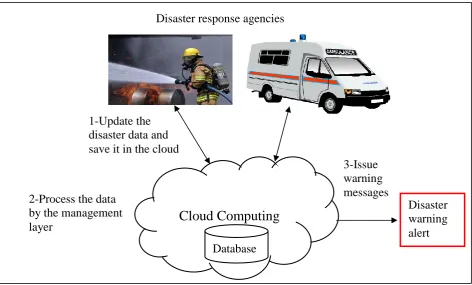
[image:10.595.73.546.111.396.2]the scene of the disaster. This also can be used for issuing warning alerts and notifications to the correspondent actors, in addition to the public.
Figure 1 Using Cloud Computing in Disaster Response Management
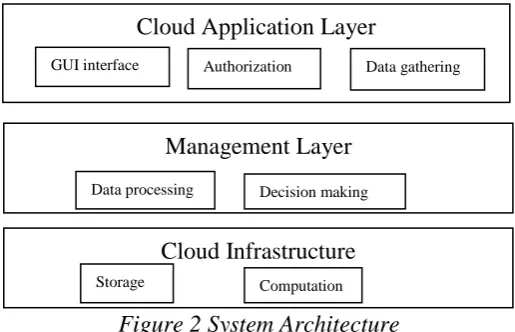
The disaster management architecture is composed of three main layers as depicted in Figure 2. These layers are:
Cloud Application (SaaS): A user friendly interface allows the agencies to update the disaster dataset without the need to use complicated applications. This layer provides a web application with a GUI interface, authorized access is considered to ensure the reliability of the data. This layer is used for gathering the data.
Management layer: The layer used to process and analyse the collected data by the user interface (cloud application layer). This layer informs decision making about the groups (agencies, companies) to be alerted in a disaster. The decision made can be used for activating the warning alerts and notifications to the response organizations and the people in the disaster affected area.
Cloud Infrastructure: This layer represents the cloud hardware resources and database storage used to store the collected data.
3-Issue warning messages 1-Update the
disaster data and save it in the cloud
2-Process the data by the management layer
Disaster response agencies
Cloud Computing
Database
304
Figure 2 System Architecture
The use of cloud computing provides the following benefits to the context of disaster response management in Iraq.
1- Connecting the different disaster response agencies together would help to keep the agencies’ information up-to-date about the damage in the infrastructure, buildings, roads and the number of victims. This would be achieved through real time collaboration to avoid the actions overlapping. In addition, it would help to accelerate the disaster response management process by creating a network connection among the response agencies, thus increasing the ability to share accurate data about the disaster. This could be synchronized across multiple agencies, regardless of location and devices used. This would therefore be a platform for managing communications and collaborations between the different disaster response agencies and managing the collected data.
2- Ensuring the availability of the data even in the case that the infrastructure resources had been destroyed, since the data is saved on the cloud servers. For example, the data would be available even though a local government department or response agency had been attacked. Although the disaster could cause a temporary disconnection from the internet, the data would be saved in the cloud, unlike the data saved on local infrastructure, which could be destroyed, as discussed by Zong et al. (2016).
3- Reducing the cost of saving the data, through reducing the need for extra resources to manage data storage. In other words, the different response agencies would not need to keep the data in their own servers, but in the cloud servers.
4- Accessing the data in any situation using mobile devices. This means that the disaster information saved in the cloud can be accessed at any time and retrieved quickly in case of a disaster.
5- Increasing the scalability of the used hardware resources. This is due to the scalability and flexibility features of cloud computing, which allow the scalability of the underlying resources, when handling large amounts of data or increasing the number of companies / agencies, which presents an efficiency cost saving.
6. CONCLUSION
This paper contributes to the existing knowledge on disaster response management, a field of study that is still largely underexplored, especially in the context of the Middle East and in the context of terrorism more specifically. A systematic review of the existing, pertinent literature has been examined in this paper. The need for a structured, collaborative and
Cloud Infrastructure Management Layer Cloud Application Layer
GUI interface Authorization
Data processing Decision making
Storage Computation
305
strategic approach to information sharing and formulation of disaster management capacities, in terms of preparedness, mitigation, early warning, relief, rehabilitation and recovery actions at the provincial and district level, is essential in providing a reliable communication system during a terrorist attack.
In practice, results of this research may be used to enhance the effectiveness of disaster response communication through expediting the process of response. The ultimate end may prove to be not just improved communication within the response stage of the disaster, but also a reduction of the damage from the disaster. The proposed solution presented here is to use cloud computing to aid in the management of disaster response management and provides a mechanism for knowledge sharing, through managing collaboration among the different response agencies. The use of cloud computing provides advantages, in terms of managing the complexity of the disaster data and ensuring data availability, reliability, and cost reductions. This guarantees real-time collaboration among the response agencies and hence a fast response and automatic disaster data management, and, as a result, could potentially save lives.
7. ACKNOWLEDGMENTS
This research would not have been possible without the assistance of the Iraqi Ministry of Higher Education, who supported this work. The authors also acknowledge the financial support received from the Centre for Disaster Resilience, University of Salford for the publication of this paper.
8. REFERENCES
Alazawi, Z., Altowaijri, S., Mehmood, R., & Abdljabar, M. B. (2011). Intelligent disaster management system based on cloud-enabled vehicular networks. In 11th International Conference on ITS Telecommunications (ITST), 23 Aug - 25 Aug 2011, Park Inn Pulkovskaya St. Petersburg, Russia. (pp. 361-368).
Baker, D., & Refsgaard, K. (2007). Institutional development and scale matching in disaster response management. Ecological Economics, 63(2), 331-343.
Banipal, K. (2006). Strategic approach to disaster management: lessons learned from Hurricane Katrina.
Disaster Prevention and Management, 15(3), 484-494.
Belardo, S., Karwan, K. R., & Wallace, W. A. (1984). Managing the response to disasters using microcomputers. Interfaces, 14(2), 29-39.
Bharosa, N., Lee, J., & Janssen, M. (2010). Challenges and obstacles in sharing and coordinating information during multi-agency disaster response: Propositions from field exercises. Information Systems Frontiers, 12(1), 49-65.
Comfort, L. K. (2002). Managing intergovernmental responses to terrorism and other extreme events. Publius: The Journal of Federalism, 32(4), 29-50.
Comfort, L. K. (2007). Crisis management in hindsight: Cognition, communication, coordination, and control.
Public Administration Review, 67(Special Issue), 189-197.
Comfort, L. K., Ko, K., & Zagorecki, A. (2004). Coordination in rapidly evolving disaster response systems the role of information. American Behavioral Scientist, 48(3), 295-313.
Ferdinand, I., O’Brien, G., O’Keefe, P., & Jayawickrama, J. (2012). The Double Bind of Poverty and
Community Disaster Risk Reduction: A Case Study from the Caribbean. International Journal of Disaster Risk Reduction, 2, 84-94.
George, S. M., Zhou, W., Chenji, H., Won, M., Lee, Y. O., Pazarloglou, A., . . . Barooah, P. (2010). DistressNet: a wireless ad hoc and sensor network architecture for situation management in disaster response. IEEE Communications Magazine, 48(3), 128-136.
Goodyear, E. J. (2009). The State of Disaster Risk Reduction In Iraq (pp. 94): UNDP/OCHA.
306
Habiba, M., & Akhter, S. (2013). A Cloud Based Natural Disaster Management System. In The 8th
International Conference on Grid and Pervasive Computing, GPC, 9th-11th May 2013, Daegu, Korea. (pp. 152-161).
Hale, J. E., Dulek, R. E., & Hale, D. P. (2005). Crisis Response Communication Challenges Building Theory From Qualitative Data. Journal of Business Communication, 42(2), 112-134.
Handmer, J., & Parker, D. (1991). British disaster planning and management: An initial assessment. Disasters, 15(4), 303-317.
Humayun, S., & Al-Abyadh, I. R. (2014). Iraq: Country Case Study Report - How Law and Regulation Support Disaster Risk Reduction United Nations Development Programme (pp. 40): International Federation of Red Cross and Red Crescent Societies (IFRC).
Jones, G. R., & George, J. M. (2003). Contemporary Management (3rd Ed.). New York: McGraw-Hill/Irwin Madry, S. (2015). Space Systems for Disaster Warning, Response, and Recovery. New York: Springer. Manoj, B. S., & Baker, A. H. (2007). Communication challenges in emergency response. Communications of
the ACM, 50(3), 51-53.
Meissner, A., Luckenbach, T., Risse, T., Kirste, T., & Kirchner, H. (2002). Design Challenges for an Integrated Disaster Management Communication and Information System. In First IEEE Workshop on Disaster Recovery Networks (DIREN 2002), June 24, 2002, New York City, co-located with IEEE INFOCOM 2002.,
New York City.
Mell, P., & Grance, T. (2011). The NIST definition of cloud computing. NIST Special Publication 800-145. Nolte, I. M., & Boenigk, S. (2013). A study of ad hoc network performance in disaster response. Nonprofit and
Voluntary Sector Quarterly, 42(1), 148-173
Ogasawara, J., Tanimoto, K., Imaichi, O., & Yoshimoto, M. (2014). Disaster prevention and response support solutions. Hitachi Review, 63(5), 236-243.
Pathirage, C. P., Amaratunga, R. D. G., & Haigh, R. P. (2007). Knowledge sharing in disaster management strategies: Sri Lankan post-tsunami context. In CIB World Building Congress: Construction for Development, 14-17 May 2007, Cape Town International Conference Centre. (pp. 2981-2993). Ren, Y., Kiesler, S., & Fussell, S. R. (2008). Multiple group coordination in complex and dynamic task
environments: Interruptions, coping mechanisms, and technology recommendations. Journal of Management Information Systems, 25(1), 105-130.
Rittinghouse, J. W., & Ransome, J. F. (2016). Cloud computing: implementation, management, and security. New York, USA: CRC press.
Saeed, M. R. (2012). A System for Disaster Response Process Management. (MSc), KTH Information and Communication Technology. Retrieved from
http://www.diva-portal.org/smash/get/diva2:504617/FULLTEXT01.pdf
Sarna, D. E. (2010). Implementing and developing cloud computing applications. New York, USA: CRC Press. Sinclair, H., Doyle, E. E., Johnston, D. M., & Paton, D. (2012). Decision-making training in local government
emergency management. International Journal of Emergency Services, 1(2), 159-174.
Smith, D. M. (2011). A study of command and control of multi-agency disaster response operations. (PhD Thesis), University of Phoenix, Phoenix, AZ.
Statistic Department. (2016). Internal Statistic, Unpublished Manuscript. Iraqi Ministry of Interior. Baghdad, Iraq.
UNISDR, & UNOCHA. (2008). Disaster preparedness for effective response: guidance and indicator package for implementing priority five of the Hyogo Framework: Hyogo Framework for Action 2005-2015: Building the resilience of nations and communities to disasters. New York: United Nations.
Vaquero, L. M., Rodero-Merino, L., Caceres, J., & Lindner, M. (2008). A break in the clouds: towards a cloud definition. ACM SIGCOMM Computer Communication Review, 39(1), 50-55.
Velev, D., & Zlateva, P. (2011). Principles of cloud computing application in emergency management. IPEDR, IACSIT Press, Singapore, 25(In Proceedings of 2011 International Conference on E-business, Management and Economics), 119-123.
Velev, D., & Zlateva, P. (2012). A feasibility analysis of emergency management with cloud computing integration. International Journal of Innovation, Management and Technology, 3(2), 188-193.
Wong, E., al-Saiedi, A. R., & Silva, J. (2005, 27 November). Shiite Cleric Wields Violence and Popularity to Increase Power in Iraq, The New York Times.
Zong, X., Li, Q., Yang, Z., He, K., & Velev, D. (2016). Comprehensive Management Platform of Natural Disasters Based on Cloud Computing. International Journal of Machine Learning and Computing, 6(3), 179-183.