International Journal of Emerging Technology and Advanced Engineering
Website: www.ijetae.com (ISSN 2250-2459, ISO 9001:2008 Certified Journal, Volume 9, Issue 1, January 2019)
75
An Energy Efficient Algorithmic Rule for Audio Compression
of Wireless Sensor Networks (WSNs)
Srismrita Basu
1, Sayani Sarkar
2, Subhodip Maulik
3 1,2,3West Bengal University of Technology
Abstract— In this paper, a complete endeavor has been made to develop an algorithm to limit the energy required to transmit an audio signal from the nodes under the system design to the sink. For remote sensor systems to exploit signal, information must be gathered at different sensors and must be shared among the sensors. The tremendous sharing of information among the sensors repudiates the prerequisites, for example, vitality proficiency, low idleness and high exactness of remote sensor systems.
This paper describes the design and implementation of the methodology for two lossy data compression algorithm. To approve and assess our work, we applied it to various datasets from real-world deployments and demonstrate that our methodologies can decrease energy utilization.
Keywords— Wireless sensor networks. Compression, energy consumption.
I.
I
NTRODUCTIONA. Networking and wireless communication
Networking is referred to as data communication which
allows sharing of resources and information among
interconnected devices. Wireless communication can be
used to transfer information both over short distances and
long distance. Radio frequency (RF), infrared light etc. are
utilized to exchange data over long distances. Headway in
wireless communications and electronics has developed
low cost, low power, multifunctional sensor hubs that are
small in size and convey inside short separation. These tiny
sensor hubs (nodes) can be used to develop sensor
networks. Sensor networks are huge enhancement over
conventional sensors. A sensor network is made out of an
expansive number of sensor hubs that are densely deployed
where the location of the sensor hub is not foreordained.
B. Wireless sensor networks
Wireless sensor network (WSN) is a network of sensors.
Ongoing headways in wireless sensor networks empower
the arrangement of low cost, low power multifunctional
sensor nodes. These sensor nodes are tiny in size and
communicate within a short distance. These are commonly
made out of one or more sinks (or base stations) and tens or
thousands of tiny embedded devices-sensor nodes scattered
over an area.
Sensor nodes have the capability of information sensing,
processing and communicating over wireless links. There is
a processor fitted in every sensor by which sensor nodes
sense physical data, process unrefined data, and report
required information to the sink. The sink or base station
gathers
information
transfers
it
to
different
frameworks/systems and once in a while inquires the
sensor hubs for data and control. It is vital to take note that
the topology of WSNs are dynamic basically brought about
by time-varying link, node number and condition. Fig.1
below shows a basic WSN arrangement over an area.
Fig1: Sensor nodes scattered in physical space
C. Sensor network topology
Diverse network topologies are used in WSNs. Sensor
nodes commonly composed in either multi-hop or
single-hop network. In single-single-hop network, each sensor is in direct
transmission range with all the other sensor nodes. The
types of topologies are star-tree topology, flat or
hierarchical, cluster with cluster-head etc. In the tree
topology sink of the tree is responsible for information
collection and transferring it to the outside systems, though
in cluster the cluster-head aggregates the information data.
The traffic attributes in WSNs are principally of two kinds-
upstream direction and downstream direction. In the
upstream traffic, data flows from the sensors nodes to the
sink. In down-stream traffic, the sink may occasionally
generate traffic of data packets. This is usually done for the
purposes of query and control.
International Journal of Emerging Technology and Advanced Engineering
Website: www.ijetae.com (ISSN 2250-2459, ISO 9001:2008 Certified Journal, Volume 9, Issue 1, January 2019)
[image:2.612.325.555.140.290.2]76
Fig 2: Basic Sensor Architecture
The energy of the signal is given by:
E
LTX= E
elec× k + E
amp× k× D× D
E
RTX= E
elec× k --- (a)
Where Eelec =50 nj/bit and Eamp=
100pj/bit/square meter
respectively. k is the number of bits obtained from binary
conversion and D=1000m is the distance of the sink from
the node. The intermodal distance is “d” which is assumed
to be 5 meter. For simplicity, the network is considered to
be linear. Here d is negligible compared to D, hence the
internally transmitted energy has been neglected here.
II.
P
ROPOSEDD
ESIGNA. Calculation of uncompressed energy
Real time data with the help of an API program in the
form of a text file has been taken and this file has been
decoded with a C++ code. The output gives the real time
data that has been collected. These data has numeric values.
Again utilizing C++ coding, the data is distributed amongst
number of sensor nodes. Then the values of each node are
converted into its equivalent binary code in signed
magnitude and then the total number of bits (k) in each
node is calculated. The energy in each node is calculated
using the equation (a). The energy thus obtained will give
the uncompressed energy of each node.
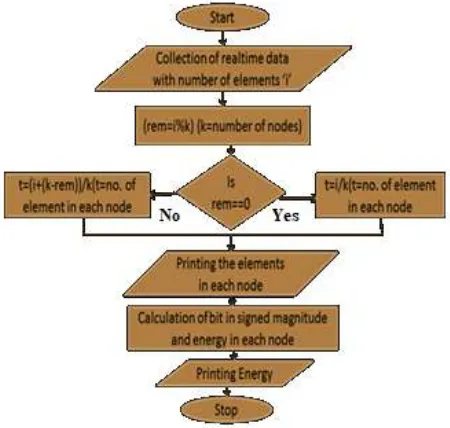
Fig.3 shows the approach to calculate uncompressed
energy and Fig.4 shows the flowchart to calculate
uncompressed energy.
[image:2.612.54.277.141.267.2]Fig 3: Block diagram to calculate uncompressed Energy
Fig 4: Flow chart to calculate uncompressed Energy
B. Calculation of compressed energy
[image:2.612.333.558.322.536.2]International Journal of Emerging Technology and Advanced Engineering
Website: www.ijetae.com (ISSN 2250-2459, ISO 9001:2008 Certified Journal, Volume 9, Issue 1, January 2019)
77
These data has numeric values. Again utilizing C++
coding, the data is distributed amongst number of sensor
nodes. Then all the elements of each node are added and
was converted into its equivalent binary code in signed
magnitude after addition to calculate the total number of
bits (k) in each node. Then equation (a) was used to
calculate the energy in each node.
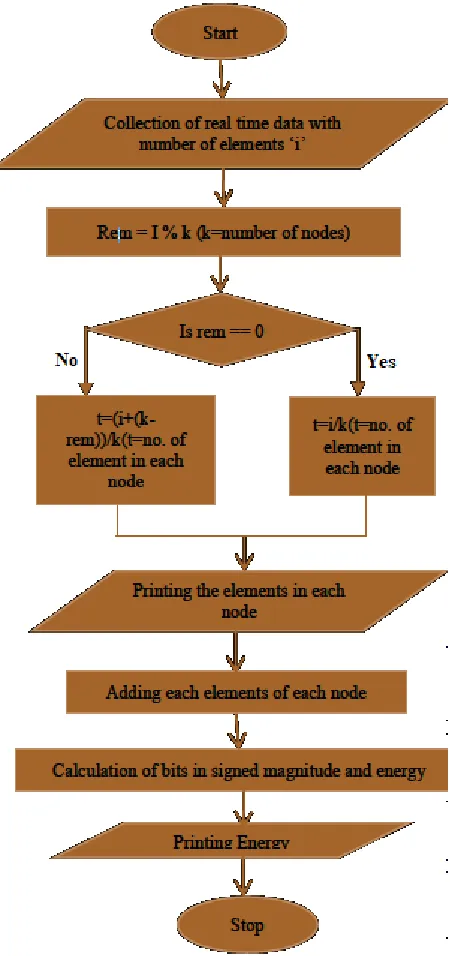
[image:3.612.331.556.138.616.2]Fig.5 shows the approach to calculate compressed
energy and Fig.6 shows the flowchart to calculate
compressed energy.
Fig 5: Block diagram to calculate compressed Energy
[image:3.612.54.285.264.418.2]International Journal of Emerging Technology and Advanced Engineering
Website: www.ijetae.com (ISSN 2250-2459, ISO 9001:2008 Certified Journal, Volume 9, Issue 1, January 2019)
78
III.
R
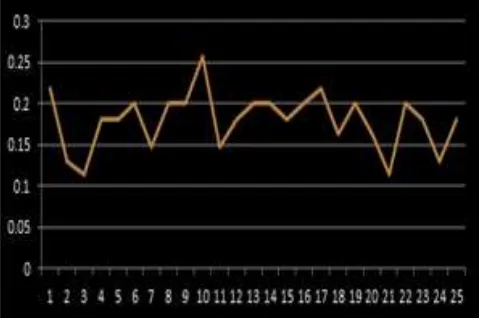
ESULTS [image:4.612.327.561.133.292.2]From the graphs below (Fig.7 and Fig.8), we see the
variation of SNR for each node. Comparative study of SNR
Vs number of bits between the compressed and
uncompressed Energy is shown in Fig 9.
Fig 7: Graph of SNR Vs number of bits per node when the signal is uncompressed
[image:4.612.48.296.202.359.2]Fig 8: Graph of SNR Vs number of bits per node when the signal is compressed
Fig 9: A Comparison of SNR Vs number of bits between the compressed and uncompressed energy
IV.
C
ONCLUSIONAn energy efficient audio coding for wireless sensor
network is proposed in this work. The performance of the
WSN for compression scheme has been analyzed in this
paper. A compression technique which works well for a
given WSN may not suit another WSN with different
requirement. As the architecture of the network may get
changed, the algorithm may require some modification. If
we try the same proposed algorithm for a video signal then
the algorithm may not work properly due to mismatch of
dimensions. This scheme shows that the energy required to
transmit an audio signal from the network to the sink is less
compared to the one when the signal is being transfer
without any compression logic, it also shows the plot of
signal to noise ratio with better result.
REFERENCES
[1] Hill, Jason, Robert Szewczyk, Alec Woo, Seth Hollar, David Culler, and Kristofer Pister. "System architecture directions for networked sensors." ACM SIGOPS operating systems review 34, no. 5 (2000): 93-104.
[image:4.612.49.290.395.554.2]International Journal of Emerging Technology and Advanced Engineering
Website: www.ijetae.com (ISSN 2250-2459, ISO 9001:2008 Certified Journal, Volume 9, Issue 1, January 2019)
79
[3] Akyildiz, Ian F., Weilian Su, Yogesh Sankarasubramaniam, andErdal Cayirci. "A survey on sensor networks." IEEE communications magazine 40, no. 8 (2002): 102-114.
[4] Awerbuch, Baruch, David Holmer, and Herbert Rubens. "High throughput route selection in multi-rate ad hoc wireless networks." In Wireless On-Demand Network Systems, pp. 253-270. Springer, Berlin, Heidelberg, 2004.
[5] Bharathidasan, Archana, and Vijay Anand Sai Ponduru. "Sensor networks: An overview." In IEEE INFOCOM, vol. 4. 2002. [6] Maulik, Subhodip, Mili Sarkar, and Srismrita Basu.
"COMPARATIVE STUDY ON DIFFERENT TYPES OF SENSE AMPLIFIERS FOR DELAY AND POWER DISSIPATION CALCULATION".
[7] Basu, Srismrita, HsuanChao Hou, Debsmita Biswas, Theda Daniels-Race, Mandi Lopez, J. Michael Mathis, and Martin Feldman. "Single fiber surface enhanced Raman scattering probe." Journal of Vacuum Science & Technology B, Nanotechnology and Microelectronics: Materials, Processing, Measurement, and Phenomena 35, no. 6 (2017): 06GF01.
[8] Al-Karaki, Jamal N., and Ahmed E. Kamal. "Routing techniques in wireless sensor networks: a survey." IEEE wireless communications 11, no. 6 (2004): 6-28.
[9] Chiang, Man Wah, Zeljko Zilic, Katarzyna Radecka, and J-S. Chenard. "Architectures of increased availability wireless sensor network nodes." In Test Conference, 2004. Proceedings. ITC 2004. International, pp. 1232-1241. IEEE, 2004.
[10] Cullar, David, D. Estrin, and M. Strvastava. "Overview of sensor network." Computer 37, no. 8 (2004): 41-49.
[11] Wang, Chonggang, Kazem Sohraby, Bo Li, Mahmoud Daneshmand, and Yueming Hu. "A survey of transport protocols for wireless sensor networks." IEEE network 20, no. 3 (2006): 34-40.
[12] Hou, Hsuan-Chao, Yaser M. Banadaki, Srismrita Basu, and Safura Sharifi. "A Cost-Efficient Surface Enhanced Raman Spectroscopy (SERS) Molecular Detection Technique for Clinical Applications." Journal of Electronic Materials (2018): 1-8.
[13] Maulik, Subhodip, Srismrita Basu, and Theda Daniels-Race. "Dispersed Molybdenum Disulfide Deposition onto a Conducting Substrate Using a Voltage Controlled Deposition Technique." Advanced Science, Engineering and Medicine 10, no. 12 (2018): 1224-1226.
[14] Hou, Hsuan-Chao, Yaser Mohammadi Banadaki, Srismrita Basu, Subhodip Maulik, Shu-Wei Yang, Safura Sharifi, Martin Feldman et al. "Characterization of Sputtered Nano-Au Layer Deposition on Silicon Wafer." International Journal of Advanced Research Trends in Engineering and Technology 3, no. 12 (2017).
[15] Basu, Srismrita, Hsuan-Chao Hou, Debsmita Biswas, Subhodip Maulik, Theda Daniels-Race, Mandi Lopez, Michael Mathis, and Martin Feldman. "A needle probe to detect surface enhanced Raman scattering (SERS) within solid specimen." Review of Scientific Instruments 88, no. 2 (2017): 023107.
[16] Basu, Srismrita. "Surface Enhanced Raman Scattering (SERS) Substrates and Probes." (2017).
[17] Basu, Srismrita, Subhodip Maulik, Hsuan-Chao Hou, Theda Daniels-Race, and Martin Feldman. "Surface enhanced Raman spectroscopic substrate utilizing gold nanoparticles on carbon nanotubes." Journal of Applied Physics 122, no. 17 (2017): 175107.
[18] Brown, S., and C. J. Sreenan. "Updating software in wireless sensor networks: A survey." Dept. of Computer Science, National Univ. of Ireland, Maynooth, Tech. Rep (2006): 1-14.
[19] Abbasi, Ameer Ahmed, and Mohamed Younis. "A survey on clustering algorithms for wireless sensor networks." Computer communications 30, no. 14-15 (2007): 2826-2841..
[20] Akyildiz, Ian F., Tommaso Melodia, and Kaushik R. Chowdhury. "A survey on wireless multimedia sensor networks." Computer networks 51, no. 4 (2007): 921-960.
[21] Maulik, Subhodip. "Voltage-Controlled Deposition of Nanoparticles for Next Generation Electronic Materials." (2018).
[22] Maulik, Subhodip, Anirban Sarkar, Srismrita Basu, and Theda Daniels-Race. "Voltage-Controlled Spray Deposition of Multiwalled Carbon Nanotubes on Semiconducting and Insulating Substrates." Journal of Electronic Materials (2018): 1-6.
[23] Maulik, Subhodip, Srismrita Basu, Hsuan-Chao Hou, and Theda Daniels-Race. "Voltage-Controlled Deposition of Dispersed Carbon Nanotubes onto a Conducting Substrate Without a Catalyst." Advanced Science, Engineering and Medicine 10, no. 6 (2018): 564-567.
[24] Maulik, Subhodip, and Srismrita Basu. "Comparative Study of Adaptive Filter and Notch Filter for Filtering of Corrupted Signals." [25] Chen, Xiangqian, Kia Makki, Kang Yen, and Niki Pissinou. "Sensor
network security: A survey." IEEE Communications Surveys and Tutorials 11, no. 2 (2009): 52-73.
[26] Maulik, Subhodip, Srismrita Basu, and Theda Daniels-Race. "Electrospray-assisted carbon nano tube deposition on aluminum without a binding agent." Bulletin of the American Physical Society 61 (2016).
[27] Rathnayaka, AJ Dinusha, Vidyasagar M. Potdar, Atif Sharif, Saeed Sarencheh, and Samitha Kuruppu. "Wireless sensor network transport protocol-a state of the art." In Broadband, Wireless Computing, Communication and Applications (BWCCA), 2010 International Conference on, pp. 812-817. IEEE, 2010.
[28] Heinzelman, Wendi Rabiner, Anantha Chandrakasan, and Hari Balakrishnan. "Energy-efficient communication protocol for wireless microsensor networks." In System sciences, 2000. Proceedings of the 33rd annual Hawaii international conference on, pp. 10-pp. IEEE, 2000.
[29] Basu, Srismrita. "Realization of fuzzy logic temperature controller." International Journal of Emerging Technology and Advanced Engineering 2, no. 6 (2012).
[30] Maulik, Subhodip. "Realization of low cost bluetooth based visual sensor node for pest and disease detection in crops." International Journal of Emerging Technology and Advanced Engineering 2, no. 6 (2012).
[31] Ciancio, Alexandre, and Antonio Ortega. "A distributed wavelet compression algorithm for wireless multihop sensor networks using lifting." In Proceedings.(ICASSP'05). IEEE International Conference on Acoustics, Speech, and Signal Processing, 2005, vol. 4, pp. iv-825. IEEE, 2005.
[32] Wang, Alice, and Anantha Chandrakasan. "Energy-efficient DSPs for wireless sensor networks." IEEE Signal Processing Magazine 19, no. 4 (2002): 68-78.