Technology (IJRASET)
©IJRASET 2014: All Rights are Reserved
443
Impulse Noise Removal Based on Adaptive
Threshold Technique
L.S.Usharani1, Dr.P.Thiruvalarselvan2 and Dr.G.Jagajothi3 1
Research Scholar, Department of ECE, Periyar Maniammai University, Thanjavur, Tamil Nadu- 613403, India 2
Professor, Department of ECE, TRP Engineering college, Tiruchirapalli, Tamil Nadu-621211,India 3
Dean Academics, Periyar Maniammai University, Thanjavur, Tamil Nadu- 613403, India
In many important fields such as in the field of medical imaging for diagnosis of diseases, face recognition for security purposes and so many other fields Digital image processing is widely used. Many high quality and high resolutions are very common now days but noise mostly damages the exact quality for the image formed. Linear noise filtering technique does not work well when the noise is non-adaptive in nature and hence a number of non-linear filtering technique where introduced. In nonlinear filtering technique, median filters and its modifications where used to remove noise but it resulted in blurring of images. Our work mainly deals with the removal of impulse noise from the degraded images due to noise. In this algorithm, the pixel is replaced only if it is identified to be a noisy pixel by the proposed adaptive threshold algorithm otherwise the original pixel is retained. It is always considered to be the best technique to remove the noise because it mostly deals with the image if it is really affected by noise. It is proved that the proposed algorithm is more suitable for high noise environment. The parameters Mean Square Error (MSE) and Peak Signal to Noise Ratio (PSNR) are measured for determining the visibility and similarity of output video frames.
Keywords: PSNR, MSE, Linear Noise Filtering, Median and Modified Filters.
I. INTRODUCTION
Digital image processing is the field which generally deals with the improvement and encapsulation of the picture quality for digital images. In many important fields such as in the field of medical imaging for diagnosis of diseases, face recognition for security purposes and so many other fields Digital image processing is widely used. To provide the efficient output the images need to be very clear and noise free even in the digital imaging. Often the image and video are corrupted by impulse noise. Impulse noise is also known as spike noise or salt and pepper noise. Impulse noise results in dark pixels in bright regions and bright pixels in dark regions. Impulse noise is mainly caused during analog to digital conversion, pre-processing, compressing of images
and videos, transmission of signals and acquisition of signals (i.e.) while broadcasting of signals, storing and retrieval of images and videos. Impulse noise is generally of two types fixed value impulse noise and random value impulse noise. In fixed value impulse noise the noisy pixel will have minimum or maximum gray level value, thus it introduce grey level value 0 (salt) and gray level value 255 (pepper) to the original image and hence impulse noise is known as salt and pepper noise. In random value impulse noise the noisy pixel will have random value of gray level value. It is mainly formed by replacing some of the pixel in the image with gray and white patches while the other parts will remain unchanged. In This paper, we propose system to remove impulse noise from image frames. Even the videos can also be transformed into images and can be provided as in input. The result is considered to be very efficient and the quality of image is improved with the greater margin.
II. EXISTING AND PROPOSED WORK
©IJRASET 2014: All Rights are Reserved
444
1) Median Filtering [1] The Pixel in original image is replaced by median of neighborhood pixels in median filtering. Medianfilter is a smoothening filter and thus it preserves the edges. Median filter preserves the position of boundaries in an image and thus makes the image useful for visual enhancement and various measurements. Extension of median filters is Weighted Median filter. WM filter gives more weightage to some selected pixels. In this filter each window position is assigned a weight and then the sample inside filter window is duplicated to number of corresponding weight. A median value of neighborhood pixels from the increased list of samples gives the WM output. Centre Weighted Median (CWM) filter [2] is a sub-class of Weighted Median filter. CWM is one of important WM filter because it is easy to implement and is best understood theoretically compared to many WM filter. CWM filter has useful properties such as noise preserving and suppressing of noises especially heavy-tailed noise. In CWM filtering technique more weight is given only to the center value of window and thus making CWM filter easier to design and implement than other WM filters. Median filters often remove desirable details and blurs the image. Further, median filters can remove noise only if noisy pixels occupy less than one half of neighborhood area. It has high computational cost. Though WM and CWM can overcome the disadvantages of median filter they are applied uniformly without considering whether the pixel is noisy or noise free.
2) Mean Filtering [2] Mean filter [2] is one of the existing noise removal techniques. Mean filter is a linear filter. In mean filter the pixel is replaced by mean of neighborhood pixel. It is suitable for removing Gaussian noise from images. Mean filters is not suitable for removing impulse noise from images and videos. Mean filters blur edges and details in an image and not effective for impulse noise (Salt and- pepper). Hence median filters are found to be capable of removing impulse noise.
[image:3.612.216.397.333.434.2]9
1
9
1
9
1
9
1
9
1
9
1
9
1
9
1
9
1
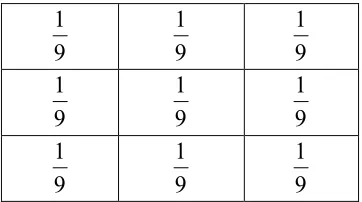
Table 1 3×3 averaging kernel often used in mean filtering
The idea of mean filtering is simply to replace each pixel value in an image with the mean (`average') value of its neighbors, including itself. This has the effect of eliminating pixel values which are unrepresentative of their surroundings. Mean filtering is usually thought of as a convolution filter. Like other convolutions it is based around a kernel, which represents the shape and size of the neighborhood to be sampled when calculating the mean. Often a 3×3 square kernel is used, as shown in Table 1, although larger kernels (e.g. 5×5 squares) can be used for more severe smoothing. (Note that a small kernel can be applied more than once in order to produce a similar but not identical effect as a single pass with a large kernel.)
B. Proposed Work
Proposed adaptive threshold algorithm is divided into two parts which can be used to remove impulse noise.
1. Involves detecting if pixel is noisy or noise-free.
2. Involves replacing the detected noisy pixel by pixel value found out using adaptive threshold. In order to remove noise from color video we first convert video into sequence of frames. Then the frames are processed. Even the image can also be given as input.
1) Noise Detection
Technology (IJRASET)
©IJRASET 2014: All Rights are Reserved
[image:4.612.194.422.84.225.2]445
Fig. 1 3×3 Pixel Window
In Figure 1, f ^i-1, j+m (m=-1,0,1) are the pixels of the previous scanning lines and f ^ i, j-1 is the pixel in the current scanning line that have been filtered. fi,j is currently processed pixel and thus the mean of done-filtered pixels around the currently processed pixel is computed and stored in variable DMi,j using equation (1)
4 , 1 1 , 1 , 1 1 , 1 , j i j i j i j i j i f f f f
DM (1)
Aside from DMi,j we have another parameter YMi.j. The pixels fi,j+1,fi+1,j-1,fi+1,j and fi+1,j+1 are pixels which should be processed. The mean of pixels that have not yet been processed is found out and stored in variable YMi,j which is given in equation (2)
4
1 , 1 , 1 1 , 1 1 , ,
i j i j i j i jj i
f
f
f
f
YM
(2)DMi,j and YMi,j offers local mean for the processed pixel. If currently processed pixel is not corrupted by noise then the pixel value is close to DMi,j or YMi,j. Thus noise detection can be expressed as
j i j i j i j
i
T
f
YM
DM
f
, , ,,
,2
)
(
(3) is a corrupted pixel otherwisef
i,jis noise-free pixel.T is noise threshold. From equation (3) one can decide if the currently processed pixel is corrupted by noise or it is a noise free pixel. Based on this result non-linear filtering can be implemented.
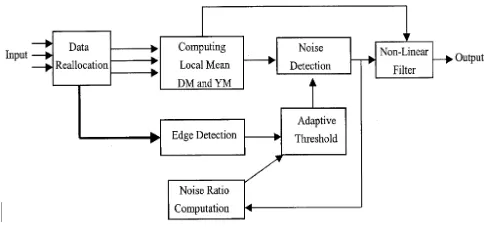
2) Noise Reduction Architecture
[image:4.612.184.433.561.676.2]©IJRASET 2014: All Rights are Reserved
446
The nonlinear filtering procedure used to remove noise is given by equation (4).
i jf
,DM
i,j, as fi,j is a corrupted pixel
i jf
,f
i,j as fi,j is a noise free pixelThus the corrupted pixels are replaced by average of previously filtered pixels and the noise free pixels are kept as it is. This filtering technique blurs the edges and hence edge detection (ED) is adopted to improve the filtering quality. Thus for making filter to work efficiently one has to see if processed pixel belongs to edge or noisy pixel in
Non-smooth regions. If the decision is incorrect, either image edges become blurred or noise cannot be removed and also filtered error will be propagated to next processing pixel due to recursive nature of algorithm. Hence accurate computation of edge parameter is needed. Edge computation for noisy pixel is tedious as some of the edges are already destroyed and this gives erratic result due to noisy pixels. Therefore to avoid noisy pixel inclusion horizontal edge factor is adaptively computed using previously processed pixels.
4) Modules
a) Video to Frames: The given input video is first converted in to sequence of frames .Then the frames are processed.
b) Input – impulse noise: The peak impulse noise is generated. The input video has been corrupted by the peak impulse noise. Then the noisy video is converted to frames for further processing.
c) Removal of noise: Based on image feature, the noise reduction ability is adaptive to each pixel, thus achieving better filtering result. The corrupted pixels are replaced by average of previously filtered pixels and the noise free pixels are kept as it is. This filtering technique blurs the edges and hence edge detection (ED) is adopted to improve the filtering quality. Thus for making filter to work efficiently one has to see if processed pixel belongs to edge or noisy pixel in non-smooth regions. If the decision is incorrect, either image edges become blurred or noise cannot be removed and also filtered error will be propagated to next processing pixel due to recursive nature of algorithm. Hence accurate computation of edge parameter is needed. Edge computation for noisy pixel is tedious as some of the edges are already destroyed and this gives erratic result due to noisy pixels. Therefore to avoid noisy pixel inclusion horizontal edge factor is adaptively computed using previously processed pixels.
d) Output –Noise free: Using the adaptive filter technique and horizontal edge parameter computation, the impulse noise will be removed and the output will be noise free.
III. OUTPUT SCREENSHOTS
A. Output Details
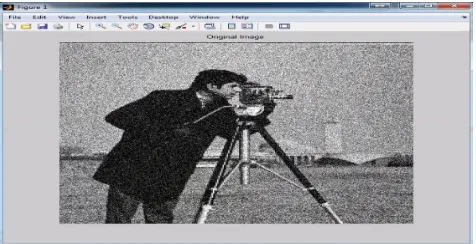
[image:5.612.188.426.555.677.2]To provide the input image and to convert image frames we need MATLAB and to analyze impulse noise and removal we use Modelsim. The Modelsim Screen before noise removal with noisy pixel detail.
Technology (IJRASET)
©IJRASET 2014: All Rights are Reserved
447
The edge detection of input image to detect noise and noise removal
[image:6.612.188.414.91.270.2]
Fig. 4 Edge detection for noise
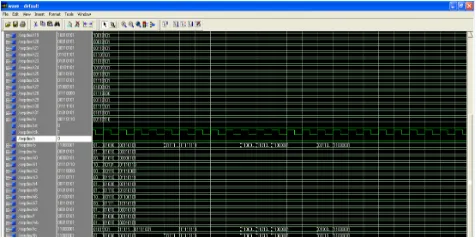
The Modelsim Screen after noise removal with non-noisy pixel detail.
Fig. 5 Modelsim Removal of Noise
IV. CONCLUSIONS
In our project a high-performance algorithm for removing impulse noise from color video has been presented. The adaptive threshold algorithm is suitable for efficient removal of impulse noise in high noise environment. This algorithm provides better and fast filtering of noise than conventional and improved versions of median filters. Based on adaptive threshold algorithm, a low cost FPGA-based flexible architecture with a parallel structure for an efficient kind of impulse noise reduction processor can be developed. With differential computation consisting of pipelined architecture, hardware efficiency can be boosted. In combination with extra components, such as A/D converter and a D/A converter, the FPGA-based product can remove impulse noise in real time for current TV systems. A Reconfigurable System-on-Chip (RSoC) design for video noise reduction can be efficiently implemented by integrating the FPGA-based product with other interface components.
V. ACKNOWLEDGMENTS
[image:6.612.187.425.298.417.2]©IJRASET 2014: All Rights are Reserved
448
[1] P. Latha, Dr. M. A. Bhagyaveni, and S. R. Preethi, ,”Efficient Removal Of Impulse Noise From Video Using Adaptive Threshold Algorithm”, Journal ofTheoretical and Applied Information Technology, 10th June 2014..
[2] Vipul D.Punjabi, Shiv Kumar and Neetesh Gupta, “A survey on removal of impulse noise from images by reducing execution time,” World Journal of Science and Technology 134-136, April 2012.
[3] Jasdeep Kaur, Pawandeep Kaur and Preetinder Kaur, “Review of impulse noise reduction techniques using fuzzy logic for image processing,” International Journal of Engineering and Research Technology, vol no.01,July 2012.
[4] P.Kalaiselva, S.Vasantha, “VLSI implementation of impulse noise removal using image denoising technique,”IJCE, vol.02, no.02, March2012.
[5] S.-C. Hsia, “Parallel VLSI design for a real-time video-impulse noise-reduction processor,” IEEE Trans.Very Large Scale Integr.(VLSI) Syst., vol. 11, no.4,pp. 651–658, Aug. 2003