R E V I E W
A systematic review and meta-analysis of the
impact of collaborative practice between
community pharmacist and general practitioner
on asthma management
This article was published in the following Dove Press journal: Journal of Asthma and Allergy
Naeem Mubarak1,2
Ernieda Hatah3
Tahir Mehmood Khan4
Che Suraya Zin1
1Kulliyyah of Pharmacy, Department of Pharmacy Practice, International Islamic University, Kuantan, Malaysia;2Lahore Pharmacy College, Lahore Medical & Dental College, University of Health Sciences, Lahore, Pakistan;3Faculty of Pharmacy, University Kebangsaan Malaysia, Kuala Lumpur, Malaysia;4Institute of Pharmaceutical Sciences, University of Veterinary and Animal Sciences, Lahore, Pakistan
Objective:This systematic review aims to investigate the impact of collaborative practice between community pharmacist (CP) and general practitioner (GP) in asthma management.
Methods:A systematic search was performed across 10 databases (PubMed, Medline/Ovid, CINAHL, Scopus, Web of Science, Cochrane central register of controlled trials, PsycARTICLES®, Science Direct, Education Resource Information Centre, PRO-Quest),
and grey literature using selected MeSH and key words, such as“community pharmacist”,
“general practitioner”, and“medicine use review”. The risk of bias of the included studies
was assessed by Cochrane risk of bias tool. All studies reporting any of the clinical, humanistic, and economical outcomes using collaborative practice between CPs and GPs in management of asthma, such as CPs conducting medications reviews, patient referrals or providing education and counseling, were included.
Results:A total of 23 studies (six RCTs, four C-RCT, three controlled interventions, seven pre– post, and three case control) were included. In total, 11/14 outcomes were concluded in favor of CP-GP collaborative interventions with different magnitude of effect size. Outcomes, such as asthma severity, asthma control, asthma symptoms, PEFR, SABA usage, hospital visit, adher-ence, and quality of life (QoL) (Asthma Quality-of-Life Questionnaire [AQLQ]; Living with
Asthma Questionnaire [LWAQ]) demonstrated a small effect size (d≥0.2), while inhalation
technique, ED visit, and asthma knowledge witnessed medium effect sizes (ES) (d≥0.5). In
addition to that, inhalation technique yielded large ES (d≥0.8) in RCTs subgroup analysis.
However, three outcomes, FEV, corticosteroids usage, and preventer-to-reliever ratio, did not
hold significant ES (d<0.2) and, thus, remain inconclusive. The collaboration was shown to be
value for money in the economic studies in narrative synthesis, however, the limited number of studies hinder pooling of data in meta-analysis.
Conclusion:Thefindings from this review established a comprehensive evidence base in support of the positive impact of collaborative practice between CP and GP in the management of asthma.
Keywords: community pharmacist, general practitioner, inter-professional collaboration, asthma, collaborative care, clinical outcomes
Introduction
Among the four major groups of chronic diseases, chronic respiratory diseases have
the second highest estimated economic burden for 2011–2025 (US$ 1.59 trillion)
and are responsible for 15% of deaths in the world.1Chronic respiratory diseases
affect air passages and associated structures of lungs, which lead to either airways’
Correspondence: Che Suraya Zin Kulliyyah of Pharmacy, Department of Pharmacy Practice, International Islamic University, Universiti Islam Antarabangsa Malaysia Kampus Kuantan, Pahang Darul Makmur, Jalan Sultan Ahmad Shah, Bandar Indera Mahkota, Kuantan, Pahang 25200, Malaysia
Tel +60 111 488 1605 Email [email protected]
Naeem Mubarak
Lahore Pharmacy College, Lahore Medical & Dental College, University of Health Sciences, Lahore, North Tulspura, Canal Bank Road, Lahore 54000, Pakistan Tel +92 333 555 3729
Email [email protected] Open Access Full Text Article
Journal of Asthma and Allergy downloaded from https://www.dovepress.com/ by 118.70.13.36 on 24-Aug-2020
diseases, which are in the headlines for global mortality and morbidity, include asthma, chronic obstructive pul-monary disease, pulpul-monary hypertension, and occupa-tional lung disease.
Asthma is defined as a“heterogenous disease, usually
characterized by chronic airway inflammation. It is defined
by the history of respiratory symptoms, such as wheeze, shortness of breath, chest tightness and cough that vary over time and in intensity, together with variable
expira-tory airflow limitation”.2In low- and middle-income
coun-tries, asthma is comparatively more pervasive than any other chronic respiratory disease, and is a prime mover of mortality and disability in all age and gender groups, especially children. In 2015 alone, the death toll due to
asthma was 383,000 globally.1,3,4
It is recommended that every country should make
updated strategies for efficient diagnosis and medicine
man-agement of asthma with an emphasis on capacity building of health professionals. The capacity building may include reinforcing the role of potential healthcare professionals and strengthening the integration of community and
pri-mary healthcare byfinding innovative ways and new
hor-izons for collaborative efforts and actions.1,2,5,6Effective
management of asthma heavily depends on the strategy of medication management to improve adherence and to avoid any medication misadventure. This management of medica-tion is essential, since the patient is taking medicamedica-tions long-term on a daily basis and there are many groups of medications involved in asthma management, such as short acting beta agonist (SABA), long acting beta agonist (LABA), and inhaled steroids.
Involvement of general practitioner in
management of asthma
General practitioners (GPs) have generally been involved in asthma management in primary care. However, some
studies reported significant shortfalls of GPs’ practices to
adhere to the standard guidelines and in commissioning written action plans for asthmatic patients, resulting in
suboptimal clinical and humanistic outcomes.7,8 GPs,
however, defend their positions by recounting many bar-riers in optimization of chronic disease management for
asthmatics, for instance, high patient influx, fast growing
aging populations, time constraints, and tough schedules, which makes it practically impossible to cater individual detailing and individualized care plans. On the other hand,
not follow routine scheduled visits due to, for example,
financial constraints, and only rush to GPs in the case of
medical emergency, such as an acute asthma exacerbation. Together, these factors may contribute to stall effective management of asthma and, hence, call for sharing of responsibilities with other healthcare professionals by involving them in decision-making through a collaborative
approach.9,10
Involvement of community pharmacist in
management of asthma
The philosophy of pharmaceutical care urges the pharma-cist to take responsibility of direct patient care and to improve clinical, humanistic, and economic outcomes, especially in chronic diseases. Community pharmacists (CPs) represent a conspicuous part of pharmacist frater-nity, who are equally trained, thoroughly skilled, and well
qualified. Recently in developed countries, CPs have been
involved in direct patient care for health promotion and medication management services in various chronic
dis-eases, such as hypertension, diabetes, and asthma.11 The
expanded role of CPs in patient’s education, adherence
support, and medication therapy management becomes more important as asthma involves a chronic cycle, spe-cialized devices, periodic assessments, self-monitoring, and an individualized therapeutic plan, and CPs have
vast potential to provide these interventions.12,13
Collaboration between CP and GP
Diseases management approaches are receiving volumes of interest in developed countries as a valuable tool to combat with the burden of chronic diseases. A disease management approach is generally comprised of multiple components, such as medication management, education, counseling, monitoring, and use of appropriate guidelines. These approaches, no matters diverse in scope of practice,
are based on a common underneath philosophy of“
colla-boration”among various healthcare stakeholders, such as
pharmacists, physicians, and nurses, to deliver a well-coordinated form of collaborative care. Medicines are the major key players in the management of chronic diseases. To improve quality and adherence in the medicine use process and to minimize the risk of any misadventure which chronic use of medicine may cause, medicine man-agement programs were embedded as essential
compo-nents in diseases management approaches.14
Journal of Asthma and Allergy downloaded from https://www.dovepress.com/ by 118.70.13.36 on 24-Aug-2020
Collaborative Management” or “Collaborative Drug
Therapy Management” which involves CPs may offer a
peer review of the medication use process and ensure prescribed medications are in accordance to patient disease
state. This concept, which was previously confined to
tertiary healthcare, are now being practiced in primary
healthcare settings such as community pharmacy.15
However, collaborative practices which involve CP and GP in primary care were less reported. CPs, as being situated at a foremost point of contact with patients, repre-sent a consequential role for relationship building between patients and care-givers. A recent study in the US reveals approximately 250 million people enter pharmacies in a week, making it a unique premises in the sense of high
ease of public access.16 Collaboration in the healthcare
system involves mutual communication and sharing of expertise, knowledge, and experience of healthcare
profes-sionals, with a prime objective to benefit the patients.17
Hence, any model which involves two or more healthcare professionals (in this review GP and CP) to improve
patient outcomes can be considered as“collaborative
prac-tice”. The practice may include, but not be limited to:
(a) training each other for a proposed intervention, (b) referral of patients to each other for diseases or
medication counseling or education,
(c) updating each other about patient drug usage pat-terns with or without any recommendation, and (d) exchange of recommendations, such as change in
the medication dose, dosage form, or medicine/ drug use review outcomes, or consultation about the course or state of the disease, done by using any form of communication, such as verbal, elec-tronic, or written.
Problem statement
Suboptimal management and burden of asthma
Management of asthma remains suboptimal and represents a global health problem which has raised many concerns
to countries’ healthcare systems.1,2,5,6 Today, if we
appraise the burden of asthma there is much to be worried about. Asthma stands out of the crowed as one of the most high-priced chronic diseases in the world. Economic stu-dies have suggested that a poorly controlled asthma poses a far higher economic burden than a well-controlled
asthma.18 The Global Asthma Report-2018 revealed the
million cases in 2011 to 339 million cases in 2018 around the globe. Physical and psychosocial factors associated
with asthma may reduce an individual’s quality-of-life
(QoL), causing disabilities, loss of productivity (particu-larly for pediatrics), deaths, and economic drain. The avoidable deaths related to asthma are still on a surge, with the utmost reason proclaimed to be the
mismanage-ment of diseases and medications including“over-reliance
on reliever medication rather than preventer medication”.1
Lack of adherence and patient education
Lack of adherence to medications, poor knowledge of inhaler technique, triggers, and disease are major
contri-butors in the inadequate management of asthma.19
Basically, it is pertinent to mention that much of the burden is avoidable, and strategies are required to improve the management of asthma. A recent study in Europe concluded that only 5.3% of the asthma population met
the defined clinical goals, and 75% of patients were
non-adherent to the prescribed medications. This poor adher-ence in asthma is generally either linked to underuse of inhaled steroids or improper inhalation techniques, both of
which are associated with poor asthma control.20 Apart
from medication, it is of paramount importance that patients must understand what triggers asthma, how to avoid such triggers, and what to do in the case of an acute attack. In the US, the National Asthma Education and Prevention program has made formal patient educa-tion a mandatory component integrated in all kinds of asthma care programs. Thus, proper education and coun-seling of patients about the disease, medicines, and devices can lead asthmatics to enjoy a better QoL, and may reduce
the burden of preventable emergency visits and deaths.21
Research question
The research was guided by a specific research question:
“What is the impact of collaborative CP-GP interventions
on clinical, humanistic, and economical outcomes in
asthma patients?”
Rationale of this systematic review
Previous systematic reviews had evaluated the role of CPs in asthma management. However, many of them were not conclusive due to the lack of quantitative synthesis
(meta-analysis) of the outcomes,10,19,21,22 while other reviews
mix a different healthcare setting (hospital, or clinics, or
community pharmacy), and thus lack specificity for
Journal of Asthma and Allergy downloaded from https://www.dovepress.com/ by 118.70.13.36 on 24-Aug-2020
focused on only one outcome, ie, adherence and attempted meta-analysis but again used A mixed setting and does not
focus on collaboration.24
There is limited evidence documented in the literature for the effectiveness of CP-GP collaborative approach in
asthma management in primary care.25 It is not known
whether these interventions have positive, negative, or no effect on patient outcomes. Furthermore, to enrich the understanding of the effectiveness of an intervention, it
has been a bench mark in scientific queries to encompass a
multidimensional or holistic view of outcomes of an inter-vention for instance, humanistic or economic outcomes, rather than just focusing on therapeutic outcome. Hence, these rationales and gaps in the evidence necessitate a systematic review focused on CP-GP collaborative inter-vention for asthma management in terms of clinical, humanistic, and economical outcomes.
The present review takes an account of all three out-comes: clinical, humanistic, and economic, and, thus, has
wide outcome coverage, yet, is specific to pool up the
contribution of only community pharmacist intervention which were conducted in collaboration with GPs. It has attempted to quantitatively combine data where it was combinable for each outcome in the form of meta-analysis. It is pertinent to mention the essential difference we want to clarify here is the distinction of the interventions as
“collaborative” as compared to those where there is no
collaboration (interventions administered solo, ie, indepen-dent of other healthcare provider), for example, smoking cessations programs offered through community pharmacy or asthma clinic run by independent pharmacists, because, sooner or later, these solo (independent) modes would proffer similar problems (lack of time for proper patient education and counseling, no peer review process of
pre-scriptions) as reported by the critiques of physician’s solo
mode of care delivery, since GPs have been engaged independently in healthcare delivery for ages.
To date, there is no study, to our knowledge, that has systematically reviewed the outcomes of collaborative practice between GPs and CPs in the management of asthma. This expanded role of CPs and its collaboration with GPs needs an objective analysis that could lead to evidence which may sum up clinical, humanistic, or
eco-nomic benefits theses collaborative practices may bring.
Hence, the focus of this systematic review is asthma management strategies, which involve CPs interventions in collaboration with GPs. The aim of this systematic
of collaborative care provided by CP-GP in management
of asthma. Based on thefindings of this review, our
objec-tive is to relate and connect various insights to put forward some recommendations to inform the policymakers about the impact of this collaborative care in the management of asthma. Consequently, this evidence base would be placed in the context of the Malaysian healthcare system to explore a number of evidence-based policy options.
Methods
Protocol
The protocol for this review was registered on the
“International Prospective Register of Systematic Reviews”
(record CRD42017057188). This systematic review was
reported in accordance with the PRISMA guidelines.26
Thus, the research question was broken up into Population, Intervention, Outcome, Timings, and Settings (PICO-TS), in
Table 1,explaining the pre-defined inclusion and exclusion
criteria in detail. The review team ensures the validity of the systematic review, where NM was the main reviewer, CSZ the supervisor, EH the co-supervisor, and TMK an expert of meta-analysis.
Search strategy
Articles were located in 10 databases: NLM PubMed, Medline/Ovid, Cumulative index to Nursing and Allied Health Literature (CINAHL), Scopus, Web of Science,
Cochran central register of controlled trials,
PsycARTICLES®, Science Direct, Education Resource Information Centre, and PRO-Quest, from inception to January 1, 2017 using the search terms and Medical Subject Heading (MeSH) determined prior to the study using input from experience researchers, librarians,
data-bases specific thesaurus, keywords, and MeSH used in
relevant literature. Examples of search terms and MeSH
used were: “pharmacist”,“community pharmacy”, “retail
pharmacy”, “general physician”, “general practitioner”,
“medicine use review”,“drug use review”, and “
medica-tion therapy management”. Search terms were constructed
in accordance with the PICO model to build a fullyfledged
search strategy. As databases have differences in terms of search operations and MeSH words, so we tailored our main search strategy as per the requirements of an indivi-dual database. Full keywords and MeSH used for locating relevant articles in different databases are available in
Appendix I. Boolean logic, wildcards, truncations,
Journal of Asthma and Allergy downloaded from https://www.dovepress.com/ by 118.70.13.36 on 24-Aug-2020
T able 1 Detailed exclusion inclusion criterion as per PICO-TS P opulation Inter ve ntion Comparator Outcome Timings: Setting T ypes of studies Inclusion 1. Community pharmacist 2. General ph ysician or general practi-tioner or family ph ysician or family practitioner (in primar y car e) 3. Asthma out-patients of an y age range & gender (both pediatric and adult) and any sev erity le vel All inter ventions wher e ther e is any form of collaboration, whether re mote or inte-grated; betw een GP/CP , including face to face , telephonic, text, Fax, letter , or email, or an y other wa y of communication, which ma y in volv e: 1. All types of medicine use re vie ws including medication therap y manage-ment ser vices 2. Adherence impr ov ement ser vices 3. Counseling 4. Patient Education No collabora-tion or usual care. Primar y Outcome: Clinical (asthma se verity , asthma contr ol, pulmonar y func-tions, drug use, inhalation technique) Secondar y: 1. Humanistic (QoL, adher -ence, asthma knowledge , hospital or emergency departm ent visits) 2. Economical (cost utility or cost bene fi t ratio). Report at least one of the outcomes giv en. Inter ventions administered once or fr equently 1. Generally , an y set-ting which inv olv es community or re tail pharmacist, thus: 2. Community/r etail pharmacy colla-borativ ely w orking with: 1. Primar y car e 2. GPs clinic (out patients) 3. Nursing homes 4. General practice 5. Family practice 6. Managed car e homes *It also includes: The small pharmacy shops with a re gis-ter ed pharmacist integrated within primar y care setting. ** It also includes home medication re vie ws performed by CPs which in volv e CP-GP collaboration. T ypes of studies: An y analytical design: in volving human 1. Randomized con-tr olled trials, RCT (either randomize pharmacist; ph ysician, or patient) Cluster ed RCT
quasi-experimental, pre-post
inter ve ntion study 2. Non-randomized contr ol trials 3. Retr ospectiv e obser vational studies 4. Pr ospectiv e cohort 5. Pilot studies & Natur e of the study: 1. Language: English 2. If a study combines both COPD and Asthma, it will be included only if the outcomes ar e clearly separable 3. Dissertati
ons (Continued
Journal of Asthma and Allergy downloaded from https://www.dovepress.com/ by 118.70.13.36 on 24-Aug-2020
T
able
1
(Continued).
P
opulation
Inter
ve
ntion
Comparator
Outcome
Timings:
Setting
T
ypes
of
studies
Exclusion
1.
Pharmacist
assis-tant
in
volv
ed
2.
Nurses
&
pharma-cist
collaboration
3.
Student
pharmacist
4.
In-patients
1.
Not
clearly
repor
ting
about
the
colla-boration
in
the
whole
of
the
study
2.
Inter
ve
ntions
deliv
er
ed
thr
ough
phar
-macy
assistants
or
students/internee
—
1.
Qualitativ
e
outcomes,
such
as
per
ception,
attitude.
2.
If
study
purel
y
e
valuates
economic
outcomes
without
an
y
GP-CP
collaboration
3.
Pr
ocess
outcomes,
such
as
number
of
medication
pr
oblems
identi
fi
ed,
or
number
of
re
commen-dations
accepted
by
the
GP
1.
T
ertiar
y
car
e
hospitals
2.
Pharmacies
in
hospitals
3.
Schools/College/ unive
rsities
4.
Pharmacist
mana-ged
independent
ambulator
y
clinics.
1.
Editorials
&
letter
editor Re
vie
w
articles
1.
Non-English guage
artic
le
2.
Not
repor
ting
inter
vention
3.
Exploring
the
atti-tudes
and
beha
viors
or
per
ception
of
pharmacists
or
ph
sicians
or
patients.
1.
Meetings
pr
oceed-ings
(abstracts)
2.
Descriptiv
e
studies
or
qualitative
resear
ch
Abbre
viations:
COPD
,
Chr
onic
Obstructive
Pulmonar
y
Disease;
CP
,
community
pharmacist;
GP
,
general
practitioner
;
PICO-TS,
P
opulation,
Inter
vention,
Comparato
r,
Outcome,
Timings
and
Setting;
QoL,
Quality-of-Life;
randomized
contr
olled
trial.
Journal of Asthma and Allergy downloaded from https://www.dovepress.com/ by 118.70.13.36 on 24-Aug-2020
applicable to reach an appropriate number of hits. A hand search of potentially relevant articles was then executed using the reference lists of relevant studies.
Study selection
Studies were identified through the search in electronic
databases, grey literature search, and reference list of relevant articles. The retrieved articles were then de-dupli-cated in Endnotes, based on inclusion/exclusion criteria, and were subjected to title and abstract screening for eligibility for full text review by NM and checked by CSZ and EH. Whenever there was a doubt on the elig-ibility of an abstract, its full text was consulted. To be eligible, a study needs to have reported:
(a) An intervention performed by CPs for asthma management.
(b) Some degree of collaboration with a GP.
(c) Either a control group or pre–post research design.
(d) At least one of the three patient outcomes (clinical, humanistic, economical).
(e) Be in English language and not a conference proceeding.
Although randomized controlled trials (RCTs) are taken as gold standard in evidence synthesis, it is also a valid assumption to consider that RCT design is not feasible in all situations, so we added controlled trials without ran-domization as well as other quasi experimental research designs. A study was included if it complied with the pre-set inclusion and exclusion criteria. The examples of collaborative intervention include patient referral, pre-scription review, education, and counseling, where the comparator was usual care (where no CP/GP collabora-tion is involved) in a setting which involved community pharmacy and primary care. Detailed inclusion/exclusion
criteria are outlined in Table 1. To ensure the validity of
the screening process, all excluded articles were reviewed by all authors. In the case of any disagreement on a study for inclusion or exclusion; resolution was achieved through consensus. In the case of any doubt on the nature of collaboration, the corresponding authors were con-tacted via email to get the larger picture. This wais then followed by data extraction of important information and analysis.
Full text studies were duly reviewed, and data were extracted by two members (NM and CSZ) independently to minimize the bias, using a common standardized template for data extraction. This template had columns to add: study character-istics, type of intervention (education, counseling, medicine use review, referral to GPs, inhalation technique improve-ments, medication adherence assessment, and asthma control), mode of intervention to the patients (face-to-face or through any mail mode), and nature of collaboration between CPs and GPs based on a hypothetical collaboration scale. Any differ-ence between the two members in extracted data was
identi-fied and resolved through consensus. Throughout the process
of data extraction, we trusted only the data published in the article.
Outcome of interest
Primary outcomes (clinical) include pulmonary functions
(peak expiratory flow rate (PEFR), forced expiratory
volume 1 (FEV1), FEV1/forced vital capacity (FVC),
inha-lation technique, asthma control, and drug usage.
Secondary outcomes include reported results on humanis-tic outcomes, such as QoL, asthma knowledge, and
eco-nomic outcomes, for example cost–benefit ratio.
Collaboration scale
The authors designed an arbitrary hypothetical collaboration scale to subjectively evaluate the level of collaboration involved in the included studies. Studies were ranked in terms of the nature of collaborative practice involved. If a study mentioned training of CPs on the management of asthma by the GP or vice versa it had 1 point. On the other hand, if a study mentioned patient referral from GP to CP or vice versa, it was given 2 points; while, a study which high-lighted the fact that CPs updated GPs about patient drug
usage patterns or diseases state had 3 points and,finally, a
study which stated that CPs had a role which allowed themo suggest change of drug or dose and GPs accepted the recom-mendation was given 4 points on the collaboration scale (the highest score). The maximum points a study could achieve on the collaboration scale were 10 (ie, if the study had reported all four forms of collaboration), where higher scores represent a higher level of collaboration. The collaboration
was termed“integrated”if the GPs and CPs share the same
premises or“remote”if they do not share the same premises
and communicate via phone or emails.
Journal of Asthma and Allergy downloaded from https://www.dovepress.com/ by 118.70.13.36 on 24-Aug-2020
Cochrane Review Manager (RevMan)® V.5.3 software
(Copenhagen: The Nordic Cochrane Centre, The
Cochrane Collaboration, 2014) was used for data analysis.
Risk of bias (RoB) assessment
RevMan was used to generate the ROB graphically. We used different RoB tools for different research designs to appraise RoB in various studies. For instance, (RCT), Controlled trials (CT), and Cluster randomized control
trials (C-RCT) were evaluated through the “Cochrane
risk of bias tool” because oit is a validated tool for
RCTs. However, the number of RCTs are limited, and thus allow addition of other research designs for which
another tool by Cochrane, “Effective Practice and
Organization of Care (EPOC)”was deployed for all
non-randomized, or other quasi experimental study designs
(pre–post). In EPOC, the studies were evaluated against
eight main domains: selection bias (randomization, con-cealment, baseline measures), baseline outcome differ-ence, attrition bias, detection bias, contamination bias, and reporting bias. As per risk of bias domains, the studies were scored using low, high, and unclear risk. However, it is not encouraged to give some numerical value to the RoB, as per the new Cochrane guidelines, which focus on the domain-based analysis of the RoB in the included
studies.27
Procedure of meta-analysis
For meta-analysis, we grouped studies based on outcome and, where at least two studies report combinable data for
a specific outcome, meta-analysis was carried out to pool
the results. Thus, we performed independent meta-analysis for individual outcomes (n=14) contrasting CP-GP colla-borator intervention vs usual care or no care.
As the inclusion criterion for study designs was general and allowed all types of research designs, the studies included in quantitative synthesis were partly different in terms of research designs and tools to measure outcomes. Thus, we combined the data, where it was possibly
com-binable and aided our findings through both; narrative
synthesis (descriptive), as well as through meta-analysis. Only studies were pooled which have reported data in terms of mean and standard deviations (SDs) or in a form which can be convertible to mean or SD through some statistical operation. To compute effect size, standard mean difference was used for continuous variables, while
synthesize the summary effect estimate of CP-GP colla-borative intervention, Forest plots were constructed based on the assumption of random effect model to pool the data for all outcome. A random effect model was deployed because it introspects various sources of variability or heterogeneity, ie, within and in between study variability due to sample size, research design, or tool used to mea-sure the outcome of all the included studies. This is
oppo-site of thefixed effect model, which only takes an account
of the statistical heterogeneity among the included studies in meta-analysis. Furthermore, the random effect model yields a conservative effect size rather than an exaggerated
one and, thus, does not produce false positive results.28
Three important considerations were taken into account before concluding a meta-analysis.
Heterogeneity
The most common misleading and malpractice while reporting meta-analysis is pooling of data when there is considerable heterogeneity, which gave rise to false
conclusions.29–33 Thus, heterogeneity is a decisive factor
to authorize whether the data in various studies are
com-binable or not. Tau2or chi2 and I2 are some of the tests
used to determine statistical heterogeneity, but the I2does
not suffer from some of the drawbacks of the other two
tests, and thus holds more reliability.29I2is the percentage
of total variance. I2values of 25%, 50%, and 75% indicate
low, moderate, and high heterogeneity, respectively.30
Thus, heterogeneity in the included studies in
meta-analy-sis was accessed through I2statistic, where a higher value
of I2means a higher level of variability because of factors
other than random variations. An I2value of zero or less
than 25% gives credibility that the effect size produced by pooling of data of various studies represents the true value of a homogenous population (ie, the studies don't have different populations), and there is no need of subgroup
or sensitivity analysis.30,34,35 On the other hand, high I2
value indicates that the populations across different studies in a meta-analysis are different, hence pooling of data makes no sense and should be avoided. In this case the next step is to perform a subgroup analysis to determine any valid reason of heterogeneity, if the heterogeneity
value get insignificant in a subgroup analysis, then the
pooled effect size of an intervention holds much credibility
than the overall analysis. In our case, if I2>25%, we
pre-ferred to perform subgroup analysis based on research
designs to get a subgroup which has low I2 values and
Journal of Asthma and Allergy downloaded from https://www.dovepress.com/ by 118.70.13.36 on 24-Aug-2020
Zlowodzki et al, suggested to determine the reasons of heterogeneity through subgroup analysis under a
pre-defined criterion, and this review followed the guidelines
provided for subgroup analysis.37
Effect size (ES)
“Effect”is a measure of association between an
interven-tion or exposure and an outcome. Effect size is the mag-nitude or strength of the association, and is represented by
“d”, also called “Cohen’s d”. The beneficial or
non-bene-ficial results of meta-analysis are indicated by effect size.38
Medical researchers are often interested to establish the superiority of one intervention over another. They do it by computing the difference between the intervention and
control group.39
Interpretation of ES
As per Cohen’s classification, an ES of magnitude 0.2, 0.5,
and 0.8 denotes small, medium, and large ES,
respectively.40 The effect size value may be positive or
negative. For continuous outcomes, an ES of zero means there is no difference between the groups being compared, while, for binary outcomes the value of 1 would indicate there is no difference between the groups. ES has been
discussed in details by Durlak,40and throughout our
meta-analysis we will stick to the interpretations and guidelines
provided.40,41
Results
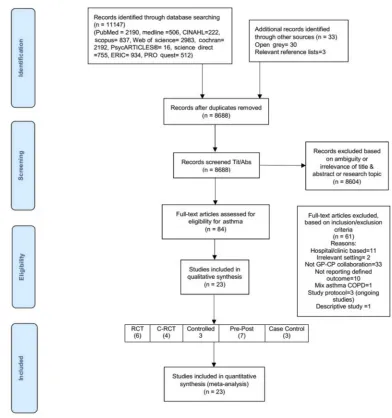
After a careful title and abstract screening, 8,604 studies were excluded and 84 studies were examined in full text. Only 23 out of 84 studies were found at par with all the inclusion/exclusion criteria, while studies were excluded in full text screening because of different settings (n=13), studies did not mention any level of CP-GP collaboration (n=33), outcomes were not of interest (n=10) or combined both chronic obstructive pulmonary disease and asthma (n=1), an ongoing study, ie, study protocols (n=3), and a descriptive study (n=1).
A total of 23 articles were included in thefinal review
(Figure 1). There were six studies with RCT study designs,
four C-RCT, three controlled interventions (CI), seven
pre–post (PP) studies, and three case control studies
(CC). Most of the studies were conducted in Australia (n=8); followed by the US (n=3); UK, Germany, Canada (n=2 each), and Finland, Spain, Italy, Malta, Denmark, and Belgium (n=1 each).
review; age ≥18 years (n=18), age≥12 years (n=4), and
age≥7 years (n=1). The majority of the studies provided
interventions to patients with moderate-to-severe asthma. The duration of the studies included in this review ranged from 6 weeks to 5 years; 6 weeks (n=1), 3 months (n=1), 6 months (n=11), 9 months (n=2), 12 months (n=7), and 5 years (n=1). The most common mode of delivery of the asthma intervention was face to face (n=19), followed by
“mailed intervention”(n=3). One study compared“mail vs
face to face intervention”, and one study used mix mode
intervention ie, face to face and mail follow-up.
Seven studies reported the duration of the intervention provided by CPs per session. The duration of intervention,
categorized by the researchers, was divided into: 10–30
minutes (n=5), 31–44 minutes (n=1), and 45–60 minutes
(n=1). There was little information available on the dura-tion of intervendura-tion in other studies (n=15).
Furthermore, 14 studies reported the number of visits a patient had to attend CP during the study to receive interven-tion. The most common number of intended visits cited were four (n=9), but it varies considerably based on the duration of study. As a matter of fact, the shorter the duration of the study the less visits can be possible. The most common type of
CPs’intervention in these visits was patient education and
counseling, which focused on: inhaler technique correction (n=10), asthma knowledge (n=11), self-management mea-sures to keep asthma under control (n=9), drug use and therapy monitoring (n=9), and medication adherence (n=8). Nearly all studies employed more than one intervention.
The scores on the hypothetical collaboration scale showed that seven studies obtained scores of 10/10, while one study obtained 9/10 and one study had an 8/10 score. The remaining the studies (n=9) have a score <8/10.
“Patient referral” was the most frequent (n=17) type of
collaborative intervention cited in the studies, followed by
“CP’s training”(n=15), ie, CPs’training by physician, for
a proposed intervention, such as on disease management or pathological basis asthma or how to respond to an emergency. Almost half of the studies (n=11) mentioned the highest form of collaboration, ie, where CPs recom-mended their GPs for changes in medicine or dose. There
was only one study which involved“integrated”
collabora-tive practice between GP and CP, while the rest of the studies (n=22) involved remote collaboration.
A summary of the reported outcomes is provided in
Table 2. Based on broad categories of outcomes as defined
in the inclusion criteria (clinical, humanistic, and
Journal of Asthma and Allergy downloaded from https://www.dovepress.com/ by 118.70.13.36 on 24-Aug-2020
economic outcomes), only four studies reported all three
outcomes. On the other hand,five studies reported purely
clinical outcomes and two studies reported only humanis-tic outcomes.
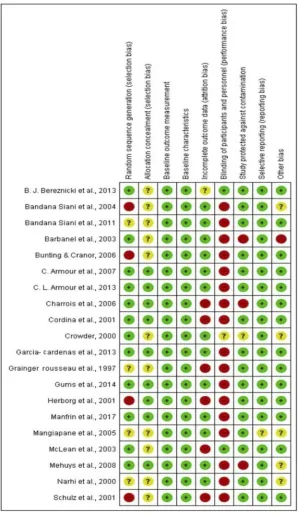
Appraisal of risk of bias
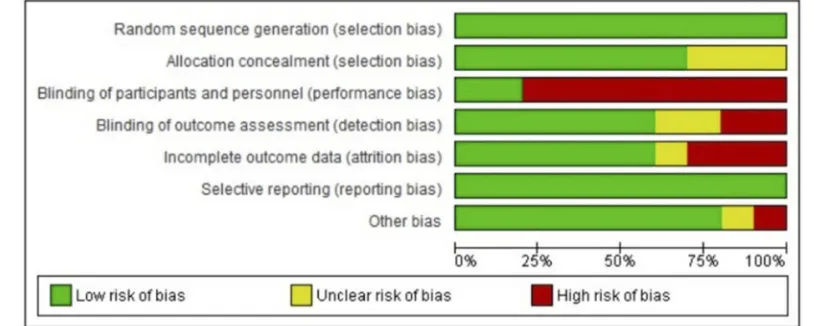
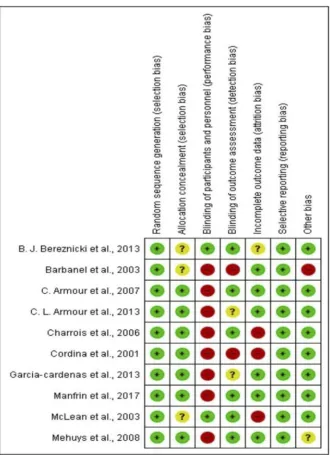
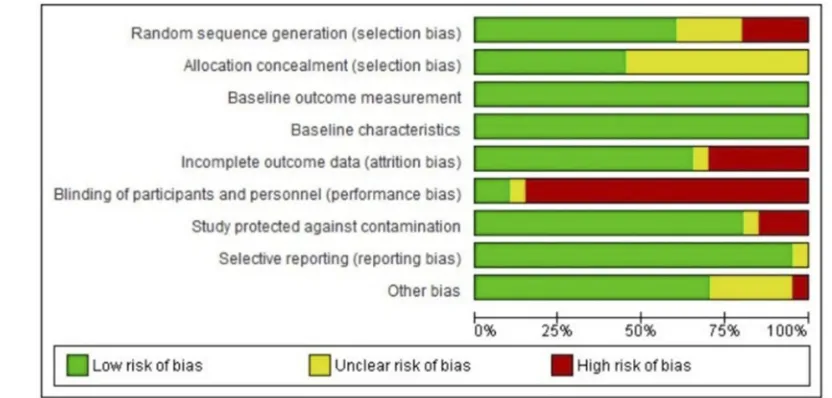
Summary graphs of Cochrane risk of bias and EPOC risk of
bias are depicted inFigures 2–5, respectively. As an overall
finding, the studies included were free of many types of biases.
However, the most common bias present was the“blinding of
personnel”. However, this is understandable as in this kind of
scenario where an educational intervention is administered to improve asthma knowledge or drug use process, blinding of either patient or personnel is not always possible.
Impact of the collaborative interventions
To pool up the results of outcomes, we opted both meth-ods, ie, qualitative or narrative synthesis, as well as quan-titative or meta-analysis by statistically combining (where possible) the results to produce a summary effect of indi-vidual outcomes.Evidence base through narrative synthesis
To perform a narrative synthesis, outcomes were grouped into two broad categories:(a) Favorable or significant (where the study clearly
mentions a p-value less than 0.05, indicating
sig-nificant improvements by CP’s intervention).
Figure 1PRISMAflow diagram.
Abbreviations:COPD, chronic obstructive pulmonary disease; CP, community pharmacist; C-RCT, clustered randomized controlled trial; GP, general practitioner; RCT,
randomized controlled trial; Tit/Abs, Title/Abstract; n, number.
Journal of Asthma and Allergy downloaded from https://www.dovepress.com/ by 118.70.13.36 on 24-Aug-2020
T
able
2
Summar
y
of
the
characteristics
of
the
included
studies
Author/ year/ countr
y
Study design/ duration
P
atients
Description
of
ser
vices
Collaboration
Outcomes
Inter
v
ention
Contr
ol
P
opulation
Inter
v
ention
T
ype
CS scor
e
T
ype/measure
Result
p
-value
Armour et
al,
49
2007, Australia
RCT/6
M
Multi-sites=50
165/351
186/351 (UC)
Adult=18
–
75
years
(mild-to-moderate-to- sever
e
asthma)
Face
to
face
(4
compulsor
y
visits,
1
optional).
Patient
education
and
coun-seling
on:
inhaler
techniques
assess-ment
and
corr
ection;
asthma
knowledge,
self-management
and
con-tr
ol;
medication
adher
ence
assessment
and
assurance;
follow-up
1,
3,
6
M
post-baseline; duration
of
session
=NC
RCT
10
Asthma
se
ve
rity/
NA
C
se
ve
rity
assessment
table
-se
ver
e
asthma
-moderate
asthma
-mild
asthma
↓
in
I
act
C
↓
in
I
act
C
↑
in
I
act
C
<0.001 <0.001 <0.001
Pulmonar
y
func-tions/spir
ometr
y
-FEV
1
-FEV
1
/FVC
-NSSD
b/w
I
and
C
-NSSD
b/w
I
and
C
=0.14 =0.71
Inhalation
techni-que
corr
ection/
DSC
Impr
ove
d
in
I
act
C
<0.001
Adherence/BMQ
↑
in
I
act
C
=0.04
QoL/A
QLQ
scor
e
↑
in
I
act
C
=0.05
Asthma
knowl-edge/C
AKQ
scor
e
↑
in
I
act
C
<0.01
Asthma
contr
ol
(per
ceiv
ed)/PC
A
Q
score
↑
in
I
act
C
<0.01
(
Continued
Journal of Asthma and Allergy downloaded from https://www.dovepress.com/ by 118.70.13.36 on 24-Aug-2020
T
able
2
(Continued).
Author/ year/ countr
y
Study design/ duration
P
atients
Description
of
ser
vices
Collaboration
Outcomes
Inter
v
ention
Contr
ol
P
opulation
Inter
v
ention
T
ype
CS scor
e
T
ype/measure
Result
p
-value
Armour et
al,
47
2013, Australia
C-RCT/6
M
3
visits
=193/
354
4
visits
=
161/354 *3
vs
4
visits
act
as
con-tr
ol
for
each
other
.
Adult=18
years
or
>
(se
ver
e
asthma
Pt
at
risk
of
adv
erse
e
vents)
Face
to
face
(3
and
4
compulsor
y
vis-its).
Patient
education
and
counseling
on:
inhaler
techniques
assessment
and
corr
ection;
asthma
knowledge
and
self-management;
drug
use
and
therap
y
monitoring;
medication
adher
ence
assessment
and
assurance;
follow-up
12
M
post
baseline;
median
time/dura-tion
of
session
for
visit
1,
2,
3,
4
w
er
e
75,
30,
50,
20
minutes,
respectiv
ely;
median
duration
20
minutes
RCT
10
LAB
A
usage
Almost equal
↑
in
both
gr
oups.
<0.05
Cor
ticoster
oid
usage
Almost equal
↑
in
both
gr
oups
<0.05
SABA
usage
Almost equal
↓
in
both
gr
oups
<0.001
Inhalation
techni-que
corr
ection/
DSC
Almost equally impr
ov
ed
in
both
gr
oups
<0.001
Adherence/BMQ score Almost equal
↓
in
both
gr
oups
<0.01
QoL/A
QLQ
scor
e
Almost equally impr
ov
ed
in
both
gr
oups
<0.001
Asthma
contr
ol
(per
ceiv
ed)/
(PC
A
Q)
Impr
ove
d
in
both
gr
oups
<0.001
Asthma
knowl-edge/C
AKQ
scor
e
Gr
oups
but
4V
mor
e
impr
ov
ed
act
3
visit
Almost equally impr
ov
ed
in
both
gr
oups
<0.001
(
Continued
Journal of Asthma and Allergy downloaded from https://www.dovepress.com/ by 118.70.13.36 on 24-Aug-2020
T
able
2
(Continued).
Author/ year/ countr
y
Study design/ duration
P
atients
Description
of
ser
vices
Collaboration
Outcomes
Inter
v
ention
Contr
ol
P
opulation
Inter
v
ention
T
ype
CS scor
e
T
ype/measure
Result
p
-value
Gar
cia-Car
denas
et
al,
52013,
Spain
C-RCT/6
M
186/336
150/336 (UC)
Adult=18
years
or
>
(patients
with
moderate
to
se
ve
re
asthma)
Face
to
face
(3
compulsor
y
and
3
optional
visits
only
if
needed).
Patient
education
and
counseling
on:
inhaler
techniques
assessment
and
corr
ection;
asthma
knowledge
and
self-manage-ment; medication
adher
ence
assessment
and
assurance; follow-up
3,
6
M
post
baseline;
duration
of
session
=NC
RCT
1
Inhalation
techni-que
corr
ection/
DSC
Impr
ove
d
in
I
act
C
<0.001
Adherence/MMAS
↑
in
I
act
C
<0.001
Asthma
contr
ol/
mean
A
CQ
↓
in
I
act
C
(impr
ov
ed
contr
ol)
<0.001
Manfrin et
al,
43
2017,
Italy
C-RCT/ 9M (largest
RCT
conducted
in
community pharmacy
for
asthma
in
the
w
orld)
400/816
416/816 (UC)
Adult=18
years
or
>
(general
asth-matic population)
Face
to
face
(number
of
visits
=NC).
Medicine
use
re
vie
w
Education
on
assessment
of:
asthma
sev
erity
and
contr
ol;
medication
adher
ence;
duration
of
session
=26
minutes;
follow-up
6,
9
M
post
baseline
NO
TE:
T
w
o
gr
oups
A
and
B.
A
started
the
inter
vention
soon
after
training
while
B
started
ex
ecution
of
inter
ve
ntion
3
months
later
.
RCT
10
Asthma
contr
ol/
AC
T
↑
in
I
act
C
<0.01
Adherence/MMAS
↑
in
I
act
C
<0.01
Cost
effectiv
eness
analysis/cost
per
QAL
Y
Cost
effec-tiv
e
in
I
act
C
<0.01
QoL/QAL
Y/
Eur
oQol-5D:
↑
in
I
act
C
=0.01
(
Continued
Journal of Asthma and Allergy downloaded from https://www.dovepress.com/ by 118.70.13.36 on 24-Aug-2020
T
able
2
(Continued).
Author/ year/ countr
y
Study design/ duration
P
atients
Description
of
ser
vices
Collaboration
Outcomes
Inter
v
ention
Contr
ol
P
opulation
Inter
v
ention
T
ype
CS scor
e
T
ype/measure
Result
p
-value
McLean et
al,
53
2003, Canada
C-RCT/12
M
191/450
226/450 105/450 *3
arms
study
,
1
inter
vention
and
2
con-tr
ol
gr
oup
(UC)
Adult/pediatric mix:
7
–
84
years
(uncontr
olled
asthma
Pt
OR
se
ver
e)
Face
to
face
(visit
e
ver
y
2
–
3
w
eeks
for
initial
3
visits,
then
e
ve
ry
3
months).
Patient
education
and
counseling
on:
inhaler
techniques
assessment
and
corr
ection;
asthma
knowledge
and
self-manage-ment; drug
use
and
therap
y
monitoring;
medication
adher
ence
assessment
and
assurance; duration
of
session
=1
hour
for
fi
rst
3
visits; follow-up
after
e
ver
y
3
M
post
baseline
RCT
4
PEFR
↑
in
I
act
C
=0.0002
Asthma
symptoms/
total
symptom
score
↓
in
I
act
C
=0.000
SABA
usage
↓
in
I
act
C
=0.0082
Cor
ticoster
oid
usage
NSSD
=0.6309
Asthma
knowl-edge/21
item
questionnaire
↑
in
I
act
C
=0.000
QoL/A
QLQ-J
Impr
ove
d
in
I
act
C
=0.0001
ED
visits
NSSD
=0.4757
Hospital
visit
NSSD
=0.939
Asthma
contr
ol
Impr
ove
d
in
I
act
C
=0.005
(
Continued
Journal of Asthma and Allergy downloaded from https://www.dovepress.com/ by 118.70.13.36 on 24-Aug-2020
T
able
2
(Continued).
Author/ year/ countr
y
Study design/ duration
P
atients
Description
of
ser
vices
Collaboration
Outcomes
Inter
v
ention
Contr
ol
P
opulation
Inter
v
ention
T
ype
CS scor
e
T
ype/measure
Result
p
-value
Mehuys et
al,
51
2008, Belgium
RCT
parallel-gr
oup/
6M
80/150
70/150 (UC)
Adult=18
–
50
years (moderate-to- sever
e
asth-matics
on
a
contr
oller
or
maintenance medication)
Face
to
face
(5
visits)
Patient
education
and
counseling
on:
inhaler
techniques
assessment
and
corr
ection;
asthma
knowledge
and
contr
ol;
medication
adher
ence
assessment
and
assurance; drug
use
and
therap
y
monitoring;
duration
of
session
=NC;
1,
3,
6
M
follow-up
post
baseline
RCT
5
Asthma
symptom
Nighttime awak
enings
NSSD
=0.044
Need
for
rescue
medication/(SABA usage)
NSSD
=0.044
Inhalation
techni-que
corr
ection/
DSC
Impr
ove
d
in
I
act
C
=0.004
Adherence/re
fi
ll
rates
and
self-re
portin
g
NSSD
=0.016
Asthma
contr
ol/
A
CT
scor
e
NSSD
=0.492
QoL/A
QLQ,
scor
e
NSSD
=0.128
ED
visits
or
hospitalizations
NSSD
NC
Asthma
knowl-edge/KAAMQ,
NSSD
=0.133
PEF
NSSD
=0.703
Bere
znicki
et
al,
58
2013, Australia RCT/ 6w
eeks
=
414/1,083
Face
to
face
=235/1,083 Contr
ol
=434/1,083 (UC)
Adult=18
years
or
>
(general
asth-matic population)
Face
to
face
vs
vs
contr
ol
Patient
education
and
counseling
on:
asthma
medications,
management
and
contr
ol;
drug
use
and
therap
y
monitoring;
analysis
of
poor
asthma
contr
ol
fr
om
drug
dispensing
data
and
its
manage-ment; duration
of
session
=NC
RCT
6
Pre
ventive
-to-re
lie
ve
r
drug
ratio
↑
in
F>
Ma
>
C
<0.0001
Daily
SABA
use
↓
in
F>
Ma
>
C
<0.0001
Daily
corticoster
-oid
usage
↓
in
Ma
act
C ↑in
F
act
M
and
C
=0.48 =0.14
(
Continued
Journal of Asthma and Allergy downloaded from https://www.dovepress.com/ by 118.70.13.36 on 24-Aug-2020
T
able
2
(Continued).
Author/ year/ countr
y
Study design/ duration
P
atients
Description
of
ser
vices
Collaboration
Outcomes
Inter
v
ention
Contr
ol
P
opulation
Inter
v
ention
T
ype
CS scor
e
T
ype/measure
Result
p
-value
Charr
ois
et
al,
42
2006, Canada RCT/ 6M
29/61
32/61 (UC)
Adult=17
–
54
years (Pt
with
poorly
contr
olled
asthma/high
risk
Pt)
Face
to
face
(4
visits)
Patient
education
and
counseling
on:
inhaler
techniques
assessment
and
corr
ection;
asthma
contr
ol;
medication
use
assessment;
follow-up
,
2
w
eeks,
1,
2,
4,
6
M;
duration
of
session
=NC
RCT
3
Oral
ster
oid
use
NSSD
=0.11
Inhaled
ster
oid
use
NSSD
=0.51
FEV
1
NSSD
=0.40
Asthma
contr
ol/
A
CQ
scor
e
NSSD
=0.91
ED
or
hospital
visit
NSSD
=0.91
Inhalation
techni-que
corr
ection/
DSC
Impr
ove
d
in
I
act
C
=0.04
Cor
dina
et
al,
50
2001,
Malta
RCT/ 12
M
64/119
55/119 (UC)
Adult=14
years
or
>
(general
asth-matic population)
Face
to
face
(12
visits)
Patient
education
and
counseling
on:
inhaler
techniques
assessment
and
corr
ection;
asthma
symptom
contr
ol;
duration
of
session
=NC;
follow-up
4,
8,
12
M
post
baseline
RCT
10
Inhalation
techni-que
corr
ection/
DSC
Impr
ove
d
in
I
act
C
=0.021
PEF
↑
in
I
act
C
>0.05
Asthma
symptoms
(night
wheeze)
Impr
ove
d
in
I
act
C
=0.051
QoL/L
W
A
Q
Impr
ove
d
in
I
act
C
=0.044
Self-rep
orted
hospitalization
↓
in
I
act
C
>0.05
Barbanel et
al,
57
2003,
UK
RCT/ 3M
12/24
11/24 (UC)
Adult=18
–
65
years (general
asth-matic population)
Face
to
face
(number
of
visits
=NC)
Patient
education
and
counseling
on:
asthma
self-management;
symptoms
monitoring,
recognition
of
trigger
,
emergency
access;
duration
of
session
=45
–
60
minutes;
follow-up
by
phone
RCT
1
Asthma
symptoms/
NEASS
score
↓
in
I
act
C
<0.001
(
Continued
Journal of Asthma and Allergy downloaded from https://www.dovepress.com/ by 118.70.13.36 on 24-Aug-2020
T
able
2
(Continued).
Author/ year/ countr
y
Study design/ duration
P
atients
Description
of
ser
vices
Collaboration
Outcomes
Inter
v
ention
Contr
ol
P
opulation
Inter
v
ention
T
ype
CS scor
e
T
ype/measure
Result
p
-value
Cr
owder
,
44
2000,
USA
Pre
–
post
(Quasi
experi-mental)
tw
o
contr
ol
gr
oups/
6M
6/12
6/12 an
external
contr
ol
gr
oup=81
12
ye
ars
or
>
(general
asth-matic
popula-tion
who
has
Or
egon
Health
Plan)
Face
to
face
(8
visits)
Patient
education
and
counseling
on:
asthma
knowledge;
asthma,
self-management,
monitoring,
recognition
of
trigger
,
emergency
handling; medicine
use
re
vie
w;
duration
of
session
=10
–
30
minutes;
follow-up
6M
RCT
10
QoL/L
W
A
Q
score
NSSD
=0.9330
Asthma
knowl-edge/patient asthma
IQ
form
NSSD
=0.0220
Cost-bene
fi
t
analy-sis -G
P
o
ffi
ce
visit
cost -hospital
visit
cost
-ER
visits
costs
-beta
agonist
and
inhaled
corticos-ter
oid
cost
↓
post
inter
-vention ↓post
inter
-vention ↓post
inter
-vention NSSD
post
inter
vention
<0.0424 <0.0001 =0.0273
Cost
bene
fi
t
ratio
($5.71 returned
for
e
ver
y
$1.00
in
vested
NA
(
Continued
Journal of Asthma and Allergy downloaded from https://www.dovepress.com/ by 118.70.13.36 on 24-Aug-2020
T
able
2
(Continued).
Author/ year/ countr
y
Study design/ duration
P
atients
Description
of
ser
vices
Collaboration
Outcomes
Inter
v
ention
Contr
ol
P
opulation
Inter
v
ention
T
ype
CS scor
e
T
ype/measure
Result
p
-value
Bunting
and
Cranor
,
45
2006,
USA
Pre
–
post
(Quasi-experi- mental,
longitu-dinal)/5
ye
ars
202
NA
Adult=19
years
or
>.
(all
insur
ed
asthma
patients)
Face
to
face
(4
visit/y
ear)
Patient
education
and
counseling
on:
asthma
knowledge
and
contr
ol;
medication
adher
ence
assessment
and
assurance;
drug
therap
y
assessment
and
management;
self-management
and
monitoring
of
symptoms; duration
of
session
=30
minutes;
follow-up=annual
RCT
10
Asthma
symptoms:
wheezing
episodes,
cough/wheezing after
allergen
exposur
e,
cough-ing,
chest
tight-ness/pain, exacerbation, nighttime awak
ening
↓
post
inter
vention
<0.0008
↓
post
inter
-vention ↓post inter
vention
=0.0011 =0.01
FEV
1
↑
post
inter
vention
<0.00001
QoL/A
OMS
scor
e
All
impr
ov
ed
post inter
vention
<0.01
Asthma
se
ve
rity
(categorized
as
sev
er
e
or
moder
-ate
,
persistent)
↓
post
inter
vention
<0.0008
ED
visits
↓
post
inter
-vention
16.9
to
1.9
visits/
100
pts/y
ear
NC
Hospital admissions
↓
post
inter
-vention
fr
om
5.1
to
1.9/
100
pts/y
ear
NC
(
Continued
Journal of Asthma and Allergy downloaded from https://www.dovepress.com/ by 118.70.13.36 on 24-Aug-2020
T
able
2
(Continued).
Author/ year/ countr
y
Study design/ duration
P
atients
Description
of
ser
vices
Collaboration
Outcomes
Inter
v
ention
Contr
ol
P
opulation
Inter
v
ention
T
ype
CS scor
e
T
ype/measure
Result
p
-value
Finical
tr
ends
ov
er
5
years:
-dir
ect
cost
sa
v-ing/5
years
-Indir
ect
cost
sa
v-ing -Combined
dire
ct
and
indir
ect
sa
v-ings/5
ye
ars
$161,187/pt/ year $1,230/pt/ year $584,307
NA
Gums et
al,
15
2014,
USA
Pre
–
post
(inter
-ve
ntional)/
9M
93
NA
12
–
83
years
(Pt
with
persis-tent
asthma)
Face
to
face
(4
visits)
Patient
education
and
counseling
on:
asthma
self-management
and
contr
ol;
medication
adher
ence
assessment
and
assurance; drug
use
and
therap
y
monitoring;
duration
of
session
=mean
60
minutes,
for
baseline
and
15
–
20
minutes
after
-war
ds;
follow-up
=1,
2,
4,
6,
9
M
post
baseline (3,
5,
7,
8
M
and
2
w
eeks
call
optional
for
poor
asthma
contr
ol
pt)
I
10
Number
of
ED
visits
and/or
hospitalizations
↓
post
inter
-vention (not sustained)
=0.052
Adherence/self- reporte
d
validated
questionnaire
↑
post
inter
-vention (not sustained)
=0.03
Asthma
contr
ol/
A
CT
mean
scor
es
↑
post
inter
-vention (sustained)
<0.0001
QoL:
A
QLQ-M
mean
score
s
↓
post
inter
-vention (sustained)
<0.0001
Inhaled
corticos-ter
oids
use
↑
post
inter
-vention (sustained)
=0.024
SABA
use
NSSD
NC
LAB
A
use
NSSD
NC
(
Continued
Journal of Asthma and Allergy downloaded from https://www.dovepress.com/ by 118.70.13.36 on 24-Aug-2020