Anthropology Theses Department of Anthropology
5-10-2019
Analysis of experimental bone tools from
Swartkrans Cave, South Africa
Sara Gardner
Georgia State University
Follow this and additional works at:https://scholarworks.gsu.edu/anthro_theses
This Thesis is brought to you for free and open access by the Department of Anthropology at ScholarWorks @ Georgia State University. It has been accepted for inclusion in Anthropology Theses by an authorized administrator of ScholarWorks @ Georgia State University. For more information, please [email protected].
Recommended Citation
SWARTKRANS CAVE, SOUTH AFRICA
by
SARA GARDNER
Under the Direction of Frank L’Engle Williams, PhD
ABSTRACT
Early Pleistocene deposits from Swartkrans Cave, South Africa, yield the remains of
Paranthropus robustus and ungulate bone fragments that were manipulated through short-term use. An experimental tool set (n=30) modeled after those from Swartkrans Cave was created
using fresh ungulate long bones to demonstrate wear caused by extracting termites, tubers, or
both resources, and molded after 30, 60, 90 and 120 minutes of use. Scratch length, breadth, and
angle were recorded for all scratches < 80 µm in breadth. The highest standard deviation of
scratch angle is seen in the tools used to dig both termites and tubers, whereas the lowest
standard deviation is seen in the tools used for digging only termites. Statistical comparison of
early hominins in southern Africa.
INDEX WORDS: Bone, Tool, Australopithecus, Evolution, Diet, Paleoanthropology, Tuber,
SWARTKRANS CAVE, SOUTH AFRICA
by
SARA GARDNER
A Thesis Submitted in Partial Fulfillment of the Requirements for the Degree of
Master of Arts
in the College of Arts and Sciences
Georgia State University
Copyright by SARA GARDNER
SWARTKRANS CAVE, SOUTH AFRICA
by
SARA GARDNER
Committee Chair: Frank L’Engle Williams
Committee: Jeffrey Glover
Bethany Turner-Livermore
Electronic Version Approved:
Office of Graduate Studies
College of Arts and Sciences
Georgia State University
DEDICATION
This thesis is dedicated to everyone who supported me at any capacity through this
journey; to my partner, JG, who has been the best confidant and most reliable bird-person in my
life; and to my best friends, Sadie and Erin, who kept me grounded with weekly long-distance
phone calls for two years.
And most of all, I wish to dedicate this thesis to my late Aunt Sue who wrapped me in her
unconditional love and support from the moment I was born. I hope to continue making you
proud, Aunt Sue, and finding happiness in the moments we had together. “Death leaves a
ACKNOWLEDGEMENTS
Thank you, Dr. Frank L’Engle Williams, for chairing my committee and introducing me
to these bone tools which allowed me to move forward with this thesis; to Jeffrey Glover and
Bethany Turner-Livermore, for guiding me through this elaborate process and helping me to
become a better academic; to Jason Heaton and Travis Pickering, for creating the bone tool
replicas on which I conducted hours and hours of analysis; and to Dr. Kathryn Kozaitis, who has
been a shining light to the Anthropology Department at Georgia State. And thank you to my
colleagues Alex Kim and Macie Orrand. Thank you for knowing where to guide me when I feel
TABLE OF CONTENTS
ACKNOWLEDGEMENTS ... VII
LIST OF TABLES ... XI
LIST OF FIGURES ... XII
LIST OF ABBREVIATIONS ... XIII
1 INTRODUCTION ... 1
1.1 Searching in South Africa... 2
1.1.1 Swartkrans Cave ... 4
1.1.2 Dating of members ... 5
1.1.3 Discoveries at Swartkrans Cave ... 2
1.2 A robust, human-like hominin ... 2
1.3 Bone tools ... 5
1.3.1 Osteodontokeratic culture ... 5
1.4 Diet ... 9
1.4.1 Masticatory morphology ... 9
1.4.2 Isotopic analysis ... 16
1.5 Expected results ... 19
2 EXPERIMENT ... 21
2.1.1 Hypothesis development ... 22
2.1.2 Experiment ... 23
2.2 Lucinda Backwell’s experiment ... 24
2.2.1 Backwell’s methods ... 26
2.2.2 Statistical analysis ... 28
2.3 Methods ... 29
2.3.1 Replicas at Georgia State University ... 30
2.4 Null hypothesis ... 31
2.4.1 Initial observations ... 32
2.4.2 Microwear analysis ... 36
3 RESULTS ... 38
3.1 Scratch angle data ... 39
3.1.1 Tuber tools ... 40
3.1.2 Termite tools ... 42
3.1.3 Tuber and termite tools ... 44
3.2 Analysis of scratch data ... 45
3.3 Inclusion of original bone tool data ... 48
3.4 Discussion ... 50
4 CONCLUSIONS ... 52
APPENDICES ... 59
Appendix A: Tool data by time ... 59
Appendix A.1 : 5 minutes ... 59
Appendix A.2 : 30 minutes ... 59
Appendix A.3 : 60 minutes ... 60
Appendix A.4 : 90 minutes ... 60
LIST OF TABLES
Table 1 Key for Figure 2 ... 1
Table 2 Experimental bone tool replicas ... 31
Table 3 F-Values of tool group comparisons ... 39
Table 4 Combined scratch angle within groups ... 40
Table 5 Group 1 tools ... 41
Table 6 Tuber tool scratch angle mean and standard deviation ... 42
Table 7 Group 2 tools ... 42
Table 8 Termite tool scratch angle mean and standard deviation ... 43
Table 9 Group 3 tools ... 44
Table 10 Tuber and Termite tool scratch angle mean and standard deviation ... 45
Table 11 F-ratios for tool scratch variables ... 50
LIST OF FIGURES
Figure 1 Swartkrans Cave, South Africa (Courtesy of Google Maps) ... 4
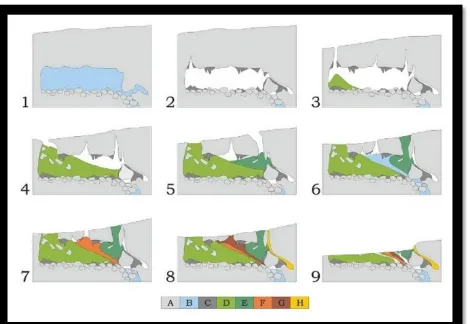
Figure 2 Stratigraphy of Swartkrans Cave (Brain & Watson, 1992). ... 6
Figure 3 SK48, Paranthropus robustus found in Swartkrans Cave (Courtesy of Collection of the Ditsong National Museum of Natural History) ... 3
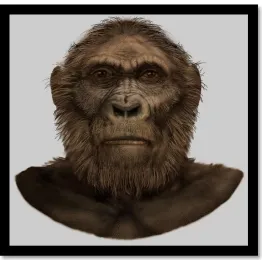
Figure 4 Artistic reconstruction of Paranthropus robustus (Courtesy of Smithsonian Institution) 4 Figure 5 Brain's theory of predatory cats (Courtesy of the Australian Museum) ... 8
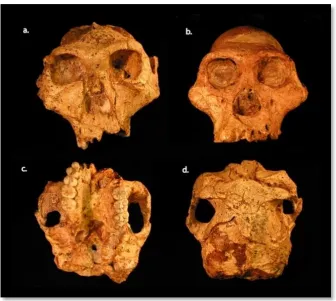
Figure 6 Paranthropus robustus (a, c, d) compared to Australopithecus africanus (b) (Constantino, 2013)... 10
Figure 7 Chimpanzees fishing for termites (Courtesy of Steve Bloom) ... 34
Figure 8 Chamca baboon digging for food (Courtesy of Getty Images) ... 35
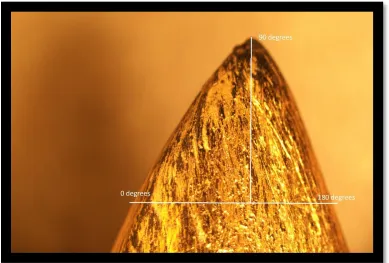
Figure 9 Angle calculation ... 36
Figure 10 Principal Components Analysis of Scratch Length, Breadth, and Angle (Created in RStudio) ... 46
Figure 11 Violin Plot of scratch angles between tool groups (Created in RStudio) ... 47
Figure 12 Histogram of scratch angle with overlaid box-and-whisker plot representing original bone tool data (Created in RStudio)... 49
Figure 13 Principal Components Analysis of tools at 5 minutes ... 59
Figure 14 Principal Components Analysis of tools at 30 minutes ... 59
Figure 15 Principal Components Analysis of tools at 60 minutes ... 60
Figure 16 Principal Components Analysis of tools at 90 minutes ... 60
Figure 17 Principal Components Analysis of tools at 120 minutes ... 61
LIST OF ABBREVIATIONS
Genus identification key:
P : Paranthropus
Au : Australopithecus
Statistical analysis terms:
PCA : Principal Components Analysis
ANOVA: Analysis of Variance
Additional abbreviations:
1 INTRODUCTION
Two million years ago, Paranthropus robustus lived in South Africa and used the leg bones
of various large wildlife species as digging tools. These tools, discovered in Swartkrans Cave,
are a collection of long, thick bones that have a tapered point as a result of usage and exhibit
extensive wear on the end of each bone. From the onset of their discovery, it has been
demonstrated that these particular bones would have been ideal digging tools. By studying the
microwear found on these bone tools, the diet of P. robustus can be more accurately
reconstructed and understood. Using multidisciplinary analysis of the tools, including isotopic
analysis and dental microwear analysis of P. robustus, as well as a recognition of the nutrients
available to P. robustus geographically, researchers have developed two potential food sources
that P. robustus could have likely been digging to reach. These two camps of thought are (1) P.
robustus was using these tools to dig for the nutrient-rich part of plant roots, called tubers, or (2)
they were using these tools to acquire termite proteins by cracking the hard-outer shell of termite
mounds.
Through a comparative study of the original bone tools in conjunction with experimental
tools, which have been created to replicate scratches resulting from their usage, I hypothesize
that the original bone tools were used by P. robustus to dig into termite mounds. This hypothesis
supports the position that P. robustus preferred the consumption of social insects, and that
termites were an important part of the diet of P. robustus.
This emphasis in the diet of P. robustus exemplifies a shift in overall hominin diet in
which plant-based foods decreased and protein-rich resources increased. The results of this study
provide an additional example of this shift. Although it is generally accepted that P. robustus
sheds light on the abilities and dietary proclivities of early Homo as well. Comparative analysis
between late Paranthropus and early Homo suggest isotopic and morphometric similarities, so
the trends observed in P. robustus could indicate similar trends in the Homo lineage.
1.1 Searching in South Africa
In 1924, Raymond Dart received a box sent from the local quarry in Taung, South Africa.
Inside the shipment was a fossilized partial cranium and brain endocast, which he noted to bear
resemblance to human brains based on shape and intricacy of folds within the brain. Dart named
this presumed new species Australopithecus africanus, for the Southern Ape of Africa. He
published his findings in 1925, stating that this was an intermediate between living anthropoids
and man (Ungar, 2017).
Despite Dart’s excitement for this discovery, the academic community did not accept his
hypothesis, and many questioned the validity of his findings for decades thereafter. Their doubts
were well-founded. Most notably, the location of the initial discovery was a mystery; Dart did
not find them in situ. The precise date of the quarry was unclear as well, leading to further
uncertainty. The estimated age of the fossil was not in agreement with the understanding of
human evolution at that time; fossils that had been accepted as human ancestors (i.e.,
Neandertals, Homo erectus, Eoanthropus dawsoni) had been discovered exclusively in Europe
and parts of Asia. The thought of Africa holding human ancestral fossils was contrary to Western
ideas of evolution, in which a large brain was thought to have arisen first and other features such
as bipedalism and canine reduction were thought to have occurred later. However, Robert Broom
areas surrounding Taung in hopes of locating additional discoveries (Laitman, 1986; Ungar,
2017).
In 1938, Drs. Robert Broom and John Robinson were in South Africa, searching for
hominin fossils (Brain, 2003). The excavations conducted by Broom and Robinson were
influenced by the discovery of the Taung child fourteen years prior. Broom and Robinson were
correct insofar as trusting Dart’s initial interpretation of Au. africanus and their excavations in
South Africa were successful. In 1936, with additional support from Dart’s students, they found
the first adult skull of Au. africanus at the paleontological site of Sterkfontein. Two years later,
in 1938, Broom and Robinson found additional fossil remains at a location called Kromdraai.
These new fossils, which were originally thought to be additional Au. africanus remains, were
shown to be sufficiently different in many important ways, warranting a new taxonomic
classification. Broom called this new species Paranthropus robustus, for the robust and
“human-like” facial structure (Ungar, 2017).
During November 1948, Broom and Robinson had returned to Sterkfontein for
excavations when they found another paleontological site of Swartkrans Cave completely by
happenstance. This new site was a system of limestone caves and was located less than a mile
south of Sterkfontein. When Broom and Robinson arrived at Swartkrans Cave, they found that
some gold miners had already exposed a significant amount of breccia through blasting the area,
and a plethora of hominin specimens (mostly mandibles and teeth) were visible on the surface
1.1.1 Swartkrans Cave
Figure 1 Swartkrans Cave, South Africa (Courtesy of Google Maps)
Broom and Robinson turned their attentions to Swartkrans Cave immediately after its
discovery and found it to be a treasure trove of early hominin and other prehistoric remains. By
1951, Broom and Robinson had excavated the area most accessible from the surface (this upper
portion is now known as the “Outer Cave” and would eventually be included in the area marked
as Member 1) (Watson, 2003). This first excavation of Swartkrans Cave was encouraging in the
amount of remains they found, and Broom and Robinson continued their work at the site for
many years. Dr. Robert Broom died in 1951, and Dr. John Robinson remained at his post at the
Transvaal Museum until 1963. Swartkrans Cave was subsequently excavated several additional
times; after Broom and Robinson concluded their work on the site, Dr. C. K. “Bob” Brain (who
Swartkrans Cave during four additional expeditions (Brain, 2003). Brain continued work on
Swartkrans Cave throughout the duration of his career until his retirement in 1991.
1.1.2 Dating of members
The first task Brain attempted was the challenge of mapping the cave. He realized that the
cave system was much more complex than the initial discoverers had reconstructed. In the first
excavation in 1948, Broom and Robinson had excavated through the pink breccia, which was a
bit denser than the layers below. Under this initial level of pink breccia lay stratified brown
breccia, which Brain designated the Outer Cave and the Inner cave, respectively. Below these
two sections is the Lower Cave, which served the purpose of channeling any water out of the
cave (Brain, 2003). Each section of Swartkrans Cave is connected through rainwater drainage
pathways that flow through the Lower Cave. During the earlier years of excavation, the Outer
Cave, Inner Cave, and Lower Cave were thought to be stratified and somewhat reliable for a
timeline, such that the most recent remains would be closer to the cave entrance in the Outer
Cave, and the oldest remains would be discovered further into the cave towards the Lower Cave.
Upon recognizing the magnitude of additional non-hominin remains, such as bovids and
baboon-like monkeys, Brain brought in an expert to analyze the faunal remains. When Elisabeth
Vrba began her work, she concluded that the stratigraphy of the cave could not be relied upon for
a timeline (Vrba, 1995). By comparing the bovid fossil remains, she realized that they could not
have belonged to a single faunal assemblage. She found that the discovery of the cave by miners
in 1948 was partially to blame, as the destruction caused by site-clearing resulted in commingled
assemblages (Watson, 2003). This anthropogenic disturbance and geological shifts in the
the timeline of deposition, and thus she began working on the classifications for a new system of
stratification. Within these three categories of Outer, Inner, and Lower, there are five Members,
recognized by their approximate dates through faunal and fossil analysis by Vrba (Vrba, 1995).
However, the composition of this cave system has been affected by natural processes to the
extent that there is very little continuity to the Members, and the deposition intervals are not
[image:20.612.78.548.264.588.2]discrete (Brain, 2003).
Table 1 Key for Figure 2
A Dolomite
B Water
C Travertine
D Member 1 (Lower Bank)
E Member 1 (Hanging Remnant)
F Member 2
G Member 3
H Stratified Member 2
Vrba determined that a portion of Member 1 known as the “Hanging Remnant” (Figure 2,
panels 5-8) could be estimated to 1.8 to 1.5 million years ago (Brain, 2003). Member 2 share
fauna with the Member 1 Lower Bank and are dated similarly. Six cranial fragments of early
Homo were found here as well, and in conjunction with the thirty-one additional cranial pieces
from a minimum number of individuals (MNI) of 17. Member 3, based on faunal remains such
as Papio hamadryas robinsoni and Felis cf. lybica (baboon and African wild cat, respectively),
has been dated to around 1 million years ago. Member 3 also contains evidence of burnt bones,
which helps to determine this time period when considering controlled fire is dated to
approximately 1 million years ago (Watson, 2003). Member 4 has remained largely unexplored
due to the difficulty in accessibility; the parts of Member 4 that have been excavated have not
yielded any fossil remains and therefore this area does not have a reliable date. Member 5 is the
found within Member 5, have been Carbon-14 dated to approximately 11,000 years before
present (BP) (Brain, 2003). Members 4 and 5 are not notated on Figure 2 due to their unexplored
nature.
1.1.3 Discoveries at Swartkrans Cave
The hominin fossil remains found at Swartkrans Cave suggest it is the “richest hominin
fossil deposit in Africa (Grine, 2005). In Member 1, particularly the Hanging Remnant segment
of Member 1, at least 87 P. robustus individuals have been discovered (Figure 3). The
excavations at Swartkrans Cave led by Brain resulted in an inventory of 64 mammal taxa (many
of which assisted Vrba in her work) and various other vertebrates; the total number of elements
recorded by Brain exceed 350,000, with 153,784 in Member 1 alone (Watson, 2003).
Alongside these fossils, Broom and Robinson discovered some unusual bones that were
unlike the majority of identifiable bones found thus far. These bones were all very similar in size
and shape, and they had an extensive amount of wear on one or both ends (Brain & Shipman,
2003). These bones have been classified as tools, of which P. robustus used to acquire additional
food sources.
1.2 A robust, human-like hominin
P. robustus was first discovered in 1938 by Broom in Kromdraai, a gold mine
approximately 600 km north of Swartkrans Cave (Broom, 1938). After the discovery of the
Taung child, paleoarchaeologists were hopeful to find adult remains of the same species.
Therefore, when the P. robustus fossils were discovered, Broom initially postulated that these
new species and traits of Au. africanus for it to be classified alongside the Taung child. The
obvious and substantial differences between P. robustus and Au. africanus were in cranial
morphology and dental size. Comparatively, the P. robustus molar area is about 17% larger than
those of Au. africanus (Wood, 1991), while the canines and incisors of P. robustus are
[image:23.612.165.447.240.574.2]considerably smaller than those of Au. africanus.
Figure 3 SK48, Paranthropus robustus found in Swartkrans Cave (Courtesy of Collection of the Ditsong National Museum of Natural History)
Postcranially, not much is known about P. robustus. The fragmentary remains discovered
of P. robustus have allowed researchers to reconstruct a hypothetical postcranial body, noting
locomotion much like that of Au. africanus. The flexor pollicis longus and the flexor pollicis
brevis muscles allow for the precision grip necessary for tool use (Love, 2016). The first
metacarpal of P. robustus shows an insertion point for these muscles, supporting the hypothesis
that P. robustus was physically capable of using tools. The remnants of the hip joint indicate that
bipedalism was possible (Hawkes & Paine, 2006; Skinner & Wood, 2006). Their cranial capacity
is estimated to be around 530 cc, based on the individual found at Swartkrans Cave called SK
1585 (Skinner & Wood, 2006). This cranial capacity is greater than that of Au. africanus, whose
cranial capacity is estimated at 464 cc and thus further supporting the separation of P. robustus
[image:24.612.193.455.347.607.2]from earlier australopiths.
Figure 4 Artistic reconstruction of Paranthropus robustus (Courtesy of Smithsonian
1.3 Bone tools
The discovery of the bone tools in Swartkrans Cave by Broom, Robinson, and Brain
was nothing short of ground-breaking. They corroborated the findings at other sites, like
Sterkfontein, and provided support and further evidence that P. robustus was most likely a
toolmaker and user. This discovery has implications for the development of the human hand, the
advancement of the human brain, and additional social consequences. But the second-most
important question to ask after the discovery of the tools is their purpose.
Brain found 68 bone tools in total, within Members 1, 2, and 3. These tools were first
reported in 1976, twenty-two years before the first bone tool at Sterkfontein had been reported by
Robinson (Lesnik, 2011). These particular bones classified as tools showed extensive wear on
the tips. They were longitudinally split segments of various long bones, particularly bovid and
other mammalian species. Studies conducted by Robinson initially, and then subsequently by
d’Errico and Backwell, tested natural weathering methods to prove that these were purposefully
manipulated by P. robustus through habitual use as tools (Backwell & d'Errico, 2003; Lesnik,
2011).
1.3.1 Osteodontokeratic culture
At the time of the Swartkrans Cave bone tool discovery, the majority of the scientific
community still did not believe Dart on the significance of the Taung child. One of the key
arguments about the Taung child was the striking similarity to apes with respect to brain size and
facial prognathism, and the major differences from humans. These assumptions inevitably
influenced the initial interpretation of P. robustus as an aggressive, “callous and brutal” species
discovered at this time in South Africa. Dart believed that there had to be a species which
epitomized an “Osteodontokeratic Culture”. This hypothesized lifestyle was based on the use of
“bone, tooth, and horn” tools (Wolberg, 1970) by malicious hunters. His Osteodontokeratic
Culture epitomized a vicious species, one which would use weapons to attack other species and
members of its own species. His 1953 book titled “The Predatory Transition from Ape to Man”
discusses this idea, initiated by the frequency of hominin fossils discovered with evidence of
trauma, as well as a plethora of additional non-primate fossil remains. This led him to believe
that the species was the aggressor, violent by nature. When Dart heard of the discovery of P.
robustus at Swartkrans Cave from Broom and Robinson, he thought this discovery would
corroborate his hypothesis; He viewed the Swartkrans assemblage as another example of
australopiths remains exhibiting trauma alongside the scattered remains of various other species.
This idea of an angry, hunting hominin was one of many during this time, when mid-20th
century biological anthropologists were attempting to fill in the gaps of the modern human
lineage. With a relocation of origin to Africa, the violent profile of an African-originating
hominin fit racial profiles of the time (Dart, 1925).
Dart took these tools as proof of his Osteodontokeratic culture and a violent species. His
theory was based on the discovery of the numerous cranial fractures observed in australopith and
baboon skulls from 2-1.8 million years ago (Stammers et al., 2018; Wolberg, 1970), and the
disarticulation of skeletal remains. The cranial fractures he observed were often rounded, as if
the crania had been punctured by some type of weapon. The disarticulation of hominin skulls fit
into his narrative as well; Dart reported that these hominins would decapitate their victims in a
Dart hypothesized that the transition to Au. africanus from earlier primate ancestors was a
result of an adaptive response, one that selected for greater aggressiveness. He cites the reduction
of canine teeth and the possibility of bipedalism as evidence that the hands were freed for
offensive and defensive fighting, as well as weapon-yielding (Brain, 1981). Dart hypothesized
that australopiths would fight, kill, and dismember other Australopithecus, accounting for the
fragmented fossil remains found in Swartkrans Cave.
Brain, however, argued against the theory that P. robustus was a violent and
weapon-yielding species. The minimization of canines through the hominin lineage suggests just the
opposite; larger canines are associated with competition between males, as seen in gorillas and
mandrills. Reduced canines are correlated with an overall reduction in sexual dimorphism within
the species. It is likely the reduction in canines proved to be an advantage when practicing
side-to-side masticatory movement as well (Kenzey, 1971).
The cranial fractures observed on many P. robustus and other species exhibited similar
damage to goats that are frequently killed and dragged by hyenas, leopards, and sometimes lions
(Brain, 1981). The puncture wounds in the crania, explained by Dart as the sharp force trauma
caused by weapons, match the diameter and spacing of the lower canines of a fossil leopard
found in Swartkrans Cave. Additionally, leopards habitually take prey into trees to eat, and at the
time of P. robustus, Swartkrans Cave was surrounded by Celtis trees. These trees would have
provided a protected space for a leopard to drag P. robustus, and the remains would subsequently
fall from the trees and into the vertical shaft of the cave (Brain, 1969).
An aspect of the discoveries at Swartkrans Cave which Dart viewed as evidence of his
“Osteodontokeratic Culture” theory was the discovery of many australopith skulls that had been
fossils found in the cave system were decapitated, suggesting a symbolic or ritualistic act of
aggression. This evidence was pivotal for Dart’s theory; therefore, in order to refute this
hypothesis, Brain was confronted with providing an alternative cause for this pattern. Over the
span of several decades, Brain pieced together the fossils of Swartkrans Cave as much as
possible, and found remains of a large cat species, called Felis cf. lybica. By observing members
of a village in Namibia, Brain noticed that large cats would drag goat remains to a secondary
location to eat the remaining meat, and the weight of the body would cause decapitation while
the body is dragged into the tree. It is much more likely the decapitated remains of P. robustus
found in Swartkrans Cave are evidence of a scavenging large cat, rather than an early instance of
ritualistic body mutilation (Brain, 2003). Brain argued that P. robustus was a rather placid
hominin that was often hunted by larger carnivores. Instead of preying on other australopiths and
[image:28.612.163.448.430.666.2]predatory animals, P. robustus were instead prey for hyenas and large cats (Brain, 1981).
1.4 Diet
By denying the Osteodontokeratic culture of Dart, Brain raised the idea that these tools
were used as digging sticks to access additional food resources. Additionally, the reconstruction
of the dietary habits of P. robustus is pivotal information to understand the role of bone tools in
the daily lives of their users. Diet is linked to lifestyle, cognitive abilities, and life history and
growth for every hominin. The expensive-tissue hypothesis states a correlation between
increased brain capacity and diet; further comprehension of hominin diet leads to further
understandings of additional aspects of hominin life (Ungar, 2017).
1.4.1 Masticatory morphology
The study of dentition has provided a plethora of information, specifically regarding the
diet of many animals. That information can be applied to early hominin fossils to help
reconstruct their dietary patterns. Tooth morphology and dental microwear are indicators of diet
and can be studied to form a complete understanding of an individual’s diet. Changes in diet
result in a morphological change in dentition. Laden and Wrangham (2005) argue that critical
differences in dentition, such as size, shape, and cusp morphology, can be studied in combination
with access to a known food source. This multidisciplinary understanding leads to a more
holistic perspective of the specific dietary tendencies of a species, and the general trends of an
entire genus (Laden & Wrangham, 2005)
Comparison within the order of Primates supports and emphasizes the hypothesis that
diet holds a strong relationship to dentition morphology. By looking at the dentition of living
reconstruction of dietary shifts becomes evident and convincing; in particular, the similarities
between Pan and the gracile australopiths versus Gorilla and the robust australopiths (Cartmill &
Smith, 2009). Gorilla and the robust australopiths can masticate tough plant tissue and can
survive on these materials with much higher success than if Pan or the gracile australopiths
[image:30.612.156.492.237.538.2]attempted to eat similar foods.
Figure 6 Paranthropus robustus (a, c, d) compared to Australopithecus africanus (b)
(Constantino, 2013)
The molars and premolars of Paranthropus are much larger than any hominin previously
documented in South Africa, and they are supported by more robust masticatory elements like an
Au. afarensis, Au. africanus, Au. garhi or Au. sediba, indicating an increase in the musculature of
the jaw. A robust ascending ramus and a robust zygomatic bone to anchor the masticatory
muscles support the claim that P. robustus had greater chewing power, much like that of Gorilla.
The canines and incisors, however, are both decidedly smaller than previous australopith
discoveries, indicating that this new species must have experienced significant changes in diet
from its predecessors, which resulted in a shift in reliance from the front teeth towards the cheek
teeth. Flattening of the premolars and molars, with an increased difference between these cheek
teeth and the incisors and canines, indicate a shift to a heavy reliance on vegetation (Cartmill &
Smith, 2009; Robinson, 1954).
Statistical comparison of the differences in morphology between P. robustus and Au.
africanus show significant correlations between attrition and crown height, such that differences
are more pronounced between species compared to within species (Rots, 2015). These
differences are not allometric but instead are true morphological differences. The crown height
of unworn teeth is higher in P. robustus molars and premolars, and higher in Au. africanus in
incisors and canines. Although both species exhibit significant wear on teeth, indicative of a
heavy reliance on hard and brittle foods, the attrition observed on Au. africanus is greater than P.
robustus (Robinson, 1954). This attrition is particularly evident on the incisors and canines,
indicating that Au. africanus habitually relied on their front teeth much more than P. robustus.
The teeth of P. robustus show greater attrition when compared to the crown height of unworn
premolars and molars, or “cheek teeth,” which indicate a higher reliance on the post-canine
dentition for mastication (Smith, 1962) and a much lower reliance on the incisors and canines.
These adaptations in masticatory musculature and tooth morphology would have
and seeds (Lee-Thorp & Merwe, 2003). The microwear found on occlusal studies of P. robustus
dentition shows lots of pitting, but not many scratches, a difference from the dental microwear
observed in Au. africanus (Williams, 2015). This prevalence of pitting and complexity of the
enamel surface in P. robustus supports the theory that they ate small, hard objects or possibly ate
vegetation that had a high concentration of grit (Scott et al., 2005). It could also indicate that they
were unintentionally eating gritty foods, ones that had small rocks or dirt. Pitting in the enamel
of P. robustus could be a consequence of eating termites covered in the material used for termite
mounds (Lesnik & Thackeray, 2007). It could also indicate grit within the foods, such as small
rocks that have attached to the USOs. Scott et al. (2005) report the dental microwear of P.
robustus indicated hard and brittle foods, which accounts for the pitting compared to the dental
microwear textures of Au. africanus, likely a consumer of tougher foods (Scott, et al., 2005). Yet
the diets of both were likely overlapping, relying on variation in diet and seasonality to support
their nutritional needs
Additionally, P. robustus showed a significant increase in enamel from its predecessors
(Pickering et al., 2015). This change is also likely due to the addition of tougher foods into their
diet. Although morphology and microwear analysis provide valuable information, these methods
are circumstantial. These arguments are stronger when combined with other methods of analysis.
1.4.1.1 Underground Storage Organ Dietary hypothesis
Laden and Wrangham (2005) suggest that a shift to USOs as a new and reliable fallback
food was the primary cause of this change in morphology and the masticatory apparatus of P.
robustus would have been entirely capable of masticating the fibrous USO plant tissue
divergence of early hominins from ancestors shared with the African apes was driven
significantly by a change in fallback foods. Fallback foods are those relied upon when preferred
foods are not accessible, often when the preferred foods are subject to depletion from seasonal
changes or times of ecological stress (Cartmill & Smith, 2009). The fact that the dentition
reflects the morphology required to masticate fallback foods rather than preferred foods has been
observed in several non-human primates. Two families of Malaysian lemurs, for example, have
dentition enabling them to graze on grasses, much like herbivorous cattle, which they do when
their preferred fruits, seeds, and young leaves are not available (Yamashita, 1998). The ability to
consume and digest fallback foods increases the chance of survival during these times of
ecological stress and limited food supplies.
Charles Darwin’s well-known analysis of the variation in Galapagos finch beaks features
a similar process such that beak form reflects the consumption of fallback foods (Darwin, 1859).
When preferred foods are inaccessible, the variation in species is brought to bear to locate
available supplemental or “fallback foods,” to survive until preferred foods are available again
(Laden & Wrangham, 2005). Due to competition for foods, the Galapagos finches exhibit major
variation in beak morphology from species to species based on the food sources they can
successfully eat. Beaks that can successfully break open nuts will be shorter and stockier,
whereas beaks optimal for insect acquisition and processing are often longer and thinner.
Similarly, individuals with dentition and a masticatory apparatus that are successful in
processing fallback foods have the highest chance of survival which in turn influences the
inheritance of these traits. Those who survive pass on the variation that prevented starvation thus
Underground Storage Organs, or USOs, are the fallback food proposed by Laden and
Wrangham (2005) which drove the divergence of early hominins. USOs are roots and other parts
of plants which function primarily in nutrient uptake. Tubers, corms, rhisomes, and bulbs are
examples of USOs. These organs have much variability, both between and within plant species,
and this wide variation is due to evolutionary processes. This change is for the plant to have a
better chance of survival. This variation of USOs allows plants to live in harsh environments as
successfully as they live in more temperate climates, and through annual seasonal changes.
These adaptations allow them to exist in the wet rainforest as efficiently as the dry savanna.
Comparative analysis of the variation in USOs within these differing environments shows that
USOs are less diverse in areas with consistent heavy rainfall, and most diverse in areas with
longer dry seasons, such as in savannas where P. robustus and other hominins are thought to
have lived (Singels et al., 2016).
Due to the greater variation of USOs in dry climates, there is a higher chance of finding
USOs that are edible. Those found in rainforest and temperate climates with reliable rainfall
almost year-round have more of a challenge with predators rather than water availability, and
thus have adapted to have more protection. This tough protection often results in the USO being
inedible. The USOs found in drier climates, such as the savanna, have a more considerable
challenge of finding a water source and need to have the ability to absorb water at all costs. Their
outer layer is thinner, allowing water to penetrate easier — this difference in purpose and
composition results in more edible tubers found in the savanna. Vynck, Van Wyk & Cowling
(2016) report that approximately 65% of USO-bearing species are edible when raw
Contemporary human foragers have been documented to rely on USOs in tropical Africa
as fallback foods. By looking towards these contemporary foraging groups who do not have
access to modern trade for support through seasonal changes, the theory of USOs as a fallback is
corroborated. Although sweeter foods, like fruits, are preferred in groups such as the !Kung at
Nyae Nyae, they are not readily available in the early summer. The !Kung often have a supply of
roots to subside them until later in the season. Similarly, the Hadza of northern Tanzania also
keep many roots and bulbs for sustenance in the primary rainy season and the late dry season
(Laden & Wrangham, 2005). Aboriginal Australians, a third contemporary group of modern-day
humans that use USOs as a fallback food, also live in a tropical climate like that of the African
savanna and habitually forage for underground storage organs.
Recognizing USOs as a potential fallback food that could have triggered the divergence
of early Homo and Paranthropus from Australopithecus requires further investigation of various
aspects of P. robustus. Due to the widespread nature of USOs, P. robustus undoubtedly lived in a
geographic location where USOs would have been present. But were they capable of finding and
eating USOs? Is there an isotopic analysis of any kind to support the claim that they ate USOs?
And is it plausible to claim that P. robustus, rather than Au. africanus or early Homo, was the
turning point with respect to hominin adaptations to process underground storage organs as
fallback foods?
P. robustus represented a shift in hominin evolution, particularly in the masticatory
apparatus as discussed above. These changes suggest a shift in fallback foods, and it is likely that
USOs were the fallback food for P. robustus. The geographic availability of USOs, the variation
in types of USOs seen in the savanna where P. robustus inhabited, and the ability of P. robustus
microwear of P. robustus shows pitting and is likely due to the grit often found within USOs.
Isotopic analysis, however, indicates that the foods P. robustus relied upon were not USOs, but
more likely termites (Lesnik, 2018). These preferred foods would have been seasonal, requiring
an alternative and reliable source during seasonal changes. USOs are available year-round and
would have been able to sustain P. robustus adequately when necessary.
1.4.2 Isotopic analysis
Comparative analysis of the morphology of P. robustus can suggest dietary shifts, but it
cannot conclusively prove what P. robustus habitually ate. Dietary proclivities are more
dependably reconstructed using isotopic analysis. Nitrogen analysis, stable carbon isotope
analysis, strontium/calcium analysis, and strontium/strontium analysis are methods often utilized
for dietary reconstruction. Nitrogen analysis is, unfortunately, dependent upon collagen and is
unavailable as a method of analysis in fossil remains. However, by looking at the results of
13C/12C, Sr/Ca, and 87Sr/86Sr, researchers can compose a more holistic understanding of the
dietary patterns of P. robustus.
Strontium isotopic analysis can provide information on habitat and mobility of an
individual. Strontium is an element that is geographically specific, and it builds up in our bodies
based on the food and water that we ingest. Mineralized tissues, like tooth enamel, are
particularly useful in testing for strontium isotopic analysis (Sillen & Balter, 2018). To
understand hominin migratory behavior, Sillen and Balter (2018) preformed strontium isotope
analysis on paleontological human remains. This analysis was applied to the P. robustus fossils
found in the Sterkfontein Valley. This study showed that the P. robustus specimens habitually
further away at various times in their lives (Sillen, 1992). Although this examination does not
necessarily prove the consumption of USOs, meat, or both, but it does indicate that they were
able to travel short distances and confidently find food sources when availability in their home
range was low. This conclusion does not refute the claims of Laden and Wrangham (2005), who
indicate the importance of USOs as a fallback food based on their geographic range and
accessibility in the savanna environment, nor does it refute Lesnik’s (2018) claim that of termite
foraging.
In addition to strontium isotopes, researchers have also tested for Strontium-Calcium
ratios. Sr/Ca ratios are linked to an understanding of trophic levels of food webs. Sillen (1992)
reports low variability of Sr/Ca, which supports the claim initiated by the 87Sr/86Sr data stating
that it is unlikely that P. robustus traveled throughout a wide home range. This conclusion comes
from the Sr/Ca comparison between the remains of P. robustus and that of a wildebeest, both
discovered in Swartkrans Cave. The wildebeest has a known behavior of long-range travel and
would have obtained a high value of Sr/Ca by grazing through a diversity of grasses and soils. P.
robustus yields much smaller quantities by comparison. The overall isotopic evidence indicates
that P. robustus foraged within a relatively small geographic area surrounding their core home
area, rather travelling far distances for food.
1.4.2.1 Stable carbon isotopes
Stable carbon isotope ratio analysis is a method to determine which types of vegetation
an individual was consuming, or which types of consumers an individual eats. This ratio
provides insight towards the individual’s place within the food web (Lee-Thorp & Merwe,
the ecological system (Lesnik, 2018). Calvin-Benson, or the C3 photosynthetic pathway, consists
of woody plants like trees, fruits, shrubs, forbs, corms, tubers, and the organisms that rely on C3
plants. Hatch-Slack, or C4, mostly classifies tropical grasses and those who consume C4 plants. A
review of the 13C/12C ratio determines the calcium levels of an organism. When the 13C/12C ratio
is low, there is a reliance on C3 vegetation versus when 13C/12C is higher, it is more likely they
relied upon C4 vegetation.
A 13C/12C ratio analysis testing on a sample of the fossil remains found at Swartkrans
Cave compared to other faunal remains in the cave indicates that it is likely that they relied upon
C4 grasses or the flesh of grass-eating animals (Cartmill & Smith, 2009; Lee-Thorp & Merwe,
2003; Lesnik, 2018) for a significant portion of their diet. Approximately 25%-30% (Lee-Thorp
& Merwe, 2003; Lesnik, 2018) of their diet was C4 material, compared to 60%-65% of their diet
of C3 foods. This amount is roughly similar to the early Homo individuals also found at
Swartkrans Cave (Peters & Vogel, 2005).
Underground storage organs are C4 plant material. The amount of C4 found indicates that
P. robustus did not rely exclusively on USOs, as their carbon ratio shows evidence of C3. The
carbon isotope analysis suggests that it is possible that P. robustus relied upon the termites
(which consume C4 grasses) for the majority of their nutritional requirements, rather than USOs
(Lesnik, 2018), for their protein and fat content would have been highly beneficial for a species
of this size (Lesnik, 2018). Although this conclusion points away from habitual USO
consumption, it does not rule out the possibility that P. robustus consumed USOs which were
utilized as fallback foods when their preferred foods were not as accessible (Cartmill & Smith,
Compared to Au. africanus, P. robustus has a slightly lower 13C/12C ratio (Sponheimer et
al., 2006). The carbon isotope ecology of ten Au. africanus individuals found at Sterkfontein,
Member 4 indicates that their diet was slightly different from P. robustus. Au. africanus relied
upon C4 foods more than P. robustus, at an average of 40% of C4 plant material compared to
approximately 25% seen in P. robustus.
The isotopic analysis of P. robustus teeth shows a great similarity overall between
Paranthropus and Australopithecus. There was great variety in their diet, indicating a variation
in grasses, fruits, and tree parts (Ungar, 2017). Lesnik (2018) argues that this variation could be
attributed to seasonal availability of foods, corroborating the hypothesis that USOs were relied
upon as fallback foods by P. robustus when their preferred foods were out of season. The C4
results of P. robustus can also be attributed to Trinervitermes termites, a genus of termite that
habitually eats grasses. This genus of termite exists nearby the Swartkrans Cave, and with the
help of bone tools, P. robustus would have had the means to acquire them as a food source.
1.5 Expected results
Preliminary microscopic observations of the experimental bone tool replicas currently
located in the Dental Microwear Laboratory at Georgia State University corroborate the findings
of Backwell and d'Errico (2001) that the original bone tools found in Swartkrans Cave were used
by P. robustus to forage for termites. The angular measurements of the striations on Heaton and
Pickering’s experimental tooltips indicate that the scratches of the tools explicitly utilized to dig
into termite mounds produced more uniform angulation when compared to that of the tools used
to dig for tubers. The variance of the angle measurements is much smaller on the termite tools
numerous times that a large percentage of the striations found on the original tools were parallel
or subparallel to the central axis of the tool. Although she does not record specific angle
measurements in her analysis, my findings corroborate her visual assessment of the scratches.
Through consideration of prior studies (Backwell and d’Errico, 2001; Brain 2003), I have
developed an experiment to confirm or dispute these earlier conclusions. Innovative microscopic
analysis of an experimental set of bone tools created by Jason Heaton and Travis Pickering
compared with microwear from the original bone tools found in Swartkrans Cave will provide a
new perspective on these 2-million-year-old tools, and shed light on their influence on hominin
2 EXPERIMENT
Tool use is a key proponent in understanding human evolution. The ability to create and use
tools has often been correlated with the major differences that separate Homo sapiens from other
primates. The implications of this study will influence future research on the preferred dietary
trends in P. robustus in particular and the genus Paranthropus in general. Understanding these
dietary trends in relation to the early dietary habits of the genus Homo, leads to a greater
understanding of the dietary shifts to protein-rich foods and their influences on hominin
evolution.
The debate surrounding the use of osseous tools began when similar tools were discovered
in the 1930s at Sterkfontein by Broom. From his analysis of the tool assemblages recovered from
Swartkrans, Sterkfontein and other locations, Brain discredited Dart’s initial hypothesis that
these were weapons of violence by offering evidence from the observation of cranial fracture
patterns. Various hypotheses of alternative uses of bone circulated from sewing needles
(developed after discovery of sewing needle-like bones discovered at Sterkfontein) to a general
multi-purpose tool (Broom, 1938). Brain eventually hypothesized the original use of these tools
was to dig into the ground for the nutrient-rich portion of plant storage organs including roots,
tubers, corms, and rhizomes after observing modern-day primates accessing this same food
source (Brain, 2003). This hypothesis was widely accepted until the early 1990s.
Lucinda Backwell questioned whether the underground parts of plants were harvested with
these tools due to the lack of quantitative evidence, hypothesizing instead on the basis of
microscopic study that these tools were used to reach termites inside termite mounds. D’Errico
and Backwell created experimental bone tools to test the relationship between microwear left on
statistical evidence in support of the termite foraging hypothesis (d'Errico & Backwell, 2009;
d'Errico, Backwell, & Berger, 2001).
More recently, experimental bone tools created by Jason Heaton and Travis Pickering have
provided a secondary source of analytical control to contest the hypotheses of Brain and
Backwell (Lesnik, 2011). This study is based on the parameters set by Backwell’s experiment to
guide the data collection, I use the tools provided by Heaton and Pickering to analyze the
microwear of each experimental tool. With special consideration to the importance of scratch
angle, I also consider the importance of scratch length and width. At the conclusion of my data
collection, I created a framework of measurements associated with each tool use and compared
the original bone tool data to these groups.
2.1 Bob Brain’s hypothesis
Dart’s Osteodontokeratic culture hypothesis involved a violent, weapon-yielding species
that used these bone tools for aggressive purposes. Brain used the example of predatory cats
(discussed in Section 1.3.1) to debunk Dart’s claims. Brain claimed that the tools were used to
dig for USOs. The theory had support from comparative evolutionary data between modern-day
non-human primates and the known capabilities and dietary habits of P. robustus (Laden and
Wrangham, 2005). Brain discussed the tools in his initial article and included the size of the tool,
date, and a non-metric description of the tool (Brain, 1969).
2.1.1 Brain’s hypothesis development
Chacma baboons, Papio hamadryas ursinus, use their hands to dig for Scilla marginata
robustus could have had the same proclivities (Brain & Shipman, 2003). Additionally, the stable
carbon analysis of P. robustus includes a portion of C4 plants, indicating that USO’s were likely
in their diet.
P. robustus lived in an area where USO’s were readily available. The climate of South
Africa produces many species of edible USO, corroborating Brain’s theory (Sayers & Lovejoy,
2014). These isotopic and geographic understandings lead to an early reconstruction of P.
robustus diet; one which included tubers. This, in turn, supported Brain’s interpretation of the
most likely cause of use-wear on the bone tools.
2.1.2 Brain’s Experiment
Brain knew that it would be more difficult to dig for tubers during the winter months. The
soil hardens with the colder weather, and the chacma baboons exhibit difficulties at this time
digging for tubers. They often rely on alternative foods when the soil becomes too difficult to
work (Brain & Shipman, 2003). Brain experimented with osseous material, to investigate the
plausibility of using bone to dig into various substrates. This experiment was also designed to
test the ability to use bone to dig into the soil during the winter months. By testing several bones,
he concluded that it was possible to use these strong bones to dig. He analyzed his experimental
bone tools microscopically to an extent, and further concluded that the microwear was similar
enough to the original bone tools; he failed to reject his hypothesis and finalized his research
without additional experimentation or control comparison (Brain & Shipman, 2003).
Eventually, Lucinda Backwell and colleagues from the University of Witwatersrand in
South Africa challenged Brain’s methods and subsequent interpretation. He did not analyze these
tools and the original tools. Backwell and d’Errico (2001) hypothesized there might be more to
these tools than Brain initially found microscopically. She theorized that through further
analysis, it would be possible to determine for which purpose P. robustus used the tools, and thus
began to test the Swartkrans bone tool purpose again.
2.2 Lucinda Backwell’s experiment
Backwell concurred with Brain to an extent; they agreed on which artifact constitutes a
bone tool from the assemblage. She began her testing here, to corroborate his findings. Her first
goal was to reconfirm that these bone tools found at Swartkrans Cave were manipulated by
non-natural means. She metrically analyzed the established tools and found that the wear patterns and
measurements of each fragment have a strong group affinity. The data showed that the bones
used for practical purposes were significantly longer, wider, and thicker than “unmodified,”
non-tool bone shafts, constituting a statistically supported “group” of bones. Backwell supported her
findings by conducting a non-parametric Mann-Whitney U-test, which concurred that this was a
statistically confirmed group of bones and showed that there was a significant difference in bone
shaft thickness (P < 0.0001) among the bone shafts which were chosen to become tools versus
the bone fragments not chosen (Backwell and d’Errico, 2005).
However, Backwell and d’Errico (2001) argue that Brain’s analysis did not consider
additional uses which “mimic anthropic modification.” Additionally, Backwell and d’Errico state
that Brain did not consider external variables such as species and type of bone used, fracturing
patterns, degree of weathering, bone flake morphometry, and spatial distribution (Backwell &
d'Errico, 2001). Through their experiment, she developed the hypothesis that these specific tools,
After conducting a test to validate that the hypothesized tools from Swartkrans Cave
exhibited wear only possible by hominin manipulation, a new hypothesis began to develop.
While she agreed that it was possible that P. robustus likely consumed tubers as a fallback food,
concurrent with Laden and Wrangham (2005), she believed that termites were their preferred
food source if available and that these tools were utilized to acquire termites. Through
Backwell’s own experiment, testing bone tools in various substrates, she argues that the
microwear of their experimental tools used to dig into termite mounds showed more
consistencies with the original tools as compared to the tools used to dig for tubers (d'Errico,
Backwell, & Berger, 2001).
These metric observations and subsequent analyses are supported by a measurement error
study conducted by Backwell and additional measurement error studies that I conducted at
Georgia State University that provide insight on data accuracy. When measurements can be
repeated to show exact or highly similar results, the validity of the study is high (Coggin, 2009).
By repeating the same measures in multiple trials, the observer can assess their own biases based
on the variance between each trial, of which Backwell includes in her study. Measurement
accuracy can be confirmed by the inclusion of a standard deviation measurement considering
each trial, confirming the validity of the observer. An additional analysis to assess error is a
coefficient of variation. The coefficient of variation, reported in percentage form, evaluates the
relationship between standard deviation and mean (Bernard, 2006). A lower coefficient of
2.2.1 Backwell’s methods
A total of 85 tools from Swartkrans Cave were analyzed for their wear patterns. She also
used the two antelope shafts used by Brain to dig for Scilla marginata and Hypoxis costata for
comparison (Backwell & d'Errico, 2001). Backwell used 35 reference collections, 15 modern and
27 fossil, to test whether the bones can be described as tools, as well as to analyze the possible
purposes of these bones. These collections were used to dig for tubers in many soil types, as well
as termite mounds found in the Sterkfontein Valley. Resin casts were then created at the time
intervals of 5, 30, 60, 90, and 120 minutes. To compare, a set of bones were subjected to
nonhuman taphonomic processes, such as natural weathering by water or carnivorous gnawing.
By microscopically analyzing these tools with an emphasis on the area between 5 and 50 mm
from the tip of the tool, and between 5 and 40 µm wide, Backwell concludes that the tools found
at Swartkrans Cave exhibit wear that is distinctly different from the wear created by nonhuman
processes.
The wear patterns shown on the experimental tools offered an alternative hypothesis to
the one Brain developed to argue for tuber digging. The striations noted by Backwell on the
original tool were most similar to the experimental tool used to dig into termite mounds;
particularly matching the tools used for 30 minutes, the time Backwell notes as being necessary
to dig into a medium-sized termite mound (Backwell & d'Errico, 2001). Backwell and colleagues
conducted various other tests, to explore additional hypotheses that may explain the microwear
observed on the bone tool. Defleshing marula fruits (d'Errico & Backwell, 2009), stripping bark
from trees (d'Errico & Backwell, 2009; Lesnik, 2018), working animal hides (Backwell &
d'Errico, 2001), as well as the efficiency of using bone for these tasks as compared to the stone
Comparison of Backwell's experimental tools with the original fossil tools indicate that
the primary purpose of the tools was digging into termite mounds. The microwear of Backwell’s
termite mound experimental tools is significantly more similar to the fossil tools than her tools
used to dig into various soil types for tubers. She found that striation width variability seen on
the Swartkrans Cave sample tools had an average of 18 μm. She compared this average to the
average width of her trial tools, those used to dig for termites showed an average width of 13.7
μm and those used to extract tubers showed an average width of 63.1 μm. Once again using a
Mann Whitney U test, Backwell proved that the average widths and their associated variabilities
support the conclusion that the microwear resulted from digging into termite mounds rather than
tuber extraction (Backwell and d’Errico, 2001).
2.2.1.1 Stone tool comparison
It is imperative to note that there were stone tools recovered from Swartkrans Cave
alongside the bone tools and fossil hominins. Lesnik and Thackeray (2007) question the
effectiveness of bone tools versus stone tools for opening termite mounds, following Backwell
and d’Errico’s publication stating the likelihood of termite foraging (d'Errico, Backwell, &
Berger, 2001). By experimentally testing tools from long bones of a modern-day horse as well as
comparative stone tools mimicking those found at Swartkrans Cave, Lesnik and Thackeray
(2007) set out to test the durability of stone tools versus bone, as well as efficiency in opening
termite mounds. They conducted their trials near Swartkrans Cave to mirror the soil
environment, as well as termite mound composition in the area. They used each tool to strike an
area of a termite mound 25 times to assess the strength and durability of the tool. They also
that the overall mass of the tool has a direct correlation with the amount of mound successfully
removed after 25 strikes of the tool and the ease at which the task is completed. They found that
the stone tools were often too blunt to loosen the tightly packed mound material, a feature which
corroborates the study of d’Errico and Backwell (2003) (Lesnik and Thackeray, 2007). Dense
bone, often the femora and tibiae, were much more effective at opening termite mounds. The
cortical composition of the bone and the tapered tip which develops as the bone is subjected to
repetitive digging tasks proves that bone is much more effective at opening termite mounds.
2.2.2 Statistical analysis
Included in the study by d’Errico and Backwell is an F-ratio and a Mann Whitney-U test.
The F-ratio is a descriptive method to compare the variation between groups versus the variation
within groups. In this study, Backwell and d’Errico show that each substrate used to create
experimental bone tools shows distinctions between groups. This test validates each tool
grouping and allows Backwell to use the experimental tools as a control to compare to the
original bone tools. The Mann Whitney-U test is included to compare her experimental data to
the tools found at Swartkrans. With these results, she argues that Brain’s hypothesis that P.
robustus used these tools to dig for tubers is incorrect.
The F-ratio and the Mann Whitney-U test are examples of univariate analyses. d’Errico
and Backwell (2003) used these methods to test the strength of the variables (angle, length,
breadth) in determining the group membership of each experimental tool. The F-ratio shows the
between-group variance divided by the within-group variation (Bernard, 2006). If the F-ratio is
above 1.0, the between-group variation exceeds within-group variation intimating that real
comparison of the sum of ranks to test for significance (Rosner, 2016). In Backwell’s example,
she compares the data of three experimental categories; she analyzes the relative scratch angle in
relation to the axis of the tool, length, and width. From her data, she concludes that the width of
striations is the most reliable measurement of difference between the categories, thus stating that
the collective width of the Swartkrans Cave bone tool scratches is most similar to the width of
the scratches found on her experimental termite mound tools, specifically citing average striation
width comparisons as the most dependable way to compare the striation widths.
2.3 Methods
Following d’Errico and Backwell’s (2001) publication, my experiment utilizes the same
variables for optimal comparison. By analyzing the microwear of the tools created through the
three tasks represented (i.e., tuber digging, termite mound digging, and both tuber and termite
mound digging), the data collected sets a framework for comparison of future bone tools. After
the classification of the groups is determined, the data collected from the original bone tools can
be compared to find the strongest similarities.
Brain proposed his tuber-digging hypothesis based on an observation, not empirical data.
Backwell and d’Errico (2001) created a control through replicating the microwear on bone tools,
and then used microwear analysis to support their alternative theory. This study uses a new set of
bone tool replicas, provided by Jason Heaton and Travis Pickering, generously provided to
Georgia State University for the purposes of developing an innovative method of analysis. This
method includes microscopic analysis and angular measurement of scratches present on
experimental bone tools, followed by quantitative statistical analysis and comparison with the
2.3.1 Replicas at Georgia State University
Jason Heaton from Birmingham-Southern College in Alabama, and Travis Pickering
from the University of Wisconsin-Madison, attempted to corroborate the claims of Backwell.
They designed and executed an experiment with bovid humeri shafts in similar soil environments
to showcase the scratches and wear that would be evident on bone tools when used for certain
tasks. During this experiment, they made resin replicas of the tips of each tool at the intervals of
5, 30, 60, 90, and 120 minutes resulting in thirty-six resin replicas (Table 2). The time-trial
replicas were produced at these intervals to analyze the scratches and determine if wear from the
previous trial was amplified, erased, or not affected by subsequent usage. Additionally, the
amount of wear each tool endures throughout the duration of each trial is evident in this way.
By having access to a reference tool and having the ability to understand the overall wear
on the shape of the tool, we can begin to understand the practicality of using bone for each task.
The size and shape changes in the trial tools as the amount of time each tool is used increases.
Lesnik and Thackeray’s (2007) comparison between the inefficiency of blunt stone versus the
more functional material like bone supports our understanding that the compositional properties
of bone allow it to wear in a particular way without considerably compromising the overall
strength of the axis. This characteristic of the tools would make them better tools after each use,
until the tool wear began to compromise the strength. At this time, P. robustus would have
Table 2 Experimental bone tool replicas
2.4 Null hypothesis
Considering earlier studies of the Swartkrans Cave bone tools and the replicas created by
Heaton and Pickering, the null hypothesis is developed:
• H0: No statistical differences exist between the experimental tools used to dig for
tubers, to dig for termites, and alternating tuber and termite when considering the
angle, breadth, and length of scratches.
Failure to reject this hypothesis indicates that the experimental bone tools created by Heaton and
Pickering exhibit no difference in microscopic scratch analysis, making it impossible to compare 5 Minutes 30 Minutes 60 Minutes 90 Minutes 120
Minutes F01:
Both
F02: Tubers
F04: Termite s
F05: Tubers
F07: Termite s