Developing a Serious Game to Teach
Collaborative Decision Making
Janneke Hamburg
Master Thesis
May 2018
Supervisors:
Abstract
Collaborative decision making is a complex skill that is often used to solve problems in
organizations. An advantage above individual decision making is that a group has more
knowledge and expertise available. However collaborative decision making has many risks,
like groupthink, social loafing, Furthermore, groups do not always use all available
information. The use of a highly structured process can prevent these common dysfunctions
within groups.
A serious game can be used as a training tool, because games are found helpful in teaching
complex skills. Another advantage is that learners experience more pleasure during learning.
In this research, a decision-making board game was developed where players work on a
decision task in four rounds: brainstorm, argumentation, evaluation and the final decision.
During these rounds, the players discover issues, gather positions, give arguments for and
against the positions and finally agree on a solution.
In the experiment 10 groups worked on a decision task. They either worked on the task with
the game or were in the control group without the game. Afterwards they filled in
questionnaires and participated in an interview.
The questionnaire showed that the groups in the Game conditions scored higher on positive
affect. In the interviews, it was found that the structure from the argumentation model was
helpful in the decision-making process in both conditions. The participants were positive on
the process and satisfied with the final decision.
Index
1. Introduction
4
2. Serious games
5
2.1 Definitions
6
2.2 Collaborative learning
6
2.3 Implementation of serious games
7
3. Decision making
8
3.1 Collaborative Decision making
8
3.2 Argumentation-based decisions
9
3.3 Design rationale
10
4. Research question
11
5. Game development
12
6. Pilot study
15
7. Methods
16
8. Results
18
8.1 Questionnaires
18
8.1.1 GEQ – Core Module
18
8.1.2 GEQ – Social Presence Module
19
8.1.3 Task questionnaire
19
8.2 Interviews
24
8.2.1 Process Category
26
8.2.2 Tool Category
28
8.2.3 Evaluation Category
29
8.2.4 Group Category
31
8.2.5 Other Category
32
8.2.6 Summary
33
9. Discussion
34
10. Conclusion
38
11. References
39
12. Appendix
43
Appendix 1 - Game instructions
43
Appendix 2 - Feedback pilot study
45
Appendix 3 - Interview Questions
47
Appendix 4 - Questionnaires
48
1. Introduction
Decision making is happening often in daily life, and moreover, a great part of these decisions
is made in organisations. Decision making is the act of making choices between different
alternatives. Much time is spent on discussing what the best option is to solve certain issues. It
is argued that decision making is one of the most important activity of all management
activities (Lunenburg, 2011). But in fact, decision making happens in every level of an
organisation. Every employee is spending time on making decisions. Furthermore, decisions
are not only made by individuals, decisions are made
more and more in collaboration,
In group decision making individual differences are combined to come to a shared
decision. Many models have been developed to analyse the process of group decision making
(Kerr & Tindale, 2004). In group decision making, opposite to individual decision making,
multiple persons have control to influence the choices (Keeney, 2009). Group members with
different information and preferences on an issue will try to reach agreement together
(Levine, 2018) This paper focusses on decision making with a goal of reaching consensus, a
group working together to generate and evaluate alternatives to come to an agreement on
solving the problem.
Group decision making has benefits above individual decision making. The group has
more knowledge and expertise available, a greater number of alternatives can be examined,
the final decision is understood and accepted by the group members and there is more
commitment by the members to make the final decision work (Lunenburg, 2011). However,
group decision-making has potential pitfalls if practiced incorrectly. Behavioural factors can
influence group decision making negatively. Group members might feel social pressure to
conform, the decision can be dominated by a minority and it usually takes longer to come to
the final solution (Lunenburg, 2011). Further, groups sometimes have a false shared reality.
Because not all individual knowledge is shared, and groups often only discuss their common
knowledge. This means they do not use all available information in their consensus, this can
lead to a wrong agreement on the final decision (Levine, 2018). Thus, exchange of
information is a key element in group decision making. The group should enable a more
complete consideration of preferences and alternatives then an individual would. However
this happens often very poorly, also leading to poor decisions (Dennis, 1996)
However, it is important that these decisions are made well, since the outcomes can have a
major influence (Keeney, 2009). Therefore, it is important that the process goes structured.
This can be done by using a rational decision-making procedure, based on certain steps that
should be followed. It starts with the problem discovery, then alternatives are developed,
consequences are specified and in the end the decision is made (Grünig & Kühn, 2005).
Since group decision making is an important method in organisations to make
important choices, it is important that employees know how to make these decisions. It is
needed to train employees and teach them a structured process of problem solving. The
processes that take place during decision making have a big influence on the outcomes.
Depending on the context, this will lead to a good or a bad performance (Kerr & Tindale,
2004). In this report, an idea of a training method will be examined that can assist in teaching
decision making in a collaborative setting. This will be done in the form of a serious game,
because games are found to be a good method of teaching complex systems (Castronova &
Knowles, 2015). The game will assist groups by simulating a structured process of decision
making, to teach the skill within its context.
Next, background information will be given on serious games, collaborative learning
and how to use serious games. Then the decision-making process will be explained into more
detail. Afterwards, the design rationale will be introduced, a method to capture the decision
process. In this research, a decision-making board game will be developed to examine if a
game can assist in the learning of structured group decision-making process.
2. Serious games
of motivation. One important condition to reach this state of flow is having some challenges
in the game. The learning should not be effortless (Kiili, 2005).
2.1 Definitions
Serious games are a special type of games. Salen & Zimmerman (2003) introduced a
conceptual framework on (digital) games, consisting of three schemas to look at games:
Rules
,
Play
and
Culture
.
Rules
are the game design schemas that focus on logical and
mathematical structures of a game.
Play
covers the experience and social setting of the game.
Culture
looks at the larger cultural context in which games are designed, the beliefs and
norms that are represented in the game. This framework demonstrates the complexity of
games. Similarly, opinions differ on what a serious game exactly is. Serious games can vary a
lot depending on the context and who uses it (Breuer & Bente, 2010). Most authors agree that
serious gaming is the use of games with a purpose that is not only entertainment (Breuer &
Bente, 2010; Susi, Johannesson, & Backlund, 2007). Thus, the difference to a normal game is
the purpose, to teach some kind of knowledge or skills (Susi et al., 2007).
In Zyda (2005) a serious games is mentioned as: “a mental contest, played with a
computer in accordance with specific rules, that uses entertainment to further government or
corporate training, education, health, public policy, and strategic communication”. However,
the focus, like in most literature on serious gaming, is on the use of digital games. Although
digital serious games are ubiquitous available nowadays, other forms of serious games exist
as well. Due to the popularity of digital serious games, board games are often
under-appreciated (Castronova & Knowles, 2015). Whereas board games have the advantage that
they are much easier to understand, since the player can immediately oversee the whole
board. This makes the transparency higher making it easier to understand complex systems.
An report on the development process of a serious game, showed that the most successful
approaches were the techniques with card games and tabletop games (Kultima, Niemelä,
Paavilainen, & Saarenpää, 2008).
2.2 Collaborative learning
2009). Previous research has shown that collaborative learning also assists in building
confidence to overcome learning barriers (Avery et al., 2010).
Working in a group has benefits, because some activities can only take place in
collaboration. For example, coming to a joint understanding with group members or
negotiation can only be learnt in a social setting. Additionally, some activities are related to a
good learning process, and are likely to occur in a collaborative setting (Barron, 2009). Group
members share knowledge, observe peers, use argumentation, provide critique and explain
each other things. Therefore, working in a group usually leads to better learning outcomes.
On the other hand, working in a group brings the risk of pitfalls caused by
collaboration. Groupthink, social loafing, production blocking and fear of evaluation are
taking place too often in groups and may have dangerous consequences (Kultima et al., 2008;
Mahyar et al., 2017). However, this does not mean that this will always happen and groups
are not helpful at all. Groups are capable of achieving many goals that individuals would not
accomplish. Although group learning may sometimes be underappreciated, it is needed to see
its importance. Collaboration is used widely as a human resource. Moreover, it can learn
individuals skills, people would not learn outside of a group (Barron, 2009).
2.3 Implementation of serious games
Learning within a context has the advantage to add more meaning to the process of acquiring
new knowledge or skills (Susi et al., 2007). Serious games can make it possible to simulate
the context of the skill that is learned. Likewise, the use of serious gaming has been successful
to assist in authentic learning (Di Loreto, Mora, & Divitini, 2013). Key elements in authentic
learning are that the context reflects the real-life situation, authentic activities can take place
and multiple roles and perspectives are provided. This contributes to exploring, discussing
and constructing concepts and relations on the subject.
Furthermore it seems that serious games are especially valuable in the learning of
complex situations (Castronova & Knowles, 2015). Many aspects can be captured in a game,
by modelling the complete context
.
For example, it is found that games are successful for
creativity, which is a complex process with different phases (Kultima et al., 2008). A creative
process is an important part of decision making, while it is needed to generate multiple
alternatives before moving to a solution (Grünig & Kühn, 2005). Creativity cannot take place
on demand, designers need a relaxed and playful atmosphere that creates a successful creative
process. However, for enhancing the creativity it is also needed to have constraints that
manage this chaos of free ideas (Kultima et al., 2008). The game design can facilitate a good
balance between thinking freely and having a structured process. The features of games are a
good base to guide people to a good solution.
3. Decision making
3.1 Collaborative Decision making
One area where the use of serious gaming could be helpful is group decision making.
Decision making is a complicated process, and gets even more complex when this takes place
in a group. It is hard to learn a complex skill without context. Implementing this in a game
can be useful for the learning process.
In decision making, different actions can be used for;
based on intuition, using a routine recourse of procedures form the past, unquestioned
adopting suggestions from experts, choosing at random, or a systematic rational thought
where relevant information is used (Grünig & Kühn, 2005). The focus in this research is on a
rational decision-making process.
In collaborative decision making, multiple individuals are involved (Lunenburg,
2011). Being involved in decision making, gives someone the influence to change certain
issues (Keeney, 2009). During the process, the views of all actors will be different. They all
have different opinions regarding the goals and what the problem actually is. Further, the
behaviour of individuals changes in a group. For example their motivation and responsibility
will be different (Grünig & Kühn, 2005). Since none of the actors has a complete control on
what will happen, they should all focus on the process (Bennett & Howard, 1996). This may
be a reason to lose focus on the subject that is being discussed.
people have biased perspectives. Expected is that group discussions lead to better decisions
since more people are involved. However, the group discussion itself rarely goes systematic
and balanced. Therefore the discussion can be biased by its process (Stasser & Titus, 1985). It
is found that the collective group performance usually is not equal to the sum of their
individual performance (Latané, Williams, & Harkins, 1979).
In a group discussion, the members are occupied with three different actions:
Information recall, information exchange and information processing. All of these activities
have to do with some kind of bias. And even more important, because of mental processing
capacity, each individual can only focus on one of the activities at a time (Dennis, 2017).
Another often occurring problem is that groups tend to focus more on their shared knowledge,
and less on unshared knowledge. Information that is known to one individual is not always
used in the decision making process (Kerr & Tindale, 2004). Groups have even more risks
that should be prevented. Phenomena, like social loafing and groupthink are frequently
happening in groups and can lead to losses in the group process. A cure can be possibly be
found in the channelling of social forces, where individual responsibility will be intensified
instead of diffused (Latané et al., 1979).
Many different methods have been developed to avoid dysfunction in group processes
and to assist groups in making a good decision. One method often used in decision making is
brainstorming. This technique is helpful in the generation of many alternative solutions to a
problem. Important in brainstorming is that everyone is encouraged to think of solutions
without the fear of evaluating. Evaluation only comes after the generation of many
alternatives to enhance creativity during the process (Lunenburg, 2011).
3.2 Argumentation-based decisions
Therefore, argumentation is needed for negotiation in the game. Consequently, combining the
decision-making process with serious gaming may be a good fit.
According to Noble & Rittel (1988) in a design process the understanding of the reasoning
and its problems can be seen as a process of argumentation. This assists in not overlooking
certain aspects in the problem and makes sure connections to other problems are found. Also
following an argumentation-based decision making, and recording this, makes the process
mare transparent. The arguments used tell something about the relations of different
alternatives. Keeping track of this explains why certain decisions are made (Lee, 1997).
3.3 Design rationale
One area that has to do with decision making is design in product development. It is important
that decisions are taken early on, this will improve the process and makes sure a good product
will be delivered (Poorkiany, Johansson, & Elgh, 2016). Usually in design decisions, certain
needed information is only available to few people. While it is impossible for people to
remember everything, information is mainly retrieved from external sources, like documents,
databases, drawings and models. Moreover, colleagues are used as external sources the most.
However, if information from these resources cannot be retrieved, this information goes
away. Leading to gaps in the available information. Accordingly, this information should be
captured to retain. This can be done in a design rationale (Bracewell, Wallace, Moss, & Knott,
2009).
The need to document these ideas is high, since information should not get lost. The
design rationale can assist in retrieving this information to improve collaboration, reuse,
maintenance, learning and documentation (Lee, 1997). The design rationale is the
documentation of the decisions made during a design process (Burge & Brown, 1998). Also,
justification, alternatives considered, the argumentation that led to the decision and trade-offs,
can be included. Making use of design rationale capturing can help in tracking all issues,
decisions and alternatives explored. This makes the structure of the reasoning process more
clear and can be supportive in future decision making (Lee, 1997). Rationale capturing tools
are a new form of the design rationale, that support in integrating the design rationale into the
development process (Burge, 2008). These tools for the design rationale are expected to be
effective in design collaboration (Poorkiany et al., 2016).
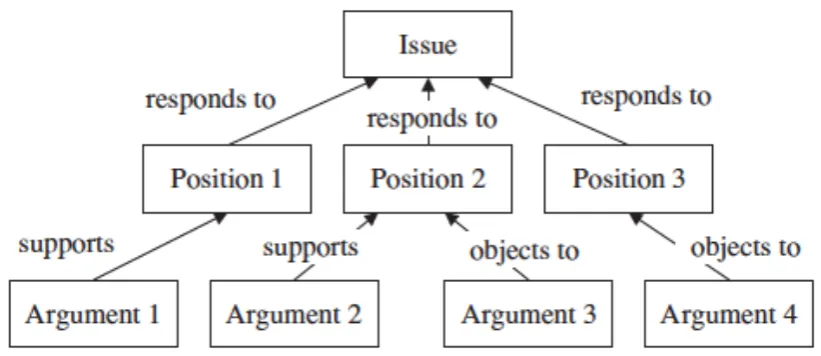
argumentation-based model used for capturing the design rationale (Kunz & Rittel, 1970). This model, argumentation-based
on
Issues, Positions
and
Arguments,
can be used to come to a solution in a design process
.
Issues
are the design questions that need to be discussed or deliberated in the design process.
Positions
are ways or options to resolve the problems, thus alternatives.
Arguments
are
statements that support or object the positions (Zhang, Luo, Li, & Buis, 2013).
Argumentation-based design rationales lay out the structure of arguments, this is done
in a graphical format, see Figure 1. Nodes represent components and links represent
relationships between these components. For example, an argument supports or objects a
position.
This form of the design rationale helps to maintain consistency in decision making, keep track
of decision, and communicate the reasoning process (Regli, Hu, Atwood, & Sun, 2000). It is
found that highly structured design rationales support in easier retrieval of this information
(Poorkiany et al., 2016).
4. Research question
[image:11.595.89.500.268.446.2]The process of decision making is complex, and it is hard to learn this from theory only. It is
needed for the learner to understand the process, the structure and the argumentation. A game
could be used to simulate the conditions of a group decision-making process, this will help to
teach a complex skill within its context. Structuring the process will make it more clear and
transparent. Therefore, it gets easier to understand what is going on. This is valuable for the
decision-making, and teach them how to behave in a process of group decision-making. By
using a serious game, the learning will be more fun and cost less effort.
The purpose of this research is to develop and test a serious game, that will assist in
the learning of group decision making. It will be examined whether a serious game is a
suitable learning method for this process. This will contribute to the answering of the research
question. That is
, how can a game contribute to training of collaborative decision-making?
This will focus on the structure in a decision-making process, using an argumentation-model.
The results can possibly give more information on processes related to training of
collaborative decision-making in this specific context.
A board game will be developed, mostly based on theory from the IBIS
argumentation-model. This game should give a framework for a structured discussion and
help the users to have a rational process based on argumentation, to come to a decision. The
game will be tested to see how the learners interact with it and their experience will be
evaluated. A control group will do the same task without the game. In the analysis, attention
will we paid to the influence of the game in comparison to the control group. The focus will
be on the structure during the process and the equality of the input of the different actors. It
will be examined if the game can assist in having a better decision-making process that will
generate more ideas and, in the end, bring a better solution to the problem.
5. Game development
For the development of the serious game, a brainstorm session was planned to think out the
rules and materials. The game was initially based on the idea that a decision-making process
usually goes in multiple rounds using a system of rules (Grünig & Kühn, 2005). It starts with
the problem discovery, then options are developed and evaluated, then consequences of these
options are specified, and last, the decision is made. This was first put into five rounds:
problem discovery, brainstorm, arguing of positions, evaluating positions and giving
arguments, and the final decision. These rounds combined with the structure of the IBIS
argumentation-model (Kunz & Rittel, 1970) lead to a framework of a structured decision
process. The components of the argumentation-model, issues, positions and arguments, can be
played in the right time and placed in this framework.
constraints are needed. Furthermore, the process of creating ideas is quite structured, a
systematic approach in the game can help to facilitate and guide this process (Kultima et al.,
2008). Moreover, a well-structured design rationale helps to clarify the whole structure of the
reasoning, which will support in a decision making process (Lee, 1997). Likewise, the
argumentation will be tracked in the game to make to process more transparent and
comprehensible.
The collaboration during the decision-making process should have an important role in
the game giving every player the opportunity to have an equal amount of input. Also, the
variety of opinions of the different actors should be integrated in the game. Therefore, players
were giving turns during the game. During someone’s turn, this player can add their own
thoughts to the playing field. Giving each player space to have an individual input.
Later on, some changes were made to the original rounds. The first two phases were
combined in the game resulting into four rounds:
1) Problem discovery + brainstorm:
Defining the problem and start thinking of alternatives.
In this round, players should use their creativity and imagination. No judgements on the ideas
should be given
.
The goal is to generate as many ideas as possible.
2) Argumentation:
Give arguments to support or object positions. For every argument
knowledge or evidence should be provided.
3) Evaluation:
Evaluate the different possibilities and discuss thoughts with the group
.
4) Decision:
Make a final decision that everyone agrees with.
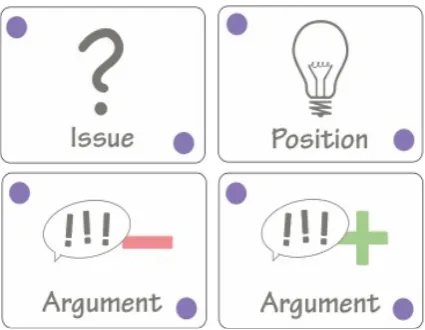
[image:13.595.320.533.530.695.2]The concepts of the argumentation-model were
translated onto cards, see Figure 2. Each concept
was given a different symbol to make it directly
clear what it meant, as well to increase the
likability of the game. On the front of the cards
the symbol and card name is clearly visible. On
the backside both are still present, but there is
room to write some keywords on the concept you
play.
Next, other cards were added, see Figure 3; A Pass-card,
when players are out of ideas and do
not want to use their turn. And two evaluation-cards: one Good and one Excellent, to grade
the positions played during the game. This helps the player to give an individual grade on the
options before discussing them.
Figure 4. Game Board.
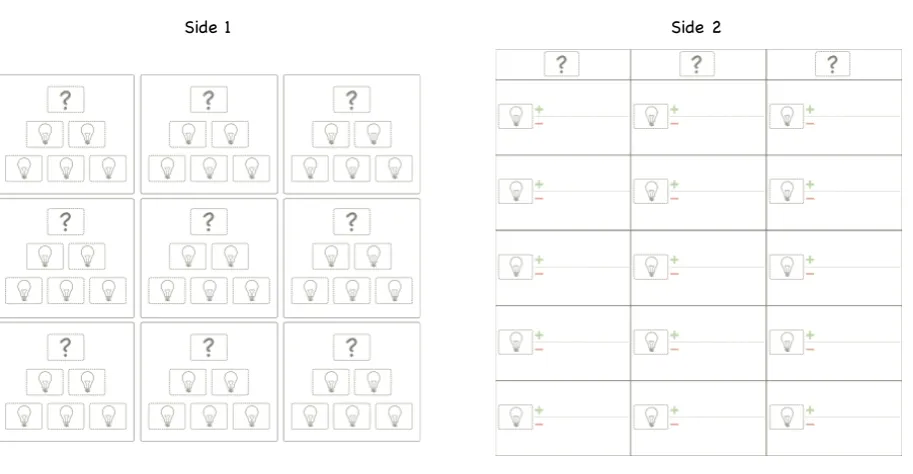
[image:14.595.73.530.312.549.2]The cards can be placed on the game board during the game. The board has two sides, see
Figure 4. Side one is used during the
Problem Discovery and Brainstorm
. On this board are
nine blocks to place Issue-cards on. For every issue, five Positions-cards can be placed
underneath it. When the groups have evaluated the most important issues from this side of the
board and continue to the next round, these issues can be placed on side two of the board. On
side two a maximum of three issues can be placed, together with the positions from the first
rounds. Arguments for and against can be placed with the positions.
Figure 3. Excellent, Good and Pass Cards.
Excellent
2
Good
Excellent
Excellent
Excellent
2
Good
2
Good
2
Good
Excellent
2
Good
Excellent
Excellent
Excellent
2
Good
2
Good
2
Good
Excellent
2
Good
Excellent
Excellent
Excellent
2
Good
2
Good
2
Good
Excellent
2
Good
Excellent
Excellent
Excellent
2
Good
2
Good
2
Good
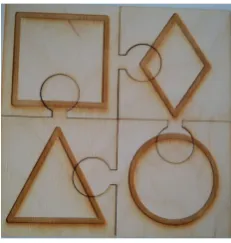
[image:14.595.312.526.322.542.2]In the final round, the decision is made. Each group member has a
piece of a puzzle with one of the symbols. When the group has
decided on the final decision and every group member agrees, they
can play their puzzle piece. The game is over when they all played
their piece and the puzzle is complete, see Figure 5.
To conclude, a game was designed taking into account different
important aspects of the decisions-making process. Further, it was
meant to create a context that resembles a real situation to have the best learning experience.
And even more important to create a pleasant environment, where players have fun while they
learn.
6. Pilot study
A pilot study on the game was conducted with three persons. These participants received the
instructions and had to play the full game. The researcher was the group leader and answered
questions or gave hints during the game. Afterwards they had to fill in the questionnaires.
After they finished the task and the questionnaires, there was an open discussion on the game,
the instructions and the process. They were explicitly asked to give feedback and point out
points of improvements or things that were unclear. Also, the researcher did observe the
process to find any points that needed improvement.
The pilot gave a good preview on how the game would be experienced by the users. It
also resulted in some important points that were changed in the study. Overall, the
participants liked the game. They indicated that they thought the game would be helpful and
that it would help to get everyone involved in the discussion. The overview on the feedback
from the pilot can be found in Appendix 2.
[image:15.595.409.525.71.193.2]The most important change gathered from the pilot study was on the instructions. The
participants mentioned that they did not fully understand the rules of the game when they
started. They suggested to add a visual instruction and give an example beforehand. From
observations during the pilot study it became clear that in every round the main goals should
be stressed. E.g. in the first round repeat that issues and positions should be gathered without
making judgements yet. Therefore, it was decided to have a slideshow with the instructions.
This added a visual explanation to the instructions and this allowed to show an overview of
7. Methods
Participants
In this study 38 persons participated, 27 were female and 11 were male, they were aged
between 18 and 32,
M: 21.70, SD: 2.79.
All were students at the University of Twente. The
participants formed groups of four persons (two groups of only three) and were placed in one
of the two conditions. They all signed an informed consent. For 15 persons, participating in
this experiment was part of a course they followed. They only filled in a questionnaire
afterwards. The other 23 persons participated voluntarily, they filled in the questionnaires and
took part in an interview as well.
Apparatus
Decision-making game
For the experiment, a board game was developed. The game board (size 105x105 cm) had
two sides. The first side had nine blocks, each with a place for an issue card and five places
for a position card. The second side of the board had three columns, each consisted of one
place for an issue card. The board had 5 rows each with a place for a position card and
argument cards. The design of the board can be found under Game Development
The game used 6 different cards, divided in four different symbols each in a different
colour. Each person would get a set of cards in a different coloured symbol. Per person there
were 9 Issue cards, 30 Position cards, 30 Argument + cards, 30 Argument – cards. 3 Pass
cards, one Excellent-card and one Good-card.
In the control condition the group was given a A3 paper and pens, instead of the game.
Interview
The interview consisted of 6 questions that were semi-open, some of them had sub questions.
The topics that were covered in the interview were related to the experience of the participant
during the task, the structure, their thoughts on the final decision and their learning
experience. There was a different version of the interview for the control group, where the
focus of the questions was on the task or process instead of the game. The questions of the
interviews can be found in Appendix 3.
Questionnaire
GEQ-Core Module and the GEQ-Social Presence module were used. In the GEQ-GEQ-Core module
some questions were deleted that did not fit to this research. In the control condition, without
the game, the same questionnaires were used. In the GEQ-Core Module some questions were
changed to make them more suitable for a non-game context.
The third questionnaire was related to the research question. The questions were
focused on the understanding of the instructions, the process of the decision task, and the
apprehension of the content. In both conditions, the same questions were used, but the focus
was either on the game or the decision task. The questionnaires can be found in Appendix 4.
Design
In this research a between-groups design was used. The groups were placed in one of the two
conditions. They performed the decision task with or without the game. The participants were
placed in the groups by their availability on time slots.
Procedure
The experiment started with instructions. First, theory on the argumentation-model was given,
then the game was explained. Lastly, the case for the discussion was given, and there was
some time for questions. The groups that did take part during the course they followed had
chosen one of three topics, and prepared this beforehand. Because there was no time for
preparation for the other groups, a simpler case was used on bicycle parking. All cases are
explained in Appendix 1.
The game was played in four rounds. First a brainstorm, where issues and positions
were generated. Second the argumentation, arguments could be given to the positions and
new positions could be added. Third the evaluation, were the most important positions were
selected. Last the final decision was made, when all participants agreed. The game
instructions can be found in Appendix 1.
The groups in the No Game-condition received the same instructions and followed the
same rounds (brainstorm, argumentation, evaluation, decision) and used the
argumentation-model. However, they did not have the game materials and did not play by the rules. They
documented their discussion on a piece of paper.
8. Results
The results are divided in two separate parts. The first part will be on the data from the
questionnaires. Where the data from the Game Experience Questionnaire (GEQ) - Core
Module, the GEQ - Social Presence module and the task questionnaire will be presented. In
the second part, the qualitative data from the interviews will be discussed.
8.1 Questionnaires
8.1.1 GEQ – Core Module
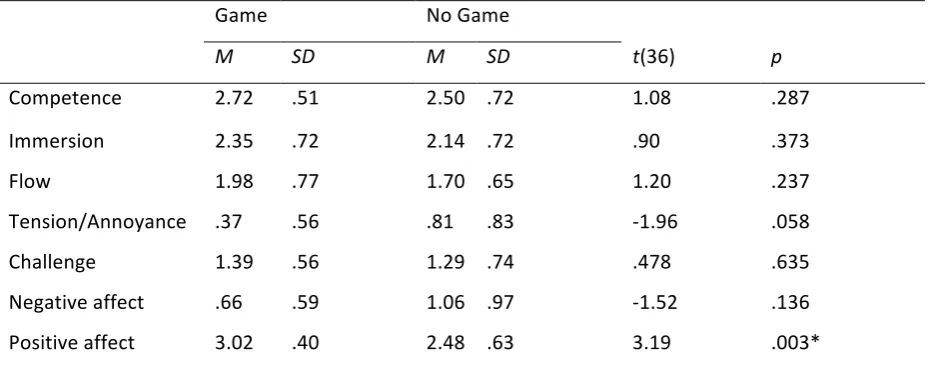
[image:18.595.67.536.444.627.2]The Game Experience questionnaire – Core Module measured 7 concepts:
competence,
sensory and imaginative immersion, flow, tension/annoyance, challenge, negative affect and
positive affect
. The component scores are computed as the average value of its items, ranging
from 0 to 4. With the component scores an independent samples
t
test is performed for the
Game and No Game condition. The mean score and SD per condition and the p value for each
component can be found in Table 1.
Table 1
Difference between Game and No Game on the GEQ - Core Module
Game
No Game
M
SD
M
SD
t
(36)
p
Competence
2.72
.51
2.50 .72
1.08
.287
Immersion
2.35
.72
2.14 .72
.90
.373
Flow
1.98
.77
1.70 .65
1.20
.237
Tension/Annoyance .37
.56
.81
.83
-1.96
.058
Challenge
1.39
.56
1.29 .74
.478
.635
Negative affect
.66
.59
1.06 .97
-1.52
.136
Positive affect
3.02
.40
2.48 .63
3.19
.003*
Note. Mean and standard deviations are given for each component on the Game Experience
Questionnaire-Core module for Game (n=20) and No Game (n=18). *p < .05.
Tension/Annoyance
a difference was found between Game (
M
= .37,
SD
=.56) and No Game
(
M
= .81,
SD
= .83) This was nearly significant, with
p
= 0.058. Thus, only for
Positive affect
a significant difference was found. The Game condition scored higher on this concept.
8.1.2 GEQ – Social Presence Module
The Game Experience Questionnaire - Social Presence module, measured three components:
[image:19.595.64.555.331.473.2]Psychological Involvement - Empathy, Psychological Involvement - Negative Feelings and
Behavioural Involvement.
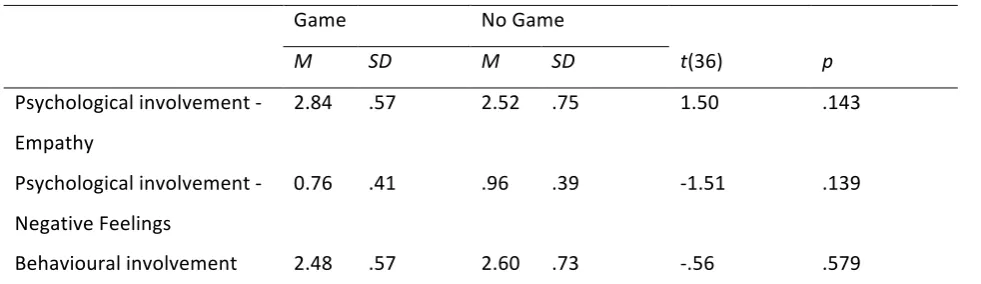
The mean scores on the two conditions can be found in table 2. The
differences between the two conditions are rather small for all of the concepts. No significant
differences were found.
Table 2
Difference between Game and No Game on the GEQ – Social Presence Module
Game
No Game
M
SD
M
SD
t
(36)
p
Psychological involvement -
Empathy
2.84
.57
2.52
.75
1.50
.143
Psychological involvement -
Negative Feelings
0.76
.41
.96
.39
-1.51
.139
Behavioural involvement
2.48
.57
2.60
.73
-.56
.579
Note. Mean and standard deviations are given for each component on the Game Experience
Questionnaire-Social Presence module for Game (n=20) and No Game (n=18).
8.1.3 Task questionnaire
overview of responses and the results from the t tests is shown next for the three question
categories.
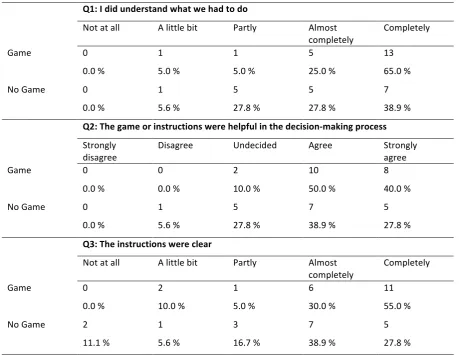
[image:20.595.64.524.352.707.2]The first category was on the
instructions
. The questions in this category were: “I did
understand the game/what we had to do”; “The instructions were clear”; “The instructions
were helpful”. For every question, the number of responses for each answers option can be
found in table 3. For Q1 the participants in the Game condition did more often answer that
they did (almost) completely understand what they had to do. At Q2, they indicated more
often that the instructions were helpful in doing the task. For Q3 it is more often said that the
instructions were clear. Overall a small difference can be found in this category. The persons
in the Game condition did understand the instructions better, and do mention the instructions
more often as helpful in the task.
Table 3
Responses on Questions in Category ‘Instructions’ for Game and No Game Condition
Q1: I did understand what we had to doNot at all A little bit Partly Almost
completely Completely
Game 0
0.0 % 1 5.0 % 1 5.0 % 5 25.0 % 13 65.0 %
No Game 0
0.0 % 1 5.6 % 5 27.8 % 5 27.8 % 7 38.9 %
Q2: The game or instructions were helpful in the decision-making process
Strongly disagree
Disagree Undecided Agree Strongly
agree
Game 0
0.0 % 0 0.0 % 2 10.0 % 10 50.0 % 8 40.0 %
No Game 0
0.0 % 1 5.6 % 5 27.8 % 7 38.9 % 5 27.8 %
Q3: The instructions were clear
Not at all A little bit Partly Almost
completely
Completely
Game 0
0.0 % 2 10.0 % 1 5.0 % 6 30.0 % 11 55.0 %
No Game 2
11.1 % 1 5.6 % 3 16.7 % 7 38.9 % 5 27.8 %
Note. Values are the number and percentages of responses on the questions in Category Instructions from
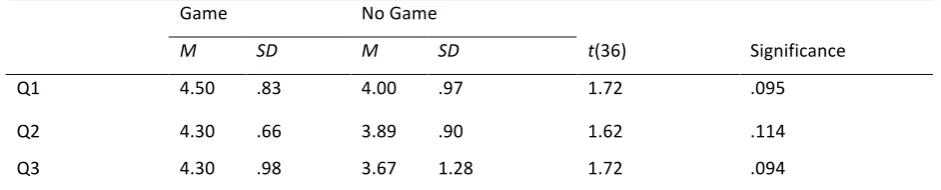
For the responses in the category instructions, the means were calculated per question and a t
test was performed. The results can be found in table 4. This table shows that for none of the
questions a significant difference was found between Game and No Game.
Table 4
Difference between Game and No Game on Instruction Questions
Game No Game
M SD M SD t(36) Significance
Q1 4.50 .83 4.00 .97 1.72 .095
Q2 4.30 .66 3.89 .90 1.62 .114
Q3 4.30 .98 3.67 1.28 1.72 .094
Note. Mean and standard deviations are given for question 1-3 (category Instructions) from the Task Questionnaire for Game (n=20) and No Game (n=18).
Table 5
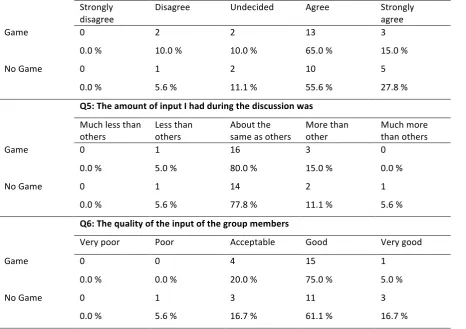
Responses on Questions in Category ‘Process’ for Game and No Game Condition
Q4: The communication in the group was structured
Strongly
disagree Disagree Undecided Agree Strongly agree
Game 0
0.0 % 2 10.0 % 2 10.0 % 13 65.0 % 3 15.0 %
No Game 0
0.0 % 1 5.6 % 2 11.1 % 10 55.6 % 5 27.8 %
Q5: The amount of input I had during the discussion was
Much less than
others Less than others About the same as others More than other Much more than others
Game 0
0.0 % 1 5.0 % 16 80.0 % 3 15.0 % 0 0.0 %
No Game 0
0.0 % 1 5.6 % 14 77.8 % 2 11.1 % 1 5.6 %
Q6: The quality of the input of the group members
Very poor Poor Acceptable Good Very good
Game 0
0.0 % 0 0.0 % 4 20.0 % 15 75.0 % 1 5.0 %
No Game 0
0.0 % 1 5.6 % 3 16.7 % 11 61.1 % 3 16.7 %
Note. Values are the number and percentages of responses on the questions in Category Process from the
Task Questionnaire for Game (n=20) and No Game (n=18).
For every question in the category Process, the mean of the responses was calculated and a t
test was performed. The results are shown in table 6. For none of the questions a significant
difference was found between the conditions.
Table 6
Difference between Game and No Game on Process Questions
Game No Game
M SD M SD t(36) Significance
Q4 3.85 .81 4.06 .80 -.78 .439
Q5 3.10 .45 3.17 .62 -.38 .704
Q6 3.85 .49 3.89 .76 -.19 .851
Note. Mean and standard deviations are given for responses on question 4-6 (category Process) from the Task
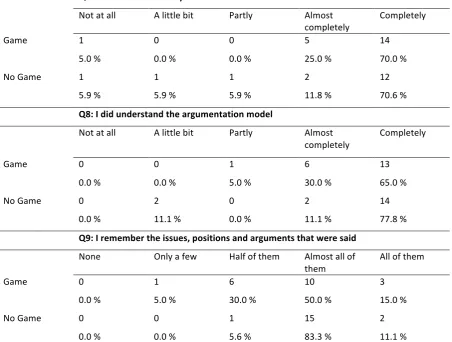
[image:22.595.68.530.633.729.2]The last category was on the
apprehension
of the subject, consisting of the questions:
“I did understand why the decision was made” “I did understand the argumentation model”
and “I remember the issues, positions and arguments that were played or said”. A slightly
larger number of the participants in the Game condition did indicate that they (almost)
completely understood why the final decision was made in Q7. Also, a small difference is
found in Q8, where a few more respondents indicated that they completely understood the
argumentation-model in the No Game condition. However, the number of responses is bigger
in the Game condition when combining the options Almost Completely and Completely. Q9
shows that more persons in the No Game conditions did report to have remembered (almost)
all of the issues, positions and arguments said during the task.
Table 7
Responses on Questions in Category ‘Apprehension’ for Game and No Game Condition
Q7: I did understand why the final decision was made
Not at all A little bit Partly Almost
completely Completely
Game 1
5.0 % 0 0.0 % 0 0.0 % 5 25.0 % 14 70.0 %
No Game 1
5.9 % 1 5.9 % 1 5.9 % 2 11.8 % 12 70.6 %
Q8: I did understand the argumentation model
Not at all A little bit Partly Almost
completely
Completely
Game 0
0.0 % 0 0.0 % 1 5.0 % 6 30.0 % 13 65.0 %
No Game 0
0.0 % 2 11.1 % 0 0.0 % 2 11.1 % 14 77.8 %
Q9: I remember the issues, positions and arguments that were said
None Only a few Half of them Almost all of
them
All of them
Game 0
0.0 % 1 5.0 % 6 30.0 % 10 50.0 % 3 15.0 %
No Game 0
0.0 % 0 0.0 % 1 5.6 % 15 83.3 % 2 11.1 %
In the category
Apprehension
, again the means were calculated for every question and a t test
was performed. The results are shown in table 8. For none of the questions in the
Apprehension category a significant difference was found
Table 8
Difference between Game and No Game on Apprehension Questions
Game No Game
M SD M SD (df) t p
Q7 4.55 .95 4.35 1.22 (35)a .55 .584
Q8 4.60 .60 4.56 .98 (36) .17 .866
Q9 3.75 .79 4.06 .42 (29.48)b -1.52 .140
Note. Mean and standard deviations are given for responses on question 7-9 (category Apprehension) from the
Task Questionnaire for Game (n=20) and No Game (n=18).
a Missing value
b Equal variances not assumed.