The implementation of a clear change management plan assists
employees in remaining committed to the organisation
A Research Report presented to the
Graduate School of Business Leadership University of South Africa
In partial fulfilment of the requirements for the
MASTERS DEGREE IN BUSINESS ADMINISTRATION
By
TARYN HAYNES-SMART
Declaration of own work
I, Taryn Haynes-Smart, declare that this Research Report is my own work except as indicated in the references and acknowledgements. It is submitted in partial fulfilment of the requirements for the Masters Degree in Business Administration to the Graduate School of Business Leadership (University of South Africa). It has not been submitted before for any other degree at this or any other university. This report was prepared under the guidance of Doctor Rene Erasmus at the Graduate School of Business Leadership (University of South Africa).
Taryn Haynes-Smart 3 May 2010
Acknowledgements
This work is dedicated to my husband, Edward for his constant support and encouragement during my studies. Thank you for believing in me.
I would like to acknowledge the support and assistance of the following entities and individuals:
• The companies and respondents that opened their doors for me to conduct
the research interviews and survey. Without them this report could not have been completed. The insights gained not only provided valuable information for the completion of this study but have also left an indelible mark on my perspective of change management.
• My family and friends who have encouraged and supported me in my studies. • Doctor Rene Erasmus for her guidance and direction.
Executive Summary
The concept of change is not unfamiliar to organisations, however, the implementation of change within organisations would appear to remain challenging to most organisations; especially as experiences of change can differ amongst stakeholders. McNulty (2007: 7) defines change management as “…the purposeful and proactive discipline associated with anticipating and facilitating people’s response to change, and reducing the resistance which hijacks change initiatives.” A clearer understanding of what the factors are that influence these perceptions can be expected to help improve the success rate of change.
This study looks at five cases of organisational change and considers how the respondents have perceived the implementation of change within their organisations. As the research sought to investigate people’s perceptions and experience of change, a qualitative study was conducted. Data was collected via semi-structured interviews, a confidential questionnaire and through a review of organisational documentation where available.
The research aimed to investigate whether the implementation of a clear change management plan could be seen to assist employees in remaining committed to the organisation. The research was broken down into the following three objectives:
- To determine how the management of change in organisations impacted on individuals’ perceptions of change,
- To investigate the problems experienced during the implementation of recent changes, and
- To determine what support employees required during the change process.
While time and access constraints were a concern, especially at the time of data collection, adjustments to the sample population were made to accommodate these constraints. Due to the nature of the investigation, confidentiality was a critical consideration, especially for individuals that were not necessarily in agreement with the reasons for or methods used to implement change. It was felt that the interview and questionnaire respondents from the five organisations were comfortable to
The results showed that where organisations did not adopt a specific change management methodology, there was a greater incidence of problems arising within the workforce and change was more likely to be experienced negatively. Negativity could be seen to be fuelled by how people perceived the content and context of change which in turn impacted on the way they responded to the changes. The overall perceptions ranged from negative to positive and a link could be seen to emerge between this perception and the approach to change adopted. Where change was not well managed, there were a number of management and communication problems cited along with high levels of uncertainty and insecurity and worrying levels of employee turnover. Regardless of how change was managed, the results showed that change increases the workload of employees, which can lead to stress-related problems. Many of these obstacles, however, can be overcome with proper planning, thorough preparation and the provision of support. Respondents viewed strong, consistent, engaged and communicative leadership as crucial to their support.
The disruption to, and insecurity experienced within the workforce, as a result of change should not be underestimated, even if the change is viewed positively. Implementing change without a clear plan risks overlooking key workforce concerns and, is in effect, setting up the change initiative for resistance, or failure. Change, at whatever level, affects the terms of the relationship between the organisation and its workforce. If not well handled, this relationship deteriorates resulting in behaviours consistent with low levels of commitment. The provision of support can be seen as a means of renegotiating these terms, so that individuals are able to make sense of the changes and continue to feel a connection to the organisation.
The report concludes with recommendations for improving the way change is managed. Critically change management should not be tackled by managers that are not fully equipped to deal with the uncertainties and insecurities that tend to result. Organisations undergoing changes to their cultures, values and strategic direction would be advised to carefully consider the degree of difference between the existing and proposed culture, values or strategy, and thereafter embark on a comprehensive communication drive, to establish a shared understanding, before implementing any changes.
Contents
Executive Summary ... 1
List of Figures... 5
List of Tables. ... 5
Chapter 1: Introduction ... 6
1.1. Background to and motivation for the study... 6
1.2. Problem Review ... 8
1.3. Problem Statement ... 10
1.4. Research Objectives ... 11
1.4.1. Achievability of Objectives ... 11
1.5. Delineation of the study ... 12
1.6. Importance of the study ... 12
1.7. Summary ... 13
Chapter 2: Theoretical Considerations ... 14
2.1. Approaches to Change Management ... 14
2.1.1. Different Perspectives of Change ... 14
2.1.2. The Preparation of Change ... 16
2.2. Implementing Change ... 18
2.3. Supporting Employees ... 19
2.4. Summary ... 22
Chapter 3: Literature Review ... 23
3.1. Employee Perceptions and Experiences of Change ... 23
3.2. Challenges in the Implementation of Change ... 27
3.3. Supporting Employees in order to Build Commitment to Change ... 30
3.4. Summary ... 32
Chapter 4: Research Design ... 33
4.1. Introduction ... 33
4.2. Research Approach and Method ... 33
4.3. Data Collecting Methods ... 34
4.4. Sampling ... 36
4.5. Bias ... 37
4.6. Data Analysis Techniques ... 38
4.7. Ethical Issues ... 39
4.8. Limitations of the Study ... 40
Chapter 5: Results and Discussion ... 42
5.1. Introduction ... 42
5.2. Descriptive Results ... 42
5.3. Findings Regarding Perceptions of Change Management Approach ... 44
5.4. Findings Regarding Implementation Problems Experienced ... 47
5.5. Findings Regarding Support Needs of Employees during the Change Process .... 50
5.6. Discussion of Results ... 52
5.7. Summary ... 55
Chapter 6: Conclusions and Recommendations ... 56
6.1. Conclusions ... 56
6.2. Recommendations ... 59
References………61
Appendices..……….64
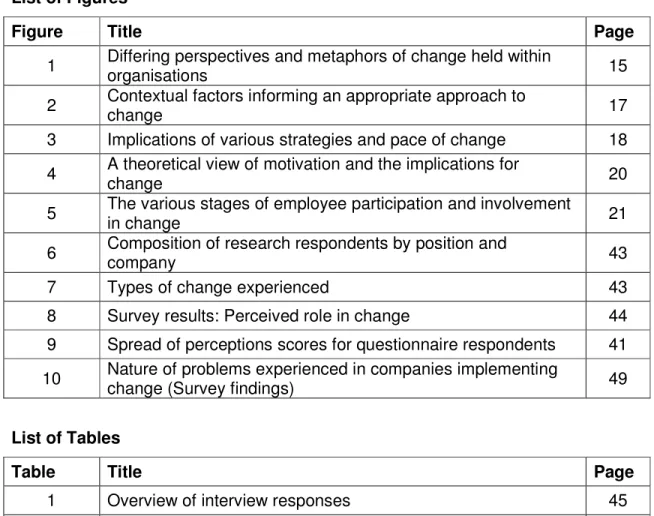
List of Figures
Figure Title Page
1 Differing perspectives and metaphors of change held within
organisations 15
2 Contextual factors informing an appropriate approach to
change 17
3 Implications of various strategies and pace of change 18
4 A theoretical view of motivation and the implications for
change 20
5 The various stages of employee participation and involvement
in change 21
6 Composition of research respondents by position and
company 43
7 Types of change experienced 43
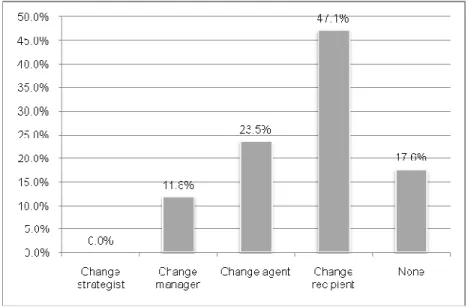
8 Survey results: Perceived role in change 44
9 Spread of perceptions scores for questionnaire respondents 41
10 Nature of problems experienced in companies implementing
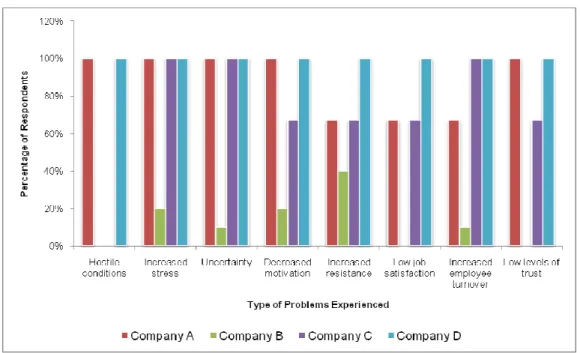
change (Survey findings) 49
List of Tables
Table Title Page
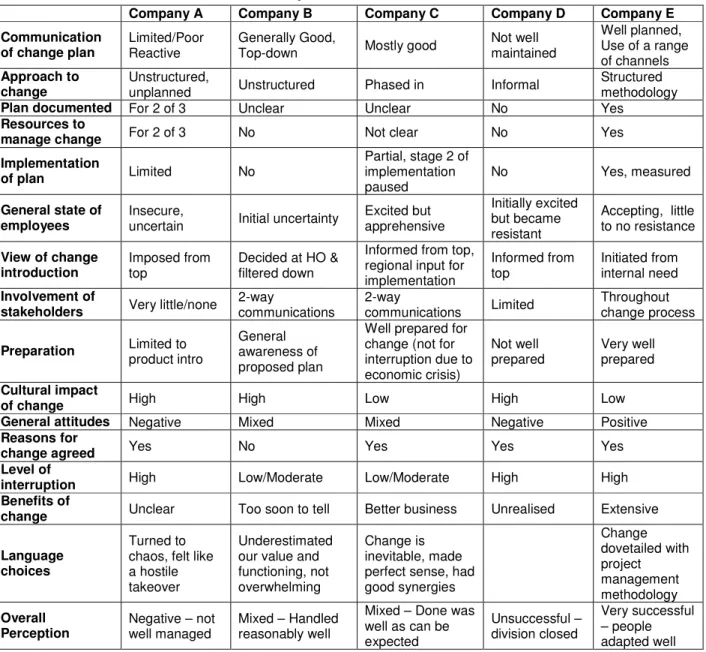
1 Overview of interview responses 45
2 Organisational problems experienced in the implementation of
change (Interview findings) 48
3 Importance of support mechanisms for employees 50
Chapter 1: Introduction
This research paper aimed to better understand how employees perceive organisational change and its impact on their commitment to the organisation by investigating the implementation of change within five South African organisations. Each of the organisations represented have undergone some form of major change in the last three years. Mabey (2006a: 77) noted that “…the destiny of an organisation is very much dependent on how well it attunes to and successfully confronts pressures to change.” As such, organisations faced with the challenge of making difficult decisions to survive in the short term whilst building organisations that are sustainable in the long term and fit and friendly for human life, must also decide how best to prepare for and implement the necessary changes (Nel and Beudeker, 2009). This study looks at how the implementation of a clear change plan can help to minimise the people issues arising as a consequence of organisational change.
1.1. Background to and motivation for the study
Pressure to change stems from a variety of internal and external sources and as a result, the business environment has become more dynamic and complex (Boojihawon and Segal-Horn, 2006). This dynamism and complexity can be seen in the many financial, social, political, resource-based and environmental crises which dominate not only news headlines but also organisational and institutional agendas for change.
External changes within sector landscapes are often accompanied by amendments to existing legislation and the promulgation of new legislation which impacts significantly on organisations. In embarking on this study, the preliminary research was done within a single organisation facing the challenge of change management in its holding structure and across a number of its subsidiaries. This organisation and its subsidiaries embarked on a number of major changes to processes, programmes, systems, structures and leadership. The decisions made impacted on the performance of the various divisions within the group; some divisions were able to take advantage of new opportunities in niche areas while others floundered seeing up to a thirty percent decline in customers and revenue.
A number of the business units could arguably have been said to have drifted out of alignment with their environments and the group executive committee and shareholders recognised the need for urgent action. The continued decline in performance, even after the initial series of continuous incremental changes, which included several changes to the product offering, organisational structure and leadership, demanded an even more stringent approach. In July 2007, the two largest independent operating units of the group were merged into a single operation in a further attempt to turn it around.
The merger resulted in an extensive restructuring exercise across all levels leading to retrenchments, mostly at a head office level where duplication existed. There was little formal communication to keep staff informed of the progress, and the decisions being made, in order to prepare them for what to expect. Shortly after the merger, rumours of a buy-out appeared in the press in September 2007, fuelling concerns both within the organisation and in the marketplace. At the time, these rumours were dismissed, however, in October 2007, a formal announcement in the press confirmed that an offer to purchase the group as a going concern had been accepted. Operations were handed over to the new ownership structure in January 2008.
Once under new ownership, change continued within the organisation on a leadership and operational level. Eighty percent of the original executive team left the organisation and were replaced by new leaders. Operationally, an intensive cost-cutting and organisational turnaround strategy was adopted which has continued over the last two years. This strategy focused on streamlining operations and processes within the business and on implementing centralised control and decision-making structures. Within the first year, this strategy resulted in significant financial improvements such as the reduction of one division’s deficit by close to ninety percent. While this strategy can be argued to have ensured the short term survival of the group, there was no evidence of any medium in place to address the sense of anxiety which has been growing amongst employees since the changes were initially implemented. The workforce was not fully prepared for the change and
1.2. Problem Review The approach to change
Prior to the change in ownership, pressure to show a return on the shareholder’s capital investment into the group’s operations triggered various system changes and an initial wave of retrenchments and restructuring, including the appointment of a new Chief Executive Officer from within the larger holding structure. This had been a tumultuous time for the workforce who had to adapt to a number of leadership changes, new products and new processes. When the September 2007 rumours of the group being up for sale were confirmed in the press a month later, without any formal communication to the staff, people felt unprepared for what to expect and anxiety levels were high.
Once sold off, the need for the organisation to be financially self-sustainable to ensure its continued survival, became even more critical and once again raised anxiety levels within the workforce who feared job losses would result. The change in ownership, and the exit of eighty percent of the senior management team, left a void in the relationship between management and the organisation’s workforce. The management of change was complicated by the lack of constancy at the top levels in the company as people essentially felt ambushed by the changes.
Change management consultants were approached to assist the organisation to navigate the change however their expense could not be justified within the context of a cost-cutting turnaround strategy. Internal resource constraints prevented a formal change management process from being implemented internally. As a result, the workforce was largely unprepared for the changes that occurred.
Many of the ensuing changes were implemented from the top of the organisation with little involvement of others. Company communications and important announcements were conveyed predominantly via mass electronic mail as opposed to the face-to-face formal communication sessions the workforce were used to previously. As such, employees were often only exposed to the outcomes of the cost-cutting strategy and did not necessarily see the big picture benefits of the changes.
Staff losses as a result of change
The loss of the senior leaders created a great deal of instability within the workforce. Employees were uncertain of what to expect, or where to look for assurance, as new relationships with the organisation’s leadership had not yet been established. The new leaders’ management style was consistent with the new corporate culture of performance above all else and as a result an ‘us and them’ scenario was created throughout the organisation.
Since the initial retrenchment exercise in 2007, approximately twenty-four percent of the workforce in one division had exited the organisation; of this, thirty-four percent were retrenched, eight percent were dismissed and fifty-eight percent resigned. However, these figures are likely to be somewhat understated as it does not factor in the appointment of new staff to fill vacancies in the organisation. Staff turnover has continued to be an issue with the attrition rate being as high as eighty percent in some divisions. Initially, it was hoped that 2009 would act as a year of stability from which the organisation could grow, however, continued movements in senior and other key positions have instead heightened the perceived instability.
Declining levels of employee commitment
In spite of the uncertainty surrounding the changes, it was felt that commitment levels prior to June 2009 remained relatively high. A string of at least forty resignations, many by key individuals in the last four months of 2009, suggested these levels are declining. The combination of the economic recession and the third consecutive year without a wage increase has compounded work concerns which previously had been set aside. Further evidence to suggest that employee commitment levels have declined was seen in the reluctance of staff to get involved in the various staff committees that were previously very active in the organisation dealing with a variety of issues, including diversity, development, the promotion of organisational values and staff wellness. Some of these committees have all but been dissolved due to vacancies arising from staff losses, which meant that new members needed to be elected to the committee. However, current employees have declined to participate. It is believed that this is in part due to the feeling that
Summary
Change, however, is not unique to this environment. Every organisation is confronted with change at some point in its lifecycle. The way each organisation views and approaches changes can be expected to be influenced by the external and internal pressures and reasons for change. The incidence of mergers, acquisitions and restructuring has tended to dominate the change arena in recent years, and economically the recent global economic crisis has had a significant influence on many of these types of change initiatives. Other popular change initiatives seen to impact on an organisation’s workforce include business process re-engineering and major system changes which can also be seen to go hand in hand with mergers and acquisitions.
1.3. Problem Statement
A snapshot of the organisations considered in this research study shows that several major changes have taken place within some of these organisation within a relatively short space of time. As such, there is always a very real risk of change fatigue stalling or derailing change strategies. The exact impact of the various changes on employees, remaining with the organisation, is often not measured. The behaviour of employees in the introductory case, suggests levels of trust and commitment have declined over time. While models of change management propose a method for implementing change more smoothly, they still need to be contextualised according to the specific circumstances and be appropriately applied and supported within the organisation, for change to be successful.
Research Statement
The implementation of a clear change management plan assists employees in remaining committed to the organisation.
1.4. Research Objectives
The aim of the study was to assess the approach adopted for implementing change in a number of organisations and the impact this had on its employees.
The specific objectives of the study were:
1) To determine how the management of change in organisations impacted on individuals’ perceptions of change.
2) To investigate the problems experienced during the implementation of recent changes.
3) To determine what support employees required during the change process.
1.4.1. Achievability of Objectives
As individuals can interpret events and changes differently, data relating to an employee’s perception of change provides essential insight into how the implementation of change was experienced. Collecting this information by survey enables these existing perceptions to be quantified while interviews and the review of company documentation provide additional insights into a company’s change management approach.
The problems experienced are likely to shape perceptions of change and just as change can be experienced differently, so too can the impact or consequences of change differ. Survey results again provide a means of quantifying the actual problems encountered in the organisation while interviews with individuals representing the five organisations drill down further into the nature thereof.
There can be a gap between the support needs employees identify as important to help them cope with and accept change and mechanisms of support provided by the organisations. The questionnaire provided an opportunity for individuals to reflect on the types of support they would prefer to receive whether or not these were offered within the organisation. The interviews in turn provided an opportunity to reflect on the types of support implemented in practice.
1.5. Delineation of the study
This study is part of the discipline of Strategic Management, in particular the sub-discipline of change management. The study considered employee perspectives and support needs as well as the issues which arose during the implementation of change, in order to gain a better understanding of the experience of change and how the implementation of change can be improved to ensure the success of future changes.
The research itself took place within several organisations that had been through or were currently experiencing change. It was not intended as a study of each organisation in its entirety but was specifically focused on the change experiences which included mergers, acquisitions and organisational process and system changes. The approach and impact of change within these organisations was reviewed. Findings and recommendations arising out of this study are based on trends identified within these organisations.
1.6. Importance of the study
This study provided the opportunity to review and reflect on the implementation of change both with and without a clear change management plan. It is hoped that this study of change management will benefit the participating organisations by providing an assessment of the impact of the various approaches to date and would hopefully provide an opportunity to improve their view of change management for future change initiatives. By identifying problems experienced, it is expected to help build the business case for other organisations facing major changes. It is hoped that this study of change implementation will make a contribution to the knowledge of change management best practice. Without this study, organisations risk underestimating the impact of change on employees and as such may not provide suitable channels to address the resulting issues, thereby creating a toxic work environment, or worse case scenario, forcing an organisation to shut down, affecting not only its staff but also it’s customer base.
1.7. Summary
Major organisational change necessitated by factors in the external and internal environment, while important for the survival of an organisation, can also impact on the stability thereof. In particular, the workforce can experience a sense of anxiety as a consequence of the changes implemented. A cost-cutting turnaround strategy, while effective in the short term, can make it difficult for leaders to gain the commitment of the workforce, especially where downsizing and restructuring has been used to reduce costs. Understanding the impact and support needs resulting from change, provides an opportunity for leaders to address issues of anxiety, distrust and dissatisfaction, in order to strengthen the employment relationship. The following chapter discusses the management theories forming the foundational framework for this study.
Chapter 2: Theoretical Considerations
Given the instability present within both the external and internal environment of organisations, radical change is often necessary for continued survival. Organisational change, even where its necessity is obvious, is still expected to place a significant amount of stress on the workforce. While mergers, acquisitions and restructuring can be seen as popular means of organisational change, they can be associated with a variety of negative consequences which arise during implementation, such as that of a ‘survivor syndrome’ whereby remaining employees experience reduced motivation and commitment (Sturges, 2006). This chapter reflects on existing theories and models, especially as they relate to the issues of change management, implementation and employee motivation and commitment.
2.1. Approaches to Change Management
2.1.1. Different Perspectives of Change
Mabey (2006a:85) describes organisations as “…complex, surprising, deceptive and ambiguous…” making them difficult to understand, manage and change. Different groups within an organisation are likely to see specific events and changes differently and these different viewpoints will impact on the way change is then handled and the meaning attributed to it. Figure 1 maps out the four perspectives making up the Four Frame Model and associated metaphors adapted from the work of Bolman and Deal (1997) and Morgan (1986) in Mabey (2006a). The different way in which individuals perceive and make sense of change can be seen to impact on their experience of the change process. Not everyone will perceive change in the same way. The Four Frame Model and associated metaphors provide a snapshot of the types of multiple perspectives that can exist within any one environment, with each reflecting part of the reality. In some cases these realities may be at opposite ends of the scale.
Adapted from: Bolman and Deal (1997) and Morgan (1986) in Mabey (2006a: 86) Figure 1: Differing perspectives and metaphors of change held within
organisations
Within the organisations considered for this study, elements of the structural, political and symbolic frames can be seen to shape the approaches to and experiences of change significantly. The machine metaphor and structural frame are most likely to encapsulate the approach adopted from a management perspective, where change is implemented in response to clear business objectives. Change, as seen in the introductory case, was managed structurally and rationally through the focus on cost-cutting, downsizing and the introduction of more centralised control processes. The implementation of this kind of structural change, however, was met with an emotional rather than a rational response by employees who responded with apprehension.
In making changes to an organisation’s top order and way of doing things, the organisation essentially became a battleground where employees perceived the leadership as a rival force against which they must fight to have their interests upheld (Mabey, 2006a). Lack of sufficient formal communications in some instances may fail to provide a context for certain events, and the resulting myths and stories that develop, circulate through informal communication networks, thereby increasing resistance to change. Communications need to take account of the various perspectives of the different stakeholders if it is to be effective. Communications focused on providing rational explanations are unlikely to have a significant impact where ambiguity and uncertainty are prevalent (Mabey, 2006a).
2.1.2. The Preparation of Change
Differences in organisational contexts make it difficult to prescribe one best way for managing change. Mabey (2006b:110) notes that the management of change entails a “…series of informed choices…” whereby the most appropriate approach is selected and thereafter the tactics to be employed are identified. These areas are illustrated in Figure 2. The eight contextual factors depicted in the outer circle influence the implementation of organisational change and are considered especially important in the early diagnostic phases of change (Mabey, 2006b). Decisions regarding scope, time, power and readiness are considered contextual in nature while those relating to capacity, capability, uniformity and preservation are seen to rely more on the change leader’s judgment. However, as Mabey (2006b) points out, the outcome of transformational change is not necessarily predictable especially where it entails change at several levels.
Adapted from: Balogun et al (1998) in Mabey (2006b: 110) Figure 2: Contextual factors informing an appropriate approach to change Where several change initiatives are adopted in close succession, high levels of anxiety are often present and communication is often perceived as insufficient. This builds a case to suggest the context of change was not fully considered when initially planning how the organisation should change. Scope wise, major change impacts on the whole organisation, both contextually and culturally. Declining performance, drastic changes in the external environment and the need to satisfy shareholders normally calls for urgent and decisive action to turnaround the situation, thereby impacting on the timing of change. Where change is not contained, it can progress quickly from transitional change to transformational change within a few months increasing resistance and anxiety in response to sudden changes that are not communicated well. An organisation that is not financially able to fund a change initiative or where it’s staff are not properly equipped with the skills, competencies and knowledge to manage the change, is almost certainly guaranteed to face myriad challenges in the implementation of change.
2.2. Implementing Change
Kotter and Schlesinger (1979) in Mabey (2006b) emphasised the importance of timing and speed in implementing change, which Mabey (2006b) went on to consider as part of the scope of a change initiative. As such, a variety of strategic options exist, making use of either a fast or slow pace or any measure in between. The strategies adapted from Thurley and Wiredenius (1973) in Mabey (2006b) are mapped against Mabey’s continuum of change, as illustrated in Figure 3.
Adapted from: Mabey (2006b: 116) Figure 3: Implications of Various Strategies and Pace of Change
The strategy adopted by the organisation reviewed during the preliminary research, can be seen to have favoured a fast, directive approach whereby change was imposed from the top with no significant deviation from the turnaround agenda of cost cutting and very little involvement of others or consideration of alternative views. The extent and number of changes implemented could conceivably be seen as overwhelming to the members of the organisation. Being uncertain of the plan and faced with conflicting cultures made it difficult for employees to identify with the change and the new values that invariably emerge within an organisation going through this type of change. The prolonged state of transition and uncertainty can be seen to have impacted on commitment levels and threatens to derail the progress of change, especially if the necessary resources are not invested to involve and negotiate with the staff to carry the change forward.
Without a clear plan to guide the implementation of change, the likelihood of an unsatisfactory outcome increases. Mabey (2006c) identified several unsatisfactory outcomes including the emergence of unanticipated negative consequences such as the decline in employee commitment and customer service levels which can eventually outweigh the benefits of the change.
2.3. Supporting Employees
An important part of managing change in organisations includes the management and motivation of human resources as decisions and actions taken during change greatly impact on the relationship existing between the organisation and its staff members. As motivated staff are in general considered to perform better and are seen to be more satisfied in their jobs, declining levels of motivation would present a significant concern for any organisation.
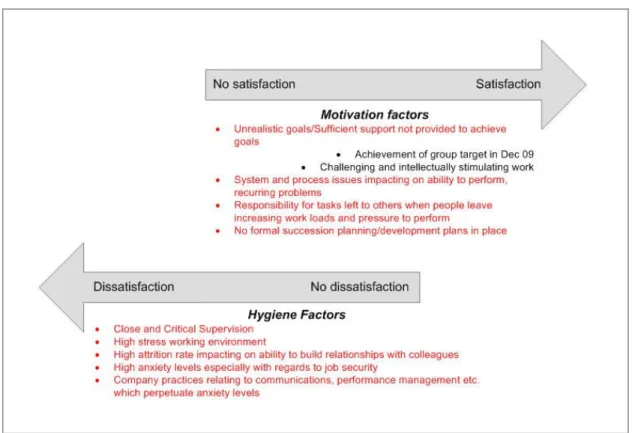
Motivation of the workforce is a complex issue comprising a number of interrelated factors which are seen to influence directly satisfaction levels to varying extents. Herzberg’s (1959) Two-Factor Theory illustrated in Figure 4 distinguishes between motivation and hygiene factors and their resulting impact on levels of employee satisfaction. Hygiene factors, in effect, represent the minimum expectations of employees such as good working conditions, job security, fair remuneration and reasonable company policies. Many of the tools relied on by an organisation to navigate through the change can be equated with Herzberg’s view of motivation and in particular his hygiene factors (Cameron, 2007). While Herzberg proposed that introducing or improving the hygiene factors did not increase job satisfaction, neglect of or a perceived decline in these factors is guaranteed to increase dissatisfaction. The hygiene factors and motivators seen to manifest within the organisation initially reviewed have been highlighted in Figure 4 clearly raising a red flag to suggest the dissatisfiers have outweighed the satisfiers.
Adapted from: Cameron (2007: 133) Figure 4: A theoretical view of motivation and the implications for change
Effective communication and feedback is a critical element in employee support and change management. Practicing good communications skills can be seen to get acceptance for change more quickly and is more likely to be able to encourage support and understanding from the relevant stakeholders. The issue of employee involvement is closely linked to communication. Involvement has been suggested as an important driver of employee commitment boosting both morale and quality of effort (Storey, 2006). Storey’s (2006) staircase of employee involvement and empowerment suggests a series of steps in the involvement process, as illustrated in Figure 5.
Adapted from: Storey (2006:17) Figure 5: The various stages of employee participation and involvement in change
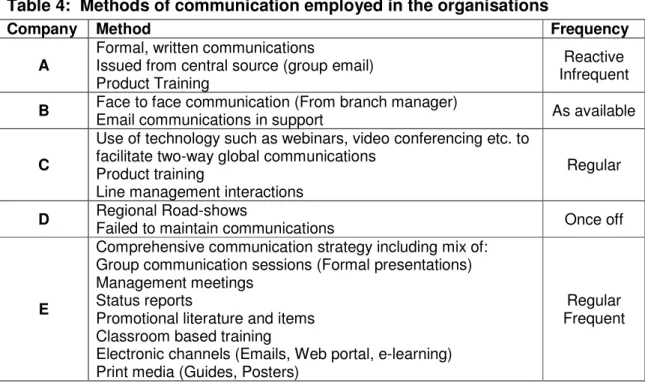
In considering the methods and frequency of communication employed in the organisation reviewed initially, it suggests the first step in the process is currently insufficient. Communication within the organisation is perceived as being one-directional and is frequently provided retrospectively so does not contribute to the preparation and involvement of employees. Any organisation wanting to move up this staircase would need first to ensure that the downward communication within the organisation is effective before focusing on more progressive forms of employee involvement. The illustration of the stage as successive steps may, however, belie the complexity of an empowerment and involvement exercise. Employees wishing to be consulted and included in the decision and change processes are likely to become frustrated quickly and disillusioned if they perceive little movement from the level of informing to consulting and further. As a result, they are likely to perceive limited communications as unsupportive and the uncertainty is likely to hinder their ability to cope with and adapt to change effectively. An involvement paradox could easily develop, explaining the reluctance of employees to volunteer their involvement in the various committees as discussed previously. Employees resist becoming more involved, even when given the opportunity, as they perceive the
2.4. Summary
A successful change implementation would appear to rest as much on how change is perceived by organisational stakeholders as the careful planning of how it is to be implemented. Different perspectives can make it difficult to establish a shared vision of the desired future state. Careful consideration of multiple factors is seen as essential to deciding on the most appropriate strategy to use when implementing change. Critically, most change models pay particular attention to employee resistance to change and the potential it holds for derailing the change process. Human resources management, motivation and employee involvement theories provide a good foundation from which to review the impact of change on the employment situation and to design an appropriate support system. The uncertainty attached to change requires a concerted effort to maintain and in some cases regain the commitment of the organisation’s employees to a changing organisational identity. Having considered some of the theory and models of change, the next chapter reflects on the findings of recent research relevant to the topic.
Chapter 3: Literature Review
An increase in the occurrence of organisational change has led to a significant amount of research in recent years into the challenges surrounding the planning, implementation and management of change. The existing research into change builds a persuasive argument around the importance of positive attitudes and commitment to change in ensuring change is successfully implemented.
3.1. Employee Perceptions and Experiences of Change
Previous research into the relationship that exists between employees and organisational change emphasise the differences with regards to the composition of the workforce as well as the variety of dispositional and personality characteristics. These differences contribute to the complexity of planning and implementing change. Individuals perceive and experience change differently and these perceptions have been found to have a significant impact on the success of change (Walker, Armenakis & Bernerth, 2007; Kovoor-Misra, 2009; Raukko, 2009; Jones, Watson, Hobman, Bordia, Gallois & Callan, 2008).
Thurlow and Mills (2009) considered the importance of language as setting the context for change rather than it being merely a tool to facilitate change. As the language of change is often based in a fear context, the motivation to change is often driven by fear impacting on the successful outcome of the intended change. Having conducted their study of how individuals make sense of change within the context of a merger, Thurlow and Mills (2009) found that the meaning of change is interpreted through individual lenses of past experience, previous exposure, social interactions and cues from the environment. They concluded that embracing organisational change is more likely to rest in the employee acceptance of language that reflects a desired organisational identify to support a commonly desired change agenda rather than the adoption of change practices.
In their research, Walker, Armenakis and Bernerth (2007) investigated the integrative influence of content, context, process and individual differences on organisational change efforts. While it was established that employees do not develop cynical feelings about change deliberately, cynicism is seen to develop in response to confusion about change, poor perceptions of leaders’ competence, organisational history of change and unknown consequences which threaten an individual’s psychological well-being. An employee’s tolerance for such ambiguity is therefore seen to influence their reaction to and experience of the change attempts.
Walker et al. (2007:769) concluded that “…change success hinges on management’s ability to consider all change factors (i.e. content, process, context, and individual differences) when planning change efforts.” An important finding was that even if individuals have high levels of cynicism, they are more likely to commit to the changes if they are properly prepared. Cynicism about change is often seen to result from a loss of faith in either the change agents or a history of unsuccessful change attempts; and as such a trial and error approach to implementing change is detrimental not only to an organisation’s employees but also to the outcome of change itself (Reichers et al., 1997 in Walker et al., 2007).
Qian and Daniels (2008:329) concluded that “…cynicism is a common reaction among employees during organizational change.” The results of their research indicate that change-specific cynicism has a significant impact on one’s intention to resist change and if not addressed resistance is often the next step for employees. Their research also confirmed the role communication plays in either fuelling or reducing cynicism, specifically the impact of the perceived quality of information as measured by timeliness, usefulness, appropriateness, adequacy and favourableness.
Jones, Watson, Hobman, Bordia, Gallois and Callan (2008) examined the influence of organisational levels on employees’ perceptions and reactions to a complex organisational change. Using a model developed by Oreg (2006), Jones et al. (2008) found that different organisational groups are likely to have different perceptions of change based on their experiences and as such these differing perceptions would need to be included in plans for implementing change.
Research into employees’ perceptions led Jones et al. (2008) to conclude that the majority of employees considered change to be difficult and expressed high levels of anxiety and an acute awareness of negative outcomes despite displaying positive attitudes towards change. In particular, “…all groups talked about the problematic nature of communication and participation during organizational change…’ (Jones et al., 2008:309). Individuals reported not been given sufficient notice and information regarding the changes in a sufficiently convenient way emphasising the importance of high quality, frequent communications during change.
Previous research into the impact of change situations on the perceptions of organisations and organisational identity, formed the foundation for further research by Kovoor-Misra (2009). Kovoor-Misra (2009) developed a threat/opportunity framework to predict the dominant perceptions likely to arise under either threat or opportunity conditions in order to recommend the best way to manage these perceptions to ensure successful transformational change. Through the research conducted, Kovoor-Misra (2009) further confirmed that different groups perceive a situation differently. Groups which perceived the potential for loss viewed the change as threatening, whereas groups that could see the potential for gain considered the changes to present an opportunity.
Referring to the example of a planned downsizing initiative, Kovoor-Misra (2009) noted that employees may either perceive the change as a threat fearing loss of jobs; or alternatively they may perceive it as an opportunity to make the strategic changes necessary to ensure the sustainability of the organisation. Perceived organisational identities enable individuals to identify with and attach to their organisations both cognitively and emotionally. By creating and communicating a positive perceived organisational identity image of attainable organisation success, individuals are more likely to perceive the change as worth the effort and therefore view the change process more favourably.
Raukko’s (2009) research provides valuable insight into the perceptions of key employees to organisational change post-acquisition. While prior research viewed the post-acquisition process predominantly from the acquirer’s perspective, Raukko focused on the experiences of the acquired company’s key employees post-acquisition (2009). Previous research by Buono and Bowditch (1989) considered in Raukko’s research considered the nature of an acquisition as a key determinant of how employees and managers will react to the changes brought about by the integration of organisations.
Raukko (2009:346) observed that as organisational changes had essentially occurred in waves, individuals’ perceptions of the changes could be expected to vary over time. In the beginning key individuals “…were very enthusiastic about the changes the acquisition would bring, and appreciated a slower approach…However, after a year from the deal the expectations of a stronger operational integration to the global business units grew…after two years, key employees felt the organizational changes took place at short intervals and were not well communicated or implemented in the acquired organisation.” Raukko’s findings suggest employees’ expectations need to be carefully managed throughout the change process in order to maintain commitment, as even a friendly acquisition can be perceived as traumatic and stressful if not communicated well or implemented well.
In the literature to date, the focus has been more on how an individual’s receptivity to the proposed changes impacts on the success of the change initiative and the way individuals react to the changes. The employee perceptions of the approach to the implementation of change itself have not been measured in the previous studies whereas it appears as a specific objective in this research.
3.2. Challenges in the Implementation of Change
While a variety of change management models have been developed to guide an organisation through the process of change, many studies show the failure rate of planned change initiatives can be as high as seventy percent (Judge & Douglas, 2009; Raukko, 2009). Reasons for failure range from a lack of understanding surrounding an organisation’s capacity for change (Judge & Douglas, 2009) to other human factors, such as employee resistance toward organisational change (Martin, Jones & Callan, 2006).
Previous research has “…highlighted the problematic nature of achieving effective communication, conflict and negative attitudes to change…” as well as planning challenges and uncertainty associated with change (Jones et al., 2008:309). Problems relating to the implementation of changes have been identified and reported on as a secondary finding in prior research focused on other elements of a change initiative. In reviewing the literature, certain problems can be seen to re-emerge from one study to the next. Many of these problems can be seen to be associated with resistance to change. While each change situation will be unique, general principles drawn from an investigation into the problems arising during change can lead to a set of principles to be applied to overcome or prevent these in future change initiatives.
Employees who struggle to adjust to change recorded feelings of threat, uncertainty, alienation and anxiety resulting in increased workplace stress and increased levels of absenteeism and turnover. Failure of many corporate change initiatives can be attributed to employee resistance which has impeded the process of change. Even though change may be implemented for positive reasons, the increased pressure, stress and uncertainty arising during change results in negative responses to change.
Beaudan (2006) notes that change occurs in three phases: a launch phase; a mid-course phase and finally, a completion phase. A change initiative requires effort, planning and support from senior management, in particular, during the initial launch phase to build a convincing case for the intended change. However, momentum needs to be maintained throughout the change process to ensure its ultimate success as “…a successful early drive is rarely sufficient to overcome internal resistance and people’s longing for the “old ways”…” (Beaudan, 2006: 4). Beaudan (2006) argues that every change experiences internal resistances or unforeseen factors which threaten to derail its progress. Without visible leadership, clear communication and focused energy to address the issues, overcome resistances, maintain momentum or re-energise those experiencing and implementing the elements of change, the likelihood of failure is high even if initially well planned and implemented.
Frahm and Brown (2007) found communication during the initial change sequence to be a critical signal of the likely success of a change implementation. Frahm and Brown (2007) found that the flow of information often stops at supervisor level, creating gaps in the information received by lower level staff members and impacting their ability to make sense of the changes around them. In their study, data was collected on individuals’ understanding of the type of change that was occurring, how they felt about it and how they believed communication of change was handled. While the majority of respondents reported feeling positive and accepting of change initially, the positive receptivity could be seen to decline. In general, there were relatively high levels of dissatisfaction with:
• how redundancies were implemented,
• the lack of involvement in the change process,
• uncertainty regarding what was going on and the direction of change, • the lack of sufficient formal communication channels, and
Emotions of frustration and change contempt run high if management is perceived to have failed to handle the change process effectively (Frahm & Brown, 2007). Where communication is not forthcoming, employees construct their own information. “In the absence of formal communication and information about changes, rumours and grapevine discussions are filling the gap…” which in turn leads to decreased receptivity to change and increased cynicism, contempt, uncertainty and frustration as the rumours spread quickly through informal social networks (Frahm & Brown, 2007:380).
Vakola and Nikolaou (2005) measured workplace stress, organisational commitment and attitudes towards organisational change and confirmed the expectation that occupational stressors and attitudes to change are negatively correlated. They found that “…almost all occupational stressors (apart from control and resources-communication) were related to negative attitudes to change” (2005:169). These researchers also found that “…stress created by bad work relationships, overload and unfair pay and benefits can cause negative attitudes towards organizational change and, therefore, inhibit change processes…more specifically lack of a socially supportive environment, as expressed by bad work relationships, was found to be the strongest predictor of negative attitudes towards change” (2005:169).
Not only does Vakola and Nikolaou’s (2005) conclusions build a strong argument for the importance of a supportive environment for successful change, they also highlight the workload issues frequently arising during change and especially where downsizing or restructuring has occurred as part of organisational change. Namely, an “…increase in workload is not only easily attributable to the change but it also makes change unattractive and problematic, leading to non-supportive attitudes…” (Vakola and Nikolaou, 2005:171). This highlights the importance of planning change carefully to “…create a structured work environment and a well-balanced work schedule to reduce stress and uncertainty…” arising as a result of change (Vakola and Nikolaou, 2005: 171).
3.3. Supporting Employees in order to Build Commitment to Change
From the literature reviewed, there is a strong emphasis placed on management’s ability as a change agent to properly diagnose and communicate the context of change and to provide the right environment in order to prepare employees sufficiently, both cognitively and emotionally, for change (Vakola and Nikolaou, 2005; Jones et al., 2008; Wilson, 1993; Frahm and Brown, 2007; Raukko, 2009; Walker et al., 2007; Qian and Daniels, 2008). Implementing change without the necessary commitment of employees is more difficult and also more likely to fail. The current body of knowledge surrounding change management suggests that the more people are committed to a change initiative, the greater the likelihood of its success. If the problems identified above serve to reduce levels of commitment, supportive strategies are necessary to retain or increase organisational commitment.
Judge and Douglas (2009) define an organisation’s capacity for change as a combination of both managerial and organisational capabilities which enable an organisation to adapt quickly and effectively to changing situations. Judge and Douglas (2009) relate their concept of organisational capacity to previous researchers’ concepts of organisational receptivity and employee readiness for change, noting that when an individual feels cognitively and emotionally prepared, they are more inclined to accept, embrace and adopt the change plan. Using eight interrelated dimensions to measure organisational capacity to change, positive relationships were seen to exist between an organisation’s capacity to change and their financial performance and levels of adaptability (Judge and Douglas, 2009). Preparing the organisation for change can then be seen as essential to the successful implementation of change.
Alas and Vadi (2006) argue that employee willingness to participate in the process of change is the most critical attitude for success in the implementation of change and that organisational culture in turn influences employee attitudes. They also note that employee attitudes toward a pending change can have a wider impact in terms of overall job satisfaction, organisational commitment, morale, productivity, absenteeism and turnover intentions.
Specifically, Alas and Vadi (2006:49) found that “…employees with higher job satisfaction are more willing to participate in an organisational change process than employees with a lower level of job satisfaction.” Alas and Vadi (2006) also emphasise the role a manager plays in increasing an employee’s willingness to participate in change through the clear communication of reasons for and content of planned changes from the early stages of change.
Ertürk (2008) found that a trust-based approach to implementing change not only has the potential to speed up the process of change, it also decreases resistance to change. Ertürk (2008:476) “…examined the combined effects of managerial communication, employee participation and trust in supervisor on openness to organizational change.” His findings indicate that a strong positive relationship exists between managerial communication, employee participation and supervisory trust as well as between supervisory trust and openness to organisational change. Where employees trust their supervisors, they have a greater sense of belonging, membership and identification with the organisation, increased feelings of job importance and are also less anxious and more positive about change.
Ertürk (2008) found that communication is closely associated with trustworthiness and openness to change. Organisations and supervisors are seen as trustworthy when communication is perceived as accurate and forthcoming. He explored several dimensions of communication, namely task communication, career communication and communication responsiveness alongside employee participation, as important in building a trusting environment. Employees receiving useful and sufficient task information showed an increased understanding of the goals, vision, norms and values of organisational change while the receipt of sufficient career communication enabled employees to adapt and develop quicker. The communication responsiveness of the supervisor is important in developing trust as the relationship between employees and supervisors plays an important role in enabling employees to support change.
3.4. Summary
Over and over again change is seen to be experienced differently from one group of individuals to the next. This can be seen to hold important implications for organisations implementing change in terms of choosing the most appropriate approach. Resistance to change, often as a result of not being fully prepared for change, can spark a wide variety of problems which threaten to stall or even derail the process of change. Providing supportive environments, to overcome this resistance, can be seen as critical if change is to be successful. The above reflections along with the theoretical models discussed in Chapter 2 provide a foundation for the research design discussed in Chapter 4.
Chapter 4: Research Design
4.1. Introduction
The purpose of research can be seen as an investigation into specific issues in business in order to build a deeper understanding thereof and to improve managerial decision-making (Coldwell and Herbst, 2004). The uncertainty and differing individual perceptions often associated with change management highlight the importance of a process whereby critical business information could be gathered, recorded and analysed. This research set out to consider the recent changes that took place within the South African operations of five organisations, in order to examine the impact of these changes on the workforce. It is hoped that the findings from the analysis of the data gathered will help to improve the way change is planned and implemented, in order to retain employee commitment and improve the success rate of change initiatives.
4.2. Research Approach and Method
Exploratory research can either be used to “…find a problem or hypothesis to be tested…” or it may involve “…research into an area where tentative hypotheses about a particular relationship exist…” (Coldwell and Herbst, 2007:10). The research conducted relates to the latter purpose. More specifically, a case study method was chosen as it enabled an investigation of the real-life activities with regards to the implementation of change within the five cases selected (Noor, 2008). Greater clarity was sought on whether a relationship does in fact exist between the implementation of a clear change management plan and employee commitment to the organisation, as well as on a more holistic view of the challenges associated with implementing change.
The review of the literature existing on the topic of change provided a good foundation for understanding, not only the different perceptions of change, but also the problems that arise as a result of the way change is perceived or experienced during the process of change, especially as these problems may directly impact on levels of commitment if not addressed.
Charlesworth, Lawton, Lewis, Martin and Taylor (2003a:21) note that opinions “…do not conform to a strict scientific method.” The research as such lends itself to adopting a primarily qualitative approach to investigate the perceptions of individuals with regards to their experience of the change process within their organisations and to learn more about what support has and should be provided during change to help employees cope with change and to retain their commitment. While time consuming, a qualitative approach using face-to-face methods for data collection (Charlesworth et al., 2003a), allowed for an analysis of the organisational context post change, the problems experienced as well as opportunities for improved employee support and implementation of change (Coldwell and Herbst, 2004). In addition, survey data collected was analysed quantitatively to support the interpretation of the qualitative data (Glatthorn and Joyner, 2005).
4.3. Data Collecting Methods
Charlesworth et al. (2003a) recommend face-to-face methods as a good source for the collection of quality data. As such semi-structured interviews were selected as a means of gathering the qualitative data required for this study. As interviews can be time-consuming and difficult to compare, especially if unstructured, a schedule of interview questions, included in Appendix 1, was carefully designed to contain the interview in terms of both scope and time (Charlesworth et al., 2003a). The semi-structured nature enabled flexibility in the interview process to ensure the appropriate data could be collected. The questions relating to each objective were grouped together and general questions were used to open and close the interviews to ensure a smooth progression between sections and questions.
Documents can also be an important source for empirical data collection especially in qualitative research projects (Charlesworth, 2002). Relevant corporate records relating to an organisation’s change methodology or implementation were sourced. While corporate documentation has generally been produced with a specific goal in mind, and as such may be seen to present a somewhat biased viewpoint, considering it in context is expected to provide key insights into how change was implemented in the organisation (Charlesworth, 2002).
The questionnaire was designed to collect information on the experience of change from a broader group of individuals to support the findings obtained in the interviews and documentation. While face-to-face methods provide in-depth information into the types of experiences of change, the questionnaire results can complement these finding by collecting data from other individuals. Once analysed according to a quantitative scoring framework, these results provided greater accuracy in the interpretation of the findings from the interviews (Coldwell and Herbst, 2004). The questionnaire has the added advantage of providing a greater sense of anonymity as respondents are not required to identify themselves on the questionnaire and a private and confidential mailbox was set up to receive the responses. In finalising the design of the questionnaire, included in Appendix 2, it was reviewed by a small sample of individuals in Company A selected by convenience in order to test its completeness, flow, speed and user-friendliness. Amendments were made to the items on the questionnaire based on this feedback.
Section A of the questionnaire recorded descriptive information such as the type of change, level in the organisation and role in the implementation of change in order to identify patterns emerging in individuals’ perceptions and experience of the changes. Section B is a fourteen-item scale designed to record how respondents feel about the process of change undergone. Using a scale ranging from strongly disagree to strongly agree, the results are expected to give a good indication of how positively the approach to change has been perceived. Section C utilises the same rating scale for the eight-item scale of typical problems experienced during the implementation of change. The responses indicate the degree to which these problems impacted on the organisation. Respondents are also given the option to list other problems experienced, in order to allow for other problems not mentioned in the listing provided. Section D relates to those support elements which respondents consider to be important for retaining commitment to the organisation. Respondents are required to rank the eight items listed in order of importance. Again, an opportunity was provided for respondents to indicate other forms of support that they require. In the small pilot study that was run, it was found that respondents utilised the further comments section to emphasise issues they
The combination of data collection methods is useful for triangulation purposes in order to minimise “…the inadequacies of single-source research…” (Bailey-Beckett & Turner, 2009). By using various sources of information, findings can be verified especially if they appear in all three methods. The various research instruments for the interviews and survey were developed from information gathered in the literature review and document analysis was done on the same basis so that any patterns emerging from the research findings could be applied within reason to the wider population. It has also been found that case studies using multiple cases can also allow for generalisations (Noor, 2008).
4.4. Sampling
The population refers to the complete ‘group of people, items or units under investigation’ (Coldwell and Herbst, 2004). In this case, the population in this study therefore comprises of individuals employed at all levels within several organisations in South Africa. Sampling in turn is “…the act, process or technique of selecting a representative part of a population for the purpose of determining parameters or characteristics of the whole population…” (Coldwell and Herbst, 2004: 74).
The survey was conducted with a sample of employees from various organisations. Due to challenges experienced with regards to access to the initial sample, a second smaller sample of individuals was selected based on availability. While Charlesworth et al., (2003a) warn that survey response rates can often be quite low, the questionnaire was kept short, organisational support was requested and a confidential e-mail box was established for the purposes of collecting the results in an effort to encourage as high a response rate as possible. Forty-six individuals were invited to participate in the survey and seventeen responses were received providing a thirty-seven percent response rate.