A CRITICAL ANALYSIS OF HUMAN TRAFFICKING FOR SEXUAL EXPLOITATION
By
JUANIDA SUZETTE HORNE
submitted in accordance with the requirements for the degree
DOCTOR OF LITERATURE AND PHILOSOPHY
in the subject
POLICE SCIENCE
at the
UNIVERSITY OF SOUTH AFRICA
PROMOTER: PROF. D.T. MASILOANE CO-PROMOTER: DR. N.J.C. OLIVIER
ii
DECLARATION
34388605
I, Juanida Suzette Horne, declare that the study titled “A critical analysis of human trafficking for sexual exploitation” is my own work. I have acknowledged all the sources that I have used or quoted in this study with complete references. I also declare that this study has not been submitted before for any degree or examination at any other university.
SIGNATURE 2014-04-30
iii
ACKNOWLEDGEMENTS
I dedicate this thesis to my loving daughter LAUREN SUZETTE HORNE
I am grateful to God the Almighty, my Heavenly Father, to whom all the glory and praise belongs, who through His merciful love and grace, showed me the way and made it possible for me to complete this thesis. Completing a DLitt et Phil is like climbing a mountain, step by step from one height to the next on your journey to the highest peak, your pinnacle to savouring a 360 degree panorama of the road travelled, which is only possible with the love, support, help, assistance and teamwork of dearly beloved family, friends and colleagues. My sincere gratitude and appreciation is herewith expressed, though it would not be possible to include everyone, I wish to thank the following people to whom I am very grateful to both personally and academically:
To my promoter Prof D.T. Masiloane, my former Chair of the Department and academic mentor who through his experience, knowledge, insight, professional guidance and continuous patience, gentle encouragement, caring and concern over my studies, as well as faith in me enabled me to complete this thesis. It has been an honour and privilege to have been his student.
To my co-promoter Dr N.J.C. Olivier, who accepted me as his first DLitt et Phil
student, who patiently supervised me, sharing his knowledge while offering me so much advice and insight and always guiding me in the right direction. I have learned a lot from him and will be eternally grateful for his availability; unconditional long hours of perusing work submitted and dedicated support and encouragement during the duration of my study. My sincere gratitude for his faith in me which enabled me to complete this thesis, it has been an honour and privilege to have been his student. The South African Police Service for granting me permission to conduct the research
within their organisation as well as permission to access the participants to conduct the research interviews.
The National Prosecuting Authority for granting me permission to conduct interviews with their personnel.
iv
A special word of thanks and appreciation to all the police officials, state prosecutors and NGOs, as well as the international participant who participated in this research for their valuable time and sharing of their knowledge and practical experience which richly contributed to this study.
Prof Amy Farrell for granting me permission to use the international study “Understanding and improving law enforcement responses to human trafficking” questionnaire as foundation within this study.
The University of South Africa, I gratefully acknowledge the financial support received, as well as the opportunity to develop and enhance my knowledge and experience, not only through this research, together with all the opportunities granted within their service in academia.
Prof J.E. Maritz, my tremendous thanks for the methodological sound-boarding, guidance and insight provided in this study together with the great assistance with the coding and data analysis done in this study.
Mrs L. Van Kradenburg, my sincere gratitude for proofreading my thesis, as well as giving her valued input and advice, her generous and timely editing of my thesis and attending to all the editorial and technical matters is highly appreciated. Your encouraging words of acknowledgement are truly appreciated.
My colleagues at the Department of Police Practice for their motivational support, moral encouragement, as well as granting me the time to complete my thesis.
My daughter, Lauren Suzette Horne, my guardian angel, my greatest fan and supporter in life, there are no words to express my gratitude and appreciation for all that you have done for me and been for me my “Angel”. I dedicate this thesis to you my love, in appreciation of the honour to be your Mom, blessed as a Mommy with a daughter who loves me like no one else, your complete and unconditional love not only carries me through but remains my purpose in life for being. Thank you, my Angel; I love you with all my heart and soul.
My parents, Paul, Suzette, Gerald and Marlene, my role models in life, who have not only given me a good foundation in life but always expressed how proud they are of me and unconditionally supported me through their love and encouragement, a heartfelt thank you for always believing in me.
v
Andre, who laid the foundation of my academic journey, who has taught me about hard work and persistence, thank you for your unwavering belief in my research journey together with precious memories of brainstorming and hypothesising my studies. My Tjompie, thank you is not enough to express my gratitude to you, I appreciate
you for all that you have done and continue to do for me each and every day. I am forever indebted to you for your countless hours of assistance, moral support and encouragement, and taking care of whatever needed tending to just so I could focus on completing my studies. You have been non-judgmental of me and have given me so many happy, beautiful and exciting memories throughout my study journey.
My dear colleague and friend, Dr Benson, thank you for your friendship and academic camaraderie through this journey, we have laughed and cried while learning and developing into our new callings and we have formed and advanced our studies while building endless proud and joyous celebrations, thank you for your encouragement, your endless prayers and blessings.
Lastly, but certainly not least, my friends, family, those who constantly asked me “how are your studies progressing?” or “are you done yet?” and all those too numerous to name but who sent me endless messages and e-mails of encouragement, who motivated me, inspired me, assisted and supported me in so many ways, often unknowingly, thank you for your prayers and blessings, to you all my grateful thanks.
Juanida Suzette Horne University of South Africa April 2014
vi
Title: A critical analysis of human trafficking for sexual exploitation
By: Juanida Suzette Horne
Promoter: Professor D.T. Masiloane
Co-promoter: Doctor N.J.C. Olivier
Department: Police Science
Degree: Doctor of Literature and Philosophy
ABSTRACT
This study was conducted with the aim to critically analyse how the crime of human trafficking for sexual exploitation can be identified in order to develop practical guidelines to be used during the identification of this crime in South Africa. In this study the researcher conducted a review of pertinent literature, both international and national, to gain an understanding of the problem being researched.
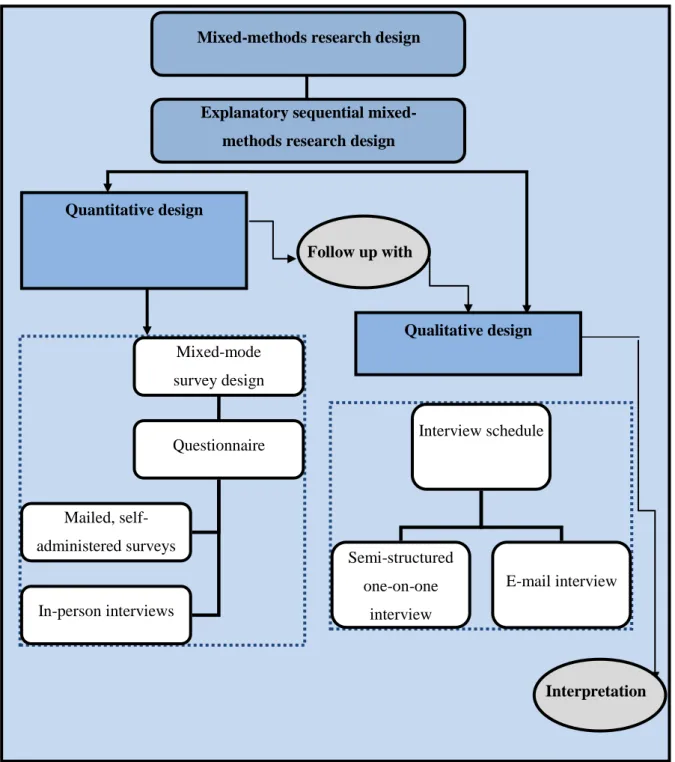
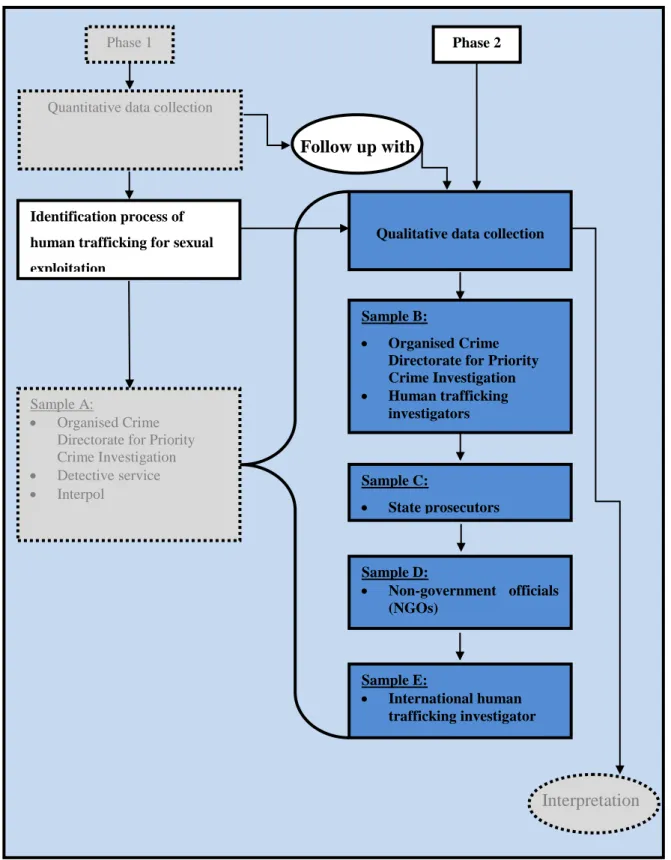
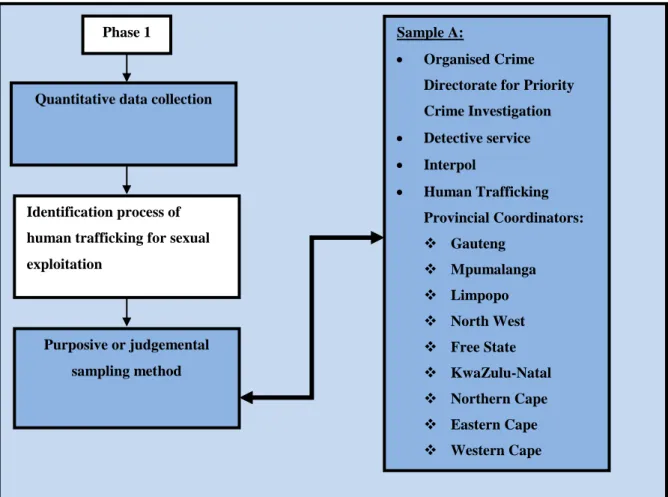
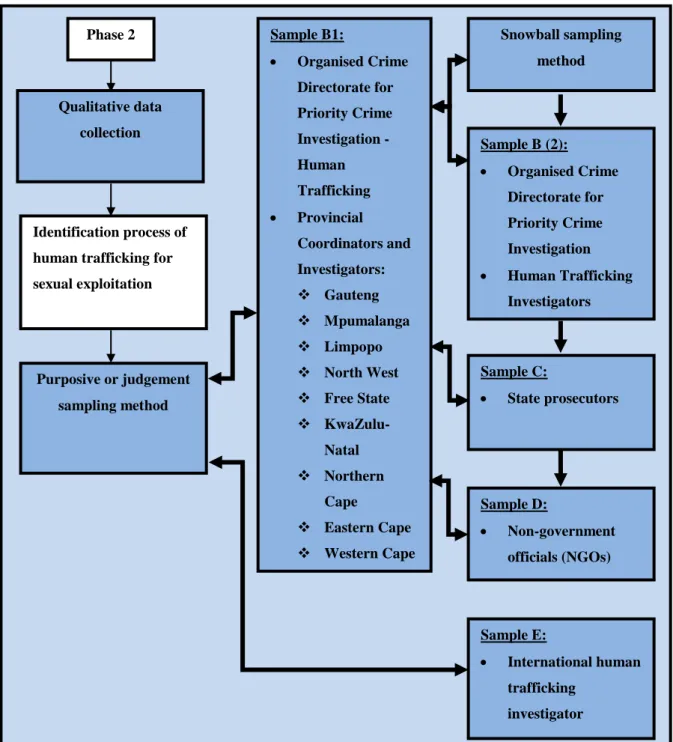
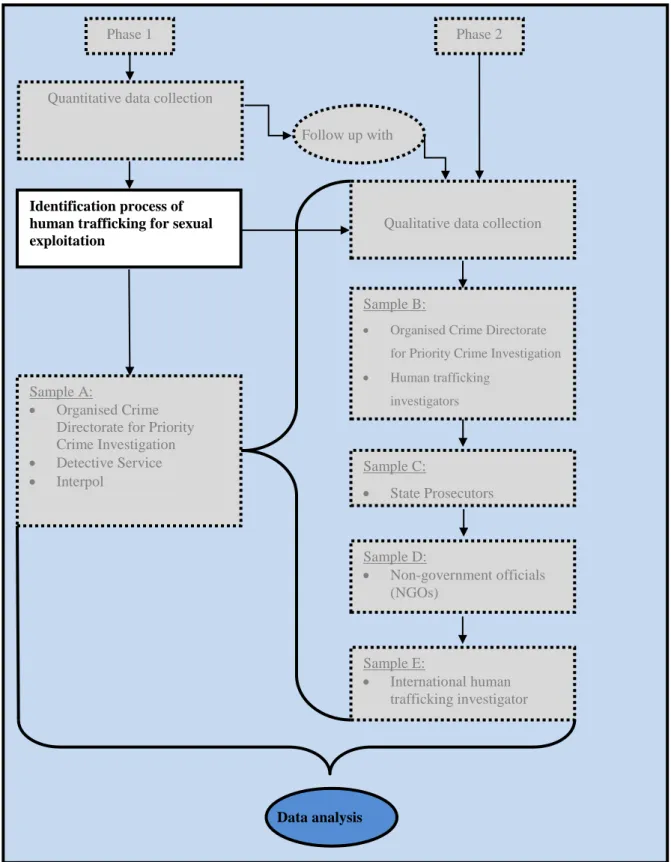
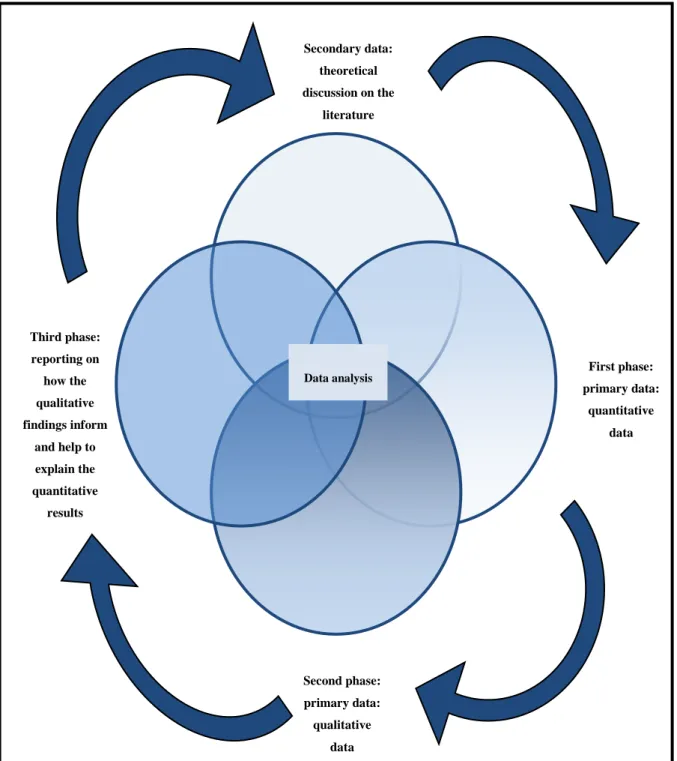
The explanatory sequential mixed-method design was used with the main purpose to use the qualitative data to help explain in more detail the initial quantitative results obtained. The explanatory sequential mixed-methods design assisted the researcher to follow a procedure whereby the mixed-mode survey design was applied to collect data through questionnaires. These questionnaires were in the form of mailed, self-administered surveys and in-person interviews with human trafficking provincial coordinators, police officials and investigators of human trafficking within the nine provinces country wide during the first quantitative phase of this study. The data were analysed and followed up during the second qualitative phase with interview schedules that were used in semi-structured one-on-one interviews with the following persons: police investigators working at the SAPS organised crime units who dealt with and investigated cases of human trafficking where victims were trafficked for sexual exploitation; state prosecutors working at the National Prosecuting Authority who dealt with, identified and prosecuted human trafficking cases where victims were trafficked for sexual exploitation in South Africa; NGOs who work in the field of counter-trafficking and victim assistance; and an international police investigator who dealt with, identified and investigated human trafficking cases where victims were trafficked for sexual exploitation.
vii
The researcher is of the opinion that this study (analysing how the crime of human trafficking for sexual exploitation can be identified in order to develop practical guidelines to be used during the identification of this crime in South Africa) presents a significant contribution to the identification of human trafficking for sexual exploitation incidents in South Africa and subsequently presents practical guidelines that can be used during the identification of this phenomenon in South Africa.
SUMMARY
“Modern slavery – be it bonded labour, involuntary servitude, or sexual slavery – is a crime and cannot be tolerated in any culture, community, or country... [It] is
an affront to our values and our commitment to human rights.” (US Secretary of State Hillary Rodham Clinton, US Department of State,
Trafficking in Persons Report, 2010)
This study was conducted with the aim to critically analyse how the crime of human trafficking for sexual exploitation can be identified in order to develop practical guidelines to be used during the identification of this crime in South Africa. In this study the researcher conducted a review of pertinent literature, both international and national, to gain an understanding of the problem being researched. Relevant international legislation which informs South African legislation was accordingly considered in order to explain the current legal framework that forms the foundation to address this problem.
A survey was conducted to gain insight into the phenomenon of human trafficking in South Africa. Thereafter interviews were conducted in order to understand the meaning provided by individuals to the problem researched. The researcher also explored how the federal police in Australia address the specific problem relating to the identification and investigation of human trafficking, as they have appointed a leading human trafficking task team focusing on this phenomenon in specific. Links and associations were identified through the knowledge and facts gained in this study, exploring past events and theories developed from former research relating to this topic. This formed the foundation of the study in order to describe and explain future application of findings emanating from this research.
viii
The explanatory sequential mixed-method design was used with the main purpose to use the qualitative data to help explain in more detail the initial quantitative results obtained. The explanatory sequential mixed-methods design assisted the researcher to follow a procedure whereby the mixed-mode survey design was applied to collect data through questionnaires. These questionnaires were in the form of mailed, self-administered surveys and in-person interviews with human trafficking provincial coordinators, police officials and investigators of human trafficking within the nine provinces country wide during the first quantitative phase of this study. The data were analysed and followed up during the second qualitative phase with interview schedules that were used in semi-structured one-on-one interviews with the following persons: police investigators working at the SAPS organised crime units who dealt with and investigated cases of human trafficking where victims were trafficked for sexual exploitation; state prosecutors working at the National Prosecuting Authority who dealt with, identified and prosecuted human trafficking cases where victims were trafficked for sexual exploitation in South Africa; NGOs who work in the field of counter-trafficking and victim assistance; and an international police investigator who dealt with, identified and investigated human trafficking cases where victims were trafficked for sexual exploitation.
Through a critical analysis of the identification process of the phenomenon of human trafficking for sexual exploitation, the purpose of this research was to gain a better understanding of this phenomenon and establish, develop and provide practical guidelines, procedures and recommendations to the South African Police Service to identify these cases more successfully. The specific research objectives and research questions answered in this study to address the research aim were divided into five categories:
Explore and describe the phenomenon of human trafficking.
Determine the nature and extent of the legal arena to criminalise human trafficking, to prevent human trafficking, and to protect trafficking victims upon which South African legislation is based.
Explain how the identification of the phenomenon of human trafficking fits into the policing process.
Explore the current situation regarding the procedures followed to identify the phenomenon of human trafficking for sexual exploitation.
ix
Develop practical guidelines, procedures and recommendations for police officials to identify human trafficking for sexual exploitation incidents more successfully.
The trafficking of women and children for commercial sexual purposes lies in the expansion and ever growing sexual entertainment industry, which is most importantly a demand-driven phenomenon. The exploitation of victims for profit through the use of force, fraud or coercion remains the common denominator of this crime and the trade of human beings continues to evolve into new and more multifaceted forms of exploitation, using debt contracts and other means to coerce people for the purpose of profit gain. Women and children are perceived as the most exploitable and controllable and therefore are deemed to be the most in demand to contribute to this expanding and very competitive economic market driven by maximum profit.
It is imperative and fundamental to have an understanding of the trafficking of persons as a crime committed against an individual and therefore it is of the utmost importance that police personnel serving in the South African Police Service (one of the key role players within the Criminal Justice System), are conversant with the means of trafficking, what it constitutes and what attributes and features this phenomenon includes. Through the development of practical guidelines, procedures and recommendations for police officials to identify human trafficking for sexual exploitation incidents more successfully, data obtained from both literature and interviews contributed immensely in the identification of incidents of human trafficking in order to prevent and address this crime successfully.
The researcher is of the opinion that this study (analysing how the crime of human trafficking for sexual exploitation can be identified in order to develop practical guidelines to be used during the identification of this crime in South Africa) presents a significant contribution to the identification of human trafficking for sexual exploitation incidents in South Africa and subsequently presents practical guidelines that can be used during the identification of this phenomenon in South Africa.
x
KEY TERMS:
Criminal justice system; policing; crime; organised crime; transnational crime; criminal investigation; identification of the crime; police investigator; trafficking in persons; sexual exploitation; victim; sex trafficker; modus operandi.
xi
ABBREVIATIONS AND ACRONYMS
BA Bachelor of Arts
B-Tec Bachelor of Technology CJS Criminal Justice System
CSE Commercial Sexual Exploitation
CSF Community Safety Forums
CSEC Commercial Sexual Exploitation of Children CPA Criminal Procedure Act
CT Cape Town
DBE Department of Basic Education DCS Department of Correctional Services DHA Department of Home Affairs
DHS Department of Human Settlements
DIRCO Department of International Relations and Cooperation DNA Deoxyribonucleic acid
DOC Department of Communications
DOD Department of Defence and Military Veterans DOH Department of Health
DoJCD Department of Justice and Constitutional Development DPCI Directorate Priority Crimes Investigation
DPP Director of Public Prosecutions (SA) DSD Department of Social Development DST Department of Science and Technology ECC Executive Coordinating Committee
FCS Family Violence, Child Protection and Sexual Offences Unit FICA Financial Intelligence Centre
ICD Independent Complaints Directorate ILO International Labour Organisation IOM International Organisation of Migration ITPA International Tax Planning Association JCPS Justice Crime Prevention and Security Cluster
JHB Johannesburg
GBH Grievous Bodily Harm
HODs Head of Departments
HSRC Human Sciences Research Council
KOM Koordineringsenheten for Ofre for Menneskehandel LASA Legal Aid South Africa
MECs Members of executive councils MMS Multimedia Messaging Service
MO Modus Operandi
MOU Memoranda of understanding NGO Non-governmental organisation
NICRO The South African National Institute for Crime Prevention NPA National Prosecuting Authority (SA)
NT National Treasury
PAT Problem Analysis Triangle
PE Port Elizabeth
xii
POCA Prevention of Organised Crime Act 121 of 1998 PTSD Posttraumatic stress disorder
SALRC South African Law Reform Commission SARA Scanning, Analysis, Response and Assessment
SA South Africa
SARS South African Revenue Service SSA State Security Agency
SAPS South African Police Service SMS Short Message Service SOA Sexual offences Act
SOCA Sexual Offences and Community Affairs STATS SA Statistics South Africa
TBVC Transkei, Bophuthatswana, Venda and Ciskei TIP Trafficking in Persons Report
TIP Report Trafficking in Persons Report (USA)
TVPA Trafficking Victims Protection Act
TVPRA Trafficking Victims Protection Reauthorization Act
UN United Nations
UNICEF United Nations Children’s Fund UNISA University of South Africa
UNODC United Nations Office on Drugs and Crime
UNTOC United Nations Convention against Transnational Organised Crime UNHRO Uganda National Health Research Organisation
xiii TABLE OF CONTENTS DECLARATION... ii ACKNOWLEDGEMENTS ... iii ABSTRACT ... vi SUMMARY ... vii KEY TERMS: ... x
ABBREVIATIONS AND ACRONYMS ... xi
TABLE OF CONTENTS ... xiii
ATTACHMENTS ... xxi
ANNEXURES ... xxii
LIST OF FIGURES ... xxiii
LIST OF TABLES ... xxv
CHAPTER 1 ... 1
GENERAL ORIENTATION TO HUMAN TRAFFICKING FOR SEXUAL EXPLOITATION IN SOUTH AFRICA ... 1
1.1 INTRODUCTION... 1
1.2. RATIONALE OF RESEARCH (PROBLEM STATEMENT) ... 4
1.3 DELIMITATION OF THE STUDY ... 5
1.4 AIM OF THE RESEARCH ... 6
1.5 OBJECTIVES OF THE RESEARCH ... 7
1.6 RESEARCH QUESTIONS ... 8
1.7 PURPOSE OF THE RESEARCH ... 9
1.7.1 EVALUATION OF THE SITUATION ... 10
1.7.2 EXPLORATION ... 10
1.7.3 APPLIED RESEARCH ... 11
1.7.4 EMPOWERMENT OF THOSE BEING RESEARCHED ... 11
1.8 KEY THEORETICAL CONCEPTS ... 11
1.8.1 CRIMINAL JUSTICE SYSTEM ... 12
1.8.2 POLICING ... 12
1.8.3 CRIME/OFFENCE ... 12
1.8.4 ORGANISED CRIME ... 12
1.8.5 TRANSNATIONAL CRIME ... 13
xiv
1.8.7 IDENTIFICATION OF THE CRIME ... 13
1.8.8 THE POLICE INVESTIGATOR ... 13 1.8.9 TRAFFICKING IN PERSONS ... 13 1.8.10 SEXUAL EXPLOITATION ... 14 1.8.11 VICTIM ... 14 1.8.12 SEX TRAFFICKING ... 15 1.8.13 MODUS OPERANDI... 15 1.9 RESEARCH STRUCTURE ... 15 CHAPTER 2 ... 17
METHODOLOGICAL FRAMEWORK OF THE STUDY ... 17
2.1 INTRODUCTION... 17
2.2 PHILOSOPHICAL WORLDVIEW OFFERED IN THE STUDY ... 17
2.2.1 THE POST-POSITIVIST WORLDVIEW ... 18
2.2.2 THE CONSTRUCTIVIST WORLDVIEW ... 18
2.2.3 THE PRAGMATIC WORLDVIEW ... 19
2.3 RESEARCH APPROACH AND DESIGN ... 20
2.3.1 MIXED-METHODS RESEARCH DESIGN ... 21
2.3.2 EXPLANATORY SEQUENTIAL MIXED-METHODS DESIGN ... 22
2.3.3 MIXED METHODS:PHASE 1 QUANTITATIVE DESIGN ... 25
2.3.3.1 Mixed-mode surveys ... 26
2.3.4 MIXED METHODS:PHASE 2 QUALITATIVE DESIGN ... 27
2.4 DATA COLLECTION ... 27
2.4.1 LITERATURE ... 29
2.4.2 DOCUMENTARY SOURCES ... 30
2.4.3 INTERVIEWS ... 31
2.4.3.1 Quantitative data collection: Phase 1 ... 32
2.4.3.2 Qualitative data collection: Phase 2 ... 35
2.4.4 POPULATION AND SAMPLING PROCEDURES ... 40
2.4.4.1 Quantitative phase of sampling: Phase 1 ... 41
2.4.4.2 Qualitative phase of sampling: Phase 2 ... 42
2.5 DATA ANALYSIS ... 46
2.6 DATA INTERPRETATION ... 50
xv
2.7.1 THE REFUTABILITY PRINCIPLE ... 53
2.7.2 THE CONSTANT COMPARATIVE METHOD ... 53
2.7.3 COMPREHENSIVE DATA TREATMENT ... 53
2.7.4 DEVIANT-CASE ANALYSIS ... 54
2.7.5 USING APPROPRIATE TABULATIONS ... 54
2.7.6 CREDIBILITY/AUTHENTICITY ... 55
2.7.7 TRANSFERABILITY ... 56
2.7.8 DEPENDABILITY ... 56
2.8 METHODS EMPLOYED TO ENSURE RELIABILITY ... 57
2.9 ETHICAL CONSIDERATIONS ... 58
CHAPTER 3 ... 61
AN OVERVIEW OF THE PHENOMENON OF HUMAN TRAFFICKING ... 61
3.1 INTRODUCTION... 61
3.2 THE PHENOMENON OF HUMAN TRAFFICKING ... 62
3.3 HUMAN TRAFFICKING DEFINED... 63
3.3.1 THE PALERMO PROTOCOL... 70
3.3.2 PALERMO PROTOCOL’S DEFINITION OF TRAFFICKING ... 71
3.4 EXPLOITATION ... 75
3.5 TRAFFICKING FOR THE PURPOSE OF COMMERCIAL SEXUAL EXPLOITATION ... 76
3.6 HUMAN TRAFFICKING VERSUS HUMAN SMUGGLING ... 83
3.7 SCOPE OF HUMAN TRAFFICKING ... 90
3.8 PREVALENCE OF HUMAN TRAFFICKING FOR SEXUAL EXPLOITATION PROBLEM ... 94
3.9 CHARACTERISTICS OF HUMAN TRAFFICKING FOR SEXUAL EXPLOITATION ... 98
3.10 CAUSES AND CONSEQUENCES OF HUMAN TRAFFICKING ... 99
3.11 GLOBAL REPORT ON HUMAN TRAFFICKING ... 100
3.12 GEOGRAPHICAL DYNAMICS OF HUMAN TRAFFICKING IN SOUTH AFRICA ... 101
3.12.1 TRAFFICKING WITHIN NATIONAL BORDERS – DOMESTIC TRAFFICKING IN SOUTH AFRICA ... 104
3.12.2 TRAFFICKING OF PERSONS ACROSS SOUTH AFRICAN BORDERS – INTERNATIONAL TRAFFICKING IN SOUTH AFRICA ... 104
xvi
3.13 SUMMARY ... 107
CHAPTER 4 ... 109
AN OVERVIEW OF THE LEGAL FRAMEWORK OF HUMAN TRAFFICKING IN THE INTERNATIONAL AND NATIONAL ARENA ... 109
4.1 INTRODUCTION... 109
4.2 INTERNATIONAL CONCEPTUAL EXPLICATION OF HUMAN TRAFFICKING ... 111
4.2.1 DEFINING HUMAN TRAFFICKING ... 111
4.2.2 DEFINING SEX TRAFFICKING ... 112
4.2.3 ELEMENTS OF HUMAN TRAFFICKING ... 112
4.3 INTERNATIONAL LEGAL FRAMEWORK... 113
4.3.1 THE PALERMO PROTOCOL... 115
4.4 THE TRAFFICKING IN PERSONS (TIP) REPORT ... 116
4.4.1 RANKING OF COUNTRIES IN TIPREPORT ... 116
4.4.2 SOUTH AFRICAN GOVERNMENT’S STATUS ... 118
4.4.3 PROSECUTION IMPARTED IN SOUTH AFRICA ... 119
4.4.4 US DEPARTMENT OF STATE TIP REPORTS JUDGEMENTS IMPARTED TO SOUTH AFRICA ... 119
4.4.5 US DEPARTMENT OF STATE TIP REPORTS SUGGESTIONS IMPARTED TO SOUTH AFRICA ... 121
4.5 CURRENT LEGISLATION FOR HUMAN TRAFFICKING IN SOUTH AFRICA ... 122
4.5.1 CURRENT LEGISLATIVE PRACTICE IN SOUTH AFRICA ... 123
4.5.1.1 The South African Constitution ... 124
4.5.1.1.1 Section 28 of the Constitution of the Republic of South Africa 1996 ………..124
4.5.1.1.2 Sections 231, 232 and 233 of the Constitution of the Republic of South Africa 1996 ... 125
4.5.1.2COMMON LAW ... 126
4.5.1.3SEXUAL OFFENCES ACT 23 OF 1957 ... 127
4.5.1.4CRIMINAL LAW (SEXUAL OFFENCES AND RELATED MATTERS) AMENDMENT ACT 32 OF 2007 ... 127
4.5.5 THE CHILD CARE ACT 74 OF 1983 AND CHILDREN’S ACT 38 OF 2005 ... 128
xvii
4.5.7 MISCELLANEOUS LEGISLATION ... 130
4.6 PROPOSED SOUTH AFRICAN LEGISLATION: PREVENTION AND COMBATING OF TRAFFICKING IN PERSONS BILL ... 138
4.6.1 PREVENTION ... 140
4.6.2 PROSECUTION ... 141
4.6.3 PROTECTION ... 142
4.7 SUMMARY ... 153
CHAPTER 5 ... 155
AN OVERVIEW OF HOW THE IDENTIFICATION OF A CRIME FITS INTO ... 155
THE POLICING PROCESS ... 155
5.1 INTRODUCTION... 155
5.2 SOUTH AFRICAN CRIMINAL JUSTICE SYSTEM ... 157
5.3 CRIMINAL JUSTICE SYSTEM ROLE PLAYERS ... 159
5.3.1 THE SOUTH AFRICAN POLICE SERVICE (SAPS) ... 160
5.3.2 THE JUDICIARY ... 160
5.3.3 THE NATIONAL PROSECUTING AUTHORITY (NPA) ... 161
5.3.4 CORRECTIONAL SERVICES ... 163
5.3.5 OTHER ROLE PLAYERS ... 164
5.3.6 CRIMINAL PROCEDURE AS COMPONENT OF THE SOUTH AFRICAN CJS ... 164
5.4 THE CRIMINAL JUSTICE PROCESS ... 165
5.5 JUSTICE, CRIME PREVENTION AND SECURITY ... 167
5.6 THE SOUTH AFRICAN POLICE SERVICE... 169
5.6.1 STRUCTURE OF THE SOUTH AFRICAN POLICE SERVICE ... 169
5.6.2 VISION, MISSION AND LEGISLATIVE MANDATE OF THE SAPS ... 173
5.6.3 DETECTIVE SERVICE (CRIMINAL INVESTIGATION) ... 175
5.6.4 FORENSIC SCIENCE SERVICES ... 181
5.6.5 VISIBLE POLICING (CRIME PREVENTION) ... 181
5.6.6 CRIME INTELLIGENCE AND PROTECTION SERVICES ... 182
5.7 OBJECTIVES OF CRIME INVESTIGATION ... 183
5.7.1 SITUATION IDENTIFICATION (IDENTIFICATION OF THE CRIME) ... 185
5.7.2 WITNESS IDENTIFICATION ... 188
5.7.3 CONDUCT IDENTIFICATION ... 189
xviii
5.8 INDIVIDUALISATION ... 196
5.9 SUMMARY ... 198
CHAPTER 6 ... 199
THE IDENTIFICATION OF HUMAN TRAFFICKING FOR SEXUAL EXPLOITATION ... 199
6.1 INTRODUCTION... 199
6.2 HUMAN TRAFFICKING FOR SEXUAL EXPLOITATION ... 200
6.3 CHARACTERISTICS, TRAITS, ROLES AND MODUS OPERANDI OF TRAFFICKERS ... 202
6.3.1 CHARACTERISTICS AND TRAITS OF TRAFFICKERS ... 203
6.3.2 ROLES OF TRAFFICKERS ... 205
6.3.3 MODUS OPERANDI OF TRAFFICKERS ... 206
6.3.3.1 Recruitment of the victim ... 206
6.3.3.2 Transportation of the victim ... 207
6.3.3.3 Controlling the victim ... 208
6.4 FUNCTIONING OF TRAFFICKING GROUPS ... 211
6.4.1 TRAFFICKING GROUPS AS CRIMINAL ENTERPRISES ... 211
6.4.2 TRAFFICKING GROUPS AS BUSINESS ENTERPRISES ... 212
6.4.3 TRAFFICKING AS AN ORGANISED CRIME APPROACH ... 214
6.5 HUMAN TRAFFICKING VICTIMS OF SEXUAL EXPLOITATION ... 216
6.6 IDENTIFICATION OF INCIDENTS OF HUMAN TRAFFICKING FOR SEXUAL EXPLOITATION ... 227
6.6.1 SOURCES AND RESOURCES OF INFORMATION ... 228
6.6.2 TRAINING OF POLICE OFFICIALS TO IDENTIFY INCIDENTS OF HUMAN TRAFFICKING ... 232
6.6.3 PROACTIVE IDENTIFICATION OF INCIDENTS OF HUMAN TRAFFICKING ... 235
6.6.4 COOPERATIVE PARTNERSHIPS BETWEEN VARIOUS ROLE PLAYERS IN THE IDENTIFICATION OF HUMAN TRAFFICKING FOR SEXUAL EXPLOITATION ... 237
6.7 INDICATORS OF HUMAN TRAFFICKING FOR SEXUAL EXPLOITATION ... 241
6.8 CHALLENGES, BARRIERS AND RED FLAGS INHERENT TO HUMAN TRAFFICKING INCIDENTS ... 247
6.9 PROCEDURES OF IDENTIFICATION OF HUMAN TRAFFICKING FOR SEXUAL EXPLOITATION ... 251
xix
6.10 BEST PRACTICES TO IDENTIFY HUMAN TRAFFICKING FOR SEXUAL
EXPLOITATION ... 260
6.11 SUMMARY ... 265
CHAPTER 7 ... 266
FINDINGS, RECOMMENDATIONS AND CONCLUSION ... 266
7.1 INTRODUCTION... 266
7.2 RESEARCH AIMS ... 267
7.3 RESEARCH QUESTIONS ... 267
7.4 FINDINGS ... 268
7.4.1 THE PHENOMENON OF HUMAN TRAFFICKING ... 268
7.4.1.1DEFINITION OF HUMAN TRAFFICKING ... 268
7.4.1.2HUMAN TRAFFICKING FOR THE PURPOSE OF COMMERCIAL SEXUAL EXPLOITATION ... 270
7.4.1.3ELEMENTS OF HUMAN TRAFFICKING FOR SEXUAL EXPLOITATION ... 271
7.4.1.4HUMAN TRAFFICKING, MIGRATION, SMUGGLING AND KIDNAPPING ... 273
7.4.1.5DIFFERENT FORMS/TYPES OF HUMAN TRAFFICKING ... 276
7.4.1.6PREVALENCE OF SEX TRAFFICKING OF PEOPLE WHO COME FROM OUTSIDE AND FROM WITHIN SOUTH AFRICA WITHIN SOUTH AFRICA'S PROVINCES ... 277
7.4.1.7HUMAN TRAFFICKING IN SOUTH AFRICA – PUSH AND PULL FACTORS, PREVALENCE AND KNOWN ROUTES ... 278
7.4.2 THE LEGAL FRAMEWORK OF HUMAN TRAFFICKING IN THE INTERNATIONAL AND NATIONAL ARENA ... 282
7.4.2.1 The international arena ... 282
7.4.2.2 The national arena ... 283
7.4.3 THE IDENTIFICATION OF A CRIME WITHIN THE POLICING PROCESS... 292
7.4.3.1 The criminal justice process ... 292
7.4.3.2 The criminal justice system role players ... 293
7.4.3.3 The South African Police Service ... 294
7.4.3.4 Investigation of crime ... 297
7.4.3.5 Objectives of investigation of crime ... 297
7.4.3.6 Identification ... 297
7.4.4 THE IDENTIFICATION OF HUMAN TRAFFICKING FOR SEXUAL EXPLOITATION ... 301
7.4.4.1 Means and modus operandi of traffickers ... 301
xx
7.4.4.3 Sources and resources of information ... 306 7.4.4.4 Training on the identification of human trafficking for sexual
exploitation ... 308 7.4.4.5 Cooperative partnerships between various role players in the
identification of human trafficking for sexual exploitation ... 309 7.4.4.6 Indicators of human trafficking for sexual exploitation ... 312 7.4.4.7 Primary barriers and red flags in identifying incidents of human
trafficking for sexual ... 316 7.4.4.8 Identification practices for incidents of human trafficking for sexual
exploitation ... 317 7.4.5.9 Practical guidelines to identify incidents of human trafficking for
sexual exploitation ... 322
7.5 RECOMMENDATIONS ... 325
7.5.1 THE PHENOMENON OF HUMAN TRAFFICKING ... 325
7.5.2 THE LEGAL FRAMEWORK OF HUMAN TRAFFICKING IN THE INTERNATIONAL AND NATIONAL ARENA ... 326 7.5.3 THE IDENTIFICATION OF A CRIME WITHIN THE POLICING PROCESS... 327 7.4.5 THE IDENTIFICATION OF HUMAN TRAFFICKING FOR SEXUAL EXPLOITATION ... 327 7.5.5 ADDITIONAL RESEARCH ... 329
7.6 CONCLUSION ... 330 LIST OF REFERENCES ... 336
xxi
ATTACHMENTS
ATTACHMENT A: Questionnaire/Survey for Sample A: Phase 1
ATTACHMENT B: Interview Schedule for Samples B1 and B2
ATTACHMENT C: Interview Schedule for Sample C
ATTACHMENT D: Interview Schedule for Sample D
xxii
ANNEXURES
ANNEXURE A: Permission to conduct research: Strategic Management SAPS
ANNEXURE B: Permission to conduct research: Detective Service
ANNEXURE C: Permission to conduct research: Directorate for Priority Crime Investigations (DPCI)
ANNEXURE D: Permission to conduct research: Interpol, NCB, Pretoria
ANNEXURE E: Permission to conduct research: National Prosecuting Authority (NPA)
ANNEXURE F: Permission to use original questionnaire
ANNEXURE G: Copy of original questionnaire used in the study "Understanding and Improving Law Enforcement Responses to Human Trafficking" Final Report (June, 2008)
xxiii
LIST OF FIGURES
Figure 1: South Africa’s Tier Ranking 2005 to 2013 ... 3 Figure 2: Explanatory sequential mixed-methods design ... 23 Figure 3: Mixed-methods and research design ... 24 Figure 4: Quantitative data collection Phase 1 ... 34 Figure 5: Qualitative data collection Phase 2 ... 39 Figure 6: Purposive or judgement sampling of sample A... 42 Figure 7: Purposive or judgement sampling of samples B1 and E and snowball sampling of samples B2, C and D ... 45 Figure 8: Data analysis phase ... 49 Figure 9: Data interpretation Phase 3... 50 Figure 10: Schematic representation of data interpretation ... 51 Figure 11: First phase: Sample A - Knowledge regarding human trafficking ... 66 Figure 12: Second phase: Sample B1 and B2 - Knowledge regarding human trafficking ... 66 Figure 13: Participants’ view on difference between human trafficking, migration, smuggling and kidnapping ... 86 Figure 14: Participants’ experience of prevalence of sex trafficking of people who come from outside South Africa within South Africa's provinces ... 95 Figure 15: Participants’ experience of prevalence of sex trafficking of people who come from within South Africa within South Africa's Provinces ... 96 Figure 16: Participants’ experience of human trafficking problem within their province: 2007-2011 ... 97 Figure 17: Participants’ experience of priority to address human trafficking within their province... 98 Figure 18: Participants’ view on human trafficking legislation in South Africa ... 131 Figure 19: The South African Criminal Justice System (CJS) - Chain of events ... 165 Figure 20: Policing provinces in South Africa ... 170 Figure 21: Structure of Department of Police and South African Police Service ... 172 Figure 22: Participants’ average length of time spent on investigating incidents/cases related to human trafficking phenomenon ... 178 Figure 23: Situation, victim and perpetrator identification ... 197
xxiv
Figure 24: Participants’ view on identification of human trafficking cases training received ... 233 Figure 25: Existing relationships with service providers to address human trafficking for sexual exploitation victims’ needs ... 240 Figure 26: Model - recommendations for the policing of human trafficking for sexual exploitation ... 264 Figure 27: The South African Criminal Justice System (CJS) - chain of events ... 292
xxv
LIST OF TABLES
Table 1: The Tiers ... 3 Table 2: Participants’ understanding of human trafficking ... 67 Table 3: Elements contained in the Palermo Protocol’s definition of trafficking ... 72 Table 4: Participants’ explanation of criminal elements of the crime human trafficking ... 73 Table 5: Participants’ understanding of human trafficking for sexual exploitation ... 77 Table 6: Participants’ explanation of criminal elements of the crime human trafficking for sexual exploitation ... 79 Table 7: Proposed criminal elements of the crime human trafficking for sexual exploitation 80 Table 8: Participants’ description of the element of conduct of the crime human trafficking for sexual exploitation... 82 Table 9: Participants’ summary of the different role players in the conduct of the crime of human trafficking for sexual exploitation ... 83 Table 10: Similarities between the two concepts of human trafficking and human smuggling ... 84 Table 11: Sample A - Description of differences between human trafficking, migration, smuggling and kidnapping ... 86 Table 12: Samples B1 and B2 - Description of difference between human trafficking, migration, smuggling and kidnapping ... 87 Table 13: Sample C - Description of difference between human trafficking, migration, smuggling and kidnapping ... 88 Table 14: Sample D - Description of difference between human trafficking, migration, smuggling and kidnapping ... 88 Table 15: Summary of differences between human trafficking, migration, smuggling and kidnapping... 89 Table 16: Different forms/types of human trafficking ... 92 Table 17: Possible types of crimes to be encountered in provinces ... 93 Table 18: Global statistics presented in the TIP Report ... 101 Table 19: Africa’s statistics presented in the TIP Report ... 101 Table 20: Reported trafficking in South Africa ... 102 Table 21: Most known routes of human trafficking in South Africa ... 106 Table 22: International conventions... 114
xxvi
Table 23: 2013 TIP Report assessments of governments’ legislation and prosecution, victim identification, support, assistance and protection and prevention measures ... 117 Table 24: Primary judgements impacting on the performance of the South African Government... 120 Table 25: Participants’ view of legislation relating to procedures/protocols/policies in place for the identification and investigation of human trafficking cases, responding to human trafficking cases and victim assistance in human trafficking cases ... 136 Table 26: Alternative crimes to charge suspects of human trafficking ... 148 Table 27: Primary barriers and aspects to overcome the challenges in prosecuting a case of human trafficking for sexual exploitation ... 149 Table 28: Prosecution practices implemented and positive impacts of these prosecution practices implemented ... 152 Table 29: Police - population ratios ... 173 Table 30: Legislation from which the SAPS derives its powers and functions ... 175 Table 31: Participants’ professional involvement and primary roles in positions occupied with regard to human trafficking ... 177 Table 32: Deductive argument, inductive argument and rational reconstruction ... 187 Table 33: Participants’ views on identification ... 191 Table 34: Participants’ experience of means used and modus operandi of human traffickers ... 209 Table 35: Participants’ view on likelihood of human trafficking associated with crimes indicated ... 215 Table 36: Participants’ experience in working with human trafficking incidents and victims ... 219 Table 37: Participants’ view of reasons why victims of human trafficking do not cooperate with police officials, NGOs or state prosecutors ... 221 Table 38: Participants’ experience on the needs of human trafficking for sexual exploitation victims ... 222 Table 39: Participants’ needs when working with victims of human trafficking for sexual exploitation ... 223 Table 40: Participants’ awareness of human trafficking for sexual exploitation and response to these incidents ... 224
xxvii
Table 41: International participant’s awareness of human trafficking for sexual exploitation and response to these incidents ... 225 Table 42: Participants’ views on sources of information occurrence ... 229 Table 43: Resources used by participants to identify incidents of human trafficking for sexual exploitation and lack of resources experienced to identify these incidents ... 230 Table 44: Type of human trafficking training received ... 234 Table 45: Human trafficking training required ... 235 Table 46: Participants’ current and required/needed collaboration regarding human trafficking for sexual exploitation incidents ... 238 Table 47: List of service providers to meet victims of human trafficking for sexual exploitation’s needs ... 240 Table 48: List of possible indicators of human trafficking for sexual exploitation ... 245 Table 49: Participants’ experience in determining incidents as a case of human trafficking for sexual exploitation ... 246 Table 50: Primary barriers in identifying incidents of human trafficking for sexual exploitation and possible solutions to overcome these challenges ... 248 Table 51: Participants’ experience of “red flags” that might indicate an incident that involves the crime of human trafficking for sexual exploitation ... 250 Table 52: Participants’ experience of innovative and effective identification practices for identifying incidents of human trafficking for sexual exploitation ... 257 Table 53: Identification practices implemented and positive impacts of implemented identification practices for identification of human trafficking for sexual exploitation incidents ... 258 Table 54: Participants’ experience of practical guidelines on identifying incidents of human trafficking for sexual exploitation ... 261 Table 55: Participants’ experience of most important lessons learnt regarding the identification of incidents of human trafficking for sexual exploitation ... 262 Table 56: Proposed criminal elements of the crime human trafficking for sexual exploitation ... 272 Table 57: Summary of differences between human trafficking, migration, smuggling and kidnapping... 274 Table 58: Type of human trafficking training received ... 308
xxviii
Table 59: Participants’ current and required/needed collaboration regarding human trafficking cases ... 310 Table 60: Possible indicators of human trafficking ... 313 Table 61: List of possible indicators of human trafficking for sexual exploitation ... 315 Table 62: Identification practices implemented and positive impacts of implemented identification practices for identification of human trafficking for sexual exploitation incidents ... 321 Table 63: Participants’ experience of practical guidelines on identifying incidents of human trafficking for sexual exploitation ... 322 Table 64: Participants’ experience of most important lessons learnt regarding the identification of incidents of human trafficking for sexual exploitation ... 324
1
CHAPTER 1
GENERAL ORIENTATION TO HUMAN TRAFFICKING FOR SEXUAL EXPLOITATION IN SOUTH AFRICA
1.1 INTRODUCTION
South Africa is viewed as a prime and major destination, source and transit country for the trafficking of women and children for sexual exploitation. Victims of this inhumane crime are promised a better life in South Africa, but they are abducted, threatened, coerced, deceived and sold into sexual slavery for as little as R380.00 (Seale, 2006:3). South Africa’s porous international land borders, combined with civil and political unrest, a lack of economic opportunities and powerful market demands for sex work, have ensured a continuous flow of trafficked victims to, from and through South Africa (Delport, Koen & Mackay, 2007:34).
According to the International Organisation of Migration’s office in Pretoria, human trafficking earns the world’s criminal syndicates between R60-billion and R84-billion a year (Hosken, 2007:6). This organisation is further of the belief that up to one million people per year are trafficked across the world’s borders, and up to 800 000 of these cases involve women and children trafficked for sexual exploitation. According to Thoko Majokweni of the National Prosecuting Authority of South Africa, close to 80 per cent of the people trafficked in South Africa are sexually exploited in comparison to the international figure of 60 per cent (Mtyala, 2007:5).
The International Organisation of Migration (IOM) further indicates that some law enforcement officials are denying that there is any human trafficking in South Africa, due to lack of sufficient statistics. This organisation is also of the opinion that the concept of human trafficking is not widely understood and therefore not regarded as an urgent problem (Donne, 2007:14). This repudiating of human trafficking incidents in South Africa is furthermore complicated by the absence of promulgated legislation and the non-existence of official crime statistics on this crime of human trafficking. According to Pharoah (2006:23) incidents of human trafficking are reported by the South African Police Service (SAPS) within other crime categories, such as rape, kidnapping, abduction, assault, soliciting and
immigration-2
related offences. The Human Sciences Research Council (HSRC, 2010:10) also contends that the lack of legislation and the absence of a co-ordinated database hinder efforts by government and civil society to effectively address the problem in terms of prevention, prosecution and protection.
Professor Vasu Reddy, acting Director of the Gender and Development Unit at the HSRC, is of the opinion that statistics on human trafficking are unreliable due to the fact that these cases are rarely reported and because the victims cannot report it or are unwilling to report it to the authorities. He further indicates that there is still an enormous need for evidence-based research in this regard (Mbanjwa, 2007:1).
According to Chief Justice Pius Langa, the then Chief of Justice of the Constitutional Court, the predominance of trafficking lies in the reality that traffickers can make profits on drugs only once, but they can sell the same person again and again and profit substantially. He further points out that human trafficking in Southern Africa is generally attributed to poverty, unemployment, shortages of basic needs and traditional practices that commodify women and make their sale acceptable (Human trafficking as terrible as slavery, 2007). Molo Songololo, a non-governmental organisation (NGO), believes that 10 years of experience reveals that the situation in South Africa has not improved (Kamaldien, 2005).
Literature shows that the government of South Africa does not currently comply fully with international minimum standards set to eliminate human trafficking (Trafficking Victims Protection Act, 2000) (TVPA). The South African Government has also failed to provide sufficient data and statistics on human trafficking crimes investigated and prosecuted, or on resulting convictions or sentences achieved. Adding to this non-adherence is the failure of providing information on government’s efforts to protect human trafficking victims and government’s continued actions to deport and/or prosecute suspected victims without providing the required protecting services. Due to the country’s failure to subsequently portray increasing efforts to address human trafficking, South Africa was once again placed on the Tier 2 watch list in 2008, for a fourth consecutive year (US Department of State Trafficking in Persons (TIP) Report, 2008:228). In 2009 South Africa was placed on the Tier 2 list and it has maintained this status in the latest release of the US Department of State TIP
3
Report (2009:260; 2010:297; 2011:327; 2012:315; 2013:333). This Tier 2 placement of South Africa from 2005 until 2013 is illustrated in figure 1 below.
Figure 1: South Africa’s Tier Ranking 2005 to 2013
(US Department of State TIP Report, 2013:333)
In table 1 below the descriptions of the Tier placements, namely Tier 1, Tier 2, Tier 2 watch list and Tier 3 are tabled as defined in the US Department of State TIP Report (2013:55).
Table 1: The Tiers
Tier 1 Tier 2 Tier 2 Watch List Tier 3
Countries whose governments fully comply with the Trafficking Victims Protection Act’s (TVPA) minimum standards.
Countries whose
governments do not fully comply with the TVPA’s minimum standards, but are making significant efforts to bring themselves in
compliance with those standards.
Countries whose governments do not fully comply with the TVPA’s minimum standards, but are making significant efforts to bring themselves in compliance with those standards and: a) The absolute number of
victims of severe forms of trafficking is very
significant or is significantly increasing;
b) There is a failure to provide evidence of increasing efforts to combat severe forms of trafficking in persons from the previous year; or
c) The determination that a country is making significant efforts to bring itself in compliance with minimum standards was based on commitments by the country to take
additional future steps over the next year.
Countries whose governments do not fully comply with the minimum standards and are not making significant efforts to do so.
4
According to the US Department of State TIP Report (2013:333), South Africa’s government does not currently comply fully with the minimum set standards to eliminate human trafficking. The clandestine nature of this crime, the lack of information and statistics and the absence of comprehensive legislation hinder efforts of law enforcement to vigorously investigate, prosecute and prevent this phenomenon against humanity successfully in South Africa. The question can now be raised whether the South African Government is knowledgeable about this crime’s phenomenon, its extent, its elements, its geographical spread, its victims, its perpetrators, their modus operandi and its results and implications.
Due to the South African authorities’ apparent obliviousness and failure to recognise the depth and seriousness of human trafficking in South Africa, it seems that it is not currently possible to determine the exact nature and extent of trafficked victims for sexual exploitation in South Africa. This directly results in the ineffectiveness of law enforcement to identify, investigate, prosecute, and prevent this horrific, inhumane crime against humanity in South Africa.
1.2. RATIONALE OF RESEARCH (PROBLEM STATEMENT)
Leedy and Ormrod (2005:47) elucidate that the heart of any research lies within the research problem and therefore it is of the utmost importance that researchers continuously clarify what they are doing during the various stages, while conducting research. These authors further express the importance of stating research problems clearly and completely in order to ensure that a research problem says precisely what is meant. However, Creswell (2013:130) warns that the term “problem statement” may be wrong in referring to the problem under investigation. He believes it might be better to use the phrase “the need for the study” or “creating a rationale for the need for the study”. For this reason the researcher named the heading of this section: Rationale of research.
The criminal justice system and more specifically police officials, fulfil a very important role in the investigation and prevention of human trafficking, both nationally and internationally (see the discussion on the South African Criminal Justice System (CJS) in paragraph 5.2 and 5.3 of chapter 5). This is substantiated by Farrell, McDevitt and Fahy (2008:13), who state
5
that human trafficking is viewed as a rising crime and an increasingly important human rights concern worldwide that poses a serious challenge to law enforcement in the 21st century.
High expectations are continuously placed on law enforcement agencies and relevant role players, particularly investigators, to combat and investigate the crime of human trafficking successfully. Moreover, the challenges experienced worldwide by the criminal justice systems and investigators are overshadowed by the fact that various human trafficking incidents are mistakenly labelled and perceived as immoral social occurrences or even contraventions, and these incidents are therefore not necessarily regarded as crimes that justify the involvement of law enforcement.
In a study by Van Zyl and Horne (2009), the various challenges and difficulties faced by investigators when investigating child trafficking cases, are highlighted. Amongst the challenges identified in that study is the lack of adequate guidelines provided to investigators when investigating trafficking cases, as well as the absence of a structuring of investigation units to deal with these investigations. These authors further found that investigating officers experience various difficulties with the investigation of these cases, specifically in identifying the crime of trafficking during their investigations.
The investigation of human trafficking presents a unique challenge to police officials due to the complexity of these cases. According to Pharoah (2006) almost no research has yet been conducted in South Africa on the challenges that will be experienced when trafficking cases are to be investigated and offenders prosecuted. The successful identification and investigation of this hidden crime, human trafficking − that takes place mostly in a hidden world − will be practically impossible if the difficulties in understanding the extent of this phenomenon, identifying and investigating this crime and proving the elements of this crime, are not effectively dealt with and addressed in South Africa.
1.3 DELIMITATION OF THE STUDY
This study distinctively focused on available information regarding identification techniques utilised to identify criminal human trafficking for sexual exploitation during the investigation of these crimes in South Africa. This research will only focus on the trafficking of women
6
and children for sexual exploitation. Due to the hidden nature and extent of this research problem, primary and secondary data were gathered through the selected and applied methodology and variables in the study in order to address the formulated research questions.
As the study was conducted from a South African perspective and the research was conducted on the technique of identification utilised to identify the crime of human trafficking for sexual exploitation, the participants were identified based on their direct involvement and experience in this phenomena. Although there are different role players in the South African CJS, this study focused on the SAPS as one of the main role players within the South African CJS. The specific police investigators responsible to combat and investigate human trafficking as a crime, were accordingly included in this study, together with other relevant role players such as non-governmental organisations (NGOs) and state prosecutors identified by the police investigators. Case dockets could unfortunately not be analysed by the researcher, because permission could not be obtained since there were no cases registered specifically under the crime code of human trafficking at the time of the study. The human trafficking legislation had also not been promulgated during the time of the study and accordingly the SAPS did not have a specific crime code for this crime.
1.4 AIM OF THE RESEARCH
Denscombe (2002:11) highlights the five main aims of scientific research as: an understanding of properties; an understanding of relationships; the production of theories; the prediction of outcomes; and confirmation of the findings by other researchers. Denscombe (2012:20) also says that research should never promise outcomes that cannot be delivered, but that the aims should indicate the direction in which the research will go and should offer direction to the target the researcher hopes to hit (Denscombe, 2012:49).
Fouché and De Vos (in De Vos, Strydom, Fouché & Delport, 2011:94) explain that the terms aim, goal, purpose and objective are frequently used by researchers interchangeably as synonyms for each other. They further explain that the aim, goal or purpose can be viewed as the dream (something you plan to do or achieve), whereas the objective refers to the steps one has to take (one by one) at the basic level within a certain period of time in order to attain that
7
dream − what one planned to do or achieve. For this study the researcher will accordingly refer to the research aim as the dream that the researcher wishes to achieve.
The aim of this study is to critically analyse how the crime of human trafficking for sexual exploitation can be identified in order to develop practical guidelines to be used during the identification of this crime in South Africa.
1.5 OBJECTIVES OF THE RESEARCH
According to Fouché and Delport (in De Vos et al., 2011:108), the objectives of the research elucidate the specific issues that the researcher intends to examine and should accordingly be clearly stated and specific in nature. The specific research objectives of this study in order to address the research aim, are to:
Explore and describe the phenomenon of human trafficking.
Determine the nature and extent of the legal arena upon which South African legislation is based, to criminalise human trafficking, to prevent human trafficking and to protect human trafficking victims.
Explain how the identification of the phenomenon of human trafficking fits into the policing process.
Explore the current situation regarding procedures followed to identify the phenomenon of human trafficking for sexual exploitation.
Develop practical guidelines, procedures and recommendations for police officials to facilitate more successful identification of human trafficking for sexual exploitation.
It is, therefore, deemed that this study presents an original contribution to the identification of this crime arena, specifically in relation to human trafficking for sexual exploitation, and it may accordingly contribute to and influence local, regional and international knowledge and practices.
8
1.6 RESEARCH QUESTIONS
Research questions provide the required detail and direction, as well as a clear picture of what is to be investigated (Denscombe, 2002:31). In order to address the rationale and the aim of this research, the key themes of the research were identified through the development of research questions that would guide the researcher in managing and analysing the data that emerged (Noaks & Wincup, 2004:122). Jesson, Matheson and Lacey (2011:18) explain that a research question provides the structure for the whole of the literature review of a research study and suggest that defining the research question is a crucial step that points the way for the research investigation.
Further to the above, Denscombe (2012:82) is of the viewpoint that research questions show how the research will be put into practice. Research questions should specify what factors and what relationships will be investigated to provide data that will be useful in addressing the aims of the research. However, Denscombe (2012:82) warns that research questions should not be confused with “data collection questions” or questions that appear on schedules.
In order to provide direction and structure to the study, to understand the research rationale better, to enable the researcher to contribute to the solution thereof and to achieve the objectives of this study, the following research questions were formulated and answered in this study:
1. What does the phenomenon of human trafficking entail?
2. What is the nature and extent of the legal arena upon which South African legislation is based, to criminalise human trafficking, prevent human trafficking and protect trafficking victims?
3. How does the identification of the phenomenon of human trafficking fit into the policing process?
4. What is the current situation regarding procedures followed to identify the phenomenon of human trafficking for sexual exploitation?
9
5. What practical guidelines, procedures and recommendations can be offered to police officials to facilitate more successful identification of human trafficking for sexual exploitation?
1.7 PURPOSE OF THE RESEARCH
Babbie (2010:92) reasons that three of the most useful purposes for conducting research are exploration, description and explanation and that most studies will accordingly comprise of these elements. The author of this study has further noted that considerable research in criminal justice is conducted to provide knowledge and understanding of the phenomenon, to explore, describe and explain the nature or frequency of a problem and to indicate causality between variables or events. In this study the researcher conducted a review of pertinent literature, both international and national, to gain an understanding of the problem being researched. Relevant international legislation, which informs South African legislation, was also considered in order to explain the current legal framework that forms the foundation to address this problem. The researcher furthermore made use of a survey during the collection of data in phase 1 in order to gain insight into the phenomenon of human trafficking in South Africa. Thereafter interviews were conducted during phase 2 of the data collection in order to understand the meaning provided by individuals to the problem researched. The researcher also explored how the federal police in Australia address the specific problem relating to the identification and investigation of human trafficking, as they have a leading human trafficking task team appointed to focus specifically on this phenomenon. The researcher identified links and associations through the knowledge and data gained in this study in order to explore the relationships that exist between the identification and the investigation of this horrendous crime. The exploration of past events and theories developed from former research relating to this topic specifically, was used as a foundation in order to describe and explain the future application of findings and recommendations emanating from this research.
The purpose of this research as derived from the description of Denscombe (2002:27) is as follows:
10
1.7.1 Evaluation of the situation
In the present study the researcher investigated the current situation regarding procedures followed to identify the crime of human trafficking for sexual exploitation. The specific intention was to evaluate strengths and weaknesses of current policies in order to determine how these procedures might be improved. This was done by interviewing investigators and other persons involved in handling incidents of human trafficking. Unfortunately, the researcher could not analyse case dockets because permission to analyse case dockets could not be obtained, since there were no cases registered specifically under the crime code of human trafficking. The reason for this is because at the time of the study legislation regarding human trafficking had not been promulgated and the SAPS did not have a specific crime code for this crime.
1.7.2 Exploration
The reason for this research was further to explore and provide a descriptive analysis of the complex phenomenon of human trafficking, with specific reference to the identification of criminal human trafficking for sexual exploitation in South Africa. In order to create an understanding of properties in this study, the researcher at the starting point clarified the properties of the phenomenon of human trafficking as a hidden crime that needs to be identified in order to be investigated. The researcher gathered and recorded relevant knowledge and data in order to classify and categorise this information, with the purpose to discover and advance the body of knowledge in this field of study. Through the knowledge and data gained in this study, the researcher identified links and associations in order to explore possible relationships that exist between the identification and the investigation of this horrendous crime. The exploration of past events and theories developed from former research relating to this topic specifically was used as a foundation to formulate the future application of findings and recommendations emanating from this research. The purpose of exploring the existing body of literature is primarily to describe how things are (Denscombe, 2002:27). In exploring new data and breaking into new territory, the researcher endeavours to expand national and international literature.
11
1.7.3 Applied research
The main motivation for this research was the desire to solve the practical problems as described in the problem statement above and to make recommendations to improve procedures. The researcher aims to arrive at recommendations for good practice that will address the problems as identified in the problem statement (Denscombe, 2002:27). Through a critical analysis of the identification process of this crime, the purpose of this research was to gain a better understanding of this crime and to establish, develop and provide practical guidelines, procedures and recommendations to the SAPS to identify these cases more successfully.
1.7.4 Empowerment of those being researched
This research was conducted to illuminate the elements of human trafficking for sexual exploitation, thereby assisting police investigators and identified key role players in South Africa to successfully identify and investigate this crime for presentation in a court of law. This study will therefore be made available to the SAPS, as one of the key role players in the South African CJS, to be used in the informing and training of their police officials regarding the identification and investigation of this phenomenon. Lastly the researcher will report on the findings of this research by presenting it accordingly in an accredited scientific journal in order to share any new knowledge obtained in this study (Denscombe, 2012:50).
1.8 KEY THEORETICAL CONCEPTS
According to Creswell (1994:106), key concepts are defined so that readers can better understand the context in which the terms are being used, or their unusual or restricted meaning. The purpose of defining the key concepts used in a research study is twofold. Firstly, presenting a specific working definition allows readers to understand exactly what is meant by each key concept. Secondly, the definition of concepts focuses the researcher’s observational strategy (Maxfield & Babbie, 2005:120). Berg (2007:36) supports this statement and emphasises the value of conceptualising a term in order to ensure that readers understand what is meant by certain concepts and to further enable readers to appraise how
12
effectively identified key concepts are applied in a study. The following key theoretical concepts of the research are accordingly defined:
1.8.1 Criminal justice system
This term is used to reflect all participants in the process of identification of a crime, its prosecution and its punishment. Traditionally, this includes the police, justice and correctional services but can also include social services for their role in youth crime, as well as community and non-governmental service providers (Smit, Minnaar & Schnetler, 2004:255 and Geldenhuys, 2011:6). The South African criminal justice system (CJS) will come under specific scrutiny in this study.
1.8.2 Policing
Policing is a term we apply in the process of preventing and detecting crime and maintaining order. It is an activity that might be engaged in by any number of agencies or individuals (Newburn, 2008:17). Within this research study criminal investigation is regarded to form part of prevention and detecting.
1.8.3 Crime/offence
These terms are used to describe the action which caused the offender to be tried and sentenced in a court. For present purposes the concepts are used as synonymous (Terblanche, 2012:316).
1.8.4 Organised crime
This term refers to a non-ideological enterprise involving a number of persons in close social interaction, organised on a structured basis with different levels/ranks, for the purpose of securing profit and power by engaging in illegal and legal activities (Estes, 2001:8).