DESIGN OF A BIOTRANSFORMATION PROCESS FOR DEHALOGENATION OF
CHLORINATED A^M ^M TCCOM POUNDS
Natasha N. Rosen
A thesis submitted to the University of London for the degree of Doctor of Philosophy
November 1994
Department of Chemical and Biochemical Engineering University College London
ProQuest Number: 10016753
All rights reserved
INFORMATION TO ALL USERS
The quality of this reproduction is dependent upon the quality of the copy submitted.
In the unlikely event that the author did not send a complete manuscript and there are missing pages, these will be noted. Also, if material had to be removed,
a note will indicate the deletion.
uest.
ProQuest 10016753
Published by ProQuest LLC(2016). Copyright of the Dissertation is held by the Author.
All rights reserved.
This work is protected against unauthorized copying under Title 17, United States Code. Microform Edition © ProQuest LLC.
ProQuest LLC
789 East Eisenhower Parkway P.O. Box 1346
ACKNOWLEDGEMENTS
I would like to thank a number of people who have all had a significant effect on my research and without whom the last three years would not have been as productive or as enjoyable:
My supervisor at UCL, Professor Malcolm D. Lilly, for his vast knowledge and guidance and for helping me to take my hat off.
My supervisor at the University of Kent, Professor Alan T. Bull, for all his help and advice in the first year of my project.
My advisor. Dr John M. Woodley for his input and for asking the right questions.
Dr David J. Hardman, for all his thoughts and helpful discussions. Dr Nigel J. Titchener - Hooker for planting the original idea.
Dr. Paul J. Sallis for his valuable technical advice and for providing the bacterial strain.
Dr. Jonathan Hunt for his help and advice on my project and my life!
A very special thank you to Billy Doyle for all his ‘beyond the call of duty’ help in the pilot plant, the fermenter room and on the football pitch!
Gordon and Stuart for the overnighters and for bringing me cakes in the morning.
All the technical help that I have received from the workshop and all of the staff at UCL and the University of Kent, especially to Anna Alongi for all the long chats.
To all my friends and colleagues at UCL and at the University of Kent for keeping me sane and making me laugh.
To James for helping me to see the light. To Bradley for his love, food and diversions!
And finally, to my Mum and Dad for their financial and emotional support and love always.
ABSTRACT
Biotransformations have traditionally been used for the synthesis of novel organic molecules but they can also be used for the degradation of toxic and environmentally harmful compounds, such as haloalkanes. Some haloaliphatic compounds used in industry are toxic, carcinogenic, and resistant to degradation and so tend to accumulate in the environment unless the halogen substituents are removed.
Large-scale use of these halogenated aliphatic compounds in industry has led to widespread contamination. Rhodococcus erythropolis Y2, which utilizes many of these compounds as carbon and energy sources, possesses a dehalogenase. The biotransformation involves the conversion of the haloalkane to the corresponding alcohol by cleavage of the carbon-halogen bond; further reactions allow complete mineralization of the haloalkane. The enzyme shows great industrial potential as it is a stable biocatalyst and does not require cofactors or oxygen to function.
The main objectives of this project were to demonstrate the production of the haloalkane halidohydrolase from Rhodococcus erythropolis Y2 on a large scale and to examine the use of this halidohydrolase in an immobilized form for the removal of halogenated aliphatic compounds from aqueous process streams.
A small scale enzyme production process has been developed which has aimed to optimize the fermentation, enzyme induction and isolation procedures. Changes in the fermentation medium and conditions have resulted in an increase in the final cell concentration from 0.7 to 5.9 gdw/L. A less volatile more effective inducer, 4-chlorobutanol, has been found. When added to the culture at a cell concentration of 0.8 gdw/L and a substrate concentration of 0.74 mM, the specific enzyme activity increased from the previous value of 0.05 to 0.16 U/mg. The fermentation and enzyme isolation have been scaled-up to 1000 litres, resulting in an increase in the final cell concentration to 9.28 gdw/L and a three-fold increase in the specific growth rate to 0.31 h-k
CONTENTS LIST
T IT L E PAGE ... 1
A CK N O W LEG D EM EN TS ... 3
A B S T R A C T ... 4
CO N TEN TS L IS T ... 5
L IS T O F ABBREVIATIONS ...11
L IST O F FIG U RES ... 12
L IST O F T A B L E S ...18
1 .0 IN T R O D U C T IO N ...23
1 .1 M IC R O B IA L BIO TRA N SFO RM A TIO N S ... 27
1.1.1 Introduction to Biotransformations ...27
1.1.2 Biocatalysts ...27
1.1.3 Characteristics of the Biotransformation for Process Design. 28 1.1.4 Choice of Reactor System ...29
1 .2 IN TR O D U CTIO N TO TH E GENUS Rhodococcus AND RELA TED O R G A N ISM S...32
1.2.1 Introduction ...32
1.2.2 Kinetics of Bacterial Growth on Chlorinated Aliphatic Compounds ... 33
1 .3 H A LO A LK A N E DEHALOGENASES ...36
1.3.1 Anaerobic Transformations ...36
1.3.2 Aerobic Dehalogenation of Haloalkanes ... 39
1.3.2.1 Glutathione-Dependent Dehalogenases...41
1.3.2.2 Oxygenase-type Dehalogenases ...42
1.3.2.3 Haloalkane Halidohydrolases ... 46
1 .4 HALOALKANE HALIDOHYDROLASE PRODUCED Rhodococcus erythropolis Y2 ... 50
1 .5 S C A L E -U P ...53
1 .6 S T A T E O F B IO C A T A L Y S T ... 57
1 .7 EN ZY M E K IN ETIC S ...61
1.7.1 Rate Equations... 61
1.7.2 Enzyme Inhibition ... 62
1.7.3 Effect of pH and Temperature on Enzyme Kinetics ...63
1 .8 IM M O B ILIZA TIO N ...64
1.8.1 Introduction ... 64
1.8.2 Immobilization Techniques ...66
1.8.3 Criteria for Selection ... 66
1.8.4 Effects of Immobilization ... 67
1.8.5 Choice of Bioreactor ... 67
1 .9 B IO R EA C TO R DESIGN ... 69
1.9.1 Introduction to Bioreactor Design ... 69
1.9.2 Kinetics of Enzyme Reactors ...69
1.9.2.1 Batch Stirred Tank Reactor ... 69
1.9.2.2 Continuous Stirred Tank Reactor...69
1.9.2.3 Continuous Plug Flow Reactor...70
1 .1 0 EN VIRONM ENTA L APPLICA TIO N S OF D EH A LO G EN A SES ... 70
1.10.1 Waste Water Contaminants ... 70
1.10.2 Groundwater Contaminants ... 71
1.10.3 Other Uses ... 73
1 .1 1 AIM S O F STUDY ... 73
2 .0 M ATERIALS AND M ETHODS ... 75
2 .1 O R G A N IS M ...75
2.1.1 Isolation ... 75
2.1.3 Medium Preparation ... 76
2 .2 GROWTH CONDITIONS ...76
2.2.1 Growth in Shake Flasks ... 77
2.2.2 Growth in Batch Fermenters ... 77
2.2.3 Criteria for Scale-up ... 78
2.2.4 Data Determination During Fermentation ... 78
2.2.5 Determination of Bacterial Concentration ... 79
2 .3 WHOLE CELL STUDIES ... 79
2.3.1 Assay for Dehalogenation in Whole Cell Suspensions 79 2.3.2 Determination of Optimum pH for Dehalogenase Activity in Whole Cells ...80
2 .4 PREPARATION OF CRUDE CELL FREE EXTRACTS... 80
2.4.1 Dismption using the French Pressure Cell ... 80
2.4.2 Disruption using the High Pressure Homogenizer ... 80
2.4.2.1 Small Scale ... 80
2.4.2.2 Large Scale ... 81
2 .5 DEHALOGENATION DETERMINATION USING THE DEHALOGENASE IN THE CELL FREE EXTRACTS 82 2 .6 INDUCTION OF DEHALOGENASE ACTIVITY ...82
2 .7 ANALYTICAL PROCEDURES ...82
2.7.1 Determination of Halide Ion Concentration ...82
2.7.1.1 In Growing Cultures ...82
2.7.1.2 In Cell Free Extracts using Bergmann-Sanik Method ... 83
2.7.1.3 In Cell Free Extracts using Florence and Farrar M ethod...84
2.7.2 Gas Chromatographic Analysis ... 87
2.7.2.1 Determination of Standard Curves ...88
2.7.2.2 Determination of Extraction Efficiency 92 2.7.2.3 Determination of Saturation ...95
2.7.3 Determination of Protein Concentration in Cell Free Extracts ...98
2.7.4 Chemicals and Reagents ...98
2 .8 IMMOBILIZATION ... 100
2.8.1 Procedure for Immobilization on a Small Scale ...100
2.8.2 Determination of Immobilization Conditions ... 100
2.8.2.1 pH Value of the Binding Buffer ... 100
2.8.2.2 Ionic Strength of the Binding Buffer ... 101
2.8.2.3 Amount of the Enzyme ...101
2.8.2.4 Immobilization Time ... 101
2.8.2.5 Determination of Binding Yield/ Activity Yield and of Operational Stabihty ...102
2 .9 DEVELOPMENT OF A SMALL SCALE REACTOR SYSTEM ...102
2.9.1 Setting up the Plug Flow Reactor ...102
2.9.2 Measurement of Column Parameters ...103
2.9.2.1 Determination of Bed Volume...103
2.9.2.2 Determination of Bed Flow Characteristics.... 105
2.9.2.3 Determination of Percentage Conversion vs Flowrate ... 105
2.9.3 Use of a Mini Batch Reactor ... 106
3 .0 RESULTS ... 109
3 .1 FERMENTATION DEVELOPMENT ... 109
3.1.2 Effect of pH on Specific Growth Rate... 113
3.1.3 20 L Fermentation Data ... 113
3 .2 INDUCTION ...120
3.2.1 Choice of Inducer ...120
3.2.2 Amount of Inducer ...121
3.2.3 Induction Time ... 121
3 .3 CELL DISRUPTION ... 126
3.3.1 Effect of Addition of Glycine to the Fermentation ...126
3.3.2 Effect of Number of Passes on Protein Concentration 127 3.3.3 Effect of Harvest Time on Protein Concentration in Cell Free Extracts ... 128
3 .4 EFFECT OF SCALE-UP ON THE FERMENTATION 134 3.4.1 Data from 20 L and 1500 L Fermentations ...134
3 .5 ENZYME KINETICS ...139
3.5.1 Experiments with 1 -Chlorobutane ... 139
3.5.1.1 Effect of Substrate Concentration on Activity ...139
3.5.1.2 Lineweaver-Burk Plots ... 139
3.5.2 Experiments with 4-Chlorobutanol ... 145
3.5.2.1 Effect of Substrate Concentration on Activity ...145
3.5.2.2 Lineweaver-Burk Plots ... 145
3.5.3 Effect of the Amount of Cell Free Extract on Hahdohydrolase Activity ...146
3.5.4 Effect of Temperature on Halidohydrolase Activity ... 153
3.5.5 Effect of pH on Halidohydrolase Activity ...157
3.5.6 Substrate Inhibition ... 160
3.5.8 Stability of Halidohydrolase Activity in Cell Free Extracts... 160
3 .6 RESULTS OF ENZYME IMMOBILIZATION ... 162
3.6.1 Immobilization Conditions ...162
3.6.2 Kinetics of the Immobihzed Enzyme ... 163
3 .7 BIOREACTOR DESIGN ...172
3.7.1 Characteristics of the Biotransformation ... 172
3.7.2 Enzyme Production Target ...174
3.7.3 Design of Mini-reactors ...175
3.7.3.1 Design of Mini-reactor with 1 -Chlorobutane as S ubstrate...175
3.7.3.2 Design of Mini-reactor wih 4-Chlorobutanol as S ubstrate... 176
3 .8 RESULTS FROM SMALL SCALE TRIALS OF TWO MODEL SYSTEMS ... 177
3.8.1 Packed Bed Plug Flow Reactor ... 178
3.8.1.1 Percentage Conversion vs Flow rate Profiles with Saturated 1 -Chlorobutane ...178
3.8.1.2 Percentage Conversion vs Flow rate Profiles with Saturated 4-Chlorobutanol ...179
3.8.2 Mini Batch Reactor ... 179
4 .0 DISCUSSION ... 186
4 .1 LARGE-SCALE PRODUCTION OF THE HALIDOHYDROLASE FROM RHODOCOCCUS ERYTHROPOLIS Y2 ... 186
4 .2 ENZYME INDUCTION ...191
4 .3 ENZYME ISOLATION ...192
4 .5 IM PLICATIONS OF ENZYME K IN ETIC S ON
BIO R EA C TO R DESIGN ... 199
4 .6 COM PARISON OF REACTOR TYPES FO R DEGRADATIVE BIO TR A N SFO R M A TIO N S... 202
4 .7 EFFECTS O F THE SUBSTRATE ON REA CTO R O PER A TIO N ...208
5 .0 C O N C L U SIO N S ...211
6 .0 FU TU RE RESEARCH ... 213
7 .0 R E FE R E N C E S ... 214
b.p Boiling point
BSTR Batch stirred tank reactor CER Carbon dioxide evolution rate CPFR Continuous plug flow reactor CSTR Continuous stirred tank reactor
DCM Dichloromethane
DOT Dissolved oxygen tension
E Enzyme
Epï' Amount of enzyme in a plug flow reactor
ES Enzyme-Substrate complex
EDTA Di ami noethane tetraacetic acid (disodium salt) EEC European Economic Community
GSH Glutathione-S-taransferase GST Glutathione transferase
m.p Melting point
NCIMB National Collections of Industrial and Marine Bacteria Limited
CD Optical density
OUR Oxygen uptake rate
P Power
P Product
POP Pentachlorophenol
RNA Ribo-nucleic acid RQ Respiratory quotient
S Substrate
V Volume
v/v Volume/volume
NOMENCLATURE A Arrhenius constant (s-i)
d Proportion of time for batch operation (hrs) De Effective diffusivity (cm2 min-i)
Di Impeller diameter (m)
Ea Activation energy for catalytic reaction (kJ mol-t) FI Flow rate through impeller region (L min-i)
K Temperature and pressure dependent rate constant (kgf cm-2) k First order rate constant (|imol min-i mg-i)
ka Reaction rate constant for activation (M-i s-i) k^a Constant volumetric oxygen transfer rate (cm s-i) Km Michaelis Constant (mM)
Km(app) Apparent Michaelis constant (mM) Ks M onod half-saturation constant (mM ) Ni Impeller tip speed (rpm)
pi Isoelectric point
PA^ Constant volumetric power input (W m-2)
q Flow rate (L min-i)
R Amount of protein released after N passes (g L-i) R Gas law constant (J K-i mol-i)
R Particle radius (m)
Ret Reynolds number in the turbulent region
Rm Maximum amount of protein available for release (g L-i) So Initial substrate concentration (mM)
Id Generation time (hrs)
u
Moles/min substrate converted (mol min-i) M-max Maximum specific growth rate (h-i) V Rate of reaction (|imol mL-i)LIST OF FIGURES
Figure Title Page
1.0 Relationship between rhodococci and closely related bacteria,
based on partial sequencing of 16S ribosomal ribo-nuclei acids 34 1.1 Separation of rhodococci from other genera using the
electrophoretic heterogeneity of ribosomal protein AT-L30 ... 35 1.2 Possible pathway for the reductive dehalogenation of
tetrachloroethylene ... 38 1.3 Proposed pathway of carbon tetrachloride degradation in bacteria
that possess the acetyl-CoA pathway ...40 1.4 Glutathione-dependent dehalogenation of dichloromethane by
Hyphomicrobium sp. DM2 ... 43 1.5 Proposed scheme for the dechlorination of 1-chloroalkanes by
the n-alkane monooxygenase ... 45 1.6 Suggested pathway for the metabolism of 1,2-dichloroethane by
Xanthobacter autotrophicus GJIO ...48 1.7 Reaction mechanism at the optimal pH (pH 8.2) of haloalkane
dehalogenase from Xanthobacter autotrophicus GJIO as deduced from the crystal structures of the native enzyme without substrate... 49 1.8 Typical pathway for the scale-up of a process to 1000 L ...54 1.9 Possible pathways leading to biotransformation ... 58 2.0 Standard curve for the Bergmann-Sanik enzyme assay to
determine chloride release ...85 2.1 Standard curve for the spectrophotometric determination of chloride
using the mercury (II) thiocyanate method ... 86 2.2 Standard for 1-chlorobutane in heptane with column temperature
2.3 Standard for 1-chlorobutane in heptane with column temperature at 45 OC and substrate concentrations of 0-5 mM ...90 2.4 Standard for 4-chlorobutanol in ethyl acetate with column temperature
at 60 OC and substrate concentrations of 0-60 mM ... 91 2.5 Extraction efficieny curve for 1-chlorobutane in heptane ... 93 2.6 Extraction efficiency curve for 4-chlorobutanol in ethyl acetate...94 2.7 Gas chromatograph trace of saturated solutions of 1-chlorobutane
in water ...96 2.8 Gas chromatograph traces of a diluted saturated solution of
4-chlorobutanol in water ...97 2.9 Standard curve for protein determination in cell free extracts using
the Bradford protein assay ...99 2.10 Diagram to show the model plug flow reactor system... 104 2.11 Bed volume profile showing % conversion of a saturated solution
of 1-chlorobutane at pH 7 vs volume through packed column 107 2.12 Plug flow profile showing the outlet absorbance of a 1 % acetone
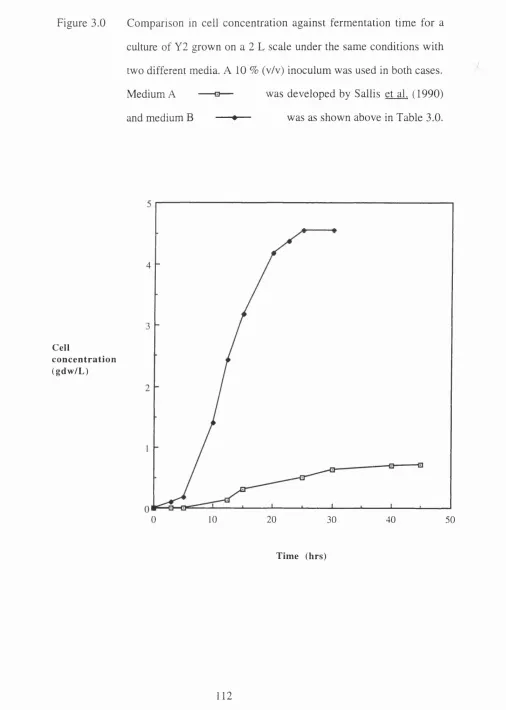
solution through a packed b ed ... 108 3.0 Comparison in cell concentration against fermentation time for
a culture of Y2 grown on a 2 L scale under the same conditions
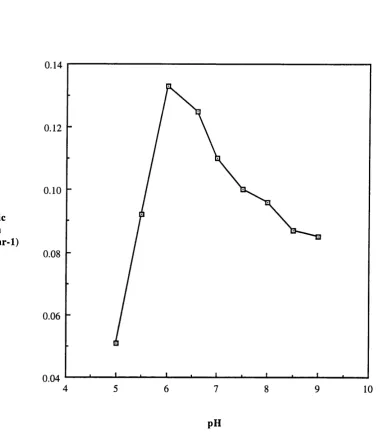
with two different media ... 112 3.1 Results of shake flask experiments to show the effect of pH on
the specific growth rate of Rhodococcus erythropolis on medium B.115 3.2 OUR, DOT and CER profiles for a 20 L fermentation of Rhodococcus
erythropolis Y2 ... 116 3.3 OUR and CER profiles for two successive 20 L fermentations of
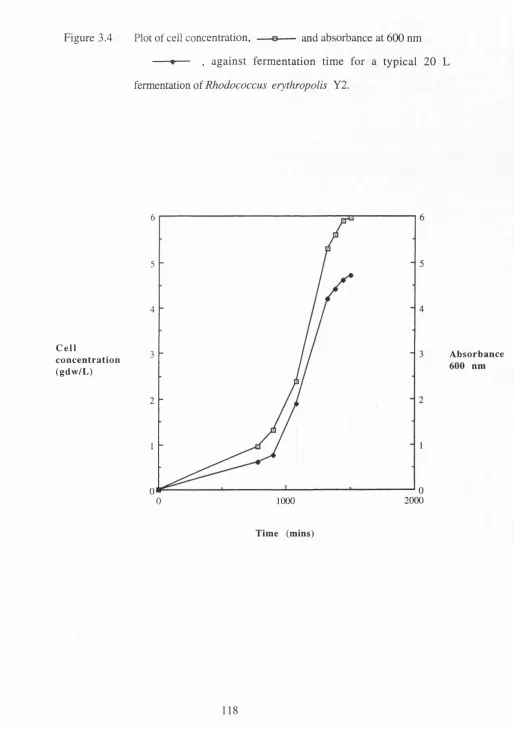
3.4 Plot of cell concentration and absorbance at 600 nm against fermentation time for a typical 20L fermentation of Rhodococcus
erythropolis Y2 ... 118 3.5 Relationship between absorbance at 600 nm and bacterial
concentration during a 20 L fermentation of Rhodococcus
erythropolis Y2 ... 119 3.6 Plot of Chloride Release against time for a 20 L fermentation of
Rhodococcus erythropolis Y2 ... 123 3.7 Chloride concentration against fermentation time for various
amounts of inducer ... 124 3.8 Results using a Chlor-o-counter showing chloride concentration
against time for cultures of Rhodococcus erythropolis Y2 induced at different times with 4-chlorobutanol ... 125 3.9 Results of shake flask experiments to determine the final enzyme
activity in cell free extracts for the amount of glycine added after
21 hours to a fermentation of Rhodococcus erythropolis Y 2 129 3.10 Effect of addition time of glycine on chloride release ... 130 3.11 Relative protein concentration against number of passes in a
French pressure cell at 1.38 x 10⁸ Pa ... 131 3.12 Relative protein concentration and enzyme activity against number
of passes in the high pressure homogenizer ... 132 3.13 Protein concentration profile of 5th pass cell free extracts against
fermentation time ... 133 3.14 Bacterial concentration against fermentation time for two
fermentations of Rhodococcus erythropolis Y2 ... 136 3.15 Fermentation profile showing OUR, CER and DOT for a 20 L
3.16 Fermentation profile showing OUR, CER and DOT for a 1500 L ftrm&xAdiiionof Rhodococcus erythropolis Y2 ... 138 3.17 Rate vs substrate concentration profile for the halidohydrolase
from Rhodococcus erythropolis Y2 towards 1-chlorobutane
solution at pH 7 141
3.18 Rate vs substrate concentration profile for the halidohydrolase from Rhodococcus erythropolis Y2 towards 1-chlorobutane
solution at pH 9 142
3.19 Lineweaver-Burk plot showing 1/rate vs 1/substrate concentration for the halidohydrolase from Rhodococcus erythropolis Y2
towards 1-chlorobutane solution at pH 7 143
3.20 Lineweaver-Burk plot showing 1/rate vs 1/substrate concentration for the halidohydrolase from Rhodococcus erythropolis Y2
towards 1-chlorobutane solution at pH 9 144
3.21 Rate vs substrate concentration profile for the halidohydrolase from Rhodococcus erythropolis Y2 towards 4-chlorobutanol
solution at pH 7 147
3.22 Rate vs substrate concentration profile for the halidohydrolase from Rhodococcus erythropolis Y2 towards 4-chlorobutanol
solution at pH 9 148
3.23 Lineweaver-Burk plot showing 1/rate vs 1/substrate concentration for the halidohydrolase from Rhodococcus erythropolis Y2
towards 4-chlorobutanol solution at pH 7 149
3.24 Lineweaver-Burk plot showing 1/rate vs 1/substrate concentration for the halidohydrolase from Rhodococcus erythropolis Y2
towards 4-chlorobutanol solution at pH 9 150
solution at pH 7 151 3.26 Activity vs amount of cell free extract for the halidohydrolase
from Rhodococcus erythropolis Y2 towards 1-chlorobutane
solution at pH 9 152
3.27 Activity vs temperature profile for the halidohydrolase from Rhodococcus erythropolis Y2 towards 1-chlorobutane
solution at pH 9 154
3.28 Chloride concentration profile during enzyme assay performed at different temperatures, for the halidohydrolase from Rhodococcus erythropolis Y2 towards 1-chlorobutane at pH 9 155 3.29 Activity vs temperature profile for the hahdohydrolase
from Rhodococcus erythropolis Y2 towards 4-chlorobutanol
solution at pH 9 156
3.30 pH profile of dehalogenase activity towards 1-chlorobutane in clarified cell free extracts of Rhodococcus erythropolis Y2 grown on 1-chlorobutane ... 158 3.31 pH profile of dehalogenase activity towards 4-chlorobutanol in
clarified cell free extracts of Rhodococcus erythropolis Y2 grown on a rich yeast exctract/glycerol medium (B) ... 159 3.32 Stability of Halidohydrolase activity in clarified cell free extracts
of Rhodococcus erythropolis Y2 grown on a rich yeast extract/
glycerol medium (B) towards 1-chlorobutane... 161 3.33 Activity of immobilized enzyme against the pH of the binding
buffer ... 165 3.34 Immobilization of proteins onto Eupergit C via free amino
groups 166
3.36 Activity of immobilized enzyme against the amount of cell free
extract per gram of beads ... 168 3.37 Protein concentration absorbed and percentage of total protein
absorbed against the amount of cell free extract per gram of beads... 169 3.38 Activity vs substrate concentration profile for the immobilized
halidohydrolase from Rhodococcus erythropolis Y2 towards
1-chlorobutane solution at pH 9 170
3.39 Activity vs substrate concentration profile for the immobilized halidohydrolase from Rhodococcus erythropolis Y2 towards
4-chlorobutanol solution at pH 9 171
3.40 Percentage conversion against flow rate of a saturated solution of 1-chlorobutane at pH 7 through a plug flow reactor packed
with immobilized enzyme ... 180 3.41 Percentage conversion against flow rate of a saturated solution of
1-chlorobutane at pH 7 through a plug flow reactor packed
with 100, 50 and 25 % percent of immobilized enzyme ... 181 3.42 Percentage conversion against (flow rate of a saturated solution
of 1-chlorobutane at pH 7)/(total amount of enzyme in the column).. 182 3.43 % conversion against flow rate of a saturated solution of
4-chlorobutanol at pH 7 through a plug flow reactor packed
with immobilized enzyme ... 183 3.44 % conversion against reaction time in a batch stirred tank
reactor with 5 mL of free enzyme in 45 mL of a saturated
solution of 1-chlorobutane at pH 7 184
3.45 % conversion against reaction time in a batch stirred tank reactor with 1 gdw of immobilized enzyme in 45 mL of a
4.1 The relationship between first order rate constants and the
operating pressure of a Manton-Gaulin hom ogenizer... 194 4.2 Flow rate vs operation time for one continuous flow reactor
compared to three continuous flow reactors in series ...201 4.3 Percentage conversion of 1-chlorobutane vs the amount of
LIST OF TABLES
Table Title Page
1.0 EEC Council Directive for emission limits into rivers...24 1.1 Industrial and agricultural uses of various haloalkanes ... 26 1.2 General characteristics of the main types of reactors ...31 1.3 Comparison of the relative activities of the haloalkane
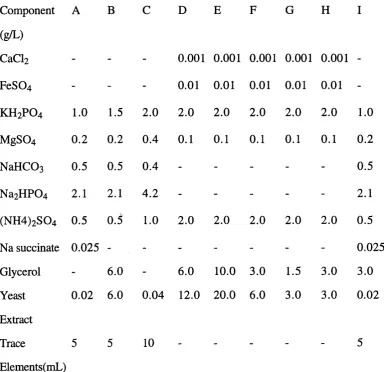
dehalogenase towards common substrates ... 51 1.4 Relationship between properties for scale-up ... 56 1.5 Reasons for loss of immobilized biocatalyst productivity ... 60 3.0 Medium components for growth studies ... 110 3.1 Comparison of bacterial concentration and specific growth rates
obtained on the media shown in Table 3.0 I l l 3.2 Comparison of the properties of various inducers ... 122 3.3 Fermentation Conditions and Results ... 135 3.4 Characteristics of the Eupergit C matrix ... 166 3.5 Activity of immobilized enzyme against the molarity of the
1.0 INTRODUCTION
Increased environmental awareness and stricter legislation (Table 1.0) has led to a realization that more needs to be done to remediate and prevent pollution. This means a clean up of existing hazardous waste sites and landfills, but more importantly the need to reduce deliberate discharge by end-of pipe or in process treatment of toxic substances in waste streams.
Moves are being made to change from traditional remediation methods to developing and employing a selection of environmental clean-up techniques. Initially, physicochemical technologies, especially physical containment, were used, as early biotechnological methods proved to be over-optimistic and unreliable. However, the enormity of the problem has meant that a more pragmatic approach has been taken in the usage of microbial metabolism in biodégradation. As a result, it is becoming an increasingly favoured technology which could prove to be a viable, cost-effective alternative for the remediation of many hazardous waste sites.
interesting problems of scale-up to cope with the very large volumes that need to be processed.
Table 1.0 EEC Council Directive for emission limits into rivers
(Compiled from EEC Directives Nos: 86/280, 88/347 and 90/415) Tvpe of industrial plant
Carbon tetrachloride production by perchlorination
Period Limit value (mg/Ll Monthly 1.5
Daily 3.0
Hexachlorobenzene production and processing
Monthly Daily
1.0 2.0
Production of chloromethanes by methane chlorination
Monthly Daily
1.5 3.0
Production of 1,2-dichloroethane Monthly Daily
1.25 2.5
Production of perchloroethylene by perchlorination
Monthly 1.5
Daily 3.0
In industry haloaliphatic compounds are widely used as solvents, lubricants, plasticizers, chemical intermediates and flame retardants (Hardman, 1991 ) (see Table 1.1). They are also used in agriculture as biocides. The total world production of chlorinated aliphatics has been estimated at 12 x 109 kg/yr (Kent, 1983).
Naturally occurring halogenated compounds are widely produced by bacteria, fungi, marine macroalgae, sponges, protozoa, marine hemichordates, plants and mammals. At least 5 million t/yr of chloromethane are released into the environment from natural sources worldwide. Some haloaliphatic compounds are toxic, carcinogenic, and resistant to degradation so tend to accumulate in the environment unless the halogen substituents are removed (Armfield, 1990).
Table LI Industrial and agricultural uses of various haloalkanes (Belkin, 1992) Compound Chloromethane Dichloromethane T richloromethane Chlorobromomethane Bromomethane Dibromomethane Chloroethane 1.2-Dichloroethane 1,1,1 -Trichloroethane 1.1.2-T richloroethane 1.1.2.2-Tetrachloroethane Hexachloroethane Bromoethane Dibromoethane 1-Bromopropane 1.2-Dichloropropane
1,2 Dibromo-3-chloropropane 1-Bromobutane 1-Bromooctane Uses Intermediate, refrigerant Solvent Intermediate, solvent
Intermediate, fire extinguisher, solvent Soil and space fumigant, intermediate Intermediate (agrochemicals and biocides) Intermediate, solvent, refrigerant
Solvent, intermediate (dyes, perfumes) Solvent
Solvent Solvent
Solvent, explosives, rubber vulcanization Ethylating agent, refrigerant
Anti-knock additive, soil fumigant, solvent Intermediate (Pharmaceuticals, insecticides) Soil fumigant, solvent
Soil fumigant
1 .1 MICROBIAL BIOTRANSFORMATIONS 1 . 1 . 1 Introduction to Biotransformations
Biotransformations have traditionally dealt with the synthesis of novel organic molecules but they can also be used for degradation of toxic and environmentally harmful compounds, such as haloalkanes. The use of biotransformation technology in a degradative mode affects the selection and design of the reactor, partly dependent on the kinetics of the process at very low substrate concentrations.
Biotransformations occur when a product is obtained from a substrate through one or more reactions catalyzed by enzymes in the cells. In this project, the enzymes are used to degrade the substrate, the haloalkane and thus enable it to be mineralized to a safer product. Biotransformations may be carried out using the enzyme in a number of forms, as whole cells or isolated enzymes or as immobilized cells and enzymes. When developing a biotransformation process, biocatalyst selection and preparation, biotransformation, product isolation and recovery all need to be considered.
1 . 1 . 2 Biocatalysts
Biocatalysis involves the catalytic conversion of one compound to another using a microorganism, plant or animal cell whether growing, resting or as a cell extract in a crude or purified form.
introduction of a biocatalytic step into a reaction pathway may allow for a reduction in the total number of steps required. The biocatalysts with the most short term potential are the non-cofactor requiring enzymes, the most versatile group of biocatalysts being the hydrolases.
The greatest obstacle for the increased use of biocatalysts are the inherent disadvantages of biocatalysts, the existence of efficient chemical technology and regulations about changing current pharmaceutical production processes. As a result, few biocatalytic processes have been commercialized and those that have involve a single reactant of low molecular weight and high solubility in water. Biocatalysts should not therefore be used as replacements but as a new type of catalysts for which new uses and processes must be developed.
1 . 1 . 3 Characteristics of the Biotransformation for Process Design In the design of a biotransformation process, several factors need to be considered. The properties of the substrate and product, the characteristics of the reaction and biocatalyst, and the interactions between the substrate and product and the biocatalyst must all be taken into account (Woodley and Lilly, 1994).
An understanding of the reaction characteristics is also an important factor in the design of a biotransformation process. The equilibrium of the reaction is pH and temperature dependent and these may be adjusted to obtain the desired fractional conversion. Many biotransformations are accompanied by a change in pH and this may affect the selection and operation of the bioreactor. If the substrate or product is a gaseous substance, its consumption or production may need to be controlled. To reduce the amount of gas phase in the reactor, either an enriched gas phase may be used or the pressure in the reactor could be increased to dissolve some of the gas in solution.
The characteristics of the biocatalyst, especially its intracellular or extracellular nature, will determine the method of catalyst production and whether the enzyme should be used in the whole cell, as an isolated enzyme or in an immobilized form. Knowledge of the site of reaction is important for reactor selection and scale-up, in particular where a reaction occurs at the interface and a balance must be struck between catalyst activity and stability.
Finally, the interactions between biocatalyst, substrate and product must be considered. An understanding of substrate and product inhibition and substrate activity dependent on substrate concentration, pH and temperature must be gained. In addition, substrate and product toxicity and catalyst activity and stability as a function of substrate and product concentration, pH and temperature should be determined.
1 .1 .4 Choice of Reactor System
characteristics of the reactor. These criteria can be illustrated by comparing three basic types of reactor: batch stirred tank; plug-flow (usually a packed bed); and a continuous stirred tank reactor (CSTR) as in Table 1.2. The choice will be influenced by the reactor output requirement. If this is small then a CSTR will not be economical. A batch system is probably the most flexible and cost effective.
The operational requirements of the reaction may also restrict the choice of reactor. Temperature and pH can be more easily controlled in a well-mixed stirred tank reactor. As the reaction proceeds, it may be necessary to feed substrate and this can be achieved most easily in a batch or tubular reactor. In addition, if the feed contains undissolved solids, a packed bed reactor cannot be used. Where the enzyme is reused, the reactor choice will be limited to those where retention systems can be fitted.
Table 1.2 General Characteristics of the main types of reactors (Woodley and Lilly, 1994)
Batch Packed bed CSTR
Liquid flow pattern well-mixed Plug-flow well-mixed
pH control possible difficult possible
Temperature control possible difficult possible
Gaseous reactants/products possible unsuitable possible Suspended solids in feed stream possible unsuitable possible Catalyst mechanical damage likely unlikely likely
Maximum catalyst concentration low high low
Low stabihty possible unlikely possible
Substrate inhibition poor poor good
1 .2 INTRODUCTION TO THE GENUS R hodococcus A N D RELATED ORGANISMS
1 .2 .1 Introduction
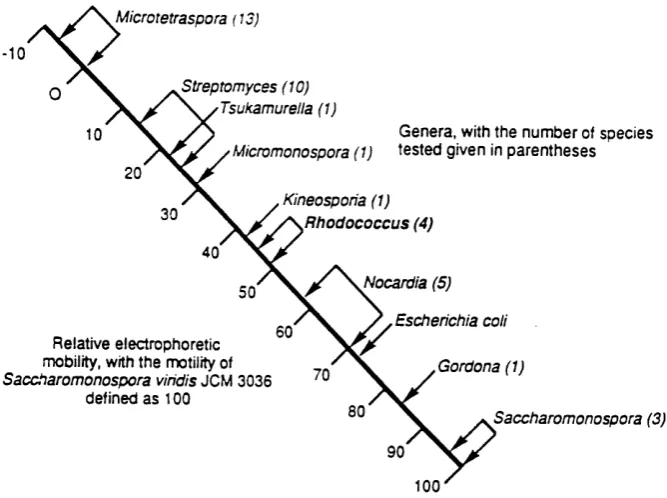
The identification and classification of the genus Rhodococcus has been largely based on their distinctive cell-wall composition, often containing long-chain mycolic acids and tuberculostearic acid (Finnerty, 1992). The partial sequencing of 16S RNA has enabled the supragenic relationships of actinomycetes to be established, (Figure 1.0), placing Rhodococcus, Nocardia and Mycobacterium among the nocardioform actinomycetes, (Goodfellow, 1989). Corynebacterium, Gordona and Tsukamurella are closely related organisms, and several species have been moved among these genera. For example, Ochi (1992) has separatedGor<iona and Tsukamurella from Rhodococcus by measuring the electrophoretic heterogeneity of ribosomal protein AT-L30 (Figure 1.1).
Due to their persistence in the environment, their apparent lack of catabolite repression and their tolerance to starvation, rhodococci have been found to be useful in bioremediation tests. They display a diverse range of metabolic capabilities and are able to degrade short-chain, long-chain, and halogenated hydrocarbons, and numerous aromatic compounds, including halogenated and other substituted aromatics, heteroaromatics, hydroaromatics and polycyclic aromatic hydrocarbons (Warhurst and Fewson, 1994). They possess a variety of pathways for degradation and modification of aromatic compounds, including monooxygenase and dioxygenase ring attack, and cleavage of catechol by both ortho- and meta- routes.
bioflocculant, NOC-1 (Kurane et al. 1986), which is able to flocculate a wide range of materials including kaolin clay, yeast and livestock water.
1 .2 .2 K inetics of Bacterial Growth on Chlorinated A liphatic Compounds
Biological removal of halogenated aliphatic compounds is an option provided that efficient elimination of these potentially recalcitrant substrates can be achieved. The elimination efficiency depends on the process technology but more importantly on the degradation properties of the bacterial strains employed. Important aspects of bacterial growth are the Monod half-saturation constant (Kg) and the maximum growth rate (Pmax). In a process where the concentration of the growth substrate and Kg values are of the same order of magnitude, the degree of elimination is influenced by the Kg value. The kinetic parameters also affect the rate of the removal in biofilms and thus influence reactor design. Wijngaard et al (1993) described the kinetics of growth of Ancylobacter aquaticus AD20 and AD25, Xanthobacter autotrophicus GJIO and Pseudomonas sp. strain ADI. Monod kinetics were observed during growth in chemostat cultures on 1,2-dichloroethane, 2-chloroethanol and l,3-dichloro-2-propanol. The Kg values of strains GJIO, AD20 and AD25 for 1,2-dichloroethane were 260, 222 and 24 pM respectively. The results indicated that the efficiency of chlorinated compound removal was influenced by the kinetic properties and the cellular content of the first catabohc enzyme.
Figure 1.0 Relationship between rhodococci and closely related bacteria, based on partial sequencing of 16S ribosomal ribo-nucleic acids (Goodfellow, 1989).
- Actinomyces
■ Corynebacterium
' Nocardia
■ Rhodococcus ' Mycobacterium
Actinoptanes Ampullariella
Dactylosporangium
• Micromonospora
Actinobacteria
Nocardiofomns
Figure 1.1 Separation of rhodococci from other genera using the electrophoretic heterogeneity of ribosomal protein AT-L30 (Ochi, 1992).
Microtetraspora (13)
^Streptomyces (10) 'Tsukamurella (1)
Genera, with the number of species ' Micromonospora (1) tested given in parentheses
Kineosporia (1) R h o d o co ccu s (4)
Nocardia (5)
gQ , ^Escherichia coll
Relative electrophoretic
mobility, with the motility of / X Gordona (1 ) Saccharomonospora vihdis JCM 3036 ^
defined as 100
1 .3 HALOALKANE DEHALOGENASES
Halogenated alkanes can function as carbon and energy sources, cometabolic substrates and as electron acceptors in bacteria. In general, organic compounds act as electron donors and undergo oxidation. However, due to the electronegative character of the halogen substituents on aliphatic compounds, polyhalogenated alkane compounds often behave as electron acceptors and are therefore reduced.
Haloalkanes, especially the short-chain molecules, are easily transported through the soil by groundwater resulting in aquifer contamination. Usually, Cio-ig straight chain haloalkanes are the most amenable to biotransformation, although the gaseous C i_4 and liquid C5.9 haloalkanes have been studied more frequently because of their environmental importance and their significance for public health.
Hydrolytic removal of halogen substituents is commonly the first step in the degradation of haloaliphatic compounds by aerobic bacteria. Hydrolytic dehalogenations are catalyzed by specific dehalogenases, a group of enzymes which has been extensively studied in bacteria and which does not seem to occur in mammals. The application of bacteria possessing hydrolytic dehalogenases comprises two major fields: treatment processes for industrial waste streams and biotransformations for the production of chiral building blocks (see Section 1.10.3).
1 .3 .1 Anaerobic Transformations
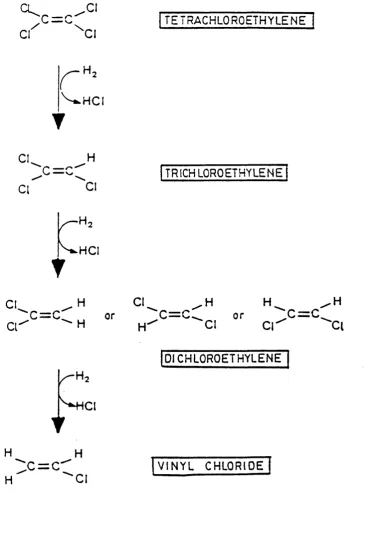
haloalkanes, thus allowing them to be mineralized. Vogel and McCarty (1985) proposed a reductive dehalogenation of tetrachloroethylene (Figure 1.2).
Belay and Daniels (1987) first reported the metabolism of halogenated hydrocarbons by pure cultures of methanogenic bacteria. They suggested that degradation was due to both dehydrohalogenation and reductive dehalogenation reactions which could occur independently or together depending on the substrate. In the case of bromoethane, conversion could occur via a dehydrodehalogenation (Equation 1.0) to produce ethylene or by reductive mechanism (Equation 1.1) to produce ethane.
(Equation 1.0)
Dehydrodehalogenation
I I \ ^
X - C - C - X ...> + XH
(Equation 1.1)
Reductive dehalogenation
i l I I
Figure 1.2 The possible pathway for the reductive dehalogenation of tetrachloroethylene (Vogel and McCarty, 1985).
C l^ C = r
. 0 1
\ CI
TETRACHLOROETHYLENE
H.
CL
Cl
‘C = C H
Ci
TRICHLOROETHYLENE
H.
^ H C I
CI C I ^
H
C | ^ ^ “" '"C l
DICHLOROETHYLENE
H
H
:c=c*
HCI
In addition to methanogens, reductive dehalogenation of highly chlorinated aliphatics by other strict anaerobes has been reported. The sulphate-reducing organism Desulphobacterium autotrophicum converts 1,1,1-trich lo ro eth an e to
1,1 -dichloroethane (Egli et a l. 1987) and a Clostridium sp., an anaerobic heterotroph transformed 1,1,1-trichloroethane and carbon tetrachloride by reductive dehalogenation. Egli et al (1988) also investigated the reductive dechlorination of carbon tetrachloride by Acetobacterium woodii and four other anaerobes and showed that the reduction of chlorinated methanes only occurred in organisms which possessed the acetyl-CoA pathway (Figure 1.3).
The use of methanogens in anaerobic and aqueous environments for biodégradation is therefore possible where halogenated compounds occur at low concentrations. Further biodégradation of the dechlorinated products may then occur under anaerobic conditions.
1 .3 .2 Aerobic Dehalogenation of Haloalkanes
Figure 1.3 Proposed pathway of carbon tetrachloride degradation in bacteria that possess the acetyl-CoA pathway.
C CI
4 1
\
3
CO ---► Acetyl-CoA ^ A cetate
2
CH CI ► C H CI ---
^
CH CIo 3
Key
1. Sequential Reductive Dehalogenation 2. Substitutive Transformation
Initial studies (Anders, 1982) showed that prokaryotes and eukaryotes possess two catalytic mechanisms for carbon-halogen bond cleavage of haloalkanes, either reductive or oxidative. These reactions are catalyzed by a glutathione-dependent nucleophilic replacement catalyzed by glutathione-S-transferase or by cytochrome P450. Recent studies (Janssen et al. 1987) have isolated enzymes known as haloalkane halidohydrolases that catalyze hydrolytic dehalogenation. The choice of enrichment substrate affects the selection of the dehalogenase types and hydrolytic dehalogenases are selected by substrates with chain lengths of C1-C4.
1 .3 .2 .1 Glutathione-Dependent Dehalogenases
Pseudomonas sp. DM1 was shown to convert dichloromethane to formaldehyde by a mechanism that was strongly induced by dichloromethane but was not detectable in the cell-free extracts (Brunner et a l. 1980). Stucki et a l. (1981) described an inducible, glutathione-dependent enzyme that converted DCM to formaldehyde and inorganic chloride in cell-free extracts of Hyphomicrobium sp. DM2. (Figure 1.4). The dehalogenase activity was strongly inducible and was strictly dependent on GSH. A number of glutathione-S-transferases have been detected although none has yet been purified.
These enzymes differ from those bacterial glutathione transferases recently isolated from a number of bacterial strains. (Piccolomini et al. 1989). The bacterial GSTs were all dimeric proteins composed of 2 subunits with a molecular weight of 22.5 kd and formed between 0.002-0.06 % of the total cytosolic protein with at least two classes of GSTs having a role in defence against the effect of antibiotics.
1 .3 .2 .2 Oxygenase-type Dehalogenases
These enzymes have a broad substrate range and catalyze the dehalogenation of haloaromatic, haloalkane and haloalkanoic acids. The methane monooxygenases usually function to oxidize methane to methanol via a NADH, oxygen dependent reaction. Alkanes up to pentane are oxidized at similar rates, although an increase in the size or number of halogen substituents does have an adverse effect on the rate of oxidation.
Methane monooxygenases exist in a soluble or particulate, membrane-bound form, and the distribution between both forms has been shown to be dependent on growth conditions. The m ethane-oxidizing bacterium H2, oxidized mono- and dichloromethanes to the corresponding acids and haloacids, which may then become substrates for 2-haloacid dehalogenases in the environment. Some monooxygenases act as terminal alkane hydroxylases while others produce a mixture of 1- and 2- alcohols from n-alkanes.
Figure 1.4 Glutathione-dependent dehalogenation of dichloromethane by Hyphomicrobium sp. DM2 (Stucki et al ,1981).
H
R — c — Cl + O j + N A D ( P ) H
H
ALXANE MONOOXYGENASc
H
1
R — C — Cl
I
OH
+ H , 0 + N A D ( P )
SPONTANEOUS I
R - C " + MCI
DEHYDROGENASE
R - C
\ O
Methane monooxygenases could be isolated as particulate or soluble enzymes in methylotrophs depending on their growth conditions (Stanley et a l . 1983). The particulate form differed in its substrate specificities, in that it could not oxidize aromatic or higher alkanes whereas the soluble enzyme could.
Yokota et al (1986) reported the failure of resting cell suspensions of the hydrocarbon-utilizing bacterium Pseudomonas butanovara to dehalogenate haloalkanes under anaerobic conditions and so concluded that an oxygenase was involved in the dehalogenation of haloalkanes. The alkane monooxygenase, induced by the n-alkane moiety catalyzed n-terminal dehalogenation of haloalkanes to aldehydes which were subsequently converted to the corresponding acids by dehydrogenases (Figure 1.5).
Figure 1.5 Proposed scheme for the dechlorination of 1-chloroalkanes by the n-alkane monooxygenase (Yokota et al. 1986).
GSH
CHaCi^ GS— C H Cl
J
HCIGS— CH OH
2
GSH + CH O
1 .3 .2 .3 Haloalkane Halidohydrolases
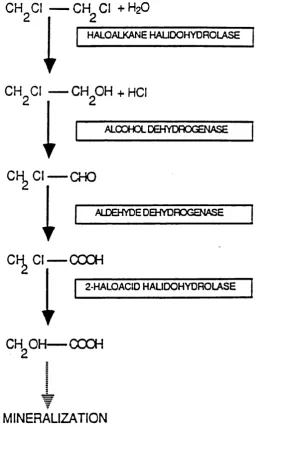
Haloalkane halidohydrolases are enzymes that are capable of hydrolytic cleavage of carbon-halogen bonds by catalyzing a nucleophilic substitution with water. Recently it has been found that several chlorinated hydrocarbons of environmental and toxicological relevance may be converted by hydrolytic dehalogenation in bacteria. A h y d rolytic dehalogenase w ith activity tow ards 1,2-d ich lo ro eth an e,
1,2-dibromoethane, 3-chloropropane and methylchloride was described in a strain of Xanthobacter autotrophicus that utilizes chlorinated aliphatics for growth (Janssen et al. 19871 (Figure 1.6). This dehalogenase was found to be a polypeptide with a molecular mass of 36 kDa showing activity toward various Ci to C4 1-halogenated or n-alkanes, and in common with other halidohydrolase-type dehalogenases required no co-factors or oxygen for activity (Janssen et al. 1988).
between the ring NH’s of two trytophan residues, T rpi2s and Trp^g, located in the active site. The halide ion lies on the intersection of the planes of rings of the tryptophans. Figure 1.7 shows the putative reaction mechanism in which the O atom of Asp 124 performs a nucleophilic attack on the substrate, resulting in an intermediate ester j(Verschueren et al. 1993b)uently, ajhydrolytic water molecule, activated by His289, cleaves this intermediate, releasing the alcohol product and restoring the Aspi24 side-chain.
The isolation and characterization of haloalkane halidohydrolases have also been reported from Corynebacterium sp. strain ml5-3 (Yokota et al. 1986); Arthrobacter sp. H A l (Scholtz et al. 1987) and Rhodococcus erythropolis Y2 (Sallis et al. 1990). The biochemical characteristics of these organisms are all similar. The enzymes all have pH optima ranging from pH 9.2 to 9.5 and are monomeric proteins with a molecular weight of 34 to 36 kDa. They also have similar isoelectric points and activation energies.
H+ ions are produced in this reaction and thus a drop in pH is observed during fermentation. To control the pH, alkali is added to the fermentation and the choice of alkah has implications for the reactor choice.
Comparison of substrates common to all of the haloalkane halidohydrolases indicates that the enzyme from Y. autotrophicus GJIO is different to the others with respect to relative substrate activities. The type of haloalkane halidohydrolase isolated may depend on the choice of enrichment substrate. X. autotrophicus GJIO was isolated on 1,2-dichloroethane whereas the others were isolated on
Figure 1.6 Suggested pathway for the metabolism of 1,2-dichloroethane by Xanthobacter autotrophicus GJIO (Janssen et al. 1987). The reaction of interest is the one catalyzed by the haloalkane halidohydrolase. It should be noted that no cofactors or oxygen are required for this reaction.
CH^CI CH^CI +H2O
HALOALKANE HAUDGHYDROLASE
CH^CI — CH^OH + HCI
ALCOHOL DEHYDROGENASE
C l— CHO
I
ALDEHYDE DEHYDROGENASEC l— COOH
1
2-HALOAClD HALIDOHYDROLASECH OH COOH
2
Figure 1.7 Reaction mechanism at the optimal pH (pH 8.2) of haloalkane dehalogenase from Xanthobacter autotrophicus GJIO as deduced from the crystal structures of the native enzyme without substrate
(Verschueren et al. 1993c).
Ô
....
O . . . > 0
X
BiDdlB( of s a b M r a U in i h * k ü t c u u carily * naooo^Mlic otucfc of
H
C,
Cl,
ooo
T n m U o n O n u I for nndcophiUc ottnck
Loavini of cklorldt prndvct ° q
H
C, Cl,' \ a,
0
HCj
C, — OH
Loaafn# of aic o M prodact ° @
The five haloalkane halidohydrolases already isolated and purified show substrate activity towards more than sixty haloalkanes and some haloalcohols.
The producer organisms are readily isolated from soil using batch-enrichment cultures. These isolated aerobic bacteria are more beneficial than methanogens in that they can withstand higher concentrations of substrates and they have lower degradation rates. In addition they are able to utilize the haloalkane directly for growth. All of these properties have fuelled a growing interest in research into haloalkane halidohydrolases and their producer organisms.
1 .4 HALOALKANE HALIDOHYDROLASE PRODUCED BY
Rhodococcus erythropolis Y2
Rhodococcus erythropolis Y2, capable of utilizing 1-chlorobutane as its sole source of carbon and energy, was isolated by batch enrichment culture from a soil sample previously exposed to haloalkanes (Sallis et al. 1990). In addition to growth on 1-chlorobutane, Rhodococcus erythropolis Y2 can use the following as growth substrates; 1-chloropropane, 1-chloropentane, 1-chlorohexane, 1 -chlorododecane, 1-chlorotetradecane, 1 -chlorohexadecane and 1 -chlorooctadecane. The dehalogenase was inducible and active towards a larger range of halogenated aliphatic compounds than would support growth of the organism. The enzyme also catalyzed the cleavage of a number of mono- and di-substituted chloro- and bromoalkanes with carbon chain lengths from C1-C16. The product of its activity towards 1-chlorobutane was n-butanol, and towards 4-chlorobutanol, the product was 1,4-butanediol (Equations 1.2 and 1.3). This indicates a hydrolytic dehalogenation catalyzed by the enzyme. Table 1.3 shows a comparison of the relative activities (standardized with respect to
Table 1.3 Comparison of the relative activities (standardized with respect to 1-chlorobutane degradation rates) of the haloalkane dehalogenase towards common substrates. (Sallis et al. 1990).
Substrate Relative Acl
1-chloropropane 8
1-chlorobutane 100
1-bromobutane 100
1-chloropentane 132
1-chlorohexane 107
1-bromohexane 66
1-chloroheptane 104
1-chlorooctane 72
1-chlorononane 77
1-chlorodecane 85
1 -chlorododecane 53
1 -chlorotetradecane 10
1 -chlorohexadecane 8
1 -chlorooctadecane 0
1,2-dichloromethane 6
1,2-dibromoethane 802
1,3 -dichloropropane 202
1,4-dichlorobutane 232
1,6-dichlorohexane 168
1,9-dichlorononane 61
2-chlorobutane 3
2-bromobutane 67
1,2-dichloropropane 4
1,2-dibromopropane 132
2-chloroethanol 15
3-chloropropan-1 -ol 18
4-chlorobutan-1 -ol 121
(Equation 1.2)
Haloalkane Halidohydrolase
CH3-CH2-CH2-CH2-CI + H2O —> CH3-CH2-CH2-CH2-OH + HCl
(Equation 1.3)
Haloalkane Halidohydrolase
CI-CH2-CH2-CH2-CH2-OH + H2O —> OH-CH2-CH2-CH2-CH2-OH + HCl
The dehalogenase showed an optimum activity at pH 9.2 and retained more than 50 % of its maximum activity over a pH range of 7.5-11.0, but was very low at pH 5-6. Activity increased with assay temperature. Sallis etal £1990) reported that the enzyme had an isoelectric point of 4.7, an activation energy of 43 kJ/mol, a of 0.26 mM and a V^ax of 0.38 for 1-chlorobutane. Its molecular mass is 36 kDa and it is a monomeric protein. The n-terminal sequence for the first twenty residues of the purified enzyme is as follows: Ser-Glu-Ile-Gly-Thr-Gly-Phe-Pro-Phe-Asp- Pro-His-Tyr-Val-Glu-Val-Leu-Gly-Glu-Arg. The presence of similar haloalkane dehalogenases in the environment suggests that they have not evolved recently. The possibility of parallel evolution from a common ancestral protein or the spread of dehalogenase genes or plasmids is a plausible explanation for this homology.
1 .4 .1 Effect of Glycine
Other work with glycine has indicated that it has the ability to alter cell wall structure and increase protein production. Mivashiro et al (1980) demonstrated that glycine and L-isoleucine were prominent in stimulating protein production in Bacillus brevis, although the mode of action of each was different. Glycine made cells more sensitive to lysozyme and caused a large decrease in the alanine content of the cell wall fraction. These findings supported the possibility that glycine alters cell wall structure in such a way as to facilitate protein excretion. Hara et al (1983) added 1.5 % glycine to the growth medium of Bacillus mesentericus niger. The results suggested that glycine might stimulate protein excretion as well as protect the excreted protein from protease.
1 .5 SCALE-UP
Rhodococcus erythropolis has previously been grown on a small scale, up to 2 L, and therefore the effects of scaling-up the fermentation were not known. In addition, it was considered to be important to demonstrate the feasibility of the proposed biotransformation by developing a pilot plant scale fermentation. For these reasons and to produce sufficient amounts of enzyme for the study, a large scale process has been developed.
The scale-up of this system followed a similar pathway to that shown in Figure 1.8, where a 1% (v/v) inoculum was used whenever possible.
established in a laboratory fermenter. These include pH, temperature, nutrient concentration, oxygen concentration and shear rate. Scale-up involved maintaining these conditions independent of vessel volume. If conditions were the same, and if no mutations occured which might have caused the growth kinetics or the metabolic products to change, the production rate per unit volume should have been the same in the large and small scale systems.
Figure 1.8 Typical pathway for the scale-up of a process to 1000 litres
PRODUCTION FERMENTER
SECTION T H R O U G H FERMENTATION A R E A
MEZZANINE LEVEL
SEED FERMENTER
GROUND LEVa
10 mL--AGAR SLANT
-> 10 mL--- >140 mL--- >14 L--- >1000 L
The criteria for scale-up generally differs for chemical reactors and bioreactors. The following have been proposed for bioreactor design and were considered when calculating the fermentation conditions when scaling up from 20 htres to 1500 litres:
- Constant impeller tip speed = 7t x impeller speed x impeller diameter (Equation 1.4) Impeller tip speed determines the maximum shear rate. This may then influence both the size of the microbial floe or maximum stable bubble size and any damage to viable cells.
- The Reynolds number in the turbulent region, Ret, determines the root mean square velocity, u rms, thus the bubble mass transfer coefficients.
- Constant volumetric power input (P/V). This value tends to decrease with increased scale. Using this value through the turbulent Reynolds region enables mass transfer coefficients and particulate sizes to be determined. It also allows the size of motor needed during fermentation to be calculated.
- Equal mixing times. In practice, mixing time increases with scale. If it is a well- mixed vessel, then there is a characteristic circulation time. If the liquid recirculation flow rate Fi through the impeller region varies as a cross-sectional area TtDj 2 and the average impeller velocity in the tank varies as N jD i, then Fi / V is proportional to NiDi 3 / Di 3 which equals Nj.
illustrates an example of scale-up from a small scale 80 L to a large scale 10,000 L agitated bioreactor (Oldshue, 1966).
Table 1.4 Relationship between properties for scale-up (Oldshue, 1966)
Property SOL Large scale, ICKL
P 1.0 125 3125 25 0 .2
P/V 1.0 1.0 25 0 .2 0.0016
Ni 1 .0 0.34 1 .0 0 .2 0.04
Di 1.0 5.0 5.0 5.0 5.0
Fi 1.0 42.5 125 25 5.0
Fi/V 1 .0 0.34 1 .0 0 .2 0.04
NiDi 1 .0 1.7 5.0 1 .0 0 .2
Rei 1 .0 8.5 25 5.0 1 .0
N.B The bold numbers are the parameters that were kept constant at that value and the other values are those that resulted from this action.
If geometrical similarity is maintained between scales, it is not usually possible to use more than one criteria for scale-up. It is therefore necessary to choose, as a scale- up basis, the transport property most critical to the performance of the particular bioprocess. This may prove difficult, given the sensitive and diverse responses of bacteria to each of the transport phenomena.
1 .6 STATE OF BIOCATALYST
Having established a large scale process for its production, it is necessary to decide on the state of the catalyst, whether the whole cell or the isolated enzyme should be used, and whether that cell or enzyme should be in a free or immobilized form (Figure 1.9). If immobilization is chosen, an appropriate immobilization technique must be found for the system.
Biotransformations may be performed using whole cells or isolated enzymes as biocatalysts. Improvements in extraction and isolation technologies have meant that the use of intracellular enzymes is a viable option. The use of the isolated enzyme can be beneficial in many ways. Downstream processes may require a less turbid solution than would be obtained if whole cells were used, and as immobilized cells, growth of the cells during reaction may be a problem which may lead to diffusional limitations and release of cells into the broth.
Figure 1.9 Possible pathways leading to biotransformation
ORGANISM
t
FERMENTATION
t
HARVESTING__
GE
l
J DISRUPTION^
ENZ'^ME
ISOLATION
T
t
IMMOBILIZATION
IMMOBILIZED CELL OR IMMOBILIZED ENZYME
ENZYME
V
WHOLE CELL
With the introduction of new separation technology, it is now possible to prepare intracellular microbial enzymes on the scale required for their use as industrial catalysts. Whether the effort involved in the purification is justified may depend on the enzymic activities demonstrated by the microbial cell.
The most important factor affecting the selection of an immobilized enzyme process is one of cost. If the enzyme is readily available at a low cost, the expense of immobilization may not be justified. Where the enzyme is expensive, the extra cost of immobilization, and therefore the ability to reuse the catalyst, will be less than continually adding more enzyme to the system. In fact, if the immobilization cost equals the production cost of the enzyme, reuse becomes economic after two uses. All immobilized enzymes are generated for the equivalent of at least fifty uses.
The stability of the enzyme is also an important consideration in relation to the average residence of substrate within the reactor. A balance must be achieved between flow rate, reactor volume, and enzymic activity. Ideally, the immobilized enzyme particle must have the maximum possible enzyme loading that will not induce significant diffusional limitations (Chibata and Tosa, 1976). Another consideration is that of the operational half-life of the system. The immobilized enzyme must be sufficiently stable under operational conditions or it will continually need replacing. It would also be beneficial if the polymer matrix could be recycled when its enzyme activity had been lost, especially if the half-life of the enzyme was short. This half-life may be influenced by many factors, as listed in Table 1.5.
binding large quantities of enzyme and exist in the desired physical form (Messing, 1975).
This project will concentrate on a large scale system for the production of an intracellular enzyme, a haloalkane halidohydrolase from Rhodococcus erythropolis Y2. The enzyme will be used in an immobilized form in a packed bed plug flow reactor for the removal of haloaliphatic compounds from aqueous process streams. The immobilized enzyme was chosen because of the high cost of producing the enzyme and the need to protect the enzyme from extremes of pH and temperature as well as the possibility of low solubility substrates. In addition, the practical training associated with both the production of an enzyme to carry out a biotransformation and the immobilization of such an enzyme system will be invaluable.
Table 1.5 Reasons for loss of immobilized biocatalyst productivity (Lilly, 1977).
• Loss of enzyme activity dénaturation
poisoning
• Reduced enzyme substrate contact change in flow pattern
change in enzyme distribution fouling
• Loss of enzyme
1 .7 ENZYME KINETICS
In the design of a bioreactor, it is necessary to understand the kinetics of the enzyme and the corresponding biotransformation. The majority of enzyme catalyzed reactions are believed to involve a series of bimolecular or unimolecular steps. The simplest type of enzymatic reaction involves a single substrate. The substrate forms an unstable intermediate complex with the enzyme (ES), which subsequently undergoes decomposition to release the product or to regenerate the substrate.
1 . 7 . 1 Rate Equations
For a given temperature and pH, the conversion of a single substrate (S) to product (P) by an enzyme (E) may be written as:
ki k]
E + S <--- > E S --- > E + P (Equation 1.5) k2
where:
ki, k2 and kg are individual rate constants.
If the substrate concentration is much greater than the concentration of the enzyme then the rate of reaction (v ) can be described by the following Michaelis-Menten equation:
V = -dS/dt = kg [E] S/S + Km (Equation 1.6)
where the Michaelis constant (K^) is represented as:
Equation 1.3 can be rearranged as follows:
1/v = 1/Vmax + Km/Vmax (1/S) (Equation 1.8) where:
Vmax = the maximum reaction rate = kglE]
By plotting 1/v against 1/S, a Lineweaver-Burk plot is obtained which enables V^ax and Km to be determined.
Although the Michaelis-Menten equation is applicable to a wide range of enzyme catalyzed reactions, it is not appropriate for reversible reactions or multi-substrate reactions.
1 . 7 . 2 Enzyme Inhibition
1 . 7 . 3 Effect of pH and Temperature on Enzyme Kinetics
Most enzymes are efficient catalysts only within relatively narrow ranges of pH and temperature. The catalytic site and the conformation of the enzyme will be affected by changes in pH. Enzyme activity generally passes through a maximum at an optimum pH which may be due to a change in the stability of the enzyme, a change in the enzyme/substrate affinity or a reversible effect of pH on the maximum reaction rate (Vmax).
When the rate of an enzyme catalyzed reaction is measured as a function of temperature, it is found that the rate passes through a maximum. In the low temperature range, there is little dénaturation, and increasing the temperature increases the rate of the catalytic reaction (Equation 1.9).
Arrhenius equation
ka = Ae -Ea/RT (Equation 1.9)
where:
ka = reaction rate constant for activation A = Arrhenius constant
Ea = activation energy for catalytic reaction R = gas law constant
T = absolute temperature
1 .8 IMMOBILIZATION 1 . 8 . 1 Introduction
During the past twenty years, increasing emphasis has been placed on enzyme immobilization. A variety of immobilization techniques and carriers is available although there is no ideal solution. The method of attachment and carrier must be determined by considering the application, the enzyme and the proposed use.
There are many varied advantages to enzyme immobilization. These include the following: multiple use of a single batch of enzymes; the ability to process on a continuous basis; the ability to stop or control the extent of a reaction rapidly by removing or limiting the enzyme; the possibility of enzyme stabilization caused by bonding and the fact that the process solution is not contaminated by the enzyme while its catalytic effect is still felt. In addition, long half-lives, predictable decay rates, and the elimination of the preparation of enzyme solutions mean that immobilized enzymes can be used for analytical purposes.
Transfer rates of reactants from the bulk liquid to the outer surface and into the pores, if present, of the immobilized biocatalyst may be relatively slow and thereby cause a decrease in the reactant concentration at the catalytic site compared to that in the bulk liquid. This reduction in reaction rate may be expressed in terms of an effectiveness factor, which is the ratio of the reaction rate with and without mass transfer limitations present.