RISK: Health, Safety & Environment (1990-2002)
Volume 13 | Number 1
Article 3
March 2002
Environmental Risk Analysis: Problems and
Perspectives in Different Countries
Bhola Ram Gurjar
Manju Mohan
Follow this and additional works at:
https://scholars.unh.edu/risk
Part of the
Environmental Sciences Commons
, and the
Law Commons
This Article is brought to you for free and open access by the University of New Hampshire – School of Law at University of New Hampshire Scholars' Repository. It has been accepted for inclusion in RISK: Health, Safety & Environment (1990-2002) by an authorized editor of University of New Hampshire Scholars' Repository. For more information, please [email protected].
Repository Citation
Environmental Risk Analysis: Problems and
Perspectives in Different Countries
Bhola Ram Gurjar and Manju Mohan*
Introduction
A number of industrial accidents, such as those at Flixborough in 1974, Seveso in 1976, Bhopal in 1984, and Pasadena in 1989, have led to growing concerns about the potential hazards and risks involved in chemical process industries.1 Such industrial accidents not only cause huge monetary losses and severe damages to infrastructure, but also result in serious injury or death to people within and beyond the immediate vicinity of the work place. The top fifteen industrial disasters based on fatality estimates, which occurred between 1945 and 1998 in different countries, are shown in Table 1.2
* Bhola R. Gurjar is affiliated with the Max Planck Institute for Chemistry, Atmospheric Chemistry Division, Mainz, Germany. E-mail: [email protected].
M. Mohan is affiliated with the Centre for Atmospheric Sciences, Indian Institute of Technology, New Delhi, India. E-mail: [email protected].
The authors are grateful to the Max Planck Institute for Chemistry (MPIC) and Prof. Dr. Jos Leliveld, Director of the Air-Chemistry Division, MPIC, Germany, for providing all of the necessary support and encouragement during the revision of this paper. Earlier support was provided by the Technical Teachers' Training Institute, Chandigarh, India, while the Indian Institute of Technology, New Delhi, India is also acknowledged. The authors extend their special thanks to the anonymous referees and Mr. Samudra Vijay (MIT, U.S.) for' their constructive and objective suggestions that have helped improve the manuscript.
The opinions expressed in this paper are solely those of the authors. These do not necessarily reflect the official policies of the authors' affiliated organizations.
1 Irene Kim et al., Risk and the Chemical Process Industry, Chemical Engineering (February 1995); F.I. Khan & S.A. Abbasi, Risk Assessment in Chemical Process Industries:
Advanced Techniques (Discovery Publishing House 1998).
2 Susan L. Cutter, Fleeingjrom Harm: International Trends in Evacuations from Chemical
Accidents, 9 International Journal of Mass Emergencies and Disasters 267 (1991); Susan L.
Cutter, Living with Risk: The Geography of Technological Hazards (Edward Arnold 1993);
Environmental Risks and Hazards (Susan L. Cutter ed., Prentice-Hall of India 1999);
Theodore S. Glickman et al., Acts of God and Acts of Man: Recent Trends in Natural
Disasters and Major Industrial Accidents, Discussion Paper CRM 92-02 (Centre for Risk
Management 1992).
Table 13
Top Fifteen Industrial Disasters Based on Fatality Estimates (1945-1998)
SI. Year Location Type/Agent Deaths"
1 1984 Bhopal, India Toxic vapor/Methyl isocynate 2,750 -3,849
2 1982 Salang Pass, Afghanistan Toxic vapor/Carbon monoxide 1,550 -2,700 3 1956 Cali, Colombia Explosion/Ammunitions 1,200 4 1958 Kyshtym, USSR Radioactive leak 1,118b
5 1947 Texas City, TX Explosion/Ammonium nitrate 576
6 1989 Acha Ufa, USSR Explosion/Natural gas 500 - 574
7 1984 Cubato, Brazil Explosion/Gasoline 508
8 1984 St.Juan Ixhautepec, Mexico Explosion/Natural gas 478 - 503
9 1993 Remeios, Columbia Release of crude oil 430 10 1983 Nile River, Egypt Explosion/Natural gas 317
11 1986 Chernobyl, USSR Explosion/Radioactivity 31 -300b 12 1993 Bangkok, Thailand Fire in a toy factory/Plastics 240 13 1998 Cameroon, Yaounde Transport accident involving
petroleum products 220 14 1996 Shaoyang, China Storage explosion/Explosives 125 15 1995 Boqueiro, Brazil Explosion/Ammunitions 100
a Estimates vary depending on the source(s) used, therefore ranges are provided where there are differences in the total.
b Total number of deaths are hard to gauge since the reported fatality figures only reflect
immediate deaths, not the longer term deaths associated with radioactive exposure.
In addition to accidental releases of extremely hazardous chemicals, the continuous exposure to toxic pollutants released from major industrial facilities and other anthropogenic activities may also cause adverse effects on human health and the environment. In the past, damage to the environment has largely been identified retrospectively (e.g., Bhopal, oil spills (such as Amoco Cadiz and Exxon Valdez) and chemical pollution of the Great Lakes).4 Generally, these have been measured in terms of human health impacts and visible changes
3 United Nations Environmental Program 2000 (UNEP), Issues for the 21st Century (available at <http://www.unep.org/geo2000/english/0223.htm>); United States Environmental Protection Agency (EPA), Technical Guidance for Hazards Analysis:
Emergency Planning for Extremely Hazardous Substances (EPA 1987); Yacov Y. Haimes 19
Risk Anal. 153 (1999)(information available at <http://www.blackwellpublishers.co.uk/asp/ journal.asp?ref=0272-4332>); Vincent T. Covello & Jeryl Mumpower, Risk Analysis and Risk
Management: An Historical Perspective, 5 Risk Anal. 103 (1985); Bhola R. Gurjar, Environmental Risk Analysis for Industrial Siting, Planning and Management (1999) (Ph.D.
thesis, Indian Institute of Technology, New Delhi).
Gurjar & Mohan: Environmental Risk Analysis in Different Countries 3
resulting from the loss of particular populations or communities. Long term and chronic exposure to environmental stress, including chemical pollutants or other anthropogenic factors, however, will seldom result in rapid and catastrophic change. Rather, the impact will be gradual, subtle, and frequently difficult to disentangle from the process and effects of natural environmental change. This latter problem has been a major stumbling block in assessing environmental impact since such investigations began, mainly in the 1960s.
The above-discussed negative aspects of industrialization and development have prompted the formation of advisory committees and regulatory agencies in most countries to save the environment, enhance industrial safety, and protect the life, health, and property of their citizens. These committees and agencies are instrumental in developing, validating, and making use of appropriate scientific approaches and techniques to predict the frequencies and consequences of probable industrial/chemical accidents and other environmental stressors. The results obtained from such exercises are used to frame various guidelines, acts, laws, and regulations to reduce and control the risks, and to prepare and implement the emergency response plans to respond in a catastrophic situation.5
Over the years, Environmental Risk Analysis (ERA), or simply "Risk Analysis," has emerged as a discipline to study allowing for the analyzation of those events or activities that can pose a threat to human health or the environment. The analysis of risk includes: risk assessment, risk characterization, risk communication, risk management, and policy relating to risk. Risks to be analyzed include those to human health and the environment, both built and natural. Threats (i.e., sources or causal factors of risks) come from physical, chemical, and biological agents, as well as from a variety of anthropogenic activities and natural events.6 ERA has a wide range of application, from simple studies related to hazardous operations, to sophisticated risk assessment pertaining to human health and ecology.
Although it is not free from many "ifs and buts," ERA is now widely practiced by researchers, consultants, policy formulators, and
5 EPA, supra n. 3. 6 Haimes, supra n. 3.
decision-makers for the purpose of risk assessment and risk management. It is believed that risk analysis is a potentially valuable tool for summarizing scientific information about the potential human health effects of exposure to an environmental hazard. The results of ERA help the users form a prerequisite baseline to formulate appropriate policy measures and determine suitable courses of action.
Literature Review
Background of Risk Analysis
Modern risk analysis seems to have its twin roots in mathematical theories of probability and in scientific methods for identifying causal links between adverse health effects and different types of hazardous activities.7 In its advent, the concept of probability brought logic to the study of the likelihood of events, frequencies, and averages. Mathematical theories of probability were soon employed to develop tables showing how long people might be expected to live, and the practice of life insurance thus received its foundations.8 These developments created a far better understanding of the incidence and distribution of disease and injury in the community. They were paralleled by many studies aimed at identifying cause-and-effect relationships between the activities performed by people that could be hazardous and the adverse health effects that could result therefrom. Consequently, by the end of the nineteenth century, the following linkages were already established:9
1. various mining and metallurgical practices and their adverse health effects;1 0
2. London smoke and chronic respiratory diseases;1 1 3. tobacco snuff and cancer of the nasal passage;1 2
7 Covello & Mumpower, supra n. 3.
8 British Medical Association (BMA), The BMA Guide to Living with Risk (Penguin Books 1990).
9 See Covello & Mumpower, supra n. 3.
10 Georgins Argicola, De Re Metallica (Herbert C. Hoover & Lou H. Hoover trans., Dover Publications 1950).
11 John Evelyn, Fumifiigium, Or the Inconvenience of the Aer and Smoake of London
Dissipated (1661) (reprinted in The Smoke of London (Maxwell Reprint Co. 1969)).
Gujar & Mohan: Environmental Risk Analysis in Different Countries 5
4. arsenic and cancer;
135.
slum living and illness generally;
146. contaminated water and cholera;
157. sunlight and skin cancer;
16and
8. aromatic amines and bladder cancer.
17In this century, especially in the last few decades, major changes
have taken place in the nature of risks that society faces. Two of the
major changes that occurred in this century are the spatial and temporal
scale, and the range of risk to human health and the environment. It
varies, for example, from a local and instantaneous death caused by a
vehicular accident to distant and long-term after effects induced by a
Chernobyl-like accident.
18At the same time, positive growth has
occurred in our knowledge base and scientists' ability to identify and
measure risks. These improvements include major advances in
laboratory tests (e.g., animal bioassays and in vitro tests),
epidemiological methods, environmental modeling, computer
simulations, and engineering risk assessment tools (e.g., fault and event
trees, and sophisticated mathematical models). Because of these
advances, scientists are now routinely able to detect design faults in
extremely complex engineering systems, weak causal links between
hazards and deleterious outcomes, and infinitesimally small amounts
(e.g., parts per trillion) of potentially harmful carcinogenic or
mutagenic substances.
19This makes them able to quantify and
compare the risks for different scenarios. Although present techniques
are not free from various uncertainties, the quantitative risk assessment
(QRA) methodologies enable today's scientists and engineers to be
more confident with decision-making than their former counterparts.
13 J.A. Ayrton, Pharmaecologia (1822).
14 Edwin Chadwick, Report on the Sanitary Condition of the Labouring Population of
Great Britain (1842) (M.W. Flinn ed., Edinbergh University Press 1965).
15 John Snow, On the Mode of Communication of Cholera (Churchill 1855). 16 P.G. Unna, Die Histopathologie der Hautkrankheiten (A. Hirschwald 1894).
17 L. Rehn, Blasengeschwulste bei Fuchsin-arbeitern, 50 Arch. Kin. Chir. 588 (1895). 18 The Chornobyl Accident: A Comprehensive Risk Assessment (George J. Vargo ed.,
Battelle Press 2000).
19 See Covello & Mumpower, supra n. 3.
Recent Developments in Quantitative Risk Assessment (QRA)
The present sophistication in the area of quantifying and analyzing risk is based mainly on the last three decades of efforts made in the U.S. and Europe. Some of these are discussed below.
Trends in the U.S.
It was only in the 1970s that a formal recognition of risk assessment and risk management was made in the U.S. The U.S.'s Environmental Protection Agency (EPA) was organized by executive order in December 1970.20 Soon afterwards, a series of actions commenced that thrust the agency into the evaluation of carcinogenesis data and the translation of these evaluations into public policy. Controversy about the evaluation of the scientific data as a basis for weighing risks and benefits to regulate possibly carcinogenic pesticides formed the impetus for the EPA to adopt risk assessment approaches for the evaluation of this data. In 1976, the EPA adopted a two-step approach to risk assessment.2 1 Risk assessment was defined as a process that would answer two questions: (1) how likely is an agent to be a human carcinogen; and (2) if an agent is a human carcinogen, what is the magnitude of its public health impact given current and projected exposures? Since we rarely know whether an agent is indeed a human carcinogen, the first step involves an evaluation of all relevant biomedical data to determine the weight of evidence that an agent might be a human carcinogen.2 2 The second step involves the quantification of risk, such as public health impacts, in terms of rough estimates for current exposures as well as estimated exposures for various regulatory options.
20 Elizabeth L. Anderson & The Carcinogen Assessment Group of the EPA, Quantitative
Approaches in Use to Assess Cancer Risk, 3 Risk Anal. 270 (1983).
21 EPA, Interim Procedures and Guidelines for Health Risks and Economic Impact
Assessments of Suspected Carcinogens, 41 Fed. Reg. 21402 (May 25, 1976); R.E. Albert et al., Rationale Developed by the EPA for the Assessment of Carcinogenic Risk, 58 J. National
Cancer Inst. 1537 (1977).
22 International Agency for Research on Cancer (IARC), IARC Monographs on the
Evaluation of the Carcinogenic Risk of Chemicals to Humans, Supp. 4, Chemicals and Industrial Processes Associated with Cancer in Humans 720 (1982); Office of Health and
Environmental Assessment (OHEA) of the EPA, Technical Support Document and Summary
Table for the Ranking of Hazardous Chemicals Based on Carcinogenicity, External Review
Gurjar & Mohan: Environmental RiskAnalysis in Different Countries 7
The EPA risk assessment approach was experimental when it was
adopted. In practice, it has provided a conceptual basis for balancing
risks against social and economic concerns, and for setting priorities for
agency attention and action. Also, risk assessment has provided an
alternative to aiming toward zero risks/exposure, where actual
acceptable levels must be defined solely in terms of achievability for a
large number of agents introduced into the environment, and for
important social and economic reasons. As a consequence, QRA,
together with qualitative assessments of biomedical evidence, has been
used in five distinct situations in the EPA for deciding public policy.
These are:
1. to set priorities;
2. to review residual risk after the application of the best available
technology to see if anything more needs to be done;
3. to balance risks against benefits;
4. to set standards and target levels of risk; and
5.
to provide information regarding the urgency of situations where
population subgroups are inadvertently exposed to toxic agents (e.g.,
populations near uncontrolled waste sites).
Further, following
the
Superfund Amendments
and
Reauthorization Act (SARA)
2 3in 1986, the 1990 Clean Air Act
Amendments
24mandated that a commission on Risk Assessment and
Risk Management be formed. The purpose of the commission was to
"make a full investigation of the policy implications and appropriate
uses of risk assessment and risk management in regulatory programs
under various Federal laws to prevent cancer and other chronic human
health effects which may result from exposure to hazardous
substances."
25As a result, the Presidential/Congressional Commission
on Risk Assessment and Risk Management (Commission) was
assembled in May 1990 and submitted its two-volume, final report in
1997.26The Commission's report contains the following six-stage
process for risk management:
1. define the problem and put it in context;
23 42 U.S.C. § 9662 (2002).
24 Pub. L. No. 101-549, § 1630, 104 Stat. 2399 (1990). 25 Id.
26 The Presidential/Congressional Commission on Risk Assessment and Risk Management
(PCCRARM), Framework for Environmental Health Risk Management, Final Report Vol. 1 & 2 (1997).
2. analyze the risks associated with the problem in context; 3. examine options for addressing the risks;
4. make decisions about which options to implement;
5. take actions to implement the decisions; and
6. conduct an evaluation of the action's results.
In addition to the clearly outlined six-stage process, the Commission's framework has the following advantages:
1. It enables risk managers to address multiple relevant contaminants, sources, pathways, and routes of exposure in an integrated manner. This implies that the threats/risks to public health and the environment can be evaluated more comprehensively than presently possible when only single chemicals in single environmental media are addressed;
2. It engages stakeholders as active partners so that different technical perspectives, public values, perceptions, and ethics are considered; and
3. It allows for the incorporation of important new information that may emerge at any stage of the risk management process.
In addition to the above-mentioned developments, the EPA's Science Advisory Board report entitled Future Risk: Research
Strategies for the 1990"s2 7 emphasized the need for a fundamental shift in the EPA's approach to environmental protection, which concluded that techniques need to be developed to assess the real long-term value of ecosystems.2 8 In 1992, the agency published the
Ecological Risk Assessment Framework as the first statement of
principles for ecological risk assessment,2 9 and published the final report on Guidelines for Ecological Risk Assessment in 1998.30 These documents not only describe methods for conducting the more
27 EPA, Future Risk: Research Strategies for the 1990s, SAB-EC-88-040 (EPA 1988). 28 EPA's Science Advisory Board (SAB), Reducing Risk: Setting Priorities and Strategies for
Environmental Protection 8 (EPA, September 1990).
29 EPA, Framework for Ecological Risk Assessment, EPA/630/R-921001 (EPA Risk
Assessment Forum 1992).
Gurjar & Mohan: Environmental Risk Analysis in Different Countries 9
conventional single-species, chemical-based risk assessment, but also describe techniques for assessing risks to ecosystems from multiple stressors and multiple endpoints.
Ecological Risk Assessment
The EPA defines the ecological risk assessment as a process that evaluates the likelihood of adverse ecological effects that may occur or are occurring as a result of exposure to one or more stressors.3 1 The process is used to systematically evaluate and organize data, information, assumptions, and uncertainties in order to help understand and predict the relationships between stressors and ecological effects in a way that is useful for environmental decision-making. An assessment may involve chemical, physical, or biological stressors, and one or many stressors may be considered. Ecological risk assessment includes three primary phases: problem formulation; analysis; and risk characterization. In problem formulation, risk assessors evaluate goals and select assessment endpoints, prepare the conceptual model, and develop an analysis plan. During the analysis phase, assessors evaluate exposure to stressors and the relationship between stressor levels and ecological effects. In the third phase, called risk characterization, assessors estimate risk through integration of exposure and stressor-response profiles, describe risk by discussing lines of evidence and determining ecological adversity, and prepare a report.
So far in the U.S., ecological risk assessments have been developed within a risk management context to evaluate human-induced changes that are considered undesirable. As a result, these guidelines focus on stressors and adverse effects generated or influenced by anthropogenic activity. Defining adversity is important because a stressor may cause adverse effects on one ecosystem component, while it may be neutral or even beneficial to other components. Changes often considered undesirable are those that alter important structural or functional characteristics or components of ecosystems. An evaluation of adversity may include a consideration of the type, intensity, and scale of the effect as well as the potential for recovery. Risk managers determine the acceptability of adverse effects. Although intended to evaluate adverse
31 See EPA, supra n. 29; EPA, supra n. 30.
effects, the ecological risk assessment process can be adapted to predict beneficial changes and/or risk from natural events.
It appears that the U.S. has made significant progress in the area of assessment and management of risks from chronic, long-term exposures to hazardous substances. Interestingly, as discussed below, the European Community (especially the U.K.) has made significant achievements in the area of assessment and management of acute (i.e., short-term, but fatal) risks from major industrial hazards. In recent years, however, considerable research and development has been made in the area of acute risks in the U.S. as well. For example, the Clean Air Act Amendments of 1990 require the EPA to develop regulations that prevent accidental releases into the air and mitigate consequences of such releases by establishing prevention measures on chemicals that pose the greatest risk to the public and the environment.3 2 The EPA promulgated these accidental release prevention regulations, mandated by the Clean Air Act, 42 U.S.C. § 7412(r)(7), popularly known as the EPA's Risk Management Program rule, in June 1996.3 3 This rule applies to all "stationary sources" (e.g., facilities) with processes that contain more than a threshold quantity of a regulated substance. As mandated by the Clean Air Act, 42 U.S.C. § 7412(r)(3), the EPA has also promulgated a list of regulated substances with threshold quantities.3 4 Furthermore, as discussed below, risk analysis has been used extensively in the U.S. to study the risk due to nuclear power plant accidents and radioactive waste disposal.
Radioactive Risk Management
The risk due to radioactive waste and nuclear power accidents has a wide range of values. These risk values are representative of the magnitude of risk associated with current regulatory practices. Since the 1970s, particularly after the 1979 accident at the Three Mile Island
32 Raj Riswadkar & N. Mukhopadhyay, RMP Hazard Assessment for Compliance with EPA's Risk Management Program Regulation: OXYChem's Experience, 17 Process Safety
Progress 272 (1998).
33 EPA, RMP Offsite Consequence Analysis Guidance, Docket A-91-73 category VIII-A (1996).
34 See 59 Fed. Reg. 4478 (January 31, 1994) (the "List Rule"); EPA, List of Regulated
Substances and Thresholds for Accidental Release Prevention, 62 Fed. Reg. 45129-45132
Gurjar & Mohan: Environmental Risk Analysis in Different Countries 11
nuclear power plant, there have been increasing efforts to determine severe accident risks more precisely and on a plant-specific basis. Consequently, more complex and more intensive plant-specific risk studies have been developed, both by the U.S. Nuclear Regulatory Commission (NRC) and the industry. The most recent NRC studies of severe accident consequences are found in the NUREG-1150 analyses.3 5 The NUREG-1150 study is an NRC-sponsored risk examination of U.S. nuclear power plants. This study used state-of-the-art technology to evaluate source-term release frequency, source-term characteristics, and consequence evaluation. The study explored uncertainties in accident frequency, containment behavior, and radioactive material release and transport so that from this distribution of results, mean values of risk could be determined.
The Nuclear Waste Policy Act of 1982 established the Office of Civilian Radioactive Waste Management within the U.S. Department of Energy to develop and manage a federal system for the disposing of all spent nuclear fuel from commercial nuclear reactors and high-level radioactive waste resulting from atomic energy defense activities.3 6 As an integral part of radioactive waste management, the NRC regulates and governs the licensing of waste management facilities. The Division of Risk Analysis and Applications of the NRC plans, develops, and manages a comprehensive anticipatory and confirmatory research program. It develops and advances state of the art risk assessment methods, including probabilistic risk assessment, and applies them to provide a basis to focus regulatory activities on the most risk significant aspects of licensed activities. The Probabilistic Risk Analysis (PRA) branch of the NRC performs risk analyses and reviews full-scope risk submittals for licensed facilities. It uses PRA-based methodologies, models, and analysis techniques, as well as other risk assessment techniques where appropriate to determine overall risk.3 7
35 U.S. Nuclear Regulatory Commission (NRC), NUREG-1150, Severe Accident Risks: An
Assessment for Five U.S. Nuclear Power Plants (May 1989).
36 Pub. L. No. 97-425, 96 Stat. 2201 (1983) (an Act to provide for the development of
repositories for the disposal of high-level radioactive waste and spent nuclear fuel, to establish a program of research, development, and demonstration regarding the disposal of high-level
radioactive waste and spent nuclear fuel, and for other purposes).
37 NRC, Generic Environmental Impact Statement for License Renewal of Nuclear Plants,
NUREG-1437 Vol. 1, Final Report (Division of Regulatory Improvement Programs, Office
Trends in Europe
The Flixborough explosion, which occurred in the U.K. in 1974, killed twenty-eight workers on-site and caused widespread damage and some injury off-site.3 8 After that, the Seveso accident of 1978 was also catastrophic.3 9 These prompted the formation of the U.K. Advisory Committee on Major Hazards (ACMH). ACMH analyzed the situation and made many recommendations, including legislation to control and reduce the risks.4 0 These recommendations included a need for the analysis of the consequences of loss-of-containment accidents and predictions of their likely frequency so that the risk levels to neighboring populations could be assessed. This made the U.K. Health and Safety Executive (HSE) very active, conducting research for improving and validating the predictive techniques. As a result, much work has been done on the dispersion of toxic, particularly heavier-than-air, gases in the atmosphere, as recommended in the first ACMH report. Necessary work was also done on the methodological framework by incorporating the results of the research into risk analysis, for testing the sensitivity of risk estimates to various assumptions and judgments, and the associated levels of uncertainty.4 1 Some of the major achievements made in this direction are by Pape and Nussey,4 2 Clay et al.,4 3 Nussey and Pape,4 4 Pape,4 5 and Hurst et al.4 6
of Nuclear Reactor Regulation, August 1999).
38 R.P. Pape & C. Nussey, A Basic Approach for the Analysis of Risks Jrom Major Toxic
Hazards 367 (IchemE Symp., No. 93, April 1985).
39 Commission of the European Communities (CEC), Council Directive 82/501/EEC of
24 June 1982 on the Major-Accident Hazards of Certain Industrial Activities, L 230 Official
Journal of the European Commuities 1 (August 5, 1982) (the "Seveso Directive").
40 Advisory Committee on Major Hazards (ACMH), First Report (HMSO 1976) (Second Report 1979; Third Report 1984)
41 C. Nussey, 4th Euredata Conference (Venice, March 23-25, 1983); C. Nussey et al., Proceedings of the Third Symposium on Heavy Gas Dispersion and Risk Assessment (Bonn, November 12-13, 1984).
42 See Pape & Nussey, supra n. 38; R.P. Pape & C. Nussey, Assessment and Control of Major Hazards 367 (1985).
43 G.A. Clay et al., Risk Assessment for Installations Where Liquefied Petroleum Gas is
Stored in Bulk Vessels Above Grounds (August 1987).
44 Symposium, C. Nussey & R.P. Pape, Vapour Cloud Modeling AIChemE (Boston, November 2-4, 1987).
Gurjar & Mohan: Environmental RiskAnalysis in Different Countries 13
Moreover, many regulations and acts were also developed
simultaneously in the U.K. and other member countries of the
European Community. In the U.K., various specific regulations were
developed under the Health and Safety at Work and the Land-use
Planning Acts, including the European Community directive (the
'SEVESO'
directive),
47which specifies requirements for the control of
major hazards. This was implemented in Great Britain as the Control of
Industrial Major Hazard regulations and amendments,
48which added
to the earlier Notification of Installations Handling Hazardous
Substances regulations.
49Recently, risk analysis has caught the attention of the European
Union Food Authority (EUFA). The European Commission's White
Paper on Food Safety (hereinafter White Paper)
50has recognized that
effective risk analysis is the key to sound food safety decisions. The
White Paper recognizes three components: risk assessment (scientific
evaluation); risk management (regulation); and risk communication. It
proposes, however, confining the role of the EUFA to risk assessment
and communication only. The Commission will continue to be
responsible for the overall risk management through the identification
of regulatory options and the formulation of legislative proposals, and
presumably will have a separate risk communication role of its own.
The Netherlands Risk Assessment Approach
As discussed above, the methodology adopted by the EPA and the
HSE to conduct QRA is mainly based upon the human health impact
of hazardous substances. In contrast to this, the preferred method for
QRA, adopted by the Netherlands, involves ecosystem risk assessment
strategies. So that the risks associated with the exposure of ecosystems
to chemical contaminants could be accommodated within a legal
46 N.W. Hurst et al., Development and Application of a Risk Assessment Tool (RISKAT), Chem. Eng. Res. Des. 67 (July 1989).47 See CEC, supra n. 39.
48 The Health and Safety Executive, U.K. (HSE), Control of Industrial Major Accident
Hazard (CIMAH) Regulations, SI 1984/1982 (1984) (amended 1988, SI 1988/1982).
49 HSE, The Notification of Installations Handling Hazardous Substances Regulations, SI
No. 1257 (1982).
50 CEC, CEC's White Paper on Food Safety 719 (1999).
framework, the Dutch National Health Council evaluated various ecosystem risk assessment strategies.5 1 This has led to a considerable amount of research in the Netherlands on quantitative methods for ecosystem risk assessment as described in various publications for the Health Council of the Netherlands, such as Assessing the Risks of
Toxic Chemicals for Ecosystems.5 2
The ecosystem risk strategy requires determining the concentrations of a toxic substance below which there were no observable adverse effects on a range of representative soil-living organisms. The No Observable Adverse Effects Concentration (NOAEC) values are then assumed to form a part of a statistical distribution such that it is possible to derive a relationship between the percentage of species in an ecosystem that are experiencing an excess of their NOAEC values and the concentration of a toxic substance in the soil. Using the above relationship, the maximum permissible risk level for a particular substance is chosen which fully protects 95% of the species in the ecosystem. The negligible risks level is set at 1% of the maximum permissible level, and a serious threat level is proposed whereby 50% of the species in an ecosystem experience exposure to a substance at greater than the NOAEC level. The method requires NOAEC values for each substance, which in many cases are not available. Two alternative methods are, therefore, also viewed as acceptable. One of these methods involves estimation of a concentration such that the
LC50 (the concentration of a toxic substance that kills one half of a
group of test animals in a given period) of the most sensitive species in a community is exceeded. The other is an EPA method, which estimated the concentration at which 95% of the families of species suffered no unacceptable effects.
Several problems become apparent when applying methods such as those described above, over and above the uncertainties that might be involved in estimating human health risks. The validity of the extrapolation from selected indicator species to one overall system might be questioned. Of potentially greater concern, however, might be the lack of chronic eco-toxicological data and the poor understanding
51 P. Pritchard, Managing Environmental Risks and Liabilities (Stanley Thornes 1995).
52 Health Council of the Netherlands (HCN), Assessing the Risks of Toxic Chemicals for
Gurjar & Mohan: Environmental Risk Analysis in Different Countries 15
of population level effects. For example, the presence of a toxic agent might favor more resistant individuals within a species, which would come to dominate and the overall population is barely affected even though the concentration was greater than the NOAEC.
United Nations Environment Program (UNEP) Initiatives
The United Nations Environment Program (UNEP) launched the Awareness and Preparedness for Emergencies at the Local Level (APELL) program in 1988 against the background of a series of major technological accidents that took place around the world during the 1980s.5 3 APELL was developed by UNEP in partnership with industry associations, communities, and governments of different countries. APELL is now being implemented in nearly thirty countries around the world. The APELL process consists of the following ten steps:
1. identify the emergency response participants and establish their roles, resources, and concerns;
2. evaluate the hazards and risks that may result in emergency situations in the community;
3. let the participants review their own emergency response plans to ensure a coordinated response;
4. identify the required response tasks not covered by existing plans;
5. match these tasks to the resources of the identified participants;
6. make the changes necessary to improve existing plans, integrate them into an overall community plan, and gain agreement;
7. commit the integrated community plan to writing and obtain approval from local governments;
8. educate participating groups about the integrated plan and ensure that all emergency responders are trained;
9. establish procedures for periodic testing, review, and updating of the plan; and
10. educate the community about the integrated plan.
53 UNEP, UNEP & IE (Industry and Environment) 1994 Activity Report (UNEP-IE
1994); see also UNEP, Industry & Environment (I&E) Review - Industrial Accidents: Prevention and Preparedness Vol. 20 No. 3 (1997). The database of disasters involving
hazardous substances prepared by UNEP & Division of Technology, Industry, and Economics (DTIE) for the APELL Program; and the UNEP Home.
The APELL process is designed to build on any and all existing emergency plans to create a single coordinated local plan. There may be national government emergency plans in place, but there is always the need for an effective structure at the local level. APELL helps people prevent, prepare, and respond appropriately to accidents and emergencies. APELL is a modular, flexible, and methodological tool to prevent or minimize the impact of accidents. This is achieved by assisting decision-makers and technical personnel to increase community awareness and to prepare coordinated response plans involving industry, government, and the local community, in the event that unexpected events should endanger life, property, or the environment.
Present Scenario in India
In India, the Ministry of Environment & Forests (MoEF) is the focal point, while the National Safety Council of India is the implementation agency for the APELL Program. The MoEF and the Central Pollution Control Board are responsible for the development and enforcement of various guidelines and standards to protect the
environment, public health, and property from ill effects of environmental pollution and industrial/chemical accidental hazards. Environmental impact assessment (EIA) in India began in 1976 and 1977 when the Planning Commission asked the Department of Science and Technology to examine the river-valley projects from an environmental angle. This was subsequently extended to cover those projects that required approval of the Public Investment Board. These were administrative decisions and lacked legislative support. The government of India enacted the Environment (Protection) Act on May 23, 1986 (Environment Act). To achieve the objectives of the act, one of the decisions was to make EIA statutory. After following the legal procedure, a notification was issued.5 4 This is the principal piece of
legislation governing EIA.5 5
54 Vide number S.O. 6(E) dated Jan. 27, 1994 (amended by vide numbers S.O. 356(E) dated May 4, 1994, S.O. 318(E) dated April 10, 1997, S.O. 73(E) dated Jan. 27, 2000, S.O. 1119(E) dated Dec. 13, 2000, S.O. 737(E) dated Aug. 1, 2001, and S.O. 1148(E) dated Nov. 21,2001).
55 Ministry of Environment and Forests (MoEF), EIA Manual (MoEF, Impact Assessment
Gurjar & Mohan: Environmental Risk Analysis in Different Countries 17
The MoEF took several policy initiatives and enacted environmental and pollution control legislation to prevent the indiscriminate exploitation of natural resources and to promote the integration of environmental concerns in developmental projects. Particularly after the Bhopal-Gas-Tragedy,5 6 the MoEF took major initiatives that led to various policy decisions in India to prevent and control such industrial/chemical disasters.5 7 As a result, India came up with many necessary laws and regulations.5 8 One example of an important regulation is the Notification on Environmental Impact Assessment of developmental projects. The regulation was issued on January 27, 1994, under the provisions of the Environment Act and made environmental clearance (EC) mandatory for the expansion or modernization of any activity, or for setting up new projects listed in Schedule-I of the notification. According to this notification, EIA clearance is required from the MoEF for twenty-nine categories of industries (one more item was added to the list in January 2000), which can be broadly categorized under the following sectors: industry; mining; thermal power plants; river valley; ports; harbours and airports; communication; atomic energy; transport (e.g., rail, road, highway); and tourism (e.g., hotels, beach resorts). The MoEF amended this notification on April 10, 1997, making a public hearing mandatory for EC. The State Pollution Control Boards conduct the public hearing before the proposals are sent to the MoEF for obtaining EC. For site specific projects, the public hearing is even before the site clearance applications are forwarded to the MoEF.5 9 In the EC process, the project proponent is required to submit the following documents to the MoEF:
1. project report;
56 On the night of December 2-3, 1984, about forty tonnes of methyl isocyanate leaked
from a pesticide factory owned by the U.S. company Union Carbide, in Bhopal, India, exposing over half a million people to a highly toxic cloud and causing about 3,500 people to die.
57 Gujar, supra n. 3.
58 See id.; MoEF, supra n. 55; see e.g. Manufacture, Storage and Import of Hazardous Chemicals (MSIHC) Rules (1989) (later amended in 1994 and 1999); Hazardous Waste (Management and Handling) Rules (1989) (later amended in 1997 and 1999); Public Liability Insurance (PLI) Act (1991).
59 S.R. Choudhari, Public Hearing in Environmental Impact Assessment, Proceedings of the
ECOnnection Seminar (Gokhale Institute of Politics & Economics 2001).
2. public hearing report;
3. site clearance for site specific projects;
4. copy of the no objection certificate or Consent to Establish (U/s 25 of the water (P & C P) Act of 1974) from the State Pollution Control Board;
5. environmental appraisal questionnaire;
6. environmental impact assessment / environmental management program reports;
7. risk analysis for projects involving hazardous substance; and 8. rehabilitation plans, if more than 1,000 people are likely to be displaced.
The purpose for allowing a public hearing is to open the process up to public scrutiny, often demonstrating transparency in the EC system. Thus, the State Pollution Control Board issues notification in two widely circulated newspapers about the project mentioning: (1) a brief summary of the project and proposed project area; and (2) the date, time, and venue for the public hearing. The notification also invites oral/written suggestions, views, comments, and objections, if any, from the concerned public likely to be affected by the proposed project.
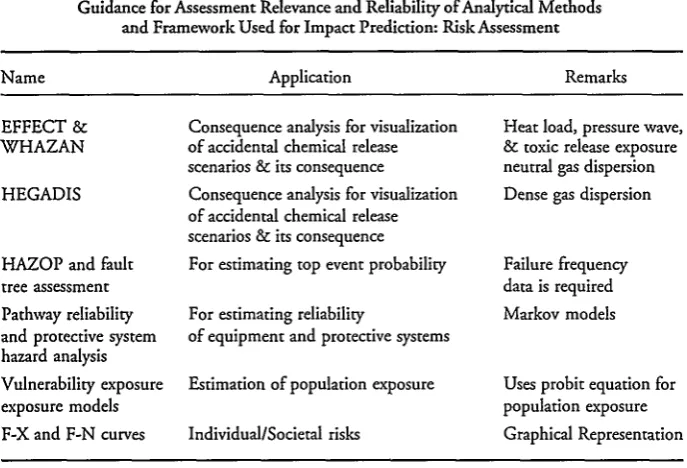
As part of the continued efforts to ensure transparency in the procedures of EC and to assist the project authorities in improving the quality of EIA documents, MOEF has developed an EIA Manual.6 0 The Manual is designed to systematically cover a gamut of issues such as: regulatory requirements; the EIA methodology, including baseline studies, identification of key issues, and consideration of alternatives; impact analysis; and remedial measures. It also delineates the process of reviewing the adequacy of EIA and Environmental Management Program reports and post-project monitoring. To make the manual comprehensive and self-contained, information pertaining to legislative regime, base line data generation and monitoring, thumb rules for pollution control measures, and so on, has been annexed to the main text. A section on risk assessment and hazard analysis has also been included. This gives guidance for a review of assessment relevance and the reliability of analytical methods, and provides a simple framework
used for risk assessment (see Table 2).
Gurjar & Mohan: Environmental Risk Analysis in Different Countries 19
Table 261
Guidance for Assessment Relevance and Reliability of Analytical Methods and Framework Used for Impact Prediction: Risk Assessment
Name Application Remarks
EFFECT & Consequence analysis for visualization Heat load, pressure wave, WHAZAN of accidental chemical release & toxic release exposure
scenarios & its consequence neutral gas dispersion
HEGADIS Consequence analysis for visualization Dense gas dispersion of accidental chemical release
scenarios & its consequence
HAZOP and fault For estimating top event probability Failure frequency
tree assessment data is required
Pathway reliability For estimating reliability Markov models and protective system of equipment and protective systems
hazard analysis
Vulnerability exposure Estimation of population exposure Uses probit equation for
exposure models population exposure
F-X and F-N curves Individual/Societal risks Graphical Representation
Unfortunately, despite so many rules, acts, legislations, and procedures, hazardous chemicals continue to be handled in India in an unsafe and environmentally unsound manner. This is reflected in a number of catastrophic accidents that occurred in the past decade such
as at Panipat in 1993, Mumbai in 1995, and Visakhapatnam in
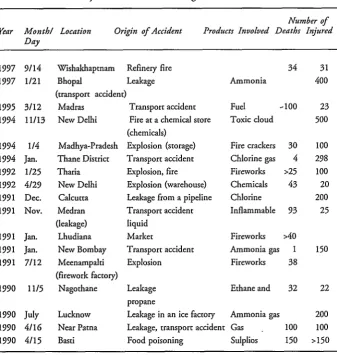
1997.62 A list of major accidents that occurred in India during the last
decade is shown in Table 3. Moreover, the pathetic state of the ambient environment in and around metropolitan cities like Delhi and/or industrial towns like Ludhiana6 3 proves the ineffectiveness of the present regulatory guidelines and policy framework enforced to protect the environment, public health, and safety aspects. Hence, although
several measures have been taken for environmental protection, the need for improvement in legislation and their effective implementation is still
61 Id.; Gurjar, supra n. 3.
62 See Gurjar, supra n. 3.
63 H.S. Bal, Ludhiana's Air Pollution Levels Exceed Those of Delhi on Most Counts, The
Indian Express (May 5, 1999).
felt in India. For example, the MoEF recommends threshold planning quantities (TPQ) of various extremely hazardous substances to restrict
their quantities to be handled at an industrial unit with a view to avoid or minimize the harmful impacts of a possible catastrophic release of extremely hazardous substances.
It has been observed that the relevant literature does not explicitly mention the methodology of establishing TPQs of extremely hazardous substances. This makes TPQs susceptible to misinterpretation and misuse. Furthermore, health risk assessment (HRA) procedures originally developed by the EPA have been used extensively throughout the world for quantification of health risks associated with environmental exposures to a variety of pollutants;
however, the risk assessment framework is yet to be systematically applied for addressing health concerns in India. While a lot of exposure
information is available, this has not been integrated into a quantitative dose response assessment, and therefore the risk characterization has remained qualitative in most Indian studies. To fill such gaps, various institutions are making appropriate research endeavors.6 4 The salient features of some of these research attempts are discussed below.
Between 1998 and 1999, Balakrishnan conducted a study, which represents one of the first local efforts pertaining to HRA in Southern India.6 5 This study was primarily aimed at quantifying health risks attributable to air pollutants and comparatively ranking them against
other environmental concerns so as to provide scientific inputs for the design of an environmental management plan for the city of Chennai and aid environmental resource allocation. Quantitative health risk assessment procedures developed by the EPA were used for most assessments along with dose-response information obtained specifically
64 See e.g. Indian Institute of Technology (1IT), New Delhi; National Environmental
Engineering Research Institute, Nagpur; Pondichery University, Pondichery; University of Roorkee, Roorkee; Central Leather Research Institute (CLRI), Chennai; Indian Toxicological Research Centre (ITRC), Lucknow.
65 K. Balakrishnan, Comparative Health Risk Assessment for Environmental Concerns in
North Chennai (Ramchandra Medical College & Research Institute 1999) (research project
Gurjar & Mohan: Environmental RiskAnalysis in Different Countries 21
from developing countries. Cross-sectional epidemiological information
was also gathered to corroborate predicted health risks. Finally,
available environmental and health information was mapped by using a
geographical information system (GIS).
Table 366
Major Accidents in India During the Last Decade
Number of Year Month! Location Origin of Accident Products Involved Deaths Injured
Day
1997 9/14 Wishakhapnam Refinery fire
1997 1/21 Bhopal Leakage
(transport accident)
1995 3/12 Madras 1994 11/13 New Delhi
1994 1/4 Madhya-Pradesh 1994 Jan. Thane District 1992 1/25 Tharia 1992 4/29 New Delhi 1991 Dec. Calcutta 1991 Nov. Medran
(leakage) 1991 Jan. Lhudiana 1991 Jan. New Bombay 1991 7/12 Meenampalti
(firework factory)
1990 11/5 Nagothane
1990 July Lucknow 1990 4/16 Near Patna 1990 4/15 Basti
Transport accident Fire at a chemical store (chemicals)
Explosion (storage) Transport accident Explosion, fire Explosion (warehouse) Leakage from a pipeline Transport accident liquid
Market
Transport accident Explosion
Leakage
propane
Leakage in an ice factory Leakage, transport accident
Food poisoning
Ammonia
Fuel Toxic cloud
Fire crackers Chlorine gas Fireworks Chemicals Chlorine Inflammable
34 31
400
-100 23
500
30 100
4 298
>25 100
43 20
200
93 25
Fireworks >40 Ammonia gas 1
Fireworks 38
Ethane and 32
Ammonia gas Gas
Sulplios
As a result, the following air pollutants were ranked: PM10; S02;
NOX; CO; indoor air pollutants; ozone; and select volatile organics
(i.e., benzene and formaldehyde). Risk calculations revealed that risks
66 Gurjar, supra n. 3.
13 Risk. Health, Safety & Environment 1 [Spring 2002]
150
22
from PM10 levels were the greatest followed by carbon monoxide. Except for a few select zones within the City of Chennai, the risks from other pollutants were found to be much smaller. Risks from indoor air pollutants, largely due to the use of bio-fuels, were very high in municipal wards that had a high concentration of homes using these fuels. Since use of bio-fuels was not very prevalent, however, the overall ranking for indoor air pollutants was lower than for outdoor air pollutants. GIS mapping showed strong spatial associations between regions of high air pollutant loads and the prevalence of respiratory symptoms/impairments. Although the risks from the air pollutants were found to be substantial, they were outweighed by risks from microbial contamination of water in most parts of the city.
Virk et al.6 7 carried out a radon survey conducted in 1998 and 1999 in the soil-gas and indoor air of some villages situated in the vicinity of areas known for uranium mineralisation in Himachal Pradesh. Both active and passive techniques were used for radon monitoring inside the dwellings. The highest value, around 75,400 plus or minus 2,620 Bq m super (-3) of radon in soil-gas, was found in the village of Samurkhurd. The mean values of indoor radon concentrations for the village of Ramera, Asthota, and Galot were found to be 249 plus or minus 14, 200 plus or minus 16, and 161 plus or minus 13 Bq m super(-3), respectively. The average annual exposure doses due to radon and its daughter products to the inhabitants of these villages amount to 4.3 plus or minus 0.2, 3.4 plus or minus 0.3, and 2.8 plus or minus 0.2 mSv, respectively. Indoor radon levels were within the safe limits in most of the dwellings, but call for the mitigation of the radon health hazards in others.
A radon and helium survey of thermal springs in the Parbati and Kullu Valleys of Himachal Himalaya was also carried out. Maximum radon values (716.3 Bq 1 super (-1)) and helium (90 ppm) activities were recorded in a thermal spring at Kasol in Parbati Valley. In general, high radon and helium values are correlated with high uranium concentrations in the soil of the area in the environs of the thermal springs. Ramola et al. conducted another such study about the
67 H.S. Virk et al., Environmental Radioactivity: A Case Study in Himachal Pradesh, India,
Gurjar & Mohan: Environmental Risk Analysis in Different Countries 23
occurrence of radon in the drinking water of Dehradun City, India.6 8 Many people in the Indian region still live in rural areas where domestic energy consumption largely depends on biofuels.6 9 Smith et al. have demonstrated that the highest exposures to air pollutants occur in rural, indoor settings in developing countries where biomass products (e.g., wood, dung) are the principal fuels.7 0 Since half the world's population uses biomass fuel, the health impacts of this exposure is estimated to be larger than any other environmental risk, with the exception of contaminated water supplies.7 1 Interestingly, over the last two decades in Bengal, untreated tube-well water was heavily promoted and developed as a safe and environmentally acceptable alternative to microbiologically unsafe untreated surface water. But in the 1980s, scientists began finding evidence of arsenic contamination in ground water, and only as recent as the mid-1990s has the crisis emerged into a broad public awareness. The origin of the arsenic pollution is geological (i.e., natural) in this case. The arsenic is released to groundwater under naturally occurring aquifer conditions. It is believed that tens of millions of people in many districts are drinking ground water with arsenic concentrations far above acceptable levels. Thousands of people have already been diagnosed with poisoning symptoms, even though much of the at-risk population has not yet been assessed for arsenic-related health problems. To combat this problem, West Bengal and the Bangladesh Arsenic Crisis Information Centre has been established as an online focal point for the environmental health disaster in Bangladesh and West Bengal, India, where millions of people are drinking ground water that is heavily contaminated with arsenic.7 2 The site includes an info-bank of news articles, scientific papers, comprehensive links to other relevant sites, an online forum, an E-mail newsletter, and a local site search.
68 R.C. Ramola et al., Occurrence of Radon in the Drinking Water of Dehradun City,
India, 8 Indoor Built Environ. 67 (Feb. 1999).
69 Lelieveld et al., The Indian Ocean Experiment: Widespread Air Pollution from South
and Southeast Asia, 291 Science 1033 (2001).
70 K.R. Smith et al., Greenhouse Implications of Household Fuels: An Analysis for India, 25
Ann. Rev. Energy & Environ. 741 (2000).
71 West Bengal & Bangladesh Arsenic Crisis Information Centre (available at <http://bicn.com/acic/>).
72 Id.
Khan and Abbasi have made significant efforts to improve various risk assessment techniques and methodologies in India. They have also developed software packages aimed at user-friendliness, speed, larger coverage, and sophistication in risk analysis. This software has been widely used by the developers in real-life situations for risk assessment and risk management purposes. The authors of this paper have also made similar efforts during an extensive study recently conducted, titled Environmental Risk Analysis for Industrial Siting, Planning, and
Management.7 3 The various techniques evolved and the overall methodology proposed during this research study is expected to help the regulatory agencies and entrepreneurs when making better policy decisions. These decisions may regard establishing TPQs, demarcation of risk zones, siting and planning of industries, preparation of chemical emergency response plans, and/or the monitoring and controlling of potential health risk due to environmental pollutants so as to protect the life and health of the affected population. Moreover, it may also be useful to provide realistic feedback to planning authorities on the cumulative risk levels as a result of both acute and chronic risks.7 4 The certain accomplishments of B.R. Gurjar's 1999 study7 5 are summarized below.
Mohan and Gurjar7 6 have proposed an IIT-TPQ model along with a risk-ranking matrix to examine the existing TPQs on the basis of risk related criteria. These models can also be used to establish alternate TPQs if the modification to the toxicity standards and risk-based criteria are required. Further, preparation of on-site and off-site emergency response plans requires appropriate models for Quantitative Risk Assessment (QRA). In this context, an IIT-QRA model has been proposed to estimate risk levels at different downwind distances so that the risk zones could be specified in relation to a catastrophic release of EHS from an industrial installation.7 7 Moreover, a risk-ranking matrix
73 See Gurjar, supra n. 3.
74 Manju Mohan & Bhola R. Gurjar, Estimation of Threshold Planning Quantities of
Extremely Hazardous Chemicals Based on Simple Technical Models, 76 J. Envtl. Engr. 17
(1995).
75 See Gurjar, supra n. 3.
76 Manju Mohan & Bhola R. Gurjar, Risk-Based IIT-TPQ Model to Establish Threshold
Gurjar & Mohan: Environmental Risk Analysis in Different Countries 25
has been suggested, which could be useful for demarcation of risk
zones. Furthermore, on the basis of readily available data from MoEF,
attempts have been made by the authors to estimate carcinogenic risks
as well as non-carcinogenic chronic risks posed by heavy metals,
namely, Cadmium (Cd), Chromium (Cr), and Nickel (Ni), which are
present in the ambient environment of twenty-six different states in
India.7 8 Three exposure routes (i.e., through air, water, and food) are considered in the study and risk estimates are compared with the mortality data of different regions in the country. A comparison of the estimated cancer cases with the actual cancer incidences in India are also made based on disease surveillance data. A definite correlation exists between the two. Finally, an integrated approach of ERA has been applied to assess the cumulative effects of acute and chronic risks on the suitability of two industries located in the Haryana state of India.7 9 The proposed integrated approach of ERA considers the acute as well as chronic risks in a unified context. It considers cumulative risk from different chemicals (e.g., Cd, Cr, and Ni) examined in this study giving due consideration to their exposure through different routes (e.g., air, water, and food). This is more realistic than the traditional approach of risk assessment with limited parameters that considers a particular risk from a single chemical, in isolation to other possible risks.
Limitations and Current Status of QRA Techniques
It is a worldwide experience that QRA is a valuable way to improve the safety and efficiency levels in chemical process industries and also to protect the environment, public health, and property. It is also a fact, however, that this is a new science that is still evolving, and its techniques need refining. Therefore, the views on the potential uses of risk analysis differ. For example, most experts and policy-makers agree that risk analysis is a valuable tool to inform decisions, but they disagree
77 id.
78 Bhola R. Gurjar et al., Potential Health Risks Related to Carcinogens in the Atmospheric
Environment in India, 24 Reg. Toxicology & Pharmacology 141 (1996); Bhola R. Gurjar &
Manju Mohan, Potential Health Risks in Certain Indian States Due to Toxic Contamination
in Ambient Environment (2001) (on file with the authors).
79 Bhola R. Gurjar & Manju Mohan, Integrated Risk Analysis for Acute and Chronic
Exposure to Toxic Chemicals: A Case Study (2001) (on file with the authors).
about the extent to which risk estimates are biased and should be allowed to influence public policies to protect health and the environment. Some members (e.g., academics, regulated industries) argue that risk analysis is more objective than subjective, and thus reflects sound science. Other members (some academics, and many environmentalists) argue that excessive reliance on risk analysis, especially quantitative analysis of risks to human health, ignores other important facets of policy decisions, such as environmental impacts, timeliness, fairness, effects on democratic rights and liberties, practicality, morality, reversibility of effects, regulatory stability, flexibility, and aesthetic values. Critics charge that quantitative methods cannot assess very long-term or newly discovered threats. They also believe that quantitative cost-benefit analyses undervalue environmental and health benefits, exaggerate costs, and focus on relatively widespread but individually small costs and risks rather than on much larger costs and risks to smaller and often more vulnerable groups.
The crucial parts of a QRA come before and after the actual risk analysis - that is making the correct initial assumptions and then interpreting the results. An assumption for one case may not be appropriate for another. If it is used, it may give highly debatable results. In a study conducted in 1988, for example, eleven teams used QRA on a small ammonia plant, and their results for one hazard varied from 1 in 400 to 1 in 10 million. Further, it has been observed that descriptions of the likelihood of adverse effects may range from qualitative judgments to quantitative probabilities. Although risk assessments may include quantitative risk estimates, quantification of risks may not always be possible. Thus, it is better to convey conclusions and associated uncertainties qualitatively than to ignore them because they are not easily understood or estimated.
Another problem is that the models drastically simplify what happens in real nature. This is the reason that, for the same set of data, different models are liable to give highly varied results depending on the basic premises and assumptions used in the development of the models.8 0 This makes it difficult to choose a model and reject the