INTRODUCTION
Hospital-acquired infections (HAI), also called nosoco-mial infections, affect the clinical outcomes in hospitalized patients and represent a serious concern worldwide [1]. The misuse and overuse of antibiotics in medicine and agri-culture has led to the development of multidrug-resistant
(MDR) bacteria, which are now recognized as a major cause of nosocomial infections. In addition to a higher risk of poor clinical outcomes and death, MDR bacterial infections are associated with increased economic burden of patients [2,3]. Understanding the clinical characteristics, prevalence, and distribution of nosocomial infections caused by MDR bacteria is crucial for effective treatment.
In the strictest sense, MDR organisms are defined as those showing resistance to more than one antimicrobial agent in in vitro antimicrobial susceptibility tests. MDR Gram-positive and Gram-negative bacteria are commonly defined as ‘resis-tant to three or more antimicrobial classes’ [4,5]. In addition, a more accurate definition of MDR has been proposed as ‘non-susceptibility (resistant, intermediate, or non-suscepti-ble result) to at least one agent in three or more antimicrobial
*Corresponding authors:
Jun Liu, Department of Neurosurgery, Jining NO.1 People’s Hospital, No.6 Jiankang Road, Rencheng District, Jining, Shandong Province, 272011, China. Phone: +86-18653678611. E-mail: [email protected] Chuanfeng Lyu, Department of Clinical Pharmacy, Jining NO.1 People’s Hospital, No.6 Jiankang Road, Rencheng District, Jining, Shandong Province, 272011, China. Phone: +86-18953725563. E-mail: [email protected]
#These authors equally contributed.
Submitted: 22 August 2018/Accepted: 14 September 2018
Analysis of multidrug-resistant bacteria in 3223 patients
with hospital-acquired infections (HAI) from a tertiary
general hospital in China
Meng Wang1#, Hongyan Wei2#, Yaxin Zhao3, Linlin Shang4, Linlin Di5, Chuanfeng Lyu6*, Jun Liu7*
1Department of Medical Affairs, Jining NO.1 People’s Hospital, Jining, Shandong Province, China, 2Department of Emergency Medicine,
Jining Neuro-psychiatric Hospital, Jining, Shandong Province, China, 3Department of Pharmacy, Jining NO.1 People’s Hospital, Jining,
Shandong Province, China, 4Department of Pharmacy, Jining NO.2 People’s Hospital, Jining, Shandong Province, China, 5Department of
Electrocardiogram, Jining Neuro-psychiatric Hospital, Jining, Shandong Province, China, 6Department of Clinical Pharmacy, Jining NO.1
People’s Hospital, Jining, Shandong, China, 7Department of Neurosurgery, Jining NO.1 People’s Hospital, Jining, Shandong, China
ABSTRACT
The frequency of antimicrobial resistance has increased globally due to misuse and overuse of antibiotics, and multi-drug resistant (MDR) bacteria are now recognized as a major cause of hospital-acquired infections (HAI). Our aim was to investigate the prevalence, distribution, and antimicrobial susceptibility rates of MDR bacteria in patients with HAI from a tertiary hospital in China. We retrospectively evaluated all patients with a confirmed diagnosis of bacterial infection at a tertiary general hospital in Jining, for the period between January 2012 and December 2014. The following clinical and demographic data were collected: age, sex, specimens, treatment, microbiology results, and antibi-otic resistance patterns of isolates. Bacterial identification and susceptibility testing were performed using VITEK 2 COMPACT system. We screened a total of 15,588 patients, out of which 7579 (48.6%) had an HAI. MDR showed 3223 out of 7579 isolates (42.5%). The most frequently isolated MDR bacteria in patients with HAI were extended-spectrum beta-lactamase (ESBL)-producing Escherichia coli (n = 1216/3223, 37.7%), MDR Pseudomonas aeruginosa (n = 627/3223, 19.5%) and MDR Acinetobacter baumannii (n = 588/3223, 18.2%). MDR-HAI were more common in males (2074/3223, 64.4%) and in elderly patients (≥60 years; 1196/3223, 37.1%). Sputum was the main source of MDR isolates (2056/3223, 63.8%). Patients with MDR-HAI were predominantly distributed in different types of intensive care units. MDR strains in our study showed resistance to most current antibiotics. Overall, patients with HAI infections attributed to MDR bacteria were widely distributed in our hospital. Enhanced surveillance of MDR bacteria is critical for guiding the rational use of antibiotics and reducing the incidence of HAI.
KEY WORDS: Multidrug-resistant bacteria; infection; distribution; intensive care unit; MDR; nosocomial infections; hospital-acquired infections; HAI
categories’. In the same paper, pandrug-resistant (PDR) was defined as ‘non-susceptibility to all agents in all antimicro-bial categories’ [5]. Common bacteria that show MDR/PDR are methicillin-resistant Staphylococcus aureus (MRSA), extended-spectrum beta-lactamase (ESBL)-producing bac-teria, carbapenem-resistant Enterobacteriaceae (CRE), car-bapenem-resistant Acinetobacter baumannii (A. baumannii, CRAB), MDR/PDR Pseudomonas aeruginosa (P. aeruginosa, MDR/PDRPA), and MDR Mycobacterium tuberculosis [6-8]. A high prevalence of nosocomial infections attributable to MDR strains has been reported in countries worldwide [8-12]. In 2014, the average MRSA detection rate across 17 Chinese hospitals was 44.6% (29.1% to 74.2%), and the detection rates of ESBL-producing Escherichia coli (E. coli,ESBLECO) and ESBL-producing Klebsiella pneumoniae (ESBLKPN) were 55.8% and 29.9%, respectively [10].
In the present study, we retrospectively evaluated the prevalence, distribution, and antimicrobial susceptibility rates of MDR strains in patients with HAI for a 3-year period, to gain an overview of the situation in a tertiary general hospital in China.
MATERIALS AND METHODS
Study design and sample
This retrospective study was conducted in a tertiary gen-eral hospital in Jining, China, for the period between January 2012 and December 2014. The hospital contains 4200 beds and is organized into 43 clinical departments. Initially, we included all inpatients with a confirmed diagnosis of bacte-rial infection. The diagnosis of HAI was made based on the Hospital Infection Diagnosis Standard issued by the National Health and Family Planning Commission of the People’s Republic of China (NHFPC) in 2001. Antibiotic susceptibility of bacterial isolates was determined with antimicrobial sus-ceptibility testing. Patients tested negative for MDR strains or those with colonized bacteria were excluded from further analysis.
Clinical and demographic data of patients were obtained from the Laboratory Information System (LIS) of the hospi-tal and included age, sex, specimens, treatment, microbiology results, and antibiotic resistance patterns of isolates.
Bacterial isolates
Bacterial isolates were collected from different sources, including blood, sputum, secretions, urine, pus, or any other site that was clinically suspected for infection based on the Technical guidelines for the prevention and control of nos-ocomial infections with multidrug-resistant bacteria of the People’s Republic of China. The isolates were cultured on agar
plates containing 5% sheep blood (90 mm, Jnbabio, China) for 24 hours at 37°C and under 5% CO2. Bacterial
identifica-tion was performed using the VITEK 2 COMPACT system (BioMerieux SA, USA). The following quality control (QC) strains were included: Staphylococcus aureus ATCC25923, Escherichia coli ATCC25922, Klebsiella pneumoniae ATCC700603, and Pseudomonas aeruginosa ATCC27853.
Antimicrobial susceptibility testing
Bacterial isolates were cultured on 5% sheep blood agar plates (90 mm, Jnbabio, China) for 24 hours at 37°C, under 5% CO2. Antimicrobial susceptibility testing was performed using the VITEK2 COMPACT system with standardized inoculum (BioMerieux, Hazelwood, MO, USA). The testing was con-ducted according to the Clinical and Laboratory Standards Institute (CLSI) standards (24th edition) [13].
MDR bacteria were considered to be resistant to at least three or more antibiotic classes, and predominately included the following strains: MRSA, ESBL-producing gram-negative Enterobacteriaceae such as ESBLECOandESBLKPN; vanco-mycin-resistant Enterococcus faecium (VREF); MDRPA, MDR A. baumannii (MDRAB); other Gram-negative bacteria were considered to be MDR if they were resistant to carbapenem, fluoroquinolone, and cephalosporin [5].
Statistical analysis
Data was extracted from the LIS and converted into a standard format using WHONET 5.4 software (WHO Collaborating Centre for Surveillance of Antimicrobial Resistance). We used descriptive statistics for data processing and reporting.
RESULTS
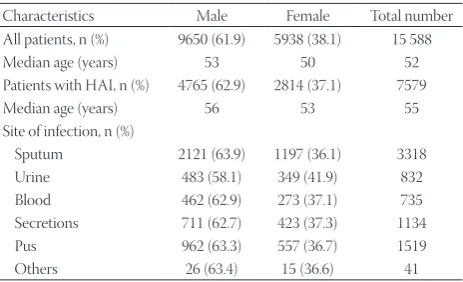
Patients
We screened a total of 15 588 patients out of which 7579 (48.6%) had an HAI (Table 1). Among 7579 patients with HAI there were 4765 males/2814 females, and the median age was 55 years. The majority of patients were from the departments of neurology, neurosurgery, orthopedics and joint surgery, urology, plastic surgery, oncology, respiratory unit, gastroenterology, nephrology, and intensive care unit (ICU). All patients with positive cultures received antibiotics.
Identification of MDR strains
Age and gender distribution of patients infected
with MDR bacteria
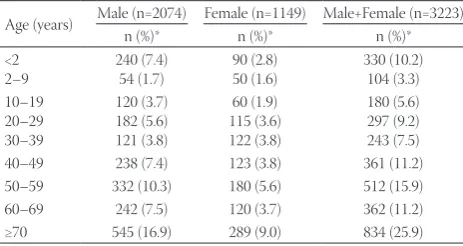
The distribution of patients with MDR bacterial infections (n = 3223) according to gender and age groups is shown in Table 3. Out of 3223 MDR isolates, 2074 (64.4%) were from male and 1149 (35.7%) from female patients. Elderly (≥60 years; 1196/3223, 37.1%) represented the highest proportion of patients with MDR bacterial infections, followed by mid-dle-aged patients (40–59 years; 873/3223, 27.1%) and infants (<2 years; 330/3223, 10.2%).
Sources of MDR bacteria
From the initial 15,588 specimens, 7579 positive isolates (48.6%) were from patients with HAI. The percentage of MDR positive isolates from a total number of sputum, secretions, blood, urine, pus, and other specimens was, respectively, 23.7% (2056/8675), 37.4% (414/1106), 5.6% (218/3892), 26.7% (369/1382), 45% (150/333) and 8% (16/200). The proportion of each specimen type in the group of isolates positive for MDR bacteria was as follows: sputum (2056/3223, 63.8%), secretions (414/3223, 12.8%), urine (369/3223, 11.4%), blood (218/3223,
6.8%), pus (150/3223, 4.6%) and other specimens (16/3223, 0.5%). The most common MDR bacteria was ESBLECO, detected in all specimen types. Sputum was the main source of MDRAB (550/2056, 26.7%), ESBLECO (476/2056, 23.1%), MDRPA (411/2056, 20.0%) and ESBLKPN (396/2056, 19.3%), followed by urine specimens (Table 4).
Distribution of MDR strains across hospital
departments
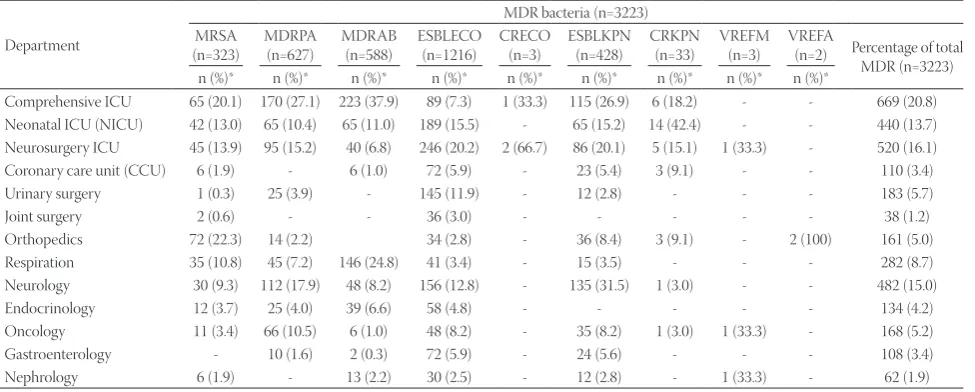
Patients with MDR bacterial infections were distributed across various hospital departments, especially in compre-hensive ICU (669/3223, 20.7%), neurosurgery ICU (520/3223, 16.1%), neonatal ICU [NICU] (440/3223, 13.6%) and neurology department (482/3223, 15.0%). As shown in Table 5, MRSA, MDRPA and MDRAB were most commonly isolated from patients in comprehensive ICU. ESBLECO was distributed in almost every main department, with the highest proportion of patients with ESBLECO in neurosurgery ICU (246/1216, 20.2%), followed by NICU (189/1216, 15.5%) and neurology department (156/1216, 12.8%).
Antibiotic susceptibility of MDR strains
The susceptibility of MRSA isolates to vancomycin, tigecy-cline, and linezolid was 100% (Figure 1A). The resistance rate of MRSA isolates to penicillin G, cefoxitin, and oxacillin reached above 90%. MRSA isolates were resistant to 5 antimicrobial agents from 3 classes (β-lactams, macrolides, and chloramphenicols).
The susceptibility rate of ESBLECO isolates to imipenem, ertapenem, piperacillin/tazobactam and cefotetan was above 90% (Figure 1B). ESBLECO isolates showed high resistance to cefazolin (98.4%), ampicillin (97.7%) and ceftriaxone (95.5%), and resistance to two quinolone agents, ciprofloxacin (75.9%) and levofloxacin (70.2%).
ESBLKPN isolates were highly sensitive to amikacin (100%), ceftriaxone (98.5%), ertapenem (94.1%) and imipenem
TABLE 1. Basic characteristics of study population
Characteristics Male Female Total number All patients, n (%) 9650 (61.9) 5938 (38.1) 15 588 Median age (years) 53 50 52 Patients with HAI, n (%) 4765 (62.9) 2814 (37.1) 7579 Median age (years) 56 53 55 Site of infection, n (%)
Sputum 2121 (63.9) 1197 (36.1) 3318 Urine 483 (58.1) 349 (41.9) 832 Blood 462 (62.9) 273 (37.1) 735 Secretions 711 (62.7) 423 (37.3) 1134 Pus 962 (63.3) 557 (36.7) 1519 Others 26 (63.4) 15 (36.6) 41
HAI: Hospital-acquired infection
TABLE 2. MDR strains isolated from patients with HAI (n=7579)
Bacteria species n MDR strain n (%)* Percentage of total number of MDR (n=3223)
Staphylococcus aureus 1128 MRSA 323 (28.6) 10.0
Pseudomonas aeruginosa 1669 MDRPA 627 (37.6) 19.5
Acinetobacter baumannii 1159 MDRAB 588 (50.7) 18.2
Escherichia coli 2200 ESBLECOCRECO 1216 (55.3)3 (0.1) 37.70.1
Klebsiella pneumoniae 1099 ESBLKPN 428 (38.9) 13.3
CRKPN 33 (3.0) 1.0
Enterococcus faecium 165 VREFM 3 (1.8) 0.1
Enterococcus faecalis 159 VREFA 2 (1.3) 0.1
Total 7579 3223 (42.5) 100
*Represents the percentage of MDR strains of the total number of isolates for particular species or of all HAI isolates. Multidrug resistant; HAI: Hospital-acquired infection; MRSA: Methicillin-resistant Staphylococcus aureus; MDRPA: Multidrug-resistant Pseudomonas aeruginosa; MDRAB: Multidrug-resistant Acinetobacter baumannii; ESBLECO: Extended-spectrum beta-lactamase-producing Escherichia coli; CRECO: Carbapenem-resistant Escherichia coli;
[91.2%] (Figure 1C). They showed a high resistance predom-inately to β-lactams. The resistance rates of ESBLKPN iso-lates to cefazolin, ceftriaxone, and ampicillin/sulbactam were 95.6%, 94.1%, and 91.2%, respectively.
MDRPA isolates showed high susceptibility to amik-acin (84.7%), tobramycin (78.5%) and gentamicin [70.8%] (Figure 1D), and high resistance to imipenem (89.1%) and meropenem (85.0%).
MDRAB isolates were sensitive to minocycline (94.2%) and amikacin [56.7%] (Figure 1E). They were highly resistant to most of the tested antibiotics, including piperacillin (100%), imipenem (100%), ceftriaxone (99.3%), ciprofloxacin (99.3%), and ceftazidime (98.7%).
CRKPN isolates were sensitive to amikacin (60%) and levofloxacin [53.3%] (Figure 1F). They also showed high resis-tance to most of the tested antibiotics, including 12 antimicro-bial agents from 3 classes (β-lactams, aminoglycosides, and sulfonamides).
CRECO isolates were susceptible to nitrofurantoin (66.7%) and trimethoprim/sulfamethoxazole (66.7%), and resistant mainly to the antibiotics from β-lactam, aminoglycoside, and quinolone classes (Figure 1G).
DISCUSSION
Over the past decades, the frequency of antimicrobial resis-tance has increased globally. MDR bacteria are now recognized as a major cause of nosocomial infections, representing a serious safety concern for both health care practitioners and the patients [9,14]. The risk of MDR bacterial infection has been related to a number of factors, including long-term antimicrobial therapy, cross-transmission, length of hospital stay, and invasive proce-dures [15,16]. MDR bacteria can cause different types of infec-tions, such as pneumonia, urinary tract, hematogenous and wound infection, and are associated with a high mortality/mor-bidity and increased medical costs [16,17]. Due to differences in environmental conditions and antibiotic use, antimicrobial sus-ceptibility patterns often differ between geographical regions,
populations and hospital types/units [9,18,19]. Therefore, under-standing the distribution of MDR bacteria, especially in hospi-tals, is important for the control of infection as well as for the rational use of antimicrobial agents.
In the present study, we reported a high prevalence of MDR-HAI infections in a tertiary general hospital; i.e., out of 7579 bacterial isolates from patients with HAI, 3223 showed MDR (42.5%). ESBL-producing Gram-negative bacteria were the most frequently isolated MDR pathogens, with the high-est detection rate observed for ESBLECO (37.7%). ESBLECO and ESBLKPN together accounted for 51.0% of all MDR lates. Deng et al. [20] investigated antibiotic resistance of iso-lates from hospitalized patients with hematological disease, for a 6-year period. Among 1453 bacterial isolates, MRSA accounted for 72.8% of antibiotic resistant strains, while the detection rates of ESBLECO and ESBLKPN were 18.9% and 10.4%, respectively [20].
In our study, patients aged above 60 years represented the highest proportion of patients with MDR bacterial infections, followed by middle-aged patients (40–59 years), and infants (<2 years). Elderly patients are generally consider to be at high risk of nosocomial infections, due to a higher disease preva-lence in this population, including neurological disorders, dia-betes and cardiovascular diseases [21-25].
The number of MDR isolates was higher in male (64.4%) than in female patients (35.7%) in our study population. The highest percentage of MDR isolates was obtained from spu-tum specimens (63.8%), showing that the respiratory system was the most frequent site of infection. Generally, the preva-lence of cigarette smoking is higher in males than in females, which makes them more prone to respiratory tract diseases, including infections. In addition, frequent use of extend-ed-spectrum antimicrobial agents in long-term care facilities provides selective pressure for multidrug resistance in bacte-ria [26]. Further research is necessary to clarify the gender dif-ferences in the prevalence of HAI infections caused by MDR bacteria.
The risk of infections with MDR bacteria is especially high for patients admitted to the ICU, due to the underlying condi-tion, impaired immunity, extensive antibiotic use, and expo-sure to invasive devices (e.g., mechanical ventilation, central venous catheters, and tracheotomy) [17,27,28]. In the current study, patients with MDR bacterial infections were distributed across various hospital departments. Consistent with the pre-vious research, the percentage of MDR bacteria isolated from ICU patients was higher compared to patients from other units/departments.
MRSA is one of the most common causes of HAI and a leading cause of death in hospitalized patients. This is mainly due to the fact that S. aureus strains carry genes that medi-ate resistance to various antibiotics, including widely used
TABLE 3. Age and gender distribution of patients with MDR-HAI
Age (years) Male (n=2074) Female (n=1149) Male+Female (n=3223)n (%)* n (%)* n (%)*
<2
2–9 240 (7.4)54 (1.7) 90 (2.8)50 (1.6) 330 (10.2)104 (3.3) 10–19 20–29 30–39 120 (3.7) 182 (5.6) 121 (3.8) 60 (1.9) 115 (3.6) 122 (3.8) 180 (5.6) 297 (9.2) 243 (7.5) 40–49 238 (7.4) 123 (3.8) 361 (11.2) 50–59 332 (10.3) 180 (5.6) 512 (15.9) 60–69 242 (7.5) 120 (3.7) 362 (11.2) ≥70 545 (16.9) 289 (9.0) 834 (25.9)
anti-staphylococcal drugs [29]. We showed that MRSA iso-lates were primarily resistant to cephalosporins and peni-cillins, which suggests that the overuse of these antibiotics should be avoided. On the other hand, MRSA isolates were highly susceptible to vancomycin, tigecycline and linezolid. In most countries, vancomycin remains the first-choice treat-ment for MRSA infections.
Other bacteria that showed MDR in this study included Gram-negative strains such as ESBLECO, ESBLKPN, MDRPA, and MDRAB. They were all resistant to β-lactams, especially cephalosporins (i.e., cefazolin, ceftazidime, ceftriaxone, and cefepime). Therefore, control of β-lactam use appears to be essential in our hospital. In contrast, these Gram-negative
bacteria were highly susceptible to amikacin, suggesting it could be a viable treatment option in patients infected by MDR bacteria. In addition, MDRAB isolates showed a high suscep-tibility to minocycline, which is a broad-spectrum tetracycline antibiotic. Furthermore, we showed that ESBL-producing strains (ESBLECO and ESBLKPN) were not resistant to the new-generation semisynthetic antibiotics, e.g., cefotetan, piperacillin/tazobactam, imipenem and ertapenem. The production of beta-lactamases, such as ESBLs and AmpC beta-lactamases (AmpC), is a common resistance mechanism in Gram-negative bacteria. The third-generation cephalospo-rins have been recognized as the main factor leading to the emergence and spread of ESBL-producing strains [30]. Still,
TABLE 4. Sources of MDR bacteria
MDR bacteria
Specimen
Sputum (n=2056) Urine (n=369) Blood (n=218) Secretions (n=414) Pus (n=150) Others (n=16)
n (%)* n (%)* n (%)* n (%)* n (%)* n (%)* MRSA (n=323) 190 (9.2) 3 (0.8) 4 (1.8) 108 (26.1) 10 (6.7) 8 (50.0) MDRPA (n=627) 411 (20.0) 77 (20.8) 73 (33.5) 64 (15.5) 0 2 (12.5)
MDRAB (n=588) 550 (26.7) 29 (7.9) 9 (4.1) 0 0 0
ESBLECO (n=1216) 476 (23.1) 255 (69.1) 101 (46.3) 239 (57.7) 140 (93.3) 5 (31.2)
CRECO (n=3) 3 (0.1) 0 0 0 0 0
ESBLKPN (n=428) 396 (19.3) 4 (1.1) 28 (12.8) 0 0 0
CRKPN (n=33) 30 (1.5) 0 2 (0.9) 0 0 1 (6.2)
VREFM (n=3) 0 1 (0.3) 0 2 (0.5) 0 0
VREFA (n=2) 0 0 1 (0.5) 1 (0.2) 0 0
Percentage of total MDR (n=3223) 2056 (63.8) 369 (11.4) 218 (6.8) 414 (12.8) 150 (4.7) 16 (0.5)
*Represents the percentage of a particular MDR strain of the total number of MDR isolates for a given specimen type. MDR: Multidrug resistant; MRSA: Methicillin-resistant Staphylococcus aureus; MDRPA: Multidrug-resistant Pseudomonas aeruginosa; MDRAB: Multidrug-resistant Acinetobacter baumannii; ESBLECO: Extended-spectrum beta-lactamase-producing Escherichia coli; CRECO: Carbapenem-resistant Escherichia coli; ESBLKPN:
Extended-spectrum beta-lactamase-producing Klebsiella pneumoniae; CRKPN: Carbapenem-resistant Klebsiella pneumoniae; VREFM: Vancomycin-resistant Enterococcus faecium; VREFA: Vancomycin-resistant Enterococcus faecalis
TABLE 5. Distribution of MDR bacteria across major hospital departments
Department
MDR bacteria (n=3223) MRSA
(n=323) MDRPA (n=627) MDRAB (n=588) ESBLECO (n=1216) CRECO (n=3) ESBLKPN (n=428) CRKPN (n=33) VREFM (n=3) VREFA (n=2) Percentage of total MDR (n=3223) n (%)* n (%)* n (%)* n (%)* n (%)* n (%)* n (%)* n (%)* n (%)*
Comprehensive ICU 65 (20.1) 170 (27.1) 223 (37.9) 89 (7.3) 1 (33.3) 115 (26.9) 6 (18.2) - - 669 (20.8) Neonatal ICU (NICU) 42 (13.0) 65 (10.4) 65 (11.0) 189 (15.5) - 65 (15.2) 14 (42.4) - - 440 (13.7) Neurosurgery ICU 45 (13.9) 95 (15.2) 40 (6.8) 246 (20.2) 2 (66.7) 86 (20.1) 5 (15.1) 1 (33.3) - 520 (16.1) Coronary care unit (CCU) 6 (1.9) - 6 (1.0) 72 (5.9) - 23 (5.4) 3 (9.1) - - 110 (3.4) Urinary surgery 1 (0.3) 25 (3.9) - 145 (11.9) - 12 (2.8) - - - 183 (5.7)
Joint surgery 2 (0.6) - - 36 (3.0) - - - 38 (1.2)
Orthopedics 72 (22.3) 14 (2.2) 34 (2.8) - 36 (8.4) 3 (9.1) - 2 (100) 161 (5.0) Respiration 35 (10.8) 45 (7.2) 146 (24.8) 41 (3.4) - 15 (3.5) - - - 282 (8.7) Neurology 30 (9.3) 112 (17.9) 48 (8.2) 156 (12.8) - 135 (31.5) 1 (3.0) - - 482 (15.0) Endocrinology 12 (3.7) 25 (4.0) 39 (6.6) 58 (4.8) - - - 134 (4.2) Oncology 11 (3.4) 66 (10.5) 6 (1.0) 48 (8.2) - 35 (8.2) 1 (3.0) 1 (33.3) - 168 (5.2) Gastroenterology - 10 (1.6) 2 (0.3) 72 (5.9) - 24 (5.6) - - - 108 (3.4) Nephrology 6 (1.9) - 13 (2.2) 30 (2.5) - 12 (2.8) - 1 (33.3) - 62 (1.9)
*Represents the percentage of a particular MDR strain of the total number of bacterial strain across all hospital departments. ICU: Intensive care unit; MDR: Multidrug resistant; MRSA: Methicillin-resistant Staphylococcus aureus; MDRPA: Multidrug-resistant Pseudomonas aeru-ginosa; MDRAB: Multidrug-resistant Acinetobacter baumannii; ESBLECO: Extended-spectrum beta-lactamase-producing Escherichia coli; CRECO: Carbapenem-resistant Escherichia coli; ESBLKPN: Extended-spectrum beta-lactamase-producing Klebsiella pneumoniae;
antibiotics remain the primary means to control infections and the widespread use of the new generation antibiotics will further contribute to the emergence and spread of antibiotic resistant bacteria. Therefore, continuous surveillance of anti-microbial resistance and rational use of antibiotics is necessary to effectively control these infections.
CONCLUSION
In conclusion, patients infected with MDR bacteria were widely distributed in our hospital. MDR bacterial infection was more likely to occur among elderly and ICU patients. MDR isolates found in our hospital were resistant to most current antibiotics. Enhanced surveillance of MDR bacteria is critical for guiding the rational use of antibiotics and reducing the incidence of HAI.
DECLARATION OF INTERESTS
The authors declare no conflict of interests.
REFERENCES
[1] Tsalik EL, Li Y, Hudson LL, Chu VH, Himmel T, Limkakeng AT, et al. Potential cost-effectiveness of early identification of hospi-tal-acquired infection in critically ill patients. Ann Am Thorac Soc 2016;13(3):401-13.
https://doi.org/10.1513/AnnalsATS.201504-205OC.
[2] Antony HA, Parija SC. Antimalarial drug resistance: An overview. Trop Parasitol 2016;6(1):30-41.
https://doi.org/10.4103/2229-5070.175081.
[3] Arenz S, Wilson DN. Blast from the past: Reassessing forgotten translation inhibitors, antibiotic selectivity, and resistance mecha-nisms to aid drug development. Mol Cell 2016;61(1):3-14.
https://doi.org/10.1016/j.molcel.2015.10.019.
[4] Falagas ME, Koletsi PK, Bliziotis IA. The diversity of definitions of multidrug-resistant (MDR) and pandrug-resistant (PDR) Acinetobacter baumannii and Pseudomonas aeruginosa. J Med Microbiol 2006;55(Pt 12):1619-29.
https://doi.org/10.1099/jmm.0.46747-0.
[5] Magiorakos AP, Srinivasan A, Carey RB, Carmeli Y, Falagas ME, Giske CG, et al. Multidrug-resistant, extensively drug-resistant and pandrug-resistant bacteria: An international expert proposal for interim standard definitions for acquired resistance. Clin Microbiol Infect 2012;18(3):268-81.
https://doi.org/10.1111/j.1469-0691.2011.03570.x.
[6] Wallinga D, Rayner G, Lang T. Antimicrobial resistance and bio-logical governance: Explanations for policy failure. Public Health 2015;129(10):1314-25.
https://doi.org/10.1016/j.puhe.2015.08.012.
[7] Chellat MF, Raguz L, Riedl R. Targeting antibiotic resistance. Angew Chem Int Ed Engl 2016;55(23):6600-26.
https://doi.org/10.1002/anie.201506818.
[8] Seligman R, Ramos-Lima LF, Oliveira Vdo A, Sanvicente C, Sartori J, Pacheco EF. Risk factors for infection with multidrug-re-sistant bacteria in non-ventilated patients with hospital-acquired pneumonia. J Bras Pneumol 2013;39(3):339-48.
https://doi.org/10.1590/S1806-37132013000300011.
[9] Bubonja-Sonje M, Matovina M, Skrobonja I, Bedenic B, Abram M. Mechanisms of carbapenem resistance in multidrug-resistant clin-ical isolates of Pseudomonas aeruginosa from a Croatian hospital.
Microb Drug Resist 2015;21(3):261-9. https://doi.org/10.1089/mdr.2014.0172.
[10] Hu FP, Guo Y, Zhu DM, Wang F, Jiang XF, Xu YC, et al. Resistance trends among clinical isolates in China reported from CHINET surveillance of bacterial resistance, 2005-2014. Clin Microbiol Infect 2016;22(Suppl 1):S9-14.
https://doi.org/10.1016/j.cmi.2016.01.001.
[11] Peretz A, Labay K, Zonis Z, Glikman D. Disengagement does not apply to bacteria: A high carriage rate of antibiotic-resistant patho-gens among Syrian civilians treated in Israeli hospitals. Clin Infect Dis 2014;59(5):753-4.
https://doi.org/10.1093/cid/ciu374.
[12] Costa Pde O, Atta EH, Silva AR. Infection with multidrug-resistant gram-negative bacteria in a pediatric oncology intensive care unit: Risk factors and outcomes. J Pediatr 2015;91(5):435-41.
https://doi.org/10.1016/j.jped.2014.11.009.
[13] Institute CLS. Performance standards for antimicrobial suscepti-bility testing: 22th informational supplement. Clinical Laboratory
Standards Institute: Wayne, PA; 2012.
[14] Toubes E, Singh K, Yin D, Lyu R, Glick N, Russell L, et al. Risk factors for antibiotic-resistant infection and treatment outcomes among hospitalized patients transferred from long-term care facil-ities: Does antimicrobial choice make a difference? Clin Infect Dis 2003;36(6):724-30.
https://doi.org/10.1086/368081.
[15] Agodi A, Zarrilli R, Barchitta M, Anzaldi A, Di Popolo A, Mattaliano A, et al. Alert surveillance of intensive care unit-acquired Acinetobacter infections in a Sicilian hospital. Clin Microbiol Infect 2006;12(3):241-7.
https://doi.org/10.1111/j.1469-0691.2005.01339.x.
[16] Ylipalosaari P, Ala-Kokko TI, Laurila J, Ohtonen P, Syrjala H. Intensive care acquired infection is an independent risk fac-tor for hospital mortality: A prospective cohort study. Crit Care 2006;10(2):R66.
https://doi.org/10.1186/cc4902.
[17] Aly NY, Al-Mousa HH, Al Asar el SM. Nosocomial infec-tions in a medical-surgical intensive care unit. Med Princ Pract 2008;17(5):373-7.
https://doi.org/10.1159/000141500.
[18] Gomila M, Del Carmen Gallegos M, Fernandez-Baca V, Pareja A, Pascual M, Diaz-Antolin P, et al. Genetic diversity of clinical Pseudomonas aeruginosa isolates in a public hospital in Spain. BMC Microbiol 2013;13(138):1471-2180.
https://doi.org/10.1186/1471-2180-13-138.
[19] Werarak P, Kiratisin P, Thamlikitkul V. Hospital-acquired pneu-monia and ventilator-associated pneupneu-monia in adults at Siriraj Hospital: Etiology, clinical outcomes, and impact of antimicrobial resistance. J Med Assoc Thai 2010;93(1):S126-38.
[20] Deng Q, Li Q, Lin XM, Li YM. Epidemiology and antimicrobial resistance of clinical isolates about hospital infection from patients with hematological diseases. [Article in Chinese]. Zhonghua Xue Ye Xue Za Zhi 2012;33(12):994-9.
[21] Ruscher C, Pfeifer Y, Layer F, Schaumann R, Levin K, Mielke M. Inguinal skin colonization with multidrug-resistant bacteria among residents of elderly care facilities: Frequency, persistence, molecular analysis and clinical impact. Int J Med Microbiol 2014;304(8):1123-34.
https://doi.org/10.1016/j.ijmm.2014.08.006.
[22] March A, Aschbacher R, Pagani E, Sleghel F, Soelva G, Hopkins KL, et al. Changes in colonization of residents and staff of a long-term care facility and an adjacent acute-care hospital geriatric unit by multidrug-resistant bacteria over a four-year period. Scand J Infect Dis 2014;46(2):114-22.
https://doi.org/10.3109/00365548.2013.859392.
[23] Pop-Vicas A, Tacconelli E, Gravenstein S, Lu B, D’Agata EM. Influx of multidrug-resistant, gram-negative bacteria in the hospital set-ting and the role of elderly patients with bacterial bloodstream infection. Infect Control Hosp Epidemiol 2009;30(4):325-31. https://doi.org/10.1086/596608.
Risk factors for infections caused by multidrug-resistant bacteria in patients with solid tumours. Scand J Infect Dis 2011;43(2):107-11. https://doi.org/10.3109/00365548.2010.534500.
[25] Kemp M, Holt H, Holm A, Kolmos HJ. Elderly patients are at high risk from hospital-acquired infection. [Article in Danish]. Ugeskr Laeger 2013;175(47):2874-6.
[26] Marchaim D, Chopra T, Bogan C, Bheemreddy S, Sengstock D, Jagarlamudi R, et al. The burden of multidrug-resistant organisms on tertiary hospitals posed by patients with recent stays in long-term acute care facilities. Am J Infect Control 2012;40(8):760-5. https://doi.org/10.1016/j.ajic.2011.09.011.
[27] Consales G, Gramigni E, Zamidei L, Bettocchi D, De Gaudio AR. A multidrug-resistant Acinetobacter baumannii outbreak in inten-sive care unit: Antimicrobial and organizational strategies. J Crit Care 2011;26(5):453-9.
https://doi.org/10.1016/j.jcrc.2010.12.016.
[28] Cornejo-Juarez P, Vilar-Compte D, Perez-Jimenez C, Namendys-Silva SA, Sandoval-Hernandez S, Volkow-Fernandez P. The impact of hospital-acquired infections with multidrug-resis-tant bacteria in an oncology intensive care unit. Int J Infect Dis 2015;31:31-4.
https://doi.org/10.1016/j.ijid.2014.12.022.
[29] Otto M. Community-associated MRSA: What makes them spe-cial? Int J Med Microbiol 2013;303(6-7):324-30.
https://doi.org/10.1016/ j.ijmm.2013.02.007.
[30] Manzur A, Tubau F, Pujol M, Calatayud L, Dominguez MA, Pena C, et al. Nosocomial outbreak due to extended-spectrum-be-ta-lactamase-producing Enterobacter cloacae in a cardiothoracic intensive care unit. J Clin Microbiol 2007; 45(8):2365-9.