2018 International Conference on Computer, Electronic Information and Communications (CEIC 2018) ISBN: 978-1-60595-557-5
A Complex Network Growth Model Based on
Advantage of “Recommended”
Ming-ze QI, Hong-zhong DENG
*and Rui WANG
College of system engineering, National University of Defense Technology, Changsha 410073, Hunan, P.R. China
*Corresponding author
Keywords: Complex network, Growth model, Recommended.
Abstract. Complex network is a kind of network between stochastic network and regular network. In communication network, newcomers are more likely to get acquainted with new friends through their friends. In other words, these persons have advantage of recommended by others to become the newcomer’s friends. We put forward a model for growing network based on the distance (namely, the shortest path length). Each introduction of the nodes is no longer simultaneous and independent, but sequent. Moreover, according to the connection mechanism defined in this paper, the edges behind are closely related to the one in front, which is in accordance with the actual situation. Emulated analysis shows that the network formed by the model is consistent with the small world as well as scale-free nature of the complex network. Network also has higher clustering coefficient as well as larger average path length.
Introduction
Many systems can be represented by networks, i.e. as a set of nodes joined together by links. Social networks, the Internet, food webs, distribution networks, metabolic and protein networks, scientific collaboration networks and citation networks are just some examples of such systems [1-4]. It has been found that many large networks are scale-free and have small world characteristics.
A great number of complex network evolution models have been proposed by scientists around the small world characteristics and scale-free properties of complex networks in recent years. The representative models are as follows: Small world model (WS model) [5], scale-free network model (BA model) [6], multi local world model (MLW model) [7], growing complex network model with acceleratingly increasing number of nodes [8], and so forth. The above models represent the complex network of small world and scale-free characteristics.
The preferential attachment mechanism in BA model is recognized to form a main mechanism of power law. Based on the BA model, considering the mechanism that person with more adaptability are richer, Barabási and Bianconi proposed the fitness model [9], every node is assigned a certain fitness with a certain distribution, which shows that the degree distribution of the nodes is closely related to the fitness distribution. Considering the high agglomeration capture in real network, Holme introduced the “triangle formation mechanism” [10], established a scale-free network model with adjustable clustering coefficient. Considering the node age and the probability negative correlation in the scientific collaboration network, Klemm and Eguiluz presented a scale-free evolution model with high clustering coefficient [11].
same scientific research cooperation network, scholars are more likely to establish new cooperative relationships through existing partners.
Above all, we propose the following model, where the nodes are added to an arbitrary connected network. During the added process of a new node, firstly we add links with other nodes using priority connection mechanism, then using nearest priority connection mechanism, the nodes are connected preferentially to those nodes with the shorter distance.
Model
The earliest and most basic model generating scale-free networks has been introduced by Barabási and Albert. Based on BA model, we have innovation on connection mechanism.
The model is as follows:
1) Set the initial network as a fully connected network, whose size is, the given size of target network is N;
2) The node i is introduced, and the number of edges is M.
3) The first link of i uses the preferential attachment mechanism. And the connection probability
between i and j whose degree respectively is and satisfy the following relationship:
p =
∑
(1)
4) Connecting the next link of i using nearest priority connection mechanism.
The connection probability qbetween i and j whose distance is d meets the following
relationship:
=
∑
(2)
is the number of edges passing through the shortest path between i and j, and a is a given
constant, which defines the level of the distance influence. 5) Repeat 4 until the number of edges m;
[image:2.612.216.394.458.601.2]6) Repeat 3, 4, 5 until the number of target nodes N.
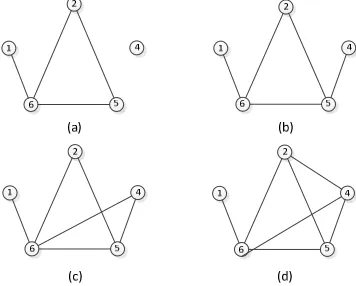
Figure 1. Graphical representation of nearest priority connection mechanism.
In Figure 1, we can see the graphical representation of the mechanism as follows. (a) Introduce isolated node 5. (b) Select a node and generate link using the priority connection mechanism, and in this network , = 2, = 3. (c) Select the next node and generate link using nearest priority
connection mechanism, and in this network= 2, = 2; (d) Choose the next node based on
figure c.
further maintain the character of the scale-free network. The model connection’s "inbreeding coefficient" characteristics, result in network average path length relative the BA network model to be larger, and to present the high clustering characteristics. Therefore, this model has higher average clustering coefficient and bigger average length path over BA models.
Simulation
For the above model, we carry out the numerical simulation test model characteristics, the initial network is set to all connected network with 5 nodes, and the constant a is 10.
[image:3.612.161.463.186.350.2](a) (b)
Figure 2. Two different forms of a network which has 500 nodes.
[image:3.612.210.394.403.546.2]It can be seen in Figure 2 that the network has high clustering characteristics. The average clustering coefficient is 0.2576 and the average path length is 4.0443.
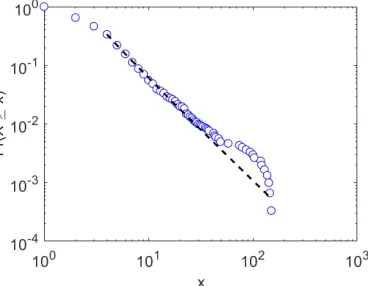
Figure 3. The distribution of nodes degree under logarithmic coordinates.
It can be seen in Figure 3 that the network shows power-law distribution. The average clustering coefficient is 0.1724 and the average path length is 4.5962.
(a) (b) (c)
[image:3.612.94.516.594.716.2]The Figure 4 shows average clustering coefficient, average path length and the degree distribution of the alpha value of network with 1000 nodes in 100 different experimental. We can see that the average clustering coefficient of the network reached near 0.2, the average path length of network is in the vicinity of 4.3, the degree distribution obeys the power-law distribution, the alpha value is around 2.71, which has universal significance.
[image:4.612.106.518.139.308.2]
(a) (b)
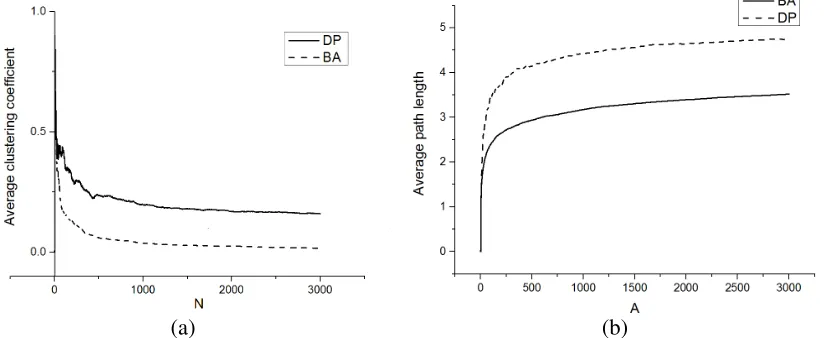
Figure 5. The comparison of the BA network and the network given by the model, including average clustering coefficient and average path length.
In Figure 5, we can see the comparison of BA network and the network given by the model. (a) With the network scale growth, the network average clustering coefficient decreases and then tends to be stable. Average clustering coefficient in network given by model is higher than the general BA network. (b) With the network scale growth, the average path length of network increases and then tended to be stable. The average path length of the network is higher than the general BA network.
Conclusion
In this paper, according to the characteristics of the connection and order in the network evolution process, the connection mechanism is proposed. Based on this mechanism, a network evolution model is built. Through simulation analysis, this model can meet the scale free characteristics of network evolution, and better reflect the reality basis of "Friends of friend are more likely to become friends". The generated network has higher clustering and larger average path length.
Acknowledgments
This work was partially supported by the Task Integration Management on the Innovative Development of High-End Equipment Manufacturing in the Internet and Big Data Rea [grant number 71690233] and the function link based on weapon equipment system fighting ability analysis [grant number 71771214].
References
[1] Strogatz S H, Exploring Complex Networks, J. Nature, 410 (2001) 268-276.
[2] Jeong H, Tombor B, Albert R, et al., The large-scale organization of metabolic networks, J. Nature, 407(2000) 651-4.
[3] Amaral L A N, Scala A, Barthélémy M, Classes of small-world networks, J. Proceedings of the National Academy of Sciences of the United States of America, 97(2000) 11149.
[5] Watts D J, Strogatz S.H., Collective dynamics of 'small-world' networks. J. Nature, 393(1998) 440.
[6] Barabasi A L, Albert R, Emergence of Scaling in Random Networks. J. Science, 286(1999) 509-512.
[7] Fan Zhengping, A multi-local-world model for complex networks. J. Physics letters A, 373(2011), 1601-1605.
[8] Li Ji, Wang Bing-Hong, Jiang Pin-Qun, Growing complex network model with acceleratingly increasing number of nodes, J. Acta Physica Sinica, 55(2006) 4051-4057
[9] Bianconi G, Barabási A L. Bose-Einstein condensation in complex networks. J. Phys. rev. lett, 86(2001) 5632-5
[10] Holme P, Kim B J, Growing scale-free networks with tunable clustering. J. Physical Review E Statistical Nonlinear & Soft Matter Physics, 65(2002) 026107.