International Journal of Emerging Technology and Advanced Engineering
Website: www.ijetae.com (
ISSN 2250-2459
, Volume 2, Issue 4, April 2012)
549
On Demand Operating System Coupling Cloud
Computing
Santhosh S
1, Sandeep Kumar S
2, Shashidhar M S
3, Manjunatha T N
41,2,3,4
Students M.Tech CSE, Canara Engineering College, Mangalore.
3
Abstract— With the increasing use of high-speed internet technologies during the past few years, the concept of cloud computing has become more popular and has evolved as a key computing platform for sharing resources that include infrastructure, software, applications, and business process. It provides a new way of building applications on on-demand infrastructure. In cloud computing, users work with web-based, rather than local, storage and software. Using cloud computing we can move operating system to web which aims at providing the user with the most easy and the efficient way of using an operating system, which is stored in a server and accessing it from anywhere with a browser and minimum system requirement and internet connection, this helps people work, logout, and login from a different place on a different computer without carrying their own PC. On demand OS applications are accessible via a browser and look and act like desktop programs. Organizations can more easily control corporate data and reduce malware infections. Also, cloud computing makes collaboration easier and can reduce platform-incompatibility problems. Currently available on demand OS include eyeOS, icloud, Cloudo. Of course, the Web OS won’t replace the traditional operating system any time soon. But as users become more comfortable working over the Web, the Web OS could become more popular.
Keywords—Cloud Computing, WebOS, Browser, Internet,
Cloud Widgets.
I. INTRODUCTION
The rapid development of networked and cloud computing, as demonstrated with the ever growing Internet (or Web) has lead to a global infrastructure, as well as to the introduction of new IT functionality. Imagine yourself in the world where the users of the computer of today’s internet world don’t have to run, install or store their application or data on their own computers; imagine the world where every piece of your information or data would reside on the Cloud (Internet).
As a metaphor for the Internet, the cloud [1] is a familiar cliché, but when combined with "computing" the meaning gets bigger and fuzzier. Some analysts and vendors define cloud computing narrowly as an updated version of utility computing, basically virtual servers available over the Internet. Others go very broad; arguing anything you consume outside the firewall is in the cloud, including conventional outsourcing. The idea behind on demand OS is that the whole system lives in the web browser. The client must have only a web browser to work with web OS [2] and all its applications, including Office and PIM ones. This applies to for both modern and obsolete PC's an Open Source Platform designed to hold a wide variety of Web Applications. WebOS was thought of as a new definition of an Operating System, where everything inside it can be accessed from everywhere inside a Network. All you need to do is login into your WebOS server with a normal Internet browser, and you have access to your personal desktop, with your applications, documents, music, movies, just like you left it. Web OS lets you upload your files and work with them no matter where you are. It contains applications like Word Processor, Address Book, PDF reader, and many more developed by the community.
II. THE PROMISE OF CLOUD COMPUTING
International Journal of Emerging Technology and Advanced Engineering
Website: www.ijetae.com (
ISSN 2250-2459
, Volume 2, Issue 4, April 2012)
550
Users need not have Knowledge of, expertise in, or control over the aspects. Cloud service offerings include
A. Cloud Service Offering SaaS
Software as a service features a complete application offered as a service on demand. A single instance of the software runs on the cloud and services multiple end users or client organizations. The most widely known example of SaaS is salesforce.com, though many other examples have come to market, including the Google Apps offering of basic business services including email and word processing. To address demands of small-to-medium sized enterprises, some vendors, such as Salesforce.com [4], have developed a mechanism for Web services-based integration services to allow customers run on their own systems with hosted services offered by the Net-native providers. With software system hosted on center servers, SaaS vendor uses its website as a portal of the system and data center. Paying monthly fee, customers access vendor’s server via browser to use the standardized software and save their data on vendor’s data center. All customers who select the same product version will share the same software function and user interface. By simple customization, customers can redesign user interfaces or functions to satisfy their unique demands. When SaaS vendor upgrades its software system, customers will immediately enjoy the upgrading version for free.
B. Operating principle
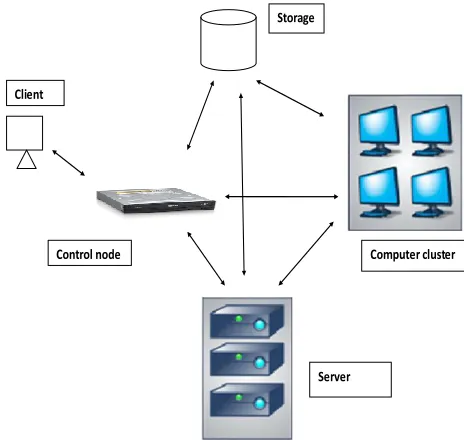
There are basically three stages for working in cloud as depicted in figure 1
Stage 1: At this stage from a client computer a request is sent to a control node through internet regarding the permission to use the cloud infrastructure.
Stage 2: In the second stage the control node processes our request, and according to our need allot the space in the storage database, requested applications from application servers, and the platform i.e. operating system.
Stage 3: When the requested commodities are fulfilled we can access any computer, any database for our computing purpose. If we want to save any data then we can store it in the allotted cloud storage database server.
Storage
Client
Control node
Server
[image:2.612.324.556.143.363.2]Computer cluster
Figure 1. Working principle of cloud computing
C. Key Characteristics
High performance provides consistent high speed system performance worldwide.
Device and location independence enable users to access systems using a web browser regardless of their location or what device they are using,
Reliability improves through the use of multiple redundant sites, which makes it suitable for business continuity and disaster recovery.
Security typically improves due to centralization of data, increased security-focused resources, etc.,
Multi-tenancy enables sharing of resources and costs among a large pool of use.
III. DRIVINGTHEONDEMANDOS
International Journal of Emerging Technology and Advanced Engineering
Website: www.ijetae.com (
ISSN 2250-2459
, Volume 2, Issue 4, April 2012)
551
Operating systems interact directly with computer hardware and serve as a platform for other applications. The on demand OS which functions much like a traditional OS, although it doesn’t include drivers for computer hardware is becoming a subject of increasing interest. One contribution factor is internet technologies increasing bandwidth, which enables the fast movement of applications and data via the internet to and from on demand OS.
A. Early Developments
One of the on demand OS’s predecessors was Tarantella, which the Santa Cruz Operation [4] launched in 1993.It was a Unix-based X Window System that worked over corporate networks and let PCs display a Unix desktop. However, the technology never caught on commercially. Sun acquired Tarantella in 2005 and integrated it into the SGD. In 1992, University of California, Berkeley, researchers began work on what, four years later, became on demand OS. The system delivered OS like functionality via the Internet.
B. Advent of On Demand OS
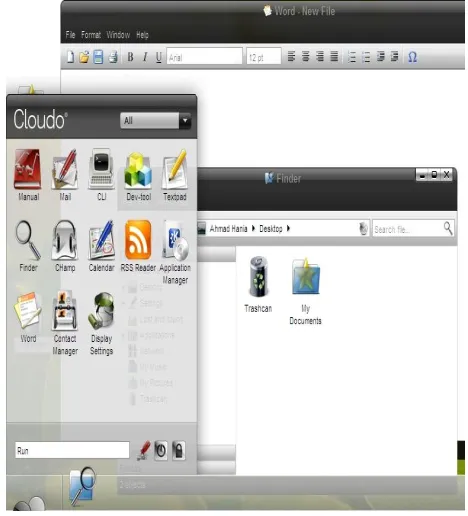
[image:3.612.332.566.142.400.2]A key driving force [4] behind the development of Web OSs such as cloudo [5] shown in figure 2 has been the rise of Web-based applications. Several of these applications have started gaining traction in recent years, particularly those for email (such as Hotmail and Gmail), instant messaging, and storage (like Xdrive). Recently, there have also been Web-based word-processing and spreadsheet applications (such as Google Docs and Numbler). With the first generation of Web applications, implementing even some modest functions like dragging and dropping files, making minor changes to documents without having to refresh the entire page, and caching data locally was difficult. However, this has changed with technologies such as Ajax (Asynchronous JavaScript and XML), Adobe Flash, Adobe Integrated Runtime (AIR), Google Gears, and Microsoft Silverlight, which enable the development of rich Web applications. One of the Web OS’s key challenges has been working around security limits, such as browsers sandbox functionality, designed to restrict the local execution of Web applications.
Figure 2. Cloudo on demand OS
IV. ONDEMAND OS ARCHITECTURE
International Journal of Emerging Technology and Advanced Engineering
Website: www.ijetae.com (
ISSN 2250-2459
, Volume 2, Issue 4, April 2012)
[image:4.612.65.309.130.394.2]552
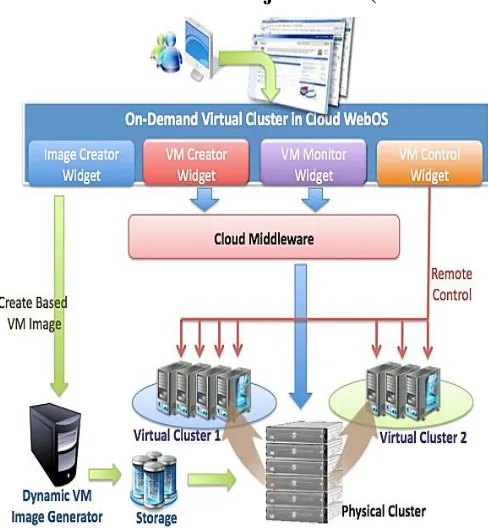
Figure 3. System Architecture of on demand OS
Figure 4. Working of on demand OS
V. APPLICATION OF ONDEMAND OS
Web operating systems are interfaces to distributed computing systems, particularly cloud or utility computing systems. In these systems, a company provides computer services to users through an internet connection. The
provider runs a system of computers that include application servers and databases with some systems; people access the applications using Web browsers like Firefox or Internet Explorer [8]. With other systems, users must download a program that creates a system-specific client. A client is software that accesses information or services from other software. In either case, users access programs that are stored not on their own computers, but on the Web. Programmers write new programs for the operating system. Some Web OSs, such as the SGD, deploy standard Windows or Unix applications online via servers that run the programs in virtual machines that handle them as if they were in their native OS. G.ho.st works with various Web applications already on the Internet, such as Zoho for word-processing, spreadsheet, presentation, and other office-productivity functions, Zimbra for calendaring and messaging, Pandora for playing music, and Flickr for displaying and managing photos.
VI. TECHNOLOGY ASPECTS
[image:4.612.64.272.468.624.2]International Journal of Emerging Technology and Advanced Engineering
Website: www.ijetae.com (
ISSN 2250-2459
, Volume 2, Issue 4, April 2012)
553
XML [10] is a markup language, which means programmers use it to describe the structure of information within a file and how it relates to other information. The "asynchronous" aspect of AJAX means that AJAX applications transfer data between servers and browsers in small bits of information as needed. The alternative is to send an entire Web page to the browser every time something changes, which would significantly slow down the user's experience.
A. Upsides of On Demand OS
Convenience: A personalized desktop on every supported client device.
Mobility: Access your desktop anywhere there is a supported client device
Browser and platform independent supported by all browser and operating systems
Startup quickly in about 10-15 seconds which is significantly faster than any Windows PC
Data loss due to damage or lost or stolen computer is all but eliminated. In fact, moving to new hardware involves nothing more than turning on the new machine and logging in. No need to transfer data, reinstall applications or even wait for IT assistance.
B. Downsides of On Demand OS
High bandwidth connection required for better performance.
It cannot be accessed offline, need for high speed network.
Other issues include the lack of proper VPN support, limited file management and some weird browser compatibility issues that prevent some websites from loading or functioning correctly.
VII. FUTURE ASPECTS
By next few years most people won't do their work with software running on a general-purpose PC. Instead, they will work in Internet-based applications such as Google Docs, and in applications run from smart phones. Aspiring application developers will develop for Smartphone vendors and companies that provide Internet-based applications, because most innovative work will be done in that domain, instead of designing applications that run on a PC operating system.
Most of those surveyed noted that cloud computing will continue to expand and come to dominate information transactions because it offers many advantages, allowing users to have easy, instant, and individualized access to tools and information they need wherever they are, locatable from any networked device. The long term objectives of the Web OS project is define and develop methods and frameworks for current and future interconnected systems and thus contribute to future global information infrastructures.
with the use of https 256-bit encryption and access control lists, data transfer and storage security factors can be easily safe-guarded
network bandwidth and latency issues need to resolved as it involves huge data exchange
Working with developers to create and add more applications such as photo albums. Juke boxes, and personal information managers to on demand Os
VIII. CONCLUSION
On demand Os provides the virtual environment and functionality of traditional Os through a web browser where users can interact with applications and services in much the same way they do in traditional operating system. WebOS is an effort towards building a fully personalized enhanced web operating system that resides remotely and can be accessed through a web browser. On demand Os concept is said to be the next generation personal desktop people will be able to work from anywhere using this revolutionary technology. Portable devices can be made with browser and networking capabilities to full utilize webOS. The goal of webOS is to provide software framework for highly available, dynamically adaptable, and incrementally scalable web services running on a set of geographically distributed machines
REFERENCES
[1] Robert L.Grossman “The case for cloud computing”, IEEE computer society March/April 2009
[2] W. Kim, “Cloud computing: Today and Tomorrow,” Journal of Object Technology, 8, 2009.
[3] url: http://en.wikipedia.org/wiki/Cloud_computing, 12.03.2012
[4] George Lawton “Moving the OS to the web”, IEEE computer society March 2008
[5] url: http://www.cloudo.com/, 12.02.2011
International Journal of Emerging Technology and Advanced Engineering
Website: www.ijetae.com (
ISSN 2250-2459
, Volume 2, Issue 4, April 2012)
554 [7] Hsi-En Yu, Chia- Yen Liu, Yi-Lun Pan, Chang-Hsing Wu, Hui-Shan
Chen and Weicheng Huang “On-Demand Virtual Cluster in Cloud
Web-Based OS Environment” Cloud Computing Technology and
Science, 11/30 – 12/3, 2010.
[8] url: http://computer.howstuffworks.com/internet/basics/ie7.htm
[9] Shrohit Patel “web OS the next generation personal desktop” dashboard January 2007 issue http://www.einfochips.com/designers-corner/WebOS%20 %20Personal%20Desktop.pdf