EFFECT OF DIFFERENT DRYING METHODS ON RED BEET (
Food Science and Technology - Agricultural Industrialization Unit
ARTICLE INFO ABSTRACT
The greeting interest of consumers to preserve their crops in order to beat food deficiency and attain food security was a target to investigate a way to maintain red beet so as to use all over the year. The influence of oven, sun and microwave drying meth
color and rehydration ratio of red beet root were studied. All the drying methods under investigation decreasing moisture content with enhancing the nutrional contents and resulted in dried red beet with excellent color and rehydration ratio. Microwave drying treatment improve both total phenol and vitamin c contents where the sun drying treatment outcome dried beet samples with perfect total phenol content but with a shortage in vitamin c content. The oven
red beet with a sensible total phenol and vitamin c contents. Finally, it could use the drying methods under investigation in preserving red beet and obtain dried red beet which can be used in food preparation especially inf
Copyright © 2018, Amira M. Shokry. This is an open access distribution, and reproduction in any medium, provided
INTRODUCTION
Rural people overcome the serious food shortages by diversifying their food sources even by growing a variety of crops or collecting of fruits and vegetable for consumption. Reducing in losing rate during post-harvest and marketing processes of fruits and vegetables become a very important task to reach the world’s food security (Tembo
Akinnifesi et al., 2006, 2008). In the same time the processing
of fruits and vegetables for possible value adding products which could be progress farmer income is nearly negligible (Gokhale and Lele, 2014). Food preservation purposed to increase the time for keeping food safe while holding over quality and nutrients. Fruits and vegetables play an important role in human diet and nutrition but are highly perisha to their high moisture content, so decreasing the moisture content become an important task to increase shelf life of fruits and vegetables and promote food security (Singh
Drying is one of the preservation methods ensuring microbial safety of biological products (Mathlouthi, 2001) where it used to reduce moisture content in the food matrix to a level that inactivate microbial activity and so increasing the shelf life of fruits and vegetables making them available throughout the year.
Corresponding author: Amira M. Shokry,
Food Science and Technology - Agricultural Industrialization Unit Desert Research Center – Cairo –Egypt.
ISSN: 0975-833X
Article History:
Received 19th January, 2018 Received in revised form 21st February, 2018
Accepted 04th March, 2018
Published online 30th April, 2018
Citation: Amira M. Shokry. 2018. “Effect of Different Drying Methods on Red Beet ( 10, (04), 68189-68193.
Key words:
Red beetroot, Beta vulgaris L., Microwave
drying, Sun drying, Oven drying, Total phenol, Vitamin C and Rehydration ratio.
RESEARCH ARTICLE
EFFECT OF DIFFERENT DRYING METHODS ON RED BEET (
BETA VULGARIS
*
Amira M. Shokry
Agricultural Industrialization Unit - Desert Research Center
ABSTRACT
The greeting interest of consumers to preserve their crops in order to beat food deficiency and attain food security was a target to investigate a way to maintain red beet so as to use all over the year. The influence of oven, sun and microwave drying methods on nutrional values, total phenol, vitamin color and rehydration ratio of red beet root were studied. All the drying methods under investigation decreasing moisture content with enhancing the nutrional contents and resulted in dried red beet with cellent color and rehydration ratio. Microwave drying treatment improve both total phenol and vitamin c contents where the sun drying treatment outcome dried beet samples with perfect total phenol content but with a shortage in vitamin c content. The oven
red beet with a sensible total phenol and vitamin c contents. Finally, it could use the drying methods under investigation in preserving red beet and obtain dried red beet which can be used in food preparation especially infant food, also it could be consumed as a substitute of traditional snacks.
access article distributed under the Creative Commons Attribution the original work is properly cited.
Rural people overcome the serious food shortages by diversifying their food sources even by growing a variety of crops or collecting of fruits and vegetable for consumption. harvest and marketing vegetables become a very important
task to reach the world’s food security (Tembo et al., 2008;
. In the same time the processing of fruits and vegetables for possible value adding products e is nearly negligible (Gokhale and Lele, 2014). Food preservation purposed to increase the time for keeping food safe while holding over quality and nutrients. Fruits and vegetables play an important role in human diet and nutrition but are highly perishable due to their high moisture content, so decreasing the moisture content become an important task to increase shelf life of fruits
and vegetables and promote food security (Singh et al., 2013).
Drying is one of the preservation methods ensuring microbial (Mathlouthi, 2001) where it used to reduce moisture content in the food matrix to a level that inactivate microbial activity and so increasing the shelf life of fruits and vegetables making them available throughout the
Agricultural Industrialization Unit -
So it presumes to be a suitable alternative for post management where the reduction of water
removal leads to significant reduction of weight and volume, minimizing packaging, transportation and storage costs (Sagar and Suresh, 2010). Sun and oven drying are the popular drying methods used in drying these food crops, sun dryin
most common practice (Matazu and Haroun, 2004)
drying is an unconventional drying methods. There is a great interest in using this technology due to the high capacity of penetration of these waves, where the heat not only on the surface but also inside the food particles, so, it
drying process, reducing drying time resulting inimproving the quality of the final dried product (
beet (Beta vulgaris) is botanically classi
biennial from Chenopodiaceae family
2014). It is a traditional and popular vegetable in many parts of the world. They can be eaten raw, boiled, steamed and roasted. The nutritional benefits of red beet root are very well known, also contributes to consumers’ health and wellbeing because it is known to be a rich source of powerful antioxidants and nutrients, also, they are wealthy with vitamins A, B1, B2, B6 and C. Moreover, they are an excellent source of calcium, magnesium, copper, phosphorus, sodium and iron. These root vegetables help protect against heart disease and certain
cancers (Kavalcova et al., 2015
root vegetables help protect against heart disease and certain cancers (colon cancer) (Kapadia
interest in the use of deep red beet roots as a natural food color,
Ibraheem et al. (2016) recommended that the addition of
encapsulated pigment of red beet to the food models could be
International Journal of Current Research
Vol. 10, Issue, 04, pp.68189-68193, April, 2018
Effect of Different Drying Methods on Red Beet (Beta vulgaris) Quality”, International Journal of Current Research
BETA VULGARIS
) QUALITY
Desert Research Center – Cairo –Egypt
The greeting interest of consumers to preserve their crops in order to beat food deficiency and attain food security was a target to investigate a way to maintain red beet so as to use all over the year. The ods on nutrional values, total phenol, vitamin C, color and rehydration ratio of red beet root were studied. All the drying methods under investigation decreasing moisture content with enhancing the nutrional contents and resulted in dried red beet with cellent color and rehydration ratio. Microwave drying treatment improve both total phenol and vitamin c contents where the sun drying treatment outcome dried beet samples with perfect total phenol content but with a shortage in vitamin c content. The oven drying treatment produced dried red beet with a sensible total phenol and vitamin c contents. Finally, it could use the drying methods under investigation in preserving red beet and obtain dried red beet which can be used in food
ant food, also it could be consumed as a substitute of traditional snacks.
License, which permits unrestricted use,
So it presumes to be a suitable alternative for post-harvest management where the reduction of water activity by moisture removal leads to significant reduction of weight and volume, minimizing packaging, transportation and storage costs (Sagar Sun and oven drying are the popular drying methods used in drying these food crops, sun drying being the Matazu and Haroun, 2004).Microwave unconventional drying methods. There is a great interest in using this technology due to the high capacity of penetration of these waves, where the heat not only on the but also inside the food particles, so, it speeds up the drying process, reducing drying time resulting inimproving the
quality of the final dried product (Contreras et al., 2008). Red
) is botanically classified as an herbaceous nial from Chenopodiaceae family (Gokhale and Lele, It is a traditional and popular vegetable in many parts of They can be eaten raw, boiled, steamed and roasted. The nutritional benefits of red beet root are very well known, it ibutes to consumers’ health and wellbeing because it is known to be a rich source of powerful antioxidants and nutrients, also, they are wealthy with vitamins A, B1, B2, B6 Moreover, they are an excellent source of calcium, orus, sodium and iron. These root vegetables help protect against heart disease and certain
, 2015 and Singh et al., 2013). These
root vegetables help protect against heart disease and certain
cancers (colon cancer) (Kapadia et al., 1996). There is growing
interest in the use of deep red beet roots as a natural food color, . (2016) recommended that the addition of encapsulated pigment of red beet to the food models could be OF CURRENT RESEARCH
successively improved the food product color without adverse effects on the quality attributes. Red beet root is not available throughout the year. Increase in awareness of red beet health benefits has focused attention of how to preserve its phytochemicals during storage. Subsequently, dehydration of red beet root is a preservation method used to develop value added products during the off-season. Drying methods impact the dried product quality (Kulkarni and Govindene, 1994;
Waghmore et al., 1999; Krokida and Maroulis, 2001). The
removal of water by heat has been reported to affect the nutrient contents of food in various ways, where it can either increase the concentration of some nutrients by making them more available or decrease the concentration of some nutrients
(Hassan et al., 2007; Morris et al., 2004; Ladan et al., 1997).
Therefore, there is a growing need to optimize the process for achieving quality retention. For this consideration, oven, sun and microwave drying methods were investigated to study their effects on the nutritional values, total phenol, color, and rehydration ratio of dried red beet roots.
MATERIALS AND METHODS
The root of red beet was obtained from Khmisa Farm, Siwa Research Station, Desert Research Center-Egypt. The red beet roots were washed, peeled and grated using a kitchen processor. Red beet root was dried using sun drying (SRB), oven (ORB), high power level microwave oven (HMRB) and the medium power level in microwave oven (MMRB) using microwave model NN-C988W made in Japan with a 1800W powerful heater. The samples of each treatment will dried until it become crispywith attention to overturn the grated red beet every 20 minutes for the SRB and ORB treatments and every 2 minutes for both HMRB and MMRB treatments to avoid it burned during drying. The dried red beet was package in polyethylene bags and stored in refrigerator at 4°C until analyzed.
Analytical methods
Fresh and dried red beet treatments were analyzed for moisture, crude protein, ether extract, crude fiber and total ash according to the methods described in the A.O.A.C. (2000). The carbohydrate content was calculated by difference. Total phenol contents determined according to Singleton & Rossi
(1965), Vitamin C determined according to Brubacher et al.
(1985)
Quality assessment of dried red beet
Tow physical parameters (color and rehydration ratio) were used to estimate the quality of fresh and dried red beet treatments. Color was measured by Chroma meter (Konica Minolta, model CR 410, Japan) calibrated with a white plate and light trap supplied by the manufacturer at Cairo University Research Park (CURP), Faculty of Agriculture. Color was expressed using the CIE L, a, and b color system (CIE, 1976). A total of three spectral readings were taken for each sample. Lightness (L*) (dark to light), the redness (a*) values (reddish to greenish). The yellowness (b*) value (yellowish to bluish) was estimated. Rehydration ratio defined as the rehydrated samples ratio of rewet weight sample to the weight of dry sample and determined by soaking 5 g of dried sample in 100 mL boiling water for 30 min then cooled. The cooled content was filtered and weighed.
Rehydration ratio calculated using the following equation as mentioned by Gokhale and Lele (2011):
Statistical Analysis
Data were subjected to analysis of variance (ANOVA). All tests were conducted at the 5% significant level.
RESULTS AND DISCUSSION
Effect of drying methods on the nutritional quality of dried red beet
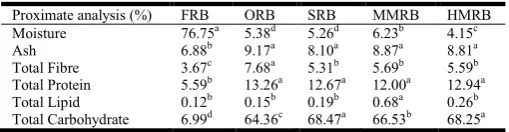
The action of applying heat to a material in order to dry it does affect the nutritional qualities of the dried product (Onayemi, 1981), so it was important to evaluate the effect of the drying process under investigation on the nutrional values of the dried red beet. Data presented in table (1) shows the decrement in moisture content in relation to drying time and found that the moisture percentage decreased from 76.75% in the FRB to 4.15% and 6.23% after 20 and 35 minute for HMRB and MMRB treatments, respectively, where it decreased to 5.38% and 5.26% after 4 and 8 hours for ORB and SRB treatments,
respectively. Therefore, drying methods used under
investigation affected the drying time and found that the Microwave drying method present a very excellent advantages over both SRB and ORB drying methods in taking down
drying time. The same trend was obtained by Singh et al.
[image:2.595.306.561.604.670.2](2013) who mention that the red beet has been dried by five different temperature levels and moisture is lost in good extent but the microwave convection drying proved better than the other method in terms of reduced drying time and lower final moisture content. However, the results showed that there was increment in the other nutrient components tested where the highest increment in ash, total fiber and total protein contents were obtained with the ORB treatment. The other treatments contain a considerable high percentage of ash, total fiber and total protein. Increasing in total carbohydrate content was registered with SRB and HMRB treatments followed by MMRB and ORB treatments, respectively. Finally, all dried treatments had an increment in ash, total fiber, total protein and total carbohydrate contents in comparison with the fresh samples. And so, the drying methods found to improve the nutritional content of the dried red beet.
Table 1. Effect of drying methods on nutritional content of dried red beet
Proximate analysis (%) FRB ORB SRB MMRB HMRB
Moisture 76.75a 5.38d 5.26d 6.23b 4.15c
Ash 6.88b 9.17a 8.10a 8.87a 8.81a
Total Fibre 3.67c 7.68a 5.31b 5.69b 5.59b
Total Protein 5.59b 13.26a 12.67a 12.00a 12.94a
Total Lipid 0.12b 0.15b 0.19b 0.68a 0.26b
Total Carbohydrate 6.99d 64.36c 68.47a 66.53b 68.25a
means sharing the same letter in a raw are not significantly different at p≥0.05) after ((FRB) is fresh red beet samples, (ORB) is the oven dried red beet treatment, (SRB) is the sun dried red beet treatment, (MMRB) is the medium power microwave dried red beet treatment and (HMRB) is the high
power microwave dried red beet treatment)). Morris et al.
(2004) illustrated that there are two processes occurring during drying, the addition of heat and the removal of moisture from the food. Nutritional losses during drying are more due to the application of heat than to the removal of moisture. Likewise
removal of water by heat has been reported to affect the nutrient contents of food where it can increase the concentration of some nutrients and making them more available.
And so, the drying methods used under study found to improve the nutritional content of the dried red beetroot.
Effect of drying methods on the total phenol and vitamin C contents of dried red beet
Figure (1) demonstrates the results obtained for TP contents of fresh and different dried red beet treatments. Dried red beet represented a higher recovery for TP content in comparison with the fresh samples. The highest value in TP occurred with the HMRB treatment (417.6 mg GAE /100g) sample followed by SRB (206.2 mg GAE/100g) and MMRB (113.4 mg GAE /100g), where the ORB treatment exhibit the lowest TP value (34.85 mg GAE/100g).
Figuree 1. Effect of drying methods on total phenol content of dried red beet
These results were in accordance with Hung and Duy, 2012who mentioned that dried red beet is a good source of phenolics and stated that this may be attributed to the presence of the phenolic compounds primarily in red beet in bound form rather than in free form which it does not affected by thermal treatment because of their association with cell wall of
vegetables. Furthur more, Guldiken et al., (2016) announced
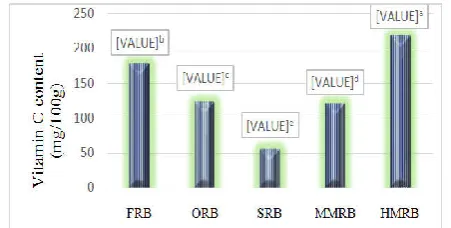
that drying process led to 36% higher TP contents in dried red beetroot compared to the fresh sample. Data in figure (2) clarify that vitamin C content was affected by the drying methods under investigation. Loss in vitamin C content reported to be higher with the SRB treatments (55.77 mg/100g) where both ORB and MMRB treatments resulted in loss in vitamin C content but it was less than SRB treatment, whilst the HMRB treatments enhanced vitamin C (218.04 mg/100g) and that is in comparison with the fresh samples which
appeared to have 178.4 mg/100g vitamin C. Idah et al.,(2010)
concluded that there was a continuous decrease in the value of vitamin C as the drying time increase.
[image:3.595.58.270.259.384.2]
Figure 2. Effect of drying methods on vitamin C contents of dried red beet
Similar observation have been reported by Ndawula et al.,
(2004) who stated that the open sun drying method caused the greatest vitamin C loss due to the exposure of the drying fruits and vegetables to greater solar radiation particularly ultra violet (UV) rays and also the sun drying methods holding the moisture content for comparatively longer time in comparison with the other drying methods and this caused strengthen the enzymatic reactions and interaction of other constituents of the
drying product leading to loss of vitamins. Ozkan et al.(2007)
indicated that the reduction in the ascorbic acid levels by using microwave drying methods was recorded as dependent on drying time and microwave power level because the drying time depend on the microwave power level. And this explains the reduction in vitamin C content with MMRB treatment where there is a reinforcement in vitamin C content in HMRB treatment.
Effect of drying methods on color and rehydration ratio of dried red beet
The color of the food surface is the first quality parameter evaluated by consumers and is critical in product acceptance, even before it is tasted. Color values were registered over to study the variation in color of different dried red beet treatments. From data in figure (3) we found that the L* values increased with ORB treatments followed by the HMRB and MMRB treatments while the SRB treatment recorded the lower L* value in comparison with the FRB treatments. The same trend of increment was also observed with the b* values where the highest b* values obtained with the ORB treatments followed by HMRB˃ MMRB˃SRB treatments compared to the FRB treatments. This is may be due to the yellow pigments are more stable than the red pigments and also, during the thermal treatment the betalains (the red pigment) converts to yellow due to thermo chemical reactions (Carle and Stintzing, 2007). Also, it was observed that a* values for MMRB and SRB treatments was lower than the a* values of FRB treatments, respectively, where the a* values of both HMRB and ORB treatments were almost equal to the a* values of FRB treatments. This may be due to temperature sensitivity of red pigment as mentioned by Gokhale and Lele (2011).Carle and Stintzing (2007) reference that, at higher drying temperature conversion of red to yellow pigments may happen but it may be masked by browning of the beet and so recompense the shortage in red color for the treatments that have high lightness and yellowness value since the Chroma meterrecords only the surface color and not the actual pigment content. The color changes caused by the thermal treatment may be caused not only by the non-enzymatic browning reaction, but also by the destruction of pigments present in the
[image:3.595.325.540.648.779.2]foods López et al. (2013).
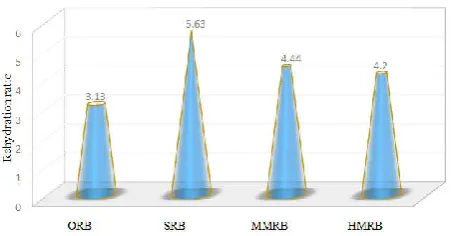
[image:3.595.49.275.654.768.2]Figure 4. Effect of drying methods on rehydration ratio of dried red beet
Rehydration ratio (Rr) is a way to evaluate the quality assessment of dried food (Lewicki, 1998).The high rehydration value means the high quality of dried food (Noomhorm 2007) and so, Rr is a key quality for the dried products
(Garcia-Pascual et al. 2006). Data in figure (4) demonstrated that the
SRB treatments exhibit the highestRr followed by MMRB,
HMRB and ORB treatments, respectively. Rajeswari et al.,
(2011) observed a high rehydration ratio with sun drying methods. Noomhorm,(2007) display that the high rehydration ratio means the porous structure is allowing more water to reenter the cells, thus the pours structure of the SRB, HMRB and MMRB treatments supposed to be better than those of ORB treatment.
Conclusion
Based on the results obtained from the study, the drying methods used under investigation were be good as they all lowering final moisture content, enhanced the nutritional constituents and appear to have good color and rehydration ratio in the dried red beet compared to fresh sample. However, the microwave treatments proved to be better than the other methods in terms of minimize drying time, improved both total phenol and vitamin C contents in the dried red beet samples. The SRB treatment enhanced the total phenol content but lowering vitamin C content compared with the other treatments, while the ORB samples though likely to have a perfect content of vitamin C and a reasonable level of total phenol content compared by the FRB samples. Whilst, to obtain fast drying, the microwave drying method which though to be more expensive is recommended followed by the oven drying method then the sun drying method which takes much longer drying time.
REFERENCES
Akinnifesi, F.K., R.R.B. Leakey, O.C. Ajayi, G. Sileshi, Z. Tchoundjeu, P. Matakala andF.R. Kwesiga, 2008. Indigenous Fruit Trees in the Tropics: Domestication, Utilization and Commercialization. World Agroforestry
Centre: Nairobi. CAB International Publishing,
Wallingford, UK, p. 438.
Akinnifesi, F.K., F.R. Kwesiga, J. Mhango, T. Chilanga, A. Mkonda, C.A.C. Kadu, I. Kadzere, D. Mithofer, J.D.K. Saka, G. Sileshi, P. Dhliwayo and R. Swai 2006. Towards developing the miombo indigenous fruit trees as commercial tree crops in Southern Africa. Forest. Tree. Livelihood,16: 113-121.
A.O.A.C., 2000. Association of Official Analytical Chemist. Official methods of analysis. (18th edn). Washington DC.
Bajaj, K.L. and G. Kaur 1981. Spectrophotometric determination of L-ascorbic acid in vegetables and fruits. Analyst., 106.
Brubacher, G., W. Muller-Muolt and D.A.T. Southgate 1985. Methods for the determination of vitamin in food. Elsevier Applied Science Publishers, London.
Carle, R and F.C. Stintzing 2007. Betalains-Emerging prospects for food scientists. Trends Food Sci. Tech., 18: 514-525.
CIE (Commission International de, Clairage) 1976. Official recommendations on uniform color spaces. Color difference equations and metric color terms, Suppl. No. 2. CIE Publication No. 15 Colourimetry, Paris, France. Contreras, C., M.E. Esparza,A. Chiralt andN.
Martínez-Navarrete 2008. Influence of microwave application on convective drying: effects on drying kinetics, and optical and mechanical properties of apple and strawberry. J. Food Eng., 88:55-64.
Garcia-Pascual, P., N. Sanjuan, R. Melis, and A. Mulet. 2006.
Morchalla esculenta (morel) rehydration process
modelling. J. Food Eng., 72:346–353.
Gokhale, S.V., S.S. Lele 2014. Betalain Content and Antioxidant Activity of Beta vulgaris: Effect of Hot Air
Convective Drying and Storage. J. of Food Proce. and
Preserv., 38(1):585–590.
Gokhale, S.V. and S.S. Lele 2011. Dehydration of Red Beet
Root (Beta vulgaris) by Hot Air Drying: Process Optimiz.
and Mathe. Model. Food Sci. Biotechnol., 20(4): 955-964.
Guldiken, B.,T. Gamze, N.M. Kubra,O. Sena, B. Dilek and C.
Esra 2016. Home-Processed Red Beetroot (Beta vulgaris
L.) Products: Changes in Antioxidant Properties and
Bioaccessibility. Int. J. Mol. Sci.,17:858.
Hung, P. V. and T.L. Duy, 2012. Effects of drying methods on bioactive compounds of vegetables and correlation
between bioactive compounds and their antioxidants. Int.
Food Res. J., 19(1): 327-332.
Hassan, S.W., R.A. Umar , H.M. Maishanu , I.K.
Matazu , U.Z. Faruk and A.A. Sani 2007. The Effect of Drying Method on the Nutrients and Non-Nutrients
Composition of Leaves of Gynandropsis
gynandra (Capparaceae). Asian J. of Biochem., 2: 349-353.
Ibraheem, A.A., K.R. Makpoul and M.Sh. Amira 2016. Improving red color of some food products using red beet
powder. Int. J. of Sci. and Res., 5 (12): 798-805.
Idah, P. A., J. Musa and S.T. Olaieye, 2010. Effect of temperature and drying time on some nutritional quality
parameters of dried tomatos. AU J. of Technol.,
14(1):25-32.
Kapadia, G.J., H. Tokuda, T. Konoshima and H. Nishino 1996.
Chemoprevention of lung and skin cancer by Beta
vulgaris (beet) root extract. Cancer Letters, 100:211–214. Krokida, M.K., and Z.B. Maroulis 2001. Structural properties
of dehydrated products during rehydration. Int. J. Food
Sci. Technol., 36: 529–538.
Kulkarni, K.D. and N. Govindene 1994. Crisp quality of two potato varieties: Effects of dehydration and rehydration.
J. Sci. Food Agric., 64: 205–210.
Ladan, M.J., M.G. Abubakar and M. Lawal 1997. Effect of
solar drying on the nutrient composition of tomatoes. Nig.
J. Renew. Energy, 5: 67-69.
Lewicki, P.P. 1998. Some remarks on rehydration of dried
foods. J. Food Eng., 36:81–87.
on physico-chemical properties and antioxidant capacity
of goldenberry (Physalis peruviana L.). Chilean J. Agric.
Res., 73:293-299.
Matazu, I.K. and A.A. Haroun, 2004. The effect of drying method on the nutrients and non-nutrients composition of
the fruit of Hibiscus esculentus (Okra). Nig. J. Renew.
Energy, 11: 9-13.
Mathlouthi M. 2001. Water content, water activity, water
structure and the stability of foodstuffs. Food Control 12:
409-417.
Morris, A., A. Barnett and O. Burrows 2004.Effect of
processing on nutrient content of foods. Cajarticles,
37:160-164.
Ndawula, J., J.D. Kabasa and Y.B. Byaruhanga 2004. Alterations in fruit and vegetable β-carotene and vitamin C content caused by open-sun drying, visqueen-covered
and polyethylene-covered solar-dryers. Afr Health Sci.,
4(2):125–130.
Noomhorm, A. 2007. Overview of dehydration method on
quality of fruit and vegetables. SWU Sci. J., 23:9–22.
Onayemi, O. (1981). Post-harvest food loss management in Nigeria. Industr and Environment 4: 5-8.
Ozkan, I.A., Akbudak, B. and Akbudak, N. 2007. Microwave
dryingcharacteristics of spinach. J. of Food Eng.,
78:577–583.
Rajeswari, P., P. Bharati, N.R. Naik and S. Johri 2011. Value
addition to amaranthus green herbage through
dehydration and drying. Res. J. Agric. Sci., 2:348–350. Sagar, V.R. andK.P.Suresh (2010). Recent advances in drying
and dehydration of fruits and vegetables: a review. J.
Food Sci. Technol.47(1):15–26.
Singh, S., K. Gaikwad, P.K. Omre1 and B.K. Kumbhar 2013. Microwave Convection Drying Characteristics of Beet
Root (Beta Vulgaris L.) Using Modelling Equations for
Drying. J .Food Process Technol.,4(9): 1-4.
Singleton,V.L. and J.A. Rossi 1965. Colorimetry of total phenolics with phosphomolybdic phosphotungstic acid
“reagents”. Am. J. Enol.Vitic., 16:144–158.
Tembo, L., Z.A. Chiteka, I. Kadzere, F.K. Akinnifesi and F. Tagwira 2008. Blanching and drying period affect
moisture loss and vitamin C content in Ziziphus
mauritiana (Lamk.) African. J. of Biotechnol.,7 (8):3100-3106.
Waghmore, N.V., P.M. Kotecha, and S.S. Kadam. 1999. Effect of pre-treatments, storage of potato and antioxidants on quality of potato chips prepared from cultivars grown in
western Maharashtra. J. Food Sci. Technol., 36: 49–51.