A Robust Method to Detect Hidden Data from
Digital Images
Romany F. Mansour1, W. F. Awwad1, A. A. Mohammed2
1Department of Computer Science, Faculty of Science, Northern Borders Univeristy, Arar, KSA 2Department of Computer Science, Faculty of Science, South Valley University, Qena, Egypt
Email: [email protected], [email protected], [email protected]
Received November 29,2011; revised December 30, 2011; accepted January 28,2012
ABSTRACT
Recently, numerous novel algorithms have been proposed in the fields of steganography and visual cryptography with the goals of improving security, reliability, and efficiency. Steganography detection is a technique to tell whether there are secret messages hidden in images. The performance of a steganalysis system is mainly determined by the method of feature extraction and the architecture selection of the classifier. In this paper, we present a new method Visual Pixel Detection VPD for extract data from a color or a grayscale images. Because the human eye can recognize the hidden
information in the image after using this detection. The experimental results show that the proposed method provides a better performance on testing images in comparison with the existing method in attacking Steghide, Outguess and F5.
Keywords: Data Hiding; Steganography; Steganalysis; Attack; Color Image Hiding; Stego-Image
1. Introduction
Steganography is the art, science, or practice in which messages, images, or files are hidden inside other mes-sages, images, or files. The concept of steganography is not a new one; it dates back many millennia when mes-sages used to be hidden on things of everyday use such as watermarks on letters, carvings on bottom sides of tables, and other objects. The more recent use of this concept emerged with the dawn of the digital world. Experiments have shown that data can be hidden in many ways inside different types of digital files. The main benefit of steganography is that the payload is not ex-pected by the investigators who get to examine the com-puter data. The person sending the hidden data and the person meant to receive the data are the only ones who know about it; but to everyone else, the object containing the hidden data just seems like an everyday normal ob-ject. A classification of information hiding techniques is described in [1].
Generally, steganographic methods proposed in the past few years can be categorized into two types. The methods of the first type employ the spatial domain of a host image to hide secret data. In other words, secret data are directly embedded into the pixels of the host image [2-5].
Steganographic methods of the second type employ the transformed domain of a host image to hide secret data [6-10]. Transformation functions like the discrete cosine transform (DCT) or discrete wavelet transform
(DWT) are first exploited to transform the pixel values in the spatial domain to coefficients in the frequency do-main. Then the secret data are embedded in the coeffi-cients.
Recently, the scheme proposed in [11] hid large amounts of data in the pixels of a true color image, which used 8 bits to represent each color component of a color pixel. The secret image can be both a grayscale and a true color image. However, the quality of the extracted color secret image is not good in terms of the peak signal-to-noise ratio (PSNR) value and visual observation. In this paper, we propose a steganographic method which hides a color or a grayscale image in a true color image.
such a wide scope of suspect images. It is somewhat eas- ier for investigators to scan for hidden data on a smaller scale such as an image of a hard drive, but they are still faced with the same software inaccuracy and the possi- bility of encountering unknown data-hiding algorithms.
In our proposed method, the local color information of an image can be preserved well because the technique of color quantization in the proposed method is image-de- pendent and adaptive color quantization [12]. The extracted color secret image is perceptibly almost identical to the original image, and its PSNR value is very high More- over, the hiding capacity of the host image and the qual- ity of the stego-image in the proposed method are also superior to that of the scheme in [11].
The remainder of this paper is organized as follows. In Section 2, a brief description of the scheme related to this paper will be given. In Section 3, we shall present our proposed method. The overall algorithm for the proposed method will be provided in Section 4. Finally, the ex-periments and conclusions shall be given in Sections 5 and 6.
2. Color Quantization
Color quantization is the process that drastically reduces the number of colors used in a digital color image by approximating the original pixels with their nearest rep- resentative colors. The true color image is usually quan- tized to reduce the size of the image to be stored or tran- smitted. This means the 224 colors of a true color image have to be greatly reduced to a limited number of repre- sentative colors, which is called a color table (palette).
Typically, a color table consists of 256 entries where each entry represents a color containing red, green, and blue components. In general, a palette-based image mainly consists of a color table and some image data, which contain indices corresponding to the color table entries.
Bitmap images consist of matrices of numbered points with two dimensions for grayscale and three dimensions for RGB color images. The grayscale images, also called intensity images, contain numbered values at these points, called pixels, between 0 for black and 255 for white, which can be represented as 8-bit binary strings (28 =
256). The numbers between represent gradient gray val-ues between black and white. The RGB, abbreviated for Red, Green and Blue, images are actually three two-dimen- sion image layers, a red, a green and a blue layer, that are combined to produce the full color image. Each layer of a color image also contains values from 0 for black to 255 for the lightest shade of the color. The RGB color scheme is referred to as an additive scheme because adding the ef-fective value of the three layers usually produces a lighter color at that pixel.
For instance if all three values that comprise a pixel are 0, i.e. (0, 0, 0) for (red, green, blue), they produce the
color black. If the three are 255, i.e. (255, 255, 255) they
add to produce a much lighter shade, white. The product of these three layers can produce over 16 million differ-ent colors and is called 24-bit color because 2563 = (28)3
= 224 = 16,777,216, in which three 8-bit binary strings
represent pixel colors. They are intensity, color, red layer, green layer and blue layer, from left to right. Notice that the vertical white line that appears in the center of the intensity and color images is lighter than that in the RGB layers and that the blackish colors appear black in all images. This demonstrates the additive nature of RGB color images with respect to intensity.
Messages are hidden in the least significant bits of the 8-bit binary strings representing the color numbers; hence the abbreviated name for this method is “lsb” stegano- graphy. Each character in a message has a binary repre- sentation under the ASCII (American Standard Code for Information Interchange) character system, which as- signs characters with integer values between 0 and 255. This system represents a way to express all necessary single character letters, numbers, punctuations, symbols, etc. for general communication purposes. The pixel is capable of representing 224 or 16,777,216 color values. If
we use the lower 2 bits of each color channel to hide data as shown in Figure 1.
3. The Proposed Scheme
In this section, we shall present the proposed the VDX method for extracting hiding a color or a grayscale secret image in a true color host image.
The proposed method is described below.
3.1. Requirements of Hiding Information Digitally
[image:2.595.308.539.577.713.2]There are many different protocols and embedding tech- niques that enable us to hide data in a given object. How- ever, all of the protocols and techniques must satisfy a num- ber of requirements so that steganography can be applied correctly. The following is a list of main requirements that steganography techniques must satisfy:
● The integrity of the hidden information after it has
ct must remain unchanged or almost
stego object must
acker knows
3.2. Embedding and Detecting a Mark
he generic
4. The Overall Proposed System Is Designed
Hi equires alterations
involve the detection of
been embedded inside the stego object must be cor-rect. The secret message must not change in any way, such as additional information being added, loss of information or changes to the secret information after it has been hidden. If secret information is changed during steganography, it would defeat the whole point of the process.
● The stego obje
unchanged to the naked eye. If the stego object changes significantly and can be noticed, a third party may see that information is being hidden and therefore could attempt to extract or to destroy it.
● In watermarking, changes in the
have no effect on the watermark. Imagine if you had an illegal copy of an image that you would like to manipulate in various ways. These manipulations can be simple processes such as resizing, trimming or ro-tating the image. The watermark inside the image must survive these manipulations, otherwise the at-tackers can very easily remove the watermark and the point of steganography will be broken.
● Finally, we always assume that the att
that there is hidden information inside the stego ob-ject.
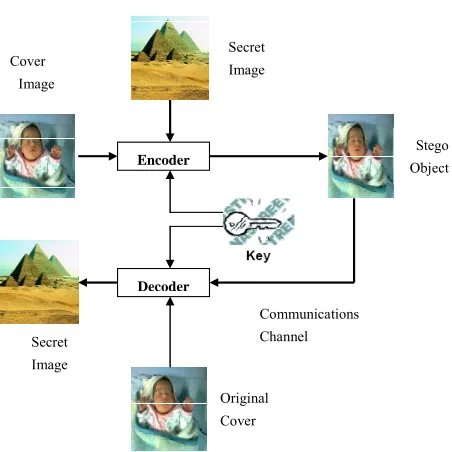
Figure 2 shows a simple representation of t
embedding and decoding process in steganography. In this example, a secret image is being embedded inside a cover image to produce the stego image. The first step in embedding and hiding information is to pass both the secret message and the cover message into the encoder. Inside the encoder, one or several protocols will be im-plemented to embed the secret information into the cover message. The type of protocol will depend on what in-formation you are trying to embed and what you are em-bedding it in. For example, you will use an image proto-col to embed information inside images.
to Extract the Hidden Data
ding information in digital media r
of the media properties, which may introduce some form of degradation or unusual characteristics. The degrada-tion, at times, may become perceptible [1]. These char-acteristics may act as signatures that broadcast the exis-tence of the embedded message and steganography tools used, thus defeating the purpose of stenography, which is hiding the existence of a message.
The passive attacks of steganalysis
these characteristics and signatures. Manipulating di- gital media in an effort to disable or remove the embedded
Encoder
Decoder
Secret Image Cover
Image
Stego Object
Secret Image
Original Cover
[image:3.595.308.534.77.303.2]Communications Channel
Figure 2. Generic processes of encoding and decoding.
essages is a simpler task than detecting the messages.
4.1. Visual Pixel Detection
s are embedded data in
s have the same color or equal to the neigh- bo
that has no noise changing in the portions w
m
Any image can be manipulated with the intent of de-stroying some hidden information whether an embedded message exists or not. Detecting the existence of a hid-den message will save time in the activity to disable or remove messages by guiding the analyst to process only the media that contain hidden information [2].
Some steganographic algorithm
the media by replacing some bits of media with bits of data. For images, these algorithms will replace the bits of pixels by bits of data needed to hide it or changing the palette of image that depends on the value of data. The changing or replacing in values of pixels will be in most cases not sense or seeing by human eyes and will have effect in relation between pixels by increasing the amount of difference between the neighborhood pixels in the same level.
Any pixel
rhood pixels in the same portion or object in image. When we measure the difference between the pixels in the same portion, and evaluate the relation between these pixels, we can represent the image by these differences or relations.
The image
will not be clear. Most edges will be destroyed and the image details will not be clear and this depends on the amount of noise or hidden data and the algorithms that are used to hide data.
The visual pixel detection takes the relation between th
4.2. Visual Pixel Detection Algorithm
s (Red, Green, Blue).
in the sa
pare between the values of pixel with the ne
im
its fro
ages will help user to see the amount of hi
mage pix-el
the filter cut 2-bit from pixels, image output w
s, images ou
ately clear.
nge in the fir
5. Experimental
iveness of the proposed method, we
Fridrich’s m
e pixels in images. It deals with BMP and GIF image file format only. The visual pixel detection works as a filter. Its filtering the pixels depends on its information and relation between other neighborhood pixels. This filter can remove from image pixels 1, 2, 3, 4 or 5 bits then re-drew the image depends on these bits.
Step1: Load Images. Step2: Get color of pixel
Step3: Calculate the relation between pixels
me portion.
Step4: Com
ighborhood pixels (4-neighborhood, 8-neighborhood).
Step5: Cut one bit from the pixels then re-draw the
age which depends on these bits of pixels and the rela-tion between the pixel and pixels in the neighborhood.
Step6: Repeat Step5 by changing the number of b
m 2 to 5 bit cut from the pixels and re-draw the images.
Step7: End.
The output im
dden data noise. When original image pixels change by 1-bit the output images after filter are follows:
1) When the filter cut 1-bit from suspected i
s, image output will be destroyed by amount of hidden data.
2) When
ill be approximately clear (have some noise). 3) When the filter cut 3, 4, 5 bits from pixel
tput will be clear 3, 4, 5 bit or have a few noises. If the image has hidden information in two bits (1-2 bits), the output images from the filter will be:
● For 1, 2-bit images not clear.
● For 3, 4, 5-bits image approxim
This filter will be very sensitive to any cha
st five bits of pixels in any BMP or GIF file format images. The number of color levels will not affect the filter results. The filter has the ability to deal with color level, it works in 256, 16-bit high color and true color for BMP images type. This filter also gives good results when used on GIF images; this is due to the fact that GIF file format has a maximum of 256 colors.
To evaluate the effect
apply the proposed method “VPD” on deferent three types of secret images, hiding a color secret image, hid-ing a palette-based 256-color secret image, and hidhid-ing a
grayscale image in a true color image the VPD Method will detect the stego objects from the different image that contain the stego objects as shown in Figures3 and 4 in
the first both types but it fail in the third type. The proposed method also is compared with
[image:4.595.351.495.204.322.2]ethod [13], Y. Q. Shi’s method [14] and Z. M. He’s method [15]. The averaged results of four independent runs for different steganographic embedding techniques are shown in Tables 1-3.
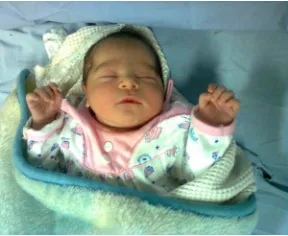
[image:4.595.348.495.349.474.2]Figure 3. Original image with secret image.
[image:4.595.307.539.514.573.2]Figure 4. After using visual pixel detection.
Table 1. Detection accuracy for OutGuess.
bpc Fridrich’s Y.Q.Shi’s Z.M. He’s proposed 0.05 74.65 88.00 89.60 91.65 0.1 92.00 98.00 99.70 99.86
[image:4.595.306.539.597.653.2]0.2 99.25 99.85 100.00 100.00
Table 2. Detectio racy for F5.
bpc proposed
n accu
Fridrich’s Y.Q.Shi’s Z.M. He’s
[image:4.595.307.540.680.736.2]0.05 69.15 57.65 69.70 77.30 0.1 88.45 77.00 90.90 92.70 0.2 99.20 97.10 99.25 99.10
Table 3. Detection accuracy for Steghide.
T ropose od ou rms t rich’ od an
o extract a secret message from im
REFERENCES
[1] C.-C. Thien a e and High-Hiding
he p d meth tperfo he Frid s meth d the Y. Q. Shi’s method in attacking all three types of steganographic embedding techniques. Experimental results show that Fridrich’s and He’s methods perform well for F5 while the Shi’s and He’s methods perform well for OutGuess and Steghide. In contrast, the pro-posed method performs the best on attacking all three types of steganographic embedding techniques. Overall, the proposed method provides good performance on ste- ganalysis and outperforms current methods.
6. Conclusion
It is very difficult t age due to the numerous methods of hiding in images. In this paper , we apply VPD method on deferent types of secret images to extract the hidden information. Some of these types need stego-image and stego-key, others need stego- image only, and the paper has extracted the secret data that has been hidden by deferent tools. The final conclu- sion is very difficult to apply one general method for extraction because there are different techniques such as encryption (block and stream), colors and filters could be used for embedding and each one needs special way to solve it (find the hidden information). In feature works, we will also try to select features using the localized generalization error model to reduce the system com-plexity.
nd J.-C. Lin, “A Simpl
Capacity Method for Hiding Digit-by-Digit Data in Im-ages Based on Modulus Function,” Pattern Recognition,
Vol. 36, No. 12, 2003, pp. 2875-2881. doi:10.1016/S0031-3203(03)00221-8
[2] C.-K. Chan and L. M. Cheng, “Hiding Data in Images by Simple LSB Substitution,” Pattern Recognition, Vol. 37,
No. 3, 2004, pp. 469-474. doi:10.1016/j.patcog.2003.08.007
[3] C.-C. Chang, J.-Y. Hsiao and C.-S. Chan, “Finding Op-timal Least-Significant Bit Substitution in Image Hiding by Dynamic Programming Strategy,” Pattern Recognition, Vol. 36, No. 7, 2003, pp. 1583-1595.
doi:10.1016/S0031-3203(02)00289-3
[4] C.-C. Thien and J.-C. Lin, “A Simple and High-Hiding Capacity Method for Hiding Digit-by-Digit Data in Im-ages Based on Modulus Function,” Pattern Recognition, Vol. 36, No. 12, 2003, pp. 2875-2881.
doi:10.1016/S0031-3203(03)00221-8
[5] R.-Z. Wang, C.-F. Lin and J.-C. Lin, “Image Hiding by Optimal LSB Substitution and Genetic Algorithm,”
Pat-tern Recognition, Vol. 34, No. 3, 2001, pp. 671-683.
doi:10.1016/S0031-3203(00)00015-7
[6] C.-C. Chang, T.-S. Chen and L.-Z. Chung, “A Stegano-
(01)00194-3
graphic Method Based upon JPEG and Quantization Ta-ble Modification,” Information Sciences, Vol. 141, No. 1-
2, 2002, pp. 123-138. doi:10.1016/S0020-0255
, “Digital Stegano-
da, J. Spaulding, M. N. Shirazi and E. Kawaguchi, [7] M. Iwata, K. Miyake and A. Shiozaki
graphy Utilizing Features of JPEG Images,” IEICE Trans-actions on Fundamentals of Electronics, Communications and Computer Sciences, Vol. E87-A, No. 4, 2004, pp. 929-
936. [8] H. No
“Application of Bit-Plane Decomposition Steganography to JPEG2000 Encoded Images,” IEEE Transactions on Signal Processing Letters, Vol. 9, No. 12, 2002, pp. 410-
413. doi:10.1109/LSP.2002.806056
[9] T. Liu and Z.-D. Qiu, “A DWT-Based Color Image Steg-anography Scheme,” Proceedings of the International Con- ference on Signal Processing, Beijing, 26-30 August 2002, pp. 1568-1571. doi:10.1109/ICOSP.2002.1180096 [10] R. R. Ni and Q. Q. Ruan, “Embedding Information into
Color Images Using Wavelet,” Proceedings of the Inter-national Conference on Computers, Communications, Con- trol and Power Engineering of the IEEE TENCON, Bei-jing, 28-31 October 2002, pp. 598-601.
doi:10.1109/TENCON.2002.1181346
[11] M.-H. Lin, Y.-C. Hu and C.-C. Chang, “Both Color and Gray Scale Secret Images Hiding in a Color Image,” In-ternational Journal of Pattern Recognition and Artificial Intelligence, Vol. 16, No. 6, 2002, pp. 697-713.
doi:10.1142/S0218001402001903
[12] W.-S. Kim and R.-H. Park, “Color Image Palette Con-struction Based on the HSI Color System for Minimizing the Reconstruction Error,” Proceedings of the Interna-tional Conference on Image Processing of the IEEE, Lau-
sanne, 16-19 September 1996, pp. 1041-1044. doi:10.1109/ICIP.1996.561017
[13] J. Fridrich, “Feature-Based Steganalysis for JPEG Images and Its Implications for Future Design of Steganographic Schemes,” Proceedings of the 6th International Confer-ence on Information Hiding, Toronto, 23-25 May 2004, pp. 67-81. doi:10.1007/978-3-540-30114-1_6
[14] Y. Q. Shi, C. C. Chen and W. Chen, “A Markov Process
W. W. Y. Ng, P. P. K. Chan and D. S. Yeung, Based Approach to Effective Attacking JPEG Stegano- graphy,” Proceedings of the 8th International Conference on Information Hiding, Alexandria, 10-12 July 2006, pp. 249-264.
[15] Z.-M. He,
“Steganography Detection Using Localized Generaliza-tion Error Model,” Proceedings of theInternational Con-ference on Systems Man and Cybernetics of the IEEE SMC, Istanbul, 10-13 October 2010, pp. 1544-1549.