STUDY OF ROLE OF MACHINE LEARNING TECHNIQUES IN RADIO
NETWORKS
Abhishek Kumar Gupta
1, Dr. Yashpal Singh
2Department of Computer Science and Engineering
1,2OPJS University, Churu (Rajasthan) – India
Abstract
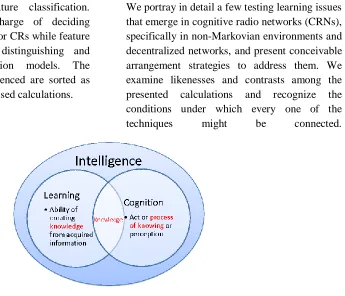
Cognitive radio offers the promise of intelligent radios that can gain from and adapt to their environment. To date, most cognitive radio research has concentrated on policy-based radios that are hard-coded with a rundown of principles on how the radio ought to act in specific situations. Some work has been done on radios with learning engines custom fitted for unmistakable applications. This article depicts a solid model for generic cognitive radio to use a learning engine. The objective is to fuse the consequences of the learning engine into a predicate math-based reasoning engine with the goal that radios can recollect exercises learned previously and acted rapidly.
1. INTRODUCTION
Decision-making and feature classification. Decision-making is in charge of deciding policies and decision rules for CRs while feature classification grants are distinguishing and ordering diverse perception models. The learning calculations experienced are sorted as either regulated or unsupervised calculations.
2. MACHINE LEARNING TECHNIQUES
FOR COOPERATIVE SPECTRUM
SENSING IN COGNITIVE RADIO NETWORKS
The idea of Cognitive Radio (CR) for designing wireless communications systems has emerged since a decade ago to moderate the scarcity problem of restricted radio spectrum by enhancing the use of the spectrum. The CR alludes to an intelligent wireless communications device, which detects its operational electromagnetic environment and can dynamically and independently modify its radio operating parameters. In this specific situation, Opportunistic Spectrum Access (OSA) is a key idea, which enables a CR device to opportunistically access the recurrence band dispensed to a primary client (PU) when the PU transmission is detected to be inactive[3]. For OSA, the CR devices need to detect the radio spectrum authorized to the PUs by utilizing its restricted resources (e.g., vitality and computational power), and in this manner use the accessible spectrum chances to amplify its execution goals. Consequently, proficient spectrum detecting is essential for OSA. Because of the quick advancement of the current Internet and Mobile Communication industry, the mobile movement stack has encountered a touchy development amid the most recent couple of years too. In like manner, the systems of mobile network operators (MNOs) have been planned and enhanced with greater unpredictability of infrastructure, higher decent variety of related devices and resources, and
more dynamical arrangements of networks, and they are advancing towards the promising future mobile networking paradigm, the heterogeneous networks (HetNets).
AI techniques incorporate multi-disciplinary techniques from machine learning, bio-enlivened calculations, and fluffy neural network et cetera, and they have been broadly examined and connected to enhance PC systems and networks in different situations and confounded environments. It has been demonstrated that AI techniques can accomplish exceptional execution, as a large portion of them are roused from nature discoveries or spurred by the mindsets of people. They have generally brought down multifaceted nature empowered by recursive input based learning and neighborhood cooperation’s, and subsequently speedier speed of discovering imperfect arrangements contrasted with ordinary techniques.
3. MACHINE LEARNING TECHNIQUES
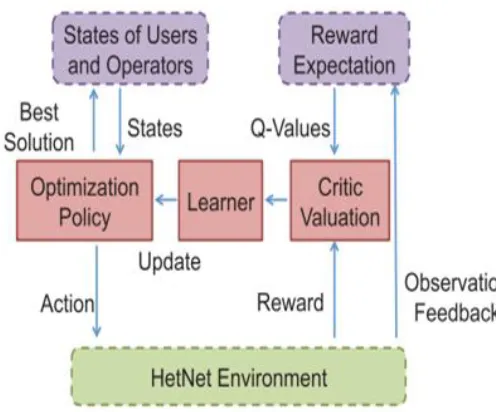
Figure 1.2: Illustration of Learning Based Optimization in Hetnets
4. AI TECHNIQUES IN NETWORKING
In the networking space, this learning would incorporate models of material science and signal spread, requirements on the system, investigation of collaborations, and dependable guidelines (e.g., about how to design the system). A formal cosmology may enable a cognitive system to reason about how and when capacities are exchangeable, e.g., perceiving that both of two measurements for figuring Quality of Information might be utilized and that a metric for Quality of Service might be a proper substitution under a few conditions. Semantics and representations are critical contemplations for cognitive networks. A few researchers have created information bases and heuristic standards to streamline the network. Arranging and planning techniques are proper for decision-making circumstances, where errands should be composed and facilitated to meet execution
They likewise talked about their qualities, shortcomings, and the challenges in applying these techniques in CR undertakings. In [14], the creators thought about diversion hypothesis, fortification learning, and thinking methodologies, for example, Bayesian networks, fluffy rationale, and case-based thinking. As opposed to the writing, we present a far-reaching review considering all the learning techniques that were utilized in cognitive networks. The study is composed dependent on various artificial intelligence approaches including the accompanying:
1. Fuzzy logic, 2. Genetic algorithms, 3. Neural networks, 4. Game theory,
5. ARTIFICIAL INTELLIGENCE AND MACHINE LEARNING
Artificial intelligence aims at making machines perform tasks in a manner similar to an expert. The intelligent machine will perceive its environment and take actions to maximize its own utility. The central problems in artificial intelligence include deduction, reasoning, problem solving, knowledge representation, and learning:
1. Sensing the radio frequency (RF) parameters such as channel quality, 2. Observing the environment and
analyzing its feedback such as ACK responses,
3. Learning,
4. Keeping the decisions and observations for updating the model and obtaining better accuracy in future decision-making, and finally
5. Deciding on issues of resource management and adjusting the transmission errors accordingly.
The fuzzy set theory was proposed by Lotfi A. Zadeh in 1965 to solve and model uncertainty, ambiguity, imprecision’s, and vagueness using mathematical and empirical models. The variables in fuzzy logic are not limited to only two values (True or False) as it is defined in classical and crisp sets. A fuzzy element has a degree of membership or compatibility with the set and its negation. Fuzzy logic provides the system with
1. Approximate reasoning by taking fuzzy variables as an input and producing a decision by using sets of if-then rules,
2. Decision-making capability under uncertainty by predicting consequences,
3. Learning from old experience, and 4. Generalization to adapt to the new
situations.
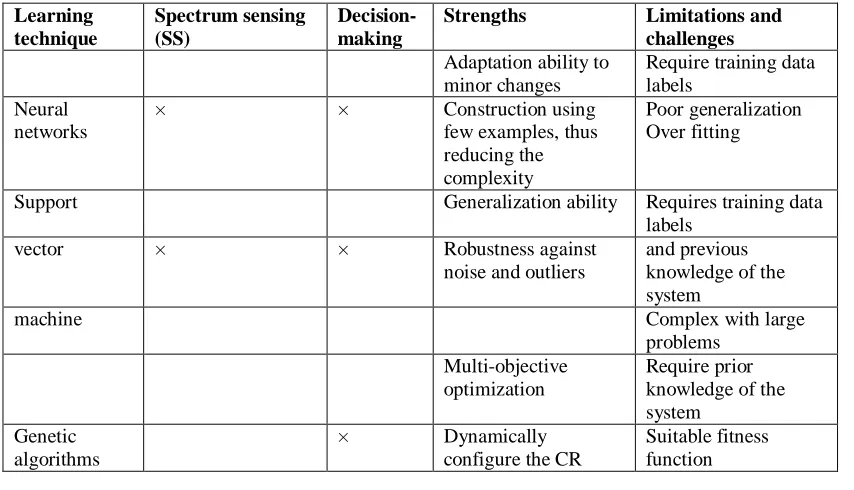
Table 1: Learning Techniques Evaluation: Strengths, Limitations, And Challenges
Learning technique
Spectrum sensing (SS)
Decision-making
Strengths Limitations and
challenges
Adaptation ability to
minor changes
Require training data labels
Neural networks
× × Construction using
few examples, thus reducing the complexity
Poor generalization Over fitting
Support Generalization ability Requires training data
labels
vector × × Robustness against
noise and outliers
and previous knowledge of the system
machine Complex with large
problems
Multi-objective
optimization
Require prior knowledge of the system
Genetic algorithms
× Dynamically
configure the CR
based on environment changes
High complexity with large problems Game theory Related to the
capabilities of the
× Reduces the
complexity of adaptation
Requires prior knowledge of the system
spectrum-sensing
technique used
Solutions for
multi-agent systems
and labeled training data
Reinforcement × × Learning
autonomously using feedback
Needs learning phase of the policies
learning Self-adaptation
progressively in real time
Fuzzy logic Related to the capabilities of the
× Simplicity, decisions
are
Needs rules derivation
spectrum-sensing
technique used
directly inferred from
rules
Accuracy is based on these rules
Entropy approach
× × Statistical model Requires prior
knowledge of the system
Related to the
capabilities of the
Simplicity Requires prior
knowledge of the system
Decision tree spectrum-sensing technique used
× Decision using tree
branches
May suffer over fitting
Requires labeled
training data
Artificial × Parallel search for
solutions
Requires prior knowledge of the system
bee colony Requires a fitness
function
Bayesian × × Probabilistic models Requires prior
knowledge of the system
May face
computational complexity
Markov model × × Statistical models Requires prior
knowledge of the system
6. MACHINE LEARNING AND
themselves by giving them access to a lot of data. Then again, AI is the all-encompassing and more extensive impression of machines getting to be fit for completing tasks in an astute way. Contrasted with the summed up AI (a summed up AI system, in theory, can deal with any task), connected AI is progressively appropriate for cutting edge communication systems as the connected AI system can be conceived to adroitly controlling and enhancing the wireless networks. Dissimilar to ML models, AI models connect the world, familiarize to the progressions and rebuild themselves.
Subscriber Mobility Pattern (SMP): In order to guarantee the QoS requirements and to efficiently maintain resources utilization, traffic offloading and routing, knowing the mobility information of a user in advance is very crucial. Human travel pattern analyses reveal that people travel along specific paths with reasonably high predictability. The trajectory of a mobile user can be predicted based on user’s present location, the movement direction and the aggregate history of SMP. Radio Environment Map (REM): The
MNOs can better plan, build, control and optimize their networks conforming to the spatiotemporal radio atmosphere, through prediction of radio signal attenuation. Many schemes have been developed that give the MNOs the means to predict the distribution of radio signal attenuation at different operating frequencies and in many different radio environments. The radio map along with the mobile user’s predicted trajectory facilitates the prediction of average channel gains.
Traffic Profile (TP): In order to attain as well as predict the network’s congestion status, tempo-spatial traffic
load variation needs to be known, i.e., the knowledge of temporal traffic trace, BS spatial deployment and BSs’ operating characteristics (transmission power, height, etc.) are very important. The authors report that the network’s traffic load dynamics demonstrates periodical characteristics over days and hours, thus implying high predictability of the traffic load.
7. CONCLUSION
We have concluded that the intelligence of cognitive radio technology and machine learning offers the potential to learn and adjust to the wireless environments. As the utilization of machine learning techniques in wireless communications is normally joined with cognitive radio technology, we have concentrated on both cognitive radio technology and machine learning to give a complete diagram of their jobs and relationship in accomplishing intelligent wireless communications. We have thought about range productivity and vitality proficiency, the two of which are vital qualities of intelligent wireless communications.
REFERENCES
[1].B. Ramkumar, “Automatic modulation classification for cognitive radios using cyclic feature detection,” IEEE Circuits Syst. Mag., vol. 9, no. 2, pp. 27–45, Jun. 2009.
[2].Laursen, K., Foss, N. (2003). New human resource management practices, complementarities and the impact on innovation performance, Cambridge Journal of Economics, 27, p. 243 – 63. [3].Laursen, K., Foss, N. (2003). New
[4].Lazear, E.P. (2000), “The power of incentives”, The American Economic Review, Vol. 90 No. 2, p. 410-15 [5].McConville, T. (2006). Devolving HRM
responsibilities, middle managers and role dissonance. Personnel Review 35, no. 6: 637–53.
[6].Karatepe, O., Arasli, H., & Khan, A. (2007). The Impact of Self-Efficacy on Job Outcomes of Hotel Employees. International Journal of Hospitality & Tourism Service, 8(4), 23–46. doi:10.1300/J149v08n04_02.
[7].Niu, H.-J. (2010). Investigating the effects of self-efficacy on foodservice industry employees‟ career commitment. International Journal of Hospitality Management, 29(4), 743– 750. doi:10.1016/j.ijhm.2010.03.006. [8].Walumbwa, F. O., &Hartnell, C. A.
(2011). Understanding transformational leadershipemployee performance links: The role of relational identification and self-efficacy. Journal of Occupational and Organizational Psychology, 84(1), 153–172.
doi:10.1348/096317910X485818. [9].Sheehan, C. (2005). A model for HRM
strategic integration. Personnel Review,
34(2), 192–209.