Failure mode Effect Analysis of Rollers in
Mill Stand
Avinash Pawar1, Dr.S.B.Chikalthankar2
P.G. Student, Department of Mechanical Engineering, Government College of Engineering, Aurangabad (MS), India1
Associate Professor, Department of Mechanical Engineering, Government College of Engineering,
Aurangabad (MS), India2
Abstract: The failure modes and effects analysis (FMEA) is a procedure in product development and operations management for analysis of potential failure modes within a system for classification by the severity and likelihood of the failures. A successful FMEA activity helps a team to identify potential failure modes based on past experience with similar products or processes, enabling the team to design those failures out of the system with the minimum of effort and resource expenditure, thereby reducing development time and costs.The objective of this study is to analyze different failures associated with rollers in the mill stand using Failure Mode Effect Analysis (FMEA). The values of severity, probability of occurrence and detection of each failure mode are taken according to the FMEA criteria and based on these values, Risk Priority Number of each failure mode is calculated.
Keywords:Failure Modes and Effects Analysis (FMEA), Potential failure mode, Risk priority number(RPN)
I. INTRODUCTION
In the past few decades, many actions and research works have been undertaken to prevent potential accidentsand to promote safety in the chemical processes; the output of these measures is the systematic management ofsafety in these processes. One of the key elements of safety management systems is to identify hazards, to assess risks and their control, which helps security professionals to investigate the ability of rational decision to reduce the risk and severity of accidents and their consequences [1].
FMEA is a systematic method, which is applied because of the following reasons:
1) To identify and prioritize potential failure modes in a system, product, process, or service;
2) To define and run measures in order to eliminate or reduce the incidence of potential failure modes; 3) To record analysis results in order to provide a comprehensive reference for solving future issues and problems [2].
FMEA could be described as a structured method to find and identify failure modes in a system, object, or anactivity and calculation of the failure effects on upper steps [3] [4].
II. METHODOLOGY
Introduction to Failure Mode Effect Analysis
The failure mode and effect analysis is used to identify and analyzed: (a) all failure mode of different parts of the system, (b) effects of these failure mode on the system and (c) how to circumvent the failure and/or moderate the effect of the failure system. FMEA is a step by step methodology for identifying all potential failures with in the process. “Effect Analysis” denotes to studying the consequences or impact of those failures [8]. The motivation for undertaking a Process FMEA is to continually develop products and process consistency thereby increasing customer satisfaction [9]. FMEA is a very efficient method which is needed to be engaged with in companies and manufacturing industries for an engineering design, production process and new product in production and planning sphere in product life cycle. Purpose of FMEA is founding links between causes and effects of failures, as well as searching, solving and drawing the best decisions regarding solicitation of applicable action.
RPN methodology
The RPN is a mathematical product of the severity, the occurrence and the detection. The number is used toidentify the most critical failure mode, leading to corrective action [10]. RPN scoring is based on the fact that numbers with higher risk priority have priority for analyzing and resource allocation aimed at improvement, and the team should work on failure modes having a higher RPN. RPN is obtained by multiplying three factors of intensity, possibility of occurrence, and detection possibility [11]. It is calculated using below Equation
RPN = Severity×Occurrence×Detection
RPN to evaluate the risk level of a component or process.The RPN is obtained by finding the multiplication of three factors, which are the severity of the failure (S), the probability of occurrence (O) and the probability of detection (D). In this study, we used risk criterion number to determine the level of acceptable and unacceptable risk in RPN. Risk criterion is an index for separating acceptable and unacceptable risks in the system studied. A failure that its RPN number is greater than the risk criterion is considered as unacceptable risk and a failure that its RPN is lower than the risk criterion is called acceptable risk.
Determination of the severity rate
Severity is a rating corresponding to the seriousness of an effect of a potential failure mode. Severity or seriousnessof the risk is considered just in case of “the effect”; reducing the risk severity is possible only through changing the process and the manner of performing activities.
Determination of the occurrence rate
Occurrenceis ranked according to the failure probability, which represents the relative number of failures anticipated during the design life of the item. The effects of a failure mode are normally described by the effects on the user of the product or as they would be seen by the user.
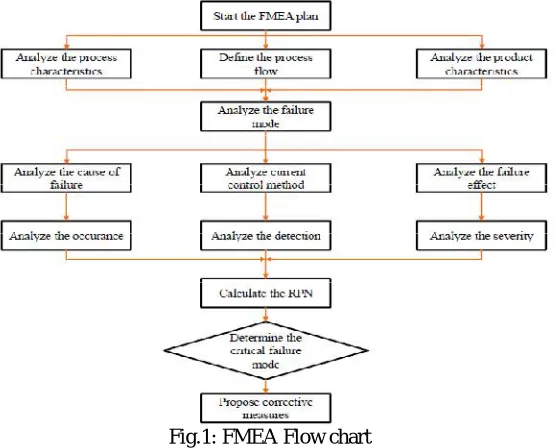
Fig.1: FMEA Flow chart Risk detection probability rate
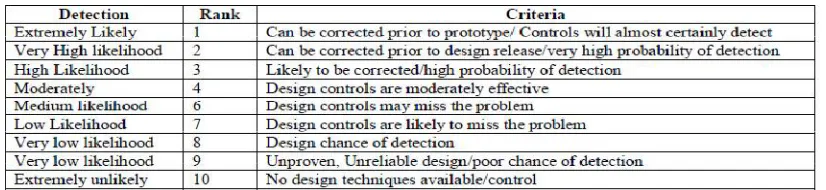
Detection possibilityis an assessment of the ability existing to identify a cause/mechanism of a risk occurrence. In other words, detection possibility is a rating corresponding to the likelihood that the detection methods or current controls will detect the potential failure mode before the product is released for production for design, or for process before it leaves the production facility. Assessing control process of standards, requirements and laws of labor and how to apply them to achieve this number are very useful. In the RPN methodology the parameters used to determine the “criticality” of an item failure mode are, the severity of its failure effects, its frequency of occurrence, and the likelihood that subsequent testing of the design will detect that the potential failure mode actually occurs. Tables 1-3 show the qualitative scales commonly used for the severity, the occurrence and the detect ability indexes [12].
Table 3: Table of detection
III. RESULTS AND DISCUSSION
Failure Modes of Rollers:
The following are the differentfailure modes of Rollers are identified
IV. CASE STUDY AND FMEA ANALYSIS
A Bearing race is very critically fabricated usingplanned process sequences. The FMEA for the Inner race of the bearing is shown in the below Table 5
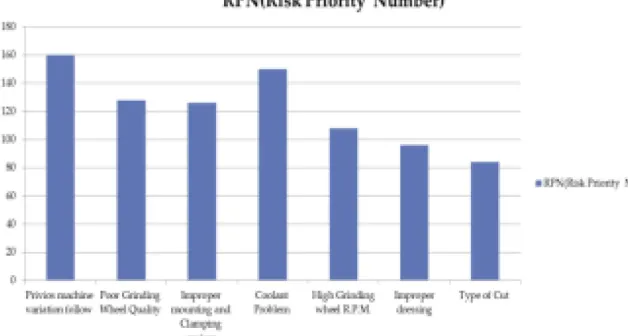
Fig 2: Cause having highest risk priority numbers
V. CONCLUSION
FMEA identified the potential failure modes, their causes, and the effects on the system for a given process. Based on RPN calculation spalling, journal failure from shock overloads, drive end torques had maximum risk when compared to other failure FMEA can identify morerisks and an important point is that choosing an appropriate method plays a crucial role in identifying more risks.FMEA is a methodology for documenting the various failure modes and its potential effect analysis for future use in same industry or it will become valuable for other industries of similar sectors it will reduce the set up time and improve the quality of product and ultimately customer satisfaction can be increased. FMEA are continuously concentrates on the improvement of the efficiency of manufacturing process and quality of the product by reducing the non-conformance rate of the production system.
REFERENCES
1. Mirghiasi, Z. (2009) Hazard Identification and Risk Analysis. B.Sc. Graduation Thesis, Abadan Petrochemical Unit300, PUT.
2. Wirth, R., Berthold, B., kramer, A. and Gerhard, P. (1996) Knowledge-Based Support of System Analysis for Analysis of Failure Modes and Effects. Engineering Applied Artificial Intelligence, 9, 219-229.
3. Rozenfeld, O., Sacks, R. and Rosenfeld, Y. (2009) CHASTE—Construction Hazard Analysis with Spatial and Temporal Exposure. Construction Management & Economics, 27, 625-638.
4. SAE (2002) Potential Failure Mode and Effects Analysis in Design (Design FMEA), Potential Failure Mode and Effects in Manufacturing and Assembly Processes (Process FMEA), and Potential Failure Mode and Effects Analysis for Machinery (Machinery FMEA)
5. Hamid Reza, Ahmad MonshiMohdHasbullah Idris, “Premature failure analysis of forged cold back-up roll in a continuous tandem mill”,Materials and Design 32 (2011) 4376–4384
6. Wu Q, Sun DL. Analysis ofsurface and sub-surface initiated spalling offorged cold work rolls. Eng Fail Anal2008;14:401–10
7. Ray AK, Mishra KK, Das G, Chaudhary PN. Life of rolls in a cold rolling mill in a steel plant operation versus manufacture. Eng Fail Anal 2000;7:55–67
![Table 5: FMEA analysis of bearing race[14]](https://thumb-us.123doks.com/thumbv2/123dok_us/1514001.1185485/5.595.72.553.248.759/table-fmea-analysis-bearing-race.webp)