ISSN(Online): 2319-8753
ISSN (Print): 2347-6710
I
nternational
J
ournal of
I
nnovative
R
esearch in
S
cience,
E
ngineering and
T
echnology
(An ISO 3297: 2007 Certified Organization)
Vol. 6, Special Issue 11, May 2017
Design & Development of IoT Based
Automation System Using Wi-Fi Technology
Prachi Bhure1, Naziya Pathan2, Shyam Dubey3
M Tech (CSE) II Year Scholar, Dept of CSE, The Nuva College of Engineering, Nagpur, Maharashtra, India1
Assistant Professor, Dept of CSE, The Nuva College of Engineering, Nagpur, Maharashtra, India2, 3
ABSTRACT: Automation is a technique or system of controlling a processor by electronic devices with reducing human involvement to a minimum. This paper presents a design of monitoring and controlling home automation system from an android application based on Raspberry Pi. A system uses Wi-Fi technology as a communication protocol to connect system components. A home automation system consist of two main components; the first part is android application that can give orders to units that one wishes to control by locally or remotely and the second part is Raspberry Pi that has an appropriate interface to sensors and appliances of a home automation system and communicates with android application through wireless technology . The home automation system can have a vital role in reducing the total energy consumed by home appliances.
KEYWORDS: IOT, Smart home, Raspberry Pi, Android application, Sensors, Wi-Fi.
I. INTRODUCTION
Home Automation is the residential extension of building automation. In this project, Automation Technique is used to design and implement a remotely controlled, energy-efficient and highly accessible Smart Home. It provides the residents with basic features that maintain the comfort. It includes centralized control of lighting, kitchen appliances and other household systems [1]. A home automation system integrates electrical devices in a house with each other. The techniques employed in home automation include those applied in building automation as well as the control of domestic activities such as home entertainment systems, houseplant and yard watering, pet feeding and the use of domestic robots. This paper uses the applications of a home automation system and presents to the user [1]. As a central controller, an Arduino microcontroller is used that communicates with an android application. The web server is used as an interface by android application; this server can be used as a regulatory mechanism for the connected device. The automation system changes its pattern as per the user’s change its usage pattern. It finds out a variation in the pattern and implements a new functionality for the change. This enables the automation system to act on their own accord and provide the user with the necessary comfort and ambience. This paper will describe the approach which is applied to control various home [1].
II. RELATED WORK AND LITERATURE REVIEW
ISSN(Online): 2319-8753
ISSN (Print): 2347-6710
I
nternational
J
ournal of
I
nnovative
R
esearch in
S
cience,
E
ngineering and
T
echnology
(An ISO 3297: 2007 Certified Organization)
Vol. 6, Special Issue 11, May 2017
Internet of Things (IoT)
Internet of Things (IoT) is a system of interrelated computing devices, mechanical and digital machines, objects, animals or people that are provided with unique identifiers and the ability to transfer data over a network without requiring human-to-human or human-to-computer interaction.
What is the internet of things (and why does it matter)?
The internet of things (or as it’s also known, IoT) isn’t new: tech companies and pundits have been discussing the idea for decades, and the first internet-connected toaster was unveiled at a conference in 1989.
Is it safe? Can the internet of things be secured?
Everything new and shiny has downsides, and security and privacy are the biggest challenges for IoT. All these devices and systems collect a lot of personal data about people – that smart meter knows when you’re home and what electronics you use when you’re there – and it’s shared with other devices and held in databases by companies.
III. METHODOLOGY
The system, which we have implemented fairly, takes a front seat from the rest of the implemented systems. Our Home Automation System (HAS) has been the interface of more than one technology. The main advantage of this system is that it has
the widest range, possibly the entire globe. This system can be extended to a properly a deployable HVAC (Heating, Ventilation and Air Conditioning) system. Our project can be studied by dividing it to the following parts:
a. PCB Artist:
PCB’s are the backbone of any production level electronic device in today market, and therefore knowledge of PCB layout tools can be a vital skill. Both analog and digital circuits are used in PCBs depending on the application, and with different types of circuits, the designer must take into account certain design considerations. This guide
b. Raspbian OS:
Raspbian is a free operating system based on Debian optimized for the Raspberry Pi hardware. An operating system is the set of basic programs and utilizes that make your Raspberry Pi run.
c. Android Application:
ISSN(Online): 2319-8753
ISSN (Print): 2347-6710
I
nternational
J
ournal of
I
nnovative
R
esearch in
S
cience,
E
ngineering and
T
echnology
(An ISO 3297: 2007 Certified Organization)
Vol. 6, Special Issue 11, May 2017
d. WinAVR :
It is a suite of executable, open source software development tools for the Atmel AVR series of RISC microprocessors hosted on the Windows platform. It includes the GNU GCC compiler for C and C++. It is used for creation & embedding of a program for the microcontroller in C.
e. Python:
Raspberry Pi device is written in Python. Raspberry Pi has python already installed on it. Python is an interpreted, object-oriented, high-level programming language with dynamic semantics. Its high-level built in data structures, combined with dynamic binding. Python supports modules and packages, which encourages program modularity and code reuse.
f. Java:
Java is a widely used programing language expressly designed for use in the distributed environment of the internet. It is the most popular programming language for Android smartphone applications and is among the most favored for edge device and internet of things development.
g. Linux OS:
Linux is an operating system. An operating system is software that manages all of the hardware resources associated with your desktop or laptop. To put it simply – the operating system manages the communication between your software and your hardware. Without the operating system (often referred to as the “OS”), the software wouldn’t function.
IV. NUMBER OF MODULES
a. RASPBERRY Pi 3 :
Raspberry Pi is a credit card sized single board computer developed in the UK by Raspberry Pi foundation. It is used to eliminate the use of a personal desktop keeping the cost of the overall system to a Minimum Raspberry Pi is used to control flow between android device and sensors. Raspbian OS is used on Raspberry Pi and the server running on Raspberry Pi device is written in Python. Raspberry Pi has Python already installed on it [2].
ISSN(Online): 2319-8753
ISSN (Print): 2347-6710
I
nternational
J
ournal of
I
nnovative
R
esearch in
S
cience,
E
ngineering and
T
echnology
(An ISO 3297: 2007 Certified Organization)
Vol. 6, Special Issue 11, May 2017
b. AVR MICROCONTROLLER ATmega16 :
ATmega16 is an 8-bit high performance microcontroller of Atmel’s Mega AVR family with low power consumption. Atmega16 is with low power consumption. Atmega16 can work on a maximum frequency of 16MHz [3].ATmega16 has 16KB programmable flash memory that is ROM and static RAM of 1KB [3]. ATmega16 is a 40 pin microcontroller. There are 32 I/O lines which are divided into four 8-bit ports designated as PORTA, PORTB, PORTC and PORTD [3].Each I/O pin has an alternative task related to in-built peripherals [3].
Fig. AVR Microcontroller ATmega16
c. L293D AMPLIFIER:
L293D is a dual H-bridge motor driver integrated circuit (IC). Motor drivers act as
current amplifiers since they take a low-current control signal and provide a higher-current signal. This higher current signal is used to drive the motors [4].
L293D contains two inbuilt H-bridge driver circuits. In its common mode of operation, two DC motors can be driven simultaneously, both in forward and reverse direction [4].
There are 4 input pins for L293D, pin 2,7 on left and pin 15,10 on right . Left input pins will regulate the rotation of motor connected across left and right input for motor on the right hand side[4].
Fig.L293D Amplifier
d. JHD162ALCD:
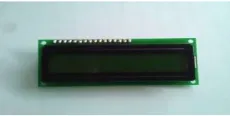
A Liquid Crystal Display commonly abbreviated as LCD is basically a display unit built using Liquid Crystal technology. When we build real life/real world electronics based projects, we need a medium/device to display output
values and messages [5].
Out of all available LCD modules in market, the most commonly used one is 16×2 LCD Module which can display 16
characters in 1 line [5].
The JHD162A has 16 pins and can be operated in 4-bit mode (using only 4 data lines) or 8-bit mode (using all 8 data
lines). Here we are using the LCD module in 8-bit mode [5].
ISSN(Online): 2319-8753
ISSN (Print): 2347-6710
I
nternational
J
ournal of
I
nnovative
R
esearch in
S
cience,
E
ngineering and
T
echnology
(An ISO 3297: 2007 Certified Organization)
Vol. 6, Special Issue 11, May 2017
e. ESP 8266:
The ESP8266 Wi-Fi Module is a self-contained SOC with integrated TCP/IP protocol stack that can give any microcontroller access to your Wi-Fi network [6]. The ESP8266 is capable of either hosting an application or offloading all Wi-Fi networking functions from another application processor [6]. Each ESP8266 module comes pre-programmed with an AT command set firmware, meaning, you can simply hook this up to your Arduino device and get about as much Wi-Fi-ability as a Wi-Fi Shield offers (and that’s just out of the box)! The ESP8266 module is an extremely cost effective board with a huge, and ever growing, community [6].
Fig.ESP 8266
Here are the connections available on the ESP8266 Wi-Fi module:
V. WORKING STRUCTURE
This paper presents a smart home system based on Raspberry Pi and an android device with use of the wireless router. The objective of smart home automation is to provide comfortable, a convenient user interface be sensing and controlling home environment and to improve the energy efficiency by monitoring and controlling the appliances [2].
ISSN(Online): 2319-8753
ISSN (Print): 2347-6710
I
nternational
J
ournal of
I
nnovative
R
esearch in
S
cience,
E
ngineering and
T
echnology
(An ISO 3297: 2007 Certified Organization)
Vol. 6, Special Issue 11, May 2017
V. DESIGN OF CIRCUIT DIAGRAM
VI. HARDWARE MODULE OF PROJECT
VII. EXPERIMENTAL RESULTS
ISSN(Online): 2319-8753
ISSN (Print): 2347-6710
I
nternational
J
ournal of
I
nnovative
R
esearch in
S
cience,
E
ngineering and
T
echnology
(An ISO 3297: 2007 Certified Organization)
Vol. 6, Special Issue 11, May 2017
The Fig.1 shows the screenshot of the application of the mobile phone. Here we have correctly entered a static IP address. The next page directs us to the appliances connected to the pins of the microcontroller. The required appliance is selected. Here we have selected the light icon (Fig. 1). As soon as the “Light on” button is clicked, it soon gives a pop up message to the user.
Advantages of Home automation systems:
In recent years, wireless systems like Wi-Fi have become more and more common in home networking. Also in home and building automation systems, the use of wireless technologies g gives several advantages that could not be achieved using a wired network only.
1) Reduced installation costs: First and foremost, installation costs are significantly reduced since no cabling is necessary. Wired solutions require cabling, where material as well as the p professional laying of cables (e.g. into walls) is expensive.
2) System scalability and easy extension: Deploying a wireless network is especially advantageous when, due to new or changed requirements, extension of the network is necessary. In contrast to wired installations, in which cabling extension is tedious. This makes wireless installations a seminal investment.
3) Aesthetical benefits: Apart from covering a larger area, this attribute helps to full aesthetical requirements as well. Examples include representative buildings with all-glass architecture and historical buildings where design or conservatory reasons do not allow lying of cables.
4) Integration of mobile devices: With wireless networks, associating mobile devices such as PDAs and Smartphone’s with the automation system becomes possible everywhere and at any time, as a device's exact physical location is no longer crucial for a connection (as long as the device is in reach of the network).For all these reasons, wireless technology is not only an attractive choice in renovation and refurbishment, but also for new installations
VIII. CONCLUSION AND FUTURE WORK
A. Conclusion
The home automation using Internet of Things has been experimentally proven to work satisfactorily by connecting simple appliances to it and the appliances were successfully controlled remotely through internet. The designed system not only monitors the sensor data, like temperature, gas, light, motion sensors, but also actuates a process according to the requirement, for example switching on the light when it gets dark. It also stores the sensor parameters in the cloud (Gmail) in a timely manner. This will help the user to analyze the condition of various parameters in the home anytime anywhere.
B. Project Scope
The project aims at designing a prototype for controlling the home appliances that can be controlled wirelessly via an application that provides the features of speech recognition, video streaming, and switch mode. An application is run on android device. The system can be used in wide range of areas. The system integrated with different features can be applied in the following fields.
• The system can be used in home, small offices to the big malls
The system can be used from home to offices to control the electrical appliances.
• For remote access of appliances in internet or intranet.
The home/office appliances can be controlled in intra-network or can be accessed via internet.
• For the development of technology friendly environment
ISSN(Online): 2319-8753
ISSN (Print): 2347-6710
I
nternational
J
ournal of
I
nnovative
R
esearch in
S
cience,
E
ngineering and
T
echnology
(An ISO 3297: 2007 Certified Organization)
Vol. 6, Special Issue 11, May 2017
ACKNOWLEDGEMENT
We acknowledge the efforts and hard work by the experts who have contributed towards development of the different home automation systems. We also acknowledge the efforts of Miss. Naziya Pathan (CSE) and Mr. Shyam Dubey HOD (CSE) for their constant support, suggestions and modifications to improve the quality of the paper and to help prepare the camera-ready copy of our paper.
REFERENCES
[1] CHARITH PERERA1, CHI HAROLD LIU2, SRIMAL JAYAWARDENA1, AND MIN CHEN3,” A Survey on Internet of Things From Industrial Market Perspective”, 2169-3536 2015 IEEE.
[2] JAIN SARTHAK, VAIBHAV ANANT AND GOYAL LOVEVLY, “Raspberry Pi based Interactive Home Automation System through E-mail.”, IEEE transaction,2014 International Conference Reliability, Optimization and Information TechnologyICROIT 2014, India, Feb 6-8 2014. [3] The AVR Microcontroller- DHANANJAY GADRE.
[4] L293D Arduino Motor Control Shield for Arduino,ARM & other MCU- KITSGURU.