O R I G I N A L R E S E A R C H
Effects of a behavioral medicine intervention on
pain, health, and behavior among
community-dwelling older adults: a randomized controlled
trial
This article was published in the following Dove Press journal: Clinical Interventions in Aging
Sara Cederbom1
Suzanne G Leveille2–4
Astrid Bergland1
1Faculty of Health Sciences, Department
of Physiotherapy, OsloMet–Oslo
Metropolitan University, Oslo, Norway;
2Department of Nursing, College of
Nursing and Health Sciences, University of Massachusetts Boston, Boston, MA,
USA;3Department of Medicine, Beth
Israel Deaconess Medical Center, Boston,
MA, USA;4Department of Medicine,
Harvard Medical School, Boston, MA, USA
Purpose: The aim of the study was to evaluate the effects of an intervention, based on a behavioral medicine approach in physical therapy (BMPI), on pain-related disability and physical performance as well as on pain severity, pain catastrophizing, physical activity
levels, falls efficacy, and health-related quality of life (HRQL) by comparing the effects to
standard care.
Patients and methods:The study was a pragmatic randomized controlled trial with a two-group design and included measurements preintervention and postintervention and a 12-week follow-up. In total, 105 older adults, aged >75 years with chronic musculoskeletal pain living alone at home and dependent on formal care to manage their everyday lives, were included in the study. All statistical analyses were performed using an intention to treat approach.
Results: The intervention, based on a behavioral medicine approach, compared to usual care, had a positive effect on pain-related disability, pain severity, level of physical activity,
HRQL, management of everyday life, and self-efficacy.
Conclusion: BMPI can be a suitable evidence-based intervention for community-dwelling older adults, even for those who are very old and frail. BMPI can support and promote an
active aging and“age in place”for the target population, which is currently the main goal of
all interventions in thisfield.
Keywords: active aging, behavior change, exercise, pain management, physical therapy,
self-efficacy
Introduction
The World Health Organization recognizes chronic pain as a public health problem around the world. It is estimated that 45–80% of older people report some kind of pain. Pain lasting three or more months affects 62% of people aged >75, with the most common type being musculoskeletal pain.1,2
Chronic pain due to musculoskeletal conditions can have a tremendous negative impact on the everyday life of older individuals.2Poor self-reported health, poorer physical function, substantial disability, decreased physical activity, higher risk of falling, fear of falling, fear of movement, catastrophizing thoughts, social isolation, anxiety, depression, sleep disturbances, and impaired quality of life are factors that can be related to chronic musculoskeletal pain among older people.2,3To live with chronic pain as an older adult is also associated with a substantially greater risk of
Correspondence: Sara Cederbom Faculty of Health Sciences, Department of
Physiotherapy, OsloMet–Oslo
Metropolitan University, Postboks 4, St. Olavs Plass, Oslo 0130, Norway Tel +47 6 723 6802
Email [email protected]
Clinical Interventions in Aging
Dove
press
open access to scientific and medical research
Open Access Full Text Article
Clinical Interventions in Aging downloaded from https://www.dovepress.com/ by 118.70.13.36 on 20-Aug-2020
developing disability and mobility limitations over time.4 Recent published research has also shown that pain is an increased risk and intensity of frailty among older people.5 Frailty can be described as an increased vulnerability to stressors as it impairs multiple, inter-related systems and leads to decreases in physiological reserves and a decline in the ability to maintain homeostasis.6Frailty is an impor-tant health problem through its association with adverse health outcomes including disability, institutionalization, and death.7The causes of frailty are complex and involve both biological and psychosocial factors.8
Despite increasing awareness of the importance of pain assessment and management for older people, pain is still both under-diagnosed, under-reported, and undermanaged.2 Keeping active is described as a central element of active or healthy aging. It is important for self-reported quality of life and is often a core part of pain management strategies. However, evidence suggests that older people living with pain may restrict, reduce, or otherwise alter their physical and social activities.9
Current policies in the Western world emphasize that older people should live in their home for as long as possible. In general, older people prefer to age in their own home. Moreover, policies focus on the need to pro-vide services that are personalized and aimed at the desired outcomes of older people.10,11 A growing and vulnerable group of individuals in Europe, as well as in Norway, are community-dwelling older people who live alone and/or dependent on formal or informal care to manage their everyday life.12–14 However, few clinical studies involve this population, despite it being a growing segment of the society.14
Behavioral medicine intervention
It can be concluded that older people with chronic pain are in great need of rehabilitation, especially those who live alone or are dependent on support to manage their every-day lives.2,13 Overall, there is a lack of evidence-based guidelines for physical therapists (PT) in the treatment of chronic pain among the target population.2,15
The interventions had to be based on a biopsychosocial approach given that pain is a multidimensional experience.16 The intervention should be individualized, promote, and improve the ability to manage everyday activities, level of physical activity, and self-efficacy.15,17
The most important goal for older community-dwelling adults living with chronic pain is to maintain the ability to perform activities.18 This allows older people to “age in
place”. “Age in place” can be defined as “older people’s ability to live in their one own home, wherever that might be, for as long as one can feel confident and comfortable”.19 Physical activity is a relevant therapy for the primary and secondary prevention of different chronic pain conditions.20Physical activity has specific benefits at redu-cing pain and increasing mental health and physical func-tioning of people with chronic pain.21,22 Exercise and physical activity comprise the core strategies, which the American Geriatric Society (AGS) has identified in their recommendations in the care for older adults with chronic pain.23The program should include exercises that improve joint range of motion, increase muscle strength and power, enhance postural control and gait stability and restore cardiovascularfitness.23
Self-efficacy has shown to be a crucial protective factor in the development of related disability and pain-related beliefs, such as fear of falling, fear of movement, and catastrophizing thoughts.24Self-efficacy also plays an important role in the context of making and sustaining behavioral changes and embracing a new behavior, includ-ing generalizinclud-ing the new behavior to other situations and maintaining the new behavior over time.25
An intervention that is based on the biopsychosocial approach, and the mentioned key factors earlier, is inter-vention based on a behavioral medicine approach in phy-sical therapy, hereinafter referred to as BMPI.15
The BMPI focus on changing the behavior of a person in ways related to the attainment of goals associated with disabilities affecting daily life. The BMPI is individually tailored and is characterized by a systematic consideration of medical, physical, behavioral, cognitive, psychological, and social environmental factors for assessment and treatment.15 Key factors to achieve the intervention goal, defined as goal behavior, include improvement of physical function and performance through physical activity and exercise as well as improving psychological factors such as kinesiophobia, fear of falling, catastrophizing thoughts, and self-efficacy in relation to the goal behavior. Detailed information about this approach including the study pro-tocol was published previously.15
Behavioral medicine approach in physical therapy (BMPI) is recommended as an evidence-based interven-tion for middle-aged adults with chronic pain,26 but there is still inadequate knowledge about what effect BMPI may have on older people. Results from a feasibility study based on BMPI for older women, living with chronic musculoskeletal pain, implied that the intervention was
Clinical Interventions in Aging downloaded from https://www.dovepress.com/ by 118.70.13.36 on 20-Aug-2020
feasible and could facilitate the level of physical activity, self-efficacy in relation to exercise, and the management of everyday life.27 To be able to investigate whether the BMPI also can be recommended as an evidence-based intervention for community-dwelling older people, larger study samples need to be tested.27 A recently published systematic review and meta-analysis by Niknejad et al28 showed that psychological interventions for the treatment of chronic pain in older adults had small benefits in redu-cing pain and catastrophizing beliefs and in the improve-ment of pain self-efficacy for managing pain and highlighted that further studies are needed.
Therefore, the aim of this study was to evaluate, in adults living alone, the effects of an individually tailored integrated BMPI on 1) pain-related disability and physical function and 2) pain severity, pain-related beliefs, physical activity levels, falls efficacy, and health-related quality of life (HRQL) by comparing the effects to standard care. We hypothesized that older adults undergoing the intervention would have less pain-related disability and improved phy-sical function as well as show improvement in pain sever-ity, pain-related beliefs, physical activity levels, falls efficacy, and HRQL.
Methods
Study design
This study was a pragmatic randomized controlled trial (RCT)29with a two-group design and included measurements preintervention and postintervention as well as at a 12-week follow-up, respectively, defined as baseline, F1, and F2. The study was a single-blinded, parallel-group RCT with two arms. Group allocation was on a 1:1 ratio. The design, meth-ods, and reporting followed the criteria in the CONSORT statement for reporting randomized trials.30 The study is registered at ClinicalTrials.gov, identifier NCT02953470.
This study was conducted in accordance with the Declaration of Helsinki and approved by The Regional Committee for Medical Research Ethics in South Norway (Reference number 2016/859). Verbal and written informa-tion about the study were provided to the participants and written and oral consent were gathered from all participants prior to data collection. The participants were guaranteed confidentiality and reassured that their participation was voluntary and that they could withdraw from the study at any time without needing to state their reasons.
The previously published study protocol provides addi-tional details on the design of the trial.15
Setting and study population
The study was conducted by the primary health care ser-vice and carried out in the city districts belonging to the Oslo municipality in Norway and was home-based. The participants were recruited from a municipal register that records community-dwelling older adults who receive for-mal care from the municipality. The potential participants received an invitation letter describing the study. The lead investigator and the research assistant then contacted the individual by phone and verified the inclusion criteria. If these were fulfilled, they were invited to participate in the study. The data collection was performed over a period of 18 months, from September 2016 to August 2018.
The inclusion criteria were individuals aged 75 years or older, living with chronic musculoskeletal pain for at least three months, living alone, dependent on formal or infor-mal care at least once a month for individual care or housekeeping activities, able to walk indoors with or with-out walking aid, able to speak and understand Norwegian, and being free from cognitive impairment.
The exclusion criteria were individuals receiving pal-liative treatment at the end of life, presence of an unstable cardiac condition, or dependence on formal care for ADL due to cognitive impairment.
Intervention
Both groups received oral and written general advice about physical activity for older persons,31which also contained information about the known benefits of being physically active when experiencing chronic musculoskeletal pain.23
The participants in the intervention group (IG) received in total nine session visits from the PT during weeks 1–8 and 12. In week 10, they received a supportive telephone call. At the start of the study, the PT, together with the participant, completed a Functional Behavioral Analysis (FBA) to identify the goal behavior. Examples of goal behavior included to be able to take a walk outdoors with-out experiencing higher degree of low back pain, or to safely climb stairs, or to be able to stand without physical support, or maintaining the ability to walk indoors without a walking aid. The participants received functional exercises in relation to the goal behavior. The number of exercises and the dosage were based on how much the participant was able to sustain and increased progressively considering the changes in function and health status of the participants during the intervention. The intervention is described further in the study protocol by Cederbom et al.15
Clinical Interventions in Aging downloaded from https://www.dovepress.com/ by 118.70.13.36 on 20-Aug-2020
Control group
The control group (CG) received standard care, which consisted of the recommendation about physical activity as mentioned earlier, and added systematic advice to be physically active. The added systematic advice comprised of telephone calls during intervention weeks 1–8 and week 10, in the same order as the IG received visits from the physiotherapist. No exercise advice–related discussions occurred during these calls.
Outcome measures
Trained PTs, who were blinded to group allocation, per-formed the measurements. All the measurements were performed in the home and followed a standardized pro-tocol. Background information collected was as follows: sex, age, years with pain, medical history, amount of home care, walking aid use, use of pain medication, fall history, and whether the participants were as physically active as they wished to be (seeTable 1).
Primary outcome
The primary outcomes for the study were pain-related disability and physical function.
Pain-related disability was measured as the pain inter-ference score of the Brief Pain Inventory short version, Norwegian version (BPI).32 The BPI is a self-report pain assessment tool that measures pain interference and pain severity. The pain interference scale includes seven items that assess interference with general activity, mood, walk-ing ability, normal work, relations with other persons, sleep, and enjoyment of life and uses a numerical rating scale (NRS) from 0 to 10 (NRS-11) where“0”is“does not interfere”and“10”is“interferes completely”. The score is a mean of the seven interference items and the maximum score is 10.33 Following cutoff points have been reported as suitable: 0–2= mild pain-related disability, 2–5= mod-erate degree, and 6–10= severe degree.34The BPI is vali-dated for use in older adults with noncancer pain.35 The BPI is also recommended by an international consensus for chronic pain trials.36
Physical function was measured by the Norwegian version of the Short Physical Performance Battery (SPPB).37 The SPPB evaluates balance, mobility, and muscle strength using three tests: standing with feet together in side-by-side, semi-tandem, and tandem posi-tions; timed walk of three or four meters (in this study we chose the three-meter walk when it was problematic to complete the four-meter walk in the home environment);
and time to rise from a chair and return to the seated position five times. Each of the three tests was scored, based on performance between 0 and 4, leaving a max-imum score of 12 for those individuals performing at the highest levels. Scores between 0 and 6 indicated low physical function, 7–9 middle, and a 10–12 high degree of physical function. Scores <9 have been reported as suitable a cutoff to discriminate frail from non-frail older adults.38The SPPB has been demonstrated to be a reliable and valid measure of lower extremity performance and has been used to evaluate physical performance.39
Secondary outcomes
Pain severity was measured by the pain severity items in the BPI and consists of four items.32The response was assessed using a NRS-11 where“0”is no pain”and“10”is“as bad as you can imagine”. The score is a mean of the four items and the maximum score is 10.29 The recommended cutoff points are as follows: 0–3 for a low degree of pain severity, 4–6 moderate degree, and 7–10 severe degree.40
Pain catastrophizing was measured by two items“It is terrible and I feel it is never going to get any better”and“ I feel I can’t stand it anymore”from the Coping Strategies Questionnaire, Norwegian version.41 The response scale ranges 0 to 6, where 0 is defined as“never think that way” and 6 is defined as“always think that way”and the rating sum is the average score of the two items. The two-item scale has shown to be both valid and reliable for use among adults who report chronic pain.42
Falls-efficacy was measured by the Norwegian version of the Falls-Efficacy Scale International (FES-I) version.43 The FES-I assesses the level of concern about falling on a 4-point scale during 16 activities of daily living. Scores range from 16 to 64 where 16–19 indicates low concern, 20–27 moderate concern, and 28–64 indicate greater con-cern about falling. FES-I has been shown to be both a valid and reliable measurement for use among older people.43
The level of physical activity was measured using the Frändin-Grimby scale, which is a six-item scale and mea-sures physical activity including household activities.44 The scale ranges from “hardly any physical activity” (level 1) to “hard exercise several times a week” (level 6). The scale has been shown to be valid and to have a good test–retest reliability for older individuals.45
Health-related quality of life was measured using the Norwegian version of the 12-item Short-Form Health Survey, SF-12, which is a shortened version of the SF-36.46,47 The SF-12 covers 8-HRQoL domains: 1)
Clinical Interventions in Aging downloaded from https://www.dovepress.com/ by 118.70.13.36 on 20-Aug-2020
physical functioning (2 items); 2) role-physical, which assesses role limitations due to physical problems (2 items); 3) bodily pain (1 item); 4) general health (1 item); 5) vitality (1 item); 6) social functioning (1 item); 7) role-emotional, which assesses role limitations due to emotional problems (2 items); and 8) mental health (2 items). Based on these domains, the summary scores for the physical component summary (PCS) (domains l–4) and mental component summary (MCS) (domains 5–8) can be computed.46 The possible scores range from 0 to
100. The PCS and MCS are scored using norm-based standards and transformed so that the general population has a mean of 50 and a SD of 10.485F-12 has reported to be valid for use among older individuals.49
To assess the participants’ perceived results from the intervention, we used standard “Consumer questions”: asked at F1 and F2 as follows:27
● “How do you judge your physical activity level now after participation in the study?”
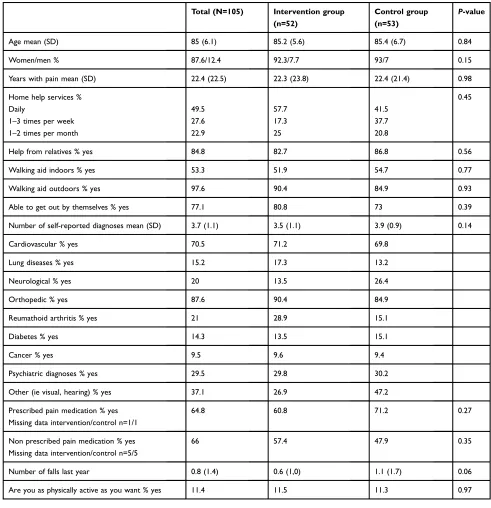
Table 1Baseline characteristics for the sample presented in mean, SD, percentage, andP-value
Total (N=105) Intervention group
(n=52)
Control group (n=53)
P-value
Age mean (SD) 85 (6.1) 85.2 (5.6) 85.4 (6.7) 0.84
Women/men % 87.6/12.4 92.3/7.7 93/7 0.15
Years with pain mean (SD) 22.4 (22.5) 22.3 (23.8) 22.4 (21.4) 0.98
Home help services % Daily
1–3 times per week
1–2 times per month
49.5 27.6 22.9
57.7 17.3 25
41.5 37.7 20.8
0.45
Help from relatives % yes 84.8 82.7 86.8 0.56
Walking aid indoors % yes 53.3 51.9 54.7 0.77
Walking aid outdoors % yes 97.6 90.4 84.9 0.93
Able to get out by themselves % yes 77.1 80.8 73 0.39
Number of self-reported diagnoses mean (SD) 3.7 (1.1) 3.5 (1.1) 3.9 (0.9) 0.14
Cardiovascular % yes 70.5 71.2 69.8
Lung diseases % yes 15.2 17.3 13.2
Neurological % yes 20 13.5 26.4
Orthopedic % yes 87.6 90.4 84.9
Reumathoid arthritis % yes 21 28.9 15.1
Diabetes % yes 14.3 13.5 15.1
Cancer % yes 9.5 9.6 9.4
Psychiatric diagnoses % yes 29.5 29.8 30.2
Other (ie visual, hearing) % yes 37.1 26.9 47.2
Prescribed pain medication % yes
Missing data intervention/control n=1/1
64.8 60.8 71.2 0.27
Non prescribed pain medication % yes Missing data intervention/control n=5/5
66 57.4 47.9 0.35
Number of falls last year 0.8 (1.4) 0.6 (1,0) 1.1 (1.7) 0.06
Are you as physically active as you want % yes 11.4 11.5 11.3 0.97
Clinical Interventions in Aging downloaded from https://www.dovepress.com/ by 118.70.13.36 on 20-Aug-2020
● “Overall, how does your everyday life function com-pared to before the intervention?”
● “Do you use what you have learned during the interven-tion to manage or prevent your physical difficulties?”
● “Have you been changing the dose of intake of pain medication?”
● “Have you fallen the last three months”?
At the follow-up, we asked the following question: ”Are you still physically active and/or doing your exercise”?
Goal behavior and self-efficacy
For the IG, we also checked whether the goal behavior was achieved or not using a Yes/No response and we also measured self-efficacy in relation to the goal behavior at baseline and at 12 weeks using a four-graded verbal descriptive scale: not sure at all, little sure, rather sure, very sure.
Randomization
A computer-generated, permutated block randomization scheme, using the user-developed module ralloc in Stata 14,50with a 1:1 ratio between the IG and the CG was used to make the random assignments. Opaque, nontransparent, sequentially numbered, sealed envelopes were prepared for each participant by a researcher who not was involved in enrolling the participants. The randomization was made after the baseline assessment. The assessors involved in the baseline test were blinded to the group allocation but not at the follow-up tests.
Adherence
The participants in the IG were instructed during their PT home visits to perform their exercises over 5–7 days (80%), and the minimum amount of exercise sessions for the intervention period was 55. Training on the goal beha-vior was set to at least once a week, with a minimum amount set at 11 sessions. The adherence to the IG was measured by an activity diary where the participants were instructed to record each day they did their exercise and training on the goal behavior. The participants in the CG received 9 telephone calls, once a week during weeks 1–8 and 10.
Feasibility of the study and adverse events
Issues related to the feasibility of the study procedure and the intervention protocol were recorded infield notes dur-ing the intervention such as time needed to collect the
data, time spent during the intervention visits, adherence to the intervention, and observed problems in relation to measurements. Adverse events were recorded by the PT in the following four categories: falls, cardiovascular events, and musculoskeletal injuries.
Statistics
A power calculation, based on the primary outcomes, was made before the study started. The calculation was based on a small meaningful change in the BPI and SPPB. In the BPI a small meaningful change was defined as mean (SD) 1 (0.5) points, in accordance with previous studies.33 A small meaningful change in the SPPB has previously been defined as mean (SD) 0.5 (1.48) points.48In order to detect this effect size when power is 80% and alpha of 0.05, a sample size of 138 participants, 69 participants in each group, would be needed. The goal was to include 150 participants in order to compensate for potential dropouts. SPSS version 24 (IBM Corporation, USA) was used for descriptive statistical analysis of data. The significance level was set top<0.05.
Variables were described by percentage, mean and SD as appropriate. Differences between groups were assessed with theχ2test for categorical data.
Primary and secondary outcomes were analyzed with linear mixed models for repeated measurements. In the statistical models, the fixed independent terms were the corresponding outcome measure at baseline as a covariate, follow-up time (ie F1 or F2), IG (ie intervention or con-trol), the interactions term between the outcome measure at baseline and follow-up time, and the interaction term between IG and follow-up time. From the estimated sta-tistical models, we reported the mean difference with 95% CI and p-value between the IG at F1 and F2 using the corresponding linear combinations. The linear mixed model estimations were conducted in Stata 15
Results
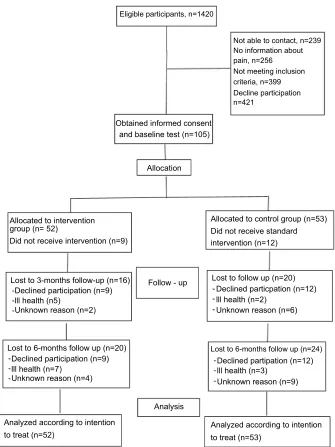
Figure 1 shows theflow of participants. Of 1420 eligible participants, 105 agreed to participate. Reasons for declin-ing participation were mainly due to health issues, lack of energy, or they did not think that the intervention would be helpful.
Of the 105 randomized participants, 21 dropped out during the intervention period, 9 in the IG and 12 in the CG. Reasons for the dropouts included deteriorated health or that they thought that the intervention would not be helpful to them. Overall, 58 (52%) participants completed
Clinical Interventions in Aging downloaded from https://www.dovepress.com/ by 118.70.13.36 on 20-Aug-2020
all assessments, whereas 69 (66%) participants completed F1 and 61(58%) completed F2. The main reason for not being able to participate in the follow-up assessments was deteriorated health.
No significant baseline differences were observed between the groups (Table 1).
The mean age for the entire group was 85 years and ranged between 71 and 101 years, 88% of the participants were female (seeTable 1). The participants had lived with their pain for 22 years and had in mean 3.7 different diseases. The baseline measurements (see Table 2) indi-cated that the participants scored a moderate degree of pain-related disability, low physical function, moderate
degree of pain-severity, low degree of catastrophizing thoughts, high degree of falls efficacy, low degree of physical activity level, and reported a low HRQL. Overall, there were no significant differences between those who had completed all assessments and the dropouts (data not shown). See Table 1 for further information about baseline characteristics.
Feasibility and adverse events
Some smaller issues were recorded in relation to the fea-sibility of the study. An overall perception was that the participants could answer measurements with verbal descriptive answers much easier than NRS measurements.
Eligible participants, n=1420
Not able to contact, n=239 No information about pain, n=256 Not meeting inclusion criteria, n=399 Decline participation n=421
Obtained informed consent and baseline test (n=105)
Allocation
Allocated to intervention group (n= 52)
Allocated to control group (n=53)
Did not receive standard intervention (n=12)
Follow - up Lost to 3-months follow-up (n=16)
Lost to 6-months follow up (n=20) lll health (n5)
Declined participation (n=9)
Declined participation (n=9) lll health (n=7)
Analyzed according to intention
to treat (n=52) to treat (n=53)
Analysis
Analyzed according to intention Unknown reason (n=2)
Unknown reason (n=4)
Lost to 6-months follow up (n=24) Declined partipation (n=12) Declined particpation (n=12) Lost to follow up (n=20)
lll health (n=3) lll health (n=2)
Unknown reason (n=9) Unknown reason (n=6) Did not receive intervention (n=9)
Figure 1Flowchart of study sample and randomization.
Clinical Interventions in Aging downloaded from https://www.dovepress.com/ by 118.70.13.36 on 20-Aug-2020
T able 2 Analysis ov er the effects of the inter vention on pain-r elated disability , ph ysical function, pain se verity , pain catastr ophizing thoughts, falls ef fi cacy , ph ysical activity le vel and HRQL, betw een gr oups pr esented in mean (SD), mean differ ences, and p -values N=105 Inter ven tion gr oup; baseline Inter ven tion gr oup; F1 Inter ven tion gr oup; F2 Contr ol gr oup; baseline Contr ol gr oup; F1 Contr ol gr oup; F2 Betw een gr oups signi fi cances; F1; inter ven tion – contr ol Betwee n gr oups signi fi cances; F2; inter ven tion – contr ol Primar y Outcome Pain-related disability , BPI 4.8 (1.9) 4.1 (2.1) 4.0 (2.1) 4.5 (2.0) 4.5 (2.4) 4.6 (2.4) − 0.9 ( − 1.9 to − 0.01) p =0.047 − 0.4 ( − 1.3 to 0.5) p =0.375 Ph ysical function, SPPB 5.2 (2.6) 5.9 (2.6) 5.7 (2.9) 4.6 (2.9) 5.3 (3.1) 5.2 (2.8) 0.1 ( − 0.47 to 0.71) p =0.68 0.07 ( − 0.54 to 0.70) p =0.81 Secondar y outcome Pain sev erity , BPI 4.6 (2.0) 3.6 (2.2)* 3.8 (2.3) 4.3 (1.8) 4.2 (2.1) 4.7 (3.3) − 1.2 ( − 1.9 to-0.4) p =0.004 − 1.01 ( − 1.9 to – 2.3) p =0.007 Catastr ophizing thoughts, C A T 2 item 1.7 (1.3) 1.5 (1.6) 1.7 (1.9) 2.0 (1.5) 2.0 (1.7) 1.8 (1.5) − 0.6 ( − 1.3 to 0.2) p =0.06 0.02 ( − 0.7 to 0.7) p =0.96 Falls ef fi cacy , FES-I 30.9 (10.2) 28.7 (9.5) 29.1 (10.2) 33.7 (12.8) 33.4 (12.4) 34.6 (12.2) − 3.2 ( − 6.7 to 0.48) p =0.09 − 3.5 ( − 7.2 to 0.3) p =0.07 Ph ysical activity le vel, Grimby-Frändin scale 2.4 (0.7) 2.7 (0.8) 2.6 (0.7) 2.4 (0.8) 2.5 (0.8) 2.5 (0.9) 0.2 ( − 0.01 to 0.48) p =0.07 0.2 ( − 0.02 to 0.49) p =0.07 PCS, HRQL, SF-12 30.1 (7.0) 33.2 (7.8) 34.1 (9.0) 31.1 (8.5) 29.8 (8.5) 32.5 (9.9) 4.6 (1.1 to 8.1) p =0.009 1.2 ( − 2.4 to 4.8) p =0.52 MCS, HRQL SF-12 39.0 (9.5) 40.8 (9.5) 42.1 (9.7) 39.6 (9.2) 38.4 (10.5) 40.6 (11.5) 4.4 (0.56 to 8.1) p =0.024 1.5 ( − 2.4 to 5.4) p =0.46 Note: The signi fi cant values ar e shown in bold. Abbre viations: BPI, Brief Pain In ventor y; C A T 2 item, Catastr ophizing 2-item; FES-I, Falls Ef fi cacy Scale − International; F1, follow-up 1; F2, follow-up 2; HRQL, Health re lated quality of life; MCS, mental component summary; PCS, ph ysical component summar y; SF-12, 12-item Short-Form Health Sur ve y; SPPB, Short Ph ysical P erformance Batter y.
Clinical Interventions in Aging downloaded from https://www.dovepress.com/ by 118.70.13.36 on 20-Aug-2020
Some of the participants had problems with completing the activity diary due to visual impairment, understanding how to complete it, or to remember to complete it. Except for these recorded issues, the study was feasible with regard to the study protocol. The intervention was found to be suitable to conduct in a home environment. The baseline test required between 45 and 90 mins to complete. Each visit for the participants in the IG lasted between 30 and 45 mins. The information regarding physical activity to the CG required about 20 mins. The telephone reminders to CG lasted for a maximum 2 mins. No adverse events were recorded in relation to the intervention.
Primary effect outcomes
The results showed a significant difference between the IG and CG with regard to decreased pain-related disability at F1 and the result was maintained at F2. Physical function increased in both groups but no significant differences were observed (see Table 2).
Secondary effect outcomes
A significant difference was observed for decreased pain severity between the groups at F1 and at F2. In addition, a significant difference in increased PCS and MCS for HRQL between the IG and CG was found at F1. No other significant differences were observed (seeTable 2).
Consumer questions
The results from the consumer questions showed that the physical activity level and management of everyday life increased significantly between the IG and CG at both F1 and F2. The participants in the IG also used what they had learned to a significantly higher degree at the F1 (see
Table 3).
Goal behavior and self-ef
fi
cacy
Of those who completed the intervention, 78% reached their goal behavior. Reasons for not being able to reach the goal were associated with deteriorated health during the intervention period. The results showed a significantly increased self-efficacy in relation to the goal behavior (P -value =0.03)
Adherence
In total, 56% of patients in the IG received all the session visits and the telephone boost from the PT. Reasons for not being able to participate in the sessions included sickness or vacation. In total, 32% of the participants adhered to the
recommendation to perform the exercise program at least 5 times/week (mean of 4 times per week). If the adherence had been set to 3 times/week, 89% had been able to reach the recommendation. Regarding training of the goal beha-vior, 80% of the participants were able to follow the adherence recommendation of once per week (mean of 3 times/week). In total, 68% of the participants in the CG received all the telephone reminders. The main reason for not receiving the calls was that they could not be reached.
Discussion
As we previously described, this is likely thefirst RCT to evaluate the effect of a BMPI in older adults living with chronic musculoskeletal pain. Therefore, we believe that the results are of great interest for both clinicians and researchers in thefield.
The results are very encouraging as our study shows that the target population were able to participate in such a complex intervention and gain positive effects on pain-related disability, pain severity, HRQL, physical activity level, self-efficacy, and management of everyday activities following BMPI.
The results of the present study are in line with the results from a recently published qualitative study evaluat-ing how older adults perceive to participate in a BMPI and their perceived gains. The gains of the intervention were by the informants described in physical, psychological, social, and functional terms and enabling participants to live at home for longer.51 Finally, the results support the hypothesis of the study protocol, whereby BMPI can be a suitable evidence-based intervention for community-dwelling older adults living with chronic musculoskeletal pain.15
In relation to the baseline characteristics, it can be concluded that the target population is very old, frail, has a moderate degree of pain-related disability and pain severity, a low physical activity level, high level of con-cerns about falling, and a low HRQL. These results are in line with previous studies13,27 and show that the target population is in high need of rehabilitation with the goal to improve their independence and quality of life.17,52 However, it is well known that it is very difficult to motivate the target population to participate in different interventions or in research projects, which also was the case in this study. Of 100 contacted persons, in mean 5 persons said yes to participate in the present study. A motivational key that clinicians and researchers can use in this context is to explain that the intervention will be
Clinical Interventions in Aging downloaded from https://www.dovepress.com/ by 118.70.13.36 on 20-Aug-2020
T able 3 Results ov er “ consumer questions ” pr esented in per centage and signi fi cant differ ences betw een gr oups IG F1, N=37 F2, N=33 Ph ysical
activity level
F1
Ph
ysical
activity leve
l F2 Mana g ement of e v er yda y life F1 Mana g ement of e v er yda y life F2 Do y ou use what y ou learned during the inter ve ntion F1 Do y ou use what y ou learned during the inter ve ntion F2 Differ ences in pain medication F1 Differ ences in pain medication F2 F alls Y es F1/ F2 Still ph ysically activ e or ex er cise Y es F2 Much higher , higher : 75% No Differ ences, Low er/much low er : 25%^ P = ≤ 0.001 Much higher , higher : 61% No differ -ences, Low er , much low er :39% P =0.003 Much better , better :72% No differ ence, w orse, much w orse: 28% P = ≤ 0.001 Much better , better :56% No differe nce , w orse, much w orse: 44% P =0.05 Daily , often: 86% Sometimes, rare ly , ne ver : 14% P -=0.004 Daily: often 73% Sometimes, rare ly , ne ver :
27% P=0.22
The same , higher : 50% Low er ,
none:50% P=0.19
The same, higher : 68% Low er , none: 32% P =0.67
17% / 14%/ P=0.28
Ye s 91% CG F1, N=32 F2, N=28 Much higher , higher : 19% No differ -ences, low er , much low er : 81% Much higher , higher :15% No differ -ences: low er , much low er :85% Much better , better :16% No differ ence, w orse, much w orse:84% Much better , better : 21% No differe nce , w orse, much w orse:79% Daily , often:49% Sometimes, rare ly , ne ver : 51% Daily , often: 60% Sometimes, Rar ely , ne ve r: 40% The same , higher :59% Low er , none: 41% The same, higher :73% Low er , none:27%
28%/ / 32%/
78% Abbre viations: IG, inter vention gr oup , CG, contr ol gr oup; F1, follow-up 1; F2, follow-up 2.
Clinical Interventions in Aging downloaded from https://www.dovepress.com/ by 118.70.13.36 on 20-Aug-2020
individualized and adapted to their physical abilities, health status, and their personal goals. But one of the most important keys is to explain how the intervention can help the older person to improve and sustain their independence so they can live at home longer.
A key factor, and sometimes also a prerequisite, to enable older adults to participate in different interventions is these are home-based.53Our results show that the BMPI is suitable for being conducted in the home environment. This choice also favors the performance of the FBA, training of the goal behavior, and self-efficacy as these components of the BMPI are recommended to be per-formed where the activity “actually” takes place.25,27 In this context, it should also be highlighted that the BMPI specifically has been described to promote the possibility of“age in place”by the target population,51which also the results from the present study confirm.
Pain-related disability decreased significantly, both during the intervention and afterfinished intervention, for those in the IG. The participants in the IG also reported that they could manage their everyday life better at a higher degree even at the F2. To decrease pain-related disability is one of the main goals when determining pain management for older individuals.2,17 Explanations for the results observed in our study could be that the BMPI resulted in a decreased pain severity and improve-ment in the level of physical activity and self-efficacy.3,16,17
Decreased pain-related disability as well as pain sever-ity can also decrease the risk of falls in the target popula-tion, which is another major health issue among older people.54 The results from the present study showed that individuals in the IG experienced fewer falls and had a deceased falls-efficacy than those in the CG, even if these differences were not significant. The results also show that those in the IG reduced their intake of pain medication, which also can reduce the fall risk as some pain medica-tions have been reported as a risk factor for falls.55
Maintenance of physical function, reduction of decline, and promotion chronic diseases is vital in this vulnerable group of older adults. Therefore, our results relative to improved physical activity levels were encouraging. It has also been described that an increased level of physical activity can promote the reserve capacity among older people.56The reserve capacity can be defined as the capa-city, exceeding necessary capacity to manage everyday life, which makes the older person more resistant to unex-pected events.56The results from our study show that the
BMPI also improved the PCS and MCS dimensions in the HRQL assessment, which can be a result of the improved physical activity levels.57BMPI may have also led to the positive change in physical function, even if there were no significant improvements; the physical function was increased and maintained at the F2 assessment. Finally, an improved physical activity level is a clear indicator of a change in behavior, which was fairly well sustained after the intervention ended.
To support, educate, and train participants in strategies constituting behavior changes and to sustain them are the main objectives for the PT in BMPI.15However, achieving behavioral changes is not an easy undertaking and is associated with complexity among older adults.58 Being able to do behavioral changes also partly relies on avail-able support.59 Therefore, it is very encouraging that our results show that it was possible for the participants to achieve different behavioral changes. The participants in the IG continued exercising and could better manage their everyday life compared to those in the CG. These beha-vioral changes will have a positive impact on everyday living and quality life, in both a short- and along-term perspective for the target population.51
It is well known that older people struggle to adhere to exercise programs,60 which was also the case in the pre-sent study. However, when the adherence level was set to 3 times/week, 89% of the participants had managed to achieve this level, which is a commonly used dose of exercise program for community-dwelling older people with chronic pain.61 It can also be concluded that most of the participants in the IG achieved their goal behavior with this dose of exercise. However, if the exercise had been of a higher intensity, the BMPI may have had a higher impact on the outcomes, especially in terms of physical function.
Limitations and strengths
It is a well-known problem that it is difficult to recruit and conduct research projects that include very old and frail adults withfluctuating health,27which is also confirmed by the present study. We were unable to reach statistical power and many of the participants were not able to complete all the assessments points. Even if this is an issue, studies have to include the target population, when this represents a growing group in society.
The study sample had a large percentage of women and the mean age was high, which is typical of the population of home care recipients. Conversely, due to the higher age
Clinical Interventions in Aging downloaded from https://www.dovepress.com/ by 118.70.13.36 on 20-Aug-2020
and level of frailty, this sample was more heterogeneous and medically unstable. Different subgroups of home care recipients could benefit differently from the BMPI inter-vention, which could not be tested in this limited patient sample. Future research should narrow the inclusion cri-teria or increase the sample size to allow for systematic subgroup analysis.
The Hawthorne effect should be considered in the present study.62
In the present study, the participants in the CG also received attention through the added systematic advice. This action may have decreased the Hawthorne effect. In addition, the observed effect in the present study may be attributed to participants’ awareness of enrolling in inter-vention group – Hawthorne effect, no matter what inter-vention they receive. Furthermore, the attention given to adherence may have produced a Hawthorne effect. It is possible that changes in both groups could have been due to factors other than the intervention, such as a placebo or Hawthorne effect. It also is possible that intervention effects could have been larger if more in-person visits had been provided or if the strengthening regimen had been more intensive.
The inability to blind the treating practitioners is a problem associated with all physiotherapy trials. Similarly, the development of an appropriate placebo has been a major problem. It can be argued that it is impos-sible to remove all the effects of a placebo used in phy-siotherapy trials. In general, the presence of the Hawthorne effect, in which the construct validity of a study is com-promised by the introduction of subjects’ and practi-tioners’ expectation bias, would contribute to a possible placebo effect.
In this context, it should also be mentioned that the controls also improved on most outcomes damping the net effect of the intervention. This is not a new phenomenon and improvement in controls has been shown previously.62 An explanation likely derives from the attention the CG received from the additional systematic advice obtained from the reminder telephone call.
Even if well-known measurement tools were used, some issues were observed. Therefore, we strongly recom-mend choosing and using customized assessment tools for this target population and use assessment based on verbal descriptive scales.
This study has a pragmatic design which strengthens the possibility of implementing the BMPI into clinical settings and with respect to generalization of the results
to a broader population. The pragmatic study design is also a study strength when evaluating evidence-based guide-lines and interventions.29
Finally, the results from the present study may be generalized to the vast majority of community-dwelling adults with chronic musculoskeletal pain, as this study confirms that even the frailest older adults can both parti-cipate and gain beneficial effects from BMPI.
Conclusion
The present study demonstrates that BMPI can be a sui-table evidence-based intervention for community-dwelling older people living with chronic musculoskeletal pain. The results showed that even very old and frail persons are able to participate in such a complex intervention and achieve behavioral changes that endure over time. The BMPI showed there was a decrease in pain-related disability and pain severity, improvement in the level of physical activity, HRQL, management of everyday life, and self-efficacy. All these factors can in the long term support and promote active aging and age in place among this vulner-able and frail group of older individuals. This is also the main goal of all interventions by health care professionals, as well as research conducted and developed for the target population.
Data availability statement
Raw data are available from Dr Sara Cederbom at [email protected] upon request.
Acknowledgments
The authors sincerely thank all the older adults who parti-cipated in the study. We also sincerely thank Professor Are Hugo Pripp for help with the statistical analysis. This study was funded by the Norwegian Physical Therapist Association. The funders had no role in the study design, data collection and analysis, decision to publish, or pre-paration of the manuscript.
Author contributions
SC and AB contributed with the conception of the study and obtaining funding. SC was the lead investigator of the study and performed statistical analysis and writing of the manuscript with contributions from the other authors. All authors contributed towards study design, data analysis, drafting and critically revising the paper, gave final
Clinical Interventions in Aging downloaded from https://www.dovepress.com/ by 118.70.13.36 on 20-Aug-2020
approval of the version to be published, and agreed to be accountable for all aspects of the work.
Disclosure
The authors report no conflicts of interest in regard to this work.
References
1. Andrew R, Derry S, Taylor RS, Straube S, Phillips CJ. The costs and consequences of adequately managed chronic non-cancer pain and chronic neuropathic pain. Pain Pract. 2014;14(1):79–94. doi:10.1111/papr.12050
2. Reid MC, Eccleston C, Pillemer K. Management of chronic pain in older adults.BMJ.2015;350:h532. doi:10.1136/bmj.h532
3. Abdulla A, Adams N, Bone M, et al. Guidance on the management of pain in older people.Age Ageing.2013;42:i1–57. doi:10.1093/ageing/afs199 4. Eggermont LH, Leveille SG, Shi L, et al. Pain characteristics associated
with the onset of disability in older adults: the maintenance of balance, independent living, intellect, and zest in the elderly Boston study.J Am Geriatr Soc.2014;62(6):1007–1016. doi:10.1111/jgs.13053
5. Wade KF, Marshall A, Vanhoutte B, Wu FC, O’Neill TW, Lee DM. Does pain predict frailty in older men and women? Findings from the English Longitudinal Study of Ageing (ELSA).J Gerontol A Biol Sci Med Sci.2017;72(3):403–409.
6. Fried LP, Tangen CM, Walston J, et al. Frailty in older adults evidence for a phenotype.J Gerontol A Biol Sci Med Sci.2001;56 (3):M146–M157. doi:10.1093/gerona/56.3.M146
7. Fried LP, Ferrucci L, Darer J, Williamson JD, Anderson G; JTJoGSABS, Sciences M. Untangling the concepts of disability, frailty, and comorbidity: implications for improved targeting and care.J Gerontol A Biol Sci Med Sci.2004;59(3):M255–M263. 8. Walston J, Hadley EC, Ferrucci L, et al. Research agenda for frailty
in older adults: toward a better understanding of physiology and etiology: summary from the American Geriatrics Society/National Institute on Aging Research Conference on Frailty in Older Adults. J Am Geriatr Soc.2006;54(6):991–1001.
9. Mackichan F, Adamson J, Gooberman-Hill R. ‘Living within your limits’: activity restriction in older people experiencing chronic pain. Age Ageing.2013;42(6):702–708. doi:10.1093/ageing/aft119 10. Sixsmith J, Sixsmith A, Fange AM, et al. Healthy ageing and home:
the perspectives of very old people in five European countries.Soc Sci Med.2014;106:1–9. doi:10.1016/j.socscimed.2014.01.006 11. Beard JR, Officer A, de Carvalho IA, et al. The World report on
ageing and health: a policy framework for healthy ageing. Lancet. 2016;387(10033):2145–2154. doi:10.1016/S0140-6736(15)00516-4 12. Sundsli K, Espnes GA, Soderhamn O. Being old and living alone in
urban areas: the meaning of self-care and health on the perception of life situation and identity.Psychol Res Behav Manag.2013;6:21–27. doi:10.2147/PRBM.S46329
13. Cederbom S, Söderlund A, Denison E, von Heideken Wågert P. Chronic pain among older women living alone. A study focusing on disability and morale.Eur J Physiother.2014;16(3):139–150. 14. Genet N, Boerma WG, Kringos DS, et al. Home care in Europe: a
systematic literature review.BMC Health Serv Res. 2011;11:207. doi:10.1186/1472-6963-11-207
15. Cederbom S, Denison E, Bergland A. A behavioral medicine inter-vention for community-dwelling older adults with chronic musculos-keletal pain: protocol for a randomized controlled trial.J Pain Res. 2017;10:845–853. doi:10.2147/JPR.S134133
16. Gatchel RJ, Peng YB, Peters ML, Fuchs PN, Turk DC. The biopsy-chosocial approach to chronic pain: scientific advances and future directions. Psychol Bull. 2007;133(4):581. doi:10.1037/0033-2909.133.4.581
17. Cederbom S.Ability in everyday activities and morale among older women with chronic musculoskeletal pain living alone [Doctoral Thesis]. Stockholm: Karolinska Institutet;2014.
18. Cederbom S, Wågert PV, Söderlund A, Söderbäck M. The impor-tance of a daily rhythm in a supportive environment - promoting ability in activities in everyday life among older women living alone with chronic pain.Disabil Rehabil.2014;36:2050–2058. doi:10.3109/ 09638288.2014.887795
19. Allen RES, Wiles JL, Leibing A, Guberman N, Reeve J. The mean-ing of “Aging in Place” to older people. Gerontologist. 2011;52 (3):357–366.
20. Ambrose KR, Golightly YM. Physical exercise as non-pharmaco-logical treatment of chronic pain: why and when.Best Pract Res Clin Rheumatol. 2015;29(1):120–130. doi:10.1016/j.berh.2015. 04.022
21. Finan PH, Smith MT. The comorbidity of insomnia, chronic pain, and depression: dopamine as a putative mechanism. Sleep Med Rev. 2013;17(3):173–183. doi:10.1016/j.smrv.2012.03.003
22. Ursini F, Naty S, Grembiale RD. Fibromyalgia and obesity: the hidden link. Rheumatol Int. 2011;31(11):1403–1408. doi:10.1007/ s00296-011-1885-z
23. AGS Panel on Persistent Pain in Older Persons. The management of persistent pain in older persons.J Am Geriatr Soc.2002;50(6 Suppl): S205–224.
24. Denison E, Asenlof P, Lindberg P. Self-efficacy, fear avoidance, and pain intensity as predictors of disability in subacute and chronic musculoskeletal pain patients in primary health care. Pain. 2004;111(3):245–252. doi:10.1016/j.pain.2004.07.001
25. Bandura A. Self-Efficacy: The Exercise of Control. New York: Freeman;1997.
26. Emilson C, Demmelmaier I, Bergman S, Lindberg P, Denison E, Åsenlöf P. A 10-year follow-up of tailored behavioural treatment and exercise-based physiotherapy for persistent musculoskeletal pain.Clin Rehabil.2017;31(2):186–196.
27. Cederbom S, Rydwik E, Soderlund A, Denison E, Frandin K, von Heideken Wagert P. A behavioral medicine intervention for older women living alone with chronic pain - a feasibility study.Clin Interv Aging.2014;9:1383–1397. doi:10.2147/CIA.S66943 28. Niknejad B, Bolier R, Henderson CR Jr, et al. Association between
psychological interventions and chronic pain outcomes in older adults: a systematic review and meta-analysis. JAMA Intern Med. 2018;178(6):830–839. doi:10.1001/jamainternmed.2018.0756 29. Patsopoulos NA. A pragmatic view on pragmatic trials.Dialogues
Clin Neurosci.2011;13(2):217–224.
30. Moher D, Hopewell S, Schulz KF, et al. CONSORT 2010 explanation and elaboration: updated guidelines for reporting parallel group ran-domised trials.J Clin Epidemiol.2010;63(8):e1–e37. doi:10.1016/j. jclinepi.2010.03.004
31. Nelson ME, Rejeski W, Blair SN, et al. Physical activity and public health in older adults: recommendation from the American College of Sports Medicine and the American Heart Association. Med Sci Sports Exerc. 2007;39(8):1435. doi:10.1249/ mss.0b013e3180616aa2
32. Klepstad P, Loge JH, Borchgrevink PC, Mendoza TR, Cleeland CS, Kaasa S. The Norwegian brief pain inventory questionnaire: transla-tion and validatransla-tion in cancer pain patients.J Pain Symptom Manage. 2002;24(5):517–525. doi:10.1016/S0885-3924(02)00526-2
33. Cleeland CS, Ryan K. The Brief Pain Inventory. Houston: Pain Research Group;1991.
34. Shi Q, Mendoza TR, Dueck AC, et al. Determination of mild, moderate, and severe pain interference in patients with cancer.Pain.2017;158 (6):1108–1112. doi:10.1097/j.pain.0000000000000890
35. Bann C, Dodd SL, Schein J, Mendoza TR, Cleeland CS. Validity of the brief pain inventory for use in documenting the outcomes of patients with noncancer pain. Clin J Pain. 2004;20(5):309–318. doi:10.1097/00002508-200409000-00005
Clinical Interventions in Aging downloaded from https://www.dovepress.com/ by 118.70.13.36 on 20-Aug-2020
36. Dworkin RH, Turk DC, Wyrwich KW, et al. Interpreting the clinical importance of treatment outcomes in chronic pain clinical trials: IMMPACT recommendations. J Pain. 2008;9(2):105–121. doi:10.1016/j.jpain.2007.09.005
37. Prestmo A, Hagen G, Sletvold O, et al. Comprehensive geriatric care for patients with hip fractures: a prospective, randomised, controlled trial. Lancet. 2015;385(9978):1623–1633. doi:10.1016/S0140-6736 (14)62409-0
38. Olsen CF, Bergland A. Reliability of the Norwegian version of the short physical performance battery in older people with and without dementia. BMC Geriatr. 2017;17(1):124. doi:10.1186/s12877-017-0515-3
39. Guralnik JM, Ferrucci L, Pieper CF, et al. Lower extremity function and subsequent disability consistency across studies, predictive mod-els, and value of gait speed alone compared with the short physical performance battery. J Gerontol A Biol Sci Med Sci. 2000;55(4): M221–M231. doi:10.1093/gerona/55.4.M221
40. Forchheimer MB, Richards JS, Chiodo AE, Bryce TN, Dyson-Hudson TA. Cut point determination in the measurement of pain and its relationship to psychosocial and functional measures after traumatic spinal cord injury: a retrospective model spinal cord injury system analysis. Arch Phys Med Rehabil. 2011;92(3):419–424. doi:10.1016/j.apmr.2010.08.029
41. Utne I, Miaskowski C, Bjordal K, Paul SM, Jakobsen G, Rustøen T. Differences in the use of pain coping strategies between oncology inpatients with mild vs. moderate to severe pain.J Pain Symptom Manage. 2009;38(5):717–726. doi:10.1016/j.jpainsymman.2009. 03.005
42. Jensen MP, Keefe FJ, Lefebvre JC, Romano JM, Turner JA. One-and two-item measures of pain beliefs and coping strategies. Pain. 2003;104(3):453–469. doi:10.1016/S0304-3959(03)00076-9 43. Helbostad JL, Taraldsen K, Granbo R, Yardley L, Todd CJ, Sletvold
O. Validation of the Falls Efficacy Scale-International in fall-prone older persons. Age Ageing. 2010;39(2):259. doi:10.1093/ageing/ afp224
44. Frändin K, Grimby G. Assessment of physical activity,fitness and performance in 76-year-olds.Scand J Med Sci Sports.1994;4(1):41– 46. doi:10.1111/j.1600-0838.1994.tb00404.x
45. Grimby G, Frändin K. On the use of a six-level scale for physical activity.Scand J Med Sci Sports.2018;28(3):819–825. doi:10.1111/ sms.12991
46. Ware JE Jr, Kosinski M, Keller SD. A 12-Item Short-Form Health Survey: construction of scales and preliminary tests of reliability and validity. Med Care. 1996;34(3):220–233. doi:10.1097/00005650-199603000-00003
47. Loge JH, Kaasa S. Short form 36 (SF-36) health survey: normative data from the general Norwegian population.Scand J Public Health. 1998;26(4):250–258.
48. Resnick B, Nahm ES. Reliability and validity testing of the revised 12-item Short-Form Health Survey in older adults. J Nurs Meas. 2001;9(2):151–161. doi:10.1891/1061-3749.9.2.151
49. Jakobsson U. Using the 12-item Short Form health survey (SF-12) to measure quality of life among older people. Aging Clin Exp Res. 2007;19(6):457–464. doi:10.1007/BF03324731
50. Ryan P.RALLOC: Stata Module to Design Randomized Controlled Trials. Newton: Boston College;2018.
51. Cederbom S, Nortvedt L, Lillekroken D. The perceptions of older adults living with chronic musculoskeletal pain about participating in an intervention based on a behavioral medicine approach to physical therapy. Physiother Theory Pract. Epub 2019 Feb 7. doi:10.1080/ 09593985.2019.1572846
52. Brown ST, Kirkpatrick MK, Swanson MS, McKenzie IL. Pain experience of the elderly. Pain Manag Nurs. 2011;12(4):190–196. doi:10.1016/j.pmn.2010.05.004
53. Harris TJ, Carey IM, Victor CR, Adams R, Cook DG. Optimising recruitment into a study of physical activity in older people: a randomised controlled trial of different approaches. Age Ageing. 2008;37(6):659–665. doi:10.1093/ageing/afn159
54. Stubbs B, Eggermont L, Patchay S, Schofield P. Older adults with chronic musculoskeletal pain are at increased risk of recurrent falls and the brief pain inventory could help identify those most at risk. Geriatr Gerontol Int.2015;15(7):881–888. doi:10.1111/ggi.12357 55. Söderberg KC, Laflamme L, Möller J. Newly initiated opioid
treat-ment and the risk of fall-related injuries. CNS Drugs. 2013;27 (2):155–161.
56. Clegg A, Young J, Iliffe S, Rikkert MO, Rockwood K. Frailty in elderly people. Lancet. 2013;381(9868):752–762. doi:10.1016/ S0140-6736(12)62167-9
57. Bjerk M, Brovold T, Skelton DA, Liu-Ambrose T, Bergland A. Effects of a falls prevention exercise programme on health-related quality of life in older home care recipients: a randomised controlled trial.Age Ageing.2019;48:213–219. doi:10.1093/ageing/afy192 58. Brawley LR, Rejeski WJ, King AC. Promoting physical activity for
older adults: the challenges for changing behavior.Am J Prev Med. 2003;25(3):172–183.
59. Abraham C, Michie S. A taxonomy of behavior change techniques used in interventions. Health Psychol. 2008;27(3):379–387. doi:10.1037/0278-6133.27.3.379
60. Picorelli AMA, Pereira LSM, Pereira DS, Felício D, Sherrington C. Adherence to exercise programs for older people is influenced by program characteristics and personal factors: a systematic review.J Physiother.2014;60(3):151–156. doi:10.1016/j.jphys.2014.06.012 61. Hasegawa R, Islam MM, Nasu E, et al. Effects of combined balance
and resistance exercise on reducing knee pain in community-dwelling older adults. Phys Occup Ther Geriatr. 2010;28(1):44–56. doi:10.3109/02703180903381086
62. De Amici D, Klersy C, Ramajoli F, Brustia L, Politi P. Impact of the Hawthorne effect in a longitudinal clinical study: the case of anesthe-sia. Control Clin Trials. 2000;21(2):103–114. doi:10.1016/S0197-2456(99)00054-9
Clinical Interventions in Aging
Dove
press
Publish your work in this journal
Clinical Interventions in Aging is an international, peer-reviewed journal focusing on evidence-based reports on the value or lack thereof of treatments intended to prevent or delay the onset of maladaptive correlates of aging in human beings. This journal is indexed on PubMed Central, MedLine, CAS, Scopus and the Elsevier
Bibliographic databases. The manuscript management system is completely online and includes a very quick and fair peer-review system, which is all easy to use. Visit http://www.dovepress.com/ testimonials.php to read real quotes from published authors.
Submit your manuscript here:https://www.dovepress.com/clinical-interventions-in-aging-journal
Clinical Interventions in Aging downloaded from https://www.dovepress.com/ by 118.70.13.36 on 20-Aug-2020