________________________________
Author for Correspondence: Dr. L. Nandhakumar M. Pharm.,Ph.D *Department of Pharmacy,
Sri Indu Institute of Pharmacy,
Review Article
ISSN Print 2231 – 3648 Online 2231 – 3656
Available Online at: www.ijpir.com
Description on formulation and evaluation parameters of gelatin enrobed
tabletting technology: Formulation perspective
L. Nandhakumar
1*, P. Kathiravan
1, A. Sambasiva Rao
1, D. Varun
1, P. Nagaraja
2B. Cornwell
3*1
Department of Pharmacy, Sri Indu Institute of Pharmacy, Sheriguda, Ibrahimpattanam-501510, Telangana.
2Department of Pharmacy, Karpagam College of Pharmacy, Myleripalayam, Coimbatore-32. Tamilnadu.
3Department of commerce, University of Texas A&M, Austin TX 78712, USA.
ABSTARCT
Coatings on tablets must be stable and strong enough to survive the handling of the tablet, must not make tablets stick together during the coating process, and must follow the fine contours of embossed characters or logos on tablets. Coatings can also facilitate printing on tablets, if required. Coatings are necessary for tablets that have an unpleasant taste, and a smoother finish makes large tablets easier to swallow. Tablet coatings are also useful to extend the shelf-life of components that are sensitive to moisture or oxidation. Opaque materials like titanium dioxide can protect light-sensitive actives from photo degradation. Special coatings (for example with pearlescent effects) can enhance brand recognition. Such coatings onto the tablets also serve the stand alone brand identity to the reputed producers as well. So taking into the consideration in this review a deep insight has been given about the formulation and evaluation of gelatin enrobed tablets and its various designing constraints also been discussed.
Keywords: Gelatin, Enrobed tablets, Methods and machines, Applications, Formulation and Evaluation Constraints, Stability analysis.
INTRODUCTION
Oral drug delivery is the most widely utilized route of administration among all the routes that have been explored for systemic delivery of drugs via pharmaceutical products of different dosage form. Oral route is considered most natural, uncomplicated, convenient and safe due to its ease of administration, patient acceptance, and cost-effective manufacturing process [1-6].
Oral dosage forms
Oral dosage forms are preferred and prescribed for the treatment of any acute and chronic infections because of their inherent advantages. Among the oral dosage forms, the most preferred are the tablets because of its various advantages like[7-10],
Low cost.
Most compact of all oral dosage forms.
Additional processing steps can be employed such as coating, embossing etc.,
Lend themselves to certain special release profile products such as entericcoated or sustained release formulations.
Better suitable to large scale production than other unit oral dosage forms.
Have best physical, chemical and mechanical stability for all the oral dosage forms
The conventional tablets possess the following
disadvantages[11-14]
Taste of bitter drug causes patient inconvenience. Drugs with objectionable odor and those which
are sensitive to oxygen and atmospheric moisture require special treatment. To overcome the above mentioned disadvantage and to give elegant appearance the conventional tablets can be enrobed.
Tablets
A tablet is a mixture of active substances and excipients, usually in powder form, pressed or compacted into a solid. The excipients include binders, glidants (flow aids) and lubricants to ensure efficient tablettingdisintegrants to ensure that the tablet breaks up in the digestive tract sweeteners or flavors to mask the taste of bad-tasting active ingredients and pigments to make uncoated tablets visually attractive. A coating may be applied to hide the taste of the tablet's components, to make the tablet smoother and easier to swallow, and to make it more resistant to the environment, extending its shelf life[15-20].
Types of Oral Tablets
Compressed tablets or Standard Compressed Tablets.
Multiple Compressed Tablets. Layered tablets
Compression coated tablets Repeat Action Tablets.
Delayed action and Enteric Coated tablets. Sugar and Chocolate Coated Tablets. Film Coated Tablets.
Chewable Table.
The above are the some of the commonly available different types of tablets currently.
Advantages of tablets[21-23]
Tablets are easy and convenient to use.
They provide an accurately measured dosage in a convenient portable package, and can be designed to protect unstable medications or disguise unpalatable ingredients.
Coatings can be colored or stamped to aid tablet recognition.
Manufacturing processes and techniques can provide tablets special properties; for example enteric coatings or sustained release formulations.
Disadvantages of tablets
Some drugs may be unsuitable for administration by the oral route. For example protein drugs such as insulin may be denatured by stomach acids. Such drugs cannot be made into tablets.
Some drugs may be deactivated by the liver (the "first pass effect") making them unsuitable for oral use.
Drugs which can be taken sublingually bypass the liver and are less susceptible to the first pass effect.
Bioavailability of some drugs may be low due to poor absorption from the gastric tract. Such drugs may need to be given in very high doses or by injection.
Properties of tablets
Tablets can be made in virtually any shape, although requirements of patients and tabletting machines mean that most are round, oval or capsule shaped.
More unusual shapes have been manufactured but patients find these harder to swallow, and they are more vulnerable to chipping or manufacturing problems.
Tablet diameter and shape are determined a combination of a set of punches and a die. This is called a station of tooling.
The shorter the distance between the punches, thickness, the greater the pressure applied during compression, and sometimes the harder the tablet. Tablets need to be hard enough that they don't break up in the bottle, yet friable enough that they disintegrate in the gastric tract.
The tablet is composed of the Active Pharmaceutical Ingredient (that is the active drug) together with various excipients. These are biologically inert ingredients which either enhance the therapeutic effect or are necessary to construct the tablet.
The filler or diluent (e.g. lactose or sorbitol) is a bulking agent, providing a quantity of material which can accurately be formed into a tablet. Binders (e.g. methyl cellulose or gelatin) hold the ingredients together so that they can form a tablet.
Manufacturing of tablets
In the tablet-pressing process, it is important that all ingredients be dry, powdered, and of uniform grain size as much as possible[24-29]. The main guideline in manufacture is to ensure that the appropriate amount of active ingredient is equal in each tablet so ingredients should be well-mixed. Two basic techniques are used to prepare powders for granulation into a tablet namely wet and dry granulation[30].
Direct compression
This method is used when a group of ingredients can be blended and placed in a tablet press to make a tablet without any of the ingredients having to be changed. This is not very common because many tablets have active pharmaceutical ingredients which will not allow for direct compression due to their concentration or the excipients used in formulation are not conducive to direct compression[31].
Granulation is the process of collecting particles together by creating bonds between them. There are several different methods of granulation. The most popular, which is used by over 70% of formulation in tablet manufacture is wet granulation. Dry granulation is another method used to form granules[32, 33].
Wet granulation
Wet granulation is a process of using a liquid binder or adhesive to the powder mixture. The amount of liquid can be properly managed, and over wetting will cause the granules to be too hard and under wetting will cause them to be too soft and friable. Aqueous solutions have the advantage of being safer to deal with than solvents.
Coatings over the tablets
Tablet coatings must be stable and strong enough to survive the handling of the tablet, must not make tablets stick together during the coating process, and must follow the fine contours of embossed characters or logos on tablets. Coatings can also facilitate printing on tablets, if required. Coatings are necessary for tablets that have an unpleasant taste, and a smoother finish makes large tablets easier to swallow. Tablet coatings are also useful to extend the shelf-life of components that are sensitive to moisture or oxidation. Opaque materials like titanium dioxide can protect light-sensitive actives from photo degradation. Special coatings (for example with pearlescent effects) can enhance brand recognition.
If the active ingredient of a tablet is sensitive to acid, or is irritant to the stomach lining, an enteric coating can be used, which is resistant to stomach acid and dissolves in the high pH of the intestines Coatings are often chosen to control the rate of dissolution of the drug in the gastro-intestinal tract. Some drugs will be absorbed better at different points in the digestive system. If the highest percentage of absorption of a drug takes place in the stomach, a coating that dissolves quickly and easily in acid will be selected. This is the last stage in tablet formulation and it is done to protect the tablet from temperature and humidity constraints. It is also done to mask the taste, give it special characteristics, distinction to the product, and prevent inadvertent contact with the drug substance. The most common forms of tablet coating are sugar coating and film coating. Coating is also performed for the following reasons Controlling site of drug release
Providing controlled, continuous release or reduce the frequency of drug dosing
Gelatin as a coating agent onto the tablet
Synonym: gelatin
Gelatin (also from French gelatin) is a translucent, colorless, brittle, nearly tasteless solid substance, extracted from the collagen inside animals' connective tissue. Substances containing gelatin or functioning in a similar way are called gelatinous. Gelatin is an irreversibly hydrolyzed form of collagen.
Types of gelatin
1. Type A: derived from acid processed materials, primarily pork skin.
2. Type B: derived from alkaline or lime processed materials, primarily from cattle and calf.
Structural unit
Gelatin contains many glycine, proline and 4hydroxyproline residues. A typical structure is -Ala-Gly-Pro-Arg-Gly-Glu-4Hyp-Gly-Pro-.It mainly contains the chain of amino acids.
Figure.No.1 Structure of Gelatin
Molecular structure
Gelatin is a heterogeneous mixture of single or multi-stranded polypeptides, each with extended left-handed proline helix conformations and containing between 300 - 4000 amino acids. The triple helix of type I collagen extracted from skin
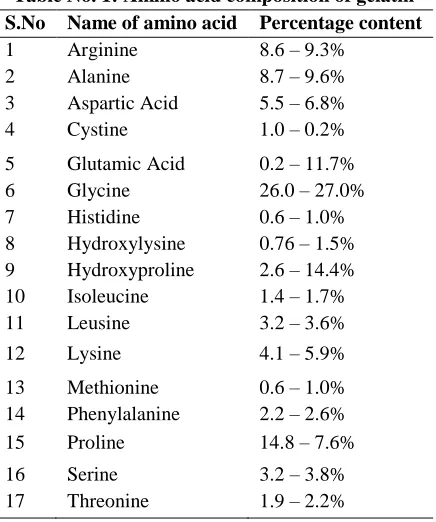
and bones, as a source for gelatin, is composed of two α1 (I) and one α2 (I) chains, each with molecular mass ~95 kD, width ~1.5 nm and length ~0.3 μm6. The composition of amino acids present in the gelatin are given in the Table No. 1
Table No. 1: Amino acid composition of gelatin S.No Name of amino acid Percentage content
1 Arginine 8.6 – 9.3%
2 Alanine 8.7 – 9.6%
3 Aspartic Acid 5.5 – 6.8%
4 Cystine 1.0 – 0.2%
5 Glutamic Acid 0.2 – 11.7%
6 Glycine 26.0 – 27.0%
7 Histidine 0.6 – 1.0%
8 Hydroxylysine 0.76 – 1.5% 9 Hydroxyproline 2.6 – 14.4%
10 Isoleucine 1.4 – 1.7%
11 Leusine 3.2 – 3.6%
12 Lysine 4.1 – 5.9%
13 Methionine 0.6 – 1.0%
14 Phenylalanine 2.2 – 2.6%
15 Proline 14.8 – 7.6%
16 Serine 3.2 – 3.8%
18 Valine 0.00 – 0.003
19 Tyrosine 0.49 – 1.1%
Advantages of gelatin coating of the tablets
Ease of swallowing / Inherent lubricity. Consumer preferred.
Increase core durability. The coating protects the core tablets from oxidation,flaking, fracturing, discoloration and de-lamination.
Flavor/ color/ odor masking.
Potential to add flavorings/ sweeteners. Potent drug safe guard for core.
Adaptable to Rx, OTC& nutritional products.
Improves the pharmaceutical elegance of the finished product by use of customer preferred colors (mono or dichromatic) with contrasting print.
Excellent means for blinding clinical studies with tablets containing actives which possess color. Amenable to enteric coatings, in order to achieve
drug delivery to desired location of G.I. tract. Rapid & efficient compared to dipping process in
hard gelatin capsules.
The advantages of gelatin coated tablets in terms of marketing attribute are given in the Table.No.2
Table No. 2: Advantages of gelatin coated tablets – marketing perspective S.No Marketing attribute Benefits
1 Sealed gelatin coating Mask Taste / odor and ease to swallow. 2 Patented technology Competition cannot duplicate.
3 Elegant look Brand differentiation and delivers premium image to the product.
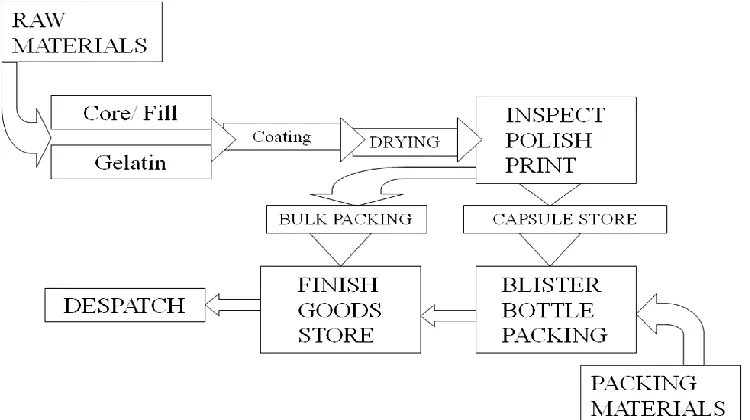
Fig. 1 Pictogram showing benefits of specialized coating onto the tablets
Gelatin mass preparation
The following is the process flow in the manufacturing of gelatin mass preparation Précised weighments,
Mixing and heating, De-aeration,
Colorization (if required) and quality testing.
Products are pre-shaped, washed with solvents for de-oiling purpose and semi dried in tumbler washer drier units. The solvent free/de-oiling Systems are also supplied where use of Solvent is not recommended or prohibited.
Gelatinized tablet Drying - Products are dried in precisely controlled Air-conditioned and De-humidified chambers, for moisture removal from Gelatin shell. Drying cycle depends on product characteristics and client's specific requirements of softness of the product. Die Roll sets/segment (wedge) are precisely custom manufactured on the state of the art CNC machines to exacting specifications of the clients with respect to size, shape, fill weight and application of the product.
Enrobing process
It is a technology of Banner pharmacaps Inc., USA, which is done sophisticated equipment, which is similar to that of soft gelatin capsules manufacturing equipment’s. Gelatin is the main active ingredient used for this enrobing process. The shell is basically composed of gelatin, a plasticizer, water, preservatives, coloring &opacifying agent. Gelatin enrobed tablets with two layers of preformed gelatin film /ribbon with a gelatin and plasticizer ratio about 3:1 to 15:1.
A gelatin enrobed tablet wherein the covering adheres sufficiently tightly that the covering cannot be mechanically removed from the core without removal of a part of the core. A recent innovation is the gelatin coated tablet. The innovator product, the gelcap, is a capsule shaped compressed tablet that allows the coated product to be about one-third smaller than a capsule filled with an equivalent amount of powder. The gelatin coating facilitates swallowing, and gelatin coated tablets are more tamper evident than unsealed tablets. Pressure sealing is the principle behind the process.
Gelatin enrobed or coated tablets (soflets
®)
The gelatin enrobing is been preferred for the following peculiar advantages,
Something new and unique Patented oral dosage form. Ideal for line extension. Exclusivity guaranteed. Cannot be imitated.
Gelatin coating over the core tablet will make the tablet possessing unique trait in the aspect of elegance and tamper proof for the coated core tablets.
Stability study on pharmaceutical dosage
forms
Once the product has been developed with propitious formulation parameters and considerations it is mandatory to assess the long term stability of the dosage form. The efficacy and safety of the pharmaceuticals cannot be ensured unless the quality of the pharmaceuticals is maintained during their specified shelf lives. New drug application needs to submit scientific data that guarantee the stability of the product over a specified time period when maintained under specific storage conditions. The International Conference on Harmonization of Technical Requirements for Registration of Pharmaceuticals for Human Use (ICH) was organized in order to harmonize stability testing requirements for new drug application within the European Union (EU), the United States, and Japan. ICH Guidelines for Stability Testing of New Drug Substances were officially adopted in October 1993.
Typically solid oral dosage forms, whose stability will be determined by following three different environmental conditions,
25ºC/60% RH (Real Time) 40ºC/75%RH.
Such observed stability proven dosage form will prone to posses the quality mentioned in the label for a predetermined specific period of time.
Gelatin enrobed tablets require adequate protection against extremes of relative humidity. The extent of protection required also depends on the tablet formulation on the anticipated storage condition as per ICH guidelines
Evaluation of Gelatin coated tablets
The gelatin coated tablets are evaluated by same process as the conventional tablets. The dissolution will be carried out for the drug release study. Then the amount of drug present will be determined by the HPLC, but the in-process checks during manufacturing especially during gelatin enrobing (sealing) process are
Gelatin ribbon Thickness.
Pin Holes in the Gelatin sealing (improper sealing).
Cross Sealing.
Color migration in double colored gelatin. Broad seams at the sealing joint (lead to core
tablet exposure).
The above points are considered during the enrobing process. The manufacturing process can be varied, such as control in the ribbon thickness of the gelatin, Gel mass temperature and proper die alignment. Mostly the vitamins and minerals are subjected to the enrobing process. The lists of drugs typically subjected for the gelatin coating are given in the Table No. 3
Table No. 3: List of drugs typically subjected for gelatin coating
In the recent introduction tablet coating an innovator product called Gelcaps, is a capsule shaped compressed tablet that allows the coated
tablet to be1/3 smaller than a capsule filled with an equivalent amount of powder
S.No Drugs subjected to gelatin coating Category of drugs
1 Diclofenac + paracetamol NSAIDs
2 Famotidine H2 antihistaminic
3 Chondroitin sulphate + Glucosamine sulphate Anti arthritis
4 Cotrimoxazole Anti bacterial
5 Multivitamins and Minerals Supplements
6 Natural Extracts Antioxidant, anti arthritis, cardioprotetive, etc
7 Acetaminophen Analgesic and antipyretic
8 Ibuprofen Analgesic and anti-inflammatory
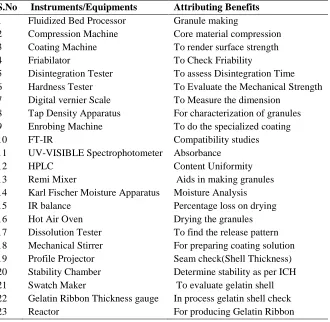
Table No. 4 Details of Instruments exploited in making Gelatin Enrobed Tablets S.No Instruments/Equipments Attributing Benefits
1 Fluidized Bed Processor Granule making
2 Compression Machine Core material compression 3 Coating Machine To render surface strength
4 Friabilator To Check Friability
5 Disintegration Tester To assess Disintegration Time 6 Hardness Tester To Evaluate the Mechanical Strength 7 Digital vernier Scale To Measure the dimension
8 Tap Density Apparatus For characterization of granules 9 Enrobing Machine To do the specialized coating
10 FT-IR Compatibility studies
11 UV-VISIBLE Spectrophotometer Absorbance
12 HPLC Content Uniformity
13 Remi Mixer Aids in making granules
14 Karl Fischer Moisture Apparatus Moisture Analysis
15 IR balance Percentage loss on drying
16 Hot Air Oven Drying the granules
17 Dissolution Tester To find the release pattern 18 Mechanical Stirrer For preparing coating solution 19 Profile Projector Seam check(Shell Thickness) 20 Stability Chamber Determine stability as per ICH 21 Swatch Maker To evaluate gelatin shell 22 Gelatin Ribbon Thickness gauge In process gelatin shell check
23 Reactor For producing Gelatin Ribbon
CONCLUSION
Quite a lot of tablets available in the market with various coatings to cater its benefits, ranging between typical tablet core protections from environment and to have a better control release pattern. Nevertheless duplication of the product is the major cause of concern to be tackled effectively with different technology like specialized gelatin coating with the patent recognition. Such produced tablets possessing a gelatin coating over the tablets will makes the formulation easier to swallow without taking water. This technology involves the Enrobing of gelatin shell over the core material and
it is exclusive. Moreover the manufactured products always stand still for its uniqueness and brand identity. The technology of gelatin coating is one of its kind of aforementioned benefits. Some studies have proved advantages of gelatin coated tablets over the film coated tablets. Further studies revealed that invivo results of film coated and gelatin coated tablets are alike.
Acknowledgement
We thank Geltec Pvt Ltd, Bangalore Research & Development for providing the valuable support and information for completing this work.
REFERENCES
[1]. Lachman L, Herbert AL, Joseph LK, The theory and practice of industrial Pharmacy. Publishing House, Bombay: 3, 1991.
[2]. Simler R, Walsh G, Mattaliano RJ, Guziewicz N, Ramirez B. Bio Process International 2003 6(10),2008, 38-45.
[3]. Dissolution for gelatin coated tablets. Pharmacopoeial forum. 1998. Available from: URL:http://www.usp.org/standard/pf/2405/d02.htm
[5]. Glicksman M. Gum Technology in the Food Industry. Academic Press New YorkAndLondon.1969. http://www. gelatin.co.za/# manufacture.
[6]. Loyd V, Nicholas G, Howard C.Ansels pharmaceutical Dosage Forms and Drug Delivery Systems; 230. [7]. Banner Pharmacaps In House Specification, Patented Gelatin Coated Tablets Manufacturing; 1992.
[8]. Yoshika S, Aso Y, kojima YS, Statistical evaluation of pharmaceutical products estimated by matrixing. Japan: Drug Stability; 5, 1996.
[9]. Constantinos A. Quantitativeanalysis of ciprofloxacin in Pharmaceutics BA Fen BilEnst. Dergisi(4.2), 2002, 74-79.
[10].Lacroix PM, Curran NM, Sears RW. High-pressure liquid chromatographic methods for ciprofloxacin hydrochloride and related compounds in raw materials. J. Pharm Biomed Anal. PubMed 14(5), 1996, 641-54. [11].Krzek J, Hubicka U, Szczepaniczyk J. High – performance thin- layer chromatography with densitometry for
the determination of ciprofloxacin and impurities in drugs.J. IntAnalytical Chemistry 88(5), 2005, 156, 30-688.
[12].Rane A. Methods of estimation of multi-component formulations: A review on the HPLC determination of ciprofloxacinHCl andtinadazole. Indian Drugs 40(12),2003, 707-711. 234.
[13].Hassan Y, Alfadly SO, Azmin MN, Peh KK, Tan TF, Noorizan AA, Ismail O. Bioequivalence evaluation of two different formulations of ciprofloxacin tablets in healthy volunteers. Singapore Med J 48(9), 2007, 819-23.
[14].Mohammad AK, Ashik U, Mahbub L, Abul H. Bioequivalence and Pharmacokinetic Study of Two Oral Formulations of Ciprofloxacin Tablets in Healthy volunteers. Journal of Applied Research 7(2), 2007, 150-157.
[15].Carla C, Eddie S, Nicola C.Hughes Y, Campanella S, Berner D. Ciprofloxacin Prolonged-Release Tablets Do Not Affect Warfarin Pharmacokinetics and Pharmacodynamics, From Depomed, Inc,Biovail Contract Research.
[16].Reeves R. Ciprofloxacin-induced psychosis. Ann Pharmacother.(26), 1992, 7-8:930-31.
[17].Shah A, Lettier J, Kaiser L, Echols R, Heller AH.Comparative Pharmacokinetics and safety ofciprofloxacin 400 mg iv thrice daily versus 750 mg twice Daily. Pharmaceutical Division.1993.
[18].Rao K, Rama V, Saranjit SS. Sensitivity of gelatin raw materials to cross- linking. Pharmaceutical Technology 1, 2002. URL: http://www.highbeam.com/ pharmaceutical Technology North America/publications.aspx. [19].Rao K, Rama V, Pakhale SP, Saranjit SS. A film approach for the stabilization of gelating preparations against
cross-linking. Pharmaceutical Technology 2003
http://www.highbeam.com/pharmaceuticalTechnologyNorthAmerica/ publications.aspx.
[20].Manikandan R, Sukhjeet S.Stability testing for gelatin-based formulations: Rapidly evaluating the possibility of a reduction in dissolution rates. Pharmaceutical Technology 2000
http://www.highbeam.com/Invitrocellular~A~DevelopmentalBiology/ publications.aspx.
[21].Rao R, Rama V, Venugopal K, Manikandan, R. Alteration in dissolution characteristics of gelatin-containing formulations: A review of the problem, test methods, and solutions. Pharmaceutical Technology 2002. URL: http:/ /www.highbeam.com/ pharmaceutical Technology
[22].Fonkwe L, Fang Q, Guo X. X-Ray microtomography-Assisted softgel enrobed Tablet (soflet). Development of Research, Banner pharmacapsInc; 2002.
[23].Fang Q, Price M, Fonkwe L.Gelatin Enrobed Enteric 500 mg Acetaminophen Soflet.TMResearch & Development: North Carolina Banner PharmacapsInc; 2003.
[24].Sukur K, Seward P, Price M. Aspirin Soflets ® (gel coated tablets): Effect of type of film coating polymer on the dissolution and free salicylic acid. Research and Development, North Carolina: Banner PharmacapsInc; 2005.
[25].Jarzebinski O, Jaynes E. Effect of Gelatin Excipients, Drying Time and Ribbon Lubricants on Physical Appearance and Dissolution of Soflet ®: Research and development: North Carolina: Banner Pharmacaps, Inc; 2006.
[27].Madhusudan V, Kamalakar R N. Dual release drug delivery system as gelatin coated tablets (soflets). Global Research & development: Bangalore; Banner pharmacapsInc; 2005.
[28].Sukur K, Seward PA, Kinter S, Hassan EE. Application of Gel enrobing Technology for Tablets containing; Moisture drugs, An example of Aspirin Tablets. Research and development. North Carolina: Banner PharmacapsInc; 2003.
[29].Padsalgi A, Bidkar S, Jadhav V, Sheladiya D. Sustained release tablet of theophylline by hot melt wax coating technology. Asian J Pharm [serial online] 2008 [cited 2009 Feb 7]; 2:269. Available from http:// www.asiapharmaceutics. info/text.asp?2008/2/1/26/41561.
[30].List of brand owners. Commercially available gelatin coated tablets; Available from: URL: http/ www. Findownersearch .com/ category/ gelatincoated + vitamins.