Raffaella Bucciardini1, Paola Tatarelli, Esayas Haregot Hilawe, Vincenzo Fragola, Teshome Abegaz, Stefano Lu-cattini1, Atakilt Halifom, Eskedar Tadesse, Micheal Berhe, Paola De Castro, Massimiliano Di Gregorio, Katherina Pugliese, Roberta Terlizzi, Stefano Vella, Hagos Godefay. Ethiop Med J, 2019, Vol. 57, No. 2
ORIGINAL ARTICLE
GENDER DIFFERENCES IN DEATH AND LOSS TO FOLLOW-UP AMONG
HIV-POSITIVE PATIENTS ON ANTIRETROVIRAL THERAPY IN TIGRAY, ETHIOPIA
Raffaella Bucciardini, PhD1, Paola Tatarelli, MD2, Esayas Haregot Hilawe, MD3, Vincenzo Fragola, MD1, Te-shome Abegaz4, Stefano Lucattini1, Atakilt Halifom5, Eskedar Tadesse4, Micheal Berhe4, Paola De Castro, PhD1,
Massimiliano Di Gregorio1, Katherina Pugliese1, Roberta Terlizzi1, Stefano Vella, MD1, Hagos Godefay, MD4
ABSTRACT
Background: In Ethiopia data concerning the influence of gender on death associated with HIV/AIDS and loss to follow-up in care and treatment are controversial.
Objective: Our study intended to further investigate gender-related differences in antiretroviral therapy outcomes in Tigray (Ethiopia).
Methods: We used data from the “Cohort of African People Starting Antiretroviral therapy’ project, a prospective study of a cohort of HIV-positive patients who started ART in Tigray. The study population included HIV-positive patients starting antiretroviral therapy between January 2013 and December 2015. We compared baseline char-acteristics between men and women using Kruskal Wallis t-test and Chi-squared test. We employed Kaplan-Meier method to estimate the probability of mortality and loss to follow-up for men and women and univariate and multi-variate Cox Proportional Hazards models to compare differences in antiretroviral therapy outcomes by gender. Results: The study population included 1,622 patients, 1,003 (61.8%) women and 619 (38.2%) men. Median follow -up time was 2.6 years and 2.1 years, respectively for women and men. In the multivariate analysis men had a sig-nificantly higher risk of loss to follow-up than women (aHR 2.8, 95% CI: 2.00-4.01); but no significant sex differ-ences in mortality was observed (aHR 1.2, 95% CI: 0.76-1.84).
Conclusions: Findings showed gender-related differences in loss to follow-up, not in mortality. Several structural and social factors may influence the gender difference in loss to follow-up. However, specific investigations are needed to get a better understanding of the reasons why men are more likely to be lost to follow-up than women and programmes with a gender-oriented approach should be implemented.
Keywords: antiretroviral treatment; HIV/AIDS, loss-to follow-up; gender; mortality.
1Istituto Superiore di Sanità, Rome, Italy. 2Clinic of Infectious Diseases, Department of Health Sciences,
Univer-sity of Genoa, Italy. 3Tigray Health Research Institute, Mekelle, Ethiopia. 4College of Health Sciences, Mekelle
University, Mekelle, Ethiopia. 5Tigray Regional Health Bureau, Mekelle, Ethiopia.
INTRODUCTION
In spite of remarkable progress over the past two dec-ades, the AIDS epidemic is still far from ending. Rates of mortality and loss to follow-up remain unaccepta-bly high in low-income countries (LICs), where nearly three quarters of people living with HIV (PLHIV) reside (1,2). Several studies have investigated how demographic, social, immuno-virological and clinical factors influence prognosis of PLHIV. In particular, the role of gender has been widely analyzed. Exten-sive literature from LICs shows that men are more likely to be diagnosed with advanced HIV disease (3-5) compared to women, thus being at high risk of poor immunological recovery and adverse clinical out-comes. However, the impact of gender on HIV/AIDS mortality and loss to follow-up is widely debated: some studies found higher rates of mortality and loss to follow-up among men compared to women (6,7), while others did not (8-10).
According to 2016 Joint United Nations Programme on HIV/AIDS (UNAIDS) data, Ethiopia is a sub-Saharan country hosting about 710,000 (570,000– 880,000) PLHIV with a 1.1 (0.8-1.3) HIV preva-lence in adults (11).
METHODS
Study design and setting: We used data from the “Cohort of African people Starting Antiretroviral ther-apy (CASA)” project, a prospective, ongoing, multi-site study of a cohort of HIV-positive patients who started ART in seven health facilities (HFs), including two health centers and five hospitals, located in Ti-gray, the northeastern region of Ethiopia.
Participants: HIV-positive patients over 14 who initi-ated ART between January 01, 2013 and December 31, 2015 and who agreed to provide their contacts were included in this study. Follow-up data was avail-able until December 2016.
Data source: Baseline and follow-up visits were per-formed according to the standard of care of the partici-pating HFs. Data was systematically collected by ART nurses using forms designed for this study and a software developed for the purpose of this study was used to enter data of participating patients.
Variables: The following baseline information was included in this analysis: type of HF, gender, age, edu-cational status, marital status, body mass index [(BMI, weight/height2: <=18.5= underweight,
18.6-25=normal, >25 overweight)], WHO clinical stage (stage I to stage IV), CD4+ cell counts (defined as the value available at any time in the six months before starting HIV treatment) and the presence of active tuberculosis (TB). The outcomes of interest were mor-tality and loss to follow-up. Patients were considered dead if they had been recorded as dead in the patient’s exit-form. Patients were considered lost to follow-up (LTFU) if they had missed the last scheduled visit for more than three months and had never returned till the censorship date (December 31, 2016) of the cohort.
Data analysis: Baseline characteristics were com-pared between men and women using Kruskal Wallis t -test and Chi-squared test for continuous and categori-cal variables, respectively. The Kaplan-Meier method was used to estimate the probability of mortality and loss to follow-up for men and women at different time -points. Univariate and multivariate Cox Proportional Hazards models were used to compare differences in ART outcomes (mortality and loss to follow-up) by gender. Type of HF, gender, age (14-24, 25-34, 35-44, >=45), educational status (no education, primary, sec-ondary, tertiary education), marital status (never mar-ried, marmar-ried, separated/divorced, widow/widower), BMI (underweight, normal, overweight), WHO clini-cal stage (I/II or III/IV), CD4 cell count (<200 or >= 200) and active TB were considered in the univariate model.
Predictor variables which resulted in having statisti-cal significance in the univariate analysis (p-value <0.2) were included in the multivariate analysis. The final models retained all variables with a p-value of < 0.05 (statistically significant). The end of follow-up was defined as the date of death, last date of a clinic visit or December 31, 2016. Time to death was censored at the date of recorded death. Follow-up of LTFU patients was censored at the date of the last clinic visit at the HF. Statistical analyses were performed using both the SPSS soft-ware, version 21.0 (SPSS Inc, Chicago, IL, USA) and the SAS statistical package, version 9.2 (SAS Institute, Inc., Cary, NC).
Ethical consideration
Ethical approval was obtained from Health Re-search Ethics Review Committee of Mekelle Uni-versity College of Health Science (Reference num-ber: ERC 0129/2012). All patients provided written informed consent. For patients aged 14 to 18 the informed consent was signed by adult relatives act-ing as guardians (immediate families e.g. father or mother or next of kin) and not by the patients them-selves.
RESULTS
Participants’ characteristics at ART initiation: The study population included 1,622 patients 1,003 (61.8%) women and 619 (38.2%) men (Table 1). At ART initiation, men were older than women (36 versus 31 years). More men than women were un-derweight (44.7% versus 38.9%) whereas more women than men were overweight (5.7% versus 2.6%). More than half of the women (51.3%) did not have a primary education level. Men had a lower median CD4 count (182 cells/microLitre ver-sus 257 cells/microLitre) and the majority (54.6%) were clinically symptomatic. Men more than women were co-infected with active TB (12.1% versus 9.0%).
Table 1: Baseline demographic and clinical characteristics by gender
Total Women Men p-value*
1622 1003 (61.84%) 619 (38.16%)
Health Facility, n (%)
Hospital 1101 (67.9) 652 (65.0) 449 (72.5) 0.002
Health Center 521 (32.1) 351 (35.0) 170 (27.5)
Age at start of ART (years),
(n, range), median
(1622,16-82),33
(1003,17-82),31 (619,16-71),36 <0.001
14-24 n (%) 189 (11.7) 147 (14.7) 42 (6.8)
25-34 703 (43.3) 483 (48.2) 220 (35.5)
35-44 464 (28.6) 248 (24.7) 216 (34.9)
>=45 266 (16.4) 125 (12.5) 141 (22.8)
Educational status, n (%)
No education 726 (44.8) 515 (51.3) 211 (34.1) <0.001
Primary 463 (28.5) 257 (25.6) 206 (33.3)
Secondary 284 (17.5) 166 (16.6) 118 (19.1)
Tertiary 149 (9.2) 65 (6.5) 84 (13.6)
Marital status, n (%)
Never married 282 (17.4) 131 (13.1) 151 (24.4) <0.001
Married 762 (47.0) 421 (42.0) 341 (55.1)
Separated/Divorced 450 (27.7) 338 (33.7) 112 (18.1)
Widow/Widower 128 (7.9) 113 (11.3) 15 (2.4)
BMI (kg/m2), n (%)
Underweight 666 (41.1) 390 (38.9) 276 (44.7) 0.003
Normal 881 (54.4) 556 (55.4) 325 (52.7)
Overweight 73 (4.5) 57 (5.7) 16 (2.6)
Clinical stage, n (%)
WHO I-II 796 (49.1) 458 (45.7) 338 (54.6) <0.001
WHO III-IV 826 (50.9) 545 (54.3) 281 (45.4)
CD4+ count (cells/microLitre), (n, range), median
(1585, 2-1777), 235
(980, 3-1777),
257
(605, 2-1121),
182
<0.001
<200 n (%) 726 (45.8) 895 (40.3) 331 (54.7) <0.001
>=200 859 (54.2) 585 (59.7) 274 (45.3)
Active TB, n (%)
Yes 147 (9.1) 72 (7.2) 75 (12.1) 0.001
No 1475 (90.9) 931 (92.8) 544 (87.9)
Median-person-years of follow-up
median (range) 2.4 (1-4) 2.6 (1-4) 2.2 (1-4) <0.001
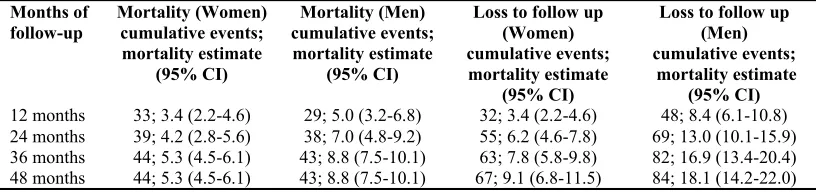
Table 2: Kaplan-Meier estimate of mortality and loss to follow up after ART initiation by gender
Months of
follow-up Mortality (Women) cumulative events; mortality estimate
(95% CI)
Mortality (Men) cumulative events; mortality estimate
(95% CI)
Loss to follow up (Women) cumulative events; mortality estimate
(95% CI)
Loss to follow up (Men) cumulative events; mortality estimate
(95% CI)
12 months 33; 3.4 (2.2-4.6) 29; 5.0 (3.2-6.8) 32; 3.4 (2.2-4.6) 48; 8.4 (6.1-10.8)
24 months 39; 4.2 (2.8-5.6) 38; 7.0 (4.8-9.2) 55; 6.2 (4.6-7.8) 69; 13.0 (10.1-15.9)
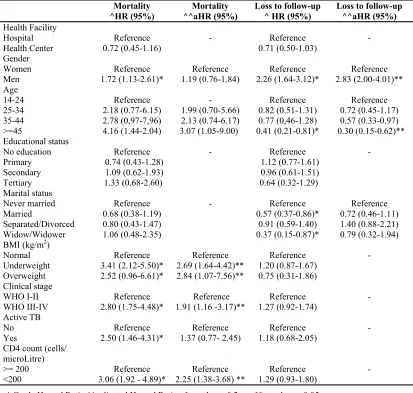
Table 3: Gender-related differences in mortality and loss to follow up
^ Crude Hazard Ratio ^^ adjusted Hazard Ratio * p value < 0.2; ** p value < 0.05
Mortality Mortality Loss to follow-up Loss to follow-up
^HR (95%) ^^aHR (95%) ^ HR (95%) ^^aHR (95%)
Health Facility
Hospital Reference - Reference
-Health Center 0.72 (0.45-1.16) 0.71 (0.50-1.03)
Gender
Women Reference Reference Reference Reference
Men 1.72 (1.13-2.61)* 1.19 (0.76-1.84) 2.26 (1.64-3.12)* 2.83 (2.00-4.01)**
Age
14-24 Reference - Reference Reference
25-34 2.18 (0.77-6.15) 1.99 (0.70-5.66) 0.82 (0.51-1.31) 0.72 (0.45-1.17)
35-44 2.78 (0,97-7,96) 2.13 (0.74-6.17) 0.77 (0,46-1.28) 0.57 (0.33-0.97)
>=45 4.16 (1.44-2.04) 3.07 (1.05-9.00) 0.41 (0.21-0.81)* 0.30 (0.15-0.62)**
Educational status
No education Reference - Reference
-Primary 0.74 (0.43-1.28) 1.12 (0.77-1.61)
Secondary 1.09 (0.62-1.93) 0.96 (0.61-1.51)
Tertiary 1.33 (0.68-2.60) 0.64 (0.32-1.29)
Marital status
Never married Reference - Reference Reference
Married 0.68 (0.38-1.19) 0.57 (0.37-0.86)* 0.72 (0.46-1.11)
Separated/Divorced 0.80 (0.43-1.47) 0.91 (0.59-1.40) 1.40 (0.88-2.21)
Widow/Widower 1.06 (0.48-2.35) 0.37 (0.15-0.87)* 0.79 (0.32-1.94)
BMI (kg/m2)
Normal Reference Reference Reference
-Underweight 3.41 (2.12-5.50)* 2.69 (1.64-4.42)** 1.20 (0.87-1.67)
Overweight 2.52 (0.96-6.61)* 2.84 (1.07-7.56)** 0.75 (0.31-1.86)
Clinical stage
WHO I-II Reference Reference Reference
-WHO III-IV 2.80 (1.75-4.48)* 1.91 (1.16 -3.17)** 1.27 (0.92-1.74)
Active TB
No Reference Reference Reference
-Yes 2.50 (1.46-4.31)* 1.37 (0.77- 2.45) 1.18 (0.68-2.05)
CD4 count (cells/ microLitre)
>= 200 Reference Reference Reference
-<200 3.06 (1.92 - 4.89)* 2.25 (1.38-3.68) ** 1.29 (0.93-1.80)
Gender and Loss to Follow-up: A total of 151 patients (67 women and 84 men) were LTFU. The probability of loss to follow-up of women versus men was 3.4% and 8.4% at 12 months; 6.2% and 13.0% at 24 months; 7.8% and 16.9% at 36 months; 9.1% and 18.1% at 48 months (Table 2). Both in the univariate and multivari-ate analysis, gender was independently associmultivari-ated with loss to follow-up (aHR 2.83, 95% CI: 2.00-4.01). In the multivariate analysis also the age group older than 45 at baseline was associated with loss to follow-up (aHR 0.30, 95% CI: 0.15-0.62) (Table 3).
DISCUSSION
In this study, we found gender-related difference in loss to follow-up but not in mortality in a cohort of pian PLHIV on ART. Some studies conducted in Ethio-pia showed no association between gender and survival (20-22).
However, other studies from Ethiopia and sub-Saharan Africa found that mortality seems to be higher in men than in women (13, 27). Besides, a systematic review from both developed and devel-oping countries also showed that women have a slightly higher survival compared to men (28).
In the same way, consistent with studies from sub-Saharan Africa, advanced WHO clinical stage at ART initiation was a statistically significant predictor of mortality (37). The low average value of CD4 and the presence of opportunistic infections in the study popu-lation could suggest that patients have delayed ARV therapy. Patients may have received a late diagnosis, for having performed the test long after contracting HIV infection, when the disease was already in an advanced stage. This result suggests that innovative strategies are needed to diagnose HIV infection at an earlier stage, before the onset of advanced disease (38).
In our study, men were more likely to become LTFU than women. This result is consistent with that of other studies conducted in Ethiopia as well as in other sub-Saharan Africa countries (39-41). Several struc-tural and social factors may influence the gender dif-ference in loss to follow-up. Firstly, as already re-ported in other African countries, Ethiopian men have high occupational mobility, which favors loss to fol-low-up (42). Secondly, men often experience alcohol and drug abuse, which notoriously decreases care ad-herence (43, 44). Thirdly, male sex is usually associ-ated with ideals of strength and well-being; this model may reinforce HIV-related stigma and may hinder men’s access to healthcare services (45). This study has both strengths and limitations. As a limitation, the reported death could be an underestimate of true mor-tality as we were unable to accurately ascertain pa-tients’ deaths. We expect that some of the patients classified as LTFU might have died.
Moreover, although the hazard of death between gen-ders was not significantly different in this analysis, men had a higher rate of mortality. It is possible that the sample of this study was not large enough to de-tect a significant difference. The strengths of this study are its multi-site and prospective design. In con-clusion, we found gender difference in loss to follow-up but not in mortality within PLHIV receiving ART in Ethiopia. Specific investigations are needed to get a better understanding of the reasons why men are more likely to be LTFU than women and programmes with a gender-oriented approach should be implemented.
ACKNOWLEDGMENTS
We thank all the patients participating in this study, the health facilities, the adherence supporters and the CASA-project team.
Competing interests
The authors have declared that no competing inter-ests exist.
Funding
This work was supported by the Italian Ministry of Health—Department of Prevention and Innovation, Rome, Italy; Agenzia Italiana per la Cooperazione allo Sviluppo; EDCTP2 Participating States Initi-ated Activity (PSIA-2017-2018).
Author Contributions
• Conceived and designed the experiments: RB HG
• Performed the experiments: RB VF TA SL ET MB
• Analyzed the data: RB
• Wrote the manuscript: RB PT EH PD SV HG • Designed the software used in analysis: TA SL MD
• Administrative support: KP RT • Local supervisor: AH
CASA-project Health Facilities
Ayder Hospital, Mekelle, Ethiopia: Ataklti Birhane, Hagos Asfaw, Hadas Birhanu, Temesgen Desta, Akberet Mengesha, Weldebirhan Teklu.
Alamata Health Center, Alamata, Ethiopia: Sindayo Tefera, Negasi Abay, Alemash Abebe, Molla Abreha, Yeshiwork Birhane, Eyob Hiluf, Tesfay Zenebe.
Alamata Hospital, Alamata, Ethiopia: Mengesha Fantay, Equar Desalegn, Fireweyni Kidane, Haye-lom G/medhin, Halewya Muhur.
Mekelle Health Center, Mekelle, Ethiopia: Me-konen Kebede, Slas Beyene, Letebrhan Hailay, Alem Mesfin.
Mekelle Hospital, Mekelle, Ethiopia: Samrawit G/ medhin, Tsegay Berihu, Belaynesh Asgedom, Solomin Araya, Tsigeweyni Gidey, Zuriash Hale-fom, Amete Yihidego.
Mehoni Health Center, Mehoni, Ethiopia: Goitom Alemye, Meselu Arefe, Marlin Fisha, Asefu Hind-eya, Fetle Molla, Ashenafi Moges.
REFERENCES
1. UNAIDS (2017). UNAIDS DATA,2017. Available: http://www.unaids.org/en/resources/ docu-ments/2017/2017_data_book.
2. Fox MP1, Rosen S. Retention of Adult Patients on Antiretroviral Therapy in Low- and Middle-Income Coun-tries: Systematic Review and Meta-analysis 2008-2013. J Acquir Immune Defic Syndr 2015;69(1):98-108. PMID:25942461.
3. Jiang H, Yin J, Fan Y, Liu J, et al. Gender difference in advanced HIV disease and late presentation according to European consensus definitions. Sci. Rep. 2015;5: 14543. PMID: 26412578.
4. Braitstein P, Boulle A, Nash D. et al. Gender and the use of antiretroviral treatment in resource-constrained settings: findings from a multicenter collaboration. J Womens’ Health (Larchmt). 2008;17(1):47-55. PMID:18240981.
5. Centers for Disease Control and Prevention (2013). Differences between HIV-Infected Men and Women in Antiretroviral Therapy Outcomes - Six African Countries, 2004–2012. Available: https://www.cdc.gov/mmwr/ preview/mmwrhtml/mm6247a2.htm.
6. Hawkins C, Chalamilla G, Okuma J, et al. Sex differences in antiretroviral treatment outcomes among HIV-infected adults in an urban Tanzanian setting. AIDS 2011; 25(9):1189-97. PMID:21505309
7. Druyts E, Dybul M, Kanters S, et al. Male sex and the risk of mortality among individuals enrolled in antiret-roviral therapy programs in Africa: a systematic review and meta-analysis. AIDS 2013; Jan 28;27(3):417-25. PMID:22948271
8. Mosha F, Muchunguzi V, Matee M, et al. Gender differences in HIV disease progression and treatment out-comes among HIV patients one year after starting antiretroviral treatment (ART) in Dar es Salaam, Tanzania. BMC Public Health 2013, 13:38. Available: https://bmcpublichealth.biomedcentral.com/articles/10.1186/1471 -2458-13-38
9. Brinkhof MW, Dabis F, Myer L, et al. Early loss of HIV-infected patients on potent antiretroviral therapy pro-grammes in lower-income countries. Bull World Health Organ. 2008; 86(7):559-67. PMID:18670668
10. Samji H, Cescon A, Hogg RS, et al. Closing the gap: increases in life expectancy among treated HIV-positive individuals in the United States and Canada. PLoS One 2013;;8(12):e81355. PMID:24367482. PMID:24367482.
11. Central Statistical Agency, Ethiopia and ICF International, USA,2012. Ethiopia Demographic and Health Sur-vey 2011. Available: https://dhsprogram.com/pubs/pdf/fr255/fr255.pdf.
12. Bucciardini R1, Fragola V1, Abegaz T2, Lucattini S1, Halifom A3, Tadesse E2 ,et al. Predictors of attrition from care at 2 years in a prospective cohort of HIV-infected adults in Tigray, Ethiopia. BMJ Glob Health 2017; 2(3). PMID:29082011.
13. Setegn T, Takele A, Gizaw T, Nigatu D, Haile D. Predictors of Mortality among Adult Antiretroviral Therapy Users in Southeastern Ethiopia: Retrospective Cohort Study. AIDS Res Treat 2015;148769. doi: 10.1155/2015/148769
14. Tadesse K, Haile F, Hiruy N. Predictors of Mortality among Patients Enrolled on Antiretroviral Therapy in Aksum Hospital, Northern Ethiopia: A Retrospective Cohort Study. PLoS One 2014; 9(1):e87392. PMID: 24498093.
15. Ayalew MB. Mortality and Its Predictors among HIV Infected Patients Taking Antiretroviral Treatment in Ethiopia: A Systematic Review. AIDS Res Treat 2017; 5415298. PMID: 29214077.
16. Megerso A, Garoma S, Eticha T, et al. Predictors of loss to follow-up in antiretroviral treatment for adult pa-tients in the Oromia region, Ethiopia. HIV AIDS (Auckl) 2016;;8:83-92. PMID: 27175095.
17. Tadesse K, Haile F. Predictors of Loss to Follow Up of Patients Enrolled on Antiretroviral Therapy: A Retro-spective Cohort Study Predictors of mortality among patients enrolled on antiretroviral therapy in Aksum hos-pital, northern Ethiopia: a retrospective cohort study. J AIDS Clin Res 2014;5:12. doi:10.4172/2155-6113.1000393
18. Berheto TM, Haile DB,1 Mohammed S. Predictors of Loss to follow-up in Patients Living with HIV/AIDS after Initiation of Antiretroviral Therapy. N Am J Med Sci 2014; 6(9): 453–459. PMID: 25317390.
19. Wubshet M, Berhane Y, Worku A, Kebede Y. Perception and predictors of quality of life among HIV patients attending art clinics in northwest Ethiopia: a prospective longitudinal study. Ethiopian Medical Journal 2014; 52(3):119-127. PMID:25812285.
20. Fekade D, Weldegebreal T, Teklu AM, et al. Predictors of Survival among Adult Ethiopian Patients in the National ART Program at Seven University Teaching Hospitals: A Prospective Cohort Study. Ethiop J Health Sci. 2017; (Suppl 1):63-71. doi: 10.4314/ejhs.v27i1.7S.
21. Seyoum D, Degryse JM, Kifle YG, et al. Risk Factors for Mortality among Adult HIV/AIDS Patients Follow-ing Antiretroviral Therapy in Southwestern Ethiopia: An Assessment through Survival Models. Int J Environ Res Public Health 2017; 14(3). PMID:28287498.
23. Tsegaye E, Worku A. Assessment of antiretroviral treatment outcome in public hospitals, South Nations Na-tionalities and Peoples Region, Ethiop. J Health Dev 2011;25(2). Available:https://www.ajol.info/index.php/ ejhd/article/view/74384.
24. Hawkins C1, Chalamilla G, Okuma J, et al. Sex differences in antiretroviral treatment outcomes among HIV-infected adults in an urban Tanzanian setting. AIDS 2011; Jun 1;25(9):1189-97. doi: 10.1097/ QAD.0b013e3283471deb.
25. Mills EJ, Bakanda C, Birungi J, et al. Male gender predicts mortality in a large cohort of patients receiving antiretroviral therapy in Uganda. J Int AIDS Soc 2011; 14:52. PMID: 22050673.
26. Cornell M, Schomaker M, Garone DB et al. Gender differences in survival among adult patients starting anti-retroviral therapy in South Africa: A Multicentre Cohort Study. PLoS Med 2012;9(9):e1001304. PMID:22973181.
27. Takarinda KC, Harries AD, Shiraishi RW, Mutasa-Apollo T, Abdul-Quader A, Mugurungi O. Gender-related differences in outcomes and attrition on antiretroviral treatment among an HIV-infected patient cohort in Zim-babwe: 2007-2010. Int J Infect Dis 2015; 30:98-105. PMID: 25462184.
28. Castilho JL, Melekhin VV, Sterling TR. Sex differences in HIV outcomes in the highly active antiretroviral therapy era: A Systematic Review. AIDS Res Hum Retroviruses 2014; 30(5):446-56. doi: 10.1089/ AID.2013.0208. Review. PMID:24401107.
29. Mangili A, Murman DH, Zampini AM, Wanke CA. Nutrition and HIV infection: review of weight loss and wasting in the era of highly active antiretroviral therapy from the nutrition for healthy living cohort. Clin In-fect Dis. 200642(6):836-42.
30. Gupta A, Nadkarni G, Yang WT, et al. Early mortality in adults initiating antiretroviral therapy (ART) in low- and middle-income countries (LMIC): a systematic review and meta-analysis. PLoS One 2011;6(12):e28691. PMID:22220193.
31. The Global BMI Mortality Collaboration. Body-mass index and all-cause mortality: individual- participant-data meta-analysis of 239 prospective studies in four continents. Lancet 2016; 388: 776–786. DOI: https:// doi.org/10.1016/S0140-6736(16)30175-1.
32. Kwantwi LB, Tunu BK, Boateng D, Quansah DY. Body Mass Index, Haemoglobin, and Total Lymphocyte Count as a Surrogate for CD4 Count in Resource Limited Settings. J Biomark 2017; 7907352. doi: 10.1155/2017/7907352.
33. Edathodu J, Ali B, Alrajhi AA. CD4 validation for the World Health Organization classification and clinical staging of HIV/AIDS in a developing country. Int J Infect Dis 2009;13(2):243-6. PMID:18945632.
34. Damtew B, Mengistie B, Alemayehu T. Survival and determinants of mortality in adult HIV/Aids patients initiating antiretroviral therapy in Somali Region, Eastern Ethiopia. Pan Afr Med J 2015; 22:138 PMID: 26889319.
35. Poka-Mayap V, Pefura-Yone EW, Kengne AP, Kuaban C. Mortality and its determinants among patients in-fected with HIV-1 on antiretroviral therapy in a referral centre in Yaounde, Cameroon: a retrospective cohort study. BMJ Open 2013; 3(7) PMID:23852140.
36. Moh R, Danel C, Messou E, et al. Incidence and determinants of mortality and morbidity following early anti-retroviral therapy initiation in HIV-infected adults in West Africa. AIDS 2007; 21(18):2483-2491. PMID:18025885.
37. Jerene D, Endale A, Hailu Y, Lindtjørn B. Predictors of early death in a cohort of Ethiopian patients treated with HAART. BMC Infect Dis. 2006;6:136. PMID:16948852.
38. World Health Organization (2015). Consolidated guidelines on HIV testing services. WHO, 2015.Available:http://apps.who.int/iris/bitstream/10665/179870/1/97892415089 26_eng.pdf?ua=1&ua=1. 39. Melaku Z, Lamb MR, Wang Cet al. Characteristics and outcomes of adult Ethiopian patients enrolled in HIV
care and treatment: a multi-clinic observational study. BMC Public Health 2015; 15:462. doi: 10.1186/s12889-015-1776-4.
40. Ochieng-Ooko V, Ochieng D, Sidle JE, et al. Influence of gender on loss to follow-up in a large HIV treatment programme in western Kenya. Bull World Health Organ. 2010; 88(9):681-688. DOI:10.2471/BLT.09.064329 41. Weigel R, Estill J, Egger M, et al. Mortality and loss to follow-up in the first year of ART: Malawi national
ART programme. AIDS 2012; 26(3):365-373. doi: 10.1097/QAD.0b013e32834ed814.
42. Lambert S, Ravallion M, Van de Walle D. Intergenerational Mobility and Interpersonal Inequality in an Afri-can Economy. PSE Working Papers n°2014-02. D31, I31, O15. 2014.
43. Korthuis PT, Fiellin DA, McGinnis KA, et al. Unhealthy alcohol and illicit drug use are associated with de-creased quality of HIV care. J Acquir Immune Defic Syndr 2012; 61(2): 171–178. doi:10.1097/ QAI.0b013e31826741aa.