The Implementation Of Current
Guidelines Regarding The
Treatment Of Cardiovascular
Risk In Type 2 Diabetics
Yacob Pinchevsky
The University of the Witwatersrand
Faculty Of Health Science
Department of Pharmacy and Pharmacology
Dissertation submitted to the Faculty of Health Sciences; University
of the Witwatersrand, Johannesburg, in fulfilment of the
requirements for the degree of Master of Science in Medicine.
ii | P a g e
DECLARATION
I, Yacob Pinchevsky declare that this dissertation is my own work. It is being submitted for the degree of Master of Science in Medicine at the University of the Witwatersrand, Johannesburg. It has not been submitted before for any degree or examination at this or any other University.
Signed at ________________________________ on this _______ day of
___________________ 2010.
_________________________________ Signature
iii | P a g e
DEDICATION
I dedicate this dissertation to my beloved and late grandfather, Boris Grin. I thank my parents for blessing me with the opportunity to study and the rest of my family and friends for their constant support.
iv | P a g e
PUBLICATIONS AND PRESENTATIONS
P
Prreesseennttaattiioonnss::
[ 2008 ]
Attended “The Southern African Neuroscience Society Congress” in Rhodes University, Grahamstown, South Africa.
Presented preliminary data in the form of a poster at “The Southern African Neuroscience Society Congress” at Rhodes University, Grahamstown, South Africa. [ 2009 ]
Attended “The International Student Congress Of Medical Sciences (ISCOMS)” at the University Medical Center Groningen, Groningen, The Netherlands.
Presented preliminary data in the form of an oral presentation (category Endocrinology) at “The International Student Congress Of Medical Sciences (ISCOMS)” at the University Medical Center Groningen, Groningen, The Netherlands.
Presented and received the “Runner Up” prize for the best poster presentation of preliminary data at the “Therapeutic Sciences Research Day” At the University Of The Witwatersrand, Johannesburg, South Africa.
Presented an oral presentation at the University Of The Witwatersrand Inter-faculty Symposium, Johannesburg, South Africa.
v | P a g e
ABSTRACT
Background: Type 2 diabetes mellitus (T2DM) is defined by an increase in serum glucose, however, this leads to the belief that only the serum glucose levels need be monitored and treated. Hence many other risk factors such as obesity, lipids and blood pressure which increase the risk of coronary heart disease, myocardial infarction, stroke and peripheral vascular disease are neglected. Consequently, T2DM patients that are at greater risk of developing cardiovascular disease (CVD), are often not receiving optimal comprehensive care.
Aims: To identify the treatment gaps of cardiovascular risk factors in patients with T2DM using both national and international current treatment guidelines.
Methods: Using a public sector database, data was obtained on the treatment of 666 T2DM patients. Records of patients were selected on the basis of established T2DM diagnoses, receiving oral hypoglycaemic and/or insulin therapy. The following patient data was recorded: demographics (age, gender, ethnicity), systolic blood pressure (SBP), diastolic blood pressure (DBP), glycated haemoglobin (HbA1c), total
cholesterol (TC), triglycerides (TG), HDL-cholesterol (HDL-C), LDL-cholesterol (LDL-C) , family history, cardiovascular history and all chronic medications. The following parameters were applied to the cohort: SBP <130 mmHg, DBP <80 mmHg. In the event of proteinuria: SBP ≤120 mmHg, DBP ≤70 mmHg. HbA1c <7.0%, TC <4.5
mmol/L, LDL-C <2.5 mmol/L, HDL-C >1.0 mmol/L (males), HDL-C >1.2 mmol/L (females) and TG <1.7 mmol/L. In patients with established CVD, LDL-C target: ≤1.8 mmol/L.
Results: The study cohort consisted of 666 T2DM-patients. 55% females. Mean age was 63 years (SD: 11.8), mean HbA1c was 8.7% (SD: 2.4). The mean SBP and DBP
readings for the cohort were 133.66 (SD: 19.9) and 78.07 mmHg (SD: 11.6),
respectively. Mean LDL-cholesterol was 2.6 mmol/L (SD: 0.9). 26.2% reached HbA1c
of ≤7%, 45.8% reached ≤130/80 mm Hg blood pressure targets, 53.8% reached LDL-C of ≤2.5mmol/L and all 3 were reached by 7.5% of the cohort. TC ≤4.5 mmol/L was reached by 53.8%, 60.2% reached TG ≤1.7mmol/L, 58.6% males and 52.8%
vi | P a g e
females reached HDL-C targets of ≥1.0 mmol/L and ≥1.2 mmol/L, respectively. There were 17.9% of patients with CVD reaching targets of LDL-C ≤1.8 mmol/L whilst 16.4% of patients with nephropathy reaching targets of ≤120/70 mm Hg. Almost half (48.2%) were not receiving lipid-lowering therapy, yet would be deemed eligible for therapy. Blood pressure targets may have been better reached with appropriate dosage reductions in addition to the introduction of further antihypertensive combination therapy. CVD was present in 15.5%.
Conclusions: T2DM patients are at high-risk for CVD. Many trials have
demonstrated the benefits of targeting CVD risk factors (HbA1c, blood pressure,
serum lipids) in T2DM. Less than 10% of CVD risk factor targets were reached by the study cohort despite treatment guideline recommendations. The data from the study suggests poor control of modifiable cardiovascular risk factors and significant under treatment of T2DM in clinical practice. Whether improvement lies in the form of
therapeutic titration adjustment or an increase in patient education, there needs to be a more aggressive multi-factorial therapeutic approach to treating this high risk group of patients in order to reduce overall morbidity, mortality and improve patient
vii | P a g e
ACKNOWLEDGEMENTS
Dr N Butkow (Supervisor)
Prof FJ Raal (Co-Supervisor)
Dr C Tobias (Biostatistician)
Mrs S Moch (Pharmacist Supervisor)
Mr L Maswabi, Ms EL Geyser and Mr I Ntoagae - data collection.
Mr A Ramjeeth, Mr A Gould - additional input.
Dr R van Zyl, Dr AD van Eyk, Mrs L Manchest, Dr L Harmse, Dr C Martins-Furness, Mrs D Govender, Mr CT Chen, Mrs N Dahan-Farkas, Prof B Gundidza and Prof I Havlik – Wits University, Department of Pharmacy and Pharmacology.
Ms H Lamont, Mrs F Mnini, Ms S Mawhayi and Mrs N Mabe – administration staff at the Charlotte Maxeke Johannesburg General Hospital.
Mrs W Bala - The Financial Aid Division of the University of the Witwatersrand.
National Research Foundation (NRF) for a scholarship during my M.Sc.
University of the Witwatersrand, Johannesburg Faculty of Health Sciences for project funding (Faculty Research Committee Individual Research Grant – Medical Endownment Grant).
viii | P a g e
...
Table Of Contents
...
DECLARATION ... ii
DEDICATION ... iii
PUBLICATIONS AND PRESENTATIONS ... iv
ABSTRACT ... v
ACKNOWLEDGEMENTS ... vii
FIGURE LIST ... x
TABLE LIST ... xiii
ABBREVIATIONS ... xiv
INTRODUCTION ... 1
Diabetes Mellitus Type 1 ... 1
Diabetes Mellitus Type 2 ... 1
Microvascular Aspect of Type 2 Diabetes Mellitus ... 2
Macrovascular Aspect of Type 2 Diabetes Mellitus ... 3
The Treatment Of Cardiovascular Risk Factors In Type 2 Diabetes Mellitus ... 7
Global Treatment Of Cardiovascular Risk Factors In Type 2 Diabetics ... 9
STUDY METHODOLOGY ... 16
Study Design ... 16
Patients ... 16
Clinical Parameters ... 18
Statistical and Data Analysis ... 24
Ethical Considerations ... 25
RESULTS ... 26
Demographics ... 26
Ages ... 27
Previously Established Cardiovascular Equivalent Conditions ... 28
Blood Pressure Control ... 32
ix | P a g e
Lipid Control ... 52
Blood Pressure, Glycaemic Control and Lipids Targets ... 72
DISCUSSION ... 75
Blood Pressure ... 76
Glucose ... 80
Lipids ... 83
Anti-platelet therapy ... 88
All Cardiovascular Risk Factors ... 89
Resources ... 90
Limitations ... 91
Conclusion ... 92
REFERENCES ... 96
APPENDICES ... 111
Ethics Approval Letter ... i
Protocol Approval Letter ... ii
Case Report Form ... iii
Risk Factors For CVD Classified by Risk Group, Gender-Age Groups ... iv
Exclusion of Participants in Type 2 Diabetes Study ... v
The Use Of Statin Lipid-Lowering Therapy In Type 2 Diabetic Study Population... vi
Type 2 Diabetes Treatment Guidelines ... vii
Criteria For The Diagnosis Of Type 2 Diabetes Mellitus - SEMDSA ... viii
Criteria For The Diagnosis Of Type 2 Diabetes Mellitus - ADA ... ix
Criteria For The Diagnosis Of Type 2 Diabetes Mellitus - IDF ... x
x | P a g e
FIGURE LIST
FIGURE 1 ETHNICITY OF STUDY TYPE 2 DIABETIC POPULATION 27 FIGURE 2 AGE DISTRIBUTION OF TYPE 2 DIABETIC STUDY COHORT 28 FIGURE 3 % TYPE 2 DIABETICS WITH PREVIOUSLY ESTABLISHED VASCULAR DISEASE;
CORONARY ARTERY DISEASE (CAD) 29
FIGURE 4 CARDIOVASCULAR DISEASE OF STUDY TYPE 2 DIABETICS BY ETHNICITY 30 FIGURE 5 MICROVASCULAR AND MACROVASCULAR DISEASE ACROSS GENDERS IN TYPE 2
DIABETIC STUDY POPULATION; CORONARY ARTERY DISEASE (CAD), FEMALES (F),
MALES (M) 31
FIGURE 6 TOTAL BLOOD PRESSURE READINGS OF TYPE 2 DIABETIC STUDY POPULATION;
BLOOD PRESSURE (BP) 32
FIGURE 7 % HYPERTENSION AMONGST TYPE 2 DIABETIC STUDY POPULATION 33 FIGURE 8 NUMBER OF ANTIHYPERTENSIVE MEDICATION CLASSES TAKEN BY STUDY TYPE 2
DIABETIC POPULATION 34
FIGURE 9 % TYPE 2 DIABETIC STUDY POPULATION RECEIVING DIFFERENT CLASSES OF
ANTIHYPERTENSIVES 35
FIGURE 10% TYPE 2 DIABETIC STUDY POPULATION WITHOUT DIABETIC NEPHROPATHY
ACHIEVING SEMDSA BLOOD PRESSURE GOALS 36
FIGURE 11 % TYPE 2 DIABETIC STUDY POPULATION WITH DIABETIC NEPHROPATHY ACHIEVING SEMDSA BLOOD PRESSURE GOALS; SYSTOLIC BLOOD PRESSURE (BP-SYS), DIASTOLIC BLOOD PRESSURE (BP-DIAS), BLOOD PRESSURE (BP) 37 FIGURE 12 % TYPE 2 DIABETIC STUDY POPULATION WITHOUT NEPHROPATHY ACHIEVING
SEMDSA BLOOD PRESSURE GOALS BY NUMBER OF DRUG CLASSES; SYSTOLIC BLOOD (SYS), DIASTOLIC BLOOD PRESSURE (DIAS), BLOOD PRESSURE (BP) 37 FIGURE 13 % TYPE 2 DIABETIC STUDY POPULATION WITHOUT NEPHROPATHY NOT AT GOAL
(130/80 MM HG) BY BLOOD PRESSURE RANGES 38
FIGURE 14 % TYPE 2 DIABETIC STUDY POPULATION WITH NEPHROPATHY NOT AT GOAL
(120/70 MM HG) BY BLOOD PRESSURE RANGES 39
FIGURE 15 HBA1C OF STUDY TYPE 2 DIABETIC POPULATION; GLYCATED HAEMOGLOBIN
(HBA1C) 40
FIGURE 16 HBA1C OF STUDY TYPE 2 DIABETIC POPULATION; GLYCATED HAEMOGLOBIN
(HBA1C) 41
FIGURE 17 HBA1C OF STUDY TYPE 2 DIABETIC POPULATION; GLYCATED HAEMOGLOBIN
(HBA1C) 41
FIGURE 18 MEAN GENDER HBA1C COMPARISON AMONGST STUDY TYPE 2 DIABETICS;
GLYCATED HAEMOGLOBIN (HBA1C) 42
FIGURE 19 % TYPE 2 DIABETIC STUDY POPULATION RECEIVING DIFFERENT
HYPOGLYCAEMIC THERAPY 42
FIGURE 20 GENDER GLUCOSE THERAPY COMPARISON AMONGST STUDY TYPE 2
DIABETICS 43
FIGURE 21 MEAN HBA1C OF TYPE 2 DIABETIC STUDY POPULATION BY GLUCOSE-LOWERING
THERAPY; GLYCATED HAEMOGLOBIN (HBA1C) 44
FIGURE 22 TYPE 2 DIABETIC STUDY POPULATION RECEIVING DIFFERENT ORAL
HYPOGLYCAEMIC THERAPY 44
FIGURE 23 NUMBER OF ORAL HYPOGLYCAEMIC MEDICATION CLASSES TAKEN BY STUDY
TYPE 2 DIABETIC POPULATION 45
FIGURE 24 CLASSES OF ORAL HYPOGLYCAEMIC MEDICATION TAKEN BY STUDY TYPE 2
xi | P a g e
FIGURE 25 NUMBER OF INSULINS USED BY STUDY TYPE 2 DIABETIC POPULATION 46 FIGURE 26 TYPES OF INSULIN USED BY STUDY TYPE 2 DIABETIC POPULATION 47 FIGURE 27 % TYPE 2 DIABETIC STUDY POPULATION ACHIEVING HBA1C GOALS BY VARIOUS
GUIDELINES; SOCIETY FOR ENDOCRINOLOGY, METABOLISM AND DIABETES OF SOUTH AFRICA (SEMDSA), AMERICAN DIABETES ASSOCIATION (ADA), INTERNATIONAL
DIABETES FEDERATION (IDF) AND EUROPEAN SOCIETY OF CARDIOLOGY / EUROPEAN ASSOCIATION FOR THE STUDY OF DIABETES (ESC/EASD), GLYCATED HAEMOGLOBIN
(HBA1C) 48
FIGURE 28 % TYPE 2 DIABETIC STUDY POPULATION NOT AT GOAL (7%) BY HBA1C RANGES;
GLYCATED HAEMOGLOBIN (HBA1C) 49
FIGURE 29 % TYPE 2 DIABETIC STUDY POPULATION NOT AT GOAL (7%) BY GENDER-HBA1C
RANGES; FEMALES (F), MALES (M), GLYCATED HAEMOGLOBIN (HBA1C) 50
FIGURE 30 COMPARISON SHOWING TYPE 2 DIABETICS OFF SEMDSA HBA1C TARGET (7%)
USING GENDER-AGE (YEARS) GROUPINGS; FEMALES (F), MALES (M) 51 FIGURE 31 LIPID MEAN COMPARISON OF TYPE 2 DIABETIC STUDY POPULATION BY
GENDER; TOTAL CHOLESTEROL (TC), TRIGLYCERIDES (TG), HIGH DENSITY
LIPOPROTEIN CHOLESTEROL (HDL-C), LOW DENSITY LIPOPROTEIN CHOLESTEROL
(LDL-C), FEMALES (F), MALES (M) 52
FIGURE 32 LDL-C REDUCTION NEEDED FOR STUDY TYPE 2 DIABETICS WITHOUT PREVIOUS CAD/STROKE (2.5 MMOL/L) BY GENDER-AGE GROUPING; CORONARY ARTERY DISEASE (CAD), FEMALES (F), MALES (M), LOW DENSITY LIPOPROTEIN CHOLESTEROL (LDL-C) 53 FIGURE 33 LDL-C REDUCTION NEEDED FOR STUDY TYPE 2 DIABETICS WITH PREVIOUS
CAD/STROKE (1.8 MMOL/L) BY GENDER-AGE GROUPING; CORONARY ARTERY DISEASE (CAD), FEMALES (F), MALES (M), LOW DENSITY LIPOPROTEIN CHOLESTEROL (LDL-C) 54 FIGURE 34 % TYPE 2 DIABETIC STUDY POPULATION ACHIEVING LIPID GOALS AS SET BY
SEMDSA AND ADA GUIDELINES; HIGH DENSITY LIPOPROTEIN CHOLESTEROL (HDL-C), LOW DENSITY LIPOPROTEIN CHOLESTEROL (LDL-C), SOCIETY FOR ENDOCRINOLOGY, METABOLISM AND DIABETES OF SOUTH AFRICA (SEMDSA), AMERICAN DIABETES ASSOCIATION (ADA), CORONARY ARTERY DISEASE (CAD) 55 FIGURE 35 % TYPE 2 DIABETICS OF TOTAL STUDY POPULATION RECEIVING AND NOT
RECEIVING STATIN LIPID-LOWERING THERAPY 56
FIGURE 36 % STUDY TYPE 2 DIABETICS WITH OR WITHOUT CAD/STROKE RECEIVING OR NOT RECEIVING STATIN LIPID-LOWERING THERAPY; CORONARY ARTERY DISEASE
(CAD) 57
FIGURE 37 MEAN LDL-C OF STUDY TYPE 2 DIABETICS WITH OR WITHOUT CAD/STROKE; LOW DENSITY LIPOPROTEIN CHOLESTEROL (LDL-C), CORONARY ARTERY DISEASE
(CAD) 58
FIGURE 38 % TYPE 2 DIABETICS ACHIEVING SEMDSA LDL-C GOALS (2.5MMOL/L) 59 FIGURE 39 % TYPE 2 DIABETICS ACHIEVING SEMDSA LDL-C GOALS (1.8 MMOL/L) 59 FIGURE 40 MEAN LDL-C OFF TARGET LEVELS FOR STUDY TYPE 2 DIABETIC POPULATION
WITH AND WITHOUT PREVIOUS CAD/STROKE; LOW DENSITY LIPOPROTEIN CHOLESTEROL (LDL-C), CORONARY ARTERY DISEASE (CAD), PREVIOUS (PREV), SOCIETY FOR ENDOCRINOLOGY, METABOLISM AND DIABETES OF SOUTH AFRICA
(SEMDSA) 60
FIGURE 41 % TYPE 2 DIABETICS ACHIEVING SEMDSA LDL-C GOALS BY LIPID-LOWERING THERAPY; PREVIOUS (PREV), LOW DENSITY LIPOPROTEIN CHOLESTEROL (LDL-C), CORONARY ARTERY DISEASE (CAD), SOCIETY FOR ENDOCRINOLOGY, METABOLISM
AND DIABETES OF SOUTH AFRICA (SEMDSA) 61
FIGURE 42 % TYPE 2 DIABETIC PATIENTS AWAY FROM LDL-C GOAL; LOW DENSITY
LIPOPROTEIN CHOLESTEROL (LDL-C), CORONARY ARTERY DISEASE (CAD), SOCIETY FOR ENDOCRINOLOGY, METABOLISM AND DIABETES OF SOUTH AFRICA (SEMDSA) 62
xii | P a g e
FIGURE 43 TYPE AND DOSAGE OF STATIN THERAPY IN STUDY TYPE 2 DIABETIC
POPULATION; MILLIGRAMS (MG) 63
FIGURE 44 % TYPE 2 DIABETICS WITHOUT PREVIOUS CAD/STROKE REACHING SEMDSA GOAL (2.5MMOL/L) USING DIFFERENT STATIN CLASSES AND DOSAGES; NOT AT GOAL (NAG), AT GOAL (AG), ATORVASTATIN (ATORVA), SIMVASTATIN (SIMVA), NOT AT GOAL (NAG), MILLIGRAMS (MG), SOCIETY FOR ENDOCRINOLOGY, METABOLISM AND
DIABETES OF SOUTH AFRICA (SEMDSA) 64
FIGURE 45 % TYPE 2 DIABETICS WITH PREVIOUS CAD/STROKE REACHING SEMDSA GOAL (1.8 MMOL/L) USING DIFFERENT STATIN CLASSES AND DOSAGES; NOT AT GOAL (NAG), AT GOAL (AG), ATORVASTATIN (ATORVA), SIMVASTATIN (SIMVA), NOT AT GOAL (NAG), MILLIGRAMS (MG), SOCIETY FOR ENDOCRINOLOGY, METABOLISM AND DIABETES OF
SOUTH AFRICA (SEMDSA) 65
FIGURE 46 MEAN LDL-C FOR STUDY TYPE 2 DIABETIC PATIENTS NAG FOR SEMDSA TARGETS USING DIFFERENT STATIN LIPID LOWERING THERAPY; ATORVASTATIN (ATORVA), SIMVASTATIN (SIMVA), NOT AT GOAL (NAG), CORONARY ARTERY DISEASE (CAD), MILLIGRAMS (MG), SOCIETY FOR ENDOCRINOLOGY, METABOLISM AND
DIABETES OF SOUTH AFRICA (SEMDSA) 66
FIGURE 47 % STUDY TYPE 2 DIABETICS AT SEMDSA GOAL FOR GLYCAEMIA, BLOOD PRESSURE AND LIPIDS; GLYCATED HAEMOGLOBIN (HBA1C), LOW DENSITY
LIPOPROTEIN CHOLESTEROL (LDL-C), BLOOD PRESSURE (BP) 73 FIGURE 48 ANTIPLATET THERAPY IN STUDY TYPE 2 DIABETIC POPULATION WITH &
WITHOUT CAD/STROKE; CORONARY ARTERY DISEASE (CAD) 74
FIGURE 49 ETHICS APPROVAL LETTER I
FIGURE 50 CASE REPORT FORM III
FIGURE 51 EXCLUSION OF PARTICIPANTS IN TYPE 2 DIABETIC STUDY V FIGURE 52 THE USE OF LIPID-LOWERING THERAPY IN TYPE 2 DIABETIC STUDY
POPULATION; CAD/STROKE LDL-C TARGET (1.8MMOL/L) (LEFT), NO CAD/STROKE LDL-C
xiii | P a g e
TABLE LIST
TABLE 1 TOTAL CLINICAL DATA OBTAINED FROM PATIENT RECORDS; GLYCATED
HAEMOGLOBIN (HBA1C), CORONARY ARTERY DISEASE (CAD) 20 TABLE 2 ETHNICITY OF TYPE 2 DIABETIC STUDY POPULATION 26 TABLE 3 TOTAL CVD-RELATED EVENTS OR DISEASE AMONGST STUDY TYPE 2 DIABETICS;
CORONARY ARTERY BYPASS GRAFT (CABG), CORONARY ARTERY DISEASE (CAD), ISCHAEMIC HEART DISEASE (IHD), NON-ST SEGMENT MYOCARDIAL INFARCTION (NSTEMI), PERIPHERAL VASCULAR DISEASE (PVD), TRANSIENT ISCHEMIC ATTACK 28 TABLE 4 BLOOD PRESSURE COMPARISON AMONGST STUDY TYPE 2 DIABETICS; FEMALES
(F), MALES (M) 35
TABLE 5 MEAN LDL-C LEVELS OF STUDY TYPE 2 DIABETIC POPULATION; LOW DENSITY LIPOPROTEIN CHOLESTEROL (LDL-C), CORONARY ARTERY DISEASE (CAD), SOCIETY FOR ENDOCRINOLOGY, METABOLISM AND DIABETES OF SOUTH AFRICA (SEMDSA) 59 TABLE 6 STUDY TYPE 2 DIABETICS NOT ACHIEVING GOAL AND RECEIVING STATIN
LIPID-LOWERING THERAPY; CORONARY ARTERY DISEASE (CAD), LOW DENSITY
LIPOPROTEIN CHOLESTEROL (LDL-C) 68
TABLE 7 CURRENT STATIN THERAPY LIPID-LOWERING THERAPY AVAILABLE TO STUDY TYPE 2 DIABETICS OFF LDL-C TARGET; LOW DENSITY LIPOPROTEIN CHOLESTEROL (LDL-C), CORONARY ARTERY DISEASE (CAD), MILLIGRAM (MG) 71 TABLE 8 % PATIENTS ACHIEVING GOALS IN OTHER STUDIES; GLYCATED HAEMOGLOBIN
(HBA1C), SYSTOLIC BLOOD PRESSURE (SBP), DIASTOLIC BLOOD PRESSURE (DBP), LOW
DENSITY LIPOPROTEIN CHOLESTEROL (LDL-C), TOTAL CHOLESTEROL (TC) 72 TABLE 9 RISK FACTORS FOR CVD CLASSIFIED BY RISK GROUP, GENDER AND AGE GROUP
FOR STUDY TYPE 2 DIABETIC PATIENTS; LOW DENSITY LIPOPROTEIN CHOLESTEROL (LDL-C), HIGH DENSITY LIPOPROTEIN CHOLESTEROL (HDL-C), CORONARY ARTERY DISEASE (CAD), CARDIOVASCULAR DISEASE (CVD), NOT AT GOAL (NAG) IV TABLE 10 TREATMENT GOAL SUMMARY FOR TYPE 2 DIABETICS AS SET BY DIFFERENT
GUIDELINES; SOCIETY FOR ENDOCRINOLOGY, METABOLISM AND DIABETES OF SOUTH AFRICA (SEMDSA), AMERICAN DIABETES ASSOCIATION (ADA), INTERNATIONAL
DIABETES FEDERATION (IDF) AND EUROPEAN SOCIETY OF CARDIOLOGY / EUROPEAN ASSOCIATION FOR THE STUDY OF DIABETES (ESC/EASD), CAD/STROKE - IN PATIENTS WITH ESTABLISHED VASCULAR DISEASE SUCH AS ISCHAEMIC HEART DISEASE,
CEREBROVASCULAR DISEASE OR PERIPHERAL VASCULAR DISEASE, LDL-C TARGET: ≤
1.8 MMOL/L VII
TABLE 11 CRITERIA FOR THE DIAGNOSIS OF TYPE 2 DIABETES MELLITUS; SOCIETY FOR ENDOCRINOLOGY, METABOLISM AND DIABETES OF SOUTH AFRICA (SEMDSA) VIII TABLE 12 CRITERIA FOR THE DIAGNOSIS OF TYPE 2 DIABETES MELLITUS; AMERICAN
DIABETES ASSOCIATION (ADA) IX
TABLE 13 CRITERIA FOR THE DIAGNOSIS OF TYPE 2 DIABETES MELLITUS; INTERNATIONAL
DIABETES FEDERATION (IDF) X
TABLE 14 CRITERIA FOR THE DIAGNOSIS OF TYPE 2 DIABETES MELLITUS; EUROPEAN SOCIETY OF CARDIOLOGY / EUROPEAN ASSOCIATION FOR THE STUDY OF DIABETES
xiv | P a g e
ABBREVIATIONS
4S Scandinavian Simvastatin Survival Study
ACCEPT-D Aspirin and Simvastatin Combination for Cardiovascular Events Prevention Trial in Diabetes
ADA American Diabetes Association
ALLHAT Antihypertensive and Lipid-Lowering Treatment to Prevent Heart Attack Trial
ANAES National Agency for
Health Care Accreditation and Evaluation (French National Guidelines)
ASCEND A Study of Cardiovascular Events iN Diabetes ASCOT-LLA Anglo-Scandinavian Cardiac Outcomes Trial-Lipid
Lowering Arm
ASPEN Atorvastatin Study for Prevention of Coronary Heart Disease Endpoints in Non-Insulin-Dependent Diabetes Mellitus
Atorva Atorvastatin
BMI Body Mass Index
BP Blood Pressure
CAD Coronary Artery Disease
CARDS Collaborative Atorvastatin Diabetes Study CARE Cholesterol and Recurrent Events trial CHD Coronary Heart Disease
CABG Coronary Artery Bypass Graft
CRF Case Report Form
CVD Cardiovascular Disease
DIGAMI Study Diabetes Insulin-Glucose in Acute Myocardial Infarction study
DBP Diastolic Blood Pressure
DM Diabetes Mellitus
xv | P a g e
EASD European Association for the Study of Diabetes
FFA Free Fatty Acid
FH Familial Hypercholesterolaemia
GOAL Global Opinion and Awareness of ChoLesterol HbA1c Glycated Haemoglobin
HDL-C High Density Lipoprotein Cholesterol HMG CoA 3-Hydroxy-3-Methyl-Glutaryl-CoA HOT Study Hypertension Optimal Treatment Study HPS Heart Protection Study
HPT Hypertensive
HREC Human Research Ethics Committee IDF International Diabetes Federation IHD Ischaemic Heart Disease
IQR Interquartile Range
ISCOMS The International Student Congress Of Medical Sciences ISH Isolated Systolic Hypertension
JNC VII The Seventh Report of the Joint National Committee on Prevention, Detection, Evaluation, and Treatment of High Blood Pressure
LDL-C Low Density Lipoprotein Cholesterol
LIPID Long Term Intervention with Pravastatin in Ischaemic Disease Study
LIPS Lescol Intervention Prevention Study
Mg Milligrams
MI Myocardial Infarction
MS Metabolic Syndrome
NAG Not At Goal
NCEP ATP National Cholesterol Education Program Adult Treatment Panel
NHLS National Health Laboratory Services
NSAM Norwegian College of General Practitioners NSTEMI Non-ST Segment Myocardial Infarction
xvi | P a g e
PROSPER PROspective Study of Pravastatin in the Elderly at Risk PVD Peripheral Vascular Disease
RSA Republic of South Africa
SA South Africa
SBP Systolic Blood Pressure
SCORE Systematic Coronary Risk Evaluation
SD Standard Deviation
SEMDSA Society for Endocrinology, Metabolism, and Diabetes of South Africa
Simva Simvastatin
Statin HMG CoA Reductase Inhibitor / 3-Hydroxy-3-Methyl Glutaryl Coenzyme A Reductase Inhibitor
TC Total Cholesterol
TG Triglyceride
T1DM Type 1 Diabetes Mellitus T2DM Type 2 Diabetes Mellitus TIA Transient Ischemic Attack TNT Treat to New Targets
UK United Kingdom
UKPDS United Kingdom Prospective Diabetes Study US United States of America
VLDL Very Low Density Lipoprotein
WC Waist Circumference
1 | P a g e
INTRODUCTION
Diabetes mellitus (DM) is a serious, multifaceted condition, which is also one of the most common life-threatening diseases around the globe. Diabetes Mellitus
outweighs HIV/AIDS prevalence by 5 to 1; in 2000, there were approximately 36.1 million people living with HIV/AIDS, in the same year, approximately 171 million Diabetics.12 By 2025, an estimated 380 million people will be living with diabetes worldwide.3
Diabetes Mellitus Type 1
Type 1 diabetes mellitus (T1DM), previously known as “Insulin Dependent Diabetes Mellitus,” is thought to be caused by viral agent(s) or an interaction between genes and the immune system. In the autoimmune form, antibodies destroy the cells of the pancreas, which leads to an absolute deficiency in insulin production. The autoimmune disorder form is the most common kind of type 1 diabetes mellitus and insulin administration is the therapeutic approach for all type 1 diabetics.4
Diabetes Mellitus Type 2
Type 2 diabetes mellitus (T2DM), was once known as “Non-Insulin Dependent Diabetes Mellitus” and is a metabolic disorder that is characterised by a diminished sensitivity of the target tissues to insulin. This results in “insulin resistance” which further leads to chronic hyperglycaemia. The progressive nature of this disease may also lead to the decreased cell function of the pancreas,5 consequently leading to a state of relative insulin deficiency. Unlike type 1, most type 2 diabetics are
2 | P a g e
syndrome.” In order to combat this type of diabetes mellitus, lifestyle modifications such as decreased caloric intake, increased physical activity, weight loss and stress reduction are advocated. Despite these lifestyle modifications, the bulk of patients are still incapable of maintaining normoglycaemia without drug therapy. Oral hypoglycaemic agents are used to maintain glycemic control in type 2 diabetic patients. The major classes include:
Insulin Secretagogues e.g. Sulphonylureas – stimulate insulin release from the pancreas.
Meglitinides - structurally different from Insulin Secretagogues, yet also stimulate insulin release from the pancreas.
Biguanides - enhance peripheral tissue sensitivity to insulin thereby increasing glycolysis and decreasing hepatic and renal gluconeogenesis.
-Glucosidase Inhibitors - divert and prolong the postprandial digestion and absorption of starch and disaccharides.
Insulin Sensitizers e.g. Thiazolidinediones - correct insulin resistance by regulating genes involved in glucose, lipid metabolism and adipocyte differentiation.
When oral hypoglycaemic agents fail, insulin therapy is added in order to meet glycaemic target levels.
Microvascular Aspect of Type 2 Diabetes Mellitus
The high glucose load puts a huge strain on a number of different pathways. In type 2 diabetes, it has been clearly recognized that raised glucose levels ultimately result in microvascular complications. 6 Microvascular complications include retinopathy,
3 | P a g e
which results in visual impairment or blindness, nephropathy, which leads to renal failure, and neuropathy, which can cause paresthesia.7 8
The landmark UKPDS study enrolled over 5000 type 2 diabetic patients and showed a 25% decline in microvascular complications when intensive glycemic control was achieved. Hence, glycemic control is an essential factor in decreasing the risk of microvascular complications in diabetic patients.9 Poor glycemic control in type 2 diabetics is an independent predictor of vascular diseases.10 11 In the same study, in the group with tight glycaemic control, there was a 14% and 21% decline in
myocardial infarcts and diabetes-related mortalities respectively. The Honolulu Heart Program determined that cardiovascular mortality in type 2 diabetics was
proportional to long term serum glucose concentrations as measured by HbA1c.12
This suggests that tight glycemic control can reduce microvascular complications and at the same time, make an impact on macrovascular complications.
Macrovascular Aspect of Type 2 Diabetes Mellitus
The focus in the diabetes mellitus type 2 condition is serum glucose. This however, leads to the belief that only the serum glucose levels need be monitored and treated. Hence many other risk factors such as lipids, cholesterol and blood pressure which increase the risk of coronary heart disease, myocardial infarction, stroke and
peripheral vascular disease are ignored.
Cardiovascular disease (CVD) is widespread in patients with type 2 diabetes mellitus.13 Type 2 diabetics have a 2 to 4 fold increased risk of cardiovascular episodes compared with non-diabetics.14 15 Haffner et al. concluded from
4 | P a g e
epidemiological data that type 2 diabetic subjects are as much at risk of suffering a myocardial infarction as non-diabetic subjects who previously suffered a myocardial infarction.14 At least 80% of people with type 2 diabetes mellitus die from some form of cardiovascular disease.1617 This makes diabetes mellitus an independent risk factor for cardiovascular diseases.
The role of dyslipidaemia in coronary heart disease is well-described.18 The
INTERHEART study conducted by Yusuf et al., in 2004 showed that, amongst other risk factors, dyslipidaemia was associated with myocardial infarctions.19
Hyperlipidaemia results in cardiovascular complications such as premature progression of atherosclerosis, coronary artery disease, peripheral vascular diseases, thromboembolic stroke and myocardial infarctions.20 21
Dyslipidaemia is common in type 2 diabetic patients due to genetic predispositions and/or obesity.22 Dyslipidaemia in type 2 diabetes is distinguished by small, dense atherogenic LDL cholesterol, high plasma triglycerides and reduced HDL cholesterol levels. This is frequently associated with coronary heart disease.23 LDL cholesterol levels in type 2 diabetics are often similar to the levels in non-type 2 diabetics. Nonetheless, type 2 diabetics are still at higher risk for the development of
atherosclerosis because of the absolute number of small dense LDL particles.24 25 26 An additional study demonstrated that coronary artery disease (CAD) was the foremost source of death among diabetic patients as a result of dyslipidaemia.27 By treating dyslipidaemia in patients with Type 2 diabetes, cardiovascular diseases are considerably decreased in incidence.28
5 | P a g e
Type 2 diabetics are particularly at risk of developing coronary heart diseases. This highlights how crucial primary prevention is within this population. The normal to slightly raised LDL cholesterol levels often makes lipid-lowering therapy unjustified for cardiovascular disease in type 2 diabetes. However, clinical trials have been conducted and support the contention that lipid-lowering treatment in diabetic patients reduces cardiovascular disease, regardless of LDL cholesterol levels at entry.29 In the Collaborative Atorvastatin Diabetes Study (CARDS), type 2 diabetics with no prior history of cardiovascular disease were given atorvastatin (HMG-CoA reductase inhibitor) 10mg daily and showed a massive 37% reduction in major
cardiovascular events. 29 Furthermore, there was a decline by 36% in acute coronary heart disease, 31% decline in revascularisations, 48% decline in strokes and overall mortality was reduced by a substantial 27%. This proves the benefit of lipid-lowering therapy in the primary prevention of cardiovascular disease in type 2 diabetics, despite the “normal” LDL cholesterol levels.
Other studies have also shown similar trends, including the Cholesterol and Recurrent Events (CARE),30 Long-term Intervention with Pravastatin in Ischemic Disease (LIPID),31 the Lescol Intervention Prevention Study (LIPS),32 the Anglo-Scandinavian Cardiac Outcomes Trial-Lipid Lowering Arm (ASCOT-LLA)33 and the Atorvastatin Study for Prevention of Coronary Heart Disease Endpoints in Non-Insulin-Dependent Diabetes Mellitus (ASPEN).34 These studies had diabetic
subgroups large enough to prove the efficacy of lipid-lowering therapy in secondary prevention of heart diseases.
6 | P a g e
The Heart Protection Study (HPS) enrolled over 20 000 patients, which consisted of 5963 diabetic patients, of which 2912 patients had no prior cardiovascular disease.28 Lipid lowering therapy led to the entire diabetic group showing a 27% reduced risk of major coronary events (20% reduction in coronary mortality and 37% reduction in first non-fatal myocardial infarction), 17% reduction in revascularisations and a highly noteworthy 22% reduction in major vascular events. In the 2912 diabetic subgroup without documented coronary or other occlusive arterial diseases, a striking 33% proportional reduction in first major vascular events occurred. The HPS provided an indication of how cholesterol-lowering therapy in type 2 diabetics reduces the risk of heart attacks, strokes, and revascularisations, especially in primary prevention. The benefit was also seen in patients with LDL below 3.0 mmol/L in particular- by
showing reductions in vascular events by as much as 27%. This further
demonstrated how lipid-lowering therapy should be used consistently for all type 2 diabetics, irrespective of their initial cholesterol levels.
The Scandinavian Simvastatin Survival Study (4S), one of the first studies to establish the effectiveness of HMG-CoA reductase inhibitors in secondary
prevention, demonstrated that diabetic patients being treated with simvastatin (an HMG-CoA reductase inhibitor) lowered the relative risk of death by 43%, as well as lowered their relative risk of any atherosclerotic event by 37%.35 This confirms the potential of lipid-lowering therapy with regards to decreasing the risk of major coronary events in secondary prevention, in spite of baseline risk factors such as diabetes mellitus. It is clear that there is a robust relationship between type 2 diabetes mellitus and cardiovascular disease.
7 | P a g e
The Treatment Of Cardiovascular Risk Factors In Type 2 Diabetes
Mellitus
Cardiovascular disease is common in South Africa.36 In a study conducted at 9 South African township communities of 1691 subjects (an estimated 0.2% of the total
population), 78% of subjects screened positive for at least one major cardiovascular risk factor for CVD.37 Not only is CVD prevalent in South Africa but also often left undiagnosed. A South African health survey revealed that Nearly 6 million South Africans aged 15 years and older suffered from hypertension, of which only 26% of men and 51% of women knew that they had had hypertension.38 CVD left untreated results in many complications. In another South African study (at a hypertension clinic), congestive heart failure was the most common form of mortality.39
The link between CVD and T2DM is clear.14 T2DM is an established and highly prevalent risk factor for cardiac morbidity and mortality. Long considered a disease of minor significance to world health, T2DM is now taking its place as one of the main threats to human health in the 21st century.40 Changes in human environment, behaviour and lifestyle have accompanied globalization and these have resulted in escalating rates of both obesity and diabetes. Hence the adoption of the term “diabesity.” 41
The treatment in patients with T2DM has traditionally centred around correcting blood glucose levels and this claims most of the resources. Yet, as many as 80% of people with T2DM will die from some form of CVD, highlighting the need for more aggressive intervention.16 This makes T2DM an independent risk factor for CVD. Targeting blood glucose levels may reduce microvascular complications, but this will
8 | P a g e
only slightly improve patient outcomes if other cardiovascular risk factors, namely blood pressure and serum lipids are left untreated. 2842
Blood pressure and serum lipid targets are far more stringent in this group than in non-diabetics, thus requiring more intensive therapy.43 The accelerated
atherosclerosis which predisposes T2DM patients to increased incidence of
premature cardiovascular events has been demonstrated in epidemiological studies and major clinical trials.282944 45 Risk factors in T2DM such as dyslipidaemia,
hypertension and obesity which are commonly associated with T2DM have increased the incidence and progression of cardiovascular related events. Not surprisingly, T2DM has been classified as a “CVD-equivalent” necessitating secondary prevention treatment.14
In T2DM, premature morbidity and mortality associated with the disease warranted a way in which complications could be overted.40 Over the last decade, major studies such as the UKPDS and DCCT established the need for stricter control of blood glucose in order to reduce or prevent the risk of both the microvascular and (to a lesser degree) macrovascular complications.69 However, recent evidence has shown that over treating glucose levels may in fact negatively impact patient outcomes through episodes of hypoglycaemia.46 Similarly, a recent review by the Cochrane Collaboration concluded with: “Treating patients to lower than standard BP targets, ≤140-160/90-100 mmHg, does not reduce mortality or morbidity.” 47
Neglecting or over treating the cardiovascular risk factors in T2DM will lead to complications, perhaps a more careful approach is the way forward.
9 | P a g e
Global Treatment Of Cardiovascular Risk Factors In Type 2 Diabetics
With T2DM patients being at a markedly increased risk for CVD, the latest evidence has resulted in T2DM treatment guidelines being more “cardiovascular risk factor” focused with regards to patient treatment and management.48 Treatment guidelines in general are designed to influence the practitioner‟s method of treating patient risk factors in order to help better patient outcomes. Optimal management of T2DM risk factors offered in various treatment guidelines advocate stricter goals or treatment targets for T2DM patients in order to reduce patient morbidity and mortality.
However, many T2DM patients, even those in resource rich countries still lack control of the key risk factors leading to complications. The following studies have been selected and carefully reviewed for the purposes of comparison. Although the studies may have varied by location, demographic population and national targets (specific to the country), all studies chosen have a core purpose and that is of investigating the treatment of cardiovascular risk factors in T2DM patients in practice.
Italy.In an Italian 2004 observational study where 2465 patients were recruited from 10 different hospitals across the country, 5% of the total targets were achieved by patients for LDL-C, BP, HbA1c and smoking habits with mean lipid and BP readings
significantly higher than recommended cardiovascular guidelines.49 Gender
difference studies revealed that women were worse off than men with regards to their weight, HbA1c, LDL-C, SBP, but not smoking habits. Patients with a longer duration
of diabetes tended to have a higher HbA1c and SBP, but were less obese, had lower
DBP and smoked less than patients with shorter duration of diabetes. Evidently, despite clear recommendations from the Italian Diabetes Society,50 the majority of
10 | P a g e
T2DM patients in Italy aren‟t being treated appropriately for their cardiovascular risk factors.
Norway. This study, recommended by the Regional Ethics Committee and Research Board of the Norwegian College of General Practitioners (NSAM) comprised of 975 T2DM patients which were recruited from 5 major regions across Norway.51 Some 13% and 6% of the total cohort achieved goals for glucose, BP and cholesterol control using national and IDF guidelines, respectively. No major gender differences were found. 79% had metabolic syndrome according to WHO definition. 65% and 35% of the total cohort achieved NSAM and IDF glucose targets, respectively. BP targets (≤140/85 mmHg) were reached by 52%, whilst 32% achieved LDL-C targets (<3 mmol/L). 73% of patients with CVD, whilst 27% of patients without CVD but with other risk factors such as hypertension, microalbuminuria and smoking received lipid-lowering therapy. Conclusions from the study reflect on compliance with national targets being more often achieved with glycaemic control than with BP and cholesterol.
Spain. A 2003 cross-sectional study was conducted in order to assess the “degree of
control of modifiable cardiovascular risk factors” in 501 T2DM patients.52
The cohort comprised of patients recruited from a specialized secondary referral centre that provides healthcare to 31 districts in Madrid, Spain. With no significant differences between genders, 41% of the total population achieved both HbA1c (< 7 %) and
LDL-C targets (< 2.6mmol/L). More patients with LDL-CAD received statins than those without CAD, which explains why more of these patients were at goal for LDL-C (53% vs. 31%, p = 0.0006). 27% and 72% of patients were at goal for SBP (<130 mmHg) and
11 | P a g e
DBP (<80 mmHg), respectively. Amongst glucose-related levels (HbA1c, fasting
plasma glucose, postprandial capillary glucose), lipid levels and BP readings, other parameters included in the study consisted of body mass index (BMI), waist
circumference (WC), smoking status and medications. None of the 501 patients achieved target for all the risk factors tested. A correlation was seen in patients with established CAD; these patients tended to receive more insulin than oral
hypoglycaemics as well as had more risk factors present, which may be indicative of the progressive nature of DM and its impact on heart disease. Overall, in view of the poor control achieved and none of the patients being at targets for risk factors tested, the study investigators called for a more aggressive approach to combating
“modifiable cardiovascular risk factors” in T2DM patients.
Czech Republic. This study comprised of 3206 randomly selected patients from 89 outpatient clinics across the Czech Republic.53 Conducted in 2002, retrospective patient data such as lipids, BP and HbA1c were captured from records. Using
ADA-based national T2DM guidelines,48 results revealed the following: 42% of patients achieved HbA1c <7.0%, 31% achieved SBP <130 mmHg, 63% achieved DBP <80
mm Hg, 27% achieved TC <5.0 mmol/L, 55% achieved HDL-C above 1.1 mmol/L and finally 56% achieved triglycerides below 2.0 mmol/L. Combined, only 1% of all study T2DM patients achieved goals for all three parameters. The investigators also investigated the use of pharmacological treatment and found that patients were largely under-treated. It was clear that T2DM treatment guidelines simply were not being implemented properly. It was also mentioned that patients need to be
evaluated more intensely for their risk factors, “to minimize the number of
12 | P a g e
and better self-monitoring was also re-enforced. It was concluded that improved outcomes are expected through increased guideline adherence using readily available non-drug and drug technologies in order to target under-treatment of T2DM.
South Africa. Two local South African studies were conducted to determine cardiovascular risk factor treatment in T2DM patients in 1996 and 2006,
respectively.54 55 In the former study, eighty-two patients were recruited and tested for obesity, smoking status, lipid, HbA1c and blood pressure levels. Results indicated
that 82% of total patients were obese, 66% had hypertriglyceridaemia, 46% had hypercholesterolaemia and 20% had uncontrolled hypertension. Other
cardiovascular risk factors such as smoking were present in 27%. Outcomes from the study indicated that patients were not receiving adequate treatment for their cardiovascular risk factors. Similar findings were present in the 2006 study. In spite of the wealth of clinical evidence available and latest guideline recommendations, it appears that DM treatment in practice has largely remained confined to glycaemic control.
The latest guidelines issued by the “Society for Endocrinology, Metabolism, and Diabetes of South Africa (SEMDSA),56 American Diabetes Association (ADA),48 International Diabetes Federation (IDF) 57 and European Society of Cardiology / European Association for the Study of Diabetes (ESC/EASD) 58 suggest aggressive targeting of HbA1c but also blood pressure and dyslipidaemia. But how well do
13 | P a g e
In developing countries with so much competition for scarce resources such as antiretrovirals for HIV/AIDS, we wished to document how well T2DM patients were being treated in a South African, public sector setting.
The outcome of the two previous South African studies conducted at the
Johannesburg Academic Hospital revealed that the management of cardiovascular risk factors in T2DM patients remains suboptimal.5455 Results from both these studies showed that there is still a significant gap in the management of
cardiovascular risk factors in T2DM. Following these last two studies, the current study was designed to further address the ongoing problem with the management cardiovascular risk factors in T2DM. Both previously conducted studies consisted of smaller sized cohorts and there has since been emergence of newer evidence regarding the management of cardiovascular risk factors in T2DM. The idea behind the current study was to augment our understanding of the problems T2DM patients face in the management of their cardiovascular risk factors and to see where the shortfalls lie. To the knowledge of the author of the current study, no audit of this magnitude regarding the treatment of cardiovascular risk factors in T2DM has ever been conducted at the Charlotte Maxeke Johannesburg General Hospital.
The cohort of this study comprised of patients initially referred from their primary local clinics to a tertiary public sector clinic. This reflects the quality of care the State can provide, especially to those in the lower socio-economic class who cannot afford private health care. Given that these patients have been referred to the
Johannesburg Hospital from smaller clinics, these patients which comprise the study cohort tend to be more burdened with disease or have a more “advanced form” of
14 | P a g e
diabetes requiring further attention and management. Targeting of cardiovascular risk factors such as blood glucose, blood pressure and serum lipids will most likely determine patient outcomes. For these reasons, the current study will enable us to determine the extent to which guidelines are being implemented with regards to cardiovascular risk factor management in more “complicated” South African T2DM patients.
15 | P a g e
Study Objectives
1. The objectives of this study are to:
1.1 Determine the current treatment strategies of cardiovascular risk factors (HbA1c, blood pressure, serum lipids) in type 2 diabetic patients by
practitioners at a Johannesburg State Hospital.
1.2 Determine whether current diabetes treatment guidelines are being adhered to by practitioners.
1.3 Determine the frequency and type of glucose-lowering, anti-hypertensive and lipid-lowering treatment in type 2 diabetic patients.
1.4 Determine the extent to which lipid, glucose and blood pressure targets have been achieved in type 2 diabetic patients according to the latest national and international diabetes treatment guidelines.
1.5 Determine the prevalence of cardiovascular disease in type 2 diabetic patients and the extent to which lipid levels are controlled in this high-risk group.
1.6 Determine the prevalence of diabetic nephropathy in type 2 diabetic patients and the extent to which blood pressure levels are controlled in this high-risk group.
1.7 Compare the attainment of cardiovascular risk factor targets (HbA1c, blood
16 | P a g e
STUDY METHODOLOGY
Study Design
This was a cross-sectional study conducted at the Charlotte Maxeke Johannesburg General Hospital between June 2008 and March 2009. The Johannesburg General Hospital is an academic tertiary hospital that provides healthcare services to patients across the Gauteng province. Patients that were enrolled in this clinic are generally not covered by the private health care industry and are generally from lower socio-economic strata that cannot afford private healthcare. In addition patients are only treated once their treating physician at the local clinics have referred them. Complete diabetes management is carried out at the hospital‟s diabetic clinic and patients attend the clinic for the purposes of initial and follow-up visits.
Patients
Patients that met the inclusion criteria of being > 18 years of age and having a positive diagnosis for Type 2 Diabetes Mellitus were enrolled into the study. For the purposes of this study, patients were assumed to have a positive diagnosis for Type 2 Diabetes Mellitus as indicated in their medical history (in their hospital files). For the current study, the definition of Type 2 Diabetes Mellitus is defined as in any of the recognized guidelines as seen under appendices VIII, IX, X and XI. The guidelines were assumed to have been followed by the diagnosing registered nurse or
practitioner at the referral clinic or at the Charlotte Maxeke Johannesburg General Hospital at the time of patient diagnosis. To establish an appropriate diagnosis for Type 2 Diabetes Mellitus, patients are required to be diagnosed according to recognized guidelines such as those under appendices VIII, IX, X and XI. Patients
17 | P a g e
comprising the cohort of the current study were assumed to have been diagnosed using recognized guidelines such as those under appendices VIII, IX, X and XI. Patients comprising the cohort were selected on the basis of previous T2DM diagnosis, eliminating the chance of patient-selection bias in the study. From 782 patients, the following patients were excluded from the study: 109 Type 1 Diabetic patients (study exclusion criteria), 1 gestational Diabetes patient (study exclusion criteria) and 1 steroid-induced Diabetes patient (study exclusion criteria). As one of the primary measurements was serum lipid readings, it was decided to exclude the 5 patients with triglyceride levels > 5 mmol/L as this may have been a source of error for the calculation of LDL-C or could possibly be non-compliance with overnight fasting leading to anomalous lipid readings and in particular, low LDL-cholesterol readings. Thus, data from a total of 666 patients which attended the hospital‟s diabetic clinic between July 2008 and July 2009 was used for this study. All patients seen at the diabetes clinic of the Charlotte Maxeke Johannesburg General Hospital are provided with a file where all information regarding hospital visits, treatment and medical history is documented. Patient laboratory reports are also kept within these files. The files are physically kept at the clinic and are maintained by hospital administration clerks. The files are organized into the filing cabinets by a unique hospital number given to patients at the hospital, as well as the first letter of the patient‟s surname.
For the purposes of this study, patients were recruited based on the hospital‟s filing system which used patient‟s hospital numbers as well as the first letter of their surname. Patient files were selected in an alphabetical order, starting from the letter A (followed by the assigned hospital number). This method of selecting participants
18 | P a g e
ensured a non-bias selection of participants and to the knowledge of the investigator, did not allow for any patients to be favoured over others.
Using patient records, the following data was captured into case report forms (CRF): demographics (age, gender, ethnicity), systolic blood pressure (SBP), diastolic blood pressure (DBP), glycated haemoglobin (HbA1c), total cholesterol (TC), triglycerides
(TG), HDL-cholesterol (HDL-C), LDL-cholesterol (LDL-C) , family history,
cardiovascular history and all chronic medications (Figure 50). Only the most recent records and laboratory reports of the patient were utilised for the purposes of this study.
Clinical Parameters
Where blood samples were required for laboratory tests, registered nurses were in charge of drawing of study patient‟s bloods using standardised techniques at the diabetes clinic. Patients were informed of the mandatory fasting requirements of tests before having their blood drawn for specific tests (fasting lipids) in prior
appointments/visits.
As Charlotte Maxeke Johannesburg Academic Hospital is a state hospital, the National Health Laboratory Services (NHLS) was responsible for all the laboratory measurements of study patients. Once the results were available, the NHLS issued laboratory results delivered by hospital staff to the diabetes clinic and filed under respective patient files by clinic administration staff.
HbA1c was measured using the Tina-Quant Haemoglobin A1c II immunological
assay, fasting LDL-C was determined indirectly using the Friedewald formula,59 fasting HDL-C was measured by direct enzymatic methods (HDL-C plus 3rd
19 | P a g e
generation), fasting TC was also measured by direct enzymatic methods (CHOD-PAP) and TG were measured by enzymatic colorimetric methods (GPO-(CHOD-PAP). All measurements were done using the Modular Analyser P800 System (Roche Diagnostics-Hitachi, Mannheim, Germany).
Blood pressure readings used for the study were measured by registered nurses or treating doctors at the clinic. It is advised for treating nurses or practitioners whilst performing a blood pressure examination to ensure standardised brachial cuff techniques in accordance with the latest South African Hypertension Guidelines 60 and The Seventh Report of the Joint National Committee on Prevention, Detection, Evaluation, and Treatment of High Blood Pressure (JNC VII).61 However, in the current study, blood pressure reading data (SBP and DBP) for each patient was extracted from patient hospital files meaning that these blood pressure readings were measured prior to the study. The initial blood pressure measurement, number of blood pressure measurements taken for each patient and whether the mean of two or more measurements were used to work out a final measurement was not available to the study investigator. The study investigator is not able to confirm proper blood pressure technique employed at the time of blood pressure examination. The single latest blood pressure measurement, if available, for each patient, from the patient‟s respective file was extracted for the purposes of this study.
As previously mentioned, due to the referral nature of the Charlotte Maxeke Johannesburg General Hospital, many patients already presented with previously diagnosed complications. Defining patients, for the purposes of this study as having diabetic nephropathy using laboratory data, i.e. micro-albumin-to-creatinine ratios, serum creatinine concentrations or glomerular filtration rate (GFR) often proved inconsistent due to many patients not having these laboratory reports available in
20 | P a g e
their records. It was also found that some patients were concurrently being managed at the hospital‟s renal clinic, separate to the diabetic clinic. For the purposes of this study, patients deemed as having nephropathy were those patients who had one or more of the following in their records: chronic kidney disease (CKD), chronic renal disease (CRD), chronic renal failure (CRF), nephropathy and diabetic nephropathy. Where patient clinical data (e.g. Blood Pressure readings) was missing from records, no random values were registered into the database for those patients. For the purposes of calculations, patients with missing clinical data values were excluded from certain calculations (Figure 52). Table 1 shows the total number of patient clinical parameters available for use in the study for the entire cohort.
Parameter
Readings
(n)
(%)
Serum Glucose
HbA1c 623 93.54
Blood Pressure 540 81.08
Systolic (No Nephropathy) 485 72.82
Diastolic (No Nephropathy) 485 72.82
Systolic (Nephropathy) 55 8.26
Diastolic (Nephropathy) 55 8.26
Plasma Lipids
Total Cholesterol 595 89.34
LDL-Cholesterol (No CAD/Stroke) 481 72.67
LDL-Cholesterol (CAD/Stroke) 94 14.26
HDL-Cholesterol 580 87.09
Triglycerides 578 86.79
Table 1 Total clinical data obtained from patient records; Glycated Haemoglobin (HbA1c), Coronary Artery Disease (CAD)
21 | P a g e
In statistical calculations, where appropriate, only the necessary variables required were used for calculations.
Most patient files had incomplete details of weight, height, diet details and smoking status. These parameters, especially the first two, would have been used to work out Body Mass Index (BMI). Since this data was unavailable, no calculations were
possible. On the same note, due to missing waist measurements, patient classification of Metabolic Syndrome (MS) 62 was also omitted from the study.
Once data was captured into case reports, the SEMDSA 2009, American Diabetes Association 2008, IDF 2005 and European Society of Cardiology / European
Association for the Study of Diabetes (ESC/EASD)58 2007 treatment guidelines were applied to the cohort. As treating practitioners within South Africa use local guidelines (SEMDSA) to treat patients, the national guidelines were primarily used for NAG (Not At Goal) and AG (At Goal) studies). At the time of collection (July 2008-July 2009) the practitioners may have used the previous SEMDSA 2003 guidelines to manage their patients.
For this study, hypercholesterolaemia was defined as total cholesterol >4.5mmol/L and hypertriglyceridaemia as triglycerides >1.7 mmol/L. Patients receiving lipid-lowering therapy were not classified as having hyperlipidaemia as therapy could have been instituted for either primary or secondary prevention purposes. Patients were considered hypertensive if they were being treated with hypertensive
medication, as many patients on therapy had controlled blood pressure levels. In instances where patients were not being treated with an oral hypoglycaemic or
22 | P a g e
insulin therapy or a combination of both, lifestyle modification in the form of diet was assumed as the mechanism of glucose lowering therapy.
It was not possible to risk rate or classify patients by means of the Framingham risk scoring system as T2DM patients are already considered high risk i.e. necessitating secondary treatment.63
According to the latest T2DM guidelines (see appendix vii) 485657 58 T2DM patients: without previously established vascular disease (such as ischaemic heart disease, cerebrovascular disease or peripheral vascular disease), the LDL-C target of ≤2.5 mmol/L is recommended.
with established vascular disease (such as ischaemic heart disease, cerebrovascular disease or peripheral vascular disease), the LDL-C target of≤1.8 mmol/L is
recommended.
For the purposes of this study, as per the latest guidelines (see appendix vii) 4856 57
58
the following thresholds were defined:
Patients without previously established vascular disease were classified as “Lower Risk” and have an LDL-C target threshold: 2.5 mmol/L.
Patients with established vascular disease were classified as “Higher Risk” and have an LDL-C target threshold: 1.8 mmol/L.
For patients in both “lower risk” and “higher risk” not achieving LDL-C goals or targets as set by guidelines (see appendix vii), 48 56 57 using an adaptation from previous guideline studies, 6465 LDL-C calculations for “Lower Risk” and “Higher risk”
patients was conducted as follows: Mean “Off” Target level or “Gap” =
The population mean of the patients not at goal (mmol/L) - Guideline recommended LDL-C goal level (mmol/L) X 100 The population mean of the patients not at goal (mmol/L)
23 | P a g e
Mean “Off” Target level or “Gap” for “Lower Risk” Patients =
The population mean of the patients not at goal (mmol/L) - (2.5 mmol/L) X 100 The population mean of the patients not at goal (mmol/L)
Mean “Off” Target level or “Gap” for “Higher Risk” Patients =
The population mean of the patients not at goal (mmol/L) - (1.8 mmol/L) X 100 The population mean of the patients not at goal (mmol/L)
The results were calculated using the means and not the average of the means. When each individual was calculated separately and then the average of this was calculated, the difference (and percentage) is equivalent.
24 | P a g e
Statistical and Data Analysis
A descriptive analysis was conducted which included summary measures, frequency tables and cross-tabulations. Means and standard deviations were calculated for the following: age, gender, race, blood pressures, glycated haemoglobins and fasting lipids. The percentage of previous CAD, stroke, nephropathy, neuropathy and retinopathy history in patients were also calculated including frequency of usage of chronic medication for the treatment of glucose, hypertension, lipids as well as receiving anti-platelet treatment. The percentage of patients reaching SEMDSA, ADA, IDF and ESC/EASD treatment goals for different clinical parameters was also tabulated.
Cross-tabulations of summary measures by gender were done to investigate gender differences, if any. Chi-square test was used to investigate whether there were any statistically significant associations of these measures with gender. Where
necessary, unpaired Student‟s t-test was used to compare mean differences.
Shapiro-Wilk W test was performed to determine normality. If data was not normally distributed, the median and interquartile range (IQR) was reported. A linear
regression model was fitted to look at gender differences adjusted for age. A significance level of 5% was used for all the statistical tests conducted.
Microsoft Office Excel 2007 was utilised for the study‟s databases and statistical analysis was done using STATISTICA version 8.0.
25 | P a g e
Ethical Considerations
Data from the CRF was entered into a secure database at the University Of Witwatersrand, Faculty of Health Science.
Prior to the study, the Human Research Ethics Committee (HREC) granted ethical approval of the study. Ethics protocol number: M080409 (Figure 49).
26 | P a g e
RESULTS
This observational study was conducted at the Charlotte Maxeke Johannesburg Academic Hospital between January 2008 and January 2010. In total, the records of 785 patients were captured for the study. After applying study criteria to the captured data, the final cohort consisted of 666 patients. Exclusion criteria included having one or more of the following: patients having a positive diagnosis for type 1 diabetes mellitus, having gestational diabetes, steroid-induced diabetes or triglyceride levels > 5 mmol/L. The cohort consisted of 666 patients of whom 369 (55%) were women. Ages ranged from 29 to 94 years, the mean age for the cohort was 63 (SD: 11.84) years.
Demographics
Using patient records at the Charlotte Maxeke Johannesburg Academic Hospital, CRF were completed. The ethnicity of the participants enrolled are shown in Table 2
and Figure 1. n % African 285 42.79 Caucasian 196 29.43 Asian 130 19.52 Coloured 39 5.86 Unknown 16 2.40 Total 666 100.00
Table 2 Ethnicity of type 2 diabetic study population
One aim of the study was to document how well T2DM patients were being treated in a South African, public sector setting. The cohort comprised of patients initially
27 | P a g e
referred from their primary local clinics to a tertiary public sector clinic. This reflects the quality of care the state can provide, especially to those in the lower socio-economic class who cannot afford private health care.
Figure 1 Ethnicity of study type 2 diabetic population
The total study cohort consisted of nearly half African population (42.79%). This study aimed to determine the level of care patients receive in South Africa, it may be said that the cohort breakdown is fairly representative of not only of patients
receiving treatment in the public sector, but also that of the country‟s overall population.
Ages
The mean age for the cohort was 63 (SD: 11.86) years. The age range for the entire cohort was between 29 to 94 years and does not follow a Gaussian distribution (p<0.05), a median of 63 years (IQR = 54.00 – 70.00) was found. (Figure 2)
42.79
29.43 19.52
5.86 2.40
28 | P a g e
20 30 40 50 60 70 80 90 100
Age Range (years) 0 50 100 150 200 250 300 Type 2 D iabet ics (n)
Figure 2 Age distribution of type 2 diabetic study cohort
Mean ages by gender was almost identical, 62 (SD: 11.95) and 63 (SD 11.79) for men and women, respectively.
Previously Established Cardiovascular Equivalent Conditions
Events / Disease Occurrence
Angina 17 Angioplasty 3 CABG 13 CAD 9 IHD 30 Myocardial Infarct 13 NSTEMI 1 PVD 20 Stent 2 Stroke 16 TIA 4 Triple Bypass 1 TOTAL 129
Table 3 Total CVD-related events or disease amongst study type 2 diabetics; Coronary Artery Bypass Graft (CABG), Coronary Artery Disease (CAD), Ischaemic Heart Disease (IHD), Non-ST Segment Myocardial Infarction (NSTEMI), Peripheral Vascular Disease (PVD), Transient Ischemic Attack (TIA)
29 | P a g e
In total, there were 129 events or cardiovascular disease equivalent conditions. 103/666 patients (15.5%) had macrovascular disease as some patients had multiple cardiovascular events/strokes. (Figure 3)
Figure 3 % type 2 diabetics with previously established vascular disease; Coronary Artery Disease (CAD)
84.53 15.47
30 | P a g e
In Figure 4, a statistically significant association between ethnicity and prevalence of cardiovascular disease was found (p<0.05). The Asian population had the highest rate of cardiovascular disease, in comparison, the Caucasian population had the second highest rate, but this was not statistically significant (Asian 25.38% vs. Caucasian 23.98%, p = 0.774). Despite having the highest count (n = 285,
comprising 42.79% of the total cohort), the African population had the lowest rate of cardiovascular disease (5.00%). With only 39 patients comprising the Coloured population, 10.26% had some form of cardiovascular disease.
Figure 4 Cardiovascular disease of study type 2 diabetics by ethnicity
74.62 96.79 76.02 89.74 25.38 5.00 23.98 10.26 0 10 20 30 40 50 60 70 80 90 100
Asian (n = 130) African (n = 285) Caucasian (n = 196) Coloured (n = 39)
% Ty p e 2 Di ab eti cs Ethnicity
31 | P a g e
Amongst the patients who had microvascular complications, nephropathy was the most common, affecting 78 patients (11.8%) of the cohort. This was followed by 47 patients (7.1%) having neuropathy and 42 patients (6.4%) having retinopathy. Males had an apparently higher prevalence of both macro and microvascular complications, except retinopathy, but this was not statistically significant (male 5.4% vs. female 7.1%, p = 0.382). By gender, there was no statistically significant differences for any of the other complications namely, CAD (male 17.2% vs. 11.9% female, p = 0.054), stroke (male 3.7% vs. 2.4% female, p = 0.343), nephropathy (male 12.5% vs. female 11.1%, p = 0.592) and neuropathy (male 7.4% vs. female 6.8%, p = 0.752) (Figure 5).
Figure 5 Microvascular and macrovascular disease across genders in type 2 diabetic study population; Coronary Artery Disease (CAD), females (F), males (M)
There were 73 patients (11%) receiving thyroid medication and 47 patients (7.1%) were receiving medication for hyperuricemia.
0.00 2.00 4.00 6.00 8.00 10.00 12.00 14.00 16.00 18.00
CAD Stroke Nephropathy Neuropathy Retinopathy
% Ty p e 2 Di ab e ti cs Vascular Disease Males Females
32 | P a g e
Blood Pressure Control
From the total cohort (666 patients), 569 (85.44%) were hypertensive and 97
(14.56%) were normotensive. The mean SBP and DBP readings for the cohort were 134 mmHg (SD: 20.0) and 79 mmHg (SD: 11.7), respectively.
Figure 6 Total blood pressure readings of type 2 diabetic study population; Blood Pressure (BP)
Five hundred and sixty nine patients (85.43% of the total 666 study population) were being treated for hypertension. From these, a portion had a positive history for
diabetic nephropathy (which will ultimately affect their recommended BP targets).
n %
Hypertensive without diabetic nephropathy 495 74.32 Hypertensive with diabetic nephropathy 74 11.11
Total Hypertensive Population 569 85.43
0.00 10.00 20.00 30.00 40.00 50.00 60.00 < 120 120 - 139140 - 159 ≥ 160 < 80 80-89 90-99 ≥100 Systolic BP Diastolic BP % Ty p e 2 Di ab eti c Stu d y P op u la ti on Blood Pressure (mm Hg) Type 2 diabetics
33 | P a g e Figure 7 % hypertension amongst type 2 diabetic study population
The normotensive patients in the cohort had a mean SBP of 124 mmHg (SD: 13.0) and DBP of 75 mmHg (SD: 9.7). The hypertensive patients in the cohort had a mean SBP of 135 mmHg (SD: 20.5) and DBP of 78 mmHg (SD: 11.9). In comparison, there was a statistically significant difference between SBP (hypertensive 135 mmHg vs. normotensive 124 mmHg, p<0.01) and no statistically significant difference between DBP (hypertensive 78 mmHg vs. normotensive 75 mmHg, p = 0.070). 14.56 74.32 11.11
Non-Hypertensive
Hypertensive w/o diabetic
nephropathy
Hypertensive w. diabetic
nephropathy
34 | P a g e
The hypertensive T2DM patients were receiving different numbers of
antihypertensive drug classes as follows: 117 patients (17.57%), 177 patients (26.58%) and 275 patients (41.29%) were being treated with 1, 2 and ≥3 anti-hypertensive drug classes, respectively (Figure 8).
Figure 8 Number of antihypertensive medication classes taken by study type 2 diabetic population
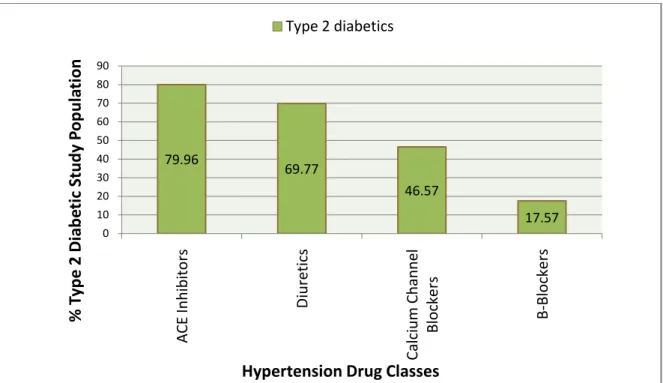
Most of the patients were on an ACE Inhibitor (79.96%). Diuretics were prescribed to 397 patients (69.77%). Two hundred and sixty five patients (46.57%) were receiving calcium channel blockers and one-hundred patients (17.57%) were receiving β-blockers. Especially with the two most frequently prescribed anti-hypertensive classes (ACE Inhibitors and Diuretics), it can be seen how combination therapy is prevalent amongst diabetics in the cohort (Figure 9).
14.56 17.57 26.58 41.29 0.00 5.00 10.00 15.00 20.00 25.00 30.00 35.00 40.00 45.00
0
1
2
≥ 3
% Ty p e 2 Di ab eti c Stu d y P op u la ti onNumber Of Antihypertension Drug Classes Type 2 diabetics