PAbAC : a privacy preserving attribute
based framework for fine grained access
control in clouds
Belguith, S, Kaaniche, N, Jemai, A, Laurent, M and Attia, R
http://dx.doi.org/10.5220/0005968201330146
Title
PAbAC : a privacy preserving attribute based framework for fine grained
access control in clouds
Authors
Belguith, S, Kaaniche, N, Jemai, A, Laurent, M and Attia, R
Type
Conference or Workshop Item
URL
This version is available at: http://usir.salford.ac.uk/id/eprint/51365/
Published Date
2016
USIR is a digital collection of the research output of the University of Salford. Where copyright
permits, full text material held in the repository is made freely available online and can be read,
downloaded and copied for noncommercial private study or research purposes. Please check the
manuscript for any further copyright restrictions.
HAL Id: hal-01391253
https://hal.archives-ouvertes.fr/hal-01391253
Submitted on 3 Nov 2016
HAL
is a multi-disciplinary open access
archive for the deposit and dissemination of
sci-entific research documents, whether they are
pub-lished or not. The documents may come from
teaching and research institutions in France or
abroad, or from public or private research centers.
L’archive ouverte pluridisciplinaire
HAL
, est
destinée au dépôt et à la diffusion de documents
scientifiques de niveau recherche, publiés ou non,
émanant des établissements d’enseignement et de
recherche français ou étrangers, des laboratoires
publics ou privés.
PAbAC: a Privacy preserving Attribute based
framework for fine grained Access Control in clouds
Sana Belguith, Nesrine Kaaniche, Abderrazak Jemai, Maryline Laurent,
Rabah Attia
To cite this version:
PAbAC: a Privacy preserving Attribute based framework for fine
grained Access Control in clouds
Sana Belguith
1,2, Nesrine Kaaniche
3, Abderrazak Jemai
4, Maryline Laurent
3and Rabah Attia
2 1Laboratory of Electronic Systems and Communication Network, Tunisia Polytechnic School2Telnet Innovation Labs, Telnet Holding
3SAMOVAR, CNRS, Telecom SudParis, University Paris-Saclay 4Laboratory LIP2, University of Sciences of Tunis, Tunisia
[email protected],{Nesrine.Kaaniche, Maryline.Laurent}@telecom-sudparis.eu
Keywords: Cloud storage systems, Attribute-based encryption, Attribute-based signature, Data confidentiality, Privacy. Abstract: Several existing access control solutions mainly focus on preserving confidentiality of stored data from
unau-thorized access and the storage provider. Moreover, to keep sensitive user data confidential against untrusted servers, existing solutions usually apply cryptographic methods by disclosing data decryption keys only to au-thorized users. However, these solutions inevitably introduce a heavy computation overhead on the data owner for key distribution and data management when fine-grained data access control is desired. In addition, access control policies as well as users’ access patterns are also considered as sensitive information that should be protected from the cloud. In this paper, we propose PAbAC, a novel privacy preserving Attribute-based frame-work, that combines attribute-based encryption and attribute-based signature mechanisms for securely sharing outsourced data via the public cloud. Our proposal is multifold. First, it ensures fine-grained cryptographic ac-cess control enforced at the data owner’s side, while providing the desired expressiveness of the acac-cess control policies. Second, PAbAC preserves users’ privacy, while hiding any identifying information used to satisfy the access control. Third, PAbAC is proven to be highly scalable and efficient for sharing outsourced data in remote servers, at both the client and the cloud provider side.
1
INTRODUCTION
Data security and privacy are major challenges in the adoption of cloud storage applications, mainly due to the loss of data control. It is commonly agreed that data encryption at the client side is a good alterna-tive to mitigate data secrecy concerns. As such, the client preserves the decrypting keys out of reach of the cloud. Although encryption assures the confidential-ity against curious cloud service providers, the use of conventional encryption approaches is not sufficient to support the enforcement of fine-grained access con-trol policies. That is, data confidentiality preserva-tion becomes more complicated, considering flexible data sharing among dynamic groups of users. First, access control policies should be flexible and distin-guishable among users with different privileges. Sec-ond, dynamic groups require efficient sharing of de-ciphering keys between different authorized users. In fact, the subscription of a new group member should not require updating the secret keys of the remaining users. So that, the complexity of key management is
minimized. Thus, the challenge is to define a com-prehensive access control mechanism for outsourced data while both ensuring data confidentiality and pro-tecting users’ privacy.
For instance, with the involvement of a third-party cloud provider, a crucial issue is that access patterns may reveal privacy-sensitive information about users and potentially leak confidential information about the content. The confidentiality of outsourced data and the privacy of users are thus not assured if these sensitive data are not protected.
original-ity of PAbAC is multifold. First, PAbAC introduces a privacy preserving authentication scheme, based on a novel use of attribute-based signatures.The iden-tity of the requesting eniden-tity client remains protected against the certifying authorities as well as the cloud service provider. Moreover, the combination between attribute based encryption mechanisms and attribute based signature scheme allows the cloud provider to control the bandwidth consumption, and then, the sys-tem’s availability. In fact, the authentication of re-questing users permits to mitigate Flooding attacks
which exploit the bandwidth under provisioning vul-nerability (Zunnurhain, 2012). Thus, only authorized users can download encrypted data.
Second, as a designed decentralised multi-authority attribute based framework, PAbAC reduces the bottle-neck of maintaining a central authority for managing secret parameters. Additionally, it supports issuing a set of attributes from each attribute authority unlike other access control schemes which rely on issuing only one attribute per authority.
Third, the original use of attribute based encryption and the related attribute based signature guarantees fine grained access control to outsourced data and provides an effective key management in sharing sce-narios. For instance, the PAbAC framework is highly scalable and offers interesting performances such as low computation and communication cost, at both the client and the cloud provider side.
Paper Organisation – The remainder of this work is as follows: Section 2 presents security considerations and design goals. Then, Section 3 reviews related work and introduces attribute based mechanisms. In Section 4, we describe the system model and review some preliminaries and cryptographic primitives. Af-terwards, we detail the framework design and de-scribe the prototype and its different procedures in Section 5. In Section 6, rigorous security discussions are given. Finally, theoretical performances analysis is provided in Section 7, before concluding in Sec-tion 8.
2
PROBLEM STATEMENT
Let us consider the following example, where a hospi-tal supports fine-grained access control on Electronic Health Records (EHRs) and makes these records available to hospital employees through a public cloud. In accordance with regulations such as the Health Insurance Portability and Accountability Act (HIPAA) (HIP, ), the hospital policies must specify which users can access which data item(s). In fact, a health-care information system based on cloud
ser-vices is required to restrict access of protected medi-cal records to eligible doctors while a client relation management system running on a cloud may allow ac-cess of patients’ information to high-level executives of the hospital only. In many cases, hospital employ-ees, mainly doctors, have to share patients’ health in-formation, in order to properly prescript treatments. Thus, they usually form dynamic sharing groups with different granted privileges. Therefore, it is notewor-thy that data confidentiality preservation is not the only security concern. It is crucial to support flexible sharing of encrypted outsourced data among dynamic group of users, while protecting users’ privacy. In a real e-health scenario, different medical organisations can be involved such as hospitals, research laborato-ries, pharmacies, health ministry as well as doctors and patients. Let us consider that a doctor shares his patients’ EHR in a public cloud. On one hand, the shared data have to be protected from unauthorized access while ensuring fine grained access control for different authorized actors. Moreover, the data confi-dentiality must be preserved against a malicious cloud service provider. Thus, encryption on the client side should be applied while supporting flexible sharing of outsourced data among dynamic group of users. On the other hand, the private identifying information of the involved cloud users, such as doctors and pa-tients, must not be revealed to the remote server. For instance, the system should not reveal any private in-formation related to a doctor, such as his professional card or its speciality, as well as his patients’ data. That is, the disclosure of such information may be used to produce targeted advertisement related to the health condition of the patients, or to run statistical surveys. Thus, the design of PAbAC is motivated by providing the support of both robustness and efficiency while fulfilling the following properties:
• data confidentiality –PAbAC has to protect the secrecy of outsourced and encrypted data contents against both curious cloud service providers and malicious users.
• flexible access control –our proposal should en-sure flexible security policies among dynamic groups of users with different granted privileges, belonging to different groups.
• privacy –PAbAC must protect group members’ access patterns privacy, while requesting access to outsourced data. That is, the cloud server must be able to grant access with no need to additional identifying information of the requesting users.
the server may be involved in concurrent interac-tions. On the other hand, the proposed algorithms should also have low processing complexity, at the client side.
• low storage cost –PAbAC should provide accept-able storage cost at the client side.
3
RELATED WORK
Several research works have been proposed in the lit-erature in order to securely share data among groups of users while protecting their privacy (Horv´ath, 2015),(Kaaniche et al., 2014),(Wan et al., 2012),(Yu et al., 2010a), (Raykova et al., 2012), (Di Vimer-cati et al., 2010b). In order to prevent untrusted servers from accessing outsourced data, several so-lutions apply encryption mechanisms at the client side while disclosing the decryption keys to autho-rized users only (Benaloh et al., 2009),(Di Vimer-cati et al., 2010a), (Kaaniche et al., 2013), (Benaloh et al., 2009), (Di Vimercati et al., 2015). Although these methods ensure secure data access control, the key distribution remains a bottleneck. For instance, it becomes more complicated with the increase of the number of users. To deal with this concern, Wang et al. (Wang et al., 2009) propose to deliver the key management to the remote server while assuming that this latter is trusted. Moreover, in order to enforce au-thorization policies, De Vimercati et al. (Di Vimercati et al., 2007) proposed a novel solution aiming to en-force the access control to the outsourcing systems. De Vimercati et al. proposal is based on the appli-cation of selective encryption as a means to enforce authorizations while applying hierarchical key assign-ment schemes.
Recently, Attribute-based Cryptography appears as a promising technique, designed for ensuring fine grained access control for outsourced data. This cryp-tographic mechanism was introduced by Sahai and Waters in 2005 (Sahai and Waters, 2005).
In the following, we present Attribute based Encryp-tion mechanisms (ABE) and their applicaEncryp-tion in cloud environments in Section 3.1. Then, we introduce At-tribute based Signature schemes (ABS) and review re-lated work applying ABS for protecting access to out-sourced data in cloud servers.
3.1
Attribute based Encryption (ABE)
In 2005, Sahai and Waters introduced the concept of Attribute Based Encryption (ABE), as a new mean for encrypted access control (Sahai and Waters, 2005). In ABE, ciphertexts are not necessarily encrypted to
one particular user as in traditional public key cryp-tography. Instead both users’ private keys and ci-phertexts are associated with a set of attributes or a structure over attributes (Bethencourt et al., 2007). The user is able to decrypt a ciphertext if there is a match between his private key and the ciphertext. For instance, Goyal et al. distinguishes two ABE cate-gories, namely: Key-Policy ABE (KP-ABE) (Goyal et al., 2006) and Ciphertext-Policy ABE (CP-ABE) (Bethencourt et al., 2007). Several works rely on ABE to provide fine grained access control for outsourced data (Hur and Noh, 2011),(Yu et al., 2010b),(Jahid et al., 2011). Although these schemes proposed effi-cient solutions to protect outsourced data, they require the use of a central trusted authority to manage all the attributes and issue the related secret keys to users in the system. Thus, this central authority is able to achieve a key escrow attack, due to its knowledge of the users’ private keys.
Wang et al. (Wang et al., 2010) propose a hierarchical access control mechanism for cloud storage. Their scheme is based on the Bethencourt et al. CP-ABE scheme (Bethencourt et al., 2007) and hierarchical Identity based Encryption (IBE) (Horwitz and Lynn, 2002). This scheme relies on the use of several au-thorities arranged in a hierarchical way. However, it still relies on the trusted authority and fails, if the lat-ter is compromised.
pro-posal (Lewko and Waters, 2011), Ruj et al. (Ruj et al., 2011) proposed a distributed sharing scheme in cloud environments scheme with an attribute revo-cation extension (DACC). The DACC solution con-sists of using one or several key distribution centers responsible for issuing keys to data owners and users related to their attributes. The data owner encrypts data under an access structure and stores them in the cloud. The users, while matching their set of at-tributes to the access structure, can retrieve the data from the cloud. We must note that the DACC proposal also supports revocation of users, without redistribut-ing keys to all the users of cloud services. In 2015, Horv´a (Horv´ath, 2015) proposed a decentralized ABE scheme for securely sharing data in cloud computing systems based on the use of the decentralized Lewko and Waters scheme (Lewko and Waters, 2011). In order to achieve an efficient revocation scheme, this proposal relies on the use of an identity based user re-vocation mechanism to manage access rights for out-sourced data. This proposed extension supports mul-tiple independent attribute authorities in which revo-cation of specific users (e.g. based on users’ identi-ties) from the system is possible without updates of attribute public and secret keys.
Most of the mentioned approaches do not propose a mechanism to authenticate requesting users. More-over, these schemes are based on the use of Lewko et al. decentralised ABE scheme (Lewko and Waters, 2011) which requires the use of the users’ global iden-tifiersGIDs. Thus, the privacy of the user is not pro-tected against the attribute authorities.
3.2
Attribute based Signature (ABS)
Attribute-Based Signatures (ABS) (Maji et al., 2011) is a flexible primitive that enables a user to sign a message with fine grained access control over iden-tifying information. In ABS, the user possesses a set of attributes, obtained from a trusted authority. This latter can sign a message with respect to a predicate satisfied by his attributes. The signature reveals no more that the fact that a single user with some set of attributes satisfying the predicate has attested to the message. Maji et al. presented a comparison of ABS with other signature-related-notions (Maji et al., 2011), such that ring signatures (Rivest et al., 2001) and group signatures (Chaum and Van Heyst, 1991) that can be considered as particular categories of at-tribute based signatures (El Kaafarani et al., 2014a). In (Maji et al., 2011), Maji et al. also introduced dif-ferent applications of ABS including attribute-based messaging (Bobba et al., 2006), trust negotiation (Frikken et al., 2006) and leaking secrets. Some
constructions of ABS consider multiple authorities while others only support a single attribute authority. Okamoto et al. (Okamoto and Takashima, 2013) and El Kaafarani et al. (El Kaafarani et al., 2014b) have proposed the first fully decentralized attribute based signatures schemes. These schemes consist of involv-ing multiple attribute authorities in the system, with no reliance on a central authority. The security of at-tribute based signatures requires users’ privacy and unforgeability. On one hand, users’ anonymity re-quires that signatures reveal neither users’ identities nor the attributes used in the signing algorithm. On the other hand, unforgeability requires that a user can-not forge a signature with respect to a signing predi-cate that the user attributes do not satisfy, even if this user colludes with other users (Ghadafi, 2015). Several works rely on the attribute based signature to ensure the authentication of data owners and fine grained access control to outsourced data in the cloud. Indeed, Ruj et al. (Ruj et al., 2012) presented a pri-vacy preserving authenticated access control scheme for securing data in clouds based on an attribute based signature scheme. In the proposed scheme, the cloud provider verifies the authenticity of the data owner without knowing the user’s identity before storing in-formation. To do so, this scheme uses a combina-tion of the decentralized attribute based encrypcombina-tion (Lewko and Waters, 2011) and the multi-authority at-tribute based signature proposed by Maji et al. (Maji et al., 2011). This proposal relies on the use of a global identifier GID in order to issue private keys from attribute authorities to users, thus the attribute authorities can reveal the user’s identity. Finally, the proposed authentication scheme is used to authenti-cate the data owner and there is no way to authentiauthenti-cate the requesting users. In (Zhao et al., 2011), Zhao et al. applied the ciphertext-policy attribute based en-cryption (CP-ABE) proposed by Bethencourt et al. (Bethencourt et al., 2007) combined with the Maji et al. (Maji et al., 2011) attribute based signature to ensure fine grained access control to outsourced data in the cloud. This proposal does not take interest in authenticating the requesting users. Moreover, it is based on a centralized ABE and ABS schemes, thus it relies on a central trusted authority to issue secret keys to all the users.
4
PABAC SYSTEM
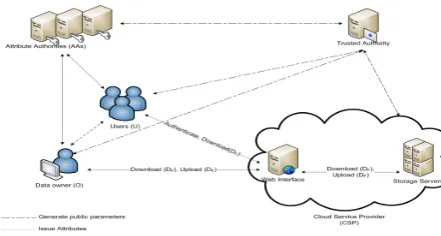
Figure 1: The main architecture entities and their interac-tion
4.1
System Model
Figure 1 presents the different entities involved in PAbAC and defined as follows:
Cloud Service Provider (CSP): the CSP is assumed to have abundant storage capacity and computation resources in order to manage data storage service. The cloud provider consists of data servers and a data service manager. Data servers are responsible for storing data outsourced by the data owner while the data manager is in charge of controlling the accesses from requesting users to outsourced data and provid-ing correspondprovid-ing contents services.
Data Owner (O): the data owner is responsible for outsourcing data into the remote cloud servers and granting access privileges to other cloud users, by specifying an attribute-based access policy for each data file.
Users (U): a user is a cloud client that may access to outsourced content by data owners. In a nutshell, if a user has the set of attributes satisfying the access structure of the encrypted data file, he then may have access to data.
Trusted Authority (TA): TA is a trusted third party in our system which is responsible for generating and managing public parameters for both used mecha-nisms: attribute based encryption and attribute based signature.
Attribute Authority (AA): AA is a party responsi-ble for deriving a public keys and issuing private keys to different users that are assigned to their attributes. The Attribute Authority can be considered as an Iden-tity Provider. In PAbAC, any trusted party can be-come an attribute authority and there is no require-ment for any global coordination other than the cre-ation of an initial set of common public parameters.
4.2
Mathematical Background
In this section, we first introduce the access structure in section 4.2.1. Then, in section 4.2.2, we present the bilinear maps. Finally, we introduce our security assumptions.
4.2.1 Access policies
Access policies can be represented by one of the fol-lowing formats: i) Boolean functions of attributes, ii) Linear Secret Sharing Scheme (LSSS) matrix, or iii) Monotone span programs (Lewko and Waters, 2011).
Definition 1. Access Structure
Let{P1,· · ·,Pn} be a set of parties. A collection
A⊆2{P1,···,Pn}is monotone if∀B,CifB∈AandB⊆C
thenC∈A(Lewko and Waters, 2011).
An access structure is a collection A of non-empty subsets of{P1,· · ·,Pn}, such asA⊆2{P1,···,Pn}\0/.
We note that any access structure can be converted into a Boolean function. Boolean functions can be represented by an access tree, where the leaves present the attributes while the intermediate and the root nodes are the logical operators AND(∧)and OR
(∨).
Definition 2. Linear Secret Sharing Schemes (LSSS)
A Linear Secret Sharing SchemeLSSSover a set of parties P(Lewko and Waters, 2011) is defined as follows:
1. the shares of each party form a vector overZp.
2. there exists a matrixAwithnrows andlcolumns called the share-generating matrix forLSSS. ∀i∈
[1,· · ·,n], theithrow ofAis labeled by a partyρ(i)
( whereρis function from{1,· · ·,n}toP). When we consider the column vector~v= [s,r2,· · ·,rn],
where s ∈Zp is the secret to be shared, and
r2,· · ·,rn∈Zpare randomly chosen, thenA.~v=~λ
is the vectornshares of the secretsaccording to
LSSS.
In (Beimel, 1996), Beimel presents the algorithm that converts a boolean function (in the form of access tree) as a LSSS matrix.
Definition 3. Monotone Span Programs
For a field F and a variable setS={a1, ...,an}, a
Monotone Span Program (Karchmer and Wigderson, 1993) is defined by a α×β matrix A along with a labeling mapρwhich associates each row inAwith an element ai∈S. The span program accepts a set
γ if 1∈Span(Aγ), where (Aγ) is the sub-matrix of
A containing only rows with labelsa1∈γ. In other
words, the span program only accepts the setγif there
4.2.2 Bilinear maps
An admissible symmetric pairing function ˆe from
G1×G1 in GT has to be bilinear, non degenerate
and efficiently computable.G1andGT are two
mul-tiplicative subgroups of a finite field.G1andGT have
the same orderN.
4.2.3 Complexity Assumptions
Our proposal is based on three cryptographic assump-tions detailed as follows:
Definition 1. Discrete Logarithm Problem (DLP)
Given a generator g of a multiplicative cyclic group G of order N, and given the public element
y=gx∈G, the problem of findingxis called the
Dis-crete Logarithm Problem.
Definition 2. Computational Diffie Hellman prob-lem (CDH)
Given a generator g of a multiplicative cyclic groupGof order N, and given two group elements
ga∈Gandgb∈Gwherea,b∈ZN are two secrets,
the problem of calculatinggabfromgaandgbis called
the Computational Diffie Hellman problem.
Definition 3. Decisional Diffie Hellman problem (DDH)
Given a generator g of a multiplicative cyclic groupGof order N, and given two group elements
ga∈Gandgb∈Gwherea,b∈Z∗Nare two secrets, the problem of distinguishing between tuples of the form
(ga,gb,gab)and(ga,gb,gc)for some random integer
c, is called the Decisional Diffie Hellman problem.
5
PABAC: PROPOSED SOLUTION
5.1
Motivation
In order to achieve fine grained and privacy preserv-ing access control to outsourced data in cloud storage, we combine two latest cryptographic techniques, CP-ABE and ABS. The choice of attribute based cryptog-raphy (ABC) is motivated by several reasons. First, we benefit from an easier key management system, thanks to the certificate-free feature of ABC. Second, ABC permits deriving public keys with no need for previous computation of corresponding private keys. That is, contrary to traditional public key derivation schemes, ABC does not require to generate the private key before the public key. Indeed, users have only to generate access structure and the related enciphering key to encrypt data before storage.
CP-ABE is much more appropriate to data outsourc-ing, since it enables the data owner to generate an ac-cess tree over selected attributes. Thanks to its flex-ibility in specifying different access rights for each individual user, ABE is considered as one of the most public key primitive which is appropriate for one-to-many communications. That is, data are encrypted under a set of attributes so that multiple users who possess proper keys can decrypt. This potentially makes encryption and key management more effi-cient. Moreover, the enciphering entity is not required to know the access control list.
In order to protect the requesting entity’s privacy, PAbAC relies on using Attribute based Signature (ABS). In ABS, messages are signed with respect to an access structure. Thus, the CSP verifies that the requesting user having a set of attributes satisfying the access tree has indeed authenticated the message without revealing his identity or the set of attributes used in the signing procedure.
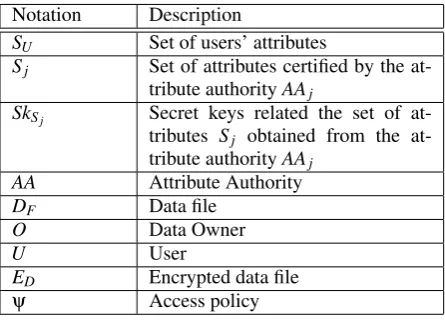
[image:8.595.309.532.543.703.2]Our PAbAC framework is based on an original use of the identity based signature scheme presented by Waters (Waters, 2005) combined with the decen-tralized Attribute Based Encryption introduced by Lewko and Waters (Lewko and Waters, 2011) to achieve an extension of waters’ scheme to a multi-authority attribute based encryption. This novel en-cryption scheme presented by PAbAC supports the is-suance of a set of attribute obtained from the same authority. Moreover, PAbAC introduces an origi-nal multi-authority attribute based signature scheme based on an extension of Waters’ identity based sig-nature adapted to the multi-authority ABE encryption. Thus, PAbAC presents lower computation costs espe-cially at the client side compared with the other access control schemes. The different notations used in this paper are listed in Table 1.
Table 1: The different notations used in this paper
Notation Description
SU Set of users’ attributes
Sj Set of attributes certified by the
at-tribute authorityAAj
SkSj Secret keys related the set of
at-tributes Sj obtained from the
at-tribute authorityAAj
AA Attribute Authority
DF Data file
O Data Owner
U User
ED Encrypted data file
5.2
Overview
In PAbAC, there are two main actors: a data owner
(O)and data users(U). The data owner first defines an access structureψthat points out who can access the outsourced data with respect to a set of attributes. Then, the data file is encrypted under the access struc-tureψ, based on an attribute based encryption
algo-rithm. Then, the data owner stores the encrypted data in the cloud. When a user wants to access the out-sourced data file, he has first to authenticate with the cloud. For this purpose, he has to sign a random message, obtained from the cloud, under the access structureψ associated with the outsourced data file.
Afterwards, the cloud verifies the correctness of the received signature in order to send the requested ele-ments, namely the encrypted data file.
We suppose that each cloud user has already obtained the private keys related to his attributes from the cor-responding attribute authorities. For an e-health use case, an attribute authority may be the hospital ad-ministration issuing the affiliation card of each doctor (i.e the professional card contains a set of attributes such as the name of the doctor, his affiliation, his se-rial number,· · ·).
Based on the required attributes, specified in the ac-cess structure ψ, the requesting user selects related private keys in order to decrypt the encrypted data file. Our PAbAC proposal is defined upon the following seven algorithms. It involves three procedures on the basis of two phases. During the first phase, the system initialisation procedure SYS INIT is executed. The second phase occurs when the data owner wants to share data files with other cloud users, based on both the data storage procedure STORE and the data re-trieval procedure BACKUP.
The SYS INIT procedure consists of three random-ized algorithms for the generation of public param-eters related to the involved attribute authorities re-ferred to assetupandsetupauth, and the generation
of users’ private keys denoted bykeygen.
The STOREprocedure presents the data storage
sce-nario. It consists of theencdata algorithm for the encryption of data files.
For the data retrieval scenario, the BACKUPprocedure deals with the user’ authentication, namelysignand
verifand the data decryption algorithms referred to
asdecdata.
5.3
System Initialisation Procedure
The SYS INIT procedure consists of three random-ized algorithms, defined as follows:
• setup – this randomized algorithm takes as
in-put the security parameterλ. It outputs the global public parametersPPdefined as follows:
PP={G1,GT,N,h,eˆ,u0,· · ·,un}
whereGandG1are two multiplicative groups of
orderN, ˆe:G1×G1→GT is a bilinear map,g,h
are generators ofG1and{u0=g,· · ·,un}are
gen-erators ofG1randomly chosen such asui=gr
i
.
• setupauth– thesetupauthalgorithm is executed
by an attribute authorityAA. Thesetupauth
al-gorithm takes as inputs the public parametersPP
and outputs the pair of private and public keys
(skA,pkA), whereskAcorrespond to a random
val-uesα, and the related public keypkAis defined as
follows:
pkA={eˆ(g1,g1)α}
• keygen – this algorithm is performed by an
at-tribute authorityAAj. It takes as input the global
parametersPP, the attribute authority’s secret key
{skA}, a random valuet wheret ∈Zpand a set
of attributesSj ={a1,· · ·,anj}, wherenj is the
number of attributes ofSj. It outputs the secret
keyskSj related to the set of attributesSj, as
de-picted by Algorithm 1.
Algorithm 1keygenprocedure
1: Input:the global parametersPP, the attribute au-thority’s secret key{skAj}and a set of attributes
Sj
2: Output: the secret keyskSj related to the set of
attributesSj
3: K←g1α·ht;
4: L←g1t;
5: skSj ← {K,L};
6: for alli∈[1. . .nj]do
7: Ki←uit;
8: skSj ←skSj∪Ki;
9: end for
10: return skSj
5.4
Data Storage Procedure
To outsource a data file (DF) to the cloud, the data
owner (O) performs the STORE procedure. For this purpose, he first defines an access policyψ and ob-viously selects the attribute needed to satisfy it. We note that the access policy ψ is described in terms
nodes are AND and OR gates, and the leaf nodes cor-respond to attributes as detailed in Section 4.2. Thus, the access policy corresponds to the couple
(A,ρ)whereAis ann×laccess matrix andρis the
function that maps the matrix rows to the required at-tributes. These attributes have to be obtained from a certified Attribute authority (AA) that is responsible of issuing the required attributes.
After defining the access structure (A,ρ), the data owner encrypts the data file DF, based on the
encdataalgorithm. We note that our encryption
al-gorithm relies on the decentralized Lewko and Wa-ters ABE scheme (Lewko and WaWa-ters, 2011). That is, we extend the (Lewko and Waters, 2011) proposal to support deriving a set of private keys related a set of attributes from each single attribute authority, while preserving users’ privacy with respect to the involved attribute authorities.
The STOREprocedure consists of theencdata algo-rithms, defined as follows:
• encdata – the encryption algorithm encdata
is executed by the data owner. It takes as in-put the attribute authorities’ public keys {pkA},
the data file DF, the public parameters PP and
the access policy (A,ρ). The encdata algo-rithm outputs the ciphertext as a tuple ED = (C0,C1,i,C2,i,C3,i)i∈{1,n} (where i presents a
ma-trix row corresponding to attributei) defined as follows:
C0=DFeˆ(g1,g1)s (1)
C1,i=eˆ(g1,g1)λi (2)
C2,i=g1pi (3)
C3,i=g1pig1wiuipi (4)
Where pi,s∈ZN are random values selected by
the data owner,λi=~Ai·~vwhere~v∈ZNl is a
ran-dom vector withsas its first entry andwi=~Ai·~τ
such as~τ∈ZNl is a random vector with 0 as its
first entry.
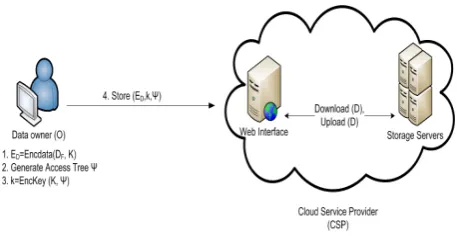
Figure 2 depicts the storage procedure STOREof the PAbAC framework.
5.5
Data Backup Procedure
[image:10.595.308.537.92.210.2]For the data retrieval scenario, the BACKUP proce-dure starts with the user’ authentication, with respect to thesignandverifalgorithms and is achieved by the data decryption algorithm referred to asdecdata. The figure 3 presents different interactions between the cloud provider and the requesting user for the data access procedure. We detail, in Section 5.5.1, the different algorithms for user authentication with
[image:10.595.307.537.232.342.2]Figure 2: PAbAC data storage procedure STORE
Figure 3: PAbAC data backup procedure BACKUP
the cloud provider upon requesting access to an out-sourced data file ED. Then, we present, in
Sec-tion 5.5.2, the algorithm needed for decrypting the outsourced data file.
5.5.1 Anonymous User Authentication
When a user (U) wants to access to the encrypted data file(ED)outsourced by the data owner, the CSP has
to first authenticate the user, with respect to the ac-cess treeψassociated with the encrypted data file. So
that, the cloud provider sends a random valuemwhich consists of the cloud provider identity concatenated with the current time (i.e.mis assumed to be different for each authentication session). The requesting user has then to sign the received valuemwith respect to the signing predicateψ, and sends his signature to the
cloud provider. We note that if the verification fails, the user cannot access to data and the cloud provider does not send the encrypted data file. The anonymous authentication procedure consists of two algorithms, defined as follows:
• sign – this algorithm takes as input the global public parametersPP, a random tokenm, a sign-ing policyψand the set of attributes’ secret keys
{skSj}that satisfies the signing predicate. It
out-puts a signatureσ.
In fact, the user first selects the sub-set of his at-tributesSU that satisfies the signing predicateψ,
m. The user finally sends the signatureσto the cloud provider who checks the resulting signature. Thus, the user first convertsψto its corresponding
monotone span programAwhich is ann×laccess matrix, with respect to the row labeling function
ρ:[n]→SU. In addition, he computes the vector
~ysuch asψ(SU) =1 and~y·~A= [1,0,· · ·,0]. In
order to sign the random tokenm, the data owner first randomizes his secret keyskSj as follows:
K0=Kht0=g1αht+t
0
(5)
L0=Lg1t
0
=g1t+t
0
(6)
Ki0=Kiuit
0
=uit+t
0
,∀i∈SU (7)
In the sequel, the requesting user’s new pri-vate key is defined by {sk0
Sj} such as {sk 0
Sj}=
{(K0,L0,Ki0)}.
Then, for eachi∈[1,n], the signer computesxi= (L0)yiand setsz=∏n
i=1((Kρ0(i))yi. Afterwards, the
signer generates a randomr∈ZNand computes:
σ1=zK0g1mr (8)
σ2=g1r (9)
Finally, the signature for the message m gener-ated by the user with respect to the signing policy
(A,ρ)is set as follows:
σ= (x1,· · ·,xn,σ1,σ2) (10)
• verif – this algorithm is a deterministic
algo-rithm which takes as input an ordered list of at-tribute authorities’ public keys{pkA}, a random
token m, a signature σ and a signing predicate
ψcorresponding to(A,ρ)and outputsacceptif
σis valid onmusing the access policy(A,ρ)or
reject otherwise. Afterwards, the CSP
com-putes the vector ~β = [β1=1,β2,· · ·,βn], such
that{βi}i∈[2,n]are randomly chosen and computes
µi =∑j=1lβjAi,j. The cloud server accepts the
signature if the following equation holds.
ˆ
e(g1,σ1) ?
=pkAeˆ(g1m,σ2) n
∏
i=1ˆ
e(hµiu
ρ(i),xi) (11)
The correctness of the signature algorithm is detailed in the Section 6.4.
5.5.2 Data Retrieval
The data retrieval procedure consists ofdecdata al-gorithm, defined as follows:
• decdata– this algorithm takes as input the user
secret decryption key{skSj}, the public
parame-tersPPand the ciphertextEDand outputs the
orig-inal data fileDF. If the requesting user has the
re-quired private keys{skSj}for a subset of rowsAi
ofAsuch that[1,0,· · ·,0]is in the span of these rows, then the user proceeds as follows.
For each matrix rowi, the user computes:
C1,i.eˆ(L,C3,i)
ˆ
e(LKi,C2,i)
=eˆ(g1,g1)λieˆ(g1t,g1)wi (12)
∏
i(eˆ(g1,g1)λieˆ(g1t,g1)wi)ci=eˆ(g1,g1)s (13)
Whereci∈ZN are constants such that∑ici~Ai= [1,0,· · ·,0].
Then, the data fileDFcan then be obtained as
fol-lows:
DF=C0/eˆ(g1,g1)s (14)
The proof of correctness of the decryption algo-rithm is detailed in the Section 6.4.
6
SECURITY DISCUSSION
In this section, we discuss the resistance of PAbAC against two adversaries, based on two realistic threat models, defined hereafter in Section 6.1. We prove the security of our proposed scheme with respect to the security requirements introduced in Section 2.
6.1
Threat model
For designing the most suitable security solutions for cloud sharing scenarios, we consider two adversaries: malicious cloud user and honest but curious cloud server.
Honest but curious cloud server adversary – this storage server honestly performs the operations de-fined by our proposed scheme, but it may actively at-tempt to gain knowledge of the outsourced sensitive data, such as access patterns.
Malicious user adversary– this attacker can be an unauthorized user. As such, he targets to get access to the outsourced shared data. The objective of a mali-cious user is to convince the cloud server that he is a legitimate cloud user.
6.2
Confidentiality
efficient access control. As such, the data confiden-tiality preservation is tightly related to security of the used attribute based encryption scheme.
Theorem 1. PAbAC guarantees data confidentiality of the outsourced data.
Proof. The proposed PAbAC framework is designed to ensure data confidentiality against both malicious users and curious cloud provider.
In PAbAC, the data owner is in charge of encrypting his data before outsourcing them to the cloud stor-age server. He is also responsible for defining an access structure that points out who can access the outsourced data with respect to a set of attributes. Then, the cloud provider is responsible for sending data to requesting users after authenticating them, re-lying on the access policy defined by the data owner. As such, only the authorized users having the access structure’s satisfying attributes can generate the deci-phering keys.
In addition, while considering a curious cloud ser-vice provider who tries to gain knowledge about sourced data file, this latter cannot access the out-sourced data. As detailed in Section 5, our encryption algorithm relies on the Lewko and Waters proposal. That is, PAbAC inherits the security properties from (Lewko and Waters, 2011). In addition, data confi-dentiality preservation against malicious users and a curious cloud provider is ensured based on the secu-rity of our proposed access control scheme detailed in the Section 6.4 and the security level of the applied encryption scheme (c.f. Lemma 1).
Lemma 1. Unauthorized users cannot decrypt the en-crypted data.
Proof. The proof of this lemma is equivalent to the security of the data decryption algorithm. The cor-rectness of our decryption algorithm is as follows: A user can decrypt data if and only if it has a match-ing set of attributes. In fact, access structureψ(and
hence matrixA) is constructed if and only if there ex-ists a set of rowsAiinA, and linear constantsci∈ZN
such that∑iciAi= [1,0,· · ·,0].
We note that
C1,ieˆ(L,C3,i)
ˆ
e(LKi,C2,i)
(15)
=eˆ(g1,g1)
λieˆ(g
1t,g1pi)eˆ(g1t,g1wi)eˆ(g1t,uipi)
ˆ
e(uit,g1pi)eˆ(g1t,g1pi)
(16) Thus
∏
i(eˆ(g1,g1)λieˆ(g1,g1)twi)ci =eˆ(g1,g1)s (17)
We note that Equation (17) holds because λi =
~A
i·~v, wi =~Ai·~τ, where~v·[1,0,· · ·,0] =s and~τ·
[1,0,· · ·,0] =0. In the sequel, an authorized user can obtain the dataDFas follows:
DF=C0/eˆ(g1,g1)s (18)
For an unauthorized user who does not possess the secret keys related to the set of attributes required for satisfying the access policy, it is impossible to com-pute∑ici~Ai= [1,0,· · ·,0](Lewko and Waters, 2011).
Thus, ˆe(g1,g1)s cannot be calculated and the
adver-sary cannot recover the data fileDF.
6.3
Privacy
Based on an attribute based signature scheme, PAbAC ensures users’ privacy against curious cloud provider. In our proposed scheme, the requesting data user has to authenticate with the cloud provider. As such, (U) has to sign a message received from the cloud service provider with respect to the access structure defined by the data owner. The CSP is responsible for verify-ing the user’s access rights without knowverify-ing neither his identity nor the attributes used to sign the mes-sage. But, beyond the ABS properties, our PAbAC scheme ensures the protection of the users identities’ ( non traceability property). In fact, the ABE scheme used does not reveal the encryptor identity neither the users’ attributes used in the backup phase. The PAbAC inherits the non traceability property from the Lewko encryption scheme (Lewko and Waters, 2011).
Theorem 2. PAbAC signature scheme is a privacy preserving signature.
Proof. The PAbAC signature scheme does not reveal neither the identity of the signer nor the set of at-tributes used in the signing. Our signature scheme requires that the identity of the signer remains anony-mous. Thus, PAbAC ensures that a signature does not reveal more information other than what can be al-ready inferred from the signing predicate itself. The demonstration of this state is derived from the follow-ing lemmas.
Lemma 2. PAbAC protects user’s anonymity
Proof. In the authentication procedure, the user has to sign a random message received from the CSP. Based on the signature scheme introduced in PAbAC, the user signs the message using his private keys which have already been randomized. Thus, the gen-erated signature does not reveal the attributes used neither the user’s private keys. Based on the hard-ness of the Computational Diffie Hellman problem (CDH), the CSP can not deduce the user’s private keys related to the used attributes from the signature
In addition, let us consider a curious cloud provider adversary that chooses a messagem, a signing policy and two requesting users with two, possibly different, sets of attributes with the condition that both sets have to satisfy the signing policy. The adversary gets a sig-nature by either signer and wins if it correctly guesses the signer. The curious provider has a negligible ad-vantage to win the previous game. That is, the PAbAC signature scheme is based on the randomization of the signer secret keys.
Lemma 3. PAbAC’s signature scheme is unlinkable
Proof. Let us consider that a curious cloud provider aims to deduce identifying information about a re-questing user by running different authentication ses-sions. In the PAbACsign algorithm, the user ran-domises the attributes’ secret keys received from the attributes authorities as follows:
K0=Kht0 (19)
L0=Lg1t
0
(20)
Ki0=Kiuit
0
∀i∈SU (21)
Then, in every authentication session, the user gen-erates a new signatureσ= (x1,· · ·,xn,σ1,σ2)thanks
to the selected random valuet0. Moreover, the CSP sends a random valuemwhich consists of the cloud provider identity concatenated with the current time (i.e. mis assumed to be different for each authen-tication session). As such, while authenticating the same user based on different authentication sessions, a curious cloud service provider cannot identify the requesting user.
6.4
Access Control to Data
PAbAC introduces two-level access control model that combines the authentication of the requesting users and the attribute based decryption algorithm. In the following, we demonstrate that our PAbAC access control enforcement is resistant against both mali-cious data users and a curious cloud service provider.
Theorem 3. Authorized users can successfully au-thenticate and decrypt enciphered data files.
We recall that cloud users have to collect their cer-tified attributes and the related secret keys from at-tribute authorities AAs. As such, in PAbAC, only users, having valid private keys related to their at-tributes, are able to access data stored in the cloud while successfully authentication with the cloud server. This is due to the correctness of our encryp-tion and signature algorithms and the compliance of the unforgeability property of the PAbAC signature scheme inherited from (Waters, 2005).
Lemma 4. Data Decryption Correctness.
Proof. After receiving his attributes’ secret keys
{skSj}, the authorized user first computes:
C1,ieˆ(L,C3,i)
ˆ
e(LKi,C2,i)
= (eˆ(g1,g1)λieˆ(g1,g1)twi)ci (22)
Then, he computes the constants ci ∈ZN such that
∑ici·~Ai= [1,0,· · ·,0]. Then, ˆe(g1,g1)scould be
ob-tained as follows:
∏
i(eˆ(g1,g1)λieˆ(g1,g1)twi)ci (23)
=eˆ(g1,g1)∑iλicieˆ(g1,g1)∑itwici=eˆ(g1,g1)s (24)
Note thatλi=~Ai·~vwhere~v= [s,v2,· · ·,vn]andwi=
~
Ai·~τsuch as~τ= [0,τ2,· · ·,τn]. Consequently, we note
that∑iλici=sand∑twici=0.
Afterwards, the user can recover the data file DF as
follows:
DF=C0/eˆ(g1,g1)s
Lemma 5. Data signature correctness
Proof. When an authorized user wants to access out-sourced data, he has to provide a correct signature, with respect to the access policy defined by the data owner, that can be verified by the CSP in an anony-mous way. Ifσ= (x1,· · ·,xl,σ1,σ2)is a valid
signa-ture of the messagemfor the predicateψ, then
σ1=zK0gmr (25)
=g1mrht+t
0
g1α n
∏
i=1(ui(t+t
0)
)yi (26)
Thus
ˆ
e(g1,σ1) =eˆ(g1,g1mrht+t
0
g1α n
∏
i=1(ui(t+t
0)
)yi) (27)
=pkAeˆ(g1,g1r)meˆ(g1,ht+t
0
) n
∏
i=1ˆ
e(g1,ui(t+t
0)
)yi)
(28)
=pkAeˆ(g1,σ2)m n
∏
i=1ˆ
e(xi,hµiui) (29)
Note thatµi=∑lj=1βjAi,j, the last equality is obtained
by:
n
∑
i=1µiyit=t n
∑
i=1µiyi=t.1=t (30)
Lemma 6. PAbAC is secure against the collusion at-tack.
Proof. We recall that the unforgeability property en-sures that even if requesting users collude and com-bine their attributes together, they cannot forge a sig-nature that opens to a signer whose attributes do not satisfy the access policy. It also covers non-frameability and ensures that even if requesting users collude, they cannot frame a user who did not produce the signature. Similarly, malicious users cannot col-lude to decipher an encrypted data file if the attributes of each individual user do not satisfy the access pol-icy, defined by the data owner.
Let us consider two malicious usersUAandUB
hav-ing each a set of attributesXAandXBsuch asXA∪XB
satisfy the access structure. Suppose that UA gets
skS1= (K1,L1,Ki1) = (g1
α·ht1,g
1t1,ui1
t1)andU
Bgets
skS2= (K2,L2,Ki2) = (g1
α·ht2,g
1t2,ui2
t2). The users
collude to create a valid set of attributes and derive a secret keyskS1∪2 =skS1∪skS2 from the combination
of the two user’s keys. Then, the colluded malicious users try to decrypt the data as follows:
C1,ieˆ(L,C3,i)
ˆ
e(LKi,C2,i)
= (31)
ˆ
e(g1,g1)λieˆ(g1t1+t2,g1pi)eˆ(g1t1+t2,g1wi)eˆ(g1t1+t2,u1pi)
ˆ
e(ui1t1ui2t2,g1pi)eˆ(g1t1+t2,g1pi)
(32) Afterwards, the equation (12) cannot be resolved as detailed in (32). Thus, the malicious users can not recover the original data.
Lemma 7. The CSP is unable to access the encrypted data files
Proof. The CSP cannot decipher encrypted data be-cause it does not possess the secret keys{skSj},
re-quired for satisfying the access policy defined by the data owner. Even if the cloud provider colludes with other unauthorized users, it cannot decrypt data, since the PAbAC scheme is collusion resistant as detailed in Section 6.4. Moreover, we suppose that the at-tribute authorities AAs are not hosted by the CSP. Thus, even if some attribute authorities are compro-mised, the CSP cannot decipher data.
Lemma 8. PAbAC is resistant to replay attacks.
Proof. In our proposed PAbAC signature scheme, the messagem, sent by the CSP to the requesting user, is assumed to be different in each authentication ses-sion (i.e;mpresents the cloud provider’s identity con-catenated with the current time). In fact, for two different authentication sessions α and β, the CSP
produces two different messages mαandmβ
respec-tively. Consequently, a malicious user cannot gen-erate a valid signature if he attempts a replay attack based on collected data from two different authenti-cation sessions.
7
PERFORMANCE ANALYSIS
In this section, we present the computation and stor-age complexities of the PAbAC protocol at both the client and cloud provider sides. For this purpose, we are interested by the computations performed at the data owner side in order to execute the STORE procedure. Moreover, we will consider the compu-tation cost related to the execution of the BACKUP
procedure by both the user (U) and the cloud service provider (CSP).
In the following, we denote by:
• E1: exponentiation inG1
• E: exponentiation inGT
• τP: computation of a pairing function ˆe
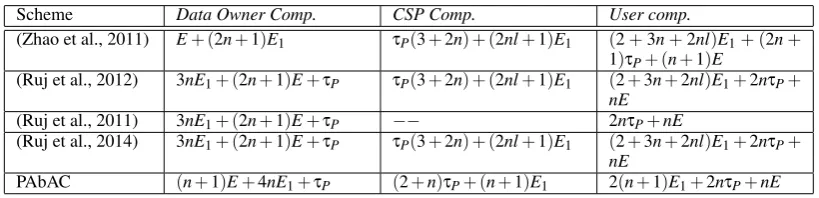
Table 2 details the performance comparison with most closely related data sharing schemes in cloud environ-ments.
The STORE procedure consists of performing the encryption algorithm encdata. During this proce-dure, the data owner has to encrypt the data file. As such, he calculates one pairing function ˆe(g1,g1)
andnEexponentiations inGto compute each ofC1,i
wherenis the number of attributes. In addition, the data owner executes 4nexponentiations inG1to
cal-culateC2,iandC3,i.
The BACKUPprocedure is made up three algorithms
verifexecuted by the CSP andsignanddecdata
runned by the data user (U). The user first signs a ran-dom message in order to authenticate with the cloud. To sign the message, the user performs 2(n+1) expo-nentiations inG1. Then, this latter executes 2npairing
to calculate ˆe(L),C3,i)and ˆe(Ki·L,C2,i)to decrypt the
data file. In the verification phase, the CSP executes
the verif algorithm. As such, the cloud provider
performs(n+2)pairing functions’ computations and
n+1 exponentiations inG1.
The existent access control schemes (Ruj et al., 2012), (Ruj et al., 2011), (Ruj et al., 2014) are based on the Lewko’s decentralized attribute based encryption scheme (Lewko and Waters, 2011). During the en-cryption phase, the data owner has to perform one pairing function ˆe(g1,g1) and 2n exponentiations in
GT to calculate each ofC1,i. In addition, to calculate
Table 2: Performances Comparison for Different Access Control Mechanisms in Cloud Data Storage Environments Scheme Data Owner Comp. CSP Comp. User comp.
(Zhao et al., 2011) E+ (2n+1)E1 τP(3+2n) + (2nl+1)E1 (2+3n+2nl)E1+ (2n+
1)τP+ (n+1)E
(Ruj et al., 2012) 3nE1+ (2n+1)E+τP τP(3+2n) + (2nl+1)E1 (2+3n+2nl)E1+2nτP+
nE
(Ruj et al., 2011) 3nE1+ (2n+1)E+τP −− 2nτP+nE
(Ruj et al., 2014) 3nE1+ (2n+1)E+τP τP(3+2n) + (2nl+1)E1 (2+3n+2nl)E1+2nτP+
nE
PAbAC (n+1)E+4nE1+τP (2+n)τP+ (n+1)E1 2(n+1)E1+2nτP+nE
data decryption phase, the data user performsn expo-nentiations inGT and 2npairing functions.
The zhao et al.’s proposal (Zhao et al., 2011) is based on the use of the CP-ABE scheme proposed by Bethencourt et al. (Bethencourt et al., 2007). To encrypt the data file, the data owner performs
(2n+1)exponentiations in G1 and one
exponentia-tion inGT. The user while decrypting data performs
n+1 exponentiations inGT and 2n+1 pairing
func-tions. The proposals (Ruj et al., 2012),(Zhao et al., 2011), (Ruj et al., 2014) are based on the use of the attribute based signature scheme proposed by (Maji et al., 2011). In order to sign the message, the user performs 2+3n+2nlexponentiations inG1, where
nis the number of rows of the access matrixAandl
presents the number of columns ofA. In the verifi-cation phase, the CSP has to perform 3+2npairing function and 2nl+1 exponentiations inG1.
8
CONCLUSIONS
The growing need for secure cloud sharing services and the attractive properties of the Attribute based Cryptography lead us to combine them, thus, defining an innovative solution to the data outsourcing security and efficiency issues.
In this paper, we design a privacy preserving attribute based framework for fine grained access control, for dynamic groups in untrusted cloud storage environ-ments. Our approach ensures the confidentiality of outsourced data in public untrusted cloud servers and defines efficient data sharing in dynamic groups. That is, flexible access control policies are enforced among users belonging to separate groups with different priv-ileges. Our theoretical performances analysis shows the efficiency of PAbAC in scalable data sharing, while considering the impact of the cryptographic op-erations at both the client and the cloud provider side.
ACKNOWLEDGEMENTS
This work is a part of the MOBIDOC project achieved under the PASRI program, funded by the European Union and administered by the ANPR.
REFERENCES
Health Insurance Portability and Accountability Act (HIPAA).https://www.hipaa.com/about/. Beimel, A. (1996). Secure schemes for secret sharing and
key distribution. PhD thesis, Technion-Israel Institute of technology, Faculty of computer science.
Benaloh, J., Chase, M., Horvitz, E., and Lauter, K. (2009). Patient controlled encryption: ensuring privacy of electronic medical records. InThe 2009 ACM work-shop on Cloud computing security, pages 103–114. ACM.
Bethencourt, J., Sahai, A., and Waters, B. (2007). Ciphertext-policy attribute-based encryption. InIEEE Symposium on Security and Privacy, 2007., pages 321–334.
Bobba, R., Fatemieh, O., Khan, F., Gunter, C., Khurana, H., et al. (2006). Using attribute-based access con-trol to enable attribute-based messaging. InThe 22nd Annual Computer Security Applications Conference, pages 403–413. IEEE.
Chaum, D. and Van Heyst, E. (1991). Group signatures. In
Advances in CryptologyEUROCRYPT91, pages 257– 265. Springer.
Di Vimercati, S. D. C., Foresti, S., Jajodia, S., Paraboschi, S., Pelosi, G., and Samarati, P. (2010a). Encryption-based policy enforcement for cloud storage. In Dis-tributed Computing Systems Workshops (ICDCSW), 2010 IEEE 30th International Conference on, pages 42–51. IEEE.
Di Vimercati, S. D. C., Foresti, S., Jajodia, S., Paraboschi, S., and Samarati, P. (2007). Over-encryption: man-agement of access control evolution on outsourced data. InProceedings of the 33rd international confer-ence on Very large data bases, pages 123–134. VLDB endowment.
out-sourced data centers. InHandbook on Data Centers, pages 997–1027. Springer.
Di Vimercati, S. D. C. D., Foresti, S., Jajodia, S., Para-boschi, S., and Samarati, P. (2010b). Encryption poli-cies for regulating access to outsourced data. ACM Transactions on Database Systems (TODS), 35(2):12. El Kaafarani, A., Chen, L., Ghadafi, E., and Davenport, J. (2014a). Attribute-based signatures with user-controlled linkability. InCryptology and Network Se-curity, pages 256–269. Springer.
El Kaafarani, A., Ghadafi, E., and Khader, D. (2014b). Decentralized traceable attribute-based signatures. In
Topics in Cryptology–CT-RSA 2014, pages 327–348. Springer.
Frikken, K. B., Li, J., and Atallah, M. J. (2006). Trust ne-gotiation with hidden credentials, hidden policies, and policy cycles. InNDSS. Citeseer.
Ghadafi, E. (2015). Stronger security notions for decen-tralized traceable attribute-based signatures and more efficient constructions. InTopics in Cryptology—CT-RSA 2015, pages 391–409. Springer.
Goyal, V., Pandey, O., Sahai, A., and Waters, B. (2006). Attribute-based encryption for fine-grained access control of encrypted data. In The 13th ACM con-ference on Computer and communications security, pages 89–98.
Horv´ath, M. (2015). Attribute-based encryption optimized for cloud computing. In SOFSEM 2015: Theory and Practice of Computer Science, pages 566–577. Springer.
Horwitz, J. and Lynn, B. (2002). Toward hierarchical identity-based encryption. InAdvances in Cryptolo-gyEUROCRYPT 2002, pages 466–481. Springer. Hur, J. and Noh, D. K. (2011). Attribute-based access
con-trol with efficient revocation in data outsourcing sys-tems. IEEE Transactions on Parallel and Distributed Systems, 22(7):1214–1221.
Jahid, S., Mittal, P., and Borisov, N. (2011). Easier: Encryption-based access control in social networks with efficient revocation. InThe 6th ACM Symposium on Information, Computer and Communications Se-curity, pages 411–415. ACM.
Kaaniche, N., Boudguiga, A., and Laurent, M. (2013). Id based cryptography for cloud data storage. In 2013 IEEE Sixth International Conference on Cloud Com-puting, pages 375–382. IEEE.
Kaaniche, N., Laurent, M., and El Barbori, M. (2014). Cloudasec: A novel publickey based framework to handle data sharing security in clouds. In11th IEEE International Conference on Security and Cryptogra-phy(Secrypt).
Karchmer, M. and Wigderson, A. (1993). On span pro-grams. InStructure in Complexity Theory Conference, pages 102–111.
Lewko, A. and Waters, B. (2011). Decentralizing attribute-based encryption. In Advances in Cryptology– EUROCRYPT 2011, pages 568–588. Springer. Maji, H. K., Prabhakaran, M., and Rosulek, M. (2011).
Attribute-based signatures. InTopics in Cryptology– CT-RSA 2011, pages 376–392. Springer.
Okamoto, T. and Takashima, K. (2013). Decen-tralized attribute-based signatures. In Public-Key Cryptography–PKC 2013, pages 125–142. Springer. Raykova, M., Zhao, H., and Bellovin, S. (2012). Privacy
enhanced access control for outsourced data sharing. InFinancial Cryptography and Data Security, volume 7397, pages 223–238.
Rivest, R. L., Shamir, A., and Tauman, Y. (2001). How to leak a secret. InAdvances in CryptologyASIACRYPT 2001, pages 552–565. Springer.
Ruj, S., Nayak, A., and Stojmenovic, I. (2011). Dacc: Dis-tributed access control in clouds. InIEEE 10th Inter-national Conference on Trust, Security and Privacy in Computing and Communications (TrustCom), pages 91–98.
Ruj, S., Stojmenovic, M., and Nayak, A. (2012). Privacy preserving access control with authentication for se-curing data in clouds. InThe 12th IEEE/ACM Inter-national Symposium on Cluster, Cloud and Grid Com-puting (CCGrid), 2012, pages 556–563. IEEE. Ruj, S., Stojmenovic, M., and Nayak, A. (2014).
Decentral-ized access control with anonymous authentication of data stored in clouds. IEEE Transactions on Parallel and Distributed Systems, 25(2):384–394.
Sahai, A. and Waters, B. (2005). Fuzzy identity-based encryption. InEUROCRYPT 2005, pages 457–473. Springer.
Wan, Z., Liu, J. E., and Deng, R. H. (2012). Hasbe: a hierar-chical attribute-based solution for flexible and scalable access control in cloud computing.IEEE Transactions on Information Forensics and Security, 7(2):743–754. Wang, G., Liu, Q., and Wu, J. (2010). Hierarchical attribute-based encryption for fine-grained access control in cloud storage services. InThe 17th ACM conference on Computer and communications security, pages 735–737. ACM.
Wang, W., Li, Z., Owens, R., and Bhargava, B. (2009). Se-cure and efficient access to outsourced data. InThe 2009 ACM workshop on Cloud computing security, pages 55–66. ACM.
Waters, B. (2005). Efficient identity-based encryption with-out random oracles. In Advances in Cryptology– EUROCRYPT 2005, pages 114–127. Springer. Yu, S., Wang, C., Ren, K., and Lou, W. (2010a). Achieving
secure, scalable, and fine-grained data access control in cloud computing. InINFOCOM IEEE Proceedings 2010, pages 1–9.
Yu, S., Wang, C., Ren, K., and Lou, W. (2010b). Attribute based data sharing with attribute revocation. InThe 5th ACM Symposium on Information, Computer and Communications Security, pages 261–270.
Zhao, F., Nishide, T., and Sakurai, K. (2011). Realizing fine-grained and flexible access control to outsourced data with attribute-based cryptosystems. In Informa-tion Security Practice and Experience, pages 83–97. Springer.