2018 International Conference on Computer, Electronic Information and Communications (CEIC 2018) ISBN: 978-1-60595-557-5
Evaluation of Hotel Loyalty Program with Game Refinement Theory and
Analytic Hierarchy Process
Long ZUO
1,*, Shuo XIONG
2,*Zhi-chao WANG
1and Hiroyuki Iida
11
School of Information Science, Japan Advanced Institute of Science and Technology, Japan
2
School of Journalism and Information Communication, Huazhong University of Science and Technology, China
*Corresponding author
Keywords: Analytic hierarchy process, Hotel loyalty program, Game refinement theory.
Abstract. This paper explores a novel way to evaluate the benefit of gamified strategy in business domain with a focus on hotel loyalty program that is a key strategy in attracting business to its properties. It presents a data-driven approach for discovering the patterns of different hotel loyalty programs using analytic hierarchy process, whereas a measure of game refinement is employed to quantify the game sophistication level of each gamified strategy. The results show interesting observations on the game sophistication of hotel reward in a specific area. Meanwhile, it is found that the selected comparison items of these hotel rewards and the number of the customers are highly related.
Introduction
A hotel loyalty program is aimed at enticing business travelers and other frequent hotel guests to prefer a particular brand or group of hotels over others. The hotel loyalty program will generally have multiple levels. New members are offered such privileges as free internet access to encourage them to join the scheme. This ensures that guests have an incentive to use their loyalty cards, even if they do not anticipate reaching the next rewards’ level. In addition, joining such a scheme and staying nights in a hotel will typically accrue points, which are similar to frequent flyer miles. These points can be redeemed for free nights in hotels (the number of points required to stay a night may vary based on the normal cost of the hotel and the day of the week or season). Higher levels in the scheme will typically offer multiple benefits including free room upgrades, bonus points, rolling 24-hour check-in, and free access to more of the hotel's facilities, which may include buffet breakfasts, executive lounges, spas, and other features. Higher levels are typically reached by staying a certain number of nights during the membership year [1]. The world's largest hotel chains, including Marriott, Starwood, Hyatt, Hilton, IHG [11,12,13,14,15] and several others, offer reward programs.
Moving on, game theory is a discipline which emanates from a game player's point of view, which revolves around how to win a game. However, game designers would consider another important aspect: how to make a game more interesting and immersive. This is what inspired a new game theory that is based on a game designer's point of view, called game refinement theory, which was proposed in the early 2000s [2]. This theory is concerned with fairness and game length with respect to the uncertainty of a game outcome. If the game is too short, the outcome would be stochastic. If the game is too long, the outcome would be obvious and the game would be boring. Hence, it is important to come up with an appropriate game length to maintain fairness and engagement. The measure of game refinement can also be used to obtain deep insight into the history of games [3]. For example, it has been observed that the evolution of chess exhibits two different directions: one that increases the search-space complexity and another one that shifts to the comfortable degree of the game refinement measure [4]. Hence, it gives a reasonable look on the evolution of specific game variants.
education or business. The possibility of doing that comes from the core idea of game refinement theory, which quantifies how engaging a game is. In many human activities, engagement is usually considered to be one of the important standards of evaluating the effectiveness of such activities.
The analytic hierarchy process (AHP) is a structured technique of organizing and analyzing complex decisions, based on mathematics and psychology [5]. This technique has a particular application in group decision making and is used around the world in a wide variety of decision making situations in such fields as government, business, industry, healthcare, shipbuilding and education.
In some previous work, Zuo et al [8] investigated the gamification effects of five successful hotel loyalty programs using the game refinement theory. Since there are many hotel reward programs, we were curious to see which one was the most suitable reward program for customers. Therefore, it was critical to consider the objective condition of the famous hotel groups mentioned above. Thus we constructed a mathematical model for game refinement, where AHP was employed as the assessment methodology in tackling this problem.
Assessment Methodology: Game Refinement Theory
The decision space is the minimal search space without forecasting [6]. It provides a conventional measure for almost all board games. The dynamics of making decisions in ambiguous situations has been proved and observed to be a significant factor in estimating a game’s degree of recreation and entertainment. Then Iida et al [3] proposed a concept of game refinement. The consequence of amazing games has always been uncertain until at the end of such games. As a result, switching between available options is commonplace when playing a game. However, players know that these options become limited in the space of a decision. In a situation like this, seesaw games are easier to refine. So, we will first review the rules of seesaw games.
By seesaw game’s principals, in players’ perspective, information of game’s result is an increasing function of time (the number of movements) t. Furthermore, we can see information about the games’ result as the amount of that already been solved uncertainty x(t). Game information progress stands for how certain is the result of the game at a certain time or step. Let us see B and D as the average factor and the average length in a game. If one knows the game information progress, for example after the game, the game progress x(t) will be given as a linear function of time t with 0 ≤ t ≤ D and 0
≤ x(t) ≤ B, as shown in Equation (1).
( ) B
x t t
D
= (1)
However, the game information progress given by Equation (1) is unknown during the in-game period. The presence of uncertainty during the game, often until the final moments of a game, renders exponential game progress. Hence, a realistic model of game information progress is given by Equation (2).
( )
n t x t B
D
=
(2)
Here n stands for a constant parameter which is given based on the perspective of an observer of the game considered. Then acceleration of game information progress is obtained by deriving Equation (2) twice. Solving it at t = T, the equation becomes
2
2
( ) B n ( 1) B ( 1)
x T t n n n n
D D
−
′′ = − = −
to the uncertainty of game outcome. Thus, we use its root square √, as a game refinement measure for the game under consideration. We can call it GR for short.
To support the effectiveness of the proposed game refinement measures, we compared data from such games as Chess and Go, which are board games, and two sports games. A comparison of game refinement measures for various types of games has been illustrated in Table 1. From Table 1, we can see that sophisticated games have a certain common factor (i.e., same degree of acceleration value) that provides engagement or excitement regardless of the kind of game.
Table 1. Game refinement value of different type of games.
Game B D GR
Chess 35 80 0.074
Go 250 208 0.076
Shogi 80 115 0.078
[image:3.612.178.438.341.419.2]In an attempt to promote customer retention, many of the world's major hotel brands are concerned about how loyalty is recognized and rewarded [9]. The best way to keep existing customers is to establish an attractive and well-organized guest loyalty program. On the other hand, to make customers feel more satisfied with after joining a loyalty program, hotel companies have to make use of the most remarkable characteristics of good loyalty programs. If we list the tiers system of different hotel loyalty programs, we will find that each hotel has different reward strategies.
Table 2. Tiers system (Qualifying nights).
Hotel Silver Gold Platinum
IHG 10 40 75
Hilton 10 40 60
Starwood N/A 25 50
Marriott 10 50 75
Hyatt 10 30 60
[image:3.612.104.512.629.708.2]The hotel loyalty program, as an application of gamification in the business domain, has been in existence for over 30 years. However, how do these guests enjoy the loyalty program? We will tackle that problem relative to what happens in board games. Here, we take the Marriott platinum as an example, where the length of the game is 75, same as the 75 nights guests have to stay within a year so as to qualify for the rewards. Then, the branching factors of the program mainly vary with location. In this case, it can be the exact number of the hotels in a specific city that are available for guests to select from. This means that even though customers are playing the same game, the length of the game may vary. Nevertheless, the diversity in the number of the hotels may also lead to different outcomes, which highlights the importance of the location when applying the game refinement measure. Consequently, we chose three big cities: Shanghai, Tokyo, and Paris. Then, we figured out the impact of free nights for the highest membership status depending on the location. Let us take and as the number of hotels with a hotel loyalty program in a specific city and the depth of the game respectively. Based on previous literature review, we can get the GR of five famous hotel groups in these three cities.
Table 3. Measures of game refinement GR for hotel groups in different locations (Shanghai/Tokyo/Paris). Number of hotels () Game length () GR ( )
IHG 40/3/23 75 0.084/0.023/0.064
Hilton 4/5/2 60 0.033/0.037/0.026
Starwood 16/3/14 50 0.080/0.035/0.075
Marriott 26/6/17 75 0.068/0.033/0.055
Assessment Methodology: AHP
Rather than prescribing a "correct" decision, the AHP helps decision makers find one that best suits their goal and their understanding of the problem. It provides a comprehensive and rational framework for structuring a decision problem, for representing and quantifying its elements, for relating those elements to overall goals, and for evaluating alternative solutions.
Once the hierarchy is built, the decision makers systematically evaluate its various elements by comparing them to each other two at a time, with respect to their impact on an element above them in the hierarchy. In making the comparisons, the decision makers can use concrete data about the elements, but they typically use their judgments about the elements' relative meaning and importance. It is the essence of the AHP that human judgments, and not just the underlying information, can be used in performing the evaluations. The AHP converts these evaluations to numerical values that can be processed and compared over the entire range of the problem. A numerical weight or priority is derived for each element of the hierarchy, allowing diverse and often incommensurable elements to be compared to one another in a rational and consistent way. This capability distinguishes the AHP from other decision-making techniques. In the final step of the process, numerical priorities are calculated for each of the decision alternatives. These numbers represent the alternatives' relative ability to achieve the decision goal, so they allow a straightforward consideration of the various courses of action.
Thus, the AHP can be implemented in three consecutive steps: (1) Computing the vector of criteria weights.
[image:4.612.135.466.364.488.2](2) Computing the matrix of option scores (3) Ranking the Options
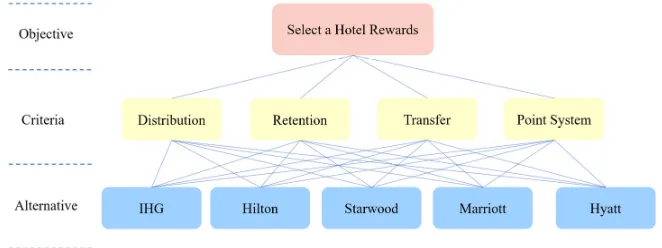
Figure 1. AHP modeling of hotel rewards selection.
Table 4. Comparison of five famous hotel groups.
Hotel Comparison Items
Distribution Retention Transferbility Points System
IHG 4900 Hotels
100 Countries 1 Year Y
1$ = 10 Points 10000 Points = 1 Free Nights Hilton 4000 Hotels
90 Countries 1 Year Y
1$ = 10 Points 5000 Points = 1 Free Nights Starwood 1300 Hotels
100 Countries 1 Year Y
1$ = 3 Points 3000 Points = 1 Free Nights Marriott 4500 Hotels
87 Countries 2 Years Y
1$ = 10 Points 75000 Points = 1 Free Nights Hyatt 600 Hotels
50 Countries 2 Years Y
1$ = 5 Points 5000 Points = 1 Free Nights
The AHP commonly starts creating a pairwise comparison matrix A for the purpose of figuring out the exact weight of different criteria. The matrix A is an × real matrix, where m is the number of the evaluation criteria to be considered. Each entry of matrix A represents the importance of the jth criterion relative to the kth criterion, and the entire and satisfy the following constraint:
∗ = 1 (3)
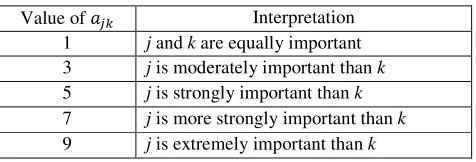
Obviously, = 1 for all j and the relative importance between two criteria is measured according to a numerical scale from 1 to 9.
Table 5. Table of relative scores (2, 4, 6, 8 values in-between).
Value of Interpretation
1 j and k are equally important 3 j is moderately important than k 5 j is strongly important than k 7 j is more strongly important than k 9 j is extremely important than k
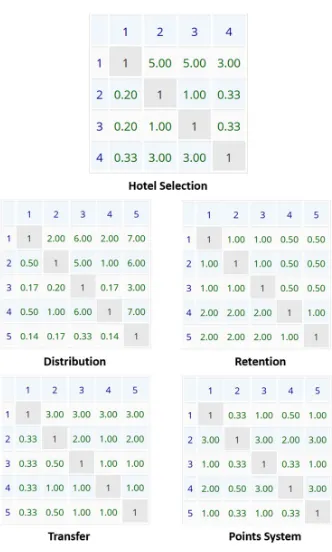
[image:5.612.188.426.356.437.2]Figure 2. Consolidated decision matrix.
Figure 3. Breakdown by each node and consistency check. Table 6. Decision Hierarchy.
Level 0 Level 1 Level 3 Glb Prio
Hotel Selections
Distribution 0.560
IHG 0.396 22.2%
Hilton 0.241 13.5%
Starwood 0.065 3.6%
Marriott 0.261 14.6%
Hyatt 0.037 2.1%
Retention 0.095
IHG 0.143 1.4%
Hilton 0.143 1.4%
Starwood 0.143 1.4%
Marriott 0.286 2.7%
Hyatt 0.286 2.7%
Transferability 0.095
IHG 0.424 4.0%
Hilton 0.190 1.8%
Starwood 0.123 1.2%
Marriott 0.141 1.3%
Hyatt 0.123 1.2%
Points System 0.294
IHG 0.120 3.0%
Hilton 0.387 9.6%
Starwood 0.111 2.8%
Marriott 0.271 6.8%
Hyatt 0.111 2.8%
1.0
Discussion
When we look back at the evaluation of these different approaches, we find that the result of AHP is related to the number of customers and the GR is associated with the hotel rewards sophistication.
[image:7.612.126.490.399.666.2]problem can be solved from the game player's point of view. However, both game refinement theory and gamification require one to think like a game designer. According to the preliminary results of AHP and GR values, we find that there is a difference between these two approaches. They represent two different perspectives; that of a game player and that of game designer. Game theory has a deep relationship to games and, subsequently, to gamification; however, their approach is different. AHP is a set of algorithms, formulas and quantitative techniques for analyzing strategic decision making based on the comparison of relative items. It is more about defining formal models and mathematical structures to investigate different kinds of options.
[image:8.612.122.487.207.284.2]We list the result of our evaluation with different approaches proposed in Section 2 and 3.
Table 7. The results of AHP, customer membership.
Hotel Number of Customer Membership Weight
IHG 92m 0.306
Marriott 54m 0.263
Hilton 52m 0.254
Starwood 21m 0.090
Hyatt 20m 0.088
Concluding Remarks
In this paper, we conducted two approaches to evaluate the hotel loyalty program. With the game refinement methodology, the result of the GR in these three cities for five famous hotel groups is entirely different. It means that even the customers are enjoying the same loyalty program, the decision complexity will also vary with the location. Compared with the previous work in sports and board game domain, the GR of hotel rewards is lower than the sophisticated zone from 0.07 to 0.08. However, such value is also reasonable in the marketing domain, as hotel rewards are the application of gamification. With the AHP method, we figured out the weight of each hotel rewards with four items as the critical options when customers select specific hotel rewards. The paper empirically evaluated the game sophistication of the hotel loyalty program in a particular city, and the result of the AHP based on the four selected comparison items is inspirable which offers a new perspective for customers to select a hotel reward. Future work may consider more about the effectiveness of the gamification of hotel rewards.
Acknowledgement
This research is funded by a grant from the Japan Society for the Promotion of Science, within the framework of the Grant-in-Aid for Challenging Exploratory Research.
References
[1] Hotel Loyalty Program. https://en.wikipedia.org/wiki/Hotelloyaltyprogram. (2017)
[2] Neumann, J. V. "Zur theorie der gesellschaftsspiele." Mathematische annalen 100.1 (1928): 295-320.
[3] Iida, Hiroyuki, et al. "An application of game-refinement theory to Mah Jong." International Conference on Entertainment Computing. Springer, Berlin, Heidelberg, 2004.
[4] Iida, Hiroyuki, Nobuo Takeshita, and Jin Yoshimura. "A metric for entertainment of boardgames: its implication for evolution of chess variants." Entertainment Computing. Springer, Boston, MA, 2003. 65-72.
[7] Sutiono, Arie Pratama, Ayu Purwarianti, and Hiroyuki Iida. "A mathematical model of game refinement." International Conference on Intelligent Technologies for Interactive Entertainment. Springer, Cham, 2014.
[8] Zuo, Long, Shuo Xiong, and Hiroyuki Iida. "An analysis of hotel loyalty program with a focus on the tiers and points system." Systems and Informatics (ICSAI), 2017 4th International Conference on. IEEE, 2017.
[9] Barsky, J. Hotel loyalty programs offered by chains and independents are growing in popularity. Market Metrix. (2011).
[10] Huotari, Kai, and Juho Hamari. "Defining gamification: a service marketing perspective." Proceeding of the 16th international academic MindTrek conference. ACM, (2012).
[11] IHG Rewards Club. https://www.ihg.com/rewardsclub.html. (2017)
[12] Hilton Honors. http://hiltonhonors3.hilton.com/en/index.html. (2017)
[13] Starwood Preferred Guest. https://www.starwoodhotels.com/preferredguest. (2017)
[14] Marriott Rewards. http://www.marriott.com/rewards/rewards-program.mi. (2017)
[15] World of Hyatt. https://world.hyatt.com. (2017)