RESEARCH ARTICLE
BIODEGRADATION OF PHENOL AND CYANIDE COMPOUNDS BY USING HALOBACTERIA
S. Ravikumar
*, R. Gokulakrishnan and P.S. Parimala
School of Marine Sciences, Department of Oceanography and Coastal Area Studies, Alagappa University, Thondi Campus, Thondi – 623 409, Ramanathapuram District, Tamil Nadu, India
ARTICLE INFO ABSTRACT
The present study was made an attempt to degrade the phenolic compounds along with co-toxicants by halobacteria isolated from the coconut retting water. Thirty two morphologically different bacterial strains were isolated, of which 3 strains Pseudomonas putida, Bacillus sp. and
Pyrococcus horikoshii showed better degradation. However, Pseudomonas putida showed maximum degradation of phenol up to 2000 mg.l-1 without any supplement, but the maximum phenol removal efficiency was observed with the addition of 60 mg.l-1 of cyanide at 96 hrs by
Pseudomonas putida and 600 mg.l-1 of thiocyanate at 144 hrs by Bacillus sp. It is concluded from the present study that, the isolated bacterial strains viz.,Pseudomonas putida, Bacillus sp. and
Pyrococcus horikoshii could be effectively used to degrade the phenolic compounds along with cyanide and thiocyanate under saline environment.
© Copy Right, IJCR, 2011, Academic Journals. All rights reserved
INTRODUCTION
Phenol and its derivatives are one of the major toxic compounds derived from industrial processes, such as oil refineries, cooking plants and petroleum based processing plants (Santos and Linardi, 2004). These compounds are toxic by ingestion, contact or inhalation even at low concentration as because the vapour of phenol can be easily absorbed through the skin and it affects the metabolic activity of the living system (Chung et al., 2003). These problems were occurred due to an improper treatment of the industrial products which contaminated the soil and ground water. Likewise, cyanide and thiocyanate compounds are also toxic and carcinogenic pollutants (Chena and liu, 1999; Yanase
et al., 2000) that have been widely used in industries viz.,
metal-plating, pharmaceuticals, synthetic fibers, coal gasification, coal coking, ore leaching, gold mining and electroplating (Knowles and Bunch, 1986; White et al., 1988; Yanase et al., 2000). Several methods such as precipitation, coagulation, ion exchange and ultra filtration have been developed for the phenol degradation along with co-toxicants, but these methods are more expensive and inefficient because,
the byproducts of the above methods are more toxic in nature. Biodegradation of phenolic wastes by bacteria has been studied extensively and a large number of phenol degrading bacteria has been isolated and characterized at the
*Corresponding author: [email protected]
physiological and genetic levels (Heinaru et al., 2000; Hinteregger et al., 1992; Kivisaar et al., 1989; Powlowski and Shingler, 1994; Qureshi et al., 2001; Stephen et al., 2005). But studies on the phenol degradation by halotolerant bacteria are too limited. The phenolic compounds also entered into the aquatic environment through the retting of coconut husk. Generally, the coconut retting water contains high amount of phenol with the additional toxic compounds such as, cyanide and thiocyanate. Fish and aquatic invertebrates are particularly sensitive to cyanide exposure. Concentrations of free cyanide and thiocyanate in the aquatic environment ranging from 5.0 to 7.2 µg.l-1 which inhibit the reproduction in many species of fish and excess of 200 µg.l-1 leads to adverse effects include delayed mortality, pathology and susceptibility to predation, disrupted respiration, osmoregulatory disturbances and altered growth patterns of the organisms. The sensitivity of aquatic organisms to cyanide and thiocyanate are highly species specific and is also affected by water pH, temperature and oxygen content (Remani et al., 1989). To overcome the above problems, the present study was made an attempt to find out the potential halotolerant bacteria to be used for the biodegradation of phenol along with cyanide and thiocyanate in coconut retting water.
MATERIALS AND METHODS
Water samples were collected from coconut retting ponds in Rajakkamangalam coast (Lat. 8° 07’N; Long. 77° 23’ E), Kanyakumari District, Tamil Nadu, India, by using sterile
ISSN: 0975-833X
International Journal of Current Research
Vol. 3, Issue, 7, pp.096-100, July, 2011
INTERNATIONAL JOURNAL OF CURRENT RESEARCH
Article History: Received 7th
May, 2011 Received in revised form 1st
June, 2011 Accepted 21th
June, 2011 Published online 16th
July 2011
Key words:
Bacillus sp., Biodegradation, Cyanide,
Pseudomonas putida, Pyrococcus horikoshii,
plastic container. Water samples were serially diluted and plated in sterilized nutrient agar media. Phenol (100 mg.l-1) was added as a substrate for the isolation of phenol degrading bacteria. After 24 hrs of incubation at 34˚C, colonies appeared on the solid media were counted and the colonies were selected based on the morphological characters and further restreaked thrice on the respective medium for purification and species level identification was performed by following the method of Holt et al., (1994). Biodegradation of phenol was carried out by using shake flask method. A loopful of 32 isolated bacterial strains were inoculated into 100 ml basal minimal medium [(NH4)2SO4-325 mg; MnSO4-8.5 mg;
MgSO4.7H2O-65 mg; FeCl3.6H2O-2 mg; CaCl2.2H2O-9 mg;
K2HPO4-2.62 g; and KH2PO4-1.43 g; dissolved in one litre of
dis.H2O] containing various concentration of phenol in 250 ml
Erlenmeyer flasks. These flasks were incubated at room temperature with continuous shaking at 150 rpm in a thermostat incubator. The biodegradation of phenol was assessed by the following the method of Yang and Humphrey, (1975).
RESULTS AND DISCUSSION
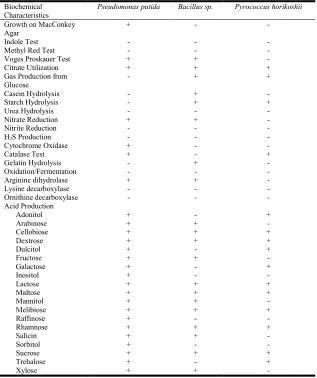
[image:2.612.124.486.74.159.2]The present study reveals that, 32 morphologically different halophilic bacterial strains were isolated from the coconut retting water. Of which, 3 strains viz.,Pseudomonas putida, Table 1. Morphological Characteristics of the isolated halobacteria
Morphological Characteristics Pseudomonas putida Bacillus sp. Pyrococcus horikoshii
Configuration Round Round Round
Margin Entire Wavy Wavy
Elevations Convex Convex Flat
Surface Smooth Rough Rough
Pigments - - -
Gram-reaction Negative Positive Positive
Shape Rod Rod Cocci
Motility + + +
(+) indicates positive; (-) indicates negative
Table 2. Biochemical Characteristics of the isolated halobacteria
Biochemical Characteristics
Pseudomonas putida Bacillus sp. Pyrococcus horikoshii
Growth on MacConkey Agar
+ - -
Indole Test - - -
Methyl Red Test - - -
Voges Proskauer Test + + -
Citrate Utilization + + +
Gas Production from Glucose
- + +
Casein Hydrolysis - + -
Starch Hydrolysis - + +
Urea Hydrolysis - - -
Nitrate Reduction + + -
Nitrite Reduction - - -
H2S Production - - -
Cytochrome Oxidase + - -
Catalase Test + - +
Gelatin Hydrolysis - + -
Oxidation/Fermentation - - -
Arginine dihydrolase + + -
Lysine decarboxylase - - -
Ornithine decarboxylase - - -
Acid Production
Adonitol + - +
Arabinose + + -
Cellobiose + + +
Dextrose + + +
Dulcitol + - +
Fructose + + -
Galactose + - +
Inositol + - -
Lactose + + +
Maltose + + +
Mannitol + + -
Melibiose + + +
Raffinose + - -
Rhamnose + + +
Salicin + + -
Sorbitol + - -
Sucrose + + +
Trehalose + - +
Xylose + + -
[image:2.612.147.464.196.574.2]0 500 1000 1500 2000 2500 3000
0 50 100 150 200
Time (Hours) C on c e ntr a ti o n of P h e no l (m gl -1) 0 200 400 600 800 1000 1200
0 24 48 72 96
Time (hours) C once nt ra ti o n of P h e no l ( m g l -1) no Cyanide 20 mg/l 40 mg/l 60 mg/l 0 200 400 600 800 1000 1200
0 24 48 72 96
Time (hours) C once n tra ti o n of P he n ol (m g l -1) no thiocyanate 200 mg/l 400 mg/l 600 mg/l 0 500 1000 1500 2000 2500
0 50 100 150 200
Time (hours) C on c ent ra ti on of P he n ol ( m gl -1) 0 200 400 600 800 1000 1200
0 24 48 72 96 120 144
Time (hours) C once nt rat ion of P he nol (m gl -1) no cyanide 20 mg/l 40mg/l 60 mg/l 0 200 400 600 800 1000 1200
0 24 48 72 96 120 144
Time (hours) C onc ent rat ion of P he nol (m gl -1) no thiocyanate 200 mg/l 400 mg/l 600 mg/l
(a) Phenol alone
(b) Phenol with cyanide
[image:3.612.74.280.46.509.2](c) Phenol with thiocyanate
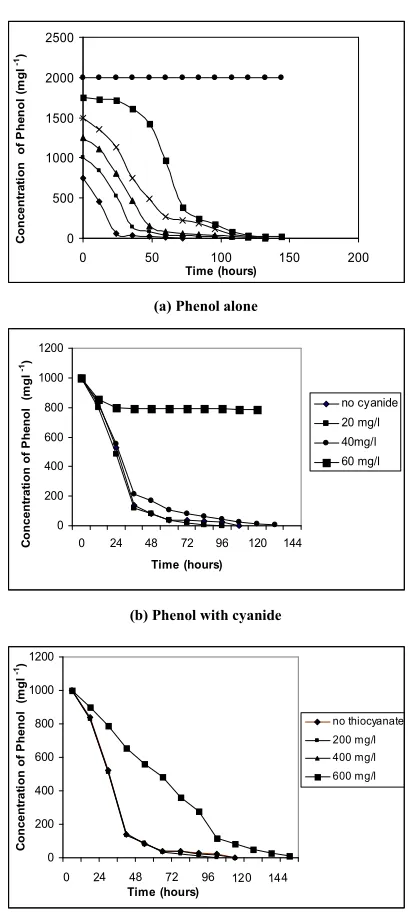
Fig. 1. Biodegradation of phenol by Pseudomonas putida
Bacillus sp. and Pyrococcus horikoshii which showed better
degradation (Table 1 & 2). Among them, Pseudomonas putida
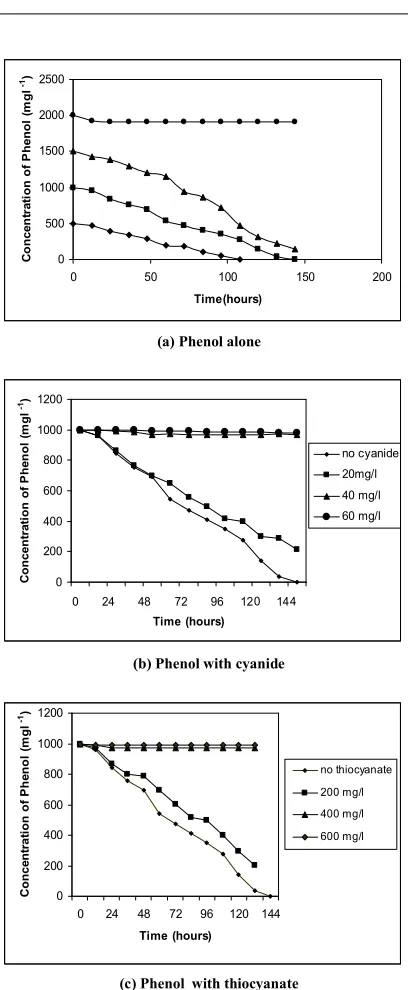
showed the maximum degradation of phenol up to 2000 mg.l-1 within 144 hrs, followed by Bacillus sp. and Pyrococcus
horikoshii [Fig. 1 (a), 2 (a) & 3(a)]. An interesting observation
was noted that, the isolated strain Pseudomonas putida showed maximum phenol degradation in short time and it might be due to the production of different enzymes including oxygenases and hydroxylases. Generally, the purified enzymes oxidized the phenolic compounds very effectively (Indu Nair
et al., 2008). The resonance structure of the aromatic
compounds is broken down by microbes is too critical. However, in the aerobic system, phenol is first converted into catechol through meta fission because most of the halogenated compounds undergoes through ortho pathway. Koutny et al.,
(2003) isolated phenol degrading bacteria P. putida from
(a) Phenol alone
(b) Phenol with cyanide
[image:3.612.330.534.47.509.2](c) Phenol with thiocyanate
Fig. 2. Biodegradation of phenol by Bacillus sp.
Siberia soils. Similarly, Paraskevi and Euripides (2005) reported that, Pseudomonas sp. isolated from the petroleum contaminated soil capable of growing at the concentration of 1200 mg.l-1. Moreover, Pseudomonas aeruginosa degrades the
phenol up to 1300 mg.l-1 within 156 hrs (Kotresha and Vidyasagar, 2008). Chung et al. (2003) reported that,
Pseudomonas putida showed maximum degradation of phenol
up to 2000 mg.l-1 within 156 hrs. The phenol removal efficiency was investigated with the addition of different concentration of cyanide as a co-toxicant. It reveals that,
Pseudomonas putida degrade the maximum amount of phenol
up to 1000 mg.l-1 with the addition of 60 mg.l-1 cyanide at 96 hrs followed by Bacillus sp. and Pyrococcus horikoshii
0 500 1000 1500 2000 2500
0 50 100 150 200
Time(hours)
C
o
nc
e
n
tra
ti
on
o
f
P
he
nol
(
m
gl
-1)
0 200 400 600 800 1000 1200
0 24 48 72 96 120 144
Time (hours)
C
once
nt
ra
ti
on
of
P
he
n
ol
(
m
gl
-1)
no cyanide 20mg/l 40 mg/l 60 mg/l
0 200 400 600 800 1000 1200
0 24 48 72 96 120 144
Time (hours)
C
once
nt
rat
ion
o
f
P
h
e
no
l
(m
gl
-1)
no thiocyanate
200 mg/l
400 mg/l
600 mg/l
(a) Phenol alone
(b) Phenol with cyanide
[image:4.612.74.278.39.534.2](c) Phenol with thiocyanate
Fig. 3. Biodegradation of phenol by Pyrococcus horikoshii
behind that, cyanide at high concentration inhibits one of the enzymes that participate in the phenol degradation metabolism and this leads to reducing the phenol degradation. Moreover, the cyanide inhibits phenol transportation into the cells, thus affecting the phenol degradation (Arutchelvan et al., 2005; Fujita et al., 1993). The mechanism of cyanide reduction could be associated with the N2-fixing enzymes of Pseudomonas
putida. Nevertheless, additional organisms with the capacity
for cyanide biodegradation are still being reported (Adjei and Ohta, 1999; Kwon et al., 2002a; Sexton and Howlett, 2000; Yanase et al., 2000). Generally, four pathways for the biodegradation of cyanide and they are hydrolytic, oxidative, reductive and substitution/transfer. More than one pathway can be utilized for cyanide biodegradation in some organisms (Ezzi-Mufaddal and Lynch James, 2002; Raybuck, 1992). The pathway used is dictated by the external conditions such as
oxygen, pH and cyanide concentration. The phenol degradation was also investigated with the addition of thiocyanate at various concentrations. The result reveals that, 3 bacterial species which showed excellent phenol degradation of which Pseudomonas putida degrade the phenol up to 1000 mg.l-1 with the addition of 400 mg.l-1 of thiocyanate at 96 hrs followed by Bacillus sp. (600 mg.l-1) at 144 hrs and
Pyrococcus horikoshii (200 mg.l-1) at 144 hrs respectively
[Fig. 1 (c), 2 (c) & 3 (c)]. The removal of thiocyanate might be due to the production of thiocyanate hydrolase enzyme (Kwon
et al., 2002b). Generally, thiocyanate is a biodegradable
compound (Usha Rani, 2001). Thiocyanate can be produced from the reaction of cyanide with pyretic materials in waste streams and in vivo by the action of thiosulfate-cyanide sulfurtransferase enzymes (Du Plessis et al., 2001; Kwon et
al., 2002b; Sorokin et al., 2001; Yamasaki et al., 2002).
Biodegradation of thiocyanate can occur by at least two pathways. The formation of sulfate is consistent with the proposed cyanate pathway (Du Plessis et al., 2001; Sorokin et
al., 2001). In a second pathway, thiocyanate is converted to
ammonia and carbonyl sulfide. Kwon et al., (2002b) reported that, the fungi Acremonium strictum produced ammonia and sulfate from thiocyanate without the production of cyanate. Moreover, the combination of thiocyanate and phenol is not usually degraded effectively by most of the organisms in the single stage process. But, the bacterial strains isolated from coconut retting water degraded phenol along with thiocyanate at certain level very effectively. Similarly, Stafford and Callely (1969) reported that, removal of phenol along with thiocyanate by heterotrophic bacterium isolated from activated sludge tank. Klebsiella oxytoca isolated from industrial waste waters has the potency to degrade thiocyanate at certain level (Kao et al., 2003). Industrial activities are likely to increase thiocyanate levels in the environment; the biodegradation pathways for these compounds are highly warranted.
CONCLUSION
It is concluded from the present study that, the bacterial strains
viz., Pseudomonas putida, Bacillus sp. and Pyrococcus
horikoshii are recommended to be used for the pretreatment of
coconut retting waters before the discharge in to coastal ecosystems so as to enable to reduce the contamination and to reduce the mass mortality of the fishes due to anoxic condition created by the retting effluent.
ACKNOWLEDGEMENT
The authors are grateful to the Ministry of Environment and Forest, New Delhi for providing financial assistance.
REFERENCES
Adjei, M.D. and Ohta, Y. 1999. Isolation and characterization of a cyanide utilizing Burkholderia cepacia strain. World
J. Microbiol. Biotechnol., 15, 699-704.
Arutchelvan, A., Kanakasabai, V., Nagarajan, S. and Muralikrishnan, V. 2005. Isolation and identification of novel high strength phenol degrading bacterial strains from phenol formaldehyde resin manufacturing industrial wastewater. J. Hazard. Mat., B27, 238-243.
Chena, S.C. and Liu, J.K. 1999. The responses to cyanide of a cyanide resistant Klebsiella oxytoca bacterial strain.
Chung, T.P., Tseng, H.Y. and Juang, R.S. 2003. Mass transfer effect and intermediate detection for phenol degradation in immobilized Pseudomonas putida systems. Proc.
Biochem., 38, 1497–1507.
Du Plessis, C.A., Barnard, P., Muhlbauer, R.M. and Naldrett, K. 2001. Empirical model for the autotrophic biodegradation of thiocyanate in an activated sludge reactor. Lett. Appl. Microbiol., 32, 103-107.
Ezzi-Mufaddal, I. and Lynch James M. 2002. Cyanide catabolising enzymes in Trichoderma spp. Enzyme.
Microb. Technol., 31, 1042-1047.
Fujita, M., Ike, M. and Kamiya, H. 1993. Accelerated phenol removal by amplifying the gene expression with a recombinant plasmid encoding catechol-2, 3-oxygenase.
Water Res., 27, 9-13.
Heinaru, E., Truu, J., Stotmeister, U. and Heinaru, A. 2000. Three types of phenol and p-cresol catabolism in phenoland p-cresol-degrading bacteria isolated from river water continuously polluted with phenolic compounds.
FEMS Microbiol. Ecol., 31, 195-205.
Hinteregger, C., Leitner, R.M., Loid, A., Freshl, A. and Streichsbier, F. 1992. Degradation of phenol and phenolic compounds by Pseudomonas putida EKH. Appl.
Microbiol. Biotechnol., 37, 252-259.
Holt, J.G., Krieg, N.R., Sheath, P.H.A., Stanley, J.T. and Williams, S.T. 1994. Bergy’s manual of determinative bacteriology. 9th edn. Williams and wilkins, Baltimore, Maryland, USA.
Indu Nair, C., Jayachandran, K. and Shashidhar, S. 2008. Biodegradation of phenol. Afr. J. Biotechnol., 7(25), 4951-4958.
Kao, C.M., Liu, J.K., Lou, H.R., Lin, C.S. and Chen, S.C. 2003. Biotransformation of cyanide to methane and ammonia by Klebsiella oxytoca. Chemos., 50, 1055-1061. Kivisaar, A.M., Habicht, K.J. and Heinaru, L.A. 1989.
Degradation of phenol and m-toluate in Pseudomonas sp. strain ES1001 and its Pseudomonas putida
transconjugants is determined by a multiplasmids system.
J. Bacteriol., 171, 5111-5116.
Knowles, C.J. and Bunch A.W. 1986. Microbial cyanide metabolism. Adv. Microb. Physiol., 27, 73-111.
Kotresha, D. and Vidyasagar, G.M. 2008. Isolation and characterisation of phenol degrading Pseudomonas
aeruginosa MTCC 4996. World J. Microbiol. Biotechnol.,
24, 541–547.
Koutny, M., Ruzicka, J. and Chlachula, J. 2003. Screening for phenol degrading bacteria in the pristine solids of south Siberia. Appl. Soil Ecol., 23, 79-83.
Kwon, H.K., Woo, S.H. and Park, J.M. 2002a. Degradation of tetracyanonickelate (II) by Cryptococcus humicolus
MCN2. FEMS Microbiol. Lett., 214, 211-216.
Kwon, H.K., Woo, S.H. and Park, J.M. 2002b. Thiocyanate degradation by Acremonium strictum and inhibition by secondary toxicants. Biotechnol. Lett., 24, 1347-1351.
Paraskevi, N.P. and Euripides, G.S. 2005. Effect of temperature and additional carbon sources on phenol degradation by an indigenous soil Pseudomonad.
Biodeg.,16, 403–413.
Powlowski, J. and Shingler, V. 1994. Genetics and biochemistry of phenol degradation by Pseudomonas sp. CF600. Biodeg., 5, 219-236.
Qureshi, A., Prabu, S.K. and Purohit, H.J. 2001. Isolation and characterization of Pseudomonas strain for degradation of 4-nitrophenol. Microb. Environ., 16, 49-52.
Raybuck, S.A. 1992. Microbes and microbial enzymes for cyanide degradation. Biodeg., 3, 3-18.
Remani, K.N., Nirmala, E., Nair, S.R., 1989. Pollution due to coir retting and its effect on Estuarine Flora and Fauna.
Int. J. Environ. Stud., 32, 285-295.
Santos, V.L. and Linardi, V.R. 2004. Biodegradation of phenol by filamentous fungi isolated from industrial effluents identification and degradation potential. Proc. Biochem.,
39, 1001-1006.
Sexton, A.C. and Howlett, B.J. 2000. Characterisation of a cyanide hydratase gene in the phytopathenogenic fungus
Leptosphaeria maculans. Mol. Gen. Genet., 263, 463-470.
Sorokin, D.Y., Tourova, T.P., Lysenko, A.M. and Kuenen J.G. 2001. Microbial thiocyanate utilization under highly alkaline conditions. Appl. Biochem. Microbiol., 67, 528-538.
Stafford, D.A. and Callely, A.G. 1969. The utilization of thiocyanate by a heterotrophic bacterium. J. Gen.
Microbiol., 55, 285-289.
Stephen, T.L.T., Benjamin, Y.P.M., Abudi, M.M. and Joo, H.T. 2005. Comparing activated sludge and aerobic granules as microbial inocula for phenol degradation.
Appl. Microbiol. Biotechnol., 67, 708-713.
Usha Rani,T.M. 2001. Biodegradation of Thiocyanate, Ph.D. Thesis, Annamalai University, India.
White, J.M., Jones, D.D., Hung, D. and Gauthier, J.J. 1988. Conversion of cyanide to formate and ammonia by
Pseudomonas from industrial waste water. J. Ind.
Microbiol., 3, 263-272.
Yamasaki, M., Matsushita, Y., Namura, M., Nyunoya, H. and Katayama, Y. 2002. Genetic and immunochemical characterization of thiocyanate degrading bacteria in lake water. Appl. Biochem. Microbiol., 68, 942-946.
Yanase, H., Sakamoto, A., Okamoto, K., Kita, K. and Sato, Y. 2000. Degradation of the metal-cyano complex tetracyanonickelate (II) by Fusarium oxysporum N-10.
Appl. Biochem. Microbiol., 53, 328-334.
Yang, R.D. and Humphrey, A.E. 1975. Dynamic and steady state studies of phenol biodegradation in pure and mixed cultures. Biotechnol. Bioeng.,17, 1211-1235.