Original citation:
Pelvic floor Society , National Institute for Health Research: Chronic Constipation Treatment
Pathway (Including: Knowles, C. H., Grossi, U., Chapman, M. and Mason, James). (2017)
Surgery for constipation : systematic review and practice recommendations : Results I:
Colonic resection. Colorectal Disease, 19 (S3). pp. 17-36.
Permanent WRAP URL:
http://wrap.warwick.ac.uk/92933
Copyright and reuse:
The Warwick Research Archive Portal (WRAP) makes this work of researchers of the
University of Warwick available open access under the following conditions.
This article is made available under the Creative Commons Attribution 4.0 International
license (CC BY 4.0) and may be reused according to the conditions of the license. For more
details see:
http://creativecommons.org/licenses/by/4.0/
A note on versions:
The version presented in WRAP is the published version, or, version of record, and may be
cited as it appears here.
Surgery for constipation: systematic review and practice
recommendations
Results I: Colonic resection
C. H. Knowles*, U. Grossi*, M. Chapman†, J. Mason‡, on behalf of the NIHR CapaCiTY working group§and Pelvic floor Society¶
*National Bowel Research Centre, Blizard Institute, Queen Mary University London, London, UK,†Good Hope Hospital, Heart of England NHS Trust, Birmingham, UK,‡University of Warwick, Coventry, UK,§National Institute for Health Research: Chronic Constipation Treatment Pathway, and
¶Affiliate section of the Association of Coloproctology of Great Britain and Ireland
Abstract
AimTo assess the outcomes of colectomy in adults with chronic constipation (CC).
MethodStandardised methods and reporting of bene-fits and harms were used for all CapaCiTY reviews that closely adhered to PRISMA 2016 guidance. Main con-clusions were presented as summary evidence statements (SES) with a summative Oxford Centre for Evidence-Based Medicine (2009) level.
ResultsForty articles were identified, providing data on outcomes in 2045 patients. Evidence was derived almost exclusively from observational studies, the major-ity of which concerned colectomy and ileorectal anasto-mosis (CIRA) rather than other procedural variations. Average length of stay (LOS) ranged between 7– 15 days. Although inconsistent, laparoscopic surgery may be associated with longer mean operating times (210 vs 167 min) and modest decreases in LOS (10– 8 days). Complications occurred in approximately 24%
of patients. Six (0.4%) procedure-related deaths were observed. Recurrent episodes of small bowel obstruc-tion occurred in about 15% (95%CI: 10–21%) of patients in the long-term, with significant burden of re-hospitalisation and frequent recourse to surgery. Most patients reported a satisfactory or good outcome after colectomy but negative long-term functional outcomes persist in a minority of patients. The influence of resec-tion extent, anastomotic configuraresec-tion and method of access on complication rates remains uncertain. Avail-able evidence weakly supports selection of patients with an isolated slow-transit phenotype.
ConclusionColectomy for CC may benefit some patients but at the cost of substantial short- and long-term morbidity. Current evidence is insufficient to guide patient or procedural selection.
Keywords Constipation, colectomy, ileorectal, slow-transit
Introduction
Background and procedural variations
The concept of resection of the colon to treat constipa-tion originates more than a century ago [1]. Modern surgical approaches mostly continue in the historical practice of removing the whole colon with anastomosis of the terminal ileum to the upper rectum (or very dis-tal sigmoid) usually at the level of the sacral promon-tory. Usually termed colectomy and ileorectal anastomosis (CIRA), the procedure is also sometimes described as colectomy with ileoproctostomy. Total
colectomy is not favoured by all surgeons and other less radical colonic resections may also be employed. The simplest variation is to perform a subtotal colectomy and ileosigmoid anastomosis (SCISA) but an increas-ingly popular choice is subtotal colectomy with sparing of the caecum and thence caecorectal anastomosis (SCCRA). Since this is not a common procedure in routine colorectal surgical practice, it merits some back-ground description. First described by Ogilvie (1931), retention of the ileocaecal junction has the theoretical advantage of preservation of absorptive functions (bile, vitamin B12 and electrolytes) and thus perhaps reduced diarrhoea. No standard technique exists for creating a CRA. The general principle involves colonic mobiliza-tion followed by ligamobiliza-tion of all vascular pedicles except the ileocolic branches. In the technique proposed by Correspondence to:Prof. C. H. Knowles, NBRC, 1st
Floor Abernethy Building, 2 Newark St, London E1 2AT, UK.
Lillehei and Wangensteen (1955) a 180°rotation of the remaining mesentery from the right to the left is per-formed to place the caecum in the left iliac fossa, with apex cephalad. During the rotation the remaining meso-colon passes over the aorta, and it is sutured to the mesorectum and to the third portion of the duodenum to avoid internal hernia or intestinal obstruction, which may complicate such technique. Deloyers (1963) pro-posed a variation of this technique in which there is a craniocaudal rotation of the caecum to allow a pelvic isoperistaltic CRA (IPSCCRA) but this required a retro-ileal tunnel and 180° torsion of the vascular pedicle which may result in ischemia or venous stasis. These dif-ficulties have in part be mitigated by development of an antiperistaltic end-to-end caecorectal anastomosis (at-tributed to Sarli [2]) (APSCCRA) which avoids the vas-cular problems due to the torsion of the pedicle, obviates the need to tailor the caecum and lowers the risk of intestinal obstruction due to the rotation of the mesocolon in front of the aorta.
Scope
Procedures considered beyond the scope of systematic review [1–18] were:
1 Total colonic and rectal excision (proctocolectomy). These procedures have been variously employed for chronic constipation with or without ileal pouch
formation in small numbers of patients and usually as a salvage after failed colectomy;
2 Subtotal colectomy and modification of the rectal reser-voir (modified Duhamel procedure; Jinling procedure);
3 Colonic exclusion and ileorectal anastomosis i.e. without resection.
Previous reviews
Narrative reviews focused on the outcome of colectomy for constipation have been published in 1996 [10], 1999 [11], and 2006 [12]. No previous systematic review was identified.
Summary of search results and study quality
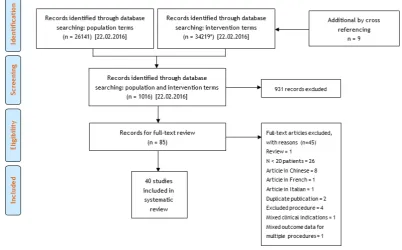
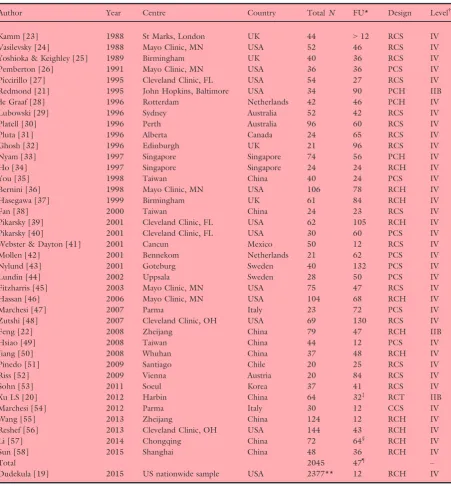
[image:3.595.105.508.444.694.2]The search yielded a total of 85 manuscripts for full text review (Fig. 1). From these, 40 articles published between 1988 and 2015 contributed to the systematic review, providing data on outcomes in a total of 2045 patients (range 20–144 patients per study) based on 39 defined patient cohorts (Table 1). A US nationwide dataset derived from hospital episode statistics was also included covering 2377 procedures coded as colectomy for constipation indications [19]. Specific exclusions after full-text review (and after exclusion of non-Eng-lish language publications: n=10) included 27 studies where the population sample was confirmed to be less
than 20 patients, four studies of out of scope proce-dures, one study where data were considered duplicate [13], one where outcomes could not be segregated by
[image:4.595.62.514.87.574.2]eligible procedure [14], and one where data for multi-ple clinical indications for colectomy were merged [15].
Table 1All studies included in systematic review.
Author Year Centre Country TotalN FU* Design Level†
Kamm [23] 1988 St Marks, London UK 44 >12 RCS IV
Vasilevsky [24] 1988 Mayo Clinic, MN USA 52 46 RCS IV
Yoshioka & Keighley [25] 1989 Birmingham UK 40 36 RCS IV
Pemberton [26] 1991 Mayo Clinic, MN USA 36 36 PCS IV
Piccirillo [27] 1995 Cleveland Clinic, FL USA 54 27 RCS IV
Redmond [21] 1995 John Hopkins, Baltimore USA 34 90 PCH IIB
de Graaf [28] 1996 Rotterdam Netherlands 42 46 PCH IV
Lubowski [29] 1996 Sydney Australia 52 42 RCS IV
Platell [30] 1996 Perth Australia 96 60 RCS IV
Pluta [31] 1996 Alberta Canada 24 65 RCS IV
Ghosh [32] 1996 Edinburgh UK 21 96 RCS IV
Nyam [33] 1997 Singapore Singapore 74 56 PCH IV
Ho [34] 1997 Singapore Singapore 24 24 RCH IV
You [35] 1998 Taiwan China 40 24 PCS IV
Bernini [36] 1998 Mayo Clinic, MN USA 106 78 RCH IV
Hasegawa [37] 1999 Birmingham UK 61 84 RCH IV
Fan [38] 2000 Taiwan China 24 23 RCS IV
Pikarsky [39] 2001 Cleveland Clinic, FL USA 62 105 RCH IV
Pikarsky [40] 2001 Cleveland Clinic, FL USA 30 60 PCS IV
Webster & Dayton [41] 2001 Cancun Mexico 50 12 RCS IV
Mollen [42] 2001 Bennekom Netherlands 21 62 PCS IV
Nylund [43] 2001 Goteburg Sweden 40 132 PCS IV
Lundin [44] 2002 Uppsala Sweden 28 50 PCS IV
Fitzharris [45] 2003 Mayo Clinic, MN USA 75 47 RCS IV
Hassan [46] 2006 Mayo Clinic, MN USA 104 68 RCH IV
Marchesi [47] 2007 Parma Italy 23 72 PCS IV
Zutshi [48] 2007 Cleveland Clinic, OH USA 69 130 RCS IV
Feng [22] 2008 Zheijang China 79 47 RCH IIB
Hsiao [49] 2008 Taiwan China 44 12 PCS IV
Jiang [50] 2008 Whuhan China 37 48 RCH IV
Pinedo [51] 2009 Santiago Chile 20 25 RCS IV
Riss [52] 2009 Vienna Austria 20 84 RCS IV
Sohn [53] 2011 Soeul Korea 37 41 RCS IV
Xu LS [20] 2012 Harbin China 64 32‡ RCT IIB
Marchesi [54] 2012 Parma Italy 30 12 CCS IV
Wang [55] 2013 Zheijang China 124 12 RCH IV
Reshef [56] 2013 Cleveland Clinic, OH USA 144 43 RCH IV
Li [57] 2014 Chongqing China 72 64§ RCH IV
Sun [58] 2015 Shanghai China 48 36 RCH IV
Total 2045 47¶ –
Dudekula [19] 2015 US nationwide sample USA 2377** 12 RCH IV
RCS, retrospective cohort study; PCS, prospective cohort study; RCT, randomised controlled trial; CCS, case control study. *Mean follow up in months.
†Oxford CEBM [16].
‡Only 4 days blinded.
§For CIRA but 32 months for APSCCRA.
¶Median value of follow up.
The general quality of studies was poor due to inade-quate description of methods. The 40 included studies comprised: a single poor quality randomized trial (uncertain or high risk of bias in most domains) [20] (Oxford level IIB); one good quality prospective [21] and one retrospec-tive cohort study [22] (level IIB); and 37 level IV studies (comprising 14 poor quality cohort studies, i.e. ‘case com-parison studies’; one poor quality case-control study with non-consecutive controls; eight prospective case series; and 14 retrospective case series). A general problem was the lack of prospectively defined follow up intervals. Patient follow up ranged from 12 months to 11 years (median 47 months) but this clearly varied greatly for individual patients within studies without defined follow up periods. Eleven studies derived from US centres, 11 from European centres, nine from Chinese centres with the remaining nine spilt across five countries.
Perioperative data
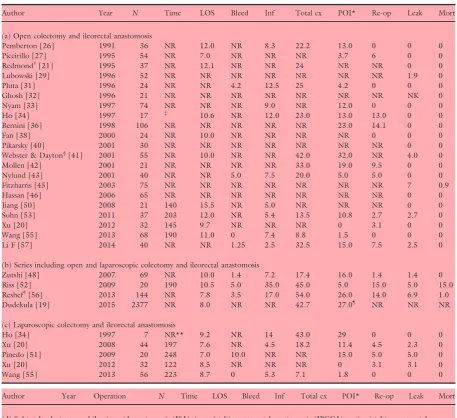
Perioperative data were reported by 37 studies (Table 2). Reporting of procedure duration was incon-sistent but mean procedural duration ranged from approximately 2–4 h. Within this variation were trends of shorter operating times for openvslaparoscopic pro-cedures (e.g. colectomy and ileorectal anastomosis (CIRA), median open: 167 minvsmedian laparoscopic: 210 min), as well as for subtotal procedures: median 135 min. The average length of stay (LOS) reported was 10.4 days, ranging from 7.0 to 15.5 days duration. However laparoscopic procedures consistently reported shorter lengths of stay e.g. the median LOS for open CIRA was 10.6 days compared to 8.1 days for laparo-scopic CIRA. This evidence is supported by individual cohort comparisons [34,55] and in the single RCT where mean LOS was reduced from 9.7 to 7.6 days with laparoscopy [20].
Summary evidence statements: perioperative data
1 Length of stay after colectomy for constipation is 7– 15 days, even in the modern era (level IV).
2 Laparoscopic surgery may be associated with longer operating times and modest decreases in length of stay (from 10 to 8 days), however there is consider-able variation between studies (level IV).
Harms
Perioperative complications
Presented meta-analyses showed considerable hetero-geneity of complications, not explained by procedure
or age of publication. The attentiveness to harm recording and the duration of recording were inconsis-tent and studies limited only to laparoscopic procedures are characterized by small numbers limiting scope for comparison with open procedures and no adjustment has been attempted for potential differences in the populations recruited into individual studies. Conse-quently estimates of harm provided are necessarily ten-tative.
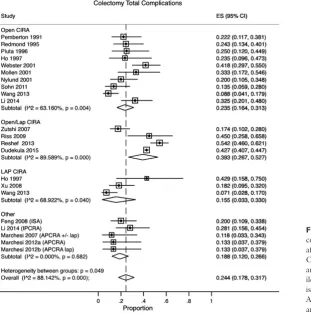
Surgical morbidity remains a concern for all types of colectomy with total complication rates. A random effects meta-analysis estimated total complications to be 24.4% (95%CI: 17.8–31.7%); I2=88.1% (Fig. 2),
although findings were heterogeneous including indi-vidual study rates from 7% to 54% (Table 2). Aside from the incidence of anastomotic leaks and other more general complications (high even in some recent series from expert centres [56] and including six fatali-ties in 1568 patients: 0.4%) the incidence of prolonged post-operative ileus (POI) and early adhesional small bowel obstruction (SBO) are known to be dispropor-tionally high for patients undergoing colectomy for slow-transit constipation when compared to other indi-cations [17].
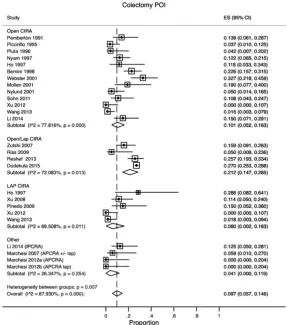
A random effects meta-analysis estimated early post-op POI/SBO to be 9.7% (95%CI: 5.7–14.6%); I2=87.9% (Fig. 3), although findings were
heteroge-neous including individual study rates from 0% to 33%. Current findings are inconclusive as to whether laparo-scopic or open surgery are safer: there is some sugges-tion however that the POI rate is lower in newer studies. Rates of further surgical intervention for POI in the perioperative period were similarly heterogeneous: 2.7% (95%CI: 1.0–5.0%) I2=64.3%, including study rates from 0% to 15%.
These data have been put into a broader context by the recent (2015) US national database study of 2377 colectomies for constipation between 1998–2011 [19], providing 60% of all subjects within the review. This study based on registered health episodes re-affirms a high rate of perioperative complications in a national sample (42.7% patients during index hospitalisation 30-day period), with the main contribution (27%) coming from “intestinal obstruction, ileus, nausea & vomit-ing”.
Long-term adverse outcomes
Table 2Perioperative data by procedure.
Author Year N Time LOS Bleed Inf Total cx POI* Re-op Leak Mort
(a) Open colectomy and ileorectal anastomosis
Pemberton [26] 1991 36 NR 12.0 NR 8.3 22.2 13.0 0 0 0
Piccirillo [27] 1995 54 NR 7.0 NR NR NR 3.7 6 0 0
Redmond†[21] 1995 37 NR 12.1 NR NR 24 NR NR 0 0
Lubowski [29] 1996 52 NR NR NR NR NR NR NR 1.9 0
Pluta [31] 1996 24 NR NR 4.2 12.5 25 4.2 0 0 0
Ghosh [32] 1996 21 NR NR NR NR NR NR NR NK 0
Nyam [33] 1997 74 NR NR NR 9.0 NR 12.0 0 0 0
Ho [34] 1997 17 ‡ 10.6 NR 12.0 23.0 13.0 13.0 0 0
Bernini [36] 1998 106 NR NR NR NR NR 23.0 14.1 0 0
Fan [38] 2000 24 NR 10.0 NR NR NR NR 0 0 0
Pikarsky [40] 2001 30 NR NR NR NR NR NR NR 0 0
Webster & Dayton§[41] 2001 55 NR 10.0 NR NR 42.0 32.0 NR 4.0 0
Mollen [42] 2001 21 NR NR NR NR 33.0 19.0 9.5 0 0
Nylund [43] 2001 40 NR NR 5.0 7.5 20.0 5.0 5.0 0 0
Fitzharris [45] 2003 75 NR NR NR NR NR NR NR 7 0.9
Hassan [46] 2006 65 NR NR NR NR NR NR NR 0 0
Jiang [50] 2008 21 140 15.5 NR 5.0 NR NR NR 0 0
Sohn [53] 2011 37 203 12.0 NR 5.4 13.5 10.8 2.7 2.7 0
Xu [20] 2012 32 145 9.7 NR NR NR 0 3.1 0 0
Wang [55] 2013 68 190 11.0 0 7.4 8.8 1.5 0 0 0
Li F [57] 2014 40 NR NR 1.25 2.5 32.5 15.0 7.5 2.5 0
(b) Series including open and laparoscopic colectomy and ileorectal anastomosis
Zutshi [48] 2007 69 NR 10.0 1.4 7.2 17.4 16.0 1.4 1.4 0
Riss [52] 2009 20 190 10.5 5.0 35.0 45.0 5.0 15.0 5.0 15.0
Reshef†[56] 2013 144 NR 7.8 3.5 17.0 54.0 26.0 14.0 6.9 1.0
Dudekula [19] 2015 2377 NR 8.0 NR NR 42.7 27.0¶ NR NR NR
(c) Laparoscopic colectomy and ileorectal anastomosis
Ho [34] 1997 7 NR** 9.2 NR 14 43.0 29 0 0 0
Xu [20] 2008 44 197 7.6 NR 4.5 18.2 11.4 4.5 2.3 0
Pinedo [51] 2009 20 248 7.0 10.0 NR NR 15.0 5.0 5.0 0
Xu [20] 2012 32 122 8.5 NR NR NR 0 3.1 3.1 0
Wang [55] 2013 56 223 8.7 0 5.3 7.1 1.8 0 0 0
Author Year Operation N Time LOS Bleed Inf Total cx POI* Re-op Leak Mort
(d) Subtotal colectomy and ileosigmoid anastomosis (ISA); isoperistaltic caecorectal anastomosis (IPCCA); antiperistaltic caecorectal anastomosis (APCCA); lap: laparoscopic
de Graaf [28] 1996 ISA 24 NR NR NR NR NR NR NR NR 4.2
Feng [22] 2008 ISA 45 135 13.1 NR NR 20 NR 0 0 0
Sun [58] 2015 ISA 22 NR NR NR NR NR NR NR NR 0
Feng [22] 2008 IPCRA 34 120 12.5 NR NR NR NR 0 0 0
Li F [57] 2014 IPCRA 32 NR NR 0 3.1 28.1 12.5 3.1 3.1 0
Sun [58] 2015 IPCRA 26 NR NR NR NR NR NR NR NR 0
Marchesi [47] 2007 APCRA (5 lap) 17 NR 11.9 NR NR 9.3 5.9 11.8 5.9 0
Jiang [50] 2008 APCRA 17 130 14.5 NR 5.9 NR NR NR 0 0
Marchesi [54] 2012 APCRA 15 184 10.9 NR NR 13.3 0 0 0 0
Marchesi [54] 2012 APCRA lap 15 232 9.3 NR NR 13.3 0 0 6.7 0
Cx, complications; NR, not reported.
*Includes prolonged ileus and early mechanical obstruction.
†In patients with STC only.
‡70 min shorter than laparoscopic procedures in same series (actual duration not reported).
§5 patients had colectomy and end ileostomy.
¶Includes ‘intestinal obstruction, POI, nausea and vomiting, and haemorrhage’. POI, postoperative ileus.
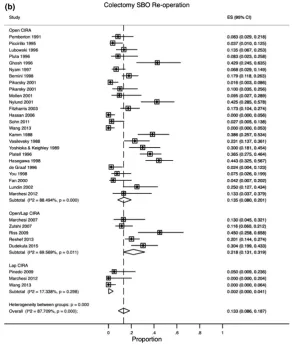
problems) were similarly heterogeneous 13.3%, (95%CI: 8.6–18.7%) I2=87.7%, including study rates from 0%
to 45% (Fig. 4b). Particular to colectomy for constipa-tion is the concept that laparoscopy might reduce the well-established high incidence of post-operative SBO. The review provided only limited data from small stud-ies comparing open with laparoscopic procedures, although SBO rates appeared much lower. Ho et al. [34] found that early adhesion formation leading to bowel obstruction was more frequent in patients under-going laparoscopically assisted colectomy (29%) com-pared to open (13%). A larger series of 124 patients also showed no differences in post-operative morbidity between approaches [55]. Conversely, a low quality case-control study of 15 laparoscopicvs15 open subto-tal colectomy with antiperissubto-taltic CRA showed that bowel obstruction rates were halved (from 13.3 to 6.7%) in the laparoscopic groups [54]. The follow up in these studies (12–20 months) was generally shorter than the average (47 months) although very high rates of SBO were reported by a study of exclusively open CIRA with 12 months follow up [52]. Finally, while the results for laparoscopic approach offer some opti-mism based on the small numbers of patients in these studies, no differences were observed in complication
rates between open and laparoscopic procedures in the US nationwide survey of 2377 colectomies [19].
[image:7.595.85.397.78.393.2]However, the most revealing conclusions can be drawn from further analysis of US national database study in which longitudinal data were recorded on 166 patients recorded on State Inpatient Databases of Flor-ida and California (2005–2011). These data agreed with the whole national dataset (n=2377) in confirming high perioperative (30-day) complication and re-admis-sion rates, but also showed that resource utilisation in the form of emergency department visits, hospitalisation and surgical intervention remained high in the following 1 year. Excluding the colectomy itself, these 166 patients had a total of 2355 encounters, which included 1494 emergency department visits and 861 hospitalisa-tions by 149 and 144 patients, respectively. Among the 1494 emergency department visits, the 674 that occurred postoperatively were shared across 119 (72%) patients; among the 861 hospitalisations, 488 occurred after colectomy and affected 110 (66%) patients. A breakdown of the motivation for these attendances reveals the well-described issue of ongoing abdominal pain, which as well as other gastrointestinal symptoms and postoperative complications, increased after colec-tomy.
Figure 2 Forest plot showing total
Summary evidence statements: harms
1 Data on harms were inconsistently reported and heterogeneous in findings, thus estimates of harm are tentative and imprecise (level IV).
2 Proportionally greater evidence for perioperative out-comes out-comes from studies of colectomy and ileorec-tal anastomosis than for other procedural variations (CIRA: 29 studies, 1321 patients; other procedures: 10 studies, 247 patients) (level IV).
3 Total perioperative complication rates vary greatly but may occur in approximately 20–30% of colectomy patients. The influence of resection extent, anastomotic configuration and method of access on complication rates remains uncertain (level IV).
4 Rates of post-operative ileus or early post-operative adhesional small bowel obstruction vary greatly but may occur in about 5–15% of patients and about one third of these patients require re-operation (level IV).
5 Mortality rate for 39 studies reporting this outcome was 6 / 1568 patients (0.4%) (level IV).
6 Long-term adverse events characterized by recurrent episodes of small bowel obstruction occur in about
10–20% of patients and may result in a significant burden of re-hospitalization and frequent recourse to surgery in most of these patients (level IV).
7 Current evidence tentatively suggests laparoscopic surgery may reduce some complications when compared to open surgery, although this needs to be confirmed by better designed studies (level IV).
Efficacy
[image:8.595.227.515.76.402.2]Measurement of outcome was inconsistent, including variable use of validated and un-validated scoring instru-ments for symptoms e.g. Cleveland Clinic Constipation Score or quality of life (QoL), GI quality of life, indi-vidual symptom reporting and global ‘success’ or ‘satis-faction’ ratings (GSR) obtained via a variety of methods (where ‘satisfied’ or ‘very satisfied’, ‘good’, ‘very good’ and ‘excellent’ were interpreted as positive outcomes). No study documented that data were acquired objec-tively by using personnel not involved in the surgical care of the patient. Only one study documented that collection of data was blind to intervention status [20] and this RCT only blinded observers for 4 days while presenting follow up data to 32 months. Average
Figure 3 Forest plot showing rates of
reported follow-up of studies was 4.3 years (range 1– 11 years).
Accepting these methodological limitations, there are many reports supporting the assertion that most patients undergoing colectomy are satisfied; meta-analysis of
[image:9.595.82.537.91.596.2]studies found an overall global satisfaction rating of 85.6% (95%CI: 81.4–89.3%),I2=76.9% based on data from 1616 patients (Table 4; Fig. 5). Again study find-ings are heterogeneous, with no clear advantage for any particular procedure or surgical approach. However, such
Table 3Long-term small bowel obstruction and re-operation rates.
Author Year Operation N SBO Re-operation*
(a) Open colectomy and ileorectal anastomosis
Pemberton [26] 1991 CIRA 36 11.1 8.3
Piccirillo [27] 1995 CIRA 54 9.3 3.7
Redmond [21] 1995 CIRA 37 18.0 NR
Lubowski [29] 1996 CIRA 52 17.0 14.0
Pluta [31] 1996 CIRA 24 21.0 8.4
Ghosh [32] 1996 CIRA 21 71.0 42.0
Nyam [33] 1997 CIRA 74 9.5 6.7
Bernini [36] 1998 CIRA 106 29.0 18.0
Pikarsky [39] 2001 CIRA 62 7.3 (21.4)† 2.4 (14.3)†
Pikarsky [40] 2001 CIRA 30 20.0 10.0
Mollen [42] 2001 CIRA 21 19.0 9.5
Nylund [43] 2001 CIRA 40 42.5 42.5
Fitzharris [45] 2003 CIRA 75 38.0 17.0
Hassan [46] 2006 CIRA 65 0 0
Jiang [50] 2008 CIRA 21 15.0 NR
Sohn [53] 2011 CIRA 37 10.8 2.7
Wang [55] 2013 CIRA 68 2.9 0
Kamm [23] 1988 Mix 44 NR 38.0
Vasilevsky [24] 1988 Mix 52 36.0 24.0
Yoshioka & Keighley [25] 1989 Mix 40 NR 30.0
Platell [30] 1996 Mix 96 10.4 36.0
Hasegawa [37] 1998 Mix 61 NR 45.0
Fan [38] 2000 Mix 24 21.0 4.2
de Graaf [28] 1996 Segmental on transit 42 2.0 2.0
You [35] 1998 Segmental on transit 40 NR 7.5
Lundin [44] 2002 Segmental on transit 28 19.2 25.0
Feng [22] 2008 IPCRA 34 8.9 NR
Feng [22] 2008 ISA 45 6.7 NR
Jiang [50] 2008 APCRA 17 11.8 NR
Marchesi [54] 2012 APCRA 15 13.3 13.3
(b) Series including open and laparoscopic procedures
Marchesi [47] 2007 APCRA 23 5.9 11.8
Zutshi [48] 2007 CIRA 69 20.0 11.6
Riss [52] 2009 CIRA 20 65.0 45.0
Reshef [56] 2013 CIRA 144 NR 20.0
Dudekula [19] 2015 CIRA 56 NR 30 additional surgeries
in 12 months F up (c) Laparoscopic procedures only
Pinedo [51] 2009 APCRA 20 5.0 5.0
Marchesi [54] 2012 APCRA 15 6.7 0
Wang [55] 2013 CIRA 56 0 0
SBO, small bowel obstruction; NR, not reported.
*Includes all reported for bowel complications although majority are for adhesional SBO.
levels of satisfaction can be related to marked changes in bowel frequency (generally from a mean of once per week to three times per day in the 14 studies reporting both variables) (Table 5), and where recorded (three studies only), marked changes in summative symptom scores e.g. the Cleveland Clinic Constipation score reduced from a mean of>20 points pre-operatively (indicative of severe constipation) to approx. 2–3 points (low normal range) post-operatively. Individual symptom outcomes high-lighted the well documented problems of diarrhoea: 9.8% (95%CI: 4.7–16.4%), I2=76.9% (Fig. 6); and
inconti-nence: 7.4%, (95%CI: 2.2–14.7%),I2=90.8% following
colectomy, ongoing or recurrent constipation: 18.2%, (95%CI: 9.3–29.2%), I2=91.4%; persistent (or
wors-ened) abdominal pain: 39.3%, (95%CI: 28.8–50.1%), I2=89.0%; and bloating 23.9%, (95%CI: 11.9–38.1%), I2=92.7%. Poor functional outcomes contributed to further resection or permanent stoma: median 5% (range 0–28%) patients when reported (by only seven studies; data not shown).
Meta-analyses of efficacy outcomes featured consider-able heterogeneity, not explained by procedure or age
of publication. Given the different duration of studies and variable follow up within studies there is also the potential for time-confounding. Studies limited only to laparoscopic procedures are characterized by small num-bers limiting scope for comparison with open proce-dures and no adjustment has been attempted for potential differences in the populations recruited into individual studies. Consequently efficacy estimates are tentative.
[image:10.595.229.514.76.419.2]Accepting the caveat that only a minority of studies reported functional variables, several observations can be made regarding functional outcomes in studies of less radical colonic resections (Tables 5b and c) com-pared to those for CIRA (Table 5a). The general pre-mise of such procedures is to reduce the risk of long-term diarrhoea and incontinence and this concept is in part supported by data that, accepting small study num-bers and heterogeneity, suggest potential to reduce rates of diarrhoea for segmental and subtotal resections (Fig. 6). However, this was at the cost of increased ongoing or recurrent constipation (median 8.7% for CIRA compared to 26.8% for more conservative
Figure 4 Forest plot showing (a)
resections). The latter has proved a particular problem for segmental resections (right or left hemicolectomy) with generally poor results compared to colectomy mainly due to unresolved constipation requiring further intervention (Table 5c). De Graafet al. [28] used seg-mental transit (radio-opaque marker) methodology to select patients for partial left sided colectomy or subto-tal colectomy. Whilst results as a whole were disappoint-ing, the study concluded that in terms of complications and functional outcome, there was little difference between procedures, and that a more limited resection was therefore a reasonable option in this selected group.
Youet al.[35] reported the use of left, right or
subto-tal colectomy based on segmensubto-tal transit time measure-ments with excellent results. Further, in the three cases where constipation recurred following segmental resec-tion, a subtotal colectomy was undertaken successfully at a later date. This experience was not however repeated by Lundinet al., [44] when recurrent consti-pation was experienced by 46% patients despite transit-guided resection. Thus, while in the laparoscopic era
where there is a greater theoretical advantage of not meeting the technical challenges of mobilizing both colonic flexures laparoscopically, the tailoring of seg-mental resections using these specialist investigations of transit is inconsistently supported by published data. Further, the tests required to accurately determine resection level e.g. isotope scintigraphy have limited availability.
Subtotal resection with ileosigmoid anastomosis is generally considered less effective than ileorectal anasto-mosis based on several relatively small case series mixing both procedures (Table 4d). Contemporary data on subtotal resections with CRA come mainly from a few institutions in Italy and China. Conclusions from these studies vary. For example, Li et al. [57] demonstrated good results for both isoperistaltic CRA and CIRA. Feng
et al.[22] compared isoperistaltic CRA with SCISA.
[image:11.595.151.444.76.422.2]Sur-gical safety outcomes and length of stay were similar but patients were more satisfied after ileosigmoid anastomo-sis mainly due to ongoing constipation in caecorectal group. However patients experienced slightly less
Table 4Percentage success based on global satisfaction ratings (GSR).
Author Year FU (mean) Operation N % success
(a) Colectomy and ileorectal anastomosis
Pemberton [26] 1991 36 Open 36 100
Piccirillo [27] 1995 27 Open+/rectopexy 54 94
Redmond [21] 1995 90 Open 34 90*
Lubowski [29] 1996 42 Open 52 90
Pluta [31] 1996 65 Open 24 92
Nyam [33] 1997 56 Open 74 97
Ho [34] 1997 24 Open 17 96
Ho [34] 1997 24 Laparoscopic 7 100
Bernini [36] 1998 78 Open 106 78†
Fan [38] 2000 23 Open‡ 24 88
Pikarsky [40] 2001 60 Open 30 100
Webster & Dayton [41] 2001 12 Open (5 ileostomy) 55 89
Mollen [42] 2001 62 Open 21 76
Nylund [43] 2001 132 Open 40 73
Fitzharris [45] 2003 47 Open 75 69
Hassan [46] 2006 68 Open 65 85
Zutshi [48] 2007 130 Open & laparoscopic (n=7) 69 79
Jiang [50] 2008 48 Open 21 65
Hsiao [49] 2008 12 Laparoscopic 44 89
Sohn [53] 2011 41 Open 37 84
Reshef [56] 2013 43 Open & laparoscopic (n=7) 144 89§
Li [57] 2014 64 Open 40 93
(b) Subtotal colectomy and ileosigmoid anastomosis (ISA); isoperistaltic caecorectal anastomosis (IPCRA); antiperistaltic caecorectal anastomosis (APCRA); lap: laparoscopic
de Graaf [28] 1996 46 ISA 24 67
Feng [22] 2008 47 ISA 45 93
Marchesi [47] 2007 72 APCRA (lapn=5) 17 88
Jiang [50] 2008 48 APCRA 17 88
Feng [22] 2008 47 IPCRA 34 74
Li [57] 2014 33 IPCRA 32 97
(c) Segmental colectomy (all based on regional transit measurement)
de Graaf [28] 1996 46 Lt hemicolectomy 18 62.5
You [35] 1998 24 Segmental based on transit 40 92
Lundin [44] 2002 50 Segmental based on transit¶ 28 86
(d) Mixed procedures
Kamm [23] 1988 >12 CIRA / IPCRA (11) 44 50
Vasilevsky [24] 1988 46 CIRA (5) / ISA 51 79
Yoshioka & Keighley [25] 1989 36 CIRA / ISA (1) / IPCRA (5) 40 58
Platell [30] 1996 60 CIRA / IPCRA (10) 96 81.3
Hasegawa [37] 1999 84 CIRA, ISA, IPCRA, segmental 61 39–95**
FU, mean follow up in months; NR, not reported. *12.5% with generalized intestinal disorder (see text).
†56% with associated rectal evacuatory disorder.
‡2 patients had caecorectal anastomosis.
§85% with associated rectal evacuatory disorder.
¶26 of 28 had left hemicolectomy (6 with rectopexy) and 2 right.
diarrhoea and incontinence after caecorectal anastomosis. Jianget al.[50] compared antiperistaltic CRA with ileo-rectal anastomosis. Again there were no differences in post-operative course, however patients undergoing caecorectal anastomosis had less diarrhoea, higher post-operative quality of life (not recorded pre-post-operatively) and overall reported GSR (88vs65%).
Laparoscopic surgery has the theoretical advantages of better cosmesis (especially in young women) and per-haps lower long-term complication rates (see above). Such factors have not however yet translated into improved functional outcomes mainly because these have not yet been the focus of comparative studies. Ho
et al. [34] found no difference in GSR between open
and laparoscopic CIRA (96 vs 100%). In the case-con-trol study of Marchesiet al.[54], despite the halving of SBO rates (from 13.3 to 6.7%) in the laparoscopic groups, long-term functional outcomes and GI quality of life were very similar.
Summary evidence statements: efficacy
[image:13.595.80.392.76.522.2]1 Proportionally greater evidence for efficacy comes from studies of colectomy and ileorectal anastomosis than for other procedural variations (CIRA: 25 stud-ies, 1209 patients; mixed: 5 studstud-ies, 280 patients; other procedures: 9 studies, 247 patients; and seg-mental procedures 4 studies, 99 patients (level IV).
Figure 5 Forest plot showing global
2 Data on efficacy were inconsistently reported and heterogeneous in findings, thus estimates were tenta-tive and imprecise. Studies varied in their follow-up of patients, the mean follow-up in studies was 4.3 years (range 1–11 years) (level IV).
3 Colectomy (based on the global rating of success) benefits the majority of patients with slow transit constipation: overall mean 85.6% (95% CI: 81.4– 89.3%) at > 12 months follow up (level IV).
4 Negative long term functional outcomes persist in a minority of patients: diarrhoea and incontinence in about 5–15% of patients; abdominal pain in 30–50% of patients; recurrent constipation in 10–30% of patients and bloating in 10–40% (level IV).
5 Tailoring of segmental resections using specialist regional transit measurements provides uncertain benefit (level IV).
6 There are insufficient data to conclude: (a) that alter-native procedures (subtotal or segmental) perform better than CIRA; (b) that one type of subtotal resection (caecorectalvs ileosigmoid) or anastomosis (iso- or anti-peristaltic) is superior to another; (c) that laparoscopic approach has benefit over open sur-gery (level IV).
7 Subtotal colectomy may reduce long-term rates of diarrhoea compared to CIRA although this finding is
tentative and should be verified with better designed studies (level IV).
Patient selection
While clinical experience suggests careful patient selec-tion for procedures is important, few studies systemati-cally addressed this issue [12]. Main findings from studies that stratified outcomes based on baseline phe-notype are included in Table 6. These studies provide some information on clinical characteristics but more so on results of specialist physiological testing.
[image:16.595.230.513.79.374.2]Pikarsky et al. [39] studied whether colectomy can be performed in elderly patients (defined 65–80 years in their series). Although overall success was diminished on the older age group (64% vs 95%, P=0.01), the authors concluded that the results were acceptable and that the procedure was safe based on no increase in observed morbidity. The question of whether the pres-ence of severe psychological problems adversely influ-ences outcome has been discussed by studies that noted both poor outcomes and a number of post-operative psychological problems including suicide [23]. Others have made post-hoc correlations between prior psychi-atric disease and poor outcome [31]. This factor was only addressed as a stated aim by Hasegawa et al.[37], who
Figure 6 Forest plot showing rates of
reported a statistically significant prejudicial influence of ‘severe psychological disorder’.
Outcomes of colectomy are improved by selection of patients with proof of slow colonic transit. Although it could be argued that other factors may have also influ-enced outcomes (e.g. mix of surgical approaches, surgi-cal technique and equipment), this statement is corroborated by comparing outcome data from an era when specialist investigations of transit were variably applied [23–25,37] with subsequent studies that always performed transit studies and used these as a selection criteria. Most contemporary studies also evaluated anorectal physiology especially in relation to the diagno-sis of a combined slow-transit and defaecatory disorder phenotype. The management of this patient group remains contentious. Bernini et al. [36] in a study of 106 patients demonstrated that despite preoperative biofeedback training, patients with non-relaxing pelvic floor (n=16) had significantly higher rates of recurrent defaecatory difficulty (38vs4%), and lower rates of sat-isfaction after colectomy (56 vs 78%). However, three other studies (Table 6) found little effect on functional outcome or complication rates when functional or structural defects were addressed prior to colectomy. These studies included the contemporary Cleveland Clinic experience of 144 patients where obstructed defaecation (n=41) had no influence on outcome from laparoscopic or open colectomy [56].
It is generally accepted that some patients with slow colonic transit also manifest upper GI symptoms (espe-cially nausea and vomiting). Abnormalities of oesopha-geal, gastric and small bowel function can be demonstrated in a proportion of patients by a variety of methods [18]. Ghoshet al. [32] showed that the high proportion of patients undergoing colectomy who sub-sequently developed SBO episodes (71% with 42% requiring surgery in their series) were more likely to have non-colonic visceral and autonomic nervous system abnormalities on post-operative testing. This observa-tion has been considerably strengthened by the prospec-tive cohort study of Redmondet al. [21]. A significant fall in long-term success rate (to 10 years) as a result of persistent constipation, abdominal pain and distension) was observed in patients defined as having a generalized intestinal disorder (GID) on the basis of having both upper and lower GI dysmotility using a battery of intra-luminal tests. Successful outcome was observed in only 12.5% patients with GIDvs90%: without.
Summary evidence statements: patient selection
1 Outcomes of colectomy may be poorer in patients with significant psychological disorder (level IV).
2 Outcomes of colectomy may be improved by selec-tion of patients with definitive proof of slow colonic transit (level IV).
3 Outcomes of colectomy are inconsistently influenced by concomitant rectal evacuation disorder although data suggest that structural and functional defecation disorders, if evident, should be treated prior to colec-tomy (level IV).
4 Outcomes of colectomy may be prejudiced by pre-operative evidence of upper gastrointestinal dysmotil-ity (level IV).
Conclusions
A systematic review of evidence for the perioperative and long-term benefits and harms of colectomy identi-fied no high quality studies. The evidence base is char-acterised by observational studies of variable and often uncertain methodological quality. Current data suggest a balance of harms against efficacy with evidence that outcomes are at best variable. Future studies should provide high quality evidence for clinicians to support patient decision making, both in terms of the incremen-tal benefits and harms of colectomy and in understand-ing the effects of prognostic factors upon treatment success.
Acknowledgments
NHS Foundation Trust; Mr Neil Smart, Royal Devon & Exeter NHS Foundation Trust; Ms Natasha Stevens, PCTU, Queen Mary University of London; Professor Douglas Tincello, University Hospitals of Leicester NHS Trust; Miss Karen Telford, South Manchester NHS Foundation Trust; Mr Paul Vollebregt, Queen Mary University of London; Mr Andrew Williams, Guy’s and Thomas’ NHS Foundation Trust; Professor Yan Yiannakou,County Durham and Darlington NHS Foundation Trust.
Conflict of interest
All authors have no conflict of interest in relation to the content of the manuscript. In the last 2 years, C.H. Knowles has received speaker fees and consultancy pay-ments from Medtronic Inc. Mark Chapman has received funding to attend courses from Medtronic Inc.
Funding
This project was funded by the National Institute for Health Research (NIHR) Programme Grant for Applied Research (RP-PG-0612-20001). The views and opinions expressed in this report are those of the authors and are not those of the PGfAR Programme, NIHR, the UK National Health Service, or the UK Department of Health.
References
1 Smith JL, Lane A. Sir Arbuthnot Lane, chronic intestinal
stasis, and autointoxication. Ann Intern Med 1982; 96:
365–9.
2 Sarli L, Costi R, Sarli D, Roncoroni L. Pilot study of subtotal colectomy with antiperistaltic cecoproctostomy for
the treatment of chronic slow-transit constipation. Dis
Colon Rectum2001;44:1514–20.
3 Nicholls RJ, Kamm MA. Proctocolectomy with restorative ileoanal reservoir for severe idiopathic constipation. Report
of two cases.Dis Colon Rectum1988;31:968–9.
4 Hosie KB, Kmiot WA, Keighley MR. Constipation:
Another indication for restorative proctocolectomy. The
British journal of surgery1990;77:801–2.
5 Kalbassi MR, Winter DC, Deasy JM. Quality-of-life assess-ment of patients after ileal pouch-anal anastomosis for
slow-transit constipation with rectal inertia.Dis Colon
Rec-tum2003;46:1508–12.
6 Li N, Jiang J, Feng X, Ding W, Liu J, Li J. Long-term fol-low-up of the Jinling procedure for combined slow-transit
constipation and obstructive defecation.Dis Colon Rectum
2013;56:103–12.
7 Ding W, Jiang J, Feng Xet al.Novel surgery for refractory
mixed constipation: Jinling procedure - technical notes and
early outcome.Archives of medical science: AMS2014;10:
1129–34.
8 Zhu X, Li J, Fu T, Sun P, Jing Y, Tian W. Laparoscopic-assisted subtotal colectomy combined with modified
Duha-mel procedure for mixed constipation. JSLS 2015; 19:
e2014.00131
9 Peng H-Y, Xu A-Z. Colonic exclusion and combined
ther-apy for refractory constipation.World J Gastroenterol2006;
12:7864–8.
10 Pfeifer J, Agachan F, Wexner SD. Surgery for constipation:
a review.Dis Colon Rectum1996;39:444–60.
11 Pfeifer J. Surgery for constipation.Acta Chir Iugosl2006;
53:71–9.
12 Knowles CH, Scott M, Lunniss PJ. Outcome of colectomy
for slow transit constipation. Ann Surg 1999; 230:
627–38.
13 Sheng QS, Lin JJ, Chen WB et al.Comparison of
hand-assisted laparoscopy with open total colectomy for slow
transit constipation: a retrospective study.J Dig Dis2014;
15:419–24.
14 Raahave D, Loud FB, Christensen E, Knudsen LL.
Colec-tomy for refractory constipation. Scand J Gastroenterol
2010;45:592–602.
15 Sarli L, Costi R, Iusco D, Roncoroni L. Long-term results of subtotal colectomy with antiperistaltic cecoproctostomy.
Surg Today2003;33:823–7.
16 Howick J, Chalmers I, Glasziou Pet al.Explanation of the
2011 Oxford Centre for Evidence-Based Medicine
(OCEBM) Levels of Evidence. Oxford Centre for Evi-dence-Based Medicine. (http://www.cebm.net/index.aspx? o=5653)
17 Reshef A, Gurland B, Zutshi M, Kiran RP, Hull T. Colec-tomy with ileorectal anastomosis has a worse 30-day out-come when performed for colonic inertia than for a
neoplastic indication.Colorectal Dis2013;15:481–6.
18 Scott SM, Picon L, Knowles CHet al.Automated
quanti-tative analysis of nocturnal jejunal motor activity identifies abnormalities in individuals and subgroups of patients with
slow transit constipation. Am J Gastroenterol 2003; 98:
1123–34.
19 Dudekula A, Huftless S, Bielefeldt K. Colectomy for con-stipation: time trends and impact based on the US
Nation-wide Inpatient Sample, 1998-2011. Aliment Pharmacol
Ther2015;42:1281–93.
20 Xu LS, Liu WS. A prospective, randomized, single-blind comparison of laparoscopic versus open colectomy for
slow-transit constipation.Am Surg2012; 78:495–6.
21 Redmond JM, Smith GW, Barofsky I, Ratych RE, Golds-borough DC, Schuster MM. Physiological tests to predict long-term outcome of total abdominal colectomy for
intractable constipation. Am J Gastroenterol 1995; 90:
748–53.
22 Feng Y, Jianjiang L. Functional outcomes of two types of subtotal colectomy for slow-transit constipation:
ileosig-moidal anastomosis and cecorectal anastomosis.Am J Surg
2008;195:73–7.
23 Kamm MA, Hawley PR, Lennard-Jones JE. Outcome of
colectomy for severe idiopathic constipation. Gut 1988;
24 Vasilevsky CA, Nemer FD, Balcos EG, Christenson CE, Goldberg SM. Is subtotal colectomy a viable option in the
management of chronic constipation? Dis Colon Rectum
1988;31:679–81.
25 Yoshioka K, Keighley MR. Clinical results of colectomy for
severe constipation.Br J Surg1989;76:600–4.
26 Pemberton JH, Rath DM, Ilstrup DM. Evaluation and
sur-gical treatment of severe chronic constipation. Ann Surg
1991;214:403–11; discussion 411-3.
27 Piccirillo MF, Reissman P, Wexner SD. Colectomy as
treat-ment for constipation in selected patients.Br J Surg1995;
82:898–901.
28 de Graaf EJ, Gilberts EC, Schouten WR. Role of segmental colonic transit time studies to select patients with slow transit constipation for partial left-sided or subtotal
colec-tomy.Br J Surg1996;83:648–51.
29 Lubowski DZ, Chen FC, Kennedy ML, King DW. Results
of colectomy for severe slow transit constipation.Dis Colon
Rectum1996;39:23–9.
30 Platell C, Scache D, Mumme G, Stitz R. A long-term fol-low-up of patients undergoing colectomy for chronic
idio-pathic constipation.Aust N Z J Surg1996;66:525–9.
31 Pluta H, Bowes KL, Jewell LD. Long-term results of total abdominal colectomy for chronic idiopathic constipation.
Value of preoperative assessment.Dis Colon Rectum1996;
39:160–6.
32 Ghosh S, Papachrysostomou M, Batool M, Eastwood MA. Long-term results of subtotal colectomy and evidence of noncolonic involvement in patients with idiopathic
slow-transit constipation.Scand J Gastroenterol1996;31:1083–
91.
33 Nyam DC, Pemberton JH, Ilstrup DM, Rath DM.
Long-term results of surgery for chronic constipation.Dis Colon
Rectum1997;40:273–9.
34 Ho YH, Tan M, Eu KW, Leong A, Choen FS. Laparo-scopic-assisted compared with open total colectomy in
treating slow transit constipation. Aust N Z J Surg1997;
67:562–5.
35 You YT, Wang JY, Changchien CRet al.Segmental
colec-tomy in the management of colonic inertia. Am Surg
1998;64:775–7.
36 Bernini A, Madoff RD, Lowry ACet al. Should patients
with combined colonic inertia and nonrelaxing pelvic floor
undergo subtotal colectomy?Dis Colon Rectum1998;41:
1363–6.
37 Hasegawa H, Radley S, Fatah C, Keighley MRB. Long-term results of colorectal resection for slow transit
consti-pation.Colorectal Dis1999;1:141–5.
38 Fan CW, Wang JY. Subtotal colectomy for colonic inertia.
Int Surg2000;85:309–12.
39 Pikarsky AJ, Efron J, Hamel CT, Weiss EG, Nogueras JJ, Wexner SD. Effect of age on the functional outcome of
total abdominal colectomy for colonic inertia. Colorectal
Dis2001;3:318–22.
40 Pikarsky AJ, Singh JJ, Weiss EG, Nogueras JJ, Wexner SD. Long-term follow-up of patients undergoing colectomy for
colonic inertia.Dis Colon Rectum2001;44:179–83.
41 Webster C, Dayton M. Results after colectomy for colonic
inertia: a sixteen-year experience. Am J Surg 2001; 182:
639–44.
42 Mollen RM, Kuijpers HC, Claassen AT. Colectomy for slow-transit constipation: preoperative functional evaluation is important but not a guarantee for a successful outcome.
Dis Colon Rectum2001;44:577–80.
43 Nylund G, Oresland T, Fasth S, Nordgren S. Long-term outcome after colectomy in severe idiopathic constipation.
Colorectal Dis2001;3:253–8.
44 Lundin E, Karlbom U, Pahlman L, Graf W. Outcome of
segmental colonic resection for slow-transit constipation.
Br J Surg2002;89:1270–4.
45 FitzHarris GP, Garcia-Aguilar J, Parker SCet al.Quality of
life after subtotal colectomy for slow-transit constipation:
both quality and quantity count.Dis Colon Rectum2003;
46:433–40.
46 Hassan I, Pemberton JH, Young-Fadok TM et al.
Ileo-rectal anastomosis for slow transit constipation: long-term
functional and quality of life results. J Gastrointest Surg
2006;10:1330–6; discussion 1336-7.
47 Marchesi F, Sarli L, Percalli L et al. Subtotal colectomy
with antiperistaltic cecorectal anastomosis in the treatment of slow-transit constipation: long-term impact on quality of
life.World J Surg2007;31:1658–64.
48 Zutshi M, Hull TL, Trzcinski R, Arvelakis A, Xu M. Sur-gery for slow transit constipation: are we helping patients?
Int J Colorectal Dis2007;22:265–9.
49 Hsiao KC, Jao SW, Wu CC, Lee TY, Lai HJ, Kang JC. Hand-assisted laparoscopic total colectomy for slow transit
constipation.Int J Colorectal Dis2008;23:419–24.
50 Jiang CQ, Qian Q, Liu ZS, Bangoura G, Zheng KY, Wu YH. Subtotal colectomy with antiperistaltic cecoproc-tostomy for selected patients with slow transit
constipation-from Chinese report.Int J Colorectal Dis2008;23:1251–
6.
51 Pinedo G, Zarate AJ, Garcia E, Molina ME, Lopez F,
Zu~niga A. Laparoscopic total colectomy for colonic inertia:
surgical and functional results.Surg Endosc2009;23:62–
5.
52 Riss S, Herbst F, Birsan T, Stift A. Postoperative course and long term follow up after colectomy for slow transit
constipation–is surgery an appropriate approach?Colorectal
Dis2009;11:302–7.
53 Sohn G, Yu CS, Kim CW et al. Surgical outcomes after
total colectomy with ileorectal anastomosis in patients with
medically intractable slow transit constipation.J Korean Soc
Coloproctol2011;27:180–7.
54 Marchesi F, Percalli L, Pinna F, Cecchini S, Ricco’ M,
Roncoroni L. Laparoscopic subtotal colectomy with
antiperistaltic cecorectal anastomosis: a new step in the
treatment of slow-transit constipation.Surg Endosc 2012;
26:1528–33.
55 Wang DY, Lin JJ, Xu XM, Liu FL. The role of hand-assisted laparoscopic surgery in total colectomy for colonic
inertia: a retrospective study.J Korean Surg Soc2013;85:
56 Reshef A, Alves-Ferreira P, Zutshi M, Hull T, Gurland B. Colectomy for slow transit constipation: effective for
patients with coexistent obstructed defecation. Int J
Colorectal Dis2013;28:841–7.
57 Li F, Fu T, Tong W et al. Effect of different surgical
options on curative effect, nutrition, and health status of
patients with slow transit constipation.Int J Colorectal Dis
2014;29:1551–6.
58 Sun JW, Gu JN, Du P, Chen W. Comparison of two types of colectomy in treating slow transit constipation with or
without melanosis coli. World J Gastroenterol 2015; 21: