International Journal of Research (IJR) Vol-1, Issue-10 November 2014 ISSN 2348-6848
Network Control System
Yash kumar rathor ; Vikassan sanwal ; Surender singh & Shubham jain
Dept. of Computer Science & Engineering Dronacharya college of Engg. Farruhknagar , Gurgaon, India
Abstract
Networked control systems (NCSs) have been one of the main research focuses in academia as well as in industry for many
decades and have become a
multidisciplinary area. With these growing research trends, it is important to consolidate the latest knowledge and information to keep up with the research needs. In this paper, the NCS and its different forms are introducedand discussed. The beginning of this paper discusses the history and evolution of NCSs. The next part of this paper focuses on different fields and research arenas such as networking technology,network delay, network resource allocation, scheduling, network security in real-time NCSs, integration of components on a network, fault tolerance, etc. A brief literature survey and possible future direction concerning each topic is included.
Keywords—
Networked control system NCS ; overview; research trends; survey
I. INTRODUCTION
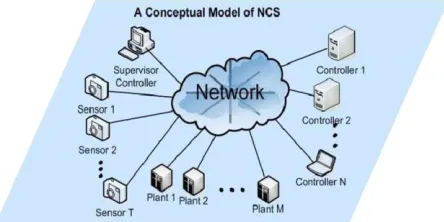
When a traditional feedback control system is closed viaa communication channel (such as a network), whichmay be shared with other nodes outside the control system, then the control system is classified as a networked control system (NCS). All definitions found in literature for an NCS have one key feature in common. This
defining feature is that information
(reference input, plant output, control input, etc.) is exchanged among control system components (sensor, controller, actuator,
etc.) using a shared network (Fig. 1). The
root of control systems can be traced back to 1868 when dynamics analysis of the centrifugal governor was conducted by the famous physicist J. C. Maxwell. The most significant achievement in conventional control systems occurred when the Wright brothers made their first
successful test flight in 1903. The next significant achievement was the fly-bywireflight control system that was designed to eliminate the complexity, fragility, and weight of the mechanical circuit of hydromechanical flight control systems using an electrical circuit. The simplest and earliest configuration of analog fly-by wire flight control systems was first fitted to the Avro Vulcan in the 1950s. This can be called as the first form of analog NCSs. Digital computers became powerful tools in control system design, and microprocessors added a new dimension to thecapability of control systems. A modified
National Aeronautics and Space
Administration F-8C Crusader was the first digital fly-by-wire aircraft in 1972.
International Journal of Research (IJR) Vol-1, Issue-10 November 2014 ISSN 2348-6848
The next step in evolution was the distributed control system (DCS) that was introduced in 1975. Both Honeywell and
Japanese electrical engineering firm
Yokogawa introduced their own
independently produced DCSs at around the same time, with the TDC 2000 and CENTUMsystems, respectively. As the expanding needs of industrial applications pushed the limit of point-to-point control, it became obvious that the NCS was the
solution to achieve remote control
operations. Research in teleoperation was initiated with the concern for safety and convenience in hazardous environments, such as space projects and nuclear reactor power plants, and was made feasible only after further development of the NCS. Later, with the advent of networking technologies, easy and cheap access to the Internet (previously known as ARPANET) proved to be a boon. Friedman emphasizes the effects of the Internet in human activities in his
book ―The World is Flat.‖ Further
development and research in NCSs were boosted by the tremendous increase in the deployments of wireless systems in the last few years. Today, NCSs are moving into
distributed NCSs , which are
multidisciplinary efforts whose aim is to produce a network structure and components that are capable of integrating distributed
sensors, distributed actuators, and
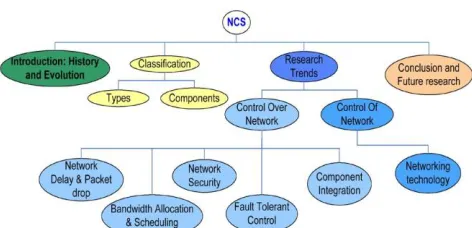
distributed control algorithms over a communication network in a manner that is suitable for real-time applications. This paper is organized as follows (Fig. 2). Section II talks about various NCS classifications in brief. Section III presents the research trends in NCSs for the last five years. This section also includes network delay effects, resource allocation and scheduling, network security, fault-tolerant NCSs, and, finally, successful integration in NCSs. Each research field briefly presents a few examples of NCS to explain the
diversity of NCS applications and research
platforms. Section IV presents the
conclusion and possible future research directions in NCSs.
Fig. 2. Tree diagram explaining the structure of this paper
II. NCS BASICS
The basis capabilities of any NCS are
information acquisition(sensors/users),
command (controllers/users),
communication, and network and control (actuators). In broader terms, NCS research is categorized into the following two parts (Fig. 2).
1) Control of network. Study and research on communications and networks to make them suitable for realtime
NCSs, e.g., routing control, congestion
reduction,efficient data communication,
networking protocol, etc.
2) Control over network. This deals more with control strategies and control system design over the network to
minimize the effect of adverse network parameters on NCS performance such as network delay. This paper mainly focuses on ―control over network‖ because of the space constraints; however, details about research and evolution of networking technologies for NCSs are in the later section. Under control over network, there are two major types of control systems that utilize communication networks. They are the following:
International Journal of Research (IJR) Vol-1, Issue-10 November 2014 ISSN 2348-6848
2) remotecontrol systems. Details,
advantages, and suitability of each
connection type are explained in [10] with diagrams. Each of the NCS structures has many challenges to maintain the quality of service (QoS) and the quality of control (QoC). In the networks, QoS is the idea that transmission rates, error rates, and other characteristics can be measured, improved, and, to some extent, guaranteed in advance [50]. The QoS can be degraded due to congestion and interference. Thus, the next section moves onto some of these main research topics related to NCS such that QoC and QoS can be maintained.
III. NCS RESEARCH TOPICS AND TRENDS
A. Networking Technologies—Evolution and Research
A communication network is the backbone of the NCS. Reliability, security, ease of use, and availability are the main issues while choosing the communication type. The ARPANET developed by the Advanced Research Projects Agency of the U.S. Department of Defense in 1969 was the world’s first operational packet switching network and the predecessor of the Internet. Later came fieldbus (around 1988)—which is an industrial network system for real-time distributed control. Fieldbus is a generic term which describes a modern industrial digital communication network intended to replace the existing 4–20-mA analog signal standard. This network is a digital bidirectional multidrop serial bus used to link isolated field devices particularly in the automated manufacturing environment. A process field bus is a standard for fieldbus communication in automation technology and was first promoted in 1989 by the German Federal Ministry of Education and Research (BMBF). Controller–area network (CAN) is one of the other fieldbus
standards—which is a serial asynchronous
multimastercommunication protocol
designed for applications needing high-level data integrity and data rates of up to 1 Mb/s. CAN was introduced in 1980s by Robert Bosch GmbH for connecting electronic control units (ECUs) for automotive applications (vehicle bus), following the flyby- wire technology in flight control.
CAN-based DCSs have two main
restrictions. They are the size of the
distributed area and the need for
communication with the following: 1) withother local area networks 2) with remote CAN segments.
Thus, there is a wide variety of competing fieldbus standards, and therefore, many times interoperability becomes an issue. Some of the proposed solutions for this are an extensible device description based on XML and an integrated fieldbus network
architecture. Another communication
network used in NCSs—Ethernet—has evolved into the most widely implemented physical and link layer protocol today, mainly because of the low cost of the network components and their backward compatibility with the existing Ethernet infrastructure. Now, we have fast Ethernet (10–100 Mb/s) and gigabit Ethernet (1000 Mb/s). Recently, switched Ethernet became a very promising alternative for real-time industrial applications due to the elimination of uncertainties in the traditional Ethernet. The motivation behind wireless NCS (WNCS) is due to fully mobile operations, flexible installations, and rapid deployments for many compelling applications like automated highway systems, factories, etc. Rapid progress in sensing hardware, communications, and low-power computing has resulted in a profusion of commercially available wireless sensor nodes. Wireless sensor node research in itself is a vast and big research topic; therefore, we do not go
International Journal of Research (IJR) Vol-1, Issue-10 November 2014 ISSN 2348-6848
presented a very good survey on sensor
nodes in.Colandairajet al. demonstrated that
the principlesof codesign, the merging of communication technology with control theory, can simultaneously improve both
control andcommunication performance
within an IEEE 802.11b WNCS using sample rate adaptation. Matkurbanovet al. presented a survey and analysis of wireless fieldbus with comparison and practical test of recent wireless fieldbus technology.
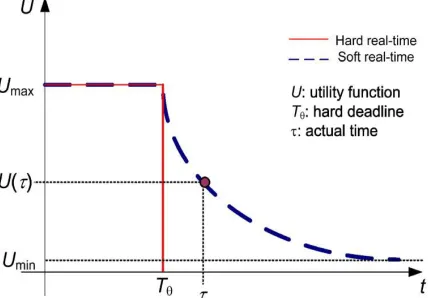
Fig. 3.Utility function for hard and soft real-time applications.
Overall, the choice of network depends upon the desiredapplication. Today, with the help of technologies like GPS,which is an electronic atlas (Google maps), we are looking at multiagent traffic control in urban areas with efficient vehicle communication. Military, surgical, and other emergency medical applications can use dedicated optical networks to ensure fast speed and reliable data communication. The Internet is the most suitable and inexpensive choice for many applications where the plant and the controller are far away from each other. Every network/communication medium can have a degrading effect on the system performance. Some of them are
discussed in further sections.
B. Network Delay Effect
The network can introduce
unreliable/nondeterministic levelsof service in terms of delays, jitter, and losses . In timesensitiveNCSs, if the delay time exceeds the specified tolerable time limit, the plant or the device can either be damaged or have a degraded performance. Time-sensitive applications can be either hard real time or soft real time. As shown in Fig. 3, in hard real-time systems, the utility function immediately goes to zero as soon as the deadline for the task is reached, and therefore, the task must be completed before the hard deadline. In soft real time, the
utility function gradually degrades to Umin.
1) Modeling and Analysis of Network Delays: In order to study the network delay effect on NCSs, modeling of the delay and the other network properties, like packet drops and jitter, is important. Network delays are modeled and analyzed in various ways. They can be modeled as a constant delay (timed buffer), an independent random delay, and a delay with known probability distribution governed by the Markov chain
model .In 1988, Sato et al.explored some
techniques for network delay analysis which was based on the fact that, in the network, the information can be efficiently integrated and transported by maximizing the use of the burstiness of the information flow and of
the store-and-forward process at the
transport nodes. Later, Wu et al.modeled
and analyzed the stability of NCSs with long
random delay. Kamrani and
International Journal of Research (IJR) Vol-1, Issue-10 November 2014 ISSN 2348-6848
2) DelayCompensation: Different mathematical-, heuristic-, and statistical-based approaches are taken for delay compensation in NCSs. Several advanced techniques have been presented in literature that compensate for or alleviate the stochastic network delay, potentially enough to be used in critical real-time applications. The optimal stochastic method approaches the problem as a linear–quadratic–Gaussian (LQG) problem, where the LQG gain matrix is optimally chosen based on the network delay statistics . The queuing/buffering method is a popular method that turns the NCS into a timeinvariantsystem to alleviate the delays . Queuing strategies are proposed by many researchers for coping with the networked delay and packet dropouts for both linear and nonlinear plant. The advantages of this method are the following: 1) no need to redesign the existing predictive controllers;
2) no requirement of clock synchronization; 3) only slight influence of bad network condition such as package loss. The robust control method considers the delays as multiplicative perturbations on the system and uses robust control to minimize the effect of the perturbations and maintain
system performance .In ,Yueet al.
considered the problem of the design of
robust memoryless H∞ controllers for
uncertain NCSs with the effects of both the network-induced delay and data dropout.
Souceket al. focused on the effect of delay
jitter at a fixed mean delay on the QoC. Two sources of delay jitter are identified in EIA-852-based systems:
1) network traffic induced
2) protocol induced. Zhang et al.
investigated the problems of stability and stabilization of a class of multimode
systems.
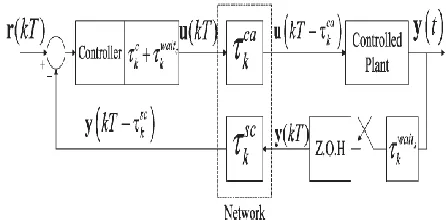
Fig. 4. Block diagram of the NCS plant structure showing the network delays designed by Tipsuwan and Chow
However, precise delay time models are needed for implementationof the predictive methods. Natori and Ohnishi proposed a time delay compensation method based on the concept of network disturbance and communication disturbance observer. In this method, a delay time model is not needed. Hence, it can flexibly be applied to many kinds of time-delayed systems. Richards and Chow investigatedfour methods—GSM, optimal stochastic, queuing, and robust control methodology—that alleviate the IP network delays to provide stable real-time control using a case study on a networked dc motor.
C. FTC in NCS
Built-in redundancy improves failure rates, while fault toleranceis implemented to prevent faults from propagating through the system; both are essential elements of a safety critical NCS. Here, some of the important literature related to fault-tolerant control (FTC) in NCSs has been cited. Patankar presented a model for a fault-tolerant NCS using time-triggered protocol
communication. Huoet al.studied scheduling
and control codesign for a robust FTC of
NCS based on robust H∞ FTC idea.Wanget
al. proposed a fault detection approach for
NCS, which considers the influence of unknown and random network-induced
International Journal of Research (IJR) Vol-1, Issue-10 November 2014 ISSN 2348-6848
proposed a multiagent platform based on
decentralized design and distributed
computing for FTC systems. Zhu and Zhou applied a states-observerbasedfault detection approach on the uncertain long-time-delay
NCS without changing the system
construction. A procedure for controlling a system over a network using the concept of an NCS information packet is described by
Klinkhieoet al.This procedure is composed
of an augmented vector consisting of control moves and fault flags. The size of this packet is used to define a completely fault-tolerant NCS.
D. Network Security in NCS
Any network medium, particularly wireless medium, is susceptibleto easy intercepting. Research in NCS was initiated from the concern for safety and convenience in hazardous environments such as nuclear reactor power plants, space projects, nursing homes, military applications, etc. In all these applications, security is of the utmost concern. The British Columbia Institute of Technology Industrial Security Incident Database contains information regarding security-related attacks on process control
and industrial networked systems. Dzunget
al. gave an overview of IT security issues in
industrial automation based on open communication systems and also explained various countermeasures.
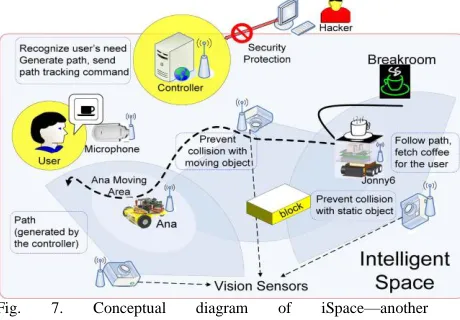
Fig. 7. Conceptual diagram of iSpace—another example/application of NCS as presented
IV. CONCLUSION
In this paper, the NCS and its different forms are introduced.NCSs have been popular and widely applied for many
years because of their numerous advantages and widespread applications. This paper identified some of the main research topics related to NCS. Some of them have been analyzed since the advent of NCS such as network delay compensation and resource allocation. The ones which came into focus later to improve NCS are scheduling, network security with NCS, fault tolerance, etc., which are also studied in this paper. Although NCS has been a very promising research topic for decades, there are
challenging problems and unsolved
problems to be considered for future
research. With increasing real-life
applications for NCS, the real-time secured control is an important issue. This gives rise to a real-time optimization problem and security threat modeling requirement in NCS. Designing an FTC system for a large-scale complex NCS is still very difficult due to the large number of sensors and actuators
spatially distributed on a network.
Modifying the control part of the system depending upon the network delay behavior is one way of dealing with the problem. On the other hand, researchers in the field of wireless networking and communication are working to build new protocols which will give the flexibility to the system and make it
time independent. Radcliffe and Yu
developed a new intermicroprocessor
communication time-independent
International Journal of Research (IJR) Vol-1, Issue-10 November 2014 ISSN 2348-6848
REFERENCES
[1] J. C. Maxwell, ―On governors,‖
Philos. Mag., vol. 35, pp. 385–398, 1868.
[2] T. D. Crouch, First Flight: The
Wright Brothers and the Invention of the Airplane. Washington, DC: Division Pub., Harpers Ferry Center Nat.Park Service, U.S. Dept.
Interior, 2002.
[3] M. Farsi, K. Ratcliff, and M.
Barbosa, ―An overview of
controllerarea network,‖ Comput.
Control Eng. J., vol. 10, no. 3, pp. 113–120,Aug. 1999.
[4] J. Garcia, F. R. Palomo, A. Luque,
C. Aracil, J. M. Quero, D. Carrion,F. Gamiz, P. Revilla, J. Perez-Tinao, M. Moreno, P. Robles, andL. G. Franquelo,
―Reconfigurable distributed network control system forindustrial plant
automation,‖ IEEE Trans. Ind.
Electron., vol. 51, no. 6,pp. 1168– 1180, Dec. 2004.
[5] R. A. Gupta, A. A. Masoud, and
M.-Y. Chow, ―A delay-tolerant potentialfield- based network implementation of an integrated navigation system,‖
[6] H.-J. Korber, H. Wattar, and G.
Scholl, ―Modular wireless real-timesensor/actuator network for factory automation applications,‖
[7] H. Zhang, J. Yang, and C.-Y. Su,
―T-S fuzzy-model-based robust
H∞design for networked control
systems with uncertainties,‖
[8] J. P. Hespanha, P. Naghshtabrizi,
and Y. Xu, ―A survey of recent resultsin networked control
systems,‖ Proc. IEEE, vol. 95, no. 1,