International Journal of Innovative Technology and Exploring Engineering (IJITEE) ISSN: 2278-3075, Volume-8 Issue-10, August 2019
Abstract: Every year, innovation is coming in the area of Artificial intelligence. Currently, the bots are used for matching to give desired or predefined acknowledge. Coming era is the era of robots and software bots using supervised, adaptive, and intelligent algorithms. In the paper, our focus is on the smart software which takes input and performs pre-processing, processing on raw data. The result should be a processed output after applying learning processes and intelligent approaches. This paper is introducing the prototype explaining were to use the chatbots and which procedure is appropriate for creating Chatbots.
Index Terms: Artificial Intelligence, Artificial Neural Network, Natural Language Processing, Recurrent Neural Network.
I. INTRODUCTION
Over the years, Robots and Chatbots are playing a prominent role as human-computer interfaces.[1] Chatbots are basically the interactive softwares which helps end-users in solving their problems based on the programs installed in it. The efficiency and the response time is improved by remembering previous commands /conversation to provide functionality. Chatbots comprises of three modules: an interface, intelligent software which works as interpreter, and a repository or say a knowledge base. Nowadays, SimSimi, ALICE (a morst popular one), and cleverbot are the chatbot which are in use and can interact with the user as per their queries using Natural Language Processing. Chatbot are evolving over web. They can use in education sector, medical sector, consumer guidance and costumer care arenas, and entertainment sectors. The beauty of Chatbots are it can interact with user via text messaging, speech response, gestures, and via other communication methods.
To make the machines more interactive, we have come a long way from command-based systems to graphic user interfaces. Interaction system should be capable of :
Understating Analyzing
Acting directed by the user with input in the form of text or voice
AI-based chatbots come into the picture to make this possible.
Revised Manuscript Received on August 03, 2019.
Vishal Aggarwal, Computer Science Department, ABES Engineering College, Ghaziabad, AKTU Lucknow, India.
Anjali Jain, Information Technology Department, KIET Group of Institutions, Ghaziabad, AKTU Lucknow, India.
Harsh Khatter, Computer Science Department, ABES Engineering College, Ghaziabad, AKTU Lucknow, India.
[image:1.595.325.561.157.233.2]Dr. Kanika Gupta, Information Technology Department, ABES Engineering College, Ghaziabad, AKTU Lucknow, India.
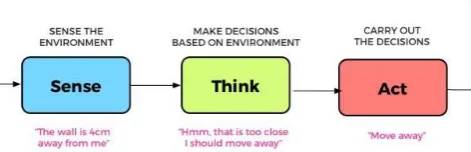
Fig 1: Sensor Working In Bots
This idea arose, and motivation comes after seeing Bebot. Japan's Narita airport, the first AI-powered airport is due to Bebot. In these type of bots, the advanced AI technology is used and help users in many ways. Some examples are: by providing road directions, by giving recommendations based on your previous local search or suggest you a local restaurant, or tells you about some local monument or attractions. Bebot type software can secondly learn from customers' preferences based on previous conversations and chat history. Hence it is becoming popular rapidly in clueless travelers. Now chat bots are replacing human enquiry part in various domains.[12] Chatbots simplify our job by providing out of context information, streamline information, avoid repetitive work and dialogues, and most importantly, no one needs to learn how to use a chatbot. Chatbots are peculiar, and on the rise, as they are accessible anytime, can handle multiple queries from multiple devices and answer simultaneously, they can be flexible in where they are used. And the main reason it will rise in industry is due to its cost-effectiveness. A bot can reduce customer service employees.In the era pf emerging technologies, the robots, chatbots and sensors are evolving with the speed of light. For various uses, the organizations prefer Chatbotsto deal with customers as customer service representative. In this manner, Chatbots are doing information acquisition. In this paper, the idea of creating the chat-bot are discussed and explains how an interactive system handles user queries and make a pseudo user dialogue.
II. RELATED WORK
Enormous work is on in the field of AI and chatbots. Various response based systems, and various types of chatbots have been developed by organizations. In some paper author has achieved two goals using automation process. 1) Using few NLP resources, the ability to generate different versions of chatbots in different languages. 2) ability to learn large no of categories in short time by saving manual efforts in doing work and finding errors.[11] Some other authors discussed chatbot models on two types of technique.[2][3]
Evolution of Chatbots for Smart Assistance
78
Published By:
Blue Eyes Intelligence Engineering & Sciences Publication
Retrieval Number: I8655078919/19©BEIESP DOI: 10.35940/ijitee.I8655.0881019
1. Natural Language Processing model
2. Deep Natural Language Processing model
2.1 Natural Language Processing Models
2.1.1 If Else Chatbots
If-else Chatbots are one of the earliest technique which was used to create Chatbots. In these Chatbots, a huge List of questions and answers based script was required. The Chatbots returned an assigned answer to the question if
the entire question or at least majority of the String matches the already saved question.
The problems were
1. The answers were repetitive, and the reply gave a mechanical feel.
2. A huge script was needed to make the chatbot, covering a variety of questions, and even after that, the chatbot made was very organization dependent.
3. The chatbot could not cope with growing data, as the script size grew the system started taking more time to generate an answer.
2.1.2 Bag of Words Model
Bag of words is a great model for extracting features from a text or use in modeling.
Bag of words is a representation of text counting the occurrence of the key words/words.
A bag-of-words represent the text by involving two things.
1.A vocabulary of known words.
2.A measure of the presence of known words.[2][3] The limitations of the bag of words model are as
follows
1. Sparsity: how the harness so raw information can be represented in a large space.
2. Vocabulary: it affects the sparsity of the document/word.
3. Meaning: semantic of thewords should help a lot. Context and meaning should be appropriate.
2.2 Deep Natural Language Processing Models
2.2.1 Convolutional Neural Networks for text Recognition.
Convolutional neural networks are neural networks which are mostly used in image recognition
For NLP, the following steps are required:
1. extract higher-level features using n-grams and constituting words
2. Tokenization and modeling of sentence of d
dimension.
3. Applying Convolutional filters on inputs called a
feature map.
4. Max operation on each filter is applied; max-pooling
operation to obtain a fixed length output and reduce the dimensionality of the output.
The problem with the above approach is their inability to model long-distance dependencies shown in FIG 2.1
2.2.2 Recurrent Neural Networks
RNN is a special type of neural network which memorize the previous iteration result and store it in buffer to compute the result of next iteration. A RNN recursively do the computation to process the inputs and gives the desirable output.
[image:2.595.313.547.135.603.2] Many applications which takes previously processed data and gives output based on past experiences and so forth. In these cases, RNN is the best approach to use and create a working model for chatbots.
Fig 2. 1 Deep Learning Prototype for NLP[7]
2.2.3 Long Short Term Memory (LSTM)
An LSTMs can in principle use its memory cells to remember long-range information and keep track of various attributes of text it is currently processing.[8] Three types An LSTM consists of three gates (input, forget,
and output gates), and calculate the hidden state through a combination of the three.
International Journal of Innovative Technology and Exploring Engineering (IJITEE) ISSN: 2278-3075, Volume-8 Issue-10, August 2019
Fig 2.2 Activation function for RNN [6]
According to the experiments between RNN, LSTM, and GRU.
Table 2.1 Comparison study between various models
The consistent finding is that depth of at least two is beneficial. However, between two and three layers, our results are mixed. Additionally, the results are mixed between the LSTM and the GRU, but both significantly outperform the RNN.[8]
Hence Our model for the chatbot uses LSTM.
2.3 Algorithm Used: SEQ2SEQ with Attention Mechanism
The Seq2Seq is a model that relies on the encoder-decoder paradigm. An encoder encodes the input sequence, while the decoder produces the target sequence.
The Encoder structure can be explained by
[9]
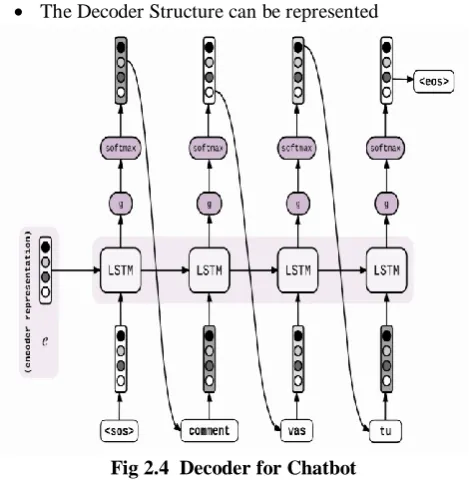
[image:3.595.322.557.67.308.2] The Decoder Structure can be represented
Fig 2.4 Decoder for Chatbot
Bahdanau et al explains in their research work that how the performance of attention method is calculated. Basically, a mechanism that forces the model to learn to focus on specific parts of the input sequence when decoding, instead of relying only on the hidden vector of the decoder’s LSTM is known as Attention. [9]
The decoder uses a Greedy Decoder
To select the most likely words, a simple greedy search approximation is used at each step in the output sequence. This is beneficial approach that is swift, but the quality of
[image:3.595.314.558.328.671.2]the final output sequences may be far from optimal.[3]
Fig 2.5 Attention mechanism [9]
III. SYSTEM DESIGN
[image:3.595.56.286.502.745.2]80
Published By:
Blue Eyes Intelligence Engineering & Sciences Publication
Retrieval Number: I8655078919/19©BEIESP DOI: 10.35940/ijitee.I8655.0881019
The intention is that a user will be able to collect data on a given subject faster. To this end the following are requirements:
A dialogue interface. Answer to user's query posed
The author has designed the system architecture is the three-tier architecture as represented in Fig 3.1. The functionality gets distributed across three independent systems, and also if the requirements change over time or any technological advancements, any of the tiers can be replaced or upgraded independently. This advantage of the model makes it much suitable for the system.
[image:4.595.361.517.131.351.2]3.1 Architecture Design
Fig 3.1 Three Tier Architecture
The three-level architecture modularizes the system in three tiers each functioning independently. The first tier represents the interface layer of the system, which interacts with the user. It can be changed at any point of time as per the requirement and the technology needed for the system.
The second tier is the leading business logic that governs the working of the system. The functioning remains the same if
even any different technology is used for the making of the system. The third tier is optional as per our model but plays a vital role for future aspects. The storage of chats can be beneficial for analysis and research purpose, and thus, this tier is considered theoretically in our system.
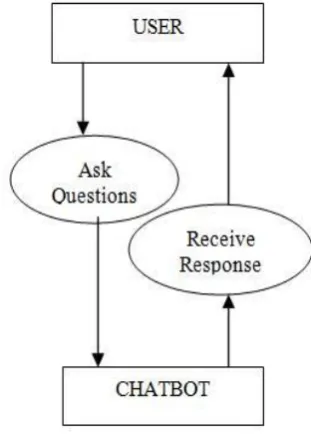
Fig 3.2 Basic structure of the system
[image:4.595.45.297.238.376.2]Figure 3.2 represents the basic flow of control in our system. The user asks some query through the interface, which the chatbot processes form response and returns it to the user[10]
[image:4.595.45.566.500.729.2]International Journal of Innovative Technology and Exploring Engineering (IJITEE) ISSN: 2278-3075, Volume-8 Issue-10, August 2019
Through the interface. This is the basic working of the system that helps in communication of the model and the user. Figure 3.3 shows how the data will flow in the Chatbot.
IV. IMPLEMENTATION AND RESULTS
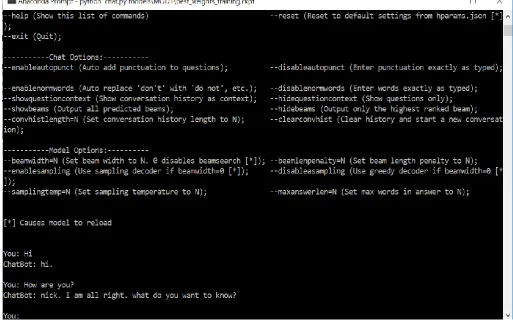
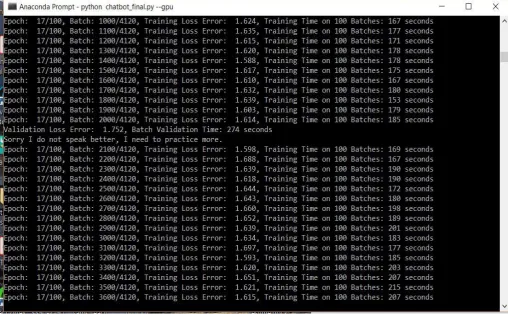
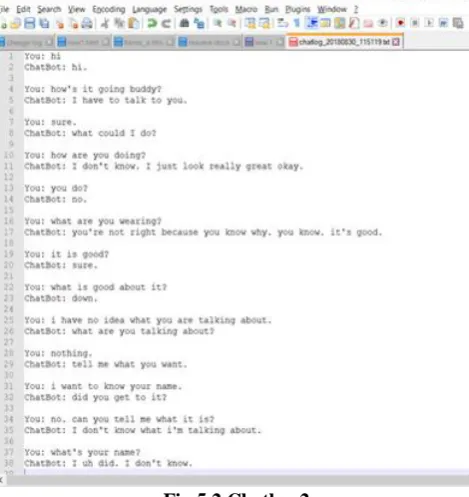
[image:5.595.45.559.271.591.2]Implementation of the application as done in Java, and having the four modules: Dataset module, Vocabulary module, Training module, Chat set-up module. The snapshots of a chatbot are shown. Fig 4.1 represents the output of our chatbot. The system processes the query entered by the user, and a suitable response is generated. Fig 4.2 represents the model training by GPU. We trained our model for 100 epochs containing 4120 batches. The training loss error, as shown above, is 1.752, which improves with each epoch
82
Published By:
Blue Eyes Intelligence Engineering & Sciences Publication
[image:6.595.47.556.54.368.2]Retrieval Number:I8655078919/19©BEIESP DOI: 10.35940/ijitee.I8655.0881019
Fig 4.2 Model Training
V. CONCLUSION
A chatbot is one of the basic approaches to move information from a PC without speculation for appropriate catchphrases to gaze upward in a hunt or peruse a few website pages to gather data; clients can rapidly type their inquiry in regular language and recover information. A chatbot is a phenomenal approach for brisk connection with the client. They help us by giving diversion, sparing time, and addressing the inquiries that are elusive. The Chatbot must be straightforward and conversational. Since there are numerous structures and methodologies for making a chatbot, it very well may be inconsistent with business contemplations. Analysts need to communicate and should concur on a typical strategy for structuring a Chatbot. In the paper, how Chatbots have developed and the applications of Chatbots in various fields are discussed. Also, the comparison has been made with other Chatbots.[4][5] Broadly useful Chatbot must be basic, easy to use, must be effectively comprehended, and the learning base must be reduced. Albeit a portion of the business items have as of late developed, upgrades must be made to locate a typical methodology for planning a Chatbot. [4] We set out with a specific objective when we undertook the project; the aim was to create a chatbot capable of dialogue. The chatbot is intelligent of simple exchange and learns by storing the conversation and increasing its knowledge base.
[image:6.595.303.547.398.588.2]Shown below are some conversation logs.
Fig 5.1. Chatlog 1
Fig 5.1 and 5.2 show the chat logs as performed by our system.
Finally, we can conclude that,
Unlike earlier models which had a mechanical feel, the model made using Seq2Seq mode, and LSTM is more natural and evolving in nature.
International Journal of Innovative Technology and Exploring Engineering (IJITEE) ISSN: 2278-3075, Volume-8 Issue-10, August 2019
Fig 5.2 Chatlog 2
The chatbot made is like a basic layout capable of evolving according to requirements and field it is to be used in. The reader factory can add more datasets for input. This
would lead to a chatbot that can cater to a specific field when given the primary data to learn from.
Given the unlimited fields that can incorporate AI for customer service, information distribution and even as a personal assistant. This chatbot has varied uses as per the requirements of the industry.
REFERENCES
1. CH. Srilekha et al., “Professional Study on Chatbots Using Artificial Intelligence,” in Journal of Applied Science and Cooomputations, vol. 6, Issue 1, January 2019, pp. 186 - 197.
2. Sristhi Chawla (2018, May 29). Introduction to Natural Language Processing. [Onine] Available: https://medium.com/greyatom/introduction-to-natural-language-processin g-78baac3c602b
3. Jason Brownlee (2017, October 9). A gentle introduction to Bag-of-words model. Processing. [Onine] Available: https://machinelearningmastery.com/gentle-introduction-bag-words-model /
4. M. Dhahiya, "A tool of conversation: Chatbot", International Journal of Computer Science and Engineering, Vol. 5, Issue 5, 30 May 2017, pp. 158 - 161.
5. Kshitiz. V. Wadanka et al., "Chatbot : An Application of AI", International Journal of Research in Engineering, Science and Management, Vol.1 Issue 8, September 2018, pp. 139 - 141.
6. Razwan Pascanu et al. "On the difficulty of training recurrent neural networks" International Conference on Machine Learning, Atlanta, Georgia, USA, 2013.
7. Elvis (2018, August 24). Deep Learning for NLP: An Overview of Recent Trends. [Online] Available. https://medium.com/dair-ai/deep-learning-for-nlp-an-overview-of-recent-tr ends-d0d8f40a776d
8. Karpathy, A. and Johmson, J. “Visualizing And Understanding Recurrent Networks”, ICLR , 2016, Cornell University. arXiv:1506.02078 9. Genthial , Gaullaume (2017, Nov 8). “Seq2Seq with Attention and Beam
Search”, [Online] Available https://guillaumegenthial.github.io
10.Boris Galitsky, “ A content management system for chatbots”, “springer”,
Developing enterprise chatbots, Vol.1, pp. 253-326, April 2019
11. Nawaf Ali, Musa Hindi, Roman V. Yampolskiy, “Evaluation of Authorship attribution software on a chatbot corpus” ,International Symposium on Information, Communication and Automation Technologies, Oct 2011.
12. Eun Go, S.Shyam Sundar, “Humanizing chatbots:The effects of
visual,identity and conversational cues on humanness perceptions”, Computers in human behavior, vol. 97, pp. 304-316, 2019.
AUTHORS PROFILE
Vishal Aggarwal is a Final year student of B.Tech, Computer Science and Engineering Department of ABES Engineering College, Ghaziabad.His interest is in Robotics and programming. He has organized various technical events at college level in collaboration with CSI. He is good in coding and problem solving skills. He is active in Codechef, Hackerrank and other coding platforms.
Anjali Jain working as an Assistant Professor, Information Technology Department in Krishna Institute of Engineering and Technology, Ghaziabad affiliated from AKTU Lucknow. She did Bachelor’s with Hons. from UPTU and Master of Technology in 2011 from MANIT, Allahabad. She has published various papers in different journals and conferences. She is an active member of various professional society. Her areas of interest are Computer Networks, Programming Logics, Digital Image Processing.
Harsh Khatter working as an Assistant Professor in ABES Engineering College, Ghaziabad affiliated from AKTU Lucknow. He did Bachelor’s in Computer Science and Engineering in 2010 and Master of Technology in 2012. He has published eight research papers in IEEE conferences and journals. He is active member of IEEE and CSI professional Society. His areas of interests are web mining and information retrieval, content curation in text, images and documents, Neural Network and fuzzy inference. He is pursuing Ph. D. in Content curation from Dr. APJ AKTU University Lucknow..
![Fig 2. 1 Deep Learning Prototype for NLP[7]](https://thumb-us.123doks.com/thumbv2/123dok_us/8182308.255278/2.595.313.547.135.603/fig-deep-learning-prototype-for-nlp.webp)