Available online: https://edupediapublications.org/journals/index.php/IJR/ P a g e | 939
Creative Accounting Standards and Its Techniques
ABSTRACT:
The study brought to the
multi-dimensional nature of the ongoing
financial crises and its effect on financial
reporting by way of increasing adoption of
creative accounting. Creative accounting offers a formidable challenge of the
accounting profession which when carried to
extreme negativity has cast aspersion on the
credibility of accounting principles and
standards. In general, creative accounting
lends itself as a deceitful and undesirable
practice. The effect of the creative
accounting raises the need for a close
scrutiny of the potential abuse of accounting
policy choice and manipulation of
transactions. The ethical implication of the
Creative Accounting raises the need for a
close scrutiny of the potential abuse of
accounting policy choice and manipulation
of transactions.
Keywords: Accounting Principles,
Accounting Policy, Credibility, Creative
Accounting, Financial Crises, Transactions
INTRODUCTION
Creative accounting is a euphemism
referring to accounting practices that may
follow the letter of the rules of standard
accounting practices, but deviate from the
spirit of those rules. They are characterized
by excessive complication and the use of
novel ways of characterizing income, assets,
or liabilities and the intent to influence
readers towards the interpretations desired by
the authors. The terms "innovative" or
"aggressive" are also sometimes used. Other
synonyms include Cooking the books and
Enronomics. The term as generally
understood refers to systematic
Aws Saeed Mirdan
Managerial Accounting
University of wasite
Ismael Abbas Manhel
Cost and Managerial Accounting
University of wasite
Available online: https://edupediapublications.org/journals/index.php/IJR/ P a g e | 940 misrepresentation of the true income and
assets of corporations or other organizations.
"Creative accounting" has been at the root of
a number of accounting scandals, and many
proposals for accounting reform – usually
centering on an updated analysis of capital
and factors of production that would
correctly reflect how value is added.
Newspaper and television journalists
have hypothesized that the stock market
downturn of 2002 was precipitated by reports
of "accounting irregularities" at Enron,
Worldcom, and other firms in the United
States. One commonly accepted incentive for
the systemic over-reporting of corporate
income which came to light in 2002 was the
granting of stock options as part of executive
compensation packages. Since stock prices
reflect earning reports, stock options could
be most profitably exercised when income is
exaggerated, and the stock can be sold at an
inflated profit.
CREATIVE ACCOUNTING
TECHNIQUES
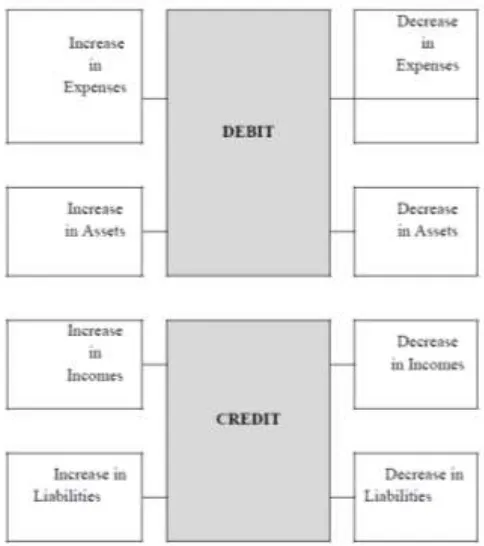
The basic model for recording transactions
and events in the books of accounts, under
the double entry system, is as follows:
Available online: https://edupediapublications.org/journals/index.php/IJR/ P a g e | 941 All the techniques of Creative Accounting
revolve around the basic process of “debiting
and/or crediting an inappropriate account”
when recording a transaction or an event. By
implication, the process also covers “not
debiting and/or crediting” the correct account
with the correct amount.”
TECHNIQUES OF CREATIVE
ACCOUNTING
Accounting standards and policies do not
cover every aspect of business transactions
besides considerable latitude is available for
managerial discretion, which gives legal lag
to the users of creative accounting. All the
techniques of creative accounting revolve
around the basic principle of debiting and/or
crediting an inappropriate account. Further
by misusing of accounting policies or by
changing accounting policies managers can
alter their profit figure or show false picture
of financial reports. Business organizations
may quite validly, change their accounting
policies. Fox (1997) reported how
accounting policies in some companies are
designed within the normal accounting rules
to match reported earnings to profit forecasts.
These can be used in the following ways:
Make over/under valuation of closing stock:
It can do over/under valuation of its closing
stock, which will result in over/under
statement of assets in the balance sheet and
under/over statement of cost of goods sold in
the income statement. For example, Laribee
Wire Manufacturing Company recorded
phantom inventory and carried other
inventory at distended values, which is used
by the company as collateral security in
borrowing some $130 million from six
banks.
Create over/under provisions or reserves: It
can make over provisions or reserves when
revenues are high to bring down it to the
normal level, the level that can easily be
maintained in future years. Similarly, in
critical time it can ignore making provisions
to overstate the profit.
Charge an expense as an asset or vice versa :
It can charge an expense as an asset to
improve current profits or alternatively, an
asset may be treated as an expense to bring
down the current profit.
Charge all expenses in one bad year: If
management thinks a particular year as bad
Available online: https://edupediapublications.org/journals/index.php/IJR/ P a g e | 942 expenses in that year to ignore impact on
future profits.
Enter artificial transactions: Use of artificial
transactions like sale of an asset at current
price to show profits and buying it back at
current cost can be entered to manipulate
balance sheet and profit figures.
Change depreciation rate/amount: It can
decide not to provide depreciation or to
provide less than the due amount of
depreciation on fixed assets to overstate the
profit and overstate the value of asset in the
balance sheet. On the other hand, to show
higher expense in the income statement and
to understate the value of an asset in the
balance sheet depreciation at higher rate or
for full year can be charged though used for a
short period.
Misuse autonomy in deciding useful life of
an asset: The estimation of the useful life of
an asset to calculate depreciation is done
within the company and this gives lots of
opportunity to the accountant to make
judgement according to the requirement.
Misuse materiality concept : Misuse of
materiality concept like purchase price of an
asset up to a certain limit can be treated as
expense though its benefits is likely to be
spread over several years to lower the profits.
Misuse revenue recognition concept: Misuse
of revenue recognition concept like advance
amount received for supply of goods in
future can be transferred to sales account,
which will show higher profits and
understatement of liabilities in the balance
sheet.
Make subsidiary/joint venture: At the time of
investment in subsidiary equity method can
be used to conceal the true performance.
Using this method the investment can be
recorded at cost and subsequently adjusted to
reflect the share of profit or loss and dividend
received. This method limits the information
available to investors. Similarly, a company
can overstate interest coverage to change the
advantage ratio.
Under estimate contingent liabilities:
Companies by under estimating materiality
of contingent liabilities or ignoring to record
can overstate their net income or
shareholders equity.
Under value pension obligations: Pension
obligations are the present value of future
payments earned by the employees. A
Available online: https://edupediapublications.org/journals/index.php/IJR/ P a g e | 943 regarding these funds, using pension
accounting, changing discounting rate etc.
can increase the expected return to boost net
income.
Manipulate news releases: Companies often
seeking to increase their earning power
manipulate their balance sheet, which can be
used to obtain more easily line of credit at
low interest rates, easily issue debt financing,
or issuing bonds on better terms. Similarly,
when a company misses estimates it can use
a number of tricks to pull the wool over the
investor’s eyes. Some tricks are:
Pronouncing good news to offset bad
news,
Enhancing preferred news,
Burying bad news by using phrases,
Showing bad news near the bottom of the
report,
Buying back to make shares attractive.
Justified reasons for creative accounting
There may be one-off events which so distort
the figures that the underlying health of the
company is obscured. Accounting techniques
may be used to produce more meaningful
figures and avoid unjustified market
pessimism. In such caes the changes may be
clearly indicated in the notes to the accounts.
Unjustified creative accounting
However more often than not creative
accounting is used to:
• Hide a particularly bad year for the
company; force an exceptionally good year
or continue the pressure to always be the
best;
• Smooth out results to give an impression of
stability or sustained improvement;
• Hide large profits by monopolies under
anti-trust threat; boost assets to avoid
take-over.
• Distortion in one year often increases the
need to distort the next year. Typically the
bad year continues and the company gets
more tied into misleading figures, often
seeming to devote more time to presentation
of figures rather than management of the
company. Examples of creative accounting
What sort of things can be done as creative
accounting? Acquisitions can hide poorer
results or boost EPS. A large provision can
be taken to cover re-organisation costs.
These do not affect profitability but are taken
against the assets of the company. Off
balance sheet financing. Items of the
financial reports are omitted. This could be
Available online: https://edupediapublications.org/journals/index.php/IJR/ P a g e | 944 company controls. For example assets could
be sold to this subsidiary. This produces a
profit in the balance sheet, but nothing has
changed. It is simple a shuffling of
debt/credit between companies producing no
overall increase in health or profitability.
Good-will and brand names. While brand
names are a powerful marketing tool,
companies that have included them in their
assets have done so to increase the value of
the assets when they would otherwise have
seemed poor. A further problem is the
valuation of a brand name which can be
arbitrary and is not independently verifiable.
Capitalizing R&D. The company may
capitalize its R&D expenditure. Instead of
writing it off as cost, it was added to assets in
"know how". The approach is similar to the
way brand names can be handled.
Depreciation.
The British Airport Authority depreciates
runways over 99 years. This means in effect
they ignore depreciation of the runways.
However they are at least open and consistent.
Moving operating costs to reduced assets.
The company had to renew the pipes in a
major chemical complex. This was simply to
replace old equipment. The company did not
record this as an operating cost, but classified
it as "environmental activity" and wrote it off
against assets. Something clearly a cost, and
affecting the year's results, has been moved
from the cash stream of the company.
Creativity versus complicity Creative
accounting affects the value of assets and
liabilities, and also the allocation of changes
to assets/liabilities or profit/loss.
Infamous cases are not creative accounting
but fraud. However a typical feature of
creative accountancy is that it is to a greater
or lesser extent hidden and is often result of
sustained poor performance. Engaging in
creative accounting is then a possible first
step towards pushing at the boundaries of the
law. And the danger is that respectable
executives lose sight of where the boundaries
are, and end up like directors committing
fraud.
METHODS OF DETECTING CREATIVE
ACCOUNTING
There are various methods of detecting
creative accounting and here the reference
will be made to the two of them
• Financial statements analysis using ratio
and the less difficult
Available online: https://edupediapublications.org/journals/index.php/IJR/ P a g e | 945 When the company reports its
forecasted profit below expectation it
triggers the need of it share price to drop
proportionately. That’s why some investors
go to great lengths to detect “red flags”
warning of future earnings shortfalls. But
that kind of analysis entails taking calculator
in hand and digging into financial statements.
Many investors don’t have the time it takes to
perform a detailed financial statement
analysis. Here’s the good news: there is an
easier way by comparing cash flow to net
income.
What you’re looking for are instances
where net income increases, but cash flow
doesn't. You can find both figures on the cash
flow statement. Here’s how to do it. Concord
wasn’t consistently profitable until its 1998
fiscal year (June 1998) when it reported
earnings of $6 million. Earnings rose to $7.7
million in 1999 and then shot up to $19.6
million in fiscal 2000. But operating cash
flow told a different story, falling 45 percent
in fiscal 2000 from 1999. That was a red flag,
since earnings more than doubled, but cash
flow declined.
You would have had plenty of time to
analyze the report before Concord’s share
price peaked near $40 in mid-October.
Earnings shortfalls drove it down to the $5
range a few months later. The occurrence of
rising earnings combined with falling cash
flow doesn't necessarily imply accounting
shenanigans. Accounts receivables could
increase because customers don’t have the
cash to pay. An unforeseen sales slowdown
could push inventory levels up. However,
these events could also foretell an earnings
slowdown.
HOW TO DELIBERATELY PRESENT A
FALSE PICTURE
A company wishes to show higher profits, it
has number of options to achieve this
objective.
• It can overvalue its closing stock thus by
decreasing the cost of goods sold; it will
show increased profit and on the other hand
increased total assets in the balance sheet.
• By ignoring the provisions for bad debts
/legal obligations, the current profits can be
overstated.
• It can book false gains through sales
purchase back. For example if company
owns a piece of land which were bought, let
us say, 30-40 years ago at a cost of Rs.
Available online: https://edupediapublications.org/journals/index.php/IJR/ P a g e | 946 the cost of this piece of land on historical
basis as required by accounting standards. If
the current market price of that piece of land
is say approx. 30 million, the management
can sell this land to someone on pre-decided
terms to purchase it back. By executing this
under the table transaction, the company
balance sheet footing will be increased by Rs
30 million. Now that the company would
have legally bought the property at Rs 30
million, it will be justified to show it in the
balance sheet at that amount (being the cost).
• Playing with debits and credits
If we talk purely in accounting language, the
entire accounting process is about the correct
use of “debits” and “credits”. In the very first
course of accounting, students are taught
how the five main items of assets, liabilities,
equity, revenue and expenses are treated in
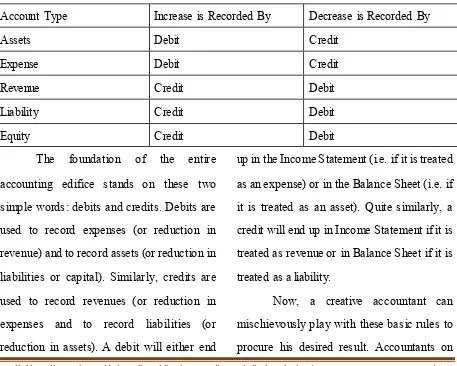
the books of accounts. The below given table
explains for the readers that if an item
increases or decreases how this will be
treated in the accounting journal.
Table 1: Debits & Credits Rule
Account Type Increase is Recorded By Decrease is Recorded By
Assets Debit Credit
Expense Debit Credit
Revenue Credit Debit
Liability Credit Debit
Equity Credit Debit
The foundation of the entire
accounting edifice stands on these two
simple words: debits and credits. Debits are
used to record expenses (or reduction in
revenue) and to record assets (or reduction in
liabilities or capital). Similarly, credits are
used to record revenues (or reduction in
expenses and to record liabilities (or
reduction in assets). A debit will either end
up in the Income Statement (i.e. if it is treated
as an expense) or in the Balance Sheet (i.e. if
it is treated as an asset). Quite similarly, a
credit will end up in Income Statement if it is
treated as revenue or in Balance Sheet if it is
treated as a liability.
Now, a creative accountant can
mischievously play with these basic rules to
Available online: https://edupediapublications.org/journals/index.php/IJR/ P a g e | 947
demand of management or owners
artistically manipulate these instruments to
get the desired results. An expense may be
treated as an asset to improve book profits, or
alternatively an asset may be expensed to
show lower profits. Similarly, revenue may
be transferred to a liability (through
provisioning) to reduce book profits, or a
liability may be dressed up as a revenue to
show higher book profits virtually at the
whims of the accountant.
RESULTS
Delimiting the concept of creative
accounting from that of fraud is important.
Even though creative accounting is based on
the objectivity in the professional reasoning
of the person drafting the accounting
information, which is realised by applying
the best policies and accounting options,
creative accounting is mostly perceived in a
negative way, as a negative creation meant to
draft financial statements that correspond to
managers’ desires with regard to the
company’s financial position and
performance. This way, financial statements
are not what they are supposed to be
according to legislation, but what
management wants them to be. Thus, due to
the fact that the creative accounting
technique involves procedures of, doctoring”
financial statements without breaking the law,
it’s not considered an act of fraud.
Practitioner Jameson states that "The
accounting process involves operating with
different opinions and solving conflicts
between them in order to present the results
generated by transactions. This kind of
flexibility facilitates manipulation, deceit
and misrepresentation. These activities,
practiced by some of the more unprincipled
members of the profession, are starting to be
known as creative accounting. Creative
accounting does not break the law and
accounting rules. It respects their wording,
but not their spirit. One could say that the
appearance of creative accounting was also
influenced by the flexibility of international
accounting regulations. Creative accounting
is mostly perceived in a negative light
(negative creation), meant to lead to the
drafting of financial statements that
correspond to the managers’ wishes with
regard to the company’s financial position
and performance. This way, financial
statements are not what they are supposed to
Available online: https://edupediapublications.org/journals/index.php/IJR/ P a g e | 948 them to be (interested discourse). The fact
that creative accounting is simultaneously
perceived as an instrument for realizing
accounting interests, as well as doctoring
financial statements, is the result of the
accounting policies adopted by a company in
order to produce and communicate
information.
On one side, this construction is based on a
series of rules and regulations with regard to
the classification, acknowledgement,
evaluation and processing of the elements in
the financial statements and, on the other side,
on professional reasoning in selecting the
best options. The development of creative
accounting, especially the perverted part
favoured by loopholes in accounting rules,
has direct repercussions, such as the loss of
accounting information credibility,
especially from investors and financiers.
Fraud is an intentional and alicious activity
perpetrated at the expense of clients or
investors, be it of civil or criminal nature, at
the expense of the company or for its benefit,
inside or outside of the company, by
managers or non-managers. From the
category of frauds perpetrated by managers,
financial statement fraud produces the most
losses at company level and has the purpose
of misrepresenting the financial truth in order
to obtain certain advantages or hide certain
losses or negative performances. The main
schemes, the objective of which is financial
statement fraud are caused by inadequate
financial reporting and make use of
recognizing income in advance, overvaluing
assets, undervaluing expenses and debt and,
in the case of asset fraud, an important role is
played by embezzlement.
Even though creative accounting and fraud
mostly occur when the company is
experiencing financial difficulties, they are
not considered synonymous, creative
accounting involves, doctoring accounting
information, a process that is not considered
illegal, but certainly does not comply with
ethics standards. As for the perception in the
business environment with regard to the two
research subjects, the opinions are mixed.
Based on the research conducted on
companies in our country, most people who
answered the study’s questions are weary of
the subject, considering that any deviation
from accounting ethics represents a way of
deceiving the user of the accounting
Available online: https://edupediapublications.org/journals/index.php/IJR/ P a g e | 949 main differences between the two concepts,
based on the basic principles, the methods of
execution and the impact that they have on
the information and the persons involved.
The Ethical Perspective of Creative
Accounting
The ethics of bias in accounting policy
choice is reviewed at the ‘macro’ level of the
accounting regulator. This can similarly be
applied to the bias in accounting policy
choice at the ‘micro’ level of the
management of individual companies that is
implicit in Creative Accounting.
The study appears to take a teleological view
of accounting in the private sector, allowing
managers to choose between the alternatives
permitted in “loose” standards to achieve
their desired end, but to make a deontological
view of accounting in the public sector where
he calls for tighter standards to prevent such
manipulation. We might ask whether the
presence or absence of market discipline
justifies such ethical inconsistency. Ruland
also discusses the distinction between a
‘positive’ responsibility, which here would
be the duty to present unbiased accounts, and
a negative, responsibility, where managers
would be responsible for states of affairs they
fail to prevent. Thus, Ruland gives priority to
the positive. Within Revsine’s framework,
where all outcomes are deemed to be
impounded in the process of contracting and
price-setting, the distinction is not
acknowledged. The ‘duty to refrain’ would
imply avoiding the bias inherent in creative
accounting while the ‘duty to act’ would
involve pursuing the consequences to be
achieved by creative accounting.
To the professional accountant, creative
accounting generally seems to be regarded as
ethically dubious. In the senior partner of
price water house coopers Conner observed.
“When fraudulent reporting occurs, if
frequently, is perpetrated at levels of
management above those for which internal
control systems are designed to be effective.
It often involves using the financial
statements to create an illusion that the entity
is healthier and more prosperous than it
actually is. This illusion sometimes is
accomplished by masking economic realities
through intentional misapplication of
Available online: https://edupediapublications.org/journals/index.php/IJR/ P a g e | 950 Table 2: Three most frequently cited ethical problems
% of Respondents
Conflict of Interest 51.9
Client proposal to manipulate accounts 50.1
Client proposal for tax evasion 46.8
Ethical Behaviour of Accounting
Professionals
Wide spread corruption in the business
environment seems to be the order of the day
in almost all societies. Business practices
have always been connected with fraud and
have always been affected by financial
collapses. In the corporate scandals have
involved such companies as independent
insurance and BCC. The recent time has
witnessed the collapse of a number of
corporate giants in the USA such as Enron
Corporation, Tyco International, World Com,
Global Crossing, Arthur Anderson,
Parlmalat, etc. However, these have cost not
only billion of dollars to the stakeholders but
also have damaged the accounting profession.
The business community is also plagued with
ethical problems. Cases of unethical, cases of
business behavior and corporate scandals
involving such large companies. Also, the
collapse of many banks and other financial
institutions has also been linked with various
ethical violations. Moreover, these cases of
corporate scandals and collapses were
allegedly a result of widespread fraud, in
which accounting firms and professionals
played significant roles. Management of the
companies were found to engage in
fraudulent activities and aided by audit firms,
they were able to cover up these activities
through fraudulent financial reporting,
thereby misleading and investing public.
This situation, which saw the demise of a
once respected accounting firm, Arthur
Anderson is of particular concern to the
accounting profession. Accounting
professionals, who are historically regarded
as the watch dog of the society, are being
implicated in these scandals which have cost
the investing public huge financial losses.
Accountants and the accountancy profession
exist as a means of public service, the
Available online: https://edupediapublications.org/journals/index.php/IJR/ P a g e | 951 a mere means of livelihood is that the
profession is accountable to standards of the
public interest, and beyond the compensation
paid by clients.
Accounting ethics is the study of moral
values and judgments as they apply to
accountancy. However, due to the diverse
range of accounting services and recent
corporate collapses, attention has been drawn
to ethical standards accepts within the
accounting profession. These collapses have
resulted in a wide spread disregard for the
reputation of the accounting profession. In
order to combat the criticism and present
fraudulent accounting, various accounting
organizations and governments have
developed regulations and remedies for
improved ethics among the accounting
profession.
The nature of the work carried out by
accountants and auditors requires a high
level of ethics. Potential shareholders,
shareholders and other users of the financial
statements rely heavily on the yearly
financial statements of a company as they
can use this information to make an
information decision about investment. The
above mentioned rely on the opinion of the
accountants who prepared the statements as
well as the auditors that verified it, to present
a true and fair view of the company.
However, knowledge of ethics can help
accountants and auditors to overcome ethical
dilemmas, allowing for the right choice that,
although it may not benefit the company, will
benefit the public who relies on the
accountants/ auditors reporting.
The outcomes of the many cases of unethical
behavior have underscored the importance of
ethics in business; companies’ bankruptcies,
loss of investments and savings and loss of
public confidence have shown that unethical
behaviour in business is not only morally
wrong but also disastrous for an economy.
However, for the good of everyone,
including the business organizations
themselves is vitally important that business
be conducted within an ethical framework
that builds and sustains trust.
An entity’s performance is assessed by
comparing the entity’s financial results with
its financial objective and comparing the
entity’s service performance results with its
service performance objectives. Service
performance objectives and results are
Available online: https://edupediapublications.org/journals/index.php/IJR/ P a g e | 952 quantities of goods and services provided.
Financial results and objectives are reported
in financial terms such as financial surplus.
Where service performance objectives
predominate, entities report primarily in
non-financial terms where financial
objectives predominate (as for example most
private sector for profit entities). In the
public sector, many entities have both service
performance objectives and financial
performance objectives. Accountability is
the requirement for one party to account to
another party for its performance over a
given period. For example, directors are
accountable to shareholders.
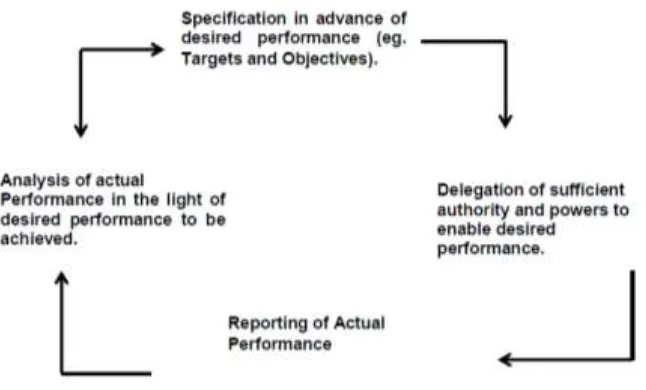
Figure 2: The four (4) components of accountability
To fulfill the accountability role financial
reports should reflect the nature and
dimensions of performance that are relevant
to the entity. Accountability requires that
financial reports.
(a) Identify the objectives and targets
normally established by formal process.
(b) Measure actual achievements against
those objectives and targets. Such objectives
and targets may be financial or non-financial.
Traditionally, financial reporting has focused
on providing information about past
transaction and events. To meet the
objectives of financial reporting, the entity
might usefully supplement historical
information by providing.
(a) Interpreting Comment on the financial
information supplied.
Available online: https://edupediapublications.org/journals/index.php/IJR/ P a g e | 953 Interpretive comment could point out the
relationship between material changes in
financial elements and the entity’s current
activities, external environment or objectives.
Narrative, for example, can provide
information about an entity’s physical
resources, resulting in improved
understanding of the entity’s financial
position. Narrative comment is particularly
relevant in reporting service performance.
Prospective information could take either
narrative or quantitative form. Narrative
information could provide an assessment of
the entity’s prospects, focusing on how
anticipated changes in the economic
environment might affect results, liquidity
and risk. Quantitative information could take
the form of predictive results for operations,
financial position and cash flows, based on
assumptions about future economic
conditions and courses of action. For
example, local government budgets usually
set the basis of a rate, levy, user change or
other source of funding. Further, the
publication of financial budgets and other
prospective information at the beginning of a
reporting period, and the later comparison
with actual results, are essential to the
accountability of public sector entities.
STRATEGIES USED IN AVOIDING
CREATIVE ACCOUNTING
One of the identified ways through which
accountants should avoid creative accounting
is to ensure his ability of preparing a sound
financial statement that is fraud free, and to
ensure proper accountability, transparency
and due process. The accountants should
render stewardship activities that will meet
up with expectations of his principals,
shareholders, potential stakeholders and
management boards and as well as
accounting standards. However, any attempt
not to comply with the laid down financial
principles, rules and regulation would have
great effect on his profession.
Accountants should have sound general
education that enables them understands the
other functional areas of business and to
interact better with other functional staff in
the organization. In addition, he requires
basic and specific accounting knowledge
upon which to build on the technical
accounting skills. The accountants should
not indulge in the production of improper
Available online: https://edupediapublications.org/journals/index.php/IJR/ P a g e | 954 financial statement, mis-appropriation of
funds, either to over or under state financial
statements or any mis-representation in any
form at all. Any accountant found in
financial frauds should be brought to book to
serve as a deterrent to others.
The accountants should ensure that they
received the professional and skill training in
accounting. There is always the contention
that training produces acomplete individual.
The accountants involved with the
preparation and presentation of financial
reports must be trained in the act to imbibe
the ethics of the profession, rules that are
acceptable and the principles that must be
observed. Also, the accountant requires
continuous on-the-job training to deeper his
proficiency especially in the areas of
communication skills and information
communication technology (ITC).
The accountants, like every other worker
require a conducive and an enabling work
environment that would facilitate optimum
performance. But the situation on the ground
indicates lack of basic facilities for efficient
accounting service delivery. The theoretical
framework that assists this study is the
Agency Theory which means a conceptual
relationship between the principal and the
agent. Here, the agent performs duty on
behalf of another called his principal. A
person who has given express or implied
authority for another to as an agent on his or
her behalf is called a principal while on the
other hand, a person who is employed with or
for the purpose of putting his employer (the
principal) into legal relationship with the
third parties is known as an agent.
The accountant as the agent of the
principal (Stakeholders, Shareholders and
Users of the Financial Information) is
expected to discharge his work according to
the specification of accounting principles,
rules and regulations as to avoid
misrepresentation of financial fraud or
malfalsification of figures. The application
of creative show that stakeholders,
shareholders and other users of accounting
information rely heavily on the yearly
financial statements of a company as they
can use this information to make as informed
decision about investment. They rely on the
opinion of the accountants who prepared the
statements, as well as the auditors that
verified it, to present a true and fair view of
Available online: https://edupediapublications.org/journals/index.php/IJR/ P a g e | 955 The relevance of the agency theory to
this study is that knowledge of ethics assists
the accountants and auditors to overcome
ethical dilemmas, allowing for the right
choice that may not benefit the company,
rather will benefit the public who relies on
the accountants/ auditors reporting. Cottel
(1990) added in order to uphold strong ethics;
an accountant must have a strong sense of
values, the ability to reflect on a situation to
determine the ethical implications, and a
commitment to the wellbeing of others.
Research Question 1
To what extent does a creative accounting
practice affect the financial Reporting
system?
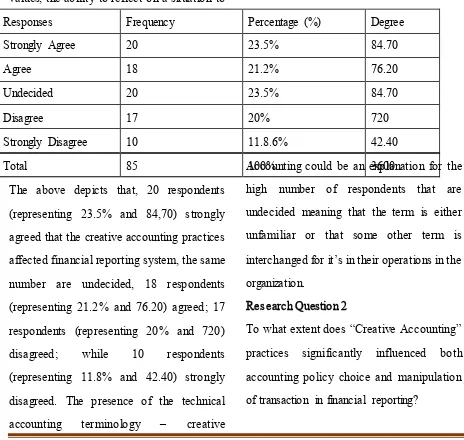
Table 3: Respondents Rating on the Extent
Creative Accounting Practices Affect the
Financial Reporting System
Responses Frequency Percentage (%) Degree
Strongly Agree 20 23.5% 84.70
Agree 18 21.2% 76.20
Undecided 20 23.5% 84.70
Disagree 17 20% 720
Strongly Disagree 10 11.8.6% 42.40
Total 85 100% 3600
The above depicts that, 20 respondents
(representing 23.5% and 84,70) strongly
agreed that the creative accounting practices
affected financial reporting system, the same
number are undecided, 18 respondents
(representing 21.2% and 76.20) agreed; 17
respondents (representing 20% and 720)
disagreed; while 10 respondents
(representing 11.8% and 42.40) strongly
disagreed. The presence of the technical
accounting terminology – creative
Accounting could be an explanation for the
high number of respondents that are
undecided meaning that the term is either
unfamiliar or that some other term is
interchanged for it’s in their operations in the
organization.
Research Question 2
To what extent does “Creative Accounting”
practices significantly influenced both
accounting policy choice and manipulation
Available online: https://edupediapublications.org/journals/index.php/IJR/ P a g e | 956 Table 4: Respondents Rating on the Extent
Creative Accounting Practices Significantly
Influence both Accounting Policy Choice
and Manipulation of Transaction in Financial
Reporting.
Responses Frequency Percentage (%) Degree
Strongly Agree 45 53% 1900
Agree 20 23.5% 84.70
Undecided 11 12.9% 46.60
Disagree 6 7.1% 25.40
Strongly Disagree 3 3.5% 12.70
Total 85 100% 3600
Majority of respondents (45), representing
53% (1900) strongly agreed that creative
accounting practices significantly influenced
both accounting policy choice and
manipulation of transaction in financial
reporting, 20 respondents (representing
23.5% (84.70), agreed; 11 respondents
(representing 12.9%) (46.60), are undecided,
6 respondents (representing 7.1%) (25.40),
disagreed; while 3 respondents (representing
3.5% (12. 70) strongly disagreed with the
above information.
Research Question 3
To what extent will a well designed
framework of accounting regulation (by
regulatory agencies) curb creative
accounting practices in corporate financial
reporting?
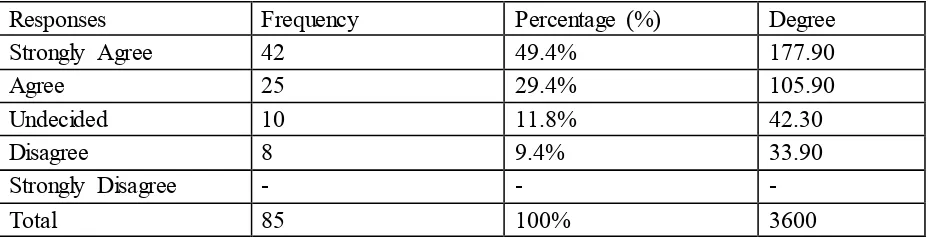
Table 5: Respondents rating on the Extent a well Designed Framework of Accounting
Regulation will Curb Creative Accounting Practices in Corporate Financial Reporting
Responses Frequency Percentage (%) Degree
Strongly Agree 42 49.4% 177.90
Agree 25 29.4% 105.90
Undecided 10 11.8% 42.30
Disagree 8 9.4% 33.90
Strongly Disagree - - -
Available online: https://edupediapublications.org/journals/index.php/IJR/ P a g e | 957 Table 5 show that majority of the
respondents (42), representing 49.4%
(117.90), strongly agreed that a well
designed framework of accounting
regulation (by regulatory agencies) will curb
creative accounting practice in corporate
(financial) reporting; 25 respondent,
representing 29.4% (105.90), agreed;
10respondents, representing 11.8% (42.3%),
are undecided, 8 respondents, representing
9.4% (33.90%), disagreed, while non
strongly disagreed.
CONCLUSIONS
The findings of the study serve as
the basis for making the conclusion below:
Creative Accounting offers a formidable
challenge of the accounting profession which
when carried to extreme negativity has cast
aspersion on the credibility of accounting
principles and standards. In general, Creative
Accounting lends itself as a deceitful and
undesirable practice. The ethical implication
of the Creative Accounting raises the need
for a close scrutiny of the potential abuse of
accounting policy choice and manipulation
of transactions. The study brought to the
multi-dimensional nature of the ongoing
financial crises and its effect on financial
reporting by way of increasing adoption of
creative accounting. Creative accounting
offers a formidable challenge of the
accounting profession which when carried to
extreme negativity has cast aspersion on the
credibility of accounting principles and
standards. In general, creative accounting
lends itself as a deceitful and undesirable
practice. The effect of the creative
accounting raises the need for a close
scrutiny of the potential abuse of accounting
policy choice and manipulation of
transactions.
This study therefore, concludes
that this practice of creative accounting
which presents itself in the form of share
price manipulation, profit or accounts
misstatements and insider trading in the NSE
could be part of the explanation for the recent
crash of the NSE. Hence, the need for
standard setters regulators and professional
bodies to not only work towards the global
adoption of one single set of high quality
accounting standard, but also the need for
strengthening enforcement and monitoring
mechanisms. This would assist to enhance
Available online: https://edupediapublications.org/journals/index.php/IJR/ P a g e | 958 rebuild and sustain the warning confidence
of financial investors.
REFERENCE:
Drucker, P. (1990), The New Realities,
Harper and Row, New York.
Drury, C. (2000), Management & Cost
Accounting, Fifth Edition, United
Kingdom: Business Press Thomson
Learning.
Feleaga, N. and Malciu, L. (2002),
Politici si op•iuni contabile, Fair
Accounting versus Bad Accounting,
Bucuresti: Editura Economica.
Horngren, C.T., Foster, G. and Datar,
S.M. (1997), Cost Accounting – A
Managerial Emphasis, New Jersey:
Prentice Hall.
Ionascu, I. (1997), Epistemologia
contabilita•ii, Bucuresti: Editura
Economica.
Ionascu, I. (2003), Dinamica doctrinelor
contabilita•ii contemporane – Studii
privind paradigmele si practicile
contabilita•ii, Bucuresti: Editura
Economica.
Johnson, H.T. (1992), Relevance
regained, The Free Press, New York:
MacMillan.
Malciu, L. (1999), Contabilitate creativa,
Bucuresti: Editura Economica.
Scapens, R.W. and Roberts, J. (1993),
Accounting and control: a case study of
resistance to accounting change,
Management Accounting Research,
March, vol. 4, no. 1, pp. 1-32, DOI:
10.1006/mare.1993.1001.
Vámosi, T.S. (2000), Continuity and
change; management accounting during
processes of transition, Management
Accounting Research, vol. 11, no. 1, pp.
27-63, DOI: 10.1006/mare.1999.0122.
Woods, M.D. (1989), How we changed
our accounting, Management Accounting
(USA), February, pp. 43-45.
Anichebe, A. S. (2009). Corporate
Financial Accounting and Reporting.
Onitsha: Ade Graphics and Publisher, 31