1
Students’ conception of set theory through
a board game and an active-learning unit
Surasak Pawaa, Parames Laosinchaia, Artorn Nokkaewb, and Wararat Wongkiaa
Corresponding author: Wararat Wongkia ([email protected])
aInstitute for Innovative Learning, Mahidol University, Nakhon Pathom 73170, Thailand bFaculty of Education, Naresuan University, Pitsanulok, 65000, Thailand
Keywords: Active learning; game-based learning; board game; teaching mathematics; set
theory
Abstract
We investigated whether two different learning interventions, Setarea board game and an active-learning unit, can promote the concepts of set theory in secondary students. Setarea was developed to help students learn set theory through the game’s components, mechanics, and missions. The game contained various decks of cards (collections), while its mechanics allowed players to perform different actions on the sets of cards (operations). The game’s missions required students to solve problems both individually and cooperatively. In the active-learning unit, a series of tasks related to set theory were provided. Students also cooperatively completed the provided tasks. The formal definitions and notations were introduced only in the active-learning unit. Seventh graders (have not learned), 9th graders (about to learn), and 11th graders (have learned) were recruited. For each
grade, students were separated into two groups, engaging in the different learning interventions. We employed a pre-test–intervention–post-test design. In addition, we examined the students’ flow experiences which included three main dimensions: enjoyment, concentration, and control. A total of 183 Thai secondary students voluntarily participated in this study. The results revealed that both interventions significantly improved the students’ understanding, although no statistically significant differences between the two groups were found. Additionally, for each grade level, the students’ overall flow experiences from the board-game group were higher than those from the active-learning group, indicating that the board game was more immersive than the active-learning unit.
Introduction
Mathematics is a subject disliked by students due to its conceptual difficulty, instructional factors, and their prior failure to learn this subject (Gafoor & Kurukkan, 2015). However, mathematics is fundamental to learning other sciences and developing higher-order thinking skills, particularly logical thinking and problem-solving skills (Firdaus, Kailani, Bakar, & Bakry, 2015; Nicolas & Emata, 2018). Meanwhile, set theory, usually introduced in secondary-school curricula, is foundational for further mathematical studies (Wegner, 2014). It has also contributed to the understanding of real-world phenomena (Dogan, 2011; Dogan-Dunlap, 2006). Although they may disagree, all students have some concept of sets. For example, when young children are asked to count animals in a picture, they have to know which ones are animals and which ones are not before counting. This is an initial concept of a set. Despite its instinctive nature, several learning problems have been described in the literature. Fischbein and Baltsan (1999) found that the collection model could lead students to a misconception of a set in the mathematical sense. Also, the idea of an empty set was rejected by some students. They also rejected that two identical elements in a set must be counted as one. Moreover, Bagni (2006) reported that two major concepts, inclusion and belonging, were particularly difficult for students to distinguish.
2
things or concepts (Demirci, 2017; Prince, 2004). Several methods for teaching and learning set theory have been proposed, usually with satisfactory results (Sengul & Katranci, 2012; Wegner, 2014).
Board games are alternative learning tools in different educational settings. A number of research studies on game-based learning indicated the benefits of using board games to promote life skills and provide learning experiences for people of all ages and in all subjects (Elofsson, Gustafson, Samuelsson, & Träff, 2016; Treher, 2011). Students learn while they are playing without realising that they are learning. Games can attract players’ attention, causing them to concentrate and leading to their enjoyment; this is a part of flow experience. Moreover, board games can improve students’ satisfaction in the classrooms.
Difficulty in learning set theory has inspired us to create alternative mathematics activities that are meaningful and enjoyable. Thus, we developed a board game called Setarea for learning this topic. The sub-concepts of set theory, namely set, elements, subset, powerset, operations on sets, and cardinality of set are embedded in the game’s components, mechanics, and missions in order to help students learn the concept in a different context. To evaluate the effectiveness of our board game (BG) against an active-learning unit (AL), we also designed a separate series of tasks for a different group of students to cooperatively help each other to construct the same sub-concepts. These tasks were followed by the introduction of definitions and notations, whereas, in BG, these notations were introduced only after the post-test. Students’ learning at different levels (grades 7, 9 and 11) was investigated to answer three research questions (RQs):
1. To what extent does students’ understanding of set theory improve after learning from the two developed treatments (BG and AL)?
2. To what extent are students’ understanding of set theory different between the two developed treatments?
3. To what extent are students’ flow experiences different between the two developed treatments?
Literature review
Active learning approach
Active learning is a learning approach based on constructivism wherein learning occurs mainly through active exploration. To facilitate learning, instructors should provide opportunities for students to construct their own understanding (Prince, 2004). Making meaning of their experiences is the main learning mechanism wherein students can adapt their existing knowledge and understanding to construct meaningful learning with more and deeper skills. A number of research studies in mathematics education have revealed the influence of active learning strategies on teaching and learning, especially at the secondary level (Davidson, 2015; Martins & Teodoro, 2016; Tok, Bahtivar, & Karalok, 2015). Even though active learning has been adapted to diverse contexts through several types of activities, it is not obvious what active means and how to conduct an active classroom.
Game-based learning approach
3
form or another (Ku, Chen, Wu, Lao, & Chan, 2014). Especially in the educational context, game-based studies revealed the impacts of implementation such as better learning achievement, increased motivation, and positive attitude in many disciplines. Games also generated longer on-task behaviors than other activities (Bragg, 2012b). Educational games including computer games (Dorji, Panjaburee, & Srisawasdi, 2015), card games (Ocampo, Ancheta, Baddo, & Dugay, 2015), and board games (Daren, 2007) were recommended for learning the subject matters. Board games have existed for a long time in several forms (i.e., chess, checkers, or Go). These board games emphasise the development of thinking skills and strategies to complete the game goal. Moreover, board games have become more interesting for educators as a learning tool to enhance understanding and motivate students to learn with enjoyment (Elofsson et al., 2016; Qian & Clark, 2016). With tasks, missions, and situations, board games allow players to link their game experiences to learning outcomes (Treher, 2011). Currently, there is increased attention on studying the influence of educational games on students’ mathematical performance. Several studies revealed high mathematical performance and positive attitude toward developed board games (Elofsson et al., 2016; Ramani, Siegler, & Hitti, 2012).
Flow in education
Bakker (2005) proposed that three components—absorption, enjoyment, and motivation— should be the main dimensions of gaming experiences. His study was the first to apply the three-dimension model to the education context. A flow experience occurs when students’ skills and the demands of activities are balanced (Bakker, 2008). Pearce, Ainley, and Howard (2005), on the other hand, proposed that enjoyment, concentration, and control can be employed to measure the overall state of flow. Enjoyment refers to the student being engaged in the activity. Concentration refers to the student concentrating and paying total attention to the activity. Control refers to the student’s feeling of heightened control over responses through the activity. A number of studies applied and adapted the dimensions of Pearce et al. (2005) to investigate students’ flow experiences in playing card games (Hong et al., 2013), board games (Khan & Pearce, 2015), and computer games (Chang, Liang, Chou, & Lin, 2017).
Methodology
Participants
A total of 183 students in grades 7, 9, and 11 participated in this study. Grade 7 and 9 students had not yet learned set theory, while grade 11 students had. The students from each grade were divided into two groups: the game-based learning group and active learning group. The study was conducted for a week in the first semester. For ethical consideration, the guardians of all the participants who voluntarily took part in the study were asked for permission beforehand after being informed about the details of the experiments.
Research design
4
in groups of four or five. Terms and symbols were introduced during the activity. At the end of each task, the teacher summarised the concepts the students had learned.
The students in both BG and AL groups were finally asked to take the parallel CUT as a post-test and complete the flow experience questionnaire (FEQ). A debriefing session was conducted for each BG group to link the game situations that students had experienced with the concepts of set theory. Finally, some students in each BG group were selected for a task-based interview.
Experimental treatments
The Setarea board game (for BG)
Setarea was designed to help players construct the concepts of a set, subset, powerset, operations on sets, and cardinality of a set, while accomplishing missions individually and collaboratively with the help of concrete manipulatives such as cards and diagrams. The board’s layout and players’ movement are Monopoly-like (Hasbro, Inc.) while a player assumes the role of a citizen. Unlike Monopoly, however, the game’s exchange media are career cards, each with a specific value. The cards are used in all activities and their values determine the player’s points. The game ends when all the missions are completed, and the player with the most points wins. Five kinds of actions in the game, together with their specific learning objectives will be described next. These actions happen when players land on specific boxes.
• Property management: Set
The most basic actions happen when a player lands on a property. Each property corresponds to a specific career. That player may (1) get career cards (a specific career, random characters) from the central government; (2) exchange a certain number of career cards for the deed; or (3) pay career cards to the owner. Since players need to manage their collections of cards in each career, the concept of a set as a collection of similar objects should be developed.
• Individual mission: Subset
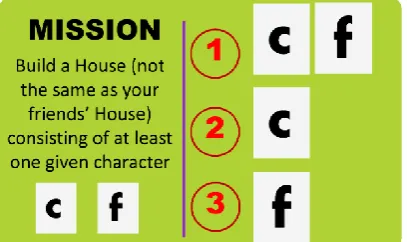
Two individual mission cards are given to each player at the beginning of the game. Each mission card consists of two or three different characters. To complete a mission, a player has to build a collection of human cards comprising at least one of the given characters (subset). The player earns twice the points on these cards. This mechanism provides an incentive for players to collect cards and complete the missions. Figure 1 illustrates a mission and its completion. This specific mission contains two characters (c and f in (1)) and a player may complete it using one card as in (2) or two cards as in (3). Players are allowed to point out others’ mistakes.
5
• Group mission: Powerset
The task required to complete a group mission is similar to that of an individual mission. However, this type of mission requires students to collaboratively work to accomplish the task. When a player lands on a group mission box, a group mission is opened. Each player then takes turns building a collection without repeating a previous player’s collection. Figure 2 shows an example of a group mission and how to complete it. In this case, the first player may select one of the three collections and decide to select to use both cards (highest points). The next player may choose one of the two cards while the last one who joins the mission has only one way to complete the mission. Players without a required card will be skipped. Players may freely interact and learn from each other. As an added incentive to join the mission, each participating player can upgrade a property for free. Finally, when all the different collections are constructed, they will see the collection of all subsets (powerset).
Figure 2: Example of a group mission related to powerset
• Group mission: Cardinality of set
Another kind of the group mission relates to the concept of the cardinality of a set. A Venn diagram is provided for players to manipulate and collaboratively work to complete this kind of mission. Figure 3 is an example of a cardinality-related group mission and its completion. After the group mission is opened, each player takes turns placing two distinct cards on the diagram (2) corresponding to the given situation (1) until the diagram is filled (3). They are allowed to move or rearrange the cards on diagram. To complete the mission, they have to answer the given question (4) correctly. By physically placing cards on the diagram and checking the required conditions, players should begin to notice how the cardinality of each area in the diagram relates to the given conditions and to each other. Once they are familiar with this kind of task, the number of sets increases to three.
6
• Election: Operations on sets
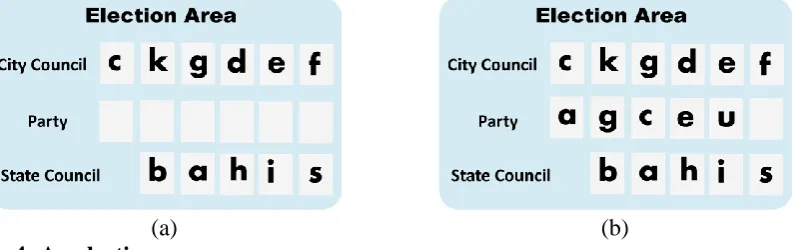
Next, we give an example of an action that connects to the concepts of set operations. At the beginning of the game, each player gets an election mark, which has to be kept secret. There are four different election marks corresponding to four set operations (i.e., union, intersect, difference, and complement). When player A lands on an election box, election happens. In the election area (Figure 4(a)), each player has to put one card as the representative on one of the party boxes (Figure 4(b)) by guessing what player A’s election mark is and by considering all cards on the selected council (City Council or State Council). In this case, we suppose that the election is held against the City Council. The important rule is that all the cards in the party boxes have to be distinct, which is the main concept of a set.
(a) (b)
Figure 4: An election area
Player A is the last to put a card on the party box after considering all the cards appearing in the election area (Figure 5(a)). After all players put their cards in, player A opens his/her election mark and receives the cards based on the ability of the election mark. In this case, suppose that this election mark has the ability to get all the cards which are the same between the party and City Council (intersection). Player A will have three more cards from the party (Figure 5(b)). The rest of the cards will be returned to their owners. To benefit the most from an election, a player has to consider all the cards and the result of the set operation.
(a) (b)
Figure 5: The mechanic of election
The active-learning unit (AL)
7
• Task 1: Set
Students list all members of given sets (e.g. the set of days in a week). Here the terms “set,” “elements” of a set, “belong to” a set, “empty set”, and “the cardinality” of a set are introduced.
• Task 2: Subset
Each student is given sets with semantic descriptions (e.g., the set of the letters in the word “BATMAN” or “ANT”). A series of the given sets are designed to let students see the inclusion (subset) and equality relations. Each student is asked to pair with a friend who has the highest number of common elements. Thus, the students will see the relationship between the two sets. Finally, the teacher and the students discuss the relations between sets. Here, the terms “subset” and “equality” are introduced.
• Task 3: Powerset
From Task 2, students work in groups of four or five to write down all possible subsets of the given sets. They are introduced to the term “powerset.” Then they observe the number of elements of the set and the number of its subsets in order to generalise to the size of the powerset of a given set.
• Task 4: Operations on sets
Students are given eight different cards with specific operations (e.g. {1, 2, 3, 4} * {3, 4, 5} = {3, 4}). Again, they work in groups to categorise these cards by their operations. They have to describe the property of the operation. For example, the “*” operation returns the set of all elements that are in both sets. Here students are introduced to the notation of each operation and the corresponding Venn diagram.
• Task 5: Cardinality of set
Word problems related to the concept of the cardinality of a set are provided. These problems require the application of set operations to solve for the cardinality of sets. Venn diagrams are employed to solve the problems. Here, students acquire the concept of the cardinality of sets. Finally, the teacher and students discuss and conclude the patterns or formulas that they have found.
In conclusion, besides the natures of the activities, the BG and AL groups differ in their sequences of learning. In the active learning unit, students obtain knowledge through a preplanned sequence of learning activities. On the other hand, those in the board game group are encouraged to learn the topics that arise during the game session.
Research tools
Conceptual Understanding Tests (CUT)
To reduce testing effect, we designed five parallel items for the pre- and post-tests. The items were open-ended, requiring students to show how to solve the given tasks. The items were validated by three experts in mathematics education. The Cronbach’s alphas for the pre- and post-tests were 0.82 and 0.84 respectively, showing that they were highly reliable.
Flow Experience Questionnaire (FEQ)
8
ranging from 1 (extremely disagree) to 5 (extremely agree). The Cronbach’s alphas for BG and AL were 0.76 and 0.78 respectively, indicating that the questionnaire was reliable.
Task-based interview
Students in the BG group in each grade were selected for the task-based interview based on their strategies and their successes in the game. They were asked to attempt a sequence of tasks using cards, pencils, and paper. The tasks were similar in content to, but different in context from, those in the game.
Results
The effectiveness of the developed board game and active learning unit was interpreted according to the CUT scores, FEQ, interviews, and observations. All data were analyzed to answer the three research questions (RQ). Quantitative and qualitative methods are mixed to confirm and validate the results.
Students’ learning improvement
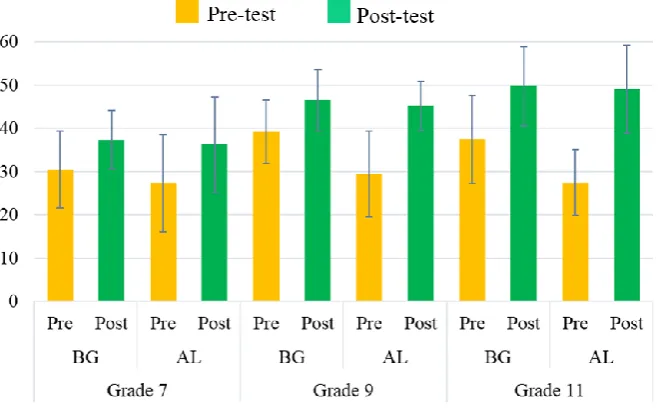
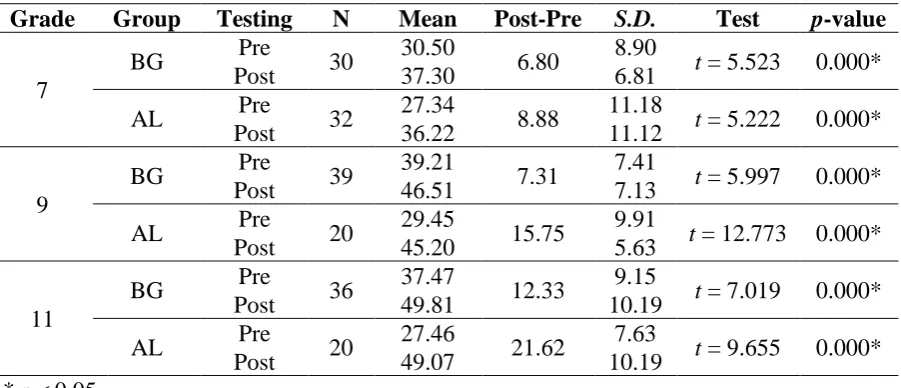
Firstly, to answer RQ1, the students’ learning improvement for each treatment was analyzed from the CUT scores. The individual increases for each group passed the Shapiro-Wilk test of normality. The mean of the post-test scores was significantly higher than that of the pre-test scores for the pair of BG and AL groups in every grade (Figure 6 and Table 1). The differences of the means of the pre- and post-test scores (improvement scores) ranged from 6.80 to 21.62 points. For each treatment, the improvement scores were in ascending order from grade 7 to grade 9 to grade 11.
9 Table 1: Learning improvements
Grade Group Testing N Mean Post-Pre S.D. Test p-value
7
BG Pre 30 30.50 6.80 8.90 t = 5.523 0.000*
Post 37.30 6.81
AL Pre 32 27.34 8.88 11.18 t = 5.222 0.000*
Post 36.22 11.12
9
BG Pre 39 39.21 7.31 7.41 t = 5.997 0.000*
Post 46.51 7.13
AL Pre 20 29.45 15.75 9.91 t = 12.773 0.000*
Post 45.20 5.63
11
BG Pre 36 37.47 12.33 9.15 t = 7.019 0.000*
Post 49.81 10.19
AL Pre 20 27.46 21.62 7.63 t = 9.655 0.000*
Post 49.07 10.19
* p < 0.05
Differences of students’ learning achievements between the BG and AL groups
To address RQ2, whether the treatments affected the learning achievements differently, the pre- and post-test scores of both BG and AL groups were analysed together for each grade.
Pre-test results
There was no significant difference between the means of the pre-test scores of both treatment groups (t = 1.224, p = 0.226) for grade 7, indicating that the students in both the groups had similar prior knowledge regarding the concepts of set theory. However, the means of pre-test scores for grade 9 (t = 2.715, p = 0.030) and grade 11 (Z = 2.719, p = 0.007) were significantly different, with the score of the BG group being higher than that of the AL group for each grade. Thus, t-test was used to analyzed the post-test scores of the 7th graders while ANCOVA was used for the pre- and post-test scores of the 9th and 11th graders.
Post-test results
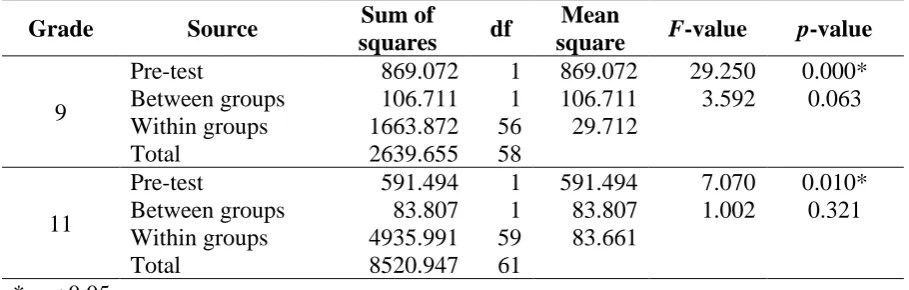
Table 2 shows that there was no significant difference between the post-test scores of BG and AL groups (t = 0.458, p = 0.649) for grade 7, suggesting that both the developed educational board game and active learning activities could similarly enhance the students’ conceptual understanding of the set concepts.
Table 2: t-test of the 7th graders’ post-test scores
Grade Group Testing N Mean S.D. Test p-value
7 BG Post 30 37.30 6.81 t = 0.458 0.649
AL Post 32 36.22 11.12
10
Table 3: ANCOVA test of the 9th and 11th graders’ post-test scores
Grade Source Sum of
squares df
Mean
square F-value p-value
9
Pre-test 869.072 1 869.072 29.250 0.000*
Between groups 106.711 1 106.711 3.592 0.063 Within groups 1663.872 56 29.712
Total 2639.655 58
11
Pre-test 591.494 1 591.494 7.070 0.010*
Between groups 83.807 1 83.807 1.002 0.321
Within groups 4935.991 59 83.661
Total 8520.947 61
* p < 0.05
Students’ concept construction through gameplay
This section interprets some of the students’ actions and interactions while encountering the missions or actions in the game during each stage of conceptual development.
Individual mission: Subset
An individual mission required players to build a collection of cards containing at least one given character. At the early stage, collections with one character were often built to accomplish the mission. They then helped in correcting their friend’s collection to get the most reward by including more cards in the collection. At this stage, they learned to form subsets from what they had done in several similar missions. After that, the students’ behaviour during the missions had totally changed; they spent more time on task to think by manipulating cards in their hands before building a collection. That is, they had formed a conceptual understanding of subset.
Group mission: Powerset
11
Group mission: Cardinality of set
These were the last game missions; the game ended when these missions were completed. In these missions, problems related to the cardinality of sets were provided with diagrams for students to manipulate their human cards. After reading the situation, each player had to contribute two human cards on the diagram. Initially, each student just placed two cards wherever they wanted. After a while, they started helping each other arrange the positions of the cards according to the given situation to get the right answer and finish the mission. Later, in a problem involving three sets, their strategies changed. They considered where the right positions should be before placing any card. Collaboration always happened, and the ideas for solving the task were discussed and shared. At this stage, they had constructed the concept of cardinality through the task. After placing all the cards, they did not have to rearrange any card, and they could also answer the question correctly.
Election: Operations on sets
When an election was held, all players had to join this action. They had to consider the cards on the selected council before placing their cards on the party. Again, they just laid down human cards at first. When the election was completed, some got their cards back while others lost the cards. After becoming familiar with this game action, their strategies totally changed. They considered for a while before placing the cards, which meant that they were concerned about the cards on the council, the election mark of the turn owner, and maybe the possible result of this election. Finally, they could complete the election without any mistakes and without having to read the manual. That is, they had constructed the concepts of set operations.
Students’ flow experience
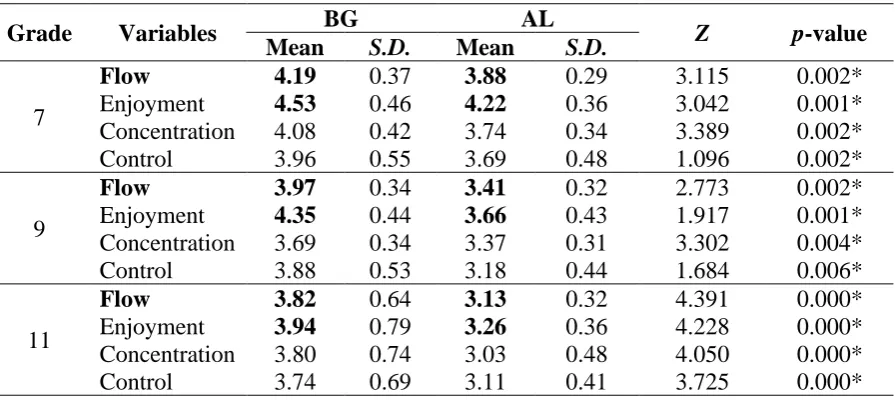
The students’ responses to FEQ were analysed to answer RQ3. The Mann-Whitney U test was employed to compare the flow experiences of the BG and AL groups. Table 4 shows that the mean scores for the overall flow experiences as well as the three underlying dimensions of the two groups were significantly different (p < 0.05). Therefore, we can conclude that the overall flow experience of the BG group was higher than that of the AL group for each grade, indicating that students who were involved in the BG groups were reportedly more immersed in the activity. They had high affective responses which meant that they were participating more willingly as compared to those in the AL groups. Among the flow dimensions, the highest mean scores belonged to enjoyment for both BG and AL groups in every grade.
Table 4: Differences in the means of students’ flow experiences
Grade Variables BG AL Z p-value
Mean S.D. Mean S.D.
7
Flow 4.19 0.37 3.88 0.29 3.115 0.002*
Enjoyment 4.53 0.46 4.22 0.36 3.042 0.001*
Concentration 4.08 0.42 3.74 0.34 3.389 0.002*
Control 3.96 0.55 3.69 0.48 1.096 0.002*
9
Flow 3.97 0.34 3.41 0.32 2.773 0.002*
Enjoyment 4.35 0.44 3.66 0.43 1.917 0.001*
Concentration 3.69 0.34 3.37 0.31 3.302 0.004*
Control 3.88 0.53 3.18 0.44 1.684 0.006*
11
Flow 3.82 0.64 3.13 0.32 4.391 0.000*
Enjoyment 3.94 0.79 3.26 0.36 4.228 0.000*
Concentration 3.80 0.74 3.03 0.48 4.050 0.000*
Control 3.74 0.69 3.11 0.41 3.725 0.000*
12
Discussion
The learning improvements were significant for both the BG and AL groups in all grades. It is clear that the students who attended the two different groups improved their learning which can be explained by the different activities in the two groups. They were encouraged to learn and obtain knowledge in both groups. In the AL groups, the proper sequence of active learning activities was provided to engage students. Meanwhile, the students in the BG groups experienced the embedded concepts through gameplay. The most important factor allowing them to construct knowledge was the game mechanics. Even though the intervention periods were rather short, our designed game missions could drive them to construct the concepts of set theory. Based on the observation and interview, the improvement of the BG groups could be attributed to three aspects of the game, namely the concreteness of the materials and actions, the concepts embedded in the missions, and the coherence of the context. The concreteness of the materials allowed the students to physically manipulate them while completing the missions, thus creating concrete experiences which could be easily processed by their brains and facilitating concept construction. As pointed out by Thompson (1994), the concreteness itself would not be able to facilitate concept construction without properly embedding the intended concept. The coherence of the context helped the students form a schema incorporating different game missions and their corresponding concepts so that they should be able to retain the knowledge. Such retention was evident from the task-based interview where they used Venn diagrams to solve the problems related to the cardinality of three sets. Upon reflection, our designed game features are consistent with the principles of designing an educationally rich game proposed by Russo, Russo, and Bragg (2018).
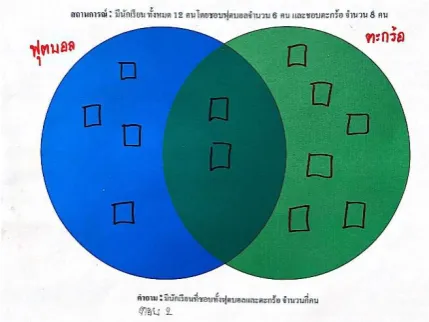
The interview was used to triangulate the results from CUT and to gain more insights into the students’ conceptual understanding. Most of them could solve the given tasks and explain which parts of the game allowed them to solve the related tasks. Some wrote pictures of human cards on the diagrams similar to their experiences in the game missions (Figure 7). Moreover, a group of students could generate the cardinality formula to solve the related problems. This means that the learning had occurred and they could adapt the experiences and understanding from Setarea to new contexts as well.
Figure 7: Student’s response to an interview task
13
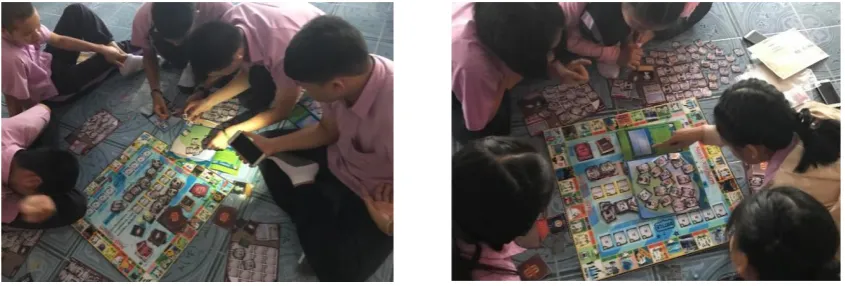
attention to the tasks at hand. In each group, one or two students played the role of the leader, managing and stimulating others to collaborate in the game missions. Additionally, when tracking the post-test scores of these students, large improvements were found. It helped validate why learning achievement could occur despite short-time experiences with Setarea. Additionally, during the interventions, the BG groups spent more time on the tasks than the AL groups which is consistent with Bragg’s (2012b) results.
Figure 8: Interactions among students during game missions
Setarea was as effective as the active-learning unit at raising the students’ understanding. Similar findings were reported by Bragg (2012a) and Siegler and Ramani (2008). However, the main difference between the two approaches was the teacher’s and students’ roles. For the BG groups, the teacher spent time introducing the game components and game rules. When the game began, students may have had a number of questions about the rules. They then enjoyed themselves and had fun. On the other hand, for the AL groups, the teacher had to guide every step of activities. Thus, the students in the BG groups were more active in obtaining knowledge, which could result in being more confident and having better mental ability as reported by Asoodeh, Asoodeh, and Zarepour (2012).
Regarding flow experiences, the results showed that game-based learning significantly enhanced learners’ enjoyment, concentration, and control better than active learning. Board game learning generated more curiosity than active learning. Thus, the students were immersed in a pleasant feeling. Students could also concentrate better and involve themselves more in the learning process. The mechanics of the game enabled students to monitor their accomplishments in the game so that they felt in control of the outcomes. These results were consistent with those of Chang et al., (2017), Chen, Liao, Cheng, Yeh, and Chan (2012), and Khan and Pearce (2015). However, to implement in real classes, teachers or practitioners could consider the diversity of students and time allocation.
Conclusion
14
Acknowledgements
This study was supported by the Development and Promotion of Science and Technology Talents Project (DPST) and The Institute for the Promotion of Teaching Science and Technology (IPST).
References
Asoodeh, M. H., Asoodeh, M. B., & Zarepour, M. (2012). The impact of student-centered learning on academic achievement and social skills. Procedia - Social and Behavioral Sciences, 46, 560–564.
Bagni, G. T. (2006). Some cognitive difficulties related to the representations of two major concepts of Set Theory.
Educational Studies in Mathematics, 62(3), 259–280.
Bakker, A. B. (2005). Flow among music teachers and their students: The crossover of peak experiences. Journal of Vocational Behavior, 66(1), 26–44.
Bakker, A. B. (2008). The work-related flow inventory: Construction and initial validation of the WOLF. Journal of Vocational Behavior, 72, 400–418.
Bragg, L. A. (2012a). Testing the effectiveness of mathematical games as a pedagogical tool for children’s learning. International Journal of Science and Mathematics Education, 10(6), 1445-1467.
Bragg, L. A. (2012b). The effect of mathematical games on on-task behaviours in the primary classroom.
Mathematics Education Research Journal, 24(4), 385-401.
Cai, J., Perry, B., Wong, N.-Y., & Wang, T. (2009). What is effective teaching? In J. Cai, G. Kaiser, B. Perry, & N.-Y. Wong (Eds.), Effective Mathematics Teaching from Teachers’ Perspectives: National and Cross-national Studies. Rotterdam: Sense, 1-36.
Chang, C-C., Liang, C., Chou, P-N., & Lin, G-Y. (2017). Is game-based learning better in flow experience and various types of cognitive load than non-game-based learning? Perspective from multimedia and media richness. Computer in Human Behavior, 71(1), 218–227.
Chen, Z.-H., Liao, C.C.Y., Cheng, H.N.H., Yeh, C.Y.C., & Chan, T.-W. (2012). Influence of game quests on pupils’ enjoyment and goal-pursuing in math learning. Educational Technology & Society, 15(2), 317–327. Daren, L. (2007). Taking students out for a ride: Using a board game to teach graph theory. Proceeding on the
38th SIGCSE Technical Symposium on Computer Science Education Conference, (pp. 367-371). Covington, Kentucky, USA.
Davidson, J. (2015). Active Learning in the Secondary Mathematics Classroom: The Effect on Student Learning.
Senior Honors Thesis, Colorado State University-Pueblo, USA.
Demirci, C. (2017). The Effect of Active Learning Approach on Attitudes of 7th Grade Students. International Journal of Instruction, 10(4), 129-144.
Dogan, H. (2011). Set theory in linear algebra. Mathemetica Aeterna, 1(5), 317–327.
Dogan-Dunlap, H. (2006). Lack of set theory: Relevant prerequisite knowledge. International Journal of Mathematics Education in Science and Technology, 4(6), 401–410.
Dorji, U., Panjaburee, P., & Srisawasdi, N. (2015). A learning cycle approach to developing educational computer game for improving students’ learning and awareness in electric energy consumption and conservation.
Educational Technology &Society, 18(1), 91–105.
Elofsson J., Gustafson, S., Samuelsson, J., & Träff, U. (2016). Playing number board games supports 5-year-old children’s early mathematical development. Journal of Mathematical Behavior,43, 134–147.
Firdaus, Kailani, I., Bakar, N. B., & Bakry. (2015). Developing critical thinking skills of students in mathematics learning. Journal of Education and Learning, 9(3), 226–236.
Fischbein, E., & Baltsan, M. (1999). The mathematical concept of set and the “collection” model. Educational Studies in Mathematics, 37, 1–22.
Gafoor, K. A., & Kurakkan, A. (2015). Why high school students feel mathematics difficulty? An exploration of affective believes. In paper submitted to the UGC Sponsored National Seminar on Pedagogy of Teacher Education–Trend and Challenges, Farook Training College, Kozhikode, Kerala: India.
Hong, J-C., Hwang, M-Y., Chen, W-C., Lee, C-C., Linn, P-H., & Chen, Y-L. (2013). Comparing the retention and flow experience in playing Solitary and Heart Attack games of San Zi Jing: A perspective of Dual Process Theory. Computer and Education, 69, 369–376.
Khan, A. & Pearce, G. (2015). A study into the effects of a board game on flow in undergraduate business students.
The International Journal of Management Education, 13, 193–201.
Ku, O., Chen, S.-Y., Wu, D.-H., Lao, A.-C.-C., & Chan, T.-W. (2014). The effects of game-based learning on mathematical confidence and performance: High ability vs. low ability. Educational Technology & Society,
15
Martins, S. G., & Teodoro, V. D. (2016). ActivMathComp - Computer and active learning as a support of a whole learning environment to calculas/mathematicall analysis. International Journal of Innovation in Science and Mathematics Education, 24(1), 36-53.
Nicolas, C. A. T. & Emata, C. Y. (2018). An integrative approach through reading comprehension to enhance problem-solving skills of grade 7 mathematics students. International Journal of Innovation in Science and Mathematics Education, 26(3), 40–64.
Ocampo, R. O., Ancheta, G., Baddo, J. M., & Dugay, W. (2015). Development, validation and summative evaluation of card pairing game for selected Math 8 topics. Asia Pacific Journal of Multidisciplinary Research,
3(5), 179–186.
Pearce, J. M., Ainley, M., & Howard, S. (2005). The ebb and flow of online learning. Computers in Human Behavior, 21(5), 745–771.
Prince, M. (2004). Does active learning work? A review of the research. Journal of Engineering Education, 93(3), 223–231.
Qian, M., & Clark, K. R. (2016). Game-based learning and 21st century skill: A review of recent research.
Computers in Human Behavior, 63, 50–58.
Ramani, G. B., Siegler, R. S., & Hitti, A. (2012). Taking it to the classroom: Number board games as a small group learning activity. Journal of Educational Psychology, 104(3), 661–672.
Russo, J., Russo, T., & Bragg, L. A. (2018). Five principles of educationally rich mathematical games. Australian Primary Mathematics Classroom, 23(3), 30-35.
Sengul, S., & Katranci, Y. (2012). Teaching the subject “sets” with “Dissociation and Re-Association” (Jigsaw).
International Online Journal of Educational Sciences, 4(1), 1–18.
Siegler, R. S. & Ramani, G. B. (2008). Playing linear numerical board games promotes low-income children’s numerical development. Developmental Science, 11(5), 655–661.
Thompson, P. W. (1994). Concrete materials and teaching for mathematical understanding. Arithmetic Teacher,
41, 556–558.
Tok, S., Bahtiyarb, A., & Karalok, A. (2015). The effects of teaching mathematics creatively on academic achievement, attitude towards mathematics, and mathematics anxiety. International Journal of Innovation in Science and Mathematics Education,23(4), 1-24.
Treher, E. N. (2011). Learning with Board Games. The Learning Key Inc. Retrieved December 15, 2017, from http://www.destinagames.com/pdf/Board_Games_TLKWhitePaper_May16_2011r.pdf