Since the era of modern chemotherapy began (Ehrlich and Shiga, 1904), it has been recognized that the development of resistance to therapeutic drugs can limit their efficacy. Although this was first established for trypanosome parasites with resistance to trypan red (Browning, 1907), we now know that the development of resistance occurs to antibacterial, antiviral and anticancer drugs as well. There is a Darwinian struggle between the pathogen causing the disease and the drug used to treat it. If the disease organism is to survive in the presence of the drug, it has to find a way to overcome its therapeutic effects. A pessimistic view is that development of resistance is inevitable if we continue to use drugs; and a pragmatic approach is to explore ways of counteracting or delaying the onset of resistance so that we preserve the efficacy of these drugs.
We are interested in the mechanisms by which parasitic
nematodes become resistant to anthelmintic drugs. The mechanisms that underlie resistance may be more complex in helminths than in viruses and bacteria, in part because of the larger genome of these pathogens. We have focused our attention on the drug levamisole, which acts as a selective agonist on a sub-set of nicotinic acetylcholine receptors (nAChRs) in nematodes (Robertson et al., 1999; Richmond and Jorgensen, 1999). At therapeutic concentrations, levamisole produces depolarization and contraction of nematode somatic muscle, which leads to paralysis and elimination of the parasite without affecting the host nicotinic receptors. We have observed levamisole-activated single-channel currents in levamisole-sensitive (SENS) and levamisole-resistant (LEV-R) nematode isolates (Robertson et al., 1999). One of the striking differences between resistant and sensitive nAChR receptors is that, in LEV-R, the average
JEB4343
A two-micropipette current-clamp technique was used to record electrophysiological responses from the somatic muscle of Ascaris suum. Levamisole and acetylcholine were applied to the bag region of the muscle using a microperfusion system. Depolarizations produced by 10 s applications of 10µmol l–1 levamisole or 20 s applications
of 10µmol l–1 acetylcholine were recorded. The effect on
the peak membrane potential change of the kinase antagonists H-7, staurosporine, KN-93 and genistein was observed. H-7 (30µmol l–1), a non-selective antagonist of
protein kinases A, C and G but which has little effect on Ca2+/calmodulin-dependent kinase II (CaM kinase II), did
not produce a significant effect on the peak response to levamisole or acetylcholine. Staurosporine (1µmol l–1), a
non-selective kinase antagonist that has effects on protein kinases A, C and G, CaM kinase and tyrosine kinase, reduced the mean peak membrane potential response to levamisole from 6.8 mV to 3.9 mV (P<0.0001) and the mean response to acetylcholine from 5.5 mV to 2.8 mV (P=0.0016). The difference between the effects of H-7 and staurosporine suggested the involvement of CaM kinase II
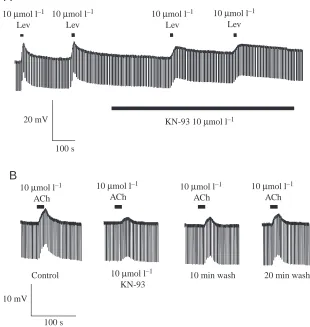
and/or tyrosine kinase. KN-93, a selective CaM kinase II antagonist, reduced the mean peak response to levamisole from 6.2 mV to 2.7 mV (P=0.035) and the mean peak response of acetylcholine from 4.7 mV to 2.0 mV (P=0.0004). The effects indicated the involvement of CaM kinase II in the phosphorylation of levamisole and acetylcholine receptors. The effect of extracellular Ca2+on
the response to levamisole was assessed by comparing responses to levamisole in normal and in low-Ca2+bathing
solutions. The response to levamisole was greater in the presence of Ca2+, an effect that may be explained by
stimulation of CaM kinase II. Genistein (90µmol l–1), a
selective tyrosine kinase antagonist, reduced peak membrane potential responses to levamisole from a mean of 6.4 mV to 3.3 mV (P=0.001). This effect indicated the involvement of tyrosine kinase in maintaining the receptor.
Key words: levamisole, kinase antagonist, H-7, KN-93, genistein, staurosporine, Ascaris summ, nematode, CaM kinase, tyrosine kinase, membrane potential response.
Summary
Introduction
Levamisole receptor phosphorylation: effects of kinase antagonists on membrane
potential responses in Ascaris suum suggest that CaM kinase and tyrosine kinase
regulate sensitivity to levamisole
Sasa M. Trailovic, Alan P. Robertson, Cheryl L. Clark and Richard J. Martin*
Department of Biomedical Sciences, Iowa State University, Ames, Iowa, IA 50011, USA*Author for correspondence (e-mail: [email protected])
probability of the channel being in the open state, Popen, is
some ten times less than in SENS, while the average channel conductance is the same. We have also observed in SENS and LEV-R isolates that the Popen for individual channels
varies dramatically between patches. For example, in the presence of 30µmol l–1 levamisole, P
open values in SENS
varied between 0.090 and 0.003 at a holding potential of –50 mV, which is a 30-fold difference between the highest and lowest Popen value. These observations give rise to the
question of what causes the wide variation in Popen values:
could it be that opening of nAChRs in nematodes is regulated?
The levamisole receptors of nematodes, like those in vertebrates, are understood to be composed of five subunits that surround a central non-selective cation pore. In Caenorhabditis elegans, the subunits that have been described include UNC-38 (an α-subunit), UNC-29 and LEV-1 (β-subunits; Fleming et al., 1997). It is anticipated that other subunits are also involved in forming nAChRs on nematode muscle. A common feature of all signal-transduction proteins, including ion channels, is regulation of their activity by kinase enzymes. The addition of a bulky phosphate group to a serine, threonine or tyrosine residue in the protein introduces a highly charged group into a region that was only moderately polar before and, in the case of an ion channel, affects its opening. We have examined the amino
acid sequence of the α-subunit of the Ascaris levamisole receptor, ASAR-1 (GenBank Accession No. AJ011382), and have identified consensus phosphorylation sites (Kennely and Krebs, 1991) for protein kinase C (PKC), protein kinase A (PKA), protein kinase G (PKG), Ca2+/calmodulin-dependent
(CaM) kinase and tyrosine kinase. These sites are all on the cytoplasmic domain of the subunit between the transmembrane regions TM3 and TM4 (Fig. 1A). Some of these sites are overlapping, suggesting that differing kinases could produce the same effects. Phosphorylation of the nAChRs in nematodes, as in mammalian receptors, is expected to lead to changes in Popen(Colledge and Froehner,
1997; Hopfield et al., 1988; Reuhl et al., 1992) and may contribute to the variation in values we have observed in single-channel experiments.
In experiments on the large parasitic nematode of swine, Ascaris suum, Trim et al. (1999) described inhibitory effects of tamoxifen on the membrane potential responses to levamisole and acetylcholine and suggested the involvement of PKC in modulating the activity of nAChRs. However, a more selective PKC antagonist, chelerythine had no effect. In view of the difficulty in interpreting the effects of tamoxifen, we have examined the effects of a number of other protein kinase inhibitors on A. suum muscle, to test the hypothesis that kinase activity is required to support the activity of nAChRs and is involved in regulating the electrical response to the
10 mV
50 s 10 µmol l–1 ACh
10 µmol l–1 Lev
A
B
1 ARAKNYGGVS VLYVPYEMIW VPDIVLYNNA DSNYNITIST KATLHYSGEV TWEPPAIFKS
61 MCQIDVRWFP FDEQKCHLKF GSWTYSEDLL VLELLDGEPH YELETNEFGE VDNITIVDDG
---TM1--- 121 IDLSDYYPSV EWDIMSRVAI RRTKNYPSCC PQSDAYIDIM YYLELRRKPL FYTVNLVF PC
---TM1--- ---TM2--- ---TM3-- 181 VGISFLTILV FYLPSDSGEK VTLCISILVA LTVFFLLLTE IIPATSISLP LIGKYLLFTM
-TM3--- C, CaM T C,A,G,C A
241 VMVTLSVVVT VISLNLHFRT PTTHRMPEWV KWLFLKFLPK VLFMRRPLAD TDDTYRRVSQ
C CaM
301 RRGDNCEKVA INYHEHRVSR DIERALSTSP VDERIQKLYY SPAVVKAFEN VCFIAELLKK
---TM4---
361 KDRDDKVDED WKYVAMVLDR LFLLLFSFAC FIGTVTILLQ APTLYDRREA NDLQYRPANI
421 STPVTQ
Fig. 1. (A) Acetylcholine (nicotinic) receptor α-subunit of Ascaris suum (ASAR-1 GenBank Accession No. AJ011382) and protein kinase phosphorylation sites. The α-subunit combines with other subunits to form the pentameric receptor ion-channel membrane protein. The regions TM1, TM2, TM3 and TM4 are transmembrane regions. The region between TM3 and TM4 is exposed to the cytoplasm and contains consensus serine (S), threonine (T) and tyrosine (Y) phosphorylation sites. The structural motifs S, T or Y are consensus sites recognized by kinases: C, protein kinase C; A, protein kinase A; G, protein kinase G; T, tyrosine kinase; and CaM, Ca2+/calmodulin kinase. (B) Representative responses to
anthelmintic levamisole and acetylcholine. We tested the effects of both levamisole and acetylcholine, because they may select for a different subset of nAChRs in A. suum, and found that responses to these compounds are labile and inhibited by CaM kinase II antagonists and a tyrosine kinase antagonist. These observations suggest that the responses to acetylcholine and levamisole are not fixed but vary, and this plasticity depends on the phosphorylation state of the nAChRs. They also suggest that resistance to the anthelmintic levamisole may involve changes in the phosphorylation state of the receptor and may not require amino acid changes at the drug’s binding site. The work has relevance to the understanding of mechanisms of anthelmintic resistance.
Materials and methods Ascaris suum
Adult Ascaris suum (Chitwood and Chitwood, 1950) worms were collected from the abattoir in Storm Lake City, Iowa and maintained in Locke’s solution [NaCl (155 mmol l–1), KCl
(5 mmol l–1), CaCl
2(2 mmol l–1), NaHCO3(1.5 mmol l–1) and
glucose (5 mmol l–1)] at 35°C in the dark. Parasites were used
within 5 days of collection.
Preparation
A body-wall muscle-flap preparation was prepared from a 1 cm section, 3 cm caudal to the head of adult Ascaris and pinned, cuticle-side down, onto a Sylgard™-lined chamber, where the intestine was removed. The preparation was microperfused continuously with Ascaris peri-enteric fluid [APF: NaCl (23 mmol l–1), Na acetate (110 mmol l–1), KCl
(24 mmol l–1), CaCl
2(6 mmol l–1), MgCl2(5 mmol l–1), glucose
(11 mmol l–1) and Hepes (5 mmol l–1), pH 7.6 with NaOH]. In
experiments to test the effect of low-Ca2+, APF was prepared
by replacing Ca2+in APF on an equimolar basis with Mg2+.
Application of the perfusate was via a fine microtube placed with a micromanipulator (approximately 500µm) over the muscle cell bag. The rate of perfusion was 1.5 ml min–1 and
this allowed rapid change of the solution bathing the cell being recorded from. The temperature in the chamber was maintained at 32–33°C.
Electrophysiology
A two-microelectrode current-clamp technique was used for measuring the membrane potential and input conductance changes of the Ascaris muscle cell bags. Micropipettes made from borosilicate glass (Clarke Electromedical, Reading, UK) with resistances in the range of 20–40 MΩwhen filled with 2 mol l–1 potassium acetate were used for recording. Two
microelectrodes were carefully inserted into one muscle cell bag with minimum damage. An Axoclamp 2B amplifier, 1320A Digidata Interface, pClamp 8.0 software (all from Axon Instruments, Union City, CA, USA) and Pentium III PC were used to display, record and analyze the membrane potential and injected current. One micropipette was used for recording of membrane potential, while the second was used
for injection of current pulses (hyperpolarizing: 40 nA, 500 ms filtered at 0.3 kHz).
In the present study, we measured the first fast peak membrane potential change response to acetylcholine or levamisole as the nicotinic response to these drugs. In approximately one-third of the responses, we also observed a second component or tail to the response (arrows, Fig. 1B). This component has not been described previously, perhaps because it is more labile than the first component. It may have arisen as a secondary effect of entry of Ca2+ following
stimulation of the nicotinic receptors, or following stimulation of metabotrophic (muscarinic) receptors (Hwang et al., 1999). In the present study, we focused exclusively on the effects of the kinase antagonists on the peak of the first component because it results from activation of extrasynaptic nicotinic receptors on the bag region of the muscle (Martin, 1982), and these receptors are accessible to direct stimulation by perfused drugs and to recording by standard two-electrode current-clamp technique.
Drug solutions
H-7, staurosporine, genistein and KN-93 were purchased from Calbiochem (San Diego, CA, USA). Levamisole hydrochloride and acetylcholine chloride were purchased from Sigma (St Louis, MO, USA). Stock solutions for staurosporine, genistein and KN-93 were prepared in dimethyl sulfoxide (DMSO) and frozen for use following dilution in APF. The maximum concentration of DMSO used (0.1%) did not affect membrane potential or responses to levamisole and acetylcholine. Stock solutions of H-7 and levamisole were prepared each week in APF and stored at 4°C. Stock and working solutions of acetylcholine were prepared freshly every day in APF.
Application of drugs
In all experiments, acetylcholine was added to the bag region of the cell via the microcatheter in the perfusate for 20 s; levamisole was applied for 10 s. Peak membrane potential changes and input conductance were measured. All kinase antagonists were added to the preparation in the perfusate for at least 2 min before the application of acetylcholine or levamisole.
Statistics
All results are presented as means ±S.E.M. Significance was tested using paired t-test (for antagonist influences) or one-way analysis of variance (ANOVA; for influence of Ca2+ on
the levamisole concentration–response relationship). The influences of Ca2+ on the effects of increasing levamisole
concentrations on membrane potential were estimated using the Hill equation: % response = 1/(1+[EC50/XA]n), where EC50
is the concentration of agonist (XA) producing 50% of the
Results
The levamisole and acetylcholine response
We made recordings from muscle cell bags with stable membrane potentials more negative than –20 mV and input conductances of <4.0µS. Recordings were rejected for analysis if there was a non-drug-induced change in resting input conductance of >0.2µS or a resting membrane potential change of >4 mV during the recording.
Fig. 2A shows a representative example of the effect of a 10 s superfusion of the bag region of the muscle with 10µmol l–1levamisole. The first response recorded was a 7 mV
depolarization peak associated with a change in input conductance from 2.26µS to 2.86µS. The membrane potential
recovery after the levamisole pulse was slow, with a t1/2of 94 s.
Fig. 2B shows a representative trace from another preparation of the effect of 20 s of 10µmol l–1 acetylcholine at a resting
membrane potential of –23.8 mV. The peak depolarization of the first response was 3.4 mV associated with a conductance change of 0.31µS. Note, however, that the recovery from acetylcholine was faster (t1/2=13 s) than with levamisole. The
slower recovery time of levamisole, when compared with acetylcholine, was a consistent feature, making the measurement of the effect of kinase antagonists on levamisole responses more difficult to determine because of the longer stable recording conditions that were required. Several factors may have contributed to the slow recovery with levamisole, including the more lipophilic nature of levamisole (Robertson and Martin, 1993), its resistance to degradation by cholinesterase (Eyre, 1970) or its ability to antagonize phosphatases (Schnieden, 1981). However, we did not investigate this phenomenon further.
Effect of H-7 on levamisole and acetylcholine responses H-7 is a broad-spectrum serine–threonine kinase inhibitor with activities against the AGC kinase group of PKA, PKC and PKG, and inhibitor constants (Kis) in the range of
0.1–6.0µmol l–1 (Kawamoto and Hidaka, 1984; Boulis and
Davis, 1990; Hoffman and Newlands, 1991; Li et al., 1992; Reuhl et al., 1992; Hu and Li, 1997; Ku et al., 1997; Calbiochem 1998 data sheet CN: 371955). We superfused H-7 at a concentration of 30µmol l–1over the bag region of the
muscle cell to determine the effect of H-7 on responses to 10µmol l–1 levamisole and 10µmol l–1 acetylcholine
[image:4.612.44.298.256.624.2](Figs 2A,B). The mean control peak levamisole response was 7.6±2.0 mV. In the presence of 30µmol l–1 H-7, the mean
Fig. 2. Effects of H-7. (A) Control levamisole (Lev) response and responses in the presence of 30µmol l–1H-7. Notice that there is a
transient response following the application of H-7 and that the levamisole responses in the presence of H-7 are only a slightly lower amplitude than the control. (B) Effect of H-7 on the membrane potential response to 10µmol l–1acetylcholine (ACh). Representative
recording, control acetylcholine response and responses in the presence of 10µmol l–1H-7 are shown. Notice that the acetylcholine
responses in the presence of H-7 are the same size as the control responses.
10 mV
100 s
H-7 30 µmol l–1 10 µmol l–1
Lev
B
10 mV
100 s 10 µmol l–1
ACh
H-7 30 µmol l–1
A
10 µmol l–1
ACh
10 µmol l–1
ACh
10 µmol l–1
ACh 10 µmol l–1
Lev
10 µmol l–1
[image:4.612.311.561.495.739.2]Lev
Table 1. Summary of the effects of kinase antagonists on peak membrane potential responses to levamisole and acetylcholine
Mean
response P
±S.E.M. Inhibition (paired
Agonist Antagonist N (mV) (%) t-test)
Levamisole Control 5 7.6±2.0
Levamisole H-7 6.0±1.0 21 NS
Acetylcholine Control 5 4.1±0.3
Acetylcholine H-7 3.5±0.6 15 NS
Levamisole Control 6 6.8±1.9
Levamisole Staurosporine 3.9±1.1 43 0.0001 Acetylcholine Control 7 5.4±0.6
Acetylcholine Staurosporine 2.8±0.3 49 0.0016
Levamisole Control 8 6.2±1.0
Levamisole KN-93 2.7±0.3 56 0.035
Acetylcholine Control 9 4.7±0.6
Acetylcholine KN-93 2.0±0.4 47 0.0004
Levamisole Control 8 6.4±0.7
Levamisole Genistein 3.3±0.3 49 0.001
Acetylcholine Control 6 5.6±0.8
response was 6.0±1.0 mV (N=5) or 79% of the control. The mean control peak acetylcholine response was 4.1±0.3 mV and, in the presence of 30µmol l–1 H-7, it was 3.5±0.6 mV
(N=5) or 85% of the control. H-7 did not induce a statistically significant effect on the response to either compound (Table 1). These observations suggest that PKA, PKC and PKG do not have a modulatory effect on nematode nAChRs.
Effect of staurosporine on levamisole and acetylcholine responses
Staurosporine is a broad-spectrum kinase inhibitor with activities against PKA, PKG, PKC, myosin light chain kinase (MLCK), CaM kinase and tyrosine kinase and Kis in the range
of 0.7–70 nmol l–1 (Bergstrand et al., 1992; Coultrap et al.,
1999; Li et al., 1992; Nishimura and Simpson, 1994; Calbiochem 1999 data sheet CN: 569397). It combines with the ATP-binding site of the kinase enzyme to inhibit its function. We perfused 1µmol l–1staurosporine over the muscle
bag to determine its effect on responses to levamisole and acetylcholine. Fig. 3A shows the inhibitory effect of staurosporine on representative recordings of levamisole responses. Table 1 shows that the mean control peak levamisole depolarization was 6.8±1.9 mV (N=6), and, in the presence of 1µmol l–1staurosporine, the mean peak levamisole
response was 3.9±1.1 mV (N=6) or 57% of the control. The difference was statistically significant (P<0.0001).
Fig. 3B shows the effect of staurosporine on representative recordings of acetylcholine responses. Table 1 shows that, as with levamisole, there was a depressant effect on the
acetylcholine responses. The mean control acetylcholine response was 5.4±0.6 mV (N=7) and this was reduced in the presence of 1µmol l–1 staurosporine to 2.8±0.3 mV (N=7) or
to 51% of the control (P=0.0016).
As we observed a significant effect with the broad-spectrum kinase antagonist staurosporine, but not with H-7, we can suggest that the difference is due to the effect of staurosporine on a kinase that is not affected by H-7. One of the protein kinase enzymes not affected by H-7, but affected by staurosporine, is CaM kinase II. A selective CaM kinase II antagonist was therefore used to investigate the role of this enzyme.
Effect of KN-93 on levamisole and acetylcholine responses To follow up the above studies, we tested KN-93, a selective CaM kinase II inhibitor with a Kiof 0.4µmol l–1(Mamiya et
al., 1993; Ishida et al., 1995; Anderson et al., 1998; Ledoux et al., 1999; Nakayama et al., 2001; Calbiochem 2001 data sheet CN: 422708) on levamisole and acetylcholine responses (Fig. 4). 10µmol l–1 KN-93 reduced the control mean peak
levamisole response from 6.2±1.0 mV (N=8) to 2.7±0.3 mV (N=8) or 44% of the control (Table 1; P=0.035). An inhibitory effect on the acetylcholine responses was also observed; the control response of 4.7±0.6 mV (N=9) was reduced to 2.0±0.4 mV (N=9) by 10µmol l–1KN-93 (Table 1, P=0.0004).
The effect of KN-93 on levamisole and acetylcholine responses suggests that CaM kinase II is involved in phosphorylating nAChRs on the muscle bag and promoting the opening of the ion-channel receptor.
A
Staurosporine 1 µmol l–1
10 mV
100 s
10 mV
100 s
B
10 µmol l–1 Lev
10 µmol l–1 ACh
10 µmol l–1
ACh
10 µmol l–1
ACh
10 µmol l–1
ACh 10 µmol l–1
Lev
10 µmol l–1
Lev
10 µmol l–1
ACh
10 µmol l–1
ACh 10 µmol l–1
Lev
[image:5.612.174.562.438.739.2]Staurosporine 1 µmol l–1
Fig. 3. Effects of staurosporine. (A) Two control levamisole (Lev) responses and two smaller responses in the presence of 1µmol l–1 staurosporine. (B)
Control acetylcholine (ACh; 10µmol l–1) response and
responses in the presence of 1µmol l–1 staurosporine.
Reversal on washing
We tried routinely to wash off the effects of the kinase inhibitors, but reversal of the effects of the antagonists was not always apparent. This was probably due to the lipophilic nature of the antagonists and the large size of the bag muscle region. However, we did occasionally observe reversal with staurosporine and KN-93 when we used acetylcholine as an agonist. Fig. 3B illustrates the reversal on washing with acetylcholine as the agonist and staurosporine as the kinase antagonist. Fig. 4B illustrates reversal of the effect of KN-93 on washing: here, 20 min was required to observe definitive recovery towards the control response values.
Levamisole responses are sensitive to Ca2+
An effect of CaM kinase II in modulating levamisole receptors implies that the response will also be sensitive to Ca2+. We tested the effect
of levamisole at different concentrations in preparations bathed for longer than 30 min in low-Ca2+APF and in normal Ca2+APF. Elimination
of Ca2+ from the bathing solution is known to
reduce cytoplasmic Ca2+ concentrations because
low-Ca2+ extracellular solutions reduce the
opening of Ca-activated Cl-channels (Thorn and Martin, 1987). In normal Ca2+ APF, the resting
membrane potential was –22.9±3.5 mV and input conductance was 2.63±0.38µS (N=4). These values are similar to those recorded in low-Ca2+ APF, where membrane potential was
[image:6.612.251.561.83.410.2]–21.7±0.8 mV and input conductance was 2.16±0.12µS (N=4, P=0.11, t-test).
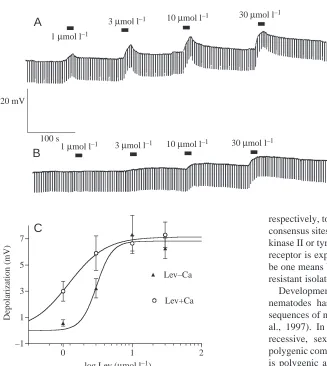
Fig. 5 shows the effect of different concentrations of levamisole on a preparation bathed in normal Ca2+ APF (Fig. 5A) and one
bathed in low-Ca2+ APF solution (Fig. 5B).
Notice that the responses to levamisole at lower concentrations are bigger in the presence of Ca2+.
Fig. 5C shows a plot of the mean (N=4) peak depolarizations in the presence and absence of Ca2+. The best fit to the
observed responses in the presence of Ca2+ had an EC 50 of
1.2µmol l–1, with a Hill slope of 1.21 and a maximum
response of 7.1 mV. In low-Ca2+APF, the best-fit EC 50was
3.1µmol l–1, the Hill slope was 3.9 and the maximum response
was 6.8 mV. Note again that the presence of Ca2+is associated
with an increase in the size of the response (P=0.045, ANOVA).
Effect of genistein
We pointed out earlier that staurosporine, but not H-7, has significant effects on the amplitude of the response to levamisole and acetylcholine. As staurosporine at higher concentrations may also antagonize the effects of tyrosine kinases, and there are consensus tyrosine kinase sites
present on the ASAR-1 α-subunit of A. suum (Fig. 1), we tested the effects of genistein on the levamisole and acetylcholine response. Genistein competes with ATP non-competitively, as a substrate for tyrosine kinases, to inhibit phosphorylation, with Kis of ≤1µmol l–1(Huang et al., 1992;
Young et al., 1993; Wang et al., 1997; Saxena and Henderson, 1997; Neye and Verspohl, 1998; Calbiochem 2001 data sheet, CN: 345834). We tested the effect of 90µmol l–1 genistein on the levamisole and acetylcholine
responses (Fig. 6).
Genistein reduced the amplitude of the levamisole response (Fig. 6). Table 1 shows that the mean control peak levamisole response was 6.4±0.7 mV (N=8), and the mean response in the presence of 90µmol l–1 genistein was 3.3±0.3 mV (N=8) or
51% of the control (P=0.001).
Fig. 6B shows a representative trace of the effect of
B
KN-93 10 µmol l–1
20 mV
100 s
A
Control 10 µmol l–1 KN-93
10 min wash 20 min wash
10 mV
100 s 10 µmol l–1
Lev
10 µmol l–1 ACh
10 µmol l–1
ACh
10 µmol l–1
ACh 10 µmol l–1
Lev
10 µmol l–1
Lev
10 µmol l–1 ACh 10 µmol l–1
Lev
Fig. 4. Effects of KN-93, a selective Ca2+/calmodulin kinase II (CaM kinase II)
antagonist. (A) Two control responses to 10µmol l–1 levamisole (Lev) and two
responses in the presence of 10µmol l–1KN-93. Notice that the peak responses in
the presence of KN-93 are smaller than the control responses. (B) Effect of KN-93 on acetylcholine (ACh) is slowly reversible. The figure illustrates the antagonistic effect of 10µmol l–1 KN-93 on the peak membrane potential responses to
10µmol l–1acetylcholine. Notice that 20 min was required in this preparation before
90µmol l–1 genistein on the response to acetylcholine. The
effect was small (Table 1), with the mean control acetylcholine peak response reaching 5.6±0.8 mV (N=6) and the acetylcholine response in the presence of 90µmol l–1genistein
reaching 5.0±0.6 mV (N=6) or 89% of the control. Although the change in response was small, it did reach statistical significance (P=0.03). The effect of genistein on the levamisole and acetylcholine responses suggests that tyrosine kinase is involved in maintaining the nematode nicotinic receptor.
Discussion
Phosphorylation of nematode nAChRs and levamisole resistance Caenorhabditis elegans is a soil nematode that has been subjected to detailed genetic analysis. Genes encoding nAChR subunits in C. elegans have been described (Fleming et al., 1997), including unc-38, unc-63, unc-29 and lev-1. Both unc-38 and unc-63 encode α-like subunits, while unc-29 and lev-1 encode non-α-subunits. Homologues in Ascaris suum (ASAR-1, GenBank Accession No. AJ011382), Trichostrongylus colubriformis (Wiley et al., 1996) and Haemonchus contortus (Hoekstra et al., 1997) have 78%, 84% and 83% identity, respectively, to UNC-38. All of these nAChR subunits possess consensus sites for phosphorylation by PKA, PKC, PKG, CaM kinase II or tyrosine kinase. Phosphorylation of the levamisole receptor is expected to alter the activity of receptors and may be one means by which sensitivity to levamisole is affected in resistant isolates.
Development of resistance to levamisole therapy in parasitic nematodes has not been linked to changes in amino acid sequences of nAChR subunits (Wiley et al., 1997; Hoekstra et al., 1997). In T. colubriformis, levamisole resistance has a recessive, sex-linked single gene component and a small polygenic component on autosomes. In H. contortus, resistance is polygenic and associated with a 4–25-fold increase in the concentration of levamisole required to produce paralysis (Sangster et al., 1991, 1998).
Role for CaM kinase II and tyrosine kinase in modulation of the nAChRs
In the present study, we examined the effects of selected kinase antagonists to test the hypothesis that phosphorylation of nAChRs is involved in regulating the response to levamisole. We observed no significant effects on levamisole and acetylcholine responses with H-7, an antagonist of PKA, PKC and PKG (Kawamoto and Hidaka, 1984; Boulis and Davis, 1990; Hoffman and Newlands, 1991; Li et al., 1992; Reuhl et al., 1992; Hu and Li, 1997; Ku et al., 1997). The broad-spectrum antagonist staurosporine, which inhibits PKA, PKC, PKG, CaM kinase and tyrosine kinase (Bergstrand et al., 1992; Coultrap et al., 1999; Li et al., 1992; Nishimura and Simpson, 1994), reduced the response to both acetylcholine and levamisole in A. suum muscle. Reductions in response were also recorded in the presence of KN-93, a selective CaM kinase II antagonist (Mamiya et al., 1993; Ishida et al., 1995; Anderson et al., 1998; Ledoux et al., 1999; Nakayama et al., 2001), and genistein, a selective tyrosine kinase antagonist (Huang et al., 1992; Young et al., 1993; Wang et al., 1997; Saxena and Henderson, 1997; Neye and Verspohl, 1998). These effects suggest the involvement of CaM kinase II and tyrosine kinase in supporting the opening of the ion channels.
0 1 2
–1 1 3 5 7
Lev+Ca Lev–Ca
log Lev (µmol l–1)
1 µmol l–1
3 µmol l–1 10 µmol l–1 30 µmol l –1
20 mV
100 s
1 µmol l–1 3 µmol l–1 10 µmol l–1 30 µmol l–1
A
B
C
D
ep
ol
ariz
ati
o
n
(
m
V
[image:7.612.49.376.66.432.2])
Fig. 5. Potentiating effect of Ca2+ on the levamisole
concentration–response relationship. (A) Effect of different concentrations of levamisole applied in Ascaris peri-enteric fluid (APF) bathing solution (6 mmol l–1 Ca2+). (B) Effect of different
concentrations of levamisole in low-Ca2+APF (Ca2+replaced with
Mg2+). (C) Concentration–response plots of the effect of levamisole
peak membrane potential responses in normal APF (Lev+Ca) and low-Ca APF (Lev–Ca). Best fit to response plot in the presence of Ca2+in normal APF had an EC50of 1.2µmol l–1, a Hill slope of 1.21
and a maximum response of 7.1 mV. In low-Ca2+, the best-fit EC50
was 3.1µmol l–1, the Hill slope was 3.9 and the maximum response
was 6.8 mV. Note that the presence of Ca2+ is associated with an
increase in the size of the response. The effect of Ca2+ on the
The lack of effect of H-7, a protein kinase antagonist that is not active on CaM kinase II or tyrosine kinase, and the antagonistic effects of staurosporine, a broad-spectrum protein kinase antagonist, support this interpretation. The potentiating effects of Ca2+on the levamisole responses may be explained
by the involvement of CaM kinase II. Observations with H-7 and staurosporine, which depress muscle contraction to acetylcholine in the filarid Acanthocheilonema viteae (Minardi et al., 1995), are consistent with the view that CaM kinase II regulates the response to acetylcholine in parasitic nematodes.
Trim et al. (1999) have observed inhibitory effects of tamoxifen on the depolarizing responses to levamisole and acetylcholine and suggested that a PKC-dependent phosphorylation of A. suum nAChRs is necessary to maintain the sensitivity of the receptor to acetylcholine. In this model, blockade of PKC results in inhibition and reduction of the response. However, Trim et al. (1999) also tested the selective PKC antagonist chelerythrine and did not observe an effect on the membrane-potential responses to acetylcholine. In our experiments, we did not observe a significant effect with H-7, another kinase antagonist that has inhibitory effects on PKC.
As tamoxifen also has an inhibitory effect on calmodulin (Edwards, 2002), we can explain the inhibitory effects of tamoxifen by inhibition of calmodulin and depression of the activity of CaM kinase II. A role for CaM kinase II in regulating nematode body wall muscle activity has been demonstrated in C. elegans, where a single gene, unc-43, codes for CaM kinase II (Reiner et al., 1999). The unc-43 gene was also shown to interact with unc-103, a gene encoding a voltage-gated K+ channel, so a clear connection between
phosphorylation of ion channels, muscle excitability and CaM kinase II in nematodes has been demonstrated. CaM kinase II may mediate cell excitability through modulation of channel activity or modeling of the synapse, as demonstrated in the vertebrate central nervous system (Rongo and Kaplan, 1999). We do not rule out the possibility of PKC involvement, but our evidence with H-7 suggests that, over the time-span of the experiment (approximately 3 h), it is less important than CaM kinase II. Over a longer time span (12–24 h), where receptor synthesis can play a role, evidence from C. elegans does indicate a role for PKC (tpa-1) in long-term adaptation of nAChRs (Waggoner et al., 2000). In mammalian muscle, PKC and CaM kinase II can regulate nAChR expression, but it is CaM kinase II rather than PKC that is required for Ca2+or activity-dependent control of nAChR gene
expression (Macpherson et al., 2002).
In summary, our studies indicate that CaM kinase II and tyrosine kinases are involved in supporting the opening of acetylcholine/levamisole receptors on A. suum somatic muscle. In previous publications, we have observed differences in opening of nAChRs in SENS and LEV-R isolates of the parasitic nematode Oesophagostomum dentatum and hypothesized that phosphorylation may contribute to the drug-resistant phenotype by modulating the opening of levamisole receptors. In the present study, we have used selective kinase antagonists to test the importance of the kinases and phosphorylation process in modulating the receptors. These observations demonstrate that the responses to acetylcholine and the anthelmintic levamisole are not fixed but vary, and this plasticity depends on the phosphorylation state of the nAChRs. The observations emphasize the possibility that resistance to the anthelmintic levamisole does not necessarily involve amino acid changes at the levamisole-binding site but may involve regulation of the activity to the levamisole receptor via changes in its phosphorylation state.
The mechanisms used by nematodes to modulate their responses to acetylcholine and nicotinic anthelmintics is worthy of further study; it seems increasingly likely that modulation of the receptors may contribute to at least some of the observed drug resistance. Further study necessitates the use of Ascaris because it is the only readily available nematode parasite suitable for electrophysiological study. To date, there are no anthelmintic-resistant Genistein 90 µmol l–1
10 mV
100 s
A
10 mV
100 s
B
10 µmol l–1 Lev
10 µmol l–1
ACh
10 µmol l–1 ACh
10 µmol l–1 ACh 10 µmol l–1
Lev
10 µmol l–1
Lev
10 µmol l–1
ACh 10 µmol l–1
Lev
[image:8.612.46.334.346.660.2]Genistein 90 µmol l–1
Fig. 6. Effects of genistein, a selective tyrosine kinase antagonist. (A) Two control responses to 10µmol l–1 levamisole (Lev) and two responses in the
presence of 90µmol l–1genistein. Notice that the responses in the presence of
genistein are smaller than the control responses. (B) Two control responses to 10µmol l–1 acetylcholine (ACh) and two responses in the presence of
90µmol l–1genistein. The effect is a small, statistically significant reduction in
isolates of Ascaris, but information derived from Ascaris will inform work on parasitic nematodes where anthelmintic isolates are available.
We are pleased to acknowledge the support of the NIH to R.J.M.: RO1 A147194-02.
References
Anderson, M. E., Braun, A. P., Wu, Y., Lu, T., Wu, Y., Schulman, H. and Sung, R. J. (1998). KN-93, an inhibitor of multifunctional Ca++/calmodulin-dependent protein kinase decreases early after depolarizations in rabbit heart. J. Pharm. Exp. Ther. 287, 996-1006.
Bergstrand, H., Lundquist, B., Karabelas, K. and Michelsen, P. (1992).
Modulation of human basophil histamine release by protein kinase C inhibitors differs with secretagogue and with inhibitor. J. Pharm. Exp. Ther.
260, 1028-1037.
Boulis, N. M. and Davis, M. (1990). Blockade of the spinal excitatory effect
of cAMP on the startle reflex by intrathecal administration of the isoquinoline sulfonamide H-8: comparison to the protein kinase C inhibitor H-7. Brain Res. 525, 198-204.
Browning, C. (1907). Experimental chemotherapy in trypanosome infections. Br. Med. J. 2, 1405-1409.
Chitwood, R. G. and Chitwood, M. B. (1950). An Introduction to Nematology. Baltimore, USA: Monumental Printing Co.
Colledge, M. and Froehner, S. C. (1997). Tyrosine phosphorylation of
nicotinic acetylcholine receptor mediates GRB2 binding. J. Neurosci. 17, 5038-5045.
Coultrap, S. J., Sun, H., Tenner, T. E., Jr and Machu, T. K. (1999).
Competitive antagonism of the mouse 5-hydroxytryptamine3 receptor by bisindolylmaleimide I, a “selective” protein kinase C inhibitor. J. Pharm.
Exp. Ther. 290, 76-82.
Edwards, K. J., Laughton, C. and Niedle, S. A. (2002). Modeling study of
the interactions between the antioestrogenic drug tamoxifen and several derivatives, and the Ca2+binding protein calmodulin. J. Med. Chem. 35,
2753-5857.
Ehrlich, P. and Shiga, K. (1904). Farbentherapeutische versuche bei
trypanosomenerkrankung. Berlin Klin Wochenschrift xli, 329-362.
Eyre, P. (1970). Some pharmacodynamic effects of the nematodes:
methyridine, tetramisole and pyrantel. J. Pharm. Pharmacol. 22, 26-36.
Fleming, J. T., Squire, M. D., Barnes, T. M., Tornoe, C., Matsuda, K., Ahnn, J., Fire, A., Sulston, J. E., Barnard, E. A., Sattelle, D. B. and Lewis, J. A. (1997). Caenorhabditis elegans levamisole resistance genes lev-1, unc-29, and unc-38 encode functional nicotinic acetylcholine receptor
subunits. J. Neurosci. 17, 5843-5857.
Hoekstra, R., Visser, A., Wiley, L. J., Weiss, A. S., Sangster, N. C. and Roos, M. H. (1997). Characterization of an acetylcholine receptor gene of Haemonchus contortus in relation to levamisole resistance. Mol. Biochem. Parasitol. 84, 179-187.
Hoffman, R. and Newlands, E. S. (1991). Role of protein kinase C in
adriamycin-induced erythroid differentiation of K562 cells. Cancer
Chemother. Pharmacol. 28, 102-104.
Hopfield, J. F., Tank, D. W., Greengard, P. and Huganir, R. L. (1988).
Functional modulation of the nicotinic acetylcholine receptor by tyrosine phosphorylation. Nature 336, 677-680.
Hu, H. Z. and Li, Z. W. (1997). Modulation of nicotinic ACh-,
GABA(a)-and 5-HT3-receptor functions by external H-7, a protein kinase inhibitor, in rat sensory neurones. Br. J. Pharmacol. 122, 1195-1201.
Huang, J., Nasr, M., Kim, Y. and Matthews, H. R. (1992). Genistein inhibits
protein histidine kinase. J. Biol. Chem. 267, 15511-15515.
Hwang, J. M., Chang, D. J., Kim, U. S., Lee, Y. S., Park, Y. S., Kaang, B. K. and Cho, N. J. (1999). Cloning and functional characterization of a Caenorhabditis elegans muscarinic acetylcholine receptor Receptors Channels 6, 415-424.
Ishida, A., Kameshita, I., Okuno, S., Kitani, T. and Fujisawa, H.
(1995). A novel highly specific and potent inhibitor of calmodulin-dependent protein kinase II Biochem. Biophys. Res. Commun. 212, 806-812.
Kawamoto, S. and Hidaka, H. (1984).
1-(5-Isoquinolinesulfonyl)-2-methylpiperazine (H-7) is a selective inhibitor of protein kinase C in rabbit platelets Biochem. Biophys. Res. Commun. 125, 258-264.
Kennely, P. J. and Krebs, E. G. (1991). Consensus sequences as
substrate-specific determinants for protein-kinases and protein phosphatases. J. Biol.
Chem. 266, 15555-15558.
Ku, W. C., Cheng, A. J. and Wang, T. C. (1997). Inhibition of telomerase
activity by PKC inhibitors in human nasopharyngeal cancer cells in culture.
Biochem. Biophys. Res. Commun. 241, 730-736.
Ledoux, J., Chartier, D. and Leblanc, N. (1999). Inhibitors of
calmodulin-dependent protein kinase are nonspecific blockers of voltage-calmodulin-dependent K+ channels in vascular myocytes. J. Pharm. Exp. Ther. 290, 1165-1174.
Li, Y. S., Gimond, C. and Revillard, J. P. (1992). IL-5-induced IgA synthesis
by LPS-stimulated mouse B cells is prevented by protein kinase C inhibitors.
Eur. Cytokine Net. 3, 103-107.
Macpherson, P., Kostrominova, T., Tang, H. and Goldman, D. (2002).
PKC and CaMK II suppress nAChR gene expression in mammalian muscle: a specific role for CaMK II in activity-dependent gene expression. J. Biol.
Chem. 277, 15638-15646.
Mamiya, N., Goldenring, J. R., Tsunoda, Y., Modlin, I. M., Yasui, K., Usuda, N., Ishikawa, T., Natsume, A. and Hidaka, H. (1993). Inhibition
of acid secretion in gastric parietal cells by the Ca2+/calmodulin-dependent protein kinase II inhibitor KN-93 Biochem. Biophys. Res. Commun. 195, 608-615.
Martin, R. J. (1982). Electrophysiological effects of piperazine and
diethylcarbamazine on Ascaris suum somatic muscle. Br. J. Pharmacol. 77, 255-265.
Minardi, A. J., Christ, D. and Saz, H. J. (1995). Effects of calmodulin and
protein kinase C antagonists on muscle in the filariid, Acanthocheilonema
viteae. J. Parasitol. 81, 989-996.
Nakayama, H., Numakawa, T., Ikeuchi, T. and Hatanaka, H. (2001).
Nicotine-induced phosphorylation of extracellular signal-regulated protein kinase and CREB in PC12h cells 15. J. Neurochem. 79, 489-498.
Neye, H. and Verspohl, E. J. (1998). The specificity of tyrosine kinase
inhibitors: their effect on insulin release (short-term effect) and insulin mRNA (long-term effect) in an insulin-secreting cell line (INS-1) Exp. Clin.
Endocrinol. Diabetes 106, 292-298.
Nishimura, H. and Simpson, I. A. (1994). Staurosporine inhibits phorbol
12-myristate 13-acetate- and insulin-stimulated translocation of GLUT1 and GLUT4 glucose transporters in rat adipose cells. Biochem. J. 302, 271-277.
Reiner, D. J., Newton, E. M., Tian, H. and Thomas, J. H. (1999). Diverse
behavioural defects caused by mutations in Caenorhabditis elegans unc-43 CaM kinase II. Nature 402, 199-203.
Reuhl, T. O., Amador, M., Moorman, J. R., Pinkham, J. and Dani, J. A.
(1992). Nicotinic acetylcholine receptors are directly affected by agents used to study protein phosphorylation. J. Neurophysiol. 68, 407-416.
Richmond, J. E. and Jorgensen, E. M. (1999). One GABA and two
acetylcholine receptor function at the C. elegans neuromuscular junction.
Nature Neurosci. 19, 196-199.
Robertson, A. P., Bjorn, H. E. and Martin, R. J. (1999). Resistance to
levamisole resolved at the single-channel level. FASEB J. 13, 749-760.
Robertson, S. J. and Martin, R. J. (1993). The activation of nicotinic
acetylcholine-receptors in the nematode parasite Ascaris suum by the application of levamisole to the cytoplasmic surface of muscle membrane.
Pesticide Sci. 37, 293-299.
Rongo, C. and Kaplan, J. M. (1999). CaMKII regulates the density of central
glutamatergic synapses in vivo. Nature 402, 195-199.
Sangster, N. C., Davis, C. W. and Collins, G. H. (1991). Effects of
cholinergic drugs on longitudinal contraction in levamisole-susceptible and levamisole-resistant Haemonchus contortus. Int. J. Parasitol. 21, 689-695.
Sangster, N. C., Redwin, J. M. and Bjorn, H. (1998). Inheritance of
levamisole and benzimidazole resistance in an isolate of Haemonchus
contortus. Int. J. Parasitol. 28, 503-510.
Saxena, M. and Henderson, G. B. (1997). Multiple routes and regulation by
tyrosine phosphorylation characterize the ATP-dependent transport of 2,4-dinitrophenyl S-glutathione in inside-out vesicles from human erythrocytes.
Arch. Biochem. Biophys. 338, 173-182.
Schnieden, H. (1981). Levamisole: a general pharmacological perspective
238. Int. J. Immunopharmacol. 3, 9-13.
Thorn, P. and Martin, R. J. (1987). A high-conductance Ca2+-dependent
chloride channel in Ascaris suum muscle. Q. J. Exp. Physiol. 73, 31-49.
Trim, N., Holden-Dye, L. and Walker, R. J. (1999). The inhibitory action
of tamoxifen on the contraction of Ascaris suum somatic muscle in response to acetylcholine. Parasitology 119, 655-662.
Schafer, W. R. (2000). Long-term nicotine adaptation in Caenorhabditis elegans involves PKC-dependent changes in nicotinic receptor abundance. J. Neurosci. 20, 8802-8811.
Wang, B. H., Ternai, B. and Polya, G. (1997). Specific inhibition of cyclic
AMP-dependent protein kinase by warangalone and robustic acid.
Phytochemistry 44, 787-796.
Wiley, L. J., Ferrara, D. R., Sangster, N. C. and Weiss, A. S. (1997). The
nicotinic acetylcholine alpha-subunit gene tar-1 is located on the x chromosome but its coding sequence is not involved in levamisole resistance
in an isolate of Trichostrongylus colubriformis. Mol. Biochem. Parasitol.
90, 415-422.
Wiley, L. J., Weiss, A. S., Sangster, N. C. and Li, Q. (1996). Cloning and
sequence analysis of the candidate nicotinic acetylcholine receptor alpha subunit gene tar-1 from Trichostrongylus colubriformis. Gene 182, 97-100.
Young, S. W., Poole, R. C., Hudson, A. T., Halestrap, A. P., Denton, R. M. and Tavare, J. M. (1993). Effects of tyrosine kinase inhibitors on