EXPLORING THE EFFECTS OF USER FEES, QUALITY OF CARE
AND UTILIZATION OF HEALTH SERVICES ON ENROLMENT IN
COMMUNITY HEALTH FUND, BAGAMOYO DISTRICT, TANZANIA.
By
Lawrence Davidson Lekashingo, MD.
A Dissertation Submitted in Partial Fulfillment of the requirements for the Degree of Masters of Medicine in Community Health of the Muhimbili University of Health and
Allied Sciences
Muhimbili University of Health and Allied Sciences November, 2012
CERTIFICATION
The undersigned certifies that has read and hereby recommends for acceptance of dissertation entitled ‘Exploring The Effects Of User Fees, Quality Of Care And Utilization Of Health Services On Enrolment In Community Health Fund in Bagamoyo District, Tanzania’ in partial fulfillment of the requirements for the degree of Masters of Medicine (Community Health) of Muhimbili University of Health and Allied Sciences.
____________________________
Prof Phare GM Mujinja BA (Hons), CIH, MA (Econ), MPH, PhD (Supervisor)
_____________________ Date
DECLARATION AND COPYRIGHT
I, Lawrence Davidson Lekashingo, hereby declare that this dissertation is my original work, and that it has not been presented nor will it be presented to any other University for a similar or any other degree award.
Signature……….. Date………
This dissertation is a copyright material protected under the Bene Convention, the Copyright Act of 1999 and other international and national enactments, in that behalf, on intellectual property. It may not be reproduced by any means, in full or in part, except for short extracts in fair dealings; for research or private study, critical scholarly review or discourse with an acknowledgement, without the written permission of the Directorate of Postgraduate Studies on behalf of both author and the Muhimbili University of Health and Allied Sciences.
ACKNOWLEDGMENT
Writing of this dissertation report has been one of the most challenging tasks I have ever had to face. Many people have contributed to its completion, and it may not be possible to mention all who in one way or another assisted me to make this report to the present form. To all of you, I say thank you so much. However, first and foremost, I would like to express my sincere and special gratitude to my supervisor, Prof Phare Mujinja for his tireless support and encouragement. His constructive criticisms have constantly been a source of increased motivation in search for knowledge and research skills.
Secondly, I thank Prof. Daudi Simba, my course coordinator. He has been inspirational and supportive, not only during the writing of this thesis, but throughout the entire period of my training in Community Health.
I would also like to mention Dr David Urassa who encouraged me to pursue the Masters of Medicine in Community Health. He constantly counseled me and provided words of wisdom which enabled me to make the right decision and pursue my course in a much smoother way.
I would also like to thank Dr Method Kazaura for his inputs in data analysis and interpretation.
The Head of Department of Community Health, Dr Anna Kessy and the entire School of Public Health and Social Sciences staff, deserve to be acknowledged for their support and encouragement and advice.
I would like to extend my gratitude to my wife, Tumaini, and our children Davidson and Jo-Marie, for being there for me and bearing with my long abseentism from home.
At last but not least, I am also grateful to my relatives. Much of this goes to Almighty God, for the protection and guidance during the entire course and throughout my life.
ABSTRACT
Background: The co-existence of Community Health Fund (CHF) and user fees in Tanzania as health financial mechanisms have affected to CHF enrolment. However, little is known about the effect of user fees on CHF enrolment, non-enrollment and drop-out.
Objectives: The study aimed at exploring the effects of coexistence of user fees and Community Health Fund scheme, quality of care and utilization of health services on CHF enrolment, non-enrollment and drop out in Bagamoyo District, Coast Region, Tanzania.
Methods: An exploratory cross sectional community and health facility study was conducted in Bagamoyo District between April and May 2012. The study involved heads of households who were categorized in four groups; CHF members from community (63), non CHF members from the community (60), CHF members from health facilities (145) and non CHF members from health facilities (144). The study participants were interviewed using a semi-structured questionnaire. Univariate and multivariate analyses were done to find factors associated CHF enrollment, non-enrollment and drop-out.
Results: Although user fee was not pointed as the reason for not joining CHF, CHF members were significantly more likely to pay higher amount of user fee than non CHF members (p < 0.01). Being a CHF member was associated with non- payment of user fees and higher expenditure on health services. Furthermore, health services utilization, although slightly lower among non CHF members, was not statistically different between CHF and non CHF members (p = 0.09). Poor quality of health services at health services and poor referral mechanisms were the main reasons for dropping out from CHF.
Recommendations: The co-existence of user fees and CHF should be re-visited. Efforts should be taken to improve quality of health services and referral mechanisms in the public health facilities in Bagamoyo in order to reduce unnecessary distress to the CHF members, decrease drop out and improve the performance of CHF in Bagamoyo.
TABLE OF CONTENTS
CERTIFICATION ... ii
DECLARATION AND COPYRIGHT ...iii
ACKNOWLEDGMENT ... iv DEDICATION ... iv ABSTRACT ... vi LIST OF FIGURES ...x ACRONYMS ... xi CHAPTER 1: INTRODUCTION ... 1 1.1 Background ... 1 1.2 Problem statement ... 3 1.3 Conceptual framework. ... 5 1.4 Research questions ... 6 1.5 Rationale ... 7 1.6 Objectives ... 7 1.6.1 Broad objective ... 7 1.6.2 Specific objectives ... 7
CHAPTER 2: LITERATURE REVIEW ... 9
CHAPTER 3: METHODOLOGY ... 16
3.1 Study design ... 16
3.2 Study area ... 16
3.3 Study population ... 16
3.5 Inclusion and exclusion criteria ... 18
3.6 Sampling process ... 19
3.7 Recruitment of research assistants ... 20
3.8 Data collection tool ... 21
3.9 Data Management and analysis ... 22
3.10 Ethical Issues ... 23
3.11 Study limitations ... 23
CHAPTER 4: RESULTS ... 25
CHAPTER 5: DISCUSSION ... 44
CHAPTER 6: CONCLUSIONS AND RECOMMENDATIONS ... 48
CHAPTER 7: REFERENCES ... 50
LIST OF TABLES
Table 1: Source of recruitment and CHF status of study participants………..23 Table 2: Socio-economic-demographic characteristics of study participants by Community Health Fund (CHF) membership status ……….………..25 Table 3: Comparison of respondents proportion of monthly income used to pay user fees and/or CHF premium ………...29 Table 4: Health services utilization among CHF members and non- CHF members ………..……….………....30
Table 5: Comparison of CHF members and non CHF members’ perceptions on the quality of health services provided to the individuals paying user fees ………...……….……32
Table 6: Perceptions of CHF members and of respondents’ who had never joined CHF on the usefulness of user fees as compared to joining Community Health Fund (CHF) ………..……….………36
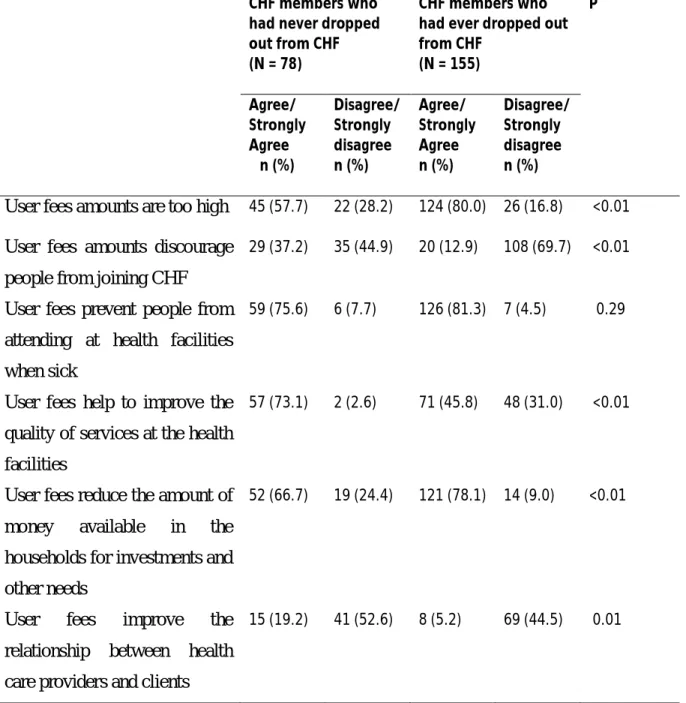
Table 7: Comparison of perception of respondents who have ever dropped out of CHF membership and of CHF members who have never dropped from CHF on the usefulness of user fees as opposed to CHF ……….……….………...38
Table 8: Multivariate analysis of factors associated with being a member of CHF ...………40
LIST OF FIGURES
Figure 1: Conceptual framework of factors influencing enrollment, non-enrollment and drop out from CHF ………6 Figure 2: Comparison of respondent expenditure as user fees one month by Community Health Fund (CHF) membership status ……….……….….27 Figure 3: Comparison of respondents’ perceptions on the quality of health services provided to the CHF members by CHF membership status ………..……….34 Figure 4: Respondents’ reasons for dropping from CHF membership……….……39
ACRONYMS CHF - Community Health Fund
MHO - Mutual Health Organizations
MOHSW – Ministry of Health and Social Welfare
NHIF - National Health Insurance Fund
TIKA – Tiba kwa Kadi (Treatment by Health Card).
TZS - Tanzanian shillings
URT - United Republic of Tanzania
VEO - Village Executive Officer
CHAPTER 1: INTRODUCTION 1.1 Background
The world is facing challenges in financing and providing health care for its 1.3 billion poor people especially those who live in low- and middle-income countries1. Many poor people lack access to effective and affordable health interventions, largely because of weaknesses in the financing and delivery of health care1, 2, 3.
World Health Organization (WHO) health financing policy emphasizes that the health system as a financing strategy is a key determinant to population health and well-being4. This is particularly true in the poorest countries where the level of health spending is still insufficient to ensure equitable and universal access to needed health services and interventions.
In Tanzania, after independence and before 1990, health services were fully funded by the government through taxation, and provided without charge for all Tanzanians5. In the year 1990, the government changed its health financing policy: while the government continued to be the main health system financier, individuals were required to contribute for health services5. To facilitate individual contributions, different health financing mechanisms were introduced namely; user fees, health insurance, and community health funds (CHF). Currently, Tanzania uses a mixture of health financing mechanisms: taxation, donor funding, health insurance (both private and national), user fees and CHF5,6.
Out of pocket health spending through user fees was introduced in Tanzania in 1993 as additional resource for health services in Tanzania5. They are being paid at the point of service delivery, the health facility. They have the potential to improve the quality of health services and working conditions but also impose financial barrier to access the health services to the poor especially when sick during times without cash in hand. User fees also divert much needed resources from the individuals for other essentials like child’s education fees or food13.
Health insurance policy was also introduced in Tanzania in the year 19935. This health financing mechanism covers mainly the formal employees with regular incomes both in public and private sectors. The schemes require monthly subscription premiums. The coverage of
National Health Insurance Fund (NHIF) in Tanzania as at July 2010 was about 3%6, that is for formal employees and their families. These formal health funding mechanisms do not solve the challenge on how to finance health services to over 70% of Tanzanians residing in rural areas who are also involved mainly in the informal economic sector.
Apart from user fees and formal health insurance scheme like NHIF, Tanzania also introduced Community Health Fund (CHF) in 19965, a voluntary health financial scheme aimed to cover the informal sector in rural areas7. Its equivalency, Tiba kwa Kadi, (TIKA), covers for informal sector in urban areas7. The Fund provides its members with access to health services from health facilities within the respective districts. This was an initiative by the government to make health services affordable and accessible to the rural and in informal sector population7. Its advantage is that it allows one to pay contributions when one is healthy and drawing on them in the event of illness later. CHF also provides additional resources for the provision of health services. Anecdotal evidence has associated low CHF enrolment with lower out of pocket spending for health.
Although CHF has been implemented in Tanzania for more than 15 years, reports show that although it has been in operation in 119 councils by the year 2011, several challenges have been shown to retard CHF success8,9. The main challenge is low CHF coverage. In 2011, the average CHF coverage was reported to be 10%8, lower than the national target of 70%10 set in 2010. Secondly, CHF faces massive dropouts as experienced in councils like Nzega11 and Hanang12.
The government spending for health through taxation in the year 2010 was about 12.9% of the total national budget. However, this allocation accounted to only about 64% of all health expenditure in 2010. The remaining proportion was funded by other health financing mechanisms such as formal health insurance 3%, user fees 0.9% and CHF which amounted to 3.1bn out of 908bn of total health expenditure (0.3%)6. In 2009/10, Tanzania’s user fees
used at the district level of health care to supplement the government allocation for health services.
Although user fees forms the major source of funding for health services in the districts6, it creates challenges to the implementation of CHF, both in the negative and positive ways. One, when set low, user fee diverts people from enrolling to CHF as people opt for user fees, while on the other hand, the low user fee cannot cover the gap left by the national health budget allocation22. However, at the same time the user fees fail to provide adequate health services to the communities as the amount collected would be inadequate which in turn would discourage people from joining CHF. User fees have also been shown to be a barrier for the poor and other vulnerable populations from accessing health services25.
This study therefore aimed to explore the effects of co-existence of the user fees on the CHF enrolment, disenrollment and dropout. The paper explicitly tries to find out if user fee and quality of health services at health facilities provide the barrier to enrolling in CHF. Quantitative approach was used using individual interviews. The first chapter of this dissertation presents the introduction in which background of the theme, problem statement, conceptual framework, rationale and objectives of the covered are also explored. Chapter two presents the literature review with particular attention to user fee and CHF in which the main arguments with regard to benefits and effects of both user fee and CHF are reviewed. Chapter three deals with methodology. While chapter four covers results, chapters five and six are about discussion and conclusion and recommendations respectively. Various references used in the preparation of this dissertation are shown in chapter seven.
1.2 Problem statement
The majority of Tanzanians reside in rural areas and engaged in the informal sector14. This group comprises of about 70% of all the Tanzanians14, is difficult to reach with formal health insurance mechanisms. It is also the population group that can be temporarily or partially excluded from health care when user charges must be paid at the point of seeking care. This is due to poverty and irregular or seasonal revenues that do not always provide households with the cash needed to seek care when illness occurs. Therefore, CHF was seen as the most viable
option for improving access to health services and providing financial risk protection for these populates.
CHF started in Tanzania in 1996. However despite CHF being operational in 119 out of 133 councils for more than 15 years in some of the councils in Tanzania, it is still underperforming8. As of September 2011, only 9 per cent of Tanzanians were members of CHF and 52 per cent of councils had CHF enrolment of 3% or lower8. This is less than the government target of 70 per cent10 and the revised target of NHIF of 30 per cent by 2010 (20 per cent in CHF and 10 per cent in NHIF)15. Bagamoyo coverage of CHF was 2.5 per cent according to CHF report of September 201110.
In all districts where CHF is implemented, the respective health facilities charge user fees. Co-existence of user-fees has been shown to challenge the CHF performance. For example low user-fees have been shown to attract people away from pre-payments and low user-fees are associated with massive drop of CHF enrolment in Hanang, from 23% in 1999 to 2.2% in 200112. Low user fees have also been found to affect enrolment (drop out) in Nzega.11
Waiver system and exemption have been introduced to reduce the impact of user fees scheme by excluding those who cannot afford to pay for health services and thus have more access to health services. With majority of Tanzania living below poverty line, of concern is to find that stakeholders continue promoting and supporting user fees in the absence of effective exemption and waiver system. This has negatively affected the accessibility of health services to the majority of Tanzanians.
Despite the fact that user fees have been seen to affect CHF enrolment11, 12, little is known about the effect of user fees in relationship to all aspects of CHF, namely; enrolment, non-enrollment and drop-out. Other factors like quality of health services and health services utilization were also explored.
1.3 Conceptual framework of factors influencing enrollment, non-enrollment and drop out from CHF
At community level both the health care providers and beneficiaries are important actors in the implementation of CHF. Being a prepayment scheme, any alternative paying scheme to CHF invariably affects the decision making of head of household in the enrolling in CHF. Quality of care provided at health facilities greatly affects the decision of the household to join the CHF. Health service utilization is another determinant for enrolling or not enrolling into CHF. Household heads may opt for user fees knowing that they may pay the CHF premiums and not use it as they may not get sick or that paying for the user fees may be cheaper than paying the CHF premium. Another important factor to the enrolling or not enrolling into the CHF is the perceived quality of care received bearing in mind one paying for user fees or enrolled in CHF may have a choice of health providers.
Figure 1: Conceptual framework of factors influencing enrollment, non-enrollment and drop out from CHF.
Source: Author.
1.4 Research questions
1. What characteristics of households may affect CHF enrolment and non-enrolment?
2. What characteristics of health facilities may affect CHF enrolment and non-enrolment?
3. What effect does the user fees has on CHF enrolment and non-enrolment?
4. What are the effects of user fees on the health services utilization to both the CHF and non-CHF members?
Beneficiary (households and individual) characteristics;
age, sex, marital status, education level, income, health status, size of household,
Health facility factors influencing the decision to join, not join or drop out of CHF .
1. Perceived quality of care provided at health facilities.
2. Perceived care provided to individuals paying user fees.
3. Perceived quality of care provided to CHF members
4. Perceived usefulness of user fees 5. Perceived usefulness of enrolling in CHF 6. Perceived burden of paying user fees as
compared to CHF premium JOINING CHF DROPPING OUT OF CHF NOT JOINING CHF AT ALL
1.5 Rationale
This study was designed to explore for the effects of quality of care, user fees and health services utilization on the enrolment, non-enrolment and dropout from CHF. The findings from the study would assist policy and decision makers in Bagamoyo to understand these effects of co-existence of user fees among others on CHF enrolment. Furthermore the findings would assist the decision makers on how to improve the performance of CHF in Bagamoyo district.
This study adds on the knowledge on the effects of co-existence of user fees and CHF and quality of care provided at health facilities on the CHF enrolment and dropout in Tanzania to the studies already done on the barriers of CHF enrolment.
The findings shed some light on what can be done to increase CHF enrolment, to reduce CHF non enrollment and drop out regarding the coexistence with user fees and quality of care provided at the health facilities. Evidence based policy decisions could be made based on the study findings and may help to strengthen the CHF in Bagamoyo District.
1.6 Objectives 1.6.1 Broad objective
To explore the effect of user fees and quality of health services provided at health facilities on CHF enrolment, non-enrolment and dropout in Bagamoyo district.
1.6.2 Specific objectives
1. To explore the perceptions of the people who have never joined CHF on the usefulness of user fees as compared to joining CHF.
2. To explore the perceptions of the people who have dropped out of CHF membership on the usefulness of user fees as opposed to joining CHF.
3. To find out the perceptions on the quality of health services provided to the individuals paying user fees and the CHF members.
4. To find out the amounts of user fees paid by the CHF and non CHF members for
5. To determine the proportion of CHF members and non- CHF members’ incomes used to pay user fees and the Community Health Fund premiums.
6. To assess the health services utilization among CHF members and non- CHF members.
CHAPTER 2: LITERATURE REVIEW 2.1 Health financing systems.
In 2010 WHO reported that about 150 million people globally suffer financial catastrophe each year, and 100 million are pushed into poverty because of direct payments for health services through user fees13. Developing countries, Tanzania included, need to adapt their financing systems continually to raise sufficient funds for their health systems. In many lower-income countries, more people work in the informal sector, making it difficult to collect income taxes and wage-based health insurance contributions.
Health financing system is concerned with the mobilization, accumulation and allocation of money to cover for the health needs of the people16. Health financing must consider both sources of revenue for health care (i.e., the type of payment or contribution mechanism, agents that collect these revenues) and how they will allocate their resources to purchase services17.
There are several methods that can be used to support health services. They include the general systems of taxation used to finance government expenditures and the ministries of health; donor assistance that is specifically earmarked for health projects; charitable donations targeted to private voluntary health providers, such as church missions; user fees; and health insurance
Faced with budget constraints and at the same time trying to reduce government dependency as in budgeting on provision of health services, many countries introduced or raised the user fee at public facilities3. User fee was an essential policy response to health care financing crisis. It could have improved the quality of health services at public services and thus benefit the poor who mainly use them. Furthermore the user fees could have enabled the government to redirect the funds to other essential programs like cost-effective preventive services.
2.2 CHF and Other Alternative Methods for Health Financing in Tanzania.
The health financing system in Tanzania is highly fragmented with many different financiers and modes of financing. Public taxation and thus budgeting is one method of financing the Tanzania health system. In 2009/10, the government was the largest source of public spending, with 36% of the public expenditure6. The system also includes a large proportion of external financing, with a significant part of that being off-budget. Other methods Tanzanian government uses for health financing are user fees, out of pocket payments, social health insurance as in community funding and private health insurance among others. Tanzania introduced user fees in 1993 after a study by Mujinja and Mabala showed that 80% of Tanzanians were prepared to pay for health services in Tanzania18. User fees are official payments made at the point of service by patients. This showed a great willingness of Tanzanians to pay for user fees or any alternative method.
An alternative method that the government of Tanzania embarked on is a Community Health Fund (CHF)5,a voluntary scheme for the informal sector. CHF provides Tanzanians in rural areas especially in some districts with access to sustainable health services through their councils7. The CHF pilot scheme was initiated in Tanzania in 1996 in Igunga district and in 2001 it was launched for spreading and implementing in the whole country by phases7. This was part of the government’s endeavors to make health care affordable and available to the rural population and the informal sector. As of September 2011, about 119 out of 133 councils all over Tanzania were implementing CHF8.
Membership to the CHF is voluntary and is implemented at the district level7. A membership fee is agreed upon after discussions involving community members themselves, and each participating household within the district contributes the same membership fee7. Each household is given a health card that entitles the household to a basic package of primary health care throughout the year. Normally, coverage is for the household head, the spouse and other household members below the age of 187. Furthermore, CHF includes individual membership for CHF for individuals who are above 18 and institutional members like schools
and economic groups7. Households that do not participate in the CHF are required to pay user fees on an individual basis at the health facilities at the point of use.
2.3 Challenges for various health financing schemes in Tanzania.
Despite the fact that CHF has been on implementation for more than a decade in several districts in Tanzania, it still experiences a number of challenges including very low enrolment8. As of September 2011, only 9% of Tanzanians were enrolled in CHF with 119 out of 133 councils practicing CHF8. This is short of government target of 70%11 and the revised target of NHIF of 30% by 2010 (20% in CHF and 10% in NHIF)15.
Various challenges face CHF in Tanzania which contribute to its low enrolment10. These include; poor quality of health services at the facilities, poor administration capacity at the district level10, low knowledge on the part of individuals regarding the principles of health insurance, low sensitization regarding CHF and adverse selection12,19,. Adverse selection is a result of low enrolment as a consequence of voluntary nature of CHF17, 20.
The scheme with voluntary membership has the risk of adverse selection, which can lead to healthy people to leave the pool and eventually the costs of supporting the scheme to spiral and scheme being not sustainable21. Eventually, the sick people may be excluded as well because the costs of supporting the scheme may become too high for the scheme authorities and thus the sustainability of the fund will become a challenge and subsequently it may fail21. For the case of Tanzanian CHF which has a small pool, the sick are more likely to enroll CHF leading to limited cross subsidization from the healthy to the poor and limited capacity to provide health services. All these will lead to threatened viability and sustainability of the scheme which will lead to the scheme being unattractive to the healthy people.
User fee as an alternative to CHF in Tanzania has its challenges. In 1987 when introducing user fees2, the World Bank argued that user fees would improve efficiency and equity by increasing health revenues, increase quality and coverage by reducing frivolous demand and shift patterns of care away from costly in-patient to low-cost primary healthcare services while protecting the poor through exemptions2. User fees, when examined under these headings,
have not fulfilled the expectations set for them when they were established. The costs of collecting fees are high and the transparency of their use is often low.
2.4 EFFECTS OF HEALTH FINANCING MECHANISMS ON HEALTH SEEKING BEHAVIOR.
2.4.1 Effects of User fees on health seeking behavior.
Charging user fees at health facilities is likely to present a barrier to access. Yet, a shortage of resources at the facility level may contribute to failure to deliver quality services, and this also presents a barrier to access. If users of public services like health are involved in their payments, a more responsible attitude towards the use of such services is attained and thus limits the misuse of such services. This system may in turn curb moral hazard36. Studies have shown that households’ decisions about whether to seek health care and the type of health care used were influenced by factors such as quality of health care, proximity of the health facility among others, rather than cash prices3, 20, 33. It is known that demand for health services by low-income households are more sensitive to price changes than the demand by other households and user fees are more likely to hurt the poor. On the other hand it was assumed that introduction of user fee may actually increase the utilization of health services by reducing the total cost of seeking care of acceptable quality at the public health services as the retained fees revenues are used to improve the coverage and quality of health services22. But this can only occur where fees are retained and reinvested in quality and thus utilization can increase, though this is relatively uncommon. In quasi-experimental study by Litvack and Bodart23,combined effect of user fees with improved quality of health services (measured in terms of availability of drugs) on utilization of health services were compared in health facilities that were charging and those that were not charging user fees. Results showed probability of using health services increased significantly for the population in the health centers with user fees schemes because they had better quality of services due to cost recovery schemes. The results also showed that the probability increased for all incomes groups and the relationship between the utilization and the income was less clear.
The potential for raising revenues of the user fees has in practice proven to be mixed and generally below the anticipated 10-20 per cent of total government recurrent health expenditure33. The user fee collection has been ranging between 5-10 per cent of total government recurrent health expenditure13. Some authors have argued that user charges can generate vital resources at the local level and help improve quality of health services in facilities22. Others have highlighted how the user fees provide barriers to the poor families to access health service. Recently, several international campaigns have advocated the removal of user fees, especially for primary care services23. Removing user fees could improve service coverage and access, in particular among the poorest socio-economic groups, but quick action without prior preparation could lead to unintended effects, including quality deterioration and excessive demands on health workers. Data from Lesotho24 showed that increasing user fees led to a drop in utilization in the public sector, while uptake of services in private not-for-profit facilities did not change. Invariably this will point to the need for people on prepayment schemes like CHF.
2.4.2 Effects of health insurance on Health Seeking Behavior.
Health problems are prevalent in many societies. The existence of signs and symptoms of ill health in any community constitute a statistical norm.
Health insurance is not a widely adopted health financing mechanism in Africa, Tanzania included. Health insurance coverage implies that people are not deterred from seeking care and at the same time are protected against the financial risks of falling ill, as the burden of patients to pay out-of-pocket will be eliminated or substantially reduced. Health insurance can be voluntary or mandatory like social health insurance scheme.
The aim of social health insurance scheme is to provide to the populations affordable, equitable access to health services for rural population and informal sector communities throughout the year7.
The risks with insurance schemes include moral hazards and adverse selection. The scheme with voluntary membership has the risk of adverse selection, which can lead to healthy people
to leave the pool and eventually the costs of supporting the scheme to spiral and scheme being not sustainable21. Eventually, the sick people may be excluded as well because the costs of supporting the scheme may become too high for the scheme authorities and thus the sustainability of the fund will become a challenge and subsequently it may fail21. For the case of Tanzanian CHF which has a small pool, the sick are more likely to enroll CHF leading to limited cross subsidization from the healthy to the poor and limited capacity to provide health services. All these will lead to threatened viability and sustainability of the scheme which will lead to the scheme being unattractive to the healthy people.
2.5 Co-existence of different Health Financing Mechanisms in Tanzania and their effects There are several reasons for combining different health financing mechanisms in one country. For example combining user fees and self-financing health insurance can have mutually reinforcing effects on sustainable sources of financing for health care. First, user charges are essential to stimulating self-financing health insurance schemes. Countries cannot undertake widespread promotion of self-financing health insurance schemes without first imposing user fees in government facilities, especially hospitals33. The reason is simply that if people can obtain health care for free or at a uniformly low cost, they will not have much incentive to pay insurance premiums to cover unexpected health hazards. Second, when health insurance begins to cover costs associated with expensive hospital overhead and treatments, public sector subsidies for curative care can more effectively be withdrawn from services used primarily by the rich and then retargeted to poor clients33.
A study in Tanzania has shown that positive results were seen for reinvestment of CHF funds while no positive results were seen with user fees charges25. The same study also concluded that user fees lead to self-exclusion and marginalization of both vulnerable and other people from accessing the health services in the area of study25.
Among other countries in Africa, Tanzania does not have high user fees and since 1996, she has tried to attract and enroll its population into CHF6. A World Health survey of 1993 put Tanzania in category one for user fees countries33, that is having a cost recovery program for
health dominated by user fees system. Yet the enrollment rate to CHF remains low with coverage nationwide of 9% of the eligible population8, and those who enroll tend to be the elderly and the sick10.When Ghana shifted to user fee system in 1999, and patients had to pay fairly high user fees, voluntary prepayment plans such as the community-based mutual health organizations (MHOs) flourished, growing from 4 MHO funds in 1999 to 157 by 200226. In 2003, Ghana was able to pass legislation to establish social health insurance nationwide, relying on the MHOs as a building block26.
Although Tanzania adopted user fees and promoted self-financing health insurance to help restore efficiency and equity to her national health system, several challenges were and are still evidenced. This paper looked for the effect of user fees regarding enrolment, non-enrolment and drop-out from CHF using Bagamoyo District as an example.
CHAPTER 3: METHODOLOGY 3.1 Study design
A cross-sectional exploratory study was carried out in April and May 2012 in Bagamoyo District. The study aimed at collecting information about the outcomes of co-existence of user fees and CHF on CHF enrolment and non-enrollment (including drop out from CHF). Semi-structured questionnaire was administered to the participants at the household level while exit interviews were conducted to patients who were leaving the health facilities. Both CHF and non CHF members were interviewed to assess the link with and outcomes of user fees on CHF enrolment and disenrollment, including drop out from CHF.
3.2 Study area
This study was conducted in Bagamoyo District, Coast region. Bagamoyo District is estimated to have 277,678 habitats comprising 60,254 households27. Having a total area of 9,842m2, Bagamoyo is the second largest district in Coast Region, next to Rufiji District27. The district has 6 divisions, 16 wards and 82 villages27. Bagamoyo District has only one hospital, 5 health centers and 49 dispensaries.
The study area was purposeful selected due to the fact that Bagamoyo District had dramatic drop out of CHF members between June and September 2011. In June 2011, a total of 4,565
households (coverage of 7.6%) were CHF members in Bagamoyo15. Surprisingly, in
September 2011, only 1,576 (2.6%) households were CHF members8. This dramatic drop in the number of CHF members within a short period needed a thorough and systematic investigation. Another reason for choosing Bagamoyo district is its representation of typical semi urban and rural areas; as well as the presence of both CHF and non CHF members in the area.
3.3 Study population
Participants in the study were recruited from the community and from health facilities.
The study participants were heads of households. Both CHF and non CHF members heads of households from the selected study area were included in the study.
3.4 Sample size estimation
3.4.1 Sample size for household heads in the households.
Sample size was calculated using the following formula designed for cross sectional studies28: n = z2 [p (1-p)]/ 2where:
n = minimum required sample size for each group (CFH and non CHF members) z = standard, corresponding to 95% confidence;1.96
p= CHF coverage in Bagamoyo district, 2.6%8.
= maximum likely error taken as 5%
Hence, n = 1.962 * 0.026 (1-0.026)/0.052
n = 39 is the minimum sample size required for each group from the households.
In this, study 63 heads of CHF households and 60 heads of non-CHF households were interviewed, making a total of 123 heads of households from the community. The aim was to get participants almost twice the minimum sample size for each group to increase the power of the study.
3.4.2 Sample size for health facilities exit patients
The study sample size for health facilities participants was calculated using the following formula designed for cross-sectional studies28;
n = z2 [p (1-p)]/ 2 where;
n = minimum required sample size for each group (CHF and non-CHF members)
p = CHF dropout rate at Bagamoyo between June 2011 and September 2011 taken as 5%** z = standard, corresponding to 95% confidence;1.96
= maximum likely error taken as 5% n = 1.962 *[0.05 (1-0.05)]/0.052
n = 72 is the minimum sample size required for each group (CHF and non CHF) from health facilities.
In this study a total of 145 heads of CHF households and 144 heads of non CHF households were interviewed, therefore a total of 289 participants were interviewed as exit patients. The aim was to get participants twice the minimum sample size for each group to increase the power of the study.
Total sample:
This study was able to attain a total of 412 participants as follows; Households: 63 and 60 CHF and non CHF members respectively
Health facilities: 145 and 144 CHF and non CHF members respectively
3.5 Inclusion and exclusion criteria Inclusion criteria
Households:
(a) CHF member:For a participant to be included into this study she/he was supposed to be a head of the household or a spouse; active CHF member, residing in the selected villages.
(b)Non CHF member: For a participant to be included into this study she/he was supposed to be a head of the household or a spouse; non CHF member; residing in the selected villages.
Health facilities:
(a) CHF member:For a participant to be included into this study she/he was supposed to be a head of the household or a spouse; active CHF member, attending any of the selected health facility.
(b)Non CHF member: For a participant to be included into this study she/he was supposed to be a head of the household or a spouse; non CHF member; attending any of the selected health facilities.
Exclusion criteria: Households:
(a) CHF member:Participants were excluded to participate if they did not give consent to participate.
(b) Non CHF member: Participants were excluded to participate if they did not give consent to participate.
Health facilities:
(a) CHF member: Participants were excluded to participate if they did not give consent to participate.
(b) Non CHF member: Participants were excluded to participate if they did not give consent to participate.
3.6 Sampling process
Multistage sampling process was employed to get the study participants at the household level. The first stage involved selection of villages and health facilities. Wards were not involved because CHF members register at the lowest level of health delivery which is at village level, corresponding dispensary. The second stage involved selection of study participants.
Selection of villages and health facilities
A list of villages with active CHF was obtained from the District CHF coordinator. From this list, three villages; Zinga (population 4,022, CHF members 39), Kaole (population 1,384, CHF members 82) and Kerege (population 3,415, CHF members 92) were randomly selected from a total of 9 villages that had active CHF scheme in Bagamoyo District. At the study time, only 9 villages in Bagamoyo District had active CHF schemes, out of 82 villages. Only 3 villages were selected due to available resources to represent the 9 villages at Bagamoyo District.
Each of selected villages had only one public health facility serving the villagers. Therefore, the health facilities in these villages were selected for the recruitment of study participants for the exit interview. Additionally, Bagamoyo District hospital was also included in the study because it is the highest referral level in the district.
Selection of study participants from households
The lists of active CHF members were obtained from the Village Executive Officers (VEOs) of Zinga, Kerege and Kaole. One list containing all CHF members from the three villages was compiled. Each CHF member was assigned a number and the number was fed in the computer. A total of 76 (twice the minimum sample size of 38) CHF members were randomly selected using computer generated random number tables. However, only 63 out of 76 CHF members who were randomly selected were available for the household interview, others were not available at their homes after three visits. Three attempts were done to trace the participants before excluding them.
Each CHF member was asked by the research team to mention one non CHF member who was recruited for the household interview. A total of 60 non-CHF members were interviewed in their households.
Selection of study participants from health facilities
At the health facilities both CHF and non-CHF members were recruited consecutively as they exited the health facilities until the required number was attained. We were able to interview 145 CHF members and 144 non CHF members for the exit interviews.
Before the recruitment took place informed consent was requested from all the participants. The research team ensured no participant was double recruited to the study by asking the participants if they had been interviewed at their households or at health facilities about CHF within the time period of this research.
3.7 Recruitment of research assistants
This study recruited four (4) form six leavers for the purpose of assisting the principal investigator in the collection of data. Two (2) research assistants were males and 2 were
females. The research assistants were all trained for three days prior to commencement of the study. Part of their training involved actual collection of data at Kiromo village and Kiromo dispensary which were selected for pre testing the questionnaire.
3.8 Data collection tool
Interviewer assisted semi-structured questionnaire with open and close ended questions was administered to the participants. The interviews were conducted in households and during exit from the health facilities. Research assistants and the Principal Researcher visited the selected households in the villages and health facilities to administer the questionnaires.
The questionnaire was written in English and translated to Kiswahili to make it understood by the study participants. Back translation of the questionnaire to English was performed to remove ambiguity. Pre-testing of the questionnaire was conducted at Kiromo dispensary and Kiromo village.
Variables
The following is a list of variables that were considered to study the effect of co-existence of user fees and community health fund on community health fund
The dependent variables are:
CHF membership, ever dropping out of CHF, never joining CHF
The independent variables used for the study are:
Age, sex, marital status, education status, average monthly income, user fees used for previous one month prior to study, average monthly health spending on health as a proportion of monthly income, health service utilization, distance to health facility usually attending, perceived quality of care, perceived usefulness of CHF and perceived usefulness of user fees.
Definition of main study variables
CHF member: Individual who has paid current annual CHF membership premiums and appears on the village CHF members list.
CHF premiums: Fee paid annually for annual CHF membership.
CHF drop out: Individuals who had some period of non-renewal of CHF membership.
User fees: Fees paid by patients at point of care for health services.
Monthly income: Average amount of money that the household earns in a month as estimated and reported by head of households.
Proportion of respondents’ income used to pay user fees and/or CHF premium: Average amount of money spent for user fees and CHF premiums household divided by monthly income and expressed as percentage.
3.9 Data Management and Analysis
Data cleaning and editing was done both in the field and back from the field in Dar es Salaam. The Principal Researcher went through all the questionnaires daily to check for completeness and adherence to what was supposed to be collected; and to compare the information from different interviewers for the coherence of participants’ responses. Daily field meetings were conducted to give feedback to the research assistants and resolve arising issues. Randomly selected questionnaires were used to check the completeness and correctness of the data after data entry and thereafter data cleaning was performed.
Data coding schedule was developed. Codes and scores from the respondents were developed from various responses collected. Numerical coding and scoring was used in this study. The coded data were entered in the computer using SPPS version 20 software.
Analysis was done using SPSS version 20 to produce summary statistics. Quantitative data were summarized using mean and categorical variables were summarized using proportions. Students’ t-test was used to test associations between continuous variables while Chi square was used to test associations between proportions. Frequencies and descriptive tables were generated after a univariate analysis. Multivariate regression analysis was used to find for the
association between the CHF enrolment/ non-enrollment and payment of user fees. The outcome variables in the multivariate analysis were CHF membership (ever enrolled in CHF) and ever drop out from CHF. P value of less that 0.05 was considered to be significant for the association between the dependent and independent variables.
3.10 Ethical Issues
Ethical clearance was sought from the Muhimbili University of Health and Allied Sciences (MUHAS) Research review board.
Permission to conduct study in Bagamoyo district was obtained from the District Council Director of Bagamoyo District, who provided an introductory letter to be presented to the village executive officers (VEO) and clinicians in charge of the selected study areas. Furthermore, the principal investigator had audience with the VEOs and clinicians in-charge to get permission to conduct the study within areas of their jurisdiction.
Written and signed informed consent was obtained from the participants after explaining to them the purpose of the study. Thumb print was used for participants who could not write. Participants had the right to participate or not to participate in the study; or to withdraw at any time during the interview. Confidentiality was always maintained by making the interview in the private place.
The research findings will be released to the Bagamoyo District as feedback and to the other relevant bodies and audiences. The results are also presented in this dissertation to be submitted to the School of Public Health and Social Sciences, Muhimbili University of Health and Allied Sciences.
3.11 Study limitations Sampling error
Since the study was carried out in only one district, this is not a representative of Tanzania. However, many areas in Tanzania had had similar problems of low enrollment and drop out from CHF.
Recall bias
Study participants were likely to have problems in recalling responses to the interview, this would lead to recall bias in this study. This study addressed these biases by limiting the recall to a maximum of three months. Prompting techniques were also used to make respondents to think more about the issues.
Non-response bias
Some study participants from the sample were not available at their households to be interviewed and thus were excluded from the study. A total of 23 randomly selected participants from the three villages were not available for interview. At the health facilities, 2 participants refused to participate, citing that they were busy or had to go somewhere while some participants could have left the health facility before being interviewed unknowingly to the research assistant. The exclusion of these participants could have affected the generalisability (external validity) of the study. Three attempts were done to trace these participants before exclusion them.
CHAPTER 4: RESULTS 4.1 Recruitment points of study participants
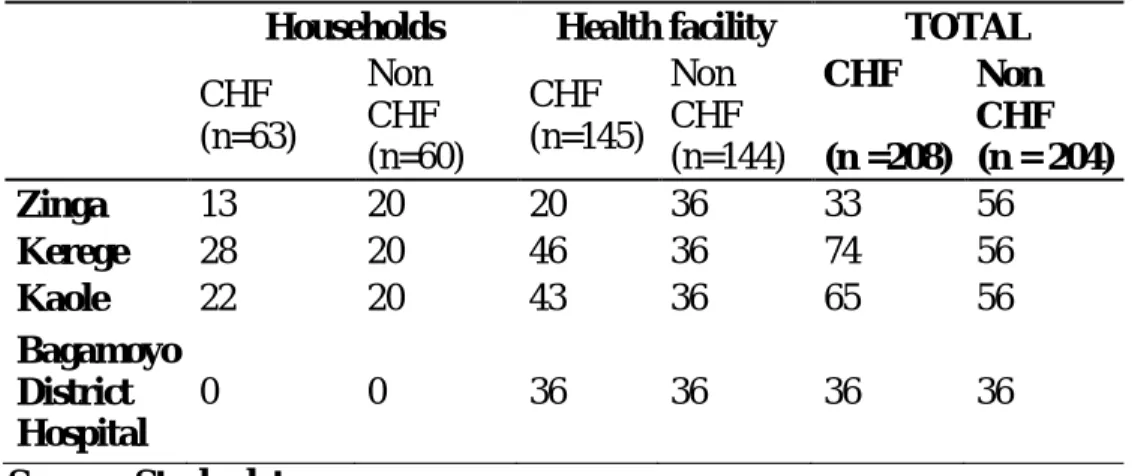
A total of 412 heads of households were interviewed between April and May 2012. Participants were recruited from three villages and one district hospital as follows; 89 (21.6%) from Zinga village and dispensary, 130 (31.6%) from Kerege village and dispensary, 121 (29.3%) from Kaole village and dispensary and 72 (17.5%) from Bagamoyo district hospital. Overall, there were 208 (50.5%) CHF and 204 (49.5%) non CHF members (Table 1).
Table 1. Recruitment points of study participants.
Households Health facility TOTAL CHF (n=63) Non CHF (n=60) CHF (n=145) Non CHF (n=144) CHF (n =208) Non CHF (n = 204) Zinga 13 20 20 36 33 56 Kerege 28 20 46 36 74 56 Kaole 22 20 43 36 65 56 Bagamoyo District Hospital 0 0 36 36 36 36
Source: Study data
4.2 Characteristics of the study participants
Median and mean age of the participants recruited at households and health facilities were 38.0 and 39.4 years respectively, with a range of 20 – 85 years (SD ±12.12 years). The age group 31 - 40 had the highest proportion of respondents in both households 41 (67.1%) and health facilities, 87 (60.2%). Participants with 60 years and above were least represented in both household s 15 (24.3%) and health facilities, 14 (9.7%) (Table 2). Although there were more non CHF members below 41 years of age, there was no statistically significant difference between CHF and non CHF members by age groups in both households (p = 0.209) and health facilities (p= 0.321) (Table 2).
Overall, this study included 197 (47.8%) males and 215 (52.2%) females. There was no statistical difference between sex and CHF membership status both for the households (p=0.354) and health facilities (p = 0.213) participants (Table 2).
As shown in Table 2 below married respondents, 332 (80.6%), dominated the study participants. There were significantly less married CHF members than non CHF members recruited from health facilities (p = 0.001).
There was no statistically significant difference between CHF and non-CHF members by education status both for the households participants (p = 0.115) and health facilities participants (0.118) (Table 2).
Overall, the median monthly income of the respondents was 25,000 Tanzanian shillings (TZS). Majority of the participants, 280 (69.0%), earned an average of less than thirty thousand Tanzanian shillings per month (Table 2). CHF members from the health facilities reported to earn statistically lower monthly income than non CHF members recruited at facilities (p = 0.017). (Table 2). There was no statistically significant difference in monthly income between CHF and non CHF members recruited from households (p=0.079).
Table 2: Characteristics of study participants (n =412).
Variable Household Health facility Total
CHF (n=63) Non CHF (n=60) P value CHF (n=145) Non CHF (n=144) P value n (%) n (%) n (%) n (%) n (%) Age (years) 20 – 30 12 (19.0) 11 (18.3) 41 (28.3) 44 (30.6) 108(26.2) 31 – 40 15 (23.8) 26 (43.3) 41 (28.3) 46 (31.9) 128(31.1) 41 – 50 17 (27.0) 10 (16.7) 0.209 43 (29.7) 44 (30.6) 0.321 114(27.7) 51 – 60 10 (15.9) 7 (11.7) 12 (8.3) 4 (2.8) 33 (8.0) 60+ 9 (14.3) 6 (10.0) 8 (5.5) 6 (4.2) 29 (7.0) Sex Male 38 (60.3) 41 (68.3) 54 (37.2) 64 (44.4) 197(47.8) Female 25 (39.7) 19 (31.7) 91 (62.8) 80 (55.6) 215(52.2) Marital Status Married 58 (92.1) 56 (93.3) 100(69.0) 118(81.9) 332(80.6) Single 5 (7.9) 4 (6.7) 0.3 45 (31.0) 26 (19.1) 0.001 80 (19.4) Education Status No formal 5 (7.9) 3 (5.0) 14 (9.7) 11 (7.6) 33 (8.0) Primary 57 (90.5) 51 (85.0) 0.115 110(75.9) 122(84.8) 0.118 340(82.5)
Sec & above 1 (1.6) 6 (10.0) 21 (14.5) 11 (7.6) 39 (9.4)
Monthly income (TZS)
< 30,000 48 (76.2) 33 (55.0) 88 (60.7) 111(17.1) 280(70.0)
30-50,000 9 (14.2) 19 (31.7) 0.079 37 (25.5) 21 (14.6) 0.017 86 (20.9)
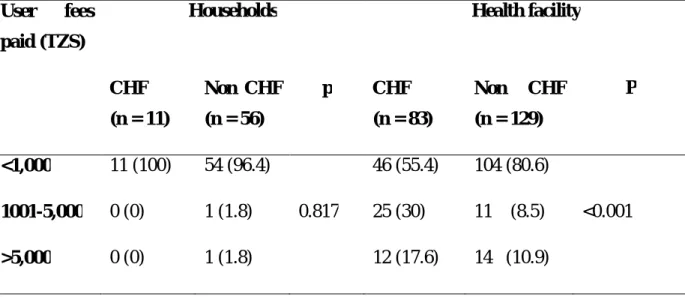
4.3 Respondents’ user fees expenditure on health services one month prior the study In this study population, 67 (24%) participants at households and 212 (76%) at health facilities, reported having paid some amount of fees one month prior to the study. Comparatively larger proportion, 185 (90.7%) of non CHF members had paid the user fees compared to CHF members, 94 (45.2%). CHF members are not supposed to pay user fees but when they visit other facilities than the ones they are registered to, like the district hospital with no referral document from primary facilities or another dispensary (private or public), then they are forced to pay.
The median user fee was reported to be 1,000TZS. Majority of the respondents, 66 (86.4%) at households and 150 (70.6%) at health facilities had paid less than 1000TZS, while 27 (9.7%)reported to pay more than 5000TZS.
All CHF participants 11, (100%) compared to 54 (96%) of non CHF members form the households who paid user fees in one month preceding the study interview, reported to have paid 1000 TZS or less as user fee (table 3). On the other hand, table 3 shows that, CHF members interviewed at health facilities were more likely to have spent higher amounts as user fees compared to non CHF members interviewed at health facilities (p <0.001).
Table 3: Comparison of respondent user fees expenditure one month prior to study by CHF membership status (n=279).
User fees paid (TZS)
Households Health facility
CHF (n = 11) Non CHF (n = 56) p CHF (n = 83) Non CHF (n = 129) P <1,000 11 (100) 54 (96.4) 46 (55.4) 104 (80.6) 1001-5,000 0 (0) 1 (1.8) 0.817 25 (30) 11 (8.5) <0.001 >5,000 0 (0) 1 (1.8) 12 (17.6) 14 (10.9)
4.4 Proportion of monthly income used to pay user fees and/or CHF premium
Table 4 compares the proportions of monthly incomes for both CHF and non CHF members incurred as health expenditure. Respondents reported that CHF premium was 10,000 TZS paid annually per household. The user fees in public health facilities in Bagamoyo were reported to be 1,000 TZS and 2,000 TZS for out and in patients’ services respectively. However, respondents reported to have visited private health facilities as well, whose fees varied from one another. It was noted that, alongside the annual CHF premiums, CHF members reported to had paid some extra amount of money as user fees.
A total of 49 (77.8%) household participants and 54 (48.3%) health facility participants reported to have had spent between zero and five percent (0 - 5%) of their monthly income on health services as user fees and/or CHF premiums. (Table 4).
Compared to CHF members, non-CHF members at the health facilities were significantly more likely to have had spent a smaller proportion of monthly income on health (p< 0.001). For instance 76.4% of non- CHF members as compared to only 48.3% of CHF members at health facilities had spent less than 10% of their monthly income on health a month prior to this study, (Table 4).
In summary, Table 4 shows that on average in one month, non- CHF members were more likely to use lesser proportions of their monthly income for health services compared to CHF members at the facilities.
Table 4: Comparison of respondents proportion of monthly income used to pay user fees and/or CHF premium three months prior to study (n=412)
Households Health facility Average monthly health spending as a proportion of monthly income CHF (n = 63) n (%) Non CHF (n = 60) n (%) p CHF Non CHF p (n = 145) (n = 144) n (%) n (%) 0-5% 49 (77.8) 54 (90) 70 (48.30 110 (76.4) 6-10% 10 (15.9) 4 (6.7) 0.136 45 (31) 17 (11.8) <0.001 Above 10% 4 (6.3) 2 (3.4) 30 (20.7) 17 (11.8)
4.5 Health services utilization among CHF members and non- CHF members
Table 5 compares health service utilization among CHF and non-CHF members. Health services utilization although slightly lower among the non-CHF members, was not statistically different for both CHF and non-CHF members in both households (p = 0.61) and at health facilities (p = 0.12) (table 5).
Moreover the frequency of visits to health facilities by members of the households was not statistically different between CHF members and non CHF members (table 5). About 9 (4.3%) CHF members compared to 7 (3.4%) of non-CHF members had visited health facilities twice within one month (p = 0. 58) while none of the respondents had visited health facilities more than three times (data not shown in the table 5).
Table 5: Health services utilization among CHF members and non- CHF members (n=408)**
Household (n = 120) Health facility (n= 288)
Visited health facility when sick last time
CHF-member (n=207) Non-CHF P value CHF member Non CHF P value n (%) n (%) n (%) n (%) Yes 61 (98.4) 56 (96.6) 0.61* 145 (100) 140 (97.3) 0.12* No 1 (1.6) 2 (3.4) 0 (0) 3 (2.1)
**Four respondents (1 CHF member and 3 non-CHF members) did not recall being sick. * Fishers’ exact test was performed for cells less than 5.
4.6 Respondents’ perceptions on the quality of health services provided to the individuals paying user fees.
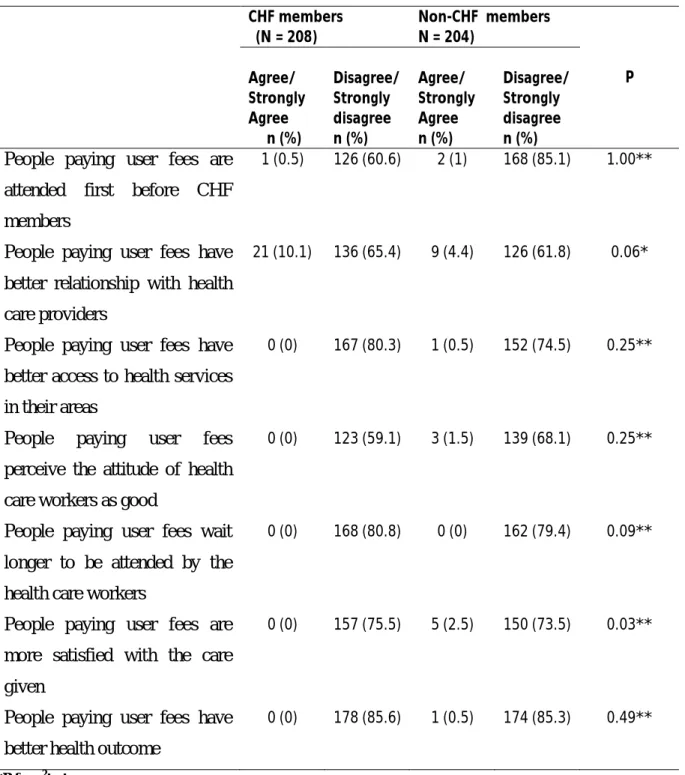
Table 6 shows the perceptions of both CHF and non-CHF members with regards to quality of services provided to the individuals paying user fees. This table shows that 5 (2.5%) of the non-CHF members and none of the CHF members perceived that people paying user fees were more satisfied with the health care provided (p = 0.03). Moreover, more CHF members 157 (75.5%) compared to non-CHF members (73.5%) disagreed to the perception that people paying user fees were more satisfied with the health care provided (p = 0.03) (Table 6).
Regarding perceptions on the quality of health provided to people paying user fees, there was no statistical difference between CHF members and non CHF members as shown in Table 6 below.
Table 6: CHF members and non CHF members’ perceptions on the quality of health services provided to the individuals paying user fees (n=412)
CHF members (N = 208) Non-CHF members N = 204) P Agree/ Strongly Agree n (%) Disagree/ Strongly disagree n (%) Agree/ Strongly Agree n (%) Disagree/ Strongly disagree n (%)
People paying user fees are attended first before CHF members
1 (0.5) 126 (60.6) 2 (1) 168 (85.1) 1.00**
People paying user fees have better relationship with health care providers
21 (10.1) 136 (65.4) 9 (4.4) 126 (61.8) 0.06*
People paying user fees have better access to health services in their areas
0 (0) 167 (80.3) 1 (0.5) 152 (74.5) 0.25**
People paying user fees
perceive the attitude of health care workers as good
0 (0) 123 (59.1) 3 (1.5) 139 (68.1) 0.25**
People paying user fees wait longer to be attended by the health care workers
0 (0) 168 (80.8) 0 (0) 162 (79.4) 0.09**
People paying user fees are more satisfied with the care given
0 (0) 157 (75.5) 5 (2.5) 150 (73.5) 0.03**
People paying user fees have better health outcome
0 (0) 178 (85.6) 1 (0.5) 174 (85.3) 0.49**
*P for 2test
**Fishers’ exact test was performed for cells less than 5.
4.7 Respondents’ perceptions on the quality of health services provided to the CHF members.
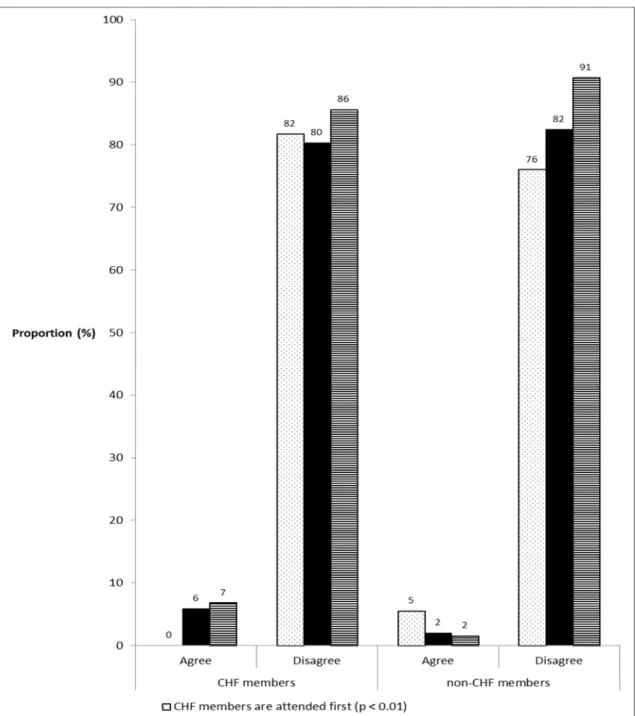
Figure 2 compares the perceptions of both CHF and of non CHF members on the quality of health services provided to the CHF members. From this figure we can deduce that, 5.4% of non CHF members compared to none (0%) of the CHF members perceived that CHF members were attended first before those paying user fees (p < 0.01) (figure 2). Furthermore, fewer CHF members (85.6%) compared to non-CHF members (90.7%) perceived that CHF members have better health outcomes (p = 0.01) (Figure 2).
Only 5.8% of CHF members compared to 2.0% of non CHF members perceived CHF members waited longer to be attended by health care workers (p = 0.07) (Figure 2).
Furthermore, when asked about their perceptions on the amount of CHF annual premiums, almost all CHF members 207 (99.5%) perceived the premium charges not expensive.
Figure 2: Comparison of respondents’ perceptions on the quality of health services provided to the CHF members by CHF membership status (n = 412)
p for 2 test
Fishers’ exact test was performed for cells < 5
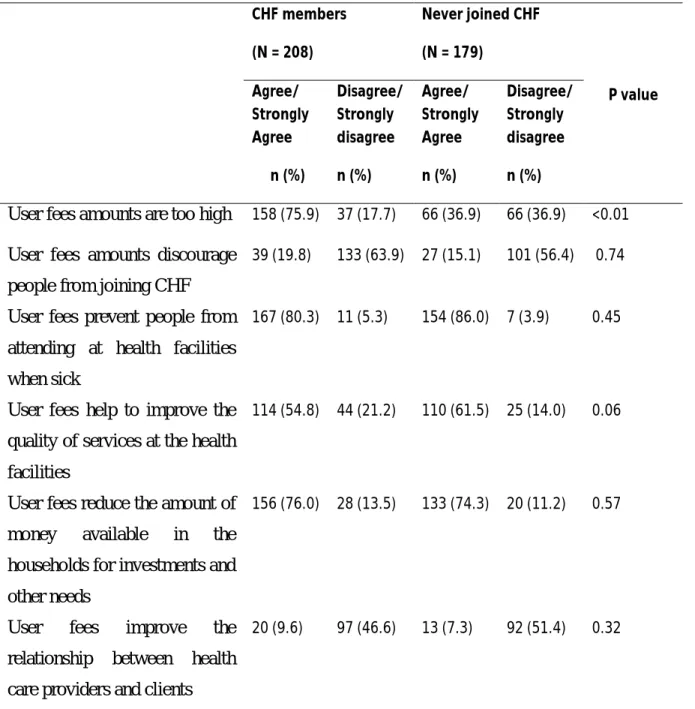
4.8 Perceptions of CHF members and of respondents’ who had never joined CHF on the usefulness of user fees as compared to joining Community Health Fund (CHF)
In Table 7, we compared perceptions of CHF members and of respondents who had never joined CHF scheme on usefulness of user fees as compared to joining CHF schemes in their areas.
Table 7 shows that, a significantly larger proportion of CHF members (75.9%) compared to proportion of respondents who had never joined CHF scheme (36.9%) perceived user fees amounts were too high (p< 0.01) (Table 7).
Majority of both CHF members (80.6%) and respondents who had never joined CHF (86.0%) perceived that user fees prevented people from accessing health services (Table 7). Higher proportions of CHF members (76.0%) and non-CHF members (74.3%) agreed that user fees reduced the amount of money available in the households for investments and other needs (Table 7).
Table 7 shows that higher proportion of respondents who had never joined CHF (61.5%) compared to CHF members (54.8%) perceived user fees helped to improve the quality of services at the health facilities. However, the difference was not statistically significant (p = 0.06)
Table 7: Perceptions of CHF members and of respondents’ who had never joined CHF on the usefulness of user fees as compared to joining Community Health Fund (CHF) (n=387)
CHF members (N = 208) Never joined CHF (N = 179) P value Agree/ Strongly Agree n (%) Disagree/ Strongly disagree n (%) Agree/ Strongly Agree n (%) Disagree/ Strongly disagree n (%)
User fees amounts are too high 158 (75.9) 37 (17.7) 66 (36.9) 66 (36.9) <0.01 User fees amounts discourage
people from joining CHF
39 (19.8) 133 (63.9) 27 (15.1) 101 (56.4) 0.74
User fees prevent people from attending at health facilities when sick
167 (80.3) 11 (5.3) 154 (86.0) 7 (3.9) 0.45
User fees help to improve the quality of services at the health facilities
114 (54.8) 44 (21.2) 110 (61.5) 25 (14.0) 0.06
User fees reduce the amount of
money available in the
households for investments and other needs
156 (76.0) 28 (13.5) 133 (74.3) 20 (11.2) 0.57
User fees improve the
relationship between health care providers and clients