PERSPECTIVE
Research priorities for harnessing plant
microbiomes in sustainable agriculture
Posy E. Busby1*, Chinmay Soman2, Maggie R. Wagner3, Maren L. Friesen4,5,
James Kremer6, Alison Bennett7, Mustafa Morsy8, Jonathan A. Eisen9, Jan E. Leach10, Jeffery L. Dangl11
1 Department of Botany and Plant Pathology, Oregon State University, Corvallis, Oregon, United States of
America, 2 Department of Natural Resources and Environmental Sciences, University of Illinois at Urbana Champaign, Urbana, Illinois, United States of America, 3 Department of Plant Pathology, North Carolina State University, Raleigh, North Carolina, United States of America, 4 Department of Plant Biology, Michigan State University, East Lansing, Michigan, United States of America, 5 Program in Ecology, Evolutionary Biology and Behavior, Michigan State University, East Lansing, Michigan, United States of America, 6 MSU-DOE Plant Research Laboratory, Michigan State University, East Lansing, Michigan, United States of America, 7 The James Hutton Institute, Invergowrie, Dundee, Scotland, 8 College of Natural Sciences and Mathematics, University of West Alabama, Livingston, Alabama, United States of America, 9 Genome Center, University of California, Davis, California, United States of America, 10 Bioagricultural Sciences and Pest Management, Colorado State University, Ft Collins, Colorado, United States of America, 11 Howard Hughes Medical Institute, Department of Biology, University of North Carolina at Chapel Hill, Chapel Hill, North Carolina, United States of America
Abstract
Feeding a growing world population amidst climate change requires optimizing the reliability, resource use, and environmental impacts of food production. One way to assist in achieving these goals is to integrate beneficial plant microbiomes—i.e., those enhancing plant growth, nutrient use efficiency, abiotic stress tolerance, and disease resistance—into agricultural production. This integration will require a large-scale effort among academic researchers, industry researchers, and farmers to understand and manage plant-microbiome interactions in the context of modern agricultural systems. Here, we identify priorities for research in this area: (1) develop model host–microbiome systems for crop plants and non-crop plants with associated microbial culture collections and reference genomes, (2) define core micro-biomes and metagenomes in these model systems, (3) elucidate the rules of synthetic, func-tionally programmable microbiome assembly, (4) determine functional mechanisms of plant-microbiome interactions, and (5) characterize and refine plant genotype-by-environ-ment-by-microbiome-by-management interactions. Meeting these goals should accelerate our ability to design and implement effective agricultural microbiome manipulations and management strategies, which, in turn, will pay dividends for both the consumers and pro-ducers of the world food supply.
a1111111111 a1111111111 a1111111111 a1111111111 a1111111111
OPEN ACCESS
Citation: Busby PE, Soman C, Wagner MR, Friesen
ML, Kremer J, Bennett A, et al. (2017) Research priorities for harnessing plant microbiomes in sustainable agriculture. PLoS Biol 15(3): e2001793.https://doi.org/10.1371/journal. pbio.2001793
Published: March 28, 2017
Copyright:©2017 Busby et al. This is an open access article distributed under the terms of the Creative Commons Attribution License, which permits unrestricted use, distribution, and reproduction in any medium, provided the original author and source are credited.
Funding: National Science Foundationwww.nsf. org(grant number 1519383).Received by PEB and CS. The funder had no role in study design, data collection and analysis, decision to publish, or preparation of the manuscript. National Science Foundationwww.nsf.org(grant number 1314095). Received by PEB. The funder had no role in study design, data collection and analysis, decision to publish, or preparation of the manuscript.
Competing interests: The authors have declared
that no competing interests exist.
Provenance: Not commissioned; externally peer
Introduction
A growing appreciation of microbial diversity and function in combination with advances in omics (i.e., the study of large-scale biological datasets, including genes, transcripts, proteins and metabolites) and data analytics technologies are fueling rapid advances in microbiome research. One driving motivation—harnessing beneficial microbes and reducing impacts of detrimental microbes—is common to both humans and crop plants. The National Institutes of Health-funded Human Microbiome Project [1] and the parallel European Union effort [2] helped develop resources and define research goals for long-term directed growth in the field. A coordinated research effort for plant microbiomes, analogous to the Human Microbiome Project, is needed to accelerate the integration of beneficial plant microbiomes into modern agricultural practices that are under strain from human population growth and a changing global climate.
Studies to date have explored plant microbiome structure and function under natural and agricultural environments in both model and crop plant species, includingArabidopsis thaliana
[3–6], barley (Hordeum vulgare) [7], soybean (Glycine max) [6,8,9], corn (Zea mays) [10], wheat (Triticum aestivum) [11,12], rice (Oryza sativa) [13–15], and cottonwood trees (Populus tricho-carpa) [16]; however, there has been no coordinated effort to consolidate and translate new ideas into practical solutions for farmers. This stems both from a lack of coordination among academic and industry researchers and from a disconnect between researchers and farmers. Here, we outline a core set of research priorities (Box 1) and discuss how they will contribute to microbiome management strategies designed to enhance the sustainability of food production.
Ever since their origin hundreds of millions of years ago, plants have lived in association with microbes. Among the multitude of host functions that microbes influence are nutrient uptake [17–19], defense [20–23], and phenology [24]. Moreover, the metagenomic potential of the plant-associated microbiome could conceivably dwarf the genomic abilities of plants and, thus, represents a vast, largely untapped reservoir for improved host function. For these rea-sons, integrating beneficial microbiomes into agricultural systems offers the potential to greatly improve the efficiency of crop plant production [25–28].
While beneficial microbial communities in modern agriculture have been underutilized, efforts to integrate individual microbes into agriculture date back to the 1800s, when the U.S. Department of Agriculture recommended inoculations for legume crops, following experi-ments demonstrating that rhizobium bacteria colonize nodules and fix nitrogen for their plant hosts [29]. In the past few decades, individual microbes have been inoculated onto crop plants
Box 1. Agricultural microbiome research priorities
1. Develop model host–microbiome systems for crop plants and non-crop plants with associated microbial culture collections and reference genomes
2. Define core microbiomes and metagenomes in model host–microbiome systems 3. Elucidate the rules of synthetic, functionally programmable microbiome assembly 4. Determine functional mechanisms of plant–microbiome interactions
to promote growth, nitrogen and phosphorus uptake [30], and disease resistance [31]. How-ever, these efforts have focused almost exclusively on individual microbial strains [32] and have met with variable success that is typically attributed to the complexity of microbial com-munities and their interactions with the environment in field settings. Here, we argue that the focus should be on understanding and managing the range from single strains, through syn-thetic consortia, to whole microbiomes for plant benefit.
A crucial step in coordinating the study of whole plant microbiomes in an agricultural con-text is the development and implementation of protocol standards. The American Academy of Microbiology [33], Unified Microbiome Initiative [34], Report on the Fast-Track Action Com-mittee on Mapping the Microbiome [35], American Phytopathological Society [36], Earth Microbiome Project [37], Genomic Standards Consortium [38], and National Microbiome Initiative [39] have each called for the standardization of data collection, processing, and anal-ysis. This effort is underway with guidance from the U.S. National Institute of Standards and Technology. Many of the same initiatives listed above have also defined knowledge gaps and research priorities in plant microbiome research. The earlier efforts called for the discovery and description of taxonomic diversity, while more recent emphasis has been placed on eluci-dating the functional roles of microbiomes. The goal of this paper is not to review these efforts; rather, our objective is to communicate a set of research priorities that should specifically accelerate the integration of plant-associated microbiomes into sustainable agriculture. These priorities reflect both basic and applied goals that can be achieved over the next 5–10 years.
In addition to outlining research priorities, we strongly urge that new research in agricul-tural microbiomes involve farmers at the onset. Farmers are local experts on crops and land, and are, thus, valuable research partners. For example, farmers played an important role in the discovery of disease-suppressive soils that later became the subject of intensive study and inter-est to managers [21,40]. In addition to incorporating local knowledge into research, establish-ing open lines of communication with famers will lead to a greater appreciation of farmers’ objectives and, ultimately, to the translation of research to the field.
Research priorities
1. Model plant-microbiome systems
A model organism is a platform for discovery and hypothesis generation. Systems-level interactions among two or more model organisms, such as host-pathogen or host-symbiont relationships, can likewise shed light on broadly applicable mechanisms of disease and/or sym-biosis. In addition to tractability, the power of model systems resides in community-accessible resources, including genome annotation projects, curated mutant collections, standardized protocols, central data repositories, and large-scale field experiments. Establishing these resources will enable research on agricultural microbiomes spanning the full spectrum from the petri dish to the greenhouse to the field.
A suite of model plant species is required to understand which processes will translate to crops at varying evolutionary distances [41]. Progress has been made towards the establish-ment of model host–microbiome systems for the legumeMedicago[42],Populus[43], rice [13,15,44–46],Sorghum[47],Miscanthus[48], maize [49,50], and tomato [51]. All of these model organisms have fully sequenced genomes and growing communities of researchers to extend their utility for microbiome research. Coordinated efforts to establish public resources, such as repositories and curated databases for sequenced culture collections of associated microbiota, are necessary for full maturation of model systems. Collectively, a multidisciplin-ary community comprising academic and commercial plant microbiome scientists, with sup-port from funding agencies, is necessary to establish effective model systems to elucidate plant-microbiome interactions with maximum interoperability—a critical step towards estab-lishing a knowledge base for sustainable high-yielding agriculture innovation.
2. Defining the core plant microbiome and core plant metagenome
In addition to model systems and culture collections, targeted studies of agricultural micro-biomes in the field provide key foundational knowledge that can lead to innovation in several ways. First, identification of the “core” microbiome—the set of microbial taxa that are found in most samples of a particular set of plants [3,4,52,53]—will help to identify plant-associated microbes that should be prioritized for further research, inclusion in culture collections, and manipulative experiments. Plant microbiota are highly diverse, yet not all of these microbes play functionally important roles in their host’s biology. Defining the core microbiome enables researchers to filter out transient associations and refine focus on stable taxa with a greater likelihood of influencing host phenotype. Culture-independent surveys (such as sequencing ITS and16S rRNAamplicons) of large numbers of microbiomes of the same plant species from a variety of environments—as opposed to very deep sequencing of a few plant micro-biomes—would improve progress towards this goal and could be followed up by selective cul-turing of candidate core microbiota.
Second, in addition to a taxonomically defined core microbiome based on phylogenetic dif-ferences, identifying a functional core is important because constituent microbes are likely to be adaptive. The functional core can be identified by using metagenomic and metatranscrip-tomic approaches to discover shared predicted functions that are likely important for the given set of plants studied [54]. Extrapolation from phylogenetic marker genes such as ITS provides only limited functional information. In contrast, targeted metagenomics of functional genes and shotgun metagenomics give us a better insight into community functional potential [55], while metatranscriptomics, metaproteomics, and metabolomics reveal the functional commu-nity phenotype. By combining multi-omic approaches among large sample sizes of plants, we can identify core community functionality and identify the extent of taxonomic functional redundancy.
microbiome-related traits to respond to classic artificial selection may be limited. However, microbiomes could be engineered to increase heritability [26], and targeted breeding
approaches may succeed once we have the foundational knowledge of the host molecular basis of microbiome assembly.
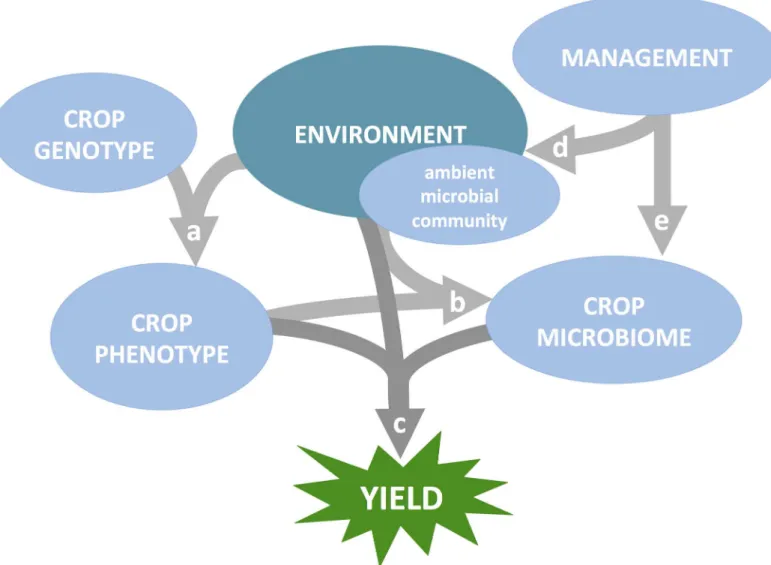
Fourth, comparing the core microbiota of genetically distinct plant groups could reveal plant genes and functional traits that influence microbiome assembly. The mechanisms by which hosts winnow the ambient community to form their microbiota are not fully under-stood, although plant functional traits such as cuticle composition [60], root length and exu-dates [44,61], and plant defenses (immunity) [62] have been implicated (Fig 1B). Cuticle and root traits should directly influence colonization by a wide range of microbial species, whereas host–microbe interactions influencing individual microbes (e.g., rhizobia, mycorrhizae) may
Fig 1. Genotype, environment, management method, and microbiome interact to influence yield. (A) Plant genotype and environmental properties
(both biotic and abiotic) synergistically determine plant phenotypes. (B) Plant phenotypic traits influence the subset of microbes from the ambient community—which itself may partly reflect deterministic evolutionary processes like local adaptation to abiotic stresses—that colonize organs to form the crop microbiome. (C) The definition of a “healthy” or “beneficial” microbiome—one that improves yield—likely depends on the particular environmental challenges (both biotic and abiotic) experienced by a plant and the degree to which the plant’s phenotype is already adapted to those challenges. (D, E) Management methods primarily influence yield by altering the dynamics of genotype x environment x microbiome interactions, but can also modify the crop microbiome directly (e.g., microbial seed coating or other microbiome applications that may result from the stated research priorities).
have indirect effects on later-arriving microbes [63]. In addition, crop species or cultivars that reliably assemble different microbiomes could be relying on their microbiota to fill different needs, especially if the plants are adapted to specific environmental challenges [64].
Finally, because the crop microbiome, plant phenotype, and environment interact to affect yield (Fig 1C), comparing the core microbiomes and metagenomes of plants grown in con-trasting environments should provide key insights. Microbes that are especially common in challenging environments are more likely to protect yield under stresses such as drought, heat,
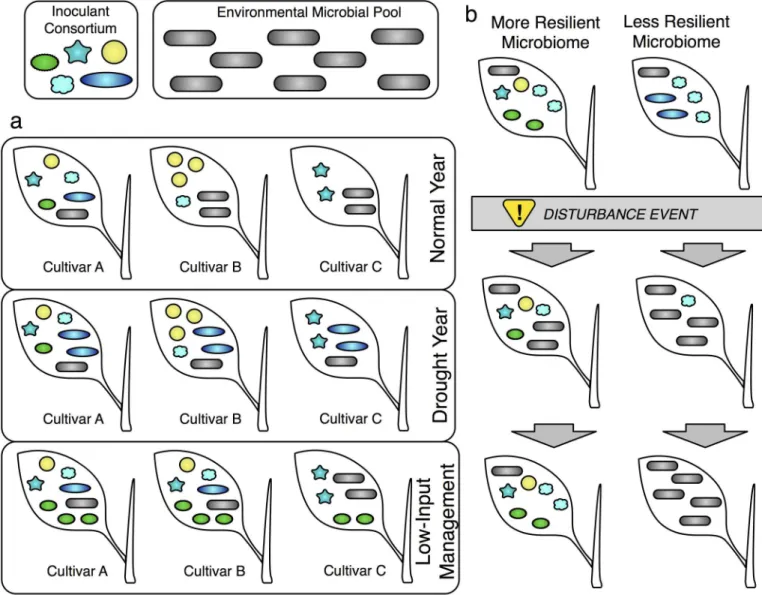
Fig 2. Outcomes of inoculation with a microbial consortium. (A) Illustration of varying outcomes of inoculating with a five-member consortium
(colored non-rod shapes) in the presence of a diverse environmental microbial pool (gray rod shapes). Three cultivars are depicted growing in three different regimes: a normal year, a drought year, and low-input management. Genotype effects: In a normal year, Cultivar A is colonized by all five members of the inoculant consortium, while cultivar B is colonized only by yellow spheres and cultivar C is colonized only by teal stars. Environment/ management effects: Compared to the normal year, the drought year shows higher colonization by blue ovals and the environmental microbial pool, while under low-input management all cultivars show increased colonization by the green spiky ovals, e.g., a nitrogen-fixer. A genotype-by-environment interaction is depicted by cultivar B only associating with the cyan clouds under low-input management, while cultivar C does not. We note that while interactions between microbes are not shown explicitly, these could be useful in efforts to manipulate microbiomes; e.g., the yellow circles and the cyan clouds always occur together. (B) Temporal dynamics of two communities after a disturbance event (e.g., pathogen attack, high temperature). The more resilient community recovers to its initial state after perturbation, while the less resilient community does not and is displaced entirely by members of the environmental microbial pool. We note that if the growth benefits are provided early in growth by the inoculum, an ecologically fragile community may still be able to enhance crop productivity.
salinity, heavy metals, disease, and herbivory (Fig 2A) [65]. For instance, the core metatran-scriptomes of plants grown in dry soil could differ from those of plants grown in the same soil under well-watered conditions, providing clues about which microbial genes might contribute to drought tolerance [66]. This approach is particularly powerful when combined factorially with a comparison between stress-resistant and susceptible cultivars in challenging versus unchallenging environments. Additionally, metagenome-wide association studies, in which variants in the metagenome (such as the presence/absence of a certain microbial gene) are used to predict host phenotype [67], could nominate subsets of the microbiome that play key roles in host performance under the major stressors facing agriculture today and in the near future.
3. Rules of microbiome assembly and resilience
Beyond knowledge of the identity and functional attributes of microbes present in crop plant “core” microbiomes, determining the rules by which microbes assemble into those communi-ties will be essential for any attempt to manipulate or manage the agricultural microbiome. The extraordinary complexity of plant microbial communities presents a daunting barrier to fully understanding the ecology of plant-associated microbiomes, and for this reason the links between microbiome assembly and plant performance are still poorly understood [68]. There-fore, we recommend prioritizing research aimed at designing synthetic microbial communities that can successfully colonize plant organs and persist long enough in natural environments to confer benefits to the host.
One key question is: what properties of a synthetic microbial community make it more likely to colonize plant organs? Microbial genes that are reliably represented in core metagen-omes—and are enriched in plant microbiomes compared to soil—are good candidates for essential functions that improve colonization ability. Community properties such as phyloge-netic diversity or species richness might also impact colonization success; these could be sys-tematically explored in the lab using gnotobiotic model systems and culture collections [69]. Once a synthetic community has colonized a plant, what properties allow it to resist invasion and displacement by microbes that are abundant in the surrounding environment? What properties confer resistance to abiotic challenges, or at least the ability to rebound from such perturbations (Fig 2B)? These could be the same as, or different from, the properties that enabled the initial colonization. All of these questions could be initially addressed in gnotobi-otic systems in the lab and then tested in greenhouse and field experiments.
In addition to genetic properties of the microbiome, the method of microbiome inoculation can play a major role in its success, as demonstrated by years of agronomic work optimizing delivery of single strains via seed coatings, clay particles, and peat. Development of effective microbiome inoculation strategies for agriculture may include seeding multiple characterized microbial species into resilient particles for delivery via air, water, soil, or novel delivery sys-tems such as insect vectors. However, efforts to maximize colonization ability should also ensure that synthetic communities are not so aggressive that they invade local ecosystems and negatively affect soil health, neighboring plants, or future crops [28].
manage agricultural microbiomes. Testing the influence of biotic factors will be particularly difficult for microbes that cannot be cultured independently. For example, microbes can be “linked” to other microbes by strong interactions (e.g., mycoparasitism). Network analysis can be particularly useful for identifying linked microbes and “hub” microbes, akin to keystone species, that interact strongly with many other microbes and thereby strongly impact both the structure and function of the community [71]. Comparisons of microbiomes across habitats [72,73], the addition or removal of a single biotic component [71,74], dilution experiments [75], and pioneering work manipulating culturable bacteria [62,71] are beginning to provide insight into how biotic interactions influence microbiome assembly and persistence in plants. Ultimately, testing synthetic communities under a variety of abiotic and biotic conditions will improve our ability to predict how these inocula will perform across diverse and variable farm environments (Fig 1C,Fig 2A).
4. Functional mechanisms in agricultural microbiomes
Realization of the anticipated benefits of plant microbiomes in agriculture will require a thor-ough understanding of the functional and mechanistic aspects of the interactions between microbes, plants, the farm environment, and agricultural management practices. Moreover, enabling the engineering of agricultural plant–microbiome associations for improvements in productivity, tolerance to biotic and abiotic stresses, and nutrient efficiency [28,76] will require significant advances in experimental approaches, advanced characterization techniques, modeling, and theory that incorporate, but also move beyond, the currently dominant census-based descriptive approaches [77,78]. The molecular biology and physiology of the vast major-ity of microbes remains uncharacterized. Also lacking are the empirical and theoretical bases for predicting microbial community function from structure and the functional responses to environmental variation. New high-throughput techniques that enable rapid multi-omics characterization of the functional responses at multiple scales, from individual strains and operational taxonomic units to local microbial communities, across environmental variation, are essential for addressing these knowledge gaps. Bioinformatic and modeling tools capable of capturing the multi-omics manifestations of the interactions between the elements at vari-ous scales are also essential for sufficiently understanding and effectively utilizing these inter-actions [79,80].
Understanding the functional aspects of interactions between plants and their microbiomes is particularly essential for improving agricultural applicability, such as for tolerance to drought and other abiotic stresses as well as resistance to diseases [18,81,82]. Model experi-mental systems are essential for elucidating the dynamic feedbacks between plant physiology and microbial functions that drive colonization of the rhizosphere, rhizoplane, and endophytic compartments as well as the maintenance and modulation of plant–microbiome interactions. Additionally, large-scale efforts are needed to characterize the role of exudates in shaping these microbial communities and maintaining their functionality [62,83].
that precede potential pathogenic or beneficial interactions in constructed synthetic communi-ties as well as in wild soil ecosystems could also lead to diagnostic and predictive tools for farmers and regulatory agencies.
5. Plant genotype
×
microbiome
×
environment
×
management
interactions
The previously discussed goals of defining core microbiomes, identifying functional mecha-nisms of beneficial symbioses, and discovering the rules of microbiome assembly share a com-mon theme: sensitivity to host genetic and environmental context, as well as management decisions. For instance, the definition of a “healthy” or “beneficial” microbiome may depend on the specific environmental challenges faced by the plant (Fig 1C). On the other hand, microbiomes with generic growth-promoting properties may increase overall plant vigor and improve the host’s ability to cope with a wider range of challenges. Whether globally beneficial microbiomes can be engineered to provide robust benefits to crop health across diverse envi-ronments, or whether in-situ engineering of locally beneficial microbiomes should be our goal, will need to be determined. To some extent, the environment experienced by a plant can be controlled by management decisions tailored to the natural challenges presented by a given farm (Fig 1D). Humans have altered biotic and abiotic properties of soils since the start of agri-culture through soil additives, tillage, and cropping systems. Thus, the interactions among microbes, the environment, and management are a crucial consideration when applying microbiome science to improve plant health and yield (Fig 1,Fig 2).
Compounding the challenges of implementing beneficial microbiomes for agriculture are genotype-by-environment interactions. Host genotype effects on the microbiome can vary in strength among environments and even between different plant tissues (Fig 1A) [50,86]. Another challenge is to design microbiome treatments that are resilient to the tremendous environmental variability among farms. A given microbial consortium might thrive in one cli-mate or soil type but fail in a different environment to which it is poorly adapted; for instance, microbial diversity can be driven by simple factors such as soil pH (Fig 1B) [87]. A beneficial microbiome’s resilience may also depend on its competitive ability relative to the surrounding microbial community, which can vary dramatically among farms and in response to manage-ment practices [88] and climate change [89,90]. Therefore, an overarching challenge is to define microbial consortia that can persist in a variety of heterogeneous ecosystems.
Well-designed, targeted experiments that can disentangle host genotype×environment×
microbiome×management interactions are needed to inform management decisions. For instance, to better understand what microbiome or metagenome properties provide maximum benefit under various contexts (Fig 1C), artificial microbiome selection under host–micro-biome co-propagation could be performed by manipulating individual environmental stress-ors (e.g., drought or pathogen presence) and then studying and propagating the microbiomes associated with the healthiest plants [26]. To better understand context-dependence of micro-biome assembly (Fig 1B), systematic manipulation of host genotype (e.g., comparing com-monly grown cultivars) and abiotic factors (e.g., ambient temperature and soil nitrate) could reveal patterns that enable testable predictions of on-farm microbiome behavior. The use of several distinct ambient communities in these experiments—e.g., simplified “synthetic” or model communities—would lead to more reproducible and generalizable results. Ideally, these results should be validated in the field, across a range of farms, climates, soil types, and man-agement methods.
agricultural management programs (Fig 1). However, the problem is not out of the reach of careful, systematic experimentation. The development and application of new molecular methods, model systems, and analytical tools will accelerate progress in this crucial area and enable translation of basic discoveries to farmers’ fields.
Conclusion
More so than ever before, the tools, technologies, and funding [39] are now in place to tackle fundamental questions in agricultural microbiome research. We have outlined five key research priorities in this area (Box 1). By encouraging the pursuit of these goals, we aim to accelerate the development of agricultural microbiome manipulations and management strate-gies that will increase the sustainability and productivity of global agriculture.
Acknowledgments
The authors are grateful to the other participants of the AgMicrobiomes Consortium (Asilo-mar, March 2016) for contributing to the development of research priorities discussed in this paper: Andrea Ottesen, Angela Kent, Ann Lichens-Park, Ben Wolfe, Carolyn Young, Cassie Wattenberger, Dale Pelletier, Dan Tomso, Diane Wu, Doug Cook, George Newcombe, Joyce Loper, Julia Vorholt, Larry Halverson, Laurie Drinkwater, Maria J. Pozo, Matt Ashby, Michael Mishkind, Patrick Bradley, Paul Schulze-Lefert, Penny Hirsch, Poornima Parameswaran, Ricardo Oliva, Sarah Grant, Sarah Lebeis, Sue Turner, Susannah Tringe, Tom Mitchell-Olds, Ulrich Mueller, Varghese Thomas, and Venkat Sundaresan.
References
1. Turnbaugh PJ, Ley RE, Hamady M, Fraser-Liggett CM, Knight R, Gordon JI. The Human Microbiome Project. Nature. 2007; 449(7164):804–10.https://doi.org/10.1038/nature06244PMID:17943116
2. Qin J, Li R, Raes J, Arumugam M, Burgdorf KS, Manichanh C, et al. A Human Gut Microbial Gene Cata-logue Established by Metagenomic Sequencing. Nature. 2010; 464(7285):59–65.https://doi.org/10. 1038/nature08821PMID:20203603
3. Bulgarelli D, Rott M, Schlaeppi K, Ver Loren van Themaat E, Ahmadinejad N, Assenza F, et al. Reveal-ing Structure and Assembly Cues for Arabidopsis Root-InhabitReveal-ing Bacterial Microbiota. Nature. 2012; 488(7409):91–5. Epub 2012/08/04.https://doi.org/10.1038/nature11336PMID:22859207
4. Lundberg DS, Lebeis SL, Paredes SH, Yourstone S, Gehring J, Malfatti S, et al. Defining the Core Ara-bidopsis thaliana Root Microbiome. Nature. 2012; 488(7409):86–90.https://doi.org/10.1038/
nature11237PMID:22859206
5. Schlaeppi K, Dombrowski N, Oter RG, van Themaat EVL, Schulze-Lefert P. Quantitative Divergence of the Bacterial Root Microbiota in Arabidopsis thaliana Relatives. Proceedings of the National Academy of Sciences. 2014; 111(2):585–92.
6. Delmotte N, Knief C, Chaffron S, Innerebner G, Roschitzki B, Schlapbach R, et al. Community Proteo-genomics Reveals Insights into the Physiology of Phyllosphere Bacteria. Proceedings of the National Academy of Sciences. 2009; 106(38):16428–33.
7. Bulgarelli D, Garrido-Oter R, Mu¨nch PC, Weiman A, Dro¨ge J, Pan Y, et al. Structure and Function of the Bacterial Root Microbiota in Wild and Domesticated Barley. Cell Host & Microbe. 2015; 17(3):392–403.
8. Mendes LW, Kuramae EE, Navarrete AA, van Veen JA, Tsai SM. Taxonomical and Functional Microbial Community Selection in Soybean Rhizosphere. The ISME journal. 2014; 8(8):1577–87.https://doi.org/ 10.1038/ismej.2014.17PMID:24553468
9. Rascovan N, Carbonetto B, Perrig D, Dı´az M, Canciani W, Abalo M, et al. Integrated Analysis of Root Microbiomes of Soybean and Wheat from Agricultural Fields. Scientific Reports. 2016; 6: 28084.
10. Aira M, Go´mez-Brando´n M, Lazcano C, Bååth E, Domı´nguez J. Plant Genotype Strongly Modifies the Structure and Growth of Maize Rhizosphere Microbial Communities. Soil Biology and Biochemistry. 2010; 42(12):2276–81.
12. Robinson RJ, Fraaije BA, Clark IM, Jackson RW, Hirsch PR, Mauchline TH. Endophytic Bacterial Com-munity Composition in Wheat (Triticum aestivum) Is Determined by Plant Tissue Type, Developmental Stage and Soil Nutrient Availability. Plant and Soil. 2015; 405(1–2):381–96.
13. Edwards J, Johnson C, Santos-Medellı´n C, Lurie E, Podishetty NK, Bhatnagar S, et al. Structure, Varia-tion, and Assembly of the Root-Associated Microbiomes of Rice. Proceedings of the National Academy of Sciences. 2015; 112(8):E911–E20.
14. Lucas JA, Garcı´a-Villaraco A, Ramos B, Garcı´a-Cristobal J, Algar E, Gutierrez-Mañero J. Structural and Functional Study in the Rhizosphere of Oryza sativa L. Plants Growing under Biotic and Abiotic Stress. Journal of Applied Microbiology. 2013; 115(1):218–35.https://doi.org/10.1111/jam.12225PMID:23594253
15. Knief C, Delmotte N, Chaffron S, Stark M, Innerebner G, Wassmann R, et al. Metaproteogenomic Anal-ysis of Microbial Communities in the Phyllosphere and Rhizosphere of Rice. The ISME Journal. 2012; 6 (7):1378–90.https://doi.org/10.1038/ismej.2011.192PMID:22189496
16. Shakya M, Gottel N, Castro H, Yang ZK, Gunter L, Labbe´ J, et al. A Multifactor Analysis of Fungal and Bacterial Community Structure in the Root Microbiome of Mature Populus deltoides Trees. PLoS ONE. 2013; 8(10):e76382.https://doi.org/10.1371/journal.pone.0076382PMID:24146861
17. Elser JJ, Bracken ME, Cleland EE, Gruner DS, Harpole WS, Hillebrand H, et al. Global Analysis of Nitrogen and Phosphorus Limitation of Primary Producers in Freshwater, Marine and Terrestrial Eco-systems. Ecology Letters. 2007; 10(12):1135–42.https://doi.org/10.1111/j.1461-0248.2007.01113.x PMID:17922835
18. Ortiz N, Armada E, Duque E, Rolda´n A, Azco´n R. Contribution of Arbuscular Mycorrhizal Fungi and/or Bacteria to Enhancing Plant Drought Tolerance under Natural Soil Conditions: Effectiveness of Autoch-thonous or AllochAutoch-thonous Strains. Journal of Plant Physiology. 2015; 174:87–96.https://doi.org/10. 1016/j.jplph.2014.08.019PMID:25462971
19. Friesen ML, Porter SS, Stark SC, von Wettberg EJ, Sachs JL, Martinez-Romero E. Microbially Medi-ated Plant Functional Traits. Annual Review of Ecology, Evolution, and Systematics. 2011; 42:23–46.
20. Busby PE, Peay KG, Newcombe G. Common Foliar Fungi of Populus trichocarpa Modify Melampsora Rust Disease Severity. New Phytologist. 2016; 209(4):1681–92.https://doi.org/10.1111/nph.13742 PMID:26565565
21. Mendes R, Kruijt M, de Bruijn I, Dekkers E, van der Voort M, Schneider JH, et al. Deciphering the Rhizo-sphere Microbiome for Disease-Suppressive Bacteria. Science. 2011; 332(6033):1097–100.https://doi. org/10.1126/science.1203980PMID:21551032
22. Santhanam R, Luu VT, Weinhold A, Goldberg J, Oh Y, Baldwin IT. Native Root-Associated Bacteria Rescue a Plant from a Sudden-Wilt Disease That Emerged During Continuous Cropping. Proceedings of the National Academy of Sciences. 2015; 112(36):E5013–E20.
23. Selosse M-A, Bessis A, Pozo MJ. Microbial Priming of Plant and Animal Immunity: Symbionts as Devel-opmental Signals. Trends in Microbiology. 2014; 22(11):607–13.https://doi.org/10.1016/j.tim.2014.07. 003PMID:25124464
24. Wagner MR, Lundberg DS, Coleman-Derr D, Tringe SG, Dangl JL, Mitchell-Olds T. Natural Soil Microbes Alter Flowering Phenology and the Intensity of Selection on Flowering Time in a Wild Arabidop-sis Relative. Ecology letters. 2014; 17(6):717–26.https://doi.org/10.1111/ele.12276PMID:24698177
25. Bakker MG, Manter DK, Sheflin AM, Weir TL, Vivanco JM. Harnessing the Rhizosphere Microbiome through Plant Breeding and Agricultural Management. Plant and Soil. 2012; 360(1–2):1–13.
26. Mueller UG, Sachs JL. Engineering Microbiomes to Improve Plant and Animal Health. Trends in micro-biology. 2015; 23(10):606–17.https://doi.org/10.1016/j.tim.2015.07.009PMID:26422463
27. Nogales A, Nobre T, Valadas V, Ragonezi C, Do¨ring M, Polidoros A, et al. Can Functional Hologe-nomics Aid Tackling Current Challenges in Plant Breeding? Briefings in Functional GeHologe-nomics. 2015: elv030.
28. Schlaeppi K, Bulgarelli D. The Plant Microbiome at Work. Molecular Plant-Microbe Interactions. 2014; 28(3):212–7.
29. Schneider A. Observations on Some American Rhizobia. Bulletin of the Torrey Botanical Club. 1892; 19 (7):203–18.
30. Afzal A, Bano A. Rhizobium and Phosphate Solubilizing Bacteria Improve the Yield and Phosphorus Uptake in Wheat (Triticum aestivum). International Journal of Agriculture & Biology. 2008; 10:85–8.
31. Harman GE, Howell CR, Viterbo A, Chet I, Lorito M. Trichoderma Species—Opportunistic, Avirulent Plant Symbionts. Nature Reviews Microbiology. 2004; 2(1):43–56.https://doi.org/10.1038/nrmicro797 PMID:15035008
33. Reid A, Greene SE. How Microbes Can Help Feed the World. Issues. 2013(105):33–37.
34. Alivisatos AP, Blaser MJ, Brodie EL, Chun M, Dangl JL, Donohue TJ, et al. A Unified Initiative to Har-ness Earth’s Microbiomes. Science. 2015; 350(6260):507–8.https://doi.org/10.1126/science.aac8480 PMID:26511287
35. Stulberg E, Fravel D, Proctor LM, Murray DM, LoTempio J, Chrisey L, et al. An Assessment of US Microbiome Research. Nature Microbiology. 2016; 1(1):15015.
36. APS. Phytobiomes: A Roadmap for Research and Translation. American Phytopathological Society, 2016.
37. Gilbert JA, Jansson JK, Knight R. The Earth Microbiome Project: Successes and Aspirations. BMC Biol-ogy. 2014; 12:69.https://doi.org/10.1186/s12915-014-0069-1PMID:25184604
38. Field D, Amaral-Zettler L, Cochrane G, Cole JR, Dawyndt P, Garrity GM, et al. The Genomic Standards Consortium. PLoS Biology. 2011; 9(6):e1001088.https://doi.org/10.1371/journal.pbio.1001088PMID: 21713030
39. Handelsman J. National Microbiome Initiative. White House Office of Science and Technology Policy, 2016.
40. Cook RJ. Tell Me Again What It Is That You Do. Annual Review of Phytopathology. 2007; 45(1):1–23.
41. Chang C, Bowman JL, Meyerowitz EM. Field Guide to Plant Model Systems. Cell. 2016; 167(2):325– 39.https://doi.org/10.1016/j.cell.2016.08.031PMID:27716506
42. Stanton-Geddes J, Paape T, Epstein B, Briskine R, Yoder J, Mudge J, et al. Candidate Genes and Genetic Architecture of Symbiotic and Agronomic Traits Revealed by Whole-Genome, Sequence-Based Association Genetics in Medicago truncatula. PLoS ONE. 2013; 8(5):e65688.https://doi.org/10. 1371/journal.pone.0065688PMID:23741505
43. Hacquard S, Schadt CW. Towards a Holistic Understanding of the Beneficial Interactions across the Populus Microbiome. New Phytologist. 2015; 205(4):1424–30.https://doi.org/10.1111/nph.13133 PMID:25422041
44. Lakshmanan V. Root Microbiome Assemblage Is Modulated by Plant Host Factors. In: Bais, H, Sher-rier, J, editors. Plant Microbe Interactions. Advances in Botanical Research. 2015; 75: 57–79.
45. Sessitsch A, Hardoim P, Do¨ring J, Weilharter A, Krause A, Woyke T, et al. Functional Characteristics of an Endophyte Community Colonizing Rice Roots as Revealed by Metagenomic Analysis. Molecular Plant-Microbe Interactions. 2011; 25(1):28–36.
46. Spence C, Alff E, Johnson C, Ramos C, Donofrio N, Sundaresan V, et al. Natural Rice Rhizospheric Microbes Suppress Rice Blast Infections. BMC Plant Biology. 2014; 14:130.https://doi.org/10.1186/ 1471-2229-14-130PMID:24884531
47. Ramond J-B, Tshabuse F, Bopda CW, Cowan DA, Tuffin MI. Evidence of Variability in the Structure and Recruitment of Rhizospheric and Endophytic Bacterial Communities Associated with Arable Sweet Sorghum (Sorghum bicolor (L) Moench). Plant and Soil. 2013; 372(1–2):265–78.
48. Li D, Voigt TB, Kent AD. Plant and Soil Effects on Bacterial Communities Associated with Miscanthus X giganteus Rhizosphere and Rhizomes. GCB Bioenergy. 2016; 8(1):183–93.
49. Johnston-Monje D, Raizada MN. Conservation and Diversity of Seed Associated Endophytes in Zea across Boundaries of Evolution, Ethnography and Ecology. PLoS ONE. 2011; 6(6):e20396.https://doi. org/10.1371/journal.pone.0020396PMID:21673982
50. Peiffer JA, Spor A, Koren O, Jin Z, Tringe SG, Dangl JL, et al. Diversity and Heritability of the Maize Rhi-zosphere Microbiome under Field Conditions. Proceedings of the National Academy of Sciences. 2013; 110(16):6548–53.
51. Tian B-Y, Cao Y, Zhang K-Q. Metagenomic Insights into Communities, Functions of Endophytes, and Their Associates with Infection by Root-Knot Nematode, Meloidogyne Incognita, in Tomato Roots. Sci-entific Reports. 2015; 5:17087.
52. Bulgarelli D, Schlaeppi K, Spaepen S, van Themaat EVL, Schulze-Lefert P. Structure and Functions of the Bacterial Microbiota of Plants. In: Merchant S S, editor. Annual Review of Plant Biology, Vol 64. Annual Review of Plant Biology. 64. Palo Alto: Annual Reviews; 2013. p. 807–38.https://doi.org/10. 1146/annurev-arplant-050312-120106PMID:23373698
53. Hacquard S, Garrido-Oter R, Gonza´lez A, Spaepen S, Ackermann G, Lebeis S, et al. Microbiota and Host Nutrition across Plant and Animal Kingdoms. Cell Host & Microbe. 2015; 17(5):603–16.
54. Vandenkoornhuyse P, Quaiser A, Duhamel M, Le Van A, Dufresne A. The Importance of the Micro-biome of the Plant Holobiont. New Phytologist. 2015; 206(4):1196–206.https://doi.org/10.1111/nph. 13312PMID:25655016
56. Truyens S, Weyens N, Cuypers A, Vangronsveld J. Bacterial Seed Endophytes: Genera, Vertical Transmission and Interaction with Plants. Environmental Microbiology Reports. 2015; 7(1):40–50.
57. Ottesen AR, Gorham S, Reed E, Newell MJ, Ramachandran P, Canida T, et al. Using a Control to Bet-ter Understand Phyllosphere Microbiota. PLoS ONE. 2016; 11(9):e0163482.https://doi.org/10.1371/ journal.pone.0163482PMID:27669159
58. Bodenhausen N, Bortfeld-Miller M, Ackermann M, Vorholt JA. A Synthetic Community Approach Reveals Plant Genotypes Affecting the Phyllosphere Microbiota. PLoS Genet. 2014; 10(4):e1004283. https://doi.org/10.1371/journal.pgen.1004283PMID:24743269
59. Horton MW, Bodenhausen N, Beilsmith K, Meng D, Muegge BD, Subramanian S, et al. Genome-Wide Association Study of Arabidopsis thaliana Leaf Microbial Community. Nature Communications. 2014; 5:5320.
60. Ritpitakphong U, Falquet L, Vimoltust A, Berger A, Me´traux J-P, L’Haridon F. The Microbiome of the Leaf Surface of Arabidopsis Protects against a Fungal Pathogen. New Phytologist. 2016; 210(3):1033–43.
61. Berg G, Rybakova D, Grube M, Koberl M. The Plant Microbiome Explored: Implications for Experimen-tal Botany. Journal of ExperimenExperimen-tal Botany. 2016; 67(4):995–1002.https://doi.org/10.1093/jxb/erv466 PMID:26547794
62. Lebeis SL, Paredes SH, Lundberg DS, Breakfield N, Gehring J, McDonald M, et al. Salicylic Acid Modu-lates Colonization of the Root Microbiome by Specific Bacterial Taxa. Science. 2015; 349(6250):860–4. https://doi.org/10.1126/science.aaa8764PMID:26184915
63. Werner GD, Kiers ET. Order of Arrival Structures Arbuscular Mycorrhizal Colonization of Plants. New Phytologist. 2015; 205(4):1515–24.https://doi.org/10.1111/nph.13092PMID:25298030
64. Yuan Z, Druzhinina IS, Labbe´ J, Redman R, Qin Y, Rodriguez R, et al. Specialized Microbiome of a Hal-ophyte and Its Role in Helping Non-Host Plants to Withstand Salinity. Scientific Reports. 2016; 6:32467.
65. Rodriguez-Loinaz G, Onaindia M, Amezaga I, Mijangos I, Garbisu C. Relationship between Vegetation Diversity and Soil Functional Diversity in Native Mixed-Oak Forests. Soil Biology and Biochemistry. 2008; 40(1):49–60.
66. Rodriguez RJ, Henson J, Van Volkenburgh E, Hoy M, Wright L, Beckwith F, et al. Stress Tolerance in Plants Via Habitat-Adapted Symbiosis. The ISME Journal. 2008; 2(4):404–16.https://doi.org/10.1038/ ismej.2007.106PMID:18256707
67. Chaston JM, Newell PD, Douglas AE. Metagenome-Wide Association of Microbial Determinants of Host Phenotype in Drosophila melanogaster. MBio. 2014; 5(5):e01631–14.https://doi.org/10.1128/ mBio.01631-14PMID:25271286
68. van der Heijden MGA, Hartmann M. Networking in the Plant Microbiome. PLoS Biology. 2016; 14(2): e1002378.https://doi.org/10.1371/journal.pbio.1002378PMID:26871440
69. Bai Y, Mu¨ller DB, Srinivas G, Garrido-Oter R, Potthoff E, Rott M, et al. Functional Overlap of the Arabi-dopsis Leaf and Root Microbiota. Nature. 2015; 528:364–369.
70. Nemergut DR, Schmidt SK, Fukami T, O’Neill SP, Bilinski TM, Stanish LF, et al. Patterns and Pro-cesses of Microbial Community Assembly. Microbiology and Molecular Biology Reviews. 2013; 77 (3):342–56.https://doi.org/10.1128/MMBR.00051-12PMID:24006468
71. Agler MT, Ruhe J, Kroll S, Morhenn C, Kim ST, Weigel D, et al. Microbial Hub Taxa Link Host and Abi-otic Factors to Plant Microbiome Variation. PLoS Biology. 2016; 14(1).
72. Chagnon PL, U’Ren JM, Miadlikowska J, Lutzoni F, Arnold AE. Interaction Type Influences Ecological Network Structure More Than Local Abiotic Conditions: Evidence from Endophytic and Endolichenic Fungi at a Continental Scale. Oecologia. 2016; 180(1):181–91. https://doi.org/10.1007/s00442-015-3457-5PMID:26420599
73. Rua MA, Wilson EC, Steele S, Munters AR, Hoeksema JD, Frank AC. Associations between Ectomy-corrhizal Fungi and Bacterial Needle Endophytes in Pinus radiata: Implications for Biotic Selection of Microbial Communities. Frontiers in Microbiology. 2016; 7:399.
74. Robroek BJM, Jassey VEJ, Kox MAR, Berendsen RL, Mills RTE, Cecillon L, et al. Peatland Vascular Plant Functional Types Affect Methane Dynamics by Altering Microbial Community Structure. Journal of Ecology. 2015; 103(4):925–34.
75. Hol WHG, de Boer W, de Hollander M, Kuramae EE, Meisner A, van der Putten WH. Context Depen-dency and Saturating Effects of Loss of Rare Soil Microbes on Plant Productivity. Frontiers in Plant Sci-ence. 2015; 6:485.
76. Berg G, Grube M, Schloter M, Smalla K. Unraveling the Plant Microbiome: Looking Back and Future Perspectives. Frontiers in Microbiology. 2014; 5: 148.
78. Widder S, Allen RJ, Pfeiffer T, Curtis TP, Wiuf C, Sloan WT, et al. Challenges in Microbial Ecology: Building Predictive Understanding of Community Function and Dynamics. The ISME Journal. 2016; 10:2557–2568.
79. Fondi M, LiòP. Multi -Omics and Metabolic Modelling Pipelines: Challenges and Tools for Systems Microbiology. Microbiological Research. 2015; 171:52–64.https://doi.org/10.1016/j.micres.2015.01. 003PMID:25644953
80. Franzosa EA, Hsu T, Sirota-Madi A, Shafquat A, Abu-Ali G, Morgan XC, et al. Sequencing and Beyond: Integrating Molecular ’Omics’ for Microbial Community Profiling. Nature Reviews Microbiology. 2015; 13(6):360–72.https://doi.org/10.1038/nrmicro3451PMID:25915636
81. Singh UB, Malviya D, Singh S, Pradhan JK, Singh BP, Roy M, et al. Bio-Protective Microbial Agents from Rhizosphere Eco-Systems Trigger Plant Defense Responses Provide Protection against Sheath Blight Disease in Rice (Oryza sativa L.). Microbiological Research. 2016; 192:300–12.https://doi.org/ 10.1016/j.micres.2016.08.007PMID:27664749
82. Wang Q, Dodd IC, Belimov AA, Jiang F. Rhizosphere Bacteria Containing 1-Aminocyclopropane-1-Carboxylate Deaminase Increase Growth and Photosynthesis of Pea Plants under Salt Stress by Limit-ing Na+ Accumulation. Functional Plant Biology. 2016; 43(2):161–72.
83. Rosier A, Bishnoi U, Lakshmanan V, Sherrier DJ, Bais HP. A Perspective on Inter-Kingdom Signaling in Plant—Beneficial Microbe Interactions. Plant Molecular Biology. 2016; 90(6):537–48.https://doi.org/10. 1007/s11103-016-0433-3PMID:26792782
84. Christian N, Whitaker BK, Clay K. Microbiomes: Unifying Animal and Plant Systems through the Lens of Community Ecology Theory. Frontiers in Microbiology. 2015; 6:869.
85. Adame-A´ lvarez R-M, Mendiola-Soto J, Heil M. Order of Arrival Shifts Endophyte—Pathogen Interac-tions in Bean from Resistance Induction to Disease Facilitation. FEMS Microbiology Letters. 2014; 355 (2):100–7.https://doi.org/10.1111/1574-6968.12454PMID:24801140
86. Wagner MR, Lundberg DS, Tijana G, Tringe SG, Dangl JL, Mitchell-Olds T. Host Genotype and Age Shape the Leaf and Root Microbiomes of a Wild Perennial Plant. Nature Communications. 2016; 7:12151.
87. Fierer N, Jackson RB. The Diversity and Biogeography of Soil Bacterial Communities. Proceedings of the National Academy of Sciences of the United States of America. 2006; 103(3):626–31.https://doi. org/10.1073/pnas.0507535103PMID:16407148
88. Soman C, Li D, Wander MM, Kent AD. Long-Term Fertilizer and Crop-Rotation Treatments Differen-tially Affect Soil Bacterial Community Structure. Plant and Soil. 2016: https://doi.org/10.1007/s11104-016-3083-y.
89. Barnard RL, Osborne CA, Firestone MK. Responses of Soil Bacterial and Fungal Communities to Extreme Desiccation and Rewetting. The ISME Journal. 2013; 7(11):2229–41.https://doi.org/10.1038/ ismej.2013.104PMID:23823489