Addressing Psychological Distress in Orthopaedic Trauma Patients
By Everett Young
A Master’s Paper submitted to the faculty of the University of North Carolina at Chapel Hill Gillings School of Global Public Health in partial fulfillment of the requirements for the
degree of Master of Public Health in the Public Health Leadership Program. Chapel Hill
Abstract
Background: Psychological outcomes of trauma play an integral role in the long-term recovery of patients. Previous studies show that almost half of patients with severe lower-extremity trauma screened positive for psychological distress, including moderate to severe depression and phobic anxiety. In trauma patients, post-traumatic stress disorder (PTSD) has been shown to be the strongest determinant of health outcomes and is more influential than injury severity, chronic medical conditions, age, sex, pre-injury function, and alcohol use. Higher levels of psychological distress have been linked with lower levels of physical function during early and late recovery following injury. Many psychological interventions are based on Bandura’s concept of self-efficacy. Self-efficacy is defined as one’s belief in one’s capacity to perform any activity and has been shown to mediate the relationship between pain intensity, depression, and disability. To ensure trauma care is patient-centered, all providers involved in the care of trauma patients must begin to attend to the psychological as well as the physical manifestations of injury at admission as well as during recovery.
Methods: I conducted key stakeholder interviews with 15 providers and staff at UNC Health Care to identify the obstacles to developing a clinic-based mental health program for trauma patients. These interviews yielded 236 minutes of responses, which I
systematically coded for kind, type, and direction of substantive comments.
Results: Thirteen (87%) respondents stated there was a large burden of psychological distress in trauma patients, and a different 13 (87%) respondents noted that trauma patients’ psychological distress is poorly assessed, or not assessed at all, currently at UNC. Twelve (80%) respondents mentioned using a screening tool to improve assessment. Money (or cost) was most commonly mentioned (11 or 73%) as a barrier to creating new services. Respondents also recognized time, space, and personnel support as other major challenges. Systematic barriers included a fragmented health system, lack of primary care physician, lack of access to mental health care resources, and poor reimbursement for mental health care. Seven (47%) respondents emphasized the need for effective interventions, stressing a direct relationship between effectiveness and sustainability.
Conclusions: There is a large unmet need for mental health services in trauma patients. These interviews reveal the strong agreement across all domains of clinical service on the size of the problem and the need to solve it: establishing mental and behavioral health services as a routine part of trauma patients’ care and recovery is essential, but at present it will take creative collaboration to initiate such services in the face of real obstacles of time, money, and space.
Acknowledgements
Perspectives
This study may seem somewhat unusual for orthopaedics, but it is a reflection of the growing understanding within orthopaedics of the great value of measuring and
Table of Contents
Abstract………ii
Acknowledgement……….…...iii
Perspectives………..iv
Table of Contents………v
List of Tables and Figures……….vi
Introduction………...1
Background………1
Assessment with Patient-Reported Outcome Measures………3
Feasibility and Challenges………9
Methods……….11
Results………12
Developing a Pilot Program………..14
Conclusion………18
Tables and Figures………..20
Appendix 1: Limited Systematic Literature Review………..22
Appendix 2: Description of Studies in Systematic Review………31
Appendix 3: Key Informant Interview Protocol………..32
Appendix 4: List of Interviewees………..34
Appendix 5: Illustration of Coding Sheet……….35
Appendix 6: Defining Success in Trauma Systems……….36
Appendix 7: Proposed Cost-Effectiveness Analysis for Pilot Project………..39
List of Tables and Figures
Figure 1. Correlation of Classic and Item Response Theory Scales……….19
Figure 2. Example of Results of Completed PROMIS Measures……….20
Table A1-1. Eligibility Criteria for Title and Abstract Review………24
Figure A1-1. PRISMA Flow Diagram………..25
Table A1-2. Results of Interventional Studies Addressing Pain and Outcomes in Orthopaedic Trauma Patients……….28
Table A2-1. Description of Interventional Studies Addressing Pain and Outcomes in Orthopaedic Trauma Patients……….31
Figure A5-1. Illustration of Coding Sheeting……….35
Table A7-1: Proposed Evaluation Characteristics……….41
Introduction
Largely unrecognized and disregarded until recently, psychological outcomes are becoming understood to play an integral role in the long-term recovery of patients after orthopaedic trauma. Trauma providers are responsible for addressing all aspects of the sequelae of severe extremity injuries, which can be defined on a spectrum of severity or by type of operative plan. While such a shift may seem monumental within the current ethos and organizational constraints of orthopaedic surgery practice, national health care reform emphasizes a holistic approach to value-based care, and orthopaedic trauma care will likely transition to a form of value-based payment in the near future. To ensure quality care is provided through the lens of patient-centered outcomes, orthopaedic surgeons and their teams must begin to attend to the psychological as well as the physical manifestations of trauma at admission and continuing through hospitalization and long-term follow-up. A brief, low-cost clinic intervention during follow-up care could assess for and address psychological distress in patients after orthopaedic trauma to ensure high-quality care is provided that augments patient satisfaction and overall outcome.
Background
Severe orthopaedic trauma often results in poor overall patient outcomes.
“Psychological distress after musculoskeletal trauma remains the elephant in the room – a looming problem with a large impact on trauma outcomes, which thus far has been ignored and untreated,” asserted orthopaedic trauma surgeon Adam J. Starr, MD in 2008.1 A
of both depressed and anxious mood lead to decreasing levels of function and participation at subsequent time periods both early and late in the recovery period after injury.”2 In addition, McCarthy et al found that 42-48% of patients with severe lower-extremity trauma screened positive for a psychological disorder, with highest levels of distress from
depression or phobic anxiety, between 3 and 24 months of the injury. In their analysis, poorer physical health, measured with objective physical function data, was associated with increased odds of having a psychological disorder. Other associated factors included younger age, race, socioeconomic status, and poor self-efficacy.3 In a prospective cohort study of 101 trauma patients, Zatzick et al showed that posttraumatic stress disorder (PTSD) was the strongest predictor of adverse outcome at 1-year follow-up, more significant than injury severity, chronic medical conditions, age, sex, pre-injury physical function, and alcohol use.4 Controlling for injury severity, Vranceanu et al also
demonstrated that depression, PTSD, catastrophic thinking, and pain anxiety 1-2 months after injury predict pain and disability at 5-8 months into recovery.5 O’Toole et al showed that patient satisfaction after high-energy lower-extremity trauma was most determined by physical function, pain, absence of depression, and the ability to return to work
regardless of the type of patient, injury, or treatment.6 When measuring outcomes after orthopaedic trauma, providers must emphasize patient-centered outcomes including functional status, pain, and psychological distress over surgeon-focused outcomes such as length, alignment, and range of motion.
positive outcome in terms of recovery.”7,8 Self-efficacy has been shown to influence the relationship between pain intensity, depression, and disability.9 MacKenzie et al found that low self-efficacy, among other factors, was significantly associated with poorer outcomes seven years after severe lower extremity injuries.10 Archer et al demonstrated a large unmet need for mental health services in this patient population: of the 85% of patients who reported needing at least one type of support service during the 12 months after injury, 53% of them reported not receiving needed mental health services.11 To identify patients at highest risk for psychological distress to target interventions that mitigate long-term disability and reduced quality of life, a patient-reported outcome measure (PROM) could be integrated into routine clinical care during post-injury care.
Assessment with Patient-Reported Outcome Measures
Patient-reported outcomes (PROs) are information collected directly from patients about their health or quality of life using validated surveys without any interpretation from a clinician or researcher. PROs can assess functional status, symptom burden, emotional health, health-related quality of life, and other domains. PRO measurement instruments must be scientifically proven to be reliable and valid. Reliability is assured if repeated measurements of a stable patient generate the same values. Validity means an instrument is truly measuring the intended outcome.
PROMs during routine orthopaedic clinical care allows for screening of unrecognized illness as well as for tracking patient recovery over time. Collection of PROMs in aggregate would allow for analysis of how the PROM variables influence population health-related quality of life. Relating patient-reported outcomes to health-related quality of life allows for the measurement of individual patient recovery as well as overall system performance.
PROs facilitate physician-patient communication, early recognition of symptoms, more effective self-management, and more judicious use of resources, including reduced emergency room visits and hospitalizations.13–15 Thus, routine use of PROMs in clinical practice can improve overall quality of care and health-related quality of life through better symptom assessment and emphasis on patient-centered endpoints. Successful
implementation of PROMs should follow established guidelines and recommendations. PROMs should be actionable by clinicians and summaries should be easy to interpret. For example, the use of graphs, automatic alerts, or flagging of severe levels can facilitate the integration of PROMs into routine clinical care.16 A small study, for example, showed that symptom monitoring with automatic alerts reduced symptom severity and symptom interference in patients recovering from thoracic surgery.17 Similar studies of symptom monitoring with automatic alerts can demonstrate the value of such systems in
orthopaedic patients at high risk for post-operative symptoms, such as trauma patients. Implementation ought to minimize burden of data collection and reporting on clinical staff.
Methodological standards must be adhered to in order to ensure good measurement and the creation of high quality data. Care must be taken to avoid missing data from
participation. PRO use itself can promote self-efficacy and patients’ engagement in their care.16 Abernethy argues that health care delivery can be positively transformed if “high-quality data…are available in real time and…can simultaneously be used to improve clinical care, yield quality measurements, and focus research.”19 PROs have been used as
performance measures to aid providers in evaluation of symptom management and treatment effectiveness.20
Orthopaedic surgeons already use a variety of instruments to assess the functional status of their patients before and after interventions. Some of the most common legacy instruments include the SF-36, QuickDASH, and SMFA. The SF-36 is a validated and commonly used 36-item questionnaire used to measure general health-related quality of life. QuickDASH is a validated 11-item questionnaire shortened from the Disabilities of the Arm, Shoulder, and Hand (DASH) measure of upper extremity disability.21 The SMFA, or Short Musculoskeletal Functional Assessment, is a validated 46-item questionnaire that measures dysfunction and interference to assess health status and treatment
effectiveness.22 These legacy measures are based on classical response theory and result in substantial burdens to complete and score. Item response theory, a family of statistical models that link individual questions to a presumed underlying trait or concept, is being used by several groups in the United Sates and abroad to develop item banks for
PROMIS is an NIH-sponsored development process that leads to greater use of computer adaptive testing (CAT) based on item response theory. CAT uses the results of a previous question to determine the content of the next question. When comparing the psychometric properties of CAT and short form questionnaires, CAT has stronger correlation with the full item bank than does a short form of any length. CAT is able to choose more informative questions to provide greater precision (see Figure 1 in Appendix 1).24 Thus, CAT shortens questionnaires, lowers completion time, ensures all questions are relevant, and minimizes floor and ceiling effects. The use of CAT, as guided by PROMIS, lowers response burden for patients by providing the same precision with many fewer questions, usually as low as 4 to 6 questions.
Other advantages include the free availability of PROMIS measures without the proprietary restriction of some instruments such as the SF-36. In addition, the
computerized instrument can be immediately scored and uploaded directly into the electronic health record. The scores are easily interpretable as they are related to normalized population data, with a 50 representing an average score and every 10 point difference representing a standard deviation (see Figure 2 in Appendix 1). Individually, these characteristics each lower the burden on clinical staff who already have busy workflows with many patients seen in clinic each day. Collectively, these characteristics demonstrate the superiority of the PROMIS method as a way of validating and archiving patient-reported measures that can more readily be included in everyday clinical practice.
now include a separate upper extremity measure to address this shortcoming.26 Compared to the SMFA, the PROMIS physical function measure takes less than one-tenth the time to complete while maintaining high reliability and less ceiling effects.22 In patients with upper extremity trauma, PROMIS correlated well with the SMFA and DASH while significantly reducing the time burden on patients.27 Outside of orthopaedic trauma patient
populations, PROMIS measures have been validated and compared to legacy measures in several orthopaedic subpopulations. The PROMIS upper extremity physical function measure has been validated with QuickDASH as a measure of upper extremity
disability.21,28 PROMIS measures have also been validated in foot and ankle surgery patients.29 The PROMIS measures outperformed the Oswestry Disability Index and the SF-36 in dimensionality, reliability, and coverage in a direct comparison in spine patients. PROMIS measures had a lower response burden for patients.30 In addition to physical function, the PROMIS item bank has a pain interference measure that can be useful for orthopaedic providers.26 Brodke et al note progress toward wider adoption of PROMIS measures with growth of literature supporting the use of PROMIS in orthopaedics.31 Widespread use of PROMIS measures can standardize outcomes reporting in orthopaedics in contrast to the current heterogeneity of legacy outcome measurement tools. PROMIS is becoming recognized as the future of outcomes reporting as a policy-driven requirement in a pay-for-performance reimbursement environment.32 A growing body of literature
If a clinic were to adopt PROMIS for functional status measurement, it could also be seamlessly applied to orthopaedic trauma populations to assess for post-injury mental health sequelae without significant additional burden to patients, providers, or clinical staff. First, a conceptual model of psychological distress in trauma patients includes depression, anxiety, PTSD, anger, and self-efficacy. Measures of emotional distress, including anger, anxiety, and depression, as well as self-efficacy, including general,
management of emotions, and management of symptoms, are available through PROMIS. Additionally, a measure for negative psychosocial impact exists, but it is related to cancer. There is no measure available for PTSD.26 When presented with so many different
measures, providers must be selective when choosing amongst available measures to minimize response burden for patients from using too many measures. Criteria for selecting the most appropriate instrument include construct validity and reliability.
underlying, unrecognized mental health sequelae after injury. PROMIS provides a low cost and low burden measurement tool that should be integrated into routine clinic care.
Feasibility and Challenges
Despite the advantages of measuring PROs, challenges to widespread PROM use include cost, burden of data collection, culture, and integration into clinical workflow. A previous feasibility study of routine collection of PROs in an orthopaedic clinic emphasized the need to assess baseline clinic work flow to identify the best point of administration of the measurement tool as well as the necessity of information technology (IT) support.36 While initial implementation of PROs into research and routine clinical practice has been promising, widespread dissemination of PROs as a benchmark of quality or standard for outcomes has yet to be realized. Impediments to implementing a clinic-based
Facilitators of PRO use include ease and speed of administration, easy scoring, and measures that provide useful clinical information.37 In their systematic review, Duncan et al identified appropriate training, adequate administrative support, and sufficient
allocation of resources as factors that promote the use of routine outcome measurement. They also note that an organization’s punitive approach to poor outcomes would likely result in decreased measurement, not increased performance.37 Process automation, usable system interfaces, and established clinical relevance contribute to successful use of PROs in clinical settings.39 Graphical feedback of PRO measures to patients has been piloted in several orthopaedic clinics.33 Hartzler et al created a “PRO Dashboard” involving user-friendly interfaces to present personalized data to enhance patient care following spine surgery.40 In summary, outcomes measurement must place a low burden on patients as well as providers and support personnel. For patients, measurement instruments should be easy to use, with clear wording and instructions, and have a low response burden, without the use of too many questions. For providers and support personnel, these instruments should be low-cost and should disrupt workflow as little as possible.
replacements.41 More health systems and orthopaedic practices should emulate this model in pursuit of value-based care with higher quality and lower costs. Implementing the model begins with careful pre-implementation of clinic- and system-specific barriers.
Methods
To identify barriers to improving management of post-injury psychological distress at UNC Health Care, I sought interviews with 18 key stakeholders representing surgeons (trauma and orthopaedics), clinical nursing staff, clinic and service administration, trauma program leaders, and health system leaders. I obtained completed interviews with 15 such stakeholders representing each of the domains above; one provider had also been a trauma patient and worked as a patient advocate so was able to offer that perspective as well. These interviews yielded 236 minutes of responses, which I systematically coded for kind, type, and direction of substantive comments.
Results
All 15 respondents readily acknowledged the obstacles to creating mental health services for trauma patients. Thirteen, or 87%, of respondents stated there was a large burden of psychological distress in trauma patients with respondents using superlatives such as “tremendous,” “major,” and “widespread and severe” and other such descriptors to convey their sense of patients’ need for support. Tina Wallace recognized that “getting over a traumatic injury is not only the healing process of physical healing but also emotional and psychological.” Thirteen (87%) respondents noted that trauma patients’ psychological distress is poorly assessed, or not assessed at all, currently at UNC. Kelly Revels, a clinical nurse educator and trauma survivor, reported that “many patients are not adequately evaluated, assessed, and followed for psychological distress during trauma and most importantly, as they’re readied for discharge and post-discharge.” When asked how UNC trauma providers can improve assessment, 12 (80%) respondents mentioned using a screening tool such as a “validated, efficient, patient-reported outcome measure… [to identify] people, either that are obvious to us that we know have stressors anyways or that are masking somehow, and we are missing it,” as described by Dr. Joshua Tennant. Al Bonifacio, the UNC Trauma Program manager, acknowledged “an emerging expectation for the American College of Surgeons is that all trauma patients receive screening for PTSD.” However, 3 (20%) respondents voiced reservations about screening without proven
Respondents came to a virtual consensus around a clear group of obstacles to creating services, of which money (or cost) was most commonly mentioned (11 or 73%). Dr. Elizabeth Dreesen best summarized this major barrier saying “totally believe in it, can’t imagine who’s gonna do it or pay for it” as well as “COST! Barriers 1, 2, 3, 4, 5, 6, 7, 8, 9, and 10: cost!” Framing his response in the larger context of reform in health care delivery and payment, Dr. Ed Campion argued “it will be difficult for whoever is going to pay for it so that will have to come out of system. And to be honest, I don’t think that will happen until we get to population-based care.” Respondents also frequently recognized time, space, and personnel support as other major challenges to starting and sustaining services. Several respondents explained how clinics were already hurried with so many follow-ups just for physical issues and that psychological assessments could take several times longer. Systematic barriers include a fragmented health system, lack of primary care physician, and lack of access to mental health care resources. Dr. Darhyl Johnson described how “even in our state, because of a decrease in funding, now the psychiatric, psychological part of health care is less funded so now you have patients with diagnosis of psychiatric
disorders who don’t even get appropriate health care because of lack of resources.” As a result of such poor reimbursement for mental health care and difficulty accessing
community mental health providers, even patients at UNC experience long wait times to secure referral appointments to psychiatry. In addition, there are prevalent societal and cultural stigmas related to psychological distress, and patients may be afraid to mention them to others, including health care providers.
Last, I asked respondents for their opinions on how to make a proposed
the need for effective interventions, stressing a direct relationship between effectiveness and sustainability. Cheryl Stewart declared that “…one of the key questions…to be
answered in the planning phase of this initiative is how do we define success.” Echoing this sentiment, Dr. Thomas Ivester acknowledged that the “two big things that undermine our efforts to improve things are a lack of leadership engagement and I think a poor
measurement strategy.” Dr. Ed Campion noted “it would be very easy to have a screening questionnaire that could identify, which would then track people into different tracks, and then you would have the appropriate psychologist, psychiatrist, social worker, whomever who’s designated to deal with the issue.” Dr. Laurence Dahners similarly praised the benefits of “go/no-go kind of dichotomy that you could say this patient needs help and it would likely work, or this patient doesn’t need help, or this patient needs help, but there’s nothing that’s effective, such an instrument would be awesome.”
These interviews reveal the strong agreement across all domains of clinical service on the size of the problem and the need to solve it: establishing mental and behavioral health services as a routine part of trauma patients’ care and recovery is essential, but at present it will take creative collaboration to initiate such services in the face of real obstacles of time, money, and space.
Developing a Pilot Program
that improved self-efficacy can contribute to better health outcomes, including pain-related disability and quality of life.8 I conducted a limited systematic review to identify
psychological and behavioral interventions targeting psychological distress in orthopaedic trauma patients. The eight articles in the review were substantially heterogeneous in terms of patient populations, interventions, and outcomes. Many of the articles described beneficial results using educational or behavioral interventions in orthopaedic trauma patients. Detailed methods and results of this systematic review can be found in Appendix 1.
There is an ongoing, multi-site study by the Major Extremity Trauma Research Consortium (METRC) to assess the effectiveness and cost-effectiveness of an intervention to improve patient outcomes in patients with severe orthopaedic trauma, measured by reduced rates of poor function, depression, and PTSD. Their intervention is based on a Trauma Collaborative Care (TCC) model, which involves services provided by the Trauma Survivors Network (TSN) program and use of a TSN coordinator to enhance collaborative care.43 Developed by the American Trauma Society, TSN provides information to patients, access to self-management training, and offers peer support to help patients manage the psychosocial sequelae associated with their injuries. Castillo et al noted that TSN is an underutilized resource, and future efforts should elucidate barriers to use in order to
increase rates of adoption.44 To become adopted and widely used, a proposed intervention should be effective, low cost, and should minimize the burden placed on providers and staff members who are implementing the intervention.
larger scale across various practice settings and for varying kinds and degrees of traumatic injuries. The goal of the intervention will be to improve the quality of life and lower the likelihood of injury-related disability in orthopaedic trauma patients through
improvements in self-efficacy and amelioration of psychological distress. Other aims of the intervention will include improving physical function, pain control, health care utilization, and patient satisfaction.
The program will use PROMIS measures of anxiety, depression, and self-efficacy to screen patients with operatively repaired fractures within the past 12 months to identify at risk individuals and assess severity of psychological distress. Trauma care providers will integrate measurement with PROMIS tools into pre-discharge and clinic follow-ups to assess health-related quality of life related to functional status, psychological distress, and pain self-efficacy. These results will be instantly inputted into Epic, easing the
documentation burden for providers and allowing immediate assessment of a patient’s current state of distress. The aggregate data can then be used to develop clinically relevant cutoffs to stratify trauma patients between mild, moderate, and severe risk for
All patients will be given an informational pamphlet about how to access resources through the TSN. The intervention will consist of a clinic-based group educational session for patients to promote self-efficacy and teach pain reduction skills, including mindfulness and breathing relaxation techniques. Patients will be taught to log their daily use of these techniques and will receive program follow-up at every clinical appointment. This pilot study will determine effectiveness and cost-effectiveness of the intervention and likely reveal further obstacles to wider implementation. If proven successful, analogous
programs could be started in other trauma clinics such as general surgery or neurosurgery. To complement this clinic-based program, the UNC Trauma Program could expand funding to support the TSN to get up to par with its peer trauma centers in the state. In the current health care climate where trauma programs are already struggling for resources to support their initiatives, UNC does not currently employ a full time staff member devoted to implementing TSN initiatives despite participating in the TSN program. UNC does employ a social worker to work with patients who screen positive for alcohol or drugs on admission, a requirement by the American College of Surgeons to maintain level I trauma center status. While the Trauma Program applies for funding for a full time position, this social worker could fill a needed gap by disseminating TSN pamphlets to patients, as she already sees all trauma patients admitted at UNC. These pamphlets describe TSN
programs, including NextSteps, an interactive online self-management class to help trauma survivors adjust to their life after serious injury.45 In time, a full time staff member
Conclusion
Psychological distress is becoming better recognized as an important determinant of long-term recovery after orthopaedic trauma. Health reform is realigning payment structures to reward high-value care around patient-centered outcomes. Orthopaedic trauma surgeons must now respond to these new drivers of care by finding incentives to implement interventions to assess for and address psychological distress in their patients. Such initiatives should improve quality of care and promote health equity in this patient population.
Given the high prevalence and substantial burden of mental health sequelae after traumatic injuries, orthopaedic trauma surgeons should routinely assess for psychological distress and self-efficacy in addition to functional status and pain during clinic follow-up by deploying PROMs throughout the short-term and long-term recovery periods. These PROMs can guide the treatment plan, determine the need for additional resources, and promote shared decision making with each patient while also measuring overall practice or system performance. Then, a comprehensive care plan can be developed to address both the physical and psychosocial recovery of orthopaedic trauma patients with the overall goal of improving quality of life and patient satisfaction.
Tables and Figures
Figure 1. Correlation of Classic and Item Response Theory Scales
SF = short form (used in classic response theory)
CAT = computer adaptive test (used in item response theory)
Source: Patient-Reported Outcomes Measurement Information System.
Figure 2. Example of Results of Completed PROMIS Measures
Source: Patient-Reported Outcomes Measurement Information System.
Appendix 1: Limited Systematic Literature Review
While the influence of pain self-efficacy and psychological distress are becoming understood to significantly influence health outcomes in orthopaedic trauma patients, interventions to address these issues must be identified. The goal of this systematic review is to identify psychological interventions to improve pain management in adult orthopaedic trauma patients. The key question is:
For patients with orthopaedic trauma, do psychological or behavioral interventions improve overall health outcomes compared to patients who receive no intervention (routine care)?
This review is interested in intervention studies and will exclude epidemiologic studies of prevalence, risk factors, and predictors of outcomes.
METHODS
The population of interest for this literature search was adult orthopaedic trauma patients. Patients with burns, cancer, traumatic brain injuries, fracture nonunions, and sports injuries (ie ACL or rotator cuff tears) were not considered. This review looked for studies evaluating interventions in this population. Interventions were compared to no intervention or routine care. Review articles, case studies, and epidemiologic studies (ie prevalence, risk factors, associations, and predictors) were not considered. Primary outcomes considered were overall health status and quality of life. Secondary outcomes considered were pain, functional status, self-efficacy, anxiety, depression, and PTSD.
Relevant articles were identified by searching PubMed and Web of Science.
The PubMed search terms were: pain[majr] OR pain OR pain management[mesh]) AND (trauma[tw] OR fracture[tw] OR fractures[tw]) AND (program* OR strateg* OR intervent*)
AND (orthopedic[tw] OR orthopaedic[tw]). The Web of Science search terms were: TS= (pain OR pain management) AND TS= (trauma OR fracture*) AND TS= (program* OR
strateg* OR intervent*) AND TS= (orthopedic OR orthopaedic). The ClinicalTrials.gov search terms were: ortho trauma. These searches were conducted in April 2017.
Data was abstracted independently by the author using Excel. All English-language articles were reviewed. Titles and abstracts were reviewed by the author to assess for eligibility for inclusion in the review. Only interventional studies in adult orthopaedic trauma patients were included. Epidemiologic studies of prevalence, risk factors, associations, or predictors were excluded as were review articles and case studies. Full text articles were then assessed for eligibility. Eligibility criteria are described below in Table 1. Articles were assessed for study population and demographics, setting,
Table A1-1. Eligibility criteria for title and abstract review.
Include Exclude
Population Age >18 years, orthopaedic
trauma (fractures) Burns, cancer, traumatic brain injuries, infections, fracture nonunions, sports injuries (ACL, rotator cuff), age <18 years
Intervention Psychological and behavioral interventions (education, counseling, talk therapy)
Procedures (nerve blocks, injections, alternative surgical techniques), pharmacotherapy
Comparison No intervention, routine care
Outcomes Pain, overall health status and
quality of life ADL’s, IADL’s
Timing All None
Study design English, published, RCT’s,
observational studies Non-English, cross-sectional, epidemiological studies (predictors, risk factors,
associations), review articles, case studies
RESULTS
Achterberg et al demonstrated decreased subjectively-reported pain (Subjective Units of Discomfort, F = 11.57, df = 3,60, P = 0.0001) and anxiety (State Anxiety Index, F =29.01, df = 3,60, P <0.001) in addition to changes in systolic blood pressure (F = 2.62, df =3,60, P = 0.058) and peripheral body temperature (F = 6.64, df = 3,60, P = 0.0007) that were interpreted as more objective measures of relaxation in the experimental groups receiving EMG biofeedback-assisted relaxation and audiotaped relaxation training.46 Burns et al showed a slight reduction in depression symptoms in older adults being treated for hip fracture with a structured, nurse-led education and counseling (adjusted Hospital Anxiety and Depression Scale mean difference at 6 weeks 1.7, P = 0.02). However, their study showed no difference in incident depression with cognitive behavioral therapy for prevention (6% vs. 16%, P = 0.15).47 Holman et al showed preoperative counseling on opiate prescription length for a maximum of 6 weeks increased opiate cessation rates at 6 weeks post-operatively (73% vs. 64%, P =0.012) but showed no change at 12 weeks (80% vs. 80%, P = 0.90).48 Kwon et al demonstrated reduced pain (F = 29.89, P < 0.001) but no difference in depression (F = 0.34, P = 0.558) in patients treated with music therapy over 2 weeks after being treated for leg fracture.49 However, their results should be interpreted with caution given the overall poor quality of the study. Through implementation of Function Focused Care for Acute Care, which includes patient engagement and motivation to be physically active and the reduction of barriers, Resnick et al show improved function (P = 0.04) and physical resilience (P = 0.04) but no difference in pain 30 days post
Table A1-2: Results of interventional studies addressing pain and outcomes in orthopaedic trauma patients.
Study (Year) Patients Setting Intervention Outcome(s) Quality
Achterberg et al (1989) >16 y/o Multiple fractures or related injuries Parkland Memorial Hospital, inpatient
1. Attention only 2. EMG biofeedback-assisted relaxation 3. Audiotaped relaxation training Decreased pain, anxiety Decreased SBP, increased peripheral body temperature Fair
Burns et al
(2007) >60 y/o Surgically treated hip fracture Manchester, England, inpatient 1. Treatment: structured, nurse-led education and counseling 2. Prevention: cognitive behavioral therapy
Slight reduction in depressive symptoms with treatment. No change in incident depression with prevention.
Good
Holman et al
(2014) Surgically treated isolated musculoskeletal trauma
University
of Utah Preoperative counseling on opiate prescription for maximum of 6 weeks
Higher opiate cessation rates at 6 weeks
No change at 12 weeks
Good
Kwon et al (2006)
Ages 16-60 >2 weeks after surgically treated leg fracture Keimyung University, South Korea
Music therapy for 30-60 minutes per day for 3 days
Decreased pain Decreased SBP, DBP, pulse rate, respiration rate
No change in depression
Poor
Resnick et al (2016) >65 y/o Admitted orthopaedic trauma patients Two trauma centers in Maryland, inpatient
Function Focused Care for Acute Care – engaging and
motivating patients to be physically active, reduce barriers
At 30 days post-discharge:
Improved function and physical resilience Decreased depression in control group No difference in pain
Fair-to-poor Vranceanu et al (2015) >18 y/o Musculoskeletal trauma 1-2 months prior At risk for chronic pain and disability Level I trauma center, unspecified Combined cognitive behavioral and relaxation response strategies Improved function Decreased depression, pain anxiety, pain catastrophizing, PTSD, and pain with activity
Good
Wong, Chair,
et al (2014) >18 y/o Single limb fracture undergoing internal fixation Two public hospitals, Hong Kong, China, inpatient Pre-operative education on anxiety coping strategies and breathing relaxation exercises
Decreased pain and anxiety
Improved sleep satisfaction
Fair
Wong, Chan, et al (2010)
>18 y/o Single limb musculoskeletal trauma treated surgically Two public hospitals, Hong Kong, China, inpatient Pre-operative pain management
education to enhance self-efficacy, including breathing relaxation exercises
Decreased pain during hospitalization Decreased anxiety Improved self-efficacy No change in pain after discharge
Fair
There were substantial sources of bias within most of the studies. Without randomization, most of the studies did not adequately account for confounding effects between experimental and control groups. Several of the studies failed to show statistically significant results, which could represent reality or suggest that the studies were
underpowered. Almost all of the studies would have benefited from larger sample sizes. There is a high risk for selection bias in the Kwon study given their allocation strategy by pairing patients based on age, sex, and pain level. Additionally, their results have poor external validity and questionable generalizability since the study only included patients who enjoyed music, had poor internal validity, and a small sample size. The Resnick study described a randomized design, but allocation was at the hospital level so this study would more accurately be described as a prospective cohort study and thus suffers from
unaccounted for confounding described previously. There is also a high risk for selection bias in this study. The results of three of the studies may be poorly generalizable since they included only Asian patients. Across all studies, there is a risk of publication bias and selective reporting.
DISCUSSION
The articles in this review studied a wide variety of interventions in diverse patient populations using a mixture of different outcomes and measures. The overall
specific providers, hospitals, or health systems are left to decide which interventions will work best in their patients.
There are several limitations of this review. First, the review is limited by the overall quality of studies as a consequence of their design, unaccounted for confounding, bias, and small sample sizes. Second, there was substantial heterogeneity of interventions and patient populations, which makes any synthesis of the studies impossible and
diminished generalizability and applicability of the results. Third, a single reviewer conducted this review, and thus, the methods were not replicated independently. Last, a general consideration or limitation of the effectiveness of these studies should consider the setting of the intervention. Studies that cite efficacy are examining the intervention under ideal conditions. Whereas, studies of effectiveness should consider outcomes through the lens of the general health care setting. Each clinic, system, or other health setting must consider its specific characteristics to generalize effectiveness of a given intervention.
Appendix 2: Description of Studies in Systematic Review
Table A2-1: Description of interventional studies addressing pain and outcomes in orthopaedic trauma patients.
Title Authors Date/Design Sample Size
Behavioral strategies for the reduction of pain and anxiety
associated with orthopedic trauma. Achterberg J, Kenner C, Casey D.
June 1989
Prospective cohort
64
Treatment and prevention of depression after surgery for hip fracture in older people: randomized, controlled trials.
Burns A, Banerjee S, Morris J, Woodward Y, Baldwin R, Proctor R, Tarrier N, Pendleton N, Sutherland D, Andrew G, Horan M.
Jan. 2007
RCT
293
The effect of preoperative counseling on duration of postoperative opiate use in orthopaedic trauma surgery: a surgeon-based comparative cohort study.
Holman JE, Stoddard GJ, Horwitz DS, Higgins TF.
Sept. 2014
Retrospective cohort
613
Effects of music therapy on pain, discomfort, and depression for
patients with leg fractures. Kwon IS, Kim J, Park KM.
June 2006
Prospective cohort
40
Feasibility and Efficacy of Function-Focused Care for Orthopedic Trauma Patients.
Resnick B, Wells C, Galik E, Holtzman L, Zhu S,
Gamertsfelder E, Laidlow T, Boltz M.
June 2016
Prospective cohort
89
A preliminary RCT of a mind body skills based intervention addressing mood and coping strategies in patients with acute orthopaedic trauma.
Vranceanu AM, Hageman M, Strooker J, ter Meulen D, Vrahas M, Ring D.
April 2015
RCT
48
Can a brief educational intervention improve sleep and anxiety outcomes for emergency orthopaedic surgical patients?
Wong EM, Chair SY, Leung DY, Chan SW.
2014
Quasi-experimental
152
Effectiveness of an educational intervention on levels of pain, anxiety and self-efficacy for patients with musculoskeletal trauma.
Wong EM, Chan SW, Chair SY.
May 2010
Quasi-experimental
125
Virtual Reality Orthopaedic Trauma Patterson DR
March 2014 (ongoing) RCT 300 (estimated enrollment) An Integrated-Delivery-of-Care Approach to Improve Patient Outcomes, Safety, Well-Being After
Orthopaedic Trauma University of Florida
Jan. 2016 (ongoing)
RCT
100 (estimated enrollment)
Appendix 3: Key Informant Interview Protocol
Hi, my name is Everett Young, and I am a 4th year medical student at UNC getting my MPH this year. I’m working with Dr. Sue Tolleson-Rhinehart and Dr. Jesse Hahn, in the
Department of Orthopaedics. My project is a feasibility study for developing a program to assess for and address psychological distress in patients recovering from severe injuries with the goal of improving overall health outcomes and quality of life.
Do you consent to be interviewed? Recorded? Identified by name in my write-up? Any questions before we get started?
1. First, as you know, I want to talk to you today about how we can better manage psychological distress after traumatic injuries. My review of the literature has shown me how this source of distress can harm quality of life. I want to talk to you about how we manage this at UNC.
[If needed], by “psychological distress” I mean the anxiety, depression, and other mood and coping disorders that patients can suffer after severe injury.
1.a. How big do you think this burden is? Nationally? Here in our patient population at [UNC]/[elsewhere]? [if different] Why do you think we are different from the national distribution…
2. How well do you think psychological distress is currently assessed following injuries here at UNC/(other locations)?
3. How can we improve assessment?
4. Do you think that addressing the possibility of psychological distress IN THE CLINIC would improve patients’ quality of life?
[If yes] 4.a. What do you think we ought to be doing?
4.b. Where and when do you think it ought to start? That is, should we have an assessment plan ready for patients on admission, or should this be a part of post-op follow-up, or both, or something else?
[If no] 4.c . Why don’t you think tackling this in the clinic would help?
[for prompts if needed] Do you think providers or patients will be reluctant to talk about depression, anxiety, or coping problems?
Do you see challenges arising from lack of adequate resources or time?
6. These kinds of interventions require collaboration amongst various providers and support personnel. What roles should each play?
7. What makes these kinds of interventions successful and sustainable, in your experience?
7.a. Who has to “buy in?”
7.b. What kinds of resources would it take?
8. Last question! How do you think surgeons can use this kind of patient-reported information in their own thinking about how to improve their patients’ long-term quality of life?
Appendix 4: List of Interviewees
Al Bonifacio, RN MSN MHA CEN UNC Trauma Program Manager Edmund Campion, MD
Chair of UNC Orthopaedics Anthony Charles, MD MPH General Trauma Surgeon Laurence Dahners, MD
Orthopaedic Trauma Surgeon Elizabeth Dreesen, MD
General Trauma Surgeon Thomas Ivester, MD MPH
Chief Medical Officer, UNC Hospitals Darhyl Johnson, MD MPH
General Trauma Surgeon Denise Jones, RN
Orthopaedics Clinical Nurse Kelly Revels, MSN RN CEN
Clinical Nurse Education Specialist Cheryl Stewart, RN
Nurse Manager, Orthopaedic Trauma Floor Joshua Tennant, MD MPH
Foot and Ankle Orthopaedic Surgeon Heather Tuttle, BSN RN CEN
UNC Trauma Outreach Coordinator Tina Wallace, RN
Orthopaedics Clinical Nurse Kathy Wilson, RN CCRN
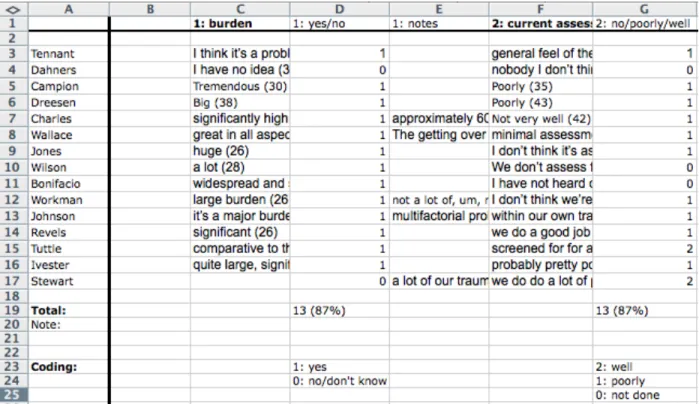
Appendix 5: Illustration of Coding Sheet
Appendix 6: Defining Success in Trauma Systems
What makes a hospital’s trauma program successful? How do you define and measure success within a complex system? Trauma outcomes are a quality benchmark for trauma centers, including the UNC Health Care system and its role as a level I trauma center in North Carolina. At a time when payment models are shifting toward bundled payments and population management, UNC has become an ACO, or Accountable Care Organization, with all that means for changing payment structures and care delivery. The UNC Health Care system strives to be a leader in health care quality and delivery, and there are opportunities for improvement of health outcomes after trauma.
Avedis Donabedian conceptualized quality improvement as change in the
structures, processes, and outcomes of care.53 Moore et al demonstrated the validity of the Donabedian framework for evaluating trauma care, noting that trauma programs with strong performance in structure translated to perform well with clinical processes and have good patient outcomes.54 Improvement of structure and processes within the UNC trauma system can improve trauma outcomes.
but survival alone is not enough to assess the quality of trauma care.57 Hashmi et al showed that “mortality-based external benchmarking does not identify centers with high complication rates” and argued for the need for better benchmarking measures to reflect quality.58
Although most of the emphasis of trauma care occurs in the acute and immediate post-acute setting during hospitalization, the trauma systems offers fragmented care during follow-up after discharge. Significant disparities in trauma care related to race, ethnicity, gender, and insurance status must also be addressed.59–62 Longitudinal care starts at the time of injury and continues through long-term recovery. In their model on trauma outcomes, Richmond and Aitken contend that “planning and integrating care across the trauma continuum and recognition of the role of the injured person’s background, family and resources will lead to improved long-term outcomes.”63
Examples of the effective use of multidisciplinary teams and care coordination at UNC include the pediatric trauma and burn programs. These programs improve the quality of care provided to patients and can serve as models for integrated care delivery for
trauma patients after discharge. In North Carolina, the trauma programs at Carolinas Medical Center in Charlotte, NC and Wake Forest Baptist Hospital in Winston-Salem, NC can also serve as models of care coordination for trauma patients.
requirements and reimbursement burden the health care workforce when they seem to unbalance the ratio of administrative to patient care tasks, contributing to provider burnout, as well as expense.65 Twenty-seven percent of surveyed practices reported that they believe the measures moderately or strongly represent their quality of care.64 The poor light in which documentation is viewed should make us expect that the addition of further documentation requirements in any proposed quality improvement initiative would meet resistance from overburdened providers and support staff.
Appendix 7: Proposed Cost-Effectiveness Analysis for Pilot
Project
PROPOSED METHODS
I propose a cost-effectiveness analysis comparing the administration of PROMIS and the implementation of an educational and behavioral intervention, led by a clinical social worker or nurse psychologist, versus the current standard of practice, which is for psychological status to go largely unaddressed. This specific intervention was chosen because it incorporates a simple screening tool at the patient’s point of access to care and then follows-up with a low cost, long-term intervention that can allow providers the opportunity to address post-injury psychological sequelae given the paucity of community-based mental health resources.
The vision is to pilot this program in the UNC outpatient orthopaedic trauma clinic while taking into consideration both the health care system and societal perspectives. It is necessary to account for both perspectives because the system will not provide the
resource if it’s financial burden is not justified, and the patient will not seek the intervention if he or she perceives that the benefit is not worth the cost and time they invest.
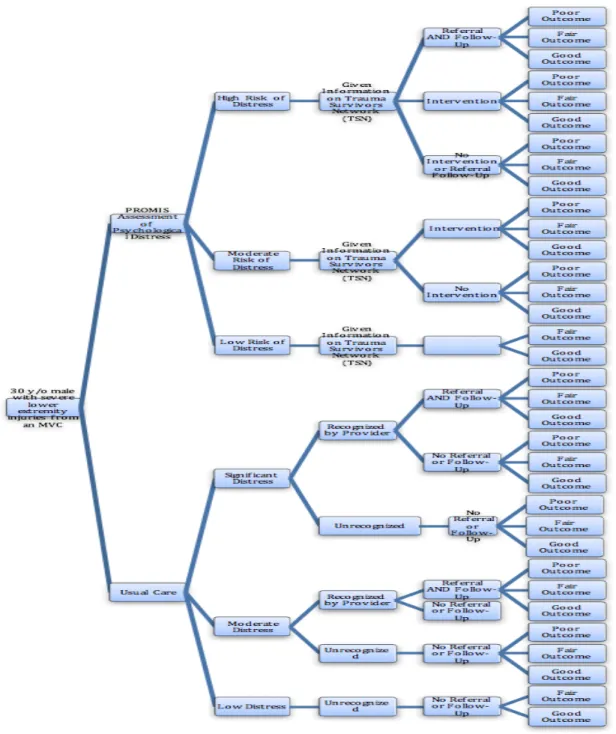
The target population is patients with severe lower extremity trauma because of recent outcomes data published by the LEAP study group. The base case will reflect an average population of 30-year-old males with severe lower extremity injuries secondary to trauma, such as a motor vehicle crash. Given the patients’ inciting events as demonstrated above, I plan to conduct our analysis over a lifetime horizon because the timeline
across various patient populations. Measured health outcomes will include functional status, pain interference, and psychological distress, with particular interest given to psychological distress as this is an outcome that has been difficult to quantify in the past, but with the introduction of PROMIS yields promising results for patients. The primary outcome will be overall health-related quality of life. Secondary outcomes will be pain interference, functional status, psychological distress, return to work, opiate use, and ER visits.
I will use single study-based estimates of measurement of effectiveness due to the heterogeneity of interventions. I will estimate resources and costs by researching
necessary expenses such as technology necessary (iPads for patients to complete surveys) and salaries, or partial salaries, for new staff (that of a full-time or part-time clinical social worker or nurse psychologist). The proposed decision-tree model assumes that the use of the PROMIS instrument will continue to be free of charge as it has been since its
development. In accordance with NICE recommendations, health effects will discount at a rate of 1.5% per year and costs will discount at 3.5% per year. The proposed analytical framework will be implemented as demonstrated in Figure A7-1.
more complex, it will allow a better analysis of the abilities of the intervention to meet the needs of the patient population.
Table A7-1: Proposed evaluation characteristics (adapted from the CHEERS guidelines).
Methods
Target Population Patients with severe lower extremity trauma Setting and Location UNC Orthopaedic Trauma Clinic
Perspective Societal AND Health Sector Comparators Usual Care
Time Horizon Lifetime Discount Rate 3%/year
Health Outcomes Primary: overall health-related quality of life
Secondary: pain interference, functional status, psychological distress, return to work, opiate use, ER visits
Measurement of Effectiveness
Single study-based estimates
Currency and Price Data
SUMMARY AND ANTICIPATED CHALLENGES
Potential problems and limitations include the lack of data related to outcomes of psychological and behavioral interventions as well as the paucity of data on the
implementation of a patient-reported outcome measure. While there is sparse data on the efficacy of psychological and behavioral interventions in orthopaedic trauma patients, there is no data on their cost-effectiveness. This proposal will address these by first measuring the outcomes of an intervention in the UNC Orthopaedic Trauma clinic. Then, an assessment of the cost-effectiveness of the intervention with more complete data will be possible.
While this analysis will be limited to patients with severe lower extremity traumatic injuries, future studies can assess the cost-effectiveness of these interventions on less severe injuries as well as other types of injuries, including upper extremity trauma and abdominal trauma. Characteristics specific to each clinic and health system must be
REFERENCES
1. Starr AJ. Fracture repair: successful advances, persistent problems, and the psychological burden of trauma. J Bone Joint Surg Am. 2008;90 Suppl 1:132-137. doi:10.2106/JBJS.G.01217.
2. Wegener ST, Castillo RC, Haythornthwaite J, Mackenzie EJ, Bosse MJ, LEAP Study Group. Psychological distress mediates the effect of pain on function. Pain. 2011;152(6):1349-1357. doi:10.1016/j.pain.2011.02.020.
3. McCarthy ML, MacKenzie EJ, Edwin D, et al. Psychological distress associated with severe lower-limb injury. J Bone Joint Surg Am. 2003;85-A(9):1689-1697.
4. Zatzick DF, Jurkovich GJ, Gentilello L, Wisner D, Rivara FP. Posttraumatic stress, problem drinking, and functional outcomes after injury. Arch Surg Chic Ill 1960. 2002;137(2):200-205.
5. Vranceanu A-M, Bachoura A, Weening A, Vrahas M, Smith RM, Ring D. Psychological factors predict disability and pain intensity after skeletal trauma. J Bone Joint Surg Am. 2014;96(3):e20. doi:10.2106/JBJS.L.00479.
6. O’Toole RV, Castillo RC, Pollak AN, MacKenzie EJ, Bosse MJ, LEAP Study Group.
Determinants of patient satisfaction after severe lower-extremity injuries. J Bone Joint Surg Am. 2008;90(6):1206-1211. doi:10.2106/JBJS.G.00492.
7. Albert Bandura. Self-Efficacy: The Exercise of Control. New York, NY: W.H. Freeman; 1997.
8. Connolly FR, Aitken LM, Tower M. An integrative review of self-efficacy and patient recovery post acute injury. J Adv Nurs. 2014;70(4):714-728. doi:10.1111/jan.12237. 9. Arnstein P, Caudill M, Mandle CL, Norris A, Beasley R. Self efficacy as a mediator of the
relationship between pain intensity, disability and depression in chronic pain patients.
Pain. 1999;80(3):483-491.
10. MacKenzie EJ, Bosse MJ, Pollak AN, et al. Long-term persistence of disability following severe lower-limb trauma. Results of a seven-year follow-up. J Bone Joint Surg Am. 2005;87(8):1801-1809. doi:10.2106/JBJS.E.00032.
11. Archer KR, Castillo RC, MacKenzie EJ, Bosse MJ, LEAP Study Group. Perceived need and unmet need for vocational, mental health, and other support services after severe lower-extremity trauma. Arch Phys Med Rehabil. 2010;91(5):774-780.
doi:10.1016/j.apmr.2010.01.006.
13. Detmar SB, Muller MJ, Schornagel JH, Wever LDV, Aaronson NK. Health-related quality-of-life assessments and patient-physician communication: a randomized controlled trial. JAMA. 2002;288(23):3027-3034.
14. Basch E, Deal AM, Kris MG, et al. Symptom Monitoring With Patient-Reported Outcomes During Routine Cancer Treatment: A Randomized Controlled Trial. J Clin Oncol Off J Am Soc Clin Oncol. 2016;34(6):557-565. doi:10.1200/JCO.2015.63.0830. 15. Stover AM, Basch EM. Using patient-reported outcome measures as quality indicators
in routine cancer care. Cancer. 2016;122(3):355-357. doi:10.1002/cncr.29768.
16. Snyder CF, Aaronson NK, Choucair AK, et al. Implementing patient-reported outcomes assessment in clinical practice: a review of the options and considerations. Qual Life Res Int J Qual Life Asp Treat Care Rehabil. 2012;21(8):1305-1314.
doi:10.1007/s11136-011-0054-x.
17. Cleeland CS, Wang XS, Shi Q, et al. Automated symptom alerts reduce postoperative symptom severity after cancer surgery: a randomized controlled clinical trial. J Clin Oncol Off J Am Soc Clin Oncol. 2011;29(8):994-1000. doi:10.1200/JCO.2010.29.8315. 18. Basch E, Wu A, Moinpour CM, Santana M, Pusic A, Snyder C, Wee H, Valderas JM, Reeve
BB. Steps for Assuring Rigor and Adequate Patient Representation When Using Patient-Reported Outcome Performance Measures. National Quality Measures Clearinghouse; 2013.
19. Abernethy AP, Etheredge LM, Ganz PA, et al. Rapid-learning system for cancer care. J Clin Oncol Off J Am Soc Clin Oncol. 2010;28(27):4268-4274.
doi:10.1200/JCO.2010.28.5478.
20. Basch E, Torda P, Adams K. Standards for patient-reported outcome-based
performance measures. JAMA. 2013;310(2):139-140. doi:10.1001/jama.2013.6855. 21. Döring A-C, Nota SPFT, Hageman MGJS, Ring DC. Measurement of upper extremity
disability using the Patient-Reported Outcomes Measurement Information System. J Hand Surg. 2014;39(6):1160-1165. doi:10.1016/j.jhsa.2014.03.013.
22. Hung M, Stuart AR, Higgins TF, Saltzman CL, Kubiak EN. Computerized Adaptive Testing Using the PROMIS Physical Function Item Bank Reduces Test Burden With Less Ceiling Effects Compared With the Short Musculoskeletal Function Assessment in Orthopaedic Trauma Patients. J Orthop Trauma. 2014;28(8):439-443.
doi:10.1097/BOT.0000000000000059.
23. Brodke DJ, Hung M, Bozic KJ. Item Response Theory and Computerized Adaptive Testing for Orthopaedic Outcomes Measures. J Am Acad Orthop Surg.
24. Patient-Reported Outcomes Measurement Information System.
https://www.assessmentcenter.net/documents/PROMIS%20Physical%20Function% 20Scoring%20Manual.pdf.
25. Hung M, Clegg DO, Greene T, Saltzman CL. Evaluation of the PROMIS physical function item bank in orthopaedic patients. J Orthop Res Off Publ Orthop Res Soc.
2011;29(6):947-953. doi:10.1002/jor.21308. 26. PROMIS. List of Adult Measures.
27. Morgan JH, Kallen MA, Okike K, Lee OC, Vrahas MS. PROMIS Physical Function
Computer Adaptive Test Compared With Other Upper Extremity Outcome Measures in the Evaluation of Proximal Humerus Fractures in Patients Older Than 60 Years. J Orthop Trauma. 2015;29(6):257-263. doi:10.1097/BOT.0000000000000280. 28. Overbeek CL, Nota SPFT, Jayakumar P, Hageman MG, Ring D. The PROMIS physical
function correlates with the QuickDASH in patients with upper extremity illness. Clin Orthop. 2015;473(1):311-317. doi:10.1007/s11999-014-3840-2.
29. Hung M, Baumhauer JF, Latt LD, et al. Validation of PROMIS ® Physical Function computerized adaptive tests for orthopaedic foot and ankle outcome research. Clin Orthop. 2013;471(11):3466-3474. doi:10.1007/s11999-013-3097-1.
30. Brodke DS, Goz V, Voss MW, Lawrence BD, Spiker WR, Man H. PROMIS® PF CAT Outperforms the ODI and SF-36 Physical Function Domain in Spine Patients. Spine. October 2016. doi:10.1097/BRS.0000000000001965.
31. Brodke DJ, Saltzman CL, Brodke DS. PROMIS for Orthopaedic Outcomes Measurement.
J Am Acad Orthop Surg. 2016;24(11):744-749. doi:10.5435/JAAOS-D-15-00404. 32. Makhni EC, Meadows M, Hamamoto JT, Higgins JD, Romeo AA, Verma NN. Patient
Reported Outcomes Measurement Information System (PROMIS) in the upper extremity: the future of outcomes reporting? J Shoulder Elbow Surg. 2017;26(2):352-357. doi:10.1016/j.jse.2016.09.054.
33. Menendez ME, Bot AGJ, Hageman MGJS, Neuhaus V, Mudgal CS, Ring D. Computerized adaptive testing of psychological factors: relation to upper-extremity disability. J Bone Joint Surg Am. 2013;95(20):e149. doi:10.2106/JBJS.L.01614.
34. Riley WT, Pilkonis P, Cella D. Application of the National Institutes of Health Patient-reported Outcome Measurement Information System (PROMIS) to mental health research. J Ment Health Policy Econ. 2011;14(4):201-208.
36. Slover JD, Karia RJ, Hauer C, Gelber Z, Band PA, Graham J. Feasibility of integrating standardized patient-reported outcomes in orthopedic care. Am J Manag Care. 2015;21(8):e494-500.
37. Duncan EAS, Murray J. The barriers and facilitators to routine outcome measurement by allied health professionals in practice: a systematic review. BMC Health Serv Res. 2012;12:96. doi:10.1186/1472-6963-12-96.
38. Bourne RB. Measuring tools for functional outcomes in total knee arthroplasty. Clin Orthop. 2008;466(11):2634-2638. doi:10.1007/s11999-008-0468-0.
39. Harle CA, Listhaus A, Covarrubias CM, et al. Overcoming barriers to implementing patient-reported outcomes in an electronic health record: a case report. J Am Med Inform Assoc JAMIA. 2016;23(1):74-79. doi:10.1093/jamia/ocv085.
40. Hartzler AL, Chaudhuri S, Fey BC, Flum DR, Lavallee D. Integrating Patient-Reported Outcomes into Spine Surgical Care through Visual Dashboards: Lessons Learned from Human-Centered Design. EGEMS Wash DC. 2015;3(2):1133. doi:10.13063/2327-9214.1133.
41. Lee VS, Kawamoto K, Hess R, et al. Implementation of a Value-Driven Outcomes Program to Identify High Variability in Clinical Costs and Outcomes and Association With Reduced Cost and Improved Quality. JAMA. 2016;316(10):1061-1072.
doi:10.1001/jama.2016.12226.
42. Wong EM-L, Chan SW-C, Chair S-Y. Effectiveness of an educational intervention on levels of pain, anxiety and self-efficacy for patients with musculoskeletal trauma. J Adv Nurs. 2010;66(5):1120-1131. doi:10.1111/j.1365-2648.2010.05273.x.
43. ClinicalTrials.gov. Improving Activity and Quality of Life Following Orthopaedic Trauma: The Trauma Collaborative Care Study (TCCS).; 2016.
https://clinicaltrials.gov/ct2/show/NCT01907893.
44. Castillo RC, Wegener ST, Newell MZ, et al. Improving outcomes at Level I trauma centers: an early evaluation of the Trauma Survivors Network. J Trauma Acute Care Surg. 2013;74(6):1534-1540. doi:10.1097/TA.0b013e3182921606.
45. American Trauma Society. TSNotes.; 2015.
http://www.traumasurvivorsnetwork.org/ckeditor_assets/attachments/29/tsnotes_ winter_2015.pdf. Accessed March 1, 2017.
47. Burns A, Banerjee S, Morris J, et al. Treatment and prevention of depression after surgery for hip fracture in older people: randomized, controlled trials. J Am Geriatr Soc. 2007;55(1):75-80. doi:10.1111/j.1532-5415.2007.01016.x.
48. Holman JE, Stoddard GJ, Horwitz DS, Higgins TF. The effect of preoperative counseling on duration of postoperative opiate use in orthopaedic trauma surgery: a surgeon-based comparative cohort study. J Orthop Trauma. 2014;28(9):502-506.
doi:10.1097/BOT.0000000000000085.
49. Kwon IS, Kim J, Park KM. Effects of music therapy on pain, discomfort, and depression for patients with leg fractures. Taehan Kanho Hakhoe Chi. 2006;36(4):630-636.
50. Resnick B, Wells C, Galik E, et al. Feasibility and Efficacy of Function-Focused Care for Orthopedic Trauma Patients. J Trauma Nurs Off J Soc Trauma Nurses. 2016;23(3):144-155. doi:10.1097/JTN.0000000000000203.
51. Vranceanu A-M, Hageman M, Strooker J, ter Meulen D, Vrahas M, Ring D. A preliminary RCT of a mind body skills based intervention addressing mood and coping strategies in patients with acute orthopaedic trauma. Injury. 2015;46(4):552-557.
doi:10.1016/j.injury.2014.11.001.
52. Wong EM-L, Chair S-Y, Leung DYP, Chan SW-C. Can a brief educational intervention improve sleep and anxiety outcomes for emergency orthopaedic surgical patients?
Contemp Nurse. 2014;47(1-2):132-143. doi:10.5172/conu.2014.47.1-2.132.
53. Donabedian A. The quality of care. How can it be assessed? JAMA. 1988;260(12):1743-1748.
54. Moore L, Lavoie A, Bourgeois G, Lapointe J. Donabedian’s structure-process-outcome quality of care model: Validation in an integrated trauma system. J Trauma Acute Care Surg. 2015;78(6):1168-1175. doi:10.1097/TA.0000000000000663.
55. Lecky F, Woodford M, Edwards A, Bouamra O, Coats T. Trauma scoring systems and databases. Br J Anaesth. 2014;113(2):286-294. doi:10.1093/bja/aeu242.
56. American College of Surgeons. Trauma Quality Improvement Program.
https://www.facs.org/quality-programs/trauma/tqip. Accessed March 1, 2017. 57. Shafi S, Nathens AB, Cryer HG, et al. The Trauma Quality Improvement Program of the
American College of Surgeons Committee on Trauma. J Am Coll Surg. 2009;209(4):521-530.e1. doi:10.1016/j.jamcollsurg.2009.07.001.
59. Haider AH, Weygandt PL, Bentley JM, et al. Disparities in trauma care and outcomes in the United States: a systematic review and meta-analysis. J Trauma Acute Care Surg. 2013;74(5):1195-1205. doi:10.1097/TA.0b013e31828c331d.
60. Hosking JE, Ameratunga SN, Bramley DM, Crengle SM. Reducing ethnic disparities in the quality of trauma care: an important research gap. Ann Surg. 2011;253(2):233-237. doi:10.1097/SLA.0b013e3182075553.
61. Holbrook TL, Hoyt DB. The impact of major trauma: quality-of-life outcomes are worse in women than in men, independent of mechanism and injury severity. J Trauma. 2004;56(2):284-290. doi:10.1097/01.TA.0000109758.75406.F8.
62. Chikani V, Brophy M, Vossbrink A, et al. Association of insurance status with health outcomes following traumatic injury: statewide multicenter analysis. West J Emerg Med. 2015;16(3):408-413. doi:10.5811/westjem.2015.1.23560.
63. Richmond TS, Aitken LM. A model to advance nursing science in trauma practice and injury outcomes research. J Adv Nurs. 2011;67(12):2741-2753. doi:10.1111/j.1365-2648.2011.05749.x.
64. Casalino LP, Gans D, Weber R, et al. US Physician Practices Spend More Than $15.4 Billion Annually To Report Quality Measures. Health Aff Proj Hope. 2016;35(3):401-406. doi:10.1377/hlthaff.2015.1258.
65. Miller P. The Medical Profession’s Future: A Struggle Between Caring For Patients And Bottom-Line Pressures. Health Aff Proj Hope. 2016;35(3):407-410.