International Journal of Emerging Technology and Advanced Engineering
Website: www.ijetae.com (ISSN 2250-2459,ISO 9001:2008 Certified Journal, Volume 4, Issue 2, February 2014)
668
Review Techniques of Data Privacy in Cloud Using Back
Propagation Neural Network
D. J. Bonde
1, Shaikh Akib
2, Pokharkar Shubhangi
3, Auti Surbhi
4, Shelke Satish
5Abstract—Back Propagation is the scheme for neural
network learning. This learning accuracy gained by collaborative learning. In existing system support this kind of learning on limited dataset and between two parties. It cannot protect intermediate result. In our proposed system multiple parties perform collaborative learning on arbitrarily partitioned data using cloud computing. In which for privacy preservation each party send plain text to the cloud and cloud encrypt that text. In this way minimizing the computation and communication cost. To support the various operations over cloud we are using the different algorithm. In this way cloud
show our learning scheme is secure.
Keywords—Privacy Preserving, Neural network, Cloud computing, Back Propagation.
I. INTRODUCTION
Neural Network is composed of highly interconnected processing element called Neuron. This is having limited number of input and output. Designing or programmed this system for learn the recognize pattern. Learning can be supervised or unsupervised. In supervised learning there is a master for monitor the network learning activity where as in unsupervised learning there is no master for monitoring the learning.
Back-propagation is one of the methods for learning the neural networks and has been widely used in various applications. The learning accuracy is mainly affected by data used for learning. Instead of learning with limited dataset collaborative learning improve the learning result.
In this collaborative learning the participating parties carry out learning not only on their own data sets, also on others’ data sets. With the recent new computing Environment such as Cloud Computing, In order to provide practical solutions for privacy preserving back-propagation neural (BPN) network learning, there are mainly three challenges:
1) Give protection to each participant’s private dataset and intermediate results produced during the BPN network learning process. It requires secure computation of various operations. 2) Ensure the practicality of the proposed solution, the computation/communication cost introduced to each participant shall be efficient.
In order to support a large range of collaborative learning, the proposed solution shall consider system scalability. 3) in this collaborative leaning training dataset owned by different parties but partitioned in arbitrarily ways.
II. LITERATURE SURVEY
Schlitter introduces horizontal approach for privacy preserving BPN network learning scheme. That enables two or more parties to jointly perform BPN net-work learning without disclosing their respective private data sets. But the solution is proposed only for horizontal partitioned data. Moreover, this scheme cannot protect the intermediate results, which may also contain sensitive data, during the learning process. [3]
Chen et. Al. proposes vertical approach for privacy preserving BPN network learning algorithm for two party scenarios. This scheme provides strong protection for data sets including intermediate results. However, it just supports vertically partitioned data. [2]
SMC: Secure multi-party computation (also known as secure computation or multi-party computation (MPC)) is a subfield of cryptography.Secure computation was formally introduced in 1982 by A. Yao (incidentally, the first recipient of the Knuth Prize) as secure two-party computation. It is one of the theoretical approaches for privacy preservation. The millionaire problem and its Solution gave way to generalization to multi-party protocols. In an MPC, a given number of participants’ p1, p2... pN each have a private data, respectively d1, d2, d3... dN. The participants want to compute the value of a public function F on N variables at the point (d1, d2, ..., dN).An MPC protocol is secure if no participant can learn more from the description of the public function and the result of the global calculation than what he/she can learn from his/her own entry under particular conditions depending on the model used. [7]
International Journal of Emerging Technology and Advanced Engineering
Website: www.ijetae.com (ISSN 2250-2459,ISO 9001:2008 Certified Journal, Volume 4, Issue 2, February 2014)
669 The goal of machine learning is to program computers to use example data or past experience to solve a given problem. According to human they are capable of machine learning and character recognition. The core of machine learning deals with representation and generalization. Representation of information instances and functions evaluated on these instances are part of all machine learning systems. [4]
K-nearest neighbors algorithm developed by cover and Hart in 1967 is very useful for retrieving the information. Let T D fti 2! iD 1; 2; : : : ;mg denotes a set of training patterns, each pattern ti 2 T has a class label. The target of KNN is to find the k-nearest neighbors of a test pattern x (x 2 !) in T based on a dissimilarity measure d.:; :/, and then classify the pattern x with the same label as the majority voting of nearest patterns in the training set.
Limitations:
It is computationally intensive for large database i.e. the computation cost is more. [5]
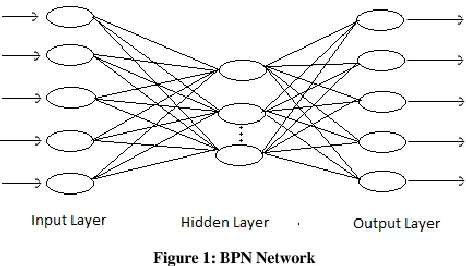
[image:2.612.335.561.207.344.2]Back Propagation-Practical Approach: Bansal et. Al. enhanced this scheme and proposed a solution for arbitrarily partitioned data. It is a Neural Network method used for training the neural network. It is a systematic method for learning the multilayer artificial neural network. Due to secure multiparty computations (SMC) high communication and complexity cost providing practical solution over that is using BPN learning Algorithm .i.e. the practical approach to overcome drawback of theoretical one. [6]
Figure 1: BPN Network
III. PROPOSED SYSTEM ARCHITECTURE
In proposed system Architecture Trusted Authority (TA) is responsible for user registration and authentication. Encryption will be carried out using Asymmetric key Encryption algorithm. Client sends plaintext over Cloud. Cloud performs encryption over plaintext for providing Security and we use concept of neural network.
[image:2.612.51.284.489.622.2]Encrypted data and key stored in database. When user wants to retrieves its original data key of that particular user match with key which is stored at the server side database. That key matching process done by neural network. Cloud then decrypt that data and send to client.
Figure 2: Proposed system Architecture
Different functions are carried by this system are user registration, login, file upload, encryption and key generation, file download etc.
i. User Registration on cloud is carried out by Trusted Authority. TA registers the user information on cloud and stores user information on cloud data store.
ii.When user wants to perform any operation he needs to login first. The login is authenticated by TA.
iii. After login authentication when user wants to upload any file he requests to cloud to upload a specified file then cloud encrypts that file.
iv. Encrypted file and generated key is stored in data store also it sends a key to user as an acknowledgement which is further used for downloading a file.
v.When user wants to download his file, again he needs to specify a file name and key which is obtained in response while uploading a file. Neural network verifies a key and corresponding file in database if it is validated cloud again decrypts that file with the help of key and sends back a decrypted file i.e. original file.
IV. ALGORITHM
Asymmetric key is different for sender for encryption and different for receiver for decryption. RSA algorithm which generates the public key, private key using that generates encrypted text which is cipher text.
International Journal of Emerging Technology and Advanced Engineering
Website: www.ijetae.com (ISSN 2250-2459,ISO 9001:2008 Certified Journal, Volume 4, Issue 2, February 2014)
670 2.Decryption Process: Using RSA algorithm generate
private key used for decryption of data for getting users original data.
Algorithm 1:
RSA ALGORITHM for encryption and decryption
1. Select the two prime number p and q 2. Calculate N=p*q
3. Select public key ‘E’ in such way that it is not factor of (p - 1) (q - 1)
4. Select private key ‘D’ such that the following equation is true [(D*E) mod (p-1) (q-1) =1]
5. For encryption calculate cipher text as ‘CT’ from plain text ‘PT’ as follows [CT= (PT) ^E mod N]
6. Send ‘CT’ as cipher text to the receiver.
7. For Decryption calculate plain text ‘PT’ from cipher text as follows PT= (CT) ^D mod N]
2) To Train the neural network Back propagation Neural Network Learning Algorithm is used. Back propagation neural network algorithm composed of two stages:
1) Feed forward
2) Error-Back Propagation.
Algorithm 2:
Back-Propagation Neural Network Learning Algorithm. [1]
Input: N input sample vectors Vi, 1 ≤ i ≤ N, with a dimensions,
iterationmax, learning rate η, target value ti,
sigmoid function f(x) = 1/1+e−x Output: Network with final weights: W^hjk, woij , 1 ≤ k ≤ a, 1 ≤ j ≤ b, 1 ≤ i ≤ c begin
Randomly Initialize all wh jk, wo
ij .
for iteration = 1, 2 · · · , iterationmax do for sample = 1, 2 · · · ,N do
//Feed Forward Stage: for j = 1, 2 · · · , b do
hj = f(_a k=1 xk ∗ wh jk)
for i = 1, 2 · · · , c do
oi = f(_a j=1 hj ∗ wo ij )
if Error = 1 2 _c
i=1(ti − oi)2 > threshold then
//Back-Propagation Stage: Δwo
ij = −(ti − oi) ∗ hj Δwh
jk = −hj(1 − hj )xk_c i=1[(ti − oi) ∗ wo ij )]
wij = wij − ηΔwij wh
jk = wh jk − ηΔw^hjk
else
//Learning Finish Break
V. MATHEMATICAL MODEL
SR NO
Description UML
Design Observa-tions 1 Problem description
Let S be a Privacy preservation system;
such that S={C,T,N,A ,E,D,R,F |ᶲ S } Where C represents the set of Client ;
C = {c0,c1,c2……cn |ᶲ C }
T represents the Trusted Authority ; T = { t0 }
N represents the Neural Network; N = { n0 }
A represents the set of Cloud A = { a0,a1,….an |ᶲ A } F represents the set of Files F={ f0,f1,f2….fn |ᶲ F
S holds list of Actors of a system.
2 Activity
1.
Let fe be a rule of C into T such that Client request for Registration to TA and TA gives the registration details to Client.2.
Let fe be a rule of T into A such that Trusted Authority manages the key.International Journal of Emerging Technology and Advanced Engineering
Website: www.ijetae.com (ISSN 2250-2459,ISO 9001:2008 Certified Journal, Volume 4, Issue 2, February 2014)
671 cloud.
4.
Let fe be a rule of E into A such that cloud encrypt the user data and store that encrypted data and also it decrypts that data.3a The RSA algorithm is used for key generation and encryption for the inputs like file provided by the client.
The BPN algorithm is used for neural network learning.
Client will execute n time, Login will execute n time, registration will execute n time, file operation will execute many time. TA will execute 1 time.
3b Registration function returns user name and id to the client. Encryption function returns the encrypted file to the client and also gives the decrypted file. fe(c0) →| { f0,f1}
4 if (h1=h2) then perform file operation else client is not allowed to perform operation.
Here h1= key of the client. h2=key store in database.
5 State
Diagram:-Here, S0=Client S1=Registration, S2=TA,
S3=Login, S4=Cloud, S5=Encryption, S6=Decryption, S7=Database.
VI. EXPECTED RESULT
Our proposed system has advantages in terms of computation and communication cost. As the number of participant increases or data size increases that do not affect the system performance. Learning efficiency measured in term of learning time .Increased cost on each party measured in term of learning time. For two party scenario compare our learning scheme with Chen’s Scheme in term of learning time for different dataset like iris, Diabetes, kr-vs-kp. [1]
International Journal of Emerging Technology and Advanced Engineering
Website: www.ijetae.com (ISSN 2250-2459,ISO 9001:2008 Certified Journal, Volume 4, Issue 2, February 2014)
672 VII. CONCLUSION
We first proposed secure and practical multiple-party Back Propagation Neural network learning scheme over arbitrarily partitioned data. In our proposed system approach, the parties upload plaintext to the cloud.
The cloud can execute most operations like encryption, decryption over that data. When participant parties want his/her original data again key is provided and that key matching process carried out by neural network. In this way preserving privacy of each participant’s data can be achieved. In our practical approach we are securing the intermediate result. Thus we minimizing Computation and communication cost.
REFERENCES
[1] Privacy Preserving Back-Propagation Neural Network Learning Made Practical with Cloud Computing Jiawei Yuan, Student Member, IEEE, Shucheng Yu, Member, IEEE, 2013
[2] T. Chen and S. Zhong Privacy-preserving back propagation neural network learning. Trans. Neur. Netw., 20(10):1554-1564, Oct. 2009. L. Cun, B. Boser, J. S. Denker, D. Henderson, R. E. Howard, W. Hubbard, and L. D. Jackel. Handwritten digit recognition with a back-propagation network. In Advances in Neural Information Processing Systems, pages 396-404. Morgan Kaufmann, 1990. [3] N. Schlitter. A protocol for privacy preserving neural network
learning on horizontal partitioned data. In Proceedings of the Privacy Statistics in Databases (PSD), Sep. 2008
[4] Wernik, Yang, Brankov Yourganov and strother, machine learning in medical imaging vol.27 no.4 july 2010 pp 25-38
[5] A fast Nearest Neighbor classier based on self-organizing incremental neural network-Shen Furao, Osamu Hasegawa (2008). [6] A. Bansal, T. Chen, and S. Zhong. Privacy preserving back
propagation neural network learning over arbitrarily partitioned data. Neural Compute. Appl., 20(1):143-150, Feb. 2011.